Normal view

There are new articles available, click to refresh the page.
Before yesterdayKrebs on Security

Lawmakers Demand Answers as CISA Tries to Contain Data Leak

22 May 2026 at 12:34

Lawmakers in both houses of Congress are demanding answers from the U.S. Cybersecurity & Infrastructure Security Agency (CISA) after KrebsOnSecurity reported this week that a CISA contractor intentionally published AWS GovCloud keys and a vast trove of other agency secrets on a public GitHub account. The inquiry comes as CISA is still struggling to contain the breach and invalidate the leaked credentials.

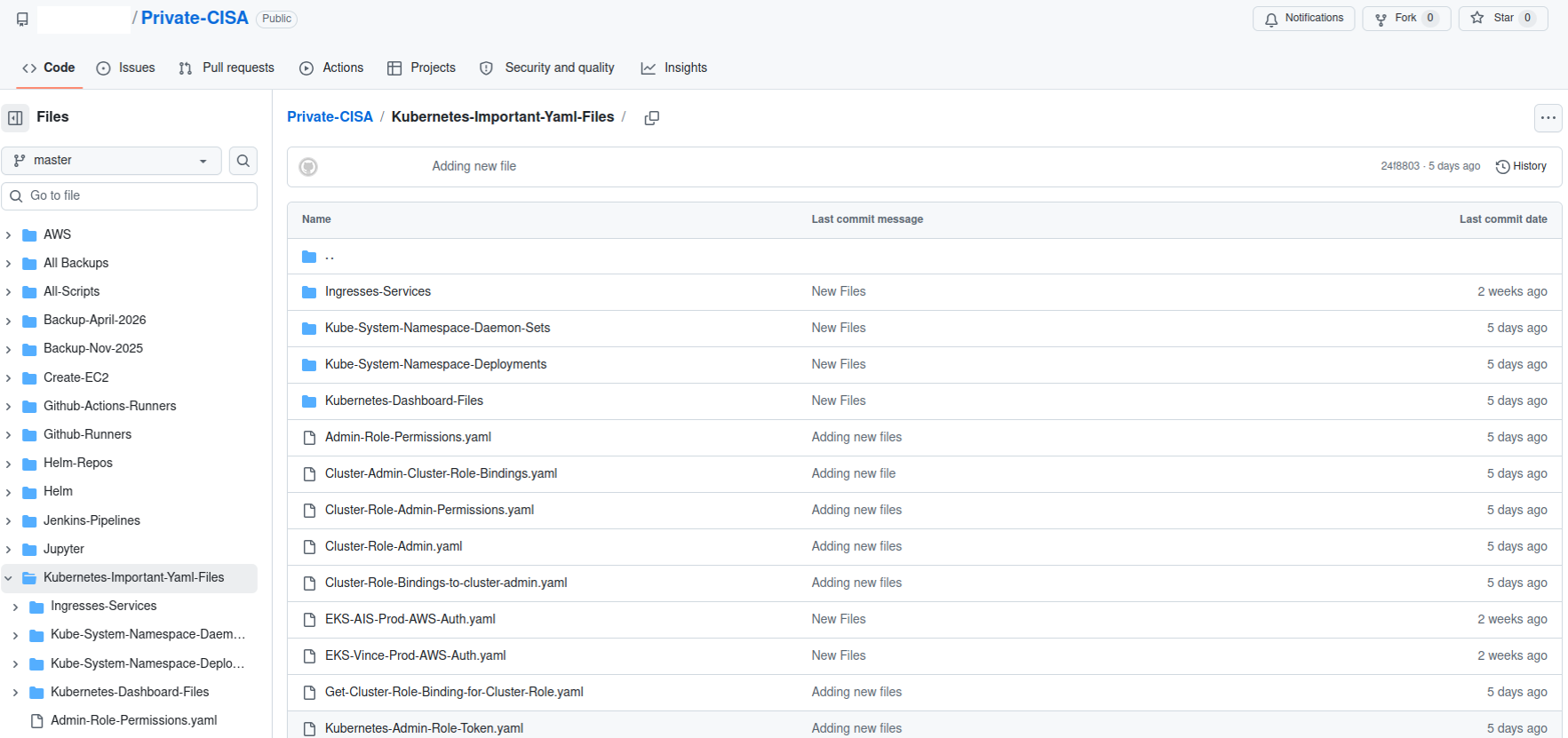
On May 18, KrebsOnSecurity reported that a CISA contractor with administrative access to the agency’s code development platform had created a public GitHub profile called “Private-CISA” that included plaintext credentials to dozens of internal CISA systems. Experts who reviewed the exposed secrets said the commit logs for the code repository showed the CISA contractor disabled GitHub’s built-in protection against publishing sensitive credentials in public repos.

CISA acknowledged the leak but has not responded to questions about the duration of the data exposure. However, experts who reviewed the now-defunct Private-CISA archive said it was originally created in November 2025, and that it exhibits a pattern consistent with an individual operator using the repository as a working scratchpad or synchronization mechanism rather than a curated project repository.

In a written statement, CISA said “there is no indication that any sensitive data was compromised as a result of the incident.” But in a May 19 a letter (PDF) to CISA’s Acting Director Nick Andersen, Sen. Maggie Hassan (D-NH) said the credential leak raises serious questions about how such a security lapse could occur at the very agency charged with helping to prevent cyber breaches.

“This reporting raises serious concerns regarding CISA’s internal policies and procedures at a time of significant cybersecurity threats against U.S. critical infrastructure,” Sen. Hassan wrote.

A May 19 letter from Sen. Margaret Hassan (D-NH) to the acting director of CISA demanded answers to a dozen questions about the breach.

Sen. Hassan noted that the incident occurred against the backdrop of major disruptions internally at CISA, which lost more than a third of it workforce and almost all of its senior leaders after the Trump administration forced a series of early retirements, buyouts, and resignations across the agency’s various divisions.

Rep. Bennie Thompson (D-MS), the ranking member on the House Homeland Security Committee, echoed the senator’s concerns.

“We are concerned that this incident reflects a diminished security culture and/or an inability for CISA to adequately manage its contract support,” Thompson wrote in a May 19 letter to the acting CISA chief that was co-signed by Rep. Delia Ramirez (D-Ill), the ranking member of the panel’s Subcommittee on Cybersecurity and Infrastructure Protection. “It’s no secret that our adversaries — like China, Russia, and Iran — seek to gain access to and persistence on federal networks. The files contained in the ‘Private-CISA’ repository provided the information, access, and roadmap to do just that.”

KrebsOnSecurity has learned that more a week after CISA was first notified of the data leak by the security firm GitGuardian, the agency is still working to invalidate and replace many of the exposed keys and secrets.

On May 20, KrebsOnSecurity heard from Dylan Ayrey, the creator of TruffleHog, an open-source tool for discovering private keys and other secrets buried in code hosted at GitHub and other public platforms. Ayrey said CISA still hadn’t invalidated an RSA private key exposed in the Private-CISA repo that granted access to a GitHub app which is owned by the CISA enterprise account and installed on the CISA-IT GitHub organization with full access to all code repositories.

“An attacker with this key can read source code from every repository in the CISA-IT organization, including private repos, register rogue self-hosted runners to hijack CI/CD pipelines and access repository secrets, and modify repository admin settings including branch protection rules, webhooks, and deploy keys,” Ayrey told KrebsOnSecurity. CI/CD stands for Continuous Integration and Continuous Delivery, and it refers to a set of practices used to automate the building, testing and deployment of software.

KrebsOnSecurity notified CISA about Ayrey’s findings on May 20. Ayrey said CISA appears to have invalidated the exposed RSA private key sometime after that notification. But he noted that CISA still hasn’t rotated leaked credentials tied to other critical security technologies that are deployed across the agency’s technology portfolio (KrebsOnSecurity is not naming those technologies publicly for the time being).

CISA responded with a brief written statement in response to questions about Ayrey’s findings, saying “CISA is actively responding and coordinating with the appropriate parties and vendors to ensure any identified leaked credentials are rotated and rendered invalid and will continue to take appropriate steps to protect the security of our systems.”

Ayrey said his company Truffle Security monitors GitHub and a number of other code platforms for exposed keys, and attempts to alert affected accounts to the sensitive data exposure(s). They can do this easily on GitHub because the platform publishes a live feed which includes a record of all commits and changes to public code repositories. But he said cybercriminal actors also monitor these public feeds, and are often quick to pounce on API or SSH keys that get inadvertently published in code commits.

The Private CISA GitHub repo exposed dozens of plaintext credentials to important CISA GovCloud resources. The filenames include AWS-Workspace-Bookmarks-April-6-2026.html, AWS-Workspace-Firefox-Passwords.csv, Important AWS Tokens.txt, kube-config.txt, etc.

The Private-CISA GitHub repo exposed dozens of plaintext credentials to important CISA GovCloud resources.

In practical terms, it is likely that cybercrime groups or foreign adversaries also noticed the publication of these CISA secrets, the most egregious of which appears to have happened in late April 2026, Ayrey said.

“We monitor that firehose of data for keys, and we have tools to try to figure out whose they are,” he said. “We have evidence attackers monitor that firehose as well. Anyone monitoring GitHub events could be sitting on this information.”

James Wilson, the enterprise technology editor for the Risky Business security podcast, said organizations using GitHub to manage code projects can set top-down policies that prevent employees from disabling GitHub’s protections against publishing secret keys and credentials. But Wilson’s co-host Adam Boileau said it’s not clear that any technology could stop employees from opening their own personal GitHub account and using it to store sensitive and proprietary information.

“Ultimately, this is a thing you can’t solve with a technical control,” Boileau said on this week’s podcast. “This is a human problem where you’ve hired a contractor to do this work and they have decided of their own volition to use GitHub to synchronize content from a work machine to a home machine. I don’t know what technical controls you could put in place given that this is being done presumably outside of anything CISA managed or even had visibility on.”

Update, 3:05 p.m. ET: Added statement from CISA. Corrected a date in the story (Truffle Security said it found the repo gained some of its most sensitive secrets in late April 2026, not 2025).

CISA Admin Leaked AWS GovCloud Keys on Github

18 May 2026 at 16:48

Until this past weekend, a contractor for the Cybersecurity & Infrastructure Security Agency (CISA) maintained a public GitHub repository that exposed credentials to several highly privileged AWS GovCloud accounts and a large number of internal CISA systems. Security experts said the public archive included files detailing how CISA builds, tests and deploys software internally, and that it represents one of the most egregious government data leaks in recent history.

On May 15, KrebsOnSecurity heard from Guillaume Valadon, a researcher with the security firm GitGuardian. Valadon’s company constantly scans public code repositories at GitHub and elsewhere for exposed secrets, automatically alerting the offending accounts of any apparent sensitive data exposures. Valadon said he reached out because the owner in this case wasn’t responding and the information exposed was highly sensitive.

A redacted screenshot of the now-defunct “Private CISA” repository maintained by a CISA contractor.

The GitHub repository that Valadon flagged was named “Private-CISA,” and it harbored a vast number of internal CISA/DHS credentials and files, including cloud keys, tokens, plaintext passwords, logs and other sensitive CISA assets.

Valadon said the exposed CISA credentials represent a textbook example of poor security hygiene, noting that the commit logs in the offending GitHub account show that the CISA administrator disabled the default setting in GitHub that blocks users from publishing SSH keys or other secrets in public code repositories.

“Passwords stored in plain text in a csv, backups in git, explicit commands to disable GitHub secrets detection feature,” Valadon wrote in an email. “I honestly believed that it was all fake before analyzing the content deeper. This is indeed the worst leak that I’ve witnessed in my career. It is obviously an individual’s mistake, but I believe that it might reveal internal practices.”

One of the exposed files, titled “importantAWStokens,” included the administrative credentials to three Amazon AWS GovCloud servers. Another file exposed in their public GitHub repository — “AWS-Workspace-Firefox-Passwords.csv” — listed plaintext usernames and passwords for dozens of internal CISA systems. According to Caturegli, those systems included one called “LZ-DSO,” which appears short for “Landing Zone DevSecOps,” the agency’s secure code development environment.

Philippe Caturegli, founder of the security consultancy Seralys, said he tested the AWS keys only to see whether they were still valid and to determine which internal systems the exposed accounts could access. Caturegli said the GitHub account that exposed the CISA secrets exhibits a pattern consistent with an individual operator using the repository as a working scratchpad or synchronization mechanism rather than a curated project repository.

“The use of both a CISA-associated email address and a personal email address suggests the repository may have been used across differently configured environments,” Caturegli observed. “The available Git metadata alone does not prove which endpoint or device was used.”

The Private CISA GitHub repo exposed dozens of plaintext credentials for important CISA GovCloud resources.

Caturegli said he validated that the exposed credentials could authenticate to three AWS GovCloud accounts at a high privilege level. He said the archive also includes plain text credentials to CISA’s internal “artifactory” — essentially a repository of all the code packages they are using to build software — and that this would represent a juicy target for malicious attackers looking for ways to maintain a persistent foothold in CISA systems.

“That would be a prime place to move laterally,” he said. “Backdoor in some software packages, and every time they build something new they deploy your backdoor left and right.”

In response to questions, a spokesperson for CISA said the agency is aware of the reported exposure and is continuing to investigate the situation.

“Currently, there is no indication that any sensitive data was compromised as a result of this incident,” the CISA spokesperson wrote. “While we hold our team members to the highest standards of integrity and operational awareness, we are working to ensure additional safeguards are implemented to prevent future occurrences.”

A review of the GitHub account and its exposed passwords show the “Private CISA” repository was maintained by an employee of Nightwing, a government contractor based in Dulles, Va. Nightwing declined to comment, directing inquiries to CISA.

CISA has not responded to questions about the potential duration of the data exposure, but Caturegli said the Private CISA repository was created on November 13, 2025. The contractor’s GitHub account was created back in September 2018.

The GitHub account that included the Private CISA repo was taken offline shortly after both KrebsOnSecurity and Seralys notified CISA about the exposure. But Caturegli said the exposed AWS keys inexplicably continued to remain valid for another 48 hours.

CISA is currently operating with only a fraction of its normal budget and staffing levels. The agency has lost nearly a third of its workforce since the beginning of the second Trump administration, which forced a series of early retirements, buyouts, and resignations across the agency’s various divisions.

The now-defunct Private CISA repo showed the contractor also used easily-guessed passwords for a number of internal resources; for example, many of the credentials used a password consisting of each platform’s name followed by the current year. Caturegli said such practices would constitute a serious security threat for any organization even if those credentials were never exposed externally, noting that threat actors often use key credentials exposed on the internal network to expand their reach after establishing initial access to a targeted system.

“What I suspect happened is [the CISA contractor] was using this GitHub to synchronize files between a work laptop and a home computer, because he has regularly committed to this repo since November 2025,” Caturegli said. “This would be an embarrassing leak for any company, but it’s even more so in this case because it’s CISA.”

Canvas Breach Disrupts Schools & Colleges Nationwide

7 May 2026 at 22:58

An ongoing data extortion attack targeting the widely-used education technology platform Canvas disrupted classes and coursework at school districts and universities across the United States today, after a cybercrime group defaced the service’s login page with a ransom demand that threatened to leak data from 275 million students and faculty across nearly 9,000 educational institutions.

A screenshot shared by a reader showing the extortion message that was shown on the Canvas login page today.

Canvas parent firm Instructure responded to today’s defacement attacks by disabling the platform, which is used by thousands of schools, universities and businesses to manage coursework and assignments, and to communicate with students.

Instructure acknowledged a data breach earlier this week, after the cybercrime group ShinyHunters claimed responsibility and said they would leak data on tens of millions of students and faculty unless paid a ransom. The stated deadline for payment was initially set at May 6, but it was later pushed back to May 12.

In a statement on May 6, Instructure said the investigation so far shows the stolen information includes “certain identifying information of users at affected institutions, such as names, email addresses, and student ID numbers, as well as as messages among users.” The company said it found no evidence the breached data included more sensitive information, such as passwords, dates of birth, government identifiers or financial information.

The May 6 update stated that Canvas was fully operational, and that Instructure was not seeing any ongoing unauthorized activity on their platform. “At this stage, we believe the incident has been contained,” Instructure wrote.

However, by mid-day on Thursday, May 7, students and faculty at dozens of schools and universities were flooding social media sites with comments saying that a ransom demand from ShinyHunters had replaced the usual Canvas login page. Instructure responded by pulling Canvas offline and replacing the portal with the message, “Canvas is currently undergoing scheduled maintenance. Check back soon.”

“We anticipate being up soon, and will provide updates as soon as possible,” reads the current message on Instructure’s status page.

While the data stolen by ShinyHunters may or may not contain particularly sensitive information (ShinyHunters claims it includes several billion private messages among students and teachers, as well as names, phone numbers and email addresses), this attack could hardly have come at a worse time for Instructure: Many of the affected schools and universities are in the middle of final exams, and a prolonged outage could be highly damaging for the company.

The extortion message that greeted countless Canvas users today advised the affected schools to negotiate their own ransom payments to prevent the publication of their data — regardless of whether Instructure decides to pay.

“ShinyHunters has breached Instructure (again),” the extortion message read. “Instead of contacting us to resolve it they ignored us and did some ‘security patches.'”

A source close to the investigation who was not authorized to speak to the press told KrebsOnSecurity that a number of universities have already approached the cybercrime group about paying. The same source also pointed out that the ShinyHunters data leak blog no longer lists Instructure among its current extortion victims, and that the samples of data stolen from Canvas customers were removed as well. Data extortion groups like ShinyHunters will typically only remove victims from their leak sites after receiving an extortion payment or after a victim agrees to negotiate.

Dipan Mann, founder and CEO of the security firm Cloudskope, slammed Instructure for referring to today’s outage as a “scheduled maintenance” event on its status page. Mann said Shiny Hunters first demonstrated they’d breached Instructure on May 1, prompting Instructure’s Chief Information Security Officer Steve Proud to declare the following day that the incident had been contained. But Mann said today’s attack is at least the third time in the past eight months that Instructure has been breached by ShinyHunters.

In a blog post today, Mann noted that in September 2025, ShinyHunters released thousands of internal University of Pennsylvania files — donor records, internal memos, and other confidential materials — through what the Daily Pennsylvanian and other outlets later determined was, in part, a Canvas/Instructure-mediated access path.

“Penn was the named victim,” Mann wrote. “Instructure was the mechanism. The incident was treated as a Penn-specific story by most of the national press and quietly handled by Instructure as a customer-specific matter. That framing was wrong then. It is dramatically more wrong in light of the May 2026 events, which now look like the planned escalation of an attack pattern that ShinyHunters had been working against Instructure’s environment for at least eight months prior. The September 2025 Penn breach was the proof of concept. The May 1, 2026 incident was the production run. The May 7, 2026 recompromise was ShinyHunters demonstrating publicly that the May 2 ‘containment’ did not happen.”

In February, a ShinyHunters spokesperson told The Daily Pennsylvanian that Penn failed to pay a $1 million ransom demand. On March 5, ShinyHunters published 461 megabytes worth of data stolen from Penn, including thousands of files such as donor records and internal memos.

ShinyHunters is a prolific and fluid cybercriminal group that specializes in data theft and extortion. They typically gain access to companies through voice phishing and social engineering attacks that often involve impersonating IT personnel or other trusted members of a targeted organization.

Last month, ShinyHunters relieved the home security giant ADT of personal information on 5.5 million customers. The extortion group told BleepingComputer they breached the company by compromising an employee’s Okta single sign-on account in a voice phishing attack that enabled access to ADT’s Salesforce instance. BleepingComputer says ShinyHunters recently has taken credit for a number of extortion attacks against high-profile organizations, including Medtronic, Rockstar Games, McGraw Hill, 7-Eleven and the cruise line operator Carnival.

The attack on Canvas customers is just one of several major cybercrime campaigns being launched by ShinyHunters at the moment, said Charles Carmakal, chief technology officer at the Google-owned Mandiant Consulting. Carmakal declined to comment specifically on the Canvas breach, but said “there are multiple concurrent and discrete ShinyHunters intrusion and extortion campaigns happening right now.”

Cloudskope’s Mann said what happens next depends largely on whether Instructure’s customers — the universities, K-12 districts, and education ministries paying for Canvas — choose to apply pressure or absorb the breach quietly.

“The history of education-vendor incidents suggests the path of least resistance is the second one,” he concluded.

Update, May 8, 11:05 a.m. ET: Instructure has published an incident update page that includes more information about the breach. Instructure said its Canvas portal is functioning normally again, and that the hackers exploited an issue related to Free-for-Teacher accounts.

“This is the same issue that led to the unauthorized access the prior week,” Instructure wrote. “As a result, we have made the difficult decision to temporarily shut down Free-for-Teacher accounts. These accounts have been a core part of our platform, and we’re committed to resolving the issues with these accounts.”

Instructure said affected organizations were notified on May 6.

“If your organization is affected, Instructure will contact your organization’s primary contacts directly,” the update states. “Please don’t rely on third-party lists or social media posts naming potentially affected organizations as those lists aren’t verified. Instructure will confirm validated information through direct outreach to all affected organizations.”

Update, May 11, 10:16 p.m. ET: Instructure posted an update saying they paid their extortionists in exchange for a promise to destroy the stolen data. “The data was returned to us,” the update reads. “We received digital confirmation of data destruction (shred logs). We have been informed that no Instructure customers will be extorted as a result of this incident, publicly or otherwise.”

Anti-DDoS Firm Heaped Attacks on Brazilian ISPs

30 April 2026 at 10:04

A Brazilian tech firm that specializes in protecting networks from distributed denial-of-service (DDoS) attacks has been enabling a botnet responsible for an extended campaign of massive DDoS attacks against other network operators in Brazil, KrebsOnSecurity has learned. The firm’s chief executive says the malicious activity resulted from a security breach and was likely the work of a competitor trying to tarnish his company’s public image.

An Archer AX21 router from TP-Link. Image: tp-link.com.

For the past several years, security experts have tracked a series of massive DDoS attacks originating from Brazil and solely targeting Brazilian ISPs. Until recently, it was less than clear who or what was behind these digital sieges. That changed earlier this month when a trusted source who asked to remain anonymous shared a curious file archive that was exposed in an open directory online.

The exposed archive contained several Portuguese-language malicious programs written in Python. It also included the private SSH authentication keys belonging to the CEO of Huge Networks, a Brazilian ISP that primarily offers DDoS protection to other Brazilian network operators.

Founded in Miami, Fla. in 2014, Huge Networks’s operations are centered in Brazil. The company originated from protecting game servers against DDoS attacks and evolved into an ISP-focused DDoS mitigation provider. It does not appear in any public abuse complaints and is not associated with any known DDoS-for-hire services.

Nevertheless, the exposed archive shows that a Brazil-based threat actor maintained root access to Huge Networks infrastructure and built a powerful DDoS botnet by routinely mass-scanning the Internet for insecure Internet routers and unmanaged domain name system (DNS) servers on the Web that could be enlisted in attacks.

DNS is what allows Internet users to reach websites by typing familiar domain names instead of the associated IP addresses. Ideally, DNS servers only provide answers to machines within a trusted domain. But so-called “DNS reflection” attacks rely on DNS servers that are (mis)configured to accept queries from anywhere on the Web. Attackers can send spoofed DNS queries to these servers so that the request appears to come from the target’s network. That way, when the DNS servers respond, they reply to the spoofed (targeted) address.

By taking advantage of an extension to the DNS protocol that enables large DNS messages, botmasters can dramatically boost the size and impact of a reflection attack — crafting DNS queries so that the responses are much bigger than the requests. For example, an attacker could compose a DNS request of less than 100 bytes, prompting a response that is 60-70 times as large. This amplification effect is especially pronounced when the perpetrators can query many DNS servers with these spoofed requests from tens of thousands of compromised devices simultaneously.

A DNS amplification attack, illustrated. It shows an attacker on the left, sending malicious commands to a number of bots to the immediate right, which then make spoofed DNS queries with the source address as the target's IP address.

A DNS amplification and reflection attack, illustrated. Image: veracara.digicert.com.

The exposed file archive includes a command-line history showing exactly how this attacker built and maintained a powerful botnet by scouring the Internet for TP-Link Archer AX21 routers. Specifically, the botnet seeks out TP-Link devices that remain vulnerable to CVE-2023-1389, an unauthenticated command injection vulnerability that was patched back in April 2023.

Malicious domains in the exposed Python attack scripts included DNS lookups for hikylover[.]st, and c.loyaltyservices[.]lol, both domains that have been flagged in the past year as control servers for an Internet of Things (IoT) botnet powered by a Mirai malware variant.

The leaked archive shows the botmaster coordinated their scanning from a Digital Ocean server that has been flagged for abusive activity hundreds of times in the past year. The Python scripts invoke multiple Internet addresses assigned to Huge Networks that were used to identify targets and execute DDoS campaigns. The attacks were strictly limited to Brazilian IP address ranges, and the scripts show that each selected IP address prefix was attacked for 10-60 seconds with four parallel processes per host before the botnet moved on to the next target.

The archive also shows these malicious Python scripts relied on private SSH keys belonging to Huge Networks’s CEO, Erick Nascimento. Reached for comment about the files, Mr. Nascimento said he did not write the attack programs and that he didn’t realize the extent of the DDoS campaigns until contacted by KrebsOnSecurity.

“We received and notified many Tier 1 upstreams regarding very very large DDoS attacks against small ISPs,” Nascimento said. “We didn’t dig deep enough at the time, and what you sent makes that clear.”

Nascimento said the unauthorized activity is likely related to a digital intrusion first detected in January 2026 that compromised two of the company’s development servers, as well as his personal SSH keys. But he said there’s no evidence those keys were used after January.

“We notified the team in writing the same day, wiped the boxes, and rotated keys,” Nascimento said, sharing a screenshot of a January 11 notification from Digital Ocean. “All documented internally.”

Mr. Nascimento said Huge Networks has since engaged a third-party network forensics firm to investigate further.

“Our working assessment so far is that this all started with a single internal compromise — one pivot point that gave the attacker downstream access to some resources, including a legacy personal droplet of mine,” he wrote.

“The compromise happened through a bastion/jump server that several people had access to,” Nascimento continued. “Digital Ocean flagged the droplet on January 11 — compromised due to a leaked SSH key, in their wording — I was traveling at the time and addressed it on return. That droplet was deprecated and destroyed, and it was never part of Huge Networks infrastructure.”

The malicious software that powers the botnet of TP-Link devices used in the DDoS attacks on Brazilian ISPs is based on Mirai, a malware strain that made its public debut in September 2016 by launching a then record-smashing DDoS attack that kept this website offline for four days. In January 2017, KrebsOnSecurity identified the Mirai authors as the co-owners of a DDoS mitigation firm that was using the botnet to attack gaming servers and scare up new clients.

In May 2025, KrebsOnSecurity was hit by another Mirai-based DDoS that Google called the largest attack it had ever mitigated. That report implicated a 20-something Brazilian man who was running a DDoS mitigation company as well as several DDoS-for-hire services that have since been seized by the FBI.

Nascimento flatly denied being involved in DDoS attacks against Brazilian operators to generate business for his company’s services.

“We don’t run DDoS attacks against Brazilian operators to sell protection,” Nascimento wrote in response to questions. “Our sales model is mostly inbound and through channel integrator, distributors, partners — not active prospecting based on market incidents. The targets in the scripts you received are small regional providers, the vast majority of which are neither in our customer base nor in our commercial pipeline — a fact verifiable through public sources like QRator.”

Nascimento maintains he has “strong evidence stored on the blockchain” that this was all done by a competitor. As for who that competitor might be, the CEO wouldn’t say.

“I would love to share this with you, but it could not be published as it would lose the surprise factor against my dishonest competitor,” he explained. “Coincidentally or not, your contact happened a week before an important event – ​​one that this competitor has NEVER participated in (and it’s a traditional event in the sector). And this year, they will be participating. Strange, isn’t it?”

Strange indeed.

‘Scattered Spider’ Member ‘Tylerb’ Pleads Guilty

21 April 2026 at 10:53

A 24-year-old British national and senior member of the cybercrime group “Scattered Spider” has pleaded guilty to wire fraud conspiracy and aggravated identity theft. Tyler Robert Buchanan admitted his role in a series of text-message phishing attacks in the summer of 2022 that allowed the group to hack into at least a dozen major technology companies and steal tens of millions of dollars worth of cryptocurrency from investors.

Buchanan’s hacker handle “Tylerb” once graced a leaderboard in the English-language criminal hacking scene that tracked the most accomplished cyber thieves. Now in U.S. custody and awaiting sentencing, the Dundee, Scotland native is facing the possibility of more than 20 years in prison.

A screenshot of two photos of Buchanan that appeared in a Daily Mail story dated May 3, 2025.

Two photos published in a Daily Mail story dated May 3, 2025 show Buchanan as a child (left) and as an adult being detained by airport authorities in Spain. “M&S” in this screenshot refers to Marks & Spencer, a major U.K. retail chain that suffered a ransomware attack last year at the hands of Scattered Spider.

Scattered Spider is the name given to a prolific English-speaking cybercrime group known for using social engineering tactics to break into companies and steal data for ransom, often impersonating employees or contractors to deceive IT help desks into granting access.

As part of his guilty plea, Buchanan admitted conspiring with other Scattered Spider members to launch tens of thousands of SMS-based phishing attacks in 2022 that led to intrusions at a number of technology companies, including Twilio, LastPass, DoorDash, and Mailchimp.

The group then used data stolen in those breaches to carry out SIM-swapping attacks that siphoned funds from individual cryptocurrency investors. In an unauthorized SIM-swap, crooks transfer the target’s phone number to a device they control and intercept any text messages or phone calls to the victim’s device — such as one-time passcodes for authentication and password reset links sent via SMS. The U.S. Justice Department said Buchanan admitted to stealing at least $8 million in virtual currency from individual victims throughout the United States.

FBI investigators tied Buchanan to the 2022 SMS phishing attacks after discovering the same username and email address was used to register numerous phishing domains seen in the campaign. The domain registrar NameCheap found that less than a month before the phishing spree, the account that registered those domains logged in from an Internet address in the U.K. FBI investigators said the Scottish police told them the address was leased to Buchanan throughout 2022.

As first reported by KrebsOnSecurity, Buchanan fled the United Kingdom in February 2023, after a rival cybercrime gang hired thugs to invade his home, assault his mother, and threaten to burn him with a blowtorch unless he gave up the keys to his cryptocurrency wallet. That same year, U.K. investigators found a device at Buchanan’s Scotland residence that included data stolen from SMS phishing victims and seed phrases from cryptocurrency theft victims.

Buchanan was arrested by Spanish authorities in June 2024 while trying to board a flight to Italy. He was extradited to the United States and has remained in U.S. federal custody since April 2025.

Buchanan is the second known Scattered Spider member to plead guilty. Noah Michael Urban, 21, of Palm Coast, Fla., was sentenced to 10 years in federal prison last year and ordered to pay $13 million in restitution. Three other alleged co-conspirators — Ahmed Hossam Eldin Elbadawy, 24, a.k.a. “AD,” of College Station, Texas; Evans Onyeaka Osiebo, 21, of Dallas, Texas; and Joel Martin Evans, 26, a.k.a. “joeleoli,” of Jacksonville, North Carolina – still face criminal charges.

Two other alleged Scattered Spider members will soon be tried in the United Kingdom. Owen Flowers, 18, and Thalha Jubair, 20, are facing charges related to the hacking and extortion of several large U.K. retailers, the London transit system, and healthcare providers in the United States. Both have pleaded not guilty, and their trial is slated to begin in June.

Investigators say the Scattered Spider suspects are part of a sprawling cybercriminal community online known as “The Com,” wherein hackers from different cliques boast publicly on Telegram and Discord about high-profile cyber thefts that almost invariably begin with social engineering — tricking people over the phone, email or SMS into giving away credentials that allow remote access to corporate internal networks.

One of the more popular SIM-swapping channels on Telegram has long maintained a leaderboard of the most rapacious SIM-swappers, indexed by their supposed conquests in stealing cryptocurrency. That leaderboard previously listed Buchanan’s hacker alias Tylerb at #65 (out of 100 hackers), with Urban’s moniker “Sosa” coming in at #24.

Buchanan’s sentencing hearing is scheduled for August 21, 2026. According to the Justice Department, he faces a statutory maximum sentence of 22 years in federal prison. However, any sentence the judge hands down in this case may be significantly tempered by a number of mitigating factors in the U.S. Sentencing Guidelines, including the defendant’s age, criminal history, time already served in U.S. custody, and the degree to which they cooperated with federal authorities.

Please Don’t Feed the Scattered Lapsus ShinyHunters

2 February 2026 at 11:15

A prolific data ransom gang that calls itself Scattered Lapsus ShinyHunters (SLSH) has a distinctive playbook when it seeks to extort payment from victim firms: Harassing, threatening and even swatting executives and their families, all while notifying journalists and regulators about the extent of the intrusion. Some victims reportedly are paying — perhaps as much to contain the stolen data as to stop the escalating personal attacks. But a top SLSH expert warns that engaging at all beyond a “We’re not paying” response only encourages further harassment, noting that the group’s fractious and unreliable history means the only winning move is not to pay.

Image: Shutterstock.com, @Mungujakisa

Unlike traditional, highly regimented Russia-based ransomware affiliate groups, SLSH is an unruly and somewhat fluid English-language extortion gang that appears uninterested in building a reputation of consistent behavior whereby victims might have some measure of confidence that the criminals will keep their word if paid.

That’s according to Allison Nixon, director of research at the New York City based security consultancy Unit 221B. Nixon has been closely tracking the criminal group and individual members as they bounce between various Telegram channels used to extort and harass victims, and she said SLSH differs from traditional data ransom groups in other important ways that argue against trusting them to do anything they say they’ll do — such as destroying stolen data.

Like SLSH, many traditional Russian ransomware groups have employed high-pressure tactics to force payment in exchange for a decryption key and/or a promise to delete stolen data, such as publishing a dark web shaming blog with samples of stolen data next to a countdown clock, or notifying journalists and board members of the victim company. But Nixon said the extortion from SLSH quickly escalates way beyond that — to threats of physical violence against executives and their families, DDoS attacks on the victim’s website, and repeated email-flooding campaigns.

SLSH is known for breaking into companies by phishing employees over the phone, and using the purloined access to steal sensitive internal data. In a January 30 blog post, Google’s security forensics firm Mandiant said SLSH’s most recent extortion attacks stem from incidents spanning early to mid-January 2026, when SLSH members pretended to be IT staff and called employees at targeted victim organizations claiming that the company was updating MFA settings.

“The threat actor directed the employees to victim-branded credential harvesting sites to capture their SSO credentials and MFA codes, and then registered their own device for MFA,” the blog post explained.

Victims often first learn of the breach when their brand name is uttered on whatever ephemeral new public Telegram group chat SLSH is using to threaten, extort and harass their prey. According to Nixon, the coordinated harassment on the SLSH Telegram channels is part of a well-orchestrated strategy to overwhelm the victim organization by manufacturing humiliation that pushes them over the threshold to pay.

Nixon said multiple executives at targeted organizations have been subject to “swatting” attacks, wherein SLSH communicated a phony bomb threat or hostage situation at the target’s address in the hopes of eliciting a heavily armed police response at their home or place of work.

“A big part of what they’re doing to victims is the psychological aspect of it, like harassing executives’ kids and threatening the board of the company,” Nixon told KrebsOnSecurity. “And while these victims are getting extortion demands, they’re simultaneously getting outreach from media outlets saying, ‘Hey, do you have any comments on the bad things we’re going to write about you.”

In a blog post today, Unit 221B argues that no one should negotiate with SLSH because the group has demonstrated a willingness to extort victims based on promises that it has no intention to keep. Nixon points out that all of SLSH’s known members hail from The Com, shorthand for a constellation of cybercrime-focused Discord and Telegram communities which serve as a kind of distributed social network that facilitates instant collaboration.

Nixon said Com-based extortion groups tend to instigate feuds and drama between group members, leading to lying, betrayals, credibility destroying behavior, backstabbing, and sabotaging each other.

“With this type of ongoing dysfunction, often compounding by substance abuse, these threat actors often aren’t able to act with the core goal in mind of completing a successful, strategic ransom operation,” Nixon wrote. “They continually lose control with outbursts that put their strategy and operational security at risk, which severely limits their ability to build a professional, scalable, and sophisticated criminal organization network for continued successful ransoms – unlike other, more tenured and professional criminal organizations focused on ransomware alone.”

Intrusions from established ransomware groups typically center around encryption/decryption malware that mostly stays on the affected machine. In contrast, Nixon said, ransom from a Com group is often structured the same as violent sextortion schemes against minors, wherein members of The Com will steal damaging information, threaten to release it, and “promise” to delete it if the victim complies without any guarantee or technical proof point that they will keep their word. She writes:

A key component of SLSH’s efforts to convince victims to pay, Nixon said, involves manipulating the media into hyping the threat posed by this group. This approach also borrows a page from the playbook of sextortion attacks, she said, which encourages predators to keep targets continuously engaged and worrying about the consequences of non-compliance.

“On days where SLSH had no substantial criminal ‘win’ to announce, they focused on announcing death threats and harassment to keep law enforcement, journalists, and cybercrime industry professionals focused on this group,” she said.

An excerpt from a sextortion tutorial from a Com-based Telegram channel. Image: Unit 221B.

Nixon knows a thing or two about being threatened by SLSH: For the past several months, the group’s Telegram channels have been replete with threats of physical violence against her, against Yours Truly, and against other security researchers. These threats, she said, are just another way the group seeks to generate media attention and achieve a veneer of credibility, but they are useful as indicators of compromise because SLSH members tend to name drop and malign security researchers even in their communications with victims.

“Watch for the following behaviors in their communications to you or their public statements,” Unit 221B’s advisory reads. “Repeated abusive mentions of Allison Nixon (or “A.N”), Unit 221B, or cybersecurity journalists—especially Brian Krebs—or any other cybersecurity employee, or cybersecurity company. Any threats to kill, or commit terrorism, or violence against internal employees, cybersecurity employees, investigators, and journalists.”

Unit 221B says that while the pressure campaign during an extortion attempt may be traumatizing to employees, executives, and their family members, entering into drawn-out negotiations with SLSH incentivizes the group to increase the level of harm and risk, which could include the physical safety of employees and their families.

“The breached data will never go back to the way it was, but we can assure you that the harassment will end,” Nixon said. “So, your decision to pay should be a separate issue from the harassment. We believe that when you separate these issues, you will objectively see that the best course of action to protect your interests, in both the short and long term, is to refuse payment.”

Feds Tie ‘Scattered Spider’ Duo to $115M in Ransoms

24 September 2025 at 07:48

U.S. prosecutors last week levied criminal hacking charges against 19-year-old U.K. national Thalha Jubair for allegedly being a core member of Scattered Spider, a prolific cybercrime group blamed for extorting at least $115 million in ransom payments from victims. The charges came as Jubair and an alleged co-conspirator appeared in a London court to face accusations of hacking into and extorting several large U.K. retailers, the London transit system, and healthcare providers in the United States.

At a court hearing last week, U.K. prosecutors laid out a litany of charges against Jubair and 18-year-old Owen Flowers, accusing the teens of involvement in an August 2024 cyberattack that crippled Transport for London, the entity responsible for the public transport network in the Greater London area.

A court artist sketch of Owen Flowers (left) and Thalha Jubair appearing at Westminster Magistrates’ Court last week. Credit: Elizabeth Cook, PA Wire.

On July 10, 2025, KrebsOnSecurity reported that Flowers and Jubair had been arrested in the United Kingdom in connection with recent Scattered Spider ransom attacks against the retailers Marks & Spencer and Harrods, and the British food retailer Co-op Group.

That story cited sources close to the investigation saying Flowers was the Scattered Spider member who anonymously gave interviews to the media in the days after the group’s September 2023 ransomware attacks disrupted operations at Las Vegas casinos operated by MGM Resorts and Caesars Entertainment.

The story also noted that Jubair’s alleged handles on cybercrime-focused Telegram channels had far lengthier rap sheets involving some of the more consequential and headline-grabbing data breaches over the past four years. What follows is an account of cybercrime activities that prosecutors have attributed to Jubair’s alleged hacker handles, as told by those accounts in posts to public Telegram channels that are closely monitored by multiple cyber intelligence firms.

EARLY DAYS (2021-2022)

Jubair is alleged to have been a core member of the LAPSUS$ cybercrime group that broke into dozens of technology companies beginning in late 2021, stealing source code and other internal data from tech giants including MicrosoftNvidiaOktaRockstar GamesSamsungT-Mobile, and Uber.

That is, according to the former leader of the now-defunct LAPSUS$. In April 2022, KrebsOnSecurity published internal chat records taken from a server that LAPSUS$ used, and those chats indicate Jubair was working with the group using the nicknames Amtrak and Asyntax. In the middle of the gang’s cybercrime spree, Asyntax told the LAPSUS$ leader not to share T-Mobile’s logo in images sent to the group because he’d been previously busted for SIM-swapping and his parents would suspect he was back at it again.

The leader of LAPSUS$ responded by gleefully posting Asyntax’s real name, phone number, and other hacker handles into a public chat room on Telegram:

In March 2022, the leader of the LAPSUS$ data extortion group exposed Thalha Jubair’s name and hacker handles in a public chat room on Telegram.

That story about the leaked LAPSUS$ chats also connected Amtrak/Asyntax to several previous hacker identities, including “Everlynn,” who in April 2021 began offering a cybercriminal service that sold fraudulent “emergency data requests” targeting the major social media and email providers.

In these so-called “fake EDR” schemes, the hackers compromise email accounts tied to police departments and government agencies, and then send unauthorized demands for subscriber data (e.g. username, IP/email address), while claiming the information being requested can’t wait for a court order because it relates to an urgent matter of life and death.

The roster of the now-defunct “Infinity Recursion” hacking team, which sold fake EDRs between 2021 and 2022. The founder “Everlynn” has been tied to Jubair. The member listed as “Peter” became the leader of LAPSUS$ who would later post Jubair’s name, phone number and hacker handles into LAPSUS$’s chat channel.

EARTHTOSTAR

Prosecutors in New Jersey last week alleged Jubair was part of a threat group variously known as Scattered Spider, 0ktapus, and UNC3944, and that he used the nicknames EarthtoStar, Brad, Austin, and Austistic.

Beginning in 2022, EarthtoStar co-ran a bustling Telegram channel called Star Chat, which was home to a prolific SIM-swapping group that relentlessly used voice- and SMS-based phishing attacks to steal credentials from employees at the major wireless providers in the U.S. and U.K.

Jubair allegedly used the handle “Earth2Star,” a core member of a prolific SIM-swapping group operating in 2022. This ad produced by the group lists various prices for SIM swaps.

The group would then use that access to sell a SIM-swapping service that could redirect a target’s phone number to a device the attackers controlled, allowing them to intercept the victim’s phone calls and text messages (including one-time codes). Members of Star Chat targeted multiple wireless carriers with SIM-swapping attacks, but they focused mainly on phishing T-Mobile employees.

In February 2023, KrebsOnSecurity scrutinized more than seven months of these SIM-swapping solicitations on Star Chat, which almost daily peppered the public channel with “Tmo up!” and “Tmo down!” notices indicating periods wherein the group claimed to have active access to T-Mobile’s network.

A redacted receipt from Star Chat’s SIM-swapping service targeting a T-Mobile customer after the group gained access to internal T-Mobile employee tools.

The data showed that Star Chat — along with two other SIM-swapping groups operating at the same time — collectively broke into T-Mobile over a hundred times in the last seven months of 2022. However, Star Chat was by far the most prolific of the three, responsible for at least 70 of those incidents.

The 104 days in the latter half of 2022 in which different known SIM-swapping groups claimed access to T-Mobile employee tools. Star Chat was responsible for a majority of these incidents. Image: krebsonsecurity.com.

A review of EarthtoStar’s messages on Star Chat as indexed by the threat intelligence firm Flashpoint shows this person also sold “AT&T email resets” and AT&T call forwarding services for up to $1,200 per line. EarthtoStar explained the purpose of this service in post on Telegram:

“Ok people are confused, so you know when u login to chase and it says ‘2fa required’ or whatever the fuck, well it gives you two options, SMS or Call. If you press call, and I forward the line to you then who do you think will get said call?”

New Jersey prosecutors allege Jubair also was involved in a mass SMS phishing campaign during the summer of 2022 that stole single sign-on credentials from employees at hundreds of companies. The text messages asked users to click a link and log in at a phishing page that mimicked their employer’s Okta authentication page, saying recipients needed to review pending changes to their upcoming work schedules.

The phishing websites used a Telegram instant message bot to forward any submitted credentials in real-time, allowing the attackers to use the phished username, password and one-time code to log in as that employee at the real employer website.

That weeks-long SMS phishing campaign led to intrusions and data thefts at more than 130 organizations, including LastPass, DoorDash, Mailchimp, Plex and Signal.

A visual depiction of the attacks by the SMS phishing group known as 0ktapus, ScatterSwine, and Scattered Spider. Image: Amitai Cohen twitter.com/amitaico.

DA, COMRADE

EarthtoStar’s group Star Chat specialized in phishing their way into business process outsourcing (BPO) companies that provide customer support for a range of multinational companies, including a number of the world’s largest telecommunications providers. In May 2022, EarthtoStar posted to the Telegram channel “Frauwudchat”:

“Hi, I am looking for partners in order to exfiltrate data from large telecommunications companies/call centers/alike, I have major experience in this field, [including] a massive call center which houses 200,000+ employees where I have dumped all user credentials and gained access to the [domain controller] + obtained global administrator I also have experience with REST API’s and programming. I have extensive experience with VPN, Citrix, cisco anyconnect, social engineering + privilege escalation. If you have any Citrix/Cisco VPN or any other useful things please message me and lets work.”

At around the same time in the Summer of 2022, at least two different accounts tied to Star Chat — “RocketAce” and “Lopiu” — introduced the group’s services to denizens of the Russian-language cybercrime forum Exploit, including:

-SIM-swapping services targeting Verizon and T-Mobile customers;
-Dynamic phishing pages targeting customers of single sign-on providers like Okta;
-Malware development services;
-The sale of extended validation (EV) code signing certificates.

The user “Lopiu” on the Russian cybercrime forum Exploit advertised many of the same unique services offered by EarthtoStar and other Star Chat members. Image source: ke-la.com.

These two accounts on Exploit created multiple sales threads in which they claimed administrative access to U.S. telecommunications providers and asked other Exploit members for help in monetizing that access. In June 2022, RocketAce, which appears to have been just one of EarthtoStar’s many aliases, posted to Exploit:

Hello. I have access to a telecommunications company’s citrix and vpn. I would like someone to help me break out of the system and potentially attack the domain controller so all logins can be extracted we can discuss payment and things leave your telegram in the comments or private message me ! Looking for someone with knowledge in citrix/privilege escalation

On Nov. 15, 2022, EarthtoStar posted to their Star Sanctuary Telegram channel that they were hiring malware developers with a minimum of three years of experience and the ability to develop rootkits, backdoors and malware loaders.

“Optional: Endorsed by advanced APT Groups (e.g. Conti, Ryuk),” the ad concluded, referencing two of Russia’s most rapacious and destructive ransomware affiliate operations. “Part of a nation-state / ex-3l (3 letter-agency).”

2023-PRESENT DAY

The Telegram and Discord chat channels wherein Flowers and Jubair allegedly planned and executed their extortion attacks are part of a loose-knit network known as the Com, an English-speaking cybercrime community consisting mostly of individuals living in the United States, the United Kingdom, Canada and Australia.

Many of these Com chat servers have hundreds to thousands of members each, and some of the more interesting solicitations on these communities are job offers for in-person assignments and tasks that can be found if one searches for posts titled, “If you live near,” or “IRL job” — short for “in real life” job.

These “violence-as-a-service” solicitations typically involve “brickings,” where someone is hired to toss a brick through the window at a specified address. Other IRL jobs for hire include tire-stabbings, molotov cocktail hurlings, drive-by shootings, and even home invasions. The people targeted by these services are typically other criminals within the community, but it’s not unusual to see Com members asking others for help in harassing or intimidating security researchers and even the very law enforcement officers who are investigating their alleged crimes.

It remains unclear what precipitated this incident or what followed directly after, but on January 13, 2023, a Star Sanctuary account used by EarthtoStar solicited the home invasion of a sitting U.S. federal prosecutor from New York. That post included a photo of the prosecutor taken from the Justice Department’s website, along with the message:

“Need irl niggas, in home hostage shit no fucking pussies no skinny glock holding 100 pound niggas either”

Throughout late 2022 and early 2023, EarthtoStar’s alias “Brad” (a.k.a. “Brad_banned”) frequently advertised Star Chat’s malware development services, including custom malicious software designed to hide the attacker’s presence on a victim machine:

We can develop KERNEL malware which will achieve persistence for a long time,
bypass firewalls and have reverse shell access.

This shit is literally like STAGE 4 CANCER FOR COMPUTERS!!!

Kernel meaning the highest level of authority on a machine.
This can range to simple shells to Bootkits.

Bypass all major EDR’s (SentinelOne, CrowdStrike, etc)
Patch EDR’s scanning functionality so it’s rendered useless!

Once implanted, extremely difficult to remove (basically impossible to even find)
Development Experience of several years and in multiple APT Groups.

Be one step ahead of the game. Prices start from $5,000+. Message @brad_banned to get a quote

In September 2023 , both MGM Resorts and Caesars Entertainment suffered ransomware attacks at the hands of a Russian ransomware affiliate program known as ALPHV and BlackCat. Caesars reportedly paid a $15 million ransom in that incident.

Within hours of MGM publicly acknowledging the 2023 breach, members of Scattered Spider were claiming credit and telling reporters they’d broken in by social engineering a third-party IT vendor. At a hearing in London last week, U.K. prosecutors told the court Jubair was found in possession of more than $50 million in ill-gotten cryptocurrency, including funds that were linked to the Las Vegas casino hacks.

The Star Chat channel was finally banned by Telegram on March 9, 2025. But U.S. prosecutors say Jubair and fellow Scattered Spider members continued their hacking, phishing and extortion activities up until September 2025.

In April 2025, the Com was buzzing about the publication of “The Com Cast,” a lengthy screed detailing Jubair’s alleged cybercriminal activities and nicknames over the years. This account included photos and voice recordings allegedly of Jubair, and asserted that in his early days on the Com Jubair used the nicknames Clark and Miku (these are both aliases used by Everlynn in connection with their fake EDR services).

Thalha Jubair (right), without his large-rimmed glasses, in an undated photo posted in The Com Cast.

More recently, the anonymous Com Cast author(s) claimed, Jubair had used the nickname “Operator,” which corresponds to a Com member who ran an automated Telegram-based doxing service that pulled consumer records from hacked data broker accounts. That public outing came after Operator allegedly seized control over the Doxbin, a long-running and highly toxic community that is used to “dox” or post deeply personal information on people.

“Operator/Clark/Miku: A key member of the ransomware group Scattered Spider, which consists of a diverse mix of individuals involved in SIM swapping and phishing,” the Com Cast account stated. “The group is an amalgamation of several key organizations, including Infinity Recursion (owned by Operator), True Alcorians (owned by earth2star), and Lapsus, which have come together to form a single collective.”

The New Jersey complaint (PDF) alleges Jubair and other Scattered Spider members committed computer fraud, wire fraud, and money laundering in relation to at least 120 computer network intrusions involving 47 U.S. entities between May 2022 and September 2025. The complaint alleges the group’s victims paid at least $115 million in ransom payments.

U.S. authorities say they traced some of those payments to Scattered Spider to an Internet server controlled by Jubair. The complaint states that a cryptocurrency wallet discovered on that server was used to purchase several gift cards, one of which was used at a food delivery company to send food to his apartment. Another gift card purchased with cryptocurrency from the same server was allegedly used to fund online gaming accounts under Jubair’s name. U.S. prosecutors said that when they seized that server they also seized $36 million in cryptocurrency.

The complaint also charges Jubair with involvement in a hacking incident in January 2025 against the U.S. courts system that targeted a U.S. magistrate judge overseeing a related Scattered Spider investigation. That other investigation appears to have been the prosecution of Noah Michael Urban, a 20-year-old Florida man charged in November 2024 by prosecutors in Los Angeles as one of five alleged Scattered Spider members.

Urban pleaded guilty in April 2025 to wire fraud and conspiracy charges, and in August he was sentenced to 10 years in federal prison. Speaking with KrebsOnSecurity from jail after his sentencing, Urban asserted that the judge gave him more time than prosecutors requested because he was mad that Scattered Spider hacked his email account.

Noah “Kingbob” Urban, posting to Twitter/X around the time of his sentencing on Aug. 20.

court transcript (PDF) from a status hearing in February 2025 shows Urban was telling the truth about the hacking incident that happened while he was in federal custody. The judge told attorneys for both sides that a co-defendant in the California case was trying to find out about Mr. Urban’s activity in the Florida case, and that the hacker accessed the account by impersonating a judge over the phone and requesting a password reset.

Allison Nixon is chief research officer at the New York based security firm Unit 221B, and easily one of the world’s leading experts on Com-based cybercrime activity. Nixon said the core problem with legally prosecuting well-known cybercriminals from the Com has traditionally been that the top offenders tend to be under the age of 18, and thus difficult to charge under federal hacking statutes.

In the United States, prosecutors typically wait until an underage cybercrime suspect becomes an adult to charge them. But until that day comes, she said, Com actors often feel emboldened to continue committing — and very often bragging about — serious cybercrime offenses.

“Here we have a special category of Com offenders that effectively enjoy legal immunity,” Nixon told KrebsOnSecurity. “Most get recruited to Com groups when they are older, but of those that join very young, such as 12 or 13, they seem to be the most dangerous because at that age they have no grounding in reality and so much longevity before they exit their legal immunity.”

Nixon said U.K. authorities face the same challenge when they briefly detain and search the homes of underage Com suspects: Namely, the teen suspects simply go right back to their respective cliques in the Com and start robbing and hurting people again the minute they’re released.

Indeed, the U.K. court heard from prosecutors last week that both Scattered Spider suspects were detained and/or searched by local law enforcement on multiple occasions, only to return to the Com less than 24 hours after being released each time.

“What we see is these young Com members become vectors for perpetrators to commit enormously harmful acts and even child abuse,” Nixon said. “The members of this special category of people who enjoy legal immunity are meeting up with foreign nationals and conducting these sometimes heinous acts at their behest.”

Nixon said many of these individuals have few friends in real life because they spend virtually all of their waking hours on Com channels, and so their entire sense of identity, community and self-worth gets wrapped up in their involvement with these online gangs. She said if the law was such that prosecutors could treat these people commensurate with the amount of harm they cause society, that would probably clear up a lot of this problem.

“If law enforcement was allowed to keep them in jail, they would quit reoffending,” she said.

The Times of London reports that Flowers is facing three charges under the Computer Misuse Act: two of conspiracy to commit an unauthorized act in relation to a computer causing/creating risk of serious damage to human welfare/national security and one of attempting to commit the same act. Maximum sentences for these offenses can range from 14 years to life in prison, depending on the impact of the crime.

Jubair is reportedly facing two charges in the U.K.: One of conspiracy to commit an unauthorized act in relation to a computer causing/creating risk of serious damage to human welfare/national security and one of failing to comply with a section 49 notice to disclose the key to protected information.

In the United States, Jubair is charged with computer fraud conspiracy, two counts of computer fraud, wire fraud conspiracy, two counts of wire fraud, and money laundering conspiracy. If extradited to the U.S., tried and convicted on all charges, he faces a maximum penalty of 95 years in prison.

In July 2025, the United Kingdom barred victims of hacking from paying ransoms to cybercriminal groups unless approved by officials. U.K. organizations that are considered part of critical infrastructure reportedly will face a complete ban, as will the entire public sector. U.K. victims of a hack are now required to notify officials to better inform policymakers on the scale of Britain’s ransomware problem.

For further reading (bless you), check out Bloomberg’s poignant story last week based on a year’s worth of jailhouse interviews with convicted Scattered Spider member Noah Urban.

❌
❌