❌

Reading view

There are new articles available, click to refresh the page.

6 new 4K Blu-rays from October 2026 to add to your collection

Welcome to the October 2026 Blu-ray Bounty, where we test some of the latest 4K releases from each month. If you’re new here, you can read previous editions of the Blu-ray Bounty at the link.

4K Blu-ray is a big deal here at TechRadar, as not only is it our primary source for testing the best TVs and best soundbars, but we’re also collectors ourselves, always on the lookout for new discs to add to our own compilations.

This month, I’ll be testing four new discs, and if you hadn’t seen last month’s edition, we’ve upgraded our in-house home theater system. We’re now using a full separate AV system, consisting of a 5.1 Bowers & Wilkins 600 series range of speakers, all powered by the Denon AVC-3900H 9.4-channel AV receiver. We’re still using the LG G6, one of 2026’s best OLED TVs, as our display, and our tried and true Panasonic DP-UB820, the best 4K Blu-ray player on the market.

In last month’s September 2026 Blu-ray Bounty, I tested a mammoth 10 discs, with particular highlights including Supergirl and Star Wars: The Mandalorian & Grogu.

Interview with the Vampire (1994) (Warner Bros)
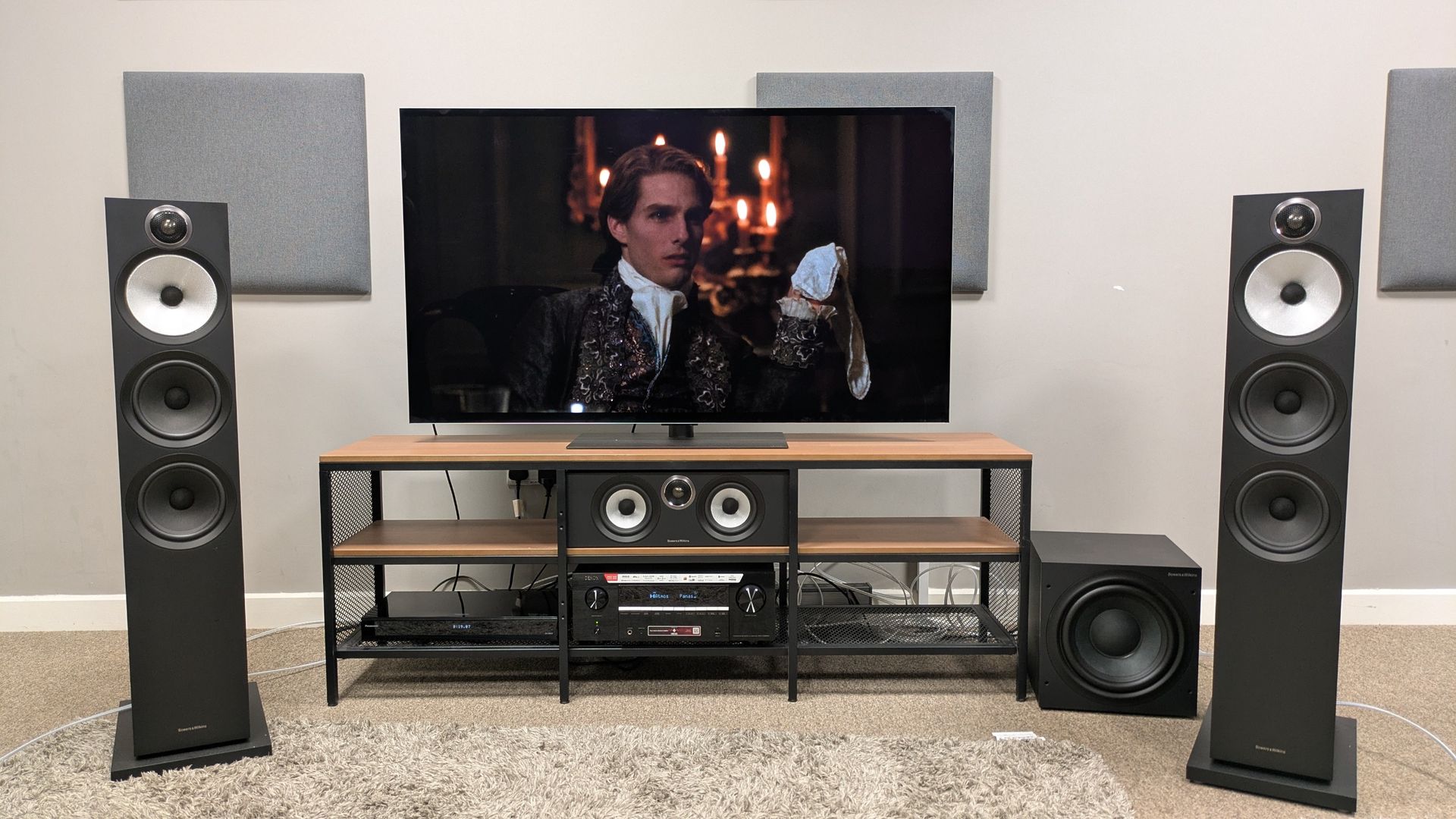
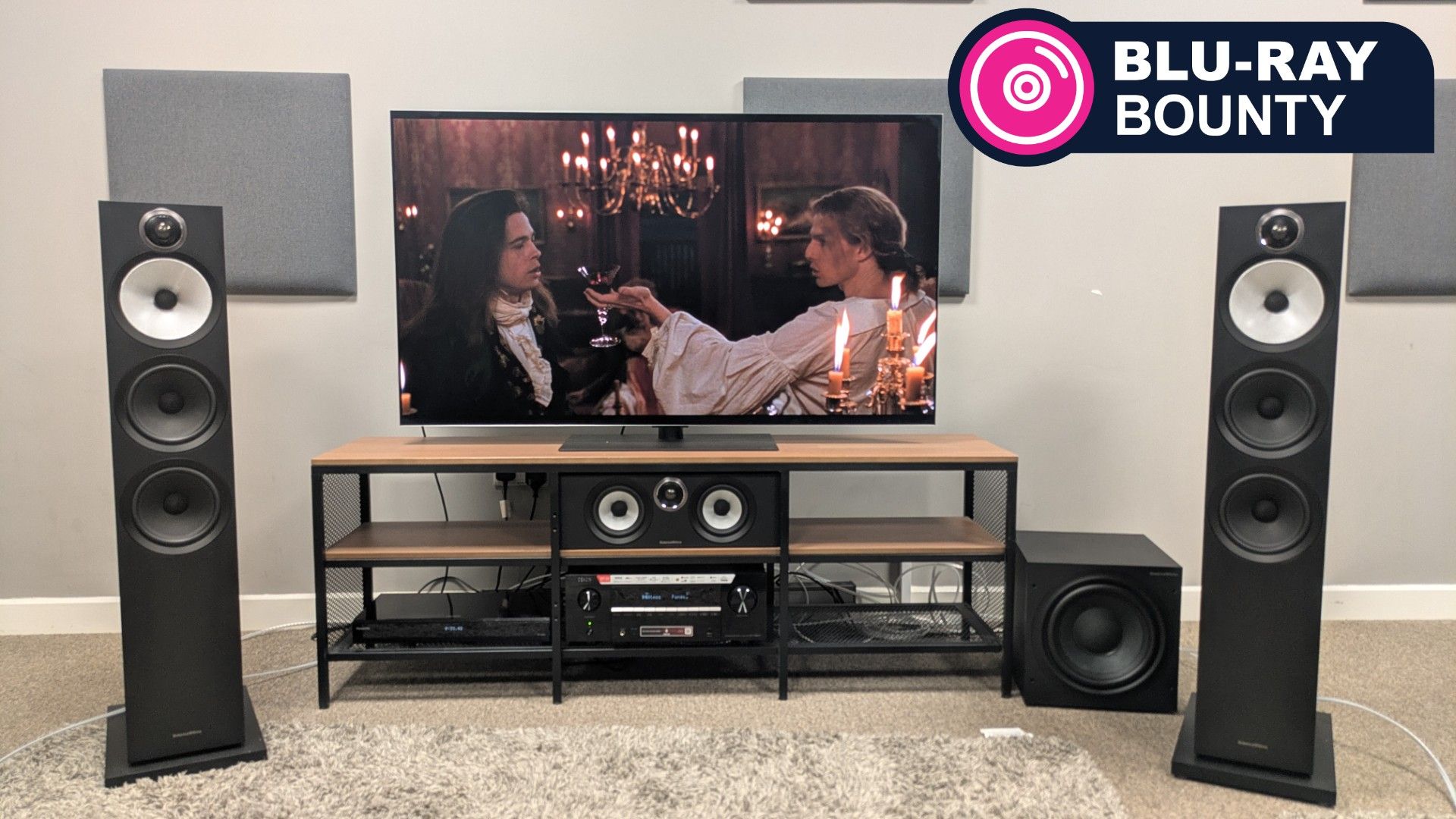
Interview with the Vampire 4K Blu-ray on LG G6 showing Lestat, with Denon and B&W system in the foreground
Warner Bros / Future
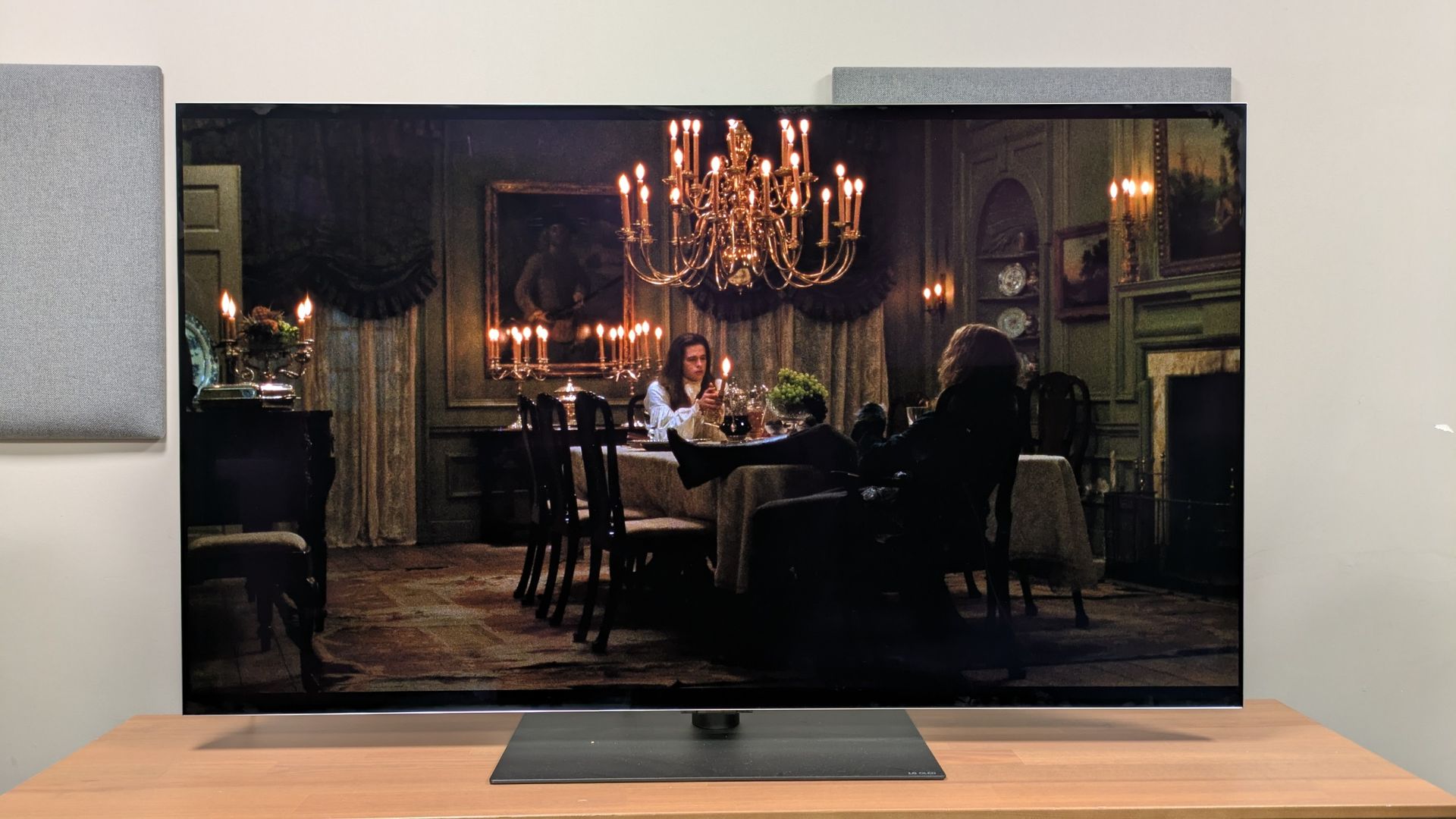
Interview with the Vampire 4K Blu-ray on LG G6 showing Louis and Lestat sat at dining table
Warner Bros / Future
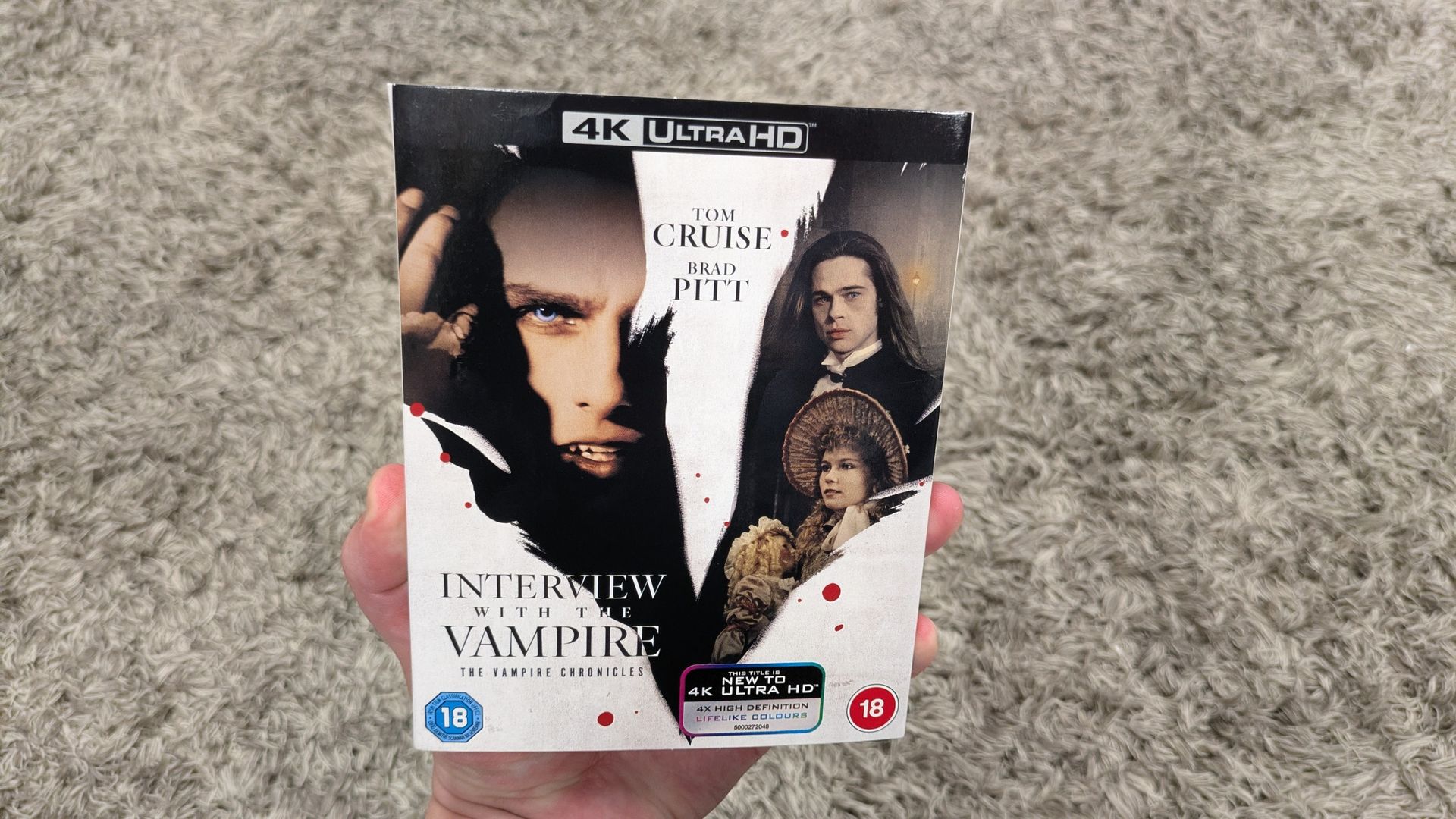
Interview with the Vampire 4K Blu-ray case
Future

Based on Ann Rice’s 1976 novel of the same name, Interview with the Vampire tells the story of the relationship between Louis de Pointe du Lac (Brad Pitt), a man turned into a vampire by Lestat de Lioncourt (Tom Cruise). The movie cuts between 1791 Louisiana and 1991 San Francisco, where Louis is interviewed by reporter Daniel Molloy (Christian Slater). The movie also stars Kirsten Dunst and Antonio Banderas.

This 4K disc is a showcase for contrast. Candles are used continuously throughout the movie as a means of lighting, and create some really interesting contrast-y scenes. Black levels are rich and deep, and when paired with the candles, create powerful contrast that looks superb on our G6 OLED. The 4K restoration still keeps the movie low brightness, but does well to bump the luminosity in the right places.

Textures have been restored nicely, giving everything a 3D-like look, especially in close-up shots of skin. Colors have a true-to-life, natural look about them, shown in Lestat’s eccentric clothing. Fire has a lovely HDR punch, and with a bright display it truly pops on screen. Some film grain has been maintained, but the picture really has been refined here.

The Atmos soundtrack included delivers great detail too. As a flaming torch passes across the screen, the sound travels from the left front speaker to the right accurately with the movement on screen. As a mansion burns down, the roar of the flames produces a satisfying, detailed bass. During scenes with rain, there is a perceived sense of height thanks to Atmos’ object-based sound, even without height speakers in our setup.

Toy Story 5 (Disney Pixar)
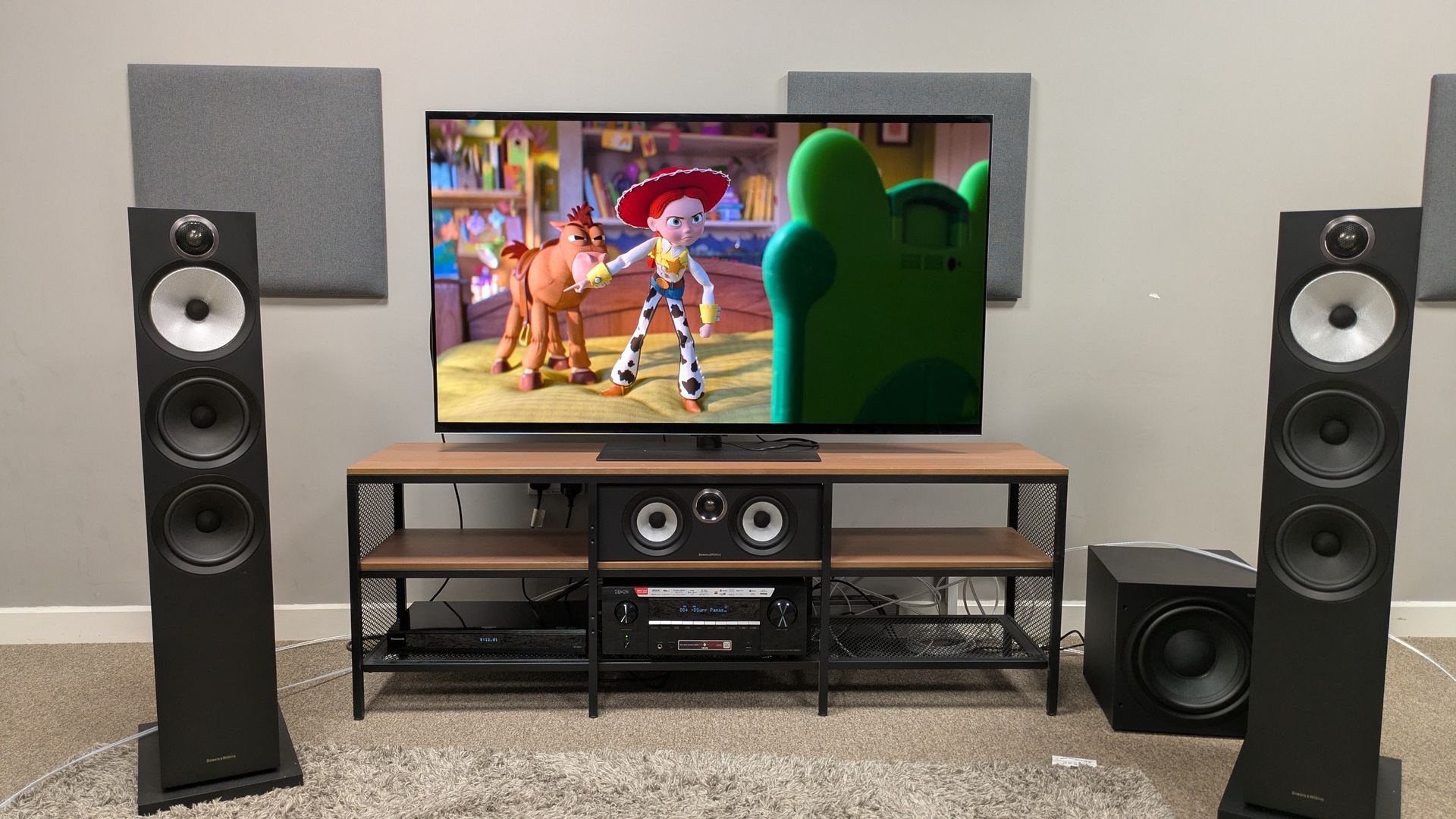
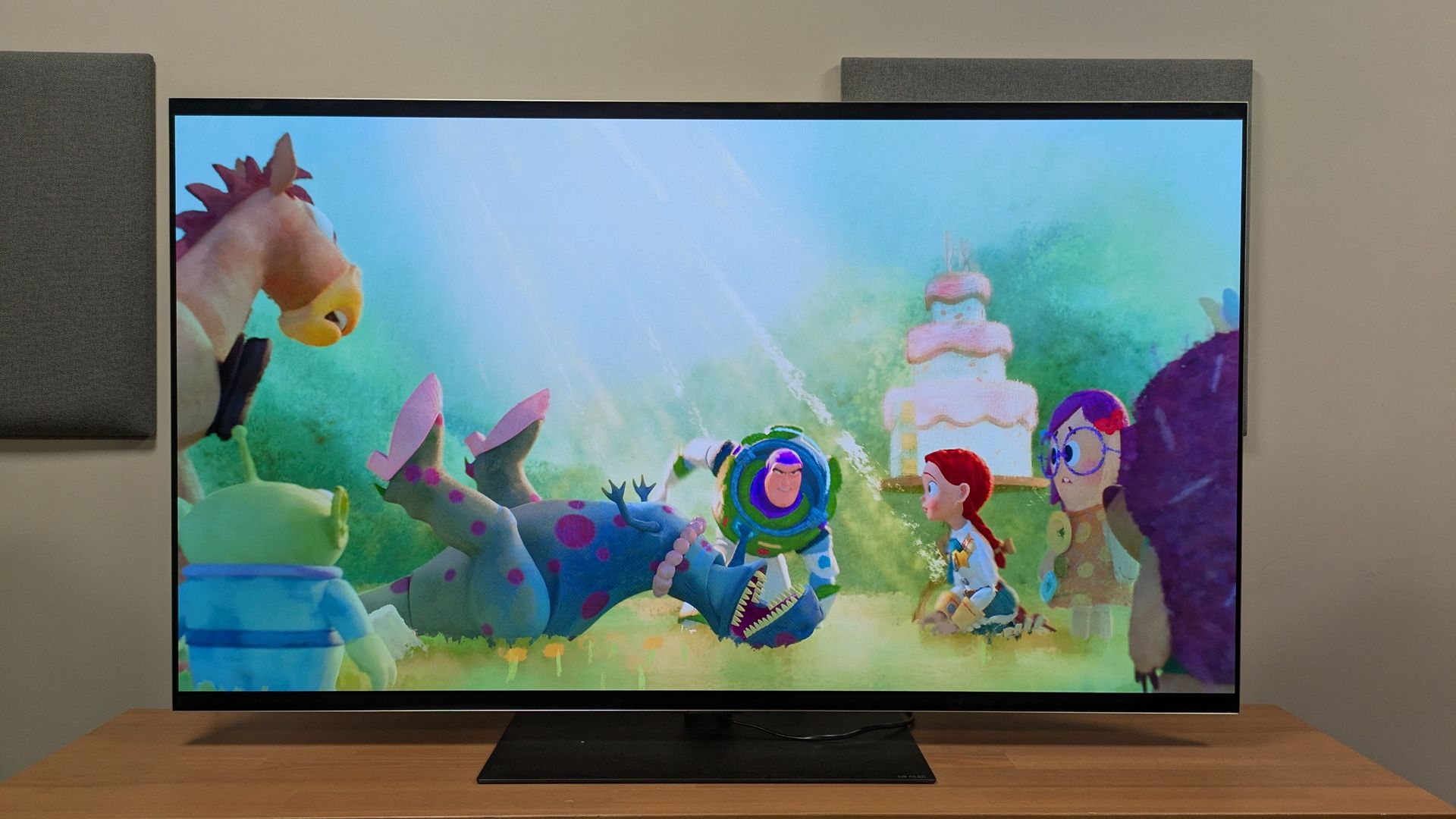
Toy Story 5 4K Blu-ray on LG G6 OLED TV with Denon and B&W system, showing Jessie, Bullseye, and Lilypad on screen
Disney / Future
Toy Story 5 4K Blu-ray on LG G6 OLED TV showing cartoon wedding screen
Disney / Future
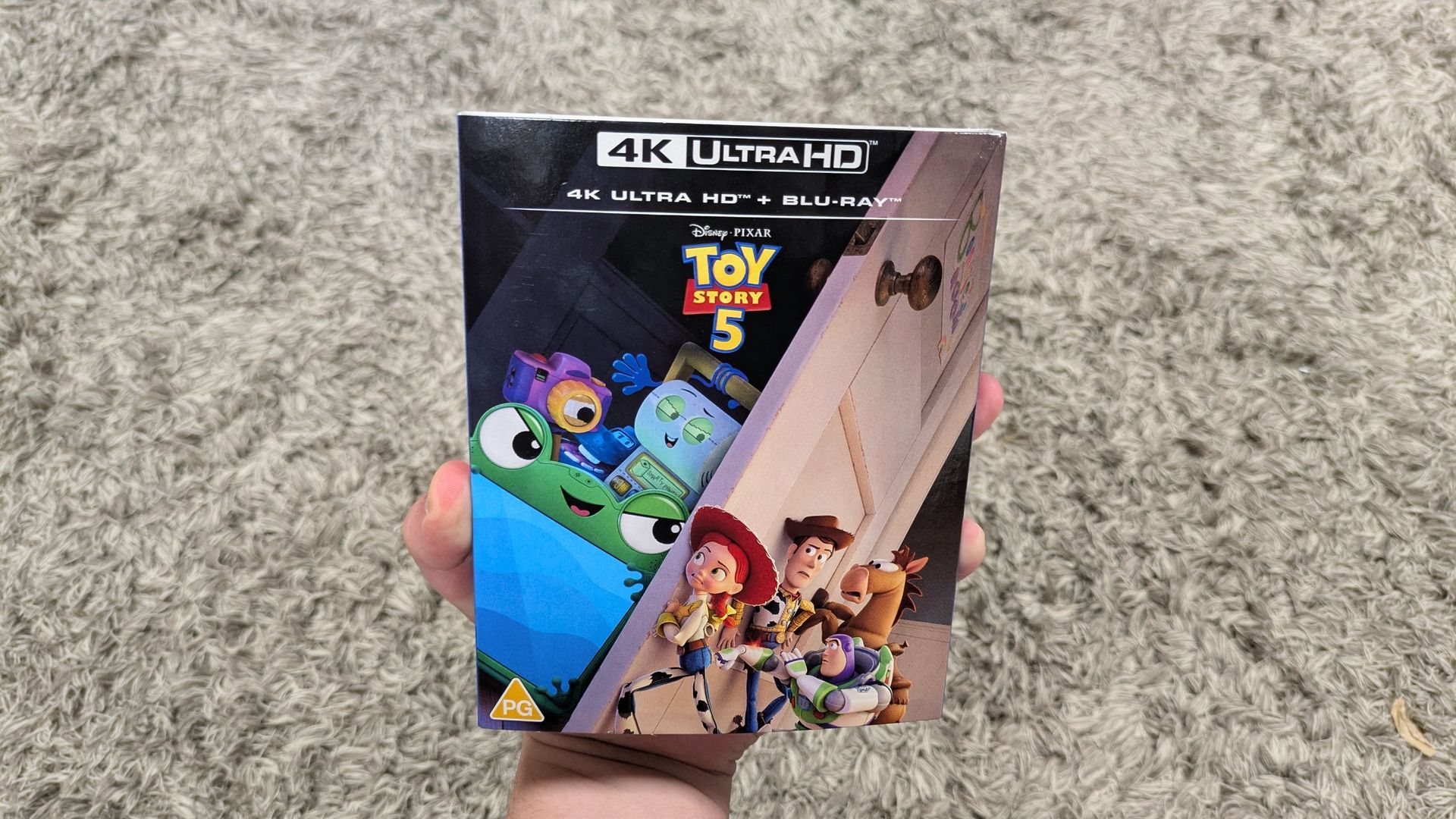
Toy Story 5 4K Blu-ray case
Future

The fifth installment in the Toy Story franchise, Toy Story 5 follows Woody, Buzz, Jessie and the other toys as they deal with the arrival of Lilypad, a tablet that becomes the new favorite of the local children, including the toys' owner Bonnie.

As you’d expect from a Pixar movie, the animation is incredibly crisp with rich textures that give the movie a nice depth. Colors pop on screen, with the red of Jessie’s hat and hair in particular looking incredibly punchy. Other colors like yellow, pink and green have a really nice look to them too, appearing true-to-life throughout the movie. In darker scenes, blacks are rich and inky on our LG G6 and contrast was strong, shown in the scene at the docks. If your TV supports Dolby Vision, you’ll be rewarded.

The 4K disc supports Dolby Atmos and Dolby soundtracks. During my testing, our system processed the soundtrack as Dolby Digital Plus with Dolby Surround and not the full Dolby Atmos, even though our other reference discs worked with Atmos. This may be something to bear in mind if you don’t have a full 7.1.4 channel Dolby Atmos system (this is the listed configuration on the case, so the disc may be compressing the soundtrack as a result).

The soundtrack is still excellent however, with plenty of detail and accurate sound placement. As humans exit a room chatting, the sound travels from the rear speakers to the front. Speech is crystal clear throughout and there’s plenty of power. As the gang run after a van, the bass produced is satisfyingly punchy from Bullseye’s gallop. There’s great balance as well between all other effects and the score, producing a wide soundstage. Despite a lack of height speakers, as Buzz flies through the air, there’s a perceived sense of height that adds to the experience.

Frankenstein (2025) (Netflix)
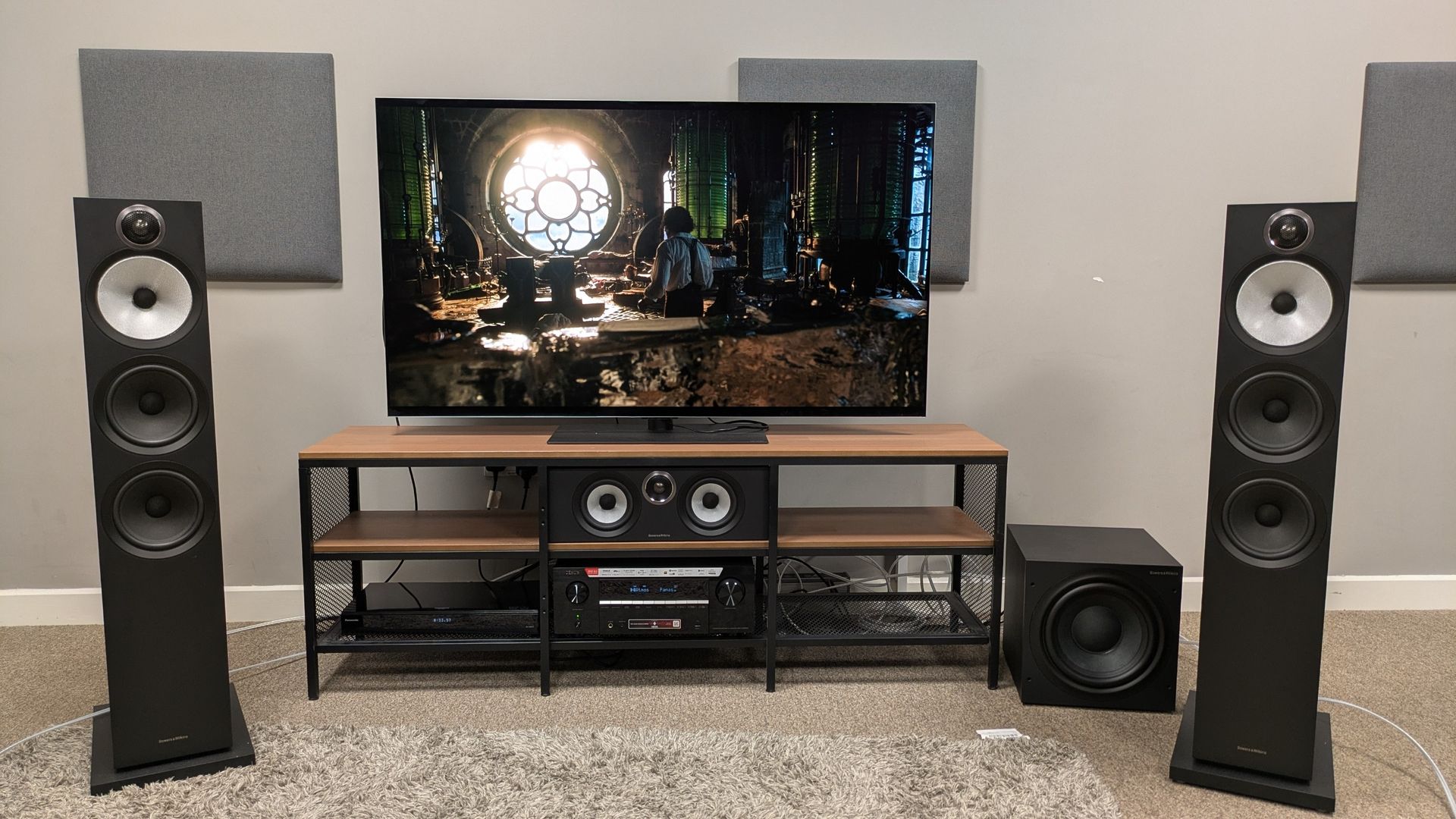
Frankenstein (2025) 4K Blu-ray on LG G6 showing Frankenstein in his tower
Criterion / Future
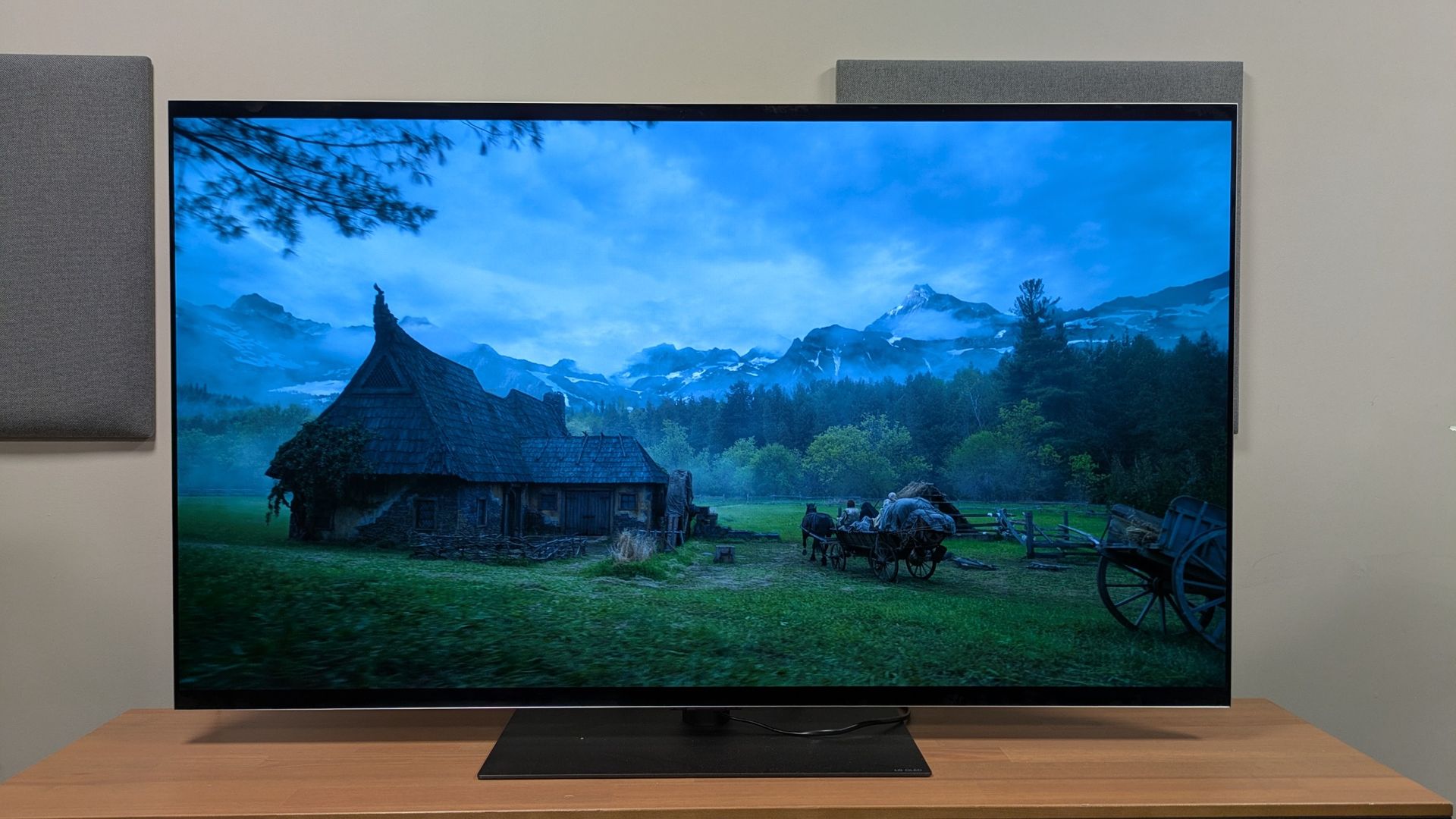
Frankenstein (2025) 4K Blu-ray on LG G6 showing farmhouse
Criterion Collection / Future
Frankenstein (2025) 4K Blu-ray case
Criterion / Future

Directed by Guillermo Del Toro, Frankenstein is the director’s take on Mary Shelley’s novel of the same name. It follows the story of Victor Frankenstein (Oscar Isaac), a scientist whose reanimation experiments result in the creation of The Creature (Jacob Elordi), with dire consequences. The movie also stars Mia Goth, Christoph Waltz and Charles Dance.

Frankenstein is visually stunning on 4K Blu-ray. There are plenty of scenes with high contrast that really play with shadows to create engaging images shown best during night scenes as Victor works in the tower. The balance between light and dark tones is excellent, capturing the Gothic tone of the movie. Textures are crisp and true-to-life, especially with people.

Colors, while used somewhat sparingly, really pop when on screen, shown in the green, grassy fields during The Creature’s tale. Red is also striking, shown with blood and in some of the costumes the wealthier characters wear. HDR highlights, such as the Sun on the horizon, have a good punch too, which really showed up on our LG G6.

The disc supports an incredibly detailed Dolby Atmos soundtrack. One of the showcases for this was the re-animation scene. The crackling of thunder is mapped to each speaker with pinpoint precision, and as it rumbles, the bass produced by our subwoofer is weighty and fills the room. As the camera moves around the room, the sound accurately follows the action on screen. Other effects, such as Victor working with body parts, also sound visceral and realistic.

Little Shop of Horrors (1986) (Warner Bros)
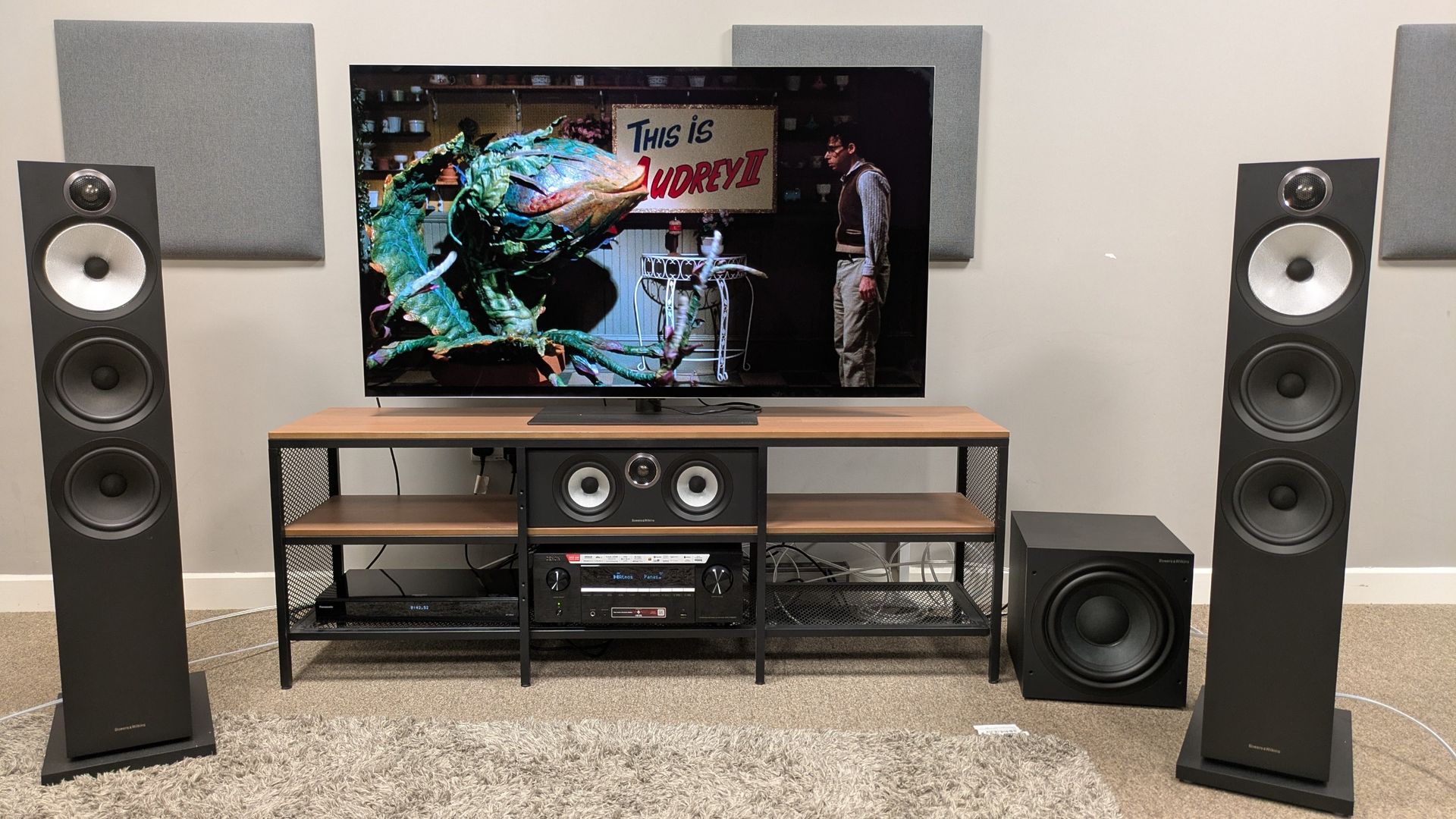
Little Shop of Horrors (1986) 4K blu-ray on LG G6 showing Seymour and Audrey II, with Denon and B&W system in foreground
Warner Bros / Future
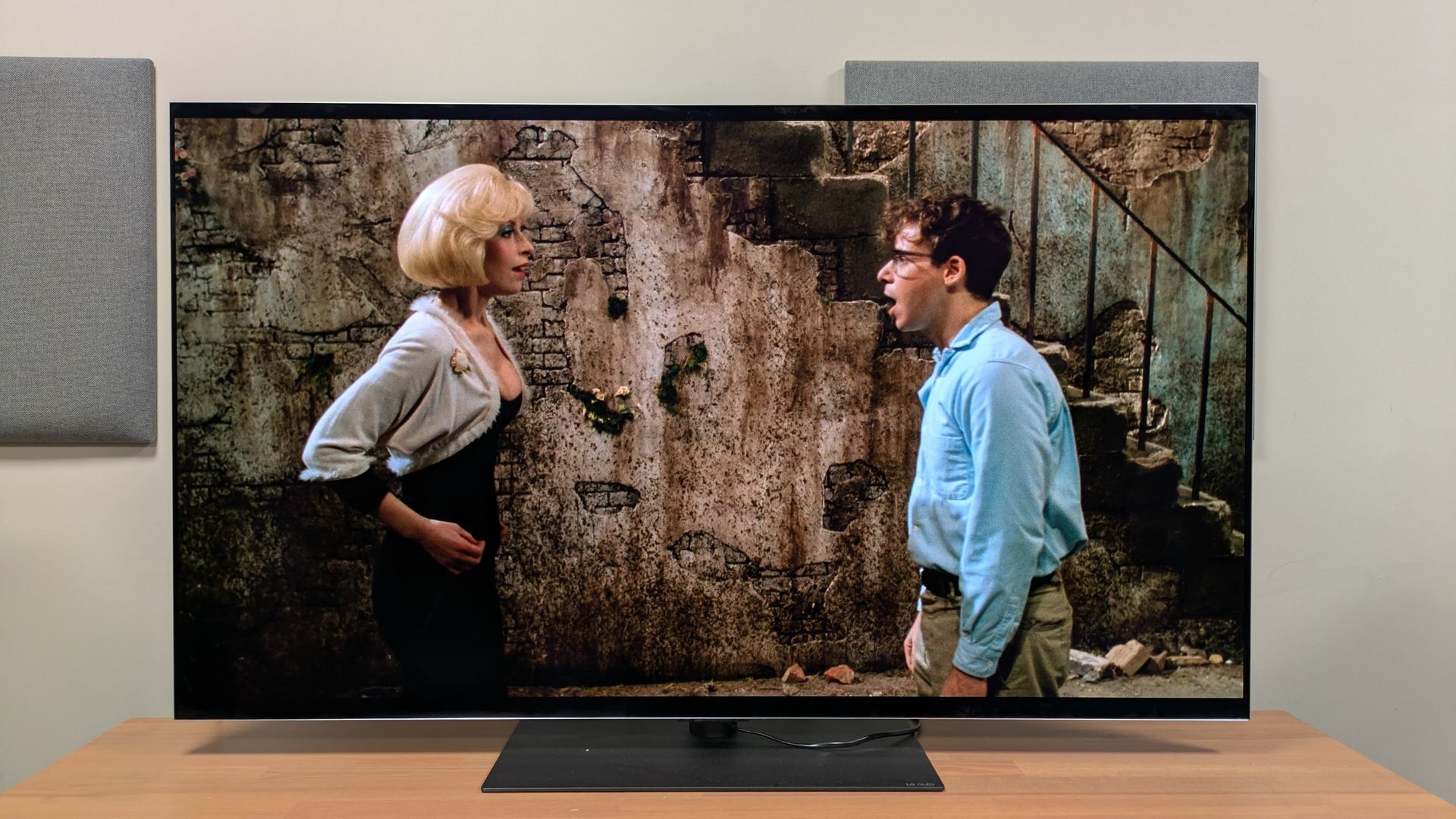
Little Shop of Horrors (1986) 4K blu-ray on LG G6 showing Seymour and Audrey on screen
Warner Bros / Future
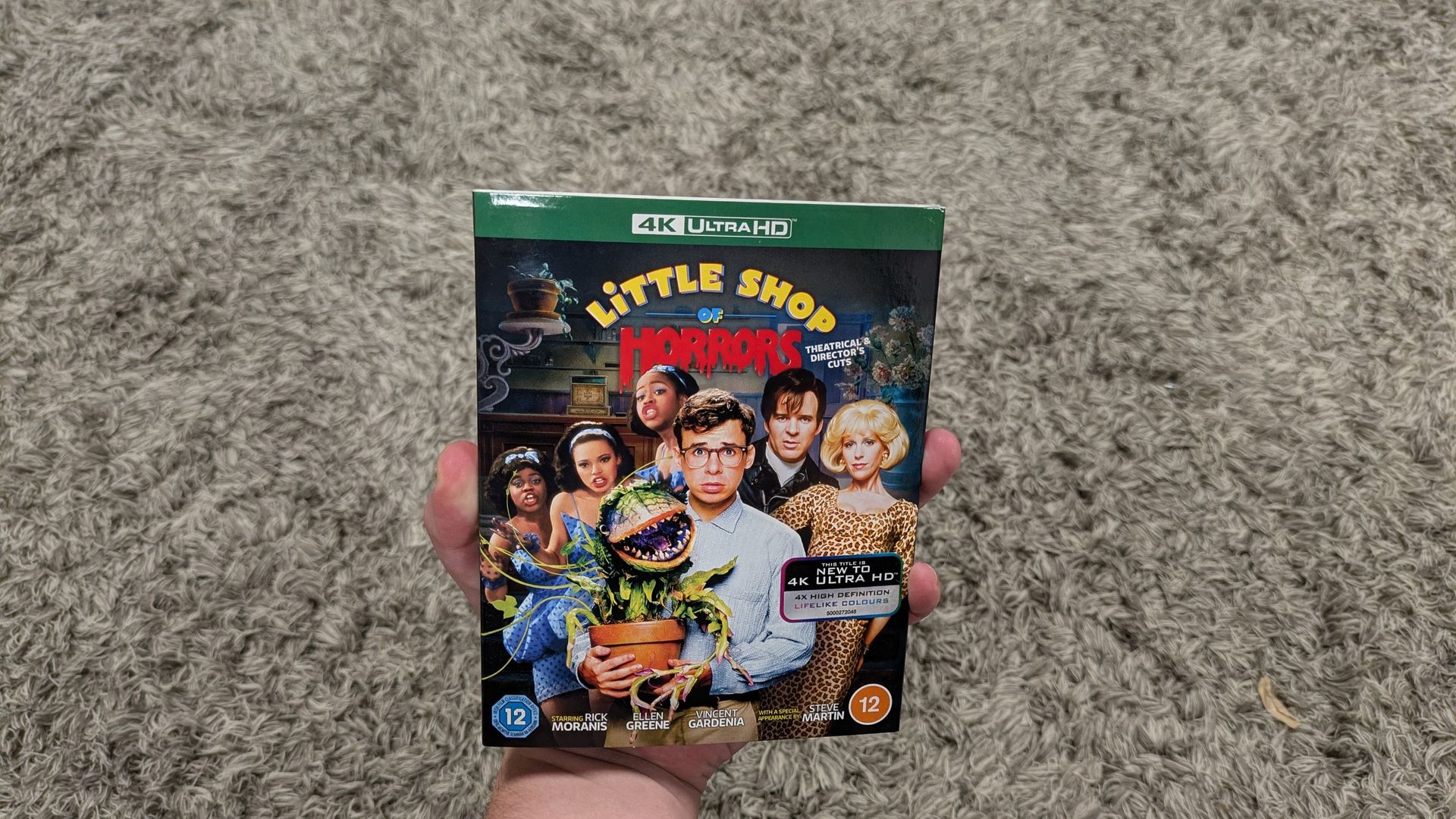
Little Shop of Horrors (1986) 4K blu-ray case
Future

An adaptation of the 1982 musical of the same name, which is itself an adaptation of the 1960 movie The Little Shop of Horrors, Little Shop of Horrors follows Seymour (Rick Moranis), a shy man who works in a run-down flower shop and falls for his co-worker Audrey (Ellen Greene). He buys a mysterious plant and names it Audrey II and it soon grows into a giant, talking plant that attracts customers. But Audrey II has some nefarious intentions.

A Dolby Atmos soundtrack is featured here and sounds fantastic. The Atmos mixes for all the musical numbers have a great balance between the instruments and vocals, all given equal clarity and power. Whether it’s the delicate strings and twinkling piano keys of songs like ‘Somewhere That’s Green’ or the punchy guitars and pounding bass of tracks like ‘Feed Me (Git it!’), the Atmos soundtrack is superb.

Visually, this is a great 4K restoration. Textures have been cleaned up and refined, most obvious in people’s skin. Colors are punchy and vibrant throughout the movie, from the green on Audrey II’s plant body to the brightness of a yellow cab. Black levels are deep, with strong shadows during night scenes cast by the stage-style lighting. While there is some film grain present, the picture has mostly been cleaned up, giving it a more modern look.

Blood Simple (StudioCanal)
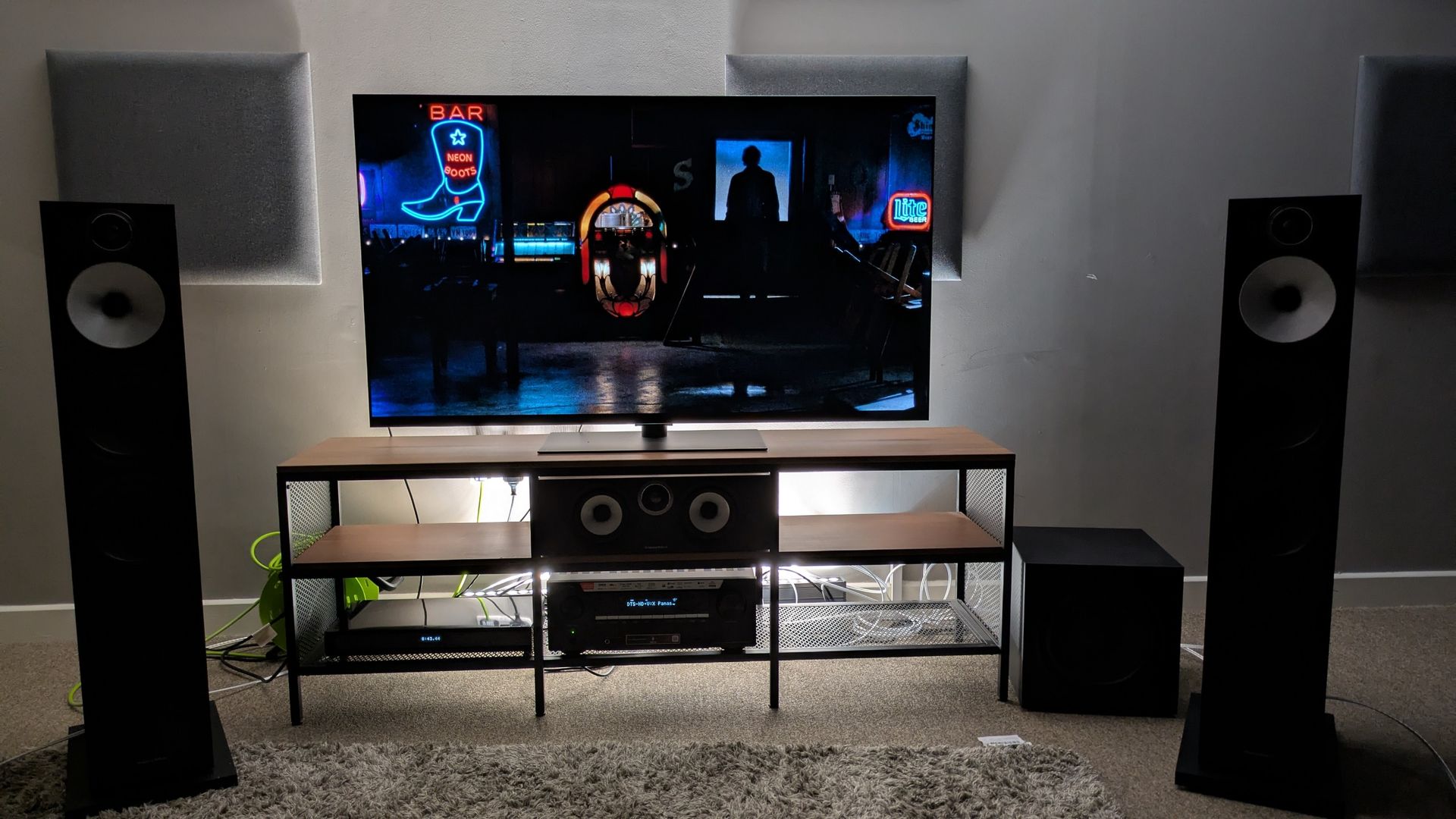
Blood Simple 4K Blu-ray on LG G6 showing Ray in bar at night on screen, with Denon and B&W system in foreground
StudioCanal / Future
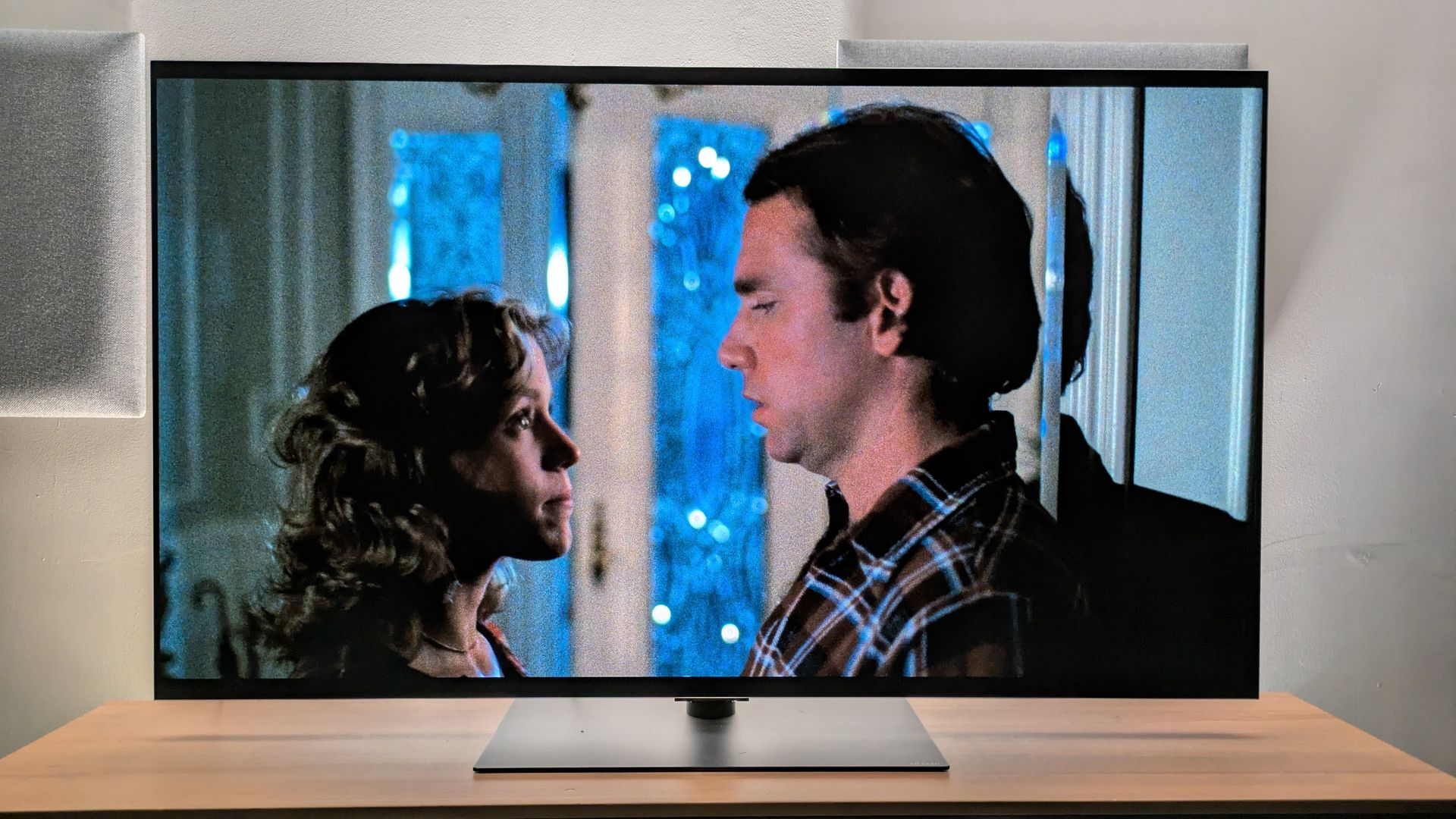
Blood Simple 4K Blu-ray on LG G6 showing Ray and Abby
StudioCanal / Future
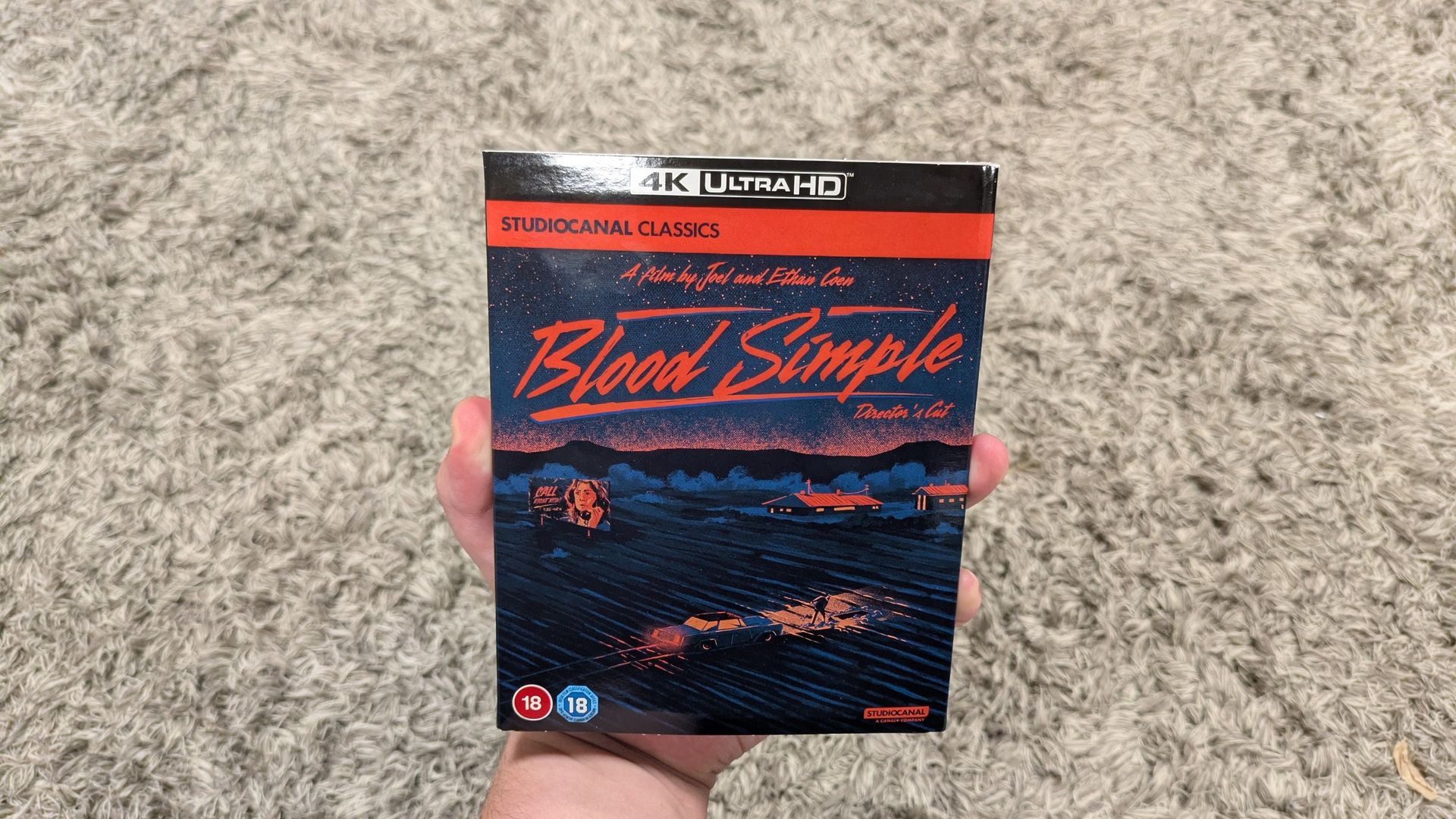
Blood Simple 4K Blu-ray case
Future

Blood Simple follows the story of bartender Ray (John Getz) and his affair with his boss and bar-owner Julian’s (Dan Hedeya) wife Abby (Frances McDormand). Julian hires detectives to follow the pair and kill them if the affair is proven to be real. This was the directorial debut of the Coen Brothers, and McDormand’s on-screen debut.

The 4K restoration of Blood Simple is very good overall. Textures have been cleaned up well, shown predominantly in people’s skin and faces, giving them a more modern look. There is plenty of film grain still present here, more so in some shots than others. Colors, when used, such as the neon at the bar, have a good vibrancy.

Where this disc shines most though is in its darker scenes. Black levels are inky and there are plenty of high contrast scenes, with light and dark tones balancing well to create strong shadows across people’s faces.

The 4K disc supports a DTS-HD 5.1 MA soundtrack. While there isn’t a ton here to push your home theater system, the soundtrack still shows great detail. As a car passes Ray and Abby in the opening, the sound of it is mapped to the speakers accurately, passing from left to right on the front speakers. Speech is cleanly rendered and the piano-led noir score is crystal clear and balances well with other effects.

Inside Llewyn Davis (StudioCanal)
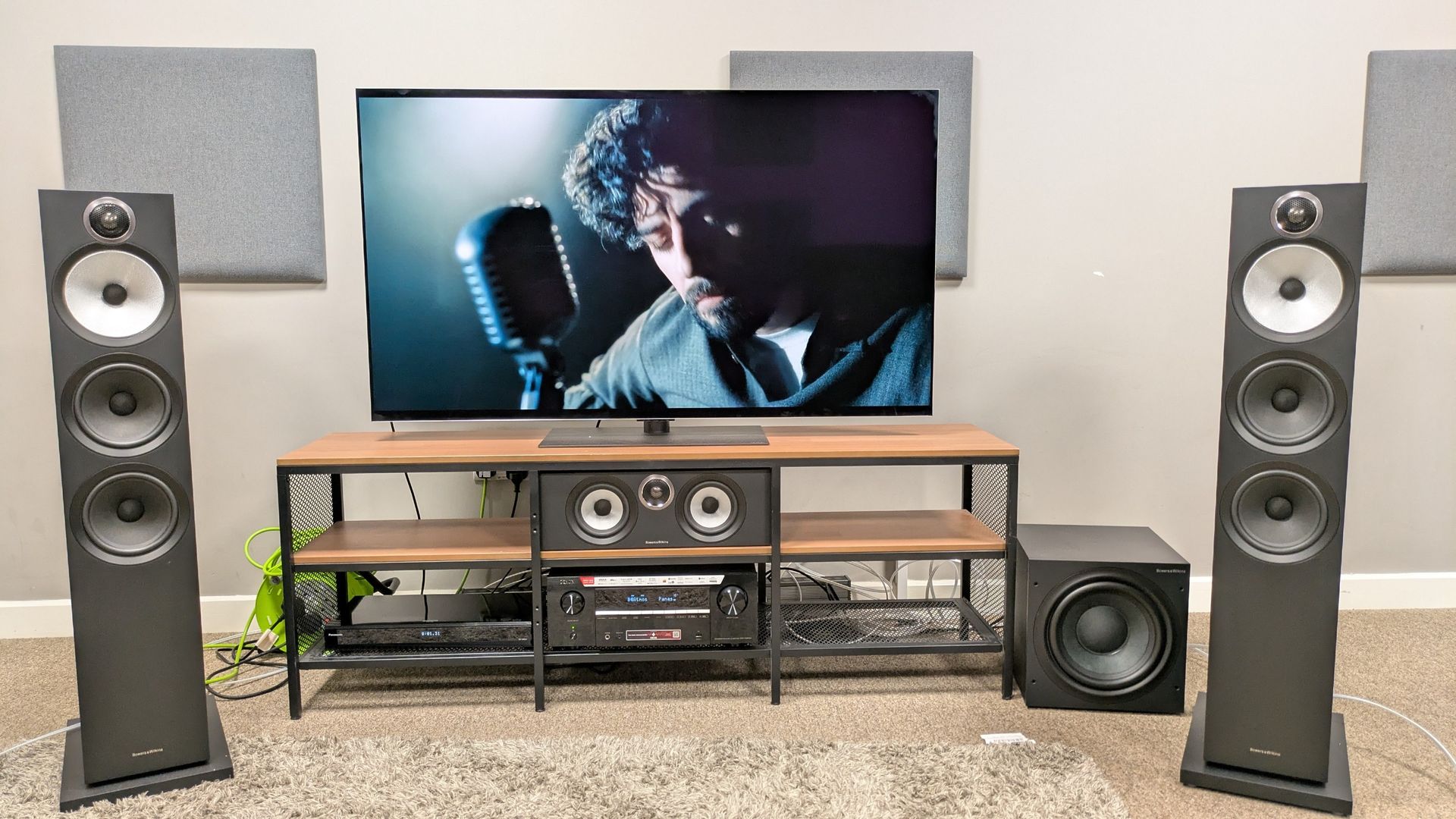
Inside Llewyn Davis 4K Blu-ray on LG G6 showing Llewyn performing, with Denon and B&W system in the foreground
StudioCanal / Future
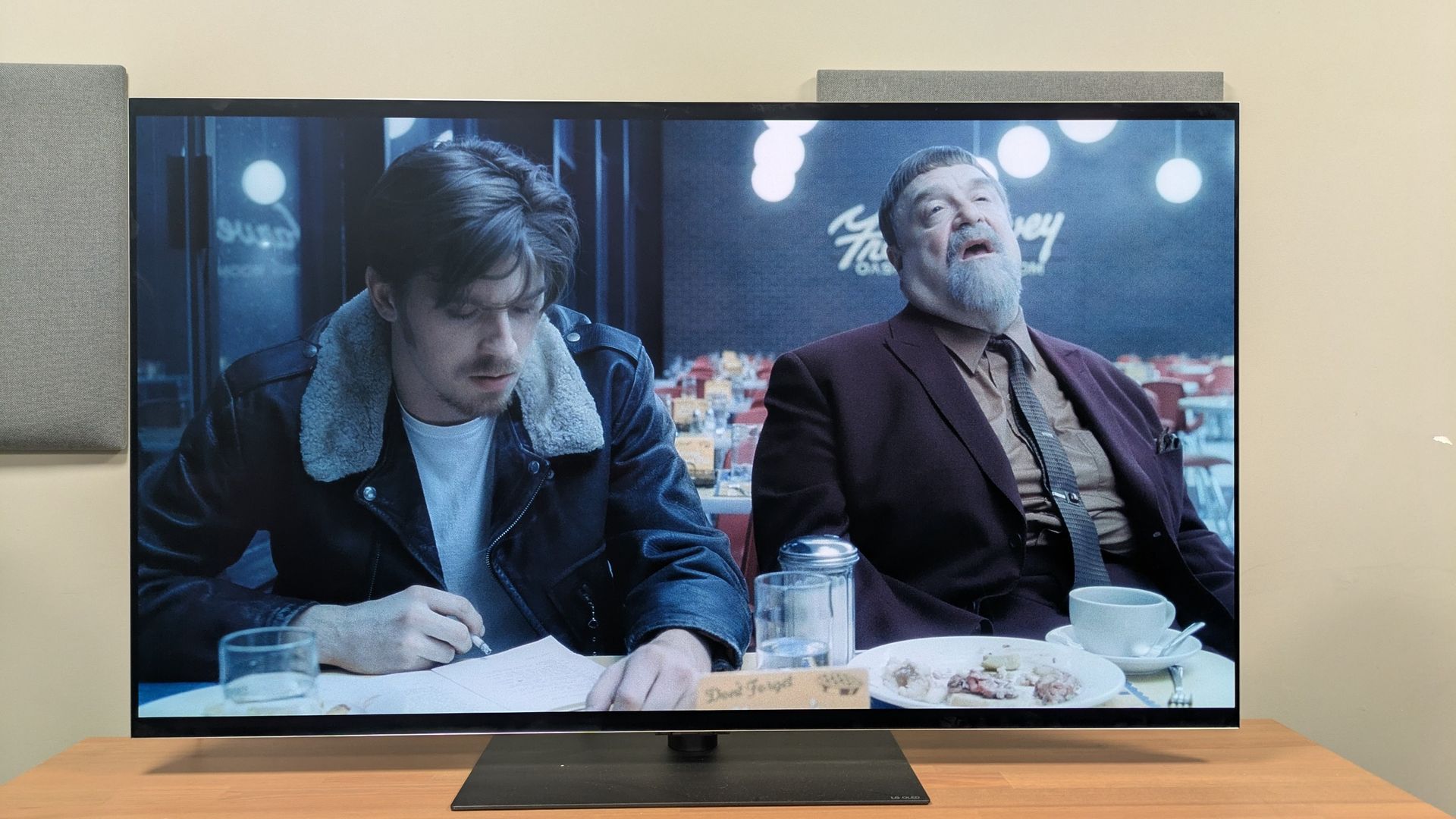
Inside Llewyn Davis 4K Blu-ray on LG G6 showing Johnny and Roland in diner
StudioCanal / Future
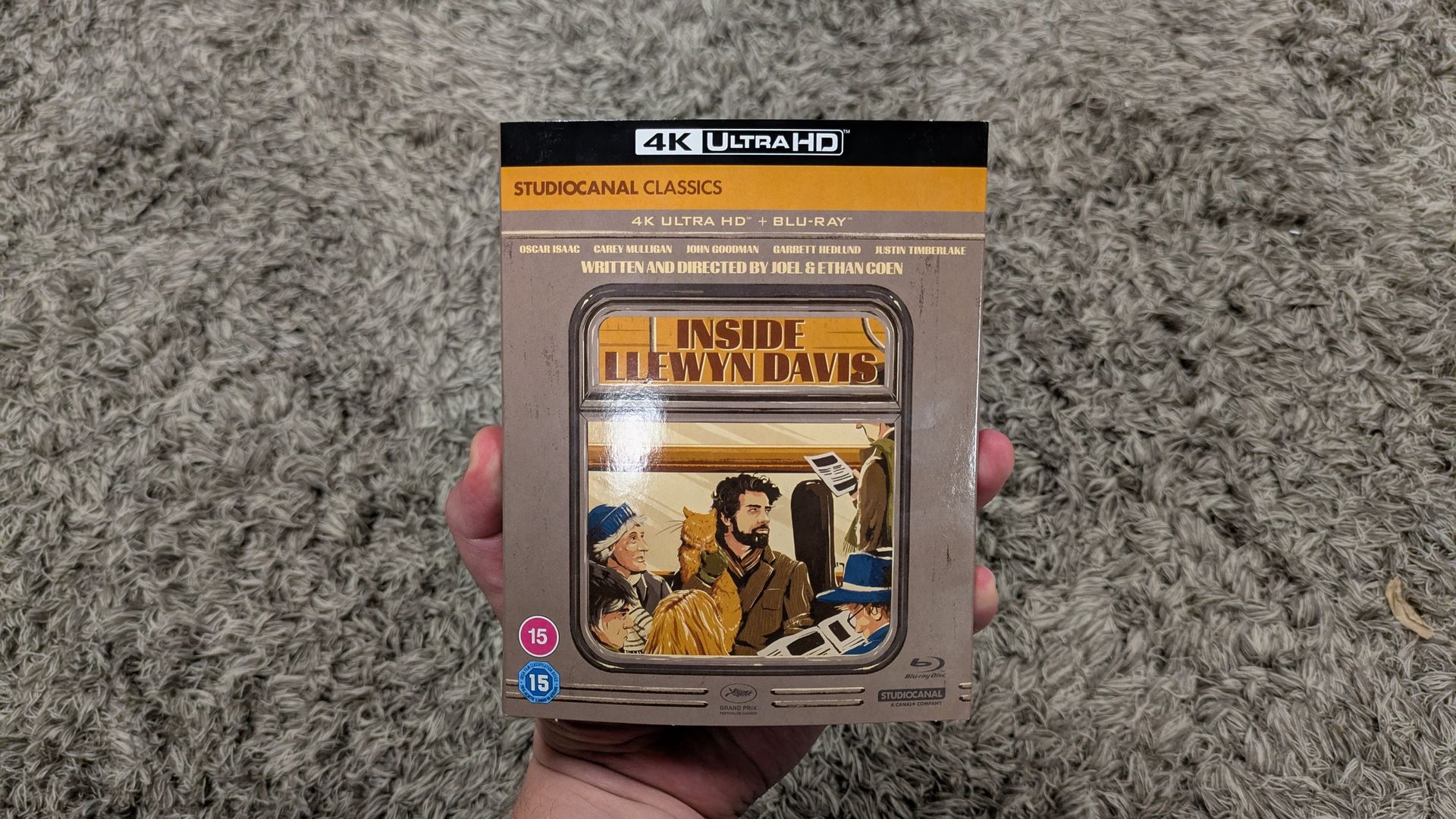
Inside Llewyn Davis 4K Blu-ray case
Future

Inside Llewyn Davis follows the story of fictional songwriter Llewyn Davis (Oscar Issac), a struggling musician in 1961. Although the character of Davis is fictional, the story was partly inspired by the autobiography of folk artist Dave Van Ronk. The movie was directed by the Coen Brothers.

Inside Llewyn Davis looks great in 4K. Textures are refined and lifelike, from people’s skin to details in clothing. While the movie has a distinctive ‘hazy’ gray look, colors look natural and have some nice punch to them. Scenes in bars during performances show nice contrast, with deep black tones in shaded areas balancing well with stage lights and natural light seeping in.

A Dolby Atmos soundtrack is included, and it sounds brilliant. Songs have a great Atmos mix that are delivered with real clarity and detail, particularly ‘Fare Thee Well’ at the start of the movie. Live performances show off the wide soundstage, accurately rendering the echo from within a room as Llewyn sings in the opening scene.

Elsewhere, the sounds of New York City demonstrate plenty of detail, with the sounds of car horns and general conversation mapped to the rear speakers. As trains pull into a subway, the sound travels from speaker to speaker accurately. Speech and vocals are clear throughout and balanced well with other effects.
JMGO N3 Ultimate review: this projector is so, so bright, but less compelling at night

JMGO N3 Ultimate: One-minute review

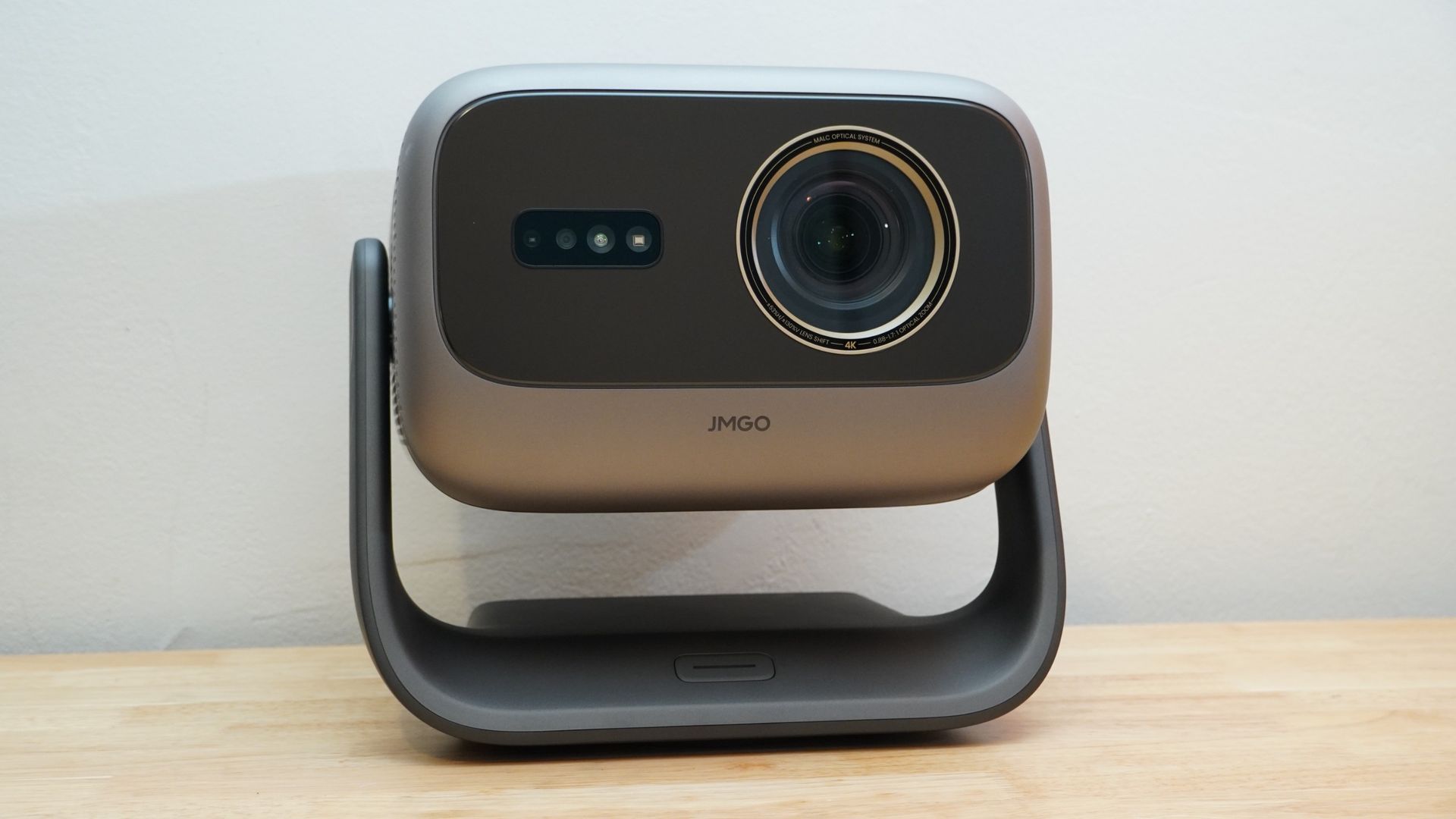
The JMGO N3 Ultimate is the new, top-of-the-line option from JMGO. It brings a lot of what the brand had already been packing into a new design with a motorized gimbal stand and adjustable optics that provide quick or finely controlled setup options.

The JMGO N3 Ultimate's projection can be splendid, thanks to bright RGB lasers that give the projector enough juice to hold up in even well-lit rooms. The N3 Ultimate has vivid color and crisp detail, too. Unfortunately, the brightness isn’t matched by effective dimming to offer better performance in dark scenes, which is perhaps its biggest setback. Its motion could also be smoother without so many artifacts, but it’s not terrible either.

All told, it’s a capable projector that could serve a lot of people well, as long as they’re not seeking out dark, home theater setups where contrast is as important as brightness. At its $2,999 / £2,499 list price, it’s competitively priced compared to the best projectors, but it’s been on sale for much less and becomes all the better a bargain.

JMGO N3 Ultimate Review: Price and release date

  • Release date: 2026
  • List price: $2,999 / £2,499

The JMGO N3 Ultimate launched in 2026 and is now widely available. It has a $2,999 £2,499 list price, but it has already seen substantial discounts. At the time of writing, it was available for $2,349 / £2,119.

JMGO N3 Ultimate Review: Specs

Supported screen sizes

40-300 inches

Optical technology

3 Laser DLP

Brightness (specified)

5,800 Lumens

Audio

2x 12.5-watt speaker

Ports

1x USB-A, 2x HDMI 2.1 (1x eARC)

Smart TV

Google TV

Dimensions

12.14 x 9.05 x 10.79 inches / 308.36 x 229.87 x 274.07mm

Weight

15.32 lb / 6.94kg

JMGO N3 Ultimate Review: Design and features

  • Built-in Google TV
  • Motorized gimbal stand and optical lens adjustments
  • 1080p/240Hz VRR mode for gaming

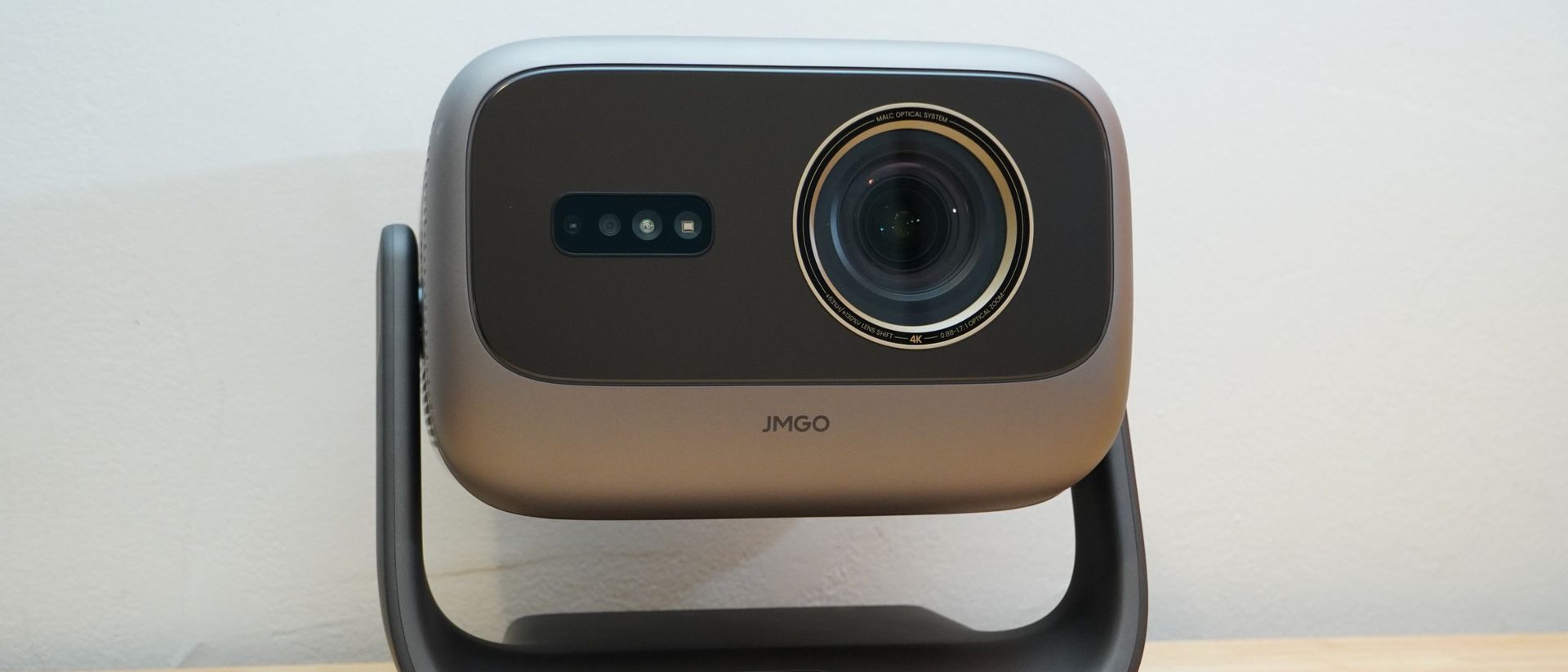
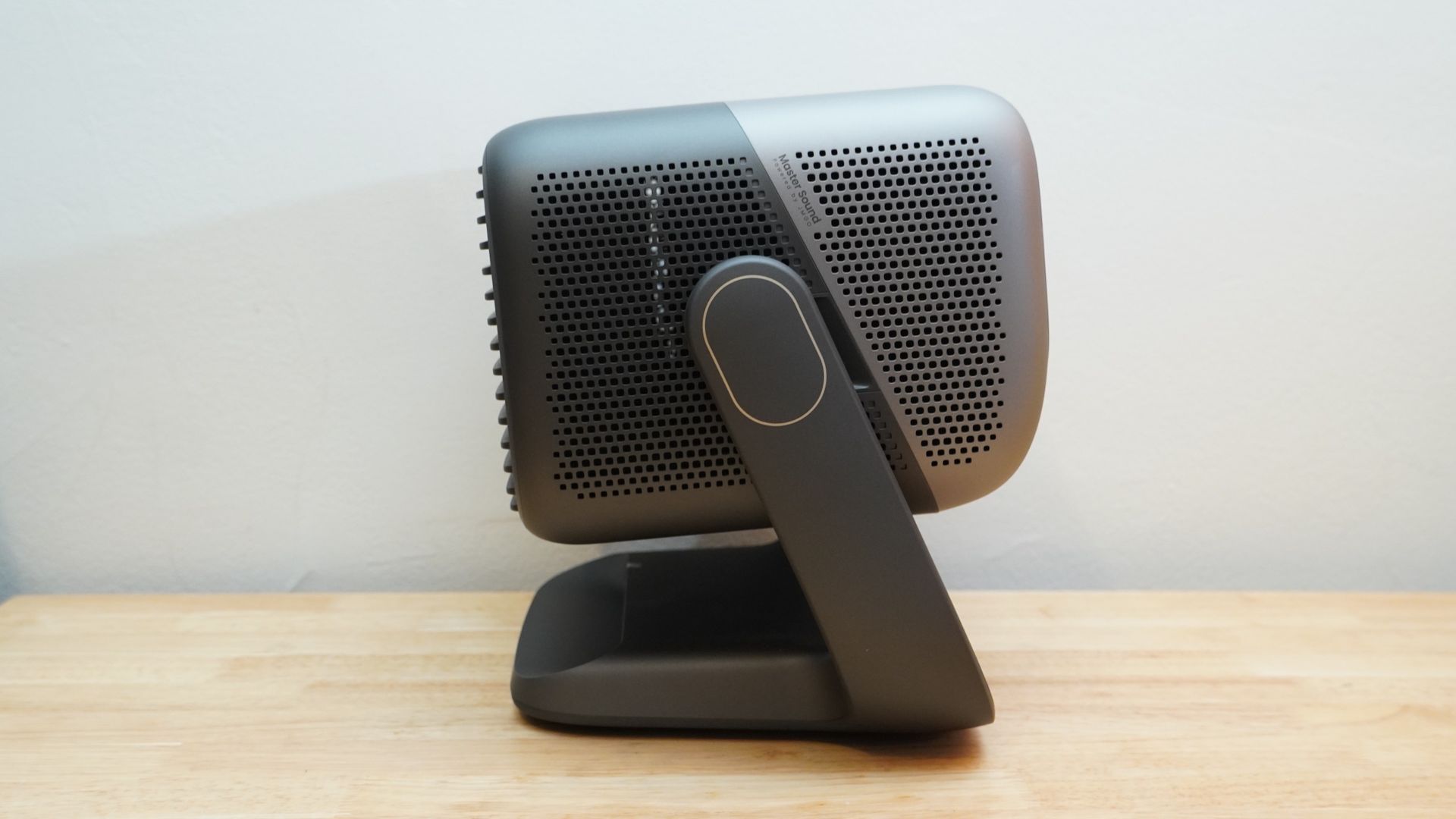
JMGO has been rocking the same design for a few years now, and the JMGO N3 Ultimate does little to shift that. It’s still a fairly compact, two-tone rounded box sitting aloft on a gimbal stand with a rotating base, making it easy to set up and point the projection where you want it.

This go around, JMGO has incorporated small motors for electronic control of the stand. By holding a dedicated button on the remote control and using gyro controls, you can adjust the tilt and rotation of the projector. It’s good for quick adjustment but not for fine tuning.

In an interesting twist, the N3 Ultimate is JMGO’s projector that least needed this technology, as the projector incorporates advanced optics with adjustable zoom and lens shift. The zoom can shift the projector from a 0.88:1 to a 1.7:1 throw ratio, giving it a ton of range. Meanwhile, the lens shift lets it move the projection up or down by 130% or sideways by 53%, so you really just need to point it perpendicular to your wall, and you should have no trouble shifting and squeezing the projection to fit without any keystone correction.

A side view of the JMGO N3 Ultimate projector.

(Image credit: Future)

Those manual controls are how you’ll get the best picture, but the JMGO N3 Ultimate has a host of automated tools that can quickly make adjustments for you, which may be convenient if you’re moving it often. It can analyze the projection area available to it, re-aiming, shrinking, and shifting the picture to fit. I found this using digital keystone even when it really wasn’t called for, though, so I wouldn’t count on it doing the best job.

One additional automatic tool that may be more helpful is the wall color adaptation. This uses the projector's camera and a series of test patterns to tweak colors so they appear better on your wall. You won’t need this if you use a screen, but it worked well on my beige walls.

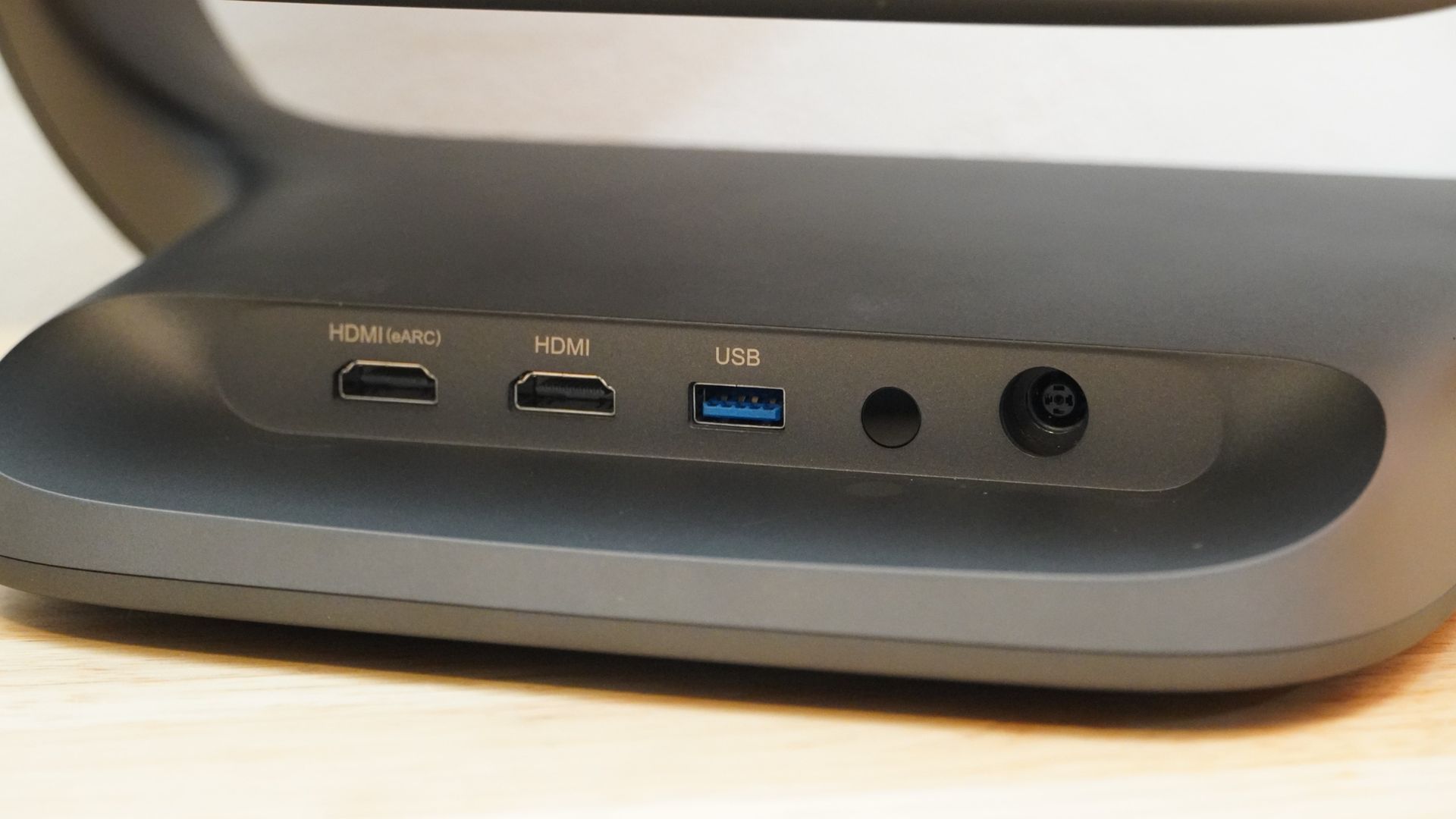
Since the projector can move quite a bit in operation, it fits its connectors all at the base, rather than the rear of the projection unit itself. This can still get in the way of rotation, but makes vertical tilt a non-issue. The projector doesn’t have a great selection of ports, though, with just two HDMI 2.1 ports, one of which is eARC and probably should be kept for that purpose. There’s also a single USB-A port.

A close up of the ports at the back of the JMGO N3 Ultimate projector.

(Image credit: Future)

Thankfully, you don’t need to use any of those HDMI ports for basic streaming. The projector has built-in Google TV, and it operates quickly on its 4GB of memory. Annoyingly, it pauses playback while navigating menus sometimes (sometimes it doesn’t), but it’s quite serviceable otherwise. It even gets 64GB of storage, which can be useful if you use lots of apps. Perhaps, more crucially, the projector connects over Wi-Fi 6, giving it faster and more stable connectivity to work with while streaming.

For cinephiles, the JMGO N3 Ultimate supports HDR10 and Dolby Vision. Meanwhile, for gamers the projector can shift from 4K60Hz over to 1080p/240Hz and even brings VRR for smooth, low-latency, responsive gaming. There are some trade-offs though. Enabling VRR hurt clarity no matter if I left the projector at 4K or swapped to 1080p. Even at 1080p, VRR took a small toll on clarity. Fine text exhibited artifacts that looked like chroma subsampling. In games, it wasn’t an issue, but navigating Windows on PC to select games to play, it was a nuisance.

A view of the front of the JMGO N3 Ultimate projector.

(Image credit: Future)

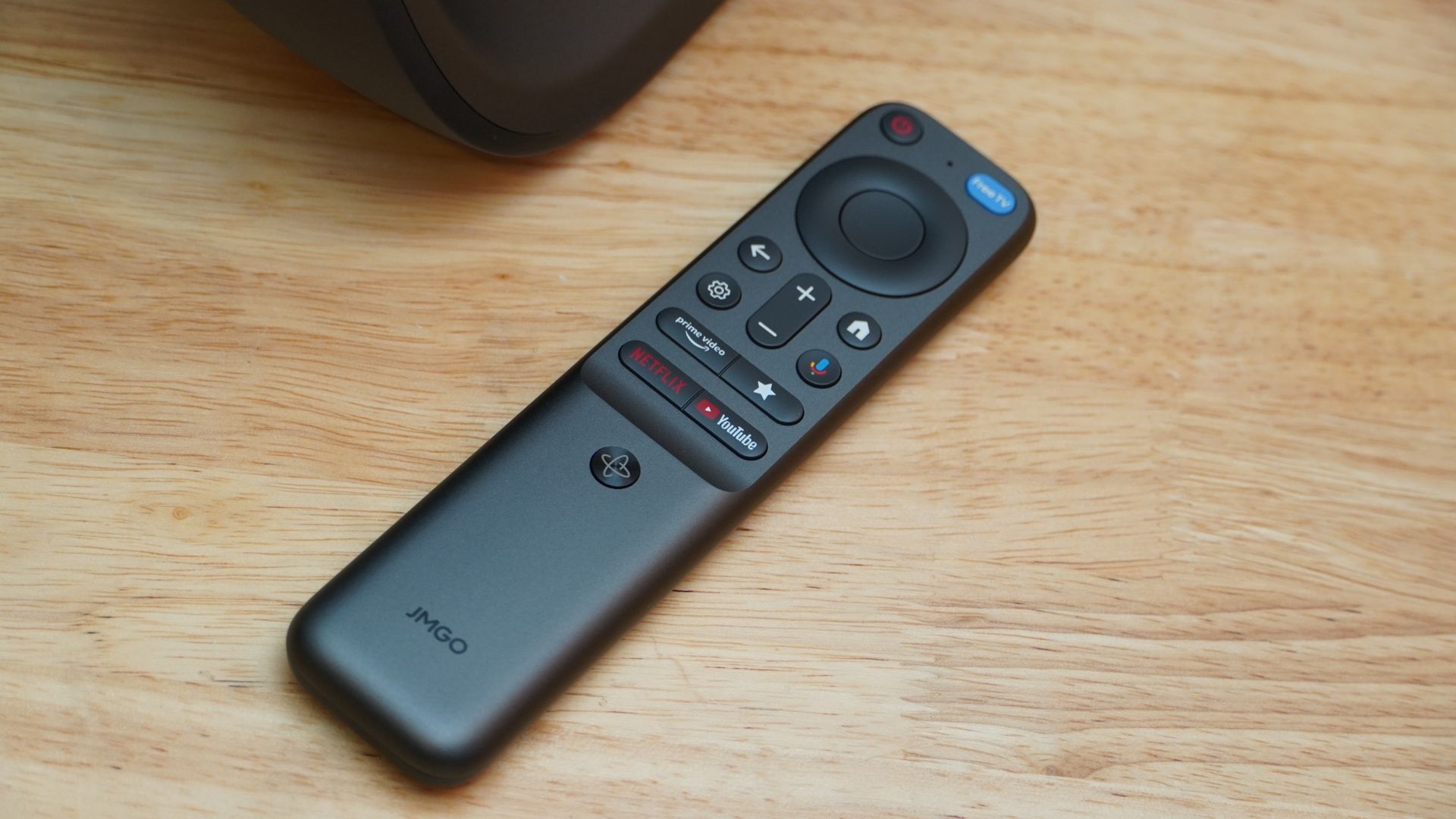
Apart from its gyro controls, the Ultimate's remote is pretty basic. It has the standard Google TV controls and thankfully a pill-shaped volume control that’s easy to feel out in the dark. It includes shortcuts to Prime Video, Netflix, YouTube, and one app of your choice. Google TV Freeplay gets a separate shortcut at the top of the remote. Annoyingly, there’s no mute button for quick silencing and while the remote has motion-activated lighting behind some of its keys, it doesn't behind the shortcut buttons.

Since the JMGO N3 Ultimate is fairly portable, JGMO includes a foam carrying case that can fit it, the remote, and the power adapter all inside. It’s not exceedingly robust or impressive, but it’s not too bulky and should do a better job protecting the hardware than a typical backpack would.

  • Design & features score: 4.5 / 5

JMGO N3 Ultimate Review: Picture quality and performance

  • Wonderfully bright and colorful
  • Black levels could be darker
  • Crisp 4K visuals and responsive 1080p gaming

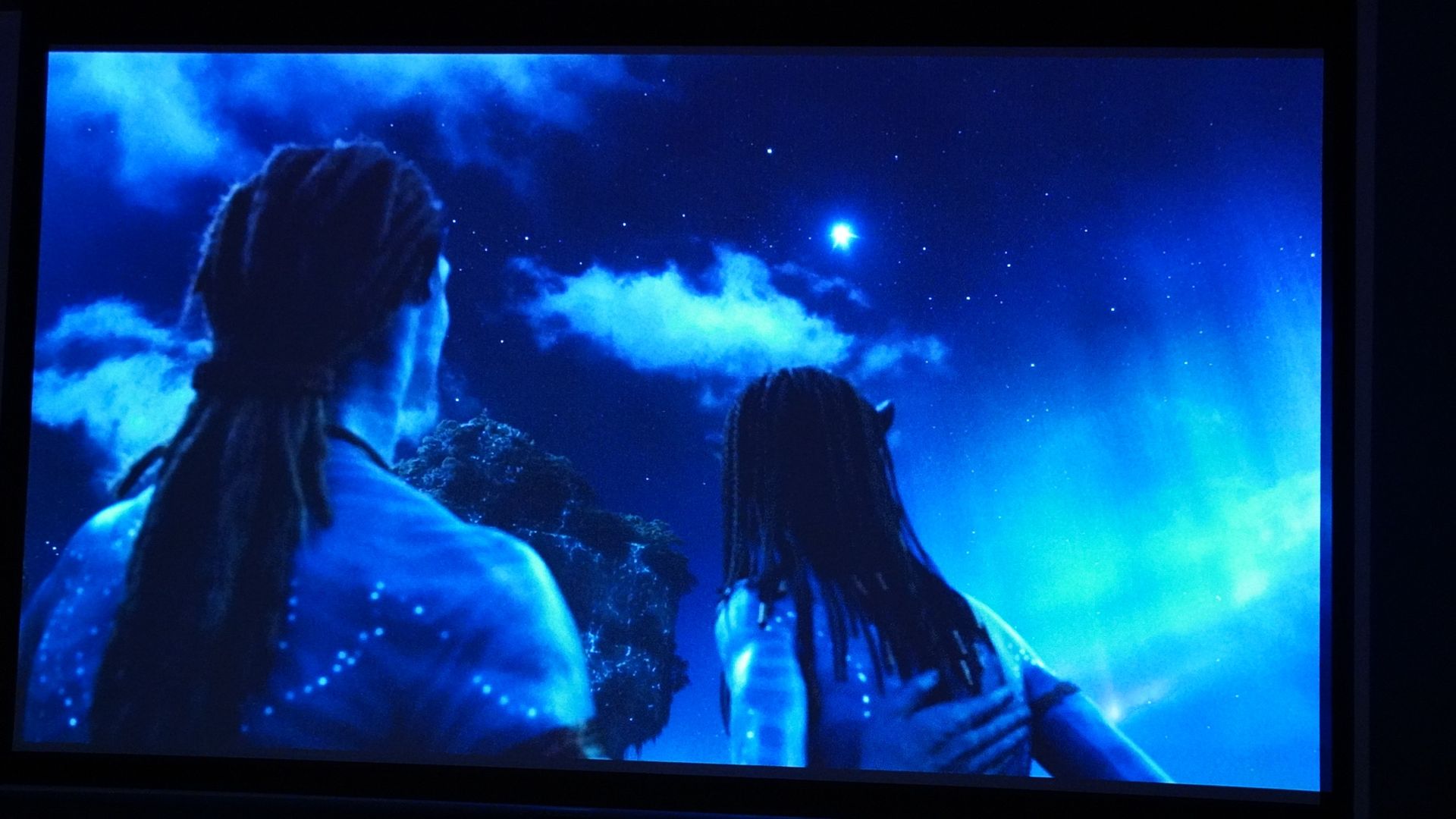
The JMGO N3 Ultimate has brightness in spades, and that’s where it shines best. When it comes to darkness, it can struggle. It fails to sink into darkness where it needs to, and the raised grays are distracting to see, never mind the regularly present letterboxes. Even when scenes aren’t very dark, these shortcomings are clear. Neither Dolby Vision nor adaptive brightness features seem to do the trick.

Thankfully, as soon as more light is called for, the JMGO N3 Ultimate delivers. It pumped out over 5,200 lumens by my measurements, which is plenty for most scenarios and not too far off the rated 5,800 lumens (nor did it require an awful picture setting). Bright scenes are clear and vibrant. Shadows look stronger in contrast to the brightness and the brightness is even enough to give the JMGO N3 Ultimate a solid showing in a modestly lit room. This makes it a great match for casual viewing, news, and bright cartoons. That brightness makes it all the easier to go big without the image getting too dim.

A projected scene from Avatar 2: Way of Water from the JMGO N3 Ultimate.
Future
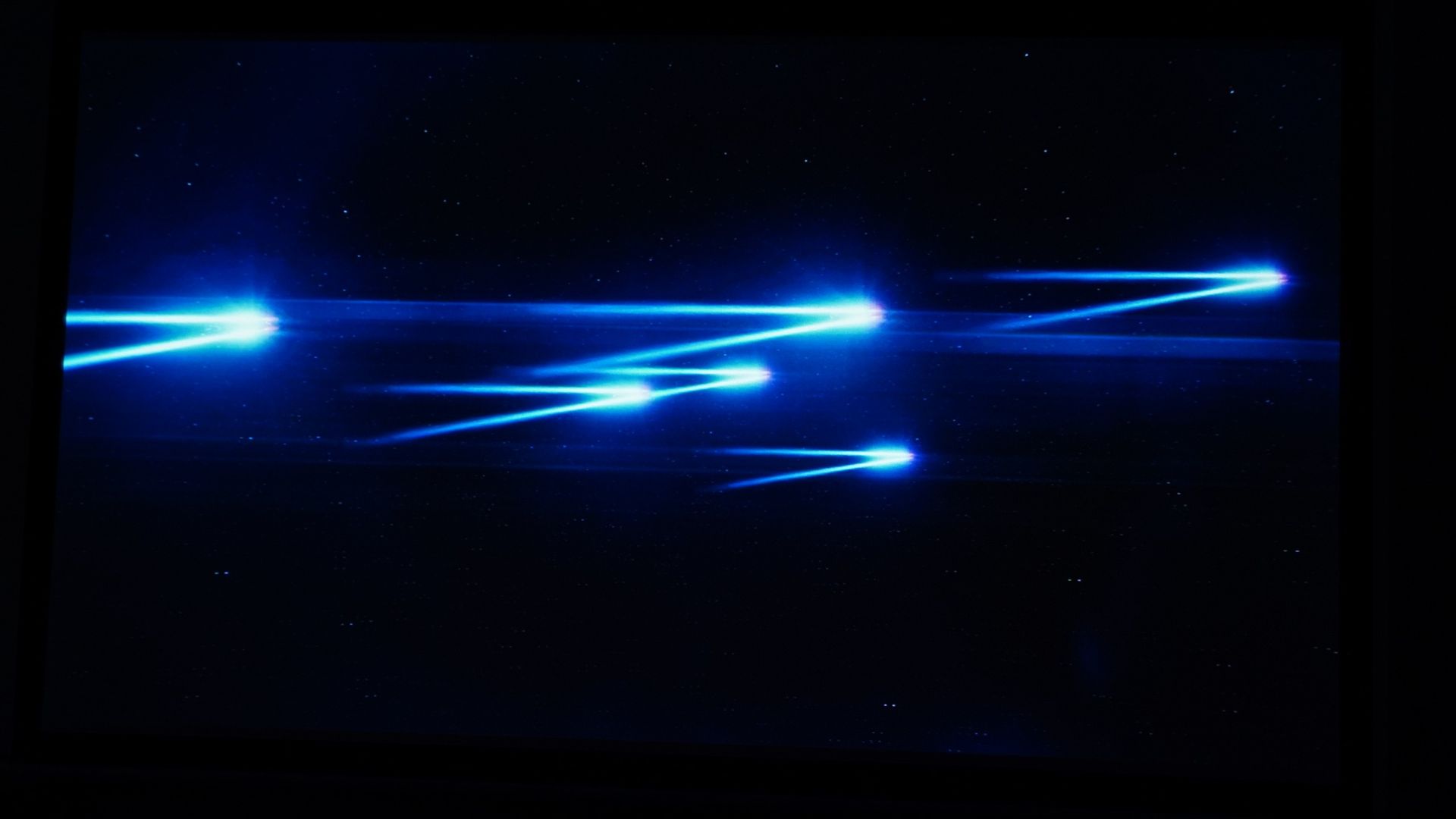
A projection of blue meteors from the JMGO N3 Ultimate.
Future
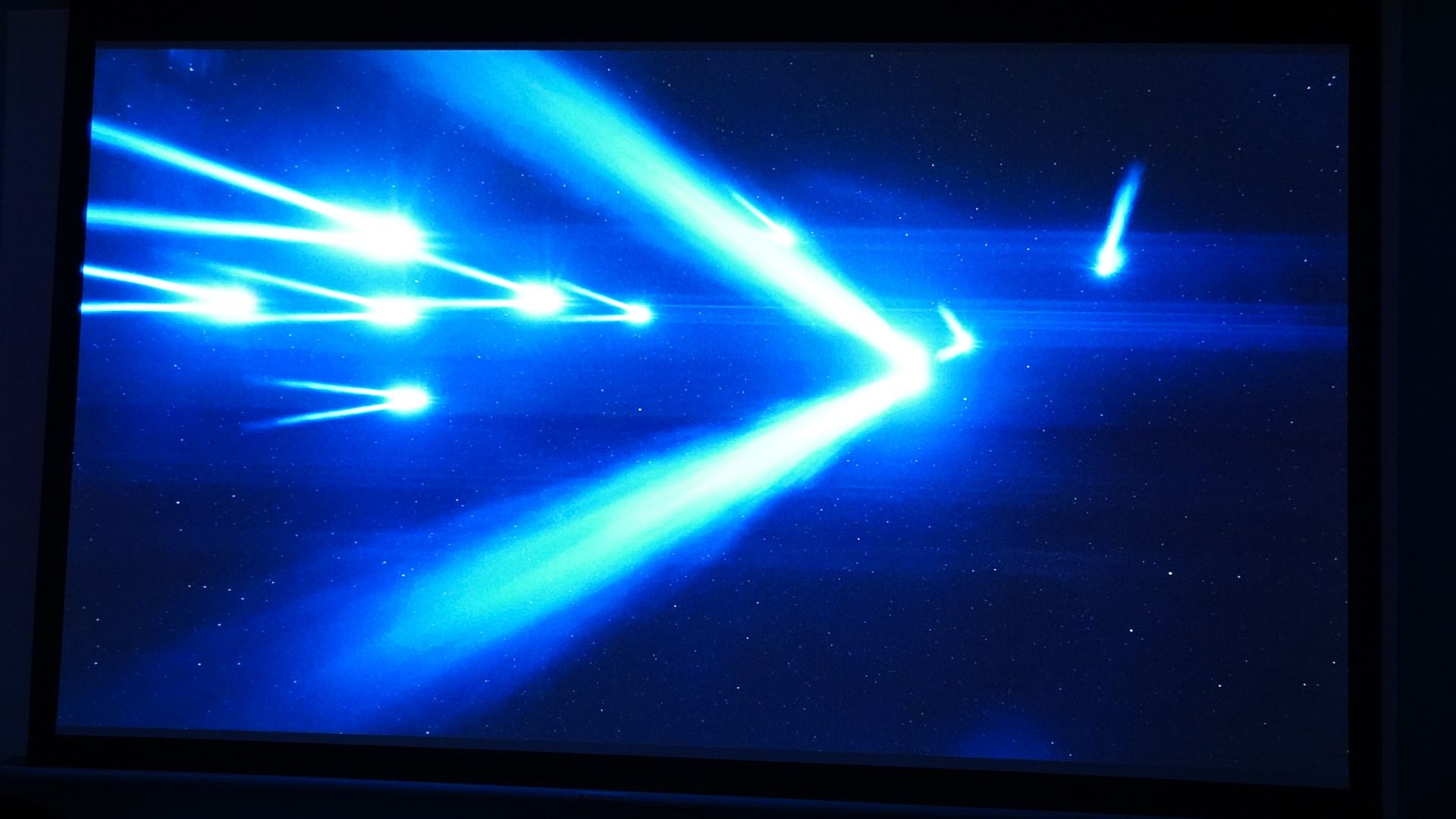
A projection of blue meteors from the JMGO N3 Ultimate.
Future

Alongside the brightness, the color of the RGB laser projection is stunning, just as it’s been in other projectors I’ve tested with the tech. When watching Supergirl, the glow of the green sun has plenty of depth, and the red cape glows majestically whenever the sun hits it. When Kara’s laser vision rips through the Brigands, it’s properly dazzling. The world of Pandora in the Avatar series is also lushly presented.

Motion can be hit or miss. By default the projector wants to use unsightly interpolation that presents loads of artifacts and makes the projection feel like anything but high-fidelity. With the MEMC setting dropped to low, it doesn’t look so bad, avoiding distracting soap opera effect and serious artifacts while helping reduce some of the stutter that occurs when it’s disabled entirely.

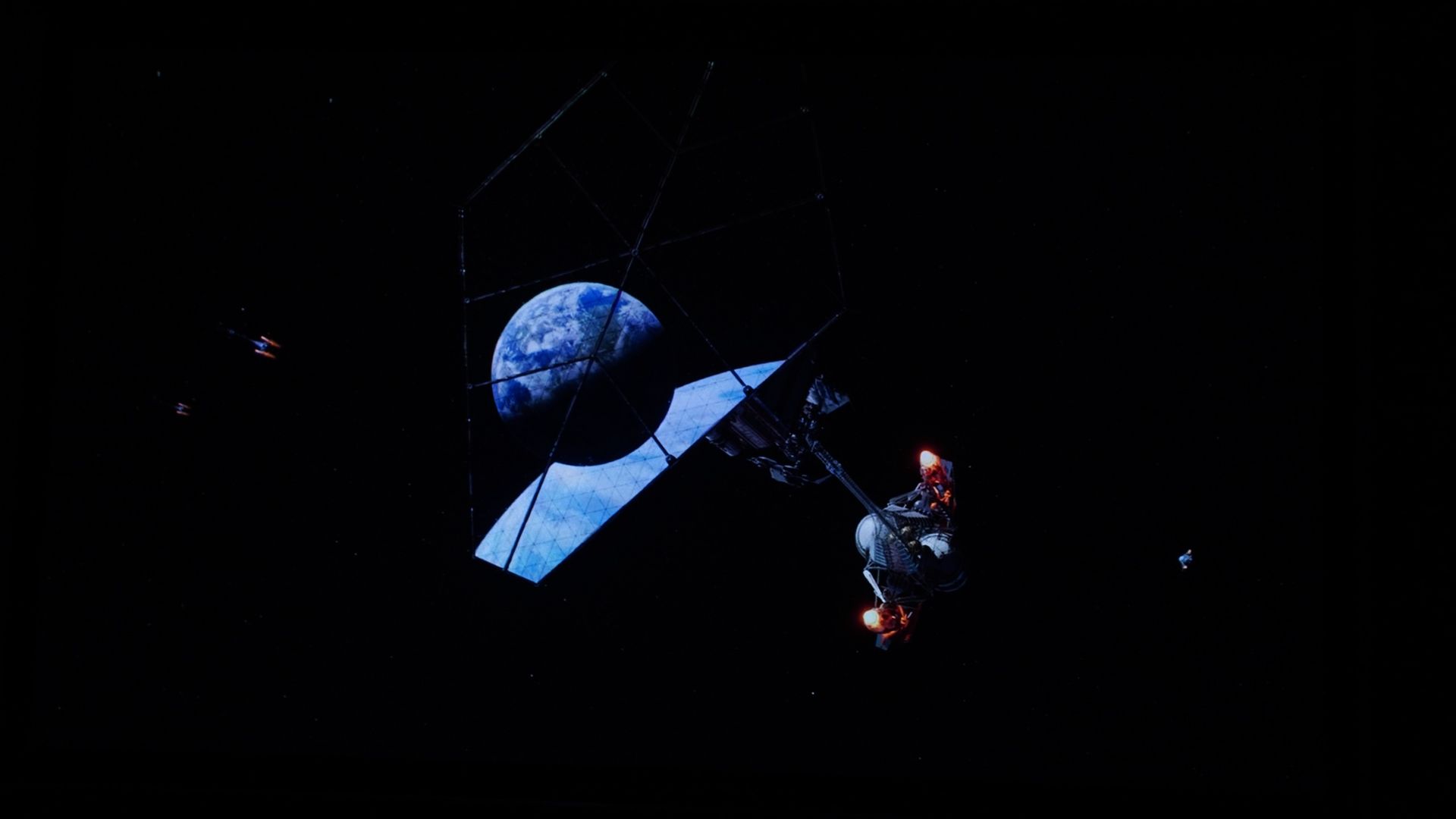
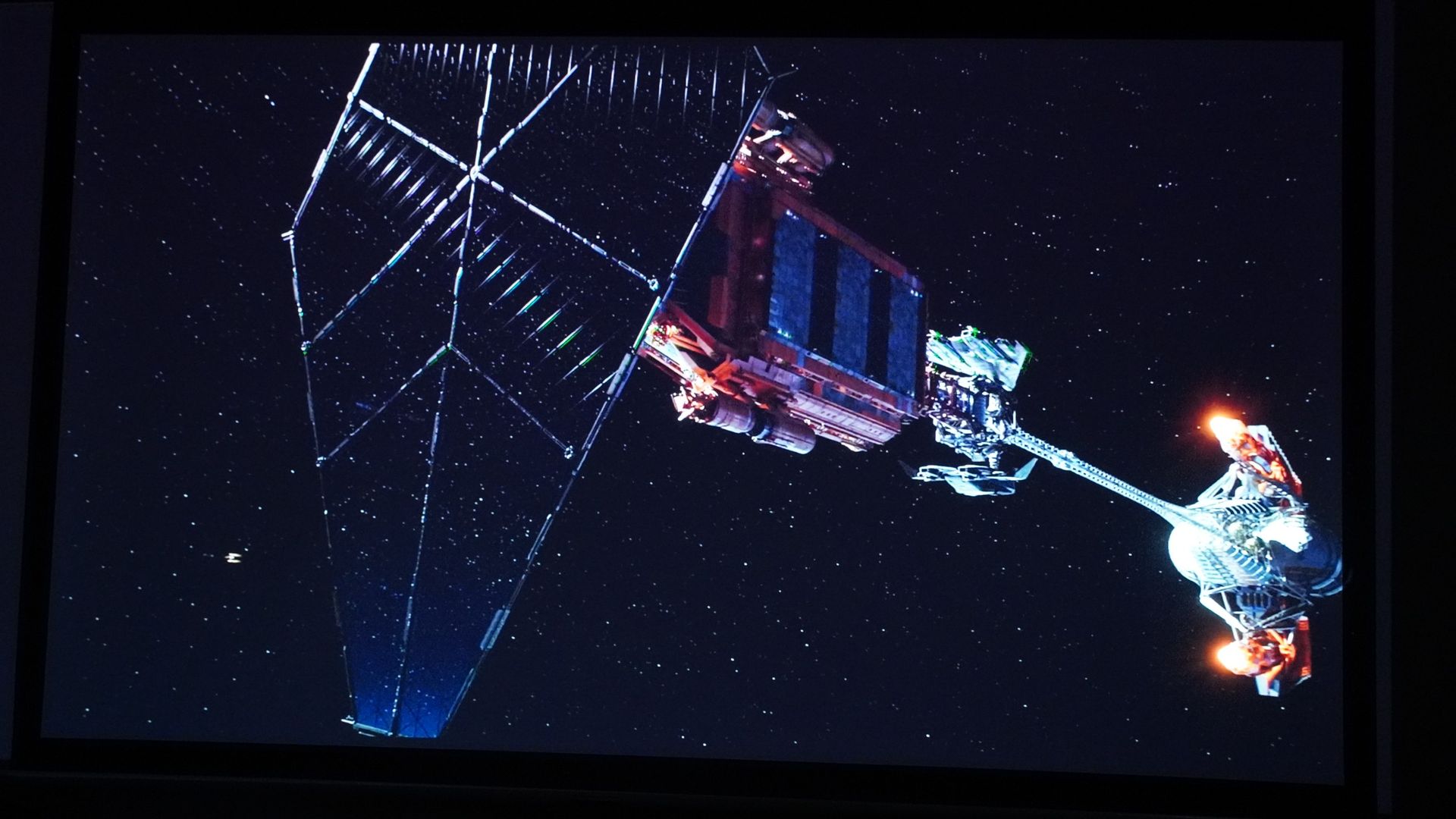
A projected scene of space from the JMGO N3 Ultimate.
Future
A projection of space from the JMGO N3 Ultimate.
Future
A projected scene of space from the JMGO N3 Ultimate.
Future

One area RGB laser projectors have been improving is the DLP rainbow effect. I’m not terribly sensitive to it, but I can usually catch it if I’m looking for it. Lately, I’ve been spotting it less and less on high-end laser projectors, but I can still catch it on the JMGO N3 Ultimate. Thankfully, it’s subtle, and I find it’s largely limited to subtitles

The adjustable optics help ensure a sharp picture from wherever you want to project. Stretched across about an 150-inch section of my wall, 4K looked brilliant in my living room.

A close up of the JMGO N3 Ultimate projector's remote control.

(Image credit: Future)

Outside of movies, the JMGO N3 Ultimate proves a great option for gaming. You want crisp detail from corner to corner in games, since you never know where something precious is hiding, and the optics help provide this. Latency is satisfyingly low at 4K but sinks to negligible levels at 1080p/240Hz. Mousing around my screen and zipping through levels in Hades 2, I didn’t feel a hint of latency in that mode.

The speakers on the JMGO N3 Ultimate aren’t bad, but they certainly aren’t an adequate match for the projection. They put out decent volume, helping ensure you’ve got enough sound to work with when you want to plop the projector down somewhere and start enjoying right away. They even provide some low-end, helping bump up effects in movies. But the quality of stereo sound won’t be very good unless you’re sitting perfectly in center with the projection.

  • Picture quality & performance score: 3.5 / 5

JMGO N3 Ultimate Review: Value

  • Can serve multiple purposes well
  • Cheaper than many rivals while offering competitive brightness

The JGMO N3 Ultimate is a capable projector and can work well for folks who aren’t committing to a pitch-black home theater where its weaker black levels will steal focus.

At $2,999 / £2,499, it’s still fairly competitive with what’s on the market, but at $2,349 / £2,119, it’s more of a steal. It can compete with large TVs on value while providing the flexibility to enjoy movies and TV in 4K or switch over to 1080p for high-speed gaming. The different realms it can cover all from a single product help boost its value.

  • Value score: 4.5 / 5

Should I buy the JMGO N3 Ultimate?

JMGO N3 Ultimate Scorecard

Attributes

Notes

Rating

Design and features

The JMGO N3 Ultimate brings a lot to the table. It’s built for flexibility with adjustable optics and a motorized stand that can make setup quick and easy without sacrificing image quality. It’s well equipped for movies and gaming, and it has built in streaming capabilities and serviceable speakers. It could have more ports and a better remote, though.

4.5/5

Picture quality and performance

The JMGO N3 Ultimate delivers on brightness and clarity, making it a joy to watch bright, colorful content with. It can even hold up well in rooms with a lot of ambient lighting. Where it falls short is in its contrast and motion, having distractingly elevated black levels that hurt dark scenes and either slight panning stutter or artifact-laden motion smoothing.

3.5/5

Value

With plenty of brightness and versatility at a surprisingly competitive pricing, the JMGO N3 Ultimate offers up a lot of value.

4.5/5

Buy it if...

You don’t like turning out all the lights
The JMGO N3 Ultimate has brightness to spare, letting it handle dim and even well-lit rooms fairly well. If you don’t like viewing in the dark, this makes it a good match.

You want quick and easy flexibility
The JMGO N3 can work in a lot of different setups and it makes getting it all lined up easy. If you’re always moving your projector around, that can save you a load of time.

You want versatility
The JGMO N3 Ultimate can tackle 4K video, 1080p gaming, precise and careful optical setup, or quick and effortless setup. Its ability to step into different roles can be very convenient if you have a lot of different needs.

Don't buy it if...

You’re looking for OLED performance
Few projectors do a great job with their black levels, and even the best aren’t really on the level with OLEDs. The JMGO N3 Ultimate isn’t even close, with raised black levels that don’t really look great in dark scenes.

You have lots of input sources
With just two HDMI ports, the JMGO N3 Ultimate is a recipe for annoyance if you have a handful of consoles, a Blu-ray player and the like. Heck, it doesn’t even have a 3.5mm jack you can use to free up the eARC port.

You don’t move your projector ever
A big part of the package, and therefore what you pay for, is the flexibility of the gimbal and optics. If you’re not planning to take advantage of them, you can save some money by looking elsewhere.

JMGO N3 Ultimate review: Also consider

JMGO N3 Ultimate

Valerion VisionMaster Max

Hisense C2 Ultra

Xgimi Horizon 20 Max

Price

$2,999 / £2,499

$3,999 / £ 3,799

$2,999 / £1,799

$2,999 / £2,599

Screen sizes supported

40 to 300 inches

40 to 300 inches

65 to 300 inches

40 to 300 inches

Brightness (specified)

5,800 lumens

3,500 lumens

3,000 lumens

5,700 ISO lumens

HDR support

HDR10, HLG, Dolby Vision

HDR10+, HLG, Dolby Vision

HDR10+, HLG, Dolby Vision

Dolby Vision, HDR10+, HDR10, HLG, IMAX Enhanced

Optical technology

3 Laser DLP

3 Laser DLP

3 Laser DLP

3 Laser DLP


Smart TV

Google TV

Google TV

Google TV

n/a

Connections

2x HDMI 2.1 (1 with eARC), 1x HDMI 2.0 , 1x optical, 1x 3.5mm


2x HDMI 2.1, 1x HDMI 2.0 (with eARC), 1x optical, 1x 3.5mm


2x HDMI 2.1 (1x with eARC), 2x USB, optical

2x HDMI (x1 eARC), 1x USB 3.0, 1x USB 2.0, 1x 3.5mm, 1x optical audio out

Valerion VisionMaster Max
This projector may not be as bright, but it has wonderfully flexible optics, great visual performance and profound black levels that make it a far more worthy home theater projector. It tends to be a bit more expensive, though.

Hisense C2 Ultra
The Hisense C2 Ultra isn’t nearly as bright and doesn’t have the same degree of flexible optics as the JMGO N3 Ultimate. Still, it tends to cost nearly as much. This helps highlight how much the technology has progressed and come down in price in a short time. Read our full Hisense C2 Ultra review.

Xgimi Horizon 20 Max
This model has most of the same capabilities and qualities as the JGMO N3 Ultimate, just in a different package. It had strong contrast in our testing, but it skips the motorized gimbal. If you know you want that dark performance, it’ll probably be the better pick, though you may be best just grabbing whichever is cheapest when you’re shopping since both have frequent discounts. Read our full Xgimi Horizon 20 Max review.

How I tested the JMGO N3 Ultimate

  • Tested at home in multiple, real-world viewing conditions
  • Presented the display with a variety of media and formats
  • I have tested numerous projectors and displays over the last half-decade

I tested the JMGO N3 Ultimate at home, in real-world conditions. This saw it faced with ambient light coming in from numerous windows, in-room lighting, as well as ambient noise that both the projector and speaker systems had to overcome. The projector was tested both against a bare, white wall and an Akia Screens CineWhite screen. It was presented with streamed content, HDR and non-HDR, and console gameplay.

My testing evaluates the projector’s performance with respect to its price and competition from other models I and colleagues at TechRadar have tested.

I have been testing projectors since 2021 and displays for even longer.

❌