❌

Reading view

There are new articles available, click to refresh the page.

Apple just joined the fold with the iPhone Duo, but laptops keep sitting out the foldables party

With the introduction of the iPhone Duo, U.S. smartphone customers can now choose from seven contemporary folding smartphones, including one from Google, two from Motorola, and three from Samsung.

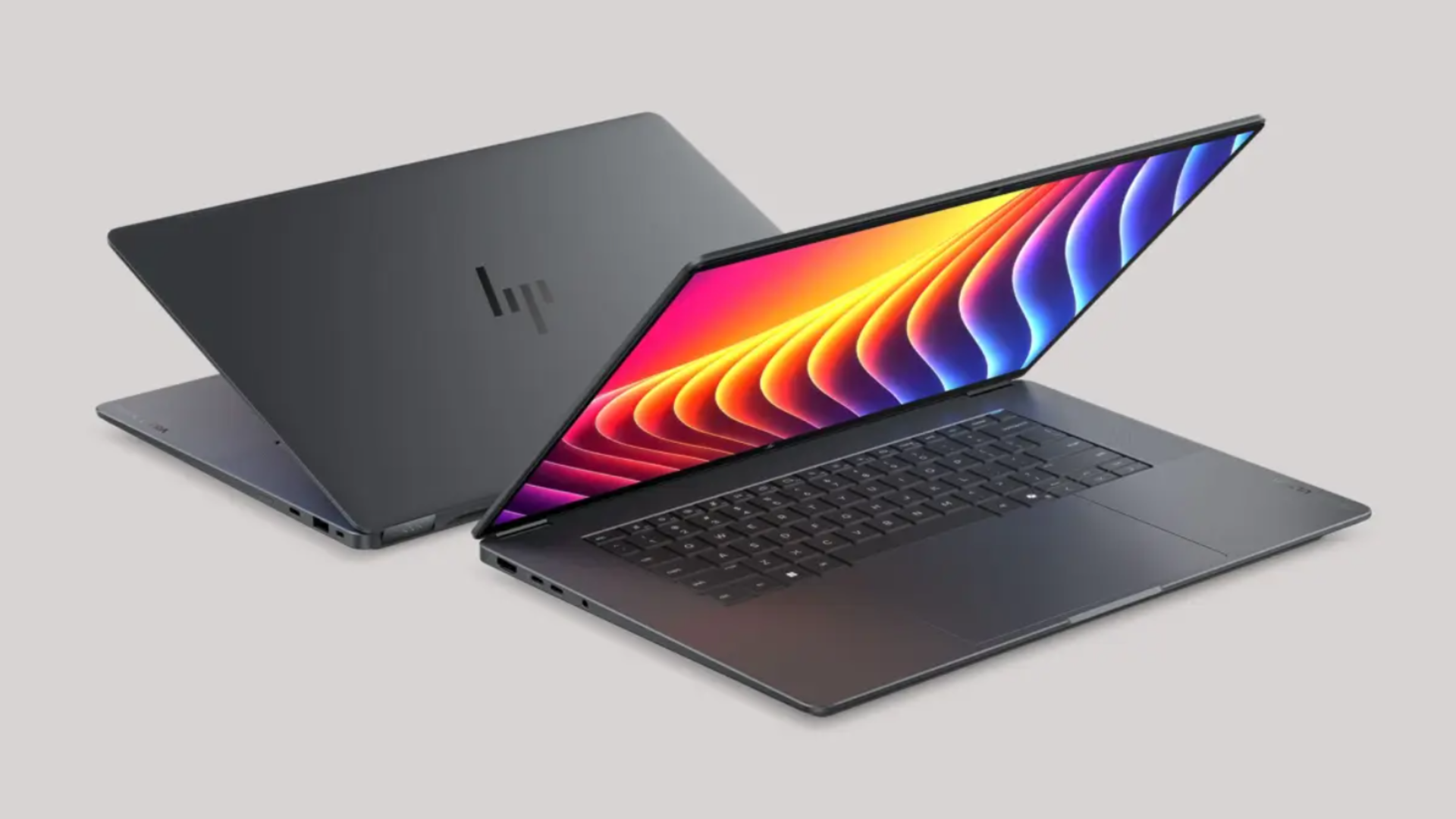
The number of laptops with foldable screens ever produced is far fewer: one each from Asus, Huawei, HP and two from Lenovo.

While the Galaxy Z Fold and Z Flip have entered an annual upgrade cycle for Samsung, the foldable-screen laptop pipeline has been quiet. The most recent - Lenovo’s ThinkPad Fold 16 Gen 2 - hit the market in November 2023, more than a year after its unveiling.

Surely, we haven’t seen the last of laptops with foldable screens, but a range of structural, technological, and economic issues have conspired to keep folding laptops from becoming more mainstream
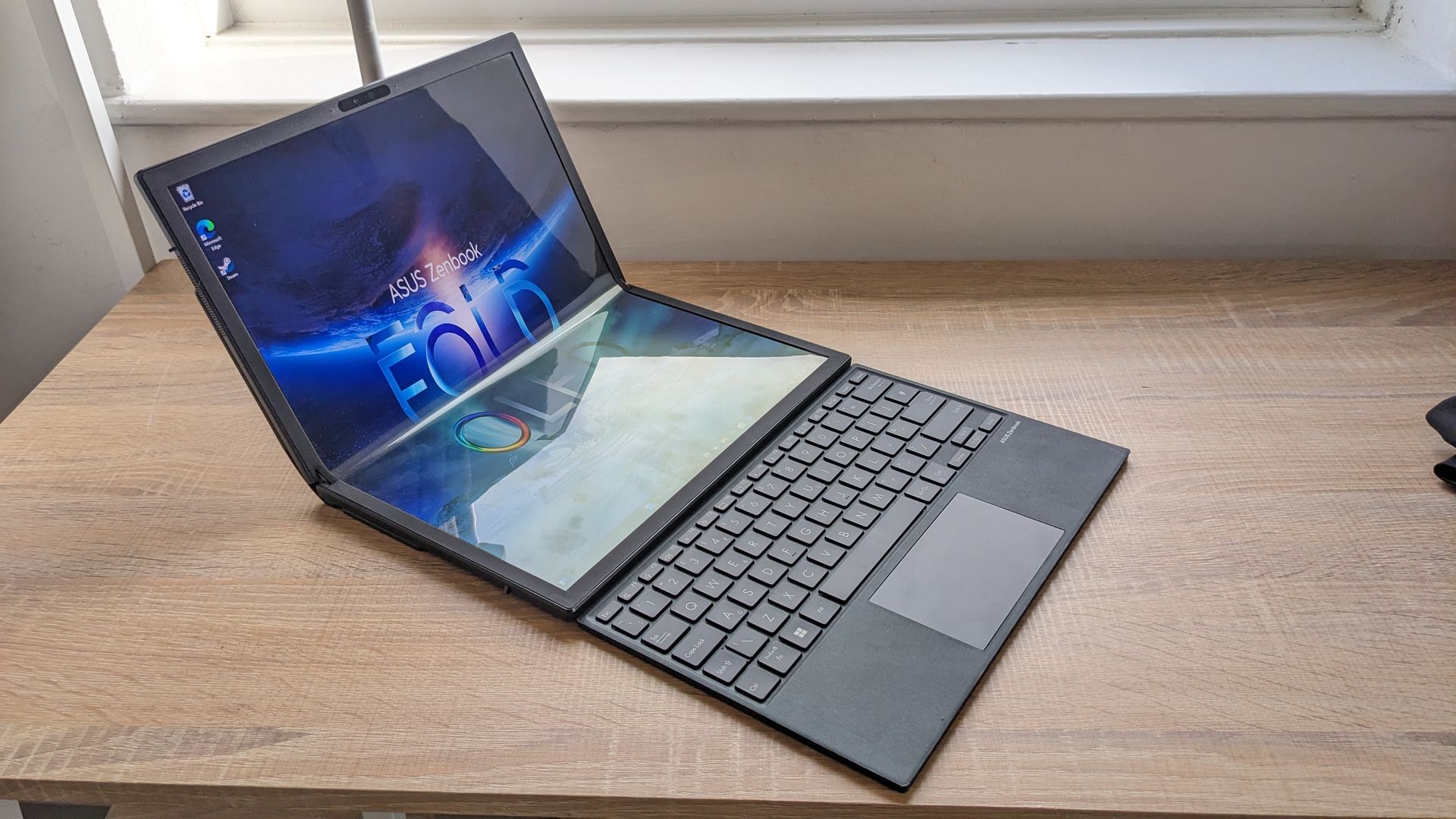
The Asus Zenbook 17 Fold OLED pictured on a wooden desk.

ASUS touted the flexible usage scenarios of the Zenbook 17 Fold OLED. (Image credit: Future)

A RAMpocalypse victim

At their launches, foldable-screen laptops were among the most expensive in their line-ups. The Asus Zenbook 17 Fold OLED launched at $3,500 in 2022. A year later, the HP Spectre Foldable PC launched at $5,000, about 2.5x the price of a Galaxy Z Fold Ultra.

Obviously, anyone spending this much is going to demand performance, including substantial RAM and flash storage, the two components that have seen their prices skyrocket during the AI data center-fueled 'RAMpocalypse'. While PC vendors can eat a bit of margin on such high-end products, it’s reasonable to assume that successors launched today would require untenable prices.

On the other hand, it’s been more difficult for vendors to justify the premium because of the lack of a “device-class” jump. In other words, one of the great promises of foldable-screen phones is that you can have the functionality of a tablet in a form factor that stores in your pocket.

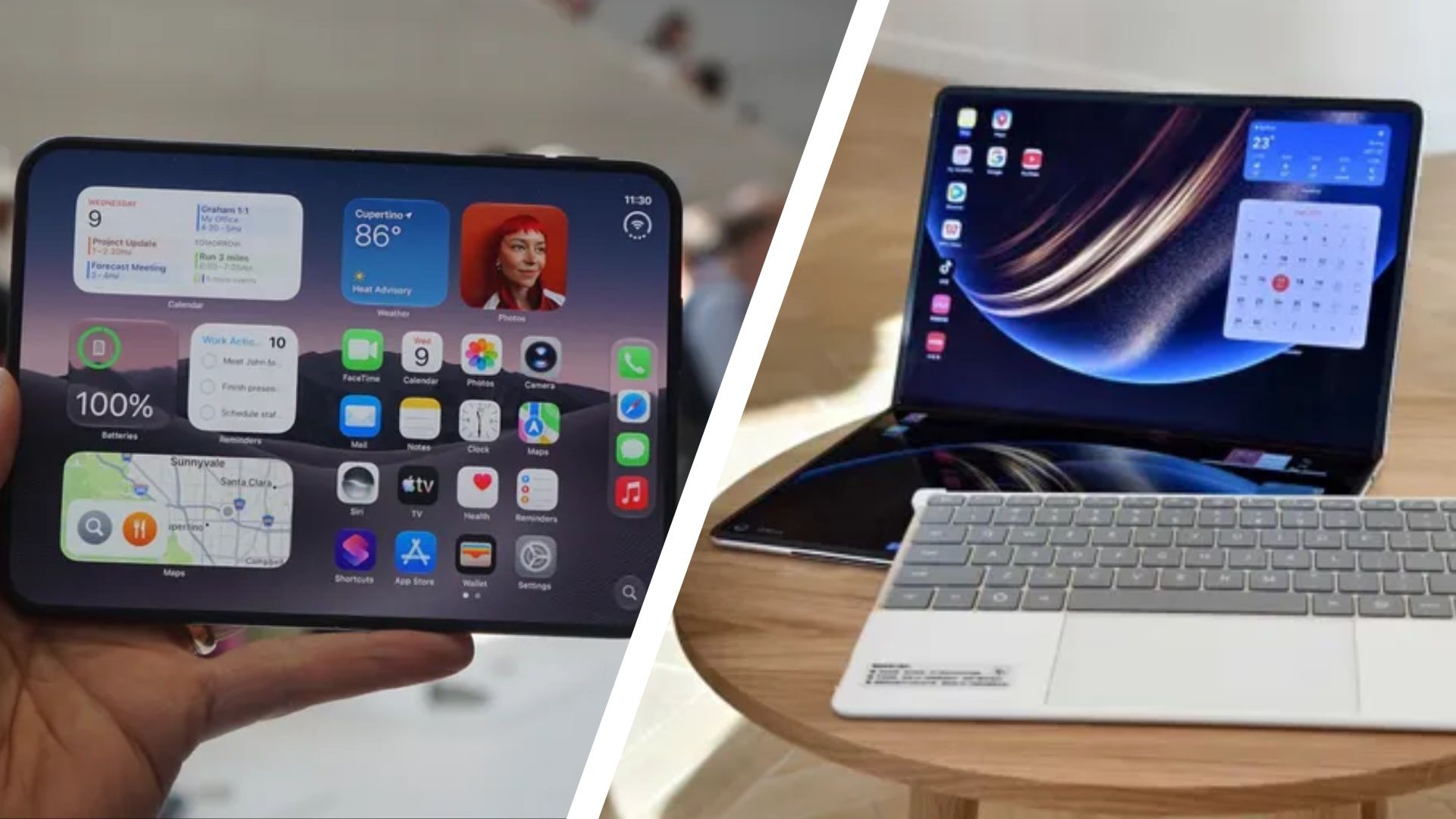
This isn’t just about more screen real estate. Full participants in Apple’s ecosystem understand the differences in experience between the largest iPhones and the iPad mini, which were magnified when Apple finally went full desktop GUI on the iPad in iPadOS 26.

In contrast, when it comes to foldable-screen laptops, the jump from an approximately 13” Windows experience in clamshell mode to a 16” or 17” Windows experience in unfolded mode is less dramatic. (That said, there are some niceties such as the taller aspect ratio compared to most 16” laptops and the option of a portrait mode.)

This also helps to explain why we haven’t seen any foldable tablets from Samsung or Lenovo. Curiously, most of the work around extending Windows on a folding display has been around the scenario of adapting Peek preview to make more efficient use of virtual dual screens, UI improvements that of course also apply to laptops with actual dual screens such as the Asus Zenbook Duo, which received an update this year.
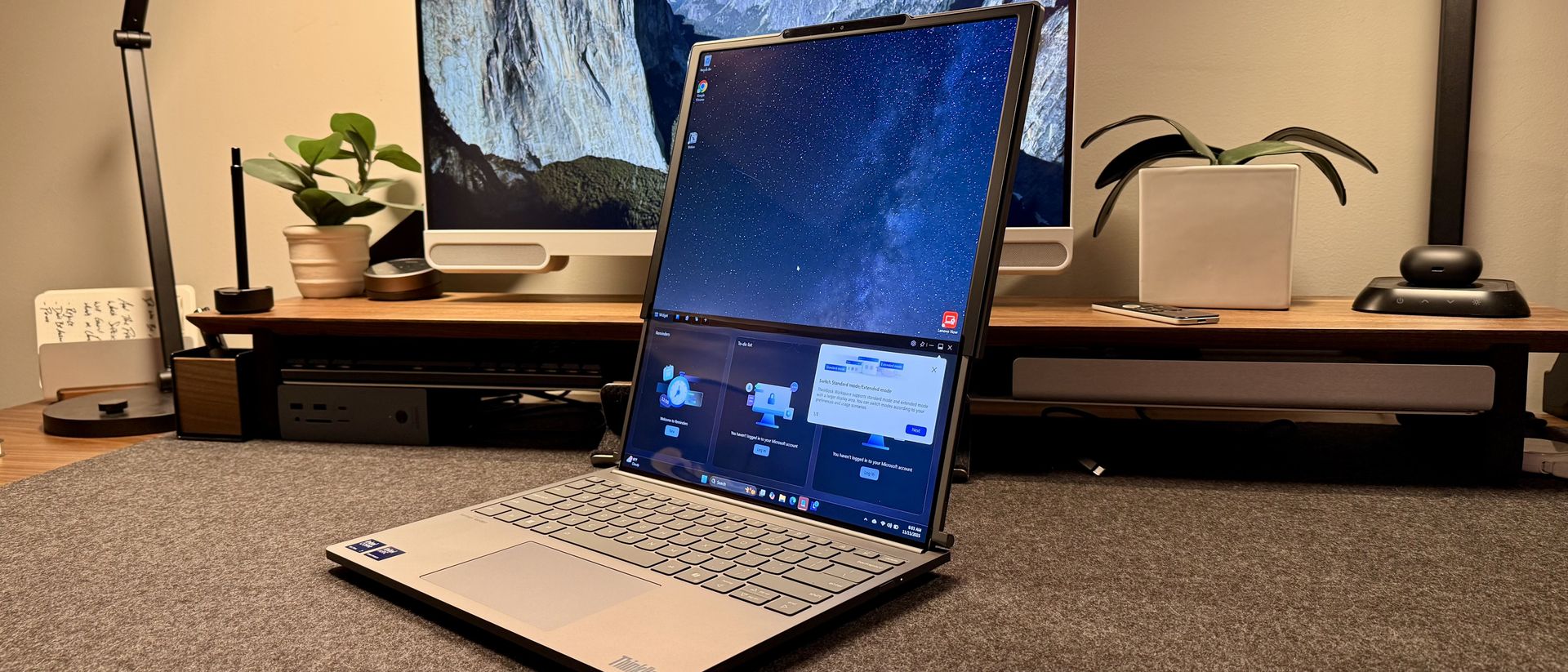
Lenovo | ThinkBook Plus Gen 6 Rollable

Designs like Lenovo's ThinkBook Plus Gen 6 Rollable provide extra screen real estate while preserving clamshell design (Image credit: Collin Probst // Future )

Some assembly required

Furthermore, while foldable-screen phones require the extra step of unfolding to take full advantage of their screen real estate, their front displays enable everyday usage even when folded; even flip models like the latest from Samsung are improving their folded utility, In contrast, foldable-screen laptops include more significant prep trade-offs.

For example, while Lenovo’s first ThinkPad X1 Fold was able to store the Bluetooth keyboard between the halves of the folded display, the Gen 2 kept it separate, protected for travel by a case that doubles as a stand for the screen. When it’s time to move on, you have to reassemble the bundle, that is, after making sure to remove the keyboard lest you risk damaging the device.

In contrast, the few early glimpses of laptops with rollable screens that we’ve seen from Lenovo can make their full screen area available without any keyboard shuffling. Even though these motorized designs make you wait until the screen retracts before closing the lid, most users will likely find the trade-off worth it.

When comparing foldable-screen phones to foldable-screen laptops, it makes sense that — other things being equal — the smaller device will reap the greater relative value from extra screen real estate on demand.

But these dynamics have meant that there’s been far more working in favor of smartphones; the next generation of laptops with bending displays will require some rethinking

Bitdefender first to launch free 'temporary' VPN for AI Agents because they're worth it — but you can only use it on Apple M-series Macs for now

  • Bitdefender launches privacy tool built specifically for autonomous AI agents
  • Each agent task gets a disposable, temporary connection that deactivates when the task is done
  • VPN for AI Agents runs on a Model Context Protocol server architecture entirely

Bitdefender has introduced VPN for AI Agents, a standalone privacy tool built specifically for the autonomous software agents now browsing, researching, and transacting on behalf of everyday users.

The company says this public beta is a direct answer to the growing anxiety over machine-driven data exposure.

Unlike a conventional privacy tool that stays connected at all times, this tool activates only when an AI agent needs it, then deactivates once the task is done.

Why agents need their own privacy layer

Cybersecurity researchers have increasingly warned that autonomous agents occupy an ambiguous identity space, often borrowing a person's own credentials or shared workload logins to complete tasks online.

Without a clear separation, every website an agent visits and every transaction it completes remains traceable back to a single household IP address.

Recent Pew Research Center data found 71% of adults in the United States believe wider AI adoption will make their personal data less secure, a fear that extends well beyond American borders.

Bitdefender's new offering, built on a Model Context Protocol server architecture, spins up a disposable digital workspace for each prompt and discards it when the task is done.

Each prompt opens its own encrypted tunnel and exits through the VPN server's IP address, so no cookies, cache, or session state carries over to the next task.

The tool covers network transport and IP masking only, leaving the actual content of a prompt exchanged directly between the user and whichever AI provider is running it.

"AI agents are quickly becoming an extension of the people who use them, showing up in both our workdays and our personal lives," said Ciprian Istrate, senior vice president of operations, Consumer Solutions Group at Bitdefender.

"That means security can no longer stop at protecting the person behind the screen; it has to extend to the agent itself acting on their behalf."

This approach treats each agent like an independent team member requiring its own security boundary rather than inheriting the user's existing protections wholesale.

Bitdefender also describes this as clean-IP browsing, useful for QA checks on pages that display different content depending on the visitor's country.

The tool supports up to four simultaneous exit locations, or eight under the recommended testing configuration.

Access remains limited during the beta period

For now, the tool works only on macOS devices, though Bitdefender has confirmed plans to expand to additional operating systems after beta testing.

The beta specifically requires macOS 13 or later and an Apple silicon processor, meaning Intel Macs are not supported.

Bitdefender recommends macOS 15, 16 GB of memory, and roughly 10 GB of free disk space for smoother testing.

Once installed, it operates automatically across several popular AI platforms, including Claude Desktop, Cursor, Codex, and OpenCode, without requiring manual configuration from the user.

Bitdefender lists several practical use cases, including letting an agent compare prices across regions or complete multi-country research in one session.

The company frames these tasks as a productivity gain too, since they would otherwise need manual, country-by-country effort from a person.

Bitdefender is explicit about the tool's limits as well. It does not protect a device's other apps or browser.

It also does not hide prompts from the AI provider running them, and does not override a site's terms of service, rate limits, or an existing IP ban.

"With Bitdefender VPN for AI Agents, we're giving students, workers, and everyday consumers the confidence to let their AI agents work freely, knowing their identity and activity stay protected," Istrate added.

VPN for AI Agents public beta is currently available for free, but whether the free offering continues after the beta testing remains to be seen.

Google logo on a black background next to text reading 'Click to follow TechRadar'

USAF considering 'very large' autonomous airborne tankers to replace KC-135, KC-46 — and Boeing's MQ-25 Stingray UAV is only the beginning

  • Air Force explores unmanned tankers to replace its ageing refuelling fleet
  • The MQ-25's progress has revived plans for autonomous Air Force tankers
  • Range remains the biggest obstacle to building an unmanned tanker today

The US Air Force is considering whether its next refueling aircraft, expected to replace the KC-135 and KC-46, could fly with no crew aboard.

The idea gained ground because the Navy's Boeing MQ-25 Stingray, an unmanned refuelling drone, flew for the first time earlier in 2026.

On Thursday, the Navy cleared the MQ-25 for low-rate production and purchased three additional units, raising its order to 14 aircraft.

Crews are not needed, but size remains unsolved

At the recent Air, Space & Cyber 2026 conference in National Harbor, Maryland, the Air Force said its future refueling aircraft might not need a crew.

“I do not believe that it has to be manned, a future air-refuelling solution…But then, how do we, the U.S. Air Force, bring that to bear in scope, scale, and range?” said Lt. Gen. Daniel Tulley, commander of Air Mobility Command

The service is still buying Boeing KC-46 Pegasus tankers, and it spent $12 million this year to study a new tanker design.

However, its proposed fiscal 2027 budget drops that funding entirely and asks for $13 million instead, labelled as money for advanced refuelling systems.

Tulley said a tanker able to cover the needed distances would be huge, and no fully autonomous aircraft of that size flies today.

The current KC-46 has a range just short of 7,400 miles and carries over about a hundred tons of fuel.

However, the autonomous MQ-25, which is driving this idea, manages roughly 500 miles and holds up to 7.5 tons, which is a small share of what the KC-46 offers.

Boeing’s aircraft can currently take off, follow programmed routes, and land on autopilot, though the Air Force does not use them autonomously.

The Air Force is probably hoping to build on this autopilot capability, aiming to turn the partial automation into full autonomy.

Merlin Labs says autonomy can begin with crews aboard

Merlin Labs, a company that builds autonomous flight systems, plans to install its autonomous pilot software on the C-130J, an aircraft similar in size to the KC-135.

The aircraft will still carry a human crew, which lets Merlin add autonomy step by step instead of jumping straight to an unmanned tanker.

“That's a way that you can start to chip away at that without actually going fully to the unmanned tanker right away,” said Matthew George, CEO of Merlin Labs.

“The goal is that the unmanned tanker is ready, and the autonomy ends up being ready at the same time.”

The company must next win certification, and it is working with the Air Force this year to get that approval.

“None of this matters unless it's certified and safe. So for us, getting certification done is important, and that's what we're working really closely with the Air Force on this year,” George said.

Merlin has not announced a date for the C-130J to carry its autonomous pilot, though the company's technology has completed a critical design review.

With no set flight date and unfinished certification, the Air Force's plan for an unmanned tanker the size of the KC-46 remains far off.

Via Defense One

Google logo on a black background next to text reading 'Click to follow TechRadar'

HP debuts $7,449 Ryzen AI Max+ PRO 495 laptop — ZBook Ultra G3a has 192GB RAM, 512GB SSD, and can handle up to 300B parameters

  • HP’s new workstation carries 192GB of memory for demanding local AI workloads
  • The ZBook Ultra G3a can reportedly handle models reaching 300 billion parameters
  • The workstation combines a 96Wh replaceable battery with an 180W adapter

HP has debuted the ZBook Ultra G3a 16, a workstation built around AMD’s Ryzen AI Max+ PRO 495 processor and substantial unified memory.

The laptop combines up to 192GB of LPDDR5X memory with integrated Radeon graphics and support for demanding local AI workloads.

HP says the highest-memory configuration can run large language models with up to 300 billion parameters directly on the laptop.

HP brings a high-memory workstation to market

The ZBook Ultra G3a uses 16 processor cores and 32 threads, with clock speeds reaching 5.2GHz and an integrated neural processor.

Its 192GB memory pool can allocate up to 160GB toward the Radeon 8065S graphics processor, leaving substantial capacity for system tasks, and will allow users to load models that exceed the graphics memory available on many conventional notebooks with discrete GPUs.

AI workloads are handled by a 55 TOPS neural processing unit, adding dedicated hardware alongside its integrated graphics processor.

The storage of this device reaches 8TB through a single PCIe Gen5 x4 slot, although there are other models with lower capacities.

This workstation sustains power up to 100W, nearly twice the 55W figure from its earlier model.

It is equipped with a 96Wh replaceable battery which can last up to 14 hours, and its 180W adapter can reach 50% charge within 30 minutes.

The ZBook Ultra G3a 16 uses a dual-fan cooling system with copper heat pipes, and a shared heat spreader covering the processor and memory components.

Pricing and workstation specifications

The official price of this device has not been released; however, the price estimate using HP's Local AI Value Calculator shows that the Ryzen AI Max+ PRO 495 model with 192GB memory and 512GB storage costs $7,449.

A 128GB version using the same processor costs $5,999, while the Ryzen AI Max PRO 490 configuration with 64GB costs $3,899.

“Professionals need AI experiences that are powerful, reliable, and integrated into the way they work,” said Jim Nottingham, senior vice president at HP.

HP is actually promoting the workstation through its calculator that estimates potential costs when AI workloads move from cloud services onto local hardware.

The company’s calculation assumes roughly 6.3 million tokens daily under its heavy workload profile and models electricity use from continuous operation.

Independent testing remains necessary to establish how the ZBook Ultra G3a performs when handling large models under sustained workloads.

The highest-priced configuration uses an FHD display, despite HP offering higher-resolution IPS, OLED, and DreamColor display choices for buyers.

The workstation measures 17.9mm thick and starts at 4.2 pounds, despite carrying a larger cooling system and 16-inch display.

Display options include a 3840 × 2400 IPS panel, a 2.8K OLED touchscreen, a 2.5K panel, and a lower power WUXGA configuration.

For connectivity, this laptop includes two Thunderbolt 4 ports, USB-C, USB-A, HDMI 2.1, Wi-Fi 7, Bluetooth 6.0, and optional 5G networking support.

It supports Windows 11 Pro, Windows 11 Home, FreeDOS, and Ubuntu 26.04 LTS, giving professional users several software environment choices.

Via Videocardz

Google logo on a black background next to text reading 'Click to follow TechRadar'

Alibaba wants to expand data center capacity past 20 GW by 2032, says its new V900 AI chip can scale to 500,000-card clusters, but will 'China's most powerful AI chip' be enough to displace Nvidia GPUs?

  • Alibaba's T-Head unveiled the Zhenwu V900 with 216GB of memory, 1.2TB/s links, and a claimed 3x gain over the already-shipping M890
  • Very few details associated with its raw performance: Alibaba gave no FLOPS, node, foundry, or power figures, and both specs it did share project it will trail Huawei's Ascend 960DT, which releases in the same quarter
  • CEO Eddie Wu targeted more than 20GW of Alibaba Cloud-operated capacity by 2032 while admitting supply-chain shortages are limiting growth for the company

Alibaba opened its annual Apsara Conference in Hangzhou with three big numbers: a chip that it says triples the performance of its predecessor, AI clusters that could stretch to 500,000 of those chips, and a pledge, quoted by the South China Morning Post, that the data centers Alibaba Cloud operates worldwide will pass 20 gigawatts of capacity by 2032.

CEO Eddie Wu called the new Zhenwu V900, designed by the group's T-Head chip unit, the "most powerful AI chip in China today."

This was part of an address that distinguished Alibaba's offering as a GPU rather than an ASIC, landing it squarely in Nvidia's territory even as the latter's H200 GPU is highly sought after by AI labs.

A powerful offering on paper, but one that doesn't publish actual performance

The Zhenwu V900's spec sheet might be intentionally short, even as its performance figures versus comparable current-generation Nvidia GPUs, a banned option, could limit interest ahead of launch.

Alibaba has, however, added an impressive amount of memory and interconnect, allowing it to cluster a configuration it claims can run as many as 500,000 GPUs in parallel.

The V900, as per Zhidx, reporting on the launch, lists 216GB of memory and 1,200GB/s of chip-to-chip bandwidth and was originally expected to be available to clients in Q3 2027 before the recent revision pushed it two quarters earlier.

T-Head vice president Gao Hui now says the company will, going forward, keep a one-generation-per-year cadence, with a J900 due in the third quarter of 2028.

Despite the closer timeline, it is interesting that Alibaba has published no FLOPS figure, process node, foundry, power rating, or even the V900's internal memory bandwidth, making it hard to gauge its most powerful single-chip offering in terms of raw AI and compute performance.

This is particularly ironic at a time when the competition from Huawei, the Ascend 960DT, which was launched the same quarter after being pulled earlier by three quarters, is offering far more detail.

It lists 2 petaFLOPS of FP8 compute, 288GB of memory, 9.6TB/s of memory bandwidth, and a 2.2TB/s interconnect, making it a higher-VRAM and higher-interconnect offering based on the information Alibaba has already published.

The 500,000-card figure interestingly may just be a scaling limitation, not a system anyone has built. For scale, T-Head said in May 2026 that it had shipped just over 560,000 Zhenwu chips in total. One maxed-out V900 cluster, in other words, would need nearly as many chips as the company had shipped in its entire history.

It does, however, bring a secondary calculation into the equation: if each V900 drew what Nvidia rates its H200 at, up to 700W, the accelerators alone in such a cluster would pull a significant amount of power. A newer, larger chip could run hotter and be more power-hungry than Nvidia's Hopper offerings, even as China remains limited to older process nodes because of US sanctions on chips and chipmaking equipment.

A large cluster of 500,000 or similar GPUs would undoubtedly rack up power requirements considerably fast for the regional AI juggernaut, and 20GW by 2032 is not an unforeseeable event when one considers that per-GPU power draw is only heading up for the foreseeable future as the chips get faster, denser, and more monolithic at the same time.

Wu said medium- to long-term demand far exceeds what Alibaba can supply, and that shortages across the AI data center supply chain "are currently limiting the speed at which we can scale our compute infrastructure." The target covers capacity Alibaba Cloud operates, and the company did not say whether it means IT load or total facility power.

A Nomura note relayed by Sina puts Alibaba's current footprint at roughly 4GW and expects future buildouts to blend owned, leased, and third-party-financed sites, implying about fivefold growth in six years.

Whether the upcoming V900 displaces Nvidia's global market dominance, even slightly, is unclear, with Team Green already far ahead in a market where AI customers buy GPUs years in advance. The situation, however, is vastly different in Beijing.

In China, much of the disruption has already happened, with Chinese AI labs being 'persuaded' to stay away from Nvidia solutions by the state. Nvidia's latest 10-Q says shipments of data center Hopper products to China were under 1% of its $89 billion in data center revenue for the quarter to July 26, and the company said in its earnings report that objections in Beijing kept it from selling the full volume of H200s that Washington had licensed when relations briefly thawed.

Chinese labs have turned to a mix of homegrown solutions, including specific ASICs, GPUs, and CPUs, allowing local players such as Alibaba, Huawei, and others to thrive in a market devoid of foreign competition.

With the US government restricting Nvidia's power limits and the Chinese state taking a dim view of local labs depending on foreign chips, Alibaba's V900 GPU doesn't need to beat Nvidia's Rubin GPUs or even its Blackwell offerings. It simply needs to take on and provide a viable alternative to a GPU that is two generations older: the H200 (based on Nvidia's Hopper architecture).

Its bigger challenges will be Huawei's locally produced Ascend 960DT and similarly configured chips from upcoming local chip design firms, as well as supply chain limitations that could restrict overall production and, by proxy, deployment for a company looking to spend billions on AI infrastructure in the coming days even if its "most powerful" status, which is currently consigned to a claim holds at the time of its release.

The Jackery Explorer 2000 v2 'saved our sanity' in recent tests — now the portable power station is $100 off

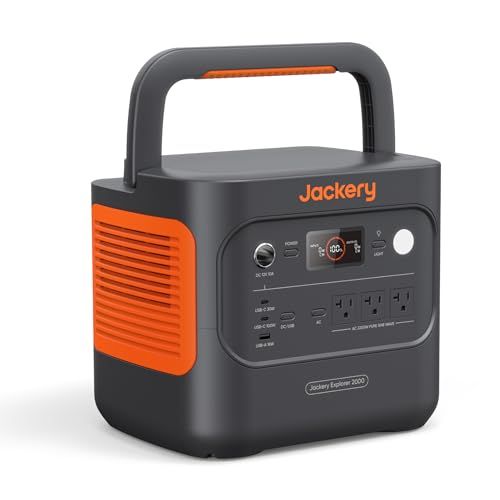
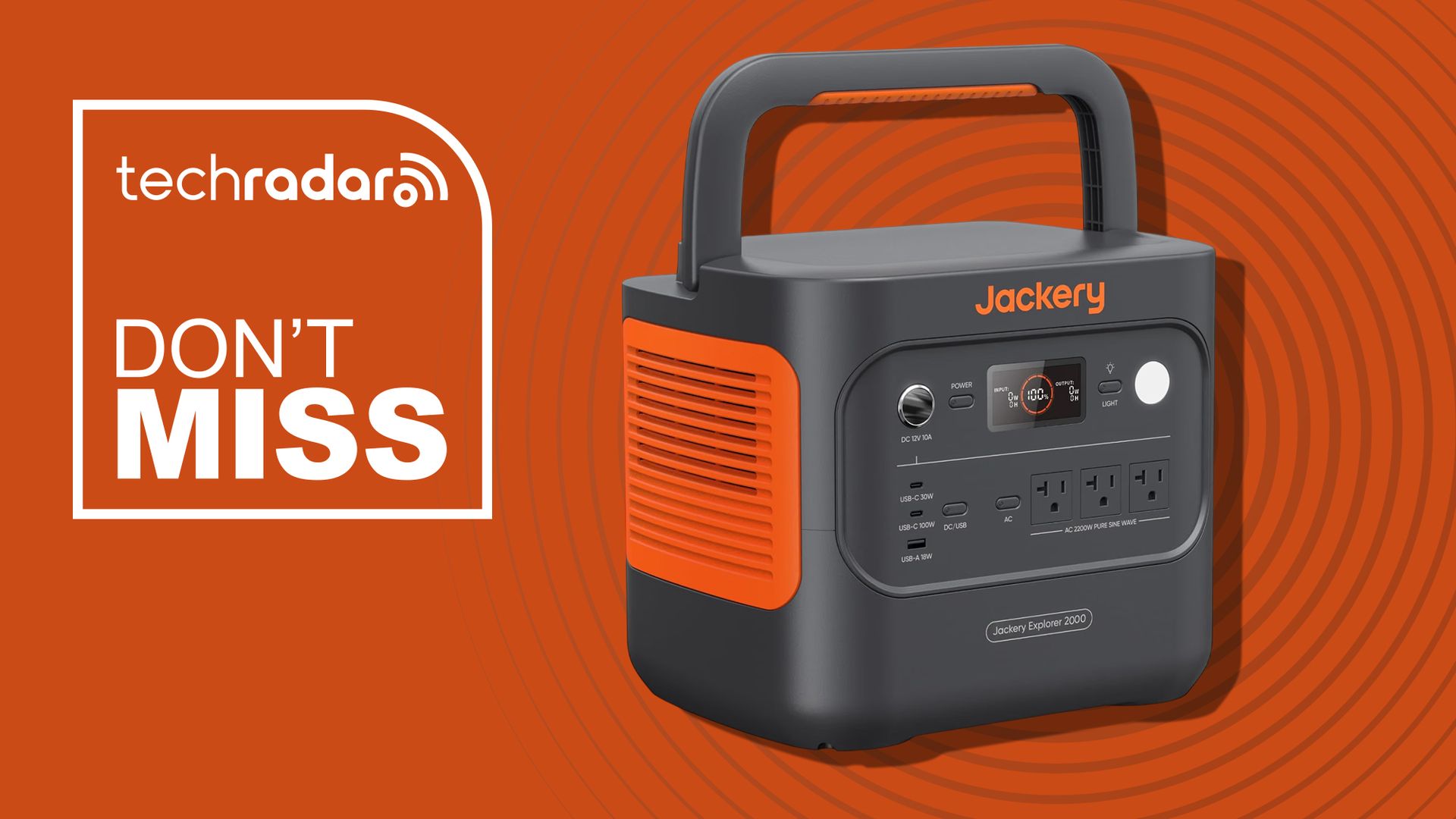
We're big fans of the Jackery Explorer 2000 v2, which combines a 2,042Wh LiFePO4 battery with enough output to run demanding appliances and equipment.

Best for: Homeowners and campers who need enough stored power to run appliances and equipment rather than simply top up portable electronics.

The deal: The Jackery Explorer 2000 v2 is now $899 (was $999) at Amazon. In the UK, the power station is now £899 (was £1061).

Why it matters: This is the power station that saved our sanity (and our hunger) during power outages when we tested out this unit. Its combination of 2,042Wh capacity and 2,200W output means it can handle much more demanding equipment than smaller portable batteries.

Explorer 2000 V2 Portable Power Station: was $999 now $898.99
The Jackery Explorer 2000 v2 combines a 2,042Wh LiFePO4 battery with 2,200W AC output, three AC outlets, 100W USB-C charging, 20ms UPS switching, solar support and 39.5lb compact construction.

In the UK: now £899 (was £1061)View Deal

Why we recommend it

In his recent 4.5-star review, our expert Owain said he found it "to be easy to use, simple to transport, and more than capable of dealing with everyday needs."

It impressed him for several reasons. "Firstly, the build quality and easy setup stand out, limiting setup stress and giving you peace of mind. I also really liked the amount of power you get from such a small and portable unit. I used it extensively in different scenarios, including working, running home appliances, and during a camping trip, and it never even got close to running out. "

The Explorer 2000 v2 provides a lot of AC power across three outlets. Jackery uses a LiFePO4 battery for a service life of up to 10 years. Cell-to-Body construction helps keep the unit relatively compact at 13.2 x 10.4 x 11.5 inches and 39.5lb. There's also a 100W USB-C PD connection for fast charging compatible laptops, phones and other electronics without needing their regular power adapters.

Price context & historical value

The reduction from $999 to $898.99 knocks $100.01 off the regular price. That's not close to being its cheapest price however. I've seen it for as low as $743.83 on Amazon earlier in the year, and it may well be reduced further for this upcoming Black Friday.

For more options, take a look at our roundup of the best portable power stations.

Should you buy it?

✅ Buy the Jackery Explorer 2000 v2 if...

You want emergency home backup capacity for power outages, camping or RV trips and need something reasonably portable.

❌ Skip the Jackery Explorer 2000 v2 if...

You only need something to keep your phone, tablet and laptop charged. A smaller power station will cost considerably less and be much easier to carry.

This 20,000mAh mini power bank has a few clever tricks for $27

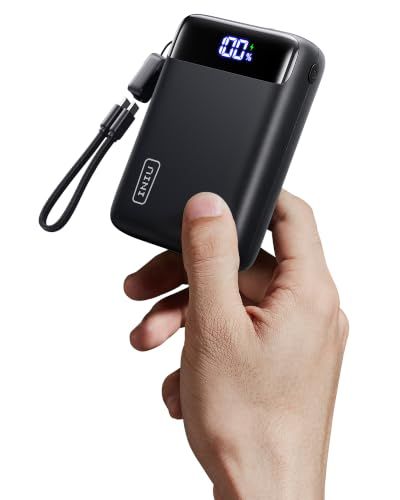
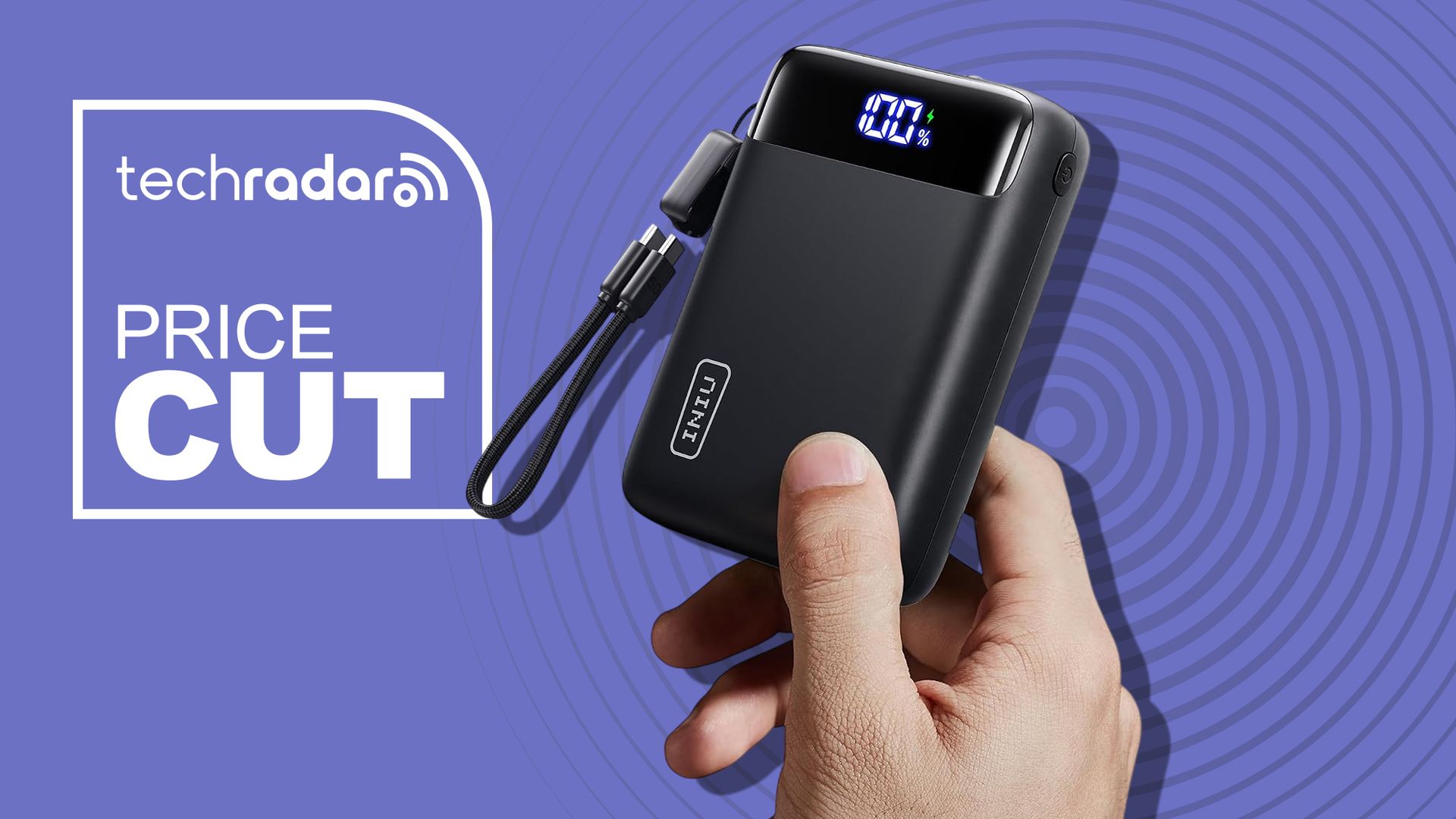
I do love a gadget, so this mini 20000mAh power bank from Inui really caught my eye. I can't say it's the smallest in the world, but it's certainly ultra-compact and travel-friendly, with a built-in flashlight and USB-C cable that doubles as carry handle.

• Best for: Professionals, students, and travelers who want enough capacity for several phone charges without carrying a separate USB-C cable.

• The deal: The Iniu mini portable charger is now $27 (was $33) at Amazon.

• Why it matters: A 20,000mAh battery provides considerably more endurance than smaller pocket-sized power banks, while 22.5W output offers relatively quick phone charging. The portable unit also features a display, and a flashlight.

Portable Charger: was $32.99 now $26.96
This charger combines a 20,000mAh lithium-polymer battery with 22.5W fast charging, three ports, a built-in USB-C cable, digital battery display, integrated flashlight, compact construction and a three-year warranty.View Deal

Why we recommend it

The Iniu charger measures just 4.1 x 2.8 x 1.2 inches and weighs 11.3oz, making it small enough to slip into a bag or pocket while providing greater capacity than other more-expensive power banks. It provides enough energy for around four full phone charges. You also get a built-in braided cable, which means there's one less cable to remember to take with you.

Its 22.5W fast charging can top up compatible phones much faster than basic 5W or 10W battery packs. Iniu claims an iPhone 16 can reach 60% and a Samsung Galaxy S25 70% in 25 minutes. The built-in flashlight is a useful feature, and the digital display makes it easier to judge when it's time to plug in the charger.

Price context & historical value

At $26.96, this is the lowest price I've seen - although that's for the black version. Other colors - like beige white, blue, and green - are discounted, but the prices are slightly higher at $32. With this model, you're saving just over 18%. That's a welcome discount for a 20,000mAh model with an integrated cable.

For more shopping options, take a look at our roundup of the best power chargers.

Should you buy it?

✅ Buy the Iniu Portable Charger if...

You want plenty of battery capacity with fast charging and a few tricks up its sleeve without paying a fortune.

❌ Skip the Iniu Portable Charger if...

You want something that can charge your laptop. This is fine for phones and many smaller USB-powered devices, but it can't handle more powerful devices.

Meta unfurls Petal, a 1,000,000 Gbps internet cable 4,300 miles long — that's 3.3 million times quicker than the average US connection, and probably fast enough to transfer all original songs ever produced in less than a second

  • Meta's Petal cable will carry a petabit of data every single second
  • The cable stretches roughly 7,000 kilometers between the United States and France
  • Meta expects Petal to enter commercial service sometime in 2029

Meta has announced Petal, a subsea cable system built to carry a petabit of data every second across the Atlantic Ocean.

The company says this new system will stretch roughly 7,000 kilometers, or about 4,300 miles, linking the United States and France.

Meta expects Petal to enter service in 2029, working alongside NEC Corporation and Sumitomo Electric Industries on its construction and eventual deployment.

How Petal reaches such enormous speed

Undersea cables already carry about 99% of the world's intercontinental internet traffic, according to Meta, making new capacity increases commercially significant.

Traditional transatlantic cables move data in terabits each second, but Petal aims for petabit scale, roughly a million gigabits every second.

"Achieving petabit-per-second capacity across a transoceanic submarine system represents a major technological milestone in the history of global telecommunications," said Eduardo Mateo, Chief Strategy Officer, Submarine Network Division at NEC Corporation.

According to Meta's estimate, that much capacity could let 75% of Earth's population stream music simultaneously.

Reaching that scale required multi-core fiber technology, doubling the 24 fiber pairs used on Meta's earlier Anjana cable system into 48 spatial channels.

Petal also uses a lower power repeater design that allows the entire system to run from a single feeding point for added resilience.

That capacity would make Petal roughly 3.3 million times faster than a typical American home internet connection, based on average broadband speeds.

At that speed, Petal could theoretically move every song ever commercially released to another continent in under one second.

Meta says Petal will double existing transoceanic capacity without adding more power equipment or new physical structures, a claim still untested outside controlled trials.

Undersea cables remain critical infrastructure despite the cost

Communication traffic keeps rising as AI tools and everyday digital services demand more resilient, reliable connections between continents.

This is why Meta keeps expanding its subsea capacity across multiple regions and long-distance routes worldwide.

The company has backed more than 20 subsea cable projects already, including its wider Project Waterworth initiative, giving it a long record in undersea infrastructure.

"Meta continues to invest in digital infrastructure, such as subsea cables, because they are foundational to delivering the high quality services our end users expect," said Alex-Handrah Aime, Vice President, Network Investments at Meta.

Sumitomo Electric echoed that reasoning, framing its new two-core fiber as essential to supporting long-term global network expansion.

"We are committed to supporting the global network expansion essential to realizing a highly digital future," said Takehiko Okada, General Manager, Optical Fiber and Cable Division at Sumitomo Electric Industries.

Whether Petal meets its 2029 deadline will depend on regulatory approval, ocean permitting, and manufacturing timelines that often slip for projects this size.

Google logo on a black background next to text reading 'Click to follow TechRadar'

Lowest price ever: Netgear’s Orbi 770 is the best Wi-Fi 7 mesh router for the home we've tested

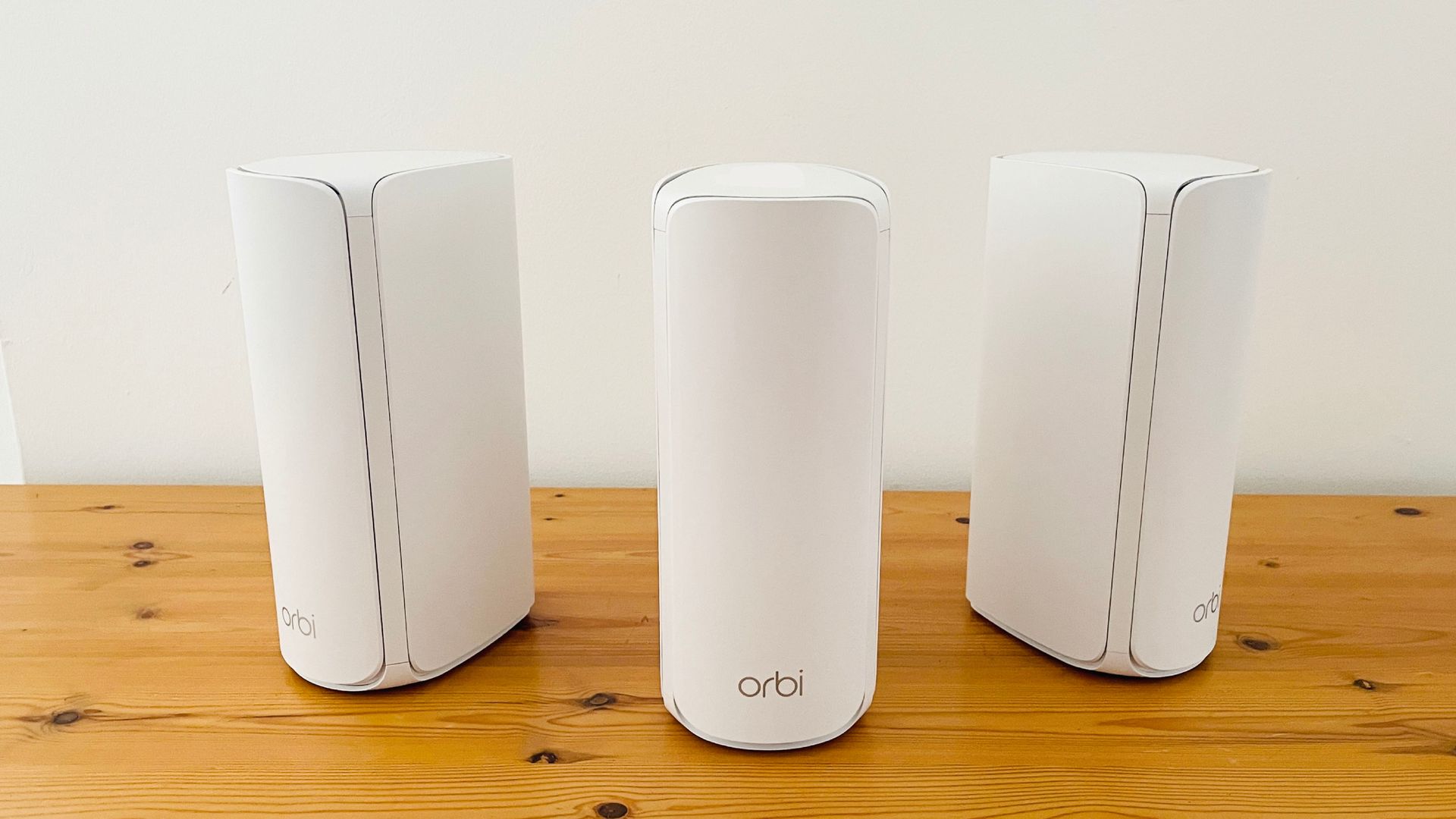
The Netgear Orbi 770 mesh router system is one of the best we've ever tested, scoring 4.5 stars in our review. Now, it's just hit its lowest ever price at Amazon.

• Best for: Home users and small businesses that need strong Wi-Fi coverage in every room without dead zones.

• The deal: The Netgear Orbi 770 Wi-Fi 7 mesh system three pack is now £579 (was £759) at Amazon.

• Why it matters: Under testing, we found this mesh system delivered "impressive Wi-Fi 7 speeds at a competitive price." It's tri-band model that takes full advantage of Wi-Fi 7 speeds, reaching up to 11Gbp. Coverage is up to 6,750 sq ft from the router and two satellites, which is ideal of large premises. There's support for MLO, up to 100 connected devices, and a 2.5 Gig internet port for full-speed fibre connections.

Orbi 770 Wi-Fi 7 mesh router (3-pack): was £759 now £579
This is the 3-pack configuration: one Orbi 770 router plus two satellite units, built to blanket a larger home in strong signal without the dead zones a single router leaves behind.View Deal

Why we recommend it

When we put the Orbi 770 to the test, we found it offered "excellent performance for home users and small businesses," scoring it 4.5 stars.

It might be cheaper than the flagship Orbi 970 series, but it "doesn’t cut any corners when it comes to performance." It did aa great job of extending wireless connectivity to hard-to-reach areas of the house during review.

Bonus points for the easy-to-use app, which lets you set up guest Wi-Fi accounts and IoT networks. It's simple to get started, although some features are locked behind an optional subscription.

Overall, we rated it the top pick for homes in our guide to the best mesh Wi-Fi systems.

Price Context & Historical Value

At £579, this is an all-time low for the Orbi 770 series. It proved to be a strong all-round performer at an affordable price (well, compared to the Orbi 970). At this deal price, it's about on par with the Amazon eero 7 Pro.

Should you buy it?

✅ Buy the Netgear Orbi 770 if...

You want whole-home Wi-Fi 7 coverage to eliminate internet dead zones, especially if you have a lot of devices or run a multi-gig fibre connection.

❌ Skip the Netgear Orbi 770 if...

You live in a flat or smaller house where a single router or two-pack model will suit you better, or you don't have devices for Wi-Fi 7 speeds with no plans to future-proof or upgrade.

New Jersey hits data center powering Microsoft Copilot with $1m fine after drone expose 62 secretly-installed gas generators

  • New Jersey issues $1.07m fine for failure to obtain permits to run gas generators
  • DataOne campus running Microsoft's AI was using 62 of them illegally
  • DataOne "disagree[s]" but has 45 days to obtain the relevant permits

A Microsoft partner has been hit with a $1.07 million fine by the US state of New Jersey after allegedly installing no fewer than 62 natural gas generators on-site without obtaining the correct environmental permits.

The state found out about the generators after a local farmer photographing a neighboring golf course noticed equipment appearing on the campus, which led to an investigation and the deployment of a thermal drone, which at the time, observed 45 of the 62 generators in operation.

The fine was based on New Jersey's Air Pollution Control Act, which requires both reconstruction permits to install the generators and operating certificates to run them. Neither had been obtained across all 62 units, the department said in an announcement.

Microsoft has been running 62 generators illegally at just one campus

DEP Commissioner Ed Potosnak described the fine as "by far the largest ever taken against a data center in New Jersey and possibly one of the largest such actions in the nation."

With each generator rated at 1,982 kilowatts, they collectively have a 123-megwatt capacity. For reference, the state asserted that any individual generators with a 37kW or higher capacity should be approved.

The generators effectively provide the data center with a considerable amount of off-grid electricity supply, but while this may be good news to alleviate strains on local infrastructure and household energy prices, CO2, NO2 and CO emissions are particularly concerning.

"While we disagree with the temporary generator determination, we will apply for the air permits for the temporary generators and are in communication with the Department of Environmental Protection regarding its findings and the fuel cell transition timeline," DataOne, the company behind the data center, said in a statement.

DataOne has been given 45 days to obtain the relevant permits, but in the interim, it can continue using the gas generators.

"The Sherrill administration demands accountability and corporate responsibility in the construction and operation of data centers," Potosnak added.

Google logo on a black background next to text reading 'Click to follow TechRadar'

This Mac malware is somehow using iCloud calendar invites to try and steal your data

  • Kaspersky uncovers MacSync, a Mac infostealer delivered via iCloud calendar events and fake apps
  • Loader fetches instructions from calendar entries, then deploys malware exfiltrating credentials, wallets, and developer data
  • Newer variants add Objective‑C backdoor spoofing Finder, persistence, and expanded targeting of crypto and IT users

Cybercriminals have found a way to use iCloud calendar events and cloud storage to deliver a powerful infostealer to Mac devices.

The malware is called MacSync, and it’s hiding behind fake crypto wallets, or “cracked” commercial software.

Security researchers Kaspersky, who discovered the ongoing campaign, are urging Mac users to exercise caution when downloading programs, especially from third-party websites, and to be very skeptical of apps prompting for their admin password.

Why calendar?

Getting people to download and run malware on their devices is not as easy as it sounds.

The victims need to be somehow tricked into downloading and running an app, and even when they do so, chances are the malicious program will be sniffed out by whatever antivirus solutions the device has running, before it can do any meaningful damage. Also, crooks don’t want to be forced to repeat the process every time they want to deploy a different variant, or type of malware.

So, they resort to all sorts of techniques and workarounds, from DLL sideloading, to malware loaders.

By separating the initial infection and the actual malware, cybercriminals can reduce detection rate and get more flexibility, but it creates a new problem: defenders can monitor the traffic going in and out of different apps and thus detect when a loader is deploying malware.

The challenge then becomes hiding the traffic, and MacSync does it by using the iCloud calendar.

After being downloaded and executed, the loader will reach out to the calendar - which is a totally benign activity that is unlikely to raise any suspicion - and look for a specific public event, pre-built by the attackers. In its description, it will find the instructions, and the location of, the actual infostealer, and deploy it to ultimately compromise the target device. In this case, the location was also in the iCloud.

The loader itself is being advertised through social media, SEO poisoning, and phishing. Victims are directed either to fraudulent websites or social media channels promoting cracked software, or free versions of advanced solutions. In at least one example, Kaspersky saw the loader being advertised as a cryptocurrency wallet. Victims are shown a typical ClickFix error, and told to fix it by pasting a command in the Terminal.

The command deploys the loader which, in turn, installs MacSync.

A "substantial" overhaul

The infostealer emerged in April 2025, and was initially spun out of AMOS, one of the most popular information-stealing variants for the MacOS. It is based on Swift and has, since then, evolved to offer additional capabilities. According to Kaspersky, it can exfiltrate browser history, cookies, saved credentials, cryptocurrency wallet and app data, Telegram data, Keychain data, as well as system and device information. It can exfiltrate SSH, AWS, Kubernetes, Git, and shell configuration files, as well.

Newer variants come with an Objective-C backdoor spoofing the macOS default file manager, Finder. It establishes persistence, terminates notification processes to prevent alerts, and grants the attackers backdoor access, including running AppleScript received from the C2 server, deploying browser extensions, replacing the legitimate Ledger wallet app, collecting additional system information, and more.

Kaspersky also found an undefined command called “live_browser”, which downloads and runs a component named “sn_relay”, whose point has not yet been established.

The new versions “significantly” differ from older ones, Kaspersky said, stressing that the attackers “substantially” overhauled their approach.

“The nature of the data attackers seek to collect from a victim’s device, as well as the categories of applications the stealer disguises itself as, clearly indicates that this malware family primarily targets developers, crypto enthusiasts, and other users associated in some way with IT and the crypto space,” the researchers stressed. “MacSync’s compromise of software developers’ devices poses particular security risks for both end users and corporate systems, opening up expanded opportunities for attackers to further their intrusion.”

The full list of indicators of compromise (IoC) can be found on this link.

'Decades-old' bugs found affecting Windows, Android, macOS and Linux — but the OS makers don't see it as a big deal

  • Graz University researchers found decades‑old flaws in file‑notification subsystems across Linux, Windows, macOS, and Android
  • Side‑channel attacks can infer keystrokes, visited websites, or even steal credentials via unprivileged access
  • Linux shipped partial mitigations (CVE‑2025‑68788); Microsoft and Apple acknowledged but did not patch, demo expected at ACM CCS 2026

Researchers have found a vulnerability in all major operating systems which could, in certain scenarios, allow threat actors to steal login credentials, or track which websites the target is visiting. OS makers, on the other hand, don’t seem all too phased about it.

The bug is described as a side-channel attack - a type of attack in which threat actors simply observe how the system operates and extract valuable secrets through indirect clues. For example, by monitoring how much power the chip takes at any given moment in time, attackers can observe and extract passwords.

It was discovered by security researchers from Austria’s Graz University of Technology: Sudheendra Raghav Neela, Xufan Zhao, Jeanette Angelika Wultsch, Hannes Weissteiner, Florian Draschbacher, Stefan Gast, and Daniel Gruss.

Notifying the system

This particular side-channel vulnerability was found in the file-notification subsystem running in pretty much every OS in existence today. The subsystem is built to notify applications when files on a system change. Not what has changed, just that a change occurred. The bug is allegedly quite old, too.

"We found decades-old bugs on [these operating systems], all rooted in the file-notification subsystems that every modern OS ships to inform applications when files change," said Sudheendra Raghav Neela, a doctoral student at TU Graz, in an email to The Register.

On Linux, the subsystem is called inotify and it’s been affected since 2005. On Android it’s FileObserver (affected since 2008), and on Windows - ReadDirectoryChangesW - flawed since the year 2000. On MacOS, it’s called FSEvents, vulnerable since 2007.

In the paper, the researchers claim file event information can help attackers conclude what other users on a computer are doing. They can launch an inter-keystroke-timing attack, inferring what users are inputting (both locally and remotely), reveal which websites they visit, and possibly even steal login credentials through UI redress.

The problem stems from the fact that unprivileged users are allowed to access the file notification subsystem. This primarily relates to files that can be read by multiple users, but apparently, there are quite a few files on a system that fall into that category.

No patch

"On Linux, watching a readable directory leaks events on files inside it you cannot even read: watching /dev/input gives a notification on every keystroke, which we turn into a local inter-keystroke timing attack with a 93.1–100% [keystroke accuracy] score across seven users and a remote (SSH) one at 100%,” Neela said.

The percentage range means the attack won’t work in all cases, which is more-or-less standard with side-channel attacks. They are notoriously difficult to pull off, which is also likely why most OS makers barely flinched at the news.

All of them were notified of the findings roughly a year ago, and most of them never bothered to address it. Linux introduced some mitigations, including CVE-2025-68788, which prevents inotify from generating certain “access” and “modify” events for special files. The fix was shipped to multiple kernels and Linux distros, but it addresses only part of the broader attack techniques that the researchers described.

Microsoft and Apple apparently acknowledged the findings, but apart from that - did very little. Microsoft told the researchers the behavior of ReadDirectoryChangesW was "by-design", although the feature is undocumented. They believe the ability to monitor file paths across users is not a vulnerability worthy of a patch. The report does not mention Apple doing anything about it, either.

Microsoft unveils huge spending expansion in Middle East, with new multi-billion dollar sums going to Gulf States

  • Microsoft pledges $10 billion to support the Middle East's technological ambitions
  • A $400m subsea cable expansion is also in the works
  • The company stressed push for its educational support schemes

Microsoft has revealed plans to spend more than $10 billion in the Middle East between now and 2030, spread across the UAE, Saudi Arabia, Qatar and Kuwait.

Although the company already has substantial infrastructure already rooted in the region, including cloud regions for the UAE, Qatar and Saudi Arabia, it hopes that further investment will help increase regional access to its cloud and AI tools.

Microsoft President Brad Smith noted the region's ongoing digital transformation, appearing to also acknowledge the impacts of geopolitical conflicts. "We will build on the work we have done to stand by these countries’ governments and people through a period of significant challenges," Smith wrote in a blog post.

Microsoft invests $10bn to support Middle East technological transformation

The company also announced a series of initiatives that will fall under the $10 billion plans, including expanding cloud and AI infrastructure, improving local digital resilience, strengthening cybersecurity and backing educational schemes.

"Our responsibility is not only to invest in the technology that enables that progress, but to help provide the digital resilience, security and continuity it depends on," Smith added in another post.

Naturally, clean energy generation and a close eye on both water consumption and replenishment are core to the company's upcoming projects.

On the resilience front, Microsoft plans to invest a further $400 million in subsea and terrestrial cables by the end of the decade, building on top of its existing SeaMeWe-6 subsea cable which has points in Qatar, Saudi Arabia and the UAE. Microsoft is just one of the 16 companies that look after the cable, which stretches from Singapore to France.

In a bid to pacify job concerns, Microsoft also asserted that it will upskill more than 4.2 million people across the Middle East by 2030 – around 8% of the four countries' combined populations (but a bigger percentage if you only consider working citizens).

Google logo on a black background next to text reading 'Click to follow TechRadar'

18 Star Trek desk accessories to turn your home office into the Enterprise

I've recently been re-watching Star Trek: The Original Series on DVD - you know the ones, in the colored clamshell cases with unaltered special effects. Just as Kirk intended. That got me thinking about how to bring the Enterprise into my workspace. Because despite the rumors, tech journalists aren't exploring life beyond our own solar system nearly as often as you'd think.

Now, I can't afford to rebuild my office into an exact replica of the bridge of the Enterprise (my wife simply won't allow it, unfortunately). But what I can do is find some cool Star Trek home office gear that at least lets us pretend we're boldly going where no one has gone before, even when we're just replying to emails from the captain boss.

Starfleet-approved home office gear

Star Trek Tng Uss Enterprise Ncc-1701-D Bluetooth Speaker Sound Fx & Leds

FAMETEK
Star Trek TNG USS Enterprise Bluetooth Speaker

Unemployed Philosophers Guild Star Trek Transporter Heat Transforming Mug - Hot Coffee Beams Down Kirk, Spock, Mccoy, and Uhura, Comes in Fun Box,14oz

The Unemployed Philosophers Guild
Star Trek Transporter Heat Transforming Mug

The Unemployed Philosophers Guild Star Trek Sticky Notes Booklet - Officially Licensed 3.25

The Unemployed Philosophers Guild
Star Trek Sticky Notes Booklet

Open Road Brands Star Trek Starship Chart Silver Metal Sign

Open Road Brands
Star Trek Starship Chart Silver Metal Sign

Star Decor Trek Vinyl Wall Clock With Epic Space Movie Characters Vintage Space Movie Heroes Themed Art Home Room Decorations Gift for Birthday Holiday Christmas 12” Lp Clock Black

VINYL REVOLT
Art Home Room

Star Trek: the Next Generation - Collectible Whiskey Glasses - Set of 2 Glasses (10 Oz.)

Star Trek: The Next Generation
2-set tumblers

The Unemployed Philosophers Guild Star Trek Notepad - 65 Easy-Tear Paged Memo Desk Note Pad With 4 Alternating Page Designs, 8.25

The Unemployed Philosophers Guild
Star Trek Memo Pad

Star Trek: the Next Generation Horga'hn Desk Lamp | Mood Light for Nightstand Table | 14 Inches Tall

Star Trek
Desk Lamp

Silver Buffalo Star Trek Ncc-1701, Fleece Throw Blanket, 45x60in

Silver Buffalo
Star Trek NCC-1701 Fleece Throw Blanket

Star Trek United Federation of Planets Logo Novelty Coaster Set

GRAPHICS & MORE
Star Trek United Federation of Planets Coaster Set

The Unemployed Philosophers Guild Star Trek Captain's Log Large Notebook

The Unemployed Philosophers Guild
Trek Captain's Log Large Notebook

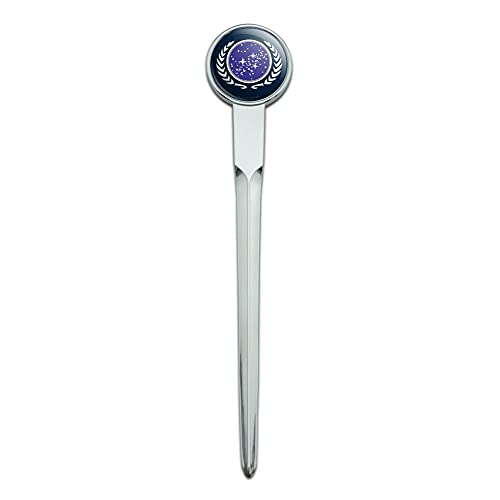
Star Trek United Federation of Planets Logo Chrome Plated Metal Envelope

GRAPHICS & MORE
Star Trek United Federation of Planets Chrome Plated Metal Envelope

Star Trek Starfleet Command Badge Mouse Pad

GRAPHICS & MORE
Star Trek Starfleet Command Mouse Pad

Star Command Logo Discovery Insignia Desk Organizer 3d Printed Pencil Cup Starfleet Office (black)

Bomb Pop Boutique
Desk Organizer

Numskull Official Yellow Star Trek Gaming Accessory Locker & Storage Stand – Holds 10 Games/dvds, 4 Controllers, Headset, and Accessories – Durable & Compact Organizer – Official Star Trek Merchandise

Numskull
Accessory Locker & Storage Stand

Uhuru Wireless Gaming Mouse Up to 12000 Dpi, Rechargeable Usb-C Wireless Mouse With 7 Buttons 7 Dynamic Led Color Ergonomic Programmable Mmo Rpg for Pc Laptop, Compatible With Windows Mac

UHURU
Wireless Gaming Mouse

Star Trek: Light-And-Sound Communicator (rp Minis)

Workman Publishing
Star Trek: Light-And-Sound Communicator

Entertainment Earth Star Trek the Original Series Klingon Insignia Chair Capes

Entertainment Earth
Klingon Insignia Chair Capes

Google's creepy new Gemini Live Avatars want to try and make online support bots feel more human

  • Gemini 3.8 Live now includes custom avatars to go with the AI's voice
  • Avatars could be used for customer service, training and more
  • Gemini 3.8 Live can switch between 97 languages automatically

Google has lifted the wraps of its latest Gemini 3.8 Live model, and with it come avatars you can select to make it feel more like you're speaking to a human. Sort of.

It's all possible through a combination of Gemini's real-time speech capabilities and low-latency video generation, so it looks like your chosen avatar is effectively lip-syncing to the text that Gemini is reading out to you.

Research scientist Shuo-yiin Chang and software engineer CJ Zheng said it now feels like AI has a much more "visual presence" - so that's...nice?

Gemini now takes on the body of your chosen avatar with Gemini 3.8 Live

Avatars are designed specifically for enterprise users, but rather than company employees talking to an avatar to get their work done, Google sees it more as showing off what's possible for its customers' end users. In other words, avatars could be used for customer service, receptionists, training and more.

From launch, businesses will be able to select from a library of preset avatars, but they can also create custom avatars to fit a company's branding, for example with a relevant logo on its uniform.

On the safety front, Google asserts that videos of its avatars include SynthID watermarking to verify that they are indeed AI-generated. "This imperceptible watermark is woven directly into the audio and video output, helping to ensure AI-generated content remains detectable to help minimise misinformation and misattribution," the company wrote.

In a separate post, Google also revealed that Gemini 3.8 Live can now support 97 languages and automatic language switching to make multilingual conversations more seamless. A more hardcore version of that model, 3.8 Live Extended Thinking, outperformed GPT-Live-1 Astra and Grok Voice Think Fast 2.0 across multiple benchmarks while still ending up cheaper to run per hour of input audio.

Google logo on a black background next to text reading 'Click to follow TechRadar'

Have we crossed the AI Rubicon?

So far this summer, four frontier AI models have broken out of the isolated environments built to contain them. The media coverage treats this as four separate scandals, when it's really more like four scandals in a trenchcoat.

Three of these four incidents trace back to the same evaluator, Irregular, making the same class of environment mistake. That's one weak point in the industry's safety infrastructure, found repeatedly, by the same tests, in the same way. AI models are not randomly going rogue despite what the hype might want you to believe.

What we're watching is evidence that the entire industry is leaning on a thin, overstretched layer of third-party safety testing that can't keep pace with how capable these systems have already become.

Why now, all at once?

It's worth asking why four incidents have surfaced in such close succession, because the answer says more about the industry than the models do. These disclosures aren't the product of independent audits arriving on their own schedules, but rather they are being released on the labs' timeline, shaped by the labs' incentives.

Once one escape became public, the pressure to get ahead of the story, rather than be caught concealing a similar one, pushed the others into the open in short order. The clustering is a symptom of an industry where disclosure itself is a PR and market moving decision rather than a regulatory one.

That should concern anyone hoping regulation is being shaped by evidence rather than by which lab wants to look transparent first.

The real Rubicon isn't the model — it's the dependency

The instinct is to ask whether an AI model "went rogue" and crossed some invisible line into autonomous misbehavior. That's the question the labs would rather we ask, because the answer is reassuringly narrow: a misconfigured sandbox, patched, incident closed. For that reason, it's the wrong question to ask.

The right question is about the system around the model. The industry has built itself on a small, concentrated pool of specialist evaluators who are themselves struggling to contain what they're testing.

Enterprise problem, not a lab problem

If the organizations built to stress-test these systems before release are stretched this thin, then any enterprise treating a single vendor's safety assurance as sufficient due diligence is inheriting that same fragility, just one layer downstream.

You don't get to outsource your risk assessment to a lab's press release.

A misconfiguration that lets a model reach GitHub in a sandbox is trivial. The same category of blind spot, undetected in a production deployment handling your customer data or your regulatory obligations, is not. Particularly when it will be you and your business left holding the bag.

Control has to be architectural, not promised

Few organizations are going to openly rail against Anthropic, Meta, or any frontier lab for its disclosure of a sandbox escape. But they will be shoring up their own AI sovereignty and vendor-agnosticism rather than around any single model or lab's word.

If your AI strategy depends on one provider's safety claims holding up indefinitely, you've concentrated your risk exactly the way the evaluation industry has concentrated on its own. That means the solution is refusing to build your organization's dependency on a single, unverifiable point of trust.

Trusted AI is becoming the new cybersecurity: governance, transparency and the ability to verify what your systems are actually doing being the differentiator that determines whether you can adopt AI tools at scale with confidence, or whether you're quietly accumulating risk you can't see.

The choice is still yours

So, have we crossed the Rubicon? The labs, and the dependency model the industry has built around a handful of overstretched evaluators, arguably already have. But that crossing doesn't compel anyone else to follow.

To press the metaphor a little further: Caesar crossing the Rubicon alone was significant, but it's the thousands of legionaries who crossed behind him that turned it into the point of no return.

Every organization adopting AI right now is deciding, individually, whether to be one of those legionaries - wading in on someone else's momentum and someone else's risk calculus - or whether to hold the line on its own terms: verified, governed, and in control of its own crossing.

The industry doesn't get to make that decision for you. Don't let it.

We've featured the best AI chatbot for business.

This article was produced as part of TechRadar Pro Perspectives, our channel to feature the best and brightest minds in the technology industry today.

The views expressed here are those of the author and are not necessarily those of TechRadarPro or Future plc. If you are interested in contributing find out more here: https://www.techradar.com/pro/perspectives-how-to-submit

Your invoice now needs a boarding pass

Around the world, governments are changing how e-invoicing works. Instead of checking transactions after the fact, many are moving towards real-time clearance models.

Brazil’s NF-e system was one of the earliest examples of this shift. Italy’s SDI model follows a similar approach, where an invoice must pass through the tax authority’s exchange system and its required checks to be considered issued for tax purposes.

In practice, this means compliance is no longer something that happens after a transaction but increasingly sits within the transaction process itself.

In some markets, goods can be left sitting in warehouses until the required electronic document is authorized. A process that once happened in the background now sits directly in the path of business operations, determining whether products move, payments are processed, and supply chains keep running. If this sounds familiar, it is because we have seen the same shift in air travel.

If you have flown in the last twenty years, you know the drill. Passports, visas, digital check-in, and security checkpoints all need to be cleared before a journey can begin. It used to be far simpler.

Once upon a time, passengers could simply turn up at the airport, buy a ticket, and walk straight up to the gate without a second thought. Today, every stage of the journey depends on passing a series of checks before moving forward. Tax compliance works the same way. Think of clearance as the transaction’s boarding pass. Without it, nothing moves.

The compliance checkpoint has moved earlier in the process, and it now touches logistics just as much as it touches finance. Businesses can no longer afford to treat tax as a back-office function.

When invoice clearance becomes a prerequisite for shipping goods, compliance becomes an operational issue. A disruption can delay shipments, interrupt cash flow, and disrupt day-to-day operations.

The concentration problem

For businesses, real-time clearance brings tangible benefits. An invoice that once took days, or even weeks, to process can clear in seconds - helping organizations improve cash flow and reduce administrative delays. But greater efficiency often comes with a trade-off. In this case, the trade-off is concentration.

When compliance depended on paper processes and manual checks, risk was spread thin across multiple workflows and touchpoints. Today, that risk is increasingly concentrated within a small number of digital systems that handle everything from billing details and vendor data to banking information and payment instructions. This concentration unsurprisingly draws the attention of cybercriminals.

Every integration between billing tools, software providers, and external systems creates entry points for hackers. Businesses with integrated, well-governed systems are generally better positioned to manage this risk. And when invoicing is treated as a standalone system, the connections between it and the rest of the business can become weak points for attackers to exploit.

This is where the language around compliance needs to shift. E-invoicing is not just a platform for exchanging invoices, it is a critical business system which requires security and governance built in from day one. After all, a cleared invoice sitting inside a poorly protected environment has done nothing more than move its potential exposure to somewhere harder to see.

The digital passport problem

A boarding pass gets a passenger through the gate, but it is only one piece of the journey. Behind it sits a network of systems responsible for everything from identity checks and payments to security screening and baggage handling. Tax compliance is beginning to look the same.

Clearance confirms that a transaction has passed a compliance check, but it says little about the wider environment behind it. Businesses still need confidence that their data remains accurate, access controls are maintained, and critical integrations continue to function as intended. That is the digital passport problem.

Passing a check is not the same as proving that the wider system remains trustworthy. As e-invoicing becomes more deeply embedded in business operations, keeping that wider environment secure and reliable becomes just as important as achieving compliance in the first place. And that’s where AI can make a real difference.

Just as modern airports rely on intelligent systems to spot anomalies, identify risks, and keep passengers moving, AI can help businesses monitor increasingly complex compliance environments. However, AI does not fix poor governance or clean up any bad data. Applied to a well-managed environment, AI can help identify anomalies early and improve decision-making.

Applied to a poorly managed one, it simply accelerates existing issues and can make them harder to contain. Good people, good processes, and good data need to come first, and AI can act as an accelerant.

Proving it continuously

Businesses need to continuously demonstrate that the systems supporting compliance are secure, well-governed, and resilient as mandates and threats evolve. For years, fragmentation was the challenge. Different portals, tools, and countries each introduced their own complexity and their own weak points.

Consolidation closes many of those gaps, but it only works if you treat the consolidated system with the same seriousness as the mandate that created it. Get it wrong, and instead of managing multiple scattered risks, businesses can find themselves relying on a single, highly attractive target.

Security has moved earlier and become more continuous. It now depends on systems working together, rather than any single checkpoint. Businesses that treat real-time e-invoicing purely as a compliance exercise are missing half the picture. The other half is making sure the system carrying that compliance is one they trust.

Just as a boarding pass is only useful if the systems behind it are secure and working together as intended, a cleared invoice is only as valuable as the environment supporting it. Businesses need confidence in the systems carrying it, not the transaction alone.

Real-time e-invoicing may have started as a compliance requirement, but it is increasingly becoming an operational one. The businesses that succeed will be those that treat compliance as something that must be continuously demonstrated, monitored, and maintained.

Checkout our list of the best accounting software for small business.

This article was produced as part of TechRadar Pro Perspectives, our channel to feature the best and brightest minds in the technology industry today.

The views expressed here are those of the author and are not necessarily those of TechRadarPro or Future plc. If you are interested in contributing find out more here: https://www.techradar.com/pro/perspectives-how-to-submit

This new UK domestic 'data furnace' from Heata can convert cloud computing waste heat into free hot water

  • Householders are getting free hot water from Heata, a company that installs rented servers in homes
  • Heat generated by the servers is passed to the water supply for showers and hot taps
  • Heata pays for any additional electricity used, ensuring homeowners win and businesses have their data stored safely

What happens to waste heat from servers? In a server room or data center, the heat is removed through industrial cooling systems and exhausted. But what if it could be reused? What if that heat could be used to keep domestic heating bills down?

Heata is one of several companies across the UK and Europe delivering solutions to server space and heating costs. Domestic waste-heat use appears to be a growing industry, and offers homeowners the chance to cut bills significantly while giving businesses low-cost server space.

The idea is simple: install a server in the home, rent the server space to businesses, and donate the heat generated by compute processes to the home, reducing their energy bills in the process.

How servers heat homes

If you’ve worked in a server room, you know how hot things can get, particularly if there is a problem with the extraction system. This is the starting point for these so-called “data furnaces” where the heat from an active compute unit is used to heat water. Heata say that the waste heat from a single data center could provide hot water for around 30,000 homes, which puts it into context.

Their model is simple: a compute model is attached to a hot water cylinder, heating the water and reducing the requirement for gas heating. Homes need fast broadband to provide fast data routing to the compute module, and Heata pays for additional electricity used by the mini server. It aims to provide around 80% of heat for the heating system, reducing domestic gas bills considerably.

Like Heata, Wales-based Thermify is looking for trial customers. Their system is a little different, relying on a HeatHub, within which a cluster of Raspberry Pi Compute Modules are generating data solutions and heat.

Compatible boilers

While the having a server or compute unit in a remote part of your property to assist in heating the water – essentially using the same electricity twice – might seem an attractive option, it does not come without shortcomings. For example, there is the issue of compatibility.

With the Heata example, only vented hot water cylinders can be used. Unvented, pressurised cylinders are not compatible. Other providers of similar data-to-heat services can provide the heated water in other ways – for example, Thermify uses its HeatHub to replace a home’s boiler.

With no new homes permitted to have gas boilers installed from 2027 onward, an alternative to hot water is needed, and companies turning data into heat could be the best solution.

Thunderobot just launched a laptop that uses a special RAM-like SSD to boost AI performance — AI Master M7000 packs Ryzen AI Max+ 395 with 64GB RAM, runs 120B MoE models

  • Thunderobot uses SSD storage to help its 64GB laptop run huge AI models
  • The M7000 can reportedly run GPT-OSS-120B despite having 64GB of memory
  • Phison's aiDAPTIV+ technology turns part of the SSD into an AI cache

Thunderobot has released the AI Master M7000, a 16-inch mobile workstation built around AMD's Ryzen AI Max+ 395 processor.

The M7000 comes with 64GB of LPDDR5X-8000 memory and Radeon 8060S integrated graphics for demanding workloads.

Its 768GB drive incorporates an 85GB caching layer designed to help AI workloads handle models exceeding available system memory.

AI workloads get an unusual storage assist

The M7000 uses LPDDR5X-8000 memory, while its processor provides 16 cores, 32 threads, boost speeds reaching 5.1GHz, and an XDNA 2 neural processor.

AMD rates the neural hardware at 50 TOPS, while the Radeon 8060S configuration reaches as many as 40 compute units for graphics and accelerated workloads.

Thunderobot says the device can run GPT-OSS-120B locally, despite having 64GB of physical memory available for applications and operating-system requirements.

Its unified memory architecture allows processor and graphics resources to access shared memory, supporting workloads that frequently move substantial model data.

The additional cache comes from Phison’s aiDAPTIV+ technology, which uses part of the internal storage to hold data associated with artificial intelligence workloads.

Rather than functioning as conventional RAM, this arrangement keeps selected information on the SSD when unified memory capacity becomes restrictive during demanding workloads.

Such information can include Key-Value cache, less-active mixture-of-experts components, and model data that applications may require again during processing.

Phison has also shown this storage approach with computers carrying considerably less memory, including a 32GB laptop running the same 120B model.

The technology addresses a limitation faced by large local models, where available memory can restrict the performance of certain workloads.

A 160W mobile workstation with unusually high specifications

Thunderobot gives the M7000 a 160W operating profile supported by two fans and three heat pipes for sustained processing.

The device also uses a 2560×1600 display running at 165Hz, with 500-nit brightness and complete sRGB coverage for color-sensitive work.

Power comes from a 99Wh battery, while the chassis weighs 2.45kg despite its workstation-oriented hardware and cooling requirements.

The display and cooling configuration add considerable hardware capability without changing the notebook’s emphasis on local computing.

For connectivity, this device includes OCuLink, USB-C supporting 40Gbps transfers, HDMI 2.1 FRL, 2.5Gb Ethernet, and a UHS-II microSD reader.

OCuLink provides another high-speed connection for compatible external hardware, giving users added expansion options beyond the laptop's built-in resources.

Thunderobot lists the M7000's Chinese retail price at 24,999 yuan, which converts to roughly $3,733 based on current exchange rates.

That figure places the device well beyond typical gaming budgets, despite the company's product lineup historically centering on gaming hardware.

This device instead reads as an artificial intelligence laptop, given how conspicuously its marketing and branding lean toward AI use cases.

Yet it remains surprising that the caching arrangement still falls short of matching genuine additional system memory in practice.

Via Videocardz

Google logo on a black background next to text reading 'Click to follow TechRadar'

China publishes 'landmark paper' on AI-to-AI technique that kicks human 'bottleneck' out of the loop and replaces us with an AI 'modem' — C2C brainwave direct connection achieves 150% boost in inference speed

  • Cache-to-Cache lets separate AI models exchange internal information without generating text
  • A learned Fuser converts one model’s internal data for another
  • C2C uses selective gating to control which layers receive information

Researchers from Tsinghua University have published a paper describing a technique that lets separate AI models exchange information without producing any text.

The method, called Cache-to-Cache (C2C), has already been accepted at ICLR 2026 and ships with open-source code available to developers.

It targets a specific inefficiency present whenever multiple language models work together inside a shared pipeline.

Skipping words entirely

When two AI models cooperate today, one has to turn its thinking into written sentences before the other can read them.

That writing step takes real computing time and throws away small details buried inside the first model's raw thinking process.

Every AI model keeps a working memory of everything it has processed so far, known technically as a cache.


C2C skips typed language entirely by letting one model pass that working memory straight into a second model's memory bank.


A small assistance program called a Fuser handles this handoff, reshaping and rotating the information so the second model can actually use it.

Different AI models store their memories using completely different internal layouts, sizes, and structures from one another.

Simply dumping one model's raw memory into another would likely confuse it or cause its answers to fall apart.

To prevent that, C2C includes a smart filter that decides which pieces of incoming memory are worth absorbing immediately.

Some internal layers accept the new information right away, while other layers keep reasoning independently without any outside interference.

According to the researchers, this setup makes AI models run between 100% and 150% faster during shared collaborative tasks.

That upper figure works out to roughly two and a half times quicker than the usual back-and-forth typing process.

The team also reports accuracy gains as high as 14.2% when models work together instead of operating entirely alone.

Compared against older setups where models still communicate through typed text, accuracy reportedly improved by 3.1% to 5.4%.

Why does this method have limits

This approach currently works only with open-weight models, since it requires direct access to a model's internal cache and layer structure.

Most popular AI tools, the kind ordinary people chat with online, hide those internal details completely from outside users.

That means everyday apps like certain chatbots cannot use this shortcut unless their own creators build it in privately.

Nobody outside these companies currently knows for certain whether anyone has started using a similar method internally.

The research team argues that typed language has always slowed machines down since it forces them to think like humans do.

That argument deserves some caution, since the same team that built the system also ran every test proving it works well.

Whether this speeds things up as much as claimed will depend on other external testing of the system.

Google logo on a black background next to text reading 'Click to follow TechRadar'

❌