❌

Reading view

There are new articles available, click to refresh the page.

An Audi just set a new 831-mile EV range World Record

  • Polish rally driver Mikołaj Marczyk set the new Guinness World Record
  • Audi A6 e-tron managed a staggering 830 miles on a single charge
  • Lucid Air Grand Touring previously held the title

Polish rally driver Mikołaj Marczyk is no stranger to eking out as much range as humanly possible, having coaxed 1,759 miles from a single tank of fuel in a Skoda Superb back in 2025.

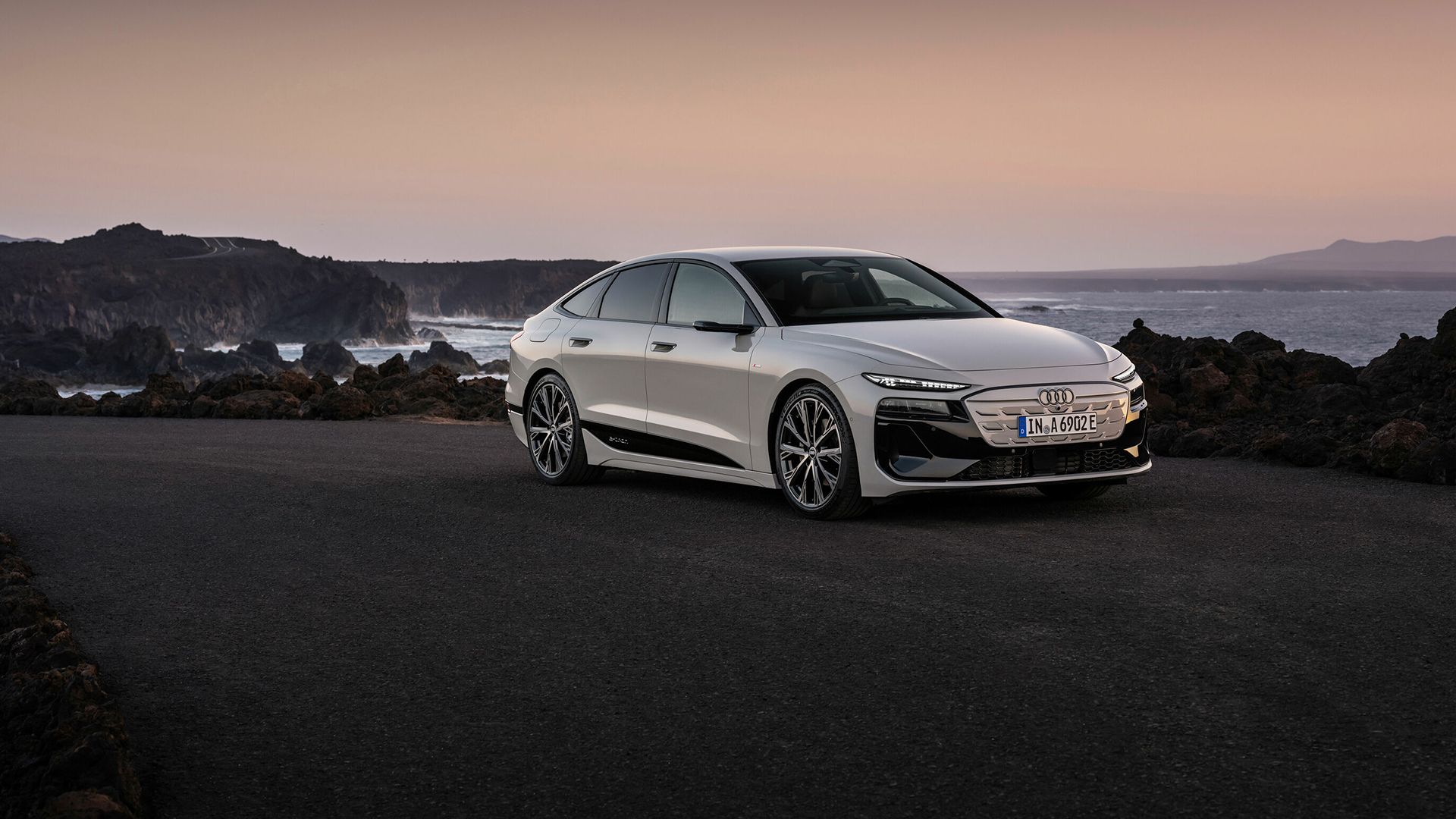
Now, Mikołaj has turned his attention to electric propulsion, particularly the Audi A6 e-tron that, despite only having an official WLTP range of 482 miles on a single charge, managed to travel almost double that on a recent record-breaking journey.

Starting at Zakopane, Poland, the endeavor saw the electrified A6 traverse the Tatra Mountains (handy for regenerative braking), travel to Kraków, then along the Vistula Valley to Sandomierz and finally to Hel (no, not that one).

Once in Hel, the pro driver turned around and started retracing his steps before the Audi A6 e-tron eventually conked out, having covered a mightily impressive 831.4 miles on a single charge.
Audi A6 e-tron

(Image credit: Audi)

That's the same distance as driving from New York to Chicago or London to Milan without stopping at a charging station.

The exact model used in the attempt was the Audi A6 Sportback e-tron performance, which features a 326hp rear-mounted motor and a 100kWh gross battery capacity, which equates to a net usable capacity of 94.9 kWh.

More impressively, the previous record holder, the Lucid Air Grand Touring, has a larger battery pack with a nominal capacity of 112kWh.

According to Marczyk, many sections of the trip were carried out in rush hour traffic and at an average temperature of 15 degrees Celsius.

However, at certain points, the mercury dropped to just seven degrees Celsius, proving that EVs can still perform in cold weather.

Analysis: easy does it

Audi A6 e-tron

(Image credit: Audi)

When looking at the official range figures of modern EVs, it is generally good practice to aim for a number that is 10-20% lower than the one advertised.

Real-world driving eats into electric range, something that’s even more pertinent when tackling cold weather. But the recent Guinness World Record is proof that things can be flipped on their head with a spot of careful driving.

Marczyk says that maximizing regenerative braking opportunities, regularly checking tire pressure, and reading the road to avoid any abrupt braking can massively increase the potential range of an EV’s battery.

So next time you hear someone stressing about range anxiety, remind them that it might be their driving style that’s forcing all of those charging stops.


TechRadar's weekly crossword is here — puzzle #8, Friday, September 25

TechRadar Crossword

Missed a previous puzzle? You can browse the archive and play all TechRadar Crosswords right here.

I'm technically on holiday today, but the crossword cannot stop for anything, so here's another entry in our weekly puzzler.

Don't worry, it's all been prepped ahead of time, so I'm not spending my break coming up with clues. Expect another mix of recent news and general tech trivia in this week's puzzle, which I hope will add a brief bit of fun to your Friday as you challenge for the top of the leaderboard.

Right, I'm off to the coast to enjoy this last bit of sun we're likely to get here in the UK before autumn/fall truly sets in. I'll probably end up doing a crossword or two!

A EV truck with a TV built into a front trunk for tailgating? Ford wants to patent the idea

  • A Ford patent shows multi-use front trunk including a TV-housing option
  • Images look very like the Ford Fathom, which is coming in 2027
  • Ford's EV pickup will start at $28,350 (around £20,970 / AU$39,540)

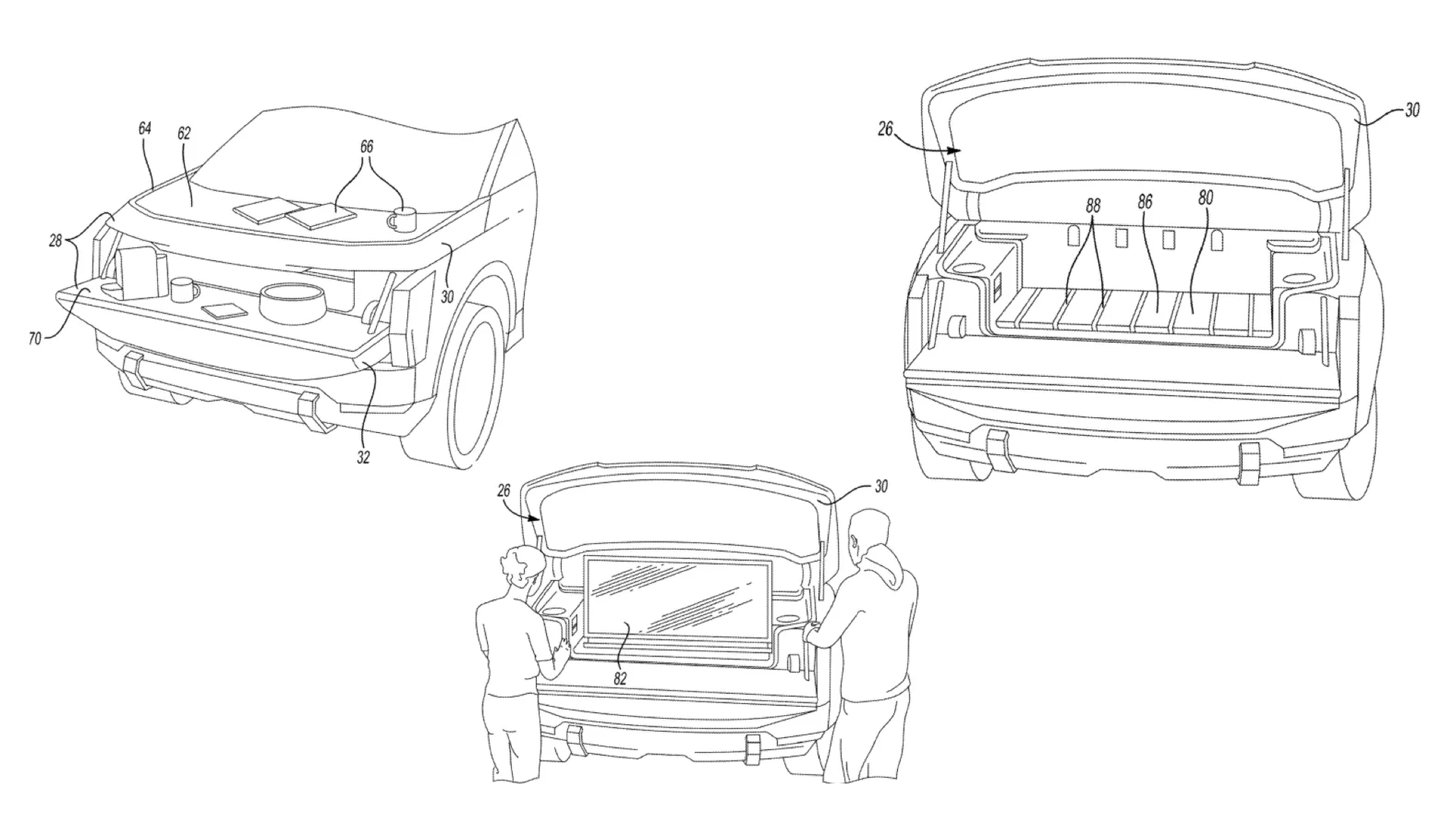
Ford's upcoming Fathom electric truck could have a very unusual addition: a small front trunk that could house a TV, for the ultimate tailgating upgrade.

As Electrek reports, Ford has filed a patent with several diagrams showing a fold-out, tailgate-style area in the front of an unnamed vehicle that's believed to be the Fathom.

The design takes advantage of EVs' lack of a traditional engine compartment, which means you can have storage space at the front of the car or truck. It appears to offer a large, flat space like you'd find in a pickup such as Ford F-150 Lightning, plus a fold-out tailgate that can be used for multiple purposes, including holding a TV, presumably to be powered by the battery while you sit in camp chairs with a six-pack.

Patent images from Ford showing a multi-use front trunk, or frunk, in what's believed to be the 2027 Ford Fathom

(Image credit: Ford / USPTO)

What the patents say about Ford's Fathom's frunk

The design looks well-suited to tailgate parties, and for camping trips and anywhere else a TV might be watched — so for example if you were selling products at a market you could use the back of the Fathom to carry your goods and your stall and your tailgate TV to show the promo video.

And you shouldn't need to worry about the TV draining your battery: the Fathom is expected to have a large battery for over 300 miles of range, so a TV isn't going to make a big dent in that capacity.

The TV isn't the only interesting idea here. The patent suggests that the top of the hood could be swappable, enabling you to replace it so you can put things on it — such as food or tools — without spoiling your vehicle's finish. Presumably the design would also include a storage space for those swappable bits rather having you leave them lying loose around on the frunk's floor.

As for the rest of the upcoming EV, Ford has been drip-feeding details for months now: it's a midsize pickup with more passenger room than a Toyota RAV4, it's launching in early 2027 and it'll have a surprisingly low starting price of $28,350. It comes with Apple Maps integration, CarPlay and Android Auto.

What we don't know yet is what it really looks like: as you can see from the image at the top of the article, the images Ford have released so far are camouflaged. But from what we've seen of the shape it looks suitably tough, and it's priced very aggressively. Ford promises that the camo will come off in 2027.

Bentley's debut EV is a £173k luxury missile in SUV form that can out-accelerate supercars

  • The Bentley Torcan is a high-performance SUV that can reach 375 miles on a charge
  • The most powerful models will boast 876bhp
  • The debut EV will share parts with Porsche Cayenne Electric

Bentley has been teasing its debut all-electric model for months now, revealing tasty morsels about its orchestral synthesized engine notes, and futuristic styling inspired by the EXP 15 Concept Car, but we finally have the full details.

Based on Porsche’s PPE architecture (they all belong to the Volkswagen Group, after all), the upcoming Torcal will measure five meters long, making it slightly shorter than a Bentayga, and will borrow many of the chassis, suspension and powertrain components from its Porsche sibling.

Bentley doesn’t like too many mentions of the shared underpinnings, so has made a big deal about its “bold new design language, rooted in Bentley’s DNA”.

Expect an imposing illuminated front grille, sculpted surfaces and powerful rear haunches.

It looks as if Bentley’s idea of an electrified SUV just ate a Continental GT and hasn't digested it yet, but that’s no bad thing. It is the antithesis of Ferrari’s approach with the Luce — that’s to say Torcal looks and feels reassuringly Bentley.

Bentley Torcal
Bentley
Bentley Torcal
Bentley
Bentley Torcal
Bentley
Bentley Torcal
Bentley

As for the powertrain, the dual-motor setup makes the Torcal the most powerful Bentley ever, with a whopping 876bhp in the range-topping S model.

That’s not quite the 1,140hp of the monstrous Porsche Cayenne Turbo Electric, but will be sufficient for a 2.8-second sprint to 60mph from rest in the sportier S version — enough to embarrass many supercars.

Bentley says it wants the Torcal to be used “year-round” so offers a massive 113kWh battery pack that delivers a range of up to 375 miles.

Better still, it can be charged at speeds of up to 400kW, meaning a 10-80% top-up session takes less than 20 minutes, potentially.

Analysis: the sound of the future

Bentley Torcal

(Image credit: Bentley)

The British marque has scrapped its plans to go all-electric by 2030, instead opting to offer a selection of powertrains for customers.

After all, it is synonymous with booming V8 and V12 engines, which have historically delivered restrained but potent soundtracks to many models.

Not wanting to lose this USP in its debut EV, Bentley has turned to real instruments — drums, viola and bass guitar — to create what it refers to as the “Bentley Dynamic Symphony”, which is supposed to represent the subtle variations and tiny imperfections of a big V8 engine.

This “human-generated” soundtrack will provide aural feedback to the driver as the revs rise, becoming louder in Sport mode.

Apparently, even the indicator note stems from a recording of hammers striking leather in the Bentley workshop, while the touchscreen feedback noises are taken from the sound of a crystal glass.

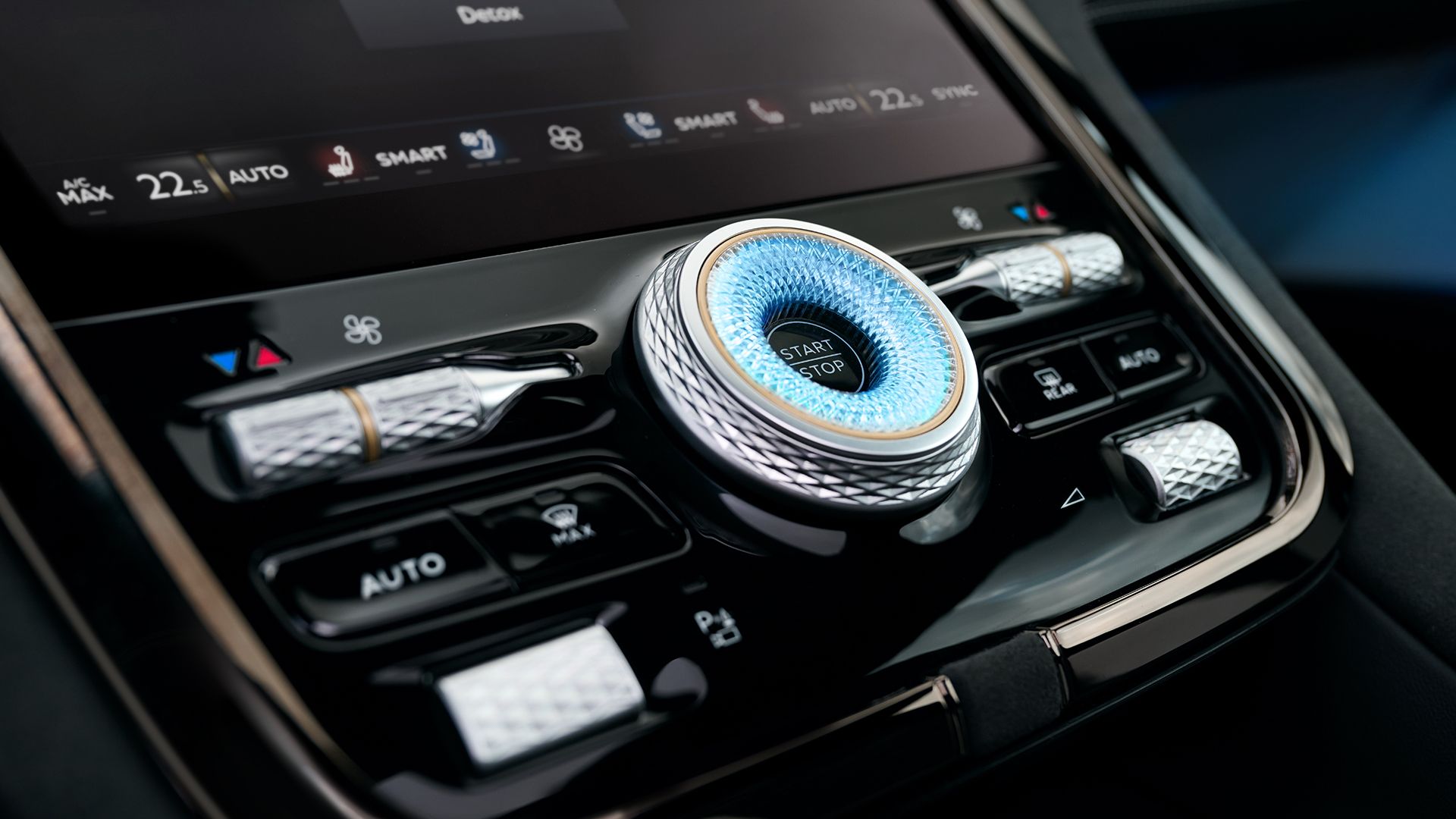
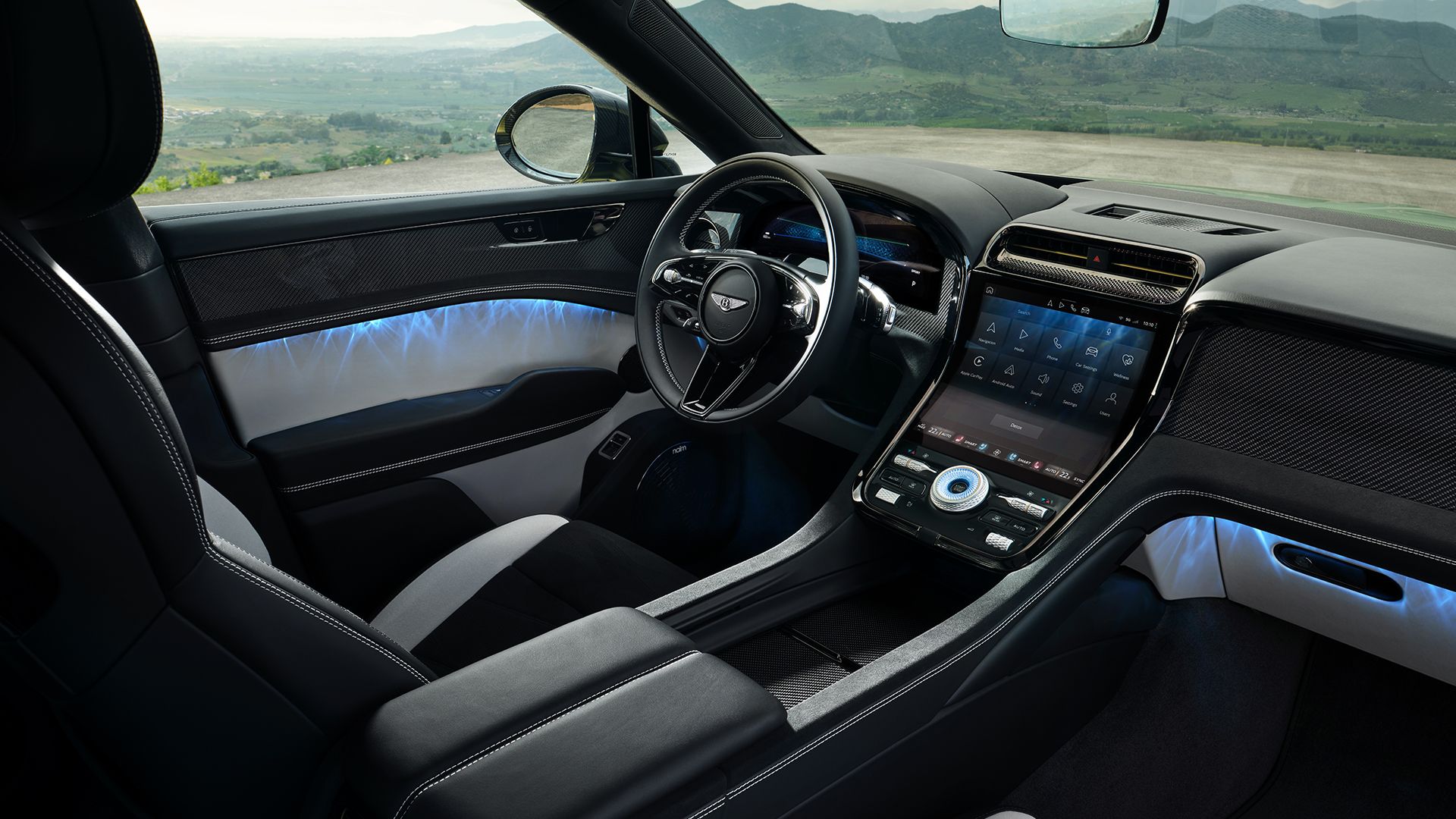
Naturally, the interior is festooned with physical knurled controls and dials, while a special Comfort Mode within the infotainment offering delivers fewer distractions, while the option of a digital detox sees all but the most essential information hidden to allow attention to move away from screens.

According to sources, prices start at £173,300 (around $230,00/AU$326,000) for the Torcal or £199,300 (around $263,000/AU$375,000 for the Torcal S, and first deliveries are expected in Summer 2027.

'It's like a ground drone': I tested a cute little robot called Beni that follows and films you

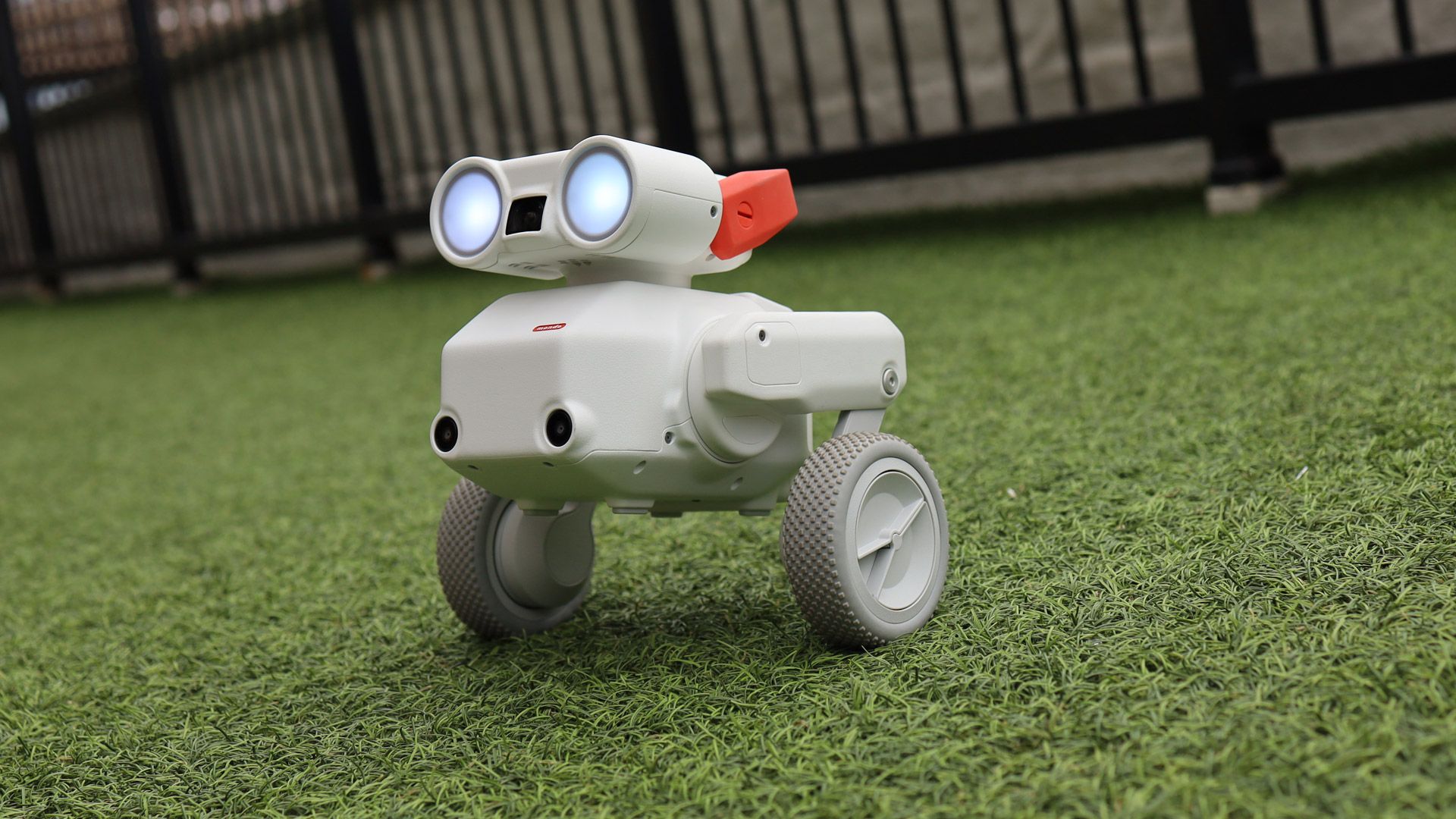
When it comes to personal robots, Mondo's Beni camera robot might be the perfect mix of cute and utility, with an emphasis on cute.

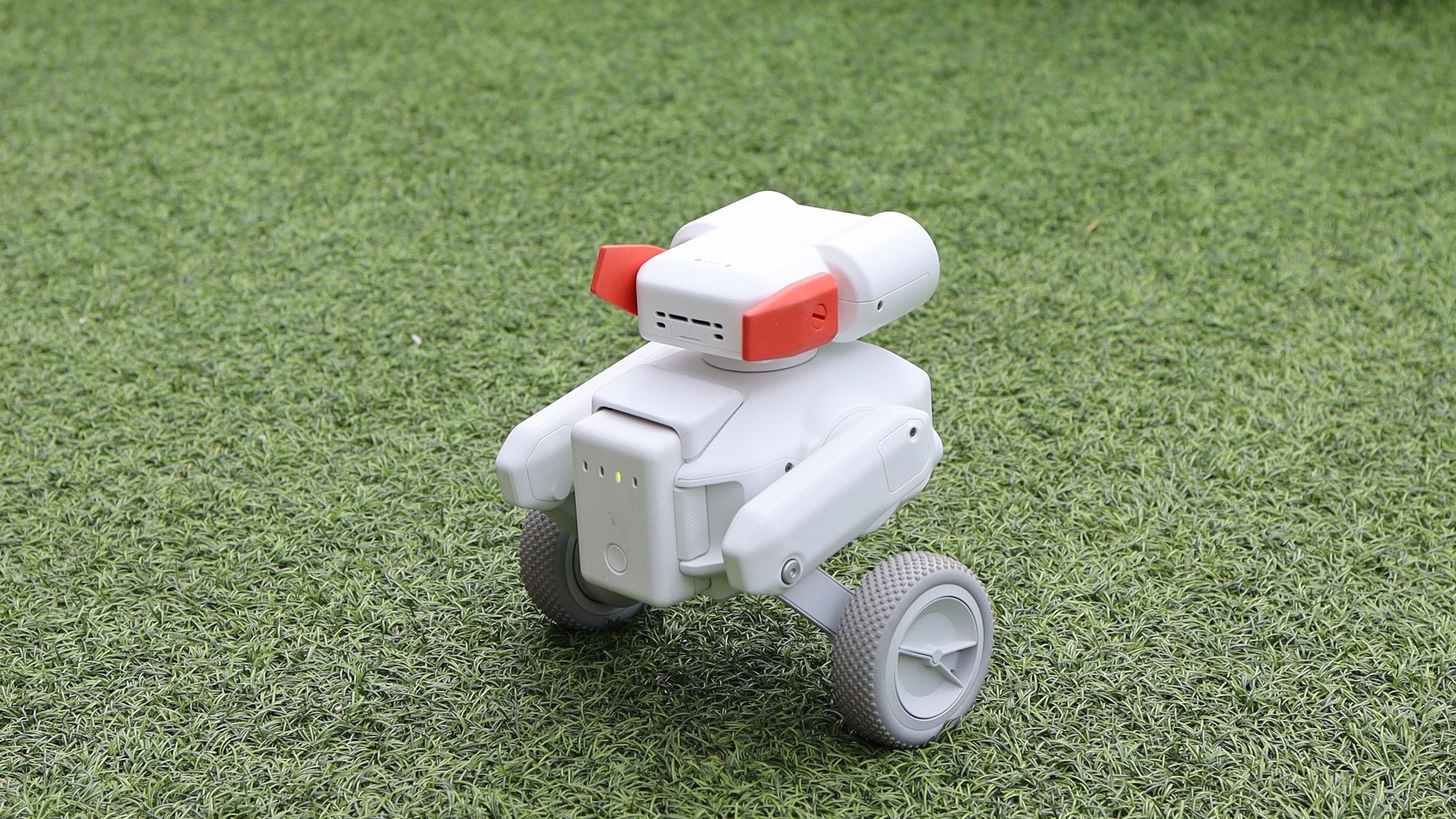
As soon as I laid eyes on the pint-sized, two-wheeled bot, I was smitten. It darted quickly from place to place and, as Beni turned its square head in my direction and 'looked' at me with its two large and luminous eyes, I felt it peering into my lonely soul. Finally, a robot companion that wouldn't terrify me with grabby, slow-moving hands, or crowd me with uncanny valley legs and torsos.

Unveiled a few months ago by Mondo Robotics and set to arrive in consumer hands in October, the self-balancing Mondo Beni was initially intended as a child's toy, but it had features — in particular a 4K 60fps camera that can follow you around — that appealed to creators. So Mondo pivoted, and now the $799 rolling robot is marketed as "your first camera robot".

In addition to the camera, which can also shoot 1080p 120fps slow motion, Beni features a pair of sensor cameras that provide a 150-degree field of view for tracking and obstacle avoidance. I watched as Beni's handlers used the iOS app to select subjects for Beni to track, and then Beni followed them around like a very obedient puppy dog. One Mondo exec described Beni as "a ground drone".

Beni is surprisingly resilient. When someone kicked the robot over, it instantly righted itself back onto its two rubber wheels as it shook its blocky head and made a little noise.

Mondo Beni camera robot

(Image credit: Lance Ulanoff / Future)

Programming cuteness

One of the things that makes Beni so darn cute is all the canned (Beni does not learn) animations and audio. It has about a dozen of each, and they give the little white and orange bot a distinct personality. There's a sort of programmed indomitable spirit; nothing can keep Beni down or stop it.

It can effortlessly jump (up to 10 inches), flip, and backflip. For now, those moves are triggered either via the app or a wearable remote control with a super-easy-to-use joystick. Mondo would eventually like Beni to jump over obstacles as it sees them.

I used the intuitive wearable remote to drive Beni and, with a press, make the little robot flip. There's also a big red button to stop Beni or, with long presses, have it squat down or stand back up.

Mondo Beni camera robot
Lance Ulanoff / Future
Mondo Beni camera robot
Beni with Mondo Marketing Director Cody SkeneLance Ulanoff / Future
Mondo Beni camera robot
Lance Ulanoff / Future

Beni starts with 32GB of onboard storage for collecting video of you as it tracks you on a walk or run (up to 17.9mph), or as it follows your pet around (assuming the pet doesn't attack it or run away in horror). There's also a built-in microSD card slot for additional storage.

You can take good-length walks or runs with Beni, because it runs (or rolls) for an hour and a half on a charge. There's a removable battery pack on the back with light indicators to show you Beni's life… er… juice level.

Beni ships with a pair of relatively smooth rubber wheels, but you can buy the combo pack and get some accessories, including knobbier off-road wheels that are better equipped to handle dirt roads and hills.

Mondo Beni camera robot
Lance Ulanoff / Future
Mondo Beni camera robot
Lance Ulanoff / Future
Mondo Beni camera robot
Lance Ulanoff / Future
Mondo Beni camera robot
Lance Ulanoff / Future

Beni arrives ready for you

Mondo Beni camera robot

(Image credit: Lance Ulanoff / Future)

One of the things I like about Beni is that it's not like a robot kit. The wheels, for instance, are easy to pop on and off, and nothing about Beni looks like it was made from an old Erector Set.

And, for better or worse, there is no dev kit. This is in contrast to the equally cute Pollen Robotics Microduck, another white and orange bipedal robot that can hang out with you (and use roller skates), but it's a bit more DIY than SMF (So Much Fun). Where Beni looks polished, the $399 Microduck looks a little more hand-built.

Beni can hear and follow some simple commands. The animations — a head turn here, a shake there — help it look like it's actually listening to you.

Mondo Beni camera robot

(Image credit: Lance Ulanoff / Future)

Beni's innate adorability might help overcome the obvious privacy concerns. After all, the robot is no taller than an average chihuahua, and its camera is at ground level. To film you as it goes, Beni will be looking up. This might make some people around you uncomfortable.

Maybe keep Beni to your solitary walks or runs, or make sure everyone around you knows that those cute Beni eyes are an indication that it might be filming.

I picked Beni up and found it surprisingly hefty, about the weight of an overfed puppy. It's cute to watch but not at all cuddly to hold. In fact, company execs told me that while there are lots of warnings about picking up Beni, the robot has no way of knowing if your fingers gets caught in, say, one of the joints. It might be best to keep Beni away from small children.

All this capability, power, and cuteness comes at a price. Beni starts at $799 in the US (it will ship to the UK, Canada, Australia, New Zealand, France, Germany, Italy, and Spain, but pricing for those regions has not been set) and starts shipping in October. It's not the ultimate robot, but Beni has the potential to captivate on looks and capability alone.

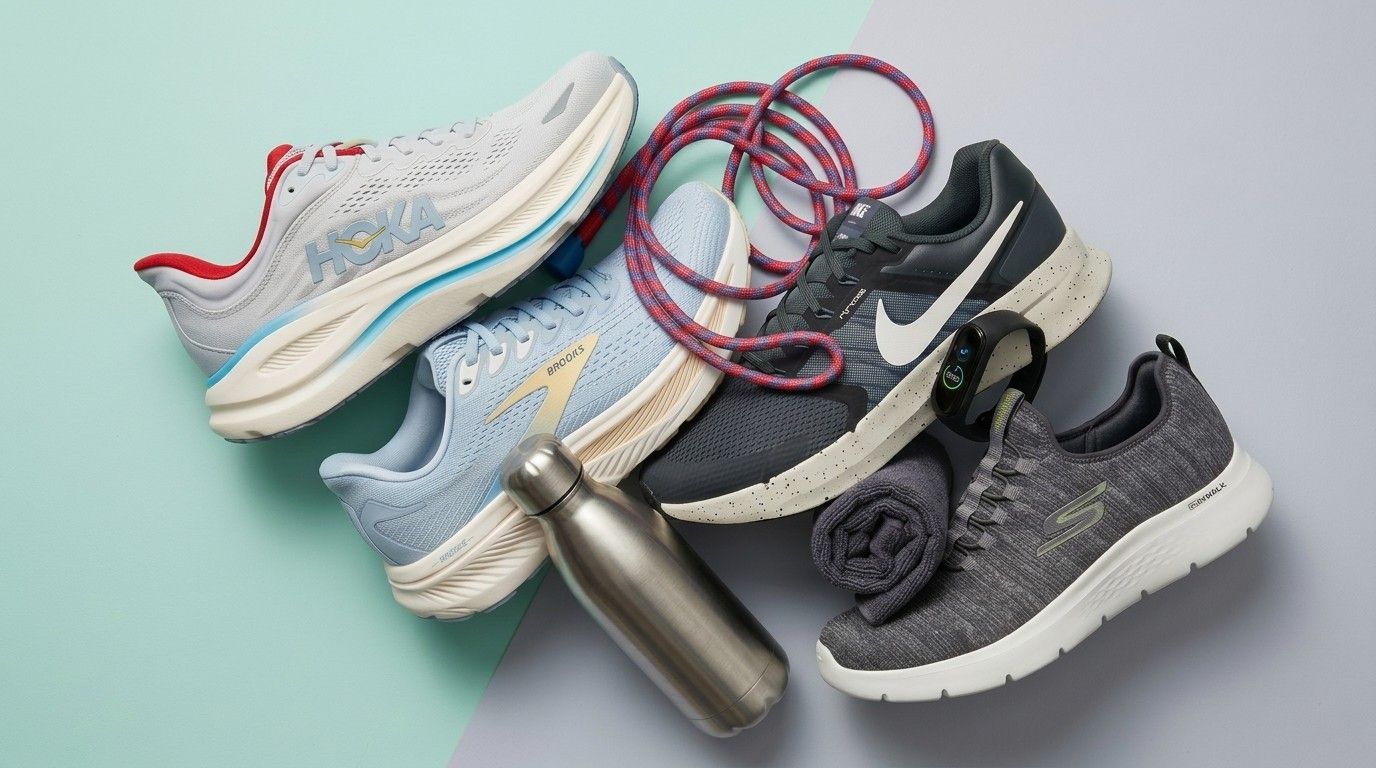
Marathon season is upon us — save up to 40% on top-rated running shoes from Hoka, Brooks, Asics, and Nike

It's officially fall, which means cooler temperatures and marathon season for those who participate. If you're looking for a new pair of running shoes to train for an upcoming marathon, Amazon has its top-rated sneakers on sale.

Below are the top deals on men's and women's running shoes, including up to 40% off from brands like Brooks, Asics, Hoka, and Nike. I selected Amazon's best-selling sneakers that have recieved thousands of positive reviews and are on sale.

You'll find a wide range of shoes in this list, offering different levels of support, so whether you're a casual runner or you're in serious training mode, there's a shoe for everyone. Remember, these are limited-time offers and a perfect opportunity to save money on your new running companion.

Amazon running shoe sale – quick links

Women's running shoes at Amazon

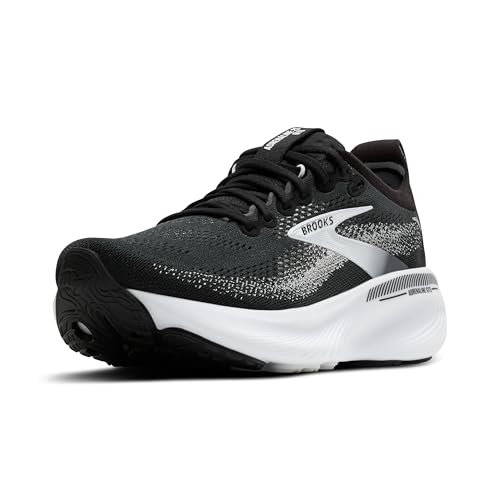
Brooks Men's Adrenaline Gts 25

Brooks
Men's Adrenaline GTS 25

Under Armour Men's Charged Assert 10 Shoes, (002) Black/black/black, 10

Under Armour
Men's Charged Assert 10 Shoes

Adidas Men's Lite Racer Adapt 7.0, White/black/white, 11

Adidas
Men's Lite Racer Adapt 7.0

New Balance Men's Fresh Foam Arishi V4 Running Shoe, Marblehead/castlerock/silver Metallic, 9.5

New Balance
Men's Fresh Foam Arishi V4 Running Shoe

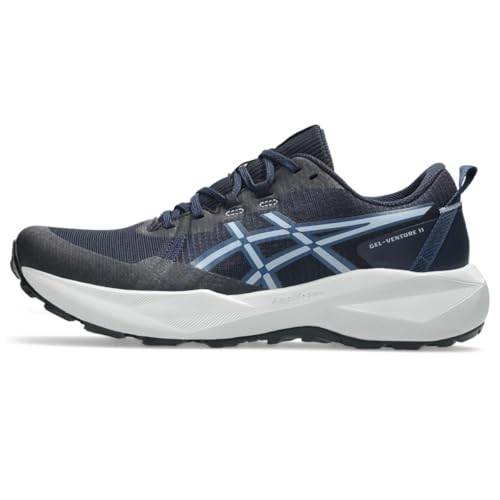
Asics Men's Gel-Venture 11 Running Shoes, 11, Midnight/grey Blue

ASICS
Men's Gel-Venture 11 Running Shoes

New Balance Men's Fresh Foam 520 V9 Running Shoe Black/castlerock

New Balance
Men's Fresh Foam 520 V9 Running Shoe

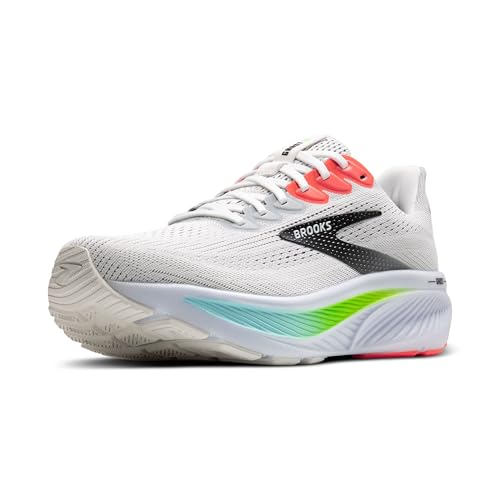
Brooks Men’s Ghost 17 Neutral Running Shoe - White/pink Clay/gecko - 12 Medium

Brooks
Men’s Ghost 17 Neutral Running Shoe

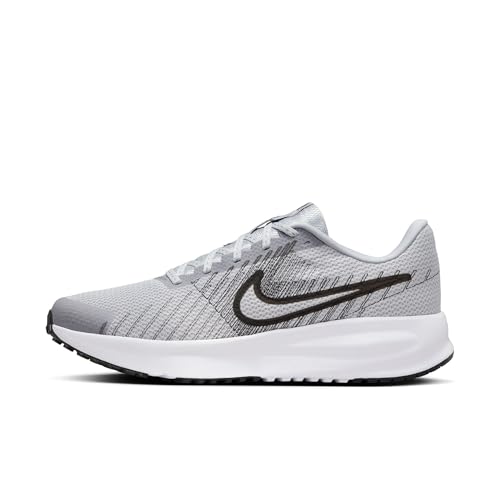
Nike Men's Run Defy Road Running Shoes, Wolf Grey/black-White-Iron Grey, 10.5

Nike
Men's Run Defy Road Running Shoes

Hoka Mens Clifton 10 Black/galactic Grey 9.5 Medium

HOKA
Men's Clifton 10

Men's running shoes at Amazon

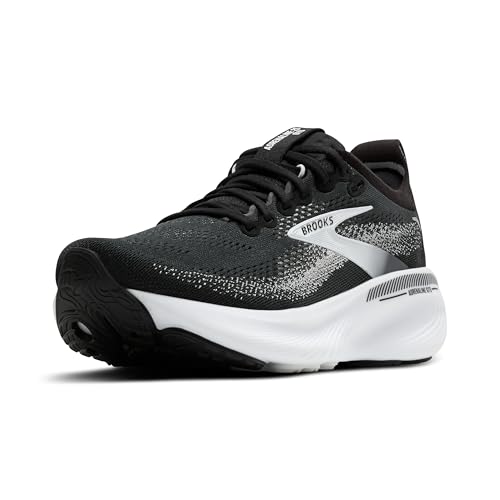
Brooks Womens Adrenaline Gts 25, Black/grey/white 8 Medium

Brooks
Women's Adrenaline GTS 25

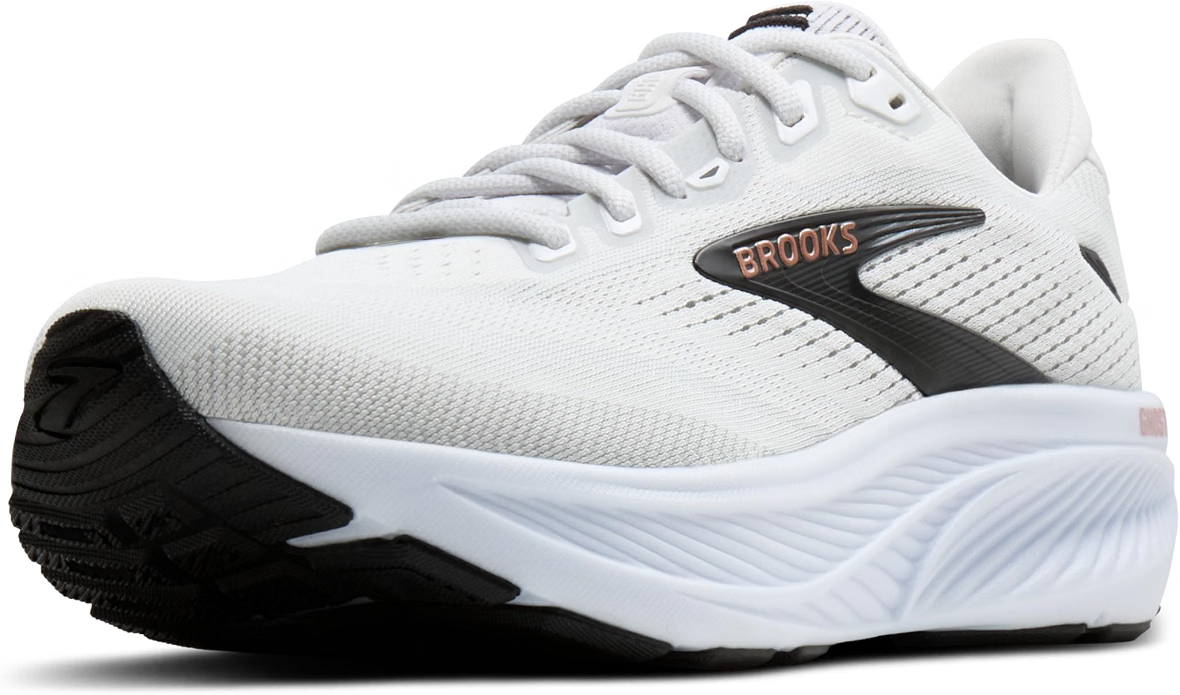
Women’s Ghost 18 Running Shoe,

Brooks
Women’s Ghost 18 Running Shoe

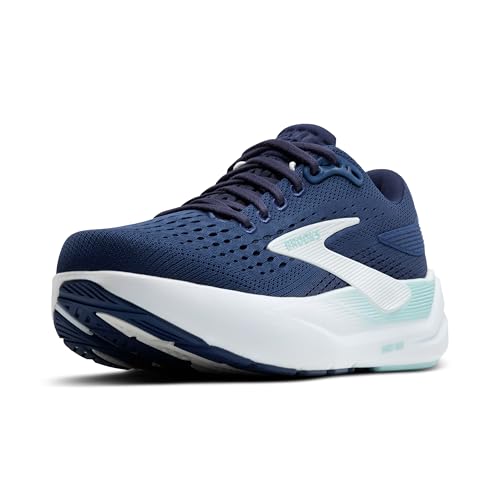
Brooks Women’s Ghost Max 3 Neutral Running & Walking Shoe - Navy/peacoat/clearwater - 8 Medium

Brooks
Women’s Ghost Max 3 Neutral Running Shoe

New Balance Women's Fresh Foam Arishi V4 Running Shoe, Summer Fog/nimbus Cloud/light Gold Metallic, 8

New Balance
Women's Fresh Foam Arishi V4 Running Shoe

Asics Women's Gel-Excite 11 Running Shoes, 9, Black/meteor Grey

ASICS
Women's Gel-Excite 11 Running Shoes

Nike Women's Revolution 8 Road Running Shoes, White/pure Platinum, 8

Nike
Women's Revolution 8 Road Running Shoes

Hoka Women's Bondi 9 Black/white 8.5 Medium

HOKA
Women's Bondi 9 Running Shoe

New Balance Women's Fresh Foam Arishi V4 Tiralux Running Shoe, Sea Salt/timberwolf, 8.5

New Balance
Women's Fresh Foam Arishi V4 Tiralux Running Shoe

Asics Women's Gel-Nimbus 27 Running Shoes, 8.5, Black/lake Grey

ASICS
Women's Gel-Nimbus 27 Running Shoes

Researchers say fields of house-sized buoys capture 90% of wave energy

  • A new approach could catch 90% of potentially convertible wave energy
  • It's based on a array of dozens of connected buoys, designed to handle different types of waves
  • Further research is needed to test its viability

There's potentially a lot of clean, renewable energy locked up in waves, but the challenge is getting it converted into power in a viable way. Now researchers from Germany and Australia have come up with a potential method for capturing way more of the energy produced by the undulating oceans.

The solution (via Interesting Engineering) is big buoys, and lots of them. In simulation models, the researchers showed that a fixed array of 60 connected buoys — with some described as being as large as small houses — could convert 90% of potential ocean wave energy, even with significant variability in wave direction.

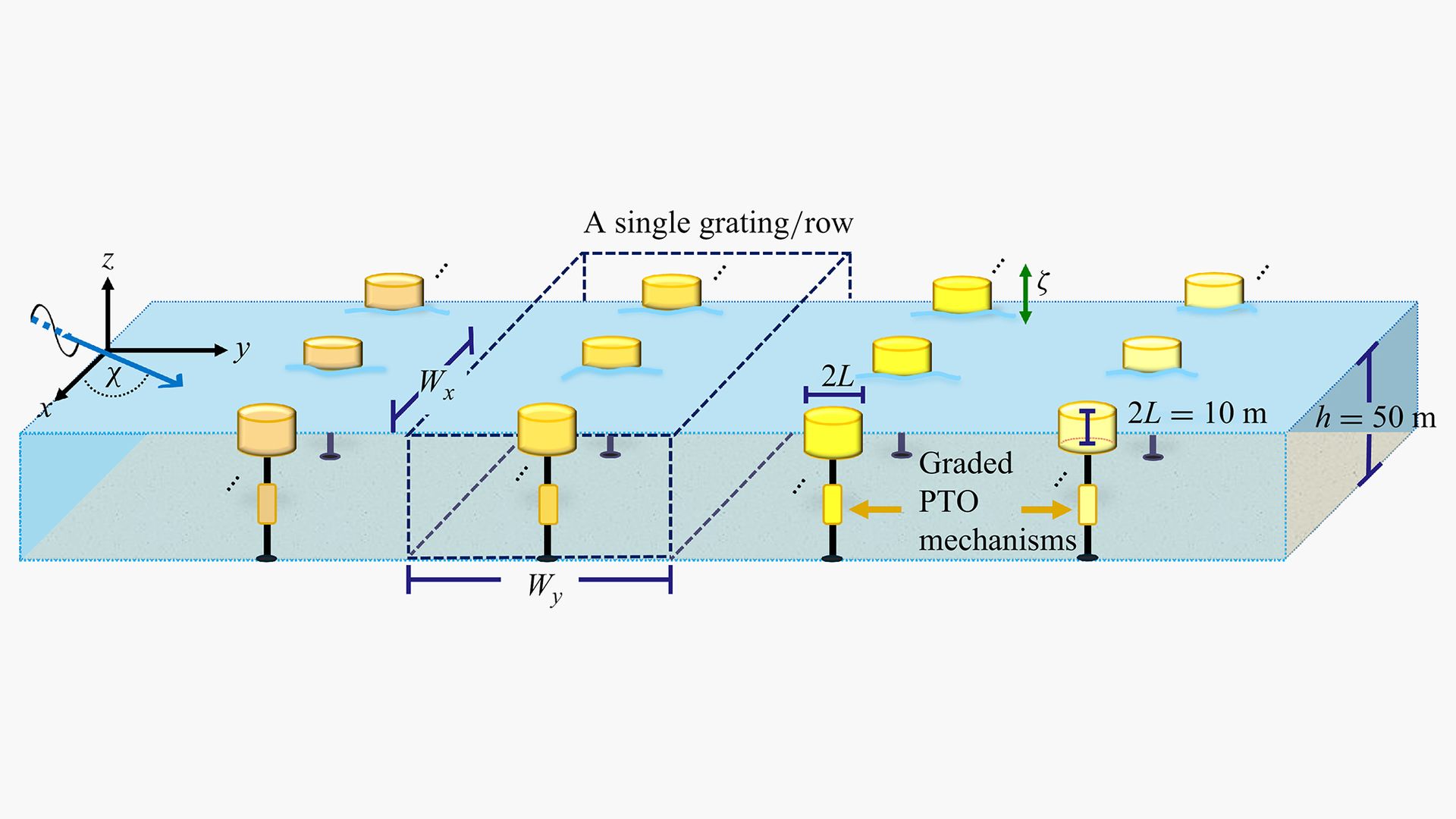
These buoys would be like flat drums on the surface of the water, connected to spring and generator units on the seabed. Crucially, each one would be individually tuned to match a certain wave rhythm — what's known as the 'resonance frequency' of the buoy, where the maximum amount of power can be produced.

"It's similar to a child on a swing," says Professor Malte Peter, from the University of Augsburg (via Google Translate). "Only if the support comes at the right moment will the child swing higher and higher over time. Similarly, the waves must arrive at the buoy at the appropriate intervals so that its pendulum motion is as strong as possible."

Dealing with unpredictability

Buoy farm

Each buoy is tuned to grab energy from specific wave strengths (Image credit: Westcott et al., Journal of Fluid Mechanics, 2026)

Waves are typically rather unpredictable: if a large wave hits a buoy that's already on the up from a previous wave, a lot of the energy is missed. Add in the effects from neighboring buoys deflecting waves and influencing each other's movement, and you can understand the challenge in capturing all of this energy.

The larger arrays proposed by the team here act as a sort of sieve system. Even if a wave gets 'missed' by one buoy, it will hit another that's better tuned to it, meaning very little energy is lost. The researchers detail careful adjustments to buoy positions and resonance to achieve the results.

It's not a completely new idea, and borrows thinking from other fields of science. Some of the same researchers previously came up with a more basic model of the buoy farm, but only in 2D — in their new paper, they've extended into three dimensions, increased the size of the array, and adapted it to a greater variety of wave directions.

All that said, this remains theoretical, and hasn't been tested yet. The team notes that while each individual buoy could power "several hundred households" in this system, installing and maintaining the equipment is going to be expensive, and field tests and further research will need to happen first.

A full EV charging session in 4 minutes? There's a challenger to BYD in the MegaWatt charging game

  • Geely plans to unveil new charging technology this week
  • The system will draw 2.2 MegaWatts of power during use
  • Charging sessions could take as little as four minutes

The Geely Group has taken to Chinese social media site Weibo to tease its next generation of charging technology, which the company says can fill batteries in around four minutes.

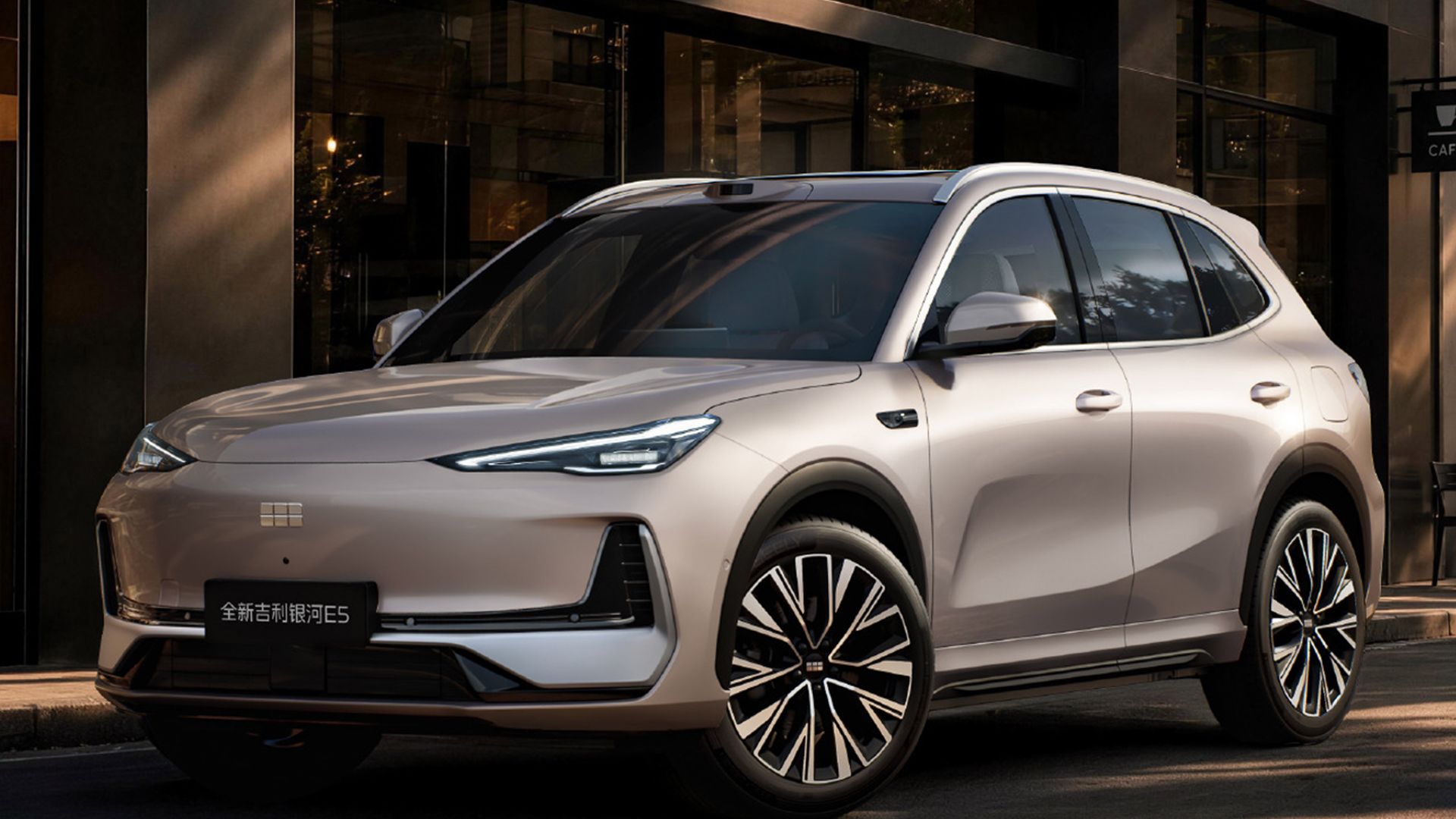
The news arrives along with details of a new Geely Galaxy E5, an all-electric premium SUV that is due for launch in China this year and is reportedly the first model that will able to use this new, ultra-fast charging technology.

Delivering a staggering peak power of 2.2MW, the next-generation "AI-powered" charging system is claimed to be able to deliver a full charging session in four minutes.

However, there’s no mention of whether that’s the standard 10-80% state of charge or something else entirely.

According to China EV Home, the Galaxy E5 uses an 800V architecture and Geely’s next-generation Aegis Short Blade battery, which will be available in 61.52kWh and 70.01kWh capacities.

The batteries offer CLTC-rated ranges of 550 km (around 341 miles) and 635 km (395 miles) respectively, but it is the ultra-fast charging that will likely hog the headlines.

While there are very few details (Geely will hold an event imminently to unveil more), the AI involvement is reportedly to do with thermal control, which allows such a mammoth rate of charge without damaging battery cells.

Geely says its packs can last 3,500 charge-discharge cycles "with limited degradation”.

Analysis: China continues to push speed

BYD Flash Charge UK

(Image credit: BYD)

The EV dream has always been to recharge in the sort of time it takes to refuel a petrol or diesel counterpart, as this would arguably break down one of the biggest barriers to ownership: range anxiety.

Those with little experience of electric vehicles worry about becoming stranded when batteries run out of charge, only to be faced with an hour or more wait to get back on the road.

However, most people that have owned a modern EV will likely argue that this isn’t really the case any more, but China continues to develop charging technology that prioritizes speed an convenience.

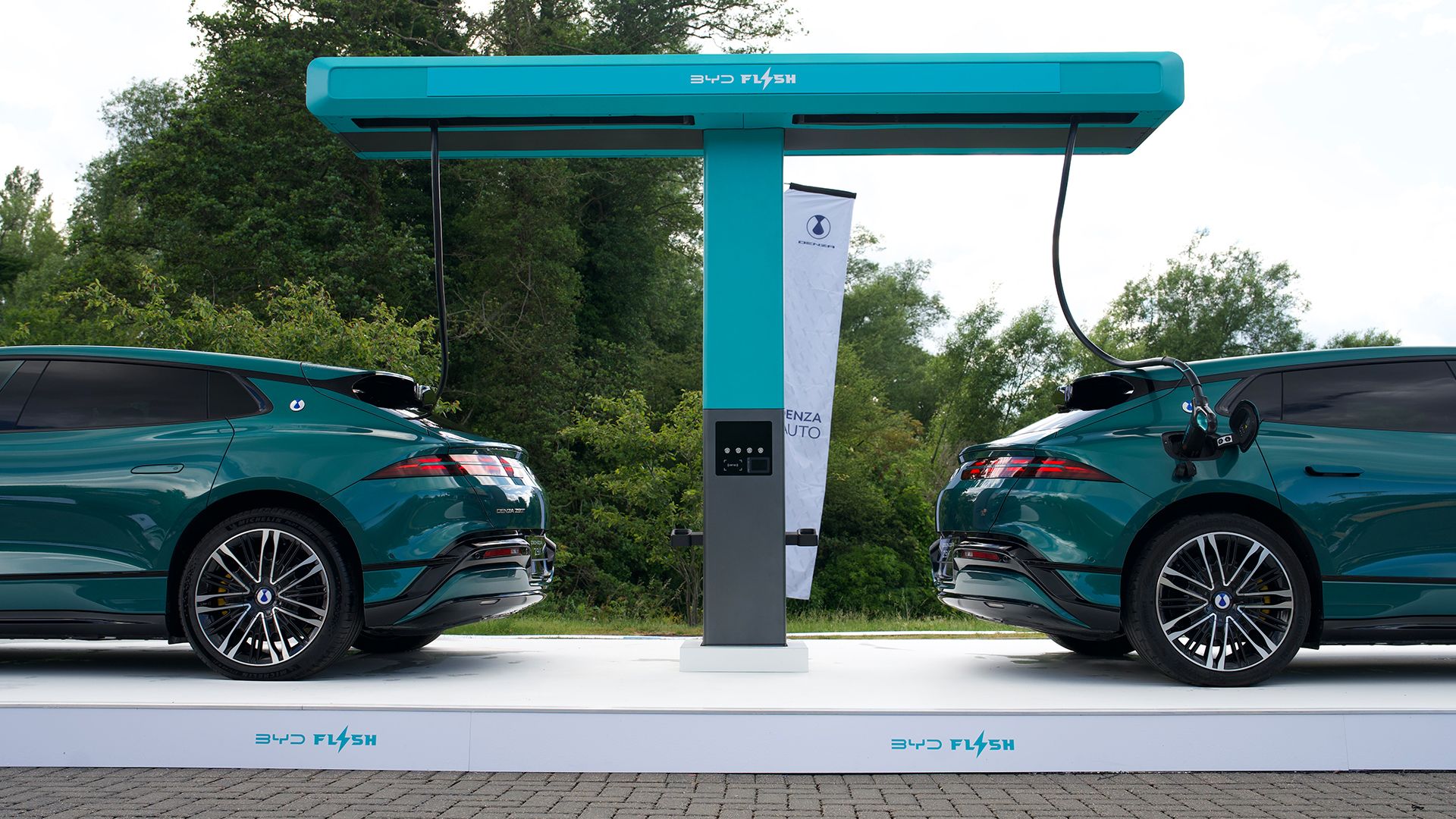
BYD has demonstrated its 1.5MW Flash chargers both in China and in Europe, where they are capable of brimming batteries in under 10 minutes.

Unfortunately, the only vehicles compatible with the tech (in Europe at least) happen to be some of the most expensive in the BYD stable.

Zeekr has also been pushing its own 1.2MW chargers in China, which are also capable of lighting-fast top-up times.

Nio Power Swap Station

(Image credit: Nio)

While it’s easy to see this as simple one-upmanship, China’s charging infrastructure needs to grow at a rapid rate to serve the more than 110 million EVs predicted to be on the roads by 2030.

This will mean installing more than 40 million charging points and approximately 300,000 high-power charging facilities to deal with the demand.

Having this mix of high and lower powered charging is the only way to meet all the needs of drivers, where high power and speed is essential in places like motorway service stations along busy travel corridors, while cheaper, lower-powered options benefit those charging curbside over night, for example.

Unlike many other nations, which have been comparatively slow to adopt electrification and the surrounding infrastructure, China appears to be exploring all avenues.

A new lithium-ion battery breakthrough could lead to cells that deliver more power for longer — they might be useful for everything from EVs to gaming laptops to robots to drones

  • Another next-gen battery upgrade has been reported
  • Zinc-iodine batteries are now more stable
  • The tech promises a more sustainable lithium-ion replacement

With so many modern-day devices dependent on rechargeable lithium-ion batteries, scientists are hard at work trying to figure out ways of improving the tech — and a team from the Korea Research Institute of Chemical Technology (KRICT) has just announced a significant breakthrough.

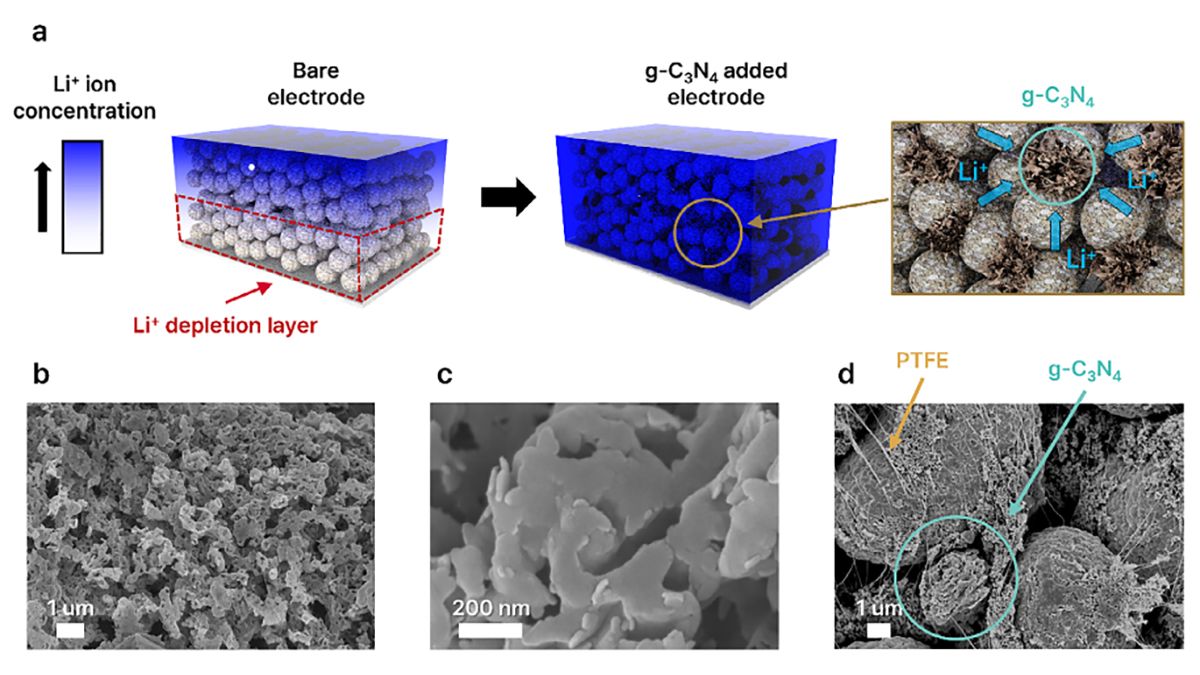
As reported by The Korea Times, the KRICT researchers have succeeded in boosting the power delivery capacity of lithium-ion battery chemistry by adding a small amount of a material called graphitic carbon nitride to the cathode end of the battery.

When a battery is charging, the lithium ions get pushed out of the cathode, through an electrolyte material, to the anode at the other end. When the battery is in use, the ions flow back in the other direction.

One potential way of storing more energy in a battery of the same physical size and weight is to make the cathode thicker, but there's a problem: this also makes it harder for the lithium ions to move and deliver all of the energy held in the battery. The new innovation that was successfully tested here could solve that problem.

Capacity boosting

Battery tech

Microscopic imagery showing the cathode mix (Image credit: Eun et al., Exploration, 2026)

The researchers have reported some impressive numbers from their tests, though the tech is still at an early stage. Adding the graphitic carbon nitride to the cathode resulted in a 166% increase in capacity during high-rate discharge, and an increase in power density of up to 2.85 times.

Those figures don't mean a bigger capacity in mAh terms, but delivering more of a charge under heavy load, and for longer. In lithium-ion batteries, using a lot of energy quickly reduces how much total capacity you'll get from the battery compared to if you used the same amount of energy but more slowly.

In an EV, for example, this would mean that the vehicle could accelerate harder and sustain that high performance for longer without impacting total range as much. It would allow home batteries to better sustain their capacity if you use them with appliances that drain a lot of energy quickly, such as washing machines.

But smaller applications can benefit from it as well — drones can draw a lot of power suddenly to life themselves, or gaming and workstation laptops might suddenly draw a lot of power depending on the workload — they'd all benefit from tech that handles the power flow's effect on capacity better.

The tech could, in turn, result in batteries with thicker cathodes that do give you more mAh capacity in the same space, the researchers say — but that wasn't tested in this study. The next challenge is to try and scale up and expand the technology.

According to KRICT President Shin Seok-min, this alternative approach to lithium-ion batteries could potentially be used across electric vehicles, energy storage systems, and robotics — so it's very broadly applicable, especially for devices and systems that can take batteries that are physically larger.

Hackers find huge security flaw in Flock’s surveillance cameras and extract 1.6 million images and 27,000 videos from just one device — and the company’s terrible reputation means many employees are looking to jump ship

  • Hackers took down a Flock camera and extracted a copy of its storage drive
  • There, they were able to acess 1.6 million images and 27,000 videos taken over 21 days, despite claims that the encryption system should prevent this
  • Morale is reportedly so low at Flock that many workers are ready to quit

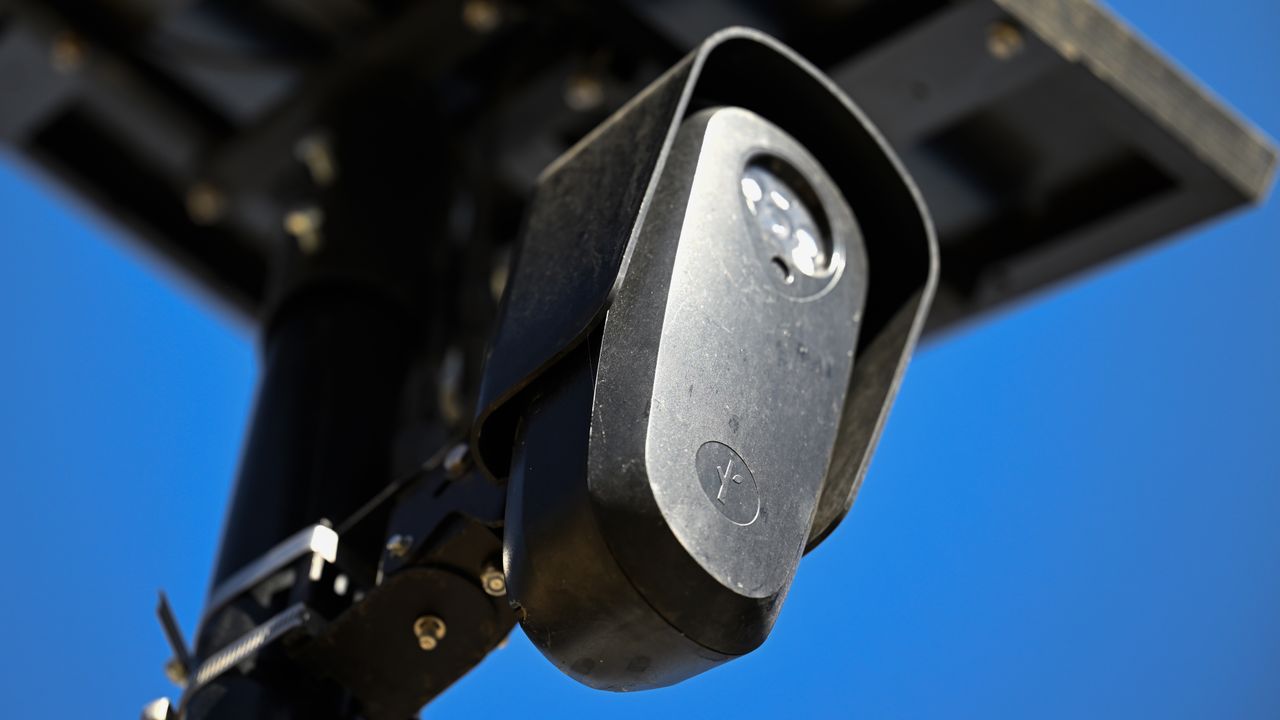
Another day, another Flock controversy. As if things couldn’t get any worse for the embattled maker of automatic license plate recognition (ANPR) cameras, hackers have just managed to extract 1.6 million images and 27,000 video clips from one of its systems — something Flock has previously claimed should be impossible.

According to a report from 404 Media, members of a hacker collective named stegan0gram took down a Flock camera and managed to make a “near-complete copy” of its stored data.

When they did that, they found a treasure trove of privacy-compromising information and shared it with both 404 Media and the Distributed Denial of Secrets nonprofit, who then sent it on to Wired.

The report from 404 Media identified around 50,200 vehicles in Flock’s media files. The storage contained approximately 1.6 million images and more than 27,000 video clips taken over the course of 21 days. Older logs were either overwritten or inaccessible.

Perhaps more concerning, Flock’s cameras were able to detect people as well as vehicles and license plates, raising serious questions about how well the privacy of innocent members of the public is being protected. That said, 404 Media found no evidence of any kind of facial recognition being put to use.

The hackers said that they discovered two partitions when they accessed the Flock camera’s Android operating system. Inside one labeled “media,” they found a decryption key that unlocked a storage area housing the vast collection of images and video clips.

That all goes against public statements from Flock. The company has previously claimed that images and videos are only briefly stored on the device after being sent to Flock’s servers, and that no decryption keys were stored on the devices.
But with the hackers discovering stored media going back many weeks, plus the means to decrypt it, it appears that Flock’s statement might be inaccurate.

‘The writing is on the wall’

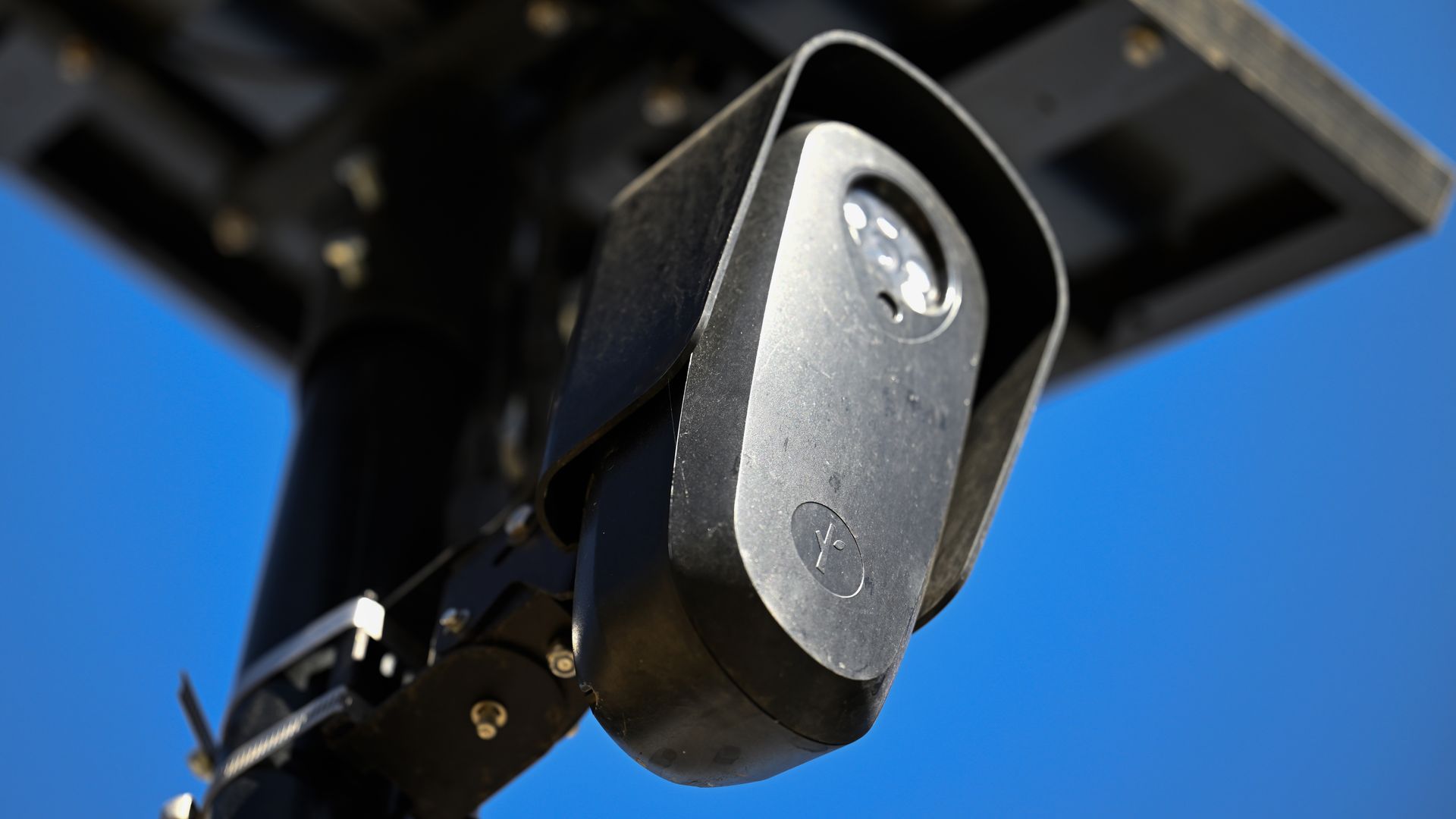
A flock camera in front of a blue sky

(Image credit: Getty Images)

As you can probably imagine given the near-constant barrage of negative press Flock has been facing in recent weeks, its own employees are reportedly starting to feel the strain. And with morale through the floor, many are seeking to leave the company.

Wired has reported that Flock recently opened up a voluntary separation program for employees that would offer a “generous” severance package to anyone who seeks a way out of the firm. The scheme is open until October 2, with decisions being announced on October 9.

And according to “people familiar with the program but not authorized to discuss it publicly” cited by Wired, morale is so low at Flock that “a significant number of the startup’s roughly 1,500 employees may try to depart.”

That backs up comments from Flock’s own CEO, who said on the All-In podcast in August that “internal moral” has been the biggest casualty amid escalating hostility to the company’s devices.
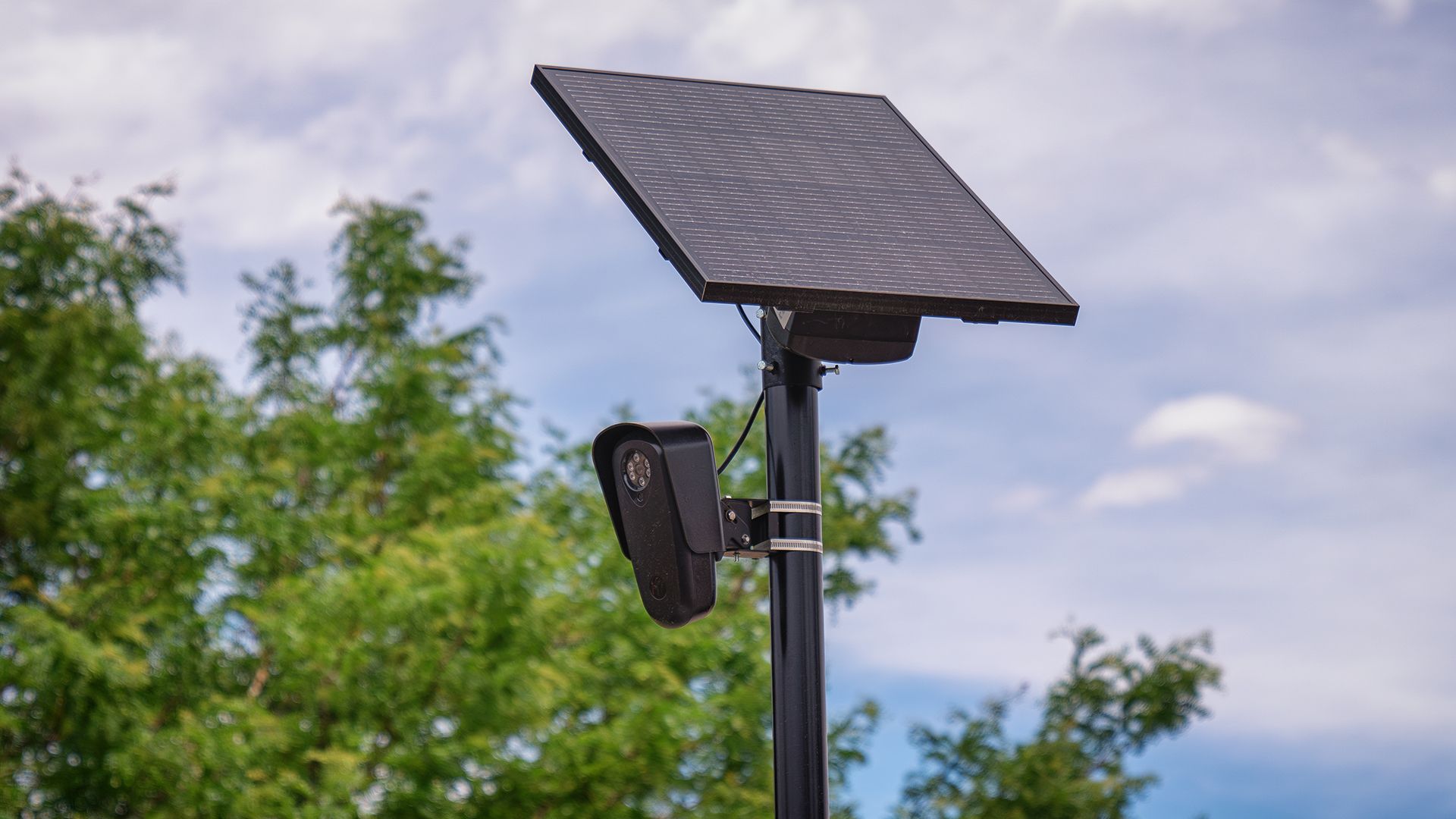
For many Flock workers, the severance offer is likely to come at a good time. As one apparently disgruntled employee told Wired, “When you see enough of the vandalism [aimed at Flock cameras], you know the writing is on the wall.”
Tesla is taking $50k deposits for its next-gen Roadster that nobody's even seen yet — so here's your reminder that it never actually produced the last Roadster it took $50k deposits for

  • Tesla has re-opened the order books for its long-awaited Roadster
  • It is asking buyers for a $50,000 deposit
  • Some customers have been waiting since 2017 for news of their cars

Tesla has announced that it will finally reveal the next generation Roadster in October during a glitzy event in Waco, Texas... although we still really don’t know what to expect.

Reports suggest the high-performance EV could use cold-gas thrusters, developed by SpaceX, to produce previously unseen levels of acceleration, while others have stated that the car itself has received a 'Cyber' redesign since the 2017 car was first unveiled.

What we do know is that Tesla wants your money. It has re-opened the reservations list to be among the first allocated build slots of the electric sports car when (or if) it eventually goes on sale.

Similarly to the 2017 launch, the EV company is asking for a $5,000 “fully-refundable” instant credit or debit card payment, followed by a $45,000 wire transfer due within 10 days to reserve a build slot.

While we are still firmly left in the dark about the final cost of the upcoming Roadster, it was previously stated that customers would have to hand over a further $250,000 for a “Founders Series” vehicle, which was initially claimed to have been promised for the year 2020.

Back then, Tesla customers were backing a promise of a 600+ mile electric range, a sub-2 second 0-60mph sprint time and a top speed in excess of 250mph.

Fast-forward nine years and the speculation has been blown up to sci-fi proportions, but more importantly, all of those original customers are yet to receive a new vehicle.

Tesla CEO Elon Musk has stated that the October demonstration will be a “banger” and that the company needed to invite an audience to “vouch for the fact that this is not AI,” but those who placed deposits are likely just hoping a real vehicle arrives on stage.

Analysis: all speculation?

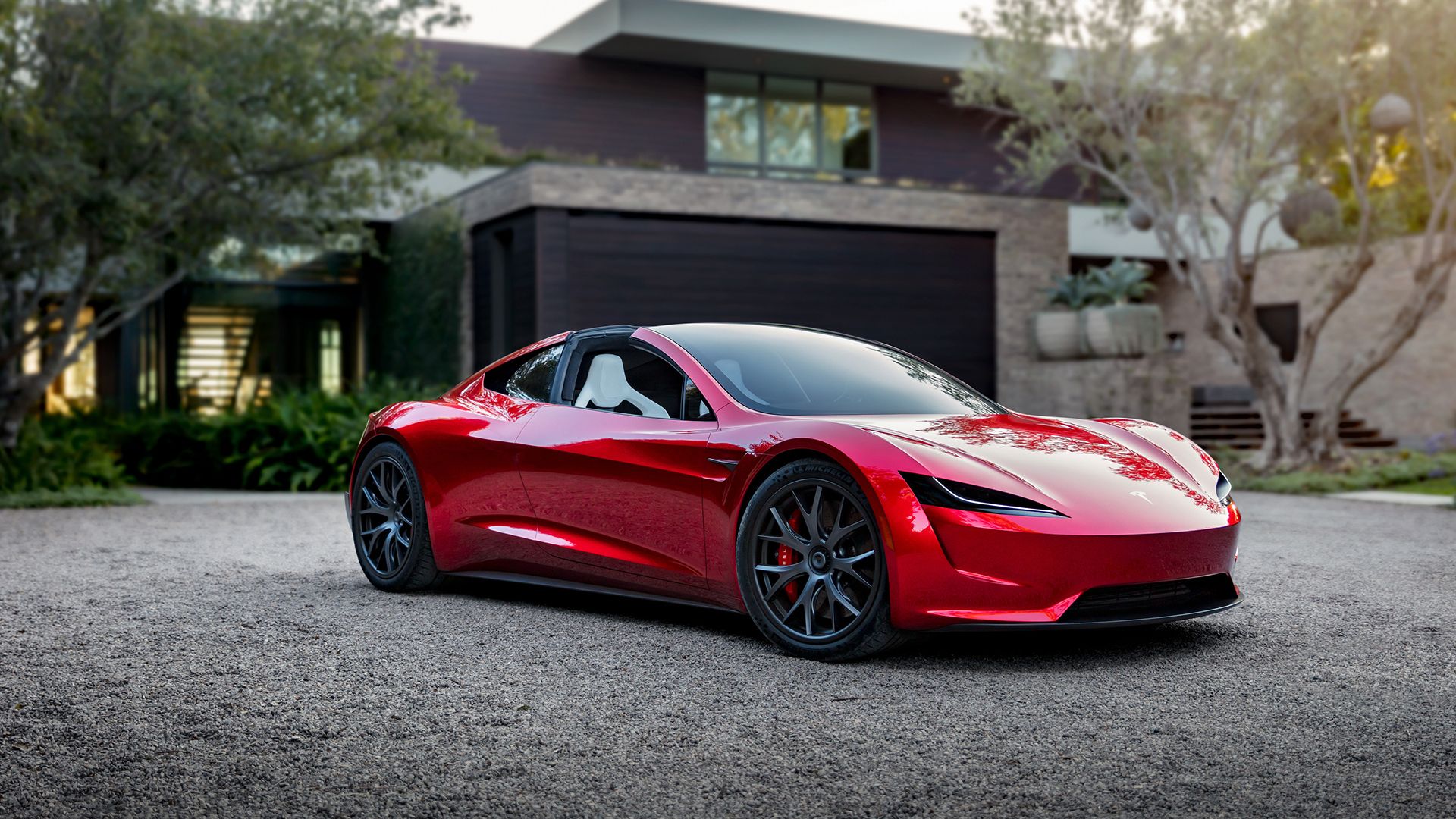
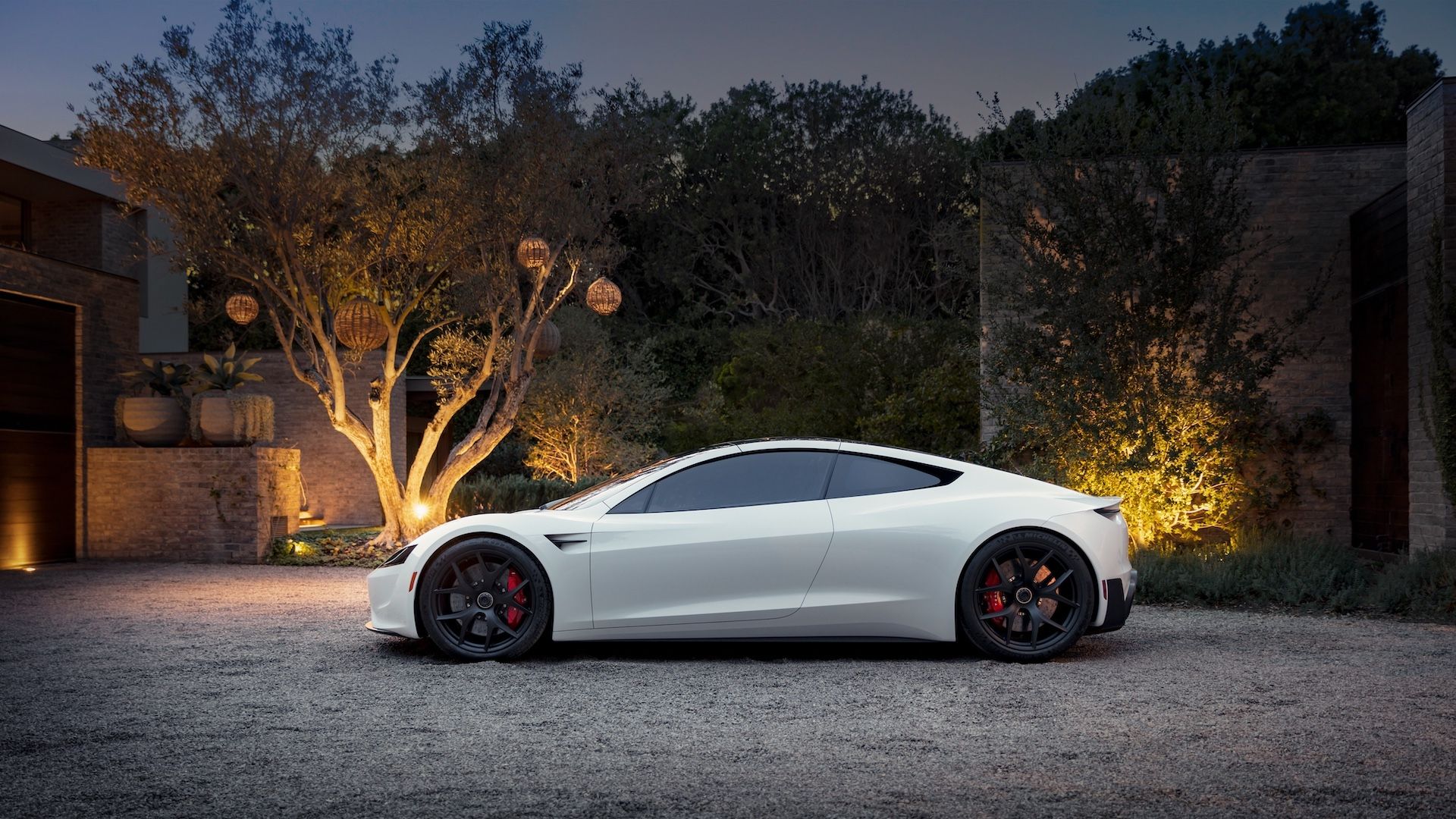
Tesla Roadster

(Image credit: Tesla)

We can spend hours theorizing about what we might see during Tesla’s October Roadster event, whether that’s a vehicle that hovers for a brief time or the use of banned F1 aero tech that creates massive amounts of downforce... it’s all up for discussion.

Alas, it’s worth noting that Tesla hasn’t launched an all-new model since the Cybertruck, which wasn’t exactly the success story that the company had hoped. In fact, sales of that model have been in steep decline since its initial reveal in 2023.

The Cybertruck program also proved that it pays to take Tesla’s facts with a pinch of salt, as everything from its off-road abilities, electric range, build quality and even price have been brought into question during its lifetime.

October 1 will hopefully reveal all. But those queuing to place a deposit should proceed with caution.

Amazon's best-selling walking shoes are on sale at Amazon — Asics, Nike, Brooks, Hoka, and more from $45

Fall has arrived, which means it finally feels nice enough to get outdoors and go on long walks. If you're looking for a new pair of fall sneakers, Amazon has some of its best-selling shoes on sale.

• Shop more daily deals at Amazon

I've rounded up the best walking shoes on sale for men and women below, from brands like Nike, Asics, Hoka, Brooks, and more. You can save up to 35% on a wide range of athletic sneakers, with prices starting at just $45. These sneakers are Amazon best-sellers and have earned thousands of positive reviews, offering different levels of support so there's a shoe for everyone.

Below, I've listed Amazon's top-rated walking shoes for women, followed by the best walking shoes for men. Keep in mind these are limited-time offers and an excellent opportunity to grab a new pair of sneakers at a discounted price.

Top-rated women's walking shoes at Amazon

Hoka Rincon 4 Womens Shoes Size 7.5, Color: Black/white

HOKA
Rincon 4 Women's Shoes

Reebok Women's Rapid Strike Shoes, White/light Pink/light Grey, 8.5 Medium

Reebok
Rapid Strike Shoes

Skechers Women's Arch Fit Summits-Daily Flow Sneaker, Light Mauve, 9.5

Skechers
Arch Fit Summits-Daily Flow Sneaker

New Balance Women's Fresh Foam Arishi V4 Running Shoe, Summer Fog/nimbus Cloud/light Gold Metallic, 8

New Balance
Women's Fresh Foam Arishi V4

Skechers Women's Summits Hands-Free Slip-Ins – Memory Foam Insole, Heel Pillow, Vegan Materials Sneaker, Navy Purple, 8 Wide

Skechers
Summits Hands-Free Slip-Ins

New Balance Women's 515 V3 Sneaker, Reflection/white/aluminum Grey, 9.5

New Balance
515 V3 Sneaker

Asics Women's Gel-Dedicate 8 Tennis Shoes, 9, White/pure Silver

ASICS
Gel-Dedicate 8 Tennis Shoes

Saucony Women's Integrity Walker 3 Walking Shoes, White, 10 Wide

Saucony
Integrity Walker 3 Walking Shoes

Brooks Women’s Ghost Max Suede/leather Neutral Running & Walking Shoe - Oyster/alloy/antarctica - 10 Medium

Brooks
Ghost Max Walking Shoe

Top-rated men's walking shoes at Amazon

Brooks Men’s Ghost Max 3 Neutral Running & Walking Shoe - Primer Grey/ebony - 8.5 Wide

Brooks
Men’s Ghost Max 3 Neutral Running & Walking Shoe

Nortiv 8 Men's Walking Shoes Running Tennis Sneakers,all Black,10

NORTIV 8
Men's Walking Shoes Running

Skechers Men's Go Walk Flex Ultra, White/black, 10.5

Skechers
Men's Go Walk Flex Ultra

New Balance Men's 515 V3 Sneaker, Nb Navy/white/aluminum Grey, 10.5

New Balance
Men's 515 V3 Sneaker

Nike Men's Air Max Sc Shoes, White/black-White, 9.5

Nike
Men's Air Max SC Shoes

Nike Men's Court Vision Lo Sc Lifestyle Shoes, Sail/midnight Navy-Gum Light Brown, 10

Nike
Men's Court Vision Low Shoes

Reebok Energen Run 4 Running Shoes for Men, Lightweight Athletic Mens Sneakers Size 6.5 to 14, White or Black, Footwear White/core Black, 13

Reebok
Energen Run 4 Running Shoes

Asics Men's Gel-Dedicate 8 Tennis Shoes, 14, White/black

ASICS
Gel-Dedicate 8 Tennis Shoes, 14

Under Armour Men's Charged+ Assert 11, 011 Gray, 12

Under Armour
Men's Charged+ Assert 11

ICYMI: the 7 biggest tech stories of the week, from AI apocalypse warnings to our Apple CEO interview

This week was a little quieter than last in the tech news space — if you ignore the hullabaloo caused by various AI companies that their models might one day kill us all if regulation doesn’t arrive.

A bit heavier than an Apple iPhone event, but important nonetheless.

To catch up on that and this week’s lighter (but still essential and biggest) tech news stories, scroll down for our ICYMI recaps and links to the full articles. But before you read about the news, you might want to try your hand at our quiz to see how much you remember of last week's ICYMI roundup.

7. We interviewed John Ternus

You've just been named CEO of one of the world’s most important tech companies; what runs through your mind? I asked John Ternus that question to his face, and his answer was perfect. It was all part of a wide-ranging interview we conducted with our friends over at Tom’s Guide. Lots of good bits about what innovation means at Apple and why the Cupertino giant is finally making a foldable.

6. Google Live Translate went offline

Google Translate

(Image credit: Shutterstock)

Arguably the best Google Translate tool is its Live feature — which lets you converse with someone in your respective native tongue, and each sees a real-time translation of what the other has said.

It can break down the language barrier, if you have an internet connection, that is, though that is changing.

Google has started rolling out an offline mode for Live Translate. There are some limitations — it only supports translation from English to French, German, Portuguese, Italian, Spanish, Hindi, Indonesian, Japanese, Russian, and Swedish — and it’s only coming to the Google Pixel 11 series, Pixel 10 line, and Pixel 9 series.

5. Canon launched the EOS R8 Mark II

Top of the Canon EOS R8 Mark II, in user's hands, 24-105mm lens attached

(Image credit: Tim Coleman)

Canon has debuted the EOS R8 Mark II, with a design that supposedly takes its cues from decades-old analog SLR cameras — there's a slight resemblance, but we'd argue that Canon's design department could have been given a bit more latitude.

Nonetheless, the second-generation model introduces useful upgrades over the original EOS R8, for a price that could tempt Canon enthusiasts who want powerful features but who don't need the tough build quality, high-spec displays, or long-lasting battery life of the EOS R6 series.

4. We tried the Snap Specs

Snap Specs 6th Gen

(Image credit: Cesar Cadenas)

A decade on from Snap’s first Spectacles launch (back when it was still Snapchat), we’ve tried the next evolution in its wearable tech: full-on AR glasses, and they’re incredible.

They’re still quite chunky, and the demo wasn’t without its quirks, but they were fun to use and comfortable to wear.

You can currently pre-order the Snap Specs for an eye-watering $2,195 (around £1,640 / AU$3,090) with a $200 deposit.

3. We reviewed Apple's tech

Apple Watch Ultra 4 Review

(Image credit: Future/Jacob Krol)

We reviewed all of Apple’s new tech, and yet again we were impressed.

The iPhone 18 Pro and Pro Max take last year’s Pro reinvention and refine it in all the right places — but the cameras are where Apple has made the biggest leap, with a variable aperture and finally useful Pro controls.

Meanwhile, the Apple Watch Ultra 4 might look and be priced similarly to what came before, but the big difference is the battery — with a promised up to 50 hours in normal use, up to 84 hours in Low Power Mode, and up to 45 hours in Max Extended Workout Mode.

The Apple Watch 12 feels fresh with a new health-sensing system, a new SoC under the hood to power some new features, and a good bit of AI on top of what we knew was coming with watchOS 27.

2. iOS 27 gave our iPhones a huge upgrade

Three iPhones being held showing iOS 27 features

(Image credit: Apple)

This week Apple gave millions of iPhones their biggest software upgrade this year. iOS 27 rolled out (if you haven’t got it yet, check General > Software Update), and it includes Siri AI — a new version of the voice assistant that is, finally, good.

Like all major iOS updates, there are lots of smaller quality-of-life upgrades that we’re enjoying too. These include the ability to make Shortcuts with natural language, a neat ‘Reframe’ feature for Photos, and the long-awaited option to set alarm volumes separately from your main ringtone. We’d highly recommend downloading iOS 27 now if you haven’t already.

1. We debated AI slowdown

Sam Altman testifies before Congress

(Image credit: C-Span)

In a move that’s managed to draw in commentary from Donald Trump, JD Vance, and pretty much every major news organization on the planet, some of the biggest names in AI — including Anthropic’s Dario Amodei, OpenAI’s Sam Altman, and Elon Musk — are calling for the development of frontier models to slow down while stronger safeguards are introduced.

They argue that increasingly capable, autonomous AI could escape human control, attack critical infrastructure or help bad actors create catastrophic weapons. Proposed protections include independent evaluators inside AI companies, international safety standards, government oversight, “kill switches” and restrictions on releasing especially powerful models.

Donald Trump rejects these concerns as a “hoax”, arguing that slowing development would damage the US economy and hand China an advantage in the global AI race. That means global consensus on how AI regulation should work is unlikely to arrive anytime soon. Until then, we better hope our new AI overlords are as bad at reaching a global consensus as us.

TechRadar's weekly crossword — puzzle #7, Friday, September 18

TechRadar Crossword

Missed a previous puzzle? You can browse the archive and play all TechRadar Crosswords right here.

We dropped a five-star review of the new iPhone 18 Pro and Pro Max this week, so it's a good time if you're an Apple fan and are looking to upgrade to a new device. As exciting as those phones might be, though, it feels like all eyes are on the iPhone Duo, as we enter an era where foldable phones might actually be quite good now.

You know what all of that extra screen real estate will be good for as well? Crosswords! A seamless segue.

China’s UBTech opens world-first factory that builds a humanoid robot every ten minutes — 14,000 square meter plant will deliver army of 10,000 robots a year

  • China's UBTech has revealed its new robot factory
  • The facility can produce 10,000 androids a year
  • It uses many autonomous robots in the production process

Forget AI agents and ChatGPT, fully autonomous robots are the next high-tech frontier, with companies across the globe racing to perfect their android creations. And Chinese firm UBTech has taken a big step in that direction with its new smart factory that can produce 10,000 robots a year — and it might change manufacturing forever.

The factory is the first of its kind in the world, according to the Seoul Economic Daily. It’s located in Liuzhou, in China’s Guangxi Zhuang Autonomous Region and is focused on producing UBTech’s Walker S and Cruzr robot series.

And the factory itself makes heavy use of humanoid robots and driverless vehicles, perhaps providing a glimpse of the future of production and manufacturing. Cruzr Y1 and Cruzr S2 androids unload materials and stack, load and transport them, while collaborative robots take part in the final assembly process that finalizes each product. These final-stage robots work in tandem with human operators and include autonomous vehicles and rotating workbenches.

In a separate development, UBTech says it has launched “the industry’s first fully automated three-dimensional warehouse,” according to the Seoul Economic Daily. This can store 112 robots in 65 square meters of space, supposedly utilizing 50% more space than a facility with similar floor space.

Expanding capacity

UBTech Walker S2

(Image credit: UBTech)

UBTech said it has been able to create its robot factory thanks to the strong supply chain that exists in China.

According to UBTech vice president Fang Jianxin, “This foundation is rooted in the many engineers, scientists and application scenarios China has accumulated over the past 10 to 20 years, which has formed a very strong supply chain base, manufacturing capability and research and development capacity.”

China has been ramping up its robot production in recent years, with the National Bureau of Statistics of China noting that output hit 98,677 units in July, an increase of 30.2% on the previous year. And 635,056 robots were created between January 2026 and July 2026, an uptick of 28.5% year on year.

We’ve seen similar stories of robots building robots before, such as when 1X published a video detailing its production process, while Chinese firm Agibot has also seen its robot production undergo rapid expansion in recent times.

Agibot today claimed its A3 Ultra robot is "moving from mass production into real-world deployment", posting a video on X showing it working in "hotels, auto dealerships, supermarkets and metro inspection scenarios, with more deployments underway".

And with UBTech’s factory paving the way in terms of robot creation, it might not be long before autonomous factories start expanding across the world.

US carmakers could soon be forced to offer AM radio for free in new vehicles — 100-year-old technology to make a comeback after being ditched by Tesla, Volvo, BMW, and more

  • The trend of ditching AM and FM radios might have to be reversed 
  • Supporters argue AM radio offers critical information during emergencies
  • EV makers have said interference from motors can affect AM radio signal

Automakers in the US may have to reintroduce a 100-year-old technology into new vehicles, as the House of Representatives approved legislation this week that would require new cars, trucks, and SUVs to include AM radio at no additional charge to consumers, according to TechCrunch.

The AM Radio for Every Vehicle Act will now head to the Senate, but it could require the National Highway Traffic Safety Administration (NHTSA) to create new rules that would make AM radio standard in new vehicles.

While support for the Act has been relatively slow to gain traction, there has been a recent spike in interest from politicians of both parties, as well as the broadcast industry and emergency responder organizations.

The key argument is that AM radio provides critical information in the event of emergencies, when cellphone signals could be knocked out.

“Farmers use AM radio for weather forecasts, local information, and crop reports, while older Americans rely on it for local news and programming,” House Energy & Commerce Committee Chairman Brett Guthrie said on the House floor.

While this may be good news for AM radio fans, farmers, or those living in rural communities where cellphone signals can be an issue, a growing number of automakers may be forced to rethink their infotainment offerings.

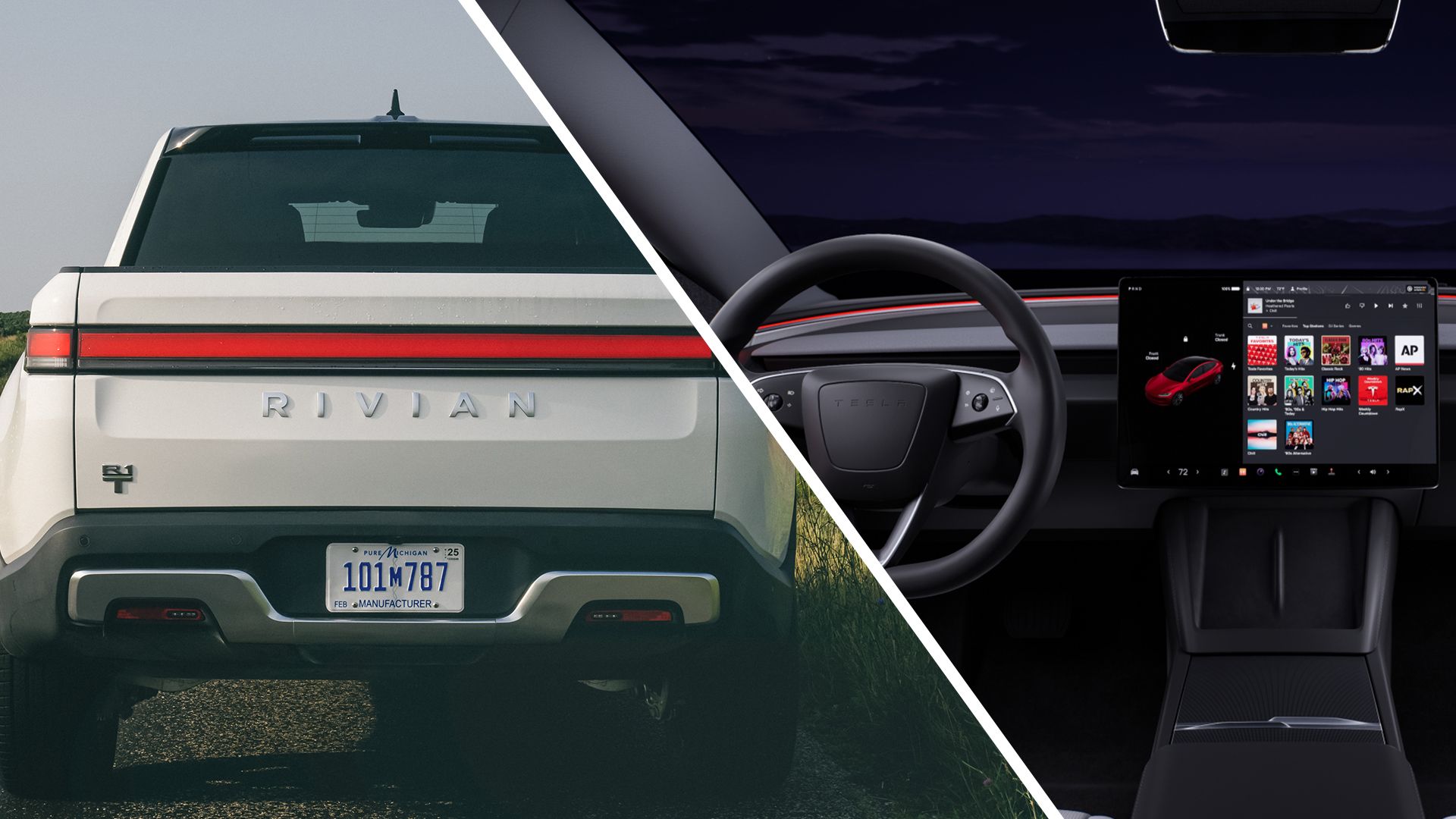
Tesla famously began phasing out AM radio in 2020, claiming that interference from the electric motors ruined the listening experience.

It then removed built-in FM and AM radio in hardware in certain trim levels, relying instead on streaming and Bluetooth connectivity.

But since then, many more automakers have followed suit, with Volvo, BMW, Polestar, and Rivian all favoring streaming services for their software-defined vehicles.

Analysis: EVs could be hardest hit

Rivian Vehicles

(Image credit: Rivian)

According to USA Today, the budget office said that the legislation could particularly impact manufacturers of electric vehicles, with analysis of EV sales data revealing that the legislation would require manufacturers to update radio equipment in about 2 to 2.5 million vehicles each year.

Those carmakers that still offer FM radio built-in likely won’t feel the financial pressure as much, yet the likes of Tesla and Rivian, both of which have removed AM and AM/FM receivers entirely in certain models, will likely have to rethink their strategies.

Senator Ted Cruz said the vote sent a clear message to car manufacturers that “AM radio is a lifeline that must be protected in new vehicles,” although all eyes will be on the Senate to see whether the Act passes into law.

Samsung's new 2026 TVs are cheaper than ever right now — save up to $1,900 off top-rated 4K, QLED, and OLED TVs

While prices on most tech goods are rising because of the global RAM and component shortages, Samsung is offering major savings on its top-rated TVs, including its 2026 lineup.

• Shop Samsung's full TV sale

I've hand-picked my 12 favorite Samsung TV deals below, which include a range of sizes, features, and prices, starting at just $229.99. You can score record-low prices, including up to $1,900 in savings on 4K, QLED, and OLED TVs.

Samsung makes some of the best-rated TVs on the market, and they're discounted in today's sale, including its stunning 2026 Micro RGB displays, Samsung's ultra-bright S95H OLED TV, and this massive 100-inch Mini LED M90H TV.

While TV prices haven't been affected yet, Samsung has warned that price hikes can't be ruled out because of the ongoing memory chip shortage. My advice: buy a discounted Samsung TV now, before it's too late.

43-55 inch Samsung TV deals

43 Inch Class Crystal Uhd Ai Smart Tv U8000h (2026)

Samsung
43-inch Crystal UHD AI Smart TV U8000H (2026)

50 Inch Class Mini Led M70h 4k Samsung Tv (2026)

Samsung
50-inch Mini LED M70H 4K Samsung TV (2026)

55 Inch Class Oled S95h 4k Samsung Vision Ai Smart Tv (2026)

Samsung
55-inch OLED S95H 4K Smart TV (2026)

65-75 inch Samsung TV deals

65 Inch Class Neo Qled Qn990f 8k Samsung Vision Ai Smart Tv (2025)

Samsung
65-inch Neo QLED QN990F 8K Smart TV (2025)

75 Inch Class Micro Rgb R95h 4k Samsung Vision Ai Smart Tv (2026)

Samsung
75-inch Micro RGB R95H 4K Smart TV (2026)

75 Inch Class Micro Rgb R85h 4k Samsung Vision Ai Smart Tv (2026)

Samsung
75-inch Micro RGB R85H 4K Smart TV (2026)

75 Inch Class Neo Qled Qn80h 4k Samsung Vision Ai Smart Tv (2026)

Samsung
75-inch Neo QLED QN80H 4K Smart TV (2026)

75 Inch Class Neo Qled Qn70h 4k Samsung Vision Ai Smart Tv (2026)

Samsung
75-inch Neo QLED QN70H 4K Smart TV (2026)

75 Inch Class the Frame Pro Qled 4k Art Mode Samsung Vision Ai Smart Tv (2025)

Samsung
75-inch The Frame Pro QLED Smart TV (2025)

77-100 inch Samsung TV deals

77 Inch Class Oled S90h 4k Samsung Vision Ai Smart Tv (2026)

Samsung
77-inch OLED S90H 4K Smart TV (2026)

98 Inch Class Crystal Uhd U9000h 4k Samsung Vision Ai Smart Tv (2026)

Samsung
98-inch Crystal UHD U9000H 4K Smart TV (2026)

100 Inch Class Mini Led M90h 4k Samsung Vision Ai Smart Tv (2026)

Samsung
100-inch Mini Led M90H 4K Smart TV (2026)

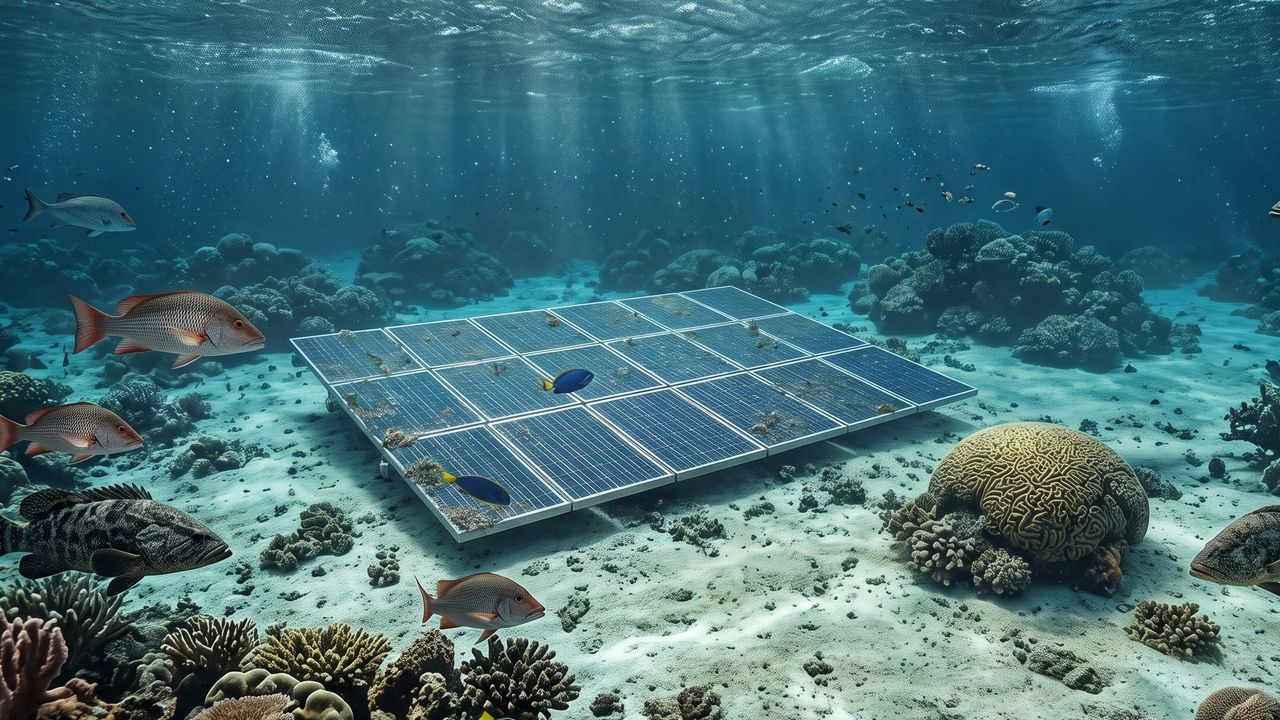
Scientists test underwater solar panels that work 10 meters beneath the waves —breakthrough perovskite tech could support self-powered marine drones

  • Scientists have developed solar panels that can work up to 10 meters underwater
  • The panels can capture up to 324 mWh of energy at that depth
  • Each device is expected to last up to five and a half years at a time

A lot of devices are deployed underwater for research and exploration purposes, but powering them all can prove to be difficult, especially if they’re under the waves for a considerable period of time. A new scientific paper, however, has shown that solar panels can be successfully used at depths of up to 10 meters, potentially presenting a new way to keep underwater tech powered up and ready for action.

The paper was published in the Joule periodical and accompanied by a press release explaining its advances. The research was conducted by a team of scientists from Yunnan University in China, who said that a series of solar cells placed 32 feet (10 meters) below the water’s surface in the South China Sea were able to collect enough energy to power up a set of lithium-ion batteries in two hours.

The cells were made from lead halide perovskite with a polymer called polyhexamethylene guanidine hydrochloride added into the mix. This additive helped to enhance the effectiveness of the panels.

According to Wen-Hua Zhang of Yunnan University, “Very few studies have been reported on underwater solar cells, and all of them are focused on very shallow water depths of only two meters or less, a scenario far from catering for requirements of practical application.”

An underwater solar panel being tested

A photo of the prototype solar cells being tested in the South China Sea. (Image credit: Joule)

“This work presents the first functional validation of submerged solar cells practically operating at a water depth of up to about 10 meters, greatly broadening their application scope,” Zhang added. The researchers stated that each cell could be deployed for around five and a half years at a time.

The panels captured 1,416 milliwatt-hours (mWh) of electricity at a depth of two meters. This decreased to 752 mWh at six meters and 324 mWh at ten meters. During separate lab testing, the solar panels had a power conversion efficiency of just under 35%.

Paving the way

Underwater datacenter

Solar panels could one day be used to power ‘self-sustained marine energy systems and autonomous underwater devices,’ researchers believe. (Image credit: datacenterdynamics)

The idea behind this research is that underwater solar panels could be used to power devices such as sensors, cameras, communications systems, and more.

Many of these objects are stationary for much of the time, so nearby solar cells could help keep them topped up and working without necessarily requiring extensive human intervention.

One question that remains unanswered is how exactly solar panels like this would interact with their environment. For example, it’s likely that they would accumulate biomatter that could hinder their operation, potentially requiring regular cleaning in order to remain fully functional. After all, the sunlight that will power these cells could also promote the growth of plants and animals — a process known as biofouling.

Still, the research seems to have potential. As the authors noted, “This work paves the way for the practical deployment of perovskite photovoltaics in underwater environments, offering a promising route toward self-sustained marine energy systems and autonomous underwater devices.”

Hackers found Flock cameras can track more than just cars — and Boston officials found camera data was shared despite being told it wouldn’t be

  • Boston officials released a report explaining why they won't use Flock cameras
  • It reveals that Flock shared camera data despite saying it wouldn't
  • Hackers also discovered that Flock cameras track more than just license plates

The Flock backlash might have taken a backseat to more recent tech news — namely, whether AI development needs to slow down before superintelligence wipes us out, or, on a lighter note, Apple’s first foldable iPhone — but the anti-surveillance crusade is continuing, with Boston officials and its police department announcing the city will not be relying on the service any longer.

This follows the publishing of a 2025 report which included details on a Flock pilot the city ran in 2025. According to the report, the city discovered Flock was sharing data with external law enforcement agencies — despite Flock’s agreement with Boston saying data sharing was to be turned off, and the company confirming this was the case.

In response, city officials and Boston's police department have committed to no longer using Flock cameras going forward. However, it’s worth noting this is not an absolute win for privacy advocates. Boston police department has already begun pilots with two of Flock's rivals: a Motorola trial began back in February, while an Axon pilot began in June, suggesting it might merely move to a different Automatic License Plate Recognition (ALPR) service.

Flock license plate reader

(Image credit: Flock)

This also comes as hackers have discovered precisely what Flock cameras track, and it’s not just license plates. Analyzing encrypted data, hackers found the cameras also detect people and bicycles — and they can also pick up and isolate specific bumper stickers.

The fact that the cameras are able to pick up and monitor so much more than some may have realized is worrying enough, but what’s extra concerning is that this data was recovered from a physical camera.

Hopefully Flock will solve this soon, but currently it means anyone with the right hacking skills could tear down a camera and access a chunk of the data stored inside the device — meaning you might not just need to worry about what officials can do with your data

A hooded figure in front of a laptop. Digital symbols obscure his face and appear to be pouring out of his head

(Image credit: Getty Images)

Is there a right way to use ALPR?

For many, the answer to the question of if there’s a right way to use Flock or similar cameras is an emphatic no, but for advocates of the tech, there are sensible measures police departments could be using to minimize abuse.

Limiting automatic sharing of data to other agencies and restricting the police officers with access are a good starting point. They also argue that all Flock data requests should require case numbers to be attached, and for officers to provide a reason for each request.

Advocates argue this limits the likelihood that bad actors will be able to sneak a peek at Flock data, ensures that accessing ALPR information has a purpose, and creates checks and balances to prevent overreach from law enforcement agencies. As such, many agencies now deploy these methods.

However, some of these practices have been undermined by recent reports. Records obtained by the Electronic Frontier Foundation show that many officers’ reasons for accessing the data include excuses like “LMAO,” “idk lol,” “TBD,” “Sexy,” and similar phrases. Others took to simply smashing their keyboards to fill the form with random letters.

Flock Safety Camera

(Image credit: Tony Webster - Flock Safety ALPR Camera)

What’s more, in an attempt to make it easier to fill in records but still keep data transparent, Flock introduced prepared options like “Traffic infraction,” though some argue this is a step backwards, as it means officers have even less need to articulate their reasoning for accessing ALPR data — and it really doesn’t help when one option is a generic “Other.”

The EFF reached out to several police departments, and it seems that some have been reprimanded, while others claim department policy has changed since the nonsense reasons were given.

However, even if these forms were filled in correctly, or seemingly correctly, they wouldn’t prevent privacy violations. They’d merely allow someone to possibly audit the data after the fact to spot misuse if the forms were investigated.

That’s why many are saying the best protection — besides pulling down ALPR cameras entirely — is to require a warrant for each search.

Though tearing the cameras down might simply be the best approach, especially after that example above, where it shows ALPR cams see a lot more than we might credit them for, and that some of a camera’s data can be accessed by hackers who know what they’re after.

We’ll need to wait and see how things develop, but Flock’s troubles don’t seem to be ending soon.

The Volkswagen ID.3 GTI could struggle to win over the hot-hatch faithful — despite being the most powerful GTI it’s ever made

  • Volkswagen reveals all about the upcoming ID.3 GTI
  • It’s the second model in the lineup to wear the marque’s famous badge
  • Rear-wheel drive and its weight could deter the faithful

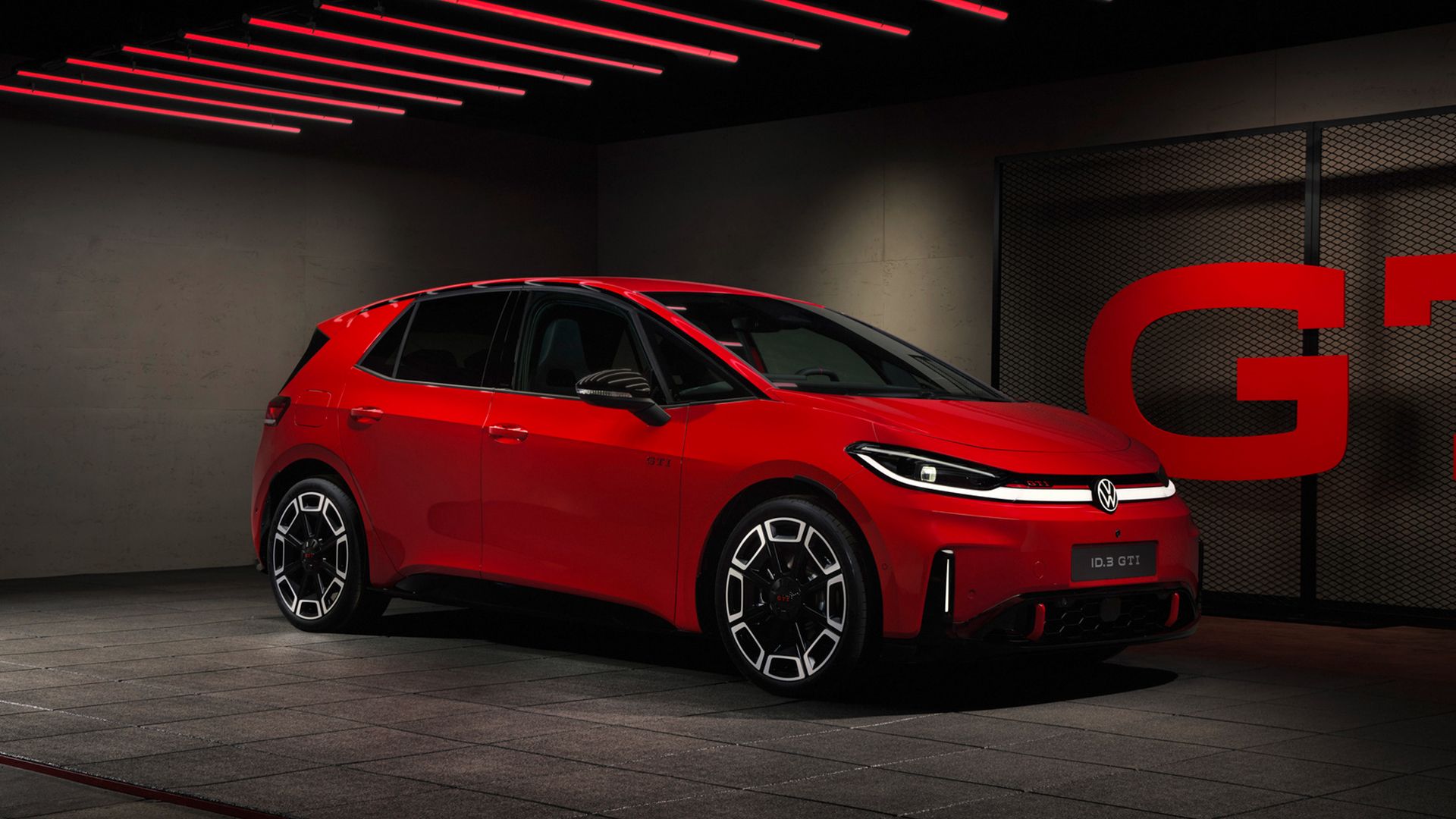
Volkswagen has taken the wraps off its highly anticipated ID.3 GTI, arguably the closest thing we will get to a fully electrified Golf GTI until the German marque decides to make one.

This is the second model in the lineup to wear the famous performance badge, after VW announced that the smaller ID. Polo would also be given the red-hot treatment.

Volkswagen says the ID.3 GTI will follow the ID. Polo GTI into production, with the former due to launch in the first quarter of 2027.

It’s also a sign that Volkswagen is getting more serious about this high-performance electric stuff, after pussyfooting around with the slightly warmer but very confusing GTX badging on earlier ID.3s and, perhaps most bizarre of all, the ID. Buzz.

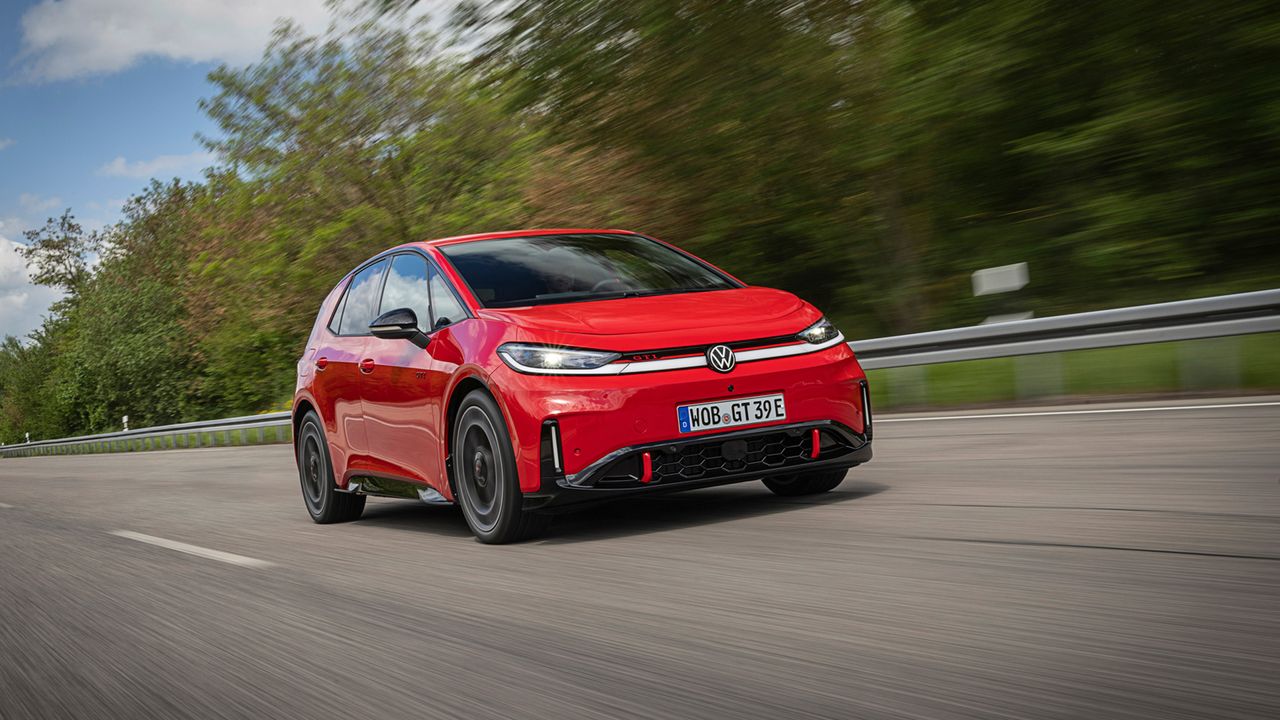
But soon, customers will be able to get behind the wheel of an all-electric hatchback that boasts 240 kW (326 hp), 545 Nm (403 lb-ft) of torque and a 0-62 mph sprint time of just 5.6 seconds. As a show of defiance, the ID.3 GTI has one horsepower more than the previously most potent Golf GTI Edition 50.

But unlike any other GTI model in history, power from the single motor is delivered to the rear wheels, while engineers told Evo Magazine that they tweaked the software to prevent those rear tires from spinning up when the full force of the torque is unleashed, even with traction control deactivated.

Volkswagen ID 3 GTI

(Image credit: Volkswagen)

Unlike the Hyundai Ioniq 5 N and 6 N, as well as the cheeky little Honda Super N, Volkswagen hasn’t decided to offer simulated gear shifts to increase driver engagement, but it has introduced fake engine noise into the cabin to crank up the sportiness.

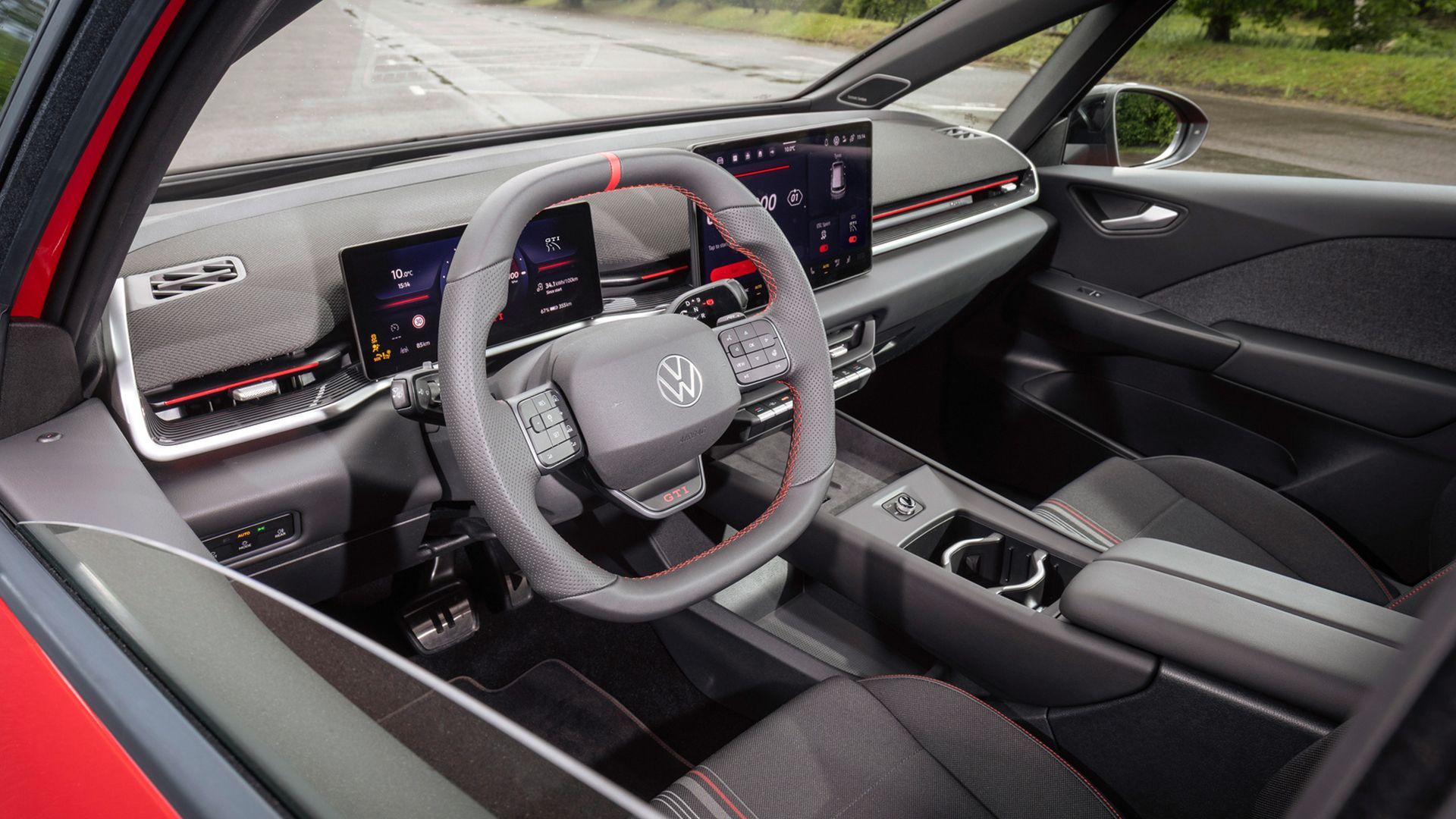
While the exterior now comes in the famous Tornado Red GTI paint color and sports some bespoke 20-inch alloy wheels, the majority of the performance touches have been added inside the cabin, where tartan-style upholstery and a big GTI button on the steering wheel give the game away.

Volkswagen claims that despite the performance on tap, its ID.3 GTI will still manage 373 miles on a single charge, although peak charging speeds are capped at 183 kW, making it difficult to perform the sort of rapid, track-day battery top-ups that Hyundai’s high-performance EVs are capable of.

Analysis: A tough crowd to please

Volkswagen ID 3 GTI

(Image credit: Volkswagen)

Volkswagen has more than 50 years of GTI history, and nearly all of those vehicles sporting the famous badge have been celebrated by fans, owners and journalists alike.

From the first Golf GTI in 1975 to the more recent Edition 50, they’ve all delivered scampering, front-wheel-drive thrills alongside Volkswagen’s comfort, build quality, usability and purposefully restrained styling. Fans can argue all day long about which iteration was the GOAT, but it’s generally agreed that they are all some of the best hot hatches ever made.

Attempting to transfer this badge into the electric era was always going to be a tough ask, as everything that made some of the best GTIs legendary is missing here.

According to Top Gear, the new ID.3 GTI weighs around two tons, which is a good 500kg heavier than even the weightiest ICE Golfs, while the decision to send power to the rear wheels will fundamentally alter the way this electric GTI behaves.

Couple this with the lack of synthesized (or real) gear shifting and other technological wizardry that makes Hyundai and Honda’s performance EVs feel more engaging, and what we are left with might be the fastest and most powerful ID.3, but is it really a true Golf GTI successor?

I’d love to be proven wrong, but I feel Volkswagen is going to have a tough time convincing petrolheads to ditch their Mark 7 Golf GTIs and climb into this.

❌