❌

Reading view

There are new articles available, click to refresh the page.

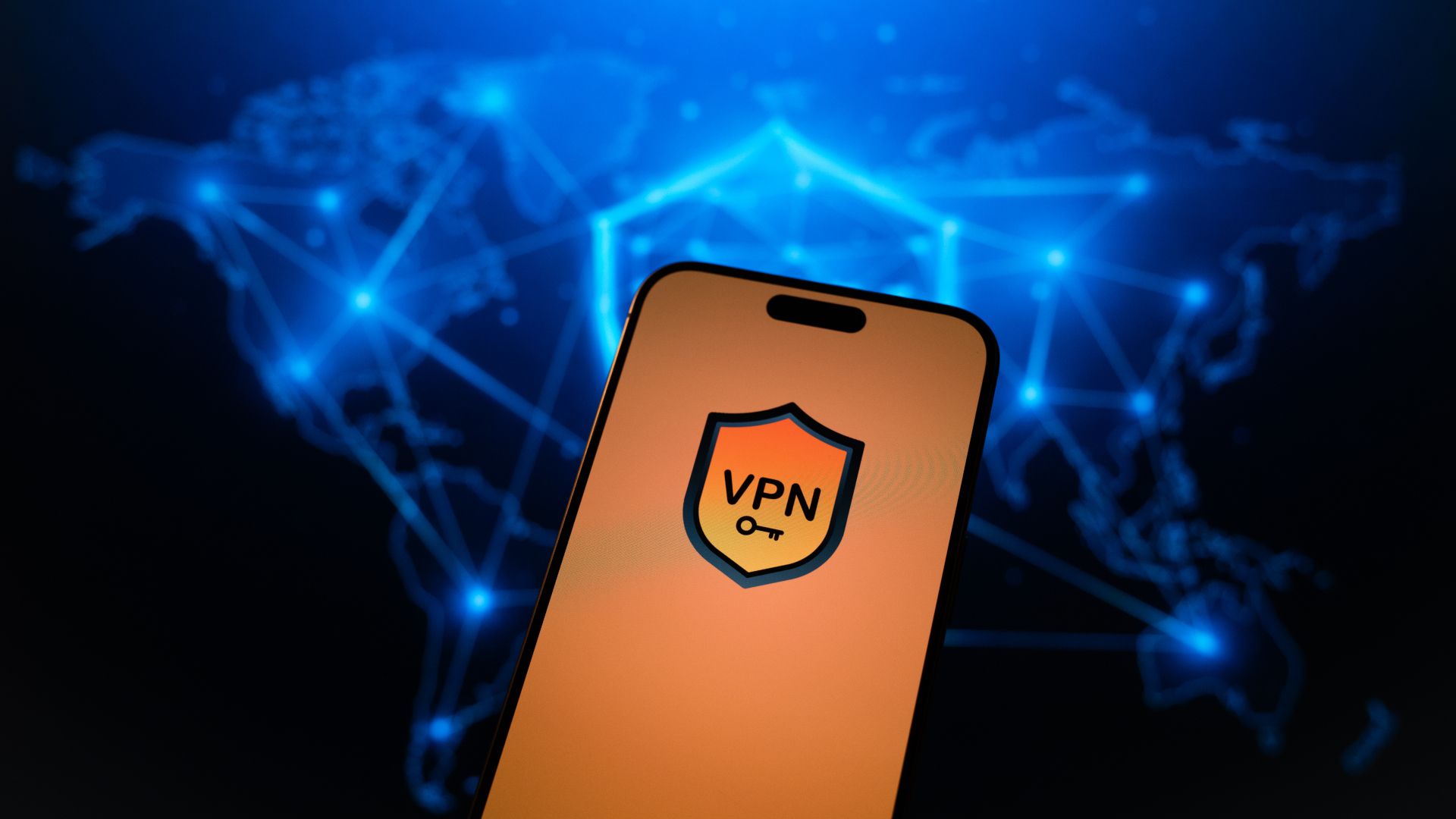
Bitdefender first to launch free 'temporary' VPN for AI Agents because they're worth it β€” but you can only use it on Apple M-series Macs for now

  • Bitdefender launches privacy tool built specifically for autonomous AI agents
  • Each agent task gets a disposable, temporary connection that deactivates when the task is done
  • VPN for AI Agents runs on a Model Context Protocol server architecture entirely

Bitdefender has introduced VPN for AI Agents, a standalone privacy tool built specifically for the autonomous software agents now browsing, researching, and transacting on behalf of everyday users.

The company says this public beta is a direct answer to the growing anxiety over machine-driven data exposure.

Unlike a conventional privacy tool that stays connected at all times, this tool activates only when an AI agent needs it, then deactivates once the task is done.

Why agents need their own privacy layer

Cybersecurity researchers have increasingly warned that autonomous agents occupy an ambiguous identity space, often borrowing a person's own credentials or shared workload logins to complete tasks online.

Without a clear separation, every website an agent visits and every transaction it completes remains traceable back to a single household IP address.

Recent Pew Research Center data found 71% of adults in the United States believe wider AI adoption will make their personal data less secure, a fear that extends well beyond American borders.

Bitdefender's new offering, built on a Model Context Protocol server architecture, spins up a disposable digital workspace for each prompt and discards it when the task is done.

Each prompt opens its own encrypted tunnel and exits through the VPN server's IP address, so no cookies, cache, or session state carries over to the next task.

The tool covers network transport and IP masking only, leaving the actual content of a prompt exchanged directly between the user and whichever AI provider is running it.

"AI agents are quickly becoming an extension of the people who use them, showing up in both our workdays and our personal lives," said Ciprian Istrate, senior vice president of operations, Consumer Solutions Group at Bitdefender.

"That means security can no longer stop at protecting the person behind the screen; it has to extend to the agent itself acting on their behalf."

This approach treats each agent like an independent team member requiring its own security boundary rather than inheriting the user's existing protections wholesale.

Bitdefender also describes this as clean-IP browsing, useful for QA checks on pages that display different content depending on the visitor's country.

The tool supports up to four simultaneous exit locations, or eight under the recommended testing configuration.

Access remains limited during the beta period

For now, the tool works only on macOS devices, though Bitdefender has confirmed plans to expand to additional operating systems after beta testing.

The beta specifically requires macOS 13 or later and an Apple silicon processor, meaning Intel Macs are not supported.

Bitdefender recommends macOS 15, 16 GB of memory, and roughly 10 GB of free disk space for smoother testing.

Once installed, it operates automatically across several popular AI platforms, including Claude Desktop, Cursor, Codex, and OpenCode, without requiring manual configuration from the user.

Bitdefender lists several practical use cases, including letting an agent compare prices across regions or complete multi-country research in one session.

The company frames these tasks as a productivity gain too, since they would otherwise need manual, country-by-country effort from a person.

Bitdefender is explicit about the tool's limits as well. It does not protect a device's other apps or browser.

It also does not hide prompts from the AI provider running them, and does not override a site's terms of service, rate limits, or an existing IP ban.

"With Bitdefender VPN for AI Agents, we're giving students, workers, and everyday consumers the confidence to let their AI agents work freely, knowing their identity and activity stay protected," Istrate added.

VPN for AI Agents public beta is currently available for free, but whether the free offering continues after the beta testing remains to be seen.


Google logo on a black background next to text reading 'Click to follow TechRadar'

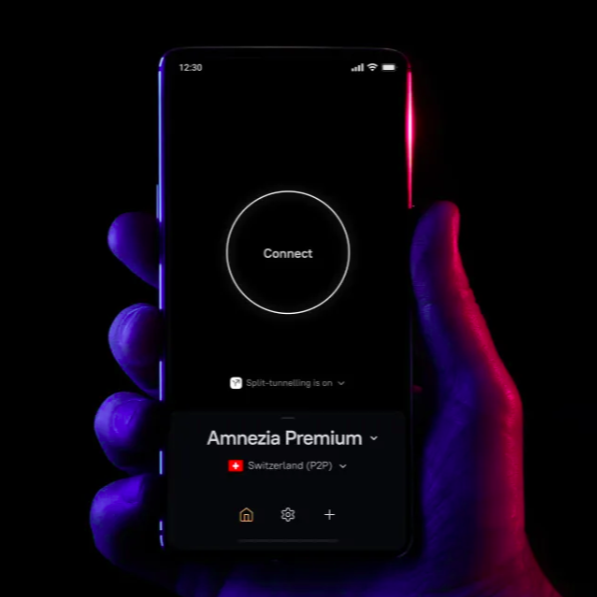
Amnezia VPN boosts stability of all apps with a new update

  • AmneziaVPN rolls out version 5.0.3.0 across all apps
  • It brings new XRay-core, TProxy, and minor user updates
  • It includes upgrades for Self-hosted and Premium users

Anti-censorship Amnezia VPN has released a new app version that improves stability, introduces an updated Xray-core, and brings updates for both self-hosted and Premium users.

The move comes after the VPN provider spent months strengthening its security measures to counter the attacks launched by Russian organisations that specifically targeted the best VPNs operating in the region.

Version 5.0.3.0 is available on all devices (version 5.0.3.1 for Android); users can download it from the Amnezia website, GitHub, and the Android and iOS app stores.

Amnezia VPN β€” censorship-resistant VPN
Amnezia VPN is an affordable, privacy-focused service that prioritizes essentials like security and censorship unblocking over unnecessary extras. All its apps are open-source, albeit more basic than some competitors. It offers both Free and Premium protection, with the latter billed at $28 for six months and $48 for a year. You have 14 days to decide if you like it or not, risk-free, thanks to its money-back guarantee. View Deal

Amnezia VPN 5.0.3.0: what's new?

Rather than a major update with dramatic new features, the new version emphasises general clean-up, maintenance and connection stability.

For example, the XRay protocol, the core component of the proxy that allows users to bypass censorship, has been updated from version 1.3 to 1.4, in line with the adoption of a newer protocol system in the new version.

Additional support for the TProxy container has also been introduced. The Linux support is useful for routing traffic through the VPN at the transparent proxy level, essentially allowing Linux systems to make the traffic appear as if it originates from the user, thereby making it more difficult to block WireGuard connections.

The update also enables self-hosted users to set up a proxy for Telegram by directly going to the β€œSelf-hosted” section to install it.

⚑️The new app version 5.0.3.0 is here.It is now available for all devices (version 5.0.3.1 for Android). Download it from our website or directly from your app store.In this release, we have improved connection stability, updated Xray-core, and added several important updates…September 22, 2026

For Premium users, the VPN has also improved performance when connecting via the VLESS anti-censorship routing protocol.

Additional fixes addressed Android warning log levels, alongside self-hosted default values, links, and other minor issues that have been corrected.

In terms of user changes, the new release includes a Google Play billing library, which was added as a small feature component to handle In-App Purchases (IAP), and a new country was added to the supported dataset, overall boosting the user experience with minor tweaks.

Leave No Trace logo

(Image credit: Future)

NEW: Leave No Trace β€” A weekly newsletter on digital privacy and online surveillance.

Leave No Trace investigates the companies and governments putting our digital freedom at risk β€” and the people fighting back.

πŸ“© Subscribe now to get every edition delivered to your inbox every Friday, launching this September.

Relentlessly updating

Amnezia's efforts to combat censorship had largely focused on previous updates, designed to strengthen its anti-detection capabilities in response to the Russian government's increasingly sophisticated Internet censorship regime.

In June, the open-source VPN said it fixed a bug in its AmneziaWG protocol that had previously left its infrastructure vulnerable to a coordinated cyberattack, allegedly carried out by Russia's media regulator, Roskomnadzor (RKN).

In August, the VPN focused again on security by updating its anti-censorship protocol, AmneziaWG, introducing greater variability in traffic patterns to increase the VPN’s invisibility against new detection methods. During the same month, the provider also strengthened its blocking capabilities with a 'mandatory update' for Premium and Free users.

The move came after a crackdown by the government blocked access to more than 20 widely used privacy services, with the scale of the attack suggesting that Roskomnadzor is continuing to boost new sophisticated ways to filter VPNs.

These governmental repressive measures are making it increasingly difficult for citizens to access the free internet. Additionally, the more repressive these attacks are, the more they seem to influence citizens' perception of VPNs as an everyday tool they need, rather than the opposite.

Indeed, research recently showed that they are developing new forms of collaboration to use VPNs, and view the associated costs as just as essential as those for mobile Internet and routine bills.

We are telling AI chatbots our biggest secrets, but Proton warns our privacy is at huge risk

  • 66% of UK AI users have discussed highly sensitive topics with a chatbot
  • Yet, 64% of respondents are worried that chats will be used to profile them
  • Proton's privacy-first chatbot, Lumo, aims to fix this trust gap

Late at night, when you need to vent about a relationship, ask for career advice, or check a worrying health symptom, who do you turn to? For a rapidly growing number of people, it isn't a friend, family member, or doctor; it's a chatbot.

A new piece of research published today by Proton, the Swiss tech firm behind some of the best VPN services on the market, reveals that a staggering 66% of British AI users have discussed at least one sensitive topic with an artificial intelligence assistant.

However, there is a massive contradiction at the heart of this new digital relationship: we are pouring our hearts out to these chatbots, but we do not actually trust them. According to the survey, 42% of UK users have little or no trust in AI companies to protect their private information, and 11% don't trust them at all.

Despite these glaring privacy reservations, 55% of Brits admit that AI has fundamentally changed their everyday decision-making.

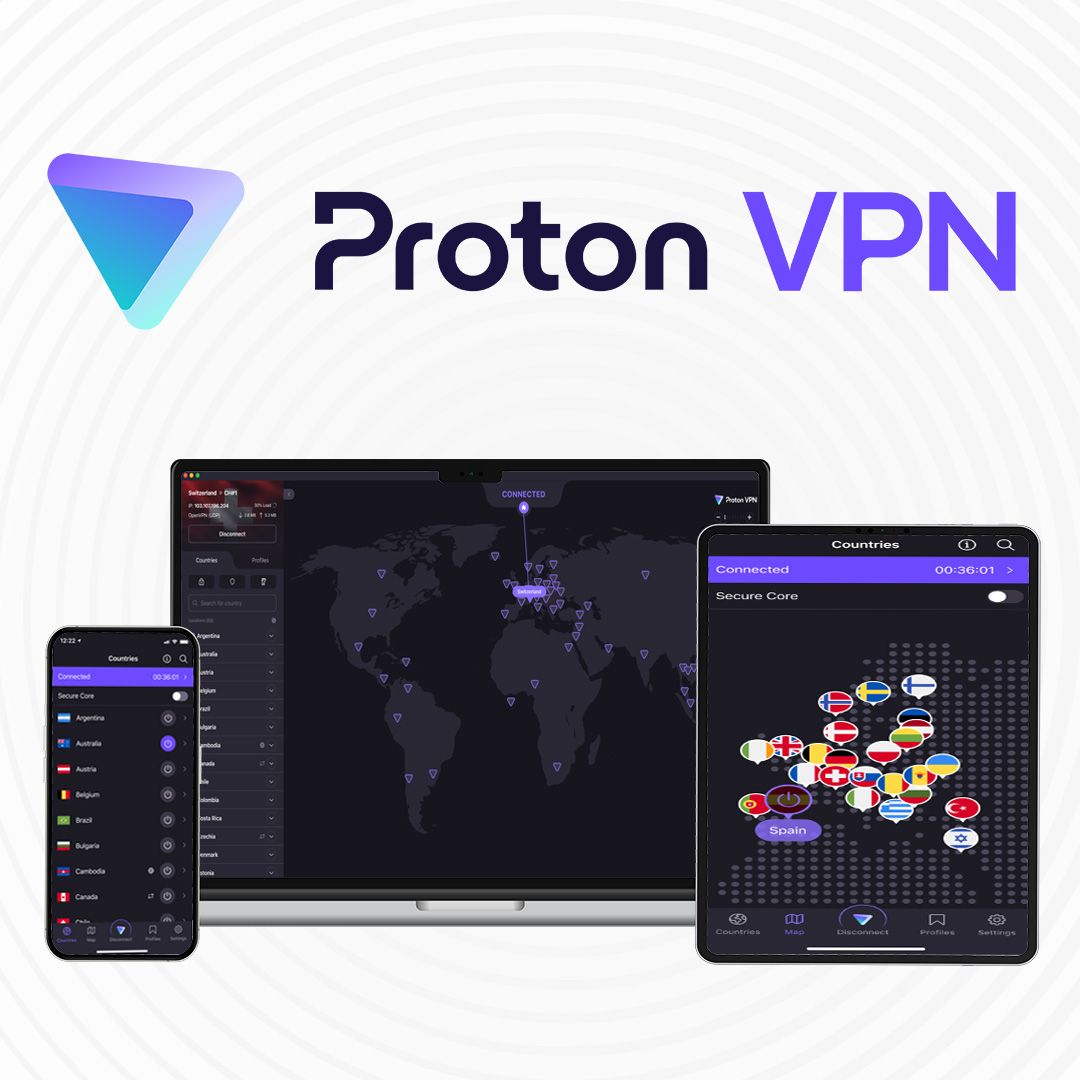
Proton VPN – best for privacy
Based in Switzerland, this privacy-first VPN offers good speeds, advanced anti-censorship features, and a server network that spans 145 countries around the world β€” including across Africa and Asia, where other providers tend to struggle. While its free VPN plan is handy, it comes with limitations. The good news is that upgrading to a premium subscription will cost you only the equivalent of $2.99 per month.View Deal

The ultimate judgment-free zone

So, why are we sharing our most intimate thoughts with machines we don't trust? The answer is simple: freedom from judgment.

While friends and family remain the preferred choice for most sensitive discussions, AI offers a 24/7 digital confidant that won't react with surprise or embarrassment.

Proton's data shows personal finance is the most commonly discussed sensitive topic (33%), followed closely by work or career problems (32%), mental health struggles (27%), and relationship issues (20%).

66% of people have told an ai chatbot something sensitive.Their finances. Their mental health. Their sex life.At most 1 in 5 trust the companies holding that information.1/6 🧡September 24, 2026

"AI is learning far more about us than a search engine ever could," said Eamonn Maguire, Director of AI Engineering at Proton. "We’re not just asking questions. We’re sharing deeply personal context about our health, finances and relationships. And when technology knows that much about us, privacy can't be an afterthought."

The primary worry isn't just about the AI remembering a single chat, or even the risk of human reviewers reading your logs. Users are increasingly terrified of the bigger picture.

In the UK, 64% of respondents are concerned that their vulnerable conversations are being weaponized to build detailed advertising or marketing profiles. Meanwhile, 52% are worried their secrets are being fed back into the machine to train future AI models.

Leave No Trace logo

(Image credit: Future)

NEW: Leave No Trace β€” A weekly newsletter on digital privacy and online surveillance.

Leave No Trace investigates the companies and governments putting our digital freedom at risk β€” and the people fighting back.

πŸ“© Subscribe now to get every edition delivered to your inbox every Friday, launching this September.

How Lumo promises a private alternative

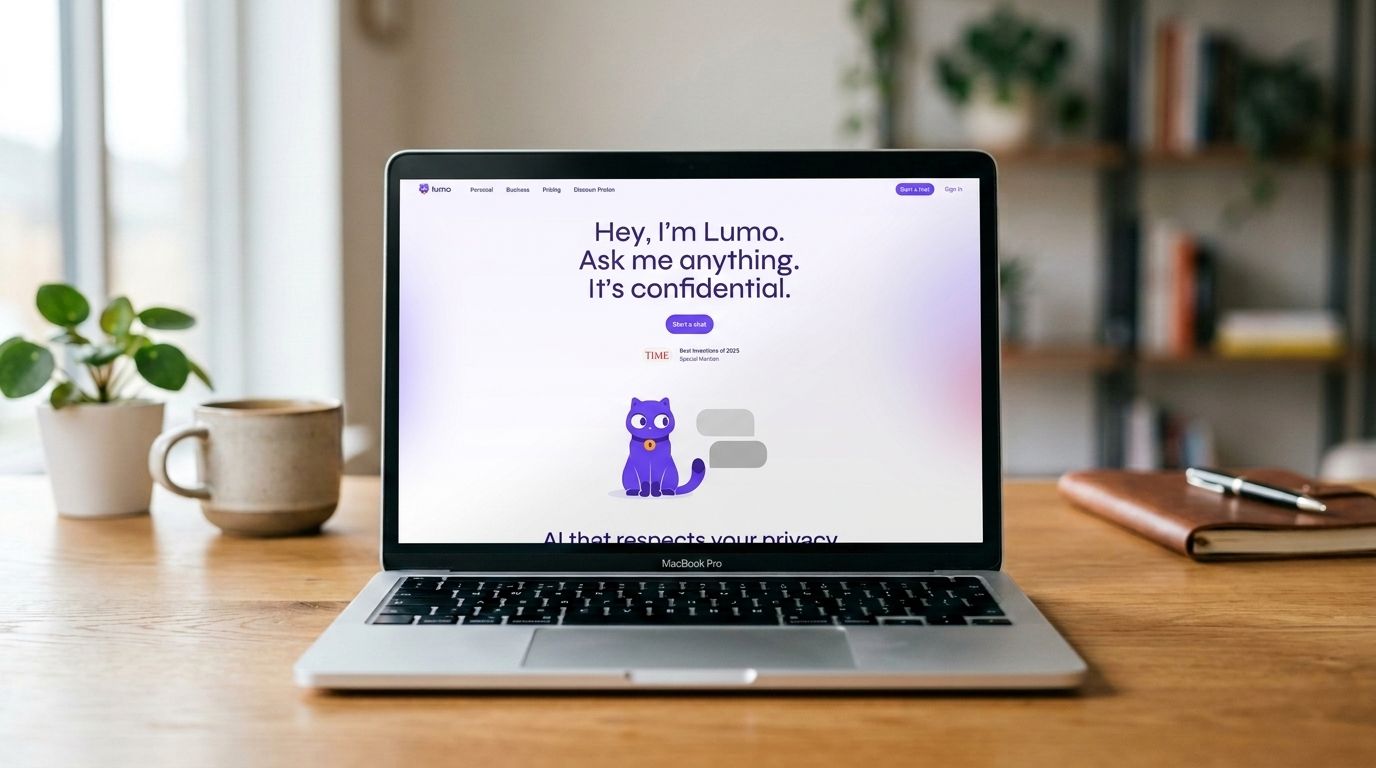
Lumo AI by ProtonVPN

(Image credit: Lumo/Edited with Gemini)

Despite these valid fears, Brits are highly receptive to a more secure way forward. A massive 82% of users said they would be more likely to use an AI chatbot specifically designed around privacy, and 44% would be far more willing to share sensitive information if they were given a cast-iron guarantee that their chats wouldn't be used for AI training.

This is exactly where Proton hopes to fill the gap with Lumo. Built with the same end-to-end encryption ethos as the company's famous email client, Lumo is an open-source, privacy-first ChatGPT alternative.

To help users understand the scale of their digital footprint, Proton recently launched AI Paper Trail, a tool from Lumo that visually demonstrates exactly how much personal information an average AI conversation leaks about a user's inner life.

"People have already decided that AI is useful enough to hear their money worries, doubts and everyday concerns. They are handing AI companies their inner lives and biggest secrets on the assumption that they will protect them when it's actually the opposite. AI's business model depends on learning from them" Maguire added.

US bill threatens to turn your VPN into a piracy blocklist

  • A new US proposed law would force internet providers and VPN services to block "foreign piracy sites" via expedited court orders
  • The legislation would apply to ISPs, DNS resolvers, and any VPN provider with at least 100,000 monthly US subscribers
  • Digital rights groups warn the fast-track legal process risks massive overreach, citing similar policies in Europe

A newly introduced bill in the US House of Representatives is threatening to fundamentally change how virtual private networks operate within the country. If passed, the legislation would force VPN providers to actively block access to piracy websites, turning vital privacy tunnels into heavily filtered exit ramps.

The American Copyright Protection Act (ACPA), formally numbered H.R. 10364, was introduced by Representative Darrell Issa (R-CA) on September 16, 2026. The bill aims to give copyright holders a fast-track judicial process to obtain blocking orders against platforms accused of copyright infringement.

Crucially, the ACPA explicitly names VPN services alongside traditional broadband providers and DNS resolvers as entities that must enforce these blocklists. For users who rely on the best VPN software to ensure unrestricted, unmonitored internet access, this legislation poses a direct threat to the core promise of the technology.

The blocking obligations would apply to any VPN service with at least 100,000 monthly US subscribers. This threshold catches almost all major consumer VPN brands, effectively forcing the industry's biggest players to implement nationwide web filters or risk severe legal consequences.

Laura Tyrylyte, privacy advocate at NordVPN, told TechRadar that there are thousands of VPN solutions available for users worldwide; however, "these blocking measures primarily target reputable, paid VPN providers, leaving free VPN services largely untouched."

"Free VPNs are often harder to regulate, and since users who seek to avoid paying for content are unlikely to pay for a VPN either, these services will continue to operate without any impact," she added.

Leave No Trace logo

(Image credit: Future)

NEW: Leave No Trace β€” A weekly newsletter on digital privacy and online surveillance.

Leave No Trace investigates the companies and governments putting our digital freedom at risk β€” and the people fighting back.

πŸ“© Subscribe now to get every edition delivered to your inbox every Friday, launching this September.

Fast-track censorship "at the speed of light"

Under the ACPA, a copyright holder can petition a designated federal judge to declare a website a "foreign piracy site." The evidentiary bar for this is surprisingly low, requiring only a "preponderance of the evidence." Once approved, covered providers are given 14 days to object before the blocking order takes effect, though crackdowns on live sports and other time-sensitive material could be executed even faster.

Rep. Issa has made no secret of his desire for aggressive enforcement. Speaking at a June hearing, he framed his goal bluntly: β€œCan we do it at the speed of sound? Can we do it at the speed of light?”

Digital rights organizations have heavily criticized the proposal. Meredith Rose of Public Knowledge warned that the bill would force any service provider "to disrupt traffic from targeted websites simply accused of copyright infringement."

Meanwhile, Brandon Butler of Re:Create argued the legislation codifies "a one-sided legal process modeled on European site-blocking laws" and "violates American due process, First Amendment rights, and American ingenuity."

To mitigate the risks of false positives, the bill includes an error provision allowing companies wrongly blocked to claim up to $250,000 in damages, though critics argue this offers little financial comfort to innocent small businesses taken offline.

A growing global threat to unfiltered internet

A mobile phone with a generic VPN screen and a world map of the server network in the background.

(Image credit: Getty Images / NurPhoto)

This isn't the first time US lawmakers have targeted VPNs in 2026. The ACPA arrives on the heels of Utah's SB 73, a controversial state law that attempted to regulate VPN use for age verification before facing an enforcement freeze. The ACPA also joins other pending federal proposals, such as the Block BEARD Act and the Foreign Anti-Digital Piracy Act.

However, the real warning signs come from overseas. As Butler noted, the ACPA heavily mirrors aggressive European anti-piracy campaigns, which have already put VPNs in the crosshairs. In countries like Spain and France, court-ordered VPN blocking is already a reality.

These systems have already shown their potential for collateral damage. An analysis by Re:Create found that in Italy, innocent websites remained blocked for an average of 320 days due to overzealous filters. In Spain, over 500,000 websites were wrongly blocked during LaLiga matches, temporarily restricting access to 5.8% of the popular internet.

If the ACPA advances, a VPN's legal jurisdiction will become more vital than ever. US courts cannot automatically enforce orders against providers incorporated in privacy havens like Panama or the British Virgin Islands. Until then, the battle for the open internet continues on Capitol Hill.

❌