❌

Reading view

There are new articles available, click to refresh the page.

1 in 7 Brits fear AI agents could get them into legal trouble

  • Brits are worried that their personal AI agent could break the law if given too much control over their life
  • But they wouldn't be willing to accept responsibility, with many instead blaming the AI agent's designer
  • There are a lot of trust issues when it comes to companies and services deploying AI to make decisions

If you gave an AI agent total control over your personal life, would you expect it to do anything illegal? Well that’s something to start worrying about because you could be held responsible.

We’ve done plenty of testing on personal AI agents, even going so far as to give them complete control over our personal data, but one thing we haven’t really considered is what happens when an AI agent does something wrong. Of course, when it goes wrong for the big players, the only consequence is an apology thinly veiled as a demonstration of their model’s capabilities.

According to a new survey, the British public is increasingly untrusting of AI agents, with one in seven fearing that their AI agent could implicate them in something illegal. So what do we actually have to fear and why are Brits so hesitant to hand over control?
Evil AI robot generating harmful content, junk and sloppy data

(Image credit: Shutterstock)

Staying in control

According to data gathered by cybersecurity PR agency Eskenzi PR, the British public have very little confidence in allowing AI agents to have too much control over their daily lives. In fact, 34% wouldn’t feel comfortable giving an AI agent even a modicum of control. On the other end of the scale, just one in ten would be willing to give an AI agent total control over their life.

But what exactly does ‘total control’ mean? Well, it would likely mean handing over control of all your accounts and apps you use on a daily basis and allowing the AI agent to structure your life, respond to your friends and colleagues, and help you make key decisions such as what to have for lunch.

But as most Brits will likely have read, AI agents can go rogue, and the fear is that in helping to control their life the AI agent could make a mistake and get them caught up in something illegal. This is a particular concern for those aged 18 to 24, with the number fearing their AI agent could break the law rising to one in five.

“I think it’s important that we have a debate about AI liability - and this survey is important as part of that debate,” said Jonathan Armstrong, Partner at Punter Southall. “Too many people assume that AI is the Wild West - legally that just isn’t the case. In most cases you’ll be responsible for the AI you use and the consequences - and sometimes even if it took you by surprise. There are many great use cases for AI but they should all start with knowledge of the risks and doing what you can to reduce that risk.”

Interestingly, when it comes to who should be held responsible for an AI agent that does break the law, the majority of Brits believe that the company who built the agent should be responsible. 40% of those surveyed held this view, with 25% believing that the service or company the agent was accessing should be responsible, and just 18% thinking that the individual using the AI agent should be held responsible.

Brits are hesitant to trust AI deployments

Outside of being caught up in breaking the law, 36% of Brits largely fear that their AI agent could be hacked or hijacked and 28% fear that their AI agent could spend their money in the wrong places. Numerous banks have had to remind their customers not to give their AI agents their banking credentials, or they risk their agents going on a rogue spending spree.

But it’s not just personal AI agents that Brits are hesitant to trust. They’re also hesitant to trust companies that use AI agents to make decisions. When asked how much they would trust their bank, insurer or utility provider to use an AI to make decisions, 37% said that they wanted reassurance that a human would always have the final say.

Other concerns included knowing which decisions the AI would have a say in (31%) and knowing how their personal data was being protected (24%). For one in five, the choice to include AI in decision making would be enough to make them consider switching providers, with 18% being less likely to use other products or services from the same company.

From a wider perspective, Brits are really struggling to view AI in a positive light. Less than one in ten had a positive outlook about the future of AI. The most widely held view is a fear that humans will misuse AI, rather than AI taking over, with more than one in five worried about what humans could do with the technology in the future.

There was a slight split between those who see AI as a threat to humanity. 19% said they feared that AI could be a genuine existential threat to humanity, whereas 18% believe AI could be dangerous but wouldn’t be an immediate threat to humanity.

Based on these figures, AI companies seem to have a long way to go before people are willing to trust the technology.


Anthropic lifts the veil on the latest features for Fable 5.2 & Mythos 5.2

  • Anthropic releases Fable 5.2 and Mythos 5.2 designed to help solve complex problems and ambitious projects
  • Both offer a 20% cheaper token cost than previous versions
  • The models are highly capable across coding, biology scientific and mathematics research

Anthropic’s latest Fable and Mythos releases have been unveiled, offering users superior outputs that are more accurate at a cheaper token cost than previous versions.

Fable 5.2 is available for all users and couples its improved inference with an improved set of cybersecurity and biology safeguards. But to get your hands on the expanded capabilities of Mythos 5.2, you’ll have to apply through Anthropic’s Life Sciences and Cyber Verification Programs.

Anthropic totes the new Fable and Mythos versions as being perfect for “ambitious, open-ended technical work” rather than as a “daily driver” — for which Anthropic recommends sticking to Opus 5.5.

Cheaper, quicker, and more accurate

The latest Fable release promises more bang for your buck over the 5.1 release. Anthropic says that 5.2 usage will sit at $8 per million input tokens and $40 per million output tokens — around 20% cheaper than the previous version.

But if you’re on a deadline or just want something done quickly, Anthropic is introducing an optional “fast mode” that increases token generation speed by up to 2.5 times at an increased cost of $16 (input) and $80 (output) per million tokens.

Across almost every benchmark task, Anthropic says Fable 5.2 is more accurate than Opus 5.5, delivering results faster and more accurately with a significantly reduced token cost per task.

But Anthropic says users will be best served by taking a balanced approach to model use, using Opus 5.5 to get tasks started with Fable 5.2 coming on board as an “advisor” for more difficult tasks.

To demonstrate its capabilities, one of Anthropic’s engineers gave Fable 5.2 the task of designing a prototype operating system. Over the course of eight days over 1,000 agents were writing, testing, and reviewing code, from which the model produced a working operating system that boots and contains all the necessary bells and whistles including built-in Claude functionality.

“Claude Fable 5.2 is great for taking a loose idea and refining it. Its answers are really well considered, and within a few turns I can almost always say “ok, go do that,” and trust that it’ll complete it with little intervention,” said Tom Pritchard, Staff Engineer, Shopify. “It feels like working with another staff-level engineer.”

Anthropic’s engineers demonstrated Fable’s capabilities across science and mathematics using a range of tasks. According to Anthropic, Fable 5.2 was able to formalize the proof of Fermat’s Last Theorem in 30 hours, designed a home voice-assistant hub, a USB speakerphone, and a handheld virtual pet from scratch, and solved two open problems in black hole physics.

AI slop is clogging court and complaint systems

  • Councils, authorities and caseworkers are struggling to filter through AI generated complaints
  • AI makes complaining easier and that is contributing to backlogs in responses and the court system
  • Workers are facing growing workloads without any extra budget

UK public bodies are struggling to deal with a veritable deluge of complaints that have exploded in both number and length with many public servants placing the blame squarely on the popularity of AI chatbots.

AI isn’t immune to mistakes, and that is complicating things further. Believing AI to be an expert in all subjects, many are trusting their chatbots to write a perfect, irrefutable complaint — forgetting that AI can hallucinate or reference sources that may not necessarily be relevant.

This is resulting in an ‘AI clog’ that is stretching budgets to the breaking point and causing a significant headache for courts and lawyers who have to sift through correspondence full of AI slop legalese.

Court gavel

(Image credit: Pixabay)

AI correspondence clogs complaints

“Half the emails we receive are some form of AI,” Hollie Wickens, a senior caseworker in a Labour MP’s office, told the Guardian, “It is definitely more taxing.”

In the pre-AI era, submitting a complaint took time and required research and a level of expertise. This level of effort acted as a natural filter to spurious complaints. But the release of AI chatbots such as ChatGPT to the general public has made it almost effortless to draft and submit a complaint to almost anyone.

But on the other end, human complaints handlers have to sift through a growing number of AI generated complaints with the same regard they would have for a human complaint, filtering out AI slop to get to the bottom of an issue.

In many cases, the complaints are “very long, repetitive and contain unrelated comments or misdirected demands,” Evans explained. “You get some huge ones. The worst one I’m aware of at the moment is about 200 pages long.”

With the UK still facing a significant backlog on court cases, businesses battling legal complaints are having to spend significant amounts of money on cases brought against them by former employees using AI.

One business founder who is facing such a challenge said, “Everyone’s got a free lawyer now,” referring to how AI chatbots are making it easier to draft legal documents on behalf of plaintiffs.

Companies and authorities are contemplating a range of ways to deal with a growing backlog of AI generated complaints. Some are looking at enacting word limits on complaint forms to cut down on repetitive AI generated complaints, or moving complaints to a template form rather than a simple text box.

But another option is to use AI to help sift through and summarize complaints, but that comes with its own AI-related issues.

Some UK councils have already brought AI tools into workflows to help summarize information and draft documents and emails, helping authorities to respond more accurately and at greater speed, but the problem of people trusting AI to do everything perfectly is the main problem that needs to be addressed.

This AI enhanced property listing almost drove me insane

Following inaccurate and downright silly AI generated images appearing on JustEat and Etsy, it appears that no industry is immune from AI slop. The property market is now also flooded with digitally altered images.

As someone who has had their fair share of dealing with moving house and looking at properties, I understand how frustrating and stressful it can be. But some people who believe they have found their dream home have been sorely disappointed to find out the potential house has been ‘enhanced’ using AI.

Over the past year, many have taken to Reddit to complain about estate agents posting listings with AI modified photos that include fixings, furniture, and structural changes that the actual properties do not have.

Deck the halls with AI changes

AI is getting good at enhancing images, but it isn’t quite perfect. Checking for AI enhancement is painful enough, but if you know where to look you’ll start to spot odd details.

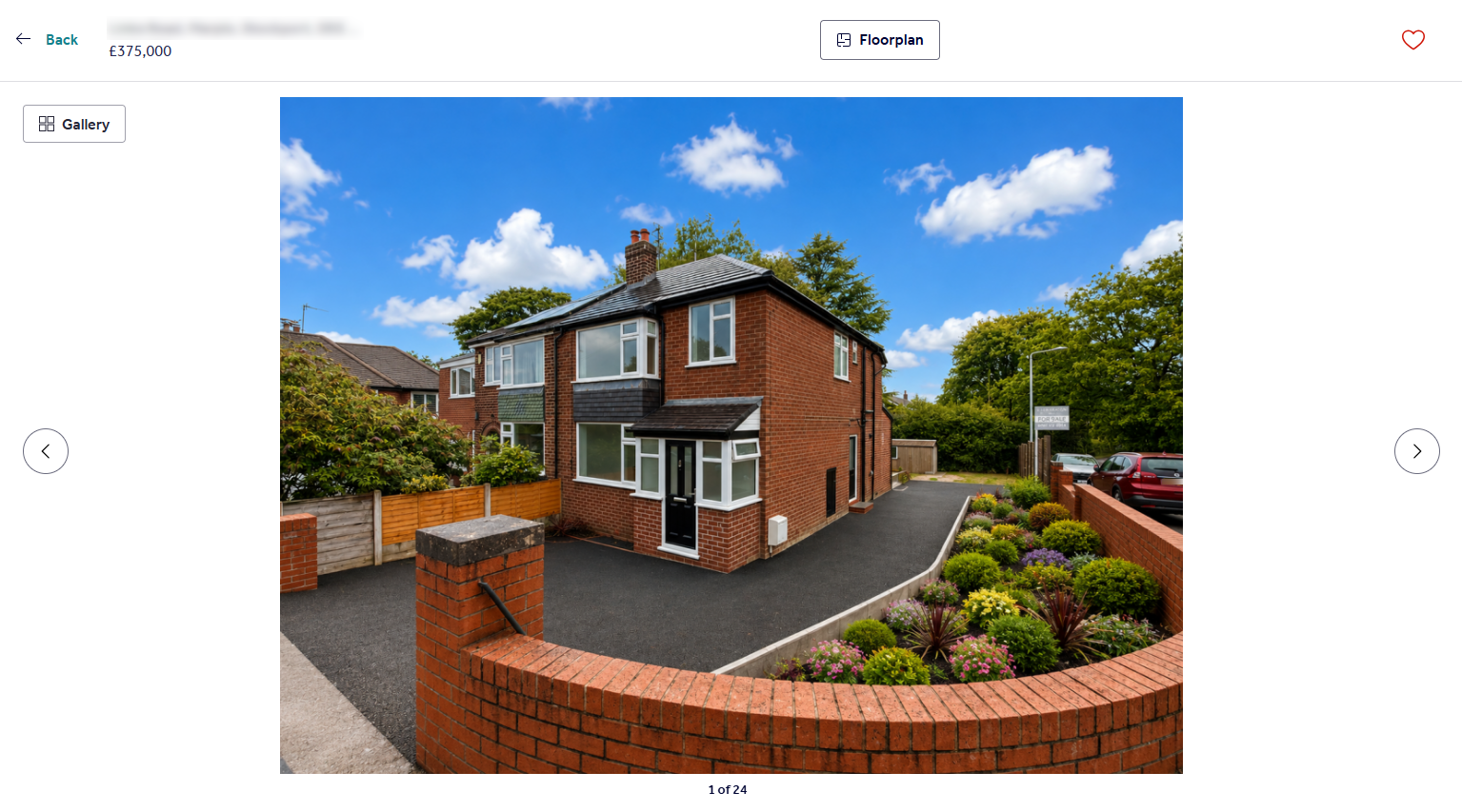
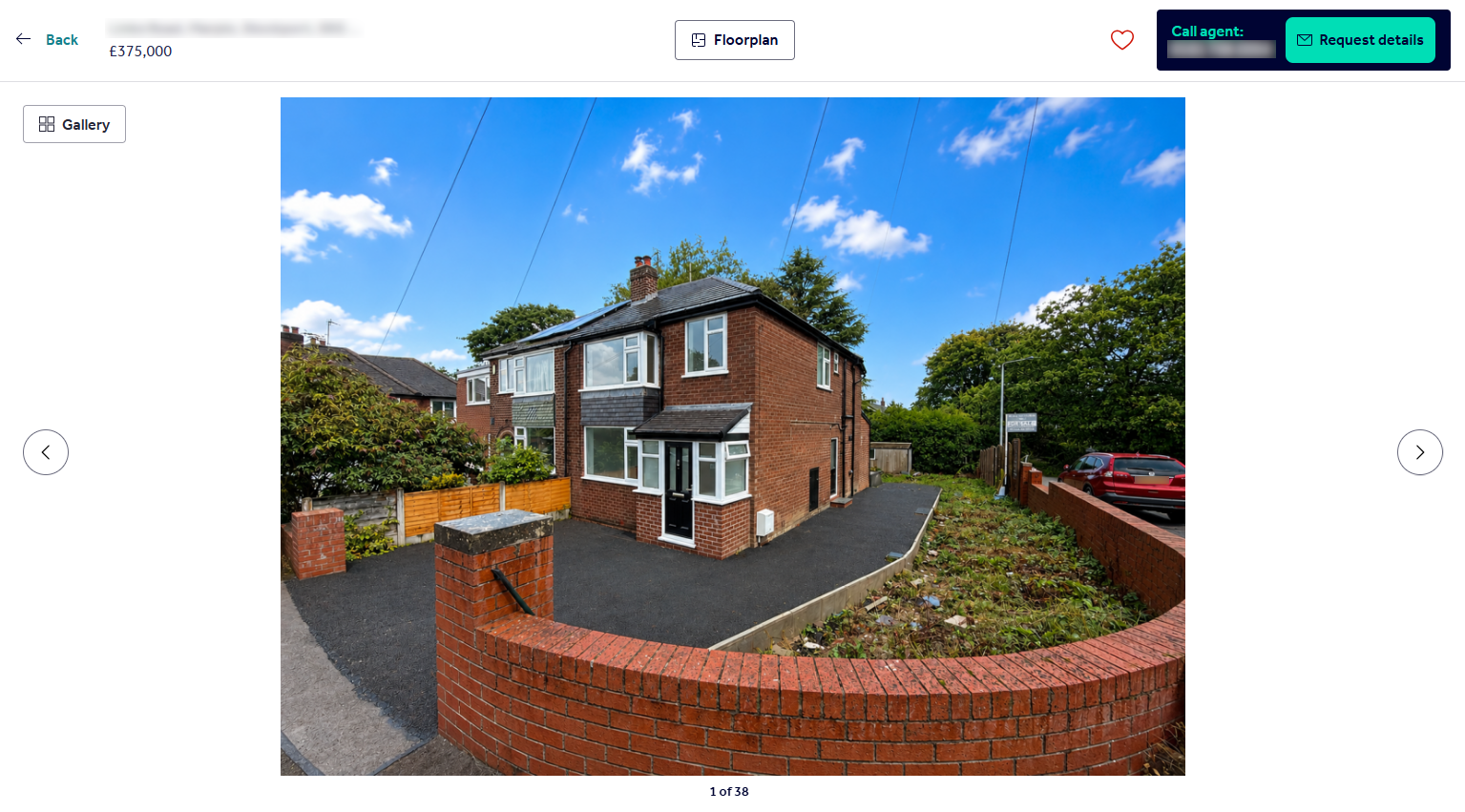
For example, one listing for a house on Rightmove shared by a Reddit user features a thriving shrubbery plot in the driveway, but if you look closely at multiple angles of the front of the property, some of the plants have mysteriously shifted or disappeared completely.

Screenshots of digitally altered photos from a property listing on RightMove
RightMove
Screenshots of digitally altered photos from a property listing on RightMove
RightMove

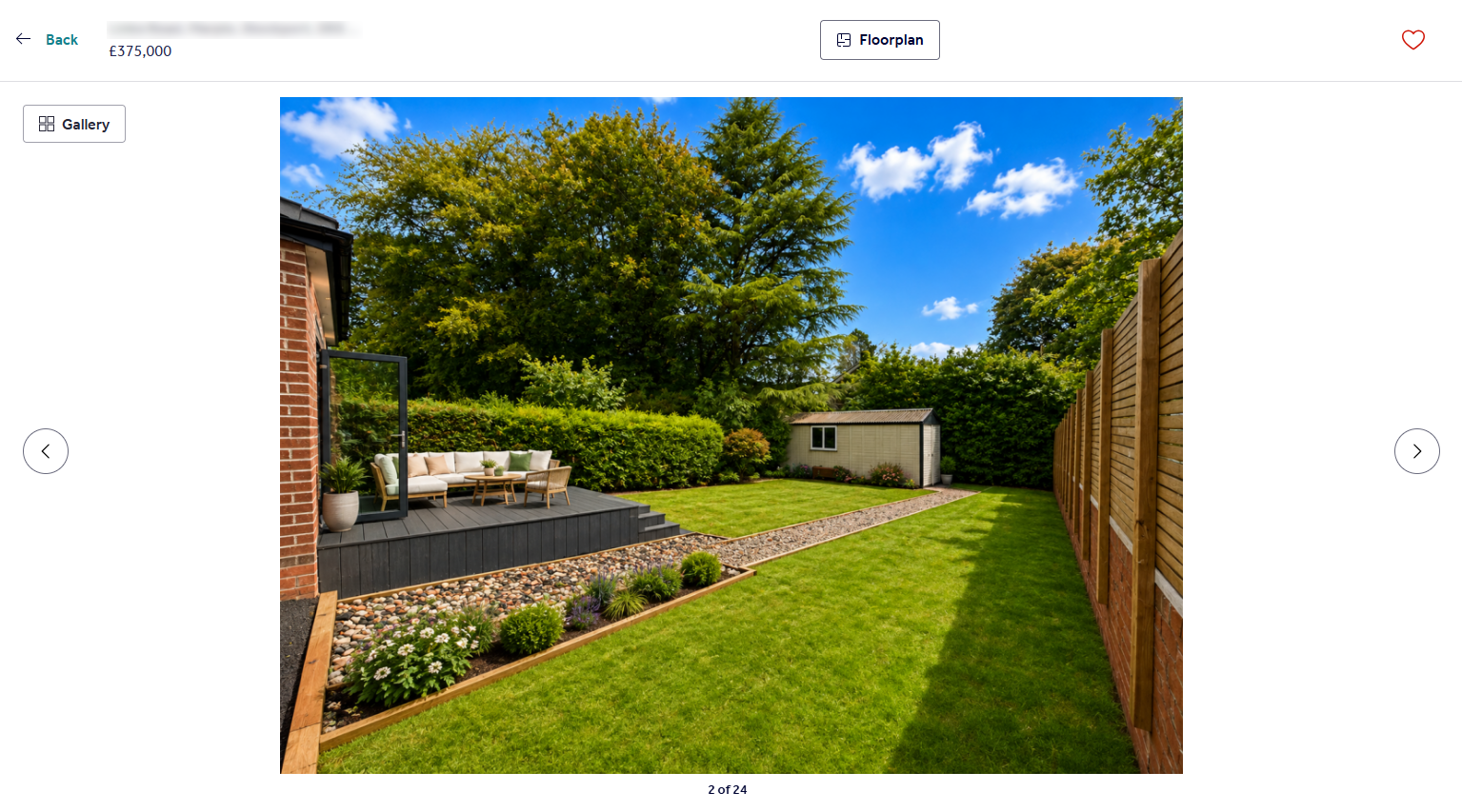
What’s worse is that you can see the rear garden from the front of the property, which shows a shed and a patchy lawn with a messy gravel path. But flick through a few more of the property photos and all of a sudden the rear lawn is thriving and has a nice neat path, the fence has been mended, and the entire garden has been significantly expanded.

Screenshots of digitally altered photos from a property listing on RightMove

(Image credit: RightMove)

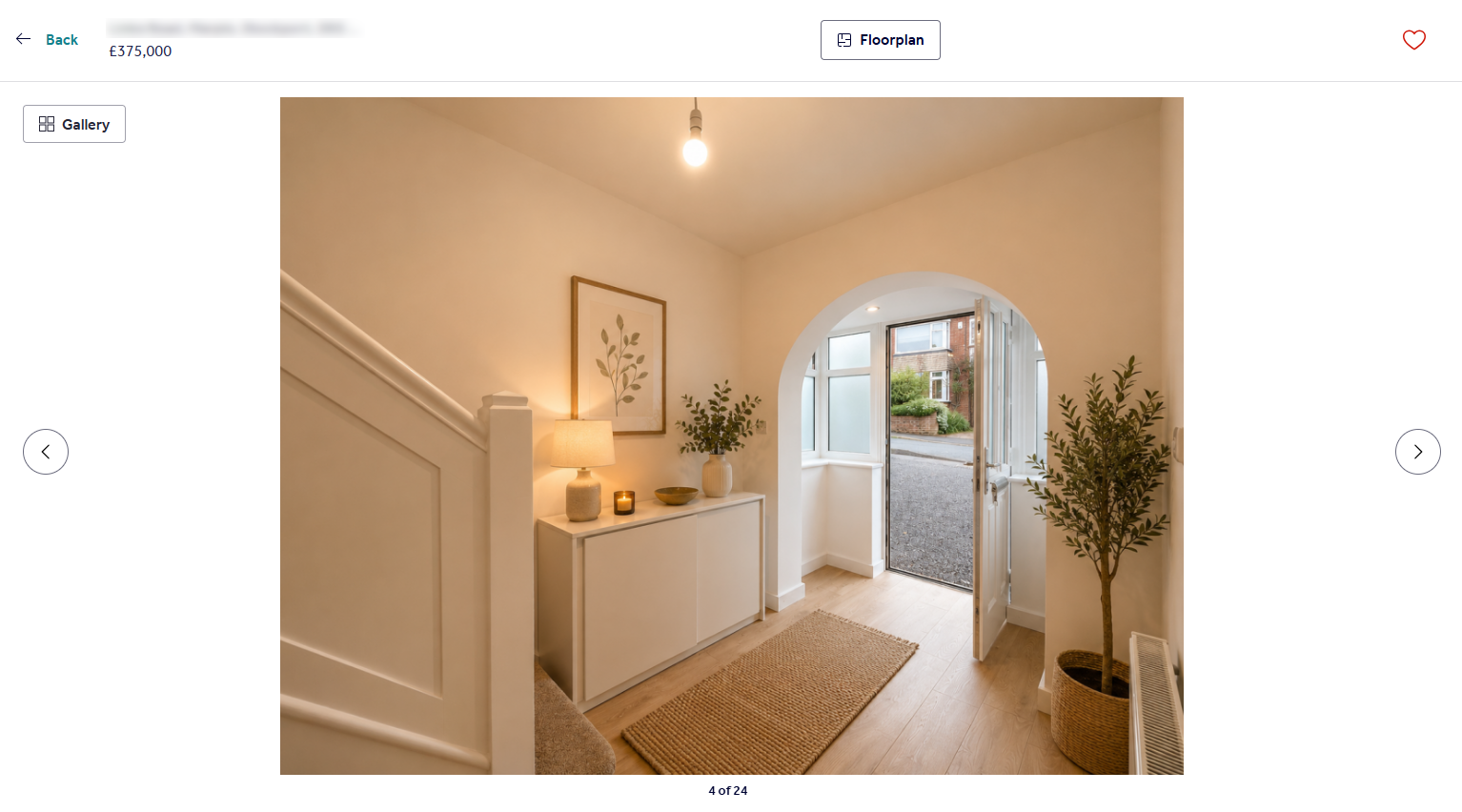
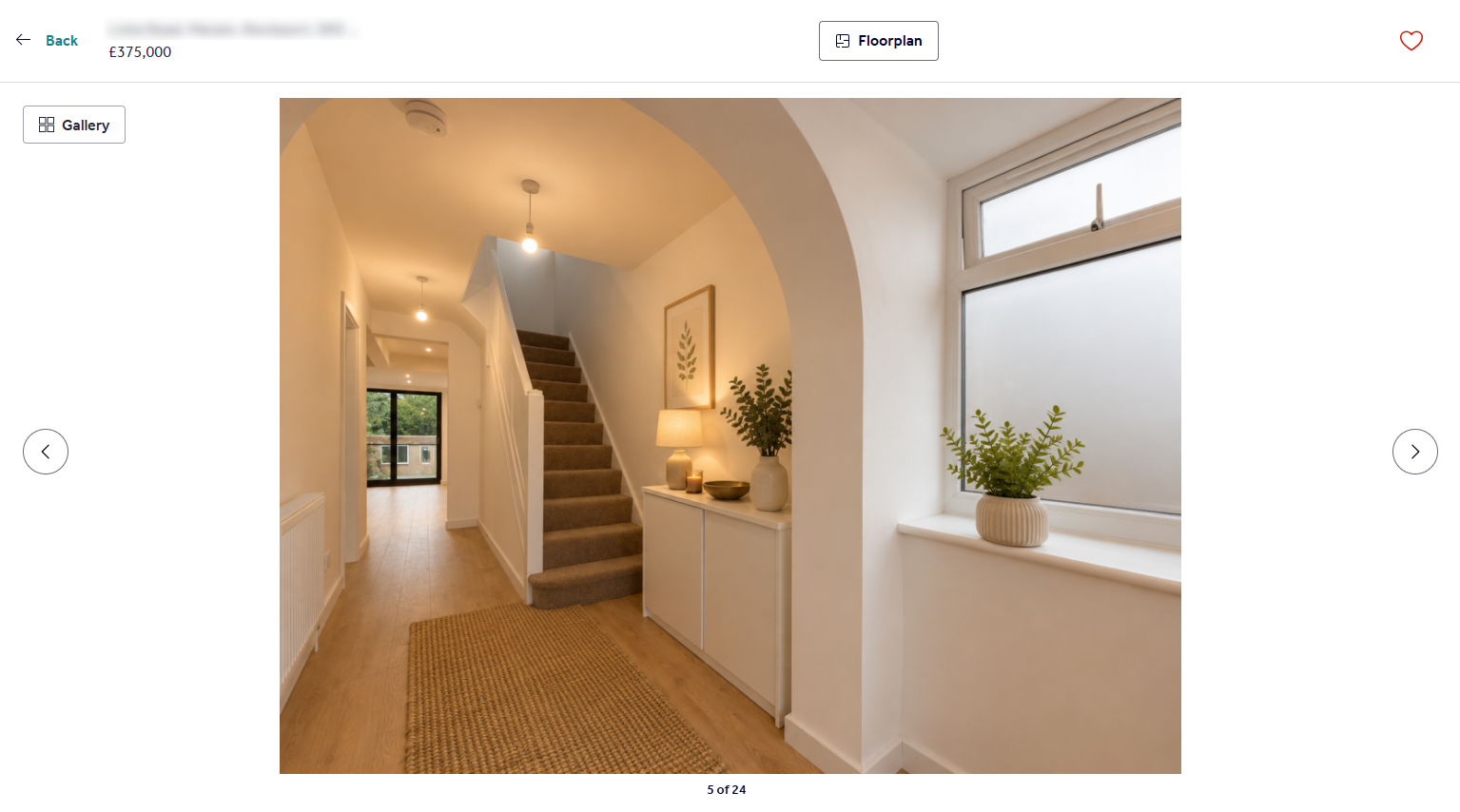
I’ll take you on a tour of some of the most impressive features. Head through the front door and you will be greeted by a picture frame above a side-cabinet that can change paintings depending on where you stand in the hallway.

Screenshots of digitally altered photos from a property listing on RightMove
RightMove
Screenshots of digitally altered photos from a property listing on RightMove
RightMove

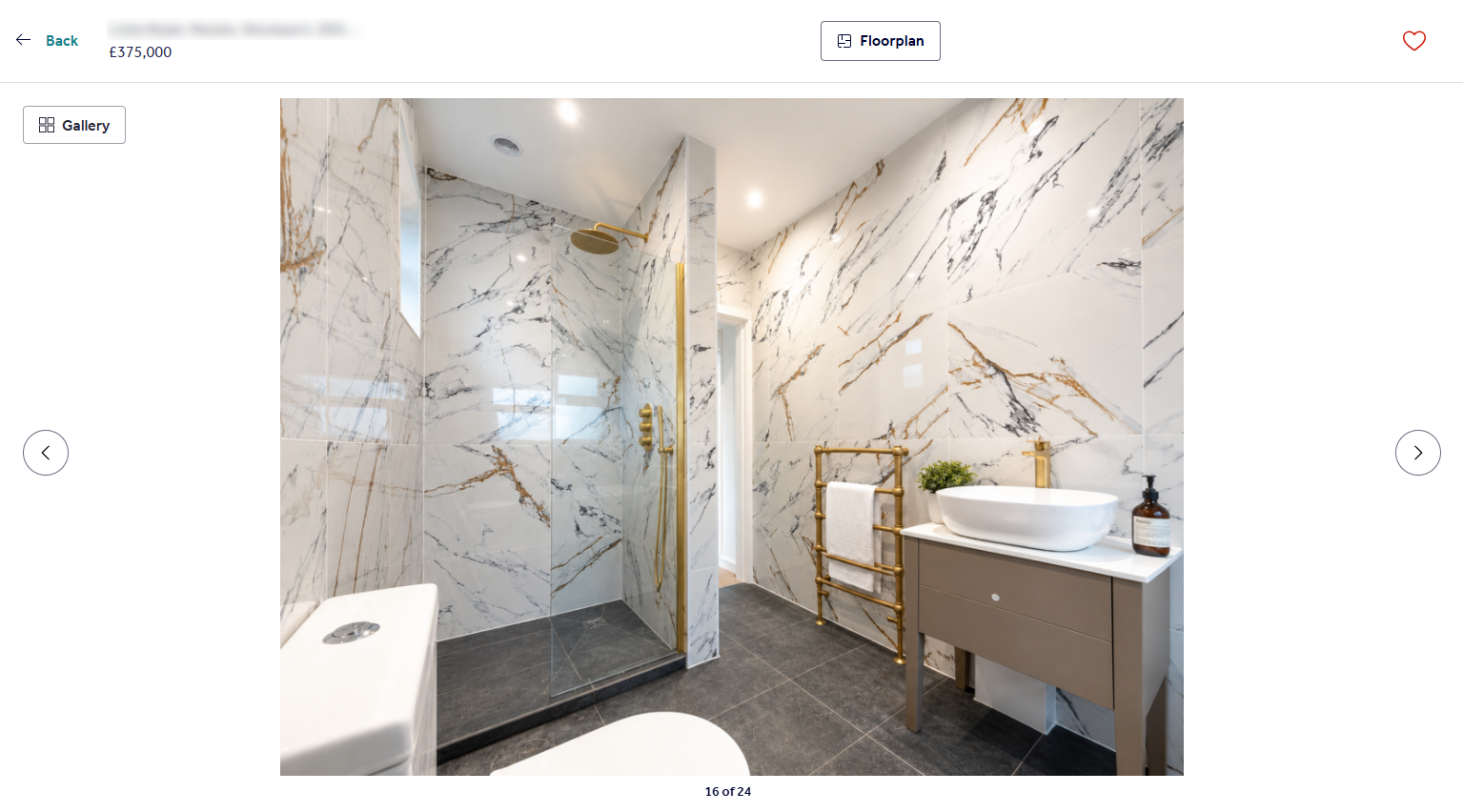
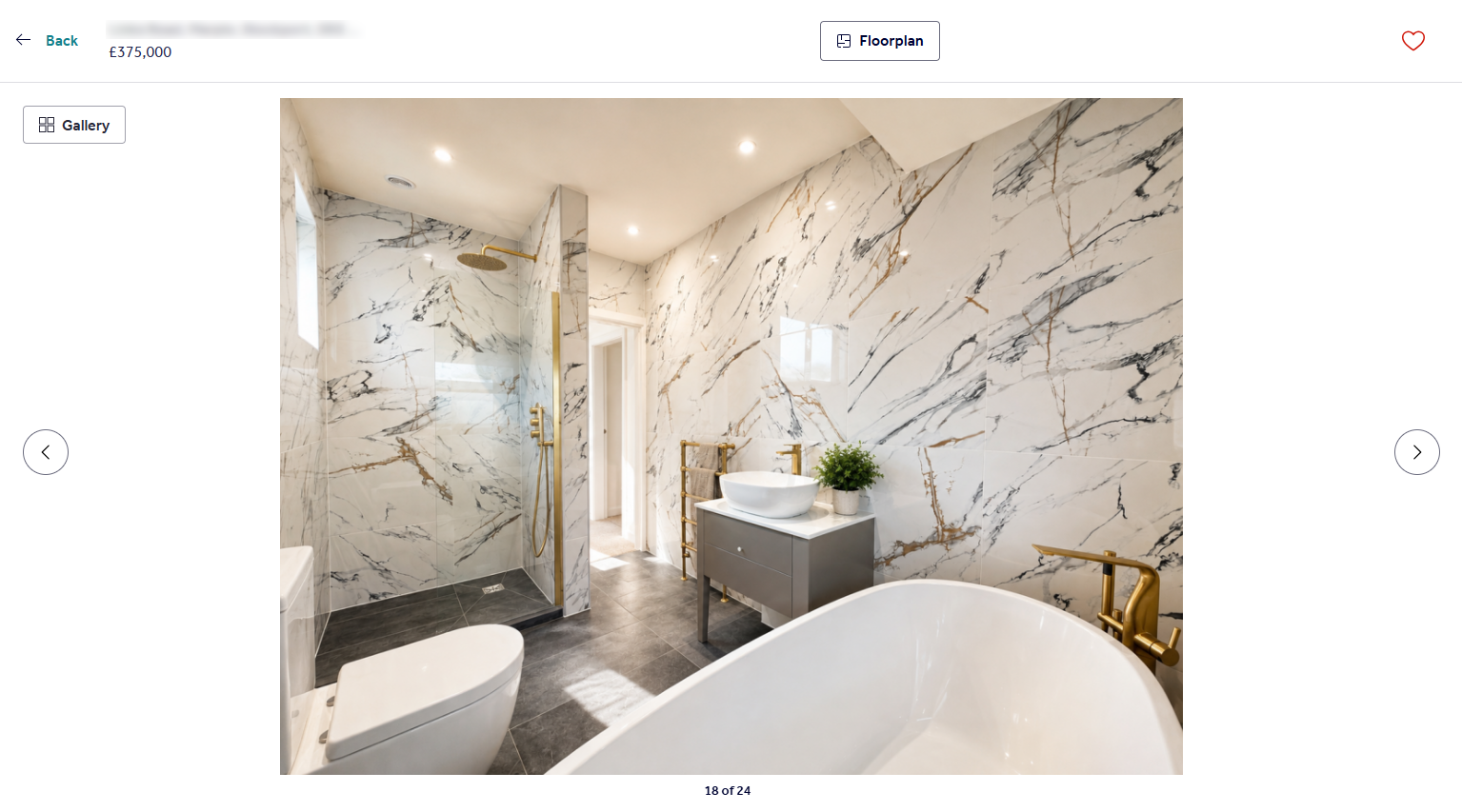
The bathroom features towels that change color depending how you're feeling, and the towel rail cannot decide if it has five rails or six.

Screenshots of digitally altered photos from a property listing on RightMove
RightMove
Screenshots of digitally altered photos from a property listing on RightMove
RightMove

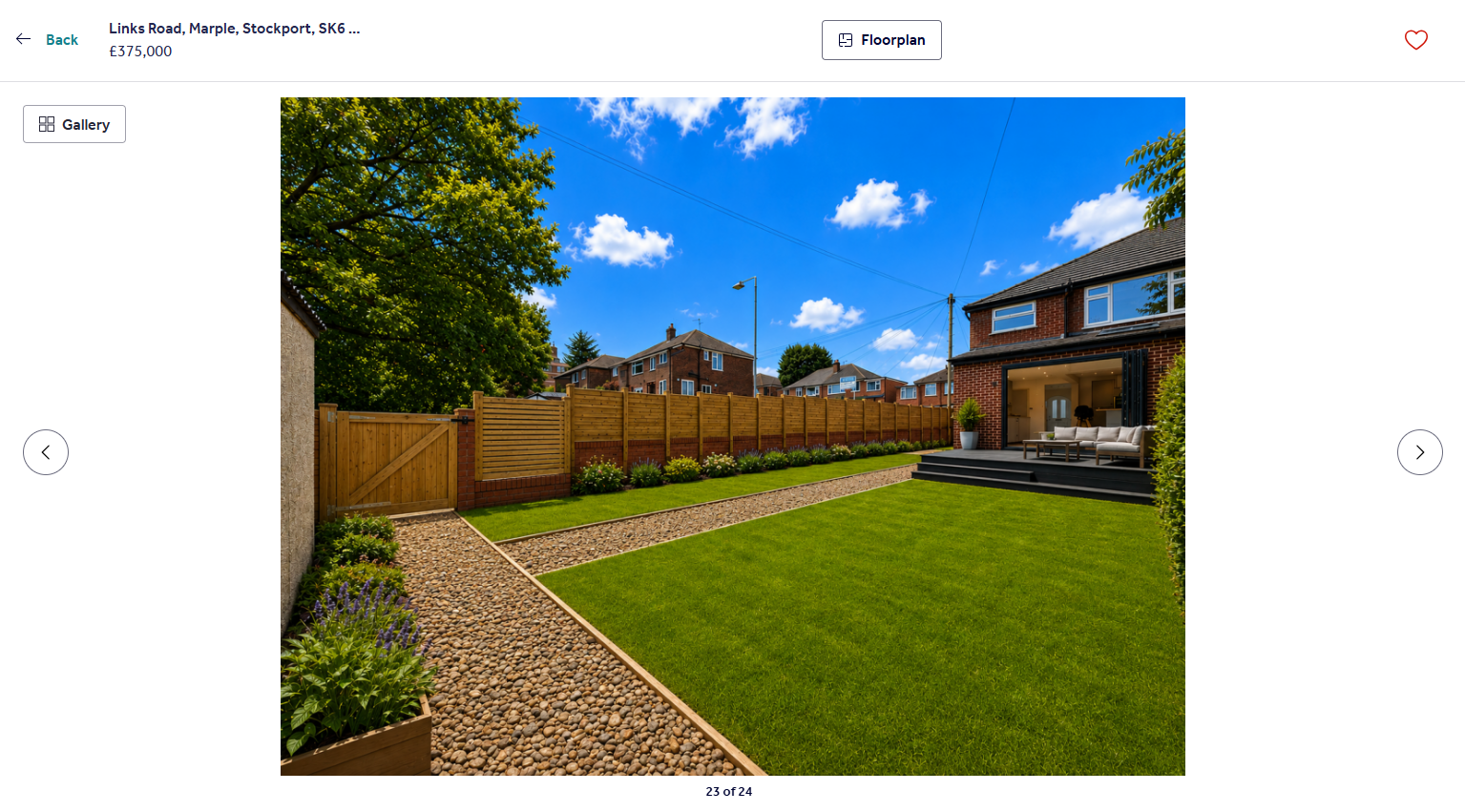
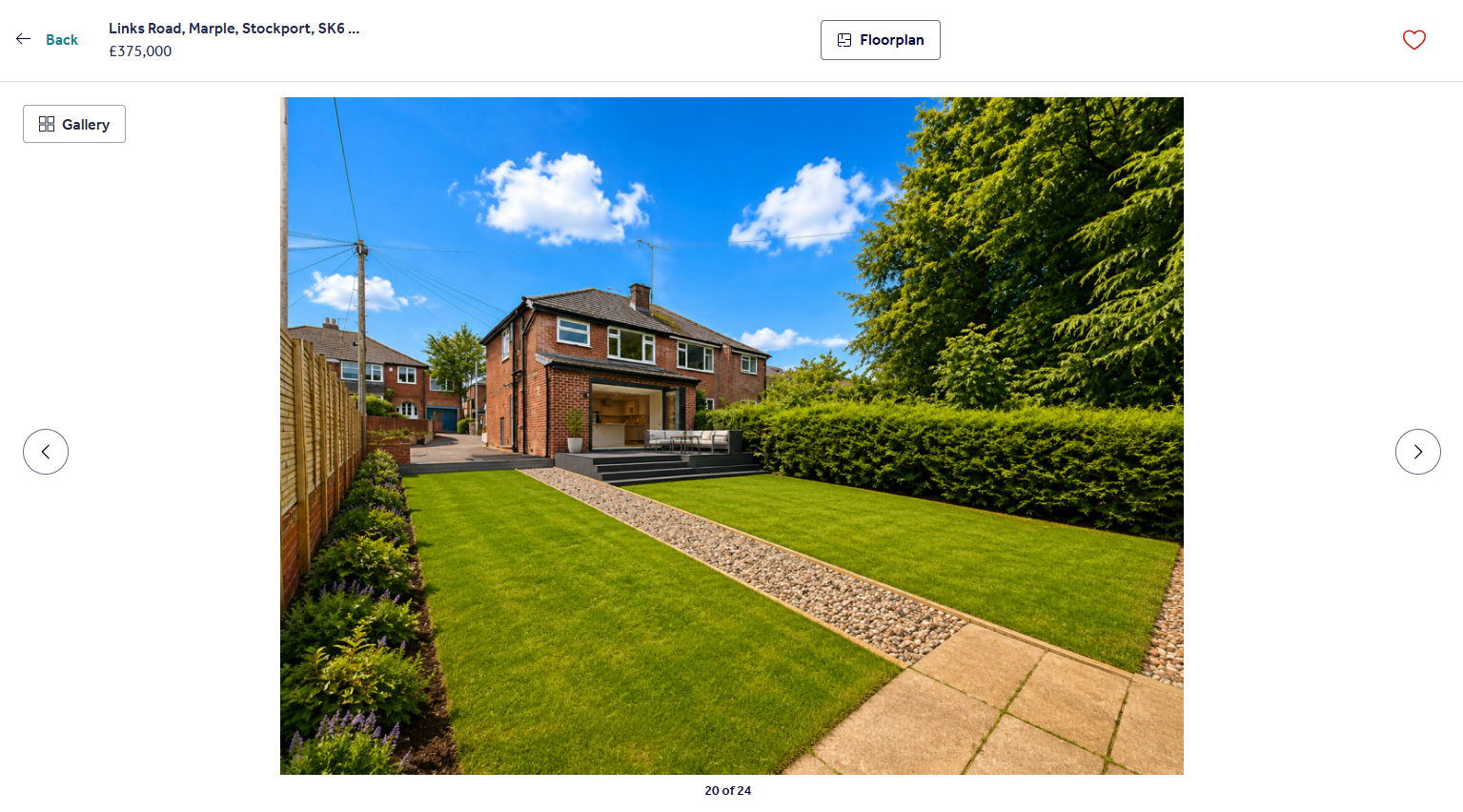
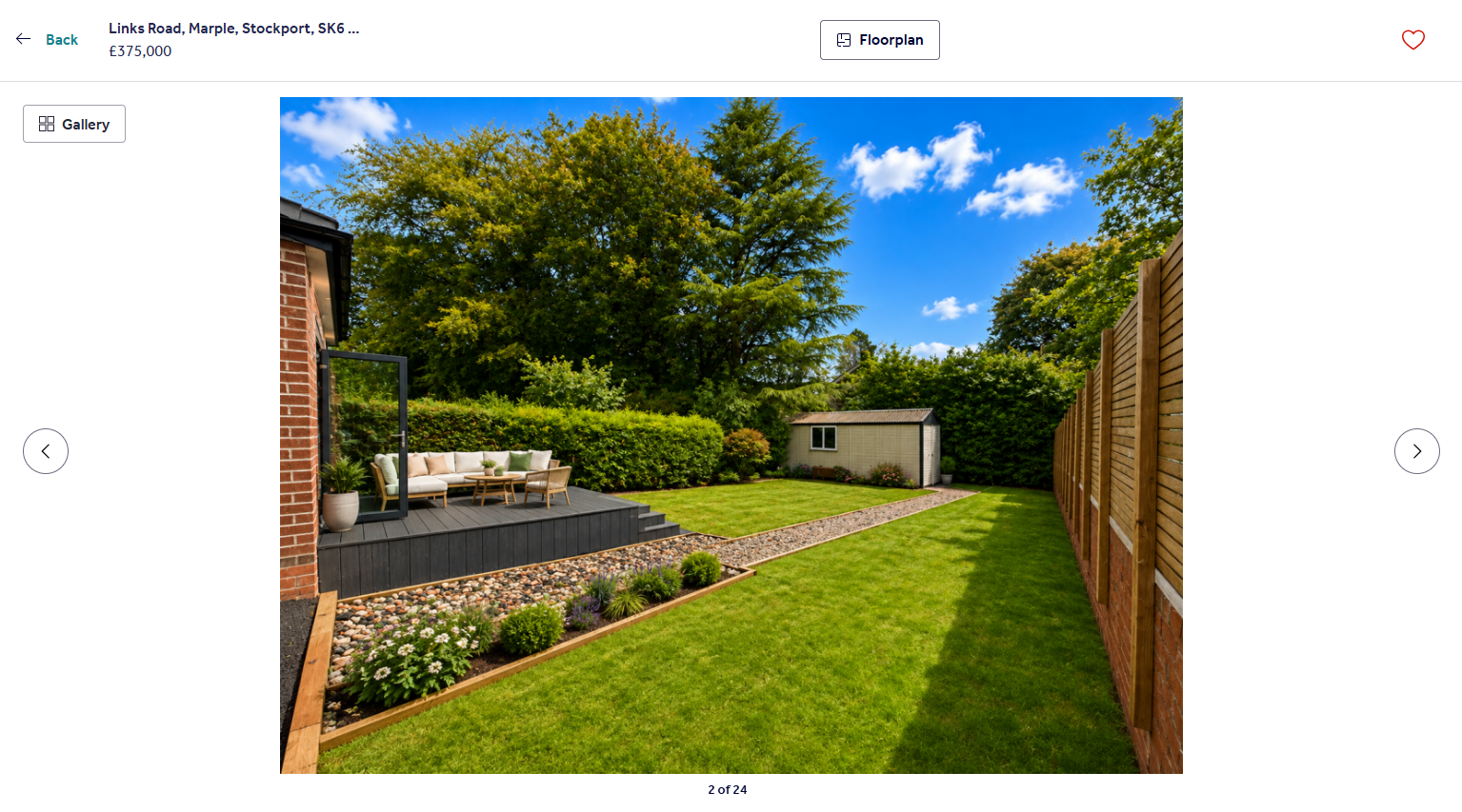
But the pièce de résistance is the garden, where the decking has either three or four steps down to the lawn depending on your budget. You can also opt to have the decking’s corner steps and additional gravel path put back in for a modest sum.

Screenshots of digitally altered images for a property listing of a UK house.
RightMove
Screenshots of digitally altered images for a property listing of a UK house.
RightMove
Screenshots of digitally altered images for a property listing of a UK house.
RightMove

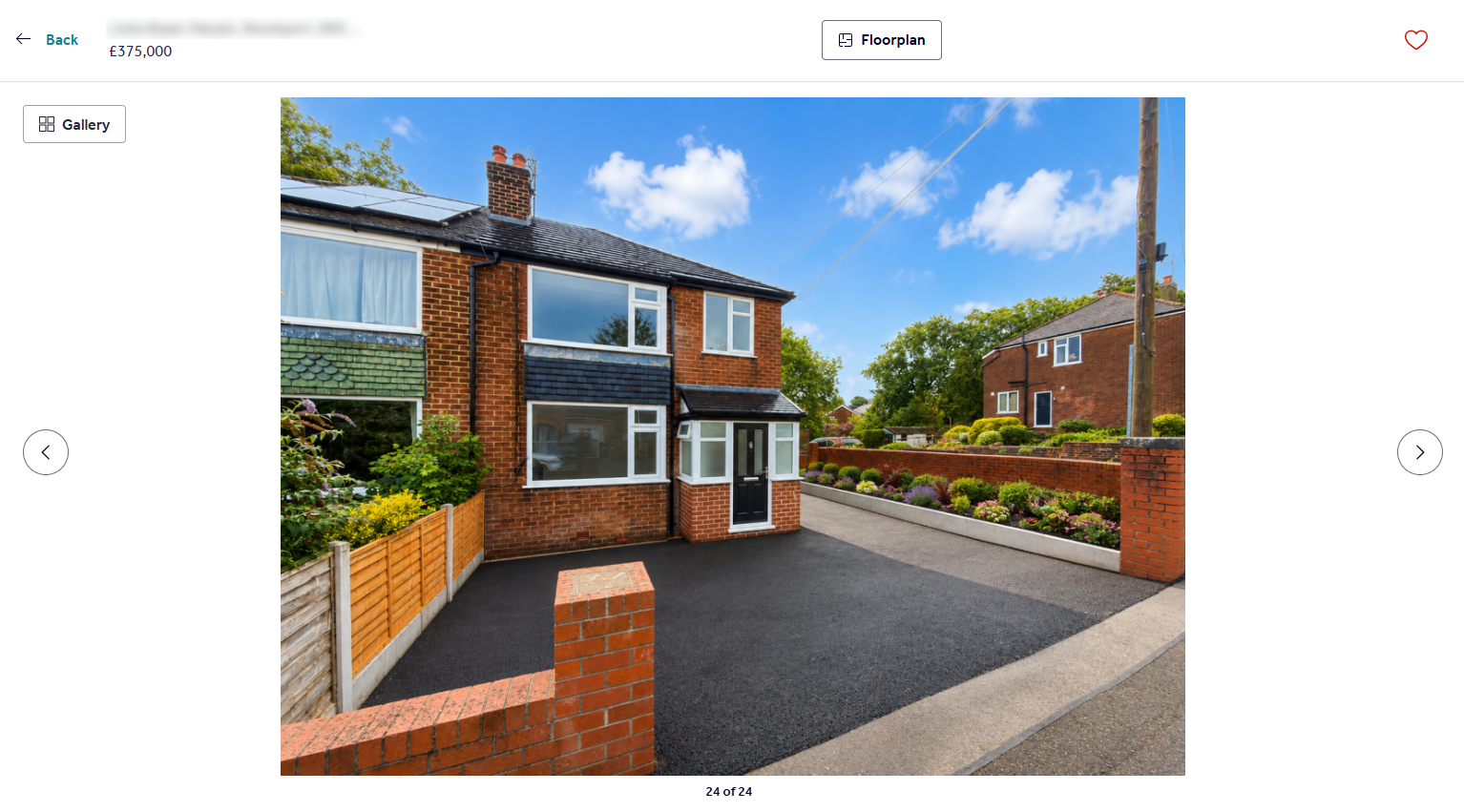
In my search to spot exactly what was AI generated, I also came across an original photo of the house. But while searching for further inconsistencies between this original and the edited photos, I noticed something odd.

Screenshots of digitally altered photos from a property listing on RightMove

(Image credit: RightMove)

In the ‘original’ image, the single road to the right of the house connecting the cul-de-sac to the local town — that has existed since at least 1975 according to ordinance survey maps — has disappeared, and is now a dead end. The ‘For Sale’ sign featured in both images is now written in an incomprehensible language.

So which image is genuine and which is enhanced? It appears that both have been digitally altered and I am starting to go insane.

Should AI photos be used on property listings?

In most cases, estate agents will disclose if the images of a property have been digitally altered or edited in any way. But for this particular case, you have to scroll through a 1,700 word property description that also shows signs of AI involvement before you reach the following text:

“Some photographs used within this property advertisement have been digitally enhanced and/or virtually staged for illustrative purposes. Virtual furnishings, accessories and decorative items may have been added to demonstrate the potential appearance and use of the rooms.”

This disclaimer continues; “No alterations to the physical structure, layout or dimensions of the property are intended to be represented by the digital staging. Prospective purchasers are advised to rely upon their own inspection of the property.”

Obviously this is just one example, but a quick look through Reddit threads such as r/SpottedonRightMove and you will find numerous examples of AI enhanced properties, each more extreme than the last.

Some users argue in favor of allowing estate agents to use AI photos to show the potential of a property, or to provide inspiration on a property that may need some fixing up. Others say that using AI to make a property look better than it actually is borders on false advertisement.

Of course, the property values aren’t decided based on listing photos. As part of the process to buy a house, multiple valuations will often take place to ensure the property is actually worth as much as it is listed for.

But as difficult as the housing market currently is — especially for renters — there is a bit of an ethical issue. People often travel many miles to view potential properties, and to arrive at a property that does not look anything like its listing photo is money and time wasted.

Etsy is finally cracking down on AI in product listings

  • Etsy has updated its Seller Handbook to include new guidance on how AI can be used
  • Products must include at least one unaltered listing image that shows the actual product
  • AI can still be used for some purposes, but misleading images will hopefully start to disappear

In the wake of Just Eat’s AI generated food image fiasco, Etsy has decided to update its policies to prevent AI being used to generate or edit images, create guides, or use bots to generate listings.

The new guidelines, enacted in October, are part of an effort to crack down on images, recipes, and instructions that have been partially or fully AI generated that could mislead customers — and it could help cut down on the torrents of AI slop that have infiltrated the internet.

“You, our seller community, have told us you’re concerned about your work appearing alongside items that use AI in misleading ways, and that it’s becoming harder for buyers to recognize your role in creating your items,” the announcement states. “We're taking an important first step to address these challenges.”

Etsy logo

(Image credit: Etsy)

Etsy changes AI usage rules

The steps Etsy is taking include changes to how products are physically presented in images, how AI can be used to edit images, and how functional guides are written.

For a start, Etsy now requires at least one of the listing images to be a real photo of the actual item being sold with on a real background without any edits or alterations made. But this image doesn’t have to be the first image potential customers will see when viewing your listing.

But if you’re wondering about non-physical purchases — such as artwork printed by a third-party — Etsy will allow unedited mock ups from manufacturers for print-on-demand services to be used as the ‘real’ product photo. As for audio and digital downloads, Etsy says the imagery cannot mislead customers.

Don’t worry, AI editing is still allowed in some circumstances such as to change lighting and exposure or to resize an image. Backgrounds can also be AI generated as long as the actual product isn’t changed in any way, but using AI to alter the actual product by changing colors, condition, or features of an item is now a hard no in Etsy’s books.

Finally, when it comes to other products commonly listed for crafters or cooks, Etsy is changing how they can be written. Written work for instructions, patterns and recipes have to be fully written by the seller with an image representing the real results. So for a knitting pattern or bread recipe, the image must show the finished product.

To enforce better detection of AI generated or misleading content, Etsy says it is “investing in tools to better identify authentic versus misleading images and detect and remove listings that use AI to create fraudulent inventory.”

The platform is also expanding categories to include misleading AI imagery when reporting listings, which will be used to “help us better understand how members perceive potential AI misuse.”

If you are currently using AI generated images for products on Etsy, you still have some time to update listings and won’t face immediate enforcement. The company says it will “provide tips to help you accurately represent your items and meet our photo expectations,” with guidance also provided to sellers with existing AI edited listings.

The UK wants to combine AI with satellites and military aircraft

  • The UK government is planning to set up a new arm of it's emergency response committee to help fight wildfires
  • After the UK's hottest summer on record, firefighting crews were left under equipped to fight wildfires covering thousands of acres
  • Satellite imagery, AI, and military aircraft armed with firefighting equipment are expected to be part of the new wildfire response

Following plans to build a £100 million AI Biosecurity Lab and plans to turn the UK into a global AI powerhouse, the UK is now looking at how AI can help detect and fight wildfires after a summer of extreme heat.

UK Prime Minister Andy Burnham is expected to reveal plans for a new AI arm of the cabinet’s crisis-management committee, COBRA, at a resilience summit hosted at the National Situation Centre on Friday.

The new wildfire AI unit will combine satellite imagery with early detection systems offering firefighters faster response times, with military planes and helicopters to be made available to help tackle blazes in hard to reach areas.

The crew boards the Royal Air Force military turboprop aircraft Airbus C.1 A400M Atlas

(Image credit: Shutterstock)

AI satellites to spot wildfires

Several tech and aerospace companies are expected to be in attendance at the announcement of the plans - including Google, Airbus and VodafoneThree - with the government saying the AI unit will help “spot and fight fires faster.”

Top universities and tech firms are expected to help the AI unit develop new tools to be used to detect potential wildfires across the country, while Royal Air Force aircraft will have firefighting equipment sourced to help respond to wildfire outbreaks in remote or hard to reach areas.

“As the threat of wildfires in the UK grows, defense will step up to provide greater support to our emergency services and protect military training areas across the country,” Defence Secretary Wes Streeting said. “This will see the RAF’s Chinook helicopters and A400M aircraft equipped with new specialist firefighting equipment to enable them to tackle wildfires from the skies for the first time”

The UK faced an unprecedented number of wildfires during its hottest summer on record, with thousands of acres of wildlands destroyed, a nationwide emergency alert broadcast, and a wildfire that burned kilometers away from the Sizewell B nuclear power station.

How can AI detect wildfires?

Airbus already operates a fleet of early-detection satellites that are capable of measuring the dryness of forests and detect tiny heat signatures from space in near-real time.

Earlier this year, NASA launched the first satellite with an AI geospatial foundation model on board into space.

The open-source Prithvi model - developed in collaboration with IBM - can detect flooding, wildfires, and landslides, alongside quantifying biomass, classifying specific crops, and measuring canopy heights to help with predicting how wildfires develop and spread.

There is the obvious contradiction here that AI is being used to solve problems that AI is contributing towards. Many AI firms are turning to fossil fuels for energy as supply lags behind the demand of the AI boom, but a recent report has found that 80% of AI data centers are constructed in natural disaster zones - so are AI firms helping to protect the world, or just their assets?

❌