❌

Reading view

There are new articles available, click to refresh the page.

A EV truck with a TV built into a front trunk for tailgating? Ford wants to patent the idea

  • A Ford patent shows multi-use front trunk including a TV-housing option
  • Images look very like the Ford Fathom, which is coming in 2027
  • Ford's EV pickup will start at $28,350 (around Β£20,970 / AU$39,540)

Ford's upcoming Fathom electric truck could have a very unusual addition: a small front trunk that could house a TV, for the ultimate tailgating upgrade.

As Electrek reports, Ford has filed a patent with several diagrams showing a fold-out, tailgate-style area in the front of an unnamed vehicle that's believed to be the Fathom.

The design takes advantage of EVs' lack of a traditional engine compartment, which means you can have storage space at the front of the car or truck. It appears to offer a large, flat space like you'd find in a pickup such as Ford F-150 Lightning, plus a fold-out tailgate that can be used for multiple purposes, including holding a TV, presumably to be powered by the battery while you sit in camp chairs with a six-pack.

Patent images from Ford showing a multi-use front trunk, or frunk, in what's believed to be the 2027 Ford Fathom

(Image credit: Ford / USPTO)

What the patents say about Ford's Fathom's frunk

The design looks well-suited to tailgate parties, and for camping trips and anywhere else a TV might be watched β€” so for example if you were selling products at a market you could use the back of the Fathom to carry your goods and your stall and your tailgate TV to show the promo video.

And you shouldn't need to worry about the TV draining your battery: the Fathom is expected to have a large battery for over 300 miles of range, so a TV isn't going to make a big dent in that capacity.

The TV isn't the only interesting idea here. The patent suggests that the top of the hood could be swappable, enabling you to replace it so you can put things on it β€” such as food or tools β€” without spoiling your vehicle's finish. Presumably the design would also include a storage space for those swappable bits rather having you leave them lying loose around on the frunk's floor.

As for the rest of the upcoming EV, Ford has been drip-feeding details for months now: it's a midsize pickup with more passenger room than a Toyota RAV4, it's launching in early 2027 and it'll have a surprisingly low starting price of $28,350. It comes with Apple Maps integration, CarPlay and Android Auto.

What we don't know yet is what it really looks like: as you can see from the image at the top of the article, the images Ford have released so far are camouflaged. But from what we've seen of the shape it looks suitably tough, and it's priced very aggressively. Ford promises that the camo will come off in 2027.

Meta Glasses' light to indicate recording is 'not easily visible' says German government report

  • Meta's glasses can no longer record if the capture LED is covered at any time, says independent test
  • But the light is too hard to see if you're not very close, says German data protection agency
  • EU bodies recommend actively getting full consent from anyone recorded, not assuming it

Detailed testing confirms that the Meta Glasses firmware update, designed to stop a potential privacy problem with surreptitious recording, does what it's supposed to do β€” but Germany's privacy enforcement agent says it's not enough, because the light itself is insufficiently visible.

The update was designed to address a simple exploit that bypassed the "no recording when the recording light is covered" feature.

In theory, that feature meant that it was impossible to secretly record someone or something by hiding the camera capture LED. The glasses could detect if the light is covered, and wouldn't record if that was the case.

In reality, it was immediately defeated by the kind of people who've helped earn the 'pervert glasses' label for the smart glasses: they discovered that the glasses only checked the light at the very beginning of recording, so you could simply start capturing, cover up the light and keep recording with the light now hidden.

The new update prevents them from doing that by re-checking the light every few seconds β€” but privacy watchdogs say it doesn't make much difference: even uncovered, the capture light on current models isn't good enough when it comes to privacy, consent or potential illegality.

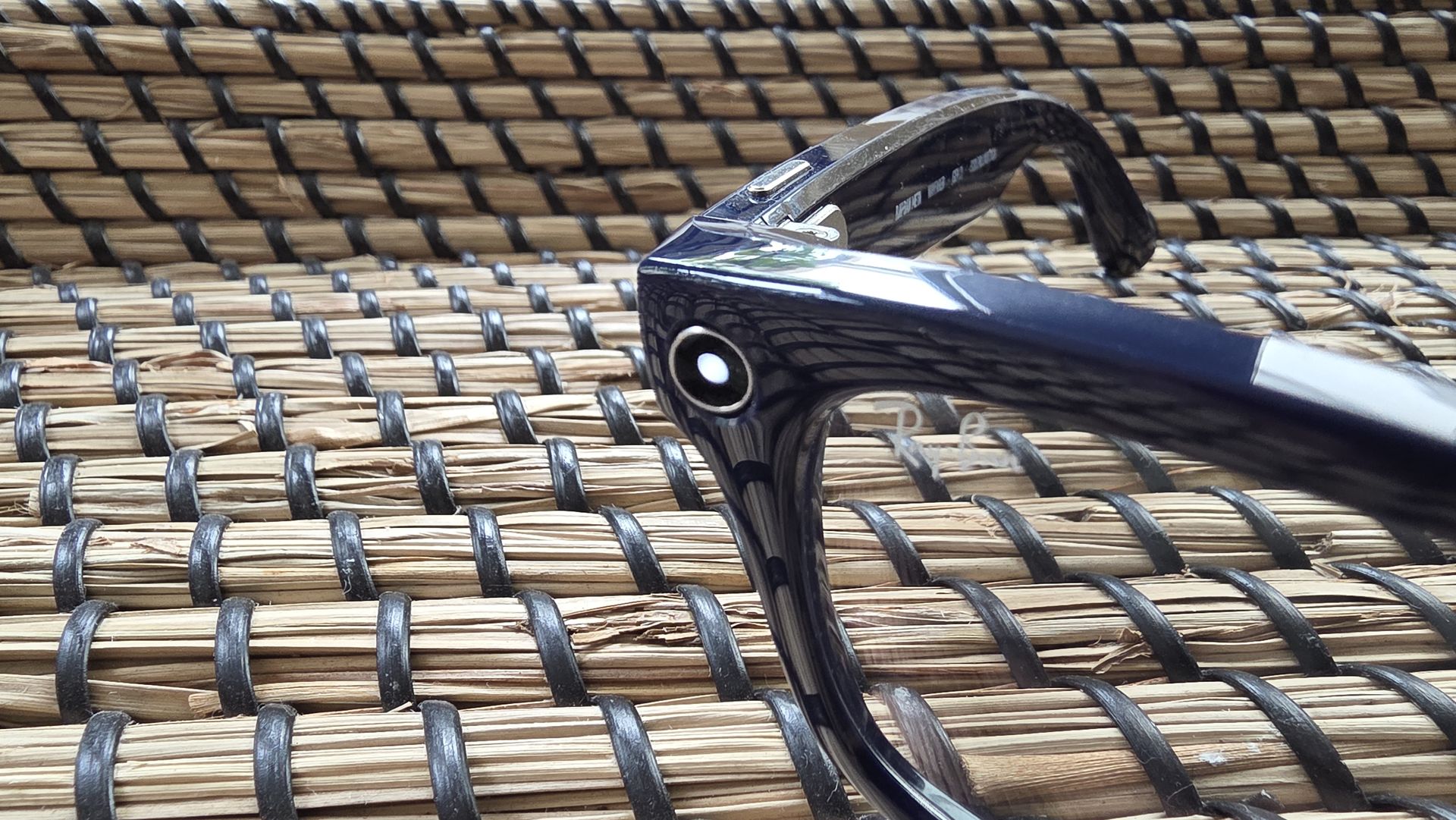
Ray-Ban Meta Wayfarer Gen 2

(Image credit: Future / Cas Kulk)

Why a little LED isn't enough to protect other people's privacy

In a detailed report by the Hamburg Commissioner for Data Protection and Freedom of Information, which involved a tear-down of the Ray-Ban Meta glasses and a detailed privacy analysis (via Notebookcheck.net), the Commissioner found that the LED light "is not easily visible in many environments, particularly outdoors and in direct sunlight". Meaning that even if you're using them as intended, that doesn't mean people can necessarily see (or recognize) the recording light

It's not just the lack of brightness. The beam angle is very narrow too, the report says, and that means you need to be pretty close and looking almost directly at the wearer to be able to see if the light is on.

The report also notes that the second-gen glasses behave differently to the first generation when the wearer asks about something or someone nearby. With the first generation, the LED "glows, very dimly". But in the second generation it doesn't glow at all.

The report argues that in most cases, if you're not recording friends or family only, then you can't assume informed consent. It recommends additional steps such as text notifications or signage, or actively speaking to the people you intend to film.

That ties in with a recent report by the French e-Enfance association, which reported this month that simply assuming someone saw the capture light does not necessarily mean they've consented to the storage, processing and distribution of their image.

A person needs to not only to have seen the light, but they must also understand what it indicates and be able to withhold their consent. And if minors are being filmed, e-Enfance says parents must provide permission.

It's wise to pay attention if you'll be filming in the country: French privacy laws are notably strict, with prison sentences and five-figure fines for deliberately invading someone's private life.

It's worth noting that these reports are based on European law, whereas US law is much more lenient: the US doesn't have the data protection and privacy protections members (and former members, such as the UK) of the European Union have, and its lawmakers are much more tech-friendly.

But no matter where you live, if you're a smart glasses wearer and could be recording others who aren't part of your close circle, it may be wise to ensure you can demonstrate that the people you're filming knew you were doing it, were able to opt out, and provided their consent.

There's a growing backlash against the use of smart glasses by various bad actors, and simply assuming consent, or even assuming that people are aware of what your glasses are doing just because they have a light, may not be enough to protect wearers from future legal consequences.

Thinking of buying a new TV?

Try our TV size and model finder! You tell it how far you sit from your TV, we'll tell you what size to buy based on viewing angle advice from image quality experts, and we'll recommend our three top TVs at that size for different prices.

Cheap big-screen LCD TVs could be in trouble for Black Friday β€” panel prices are going up

  • Key LCD panel makers are upping prices this month, which is a crunch manufacturing period ahead of Black Friday and end-of-year sales
  • There are only three TV LCD panel manufacturers, and all have decided to protect profits with price rises, reportedly
  • Samsung's is also said to be cutting QLED TV production by up to 80%

If you're planning to pick up a super-cheap big-screen LCD TV for Black Friday this year, you may need to temper your expectations.

Key LCD panel makers have reportedly told manufacturers including Samsung, Sony and LG that they're putting their panel prices up just in time for production ready for the busiest sales period of the year.

Samsung Display doesn't make LCD panels any more, and LG Display has also stopped making them. That means the big TV brands are reliant on a handful of Chinese panel producers who now dominate the market: BOE, TCL CSOT, and HKC.

Those producers aren't running at full capacity, but rather than increase supply and potentially lower prices, they're restricting production to "contain oversupply and defend prices", according to The Elec.

TCL CSO and HKC will raise the price of some products this month, September 2026, with BOE upping prices in the fourth financial quarter. As The Elec notes, "concerns that China’s dominance of the LCD supply chain would translate into greater control over panel prices are becoming a reality."

The price hikes leave the big-name TV manufacturers in a bad place, because they will have locked in their LCD panel orders for Black Friday and the holidays already, and it'll be difficult for them to change their production plans.

That means price hikes on the panels used in affordable sets, which already have razor-thin profit margins, could have an effect on how exciting the TV deals on LCD models this year β€” and with giant-screen LCD TVs being the super-popular pick right now, it could make a real difference.

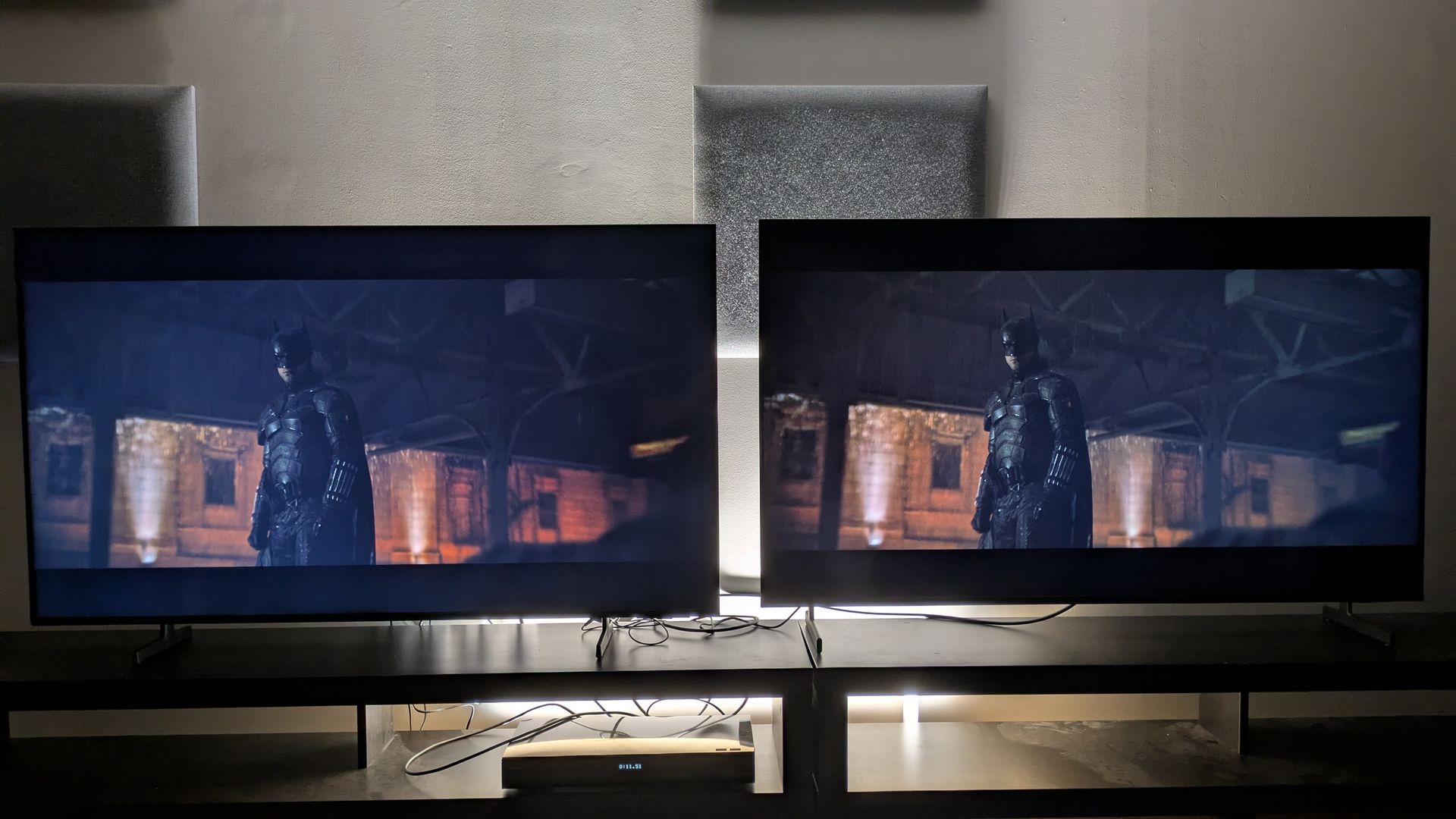
Samsung M80H (left) vs Samsung QN80H (right) showing Batman from The Batman on screen. The QN80H has stronger contrast, but both TVs show screen uniformity issues

Samsung has dropped QLED from its new 2026 mini-LED line-up β€” this image compares the QLED-less budget M80H on the left with the Neo QLED QN80H on the right. The Batman provides a great test for how they handle contrast. (Image credit: Warner Bros / Future )

Does the Q in Samsung QLED stand for "quitting"?

In another blow for price-conscious LCD buyers, Samsung is reportedly scaling down production of its QLED TVs dramatically, by up to 80% this year, while considering dropping QLED altogether by 2028.

QLED takes LCD panels and applies a layer of quantum dots to deliver better colors, and launched as a more affordable and very bright rival to OLED. However, as the best OLED TVs continue to get better and have a big grip on the premium end of the market, QLED has become a tech you see a lot on budget models.

According to ETNews (via FlatpanelsHD), Samsung is slashing QLED production from 10 million units to 2-3 million units this year and shifting its focus to mini-LED-branded and Micro RGB LED TVs.

The high-end Neo QLED lineup is being slashed too: "Samsung Electronics' QD TV shipment plan this year has been significantly reduced to less than 30%. Neo QLED will also produce only half of this year next year and gradually stop manufacturing."

In 2026, Samsung launched a new line of budget "Mini-LED" TVs that don't include QLED tech, including the Samsung M80H, which we tested alongside one of Samsung Neo QLED QN80H, and found to be a clear step down in image quality.

At the other end of the scale, we reviewed the flagship Samsung R95H Micro RGB TV, which also doesn't use QLED tech, and found it to be "a brilliant evolution" of LCD technology.

Quantum dots aren't dead, though: according to FlatpanelsHD, Samsung is continuing to invest in QD-OLED and in future technologies such as QD-EL, aka NanoLED, which is basically the quantum dot equivalent of OLED.

But we have to assume that if Samsung is already wavering over the viability of its QLED screens, a price rise in the panels it buys will probably just be another nail in the coffin.

Thinking of buying a new TV?

Try our TV size and model finder! You tell it how far you sit from your TV, we'll tell you what size to buy based on viewing angle advice from image quality experts, and we'll recommend our three top TVs at that size for different prices.

Samsung and LG vow to remove 'botnet' apps from their smart TV app stores that turned sets into an AI scraping machines β€” but the shocking claim that over 40% of webOS apps had 'residential proxy' code raises the question of how things got this bad

  • Malware botnets route traffic through the internet connection on many smart TVs
  • Roku, Fire TV, Tizen and webOS all affected
  • Some manufacturers are removing affected apps

LG, Samsung, Roku and Fire TV televisions and devices may have apps downloaded to them that mean they can be used as part of a malicious "botnet" β€” and millions of TVs could be affected, though LG and Samsung have committed to removing the relevant apps,

FlatpanelsHD rounded up pieces of this puzzle, stretching back several months. Back in April, it emerged that many apps and games included a feature called "residential proxy" that could be abused by bad actors.

The tech means the TVs were being used to bypass IP range blocks that affected AI data centers: because each individual TV has its own unique address, such blocks could easily be evaded by seeming to be 'real' traffic. And because the proxy feature doesn't require the app to be open, TV owners would be none the wiser that their device is being used this way β€” and that's partly because in many cases, you wouldn't assume that was the real purpose of the app.

One example of a residential proxy system, IPIDEA, had enlisted millions of smart TVs in a network that could crawl the web for AI training or even carry out coordinated attacks by groups in China, North Korea, Iran and Russia.

According to security researcher Harrison Sand at Mnemonic, one of the apps in question was a Pac-Man game, likely to be downloaded by kids, that Samsung featured as an Editor's Choice.

And according to security firm Spur, 26.5% of apps for Samsung Tizen smart TVs and over 42.5% of LG webOS apps could be used in this kind of way. That's a truly shocking statistic.

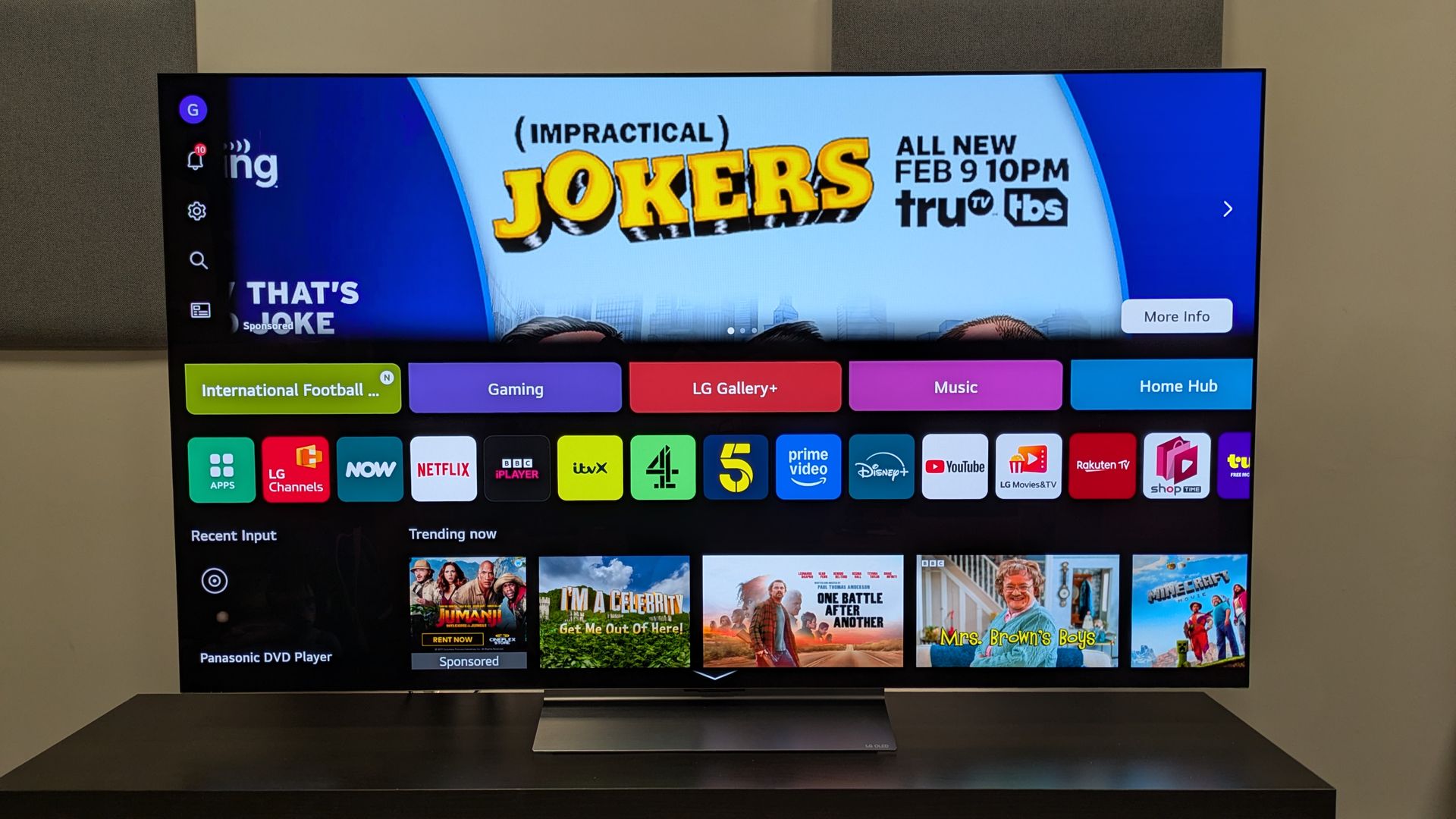
The LG C6 OLED TV with the webOS 26 home page on screen. Apps are well laid out but there is a large banner ad at the top of the screen

LG's webOS appears to be the most affected, with researchers claiming that over 42.5% of webOS apps contained reproxies (Image credit: Future)

What is a residential proxy, and how can it be used maliciously?

A residential proxy or "reproxy" transmits data through your device, in this case your TV, to make it look as if your TV is the sender of that data.

The feature isn't necessarily malicious β€” it can be used for testing and advertising purposes β€” but as security expert Spur explains, it also "provides attackers with a scalable way to hide automation, bypass geo-controls, and evade reputation-based defenses."

Spur's website goes into more detail of how they operate and how they differ from services such as the best VPNs.

It seems likely that at least some of the potentially dodgy apps weren't made maliciously; developers who use certain software development kits that have residential proxy features may not know those features are there.

LG and Samsung have now vowed to ban any smart TV apps that contain residential proxies. IPIDEA is already banned by Amazon, Roku and Google TV, and they have also restricted the new Bright Data network.

LG says that it working with developers to remove the functionality from their apps, and that it will suspend any apps that don't remove it. Samsung has restricted new app registrations for apps, and is "working to identify and remove all apps… that contain these components."

What worries me isn't so much that the malware exists β€” the more our TVs become like PCs, the more PC-like attacks will target them β€” but that it's made its way into so many TVs and is presumably still there on many of them, despite being publicized back in April.

It just adds to my distrust of smart TVs more widely: with features such as Automatic Content Recognition and ad injection (and here in the UK, prominent placing of TV channels I don't want anywhere near my TV on the home screen), plus too-frequent updates to terms and conditions that I just know mean more tracking, it seems to me that smart TVs are becoming both privacy and security risks.

Which is why I treat my smart TV like it isn't smart at all: it's merely a monitor for my Apple TV 4K.

Hi-fi and home theater legend Wharfedale announces four(!) new subwoofers, and if that seems like overkill, wait until you see how big the largest one is

  • Wharfedale launches four new subwoofers: 8, 10, 12 and 15 inches
  • New long-throw drivers and up to 360W output
  • From Β£799 (about $1,068 / AU$1,499)

Legendary speaker maker Wharfedale has created four new boom boxes in the form of the new Nova subwoofers. Ranging in size from an apartment-friendly 8-inches to an enormous 15 inches, all four models feature newly developed drivers, passive radiators and refined cabinet architecture.

These aren't thuggish bass monsters; they're designed for the more discerning listener who wants to hear as well as feel the low end. Wharfedale says that "rather than chasing chest-thumping, window-rattling exaggeration, the Nova Series is built around balance, texture and precision."

There are four subwoofers in the range: the Nova 8, the Nova 10, the Nova 12 and the Nova 15. The Nova 8 is designed for smaller setups and stereo installations, with the Nova 10 upping the power for medium-sized rooms. The Nova 12 is for more immersive home theater setups, and the flagship Nova 15 is made for larger spaces and the most demanding setups.

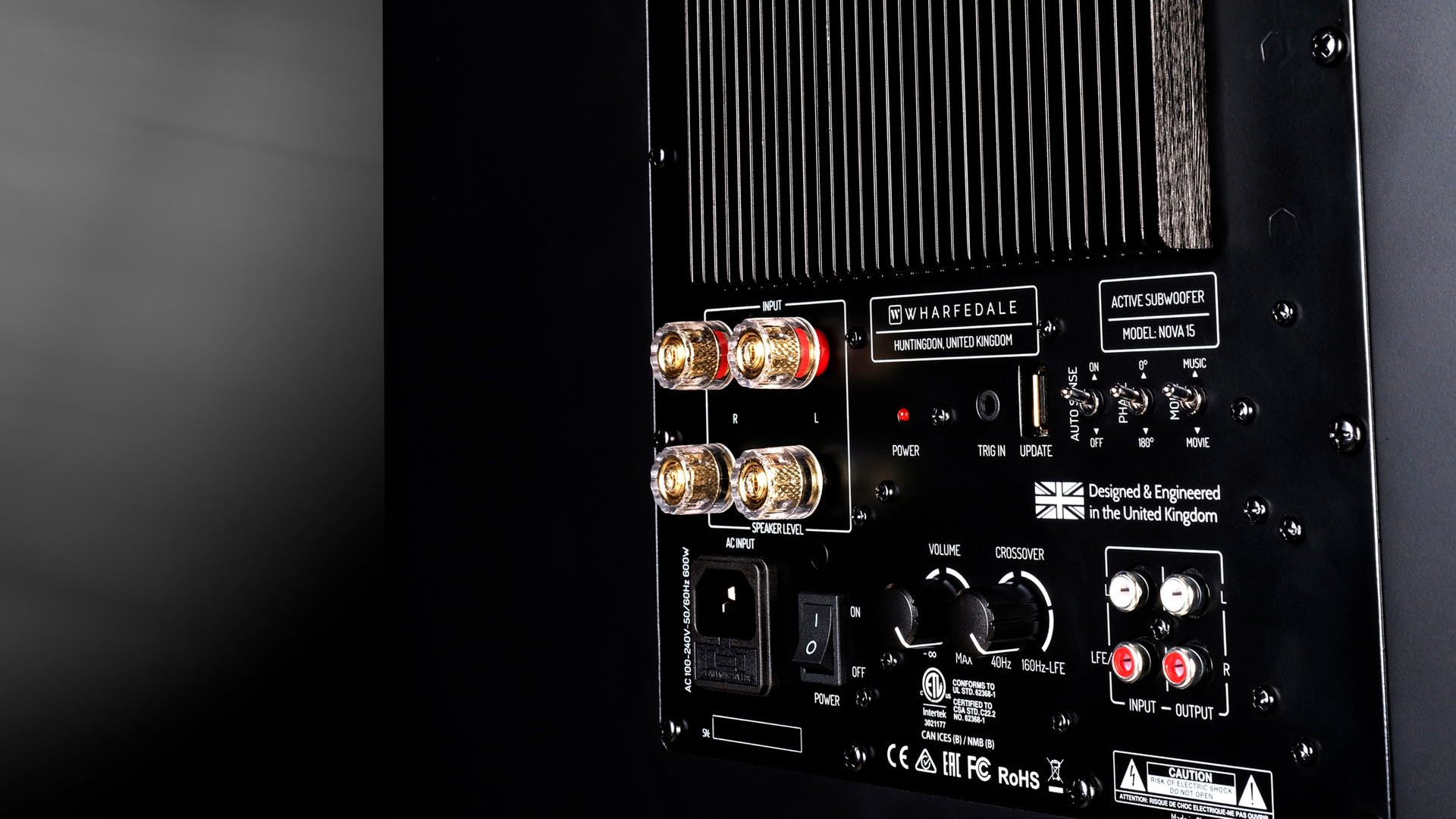
Rear view of the Wharfedale Nova 15 showing its connections and controls on a dark gradient background

Rear view of the Nova 15 subwoofer showing its connections and controls (Image credit: Wharfedale)

Wharfedale Nova 8, 10, 12 and 15: key features and pricing

All four models feature Wharfedale's newly engineered long-throw driver, which is made from rigid but lightweight speaker cones that have been treated with a proprietary coating to make them stiffer and better at self-damping without also increasing their mass.

Those cones are teamed with a heavy duty die-cast chassis, an oversized high-roll surround, and a high-excursion motor system to deliver high output while maintaining stability. A large diameter voice coil and aluminum shorting ring minimize distortion and improve transient response, according to Wharfedale.

The second key feature here is the Auxiliary Bass Radiator, which is downward firing with a dual suspension design. It's made to work alongside the new driver by extending low-frequency output without the need for a conventional reflex port.

Wharfedale says that enables it to avoid issues such as unwanted resonance, turbulence, chuffing and compression, and each Nova is optimized according to its cabinet volume, driver size, amplifier configuration and intended operating range. The goal, Wharfedale says, is the speed of a sealed enclosure with the scale of a larger reflex design.

Depending on which model you choose, you get between 200W and 360W of built-in Class D amplification with up to 80V peak output and "substantial" dynamic headroom.

The amplifier, driver, cabinet loading and DSP have been designed as an integrated system rather than separately in order to maximize power and precision. And there is an adjustable crossover, phase alignment and level calibration to fine-tune the sound to suit your space.

One of the interesting features here is the way the DSP adjusts the dynamic EQ. When you're listening at lower volumes it focuses on perceived weight and range, but at higher levels it manages the driver's excursion to keep the audio clean without overdriving, enabling the Nova to punch above its size.

All four models will be available in late September 2026 and the prices are:

  • Nova 8: Β£799 (about $1,068 / AU$1,499)
  • Nova 10: Β£899 (about $1,202 / AU$1,686)
  • Nova 12: Β£1,099 (about $1,469 / AU$2,061)
  • Nova 15: Β£1,299 (about $1,737 / AU$2,437)

Samsung unveils next-gen OLED tech that hits 10,000 nits of brightness β€” but the bit you should be excited about is the 30% efficiency improvement

  • Samsung Display unveils new 'M16' OLED phone screen tech that can hit 10,000 nits of brightness in small areas
  • The more useful news is that it can be 30% more efficient than its previous-gen M14 OLED tech
  • It's appearing first in the Vivo iQOO 16 phone, in China

Samsung Display has unveiled the first OLED panel to deliver 10,000 nits of peak brightness, and it's already coming in a phone.

The new 'M16' OLED display is capable of 10,000 nits in 1% of the window, although in full screen it puts out a less searingly bright (but massively impressive) 2,800 nits. These numbers put it in the region of micro-LED tech, and way beyond anything we've seen for OLED so far.

Of course, brightness is all well and good, though few people are probably begging for their phone to be as bright as a full sunny day. What's arguably more exciting is that the panel is Samsung's second-generation polarizer-free OLED, which enables it to deliver significantly improved energy efficiency and brightness β€” the claim is a 30% improvement in efficiency.

This means that even if you view it more like the 1,000 nits of most elite phones, you're saving way more battery β€” and since the display is one of the biggest battery hogs in phones (or the best smartwatches, where the tech would also be really useful), that could make a real difference to phone longevity.

The M-series panels are made for smartphones and other mobile devices, but the advances in OLED material here may make their way into the best OLED TVs too, at least partly.

BREAKING! Samsung Display Γ— iQOO are holding a joint launch event, and the M16 OLED display has reached an incredible peak brightness of 10,000 nits! https://t.co/ihjmlknl2XSeptember 14, 2026

Where to see Samsung Display's new ultra-bright OLED

According to industry site FlatpanelsHD, Samsung Display will be providing the M16 OLEDs to Vivo for its iQOO 16 gaming phone.

Previous reports also suggest that Apple is using the M16 in its iPhone 18 Pro, as Apple has previously used even-numbered M-series OLEDs in its iPhones. My colleague Matt Bolton highlighted the longer battery life in the iPhone 8 Pro as one of its, uh, highlights β€” noting that battery improvements usually come from multiple elements combining, so it would makes sense if this new display is one of those elements.

For TV buyers, the most significant thing here is how fast OLED tech is evolving. Samsung announced its first 5,000 nit OLED in March 2025, and it's doubled the brightness and massively increased the energy efficiency in just over a year.

It'll be some time before these more efficient displays make their way to monitors and TVs (monitors might come sooner), and there are currently trade-offs involved β€” the lack of a polarizer can mean less defined contrast and black levels, which may be Apple is adding other anti-reflective tech to its displays β€” but clearly, any so-called OLED killers can't be complacent when OLED is evolving at such a speed.

Forget long HDMI cable headaches in your home theater setup β€” there's a new wireless HDMI connector for 4K 60Hz video at up to 75 feet through walls, making it way easier to beam images around the home

  • The Nyrius Phoenix Home is a new wireless HDMI adapter with 500ft line-of-sight range, 75ft through walls or floors
  • Delivers 4K resolution with Dolby Atmos, DTS and 7.1-channel surround support
  • Launches for $199.99 for the basic transmitter and receiver

The Nyrius Phoenix Home is a true 4K wireless streamer that takes an HDMI source such as your games console, Apple TV 4K or Blu-ray player (or any combination through an AV receiver) and sends it to your TV, projector or desktop monitor.

It's designed to be simple, so there's one HDMI input on the transmitter and one HDMI output on the receiver β€” and it promises a 500-foot range in plain air, or 75 feet through walls and floors.

This means it could be used as part of a home theater setup, beaming video from your source to your projector or TV across the room without cables, or it could be used as an alternative to running and HDMI cable through your walls so you can send video to other parts of the house.

This isn't the first such streamer by any means, but it's very aggressively priced for a 4K wireless HDMI adapter and delivers an impressive specification for its relatively low price.

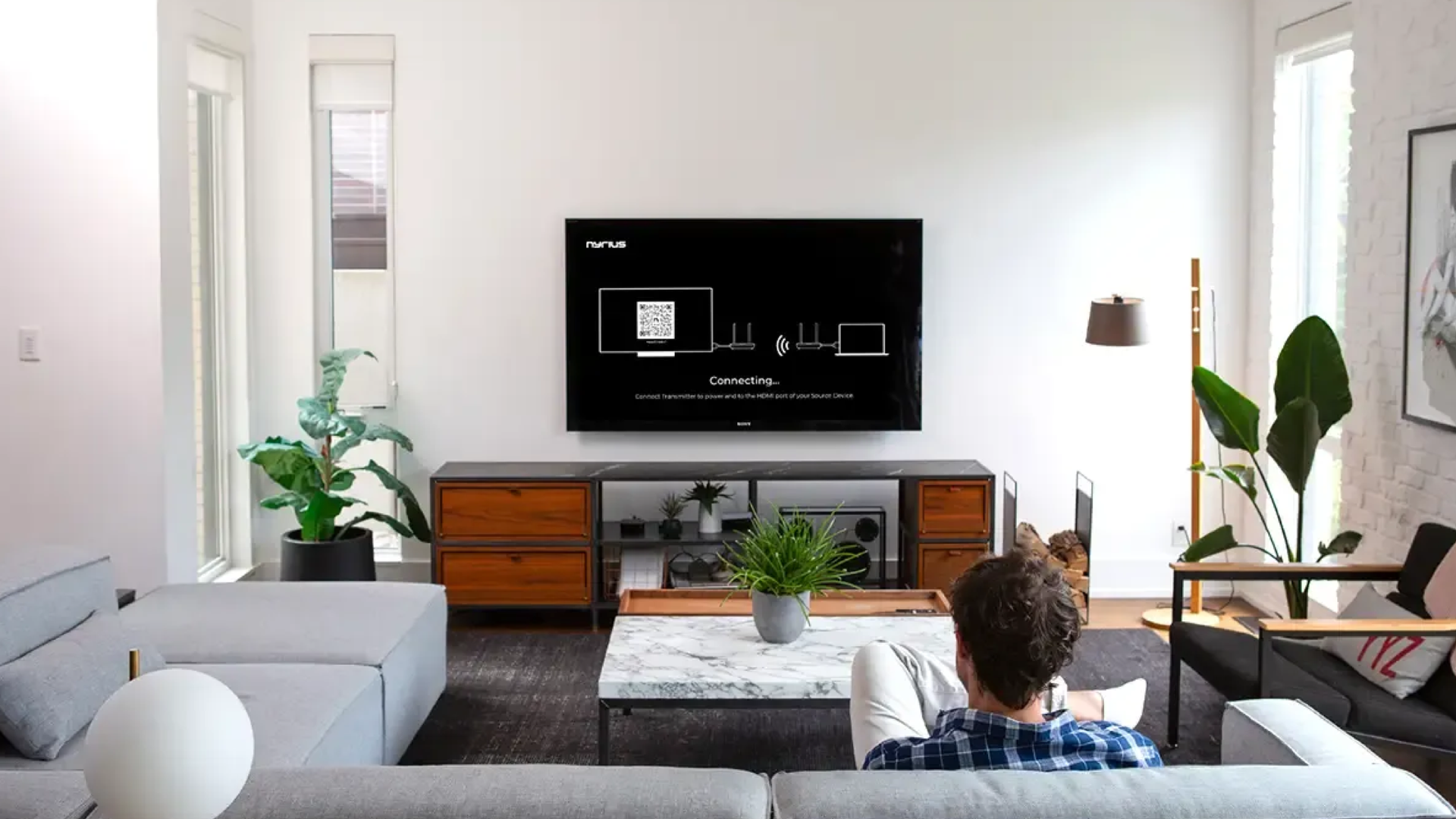
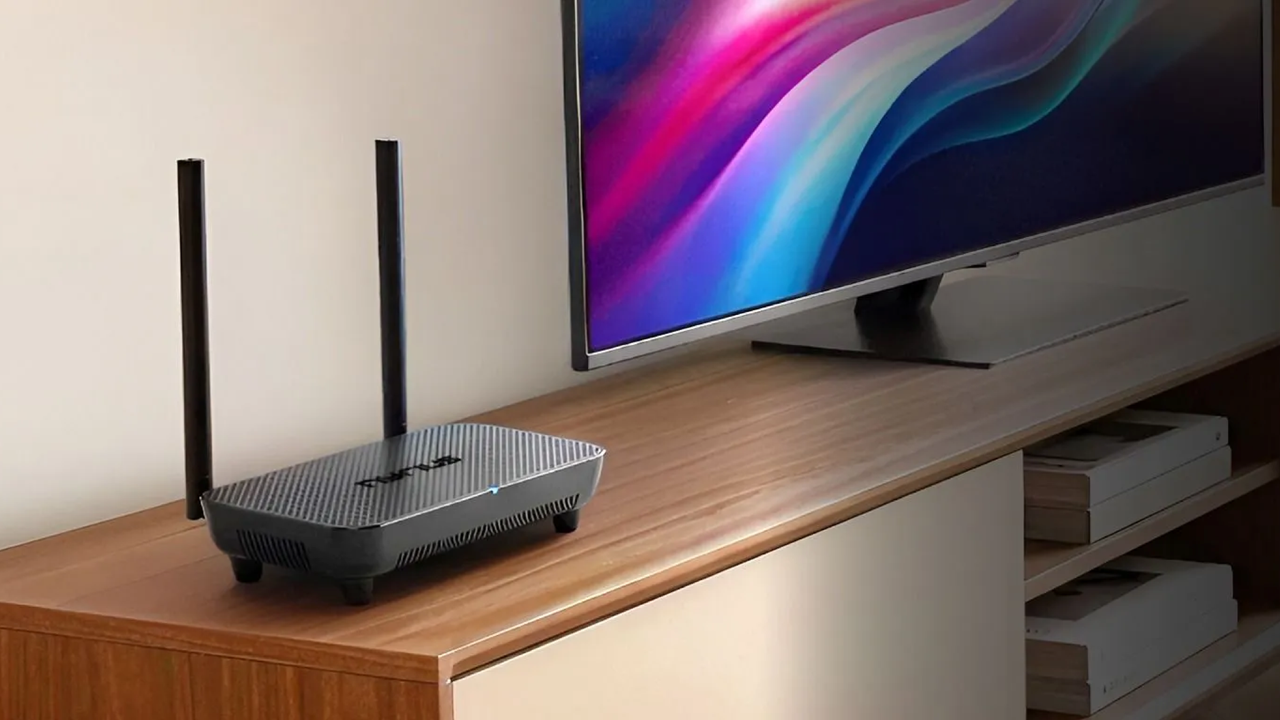
Image of the Nyrius Phoenix Home wireless HDMI being set up in a neutrally decorated room

(Image credit: Nyrius)

Nyrius Phoenix Home: key features and specifications

With the Phoenix Home's 500-foot line-of-sight range, I'm thinking it could be good for movies or sporting events with friends outdoors with a projector or outdoor TV.

Transmitting up to 75 feet through walls and floors means you can use it to stream from a computer in one room to a TV in another, provided the computer has an HDMI output or an HDMI adapter: the Phoenix Home only supports HDMI input.

The Phoenix Home also features USB-C that you can use to remotely control a computer by connecting it to the transmitter and using a keyboard and mouse with the receiver. There's also an IR extender for remote controllers.

The Phoenix Home transmits up to 4K resolution at up to 60fps, and it supports DTS, Dolby Atmos and 7.1-channel surround.

I think there are multiple applications for this kind of device at home as well as in business or educational spaces: it's a good solution for renters who can't start drilling cable runs everywhere, and for rooms that weren't made with AV systems in mind.

A few TV companies have been thinking about rooms where you want to mount the TV above the fireplace or another feature and have your AV receiver, consoles or other home theater gear somewhere else. If you saw Samsung's Wireless One Connect Box or LG's Zero Connect and wished you too could have a wire-free TV, you don't need to splash your cash on one of this year's best TVs to cut the cables: this will provide a similar option for $199.

Our one worry would be what the latency is like for gaming, which we'd have to test to be sure about. But if you're looking to cut the cables for making it easy to move movies around the home, this looks like a very affordable and effective way to do it, and is available now.

Thinking of buying a new TV?

Try our TV size and model finder! You tell it how far you sit from your TV, we'll tell you what size to buy based on viewing angle advice from image quality experts, and we'll recommend our three top TVs at that size for different prices.

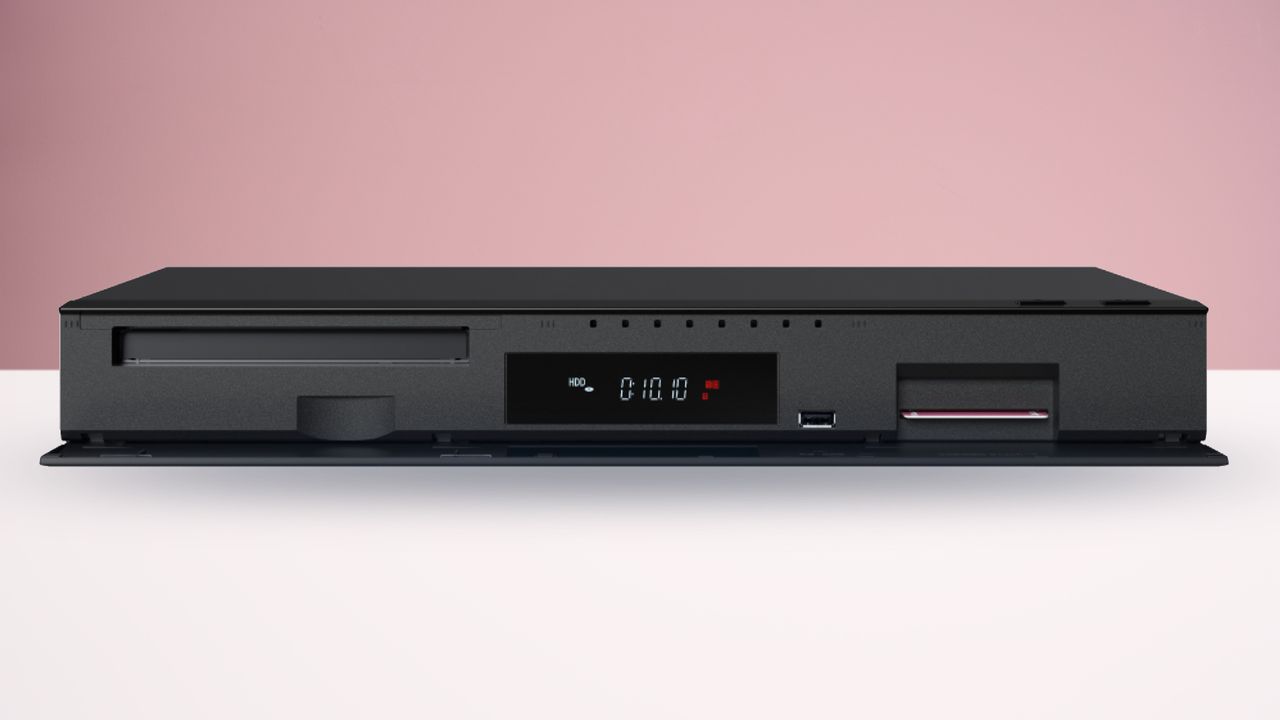
Panasonic is launching a new 4K Blu-ray player! Okay, it's very niche and is coming to Japan only so far β€” but it's the second new player this year, and I'm just happy we're getting new hardware

  • Panasonic launches new DMR-4X10¹⁰ 4K Blu-ray player in Japan
  • Also includes 4K tuners, 10TB of local storage for recordings, Blu-ray recording, and support for cloud storage
  • About $2,800 / Β£2,080 / AU$3,930

Blu-ray fans should be feeling blessed this month: with new players decidedly thin on the ground, September has brought us news of not one but two 4K Blu-ray players β€” though neither is really aimed at the average movie enthusiast.

The new Panasonic DMR-4X10¹⁰ is a flagship 4K player with a bunch of other neat tricks up its sleeve, and while it's likely to stay as a Japan-only release, we're still happy to see new players being made.

A 434,500 yen, which works out at about $2,800 / Β£2,080 / AU$3,930, it's a fair bit cheaper than this month's other new Blu-ray player, the Magnetar Ultima: that costs a cool $12,000 (about Β£8,895 / AU$16,687).

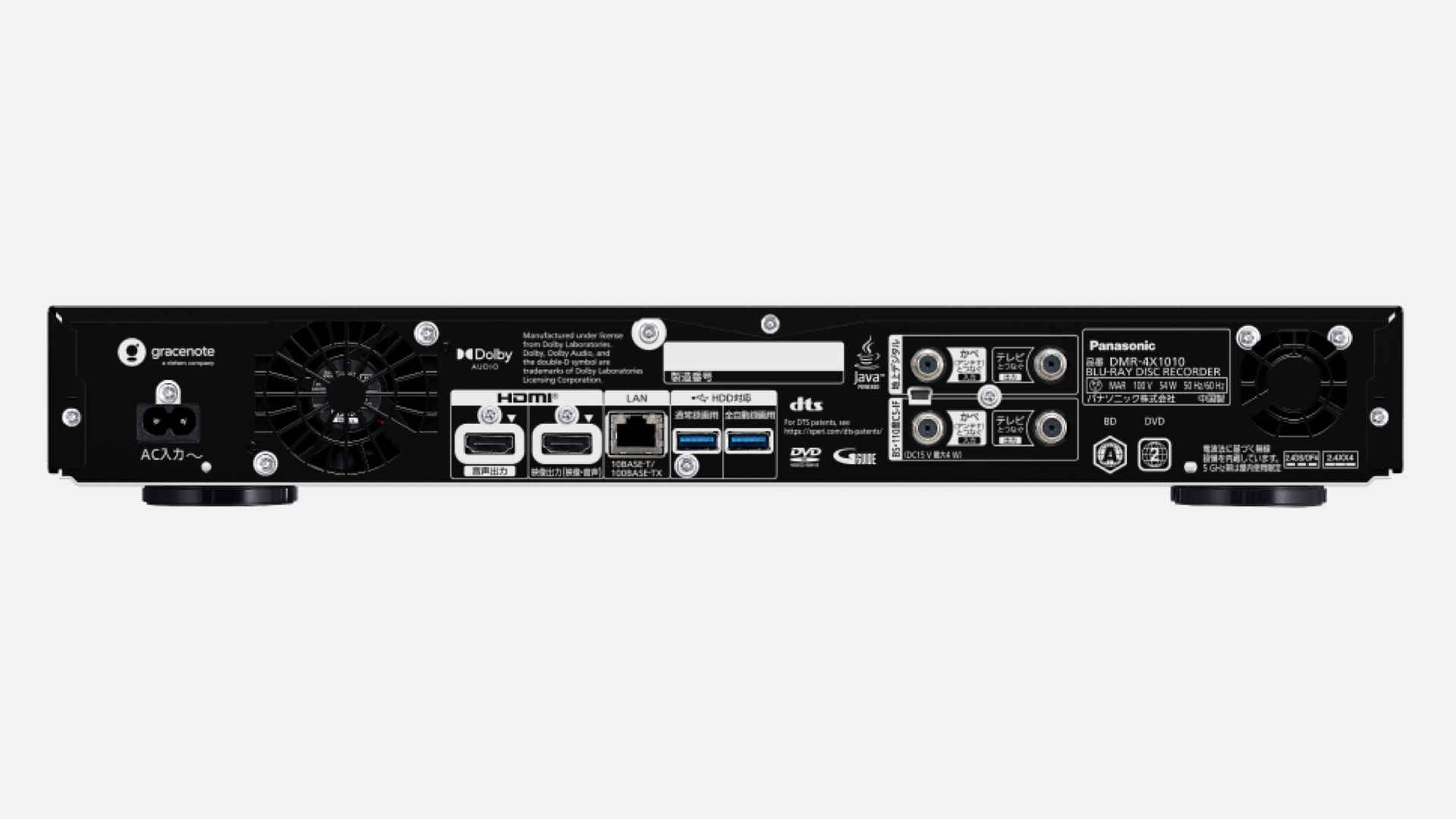
Panasonic DMR-4X10¹⁰ Blu-ray recorder rear view on white background

(Image credit: Panasonic)

Panasonic DMR-4X10¹⁰: key features

The Panasonic DMR-4X10¹⁰ not plays 4K Blu-rays, regular Blu-rays and DVDs, it also features 4K broadcast tuners and includes a giant 10TB hard drive for recording shows and movies. There's also the option of cloud recording of up to 10TB via Google Drive or Microsoft OneDrive, so you can access recordings on your phone or store Blu-ray disc images in the cloud.

It even records to BD-R/RE discs of up to 100GB, if you prefer. Recording from live broadcast isn't that popular worldwide, but evidently it's popular enough in Japan to make this the ultimate 'own your copies' machine.

The player uses an AVC encoder for high-definition recording, and Panasonic says the encoder can compress 24Mbps signals to around 1.6Mbps to maximize recording space… though, again, it does come with 10 terabytes.

The DMR-4X10¹⁰ also works with Panasonic's AI Viera system, which can automatically adjust the picture quality to fit the scene β€” so bright and vivid if you're watching sports, and richer contrast if you're watching a noir movie. AI can also adjust the audio to make it more immersive.

The new player launches through authorized dealers on October 22, 2026, and exclusively to the Japanese market.

There have been worries about the future of 4K Blu-ray, and whether the companies are still interested in producing them β€” the current models have been around for a long time, and Panasonic just increased the price of its options.

But the release of this model and the Magnetar show that companies aren't blind to the desire for new options β€” I just hope we might get something more affordable and mainstream than these at some point.

❌