Nation-state actors and criminals likely exploited the PHP2SHELL vulnerability before its disclosure, according to Cloudflare CEO Matthew Prince. “These vulnerabilities, like the PHP vulnerabilities that were disclosed the other day, had been in the wild for years,” Prince said on the company’s third quarter earnings call. “We're going back through our logs looking for any evidence that hackers or nation-state actors or others had been using them in the past. I know that we're going to find examples of that.” That was just one of the warnings he offered on the call, among them that some of Cloudflare’s customers believe AI agents are “a bane to their business and want to keep them away.” To explain why, Prince hypothesized that he could use an agent to find him a restaurant to eat at after he finishes his day of investor relations duties. “It might go and scour the internet and look at 1,000 different restaurants' websites, pull down 1,000 different menus, and then I might choose to only go to one of those,” he said. “The problem is that 999 of those restaurants have now had a cost that is just been applied to them, but they are not getting any benefit.” The CEO admitted that web searches have always driven some low-value traffic but feels the volume of agentic activity – which Cloudflare has previously predicted will be one thousand times greater than clicks from humans – means the problem is now at a different scale. Prince also had bad news for Kubernetes aficionados, because he thinks containers might become another casualty of the agentic age. The CEO allowed that containers are “a significant improvement over bare metal or even virtual machines,” and said they fueled the growth of hyperscale clouds and mobile applications. But he thinks containers are already cooked. “The container-based architecture of the hyperscalers and neoclouds just can't keep up in a cost-effective way with the new agentic paradigms of today,” he argued, again citing the 1000:1 ratio of bot:human traffic Cloudflare expects to see online any year now. That’s a Cloudflare-centric view, because Prince pitched the company’s serverless “Workers” service as an alternative to containers. The company also offers products that can either block agents, ameliorate the cost and traffic impacts of agentic activity, or allow organizations to monetize traffic generated by AI. Prince said demand for those products is growing fast, claiming that since July 1st, “approximately five percent” of the web opted in to Cloudflare’s content protection products. The CEO said Meta is already a customer, and said Zuck’s new “Muse” agents will benefit Cloudflare by creating more agentic traffic that third parties want to tame. He also pointed to year-on-year revenue growth of 39 percent, which saw quarterly revenue reach a record $782.5 million. And he thinks there are better days ahead, due to the terrible state of security. “It may seem like the sky is falling with the number of new security vulnerabilities that have been reported over the last few weeks,” Prince said. “I wish I could tell you we were through the worst, but we're not.” He thinks Cloudflare can profit from security misery because the extent of its activities and client base mean it is “among the first to receive quiet disclosure of new vulnerabilities” and remediates them before disclosure. Investors thought this all made sense, and in after-hours trading sent Cloudflare shares up by around 15 percent, meaning it recovered and then improved on losses that it incurred earlier after major US indices dropped around four percent as investors who worry tech stocks are overvalued. ®
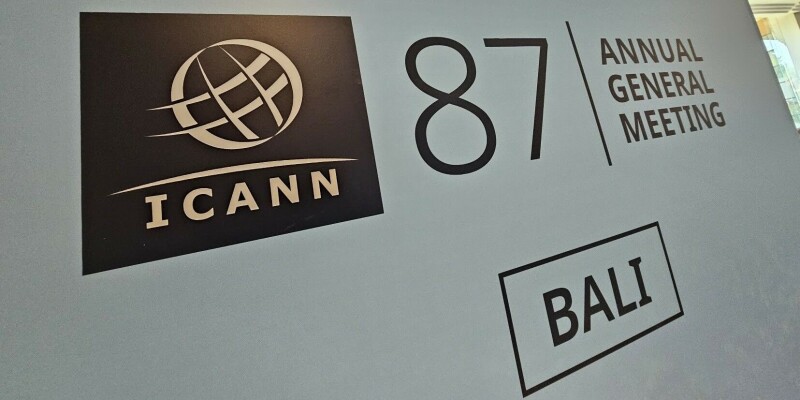
Internet governance bodies are likely to accelerate work to prepare the domain name system (DNS) so it can remain secure once quantum computers can challenge conventional encryption. John Crain, ICANN’s chief technology officer, last week told The Register that he is aware of efforts within the organization, and at other internet governance bodies, to consider what happens once commercially available quantum computers become capable of easily deciphering encrypted information. Those machines theoretically pose a risk to DNSSEC, the Domain Name System Security Extensions that adapt PKI to the job of verifying the veracity of DNS records. The CTO said he’s aware of predictions that such computers could come online “at the turn of the decade” and that he has therefore changed his view of when the DNS needs to be made quantum safe. “If you asked me years ago, I would have said we probably need to be ready in ten years,” Crain said. “Now, maybe it's less than that. I don't know if it's three years or five, but it's probably not ten”. One way to quantum-proof DNSSEC is to use larger keys that even a quantum computer will struggle to crack. Doing so, however, runs into message size limits in the DNS. “If we go for larger key sizes, that means larger zones, larger packets, larger responses,” Crain said. It can also mean traffic being carried by multiple TCP packets, instead of the single UDP messages DNS prefers. Crain said ICANN, the IETF, and other internet governance bodies are aware of this challenge and have begun preliminary work to address it. “Being prepared to go from UDP to TCP is going to take a few years,” he told The Register at ICANN’s annual meeting in Bali last week. “We're probably a few years away from being able to deploy in a predictable manner.” The internet community has, however, seen that the problem is becoming more acute. “We're going to ramp up the speed of development,” Crain said. Internet registry reform nears At ICANN’s Bali conference, The Register also met Jia-Rong Low, in his capacity as chair of the Number Resource Organization, the peak body for the world’s five regional internet registries (RIRs), AFRINIC, APNIC, ARIN, LACNIC, and RIPE NCC. The topic of that conversation was Internet Coordination Policy 2 (ICP-2), the document that governs RIRs. In its current form, ICP-2 describes the formation of a new RIR but no other part of its operations. After strife at AFRINIC raised the possibility of the African registry failing, the NRO decided to update ICP-2 so it covered the entire lifecycle of an RIR, from formation through to possible derecognition. Work on ICP-2 has moved through several rounds of public consultation. It has reached the status of a recommended draft. Low told The Register work on the document has proven “very challenging” to develop entirely with remote work. Last week’s ICANN meeting, he said, offered a venue for in-person collaboration that he hopes will result in work accelerating. The revised document defines four stages in the life of an RIR: recognition, audit, emergency continuity operations, and derecognition. The last three are additions to ICP-2 and give ICANN a major role as an independent overseer of RIRs. Low is hopeful a final document will be ready for review by the end of 2026, and ready for implementation not long afterwards. Scammers target trustworthy-sounding domains like .bank or .pharmacy Phisherfolk and other scammy scum strive to register authoritative-sounding domains as part of their efforts to trick victims. ICANN defines some global top level domains (GTLDs) as “Category 1” strings, because they pertain to regulated sectors – such as .bank, .doctor, and .university – or are felt to need special safeguards because like .sucks they create the potential for bullying. In a session at the ICANN meeting, Siôn Lloyd, ICANN’s principal security, stability and resiliency scientist, said the organization has investigated whether certain top level domains attract more abuse. He found that Category 1 GTLDs are more likely to be targeted by DNS abusers and therefore have a 45 percent higher chance of abuse than other domains. Happily, Category 1 domains are also less likely to have high abuse volumes. ICANN is currently working on a policy (PDP1) that will require domain registrars to take extra action against owners of domains that facilitate abuse, and another (PDP2) that will regulate automated domain registration. More GTLDs, more often? The Register heard plenty of chat at the meeting about ICANN’s new round of applications for GTLDs, which seems to be progressing well. Across various panels and sessions, we also heard references to ICANN’s past statements that new GTLD application rounds should be more frequent and take place at a predictable cadence, along with some suggestions that this round of applications is the template for future rounds. ®
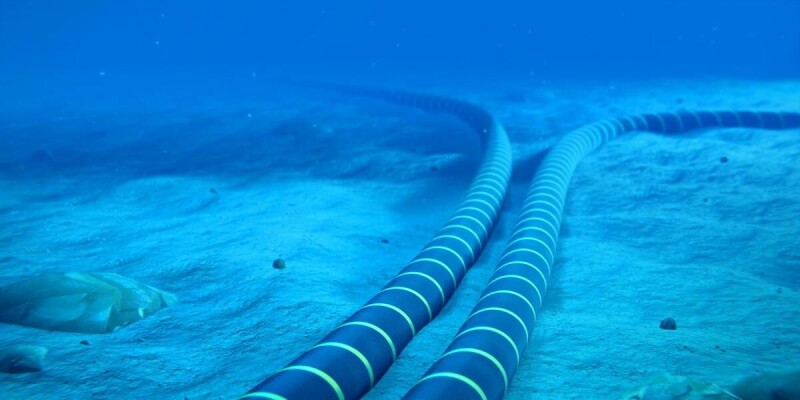
Britain is threatening subsea cable saboteurs with up to 14 years in prison and unlimited fines, having apparently decided that Victorian-era laws aren't quite up to the job of keeping Russian submarines away from critical infrastructure. The government on Thursday set out plans to overhaul legislation dating back to 1885 and introduce tougher penalties for damaging the underwater cables and pipelines that keep Britain's internet and energy supplies running. According to Whitehall, subsea cables carry around 99 percent of the UK's international data traffic, while underwater pipelines account for 74 percent of its gas supply. Yet much of this infrastructure is protected by laws written when the telegraph was cutting-edge technology. The Submarine Telegraph Act 1885 originally imposed a £100 maximum fine for damaging a cable through culpable negligence. That might have been a reasonable deterrent back then, but it's unlikely to give today's would-be saboteurs much pause. Under the proposals, those who intentionally damage critical subsea energy or telecoms infrastructure could face up to 14 years behind bars. The proposals also set tougher penalties, including unlimited fines, for reckless or negligent damage. Subsea telecoms operators would face new legal duties to identify and manage security risks, while ministers would gain powers to direct companies and cable repair providers to take action where necessary and proportionate to protect national security. The government also wants to regulate fiber-optic sensing technology, which uses subsea cables to detect activity at sea but could pose a security risk if sensitive data falls into hostile hands. Unsurprisingly, Russia features prominently in Whitehall's thinking. In April, British forces exposed a covert Russian submarine operation near critical undersea infrastructure. The operation reportedly involved an attack submarine acting as a decoy while two specialist vessels surveyed Britain's cable routes. "The threats we face have changed dramatically, with suspicious Russian activity around critical undersea infrastructure, yet some of the laws protecting these vital connections date back more than a century," said telecoms minister Ian Murray. The plans aren't entirely new. In May, the government announced its intention to toughen penalties and introduce security obligations for cable operators. Thursday's White Paper spells out the proposed penalties and how far ministers could go in directing operators to act. It also follows warnings from Parliament's Joint Committee on the National Security Strategy, which concluded last year that Britain was insufficiently prepared for a coordinated attack on its subsea infrastructure. MPs and peers warned that government assessments focused too heavily on individual cable failures, rather than what might happen if attackers simultaneously targeted connections to Europe and across the Atlantic. Russian submarines aren't responsible for every severed cable. Fishing boats and ships dragging their anchors do most of the damage, accounting for up to 97 percent of faults, according to previous government estimates. And even when sabotage is suspected, catching those responsible is another matter. Britain already has laws allowing life sentences for serious acts of state-backed sabotage, but they're not much use if nobody can prove who did it. That's rather difficult when the crime scene is at the bottom of the sea. And it might prove equally difficult to extradite suspects from enemy nation states. None of this is law yet. The government has opened a 12-week consultation on the plans, after which ministers will decide how to proceed. Whether the threat of a lengthy prison sentence will trouble Russian submariners is debatable. Even so, after 140 years, Britain's subsea cable laws are finally getting dragged out of the Victorian era. ®
ICANN has started testing authentication schemes that will allow law enforcement agencies to make urgent requests for non-public WHOIS information – when needed to address threats to life, critical infrastructure, or child exploitation. Domain registrars collect information about their customers and in the past that data was publicly available in WHOIS records. Some domain registrars offer services that substitute their own contact details, to preserve customer privacy. In recent years, laws like GDPR mean registrars are sometimes required to hide WHOIS data. That’s fair enough but makes it hard for law enforcement to contact a domain holder if their resources are being misused – intentionally or otherwise – for purposes such as hosting malware, acting as command-and-control infrastructure for malware, or facilitating phishing. ICANN’s definition for the kind of behaviour it thinks justifies urgent requests for WHOIS info is “imminent threat to life, of serious bodily injury, to critical infrastructure, or of child exploitation.” The org has convened an Input Group on Law Enforcement Agency Authentication Mechanisms to consider the issue, and that group yesterday explained its progress during ICANN’s annual meeting in Bali, Indonesia. At this point, readers may have concerns that this proposal could allow law enforcement authorities to make inappropriate requests for WHOIS information. Several factors may ease such concerns. One is that representatives of domain registrars Namecheap and Verisign spoke during the session about the proposal, and both were supportive. Another is that the Input Group’s work is largely technical. Once it devises a mechanism to allow requests, other groups within ICANN dedicated to policy will work out acceptable use and related issues. This is the way internet governance gets done! Specialists work on their own bits of a problem and then collaborate to create a robust system that works at a technical level, is practical, and enforceable in multiple jurisdictions. How they’ll do it At this point, ICANN’s preferred approach is to use Security Assertion Markup Language (SAML) so that authenticated users at law enforcement agencies can log into the governance org’s Registration Data Request Service (RDRS) and file requests to access non-public WHOIS info. ICANN is already testing this approach with the FBI and Interpol but is open to other authentication mechanisms to allow other agencies access RDRS. The Input Group’s aim is to publish a spec those agencies can conform to. ICANN will pass requests filed in RDRS to whichever registrar sold the domain. The registrar will have 24 hours to consider the request – or up to 72 hours for complex queries. Registrars will also be able to deny requests if they feel the query does not meet the urgency threshold. Register readers might worry that a colossal agency like the FBI could flood RDRS with requests from thousands of individual agents, swamping domain registries. ICANN’s plan is to avoid that by requiring law enforcement agencies to nominate certain personnel who are permitted to make requests, and to enforce that permission using a token shared during SAML handshakes. The content of that token is the kind of policy question that the Input Group expects others at ICANN to finalize later. Another issue under consideration is how to protect the identity of law enforcement workers who make RDRS requests, as ICANN feels they could become targets of harassment (or worse) if their requests to see WHOIS data include email addresses. ®

 Login