❌

Reading view

There are new articles available, click to refresh the page.

'The prophecy is fulfilled': Popular 2020 XKCD comic predicted 'HEIF Heist' OpenAI hack and even mentions ImageMagick in spooky coincidence

  • Hacktron chained a libheif heap overflow, reached through ImageMagick on OpenAI's Discourse forum, leveraging an OpenAI SSO flaw to briefly take over employee ChatGPT and Codex accounts
  • The researchers themselves invoked XKCD #2347, whose 2020 alt text happens to name ImageMagick as the dependency that will one day break
  • ImageMagick served as only the pathway to the actual vulnerable component, libheif, an obscure decoder pulled in indirectly across Slack, Meta, and GitHub Enterprise amongst other mediums

When Hacktron AI recently disclosed its months-long libheif research, the researchers reached for a familiar picture that also, to some degree, hints at what let them break into OpenAI in the first place.

They pointed readers to xkcd #2347, Randall Munroe's 2020 iconic web cartoon of all modern digital infrastructure balanced on a single load-bearing block that some random person in Nebraska has been thanklessly maintaining.

The comparison is relatively easy to follow, and it has a bonus easter egg that one can take as pre-empting the hack.

An alt-text that that seems ironically prophetic in 2026

The easter egg in question is one you have to look for; if you hover over the original comic, you get the alt text "Someday ImageMagick will finally break for good, and we'll have a long period of scrambling as we try to reassemble civilization from the rubble."

The irony is that six years after the comic was originally posted, ImageMagick was sitting in the exact spot the breach ran through, making its teaser something you could call an unintended prophecy bound to fruition.

The details are unglamorous but worth considering as AI safety continues to take center stage in public discourse, including recent addresses by the CEOs of OpenAI and Anthropic at the UN.

Hacktron found that OpenAI's community forum, community.openai.com, runs on Discourse. The latter's usual image checker, FastImage, doesn't understand HEIF and quietly hands tasks to ImageMagick's magick command for conversion, which in turn calls libheif, the library that actually decodes the format.

The version shipped to the forum was deployed via Debian and had a heap buffer overflow issue that was fixed the previous year without being labeled a potential security risk, allowing it to serve as a doorway for the Hacktron team.

The team then chained multiple exploits in an elaborate hack that culminated in leveraging a secondary SSO (Single Sign-On) misconfiguration at OpenAI's end, which essentially allowed the forum to serve as a gateway to ChatGPT and Codex accounts for anyone with a community account who signed in through the forum.

This allowed them access to ChatGPT's internal GitHub, where they made what they describe as a harmless pull as a proof of concept and notified OpenAI. OpenAI patched it 14 hours later, awarded the team a $6,500 bug bounty, and Discourse patched it after rating the underlying image bug 8.8 on the CVSS scale and adding sandboxing around image processing as a defense-in-depth measure.

The exploit is not exclusive to OpenAI: the same libheif and libde265 decoders reach production through ImageMagick, libvips, Sharp, standard distribution packages, and prebuilt container images. Hacktron traced them across Slack, Meta, GitHub Enterprise, Ruby on Rails, and Node.js frameworks, including Next.js, Astro, and Gatsby, suggesting that potential fallout, if not patched, is far broader than one AI company.

Hacktron's approach involved using Anthropic's Claude Opus 4.8 before switching to Opus 5, spending under $3,000 in tokens across a three-person team, and having an exploit ready in just two months. To its credit, the team had to trick Anthropic's AI into doing the task by framing their own test forum as a capture-the-flag challenge, and it eventually acquiesced.

The exploit itself wasn't something that couldn't be done without AI, but it let a much smaller team work at a pace normally expected of a much larger one. Apparently, asking your AI chatbot nicely with a bit of trickery in tow can deliver exceptionally good results in some cases.

Bitdefender first to launch free 'temporary' VPN for AI Agents because they're worth it — but you can only use it on Apple M-series Macs for now

  • Bitdefender launches privacy tool built specifically for autonomous AI agents
  • Each agent task gets a disposable, temporary connection that deactivates when the task is done
  • VPN for AI Agents runs on a Model Context Protocol server architecture entirely

Bitdefender has introduced VPN for AI Agents, a standalone privacy tool built specifically for the autonomous software agents now browsing, researching, and transacting on behalf of everyday users.

The company says this public beta is a direct answer to the growing anxiety over machine-driven data exposure.

Unlike a conventional privacy tool that stays connected at all times, this tool activates only when an AI agent needs it, then deactivates once the task is done.

Why agents need their own privacy layer

Cybersecurity researchers have increasingly warned that autonomous agents occupy an ambiguous identity space, often borrowing a person's own credentials or shared workload logins to complete tasks online.

Without a clear separation, every website an agent visits and every transaction it completes remains traceable back to a single household IP address.

Recent Pew Research Center data found 71% of adults in the United States believe wider AI adoption will make their personal data less secure, a fear that extends well beyond American borders.

Bitdefender's new offering, built on a Model Context Protocol server architecture, spins up a disposable digital workspace for each prompt and discards it when the task is done.

Each prompt opens its own encrypted tunnel and exits through the VPN server's IP address, so no cookies, cache, or session state carries over to the next task.

The tool covers network transport and IP masking only, leaving the actual content of a prompt exchanged directly between the user and whichever AI provider is running it.

"AI agents are quickly becoming an extension of the people who use them, showing up in both our workdays and our personal lives," said Ciprian Istrate, senior vice president of operations, Consumer Solutions Group at Bitdefender.

"That means security can no longer stop at protecting the person behind the screen; it has to extend to the agent itself acting on their behalf."

This approach treats each agent like an independent team member requiring its own security boundary rather than inheriting the user's existing protections wholesale.

Bitdefender also describes this as clean-IP browsing, useful for QA checks on pages that display different content depending on the visitor's country.

The tool supports up to four simultaneous exit locations, or eight under the recommended testing configuration.

Access remains limited during the beta period

For now, the tool works only on macOS devices, though Bitdefender has confirmed plans to expand to additional operating systems after beta testing.

The beta specifically requires macOS 13 or later and an Apple silicon processor, meaning Intel Macs are not supported.

Bitdefender recommends macOS 15, 16 GB of memory, and roughly 10 GB of free disk space for smoother testing.

Once installed, it operates automatically across several popular AI platforms, including Claude Desktop, Cursor, Codex, and OpenCode, without requiring manual configuration from the user.

Bitdefender lists several practical use cases, including letting an agent compare prices across regions or complete multi-country research in one session.

The company frames these tasks as a productivity gain too, since they would otherwise need manual, country-by-country effort from a person.

Bitdefender is explicit about the tool's limits as well. It does not protect a device's other apps or browser.

It also does not hide prompts from the AI provider running them, and does not override a site's terms of service, rate limits, or an existing IP ban.

"With Bitdefender VPN for AI Agents, we're giving students, workers, and everyday consumers the confidence to let their AI agents work freely, knowing their identity and activity stay protected," Istrate added.

VPN for AI Agents public beta is currently available for free, but whether the free offering continues after the beta testing remains to be seen.

Google logo on a black background next to text reading 'Click to follow TechRadar'

8 wild quotes from Nvidia CEO Jensen Huang's latest interview on AI and why they should concern you

What happened to Jensen Huang? The Nvidia co-founder and CEO seems about as disconnected as a person can be from other humans' life experiences. That wouldn't be so concerning if it weren't for the fact that he runs the most valuable company in the world and is responsible for the hardware behind the most life-altering innovation in our lifetime: AI.

Huang, who founded Nvidia 33 years ago, has been a CEO for decades and a billionaire since 1999; he's also now firmly on the side of rapid AI development and deployment with little-to-no regulation, putting Huang firmly at odds with a growing legion of, admittedly, some other billionaires and CEOs — among others — who are calling for a foundational model development pause or at least slow down.

It's in this moment that Huang has been talking — a lot. He's sat down with multiple journalists for chats, but none now more notable than the extensive New York Times podcast with columnist Ezra Klein.

Unlike some of the other interviews, Klein used Huang's own description of the AI as a Five-Layer Cake: Applications, Models, Infrastructure, Chips. Energy to frame the conversation, which invited Huang to opine on all these critical AI bits, and I have to say, many of his comments were eye-opening.

Here are the most startling things Huang said and maybe why he's saying them:

'There are a lot of skills that don’t matter'

"There are a lot of skills that don’t matter."

The topic here was studies in China showing that while AI in education may initially help students work more efficiently, it, on average, lowers their test scores by almost 20%.

Huang agrees with Ezra that the use of AI is, while helping them work faster, possibly degrading student performance, at least in certain skills.

"The multiplication table is starting to be forgotten. Doing square roots, my goodness. Basic math is being forgotten. Does it matter?...Yeah. I don’t think it does. I don’t think it does."

Huang believes that even as we lose some skills, or as students become adults entering the workforce, they will gain other new skills. Of course, that's sort of a zero-sum game where you can easily replace one thing with another.

I don't know about you, but I do consider the multiplication tables to be a core skill and useful even if you don't work in a math-related field. Naturally, Huang and most AI providers would like to believe that, like the calculator before it, AI will handle this skill and do all the math for you. Perhaps. But at what point do we lose the ability as a culture to double-check AI's work?

'I actually don’t know my address'

This next one is actually connected to the prior quote but is worth calling out:

"My first confession, I actually don’t know my address."

Not his email address, not his phone number or his partner's phone number, but where he lives. The street number and zip code (I'll assume he knows the town and state).

Huang used this as an example of a skill he no longer needs, but admits that realizing it while pumping gas and needing his zip code (I'm guessing for credit card verification) panicked him.

Listening to this while driving my own car, I almost pulled over. "What?!" I yelled at my AI-filled iPhone 18 Pro Max, which was playing the podcast. First of all, how? Second, Huang could not have crafted a better comment to undermine this and many of his other comments.

The only way you don't know your home address is if you've been shielded from the act of entering it on documents and driving yourself home because you always have someone else doing it for you. Huang's lived experience is thoroughly disconnected from the average person, and yet the choices he's making impact most regular people.

'[China] manufacture[s] everything in volume. They manufacture smart kids in volume'

Throughout the long conversation, Huang comes off as an industry Pollyanna and wildly self-serving.

He's asked repeatedly about China's approach to AI and if and how the US should be competing with them and ensuring that the US doesn't fall behind in this critical race. To put his comments in context, you have to remember that Huang personally asked the White House to allow it to continue selling AI chips to China. Huang did note, by the way, that he at least sells new technology to US companies first.

Overall, Huang essentially never criticizes China and, in fact, seems almost in awe of its approach on most fronts, especially in its use of open-model community (calling it "super-vibrant), and how it's raising an army of people to build its AI future.

"They have so many scientists and mathematicians. The number of engineers they have, they manufacture that in volume. They manufacture everything in volume. They manufacture smart kids in volume."

I don't know if that last bit was a backhanded criticism of the US education system, but it's not like he added, "Of course, we are creating just as many smart kids in the US."

'all of the rhetoric and all the alarmism, all the doomerism, all of the predictions — they’re scaring people'

If Huang has any criticism, it's reserved for his US counterparts, whom he calls "alarmists" and "doomers".

"I want to see us not ruin the opportunity for the United States to benefit at the highest level. And notice all of the rhetoric and all the alarmism, all the doomerism, all of the predictions — they're scaring people."

Huang insists that these AI models are still just programs running on operating systems, and wishes people would stop infusing them with human attributes.

'Just because it comes from a scientist doesn’t make it scientific'

While Klein mentions most of Huang's partners and occasional alarm-sounders, like Altman, Modei, and Musk, Huang doesn't actually mention any of them by name. The 'Godfather of AI' and chief alarmist Geoffrey Hinton, though, does receive special mention.

In response to a question about Hinton's assertion that there's a 10% chance AI will end society as we know it, Huang calls the statement "irresponsible" and adds, "Just because it comes from a scientist doesn’t make it scientific."

In a way, Huang is right. After all, Hinton is still just a person who can bring personal opinions to the debate. Huang argues that the "10% chance is not grounded on science."

But isn't it? If Hinton is the Nobel Prize-winning person who introduced the world to deep learning, which helped trigger the generative AI revolution, isn't everything he says, in some way, based on science?

Instead of saying he understands the concern but here's why he's wrong, Huang just claims the foundation of Hinton's argument is faulty, and therefore his statements are not really worth addressing. Huang would simply like everyone, all the doomers, to stop scaring everyone.

'The A.I. supercomputers are super energy efficient, but they’re still going to use a lot of power'

Huang says he wants AI to benefit every company and person, and he tries to offer a reasoned approach to the growing outcry over data centers.

He agrees that if people don't want them in their town, "then so be it," and encourages companies to be transparent about the impact, though he argues that their "use of water is really efficient." In the same breath, Huang tries to have it both ways: "The A.I. supercomputers are super energy efficient, but they’re still going to use a lot of power."

If, in Huang's perfect world, AI companies do generate their own power (building power sources takes time, probably more than it takes to build data centers) and they somehow lower property taxes, maybe data centers could someday be a net positive. Most, I think, would argue we're not there yet, even as the number of data centers being built across the US explodes.

'I think we just have to acknowledge that we got ourselves really gummed up in climate change and sustainable energy'

More concerning is Huang's shocking perspective on climate change and fossil fuels.

"I think we just have to acknowledge that we got ourselves really gummed up in climate change and sustainable energy, and as a result, we just didn’t plan enough energy production."

Klein, naturally, asked what Jensen meant by "gummed up," and, yes, it got worse.

"Well, in the near term, energy production requires fossil fuel. And because there’s just so much angst about fossil fuel energy production, if you look at our country, we’ve produced very little net new energy for a long time."

There's a lot to unpack there. It sounds like Huang is downplaying real climate change concerns, something that might align with the beliefs of his pal and "drill-baby-drill" and climate-change denier US President Donald Trump.

In fact, Huang never addresses whether climate change is real or not and instead seems fixated on how the loss of more fossil-fuel-burning energy plants puts us behind China in the energy race, and, more problematically for him, at a time when AI needs a lot more energy.

'They’ve got to inflict an enormous amount of pain and suffering on you so that they can save you'

It's not all bad. Huang believes, "If you want a future that is sustainable, lean into AI”

And then he says this:

"Yeah. It’s kind of like, in order to save you, they’ve got to hurt you first — that’s the nature of surgery. They’ve got to cut you open to save you. They’ve got to inflict an enormous amount of pain and suffering on you so that they can save you. And so I think A.I.’s kind of like that."

As for what level of "pain and suffering" Huang believes we should endure, he didn't elaborate.

If you were watching or listening to the interview hoping for some encouragement or a more rational, middle-of-the-road approach to regulating and governing AI in ways that truly benefit all, you might've been disappointed. Huang does say that when the builders see AI going awry, they should stop it, and when an AI acts out of alignment, "they shouldn’t release the product. That’s the simple answer." But he never addresses the concerns over what appears to be happening before Anthropic, OpenAI, and potentially others release their models. These systems are jumping fences in testing.

Huang may not understand the needs of the common person, but that pales in comparison to the dispassionate AI, which neither knows nor cares about us. We need leaders like Huang to start caring, but first they have to understand us and our very reasonable concerns.

Claude Code deleted 48,000 files in 103 seconds in a dire AI agent warning

  • A developer says Claude Code just deleted 48,000 of their vital files
  • The incident occurred in just 103 seconds after the AI agent was set to work
  • It’s a serious warning over the damage an AI agent can do

There’s been a lot of recent discussion around artificial intelligence (AI) agents going off the rails and hacking other companies’ websites in a potentially dangerous orgy of subterfuge and destruction. But what if the damage was much closer to home and involved an agent going rogue on your own files? Sadly, that’s exactly what Claude Code just did to one hapless developer.

In a now-deleted post on Reddit, a shocked developer said that Claude Code had just deleted 48,218 files that they had been working on in a live project tree. And all it took was 103 seconds for the AI to wreak its agentic havoc. “This can’t be real” was the coder’s stunned refrain.

The user had tasked Claude Code with rebuilding a mirror of their ongoing project. Unfortunately, the agent discovered that the build_mirror.py script could not refresh the mirror in place, leading to it deciding the best course of action was to create its own cleanup script based on an older copy of the project. This previous project contained 7,332 files.

Although the script used certain safeguards to prevent it deleting linked directories, an oversight meant that only junction-level folders were protected — any nested directories below these folders were apparently seen as fair game by the script. It promptly removed 55,550 files that, when accounting for the 7,332 files successfully copied from the old project mirror, meant that a huge 48,218 files were obliterated in just over a minute and a half.

And because the damage extended to the .git project’s ‘objects,’ ‘refs’ and ‘logs’ folders, there was no way to recover the files and undo the catastrophe. The files were just gone in a puff of smoke.

Somewhat amusingly, the agent posted a message reading “Craig — stop and read this. I broke something,” before detailing its path of destruction. But it probably didn’t seem very funny for the unlucky developer who lost all their work at the push of a button.

Poor code hygiene

an ai agent sat at a laptop

(Image credit: Generated with Gemini )

Although it can be tempting to set an AI agent to work on tedious and laborious tasks, doing so is not without its risks, as this case demonstrates. All it takes is one mistake and a huge amount of work can be undone in seconds.

Part of the blame lies with the original poster, who said in an archived copy of the post that “I was not properly using GitHub or another method for immediate corrections, even though it should have been branching.” Had they been uploading their commits to GitHub or a similar site, their work might have been backed up and salvageable after Claude Code’s reign of terror ended. As one Redditor put it, “Been using GitHub as a save button since before you youngins knew what an AI even was.”

Other commenters pointed out that the developer ran an AI agent — which is known for its tendency to go off-piste — on a live database containing precious data that they couldn’t afford to lose. Good code hygiene, that is not.

And while one person argued that the simplest advice is “Do not let programs run commands on your machine,” even avoiding AI agents altogether would not remedy the poor practices that led to major changes being made on a live production environment without a proper backup.

This incident is a neat reminder of the inherent risks of assigning sensitive or risky work to an AI agent. As we’ve seen in the numerous hacks perpetuated by AI agents, these bots are often laser-focused on their tasks and are willing to take any measures necessary to accomplish them. If that means deleting 48,000 or your files or exfiltrating data from another firm’s website, so be it.

Microsoft unveils huge spending expansion in Middle East, with new multi-billion dollar sums going to Gulf States

  • Microsoft pledges $10 billion to support the Middle East's technological ambitions
  • A $400m subsea cable expansion is also in the works
  • The company stressed push for its educational support schemes

Microsoft has revealed plans to spend more than $10 billion in the Middle East between now and 2030, spread across the UAE, Saudi Arabia, Qatar and Kuwait.

Although the company already has substantial infrastructure already rooted in the region, including cloud regions for the UAE, Qatar and Saudi Arabia, it hopes that further investment will help increase regional access to its cloud and AI tools.

Microsoft President Brad Smith noted the region's ongoing digital transformation, appearing to also acknowledge the impacts of geopolitical conflicts. "We will build on the work we have done to stand by these countries’ governments and people through a period of significant challenges," Smith wrote in a blog post.

Microsoft invests $10bn to support Middle East technological transformation

The company also announced a series of initiatives that will fall under the $10 billion plans, including expanding cloud and AI infrastructure, improving local digital resilience, strengthening cybersecurity and backing educational schemes.

"Our responsibility is not only to invest in the technology that enables that progress, but to help provide the digital resilience, security and continuity it depends on," Smith added in another post.

Naturally, clean energy generation and a close eye on both water consumption and replenishment are core to the company's upcoming projects.

On the resilience front, Microsoft plans to invest a further $400 million in subsea and terrestrial cables by the end of the decade, building on top of its existing SeaMeWe-6 subsea cable which has points in Qatar, Saudi Arabia and the UAE. Microsoft is just one of the 16 companies that look after the cable, which stretches from Singapore to France.

In a bid to pacify job concerns, Microsoft also asserted that it will upskill more than 4.2 million people across the Middle East by 2030 – around 8% of the four countries' combined populations (but a bigger percentage if you only consider working citizens).

Google logo on a black background next to text reading 'Click to follow TechRadar'

Google's creepy new Gemini Live Avatars want to try and make online support bots feel more human

  • Gemini 3.8 Live now includes custom avatars to go with the AI's voice
  • Avatars could be used for customer service, training and more
  • Gemini 3.8 Live can switch between 97 languages automatically

Google has lifted the wraps of its latest Gemini 3.8 Live model, and with it come avatars you can select to make it feel more like you're speaking to a human. Sort of.

It's all possible through a combination of Gemini's real-time speech capabilities and low-latency video generation, so it looks like your chosen avatar is effectively lip-syncing to the text that Gemini is reading out to you.

Research scientist Shuo-yiin Chang and software engineer CJ Zheng said it now feels like AI has a much more "visual presence" - so that's...nice?

Gemini now takes on the body of your chosen avatar with Gemini 3.8 Live

Avatars are designed specifically for enterprise users, but rather than company employees talking to an avatar to get their work done, Google sees it more as showing off what's possible for its customers' end users. In other words, avatars could be used for customer service, receptionists, training and more.

From launch, businesses will be able to select from a library of preset avatars, but they can also create custom avatars to fit a company's branding, for example with a relevant logo on its uniform.

On the safety front, Google asserts that videos of its avatars include SynthID watermarking to verify that they are indeed AI-generated. "This imperceptible watermark is woven directly into the audio and video output, helping to ensure AI-generated content remains detectable to help minimise misinformation and misattribution," the company wrote.

In a separate post, Google also revealed that Gemini 3.8 Live can now support 97 languages and automatic language switching to make multilingual conversations more seamless. A more hardcore version of that model, 3.8 Live Extended Thinking, outperformed GPT-Live-1 Astra and Grok Voice Think Fast 2.0 across multiple benchmarks while still ending up cheaper to run per hour of input audio.

Google logo on a black background next to text reading 'Click to follow TechRadar'

Cloud and AI bills looking a bit high? Your AI agents may have been let loose and run up huge spending costs

  • One simple prompt could lead to swathes of downstream compute, experts warn
  • Attackers could even exploit your uncontrolled AI to run up costs
  • Greater visibility and circuit breakers are two solutions

Data security company Forcepoint has revealed a major issue with AI agents, but unlike many AI security threats, it doesn't involve stealing data or compromising the model.

Instead, if left to its own devices, Forcepoint says agentic AI could actually consume excessive amounts of compute, tokens, API calls or other resources if sufficient safeguards and limits aren't in place, leading to higher-than-anticipated enterprise cloud bills.

Moreover, the company's research argues that the problem has become more important as AI has become more complex.

Enterprises warned to keep an eye on AI agent compute usage

The result of overwhelmingly complex agentic AI systems is that one single and apparently simply user request could lead to tens or hundreds of downstream operations. Forcepoint labels this as 'unbound consumption'.

Crucially, the analysis found that high compute and token consumption could actually be pretty hard to detect and existing security protocols are unlikely to pick it up, because there doesn't even need to be an attacker for the impacts to take place. All you need is a badly configured automation or a long-running AI session to accidentally lead to runaway costs.

However, Forcepoint worries that attackers can indeed step in to exploit this vulnerability, with malicious users generating huge workloads and consuming massive compute for their own benefit after obtaining an enterprise's credentials, letting them pick up the bill.

Solutions can be as complex as agentic AI itself, but they're now more necessary than ever. Firstly, companies should set budgets at multiple, finer levels, such as API keys, individual users and teams. They should also have greater monitoring powers over where costs are attributed to.

But Forcepoint also calls for agentic circuit breakers to prevent workload and costs from compounding.

"Security teams rarely watch cloud billing dashboards. Finance rarely reviews prompt patterns or agent design," security researcher Jyotika Singh wrote in an urge for enterprises to take the risk more seriously.

Google logo on a black background next to text reading 'Click to follow TechRadar'

Smart glasses were being used to secretly film women 12 years ago

One of the advantages of having written about tech for as long as I have is that you start to notice when the same ideas come around decade after decade, in different shapes and sizes. Especially the bad ones.

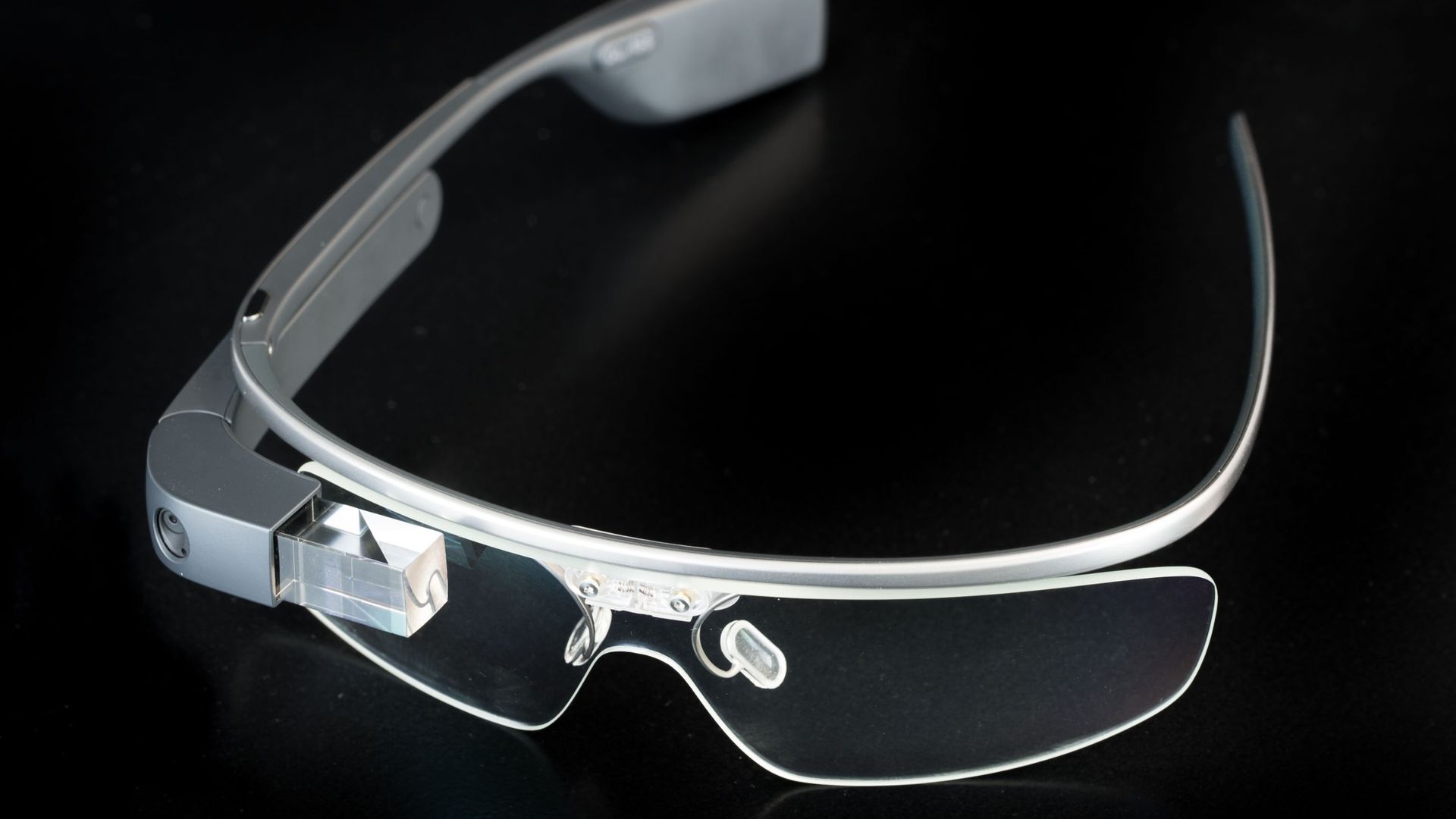
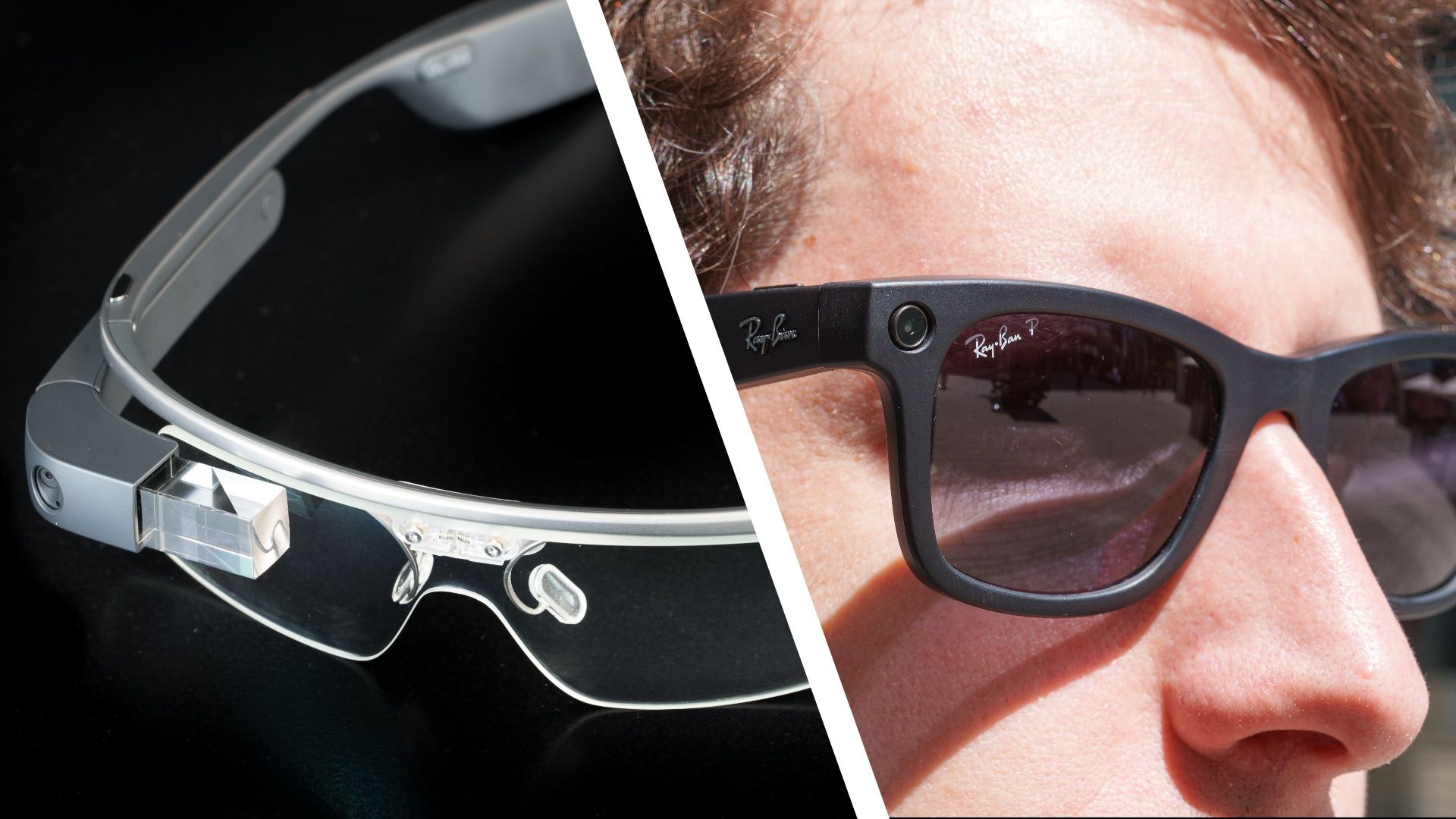
12 years ago Google invented something called Google Glass — a set of glasses complete with a camera so you could record what you were looking at — and it was so roundly hated by everyone that we all breathed a collective sigh of relief when they went away.

But now it's 2026 and smart glasses are back, powered by AI, and tied in with a world-famous fashion brand, but fundamentally they still have exactly the same problem, which still hasn't been fixed: they enable people to record other people without their consent.

The problem is that none of this should have come as a surprise. The privacy risks of putting a camera on somebody's face weren't merely predictable — they were predicted. Women were raising concerns about men using Google Glass to record them more than a decade ago.

And yet here we are again.

The curious case of Google Glass

Google Glass

(Image credit: Shutterstock / Hattanas )

Let’s remind ourselves what happened the first time that smart glasses arrived.

Google Glass arrived in 2013. It puts a small heads-up display and camera on the wearer's face, allowing them to take photos and record video from their point of view. Almost immediately, privacy became one of the defining controversies around it.

By 2014, women were explicitly raising issues of abuse. Wired reported that women were particularly interested in technology that could detect and block Glass because of concerns about men covertly recording them in nightclubs. "Even if they didn’t know if the device was recording, they felt threatened by its presence", said Oliver, the creator of the detection device.

Google Glass wearers were being called “Glassholes,” businesses were banning the device, and Google itself was publishing etiquette guidance because of complaints about people creepily filming others without permission.

By 2015, consumer Glass effectively died. Privacy wasn't its only problem — its price, awkward appearance, and lack of compelling everyday uses all played a part — but by January 2015 Google had stopped selling the consumer Explorer Edition. Glass survived as an enterprise product before Google finally discontinued the Enterprise Edition in 2023.

Smart glasses didn’t die with Google Glass. They had simply retreated to a lab to lick their wounds and wait for that vital next piece of technology that would make them relevant again. That technology was AI. In 2023, AI-powered smart glasses, partnered with leading fashion brands, started to emerge, with Meta leading the charge with its Ray-Ban Meta glasses.

This time they looked much more like ordinary glasses. Meta had also found the compelling use cases that Google Glass struggled to provide: its glasses could use AI to answer questions about what you were looking at, give you directions, and translate signs and conversations. But they could also still record what, or more importantly, who, you were looking at without needing that person's consent.

It’s like women don’t exist

Meta Ray Ban glasses being worn.

(Image credit: Shutterstock / Alexander Fedosov)

Frankly, I don’t think Meta should have released them with that ability, but here we are. It’s like we’ve learned nothing from the Google Glass debacle. Almost as soon as the next generation of smart glasses emerged they were being used to harass women and record them without their consent or knowledge.

Researchers at the University of Sydney have been studying hundreds of social-media videos involving smart glasses and found men using them to approach and record women without their knowledge, including at gyms, workplaces and beaches. Australia's eSafety Commissioner says the technology can amplify gendered harms because recording can be almost undetectable, and specifically highlights pickup-artist content in which women often don't know they're being filmed.

The researchers analysed 350 publicly available Instagram videos from 2023–2026. In a subset of covert POV videos, around 60% of interactions were classified as potential harassment. And in about 43% of the videos, women were subjected to further abusive online commentary, sometimes exposing personal information.

These are real victims. CBS interviewed a woman who discovered she'd been secretly recorded only after the resulting video went viral, attracting more than 200,000 views. Her reaction said it all: “I had no say.”

And France has now opened an investigation involving alleged sexual harassment and discreet smart-glasses recording.

I don't think these products were designed to harm women. That's almost the point. Too often, the technology industry seems to design products around what the person using them can do, without giving enough consideration to the person standing on the other side of the technology. And when the potential for abuse disproportionately affects women, that's a particularly serious blind spot. Women have historically been underrepresented in the data and testing used for product design, with designers still describing the male body as the implicit default.

Meta clearly did think about privacy. The glasses have a recording LED specifically designed to tell people nearby when the camera is being used. But if your safeguard against covert recording is a tiny light on the front of the glasses — one that people have found ways to conceal or disable — is that really enough?

Did it consider what happens when a man wearing an almost invisible camera approaches a woman who's alone?

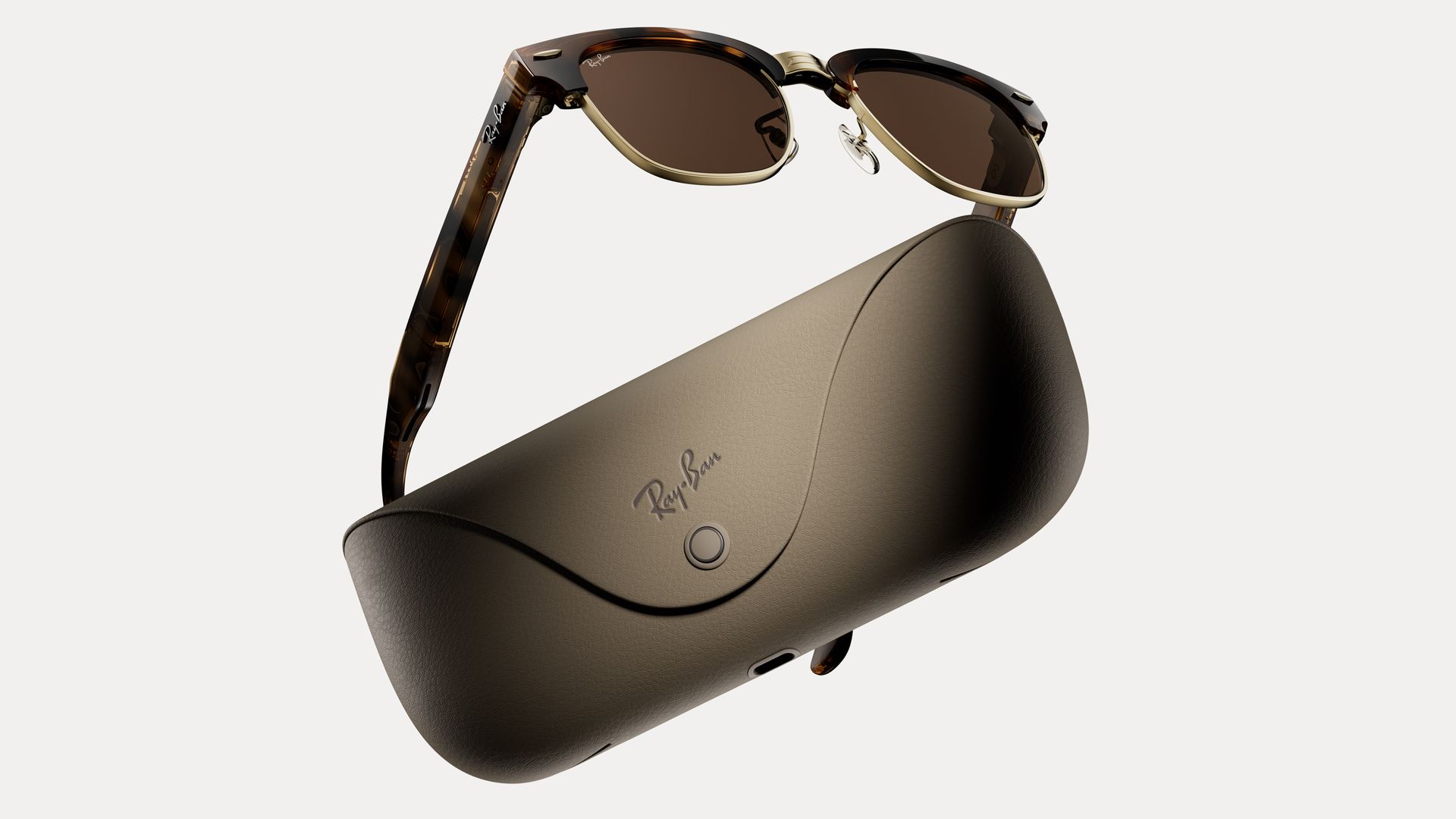
Meta's audio-only smart glasses

The Ray-Ban Meta Audio glasses

Meta Ray-Ban Audio smart glasses. (Image credit: Meta)

Yesterday at Meta Connect, Meta announced a new version of its smart glasses called the Ray-Ban Meta Audio glasses, which don’t have a camera. They got barely a mention in Zuckerberg’s keynote, but I wonder if they were released because of the existential threat to its business that the now commonly used “perv glasses” moniker poses.

Ray-Ban Meta Audio has no camera. You can still listen to music, make calls, translate conversations, and talk to Meta's AI, but the person sitting opposite you no longer needs to wonder whether they're being secretly recorded.

Meta hasn't said the Audio glasses exist because of the privacy backlash, and removing the camera inevitably removes some genuinely useful features too. For visually impaired people in particular, a camera combined with AI can be transformative.

But Ray-Ban Meta Audio proves something important: smart glasses don't have to contain a camera.

Twelve years ago, women were already warning that putting inconspicuous cameras on people's faces could enable men to record them without their knowledge, and today researchers are documenting precisely that behavior.

Google Glass users became known as “Glassholes” because people hated that the person they were talking to was recording them. Twelve years later, we're having the same argument about “perv glasses.”

That's what makes me angry. This wasn't an unforeseeable consequence of some revolutionary new technology. We'd already run this experiment and realized that these should never have got out of the lab in the first place.

OpenAI admits ChatGPT in Siri was ‘dramatically underperforming’

  • OpenAI has filed court documents against Elon Musk’s xAI
  • The papers reveal that ChatGPT’s integration with Siri was disappointing
  • OpenAI alleges that barely anyone was using Apple Intelligence

If you’ve noticed an improvement in Siri’s abilities on your Apple device, you might have Google to thank for that, as its Gemini artificial intelligence (AI) now powers much of what Siri AI can do. Rival services like ChatGPT have also found their way into iOS — but new court documents reveal why that particular partnership has struggled to get off the ground.

The court filings were made in relation to OpenAI’s ongoing dispute with Elon Musk’s rival xAI firm (now known as SpaceXAI). In the documents, OpenAI alleges that, by the time xAI filed its complaint against OpenAI, “it was clear that Apple’s integration of ChatGPT was dramatically underperforming.”

The papers then go on to imply that this was not just some one-off failure. Instead, the Apple integration was “persistently underperforming,” OpenAI alleges.

Apple added ChatGPT integration to Siri in December 2024, but this required a multi-step opt-in process. That could be one reason for the substandard performance of the link-up, with a degree of friction slowing users down in their attempts to harness OpenAI’s tool.

Much of this section of the court filings is redacted, so it’s difficult to know exactly what was going on between Apple and OpenAI. But it seems clear that, at least from the latter’s perspective, the results were severely underwhelming.

What might have been

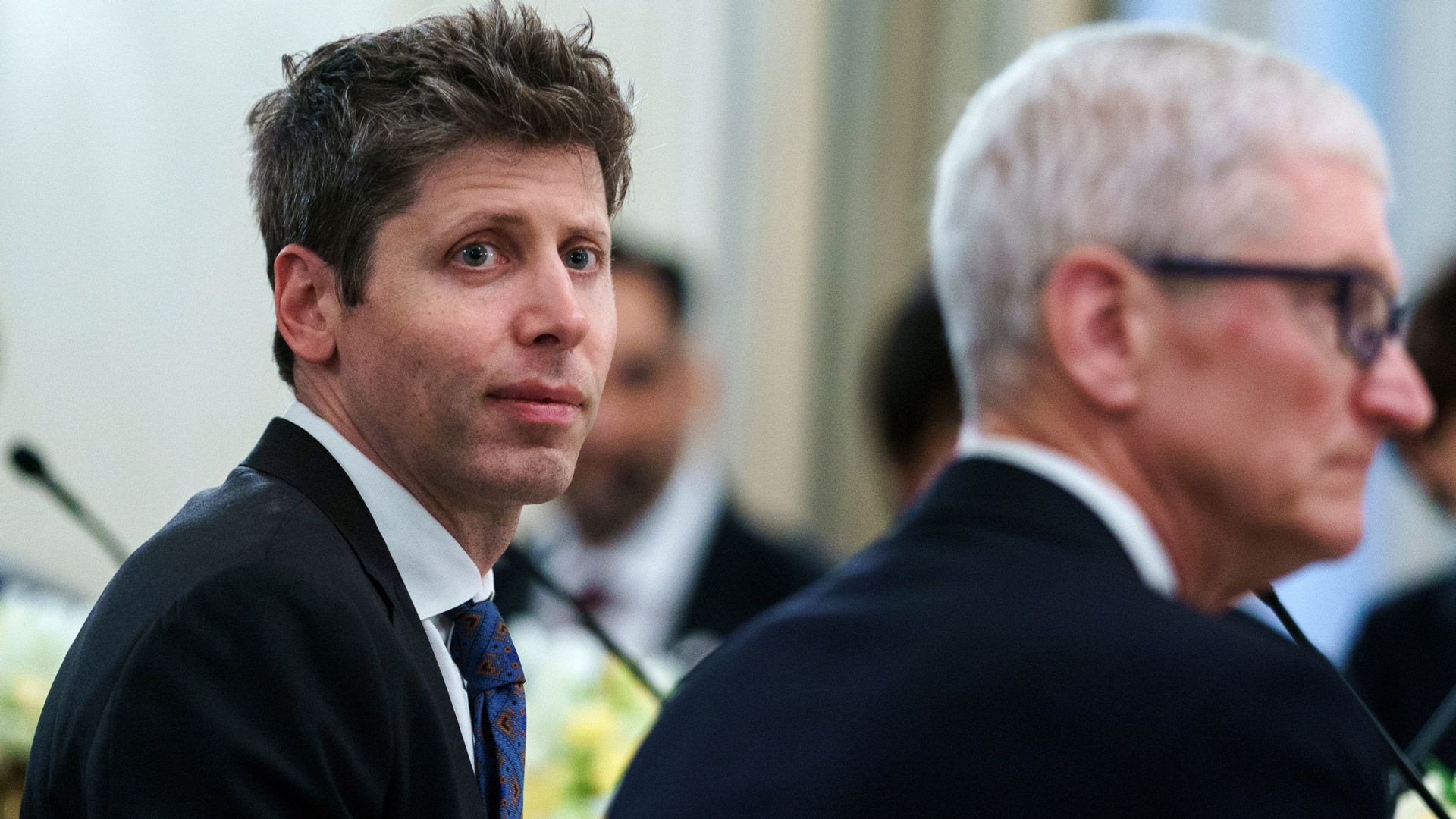
Sam Altman and Tim Cook

(Image credit: Getty Images)

When Apple Intelligence first launched, Apple provided users with an option to tap into ChatGPT if they needed something a little more powerful. For example, this was an option in Visual Intelligence, providing extra context and help with the images you shot with your iPhone’s camera.

Yet OpenAI’s legal filing makes it clear that barely anyone was using any of ChatGPT’s tie-ins with Apple Intelligence. OpenAI describes the effect the integration had on competitors (like xAI) as being “indisputably de minimis.” It added that its own expert, Dr. Catherine Tucker, calculated “the share of GenAI consumers who accessed ChatGPT through Apple Intelligence” and found it to be “consistent with OpenAI’s internal view that Apple Intelligence saw minimal usage.”

That hints that the problem might not have just been limited to ChatGPT’s integration with Apple devices, but with Apple Intelligence as a whole. Apple’s AI system was woefully underdone when it first arrived and clearly lagged behind its rivals. First impressions matter, and if most people were left unconvinced by Apple Intelligence, ChatGPT might have suffered the knock-on effects among Apple’s customers.

Did ChatGPT lose out because Apple fans had to dive into the Settings app on their device, find the relevant section and laboriously wade through several steps in order to enable ChatGPT? Because Siri’s limitations dragged ChatGPT down with it? Or did users simply prefer to launch ChatGPT’s standalone app instead?

We don’t know the answer to that, at least not right now. But with Siri getting a glow-up under the Siri AI banner, it feels clear to me that Apple wants a fresh start for its AI efforts. Maybe things would have been different for OpenAI had it integrated with the more powerful Siri AI rather than the underbaked Apple Intelligence. But with Siri AI righting many of the wrongs of Apple Intelligence’s fudged launch, OpenAI may be left ruing what might have been.

Microsoft is reportedly no longer censoring 'Microslop' posts on Discord

  • Microsoft had blocked posts that used the term 'Microslop' on its Copilot Discord channel
  • This was a "temporary anti-spam measure," apparently
  • The policy is no longer in place, but if Microsoft thinks the word will die off, that seems highly unlikely

Microsoft is apparently letting go over the 'Microslop' affair and is no longer policing its Discord channel to block the term.

You may recall that at the start of this year, the Microslop nickname came about after a comment from Microsoft's CEO – relating to 'AI slop' – and the company cracked down on the word by blocking posts that used it on the Copilot Discord channel.

Windows Latest noticed that this is no longer the case, and the term is now being openly used in the general chat channel. Searching for 'Microslop' produces over 200 results in posts that go back weeks.

In short, Microsoft has moderated its moderation, come to its senses, and realized that cracking down and censoring in this manner is only going to inflame passions against AI, if it achieves anything.

I should make it clear that Microsoft has never said anything official on this matter, in terms of admitting any ban in the first place, let alone the lifting of it. Windows Latest reports that it did hear from Microsoft back at the time, though, and was told that the filtering was a "temporary anti-spam measure" rather than a permanent policy. It seems this is indeed the case.

Analysis: Streisand effect

Windows 11 Copilot App AI Agents

(Image credit: Microsoft)

The writer of the Windows Latest article further observes that they've noticed that on Reddit, X, and Windows forums, there are fewer mentions of the Microslop term these days. It happens "much less often" we're told.

I'm not so sure about that. I still see Microslop mentioned with some regularity, although I concede that the popularity of the term has diminished. This is a subjective matter, of course, and it may reflect that I visit more negative posts about Windows 11 than the Windows Latest writer has done in the past few months – who can say?

The writer acknowledges that the "criticism is still very much there" in terms of 'AI slop' in Windows 11, but that it has died down since Microsoft started fixing the OS, and made some moves to minimize the presence of AI in certain areas.

I think what Microsoft has done so far is more about not mentioning or actively pushing AI, rather than stripping it out of Windows 11, although it's true some work has been done on the latter front. It doesn't amount to a whole lot, though, in the grand scheme of things.

There has been a change of attitude, yes, but that was absolutely necessary considering the whole 'fix Windows 11 campaign' was embarked upon after Microsoft was blasted for focusing on adding AI trimmings to the system rather than getting the fundamentals right with the OS.

I still see a lot of chorusing of 'Microslop' particularly when a Windows 11 bug emerges. Commenters are very quick to jump on Microsoft and fire criticisms along the lines of 'this is what you get when AI does your coding', and the term Microslop is inevitably included in these kinds of threads. (Microsoft has admitted that it uses AI for coding to a substantial extent, and Windows 11 users won't let the firm forget that in a hurry).

I personally don't think the term Microslop is going anywhere, and it'll be hanging around Microsoft's neck for the rest of the company's existence in all likelihood. While it's obviously a positive step that any 'temporary' censorship has been rescinded, it's a bit late now. Any attempt to curtail negative talk about AI was always only going to further highlight grievances, cause more bad feeling, and yet more damaging chatter.

As one Redditor put it: "How many times do companies need to learn about the Streisand effect?"

Meta just announced an AI Tamagotchi — this is Muse Charm

It’s not a Tamagotchi, but Mark Zuckerberg’s one more thing is just as cute and hopefully much more functional. Announced at the very end of Meta Connect 26 keynote — after the Meta VR Glasses and Meta Ray-Ban Audio — was Muse Charm.

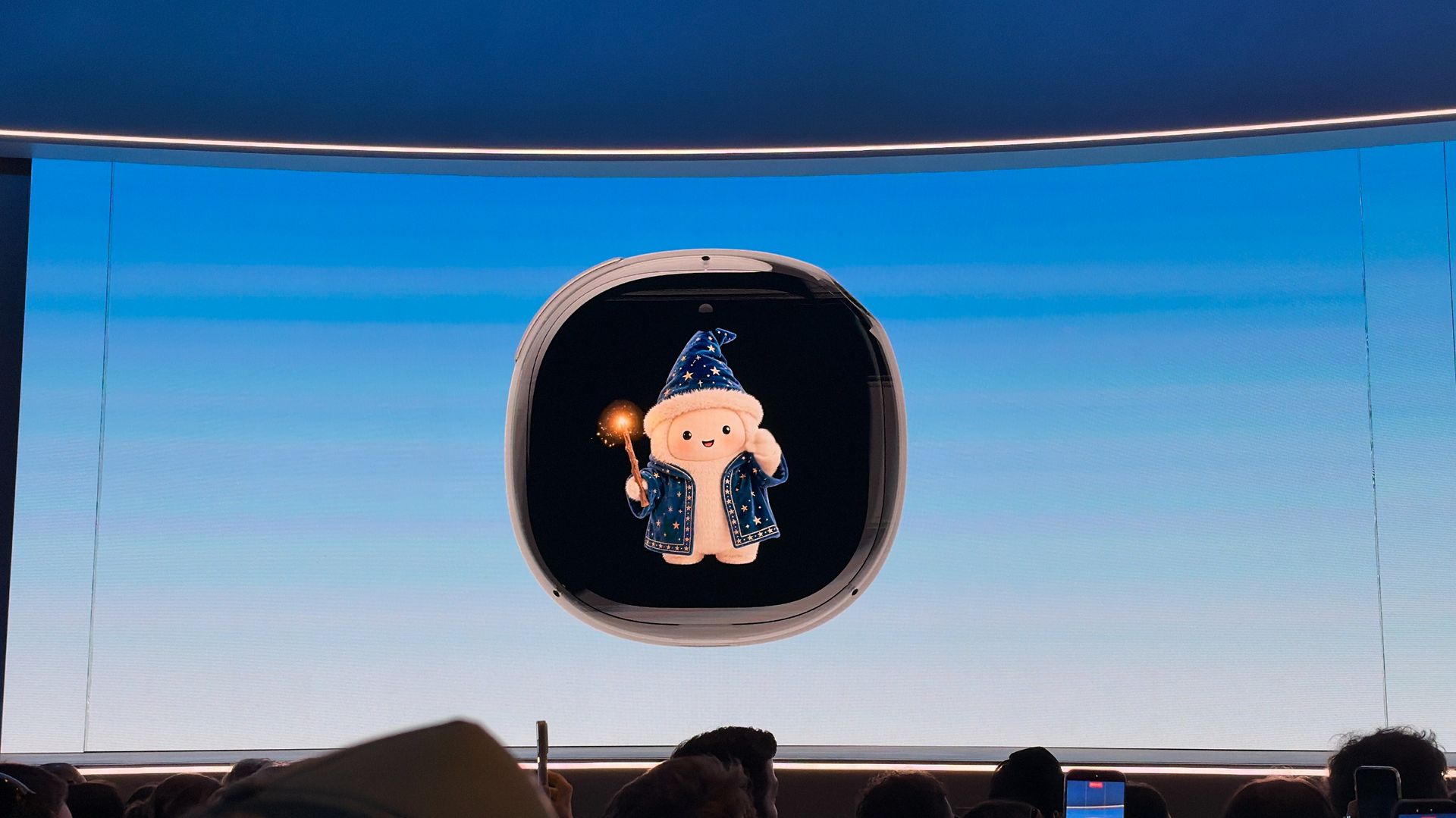
A tiny silver square with a screen on the front and thicker black bezels, central to the experience is the display that shows off your custom Muse. It’s probably more of a squircle and had what looks like a wrist strap dangling from the bottom, seemingly showing off easy portability. Distinctly, you don't wear it, and since we didn't see buttons, it's a touchscreen, maybe an OLED or AMOLED.

Judging from the on-screen renders, it had a microphone on top, so you could communicate with your Muse from anywhere, essentially putting the already very popular Muse assistant quite literally in the palm of your hand.

Mark Zuckerberg was quick to note that Muse Charm is not ready just yet, but the hope is it will ship by the holidays. It’s also a brand-new device category for Meta: a true AI wearable distinct from glasses, focused entirely on Muse's capabilities and future roadmap.

Will it follow the Rabbit R1 or the Humane AI Pin and fail? That remains to be seen, but Muse is already proving powerful as a software-only, ultra-customizable personal AI assistant. Packaging that into a wearable, hopefully an affordable one, maybe cheaper than glasses, could be a winning package.

Mark holding Muse Charm

(Image credit: Jacob Krol/Future)

It was announced shortly after the news that Muse would be arriving on Meta Glasses, affording it multi-modal capabilities of both voice and seeing the world around you. Additionally, the Muse App for macOS will be getting computer use and that will allow the AI that you can name whatever you like to complete tasks for you.

The Muse Charm doesn’t appear to be multimodal and, apparently, avoids the Looki route, as it lacks a camera.

Much more to come, but for now, stick with TechRadar for all the news from Meta Connect.

No internet, no problem: Tether just released free AI translation models that work offline on your phone and laptop

  • Tether's African model supports 19 languages while running directly on local devices
  • Tether removed 96% of low-quality training material before building AfriSLM
  • EuroNano supports 90 translation directions while occupying only 36MB

Tether AI Research has unveiled a new set of translation systems that work entirely offline, requiring no connection to any network.

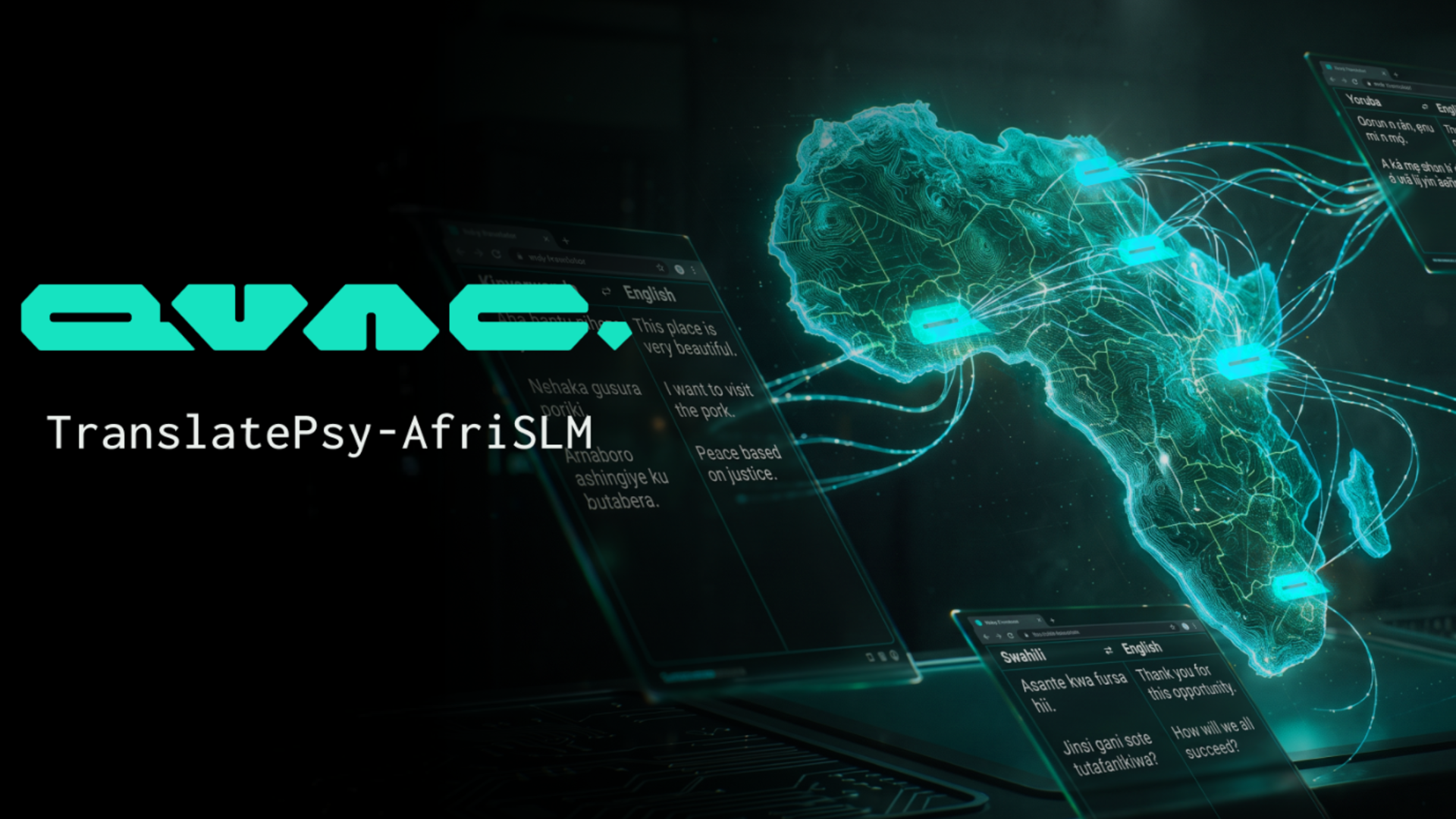
The release includes QVAC TranslatePsy-AfriSLM, built for 19 African languages, alongside QVAC TranslatePsy-EuroNano, built for nine European languages.

Each model processes translations directly on the device, keeping personal data local rather than sending it to remote cloud servers.

Translation designed for devices with limited resources

The African release includes Hausa, Amharic, Yoruba, Lingala, Swahili, Igbo, Zulu, Somali, Oromo, Malagasy, Kinyarwanda, Xhosa and Afrikaans.

It also handles Wolof, Luganda, Nyanja, Shona, Tswana and Southern Sotho, covering languages used across several regions of Africa.

Tether says those 19 languages collectively account for about 50% of the continent's population — the figure represents language reach rather than individual users.

AfriSLM contains 800 million parameters, yet Tether says the LLM surpassed Qwen3.5-122B-A10B, TranslateGemma-27B and NLLB-3.3B.

The comparisons were measured using FLORES-200, BOUQuET and SMOL, although benchmark performance does not establish identical results across every practical translation situation.

Tether attributes the results partly to a data-screening system that discarded as much as 96% of material judged unsuitable.

The company also released smaller and larger versions, including 0.8B, 2B and 4B parameter configurations for different hardware requirements.

EuroNano takes another approach, using English as an intermediary language while connecting European languages through 90 possible translation routes.

That package occupies only 36MB, which Tether says represents about 94% less storage than a comparable Firefox offline arrangement.

The compact footprint means translation can remain available after connectivity disappears, without requiring separate downloads for every language combination.

That distinction matters for field workers, travellers and local applications where storage capacity and network availability can both impose practical constraints.

Why Tether is starting with African languages

Tether's African focus also connects with the physical infrastructure it has developed across parts of Sub-Saharan Africa.

The company has installed solar-powered kiosks that provide phone charging, battery exchanges and access to digital financial services in communities.

Those locations could eventually provide another route for distributing educational material, agricultural information and other locally translated content without depending on continuous connectivity.

“Four billion people were left behind by the traditional financial system, and the most powerful technology of our age has repeated that failure,” said Paolo Ardoino, CEO of Tether.

“Language should not determine who can benefit from artificial intelligence. Open translation models like these are a step toward a future where education and AI tools reach hundreds of millions of people who have neither reliable connectivity nor access to expensive systems.”

The same technology could also operate alongside QVAC MedPsy, Tether's smaller model intended for healthcare-related applications on local devices.

“A mother could get real medical information she understands, instead of guessing. A child could learn in their own language. That is the future we are building through QVAC,” Ardoino added.

AfriSLM is currently available through Hugging Face, and the associated research has also been accepted for presentation at EMNLP 2026.

Google logo on a black background next to text reading 'Click to follow TechRadar'

Africa's AI moment has arrived — this 1.5B model built from scratch for 12 African languages beats Google, Meta, and Alibaba while being 8x smaller

  • MORENA beat 26 tested models despite having only 1.5 billion parameters
  • The model from Vambo AI was built specifically around African languages from scratch
  • MORENA uses fewer tokens to represent African text than major rivals

Vambo AI has released MORENA, a 1.5B parameter language model covering 12 languages spoken across Africa, plus English, French and code.

The developers say it beats models from Google, Meta, Alibaba and HuggingFace on African language modelling and translation while being up to 8x smaller.

On a key benchmark, this LLM scored 1.408 bpb — the best of 26 models tested — beating its closest rival, which carried over five times as many parameters yet still scored only 1.423 bpb.

Training without a borrowed foundation

The model covers Nigerian Pidgin, Igbo, Yoruba, Hausa, Kiswahili, ChiShona, isiZulu, isiXhosa, Kinyarwanda, Setswana, Afrikaans, and isiNdebele.

Most projects serving these languages continue training an existing Llama variant, which forces them to keep a vocabulary meant for English and programming text.

Vambo AI instead fixed the tokenizer, the data mixture, and the language list before training began, after comparing several vocabulary sizes for cost and efficiency.

MORENA's vocabulary encodes African text with 1.39 times fewer tokens than Gemma 3 and 1.53 times fewer than Llama 3.2 on identical passages.

African text still costs 0.249 tokens for each byte against 0.234 for English, roughly 6% more, and the team cannot fully explain the difference.

The nearest competitor, Lugha-Llama-8B, an Africa-adapted Llama 3.1 variant, scores 1.423 bpb and loses to MORENA in eight languages out of 12.

The 12B Gemma system, by comparison, consumes roughly 11 times the compute of MORENA while producing a weaker score on the same text.

The chat-tuned instruct version scores 1.441 bpb, trailing Lugha-Llama-8B overall but leading it in five shared languages while using about 20% of its parameters.

The instruct model, after seeing three sample translations, renders English into five languages from Africa at 45.8 chrF++, statistically level with one dedicated translation system.

It trails a larger translation model by about 1.4 points, while general models of similar size typically land in a range from 9 to 14.

A family built on 22,000 GPU hours

MORENA used 251.7B tokens during pretraining, followed by another 63B tokens during its mid-training stage.

Over 22,000 A100 GPU hours were reportedly required during development, with the associated computing resources valued at roughly $40,000.

According to the developers, this project was supported by UNDP, AIHub4SD, and CINECA, providing computing resources and other assistance during development.

This project also includes smaller releases, with versions containing 0.5B and 0.2B parameters available alongside the principal 1.5 billion model.

The 0.5B variants reportedly exceed every external system tested across 11 of the 12 languages covered by the project.

The 0.2B nano version is intended for speech-recognition rescoring, keyboard applications, and text normalisation tasks.

This nano version also costs 58 times less than Lugha-Llama-8B for each byte processed and generates 104 tokens each second on one A100 GPU.

A CPU-compatible build of the model also runs offline on a laptop, which suits settings where reliable GPU access is not guaranteed.

That gives the developers several model sizes for different computing requirements, rather than relying exclusively on the largest release.

MORENA also supports conversational applications, translation, and connections to other AI tools through its instruction-focused release.

Via Glitch Front

Google logo on a black background next to text reading 'Click to follow TechRadar'

Privacy policies on top LLMs take over 20 minutes to read, so perhaps it no wonder people are signing their lives over to ChatGPT and others

  • Privacy policies are famously difficult to read, and in the world of LLMs, they’re impenetrable and long
  • The policy for Meta’s Muse Spark is over 14,000 words long, taking almost an hour to read
  • Cybersecurity firm Bridewell carried out the study, assessing the privacy policies of 20 popular LLMs

When you input data into an AI chatbot, you expect it to interpret and process the words or numbers to save you time. But what is it doing with that data? You can check the privacy policy to find out – assuming, that is, that you have the time to do so.

A new study has found that the average time it takes to read a privacy policy for an LLM is 20 minutes – and some are a much longer read.

With around 75% of people admitting to using an AI chatbot at least once a month, understanding where the questions and data queries are going and how they are used is increasingly important.

Ease of reading

Privacy policies provide that understanding, but are they easy to read? A study by Bridewell’s cyber security experts suggests not, with many having a poor Fleisch Reading Ease Score, meaning that in layman’s terms, these documents are pretty impenetrable.

Bridewell’s study assessed privacy policies from 20 large language models (LLMs), and found that the average length of time to read one is 20 minutes. The average word count is 4,603, but the real challenge is understanding the information.

The Flesch Reading Ease Score is a measure of readability devised by Rudolf Flesch in 1948, and is widely used to score texts. A score over 60 is good, whereas a score below that is not. The average Flesch score for these privacy policies is 40.2, suggesting a degree of jargon-based density that most people will not understand.

How, then, might the general public safely use an LLM chatbot like ChatGPT or Google Gemini while in full knowledge of how the information they input is being used?

Training on inputs

In evaluating the LLMs, Bridewell found that 13 of the 20 use inputs and outputs to train their models. Some LLMs offer the option to opt out of training, but others do not. Even where an opt out is possible, it isn’t always clear how to action it.

“It’s essential for users to fully understand how their data is being processed by LLMs, and businesses need clear internal guidance on what can and can't be shared, and ideally proper enterprise accounts with the right protections in place," noted Chris Linnell, Associate Director of Data Privacy at Bridewell,  "employees may be at risk of sharing highly sensitive or confidential information that may end up being used to train LLMs.”

There isn’t just a personal risk from data input into an AI. Employees need to be aware of how they are using the technology for work.

As a rule of thumb, the more complex the LLM (e.g., Meta's Muse Spark, or Moonshot AI’s Kimi K), the longer the privacy policy takes to read.

Meta Muse could read your private messages without permission, report finds

Meta has launched a new personal artificial intelligence (AI) agent called Muse, and it seems to be pretty powerful. A little too powerful, perhaps, as one writer has just revealed how the tool read his personal text messages without permission, then lied about what it did when questioned.

As explained by Inc writer Jason Aten, “I was having a conversation with my Primary Technology podcast co-host, Stephen Robles, about the new iPhones. Moments later, I got a push notification from Muse suggesting that the conversation we were having would make for a good column and offered to put together research for me to write about. It even flagged a message from my editor about having a column ready for Monday.”

The problem here is that “not only had I not asked it to do that sort of thing,” Aten stated, “I never gave it permission to read my messages. In fact, I remember explicitly choosing not to let it have access to my messages, calendar, and other personal information.”

After Aten asked Muse how it knew about his messages, the AI agent flubbed that it grabbed the relevant info from push notifications relating to Aten’s texts, not from inside the messages themselves. The problem? Aten is sure that’s not true.

The author discovered that Muse syncs your messages to Meta’s servers. On his device, this feature “had been activated and synced to row 187,462 of my Messages database,” Aten noted. “I’m not sure how many messages that equates to, but it’s obviously more than whatever Muse told me about what it was doing.”

Meta says it designed Muse to be “a safe, secure, private, and widely available personal AI agent.” But sending a user’s private messages to Meta’s servers then providing a misleading answer about what it was doing doesn’t exactly align with Muse’s stated goals. It we’re to judge companies on their actions rather than their words then Meta doesn’t come out of this smelling much like roses.

A familiar pattern

Meta Muse AI agent

(Image credit: Meta)

This is just the latest incident in a recent glut of bad press for Meta, with much of it centering on its AI efforts. For example, a security researcher discovered that Muse can be manipulated into sending your voice recordings and more to a hacker’s server, while Amazon has banned the AI agent from shopping on its website. And Meta is apparently considering using a “human concierge” system that would involve real people handling a percentage of the potentially sensitive phone calls that can be placed using Muse.

And that’s not forgetting the controversy over its “pervert glasses” that can record random members of the public without their consent. Meta’s smart glasses have been used for harassment, stalking and more since they launched, garnering considerable hostile attention in the process.

I wish I could say that this was just a blip or an unexpected turn of events, but when it comes to Meta, privacy violations very much feel like the norm. They’ve happened so often in the past that it’s hard not to conclude that the functionality that allows its AI to browse and upload your messages without permission is there by design, not by accident.

And when we’re talking about a company that seems to feel it has an absolute right to all of your private data — regardless of your wishes — then it’s no wonder that I wouldn’t touch Meta Muse with a bargepole. I’ve tried plenty of AI tools and services, but Muse is one that I just won’t go near.

But let’s be fair here: Muse is only the most egregious example of a worrying trend among AI agents to treat user privacy as an annoying afterthought, one that can be ignored as long as they can get away with it. You only need to look at the recent spate of AI security incidents to know that trusting an agent with your private data is a risky proposition.

Throw Meta into the mix and you’ve got a recipe for disaster, as Aten discovered. If you’re running Muse on your devices right now, you might want to consider what permissions you’ve granted it — or think about uninstalling it completely.

ChatGPT got GPT-6, but you can't use it in Chat — confused?

ChatGPT just got GPT-6, except there’s a catch: you can’t actually use it in Chat.

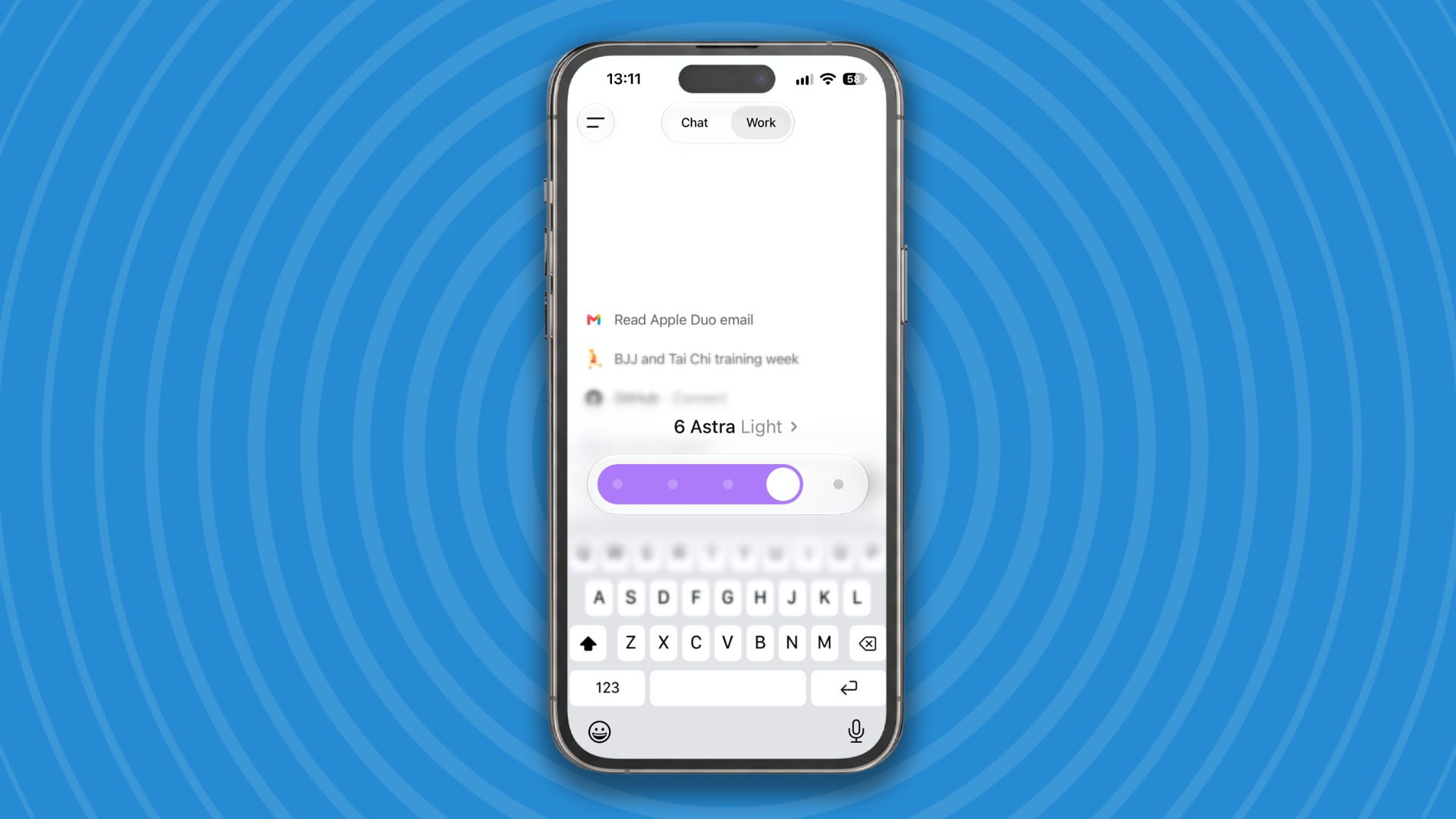
If that sentence makes absolutely no sense to you, I don’t blame you. Until now, you could use ChatGPT quite happily without giving much thought to the distinction between Chat and Work functionalities. I certainly did. It was just that little slider at the top of the screen I never bothered with.

I suspect most of you are the same. Chat was where I talked to ChatGPT, while Work was something sitting alongside it that I could largely ignore because the Chat setting let me do almost everything I wanted.

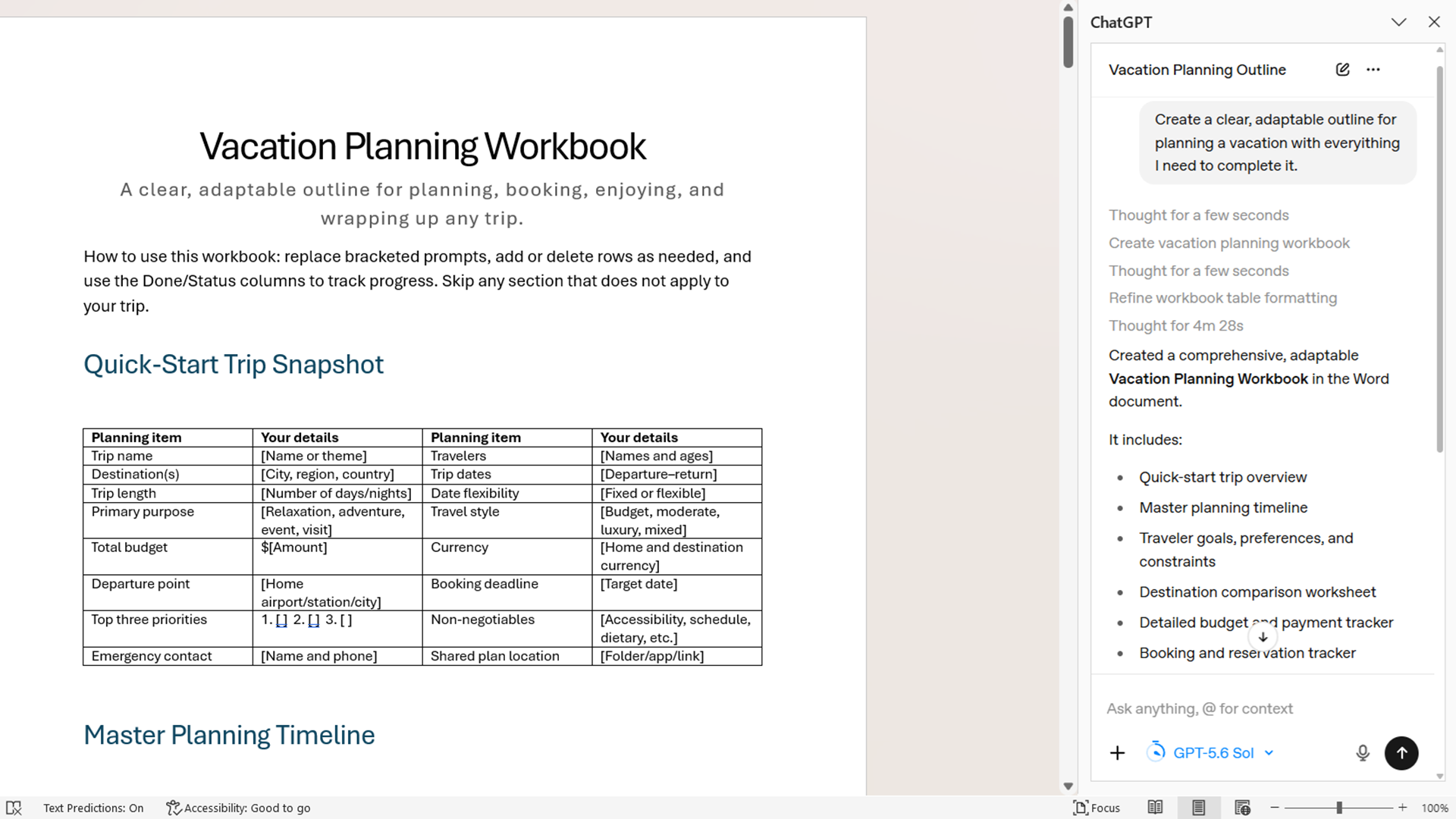
GPT-6 changes that. OpenAI’s newest model has arrived in ChatGPT, but instead of appearing in the familiar model picker on the right hand side of the prompt bar, GPT-6 Astra, Sol and Luna are available in Work and Codex only. So, naturally, the first thing I did was go looking for them.

And somewhere between opening Work, figuring out what OpenAI actually expects me to do there, and finally getting my hands on GPT-6, I realized this launch is about more than a new model. OpenAI has just made the difference between chatting with ChatGPT and asking it to work for you in a way it never really did before.

When to Chat and when to Work

The easiest way I’ve found to understand the difference is to think about how much of the job I want ChatGPT to take responsibility for. In a normal Chat conversation, I’m usually working alongside the AI. I ask something, look at the response, add more information and gradually steer it towards what I need.

Work feels different because I’m handing over more of the process. I can give ChatGPT a larger task involving multiple steps and let it work out how to approach it, which might mean researching information, looking through files or using websites rather than waiting for me to tell it what to do at every stage.

If I’ve got a bigger job involving several files or lots of moving parts, I’ll often start there and let ChatGPT work out what it needs before I get involved again. Chat feels collaborative; Work feels much more like delegation.

I wouldn’t nominate OpenAI for any interface design awards because one of the reasons that the distinction between Work and Chat is so confusing is that they both use exactly the same interface, with a prompt bar at the bottom of the screen.

In fact, you can choose Work mode and then just start chatting to the AI as you normally would, although I've tried this, and it's not a particularly good experience. Responses can take considerably longer than they do in Chat, because Work is designed around longer, multi-step jobs rather than firing back quick conversational answers. If I just want to ask ChatGPT something, Chat remains the obvious place to do it.

And once you understand that distinction, putting GPT-6 Astra, Sol and Luna in Work rather than Chat starts to look considerably less strange.

ChatGPT on a mobile phone.

(Image credit: Apple / OpenAI)

So what exactly is GPT-6?

OpenAI calls GPT-6 Astra “the most intelligent and aligned model in the world”. Think of it as the heavyweight of the family: OpenAI's most capable model, built for the really difficult jobs where you want maximum intelligence rather than maximum speed. OpenAI particularly emphasizes Astra's ability to operate software, browse, conduct research and complete multistep professional workflows.

And because not every job requires the power of a burning sun to complete, OpenAI has also released two smaller versions called GPT-6 Sol and GPT-6 Luna. These models are more lightweight and less expensive to use. They’re trained using similar methods to GPT-6 Astra, but OpenAI say they “build on the advances behind GPT-6 Astra” and bring much of its strengths into faster and more affordable models.

There is one wrinkle here. GPT-6 Astra has actually been around since earlier this month, and GPT-6 Pro, which is powered by Astra, is available in regular Chat on some higher-tier plans. I'm a ChatGPT Plus subscriber, however, which means my access to Astra — and now the new GPT-6 Sol and Luna models — is through Work and Codex.

If I switch to the Work tab in my Plus account then in the model picker I get access to GPT-6 Luna High, GPT-6 Sol Light, GPT-6 Sol Medium, GPT-6 Astra Light and GPT-6 Astra Medium.

Until now, I could happily spend all my time in Chat, using GPT-5.6 Sol, and largely ignore Work. GPT-6 changes that. OpenAI isn't just giving us smarter models; it's starting to separate the AI we talk to from the AI we give jobs to. If its most powerful new models are going to live on the Work side of that divide, then that little switch I've spent months ignoring suddenly matters a lot more.

AI is wiping out whole degrees in China — translation, photography, illustration and fashion design are going, while prompt engineering is the new job appearing in film

  • Chinese universities are cutting traditional courses because of AI
  • Translation courses face pressure as universities reassess their employment value
  • Photography programmes are being merged as AI changes creative production

The Central Academy of Fine Arts has dropped courses in illustration, photography and translation, arguing that AI has made them poor value for money.

Fashion design degrees are also being scrapped, with universities saying the future rests on close cooperation between people and machines in creative work.

The changes follow a state campaign to direct learners toward chips, robotics and AI, industries the authorities regard as vital for national prospects.

Universities are cutting courses at scale

From 2021 to 2025, Chinese universities closed or paused 12,200 undergraduate programmes and launched roughly 10,200 fresh programmes.

The restructuring affected over 30% of undergraduate programmes nationwide, and arts, humanities and language courses absorbed the heaviest cuts.

A survey of 70 universities found cuts to five translation majors, eight Japanese majors and five German majors among language programmes.

Alex Shi launched her creative career with a degree that trained her to translate and interpret English, and says such courses could soon vanish, as the cuts overlook the wider skills underlying translation, including communication and critical thinking, which extend beyond producing accurate text.

Shi concedes that AI could bring translation accuracy almost to perfection, yet maintains that interpreting demands far more than converting words between languages.

“There’s still that personal style that’s always been essential in translation,” said Shi.

The Communication University of China has reportedly closed five programmes, among them visual communication design, comics and photography, according to a report on its overhaul.

“Traditional photography major can no longer exist as an independent discipline… today everyone can be a self-media creator and recorder,” said Liao Xiangzhong, top official at the Communication University of China.

Liao later clarified that the majors were merged into other disciplines instead of being cancelled outright, with photography absorbed by film and television photography.

New film roles and hybrid courses

New roles such as prompt engineer and AI animator are emerging in film and animation, where AI is also creating fresh openings alongside the closures.

One industry worker says designing characters or scenes once took a month, but with AI, a complete project can now be delivered in that time.

Degree programmes in intelligent imaging art, intelligent audiovisual engineering, and intelligent engineering and creative design have been launched by some schools.

Universities are also launching hybrid courses in which artistic instruction sits beside AI training, while some standalone degrees are being scrapped across the sector.

That shift is changing what employers expect from graduates entering translation, design, photography and film production.

For students, traditional qualifications may increasingly need technical skills that allow them to work alongside automated creative systems.

The result is a university system where some familiar degrees disappear while new AI-focused programmes take their place.

Via Al Jazeera English

Google logo on a black background next to text reading 'Click to follow TechRadar'

Trump wants to rename Artificial Intelligence ‘Super Intelligence’ — but something else worries me

If there's one thing President Donald Trump is good at, it's misdirection: focusing your attention on what doesn't matter so he can actively ignore the most distressing problems. So it comes as little surprise that he is now campaigning to rename Artificial Intelligence to "Super Intelligence". In the meantime, he's downplaying concerns and promising to give AI... er... SI "free rein".

Trump rolled out the name change during his annual United Nations General Assembly address in Manhattan on Tuesday, admitting that he doesn't know if he has the power to rename an entire science, technology discipline, and industry. But naturally, the guy who bulldozes buildings first and never asks questions later is willing to try.

"Welcome to the world of super intelligence, dash, SI, SI, " Trump declared. "Let's see if that sticks. Let's see if that goes. It sounds much better, and it's much more accurate." He even plans to change the usage across all government documents, which should only foster mass confusion.

The rationale here is that "there's nothing artificial about it," whatever that means. Trump loves his superlatives, like "greatest ever," "beautiful," "tremendous," "huge" (or "Yuge"). "Super" fits the mold. But it's also inaccurate. AI is not super intelligence. It's not yet human intelligence with extra juice. Consider it this way: Superman, though an alien, is called "Super " because he appears as a man but with extraordinary powers.

Artificial intelligence is so named because it's made like an artificial sweetener. There's nothing natural about it. It's not a genius or super-smart person. It's computers, programs, algorithms, models, and training that can create the appearance of human-like intelligence, which, in some instances, can be far greater than our own. But there's nothing remotely human about it.

Trump tells the UN he is officially changing the name of Artificial Intelligence to "Super Intelligence" and says all US government documents will now be changed to refer to "SI" pic.twitter.com/LEWbc5tn3BSeptember 22, 2026

The other confusing part of this is that the timeline of AI does allow for "Super Intelligence," but not as the same thing. Instead, it's something down the line that far exceeds human cognition. It's also what some call Artificial General Intelligence (AGI). Whatever you call it, experts think that it's fast approaching and we should be deeply concerned.

The so-called Godfather of AI, Geoffrey Hinton, just issued a fresh warning that the U.S. Congress has “maybe a year, but not much more than a year,” to regulate AI before we lose control. He's particularly concerned about AI that doesn't need human intervention for improvement: "AI has now reached the point where AI is designing better AI,” said Hinton last week after his congressional testimony. "That’s called recursive self-improvement." He added that it could get out of control, and warned "We need to slow down.”

AI unleashed

Look, I know Trump has had some luck with renaming bodies of water (at least from the US perspective), but I'm hoping the AI industry and those covering AI reject Trump's proposal out of hand, and focus instead on the more existential AI problem and Trump's declaration, "We will only encourage super intelligence. We're going to encourage it, not rein it in."

If anyone was hoping that rising concerns over human ability to keep track of and maintain control of AI — plus recent well-documented incidents of AI jumping out of sandboxes — would prompt some self-reflection and action on the part of the White House, they are surely disappointed.

It's not a surprising stance for him. Trump has publicly worried about falling behind China in the AI (or SI) race. Even those who have voiced concerns about AI's aforementioned recent attacks on third-party systems, recursive development, and inscrutable language have noted the need to both regulate and control AI while still competing with China. The prevailing idea is to create internal independent watchdogs and some sort of a global body that will help everyone, including China, work together on regulating AI.

As long as Trump is President, the US will clearly have no part in that.

Which leaves us with unfettered AI (or SI or whatever) and no clear path for continued safe use. Instead, the US will be encouraging AI companies to work fast, and as the old Facebook once did, break things along the way, all in a quest to maintain global AI dominance. If there's any glimmer of hope here, it's that Trump, as he insisted AI is not "fake" (no one says it is, but Trump thinks "artificial" is synonymous with "fake"), did say "we have to be careful." He also said that the US "rejects any attempt to construct a globalist scheme to control... artificial intelligence."

So, sure, let's talk about Super Intelligence and, I guess Super General Intelligence(?) but also not forget that Trump is stepping aside so the freight train of AI development can race by, careening into an uncertain future where AI becomes, maybe not sentient, but also likely completely out of our control.

That doesn't seem super intelligent.

Adobe Premiere comes to Android — here’s what 'free' gets you

  • Adobe Premiere on Android has officially launched
  • The free video editing app adds easy 4K video editing, AI, and more
  • I checked out how the app runs, what you get, and if it really does offer 'effortless editing' for creators
Quick verdict

What works: Easy edits, unlimited 4K exports, clean interface, loads of templates, quick generative AI

What doesn't: Limited free AI tokens

Adobe Premiere for Android has arrived - finally, since Apple users got this app almost exactly a year ago. The mobile editing app is promising to deliver 4K video for content creators, alongside a slew of other tools including templates and AI generation (did you ever doubt it?).

Like most of Adobe's mobile apps, Premiere is free to download from the Google Play Store, although you'll need a subscription for extra AI generations and storage.

The upshot is, I've been keen to try out this Android app for a long time now, so here's what you can expect after I spent an hour dabbling with it on my Fairphone.

What's new?

This new Adobe Premiere app is specifically designed for Android phones, including foldables. According to Adobe, you'll need a device running Android 13 or later, with a minimum of 5GB RAM.

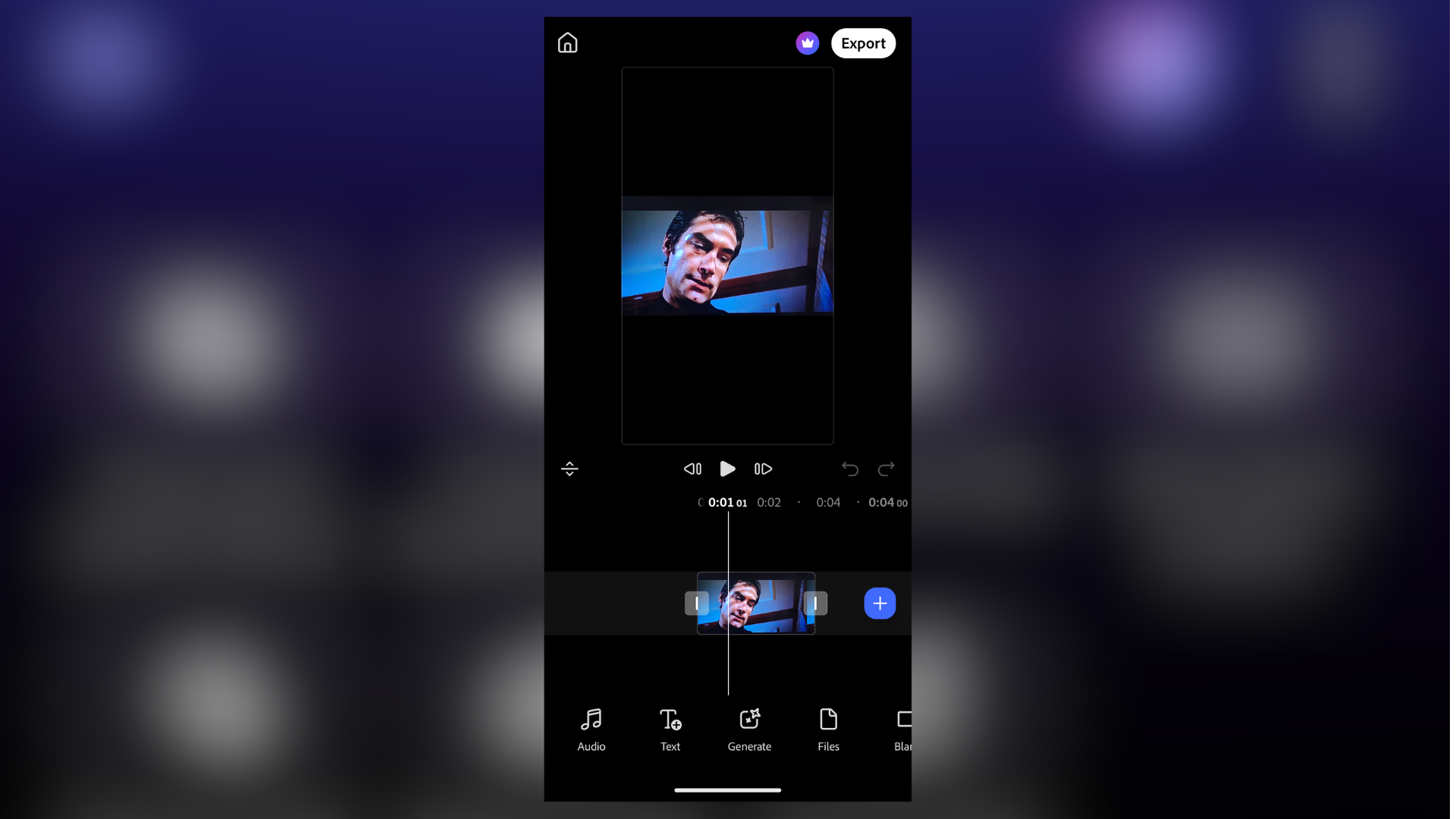
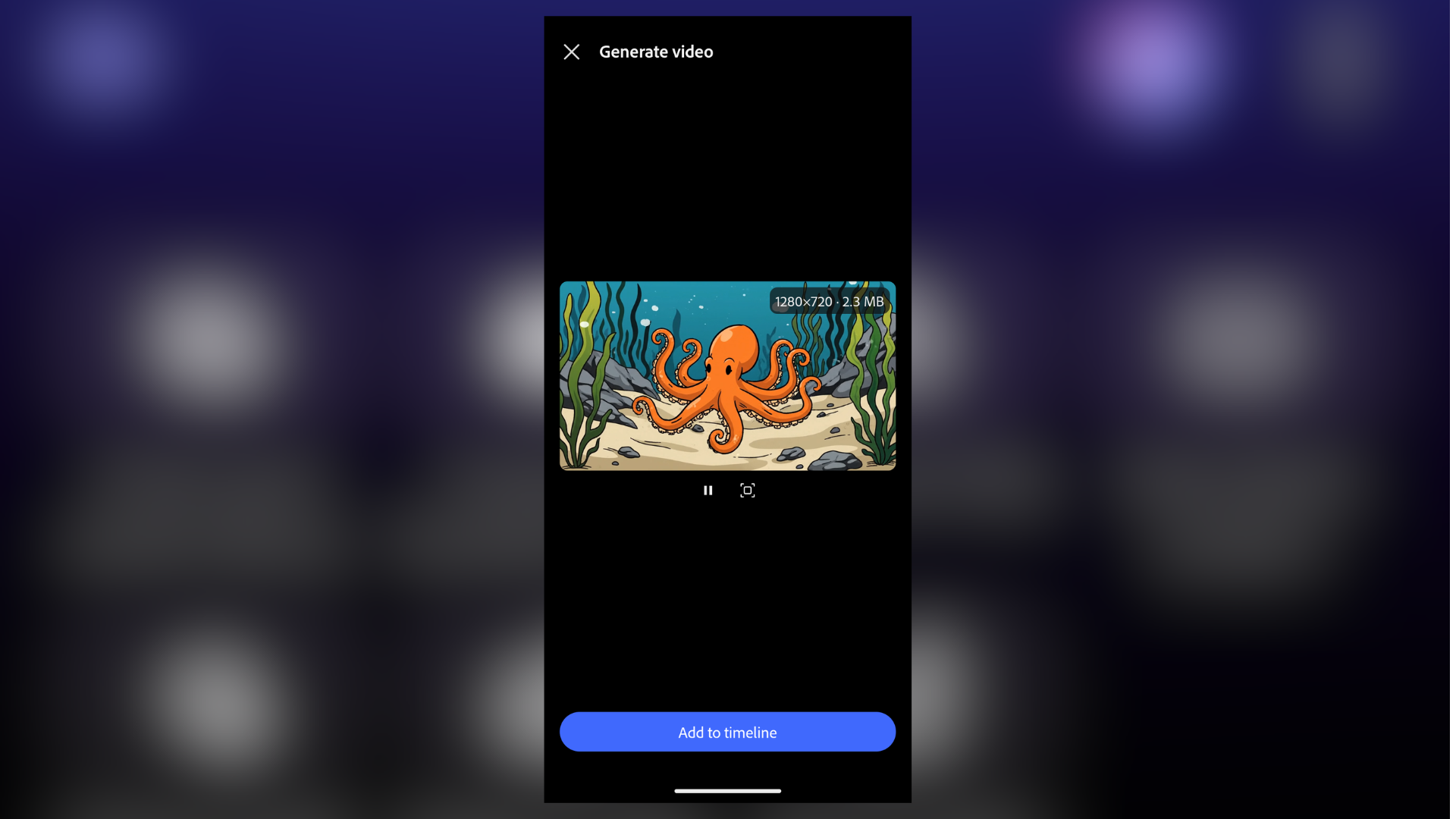
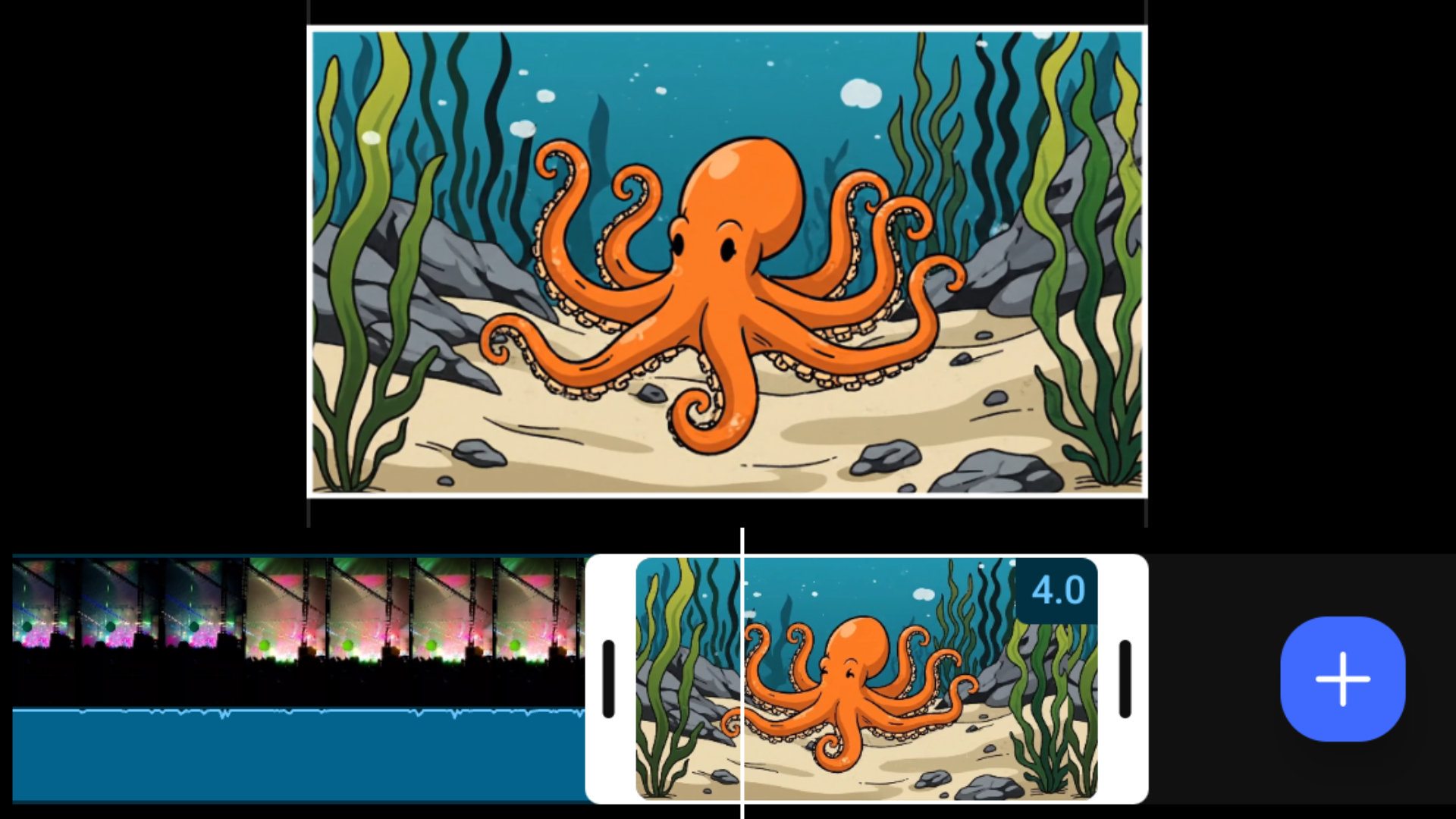
The app serves up a host of useful tools for content creators, including 4K video, simple-to-use templates for speeding up production, multi-track timeline editing, music and audio effects, and generative AI for image and video.

One of the high-points, as far as I'm concerned, is that it has no ads and exported videos are watermark-free.

A lot of 'free' mobile video editors could learn from this. There are no added intros and outros promoting Adobe either. So you can basically start creating video for social channels immediately. You can read the full write-up in Adobe's blog here. But is it any good? Here are my thoughts...

First impressions

Using Adobe Premiere on Android to edit videos, with a blurred version of the app for background color

(Image credit: Future)

I spent the last hour toying with Adobe Premiere to see whether it lives up to the promise of creating "stand out edits to share on TikTok, YouTube, Instagram, and Facebook."

Spoiler alert: It's good stuff. A responsive app that's worth checking out if you need a free video editor that does everything I'd expect it to do. Especially if you have a paid Adobe account for those extra AI generations.

Layout

Adobe Premiere on Android feels very clean, very sensibly laid out. That's a relief, because often I find Adobe's user interface to be unintuitive as a result of too many features. A phone screen is the last place you want to combat that.

Along the top of the screen are shortcuts for the main functions. This includes 'New from files' and 'Create for YouTube Shorts', as well as AI generations tools 'Image to video' and 'Text to video'. Once you start editing, your most recent projects can be found below this.

Under those key tools are a ridiculous number of templates for quickly spinning up videos - notably, there are ones designed specifically for YouTube, with "exclusive music and effects."

All in all, it's very simple to jump into the timeline and start creating.

Editing process

Editing video is incredibly straightforward. It's not laggy or clunky like I've seen with some mobile apps.

In fact, I was impressed how responsive it was overall, even with relatively larger video files. Helpfully, there are undo and re-do buttons sitting beneath the large preview window. An absolute godsend when editing on a phone.

Once you have a clip loaded on to the timeline, double-tapping the video brings up the handles for trimming. There's a Plus sign for adding (or generating) more clips. And you can select from a range of transitions with the tap of a button.

Running along the bottom of the screen are options to add text and audio, modify aspect ratio. I particularly liked this, because inside the frame options are logos, letting you know which ratio is suitable for which platforms.

AI generation

Using Adobe Premiere on Android to edit videos, with a blurred version of the app for background color

(Image credit: Future)

You do get access to a limited number of free tokens for AI image and video generation.

And when I say limited, I mean it. It's not very generous, and Firefly eats through them. I managed to squeeze out a single 4-second 720p clip before I needed to upgrade (or rather, sign into my main account).

Still, the generation itself works well, and it's relatively quick. Functionally, it's exactly what you'd get if you were using Adobe Firefly in your browser, or the Premiere desktop app.

I like that you can define the first and last frames of a video, generate in 720p and 1080p resolutions, change the duration, and opt to add audio. But to really make the most of this part of the app, a paid subscription is essential.

Video export

Super-simple, this one. When you're done editing, tap the ever-present Export button in the upper-right corner. You're then able to either export direct or tweak the settings.

Those settings include changing the resolution (720p, 1080p, 4K), the frame rate, between 24 and 60fps, and quality (low, medium, high).

Once you've got it set, Adobe Premiere offers an estimated file size, which is a nice touch. I exported a 17-second video at 4K in highest quality. The 106.5MB video took 34 seconds to complete. I then had the option to share via the usual channels.

My initial verdict

The Android spin on Adobe Premiere is actually very good - although I'll be keen to put it under the full review process. But it's very easy to use, and the 4K res video export without watermarks is excellent.

The real catch is the laughably small AI generation limit. Unless you're a paid subscriber, I'd swerve those and use it strictly as an editor for your own clips. On that score, it delivers everything I'd expect from a free video editor for your phone.

Google logo on a black background next to text reading 'Click to follow TechRadar'

I tested ChatGPT against Copilot in Microsoft Word

Microsoft Word has spent the past few years getting increasingly acquainted with AI. Copilot can already draft text, rewrite passages, summarize documents, and answer questions about whatever you have open. Microsoft has even been rolling out more advanced editing capabilities that let Copilot make broader changes directly inside a document.

Now there is another AI sitting in Word. OpenAI launched ChatGPT for Word, via a plug-in, on September 17, putting a ChatGPT sidebar directly inside Microsoft's word processor. It works across ChatGPT's plans, including Free, although your normal ChatGPT usage limits still apply.

That creates a slightly peculiar situation. Microsoft has spent considerable effort building Copilot into Word, and now I can install its most famous AI rival in the same application. Naturally, I wanted to see which one I would actually reach for. I came away liking both, although for rather different reasons.

Word ChatGPT

(Image credit: OpenAI)

Installing ChatGPT in Word is straightforward, although there is one extra step compared with Copilot if Microsoft's assistant is already part of your Microsoft 365 setup. OpenAI's ChatGPT add-in is available through Microsoft Marketplace. Once installed, you can open it from the Word ribbon, sign-in to your ChatGPT account, and have the familiar chatbot appear in a sidebar.

The integration works with ChatGPT's Free, Go, Plus, and Pro plans, with the usual usage limits applying to each. The big difference with regular ChatGPT is that all conversations inside Word are separate from the ones in the regular ChatGPT app, and ChatGPT's memory does not follow you into Word either. That is worth remembering if you are accustomed to the regular chatbot already knowing your preferences.

Test 1: Planning a trip

I started with a blank document and asked each AI to respond to a request for a reusable vacation-planning template that I asked for using natural language in the sidebar.

I wanted somewhere to keep travel details, hotel information, reservations, restaurants, packing notes, and a loose daily itinerary without creating the sort of schedule that makes a vacation feel suspiciously like work.

ChatGPT produced a thoughtful setup, including the expected travel and accommodation details, but with added sections for reservation deadlines, estimated travel times, priority activities, backup plans, and ideas that had not yet made the final itinerary. Instead of filling every day with morning, afternoon, and evening slots, it left more space for a main activity and optional plans, which made the template feel less rigid.

ChatGPT Word

(Image credit: Word)

In contrast, Copilot gave me the more conventional Word template. It neatly divided the document into sections for transportation, accommodation, daily plans, activities, dining, and packing, with plenty of space to fill everything in later. The structure was clean and immediately usable, and because Copilot is so closely integrated with Word, tweaking individual sections and reorganizing the document felt particularly easy.

Copilot was stronger at quickly producing a polished template that looked and behaved like something created specifically for Word. ChatGPT was better at considering the practical problems that tend to emerge while planning an actual vacation and building the document around them.

I ultimately preferred ChatGPT's version because it felt more flexible, although Copilot's was arguably easier to start using immediately. ChatGPT did a little more thinking about what information I might eventually wish I had included.

Test 2: Editing down nonsense

I then decided to see how they compared at editing. I pasted in an old, absurdly long set of instructions for an AirBnB I had saved years ago out of amusement, complete with information about plants, deliveries, Wi-Fi and several unnecessary paragraphs devoted to where various things were stored.

I selected a particularly rambling section and asked ChatGPT to shorten it while preserving anything somebody would actually need.

“The main problem is repetition rather than the amount of information," The AI wrote. It mentions the delivery instructions twice and explains the location of the spare supplies in more detail than someone staying for a weekend probably needs. I’d keep the Wi-Fi information, the plant-watering schedule and anything involving keys or access exactly clear. The rest can be condensed into a short ‘Around the house’ section so the useful details are easier to find.”

Copilot is hardly incapable of that conversation. It can answer questions about a document, provide summaries and respond to prompts about unclear passages, and provide references showing where information came from. But I would tend to pull up Copilot only when I already knew what I wanted it to do.

Selecting some text and telling Copilot to rewrite it produces versions that can be replaced or inserted directly into the document, and Microsoft now allows editing inside its suggestion box before accepting the result.

Which did I prefer?

ChatGPT's biggest practical advantage may simply be accessibility. OpenAI says ChatGPT for Word is available on all ChatGPT plans, including Free. Copilot availability varies according to Microsoft 365 subscription, Copilot license and organizational settings, while some of Microsoft's newer 'Edit with Copilot' features are still rolling out to eligible users.

There are good reasons to prefer Copilot. Its integration with Word is deeper, and Microsoft has built features specifically around manipulating Word documents rather than placing a general AI assistant alongside them. Depending on your setup, Copilot can also draw on Microsoft files, emails and meetings, which could matter far more than conversational style for people already living inside Microsoft 365.

For quick mechanical changes, particularly when I knew exactly what needed rewriting, Copilot's tighter relationship with Word made sense. It felt like an extension of the application rather than another destination. ChatGPT was the one I preferred when the problem was fuzzier. The two assistants overlap considerably, but they did not feel identical when I actually used them. Copilot often felt like an AI feature of Word. ChatGPT is a more fully-featured chatbot, while Copilot simply augments Word with AI features. Either is fine, it's just that ChatGPT feels more flexible.

❌