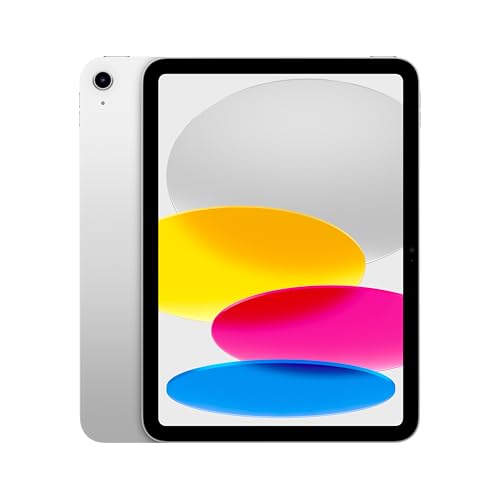
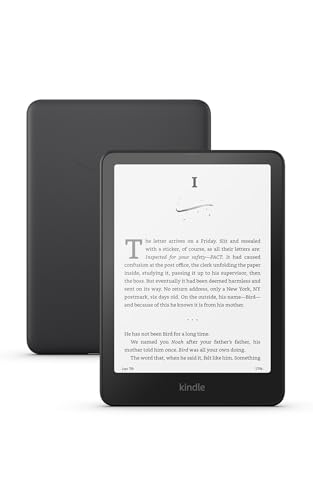
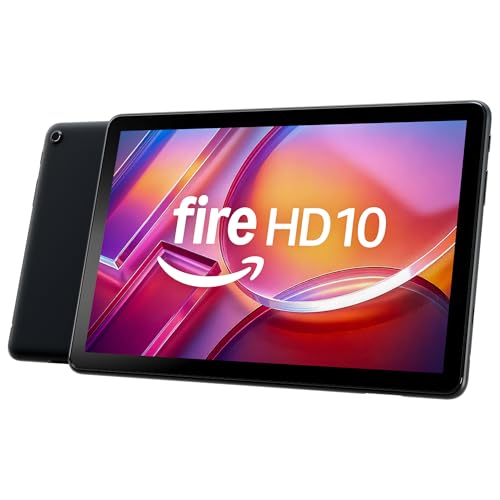
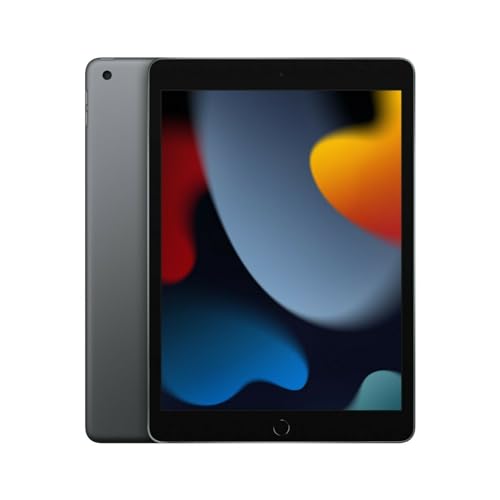
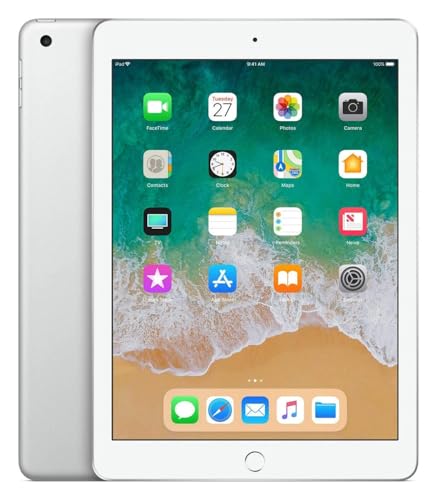
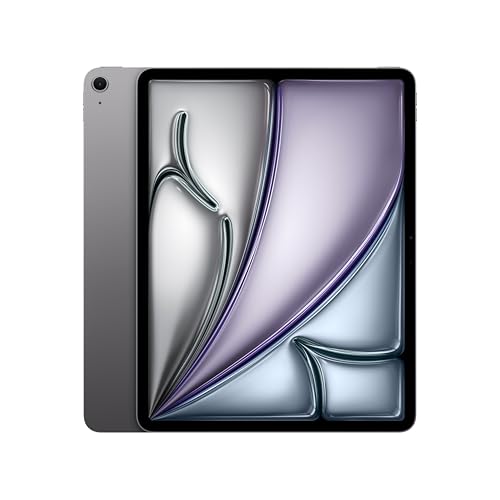
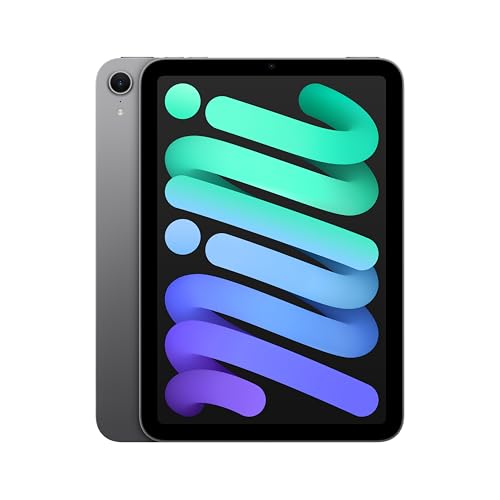
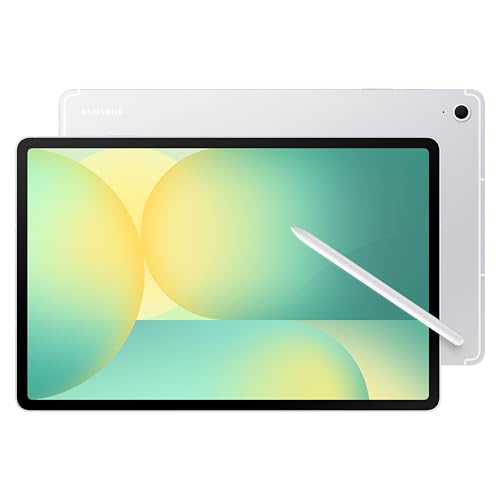
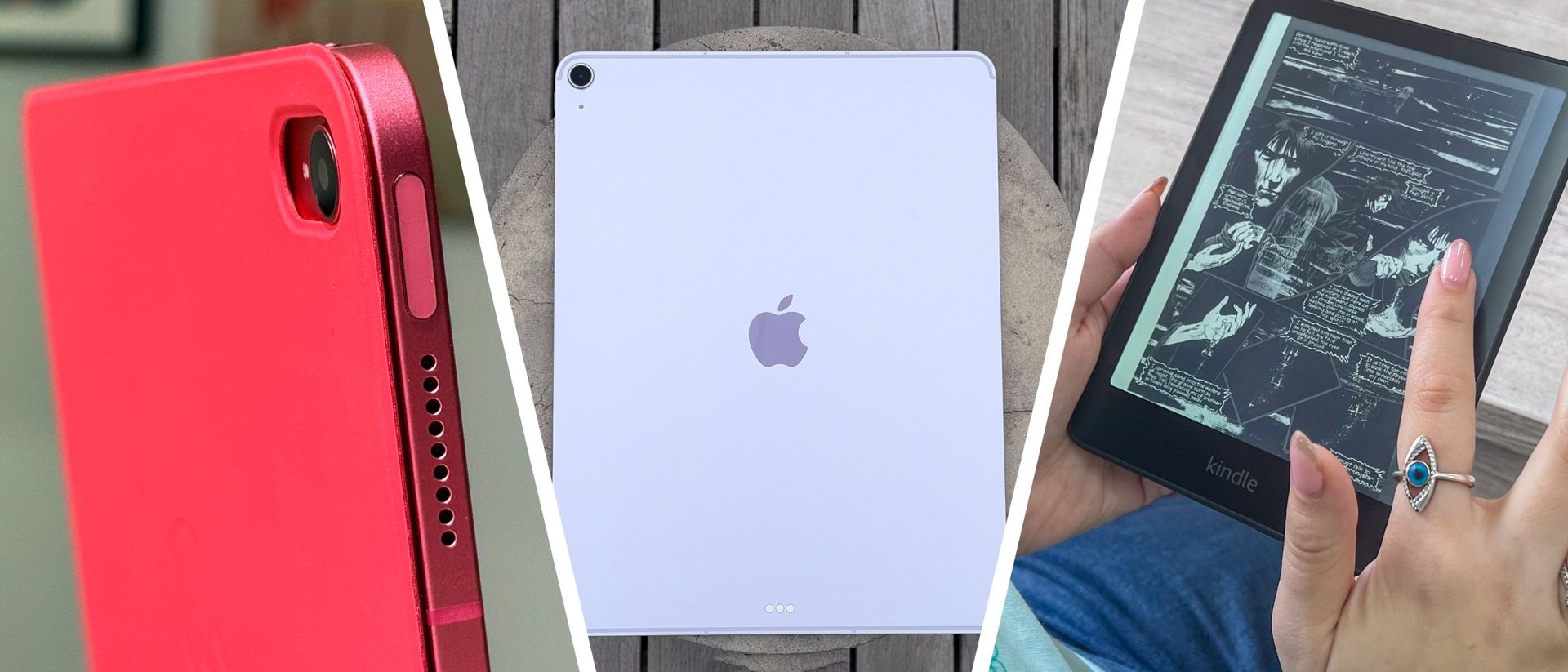
Here at TechRadar, we have our own ranking of the best tablets around. So when I discovered it was possible to view a list of Amazon's best-selling tablets, I was intrigued to see if it bore any relation to the tablets we regarded most highly.
There are some obvious points of deviation. We tend to focus on tablets for adults, and there are a number of kid-focused models in Amazon's ranking. Similarly, whereas Amazon bundles ereaders in with tablets, we have them in a separate best ereader ranking.
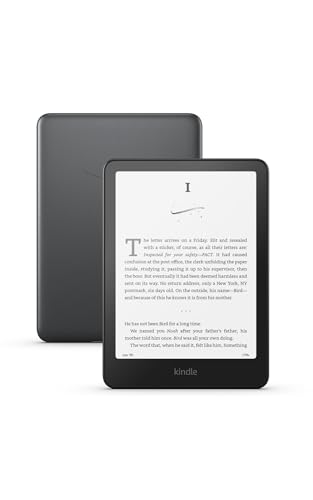
It also makes sense that Amazon's own models sell especially well on the platform, given that they tend to get the best discounts. I'm not surprised to see the Kindle Paperwhite taking the #2 spot, for instance, when we put two Kobo models above it in our list.
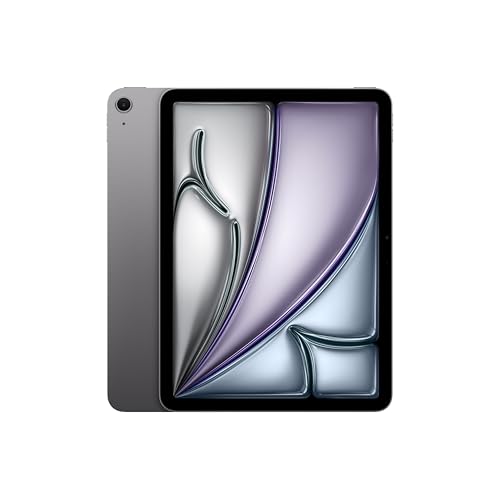
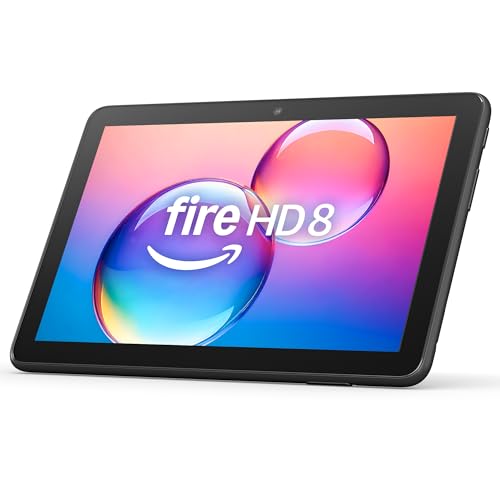
Although the iPad (A16) 11-inch — Amazon's #1 bestseller — isn't our favorite tablet, we still scored it very highly in our review. We were less enamored with Amazon's #3 slate, the Fire HD 10 (2023), awarding it three stars and declaring it "only smoldering". It is, however, relatively cheap, which helps explain its popularity here.
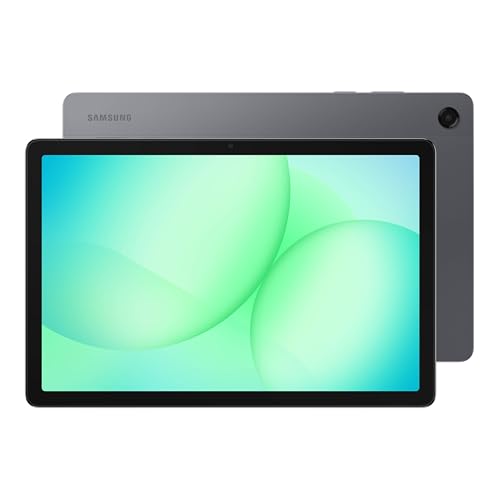
Scroll down for a list of Amazon's best-selling tablets (as of 22 September, in the US), in order. Hit the View details button to see what we thought of them in our real-world testing — and learn which ones are worth buying.
Huawei, as a brand, is in a very interesting place right now. The company is genuinely innovating on a lot of fronts. It just launched the Mate XT2 tri-folding phone, which brings Samsung-like Privacy Display tech to the tri-folding form factor, as well as the Watch D3, which puts medical-grade blood pressure measurements into an even slimmer smartwatch.
But the problem with Huawei has always been that you can't buy a lot of the company's devices in markets outside Asia. And while that doesn't look like it's changing anytime soon, every once in a while, Huawei does launch some products in the West, and it reminds us (again) of what we're missing from other major hardware makers.
That's exactly what happened with the new Huawei MatePad Air. I usually use my still-going-strong M1 iPad Air (2022) as my main tablet, but I've spent the past month using the MatePad Air as my primary device. And it has shown me the one upgrade Apple could make that would probably convince me to finally buy the next iPad Air.
(Image credit: Sanuj Bhatia / TechRadar)
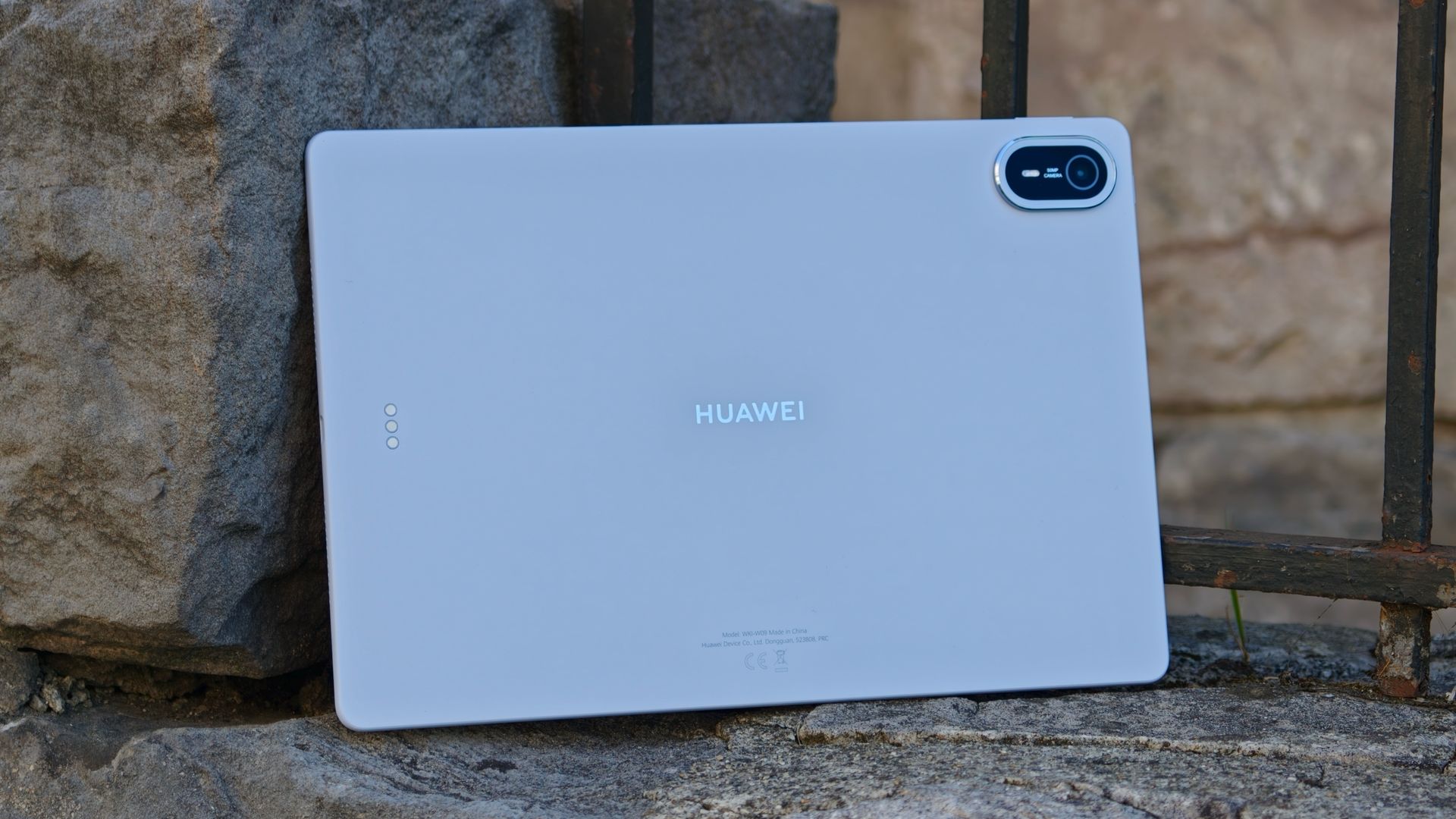
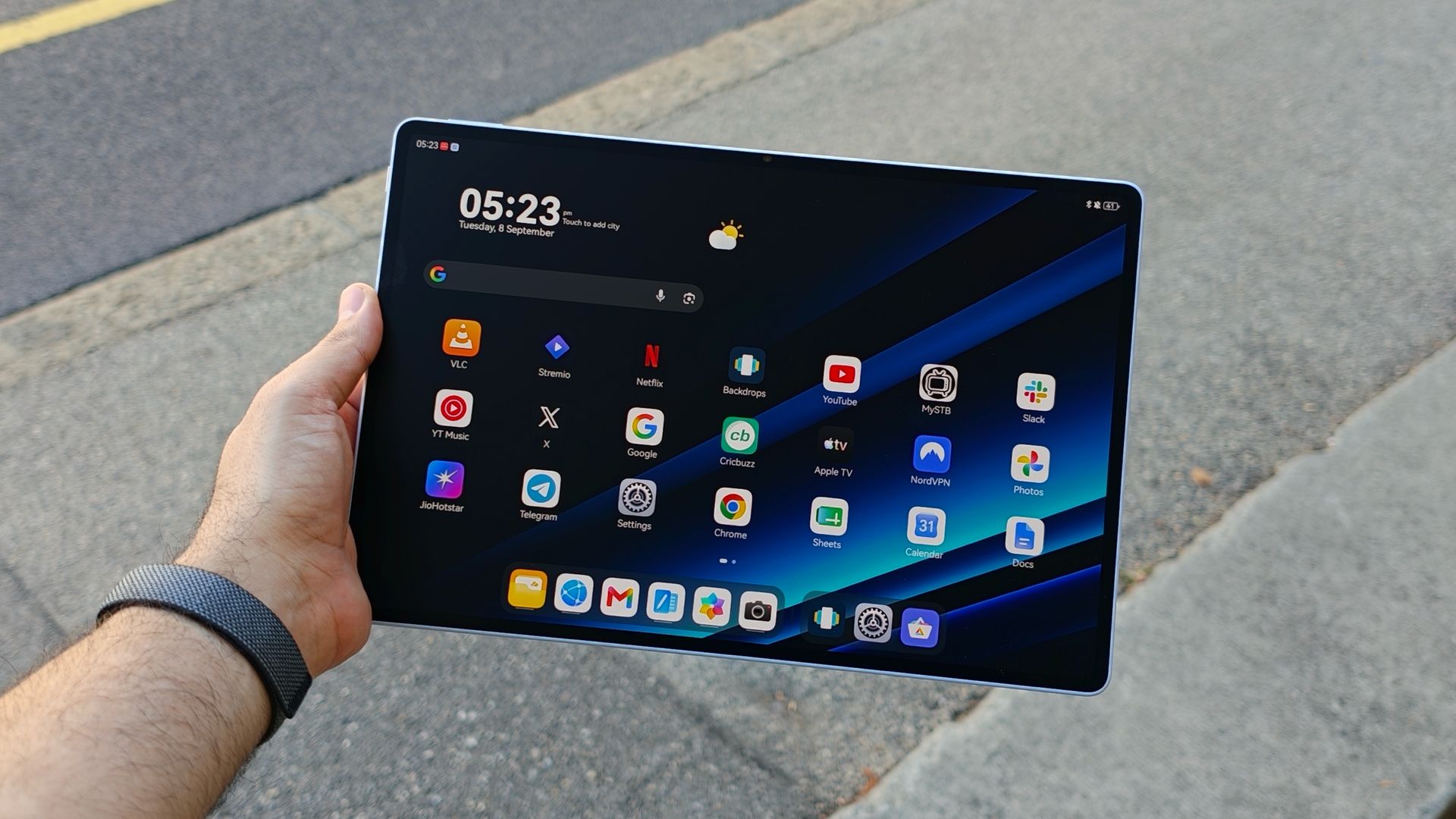
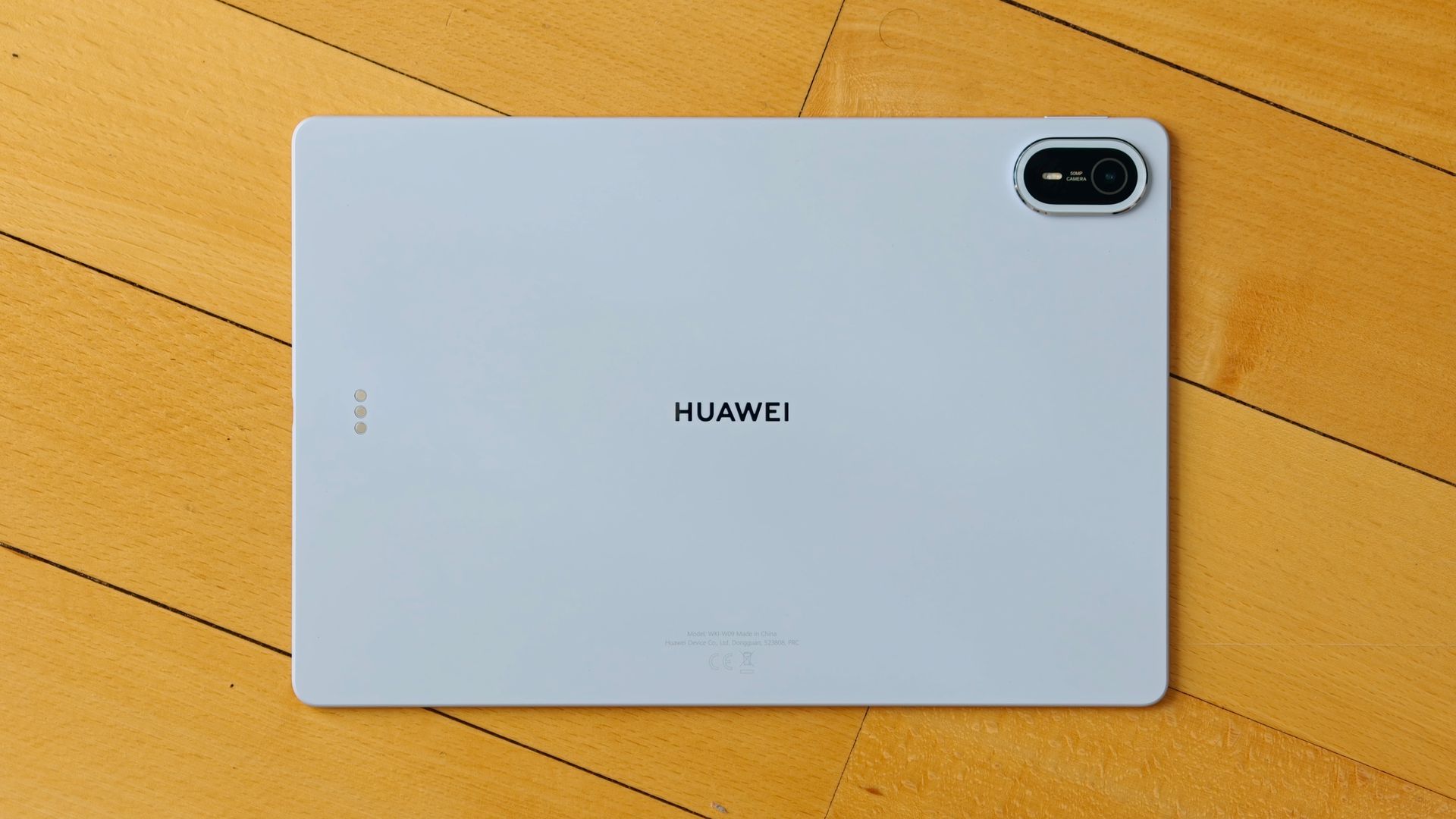
The MatePad Air itself doesn't look like some groundbreaking new tablet. In fact, Huawei has so many tablets in its lineup that you'd probably have a hard time distinguishing the new MatePad Air from some of the company's other models just by looking at the back.
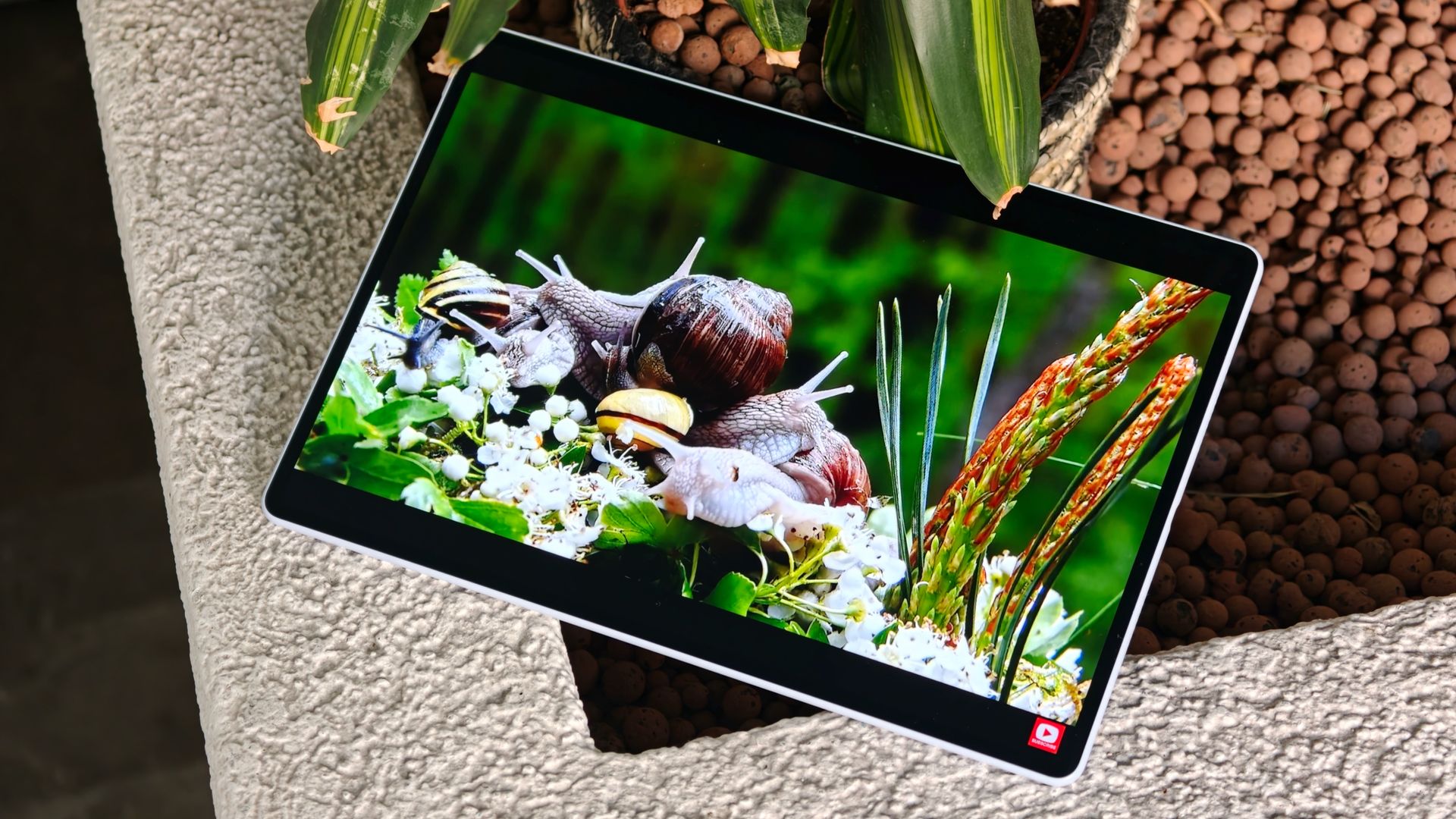
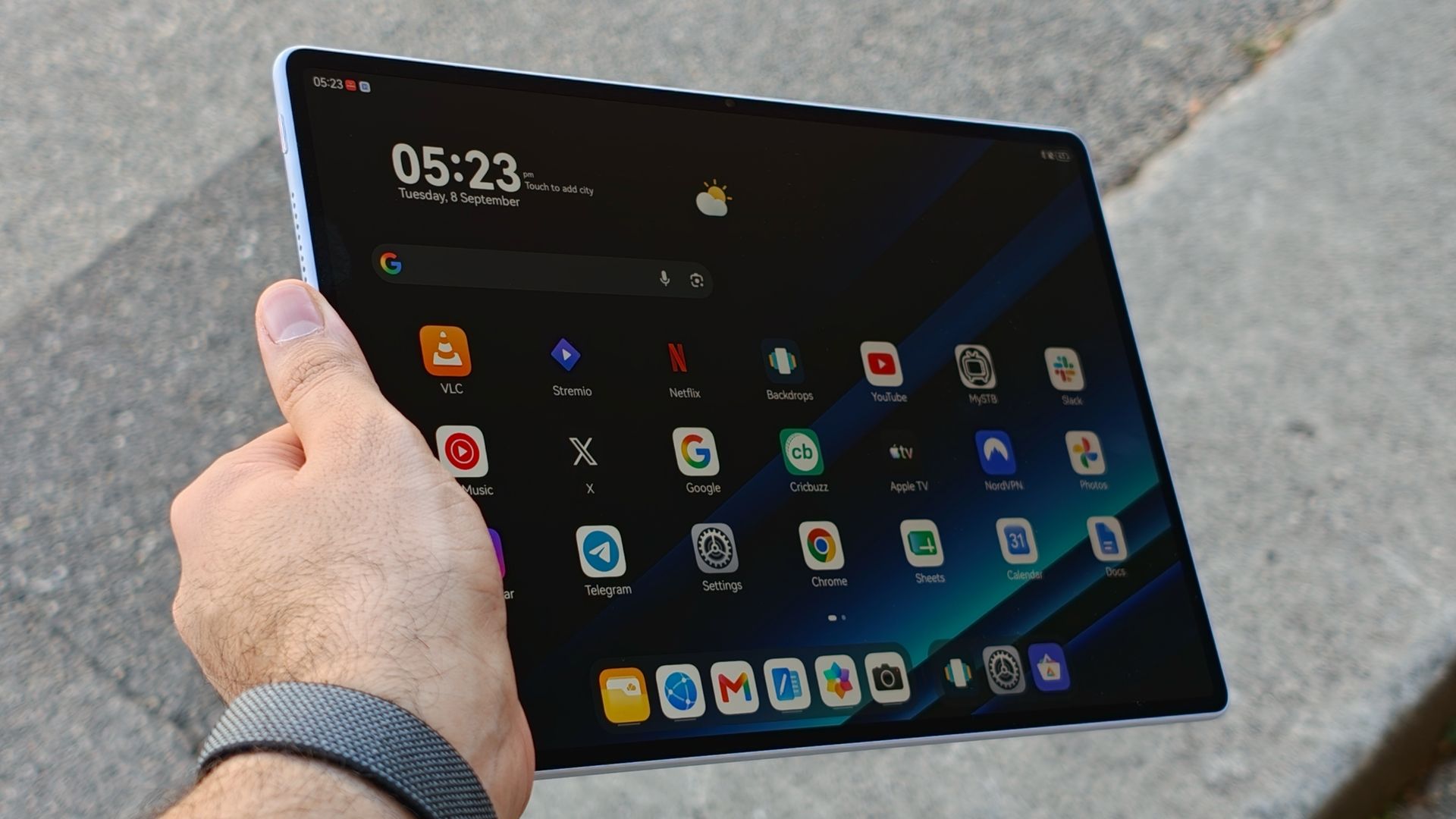
But flip the MatePad Air around, and that's where, for me, it starts beating a lot of the competition. The MatePad Air comes with a 12-inch OLED display with up to a 144Hz refresh rate and a 1,200-nit peak brightness. But the model I've been testing for the past month is the higher-end PaperMatte version, which can reach up to 2,000 nits.
If you're unfamiliar with Huawei's PaperMatte display technology, it's essentially a special anti-glare treatment on top of the display that, Huawei says, eliminates up to 99% of ambient light reflections. It also gives the screen a more paper-like texture, which feels natural when you're writing with a stylus, while also helping reduce things like eye strain and smudges.
(Image credit: Sanuj Bhatia / TechRadar)
And this display alone is what has made me prefer using the MatePad Air over my iPad Air for the past month.
Think about what you actually do with a tablet. Whether you use an iPad Pro or the Samsung Galaxy Tab S11 Ultra, almost everything revolves around the display. You're watching content, taking notes, making video calls, or reading. For 99% of the time, you're looking at and interacting with a screen.
It's not like the iPad Air's display is bad. It's still a good-looking panel, and I've used my M1 iPad Air for years without any complaints. But Apple hasn't meaningfully upgraded the display technology in a while, and it's starting to show its age.
The iPad Air still uses an LCD panel. It's still stuck at 60Hz, and the bezels are quite thick as well. None of these things really bothered me before, but switching back and forth between it and the MatePad Air made the difference quite obvious.
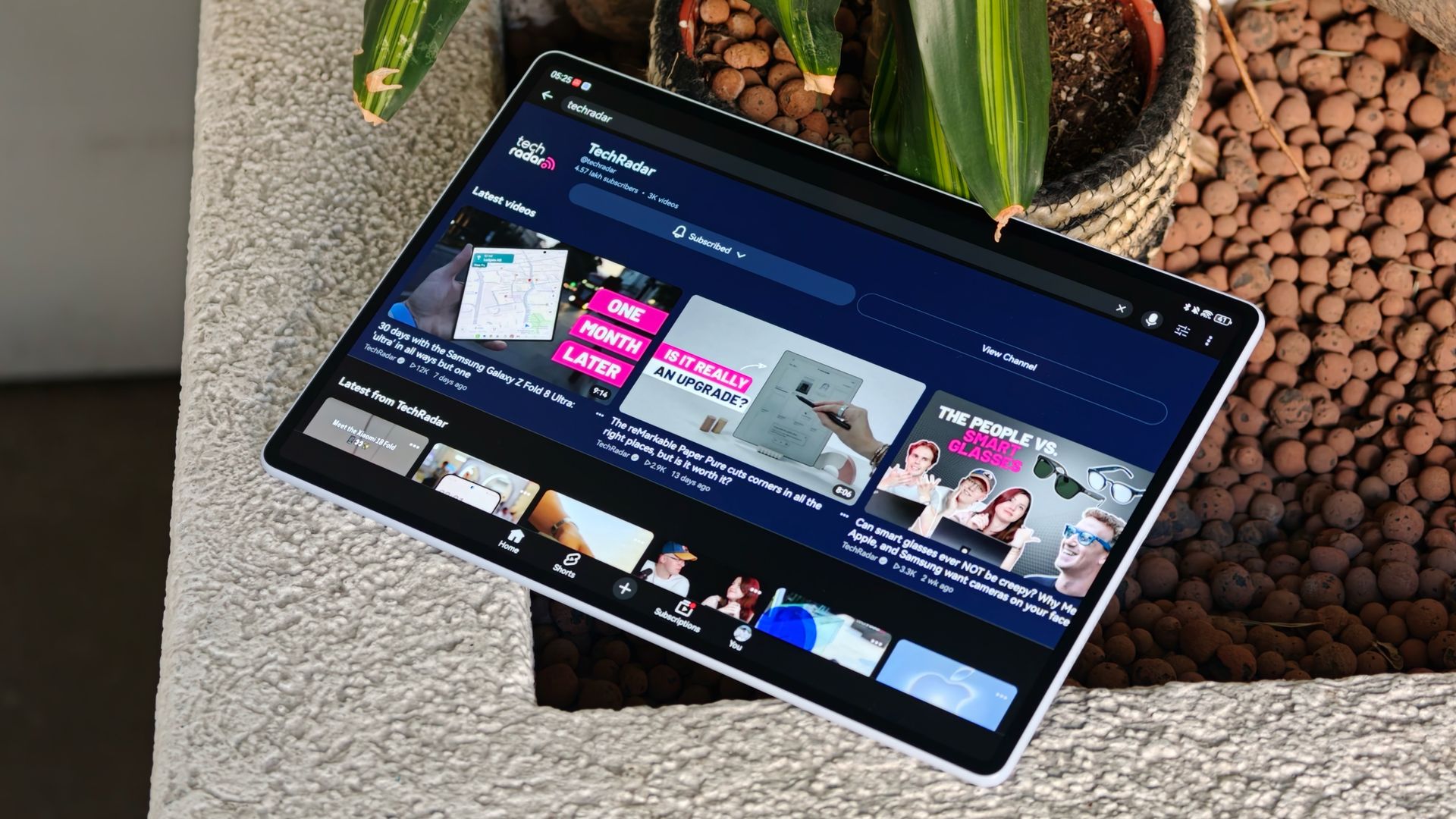
The 144Hz OLED panel on the MatePad Air is obviously smoother, the colors look great, and the thinner bezels make watching content much nicer. And that PaperMatte display just makes everything twice as nice.
(Image credit: Sanuj Bhatia / TechRadar)
I've used the MatePad Air pretty much everywhere, be it the subway, airplanes, or my home, and not having reflections constantly bouncing off the screen has been great.
And it's not like Apple doesn't know how to do this. The company already offers its nano-texture display on the iPad Pro. The problem is that you need to buy one of the most expensive iPad Pro configurations (specifically, a model with 1TB or more) to even get the option, pushing the price to $1,899 / £1,899 / AU$3,249.
Huawei, on the other hand, makes the upgrade much easier to swallow. In the UK, you get the PaperMatte display regardless of which version of the MatePad Air you choose; the cheapest is just £699.99 (it's not available in the US). You're also getting 256GB of storage on the base model, compared to the 128GB starting storage on the iPad Air.
(Image credit: Sanuj Bhatia / TechRadar)
Of course, the MatePad Air isn't better than the iPad Air at everything. Apple's M-series chips still give the iPad a major performance advantage, and if I'm editing videos or doing other compute-heavy work on a tablet, I'd still rather have the iPad Air.
But most of the time, that's not what I'm doing on my tablet. I mostly use my iPad to watch content and browse the web, and for both of these things, I'd rather have the MatePad Air's display.
Plus, the hardware around the OLED display is pretty impressive, too. At 12 inches, the MatePad Air sits somewhere between Apple's 11-inch and 13-inch iPad Air models. It weighs just 509g and uses an aluminum frame and back, making it more than 100g lighter than the 13-inch iPad Air.
It's thinner too, measuring just 5.3mm compared to 6.1mm for the larger iPad Air, despite Huawei fitting a 10,100mAh battery inside compared to roughly 9,705mAh on Apple's tablet.
(Image credit: Sanuj Bhatia / TechRadar)
That said, none of this means I'm ready to completely ditch the iPad. I still prefer its performance, app ecosystem, and just how well it works with the rest of my Apple devices. But after a month with the MatePad Air, the one thing I desperately want to take back to my iPad is this display.
Give the next iPad Air an OLED display with (hopefully) an anti-reflective PaperMatte-like option that doesn't burn a hole in my pocket, and my M1 iPad Air might finally have a reason to retire.
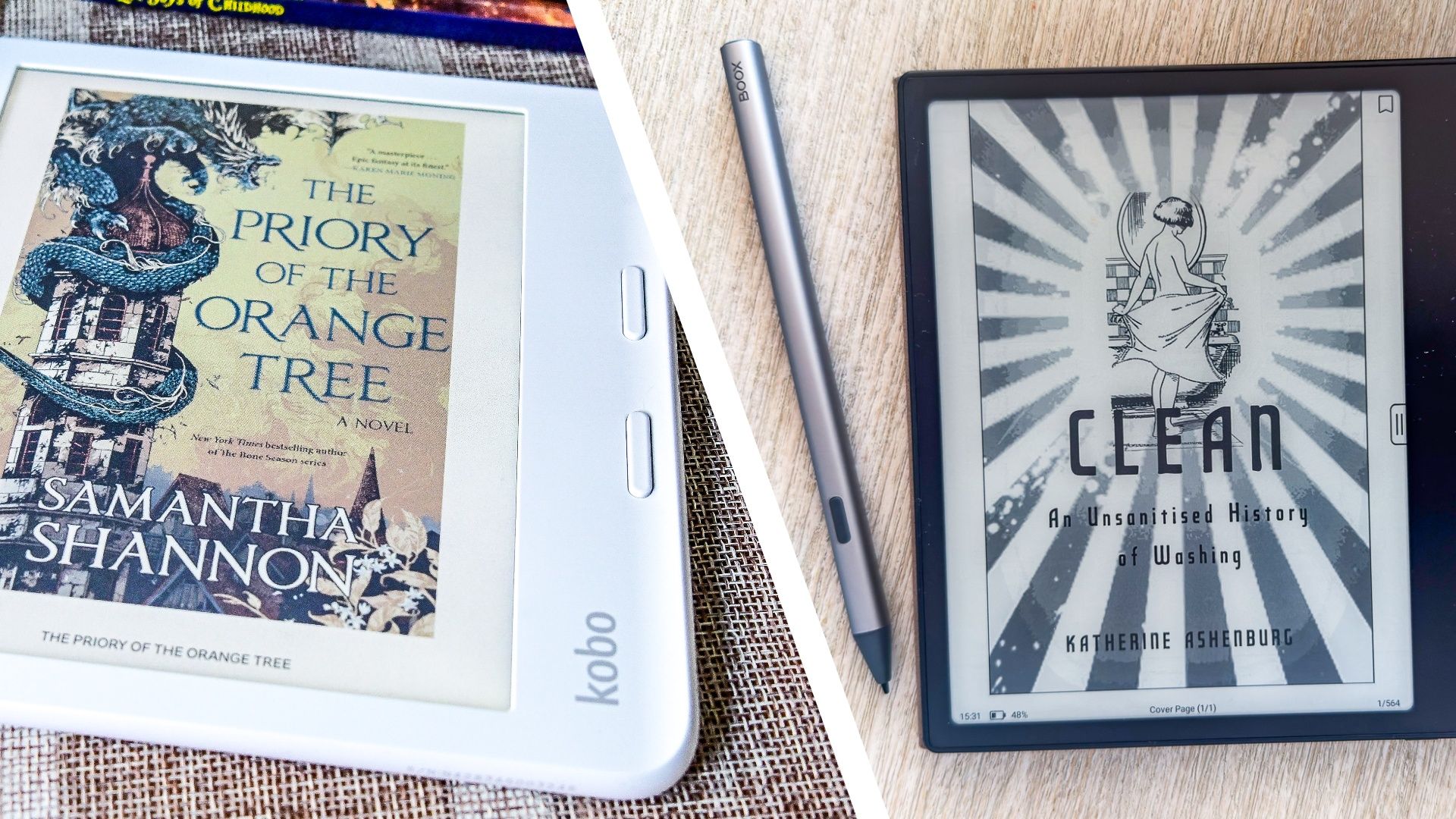
Trying to decide between Kobo and Boox? This guide is here to help. These are two very popular e-ink tablet brands, and both feature in our ranking of the best ereaders. However, there are some distinct differences.
Kobo specializes in ereaders. It has a small range of different models, but all are geared towards reading — and in some cases, can be used for annotating and note-taking. They offer an offline-first experience, and they're almost all waterproof, which is great news if you like to read in the bath.
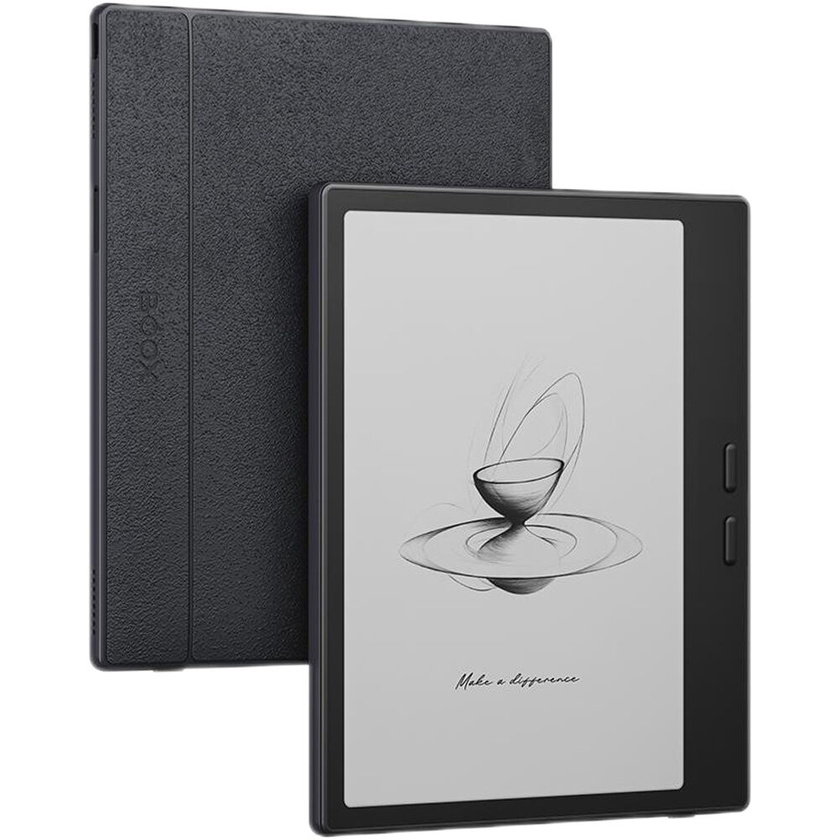
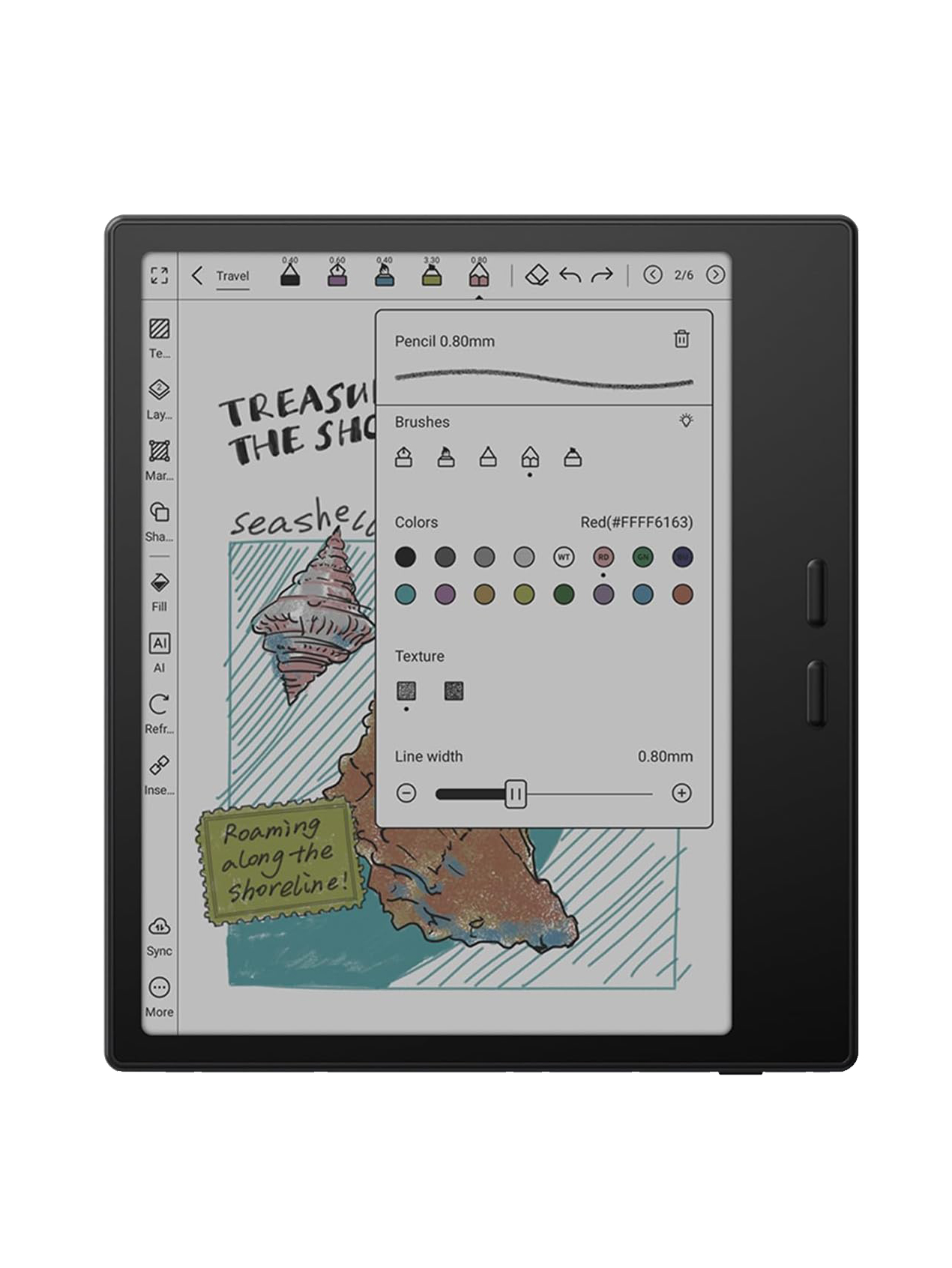
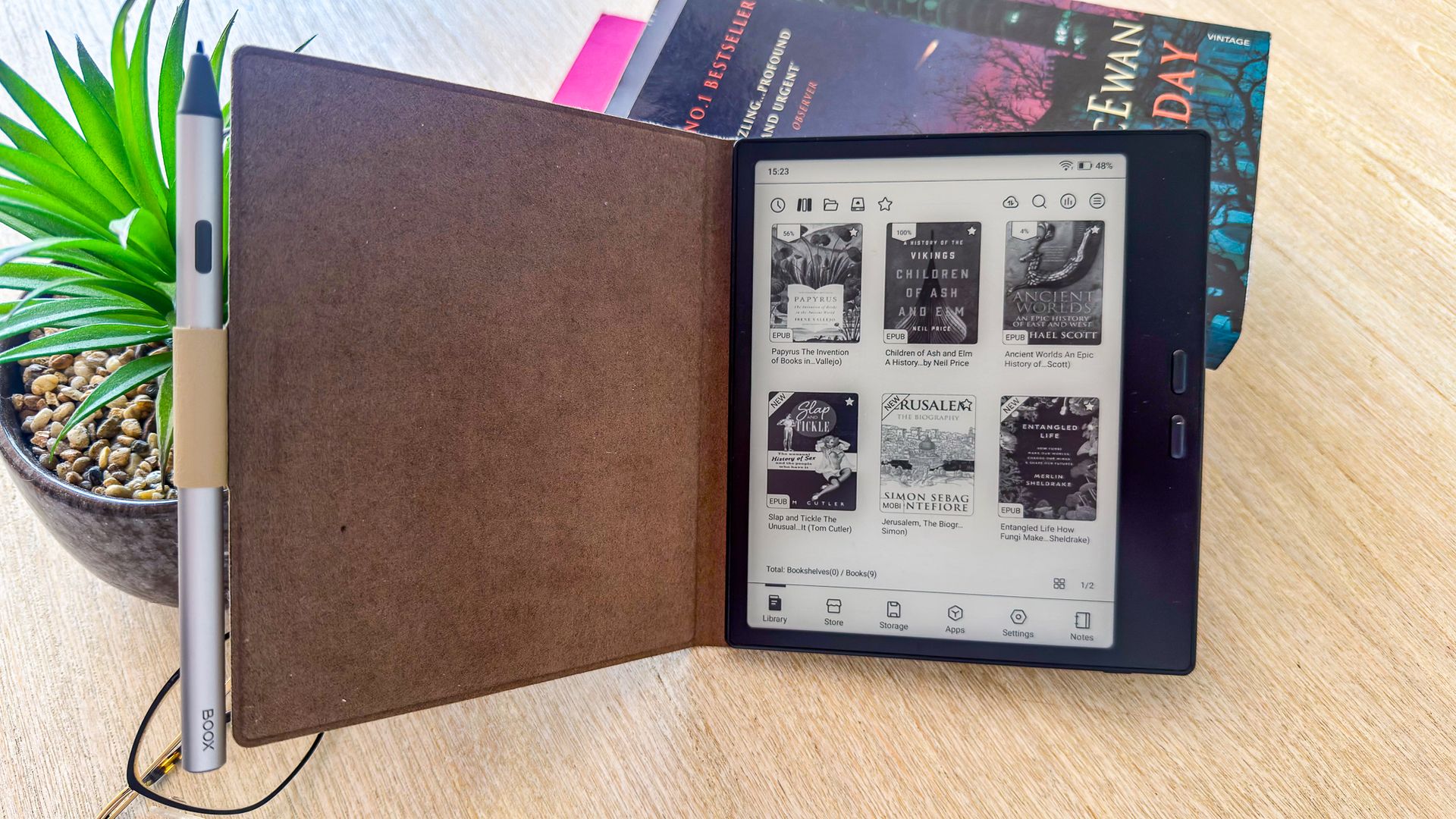
Boox (from parent company Onyx) is more of an e-ink tablet brand. Boox tablets run a full version of Android, which means you can use them in a wide variety of ways and for many different tasks. It's a particularly good option for those who have a Kindle but are looking to switch, because you can simply install the Kindle app from the Google Play store and then you'll still have access to all your books.
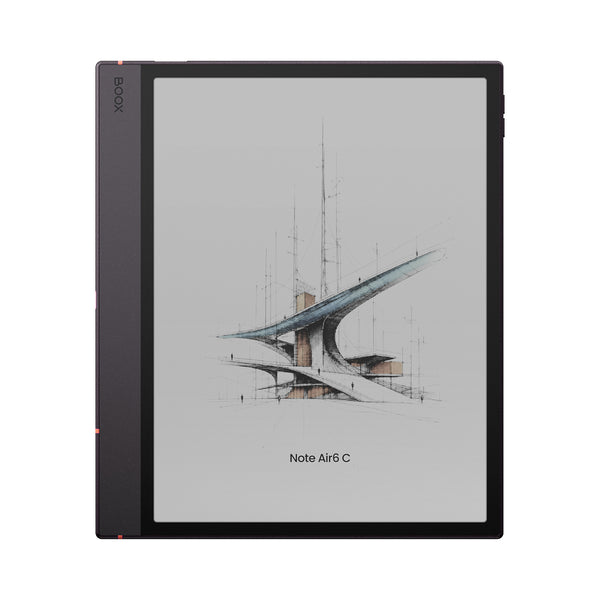
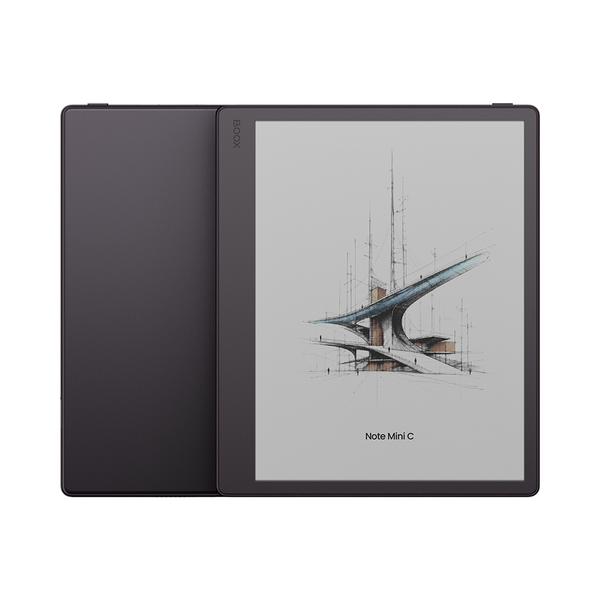
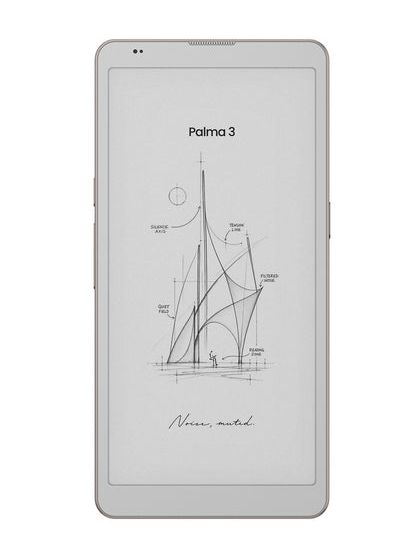
The Boox range is wide and sprawling, and includes a selection of options that are shaped and sized like a phone. It also just launched three new models earlier this week: the Note Air6 C, Note Mini C, and Palma 3.
Below, I'll dig into the two brands in more detail, starting with an overview of the different ranges and then moving into specs comparison and some buying pointers.
Note for UK readers: some of these models are only available direct from Boox at the moment. On the Boox Europe store, prices are only provided in Euros, but there are UK versions available and it does not look like they're being shipped from abroad.
There are a few specs I haven't included here, because they aren't helpful when it comes to making a decision between models.
I haven't included battery capacity. This is worth considering, of course, but how it relates to runtime depends heavily on what you're using the tablet for. If you're mainly just reading, with a low backlight, even a small battery will deliver many days of use without needing to recharge. Conversely, lots of note-taking or internet browsing will drain a larger battery relatively quickly.
You also won't find screen resolution here. In almost every case the resolution will be the same: 300ppi in black and white, dropping to 150ppi in color if the ereader supports that. There's a lot more variety in the display technology used, but the categories here aren't standardized so comparing them — especially across brands, using different terms — is very tricky.
Finally, I haven't included supported file formats. Pretty much all of these models offer a wide range of file support, including but not limited to: LIST, PDF, EPUB, EPUB3, MOBI, TXT, CBR, CBZ, and RTF. That's before we get into the support for image and audio formats. If you have a specific file type you're interested in, double check the specs on the brand's own site before buying.
Boox vs Kobo: product lineup
Kobo lineup
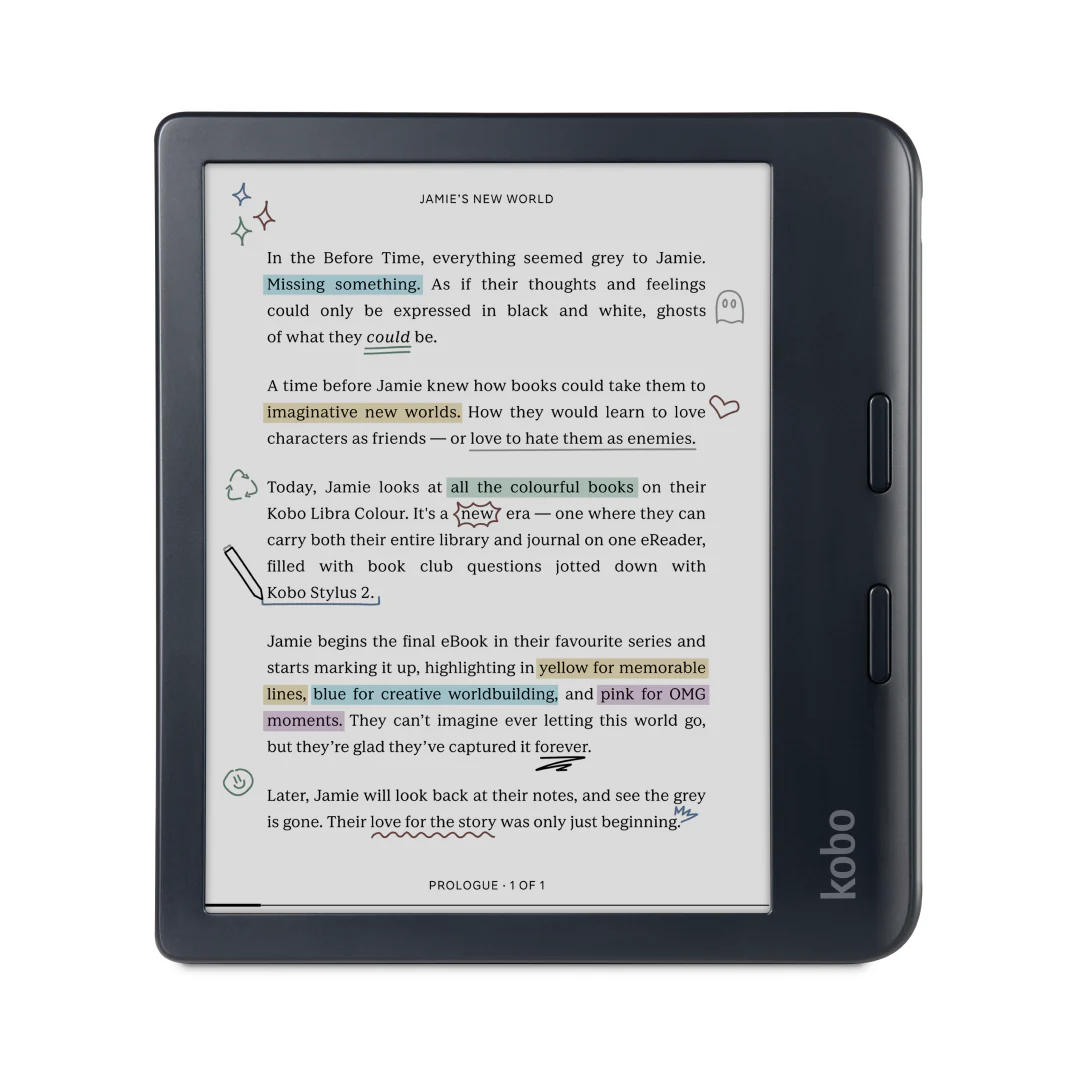
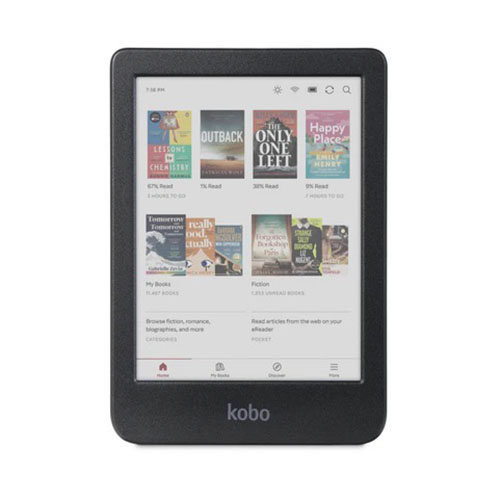
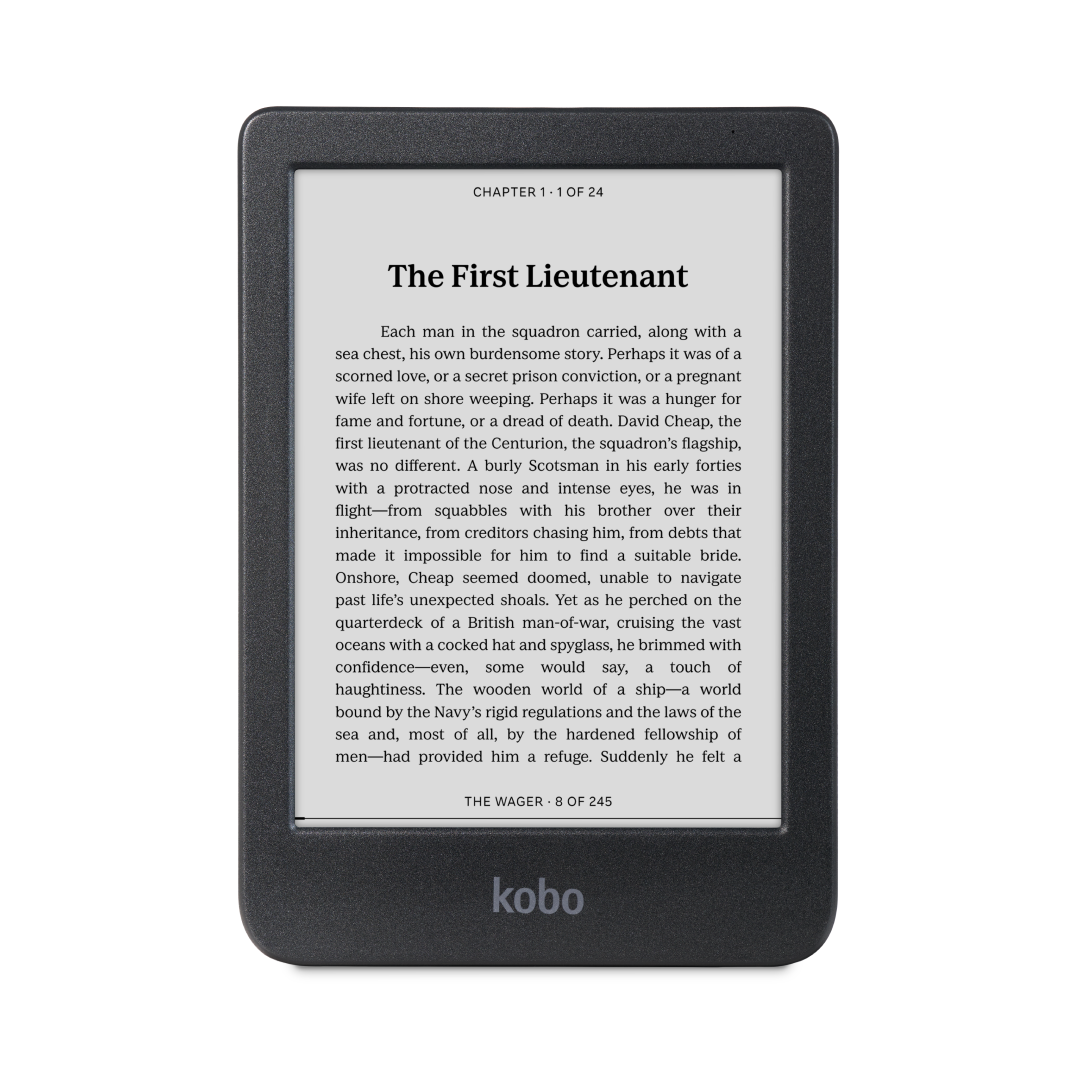
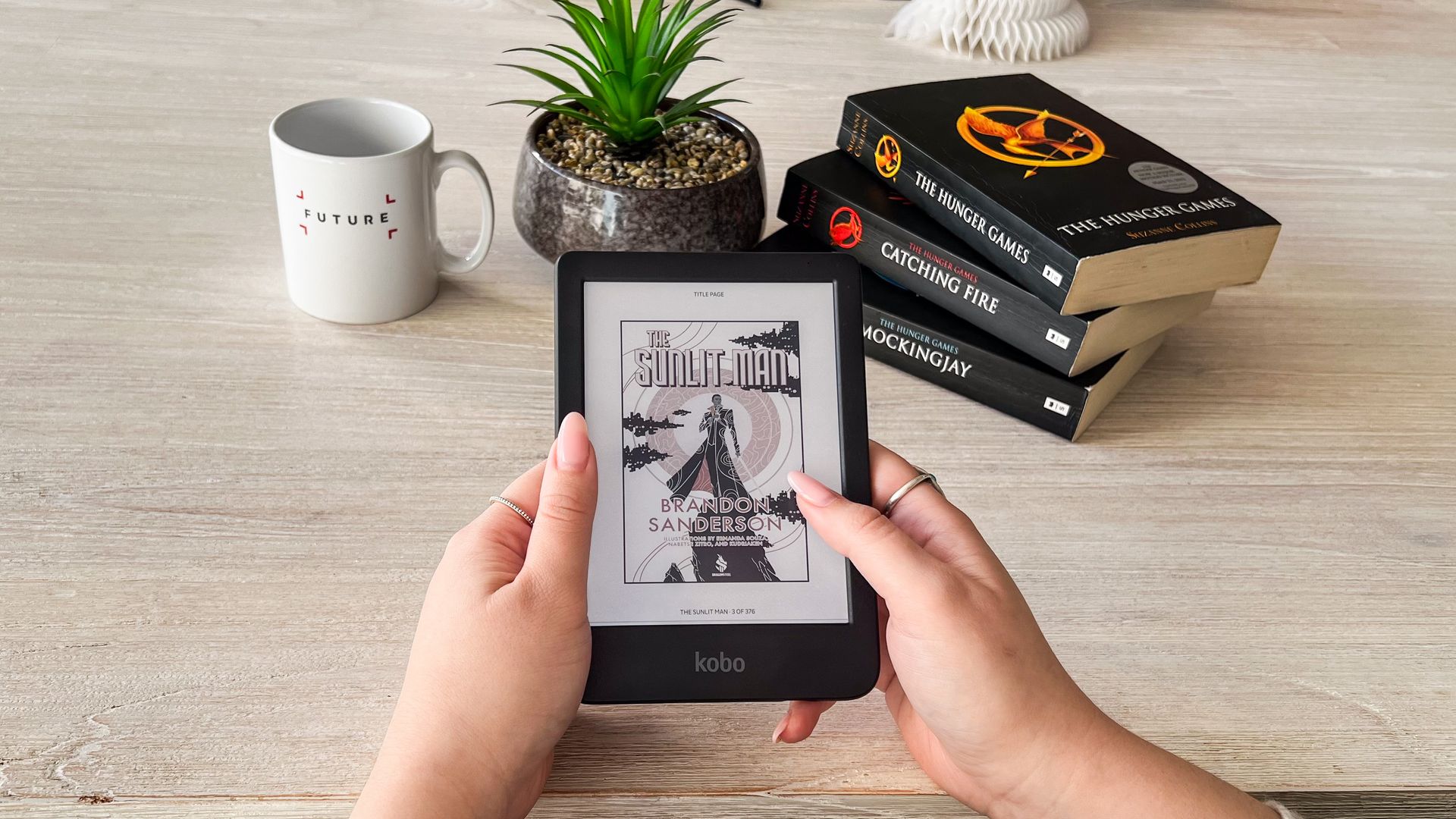
Kobo currently has four ereaders in its lineup. The Clara range is the most basic: the screens are the smallest (at 6 inches), the storage is limited to 16GB (which is lower than all the other options here but realistically will still enable you to store more books that you'll ever need), and there's no writing support. You can choose between black-and-white (BW) or color versions.
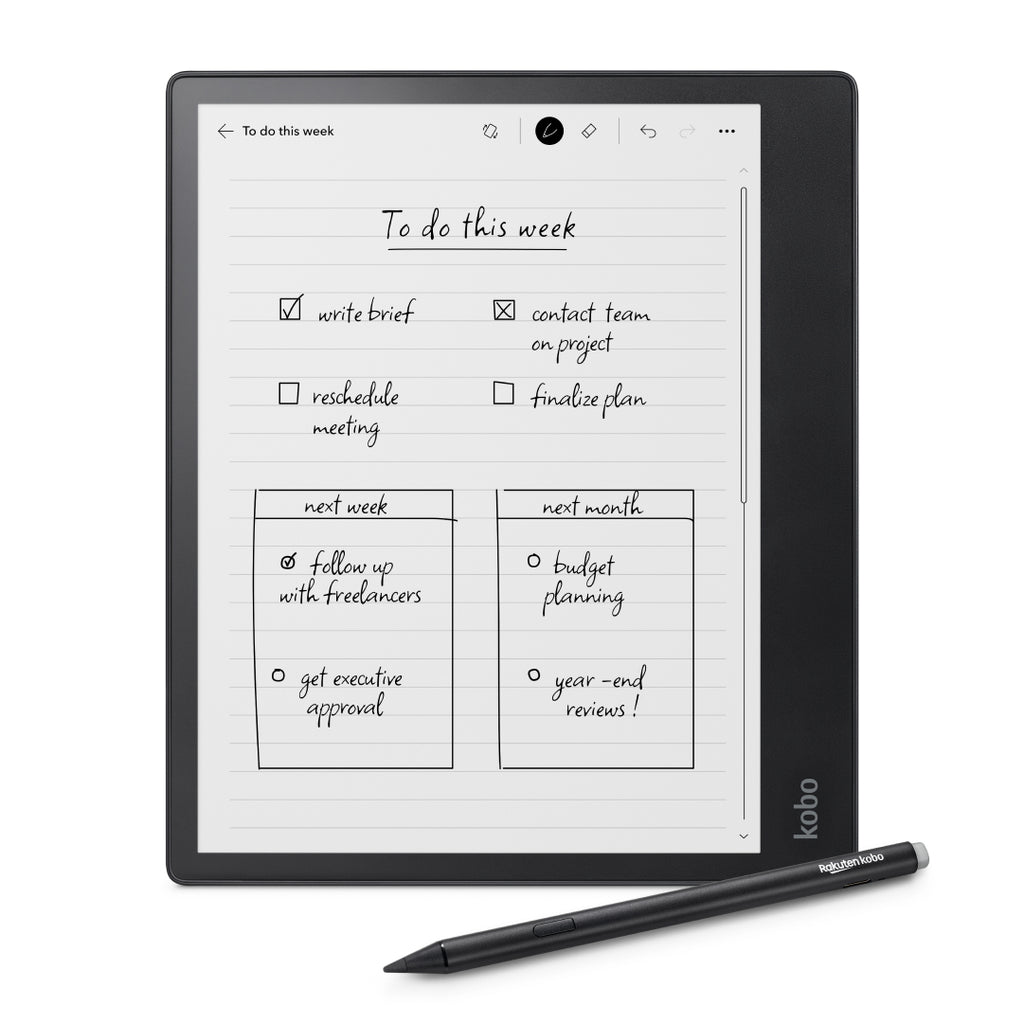
If you want writing support and compatibility with Google Drive and Dropbox, you can choose between Libra Colour or an Elipsa 2E. The Libra Colour is the smaller and more basic option. The Elipsa 2E has a large, 10.3 inch screen and comes with a Kobo stylus included. It's the only model in Kobo's lineup to not be waterproof.
(Image credit: Sharmishta Sarkar / TechRadar)
Boox lineup
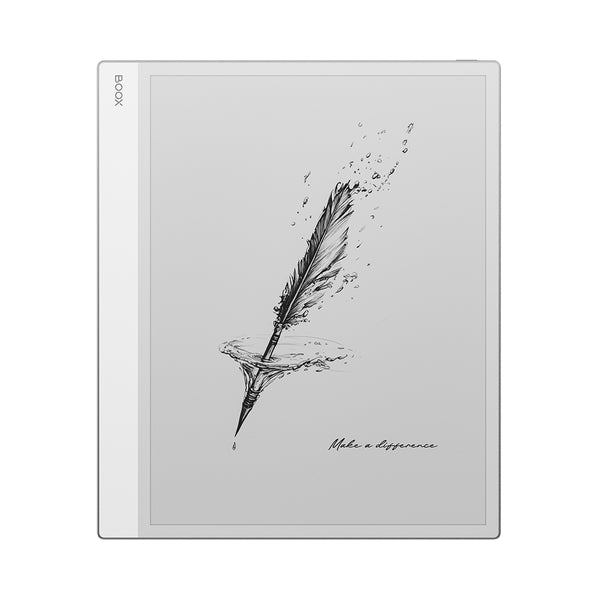
Boox has more options, and includes four main lines: Note, Go, Palma and Tab.
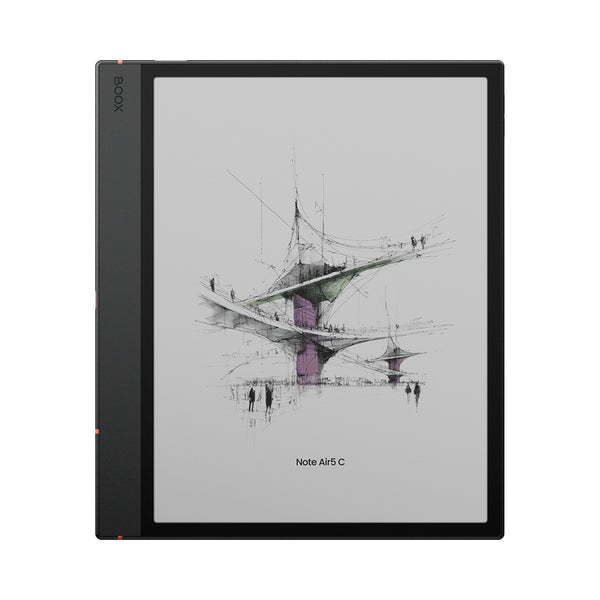
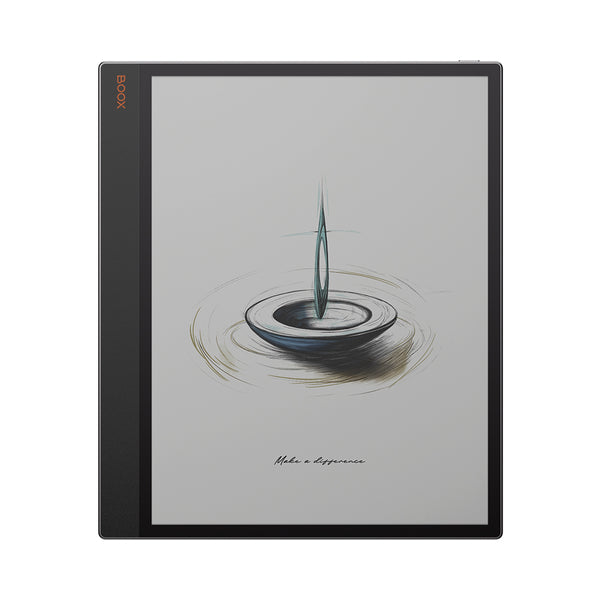
The Boox Note series is rather sprawling, encompassing Mini (small screen), Max (large screen), and Air (medium screen) options. These are billed as all-in-one productivity tools — they're on the thicker side and on the larger options you can snap a magnetic keyboard on. The newest models are the Note Mini C and Air6 C.
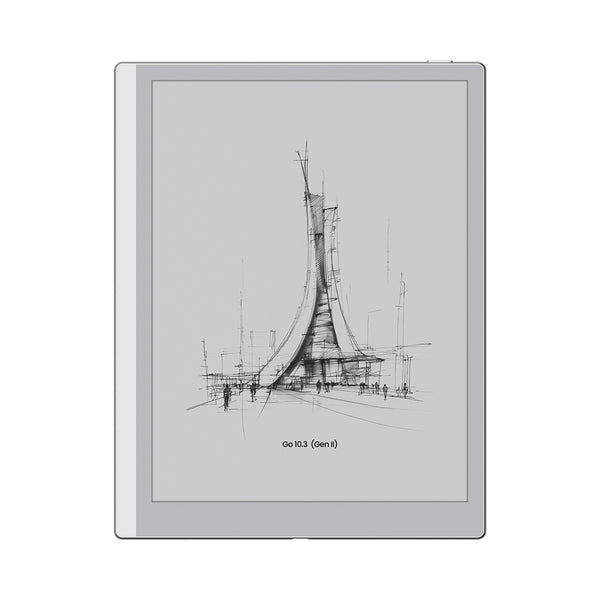
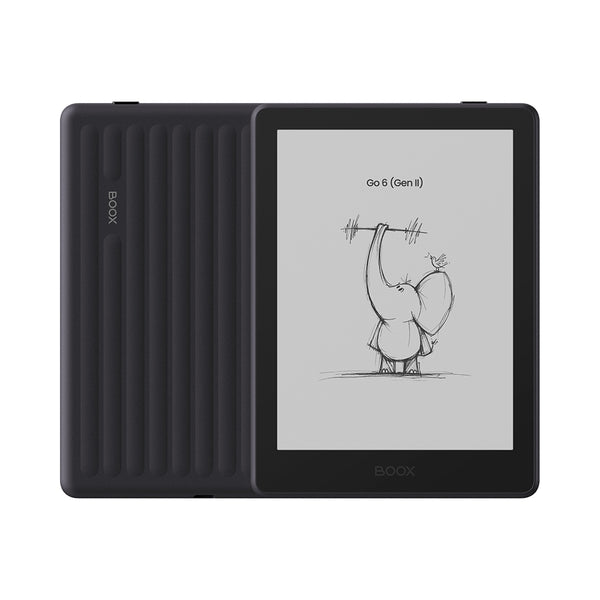
The Boox Go series also offers options with different screen sizes, the smallest of which is an ultra-compact 6 inches. These options are marketed as being travel-friendly, and are generally thinner than the Note series. The newest options are the Go 6 (Gen II), the Go 10.3 (Gen II), the Go 10.3 (Gen II) Lumi, and the Go Color 7 (Gen II).
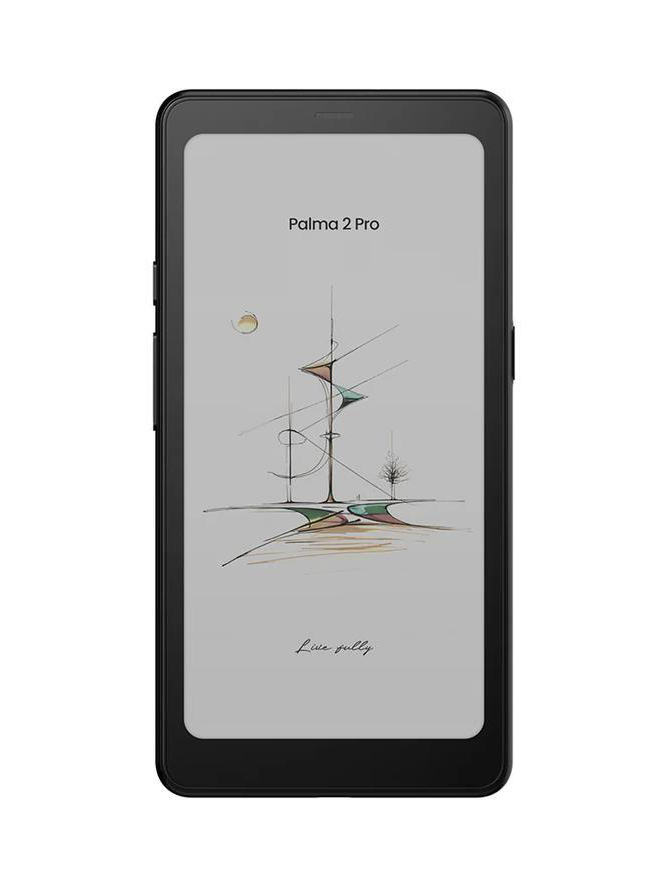
The Boox Palma models have the size and shape of a phone, with a 6.2-inch screen. They're designed for on-the-go reading and note-taking. The newest options are the Palma 3 and Palma 2 Pro.
The Boox Tab series seems to be limited to just the Tab X C. It's a large ereader tablet with support for a magnetic keyboard.
(Image credit: Sharmishta Sarkar / Future)
Boox vs Kobo: buying advice
Buy a Kobo if...
✅ You want to read in the bath: Pretty much all Kobo ereaders are waterproof to IPX8 standard, which means they can withstand up to an hour in two meters of water. In contrast, Boox models are 'water-resistant' at best — which means anything more than a sprinkle of water could spell trouble.
✅ Your priority is reading: Kobo's slates are specialized for reading — and occasionally also annotating. If you aren't looking for a general-use tablet, Kobo is a better bet.
✅ You're on a tighter budget: Almost all of Kobo's ereaders are cheaper than Boox's options — and if you don't need the extra functionality offered by Boox, Kobo will be a more cost-effective option.
Buy a Boox if...
✅ You want tablet functionality: Boox ereaders run a full version of Android, which means you can download a variety of apps to unlock up a wide range of functionality, depending on your needs. These tablets aren't just for reading.
✅ You want a pocket-sized option: The Boox Palma models are around the same proportions as a phone — perfect for on-the-go reading and note-taking.
✅ You want the biggest screen: Boox makes a number of slates with 13.3-inch screens, whereas Kobo models top out at 10.3 inches. Boox is the place to go if you're seeking a generously sized ereader.
It's time for TechRadar's annual tech awards, and this year we're doing it differently. For the first time, we have a complete set of categories where the winners are chosen 100% by you, the TechRadar readers.
The TechRadar Readers' Choice Awards 2026 comprises nearly 100 categories, but we know that not everyone is interested in voting in every one, so on this page you can vote in just our Phones and Cameras categories.
These include tablets, ereaders, drones and more, as well as various phones and cameras awards. You can vote in the survey just below — or follow the links to see other specific categories, or to vote on the full list instead.
The shortlists were chosen by TechRadar's editors based on the best products we've tested or the most popular products of the year. You'll need to vote before 00:01am PST / 03:01am EST / 08:01am BST on Wednesday October 7th 2026 for it to be counted.
Once the deadline has passed at 00:01am PST / 03:01am EST / 08:01am BST on Wednesday October 7th 2026, we'll tally your votes to find the winners in each category.
We'll announce the winners in our big TechRadar Awards 2026 Week, starting Monday October 19th. We'll reveal the winners of the Reader's Choice Awards, as well as the winners of our TechRadar Product of the Year Awards, which are chosen solely by our expert judges.
How many products will do the double? We'll be curious to see — but right now, all you can do is vote for what you think should win, so vote away!

 Login
Login