❌

Reading view

There are new articles available, click to refresh the page.

New Jersey hits data center powering Microsoft Copilot with $1m fine after drone expose 62 secretly-installed gas generators

  • New Jersey issues $1.07m fine for failure to obtain permits to run gas generators
  • DataOne campus running Microsoft's AI was using 62 of them illegally
  • DataOne "disagree[s]" but has 45 days to obtain the relevant permits

A Microsoft partner has been hit with a $1.07 million fine by the US state of New Jersey after allegedly installing no fewer than 62 natural gas generators on-site without obtaining the correct environmental permits.

The state found out about the generators after a local farmer photographing a neighboring golf course noticed equipment appearing on the campus, which led to an investigation and the deployment of a thermal drone, which at the time, observed 45 of the 62 generators in operation.

The fine was based on New Jersey's Air Pollution Control Act, which requires both reconstruction permits to install the generators and operating certificates to run them. Neither had been obtained across all 62 units, the department said in an announcement.

Microsoft has been running 62 generators illegally at just one campus

DEP Commissioner Ed Potosnak described the fine as "by far the largest ever taken against a data center in New Jersey and possibly one of the largest such actions in the nation."

With each generator rated at 1,982 kilowatts, they collectively have a 123-megwatt capacity. For reference, the state asserted that any individual generators with a 37kW or higher capacity should be approved.

The generators effectively provide the data center with a considerable amount of off-grid electricity supply, but while this may be good news to alleviate strains on local infrastructure and household energy prices, CO2, NO2 and CO emissions are particularly concerning.

"While we disagree with the temporary generator determination, we will apply for the air permits for the temporary generators and are in communication with the Department of Environmental Protection regarding its findings and the fuel cell transition timeline," DataOne, the company behind the data center, said in a statement.

DataOne has been given 45 days to obtain the relevant permits, but in the interim, it can continue using the gas generators.

"The Sherrill administration demands accountability and corporate responsibility in the construction and operation of data centers," Potosnak added.


Google logo on a black background next to text reading 'Click to follow TechRadar'

Microsoft unveils huge spending expansion in Middle East, with new multi-billion dollar sums going to Gulf States

  • Microsoft pledges $10 billion to support the Middle East's technological ambitions
  • A $400m subsea cable expansion is also in the works
  • The company stressed push for its educational support schemes

Microsoft has revealed plans to spend more than $10 billion in the Middle East between now and 2030, spread across the UAE, Saudi Arabia, Qatar and Kuwait.

Although the company already has substantial infrastructure already rooted in the region, including cloud regions for the UAE, Qatar and Saudi Arabia, it hopes that further investment will help increase regional access to its cloud and AI tools.

Microsoft President Brad Smith noted the region's ongoing digital transformation, appearing to also acknowledge the impacts of geopolitical conflicts. "We will build on the work we have done to stand by these countries’ governments and people through a period of significant challenges," Smith wrote in a blog post.

Microsoft invests $10bn to support Middle East technological transformation

The company also announced a series of initiatives that will fall under the $10 billion plans, including expanding cloud and AI infrastructure, improving local digital resilience, strengthening cybersecurity and backing educational schemes.

"Our responsibility is not only to invest in the technology that enables that progress, but to help provide the digital resilience, security and continuity it depends on," Smith added in another post.

Naturally, clean energy generation and a close eye on both water consumption and replenishment are core to the company's upcoming projects.

On the resilience front, Microsoft plans to invest a further $400 million in subsea and terrestrial cables by the end of the decade, building on top of its existing SeaMeWe-6 subsea cable which has points in Qatar, Saudi Arabia and the UAE. Microsoft is just one of the 16 companies that look after the cable, which stretches from Singapore to France.

In a bid to pacify job concerns, Microsoft also asserted that it will upskill more than 4.2 million people across the Middle East by 2030 – around 8% of the four countries' combined populations (but a bigger percentage if you only consider working citizens).

Google logo on a black background next to text reading 'Click to follow TechRadar'

Google's creepy new Gemini Live Avatars want to try and make online support bots feel more human

  • Gemini 3.8 Live now includes custom avatars to go with the AI's voice
  • Avatars could be used for customer service, training and more
  • Gemini 3.8 Live can switch between 97 languages automatically

Google has lifted the wraps of its latest Gemini 3.8 Live model, and with it come avatars you can select to make it feel more like you're speaking to a human. Sort of.

It's all possible through a combination of Gemini's real-time speech capabilities and low-latency video generation, so it looks like your chosen avatar is effectively lip-syncing to the text that Gemini is reading out to you.

Research scientist Shuo-yiin Chang and software engineer CJ Zheng said it now feels like AI has a much more "visual presence" - so that's...nice?

Gemini now takes on the body of your chosen avatar with Gemini 3.8 Live

Avatars are designed specifically for enterprise users, but rather than company employees talking to an avatar to get their work done, Google sees it more as showing off what's possible for its customers' end users. In other words, avatars could be used for customer service, receptionists, training and more.

From launch, businesses will be able to select from a library of preset avatars, but they can also create custom avatars to fit a company's branding, for example with a relevant logo on its uniform.

On the safety front, Google asserts that videos of its avatars include SynthID watermarking to verify that they are indeed AI-generated. "This imperceptible watermark is woven directly into the audio and video output, helping to ensure AI-generated content remains detectable to help minimise misinformation and misattribution," the company wrote.

In a separate post, Google also revealed that Gemini 3.8 Live can now support 97 languages and automatic language switching to make multilingual conversations more seamless. A more hardcore version of that model, 3.8 Live Extended Thinking, outperformed GPT-Live-1 Astra and Grok Voice Think Fast 2.0 across multiple benchmarks while still ending up cheaper to run per hour of input audio.

Google logo on a black background next to text reading 'Click to follow TechRadar'

Most Americans now oppose data centers in some way as tide continues to turn on AI technology

  • The environment, energy costs, quality of life and taxes are all concerns
  • Americans are largely split about whether data centers are even good news for jobs
  • Negative sentiments are rising across the board regardless of political background

With the US midterm elections around the corner and AI data centers increasingly becoming part of political discourse, new Pew Research Center reporting has revealed Americans' attitudes toward these facilities have become even more negative as 2026 continues.

Surveying more than 10,500 US adults, the study found only 4% thought data centers are a positive thing for the environment, home energy costs and local residents' quality of life.

On the flip side, more than half (54%) thought they were 'mostly bad' for the environment, up from 39% in January 2026, around half a year prior, showing a marked increase just in a short space of time.

US citizens are increasingly turning against AI data centers

In fact, Americans believe US data centers are worse for home energy costs (50%), quality of life (49%) and local tax revenue (21%) than before.

And with hyperscalers all promising to add hundreds or, sometimes thousands, of operational jobs on top of thousands of temporary construction jobs locally, residents are even starting to disbelieve these promises. Interestingly, the proportion of nationals perceiving data centers as mostly bad for local jobs rose nine percentage points, from 15% at the beginning of 2026 to 24% halfway through the year.

Perceptions are now mostly split, with 24% seeing projects as mostly bad for jobs and 22% seeing them as mostly good.

This still leaves a considerable proportion of Americans – 18% to 32% depending on issue – uncertain about the impact of data centers.

Opinions are shifting

Today, three in five US citizens say they'd either be not too comfortable, or not comfortable at all, with a new data center operating in their area. Rural inhabitants are more likely than before to have negative perceptions, likely with more projects being approved for extra-urban locations where space is at less of a premium.

The study also delves into the political implications, confirming that Americans are increasingly unsettled by data centers right across the board, be it by age, gender, education levels or political party. While Democrats are more likely overall to have negative feelings, supporters of both major parties have actually become more unhappy throughout 2026.

Arguably one of the biggest findings of this report isn't necessarily where the split lies and whether Americans are worried about environmental, social or economic impacts – it's the sheer pace that negative sentiments have grown in little more than just half a year.

All of this is, of course, playing out during an important time for the US politically.

While President Trump continues to advocate for AI and data center buildouts in an effort to be a global leader, more and more states and regions are imposing temporary bans to reassess legislation and local impacts, including Texas itself – the home of OpenAI's massive Stargate project.

Google logo on a black background next to text reading 'Click to follow TechRadar'

Cloud and AI bills looking a bit high? Your AI agents may have been let loose and run up huge spending costs

  • One simple prompt could lead to swathes of downstream compute, experts warn
  • Attackers could even exploit your uncontrolled AI to run up costs
  • Greater visibility and circuit breakers are two solutions

Data security company Forcepoint has revealed a major issue with AI agents, but unlike many AI security threats, it doesn't involve stealing data or compromising the model.

Instead, if left to its own devices, Forcepoint says agentic AI could actually consume excessive amounts of compute, tokens, API calls or other resources if sufficient safeguards and limits aren't in place, leading to higher-than-anticipated enterprise cloud bills.

Moreover, the company's research argues that the problem has become more important as AI has become more complex.

Enterprises warned to keep an eye on AI agent compute usage

The result of overwhelmingly complex agentic AI systems is that one single and apparently simply user request could lead to tens or hundreds of downstream operations. Forcepoint labels this as 'unbound consumption'.

Crucially, the analysis found that high compute and token consumption could actually be pretty hard to detect and existing security protocols are unlikely to pick it up, because there doesn't even need to be an attacker for the impacts to take place. All you need is a badly configured automation or a long-running AI session to accidentally lead to runaway costs.

However, Forcepoint worries that attackers can indeed step in to exploit this vulnerability, with malicious users generating huge workloads and consuming massive compute for their own benefit after obtaining an enterprise's credentials, letting them pick up the bill.

Solutions can be as complex as agentic AI itself, but they're now more necessary than ever. Firstly, companies should set budgets at multiple, finer levels, such as API keys, individual users and teams. They should also have greater monitoring powers over where costs are attributed to.

But Forcepoint also calls for agentic circuit breakers to prevent workload and costs from compounding.

"Security teams rarely watch cloud billing dashboards. Finance rarely reviews prompt patterns or agent design," security researcher Jyotika Singh wrote in an urge for enterprises to take the risk more seriously.

Google logo on a black background next to text reading 'Click to follow TechRadar'

The EU will force data centers to disclose how much water and energy they are using

  • Data centers will get a label, just like your fridge or dishwasher
  • Energy and water consumption must be reported by 500kW+ sites
  • The EC also wants to know how resources are being balanced in relation to local strains

The European Commission has proposed a new rating scheme for data centers in a bid to have them report metrics like energy efficiency and water consumption more transparently.

Upcoming changes fall under the new Data Center Energy Efficiency Package, which introduces a new common, EU-wide rating scheme much like what we're already familiar with for household appliances.

Crucially, the changes now affect smaller campuses with a power demand of at least 500kW, whereas only much larger sites were impacted before the new rules.

European data centers must report efficiency statistics more openly

Some of the new metrics include total energy and water consumption, Power Usage Effectiveness (a figure we're already familiar with in hyperscalers' annual sustainability reports), Water Usage Effectiveness (WUE), how much of their energy comes from renewables, whether waste heat gets reused and more.

Ultimately, the intensified reporting is hoped not only to reveal how much energy sites are using, but how effectively they're balancing consumption in relation to local pressures like water stress.

"Tripling our data centre capacity cannot mean tripling the pressure on our grids, our water and our energy bills," Clean, Just and Competitive Transition EVP Teresa Ribera said.

The changes are also especially notable given ongoing changes within the bloc, because the EU has been ramping up more local compute options so as to reduce reliance on international options in a big sovereign drive. Over the next seven years, the EU wants to triple its data center capacity, per Reuters reporting.

Importantly, the changes won't happen overnight with the rating scheme subject to a two-month scrutiny window, the Commission detailed. Still, the first ratings are set to go live as early as this year, and by the end of 2028, the EU hopes to have reviewed just how effective those new enforcements were.

"Understanding their energy and resource consumption is the essential first step towards integrating them sustainably into our energy system," Energy and Housing Commissioner Dan JΓΈrgensen added.

Google logo on a black background next to text reading 'Click to follow TechRadar'

'We just don't see that there's enough technical people in the pipeline': US chip fabs are facing a huge worker shortfall β€” despite promise of huge paychecks, industry says it still needs over 150,000 workers

  • The US could have a 157,000 shortage of semiconductor and microelectronics workers by 2030
  • International chip makers are reportedly bringing in workers as a temporary measure
  • Worker salaries aren't the issue, but competition with other sectors might be

New analysis from the SEMI Foundation has revealed the US could face a shortage of up to 157,000 semiconductor and microelectronics workers by as soon as 2030.

This shortage will likely cover all manner of jobs, right from semiconductor engineers to supply chain workers and maintenance staff, putting immense pressure on the sector at the very time that it needs all the resources it can get.

Speaking with CNBC, Samsung semiconductor EVP Jon Taylor declared that the company is "concerned" because it's not seeing enough technical workers coming through the US pipeline.

Chipmakers are worried about a lack of workers

Only 3% of US engineering graduates enter the semiconductor industry every year, the report warns, with nearly three in four (73%) semiconductor companies reporting significant difficulties recruiting engineers.

The ongoing AI boom, and especially America and the Trump administration's push for more domestic manufacturing and AI processing, are accentuating this shortage of workers. According to McKinsey, semiconductor sales growth during the first six months of 2026 reached its highest year-on-year rate since the mid 80s, with revenue surpassing the trillion-dollar mark.

Numerous high-profile companies are also working on expanding their US footprints despite the clear strains. Samsung itself reportedly expects to create around 3,500 new jobs from two fabs at its Taylor, Texas site, however it's unclear with how much success it will fill them given news about recruitment struggles.

Micron, SK Hynix, TSMC and Intel are also opening new manufacturing facilities, per the CNBC report.

However, the report also reveals that both Samsung and SK Hynix are bringing in workers from South Korea temporarily to offset some of those US struggles.

US workers don't want to work in chip manufacturing, but why?

Despite low uptake, these roles typically fetch some pretty attractive salaries. SEMI's figures put typical US semiconductor compensation around $127,000 to $187,000, with some senior roles exceeding $238,000.

Ultimately, it's clear that companies are willing to pay the right compensation to attract workers, so the issue lies elsewhere.

And it could be cross-sector competition that's making jobs at other companies more attractive – semiconductor workers are also great fits for software, AI and aerospace, per the report.

In the meantime, hyperscalers are increasingly prepared to remind us that investments in new campuses also go hand-in-hand with local training opportunities, college funding and upskilling. But with the impacts of those schemes unlikely to be seen for many years, it's likely that many US semiconductor roles could remain unfilled in the meantime.

Google logo on a black background next to text reading 'Click to follow TechRadar'

More and more workers are feeling stressed at work due to security risks

  • More workers are worried about security issues than they were this time last year
  • Three in four say their recovery tools are too difficult for them to use
  • This report says having strong data storage could help

While many of us typically see security as an IT or a leadership issue, it's actually impacting us more than we'd initially thought. New Object First data found that 91% of workers feel uncomfortably stressed at work because of IT security risks – a seven percentage point increase over last year.

But unfortunately, it's a double-edged sword because it all boils down to AI. Nine in 10 say AI tools have improved their productivity, but seven in 10 say the growth of AI-powered threats is a key driver behind their stress.

Additionally, fewer than one-quarter (24%) believe their organisation is suitably equipped to deal with those threats.

AI-driven security threats are actually impacting you and I

While the risk of cyberattacks (50%) is a leading cause for stress at work, high workloads and understaffing (50%) land in joint-first place. Gaps in backup and recovery effectiveness (41%) and pressure to maintain uptime (44%) are also big headaches for workers, implying pressure isn't coming from direct attacks alone, but workload and operations.

For example, three in four (74%) say that their recovery tools are difficult to use without security expertise, leaving regular knowledge workers at a loss. One in five (19%) even say they feel hopeless and overwhelmed during and after an incident.

Naturally, this stress is impacting productivity, with four in five (78%) remarking that stress negatively affected their job performance. Two in five (39%) even said they'd thought about quitting.

"As critical as technology is to cyber resilience, those responsible for protecting and recovering an organization’s data are just as essential," company CEO David Bennett concluded.

Google logo on a black background next to text reading 'Click to follow TechRadar'

Microsoft is retiring some key 365 companion apps β€” Calendar, People, and Files services all set to be cut

  • Calendar, People and Files companion apps are being pulled after automatic installation last year
  • Importantly, these particular interfaces are going, but the data is still accessible elsewhere
  • Microsoft also wants you to use Copilot to find the information you need

Microsoft has confirmed that Calendar, People and Files are all becoming unsupported as of December 2026 after it started automatically installing them on Windows 11 devices with linked Microsoft 365 accounts in late 2025.

The vision was that users would be able to get quick access to important information like contact details through these lightweight apps – the company did not share the reason for pulling these companion apps.

Crucially, though, while the apps themselves may be going, the data behind them isn't. Data like contact details, for instance, are already stored elsewhere in the M365 cloud, so the companion apps are just one way to access the information.

Microsoft 365 Calendar, People and Files are all being pulled

Removing the apps does come as something of a surprise, because Microsoft has been building Copilot into them. The company still even has some Copilot features in the works "coming soon" – but clearly not.

We know that the three companion apps in question are no longer being automatically installed, however they aren't set to be automatically removed. For enterprises, administrators will need to remove them. Admins also need to configure Intone to stop deployments.

Unmanaged PCs, such as consumer laptops, can remove the apps through the usual channel.

Moving forward, the users who did actually use those companion apps are being told to resort to Outlook and Teams for calendar and people information, and Windows Search Box, Files Explorer, SharePoint and OneDrive for files. The company, naturally, plugged its own Copilot AI companion for helping users surface information, too.

With deprecation now just weeks away, Microsoft stressed that important security updates for the three apps in question won't be rolled out.

Google logo on a black background next to text reading 'Click to follow TechRadar'

E-waste from AI boom and building data centers could stretch six times around the Earth by 2050, report warns

  • BAN says 87% of data center hardware isn't actually accounted for in most figures
  • Each 1GW of capacity equals 70,000 tonnes of hardware
  • AI hardware needs more frequent replacing

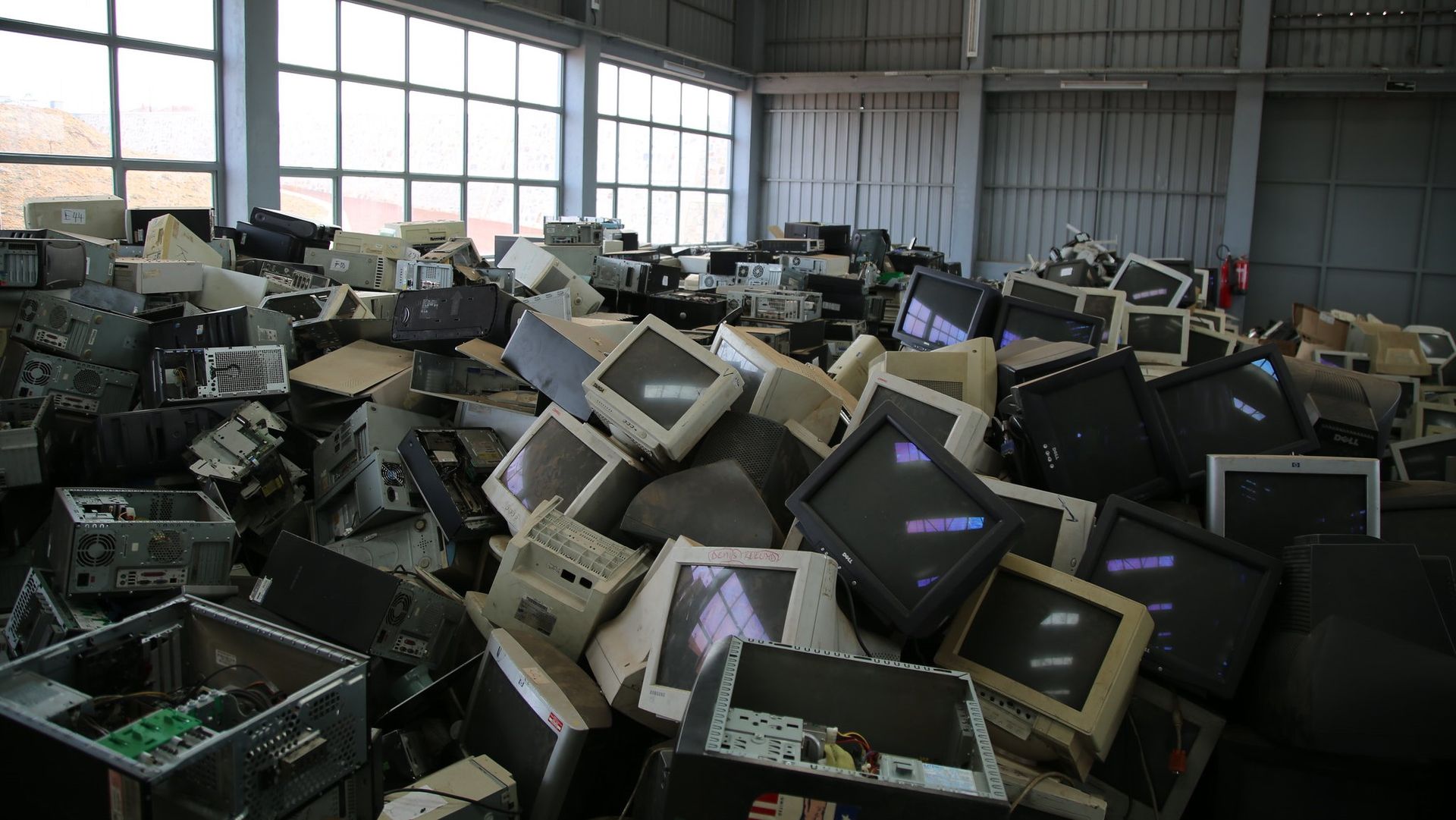
A new Basel Action Network (BAN) report has claimed the ongoing AI boom could create a new stream of e-waste, with retired equipment from AI alone likely contributing 395-617 million tonnes between 2025 and 2050.

To put that into context, BAN says that waste would fill 15-23 million 40ft shipping containers, which, placed end-to-end, would be enough to circle the earth six times over.

Ultimately, Moore's Law is to blame because developers are no longer able to achieve such great improvements in performance year-over-year, so they're having to introduce whole new types of technology.

AI will likely lead to massive amounts of e-waste

For example, AI companies are now having to deploy huge numbers of specialized AI accelerators alongside GPUs, cooling equipment, networking and more.

BAN also highlights that global data center Capex is expected to hit $7 trillion between 2025 and 2030, with $4.3 trillion of this attributed to electronic hardware.

The paper goes on to criticize earlier estimates for only including servers and accelerators, which it says is only around 13% of the picture. The other 87%, which spans networking, power distribution, storage/backup, and cooling, is largely unaccounted for.

And with each additional 1GW of data center capacity estimated to need around 70,000 tonnes of electronics, and 100GW of additional capacity anticipated globally by the end of this decade, the true scale starts to become clearer.

There's also refresh cycles, because BAN predicts that AI accelerators, servers and racks are replaced every 2.5 years, versus the usual five to seven years of a general-purpose server.

While these may be speculative estimations and not actual quantities, one thing's for certain – more data centers means more e-waste.

To minimise some of the impacts, BAN first suggests designing AI data center equipment to last longer in the first place. Recycling and second use is also a big topic, but the report doesn't go into whether AI-specific hardware can then go on to be used in lesser functionalities, such as being shoehorned into regular server facilities.

Google logo on a black background next to text reading 'Click to follow TechRadar'

Microsoft finally fixes this annoying Excel paste problem, but you probably never even noticed

  • A recent update introduced a new bug affecting pasting in Excel
  • Excel 2016 just got a hotfix, but Microsoft admits issues can persist
  • Temporary workaround is available by selecting 'Paste Special'

Although a recent Microsoft Excel security update brought with it a highly annoying bug impacting copying and pasting functionalities across the spreadsheet software, it's already issued a partial fix.

Just days after the glitch was introduced with a September 8 2026 security update (KB5002914), the company has released a hot fix rather than forcing users to wait until the next cycle.

But this fix in particular only applies to Excel 2016, which is unlikely to have as much reach and global usage as Microsoft 365 versions of the app, therefore many users won't even have been aware of the issue.

Excel just got an important new fix

Other non-365 versions of Excel were also impacted. "In Microsoft Excel 2024, 2021, 2019, and 2016, as well as Excel Online in Office Online Server, the paste operation might fail silently," the company explained in a status update.

"Although users try to paste content, the source remains selected and the destination is unmodified," the update reads, confirming that users didn't receive an error message or sound to let them know of the failure.

Office LTSC 2021 and 2024 are officially fixed, Microsoft confirmed, but a only a mitigation is available for Office LTSC 2019 and Office 2016, so users may still experience some problems.

Thankfully, while a full fix is in the works, Microsoft offered up a pretty simple workaround. Pasting 'Special' from the Home tab is all it takes, with conditional formatting apparently causing headaches for now.

Google logo on a black background next to text reading 'Click to follow TechRadar'

Microsoft Teams is finally boosting security controls to let admins block custom file extensions

  • Weaponizable File Protection is getting more custom controls months after launching
  • Teams has become an attractive environment for attackers lately
  • Microsoft is set to add plenty of new features, too

Microsoft has announced an upgrade to its Weaponizable File Protection feature within Teams, which now means admins can control which types of files users can send through the workplace collaboration app to prevent the likelihood of spreading malware and other malicious files.

Weaponizable File Protection is a tool that's already been rolled out to Teams, but previously, it only automatically scanned for potentially dangerous attachments.

The automated part of the tool began rolling out in early 2026 after an earlier preview from a roadmap entry, and it's another roadmap entry that shows us what we can expect moving forward.

Teams admins can now block certain file types

"Administrators will be able to customize which file types are blocked in Teams to align with their organization's security requirements or continue using the Microsoft-recommended default list," a new roadmap entry reads.

According to the entry, Microsoft is aiming for a November 2026 rollout, so it shouldn't be long before admins gain greater control over prescribing which file types are blocked across the organization.

And it's around one year ago this month that Microsoft rolled out a largely similar, automated feature across Teams that scanned links for potentially malicious intent.

"Unlike email, Teams traffic typically bypasses secure email gateways and benefits from the perceived legitimacy of a colleague-initiated chat, which can make lures particularly effective in this environment," Microsoft wrote in a separate security study in a bid to explain why Teams attacks are becoming increasingly common.

More broadly, it looks like November's gearing up to be a big month for Teams both from a security perspective but also in terms of new features. Other roadmap entries point toward introduction like simultaneous screen sharing for two presenters, breakout room support for Android and a Meeting Shared Files window where users can easily access attachments from specific meetings.

Google logo on a black background next to text reading 'Click to follow TechRadar'

Bill to make AI data centers pay for power grid upgrades reaches critical milestone

  • This new Act, with overwhelming, bipartisan support, could soon be enforced on a per-state basis
  • 100MW+ data centers would have to pay for new power generation and grid infrastructure
  • Public Citizen says the bill doesn't address other "consumer and community impacts"

With energy consumption now one of the most hotly debated topics surrounding new data center development, new rules could be set to come into play to force developers to pay for grid upgrades without pushing the impact onto local citizens.

The Ratepayer Protection Act, which passed on September 16 with 417 votes (and just three against it) would apply to medium and large campuses with peak demands of 100MW+.

Impacted developments could end up having to foot the bill for new electricity generation capacity as well as the transmission and distribution infrastructure that goes along with it.

US data centers could soon be required to pay for grid upgrades

We also know that new projects can be years in the making, from initial ideation all the way through to construction and a go-live date, but under the proposed bill, operators would have to pay for the upgrades regardless of whether they pull out or stop buying grid power.

However crucially, it's unlikely to be a blanket action that affects every region equally, because state regulators would need to consider adopting the rules on a more local basis.

What this overwhelming, bipartisan support also confirms is that data centers have become a major political discussion, with US midterm elections just around the corner and citizens increasingly worried about rising utility bills.

The Ratepayer Protection Act comes after the White House announced the Ratepayer Protection Pledge, which set out similar plans. President Trump called on major hyperscalers to "build, bring, or buy the new generation resources and electricity needed."

The difference is that the Pledge would be a voluntary move by data center operators, whereas an enforced Bill would make it a legal requirement.

Still, consumer rights org Public Citizen has criticized the Act for not going far enough. "While a federal mandate forcing states to consider such a step provides opportunities for advocates to press for consumer protections, there are a myriad of other ⁠consumer and community impacts from data centers unaddressed in this bill," Energy Program director Tyson Slocum wrote (via Reuters).

Google logo on a black background next to text reading 'Click to follow TechRadar'

Google, Nvidia, and Emerald AI launch Alliance to advance data centers that dynamically adjust electricity use based on grid conditions

  • Google and Nvidia are just two of the tech giants behind the new AI Energy Management Alliance
  • The group is focused on building future data centers that coordinate power usage with the grid
  • Moving training to off-peak hours and balancing on-site energy are some of the solutions

Emerald AI, Google and Nvidia have come together to form the AI Energy Management Alliance (AEMA), and it could be exactly what we need to tackle rising energy consumption within the data center field.

Together, the group hopes to deploy flexible AI data centers that can dynamically adjust how much electricity they consume from the grid based on a number of different conditions.

This important development comes in response to rising power availability pressures, which are leading to years-long delays for many new projects.

Future data centers could adapt how much power they use

In an announcement, Nvidia Head of Sustainability Josh Parker explained how these future campuses could shift compute workloads, discharge storage, use paired generation or respond to other system contingencies to dynamically change how much electricity they're drawing from the grid at any given time.

The concept involves shifting high-compute tasks like training to off-peak times, using on-site batteries or generation in conjunction with the grid and exporting excess stored energy back to the grid during times of stress.

Crucially, the AEMA must now set out technical specifications, performance metrics and open standards to allow this to happen at scale.

And while only Emerald AI, Google and Nvidia are behind the alliance from launch, a number of additional partners are set to join the scheme. SiliconANGLE reports that Anthropic will be one of them.

The concept itself isn't new – Google also announced earlier this year that it had over 1GW of demand-response capacity – but doing so at scale would likely make a considerable impact across the board.

Both Nvidia and Emerald AI have already developed software to handle power consumption in relation to the grid.

"By creating a common framework for performance, reliability and collaboration, AEMA aims to help the US build the infrastructure of intelligence at the speed and sustainability the moment demands," Parker wrote.

All of this, of course, comes against a backdrop of mounting energy pressures. Recent Bloomberg data suggests that US data centers alone could use as much natural gas as the entire of Germany and Japan combined by 2035, with a similar Moody's study projecting that total US data center energy consumption could top 426 TWh by 2030.

Google logo on a black background next to text reading 'Click to follow TechRadar'

US data center natural gas consumption could surpass Germany and Japan combined by 2035

  • US data centers could consume 18 billion cubic feet of natural gas per day by 2035
  • Up to 3.4 billion cubic feet could come from on-site, off-grid generation
  • The projects don't even include all data center plans

New Bloomberg data has revealed that US data center natural gas consumption could top the combined consumption of Germany and Japan combined by as soon as 2035.

In less than a decade, the report claims that America's gas consumption for data centers alone could reach 18 billion cubic feet per day.

That's nearly double what the data previously predicted just nine months ago, indicative not only of the growing data center footprint nationally but also the mounting strain on the grid system.

American data centers are using more and more natural gas

Crucially, these latest figures assume that some of the upcoming and announced projects may not even be built, so if every single project were to go ahead, consumption would reach even higher figures.

Consequently, the next decade will likely see data centers become the second-biggest source of US natural gas demand growth, second only to the country's LNG exports.

But with national energy generation and grids struggling to keep up with the growth, Bloomberg believes around 2.9 billion to 3.4 billion cubic feet per day could be attributed to on-site, self-generated energy. As a guide, that's around as much as the entire data center sector consumes today.

The true warning comes from that the remaining consumption, provided by the grid, could ultimately lead to higher gas prices over the next 10 years. That, and the estimated 1 million metric tons of additional greenhouse gas emissions per day predicted by the data.

Importantly, BloombergNEF gas market analyst Henry Eaton stressed that these projections include "fairly large" error bars due to the sheer number of variables and unpredictability, meaning that actual consumption could be substantially higher (or lower).

More broadly, another recent study revealed that America's data centers could consume a combined 426 TWh by as soon as 2030, with Moody's analysts pushing the importance of both new energy generation but also transmission infrastructure to connect campuses and homes nationally with cleaner and more reliable energy.

Google logo on a black background next to text reading 'Click to follow TechRadar'

Google's ad tech monopoly will remain, but must relax rules and appoint antitrust monitor

  • Google told to make significant interoperability changes to its ads business
  • It'll be monitored for six years, but the DOJ wanted 15 years of monitoring
  • Google says it intends to appeal the decision, nonetheless

Despite the Department of Justice's best efforts, US District Judge Leonie Brinkema has ultimately concluded that Google won't be mandated to break up its ad-tech business, however the tech giant will still need to make some major changes to its business model to tame monopoly fears.

While the DOJ had previously accused Google of not being trustworthy to operate AdX fairly, with publishers having to pay Google a 20% fee to sell advertising through AdX, Brinkema decided that changes rather than a breakup would be more appropriate.

Crucially, the company will need to disconnect its publisher ad server from AdX, and websites using Google's publisher ad server must not be required to use AdX as well.

Google gets off relatively lightly with ad monopoly allegations

By disconnecting the two, the judge hopes that greater interoperability will be realized, thus adding some "much-needed" competition back into the market. In other words, Google must not favor its own tools over competition.

But the company will still be under close monitoring as it sets out to appoint an internal antitrust compliance monitor. Additionally, the changes won't necessarily be long-term, because the restrictions and monitoring are only set to last six years, during which time it's hoped that the competition landscape will open up and further action will not be needed. Still, the DOJ wanted 15 years of restrictions, not six.

Despite avoiding the toughest action, Google still says it disagrees with the ruling and that it intends to appeal (via Reuters). Associate Attorney General Stanley Woodward Jr described the result as a "significant victory."

Advertising accounted for $294.7 billion in company revenue last fiscal year of its $402.8 total, or around 73%. That's down from 76% the year before and 77% one year before that.

Google logo on a black background next to text reading 'Click to follow TechRadar'

Senator Bernie Sanders and Trump ally Steve Bannon unite in calls for more AI oversight

  • Advanced AI should be paused as regulators assess the potential damage
  • Trump urged to discuss international agreement with Chinese President
  • Current US government criticized for taking a light-touch approach

Bernie Sanders is working together with former White House strategist Steve Bannon in a bid to urge the governments to take more oversight over AI.

Job losses, a loss of control over advanced AI, biological warfare, rising energy prices and concentrated power among a few AI giants as just some of the arguments the two political figures are using in their broad argument for greater AI regulation, per Reuters reporting.

In particular, Sanders claims that tens of millions of jobs could be removed by AI, making it increasingly difficult for younger generations to get a job at all.

US government gets another nudge to regulate AI

Consequently, Trump is being urged to use an upcoming meeting with Chinese President Xi Jinping to establish an international agreement to pause the development of advanced AI.

This aligns with separate legislation Sanders is pursuing, which calls for the permanent ban of artificial super intelligence, temporary pauses on other advanced AI, and the establishment of both a new federal AI regulator and further international agreements.

Bannon criticized the Trump administration for taking a light-touch approach to AI regulation, blaming it on close ties with (and the influence of) American tech giants. His approach also slightly differs from Sanders' in that Bannon is more vocal about blocking Chinese access to advanced American chips and other relevant hardware.

While attitudes are split virtually on a person-by-person basis, rather than a per-party basis, the current administration is generally seen as more pro-American innovation than anti-AI. House Speaker Mike Johnson warned that slowing down US development would ultimately cause it to lose its competitive advantage over China.

However, while opinions are split, it's clear that artificial intelligence has become a major political discussion, and with US midterm elections just weeks away, all could be about to change.

Google logo on a black background next to text reading 'Click to follow TechRadar'

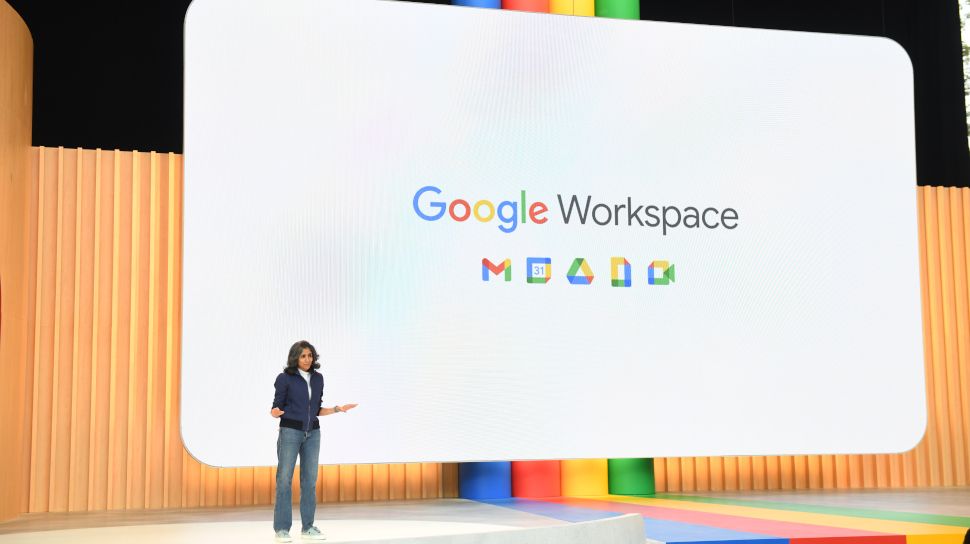
Businesses are dropping Microsoft 365 in favor of Google, but if the ROI is no different, why are people switching?

  • M365 E5 plans tend to include more than their Google Workspace counterparts
  • Google can sometimes work out cheaper for Mac and Chromebook users
  • Software is undergoing an AI change, so is it best to just wait?

New research from Senior Gartner principal analyst Domenico Scriva has deemed that switching from Microsoft 365 to Google Workspace doesn't actually deliver any meaningful savings (via The Register).

This is despite Google Workspace licenses generally coming in cheaper than their Microsoft 365 counterpart, M365 E5.

Instead, Scriva claims that many companies are only switching to Google out of pure spite or dissatisfaction with M365, without assessing the ROI.

Why are businesses switching from M365 to Google Workspace?

Scriva argued that being unhappy with Microsoft isn't itself a business case for switching, while also noting that the E5 subscription adds additional things like telephony, security and even OS licences, which customers wouldn't otherwise get with a Google Workspace subscription.

All of this considered, plus the fact that Gemini is included in Google plans while Copilot is a paid extra, still leaves Google coming out at $2 per month more expensive, the analyst revealed.

However, migrations could be spelling out much more than a preference of software, because Scriva admitted that Google Workspace plans can actually be most cost-effective for Macs, which tend to have longer service lives, and Chromebooks, which are usually cheaper to acquire in the first place.

With this in mind, it's possible that we're also seeing a shift in hardware tendencies, be it a reduction in refresh cycle frequency or a total migration to a new type of hardware.

Still, whether it's a software migration, a hardware switch, or both, Scriva warns that retraining costs can instantly wipe any ROI that a company could have otherwise achieved.

At the end of the day, Gartner warns that enterprises should consider specific business outcomes rather than acting on instinct, and with AI likely to change software as a whole, many may be better off riding out their lesser-preferred software option to see where things are heading.

Google logo on a black background next to text reading 'Click to follow TechRadar'

You can now let AI handle the setup of your Meta WhatsApp Business chats

  • Setting up a WhatsApp Business account is unnecessarily convoluted, Meta admits
  • New MCP server gives third-party agents access to set up accounts for you
  • Meta is asking for feedback during this initial testing release

In an effort to make running small businesses even easier – and also to gain new WhatsApp customers, it's likely – Meta has launched a new WhatsApp Business Tools MCP to give AI agents access to interact directly with the platform.

Through this connection, users will be able to set up and configure Business messaging agentically, rather than having to manually trawl through dashboards and other pages.

While the company would obviously like you to use Meta AI to handle this, offering a new MCP server means Claude, ChatGPT and there AI agents can also do the heavy lifting for you.

An AI agent can now set up your business' WhatsApp

The company has admitted that onboarding to WhatsApp Business has become unnecessarily fragmented, with the Meta Developer Console, Business Manager and other dashboards all playing a role in setup.

Under the new agentic way of signing up, AI can create accounts, add and verify phone numbers, create and edit message templates and more. "You describe what you want; your agent handles the accounts, numbers, templates, and API calls," Product Marketing Manager ZoΓ« Lieberman wrote.

"Before any tool runs, the server confirms you're an admin of the app, resolves the attached business, and verifies your Terms of Service are signed," Lieberman stressed.

Meta Business Messaging MCP is currently rolling out gradually, and it's only discoverable on Claude, Codex and ChatGPT, but with such clear intent to make communication admin easier for business owners, Meta may soon continue to add new features, MCP options and supported agents.

For now, though, the company stressed that this current release is "built for development and testing workflows," thus it's asking for feedback to monitor how effective it is.

Google logo on a black background next to text reading 'Click to follow TechRadar'

❌