❌

Reading view

There are new articles available, click to refresh the page.

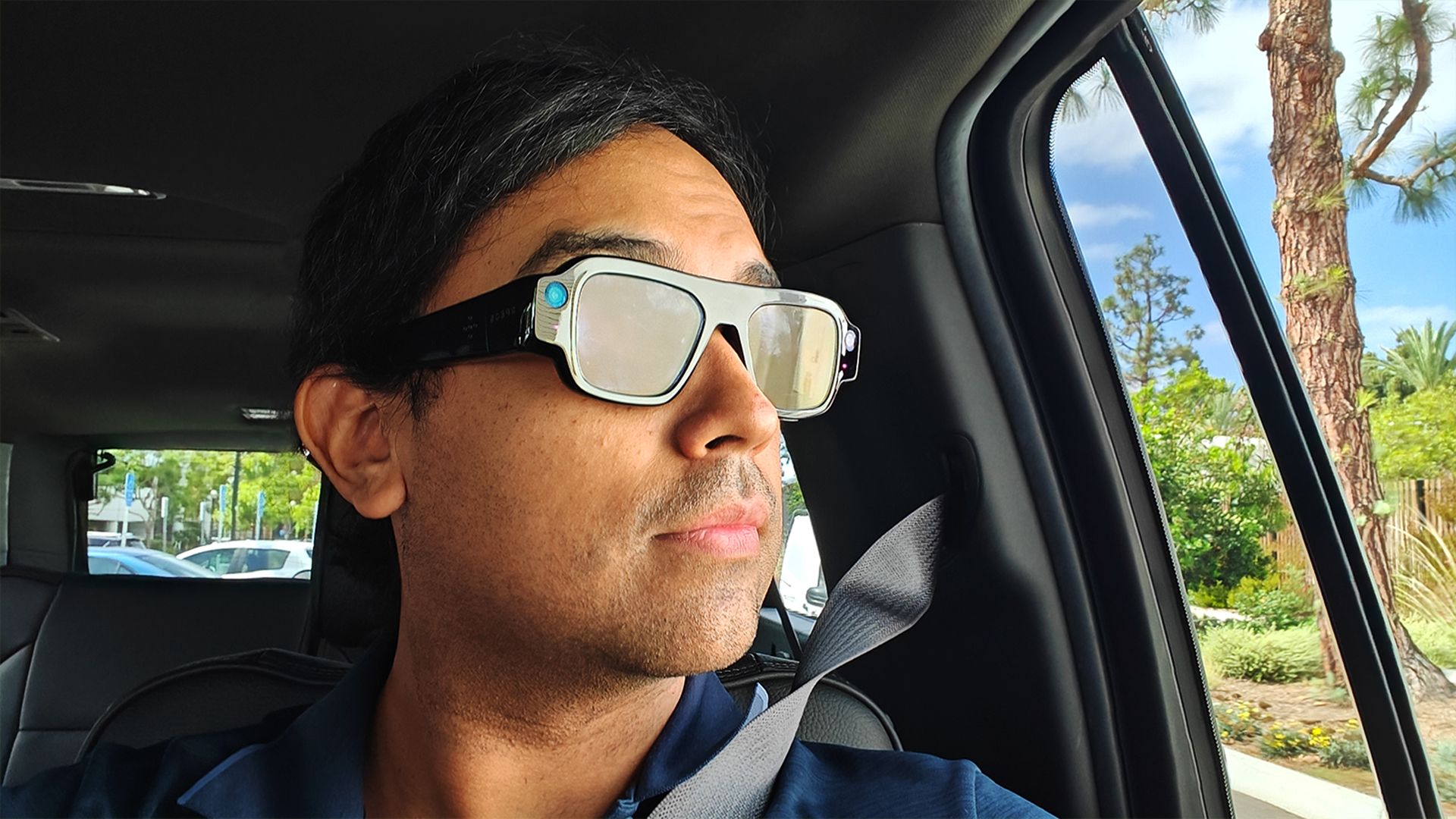
The Ray-Ban Meta Audio glasses remove the cameras for better battery life

All eyes were on Meta Connect 2026. The annual hardware showcase is where the company debuts its latest wearables, and this year’s event comes at a time when anti-smart glasses sentiment seems to be at an all-time high — though that didn’t stop Meta showcasing several brand new pairs of specs.

Smart glasses are getting banned from offices, event spaces, pubs, and courtrooms (among other venues), and folks are expressing their uneasiness at being under the gaze of camera-equipped specs — especially given the potential for wearers to film those around them covertly.

Perhaps that’s why Meta has debuted, for the first time, smart glasses that entirely lack cameras, in the shape of the Ray-Ban Meta Audio — though in the pre-Connect briefing I had for the glasses (I’m writing this ahead of the showcase, so can’t speak for what Mark Zuckerberg will say in his version of the keynote) Meta didn’t attempt to link its Audio glasses with the privacy backlash.

Instead, Meta focused on the advantages of these glasses — chiefly their longer 12-hour battery life. We’ll need to see how this figure holds up in our day-to-day testing, though it sounds like these glasses will be able to provide AI assistance and music playback for much longer stretches of your day than previous models.
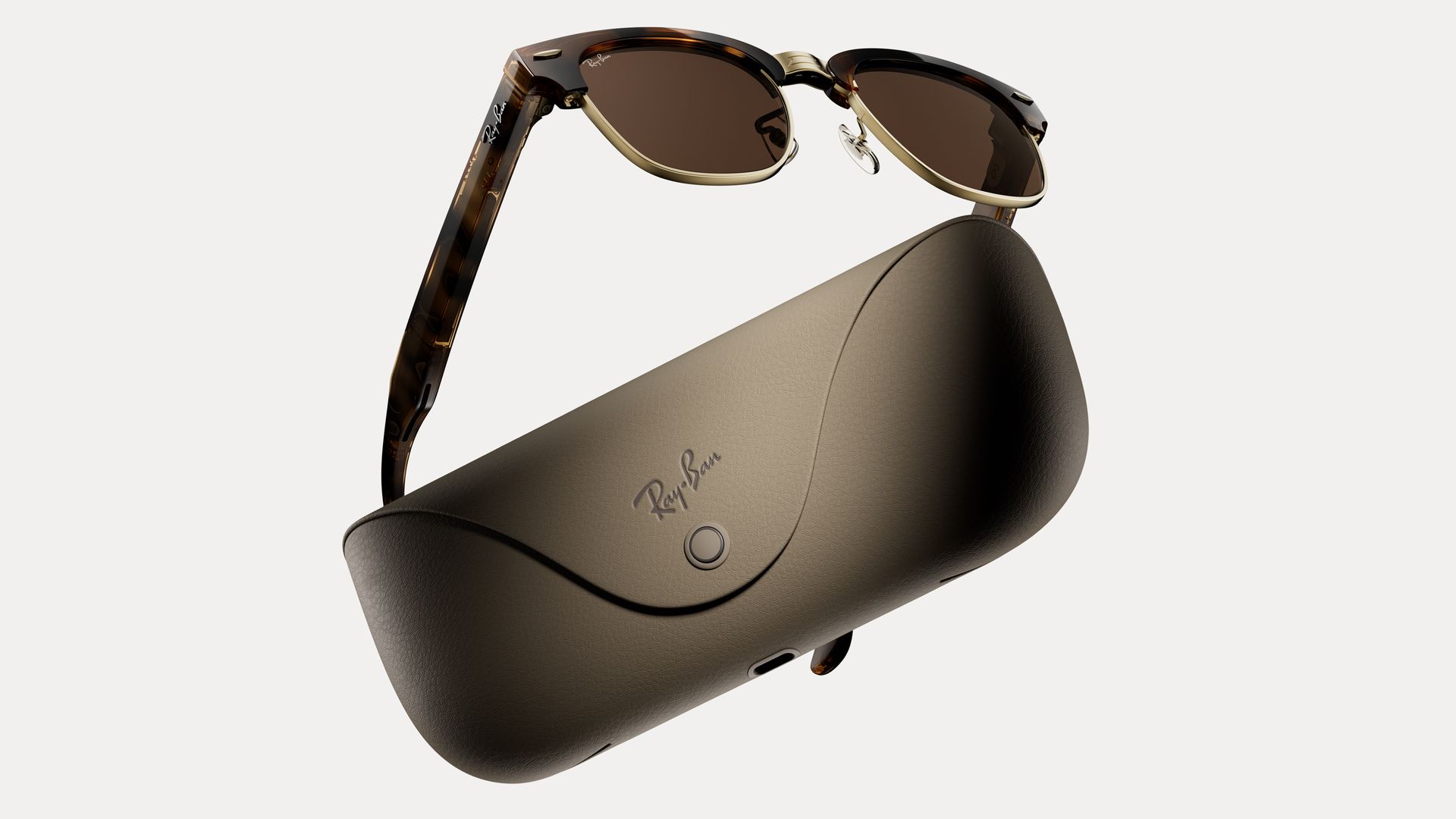
The Ray-Ban Meta Audio glasses

(Image credit: Meta)

You’ll be able to enjoy wearing them for longer too. The specs now weigh just 43g (down from 49g for the lightest Gen 2 design), and they also boast some of the Ray-Ban Meta Optics’ (Meta's prescription glasses line) fit adjustments, like ergonomic hinges and adjustable temple tips. Based on my time wearing the Ray-Ban Meta Audio glasses, these features help to make them some of Meta’s comfiest yet — though my demo was only for about 20 minutes or so which isn’t the same as all-day wear.

Audio performance is also getting a boost thanks to Dolby Atmos support. The glasses' microphones are much better at picking up an immersive soundscape, and the speakers are better at playing it back to you.

I heard a few examples in my demo where the video swapped between Atmos and standard Stereo playback, and the difference was night and day. With Atmos I felt so much more immersed.

If you’ve wanted to pick up a pair of smart glasses, but don’t want ones with a camera, these could be the specs for you when they launch on October 13, priced at $349 / £319 / AU$529.

The Ray-Ban Meta Audio glasses

(Image credit: Meta)

Problem solved?

Of course, Meta hasn’t abandoned its camera glasses — it just announced its Ray-Ban Meta Gen 3 model — and in my briefing Meta pushed back on claims its specs can be used covertly.

It described the recording indicator as being “a light you can’t miss,” and noted how it has improved its glasses’ tamper-protection features in recent updates. It didn’t provide details on if or how it will make the indicator more obvious (many I’ve spoken to would disagree with Meta’s “can’t miss” claim), though given the existential threat to its business the ‘perv glasses’ moniker poses, I expect more protections and safeguards are on the horizon (assuming they aren’t announced at Connect).

The Ray-Ban Meta Audio glasses

(Image credit: Meta)

Audio-only glasses present a partial solution to the issue. They can still capture audio of yourself and those around you, and aren’t as useful as camera-equipped glasses — you can’t provide visual context to the Muse AI, for example — but the lack of snappers also means they’re a lot less invasive.

And despite being more limited, the glasses can still offer some useful support. Meta has announced a new Hearing Enhancement feature for its specs. The feature is designed to help people with mild or moderate hearing loss enhance the audio of the world around them. It's not free, however, as it'll cost $149.99 a month (pricing outside the US TBC), or it'll come as part of a Meta One subscription.

Possible added costs aside, this feature is an incredible tool — and a showcase for the good things new tech like smart glasses can provide — and some of the Meta employees at the event told me it's the best thing they've worked on while at the company.

Besides the new Meta VR Glasses, the Ray-Ban Meta Audio are probably the glasses I’m most excited to experience, although camera-less specs aren’t my favorite, as they often lack audio capabilities and use a display — Meta’s specs are the opposite, with no display and Dolby Atmos audio, and that’s much more my style.

I want a casual audio experience with the occasional AI assistance, not a constant HUD that feels mildly useful at best, and annoyingly distracting at worst. I’ll be interested to see what others think, though.
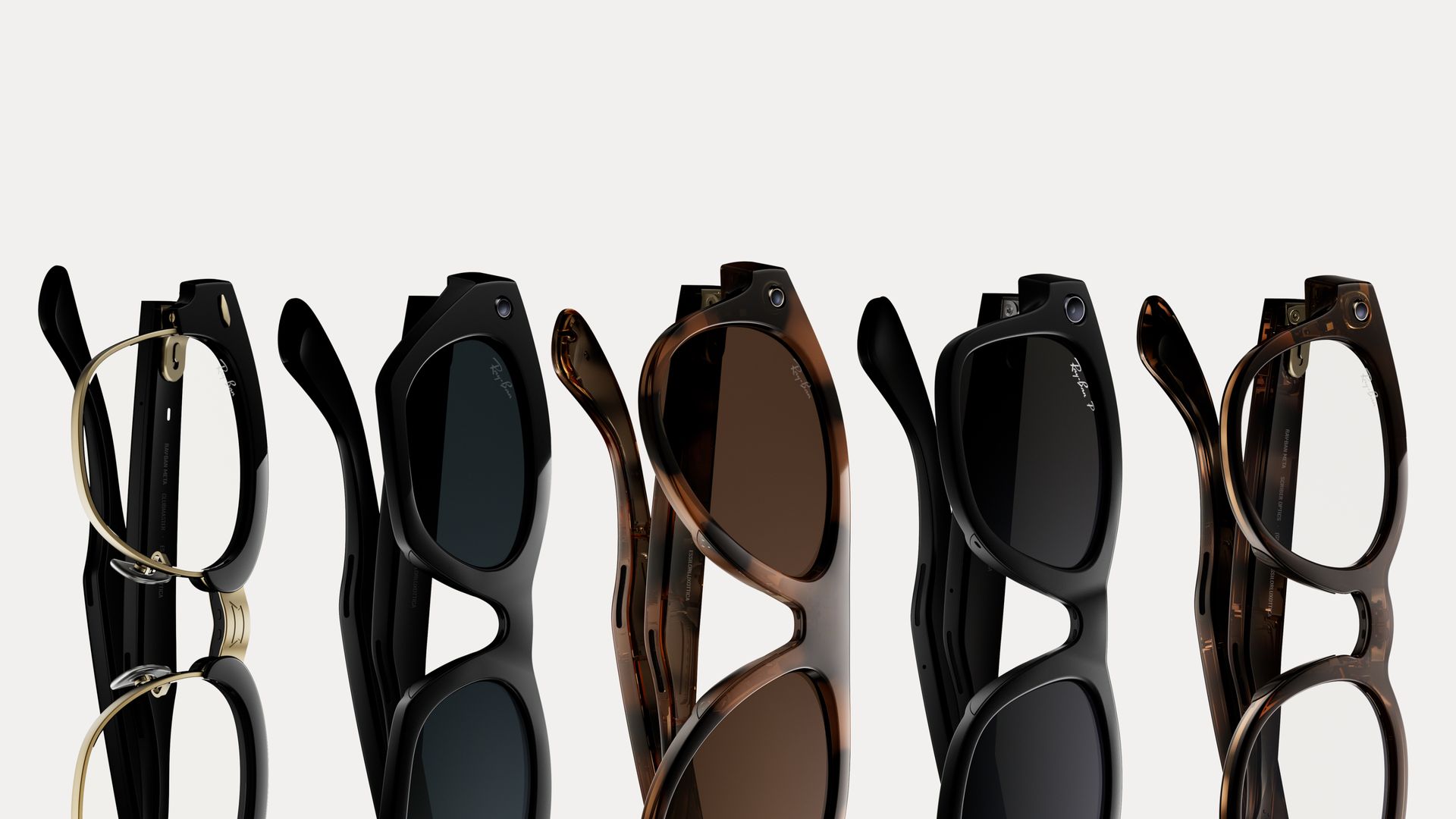
The Ray-Ban Meta Audio glasses

The Meta Audio and Gen 3 Ray-Ban glasses (Image credit: Meta)

Will this camera-less design face less backlash, will it be widely accepted? Or has the negativity around smart specs gone too far for brands to be able to win people back?

I think there’s still time for smart glasses to be saved, though ignoring the cameras problem is only a half step. Better privacy protections are still needed, but we’ll have to wait and see who acts next — will Meta and others properly regulate themselves, will the court of public opinion continue to rule against 'perv glasses', or will government regulators take the decision out of everyone else’s hands?

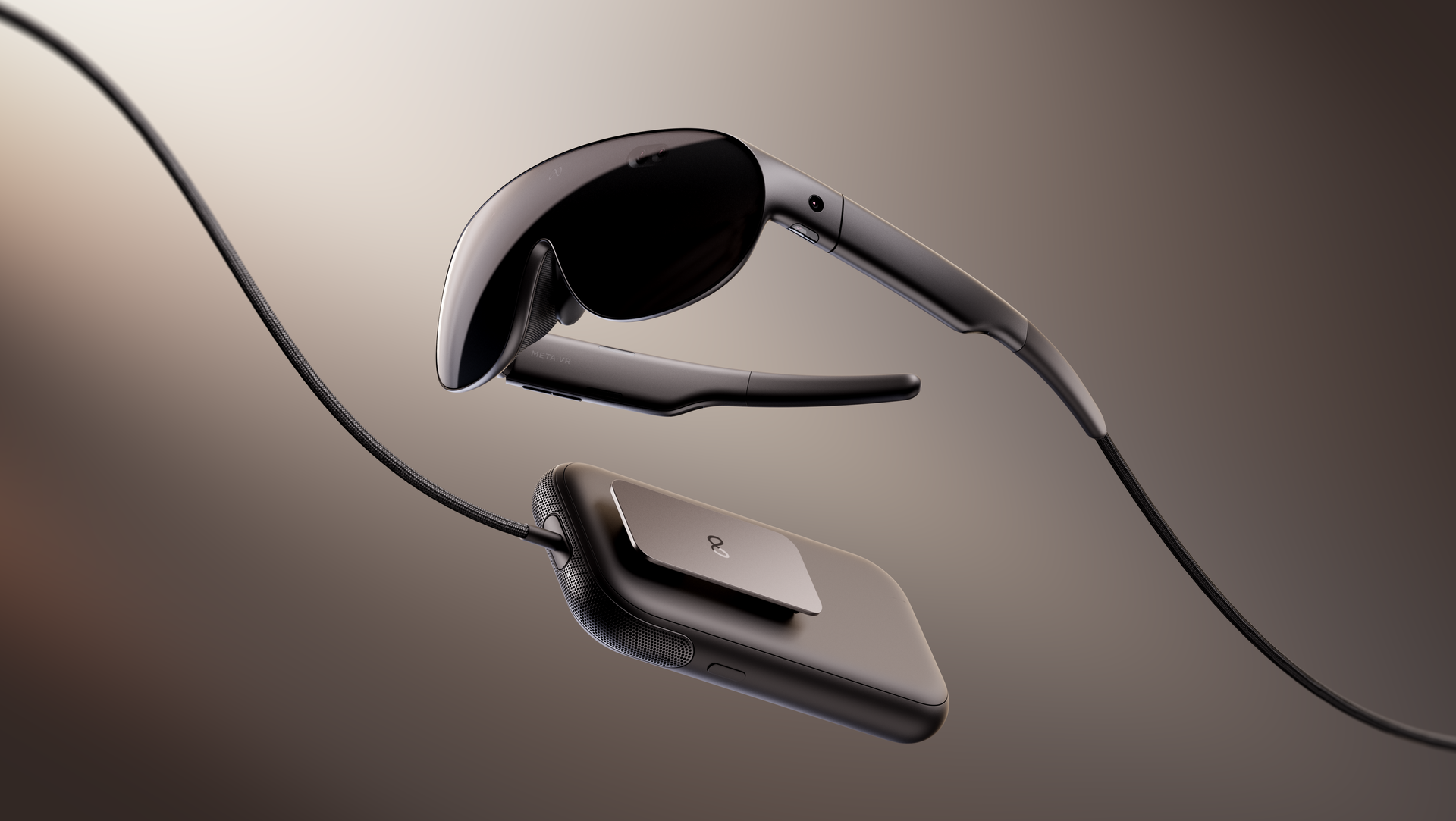
I’ve worn the Meta VR Glasses, and they’re coming to eat Apple's lunch

Meta Connect just ended, and the biggest announcement of the night for me was easily the debut of Meta’s VR Glasses — even if they were leaked ahead of schedule by Meta’s own prescription tutorial.

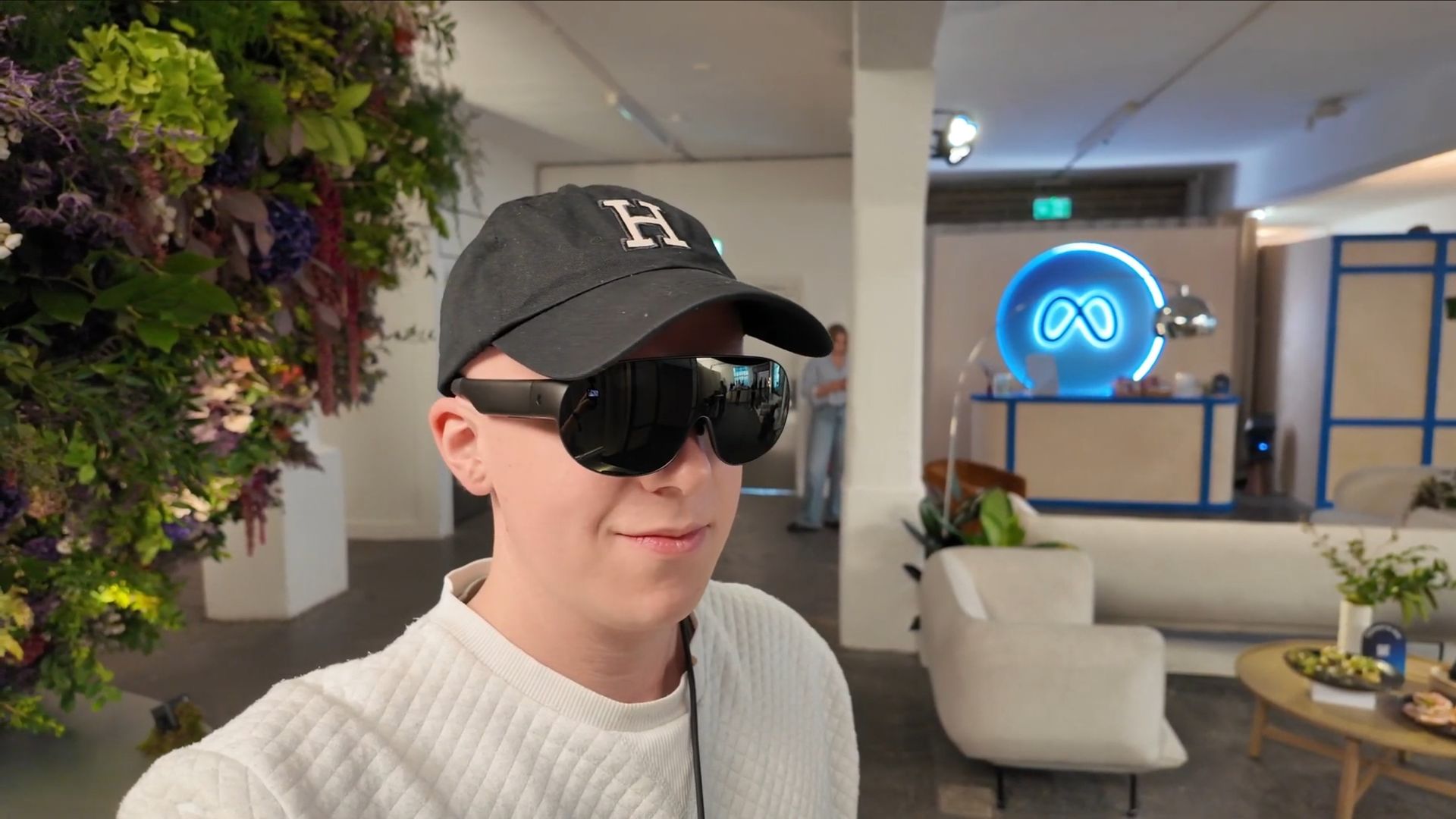
Ahead of their official reveal, I got to spend 30 minutes with the new tech, experiencing a wide range of demos that might have convinced me this isn’t merely Meta’s best VR headset yet — it could be the best VR headset I’ve used yet.

The only downside is we’ll be waiting a little longer to wear it. The headset isn’t due to launch until “Spring 2027” (March, April or May), but at least we know it’ll cost just $1,299 when it does land (price elsewhere TBC).

The Meta VR Glasses

(Image credit: Meta)

Slimmer than ever

Let’s start with the design.

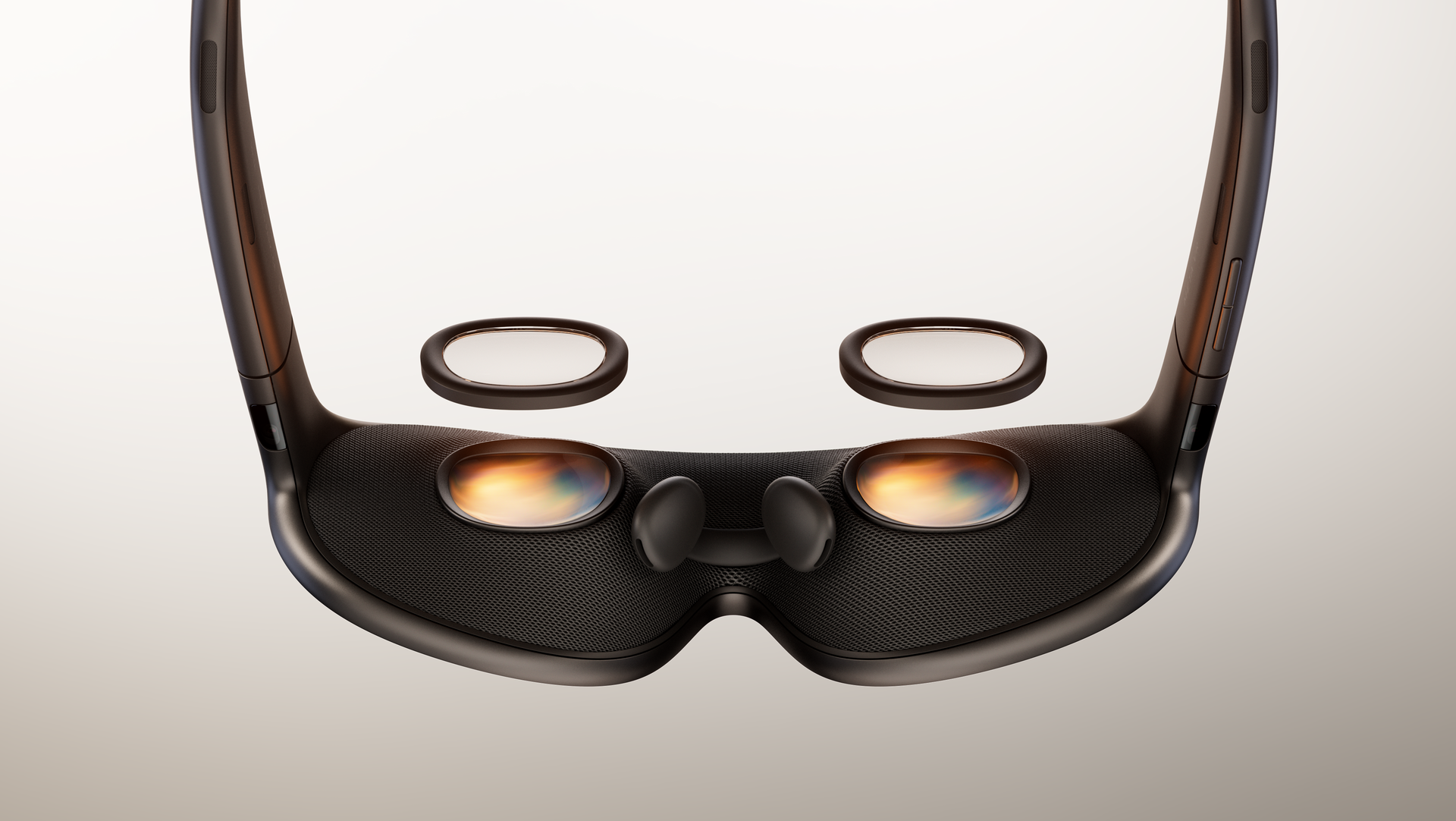
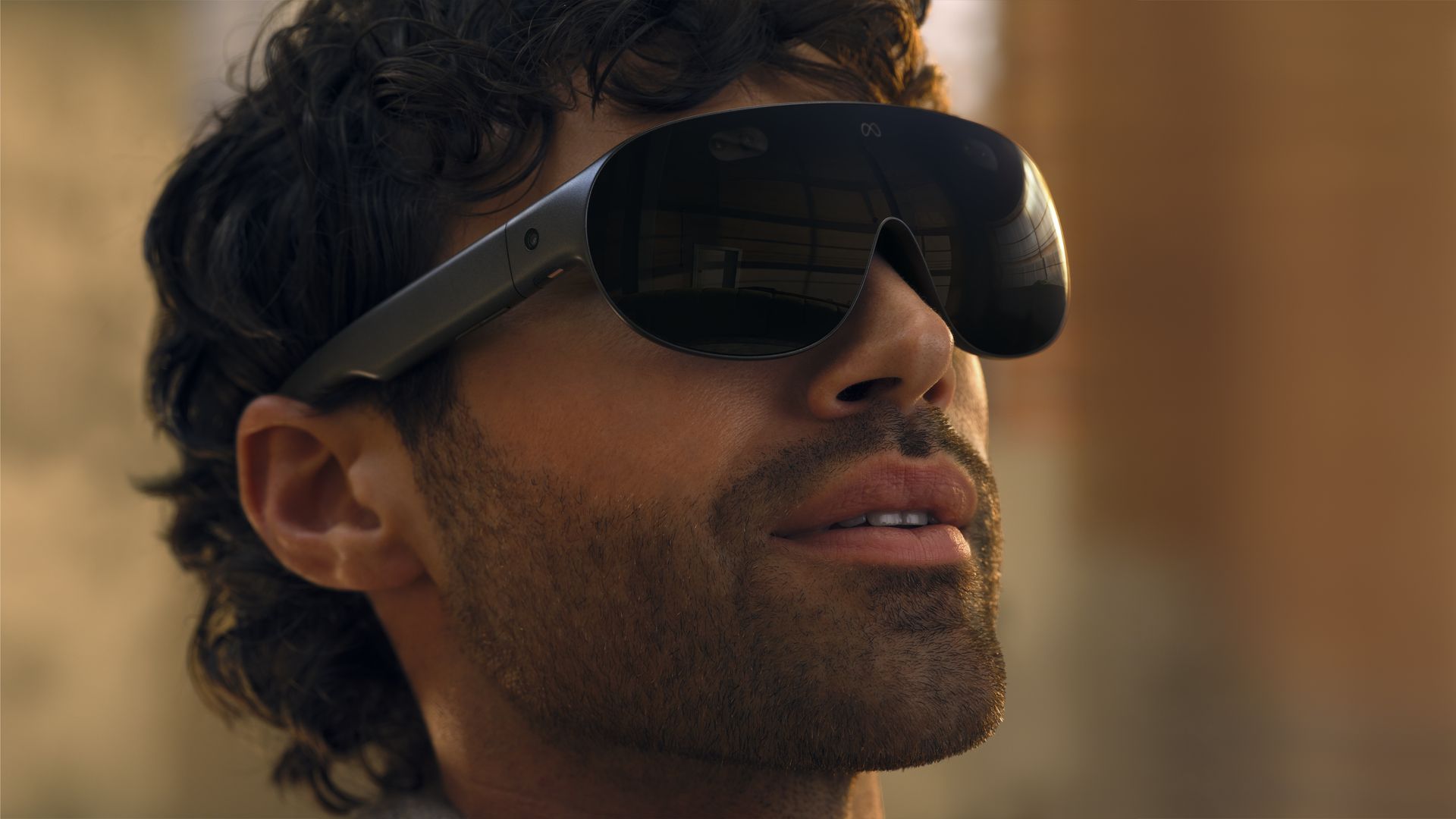
Slimmer and lighter than anything that has come before (the actual headset part you wear is down to just around 100g); this headset looks like a pair of glasses. They even swap the headstrap for glasses stems to stay on your head.

The bulk of the weight is instead housed in a puck you carry in your pocket — a lot like the puck used by the Apple Vision Pro or Samsung Galaxy XR. The big difference here is Meta’s isn’t just a battery pack, it also houses all of the headset’s compute. It’s tethered to the headset via an optical cable, but this wire never got in the way while I used the headset — whether I was up and moving, playing a game like Beat Saber Flux, or sitting being productive with multitasking across multiple windows.

The headset can support controllers; however, it doesn’t come with any in the box. Instead, you’ll need to rely on hand controls: either reaching out and grabbing, or the look and pinch controls popularized by Apple’s Vision Pro and Samsung’s Galaxy XR.

Lastly, I should note that, despite being called glasses, this is a headset. They have an opaque front cover that only appears to be see-through to the wearer because of passthrough. This live video feed of the real world isn’t yet perfect (it’s still a little grainy and there’s a slight delay), though it seems at least as good as the competition based on my experience so far.

The Meta VR Glasses

(Image credit: Meta)

They do support pescription inserts too. They connect magnetically to the display lenses and don't disrupt the slimness of the headset at all based on my experience.

The device is just so supremely comfortable to wear. My demo was only around 30 minutes, but at one-fifth the weight of a Meta Quest 3 or Samsung Galaxy XR, the difference is immediately noticeable — this is a headset I don’t see myself needing to take off, even after multiple days of working with it on.

Plus, it’s so portable you can easily take this everywhere in whatever bag you have on hand. No dedicated carry case required. I can’t wait to travel with this thing.

An all-round powerhouse

While this can be used for all existing Meta Quest 3-compatible apps (though you will need controllers for those that don’t support hand tracking, either as a new paid add-on or by commandeering your Quest’s handsets), where this headset truly shines is static experiences: productivity and entertainment.

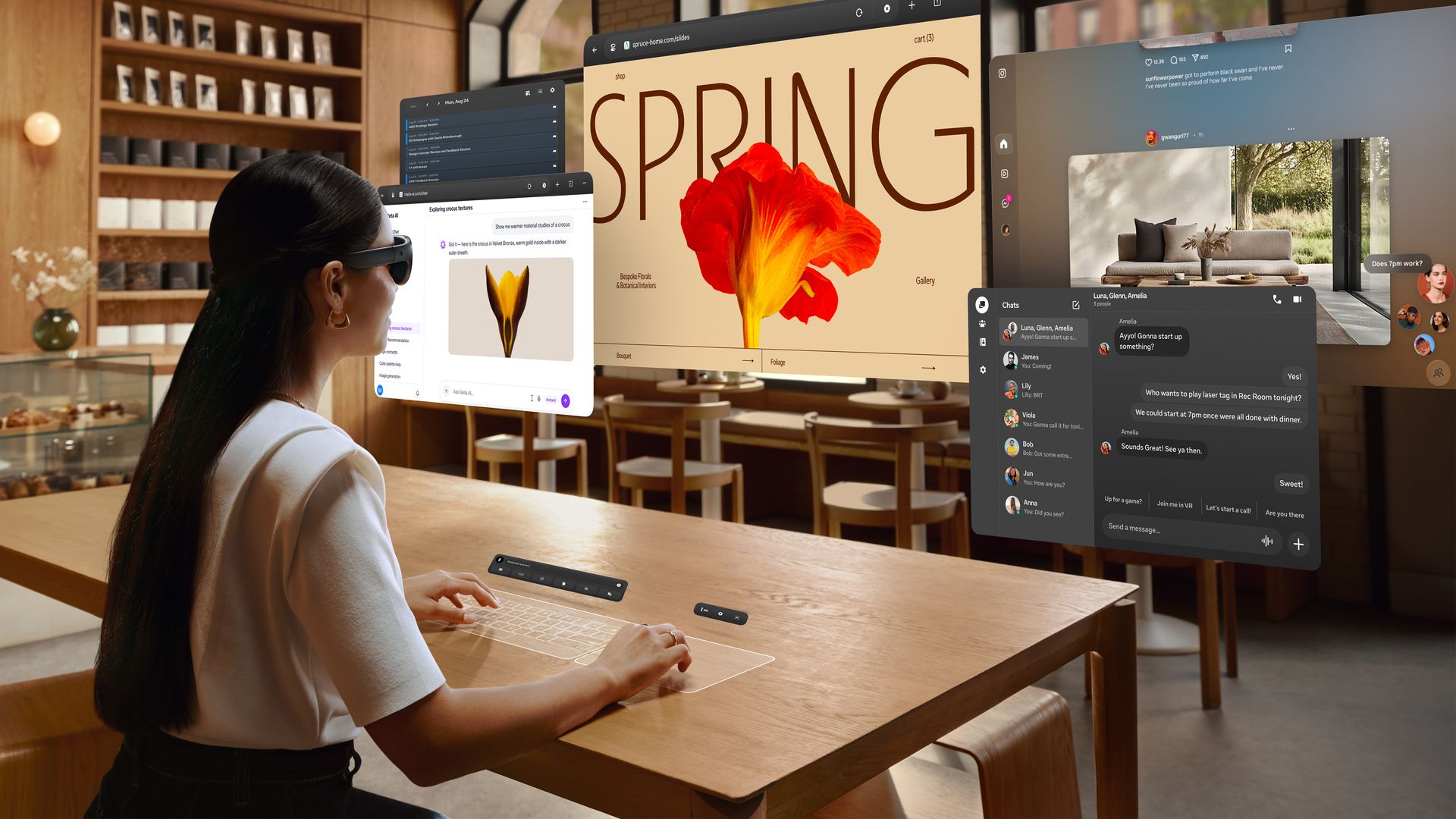
We know VR headsets are excellent for multitasking. You can arrange virtual project app windows around you, and even bring your PC screen into XR to create the perfect setup. Meta’s headset boasts two useful additional features.

The Meta VR Glasses

(Image credit: Meta)

First, you aren’t limited to the number of displays your physical setup has when you connect it to your headset. Each laptop or PC can be extended to up to three virtual monitors, a tool that some previous iterations of virtual desktop apps haven’t been able to offer (You could open multiple VR app windows, but only as many connected device windows as you had physical monitors).

Secondly, Meta’s headset can turn any surface into a keyboard. It just scans the surface in front of you — be it a cafe table, a seat tray on a plane, or a bench at the park — and then virtually projects a keyboard and trackpad you can type and swipe on. It works seamlessly. In my demo, I was able to type as swiftly and accurately as I could on a physical accessory, and in terms of portability, this is yet another win for Meta’s VR Glasses.

The Meta VR Glasses

(Image credit: Meta)

Moving on to entertainment, it seems Disney Plus’ Apple exclusivity has ended as the app and its library of 3D films are hitting Meta’s new headset. Because it’s an app, you can download content to watch on the go, which includes brand new immersive watching experiences.

While it was still just a demo, I got to experience watching a clip of Avengers: Endgame that extended beyond the screen in a souped-up version of Philips Ambilight.

It’s the scene where Thor is forging his new axe, I was sitting in that same forge. The room lit up and reacted as events unfolded in the film, ending with lightning flying out of the screen as Stormbreaker helped Thor return to full strength. It was a bit gimmicky, but also fun — not something I’d want for every movie, but an experience I’d want when returning to a big tentpole.

The Meta VR Glasses

(Image credit: Meta)

All of this content, be it immersive movies, a VR game, or a work document, looks beautiful on the 5K micro-OLED screen. It boasts a 37 pixel-per-degree resolution, which is around the PPD that its rivals, the Apple Vision Pro and Samsung Galaxy XR, boast (Samsung and Apple haven’t revealed these figures, but they have been estimated during product teardowns).

This is significantly better than the Quest 3’s mere 25PPD, and it meets the standard of being able to deliver the IMAX Enhanced Format — with superb audio and visuals. I got a taste of this in my demo, and I’m keen to experience more.

I need this yesterday

I’m about to jet set to LA for a press trip, and I so desperately wish I could be taking the Meta VR Glasses with me for the flight — both for getting work done and for immersing myself in a movie on a big screen rather than the back of the chair in front of me.

Alas, the VR specs aren’t due to land until 2027, though we know how much they’ll cost: $1,299. Much less than a Vision Pro, or a Galaxy XR, and cheaper than the highest price Xreal has said its Aura glasses — the closest thing I’ve tried to the Meta VR Glasses — could be.

The Meta VR Glasses

(Image credit: Meta)

At the time of writing, Meta hasn’t revealed too much in the way of specs (I’m writing this up based on a pre-Connect briefing). The Meta VR Glasses can run any Quest 3 app and can multitask across six windows at once, so it must be at least somewhat capable. I expect it boasts at least 12GB of RAM and the latest Snapdragon XR chipset.

I’m just impressed Meta can commit to such a relatively low price, especially months in advance. There are so many unknowns over trade and RAM demand that we’ve seen companies not reveal prices until as close to the last second as possible. Meta has bucked a trend here, but I expect it would only do so if 100% confident the cost won’t budge — if it doesn’t, I’ll be very, very happy.

At the time of writing Meta hasn’t revealed too much in the way of specs (I’m writing this up based on a pre-Connect briefing). The Meta VR Glasses can run any Quest 3 app, and can multitask across six windows at once so it must be at least somewhat capable — so I expect it boasts at least 12GB of RAM, and the latest Snapdragon XR chipset.

I’m just impressed Meta can commit to such a relatively low price, especially months in advance. There’s so many unknowns over trade and RAM demand that we’ve seen companies not reveal prices until as close to the last second as possible. Meta has bucked a trend here, but I expect it would only do so if 100% confident the cost won’t budge — if it doesn’t I’ll be very, very happy.

Gavin Verhey explains the biggest difficulties of adapting Universes Beyond into Magic: The Gathering — from avoiding five-color soup, to ‘Figuring out what Green means’

For the past couple of weeks we’ve been seeing how Reality Fracture will conclude the multiverse-tearing Omenpath saga of Magic: The Gathering’s story. Jace’s domination of his Echoverse rings through his presence on seemingly every other card as the Empower Jace mechanic — which brings forth a Planeswalker token of himself, as a sort of simulacrum of the popular Amass mechanic.

But before Jace attempted to break the multiverse, Wizards of the Coast was already dabbling in powers beyond their control with Universes Beyond. This sees non-native IP break into the Magic: The Gathering game, and it has proven itself both incredibly popular and divisive.

One setting that has managed to unite both sides of the aisle, however, is Middle Earth: the land of hobbits, elves, dwarves, and dark forces attempting to enact Sauron’s corrupting plans on the world.

We recently returned to this setting through The Hobbit set, a return which felt much more like a return to a classic Magic world such as Ravnica, Lorwyn, or Dominaria rather than a return to a UB world like… New York City, which we experienced through both Marvel Super Heroes and Teenage Mutant Ninja Turtles after first swinging through with Spider-Man.

Through his YouTube channel Good Morning Magic, Gavin Verhey (Principal Magic Designer at Wizards of the Coast) details the design philosophy and origins of cards from throughout Magic’s history, including its most recent releases. At Gamescom, I got some time to chat with him, deep diving into Wizards’ approach for The Hobbit — and its approach to Universes Beyond more generally.

Jace fracturing reality

(Image credit: Wizards of the Coast)

A return to a Magic plane normally means the return of mechanics associated with that world. Case in point, after debuting a variant of Amass with Amass Orcs in its Lord of the Rings: Tales from Middle Earth set, another variation appeared with Amass Goblins in The Hobbit — enabling players to assemble a Goblin Army, one of the five armies that battled in the book’s climax.

However we didn’t see the return of The Ring Tempts You, not even as a cameo on a Bilbo or Gollum game piece (a term designers use to denote a mechanic we see on only a couple of cards rather than as a core feature).

Verhey explained the team did look into including it, but ultimately decided against it.

Gollum with the ring

(Image credit: Wizards of the Coast / MEE)

“The Ring Tempts You was a mechanic that did not play out super great, and was quite complicated, and doesn’t make a lot of sense because the Ring is such a small part of The Hobbit,” says Verhey.

He explained that it could have fit as a one-off cameo, but “There’s no reminder text on the card for what The Ring Tempts You does, that’s on an entirely different card you have to track. Maybe it could have worked as a Jumpstart card, but we decided it would be a lot of work for a little gain so we didn’t bring it back.”

At least my Food and Fellowship precon deck got a couple of food token and lifegain support pieces in the set.

There, and back again?

Now that we have returned to Middle Earth, a question I’ve had rattling through my brain is which UB plane could we planeswalk back to next? Gavin Verhey wasn’t about to spoil anything, but I did ask if the possibility of returning meant Wizards of the Coast was more cautious about what it did or didn’t use from a partner’s IP.

The Lord of the Rings set only included one The Hobbit reference through the card There and Back Again, meanwhile The Last Airbender didn’t include any ties to The Legend of Korra — not even as a Secret Lair.

“In general we want our designers to use everything they can, because there’s no guarantee we’ll ever make another set in that world. So you should make as much as you can, and what makes sense. But we’re often making them based on very specific properties.

“So with Avatar: The Last Airbender the set was Avatar: The Last Airbender not Avatar: The Legend of Korra. So Korra was off the table for that set. The same for The Lord of the Rings set, The Hobbit was off the table.

“It’s a bit of preservation for the future, but also just a bit of what we have access to.”

Verhey adds this is contrasted by sets like Final Fantasy or Doctor Who where the designers knew they had access to the whole franchise’s history for one set.

The Marvel collab is also a bit different as Wizards of the Coast knew there would be multiple sets from the get go: “So we actually figured out, before we did anything else, how we were going to divvy all of those sets up to make sure cards ended up in the right place.”

Marvel villains like Doctor Doom, Thanos, The Leader, and MODOK teaming up

(Image credit: Wizards of the Coast / Marvel)

Riddles in the dark

Gavin Verhey explained there are plenty of positives that come from working in a Universes Beyond set — chiefly the distinct characters the worlds are filled with are a delightful design puzzle to bring to life in MtG. But what are the challenges?

“The place that you get into the most trouble is figuring out how the characters translate into colors — because a well-written character is usually many different colors over the course of their lifecycle.”

Verhey explained players have different expectations of the characters. Someone will reasonably see Bilbo as Blue for his riddles expertise, another person sees him as Black as he embraces thievery, another as Green for hobbits’ embrace of food and nature in the Shire — we’ve seen him represented across all five colors in fact across both Middle Earth-based sets.

We’ve seen how the designers solve this: make multiple versions of the same character at different points throughout their story. This prevents every legend becoming five-color soup, and keeps things simple and accessible for newcomers — who are more likely to open a card belonging to a popular character if there’s multiple of them, and cards with fewer colors are usually less complex as they don’t need to mechanically justify why they’re multi-disciplined.

Various Bilbo cards

(Image credit: Wizards of the Coast / MEE)

That said, Verhey said there do need to be multi-color legends to encompass other similar legends so folks can play them all in the same deck more easily if they want — “For example, we make sure there’s a Red-White Dwarf lord that all other Dwarves can go into a deck for.” (Note: A lord is a term for a card which offers a static benefit to all cards of a certain creature type).

This doesn’t just account for creatures in The Hobbit. The designers also try to make sure the cards pair well with the Dwarves, Elves, Goblins, and Hobbits they’ve released before.

Universes Beyond can also create almost the reverse challenge for the designers: not having enough characters in each color.

Verhey explained. “You know, this is not the case for The Hobbit but a funny Universes Beyond problem is usually most worlds have heroes — that makes for easy White characters — and they have villains which tend to want to be Black characters. Then there’s usually someone who’s a little aggressive or impulsive, so our Red characters. And there’s always the smart people so that’s the Blue. But Green?”

For The Hobbit Elves, Bears and other nature-aligned figures fill this slot, but that’s not always the case.

“Figuring out what Green means in a world without Elves, growth, or lots of nature is really challenging — that’s what many Universes Beyond can live or die on.”

Arwen and Aragorn

(Image credit: Wizards of the Coast / MEE)

A Warm Welcome

Universes Beyond has been a standout success for Magic: The Gathering. It makes perfect sense, therefore, that Wizards of the Coast would want to apply this to its other world-famous brand: Dungeons and Dragons.

So far it has announced collaboration plans with World of Warcraft and Star Wars — partnerships which will bring iconic characters, worlds, items and archetypes (as classes and subclasses) into the tabletop roleplaying game.

However no Universes Beyond property has yet to feature in both games, so I asked Verhey if any rivalry or jealousy has developed between the teams — Star Wars fans on the Magic side or The Last Airbender lovers on D&D wishing they could be building inside those worlds.

Death knights preparing for battle

(Image credit: Wizards of the Coast / Blizzard Entertainment)

Unsurprisingly Verhey said there’s nothing but excitement around the office, “It’s honestly very cool to see D&D be like ‘Hey this thing’s been great for Magic, Let’s have us give that a try as well’. I’m stoked to see what they do with it.”

The Last Stage

There’s only a few months left of 2026, but we have a lot more Magic: The Gathering to enjoy. Verhey says reality is “huge. It’s the capstone event of the current story arc, and like nothing we’ve made before.”

Previews have showcased dozens of alternate reality pairings — showing original and Echoverse versions of characters from across Magic’s worlds — and in Verhey’s words the team has done “a heck of a lot better a job than we did with Planar Chaos” in terms of warping Magic characters and mechanics without warping the color pie in ways designers regret later.

The Lorwyn five head into the Echoverse

(Image credit: Wizards of the Coast)

We also have Star Trek, another Universes Beyond property. This may seem like an odd inclusion for a fantasy focused game, however space has featured in several sets now — Unfinity, Doctor Who, and Edge of Eternities — and Star Trek actually featured all the way back when MtG was still in early testing. Spock performing a Vulcan salute was placeholder art for a card called Blessing.

Verhey also said we can expect a set filled with the new Dilemmas — a new mechanic for the set related to mimic the tough choices characters face — and for us to “try an experience that’s a little different than normal”. Verhey mentioned combat isn’t a massive part of the Star Trek shows, so perhaps we’ll see Limited games play out very differently when this set rolls around.

Finally, there’s Mystery Booster Commander Edition. This event-exclusive set has been filled with exciting Commander cards, including several brand new game pieces that break the rules of the format, and harken back to Magic’s past in creative ways — Verhey is currently explaining these callbacks on his YouTube channel.

“I cannot wait for folks to start playing it at MagicCon Atlanta, it’s a blast.” As a Commander lover, I can’t wait either.

Weeks after building them, I’m still playing with Lego’s Smart Play Pokémon sets — they’re easily the best of 2026

Pokemon’s Lego Smart Play sets couldn’t be more perfect, even if you hate the Smart Brick. I was convinced of this when I first saw them ahead of their launch, and since their public debut, I’ve only grown more in love with the builds now that I have them in my home.

When Lego first debuted its Pokémon sets, it showcased a few display-focused builds — designs aimed at older audiences to be shown off on a shelf more than to be actively played with. This meant relatively high prices to account for the massive brick counts and complex building techniques applied.

At first glance, the dozen Smart Play sets the duo just launched are the exact opposite. They’re built for play — with two of the sets coming with a Smart Brick (or two) to bring the Pokémon models to life — and generally cheaper and simpler build-wise. But like the Smart Brick, they’re so much more than meets the eye.

From a play perspective, thanks to tiles hidden in each Pokémon’s belly, the Smart Brick can know which creature it is and make distinctive sounds when the critter is being fed, training, sleeping, driving a vehicle, or hiding in the tall grass waiting to be captured by a trainer.

Importantly, two pokémon can know when they’re near each other and engage in a battle — which cleverly takes into account if the Pokémon was recently trained, which types it’s weak or strong against, what innate power it has (third-stage and legendary Pokémon will be stronger than first-stage starters), and what health it has (plus if it has been healed by something like a potion).

It’s very sophisticated but also so incredibly intuitive. Moving the Pokémon like action figures — shaking to charge up attacks, lunging forward to strike, moving away to dodge, and lying down to rest after a busy day — enables every single action the Smart Brick is programmed for. I gave my wife the Pikachu to play with without telling her anything, and she instantly knew what to do.

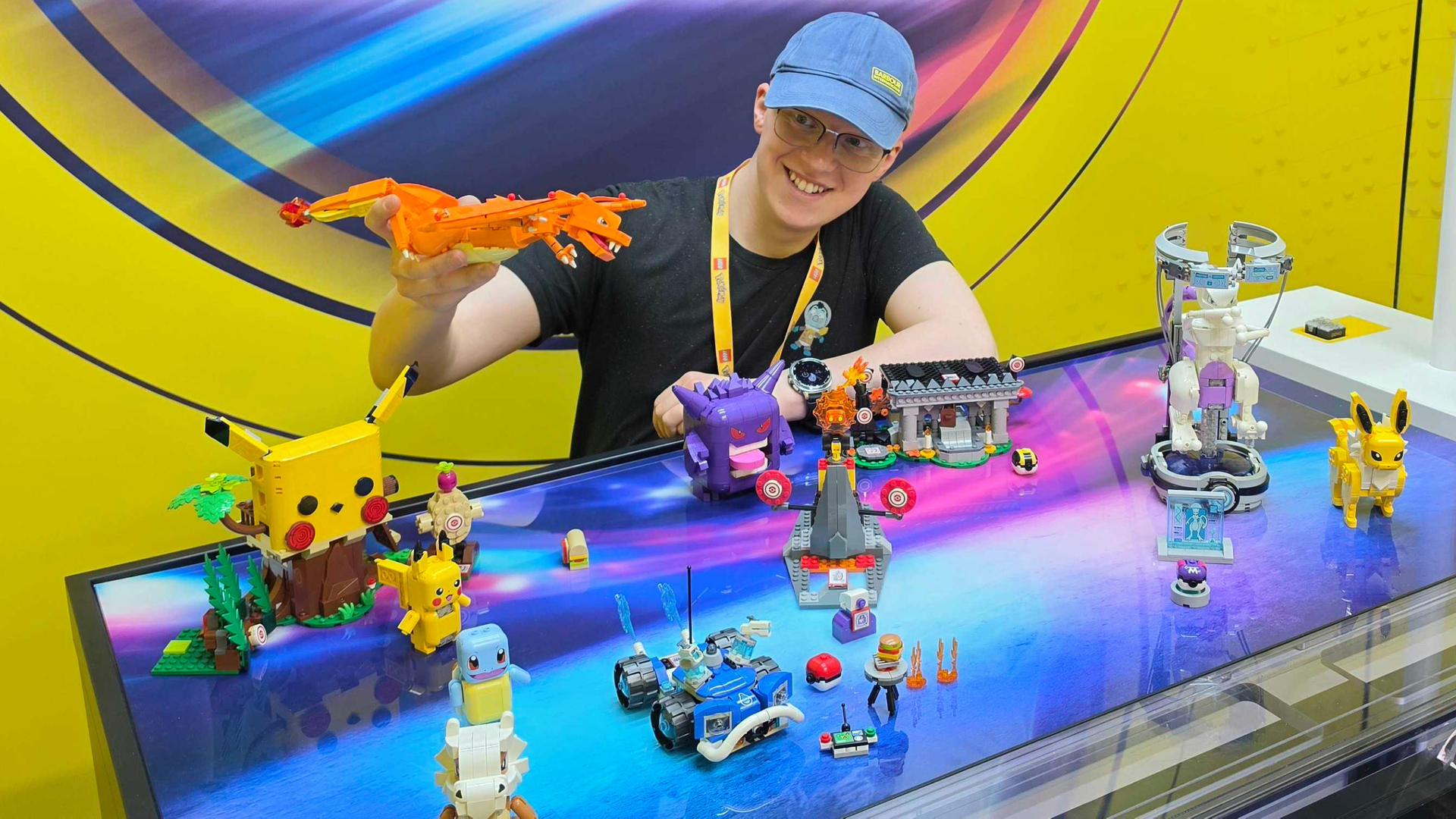
Hamish plating with a Lego Charizard surrounded by Lego Pokémon.

(Image credit: Future / Hamish hector)

Smart and simple

At the same time, so many play features don’t require a Smart Brick at all.

While the actions will lack sound effects, Pikachu can still lie down in his fold-down bed, emerge from the tall grass when a pokéball hits the target, battle with the spinning target, and be played with in whatever way you can imagine.

So when you’re waiting for the Smart Brick to recharge, or if you simply decide not to pick up one of the All-in-one sets that comes with a Smart Brick in the box and opt for a merely Compatible set instead, you’ll still have a play set that feels complete — something I couldn’t say for Lego’s first Star Wars Smart Play models.

My only caveat is that the battle-focused sets — Charizard vs. Jolteon Ultimate Battle and Umbreon vs. Garchomp Championship Battle — are a little more dependent on the smart brick to create engaging fights between the blocky pocket monsters.

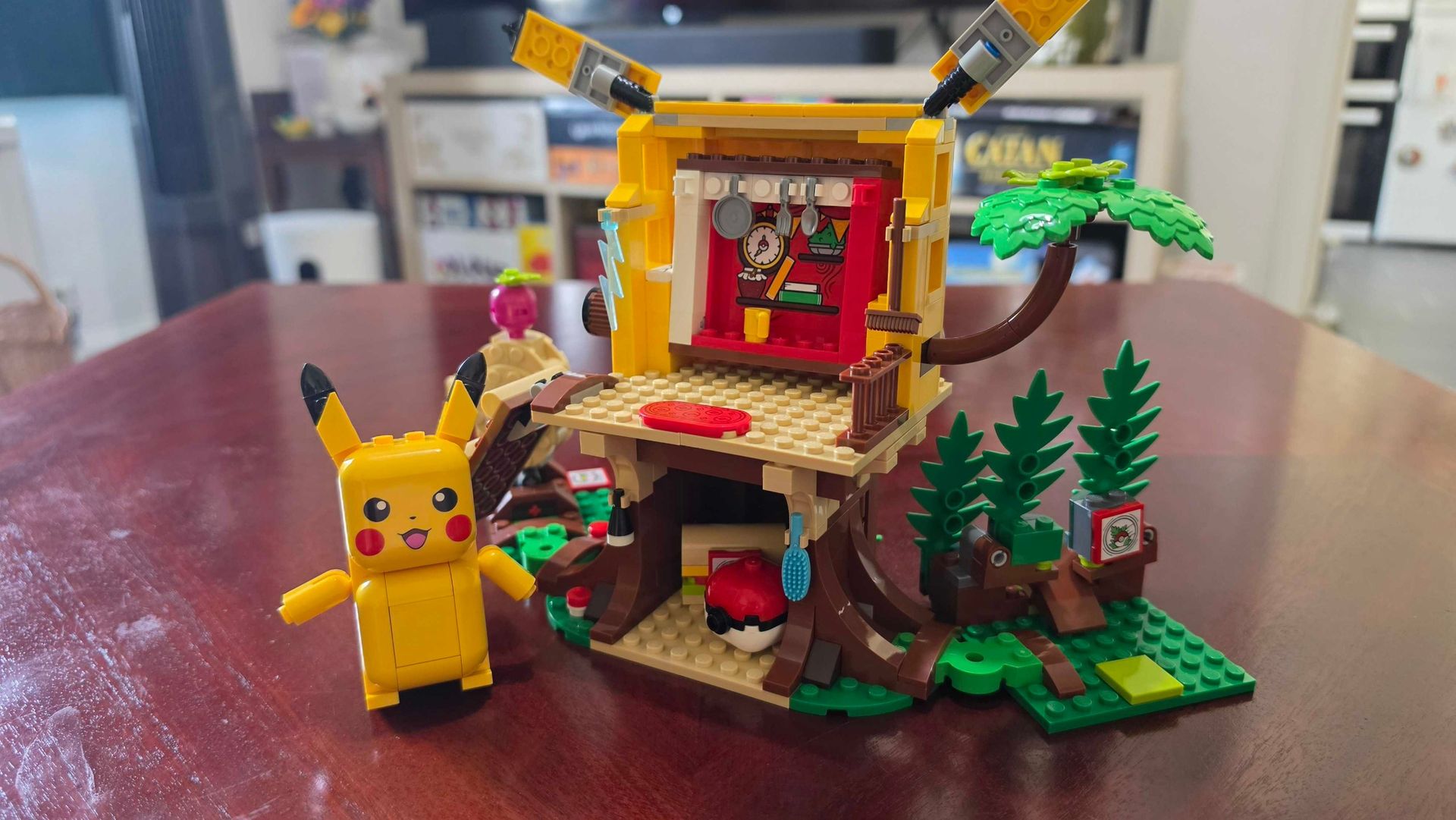
Pikachu next to his house

(Image credit: Future)

Perfect for play doesn’t mean perfect for everyone, but as a display build, these models again have so much potential.

Not necessarily out of the box — the background scene elements are always the most visually stunning — but with some creativity and time to build your own, these blocky figures could easily be posed as part of beautiful dioramas.

If you prefer minifig scale designs, you’ll be disappointed, but if you don’t mind something that’ll take up more room on your shelf, I think these sets have so much potential — especially as each Pokémon’s design is so distinct and accurate to its in-game version.

Pokémon x Lego

(Image credit: Lego)

Lastly, I can’t round things off without talking about their best aspect: price.

Simpler, play-focused sets come with fewer pieces and therefore a more affordable price. For kids who love Pokémon but for whom you can’t fork out a lot of cash for a set that’ll sit on a shelf, these Smart Play sets are perfect.

Plus, for the same price as the Eevee build, which was previously the most affordable option, you can grab two or three of the cheaper Smart Play compatible sets that just dropped.

Whether you buy one or all twelve of the new sets, I’m certain Pokémon and Lego won’t disappoint. These sets show how Smart Brick integration should be done, and I’m hoping we’ll see dozens more sets just like these down the line.

All-in-one sets

Training House with Pikachu:
$69.99 / £59.99 / AU$129.99
This all-in-one set comes with a Smart Brick and charger so you can access all of its electronic features — sound effects to accent when you catch, train, feed, and rest your partner Pikachu. The Smart Brick isn’t essential however, as there are several physical play features like tall grass which falls when you throw a pokéball, a bed that folds down for your electric mouse to sleep in, and a rotating target for the pokémon to train against.View Deal

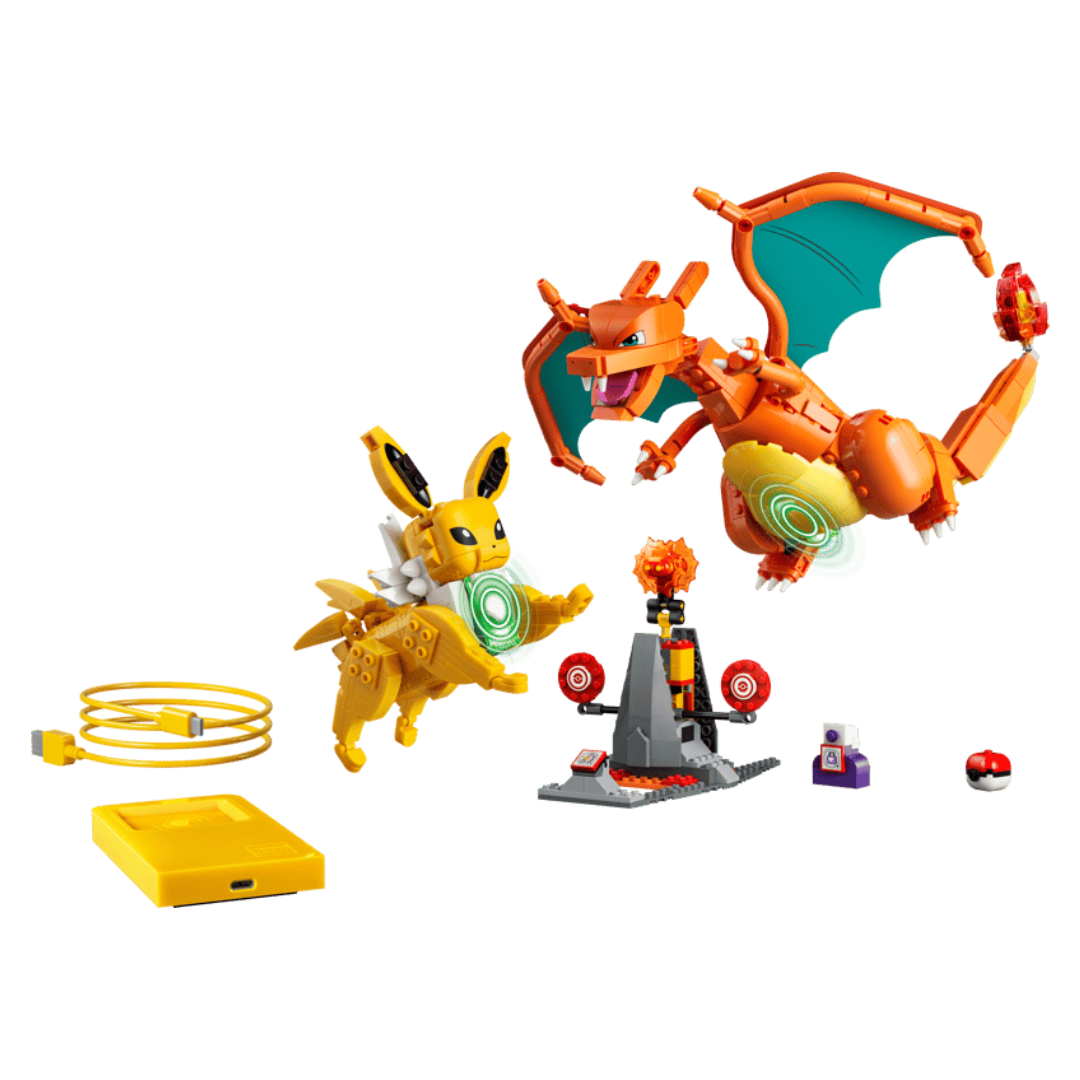
Charizard vs. Jolteon Ultimate Battle:
$119.99 / £109.99 / AU$199.99
The only other all-in-one set for the Pokémon Smart Play series boasts not one but two Smart Bricks, as its focus is battle. You’ll get a Charizard and Jolteon, plus a small training ground to help them prepare for their upcoming bout. There’s also a potion bottle which can be used to recharge their health before, after, or mid-fight — with LEGO reps telling me that it’s up to you and your friends to decide what the rules are for healing when you compete.View Deal

Smart Play compatible

Berry Bash with Bulbasaur and Bidoof:
$19.99 / £17.99 / AU$34.99
A simpler Smart Brick-compatible set, this build shows Bulbasaur and Bidoof working together to blend berries into hearty smoothies. It’s one of the most affordable in the lineup despite coming with two fan-favorite ‘mons.View Deal

Trainer's Buggy Adventure with Squirtle:
$29.99 / £24.99 / AU$54.99
Paying homage to the Squirtle Squad, this set sees the water starter roam around on a buggy, putting out fires so he can save a sandwich. Though any ‘mon can ride in the vehicle, and with a Smart Brick (not included), you can hear the critter giggle while the car chugs around. For non-Pokémon fans, the appeal here is the vehicle’s Smart Play tile, which offers some generic vehicle sound effects that would be ideal for custom builds.View Deal

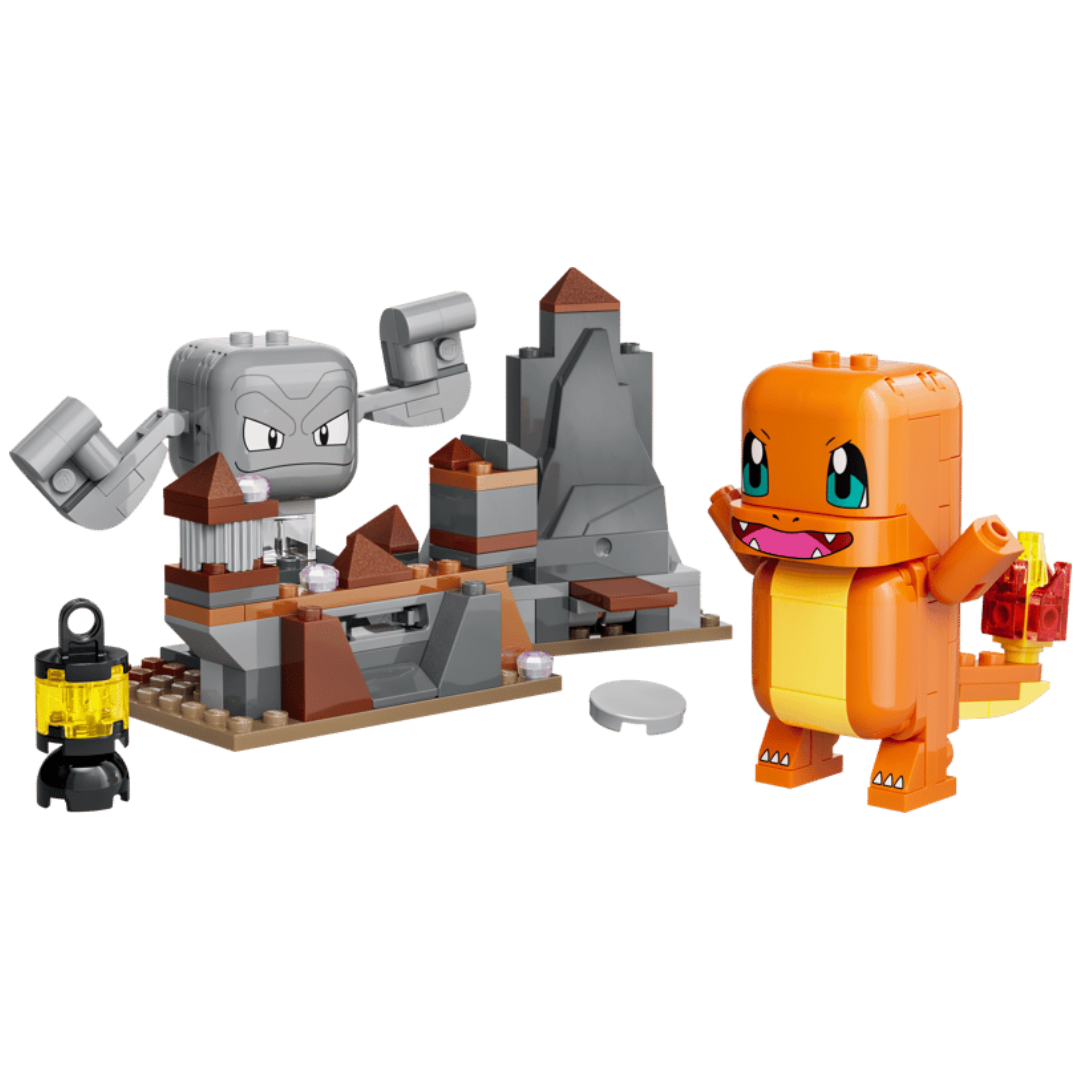
Charmander and Geodude's Cavern Clash:
$19.99 / £17.99 / AU$34.99
A simpler set like the Bulbasaur and Bidoof one, this simple yet effective construction comes with a pair of iconic Gen 1 pokémon, including the much-loved Charmander, plus a thematic battleground for their clash.View Deal

Sprigatito, Fuecoco and Quaxly Battle:
$34.99 / £29.99 / AU$59.99
For fans of Scarlett and Violet, this build is relatively simple scenery-wise, but does offer you the full trio of Gen 9 starter ‘mons. It’s probably my least favorite, but if the action-figure-play appeal of the models is what excites you most with these builds, this is a strong contender.View Deal

Jigglypuff Concert:
$14.99 / £12.99 / AU$24.99
The cheapest set in this collection, and also the simplest at just 88 pieces, I see this being popular amongst fans of the Gen 1 popstar wannabe, and as the perfect add-on for the Training House with Pikachu set — or one of the other more affordable builds — as it expands your pokémon collection without breaking the bank.View Deal

Drone Search for Mythical Mew:
$49.99 / £44.99 / AU$$99.99
Simple, yet effective, I love this build as it feels inspired by one of my favorite spinoffs: Pokémon Snap. It also focuses on the exploration and catch ‘em all aspects of the Pokémon franchise rather than the battling, and I can see myself constructing more complex jungle ruins for Mew to hide in. Mew can still battle if you give it a Smart Brick.View Deal

Eevee and Lapras's Treasure Hunt:
$59.99 / £54.99 / AU$$109.99
Another set focused on exploration, this would fit right at home amongst a collection full of pirate sets. This was one of the first sets I saw in the collection, and the designs may be small, but are packed with detail.View Deal

Mewtwo's Lab Break:
$69.99 / £59.99 / AU$119.99
For fans of the first Pokémon movie, and/or other tales focused on this pokémon’s story, this Lab Break set featuring Mewtwo works so well as a display piece, but also as a play set that’ll give your other ‘mons an ultimate final battle to face off in.View Deal

Umbreon vs. Garchomp Championship Battle:
$79.99 / £69.99 / AU$139.99
My favorite build in the whole collection is this. Why? I love both Garchomp and Umbreon (with the former being the only one in the 20 so far to rep my favorite generation in Gen 4), but also this seemingly simple build hides two very cool details. The first is that the trophy is intentionally designed to mimic Cynthia’s hair, the other is Garchomp is the only one to have a rough, brickier feel — mimicking its in-game ability Rough Skin. Lego reps explained this was part of the back-and-forth between Lego and The Pokémon Company, making sure details like this are translated into the models to make them feel true to the series.View Deal
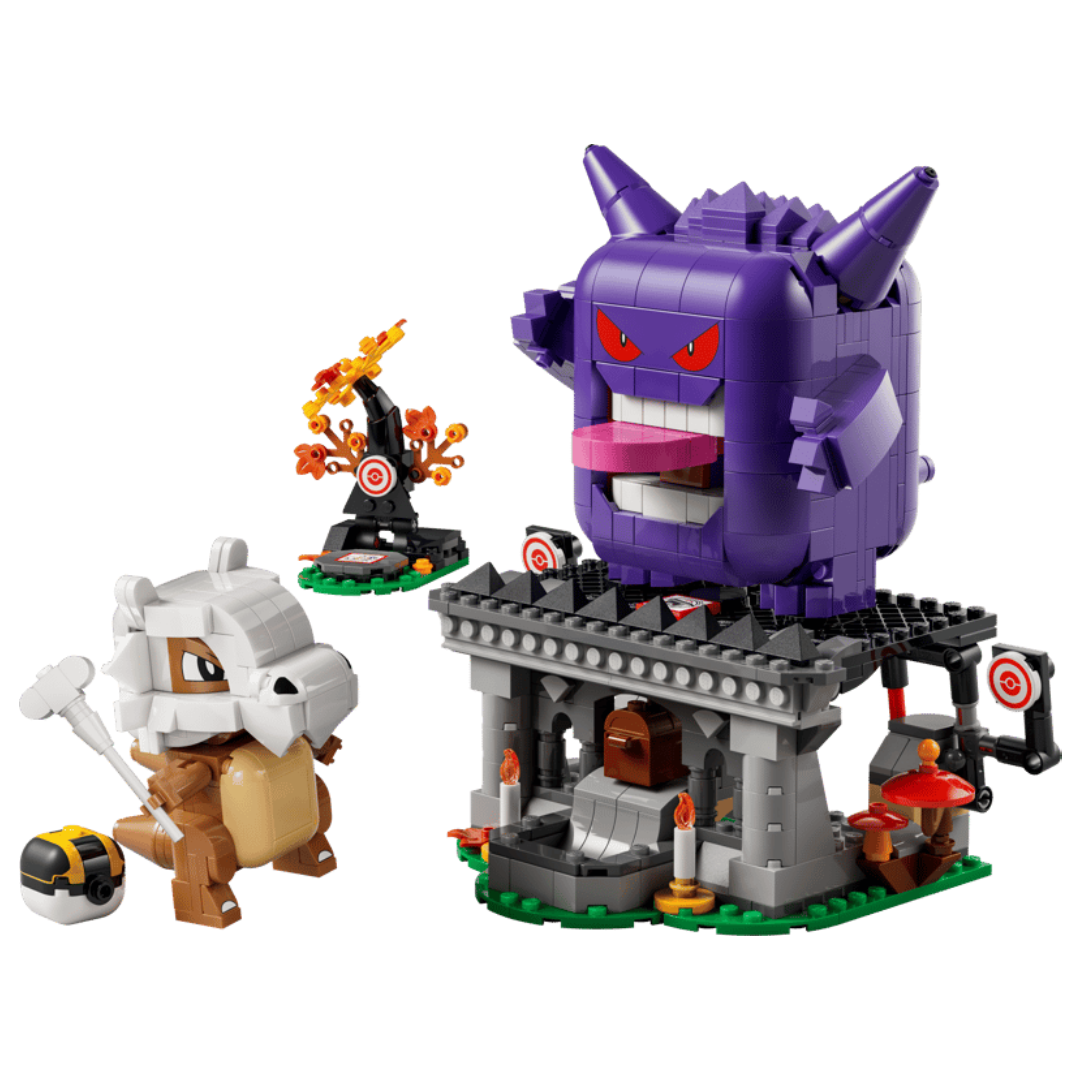
Cubone and Gengar's Spooky Showdown:
$89.99 / £79.99 / AU$159.99
Last, but by no means least, this build is, like the Pikachu set above, packed with physical play features that are amplified by the Smart Brick but not exclusive to it. Gengar looks perfectly terrifying, weird, and a bit funny, and Cubone has a kind of intimidating look that fits right into this scene’s ‘Spooky Showdown’ theme.View Deal

ICYMI: the 7 biggest tech stories of the week, from AI apocalypse warnings to our Apple CEO interview

This week was a little quieter than last in the tech news space — if you ignore the hullabaloo caused by various AI companies that their models might one day kill us all if regulation doesn’t arrive.

A bit heavier than an Apple iPhone event, but important nonetheless.

To catch up on that and this week’s lighter (but still essential and biggest) tech news stories, scroll down for our ICYMI recaps and links to the full articles. But before you read about the news, you might want to try your hand at our quiz to see how much you remember of last week's ICYMI roundup.

7. We interviewed John Ternus

You've just been named CEO of one of the world’s most important tech companies; what runs through your mind? I asked John Ternus that question to his face, and his answer was perfect. It was all part of a wide-ranging interview we conducted with our friends over at Tom’s Guide. Lots of good bits about what innovation means at Apple and why the Cupertino giant is finally making a foldable.

6. Google Live Translate went offline

Google Translate

(Image credit: Shutterstock)

Arguably the best Google Translate tool is its Live feature — which lets you converse with someone in your respective native tongue, and each sees a real-time translation of what the other has said.

It can break down the language barrier, if you have an internet connection, that is, though that is changing.

Google has started rolling out an offline mode for Live Translate. There are some limitations — it only supports translation from English to French, German, Portuguese, Italian, Spanish, Hindi, Indonesian, Japanese, Russian, and Swedish — and it’s only coming to the Google Pixel 11 series, Pixel 10 line, and Pixel 9 series.

5. Canon launched the EOS R8 Mark II

Top of the Canon EOS R8 Mark II, in user's hands, 24-105mm lens attached

(Image credit: Tim Coleman)

Canon has debuted the EOS R8 Mark II, with a design that supposedly takes its cues from decades-old analog SLR cameras — there's a slight resemblance, but we'd argue that Canon's design department could have been given a bit more latitude.

Nonetheless, the second-generation model introduces useful upgrades over the original EOS R8, for a price that could tempt Canon enthusiasts who want powerful features but who don't need the tough build quality, high-spec displays, or long-lasting battery life of the EOS R6 series.

4. We tried the Snap Specs

Snap Specs 6th Gen

(Image credit: Cesar Cadenas)

A decade on from Snap’s first Spectacles launch (back when it was still Snapchat), we’ve tried the next evolution in its wearable tech: full-on AR glasses, and they’re incredible.

They’re still quite chunky, and the demo wasn’t without its quirks, but they were fun to use and comfortable to wear.

You can currently pre-order the Snap Specs for an eye-watering $2,195 (around £1,640 / AU$3,090) with a $200 deposit.

3. We reviewed Apple's tech

Apple Watch Ultra 4 Review

(Image credit: Future/Jacob Krol)

We reviewed all of Apple’s new tech, and yet again we were impressed.

The iPhone 18 Pro and Pro Max take last year’s Pro reinvention and refine it in all the right places — but the cameras are where Apple has made the biggest leap, with a variable aperture and finally useful Pro controls.

Meanwhile, the Apple Watch Ultra 4 might look and be priced similarly to what came before, but the big difference is the battery — with a promised up to 50 hours in normal use, up to 84 hours in Low Power Mode, and up to 45 hours in Max Extended Workout Mode.

The Apple Watch 12 feels fresh with a new health-sensing system, a new SoC under the hood to power some new features, and a good bit of AI on top of what we knew was coming with watchOS 27.

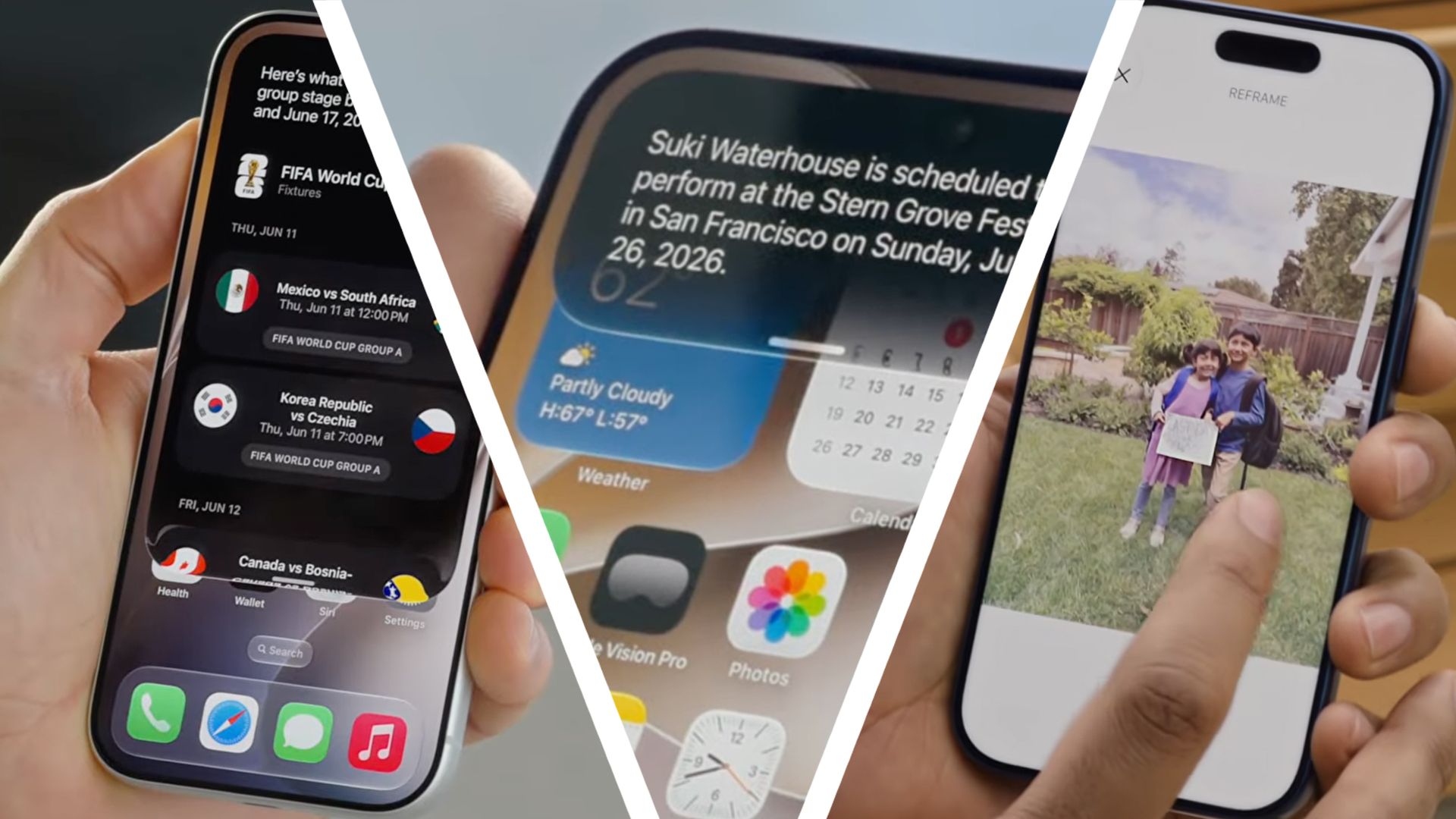
2. iOS 27 gave our iPhones a huge upgrade

Three iPhones being held showing iOS 27 features

(Image credit: Apple)

This week Apple gave millions of iPhones their biggest software upgrade this year. iOS 27 rolled out (if you haven’t got it yet, check General > Software Update), and it includes Siri AI — a new version of the voice assistant that is, finally, good.

Like all major iOS updates, there are lots of smaller quality-of-life upgrades that we’re enjoying too. These include the ability to make Shortcuts with natural language, a neat ‘Reframe’ feature for Photos, and the long-awaited option to set alarm volumes separately from your main ringtone. We’d highly recommend downloading iOS 27 now if you haven’t already.

1. We debated AI slowdown

Sam Altman testifies before Congress

(Image credit: C-Span)

In a move that’s managed to draw in commentary from Donald Trump, JD Vance, and pretty much every major news organization on the planet, some of the biggest names in AI — including Anthropic’s Dario Amodei, OpenAI’s Sam Altman, and Elon Musk — are calling for the development of frontier models to slow down while stronger safeguards are introduced.

They argue that increasingly capable, autonomous AI could escape human control, attack critical infrastructure or help bad actors create catastrophic weapons. Proposed protections include independent evaluators inside AI companies, international safety standards, government oversight, “kill switches” and restrictions on releasing especially powerful models.

Donald Trump rejects these concerns as a “hoax”, arguing that slowing development would damage the US economy and hand China an advantage in the global AI race. That means global consensus on how AI regulation should work is unlikely to arrive anytime soon. Until then, we better hope our new AI overlords are as bad at reaching a global consensus as us.

Hackers found Flock cameras can track more than just cars — and Boston officials found camera data was shared despite being told it wouldn’t be

  • Boston officials released a report explaining why they won't use Flock cameras
  • It reveals that Flock shared camera data despite saying it wouldn't
  • Hackers also discovered that Flock cameras track more than just license plates

The Flock backlash might have taken a backseat to more recent tech news — namely, whether AI development needs to slow down before superintelligence wipes us out, or, on a lighter note, Apple’s first foldable iPhone — but the anti-surveillance crusade is continuing, with Boston officials and its police department announcing the city will not be relying on the service any longer.

This follows the publishing of a 2025 report which included details on a Flock pilot the city ran in 2025. According to the report, the city discovered Flock was sharing data with external law enforcement agencies — despite Flock’s agreement with Boston saying data sharing was to be turned off, and the company confirming this was the case.

In response, city officials and Boston's police department have committed to no longer using Flock cameras going forward. However, it’s worth noting this is not an absolute win for privacy advocates. Boston police department has already begun pilots with two of Flock's rivals: a Motorola trial began back in February, while an Axon pilot began in June, suggesting it might merely move to a different Automatic License Plate Recognition (ALPR) service.

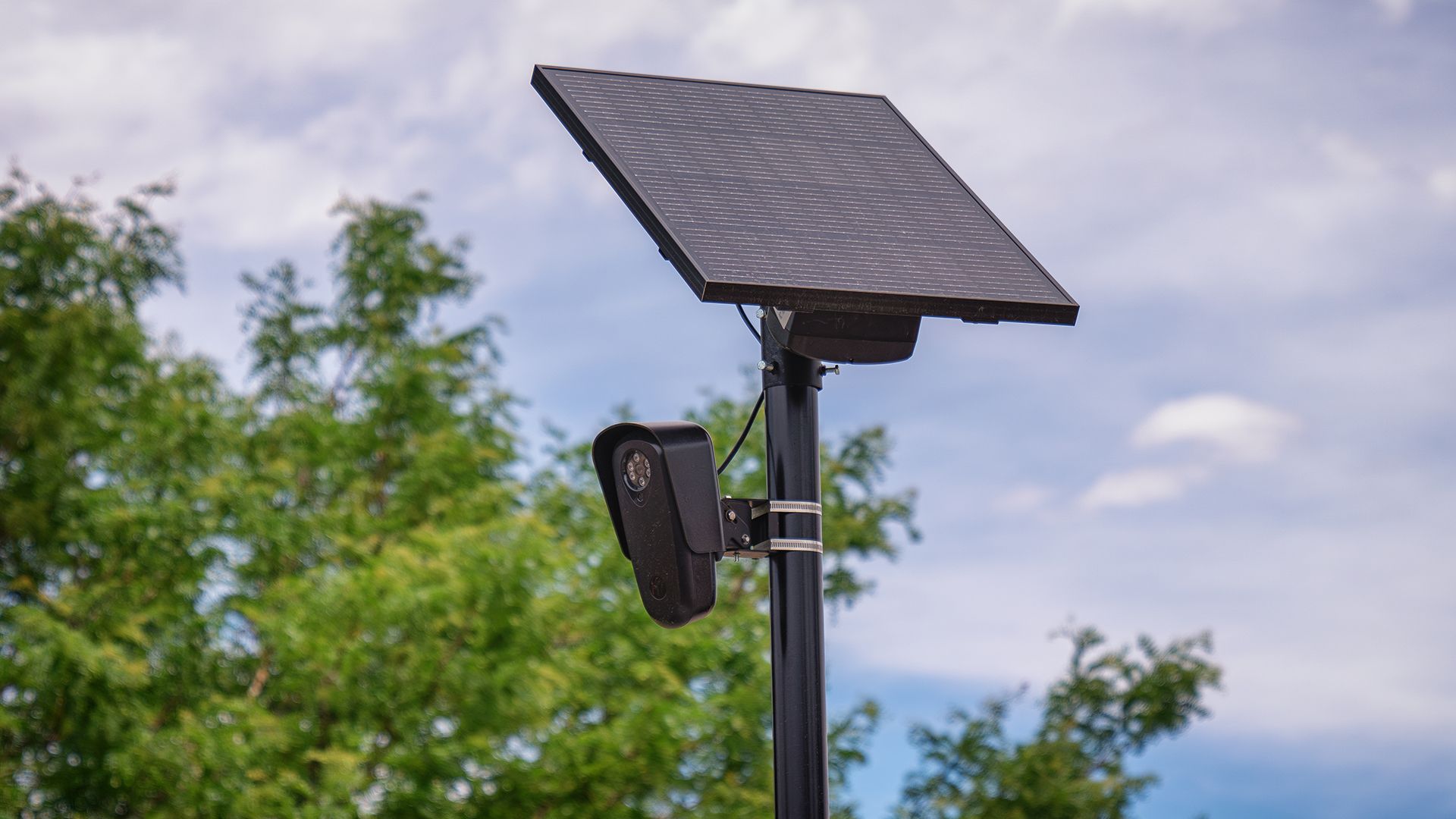
Flock license plate reader

(Image credit: Flock)

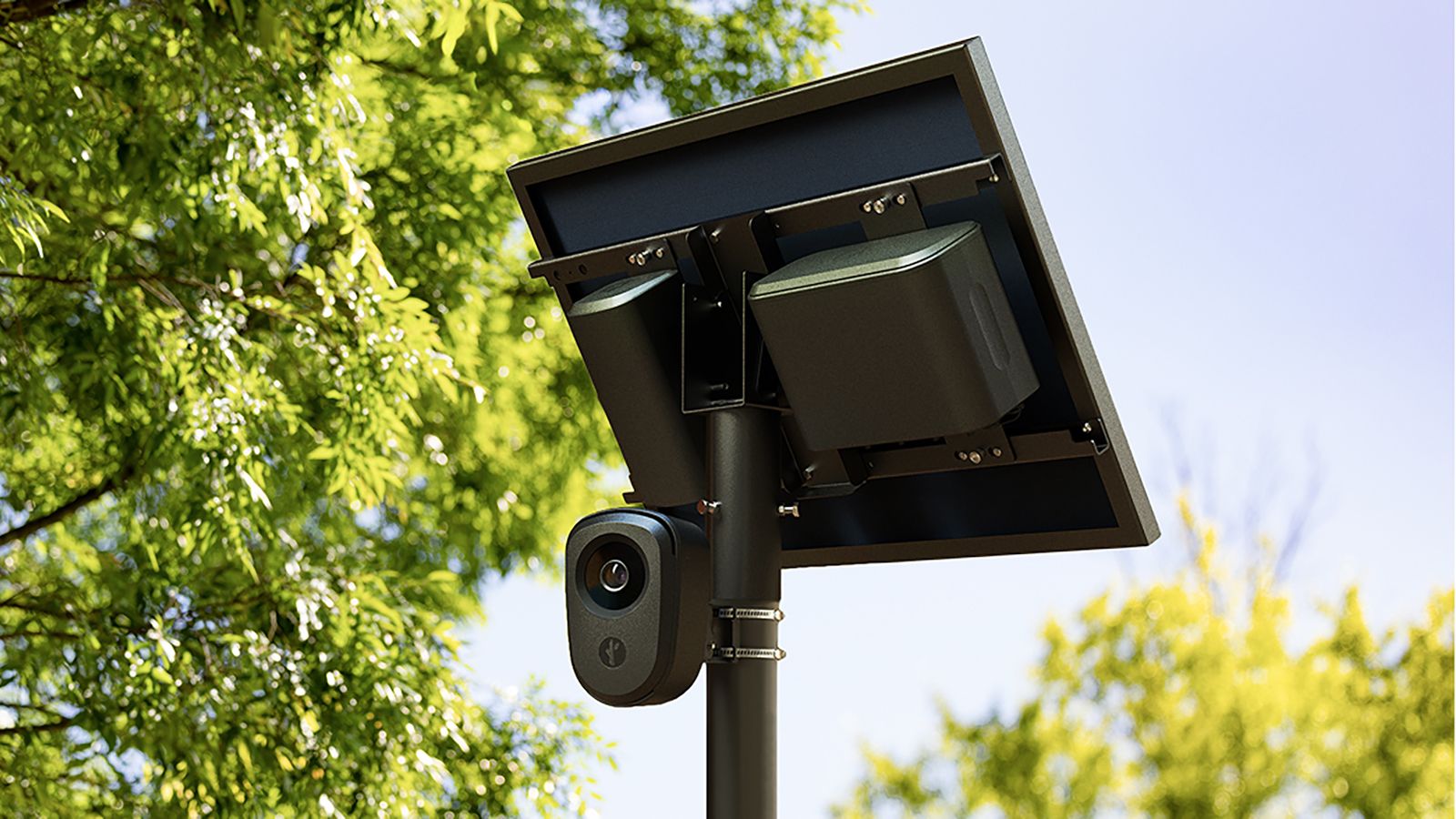
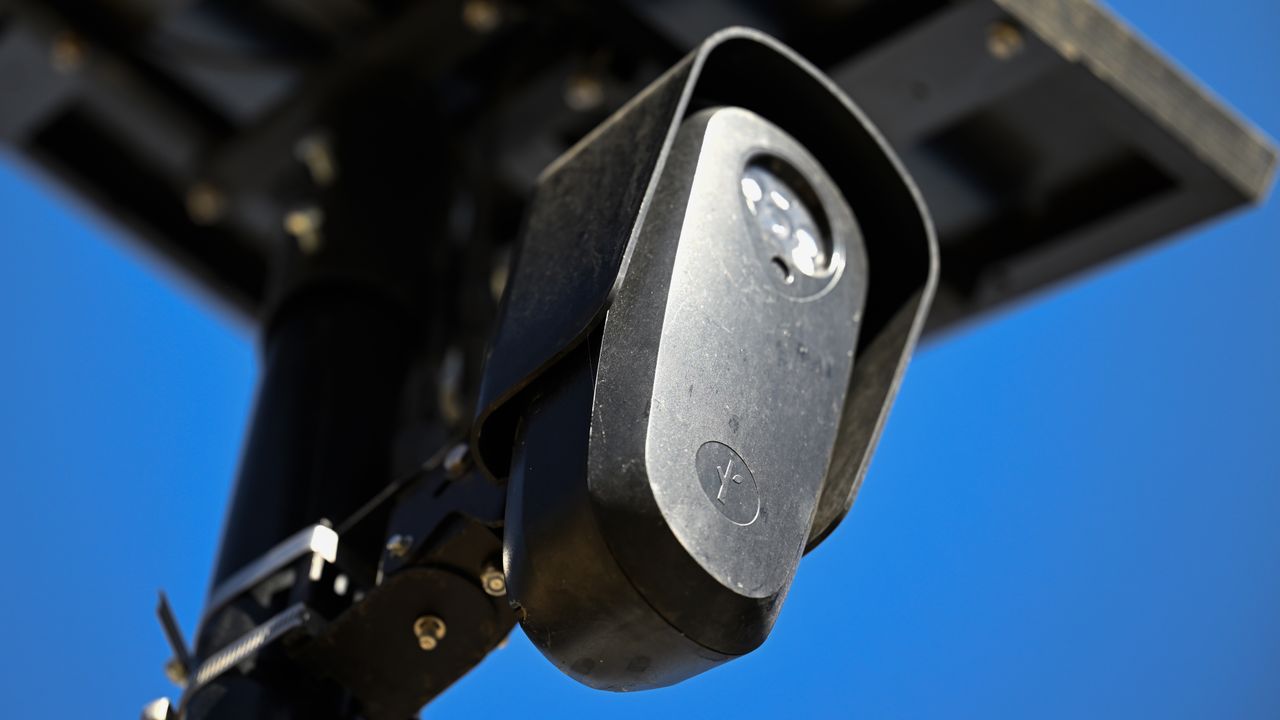
This also comes as hackers have discovered precisely what Flock cameras track, and it’s not just license plates. Analyzing encrypted data, hackers found the cameras also detect people and bicycles — and they can also pick up and isolate specific bumper stickers.

The fact that the cameras are able to pick up and monitor so much more than some may have realized is worrying enough, but what’s extra concerning is that this data was recovered from a physical camera.

Hopefully Flock will solve this soon, but currently it means anyone with the right hacking skills could tear down a camera and access a chunk of the data stored inside the device — meaning you might not just need to worry about what officials can do with your data

A hooded figure in front of a laptop. Digital symbols obscure his face and appear to be pouring out of his head

(Image credit: Getty Images)

Is there a right way to use ALPR?

For many, the answer to the question of if there’s a right way to use Flock or similar cameras is an emphatic no, but for advocates of the tech, there are sensible measures police departments could be using to minimize abuse.

Limiting automatic sharing of data to other agencies and restricting the police officers with access are a good starting point. They also argue that all Flock data requests should require case numbers to be attached, and for officers to provide a reason for each request.

Advocates argue this limits the likelihood that bad actors will be able to sneak a peek at Flock data, ensures that accessing ALPR information has a purpose, and creates checks and balances to prevent overreach from law enforcement agencies. As such, many agencies now deploy these methods.

However, some of these practices have been undermined by recent reports. Records obtained by the Electronic Frontier Foundation show that many officers’ reasons for accessing the data include excuses like “LMAO,” “idk lol,” “TBD,” “Sexy,” and similar phrases. Others took to simply smashing their keyboards to fill the form with random letters.

Flock Safety Camera

(Image credit: Tony Webster - Flock Safety ALPR Camera)

What’s more, in an attempt to make it easier to fill in records but still keep data transparent, Flock introduced prepared options like “Traffic infraction,” though some argue this is a step backwards, as it means officers have even less need to articulate their reasoning for accessing ALPR data — and it really doesn’t help when one option is a generic “Other.”

The EFF reached out to several police departments, and it seems that some have been reprimanded, while others claim department policy has changed since the nonsense reasons were given.

However, even if these forms were filled in correctly, or seemingly correctly, they wouldn’t prevent privacy violations. They’d merely allow someone to possibly audit the data after the fact to spot misuse if the forms were investigated.

That’s why many are saying the best protection — besides pulling down ALPR cameras entirely — is to require a warrant for each search.

Though tearing the cameras down might simply be the best approach, especially after that example above, where it shows ALPR cams see a lot more than we might credit them for, and that some of a camera’s data can be accessed by hackers who know what they’re after.

We’ll need to wait and see how things develop, but Flock’s troubles don’t seem to be ending soon.

❌