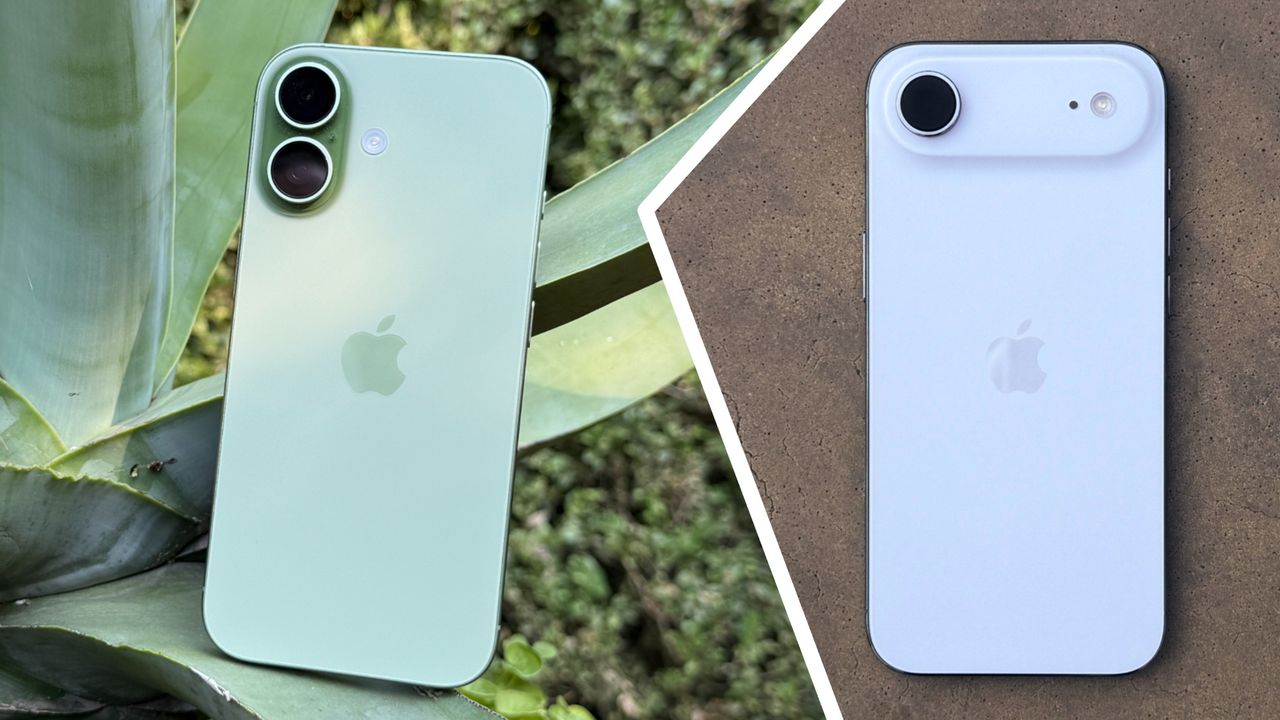
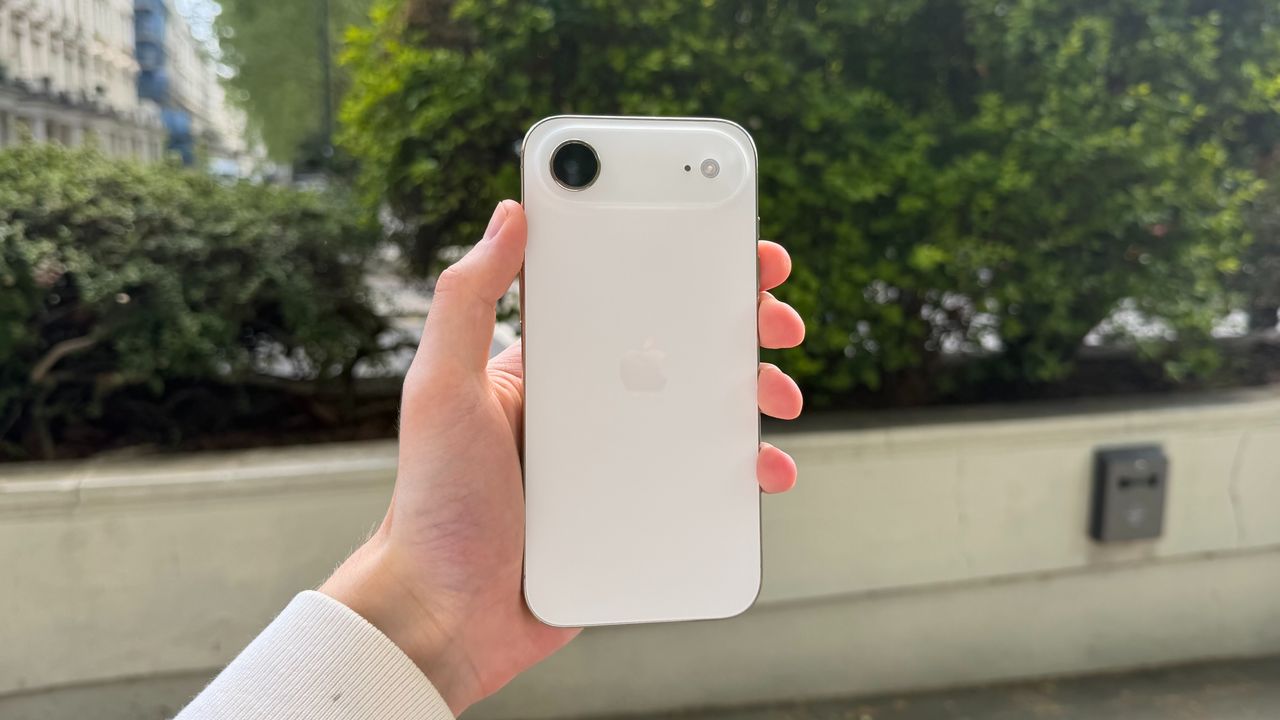
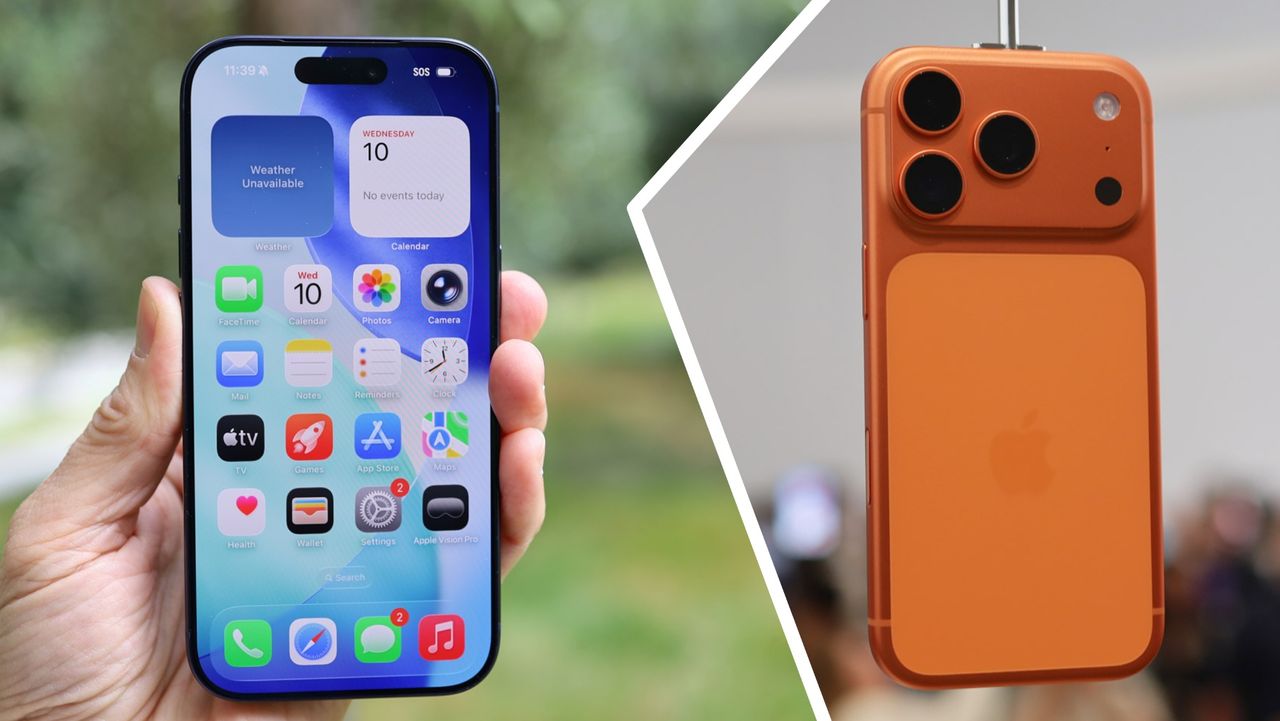
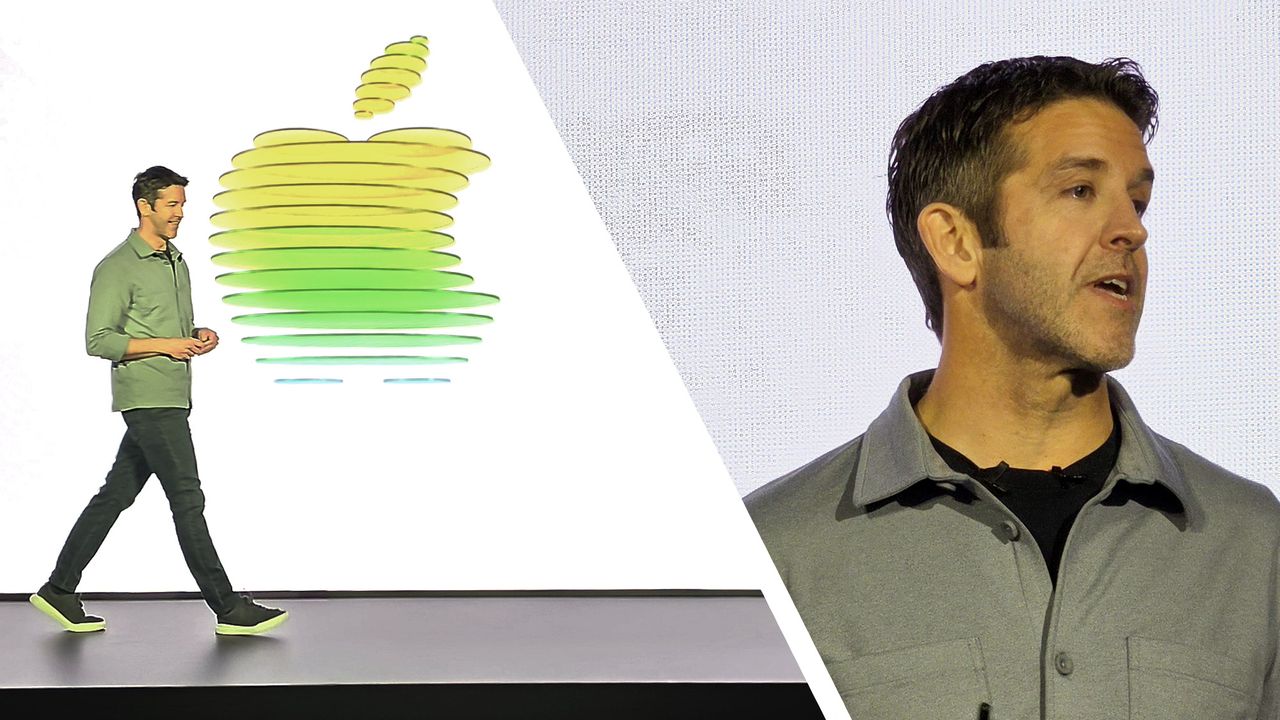
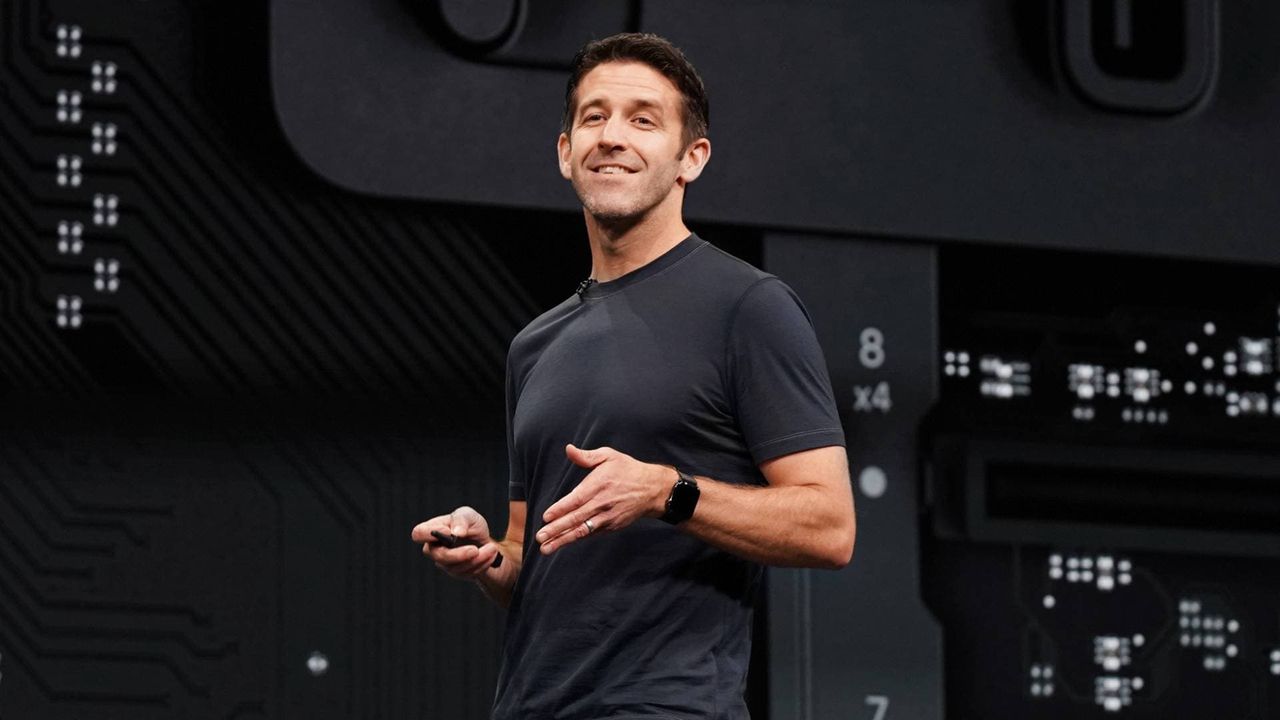
How will Apple change in September under its new CEO — former hardware chief John Ternus? The blog Geeky Gadgets is already expecting "significant updates to the iPhone over the next three years," as well as streamlined internal engineering (plus durability enhancements and high-capacity batteries).
2026: Foldable display
2027: Bezel-less iPhone 20 (celebrating the iPhone's 20th anniversary)
CNET's web sites (which include ZDNET, PCMag, Mashable and Lifehacker) are even hosting a contest "to see which of our readers can make the best Apple predictions for 2026. Answer five questions in any of our three rounds of the contest to be entered to win [$applePrize] in September."
But the blog 9to5Mac already has a list of new upcoming Apple products, courtesy of Bloomberg's Mark Gurman (who appeared
on the TBPN podcast this week "to talk about Apple's CEO transition, what to expect from John Ternus, and more."
As part of the conversation, Gurman said: "There are six major Apple products in development right now, six major new product categories." Here's the full list he shared:
1. AI AirPods
2. Smart glasses
3. Pendant
4. Smart display
5. Tabletop robot
6. Security camera
[...] Gurman has reported on the Pendant before as a new AI wearable that's an alternative to AI AirPods and Glasses. All three products are expected to rely heavily on a paired iPhone for Siri and other AI features. The smart display ('HomePad'), tabletop robot, and security camera are all brand new Apple Home products.
The AI features arrive "thanks to the revamped Apple Foundation Models trained by Google Gemini," reports the AppleInsider blog (citing Gurman's Power On newsletter at Bloomberg). The smart doorbell camera will include "an Apple Intelligence-upgraded version of the facial recognition already included with HomeKit Secure Video. Today, HSV can utilize the Apple Home admin's tagged faces in their Photos app to label people that are viewed on the camera. When a known person rings the doorbell, Siri will announce them by name over the HomePod chime."
An anonymous reader quotes a report from 404 Media: The FBI was able to forensically extract copies of incoming Signal messages from a defendant's iPhone, even after the app was deleted, because copies of the content were saved in the device's push notification database, multiple people present for FBI testimony in a recent trial told 404 Media. The case involved a group of people setting off fireworks and vandalizing property at the ICE Prairieland Detention Facility in Alvarado, Texas in July, and one shooting a police officer in the neck. The news shows how forensic extraction -- when someone has physical access to a device and is able to run specialized software on it -- can yield sensitive data derived from secure messaging apps in unexpected places. Signal already has a setting that blocks message content from displaying in push notifications; the case highlights why such a feature might be important for some users to turn on.
"We learned that specifically on iPhones, if one's settings in the Signal app allow for message notifications and previews to show up on the lock screen, [then] the iPhone will internally store those notifications/message previews in the internal memory of the device," a supporter of the defendants who was taking notes during the trial told 404 Media. [...] During one day of the related trial, FBI Special Agent Clark Wiethorn testified about some of the collected evidence. A summary of Exhibit 158 published on a group of supporters' website says, "Messages were recovered from Sharp's phone through Apple's internal notification storage -- Signal had been removed, but incoming notifications were preserved in internal memory. Only incoming messages were captured (no outgoing)."
404 Media spoke to one of the supporters who was taking notes during the trial, and to Harmony Schuerman, an attorney representing defendant Elizabeth Soto. Schuerman shared notes she took on Exhibit 158. "They were able to capture these chats bc [because] of the way she had notifications set up on her phone -- anytime a notification pops up on the lock screen, Apple stores it in the internal memory of the device," those notes read. The supporter added, "I was in the courtroom on the last day of the state's case when they had FBI Special Agent Clark testifying about some Signal messages. One set came from Lynette Sharp's phone (one of the cooperating witnesses), but the interesting detailed messages shown in court were messages that had been set to disappear and had in fact disappeared in the Signal app." Further reading: Apple Gave Governments Data On Thousands of Push Notifications
Bloomberg's Mark Gurman says Apple's foldable iPhone is still "on track" for a September unveiling alongside the iPhone 18 Pro lineup. 9to5Mac reports: The report notes that Apple's stock took a hit earlier today after Nikkei Asia indicated the iPhone Fold was having serious production issues. Clearly, sources within Apple were motivated to share positive news via Gurman. Not long ago, Gurman himself said that he was expecting an iPhone Fold release date that was a little bit later than iPhone 18 Pro. That's still very possible, but it sounds like Apple is internally feeling optimistic about its targeted September launch.
The report continues: "While the complexity of the new display and materials may limit initial supply for several weeks, Apple is currently operating with a plan to put the device on sale around the same time -- or very soon after -- the new non-foldable models, the people said." Gurman adds an important qualifier: "Still, the release is six months away and production has yet to ramp up. That means the timing isn't final."
MICROSOFT 365 By Peter Deegan Windows users often ask me about switching to a Mac and, most recently, the new and economical Mac Neo. For most everyday users, it’s a good alternative. Mac Neo is Apple’s most affordable laptop. It’s not a powerhouse, but it handles Microsoft Office well, plays very well with iPhones, and […]
Leaked iOS spyware has some cybersecurity professionals raising urgent alarms about potential mass iPhone compromises, a development that pairs ominously with the recent discovery of two sophisticated iOS exploit kits.
At the same time, some other experts say Apple’s defensive features for iPhones remain elite. But several factors have created unprecedented circumstances: the public accessibility of a version of DarkSword, shortly after the discovery of the original version of DarkSword and the earlier discovery of a similar kit known as Coruna, and a growing market for iPhone exploits driven by their high value as targets.
Allan Liska, field chief information security officer at Recorded Future, said he was worried about what the leaked DarkSword version could do to “democratize” iPhone exploits.
“Right now, iPhone exploitations are among the most expensive to research/implement so they have been, largely, the realm of nation-states,” he said. “If anyone can exploit an iPhone, suddenly something that has managed to be relatively secure now is a much bigger attack surface.”
Google, iVerify and Lookout released research last week on DarkSword’s discovery, centered on Ukraine. Google also said it saw targeting in Saudi Arabia, Turkey and Malaysia. And that was before a version turned up on GitHub, a development TechCrunch first reported and Google and iVerify have analyzed. (The week before, iVerify and Google uncovered Coruna. Google declined to comment further for this story.)
“It’s extremely alarming that this leaked out on GitHub,” said Rocky Cole, co-founder of iVerify. “I would assume that it’s being used all around the world, and including here in the United States.”
Hundreds of millions of iPhones running iOS 18 could be vulnerable to DarkSword.
“I think that the top line issues here are pretty clear: people who have devices that are vulnerable should upgrade ASAP,” said Eva Galperin, director of cybersecurity at the Electronic Frontier Foundation. “It is very likely that these vulnerabilities are being used right now to exploit vulnerable devices at scale, which is unusual for Apple products.”
The propagation problem
Coruna was concerning enough for Apple that it took the rare step of backporting security updates to still older versions of iOS, Cole said. The fear, he said, was that it might be wormable — capable of spreading from one device via text message to everyone in a phone’s contact list.
But Cole said Apple hasn’t released similar security-focused updates to iOS 18, for reasons he doesn’t know.
Apple has emphasized the patches it has issued, urged users to update their phones and touted Lockdown Mode as a defense against spyware.
“Apple devices are designed with multiple layers of security in order to protect against a wide range of potential threats, and every day Apple’s security teams around the world work tirelessly to protect users’ devices and data,” said Apple spokesperson Sarah O’Rourke. “Keeping your software up to date is the single most important thing you can do to maintain the security of your Apple products, and devices with updated software were not at risk from these reported attacks.”
IPhones’ widespread use makes them high-value targets, fueling a thriving market for exploits. Coruna and DarkSword are indicators of this growing demand.
“It’s time for organizations to start thinking of mobile security the way they think about desktop security, which is to say everyone knows how to secure their laptop,” Cole said. And for iPhone exploit hunting in particular, “you’re starting to see people do it at a mass level.” Furthermore, the resale market is such that exploits that once were exclusive are no longer, and AI makes it even easier to customize them in the code, he said.
DarkSword has drawn federal attention: The Cybersecurity and Infrastructure Security Agency this week added vulnerabilities that DarkSword exploits to the list that federal agencies must patch.
The number of people still using iOS 18 is large, up to 25% of all iPhones. Cole said several factors are contributing to that, such as users being leery of iOS 26’s onboard artificial intelligence or the Liquid Glass interface.
Said Galperin: “There are many reasons why people do not keep their devices up to date, so when I tell people ‘just patch your stuff’ I think it is important to realize that there are circumstances under which this is easier said than done.”
Proven defenses despite expanding risks
Despite the concerns, Cole credited iPhone for its high security standards, in particular for its app store.
For Natalia Krapiva, senior tech-legal counsel at Access Now, a key takeaway is the worrisome proliferation of commercial spyware and cyber intrusion capabilities.
“This is exactly what human rights activists and digital security researchers have been warning governments and companies about: In the absence of effective regulation for the industry, these exploits will get out and end up in the hands of adversaries like Russia, China, Iran, or, as in the case of DarkSword, leaked online for any criminal to use,” she said.
On the other hand, Apple’s Lockdown Mode and Memory Integrity Enforcement are top-notch defensive measures, Krapiva said. We’ve yet to see a Lockdown Mode-enabled iPhone being infected with spyware, she said.
“I think we’ll keep seeing more attempts to exploit both Apple and Android devices as they improve their software and hardware security,” she said. “It’s the old cat-and-mouse game.”
Adam Boynton, senior enterprise strategy manager at Jamf, said what’s happened with Coruna and DarkSword is evidence of Apple’s success.
“What’s encouraging here is that Apple’s security model works,” he said. “Coruna skips devices running the latest iOS versions and avoids those with Lockdown Mode enabled entirely. That’s a strong validation of the defences Apple has built.
“DarkSword reinforces the same principle,” he continued. “Where Coruna targeted older iOS versions, DarkSword demonstrates that even relatively current releases can be targeted by determined actors. Apple moved quickly to patch the vulnerabilities involved, and devices running the latest iOS are protected.”
 Login
Login