Reading view

There are new articles available, click to refresh the page.

What Verified Breach Data Changes About Exposure Monitoring

Exposure monitoring has become a core function for security and risk teams but many programs still struggle to deliver clear, actionable outcomes. Alerts pile up, dashboards expand, and yet teams are often left with the same unanswered question:

Which exposures actually matter right now?

The difference between noise and signal in exposure monitoring often comes down to one factor: data verification. Without verified breach data, exposure monitoring becomes an exercise in volume rather than risk prioritization.

This post breaks down what verified breach data actually changes about exposure monitoring and why it’s becoming foundational for threat intelligence teams, SOCs, and risk leaders.

The Current State of Exposure Monitoring

Most exposure monitoring programs rely on a mix of sources:

  • Credential dumps scraped from public or semi-public forums
  • Dark web monitoring feeds
  • Open-source breach repositories
  • Third-party aggregators with limited validation transparency

While these sources can surface large quantities of data, quantity alone does not equal exposure intelligence.

In practice, teams often face:

  • Duplicate credentials resurfacing years after an initial breach
  • Fabricated or “salted” data designed to look real
  • Partial records with no attribution context
  • Alerts that cannot be confidently tied to a real person, customer, or employee

This creates a familiar operational problem: analysts spend significant time validating alerts before any remediation can begin.

Why Unverified Breach Data Creates Risk Blind Spots

Unverified breach data doesn’t just waste time, it actively distorts exposure visibility.

When breach data is not validated:

  • False positives increase, overwhelming triage workflows
  • True exposure competes with noise, delaying response
  • Trust in monitoring systems erodes, leading teams to ignore alerts altogether

Unverified breach data reduces confidence in exposure monitoring outcomes.

This lack of confidence impacts downstream decisions—from password resets and account monitoring to executive briefings and board-level reporting.

What Is Verified Breach Data?

Verified breach data is not defined by where it appears—it’s defined by how it’s validated.

At a high level, verified breach data includes:

  • Confirmation that a breach event actually occurred
  • Validation of the source and timeframe of the exposure
  • Normalization and de-duplication across datasets
  • Attribution confidence that links exposed data to real entities

In other words, verified breach data answers not just what was exposed, but:

  • When it was exposed
  • Where it originated
  • Who is actually impacted

Constella’s approach to verified breach intelligence is designed to support this level of confidence and transparency across exposure workflows.

How Verified Breach Data Changes Exposure Monitoring Outcomes

1. Exposure Monitoring Becomes Prioritized, Not Reactive

With verified breach data, alerts can be ranked by:

  • Recency of exposure
  • Confidence of attribution
  • Sensitivity of exposed data (PII, credentials, tokens)

This allows teams to shift from reactive alert handling to risk-based prioritization, focusing first on exposures that pose real operational or fraud risk.

2. Analysts Spend Less Time Validating, More Time Acting

One of the most immediate operational benefits is reduced manual validation.

Instead of asking:

  • “Is this breach real?”
  • “Is this data recycled?”
  • “Does this identity actually exist?”

Analysts can move directly into remediation workflows:

  • Credential resets
  • Account monitoring
  • Identity risk scoring enrichment

This is especially valuable for SOCs and threat intelligence teams operating under alert fatigue.

3. Exposure Intelligence Gains Identity Context

Exposure monitoring without identity context only tells part of the story.

Verified breach data, when fused with identity intelligence, allows teams to understand:

  • Whether exposed data maps to customers, employees, or executives
  • How exposed identifiers connect across aliases, emails, and usernames
  • Whether multiple exposures point to the same underlying entity

This is where exposure monitoring intersects directly with identity risk intelligence.

Why Verified Breach Data Matters for Threat Intelligence Teams

Threat intelligence teams are increasingly expected to deliver actionable intelligence, not just feeds.

Verified breach data supports this shift by enabling:

  • Cleaner enrichment of alerts and investigations
  • Stronger attribution confidence in reporting
  • Better alignment between intel findings and operational response

Instead of pushing raw breach alerts downstream, teams can provide curated, confidence-weighted exposure insights that other teams trust.

Where Exposure Monitoring Breaks Without Verification

Without verified breach data, exposure monitoring programs often stall at the same point:

  • Alerts are generated
  • Dashboards update
  • But decisive action is delayed

This is not a tooling failure—it’s a data trust problem.

Verification restores that trust by giving teams confidence that:

  • Alerts are real
  • Identities are accurate
  • Decisions are defensible

Moving from Exposure Visibility to Exposure Intelligence

Exposure monitoring is evolving. The goal is no longer visibility alone. It’s clarity.

Verified breach data enables that clarity by:

  • Reducing noise
  • Improving prioritization
  • Anchoring exposure insights to real identities

For organizations looking to mature their threat intelligence and exposure monitoring capabilities, verification is no longer optional, it’s foundational.

Learn how Constella delivers verified breach intelligence designed for operational confidence.

Frequently Asked Questions About Verified Breach Data

What is verified breach data?

Verified breach data is breach intelligence that has been validated to confirm the breach event occurred, the data originated from a credible source, and the exposed information can be confidently attributed to real identities. Unlike scraped or recycled breach dumps, verified breach data includes contextual signals such as timing, source reliability, and attribution confidence.

How is verified breach data different from dark web monitoring?

Dark web monitoring focuses on where data appears. Verified breach data focuses on whether the data is real, recent, and relevant. Many dark web feeds surface unverified or recycled data, while verified breach intelligence emphasizes validation, de-duplication, and confidence scoring before alerts reach analysts.

Why does exposure monitoring generate so many false positives?

False positives occur when exposure monitoring relies on unverified breach feeds, partial datasets, or shallow matching logic. Without verification and identity context, alerts may reference fabricated credentials, outdated breaches, or identities that cannot be confidently resolved—forcing analysts to manually validate each alert.

How does verified breach data reduce alert fatigue?

By validating breach sources and confirming attribution, verified breach data reduces duplicate alerts, eliminates fabricated datasets, and prioritizes confirmed exposure. This allows security and threat intelligence teams to focus on high-confidence risks instead of triaging noise.

Who benefits most from verified breach data?

Verified breach data is most valuable for:

  • Threat intelligence teams responsible for exposure monitoring
  • SOC teams managing alert enrichment and triage
  • Fraud and identity teams assessing downstream risk
  • Security leaders who need defensible exposure reporting

These teams rely on confidence, not volume, to make decisions.

Does verified breach data improve identity risk scoring?

Yes. Identity risk scoring depends on accurate attribution. Verified breach data strengthens identity risk scores by ensuring exposed credentials or PII are linked to real entities with known confidence levels, improving both prioritization and explainability.

Can verified breach data help with compliance and reporting?

Verified breach data supports compliance and reporting by providing defensible evidence of exposure, clearer timelines, and validated sources. This is especially important when communicating exposure risk to executives, auditors, or regulators.

Is more breach data better for exposure monitoring?

No. More data without verification increases noise and slows response. Effective exposure monitoring prioritizes quality, confidence, and context over sheer volume. Verified breach data enables faster, more accurate risk decisions.

How does Constella verify breach data?

Constella combines source validation, continuous curation, de-duplication, and identity intelligence to deliver breach data that teams can trust. Verification is embedded into the intelligence pipeline, not added as an afterthought.

What is the first step to improving exposure monitoring accuracy?

The first step is evaluating the quality and verification of your breach data sources. If teams spend more time validating alerts than acting on them, verification gaps are likely limiting the effectiveness of exposure monitoring.

Cybersecurity Predictions for 2026

2026 is going to be a strange year in cybersecurity. Not only will it be more of the same, but bigger and louder. It stands to bring about a structural shift in who is attacking us, what we are defending, exactly where we are defending, and hopefully, who will be held accountable when things go wrong.

For context, I am framing these predictions based on the way I run security and the way I find it effective to talk to board members. This is through the lens of business impact, informed by things like the adversarial mindset, identity risk, and threat intelligence.

Artificial adversaries move from Proof-of-Concept (PoC) to daily reality

In 2026, most mature organizations will start treating artificial adversaries as a normal part of their threat model. I use artificial adversaries to mean two things:

  • Artificial Intelligence (AI) enhanced human actors using agents, LLMs, world models, and spatial intelligence to scale their campaigns while making them far more strategic and surgically precise.
  • Autonomous nefarious AI that can discover, plan, and execute parts of the intrusion loop with minimal human steering. This is true end-to-end operationalized AI.

We will see the use of AI move from simply drafting great-sounding phishing emails to running entire playbooks (e.g., reconnaissance, targeting, initial access, lateral movement, exfiltration, and extortion). Campaigns will use techniques like sentiment analysis to dynamically adjust tactics and/or lures, elements such as infrastructure to dynamically scale, and timing based on live target feedback, not human shift schedules.

The practical reality for defenders is simple – assume continuous, machine‑speed contact with the adversary. Controls, monitoring, and incident response must be designed for a world where the attacker never sleeps, constantly learns and adapts, gets smarter as things progress, and never gets bored. When attackers move at machine speed, identity becomes the most efficient blast radius to exploit.

Identity becomes the primary blast radius – and ITDR grows up

We have said for years that identity is the new perimeter. In 2026, identity becomes the primary blast radius. Many compromises will still start with leaked/stolen credentials, session replays, or abuse of machine and/or service identities.

Identity Threat Detection and Response (ITDR) will mature from a niche add‑on into a core capability. Identity risk intelligence (signals from breach data, infostealer logs, and dark‑web data) will be fused into a continuous identity risk score for every user, device, service account, and increasingly every AI agent. Moreover, corporate identities will be fused with personal identities so that intelligence represents a holistic risk posture to enterprises.

The key question will no longer be just “Who are you?” but “How dangerous are you to my organization right now?” Every login and API call will need to be evaluated against current exposure, behavior, and privilege. Leaders who cannot quantify identity risk will struggle to justify their budgets because they will not be able to fight on the right battlefields.

CTEM finally becomes a decision engine, not a useless framework

Continuous Threat Exposure Management (CTEM) has been marketed heavily. In 2026, we will separate PowerPoint and analyst hype CTEM from operational CTEM. At its core, CTEM is exposure accounting, or a continuous view of what can actually hurt the business and how badly.

Effective security programs will treat CTEM as continuous exposure accounting tied directly to revenue and regulatory risk, not as a glorified vulnerability list that will never truly get addressed. Exposure views will integrate identity risk, SaaS sprawl, AI agent behavior, data ingress/egress flows, and third‑party dependencies into a single, adversary‑aware picture.

CTEM will feed capital allocation, board reporting, and roadmap planning. If your CTEM implementation does not influence where the next protective dollar goes, it is not CTEM; it is just another dashboard full of metrics that are useless to a business audience. Regulators won’t care about your dashboards; they’ll care whether your CTEM program measurably reduces real-world exposure.

Regulation makes secure‑by‑design non‑negotiable (especially in the European Union (EU))

2026 is the year some regulators stop talking and start enforcing. The EU Cyber Resilience Act (CRA) moves from theory to operational reality, forcing manufacturers and software vendors targeting the EU to maintain Software Bill of Materials (SBOMs), run continuous vulnerability management, and report exploitable flaws within tight timelines. One key point here is that this is EU-wide, not sector-centric or targeting only publicly traded companies.

While the EU pushes toward horizontal, cross-sector obligations, the United States (U.S.) will continue to operate under a patchwork of sectoral rules and disclosure-focused expectations. SEC cyber-disclosure rules and state-level privacy laws will create pressure, but not the same unified secure-by-design mandate that CRA represents. Other regions, such as the U.K., Singapore, and Australia, will continue to blend operational resilience expectations (e.g., for financial services and critical infrastructure) with emerging cyber and AI guidance, effectively exporting their standards through global firms.

The EU AI Act will add another layer of pressure, particularly for vendors building or deploying high-risk AI systems. Requirements around risk management, data governance, transparency, and human oversight will collide with the reality of shipping AI-enabled products at speed. For security leaders, this means treating AI governance as part of product security, not just an ethics or compliance checkbox. You will need evidence that AI-driven features do not create unbounded security and privacy risk. Moreover, you will need to be able to explain and defend those systems to regulators.

NIS2 will also bite in practice as the first real audits and enforcement actions materialize. At the same time, capital markets regulators such as the SEC in the U.S. will continue to scrutinize cyber disclosures and talk about board‑level oversight of cybersecurity risk.

There is a net effect here – cybersecurity becomes a product-safety and market-access problem. If your product cannot stand up to CRA-grade expectations, AI-governance scrutiny, and capital-markets disclosure rules, you will lose market share or access. Some executives will discover that cyber failures now have grand, and potentially personal, consequences.

Disinformation, deepfakes, and synthetic extortion professionalize and achieve scale

We are already seeing AI‑generated extortion and executive impersonations. In 2026, these will become industrialized. Adversaries will mass‑produce tailored deepfake incidents against executives, employees, and customers. From fake scandal footage to convincingly spoofed “CEO in crisis” voice calls ordering urgent payments, this will start to happen at scale the way the NPD sextortion wave hit in 2024.

Digital trust has eroded to a disturbing point. Brand and executive reputation will be treated as high‑value assets in this new threat landscape. Attackers will try to weaponize misinformation not only to manipulate politics and financial markets, but also to further break trust in areas such as incident‑response communications and official statements.

This is where vibe hacking becomes mainstream as the next generation of social engineering. Campaigns will focus less on factual deception and more on psychological, emotional, and social manipulation to create exploitable chaos across multiple fronts (e.g., in the lives of individuals as well as inside organizations and societies).

The software supply chain gets regulated, measured, and attacked at the same time

In 2026, the software supply‑chain story gets more complex, not less. Regulatory SBOM requirements are ramping up at the same time that organizations add more SaaS, more APIs, more AI tooling, and more automation platforms.

Adversaries will continue to target upstream build systems, AI models, plugins, and shared components because compromising one dependency scales beautifully across many downstream organizations.

Educated boards will shift from asking “Do we have an SBOM?” to “How quickly can we detect a poisoned component, isolate the blast radius, and prove to regulators and customers that we contained it?” Continuous, adversary‑aware supply‑chain monitoring will replace static point‑in‑time attestations.

Deception engineering and security chaos engineering become standard practice

Static and traditional defenses are proving to age badly against autonomous and AI‑enhanced adversaries. In 2026, we will see sophisticated programs move toward deception engineering at scale (e.g., documents with canary tokens, deceptive credentials, honeypot workloads, decoy SaaS instances, and fake data pipelines) instrumented to deceive attackers and capture their behavior. Deception engineering techniques will become powerful tools to force AI‑powered attackers to burn resources.

Sophisticated programs will also start to leverage Security Chaos Engineering (SCE) as part of their standard practices. They will expand SCE exercises from infrastructure into identity and data paths. Teams will deliberately inject failures and simulated attacks into IAM, SSO, PAM, and data flows to measure real‑world resilience rather than relying on configuration checklists and Table Top Exercises (TTX).

AI browsers and memory‑rich clients become a new battleground

AI‑augmented browsers and workspaces are getting pushed onto users fast. They promise enormous productivity boosts by providing long‑term memory, cross‑tab reasoning, and deep integration into enterprise data. They also represent a new, high-value target for attackers. Today, most of these tools are immature, but like many end-user products we may or may not need, they will still find their way into homes and enterprises.

A browser or client that remembers everything a user has read, typed, or uploaded over months is effectively a curated data‑exfiltration cache if compromised. Most organizations will adopt these tools faster than they update Data Loss Prevention (DLP) stacks, privacy policies, or access controls.

We will also see agent‑to‑agent risk. The proliferation of decentralized agentic ecosystems will see to this. Inter-agent communication is both a feature of adaptability and a new element in attack surfaces. Authentication, authorization, and auditing of these machine‑to‑machine conversations will lag behind adoption unless CISOs force the issue and tech teams play some serious catch-up.

Cyber-physical incidents force boards to treat Operational Technology (OT) risk as P&L risk

In 2026, cyber-physical incidents will stop being treated as IT or edge cases and start showing up explicitly in P&L conversations. As human and artificial adversaries get better at understanding OT communication protocols and process flows, not just IT systems, native attacks will increasingly target manufacturing lines, logistics hubs, energy assets, and healthcare infrastructure. AI-enhanced reconnaissance and simulation will help attackers model physical impact before they pull the trigger, making it easier to design campaigns that maximize downtime, safety risks, and business disruption with minimal effort. The result is a shift from data breach and ransomware narratives to real-world operational outages and safety-adjacent events that boards cannot dismiss as IT problems.

This dynamic will force organizations to pull OT/Industrial Control Systems (ICS) security out of the engineering basement and into mainstream risk management. OT exposure will need to be explicitly quantified in the same terms as other strategic risks (e.g., impact on revenue continuity, contractual SLAs, supply-chain reliability, and regulatory exposure). CTEM programs that only see web apps, APIs, and cloud assets will look dangerously incomplete when a single compromised PLC or building management system can halt production or shut down an entire manufacturing facility. Boards will expect cyber-physical scenarios to show up in resilience testing, TTXs, and stress tests.

The organizations that are mature and handle this well will build joint playbooks between security, operations, and finance. They will treat OT risk as part of protected ARR, and fund segmented architectures, OT-aware monitoring, and incident drills before something breaks. Those who treat OT as “someone else’s problem” will discover in the worst possible way that cyber-physical events don’t just hit uptime metrics, they threaten revenue and safety in ways that no insurance or PR campaign can fully repair.

Boards will demand money metrics, not motion metrics

Economic pressure and regulatory exposure will push educated board members away from vanity metrics like counts of alerts, vulnerabilities, or training completions. Instead, they will demand money metrics, such as “how much ARR is truly protected”, “how much revenue is exposed to specific failures”, and what it costs to defend an event or buy down a risk.

As AI drives both attack and defense costs, boards will expect clear security ROI curves. It will need to clear where additional investment materially reduces expected loss and where it simply feeds some useless dashboard.

CISOs who cannot fluently connect technical initiatives to capital allocation, risk buy‑down, and protected revenue will be sidelined in favor of leaders who can.

Talent, operating models, and playbooks reorganize around AI

Tier‑1 analyst work will be heavily automated by 2026. AI copilots and agents will handle first‑line triage, basic investigations, and routine containment for common issues. Human talent will move up‑stack toward adversary and threat modeling, complex investigations, and business alignment.

The more forward-thinking CISOs will push for new roles such as:

  • Adversarial‑AI engineers focused on testing, hardening, and red‑teaming AI systems
  • Identity‑risk engineers owning the integration of identity risk intelligence, ITDR, and IAM
  • Deception and chaos engineers are responsible for orchestrating real resilience tests and deceptive environments

Incident Response (IR) playbooks will evolve from static, linear documents into adaptable orchestrations of defensive and likely distributed agents. The CISO’s job will start to shift towards designing and governing a cyber‑socio‑technical system where humans and machines defend together. This will require true vision, innovation, and a different mindset than what has brought our industry to its current state.

Cyber insurance markets raise the bar and price in AI-driven risk

In 2026, cyber insurance will no longer be treated as a cheap safety net that magically transfers away existential risk. As AI-empowered adversaries drive both the scale and correlation of loss events, carriers will respond the only way they can – by tightening terms, raising premiums, and narrowing what is actually covered. We will see more exclusions for “systemic” or “catastrophic” scenarios and sharper scrutiny on whether a given loss is truly insurable versus a failure of basic governance and control.

Underwriting will also likely mature from checkbox questionnaires to evidence-based expectations. Insurers will increasingly demand proof of things like a functioning CTEM program, identity-centric access controls, robust backup and recovery, and operational incident readiness before offering meaningful coverage at acceptable pricing. In other words, the quality of your exposure accounting and control posture will directly affect not only whether you can get coverage, but at what price and with what limits and deductibles. CISOs who can show how investments in CTEM, identity, and resilience reduce expected loss will earn real influence over the risk-transfer conversation.

Boards will, in turn, be forced to rethink cyber insurance as one lever in a broader risk-financing strategy, not a substitute for security. The organizations that win here will be those that treat insurance as a complement to disciplined exposure reduction. Everyone else will discover that in an era of artificial adversaries and correlated failures, you cannot simply ensure your way out of structural cyber risk.

Cybersecurity product landscape – frameworks vs point solutions

The product side of cybersecurity will go through a similar consolidation and bifurcation. The old debate of platform versus best‑of‑breed is evolving into a more nuanced reality, one based on a small number of control‑plane frameworks surrounded by a sharp ecosystem of highly specialized point solutions.

Frameworks will naturally attract most of a CISOs budget. Buyers, boards, and CFOs are tired of stitching together dozens of tools that each solve a sliver of a much larger set of problems. They want a coherent architecture with fewer strategic vendors that can provide unified accountability, prove coverage, reduce operational load, and expose clean APIs for integration with those highly specialized point solutions.

However, this does not mean the death of point solutions. It means the death of shallow, undifferentiated point products. The point solutions that survive will share three traits:

  • They own or generate unique signal or data
  • They solve a unique, hard, well‑bounded problem extremely well
  • They integrate cleanly into the dominant frameworks instead of trying to replace them

Concrete examples of specialization include effective detection of synthetic identities, high‑fidelity identity risk intelligence powered by large data lakes, deep SaaS and API discovery engines, vertical‑specific OT/ICS protections, and specialized AI‑security controls for model governance, prompt abuse, and training‑data risk. These tools win when they become the intelligence feed or precision instrument that makes a framework materially smarter.

For buyers, there is a clear pattern – design your mesh architecture around a spine of three to five control planes (e.g., identity, data, cloud, endpoint, and detection/response) and treat everything else as interchangeable modules. For vendors, the message is equally clear – be the mesh/framework, be the spine, or be the sharp edge. The mushy middle will not survive 2026.

Executive Key Takeaways

  • Treat AI‑powered adversaries as the default case, not an edge case.
  • Fund CTEM as an operational component.
  • Fund deception, chaos engineering, and adaptable IR to minimize dwell time and downtime.
  • Focus on protecting revenue and being able to prove it.
  • Put identity at the center of both your cyber mesh and balance sheet.
  • Align early with CRA, NIS2, and/or AI governance. Trust attestations and external proof of maturity carry business weight. Treat SBOMs, exposure reporting, and secure‑by‑design as product‑safety controls, not IT projects.
  • Invest in truth, provenance, and reputation defenses. Prepare for deepfake‑driven extortion en-masse and disinformation that can shift markets in short periods of time.
  • Rebuild metrics, products, and talent around business impact. Choose frameworks both subjectively and strategically, and then plug in sharp point solutions where they really have a positive impact on risk.

Beyond the Dark Web: How OSINT Cyber Intelligence Uncovers Hidden Digital Risks

Cyber threats no longer hide exclusively in the dark web. Increasingly, the early signs of compromise—leaked credentials, impersonation accounts, phishing campaigns—emerge across the surface web, social platforms, and open-source data.

To keep up, organizations need visibility that extends beyond the shadows. That’s where OSINT cyber intelligence comes in.

Open-Source Intelligence (OSINT) is the practice of collecting and analyzing publicly available digital information to uncover risks, anticipate threats, and build a more complete picture of an organization’s online exposure.

At Constella.ai, OSINT isn’t just a buzzword—it’s a cornerstone of our identity-intelligence platform. By monitoring billions of data points across the open, deep, and dark web, Constella helps security teams detect emerging risks before they become breaches.

The Expanding Digital Attack Surface

The traditional concept of the “dark web”—the hidden corners of the internet where data is traded illicitly—captures only part of today’s threat landscape.
Increasingly, threat actors operate in plain sight, using public platforms to test, promote, or disguise their operations.

  • On social media, attackers impersonate executives to conduct phishing or disinformation campaigns.
  • In public repositories, developers accidentally leak sensitive credentials.
  • Across forums and surface-web blogs, malicious actors share tactics and tools.

These surface-level signals, when aggregated, tell the story of a potential compromise in motion. Proactive detection requires more than dark-web monitoring—it requires open-source intelligence that tracks where risk originates.

What Is OSINT Cyber Intelligence?

OSINT cyber intelligence is the process of gathering, correlating, and analyzing publicly available digital data to identify threats, vulnerabilities, and indicators of compromise.

The data sources include:

  • Surface web: news, blogs, forums, paste sites, social media posts
  • Deep web: non-indexed sources such as password repositories and subscription databases
  • Dark web: encrypted marketplaces and leak forums

What differentiates OSINT is its scope—it connects data across all these environments to create a unified intelligence layer.

Constella’s OSINT capabilities draw from massive exposure datasets and proprietary crawlers that continuously scan for identity indicators, compromised credentials, and emerging threat narratives.
(See Constella’s Digital Risk Protection solutions)

Why Organizations Need OSINT Now

The attack surface for every enterprise has expanded dramatically due to cloud adoption, third-party integrations, and remote work. Each connected account, vendor portal, or social profile becomes a potential point of exploitation.

Without OSINT visibility, critical risks remain hidden:

  • Fake social profiles targeting customers
  • Credentials shared on code-sharing sites
  • Leaked internal documents posted to public domains
  • Mentions of your brand in underground communities

Research shows that identity exposure is sprawling and interconnected: in the 2025 SpyCloud Annual Identity Exposure Report, the average corporate user had 146 stolen records linked to their identity — a 12× increase from previous estimates. Cyber Security News+1

This is why organizations are shifting to intelligence that includes OSINT and not just dark-web feeds.

How Constella Transforms OSINT into Actionable Intelligence

Constella’s OSINT engine integrates with its global identity-intelligence infrastructure to provide unparalleled visibility across the digital landscape.

1. Comprehensive Data Collection

Constella gathers and normalizes data from millions of public and restricted sources—from LinkedIn impersonations to data leaks on paste sites.
(See Constella’s Identity Intelligence Blog)

2. Correlation and Entity Linking

AI-driven systems connect disparate pieces of information—usernames, domains, email addresses—into unified digital identities. This correlation reveals hidden relationships between public exposure and dark-web activity.

3. Threat Prioritization

Not all exposures carry equal risk. Constella enriches findings with severity scores and relevance tags, helping analysts focus on the signals that matter most.

4. Automated Alerts and Integration

OSINT insights feed directly into the Identity Monitoring API and security dashboards, turning intelligence into instant, actionable defense.

This end-to-end process is the foundation of OSINT cyber intelligence—detect, contextualize, and act before the threat matures.

OSINT vs. Traditional Threat Intelligence

Traditional threat feeds focus on known indicators—malware signatures, IP addresses, hashes—that signal ongoing attacks.
OSINT, by contrast, reveals contextual risk before an attack occurs.

Where threat feeds show you the symptoms, OSINT shows you the warning signs: new domains registered to imitate your brand, employee emails appearing in breach data, or executive names mentioned in forums.

For example, research indicates that credential-stuffing traffic has reached levels where it accounts for 34 % of all login attempts in some environments. BleepingComputer

The most effective strategy is to combine both—using OSINT to anticipate and traditional intelligence to respond.

The Business Impact of Open-Source Intelligence Monitoring

Deploying OSINT capabilities produces tangible benefits across multiple departments:

Security and Risk Teams

Gain continuous visibility into emerging threats that traditional tools miss.

Brand Protection and Communications

Identify impersonations and disinformation before they impact customers or investors.

Compliance and Legal

Monitor for unauthorized use of data and ensure regulatory readiness.

Executive Protection

Detect personal exposures for senior leaders that could lead to targeted attacks or reputational risk.

By combining these use cases, organizations build a resilient defense ecosystem that spans technical, operational, and reputational risk domains.

Integrating OSINT into Your Security Ecosystem

To maximize impact, OSINT data should flow into existing security architectures:

  • SIEM/SOAR Platforms: Feed Constella OSINT alerts into tools like Splunk or Cortex for automated correlation.
  • Threat-Hunting: Use OSINT signals to guide manual investigations and validate hypotheses.
  • Incident Response: Leverage exposure context to understand how breaches originated.
  • Identity Protection Programs: Combine OSINT with identity monitoring for a 360-degree view of risk.

Integrating OSINT insights creates a smarter, faster defense loop—detecting issues as they emerge and guiding response efforts with data-driven precision.

Common Challenges with OSINT Adoption

  1. Information Overload: The volume of data on the public internet is massive. Constella solves this by filtering and scoring relevance and risk.
  2. Data Validation: Not all publicly available data is reliable; Constella applies cross-source verification to ensure accuracy.
  3. Privacy and Ethics: OSINT collection focuses only on lawfully available data, respecting privacy and compliance standards worldwide.

The Future of OSINT Cyber Intelligence

The next generation of OSINT will be defined by AI-driven correlation and real-time insight. Machine learning models will detect relationships across billions of data points instantly, flagging risks that manual analysts simply could not see.

Constella is leading this transformation by combining its global breach-intelligence repository with OSINT feeds to deliver comprehensive identity visibility. As attackers use AI to scale fraud, Constella uses AI to outpace them.

In this environment, OSINT cyber intelligence is no longer optional—it’s essential for any organization that wants to stay ahead of digital risk.

Visibility Is the New Defense

Cybersecurity is no longer just about firewalls and endpoints—it’s about knowing where your identities live online and what risks they face.

By expanding beyond the dark web and embracing open-source intelligence monitoring, organizations gain the clarity to detect, understand, and neutralize threats before they impact operations.

Constella.ai provides the visibility and context you need to turn information into protection.

👉 Discover how Constella’s OSINT capabilities deliver a complete view of online threats.
🔗 Learn more about Constella’s Digital Risk Protection Solutions

From Exposure to Action: How Proactive Identity Monitoring Turns Breached Data into Defense

Every 39 seconds, somewhere in the world, a new cyberattack is launched — and far too often, it’s not a sophisticated hack but the reuse of legitimate credentials already exposed online. As data breaches multiply and stolen credentials circulate across public and underground channels, one truth is clear: exposure is inevitable, but compromise doesn’t have to be. That’s the philosophy behind proactive identity monitoring — an approach that gives organizations real-time visibility into identity exposure and transforms alerts into actionable defense.

In this article, we’ll explore how identity exposure fuels cyberattacks, what makes proactive identity monitoring different, and how Constella.ai helps organizations detect and respond before it’s too late.

The Growing Risk of Identity Exposure

In 2025, digital identity has become the new perimeter. Credentials and personal data are the most valuable assets — and the most frequently exploited.

Billions of username/password combinations and personal identifiers are already circulating across the surface, deep, and dark web. Attackers don’t need to break in; they log in using data that’s already exposed.

According to Constella’s threat-intelligence research, identity exposure drives the majority of today’s breaches and credential-stuffing attacks. (Identity Monitoring Overview)

Credential-stuffing tools automatically test billions of combinations every day. Even a 1 percent success rate can lead to thousands of compromised accounts — often before security teams even know a breach occurred.

Why Exposure Is Hard to See

Most organizations can’t see what’s happening beyond their firewall. Once employee, partner, or customer data leaves internal systems — through a vendor breach, phishing campaign, or third-party compromise — it becomes invisible.

Three challenges make exposure difficult to track:

  1. Fragmented data sources: Exposures are scattered across the surface, deep, and dark web.
  2. Speed of dissemination: Leaked data spreads within hours, reappearing across multiple underground forums.
  3. Lack of context: Raw breach data rarely indicates which users or systems are truly at risk.

Without proactive identity monitoring, most organizations find out about exposures only after attackers have exploited them.

Defining Proactive Identity Monitoring

Proactive identity monitoring is the continuous detection, analysis, and remediation of identity exposures across all layers of the internet.

Unlike traditional reactive models — which focus on responding after a breach — proactive identity monitoring identifies vulnerabilities early, providing actionable intelligence that stops attacks before they start.

The approach integrates:

  • Continuous surveillance of exposed data across the open, deep, and dark web
  • Automated correlation of leaked credentials to known employees, customers, or domains
  • Contextual insight and prioritized risk scoring to guide remediation

The result: a shift from awareness to action — and from reactive defense to prevention.

How Constella’s Identity Monitoring Works

Constella.ai delivers one of the industry’s most advanced proactive identity monitoring solutions, powered by over 180 billion compromised identities and constant global data ingestion.

Learn more on Constella’s Identity Monitoring and Deep & Dark Web Identity Monitoring.

1. Global Data Collection

Constella continuously gathers exposure data from:

  • Surface web: social media, forums, and paste sites
  • Deep web: semi-private databases, leaks, and password repositories
  • Dark web: marketplaces, data dumps, and cybercrime forums

2. Correlation & Context

AI-driven correlation links exposed identifiers to your organization’s domains and accounts, establishing who and what is affected.

3. Actionable Alerts

Instead of static breach lists, Constella provides rich, contextual alerts including exposure source, severity, and recommended actions.

4. Integration & Automation

The Constella Intelligence API delivers exposure intelligence directly to SIEMs, SOAR tools, and identity management systems, enabling immediate remediation.

This end-to-end process is the foundation of proactive identity monitoring — detect, contextualize, and act before the threat matures.

Real-World Impact: How Exposure Becomes Attack

Imagine a scenario: an employee reuses a personal password for their work email. Months later, the personal account is breached, and the credentials appear on a dark web forum.

Attackers running credential-stuffing bots test that same username/password combination across enterprise systems — and gain access undetected.

With Constella’s proactive identity monitoring, those credentials would be identified as belonging to your domain, triggering an immediate alert and password reset.

Result: the breach attempt is neutralized long before any damage occurs.

The Business Value of Proactive Identity Monitoring

Implementing proactive identity monitoring provides both technical and strategic advantages:

  1. Reduce Breach Costs — Early detection prevents fraud, legal penalties, and brand damage.
  2. Regulatory Compliance — Supports GDPR, NIST, and ISO 27001 requirements for ongoing risk assessment.
  3. Customer Trust — Demonstrates that identity protection extends beyond the firewall.
  4. Operational Efficiency — Automated alerts reduce analyst workload and response time.

A single exposure caught early can save millions in financial and reputational damage.

Integrating Identity Monitoring into Your Security Strategy

To maximize the benefits of proactive identity monitoring, organizations should embed it directly into existing security workflows:

  • SIEM Integration: Feed Constella alerts into tools like Splunk or Sentinel for centralized visibility.
  • Zero-Trust Frameworks: Use exposure insights to adjust authentication requirements dynamically.
  • Incident Response: Enrich investigations with exposure data to find root causes faster.
  • Risk Scoring: Combine identity exposure with internal telemetry to prioritize critical accounts.

Integrating these capabilities creates a self-reinforcing loop of detection → analysis → action → adaptation — the hallmark of proactive identity monitoring.

Common Misconceptions About Identity Monitoring

“It’s just dark-web scanning.”
False. Constella’s coverage spans the surface, deep, and dark web, providing full-spectrum exposure intelligence.

“It’s only for large enterprises.”
Not anymore. With cloud-based APIs and managed services, organizations of any size can deploy proactive identity monitoring.

“It’s reactive.”
The opposite — proactive identity monitoring is designed to detect risks before they become breaches.

The Future of Identity Security: Intelligence-Driven Protection

Cyber threats are evolving faster than manual monitoring can manage.
AI and automation now define the front line of defense.

Constella’s platform leverages machine learning to analyze billions of identifiers, detect patterns of reuse, and flag anomalies that indicate fraudulent behavior. By combining OSINT (open-source intelligence) with dark-web data, Constella delivers the broadest identity intelligence coverage in the industry.

As the digital ecosystem expands, the ability to see — and act on — exposure data in real time will define resilience.

Exposure Is Inevitable — Compromise Isn’t

In a world where credentials are currency and data never truly disappears, visibility is everything. Proactive identity monitoring from Constella.ai gives you that visibility — plus the context and automation to turn exposure into defense.

By combining continuous monitoring, actionable intelligence, and global data coverage, Constella empowers organizations to stay one step ahead of attackers.

👉 Turn exposure alerts into proactive defense.
🔗 Learn more about Constella’s Identity Monitoring

Why Identity Intelligence Is the Front Line of Cyber Defense

Your data tells a story — if you know how to connect the dots.

Every organization holds thousands of identity touchpoints: employee credentials, customer accounts, vendor portals, cloud logins. Each one is a potential doorway for attackers. But when viewed together, those identity signals create a map — one that can reveal the earliest warning signs of a breach.

This is the essence of identity intelligence.

As cyberattacks grow more sophisticated, security teams need more than alerts — they need understanding. Identity intelligence transforms raw exposure data into contextual, actionable insight that strengthens your defenses long before an attacker makes their move.

At Constella.ai, this approach defines the future of proactive cybersecurity.


The Shift from Perimeter Security to Identity Defense

Traditional security models focus on building walls — network firewalls, endpoint protection, and antivirus tools that guard the perimeter. But in 2025, the perimeter no longer exists.

Hybrid work, cloud adoption, and third-party ecosystems have dissolved those boundaries. Instead of defending a network, organizations must now defend identities — the true currency of digital access.

A 2024 IBM Cost of a Data Breach report found that over 80 percent of breaches involve stolen or compromised credentials. (IBM Report)

The implication is clear: identity visibility is no longer optional. It’s the first layer of effective cyber defense.


What Is Identity Intelligence?

Identity intelligence is the continuous collection and analysis of digital identifiers — such as emails, usernames, passwords, and behavioral patterns — to uncover risk and predict where threats may emerge.

Rather than analyzing isolated incidents, it connects identity data across time, platforms, and exposure sources to reveal relationships that traditional tools miss.

Constella defines identity intelligence as the contextual layer that connects data exposure, behavioral insight, and breach intelligence into a unified view of digital risk.
(Identity Intelligence Overview)


Why Identity Intelligence Matters

When a password is leaked or a credential reused, the risk isn’t limited to one account — it ripples through your organization. Attackers thrive on these small overlaps, connecting data across multiple breaches to build detailed profiles of users, companies, and systems.

Identity intelligence allows security teams to do the same thing, but in reverse — to connect those dots faster and take action first.

Key Benefits:

  1. Early Detection of Exposure: Identify at-risk accounts before they’re exploited.
  2. Contextual Understanding: Know whether an exposure belongs to a key employee, system admin, or external vendor.
  3. Prioritized Response: Use risk scoring to allocate resources where they’ll have the most impact.
  4. Reduced False Positives: Correlation across multiple datasets eliminates noise and highlights real threats.

In short, identity intelligence transforms reactive monitoring into proactive defense.


How Constella’s Identity Intelligence Platform Works

Constella’s Identity Intelligence Platform combines advanced data collection, AI-driven correlation, and actionable analytics to give organizations unparalleled visibility into identity risk.

Learn more about the Constella Platform Overview.

1. Global Breach Data Repository

With more than 180 billion compromised identity records, Constella operates one of the largest privately held breach-intelligence datasets in the world.

This vast collection includes data from the surface, deep, and dark web, enabling unmatched detection of exposed credentials and digital footprints. (Constella Identity Monitoring)

2. Correlation and Identity Mapping

AI models connect exposed elements — like email addresses, domains, and device IDs — to specific entities or organizations.
This builds a dynamic map of digital identities, showing where exposure overlaps and where new threats may arise.

3. Risk Scoring and Prioritization

Constella’s identity risk scoring assigns severity levels based on exposure type, frequency, and context.
For example, a credential found on a dark-web marketplace is rated as high risk, while a social-media mention might be low-to-moderate.

4. Actionable Intelligence Delivery

Constella delivers alerts directly through its dashboard or API integration, ensuring data flows into existing SIEM and SOAR tools.

This enables security teams to automate password resets, enforce multi-factor authentication, or investigate potential compromise — all from a single intelligence feed.


The Intelligence Difference: Seeing What Others Miss

Many threat-intelligence platforms rely solely on known malware or attack signatures. But identity intelligence goes further — it connects breach data, social exposure, and behavioral signals to reveal the who, how, and why behind potential threats.

Example:

A security team sees multiple failed logins from a vendor account. On their own, the attempts appear random.
But Constella’s identity-intelligence correlation shows that the vendor’s email appeared in a recent data breach — along with thousands of other credentials now traded on dark-web forums.

This contextual connection transforms a small anomaly into a clear, evidence-based threat signal — enabling faster action and preventing compromise.


Real-World Impact: Turning Data into Defense

Constella’s clients across finance, healthcare, and critical infrastructure use identity intelligence to close visibility gaps and reduce incident response time.

In one case, a European financial organization identified a surge in login anomalies. Using Constella’s data correlation, the security team traced the cause to an exposed batch of employee credentials linked to an external vendor breach.

By resetting affected accounts and tightening access controls, the company prevented further intrusion and avoided potential regulatory penalties.

This is what identity intelligence delivers — context before crisis.


Identity Intelligence as the Core of Cyber Resilience

Identity intelligence is not a feature — it’s the connective tissue that binds security strategy together.

When integrated with existing programs, it enhances every stage of cyber defense:

FunctionEnhanced by Identity Intelligence
Threat DetectionCross-correlates exposure data to reveal compromised users.
Incident ResponseAccelerates root-cause analysis with contextual identity data.
Risk ManagementQuantifies identity exposure to inform investment decisions.
ComplianceSupports GDPR and ISO 27001 mandates for data monitoring and protection.

In this way, identity intelligence transforms fragmented insights into a unified risk narrative.


How Identity Intelligence Fits into a Proactive Security Strategy

Forward-thinking organizations pair identity intelligence with proactive monitoring and OSINT insights (see Constella’s Digital Risk Protection).

Together, these layers form a continuous defense loop:

  1. Detect exposure (Identity Monitoring)
  2. Contextualize risk (Identity Intelligence)
  3. Act and adapt (Proactive defense and OSINT correlation)

This integrated approach delivers not just visibility — but understanding.


The Future of Identity Intelligence

The next evolution of identity intelligence lies in AI-driven correlation and predictive analytics.
Machine learning models will detect identity manipulation patterns in real time — predicting where synthetic identities or insider threats may appear next.

Constella is leading this evolution, combining its global breach-intelligence database with real-time OSINT feeds to create the industry’s most comprehensive identity-risk view.

As adversaries increasingly use AI to automate fraud, Constella’s adaptive intelligence keeps organizations one step ahead.


The Front Line Is Your Identity Layer

Cyber defense now begins — and often ends — with identity.

By correlating billions of data points into meaningful patterns, identity intelligence gives you the insight to anticipate, prevent, and outmaneuver modern cyber threats.

Your data already tells the story of your organization’s risk — Constella helps you read it before attackers do.

👉 Discover how Constella’s Identity Intelligence platform turns data into defense.
🔗 Learn more about Identity Intelligence

Behavioral Policy Violations and Endpoint Weaknesses Exposed by Infostealers

Co-authored by Constella Intelligence and Kineviz

Most companies have no reliable way of knowing how corporate email accounts are being used, whether policies are being followed, or if critical data is being shared on unmonitored platforms. Malware does more than steal credentials. Infostealers’ bounty includes live sessions, saved credentials, browser configurations, and user interactions across infected devices throughout an organization. It reveals how employees behave, exposes how endpoints are configured, and highlights failing security policies. With such data in hand, bad actors can pinpoint an organization’s real-world weaknesses, beyond the perimeter monitored by logs or enforced by compliance checklists.  The good news is that organizations and defenders can use that same information to protect themselves and fight back.

In this third installment of the series, we explore policy violations, insecure practices, and endpoint weaknesses that silently expand the organizational attack surface. Drawing on findings from the Constella 2025 Identity Breach Report and given context by Kineviz’s visual analytics platform, we demonstrate how to use the intersection of behavioral and technical signals to expose systemic vulnerabilities before bad actors find them first.

Policy Violations: When Acceptable Use Becomes Unacceptable Risk

Acceptable Use Policies are designed to protect organizational assets by defining clear boundaries for how corporate accounts, devices, and identities should be used. But, the reality is that there is no such thing as a human firewall. Organizations can not enforce or monitor the intent or digital behavior of each employee in real time. The truth derived from infostealer data is that these boundaries are routinely ignored in day-to-day practice.

One frequently observed violation is the use of corporate email accounts to register on unauthorized platforms, whether they are social media sites, browser plugins, streaming services, or online marketplaces. In some cases, employees may be using their corporate email addresses on adult content platforms or online gambling services. Often times, these registrations are made from personal or unmanaged devices, which then become targets for malware infections. Once attackers exfiltrate credentials and session tokens, they gain access to potentially sensitive corporate resources as well as to those external services.

Leaked email addresses, colored by email domain. Left sphere is gmail.com, right sphere is hotmail.com center is the corporate domain.

Whether intentional or accidental, these violations increase legal and operational risk. More importantly, they erode the boundary between internal systems and external exposure, creating opportunities for lateral compromise that security teams often cannot see until it is too late.

Password Reuse: Bridging External Infections with Internal Impact

Constella’s analysis shows that password reuse between personal and professional accounts remains one of the most common enablers of compromise. Employees frequently reuse passwords across unrelated services, often with minor variations, or use the same login combination for both internal systems and consumer applications. While this may be more convenient for the user, it opens the door to the organization if the password is compromised by a bad actor.

Organizations have no direct way to measure this behavior. Endpoint agents and IAM systems cannot detect whether a user is reusing the same password on a third-party site, nor can they prevent it unless password managers or strict vaulting practices are universally adopted and enforced. Even then, as mentioned, people find ways around them. This lack of visibility means that an employee’s compromised gaming account, shopping profile, or personal email account can silently open the door to a breach.

However, just as bad actors use the data they glean to pinpoint weaknesses for exploitation, organizations can use infostealer data to identify where and how they need to shore up their defenses. By analyzing infections at scale, companies can detect high-risk usage patterns that were invisible before.

Security teams who use Kineviz’ GraphXR can visualize data relationships, trace risk back to its origin, identify affected users and systems, and define clear priorities for containment and training.

Common passwords such as “123456” or “admin” link multiple users together, creating shared vulnerabilities within the network.

By analyzing aggregated infections, security teams clearly see password reuse across domains and platforms. Infection analysis regularly finds credentials tied to cloud admin consoles, CI/CD tools, or customer databases side by side with consumer services or non-sanctioned applications.

Password reuse among users. The number below each password node indicates how many users share that password. This graph highlights potential pathways a malicious actor could exploit by traversing shared passwords within the network.

Endpoint Exposure: A Reflection of Real-World Vulnerabilities

Infostealers not only extract credentials, they also capture detailed metadata about the infected environment. This includes browser versions, system configurations, running processes, antivirus products, and even clipboard contents or autofill settings. This technical context provides direct insight into which devices are most vulnerable and how malware is evading detection.

Among the findings surfaced in the 2025 report:

  • Chrome, Firefox, and Edge are the most frequently targeted browsers due to their market share and extensive storage of session cookies and credentials.
  • Antivirus evasion is widespread. Infostealer logs show infections on systems that report running up-to-date antivirus tools, suggesting misconfiguration, outdated signatures, or user-level bypasses.
  • Infection hotspots vary significantly by geography, often correlating with weaker IT maturity or less frequent device patching and monitoring. These regions frequently include outsourced operations, contractors, or satellite offices where central control is limited.

Kineviz allows organizations to visualize these infections across office locations, endpoint types, and operating systems, enabling risk segmentation that aligns with actual exposure rather than policy assumptions.

Compromised devices arranged by OS, colored by malware family

From Static Policy to Adaptive Defense

The convergence of behavior and endpoint visibility allows organizations to shift from static security policies to contextual defense strategies. Diving into the data, gives teams the power to figure out where security policies are failing so they can focus their remediation efforts where the risk is highest.

Recommendations include:

  1. Correlate identity data with device intelligence
    Combine credential exposure with endpoint metadata to understand infection conditions, identify vulnerable builds, and prioritize device-level hardening.
  2. Visualize violations and usage drift
    Use graph-based analysis tools like GraphXR to group corporate identities misused on unapproved services or linked to high-risk behavioral patterns.
  3. Deploy role-based awareness campaigns
    Train users on behavior as much as job function. For example, employees using the same password across services should receive targeted training and forced credential resets.
  4. Monitor high-risk geographies and external partners
    Track infections across contractors, offshore teams, and unmanaged endpoints to detect weak links in distributed environments.
  5. Implement policy validation with real data
    Replace static policy enforcement with continuous validation, driven by intelligence from real-world infections and endpoint activity.

Final Thoughts

Infostealers don’t just exfiltrate data. They dynamically sense policy violations, behavioral risks, and endpoint misconfigurations and can provide real benefits to the bad actors or to the organization attacked. If the information stays buried in disconnected logs, those benefits remain latent. However, if transformed into intelligence, then they can power adaptive, visual, and context-rich defense.

The absence of visibility into real employee behavior—how identities are used, where they appear, and which systems they access—creates blind spots that attackers actively exploit. No firewall can stop a user from making a poor security decision. But with deep infostealer intelligence from Constella and advanced visual analytics from Kineviz, organizations can finally see the risk for what it is, map it across users and endpoints, and act before it escalates.

Zabbix Templates for Security Analysts and Systems Administrators – EOY 2021

Kent Ickler // Background BHIS uses several tools for monitoring infrastructure. One of the most important tools for us that helps monitor systems health is Zabbix. It’s been a while […]

The post Zabbix Templates for Security Analysts and Systems Administrators – EOY 2021 appeared first on Black Hills Information Security, Inc..

How to Monitor Network Traffic with Virtualized Bro 2.51 on Ubuntu 16.04.2 on ESXi 6.5

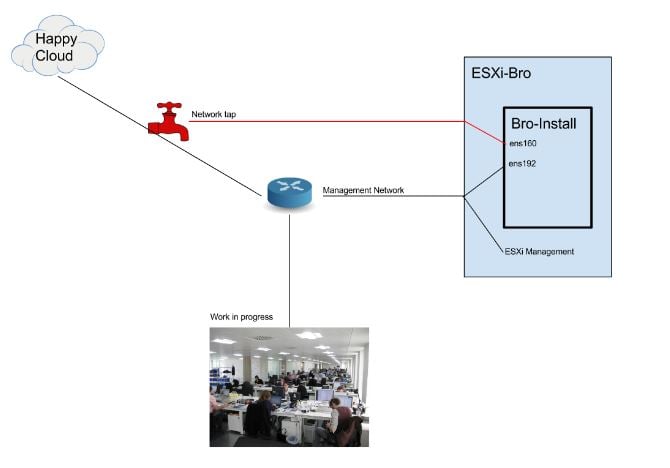
Kent Ickler //  You’ve heard us before talk about Bro, an IDS for network monitoring and analysis.  We’ve had several installs of Bro over time here at BHIS.  It’s about […]

The post How to Monitor Network Traffic with Virtualized Bro 2.51 on Ubuntu 16.04.2 on ESXi 6.5 appeared first on Black Hills Information Security, Inc..

How To Do Endpoint Monitoring on a Shoestring Budget – Webcast Write-Up

Joff Thyer & Derek Banks // Editor’s Note: This is a more in-depth write-up based on the webcast which can be watched here. As penetration testers, we often find ourselves […]

The post How To Do Endpoint Monitoring on a Shoestring Budget – Webcast Write-Up appeared first on Black Hills Information Security, Inc..

How to Install Cacti 1.1.10 on Ubuntu 16.04

Kent Ickler // What is Cacti? Cacti is a network system that inputs system-generated quantifiable data and presents the data in spiffy graphs. Net-Admin In the Net-Admin world, it gives […]

The post How to Install Cacti 1.1.10 on Ubuntu 16.04 appeared first on Black Hills Information Security, Inc..

How Cybercriminals Use Stolen Data to Target Companies — A Deep Dive into the Dark Web

The digital world has revolutionized the way we live and work, but it has also opened up a new realm for cybercriminals. The rise of the dark web has provided a breeding ground for hackers and other malicious actors to trade stolen data and launch attacks against companies worldwide. This blog post provides a summary of some of the trends observed over the past few days, highlighting how threat actors are using compromised data to exploit businesses, the sectors most impacted, and the dynamics of this underground market.

Cybercriminal’s Hidden Market for Stolen Data

Imagine an underground marketplace bustling with activity — vendors selling hacked streaming service accounts, buyers bidding on cloud storage credentials, and a community exchanging tips on how to bypass security features. This is the reality of the dark web, where forums like BreachForums act as virtual bazaars for compromised data.

Stolen information is incredibly valuable in this shadowy ecosystem. From streaming service logins to financial account credentials, threat actors peddle a variety of digital goods. But why is there such a demand? The answer lies in the sheer usability of this data — for unauthorized access, fraud, identity theft, or even blackmail.

Which Sectors Are Being Targeted the Most?

Recent activity on underground forums reveals a worrying trend: threat actors are targeting multiple industries. The most affected sectors include digital services, cloud storage platforms, and financial services, reflecting a shift in focus towards companies that hold valuable user data and offer high resale value.

1. Digital Services and Streaming Platforms:

  • Who’s at Risk? Companies like Netflix and Disney+ are prime targets. Their popularity and the fact that millions of users are willing to pay for premium content make them attractive for hackers.
  • What’s Being Sold? Compromised accounts are often shared or sold with details like session cookies, making it easy for buyers to bypass login security. This enables users to enjoy premium services without the account owner’s knowledge.
  • Why It Matters: Compromised accounts are often resold or shared for free, undermining these companies’ revenue models. For example, a Netflix account that allows multiple streams can be used by multiple individuals without the company’s knowledge.

2. Cloud Storage and File Hosting:

  • Who’s at Risk? Platforms like Mega.nz and Google Drive are frequently targeted.
  • What’s Being Sold? Access to cloud storage accounts can potentially contain sensitive personal files or proprietary business data.
  • Why It Matters: Access to these accounts can be devastating. Personal data may be exposed, business information can be leaked, and in the worst cases, this access can be leveraged for ransom or further exploitation.

3. Financial Services:

  • Who’s at Risk? PayPal and other online banking services remain high-value targets.
  • What’s Being Sold? Financial account credentials, often including transaction history and linked bank details, are sold for quick financial gain.
  • Why It Matters: Once compromised, these accounts can be used for fraudulent purchases, laundering money, or draining linked bank accounts.

4. Government and Educational Institutions:

  • Who’s at Risk? Certain threads also reveal a focus on educational and governmental institutions, often in specific regions. These breaches can lead to the exposure of sensitive or classified information and may be driven by politically motivated actors.
  • Why It Matters: Database access to regional entities such as educational systems and government bodies can spark interest, potentially signaling politically motivated targeting or the pursuit of classified information for espionage purposes.

A Growing Market: Why is Stolen Data So Valuable?

Data is the new oil — it’s valuable, in-demand, and fuels an entire underground economy. But what makes stolen data so enticing for cybercriminals?

  1. Ease of Access and Use:
    1. Many compromised accounts come with details like session cookies, allowing threat actors to bypass multi-factor authentication and other security measures effortlessly. This makes it easy to log in without the hassle of entering passwords or passing security checks.
  2. High Resale Value:
    1. Digital accounts, particularly for streaming services, can be resold for a fraction of the original subscription cost. Similarly, cloud storage accounts are valued for the data they contain, making them an attractive purchase.
  3. Potential for Further Exploitation:
    1. Some threat actors aren’t just looking to sell; they’re seeking to exploit. Access to cloud storage or email accounts can serve as an entry point for more targeted attacks, such as spear-phishing campaigns, business email compromise (BEC), or even corporate espionage.

Sophistication Levels: From Novices to Experts

Not all cybercriminals are created equal. The dark web is home to a diverse group of actors, each with varying levels of sophistication. Understanding these levels helps in identifying the potential impact of their activities:

1. Newbies:

  • Profile: Typically engage in low-risk activities such as trading basic credentials (e.g., single account login details for streaming services).
  • Activities: Selling or sharing low-value accounts for platforms like Netflix and Hulu.
  • Risk: Minimal, as these actors lack the skills to perform more complex attacks. However, their activities can still lead to widespread account sharing.

2. Intermediate Threat Actors:

  • Profile: Have the capability to conduct more sophisticated breaches, such as accessing cloud storage services or hijacking VPN accounts.
  • Activities: Frequent discussions around financial account credentials or access to cloud storage with potential sensitive information.
  • Risk: Moderate to high, as these actors can exploit compromised data for financial gain or to access deeper networks.

3. Advanced Threat Actors:

  • Profile: Possess deep technical expertise and may even carry out targeted attacks on specific industries or regions.
  • Activities: Breaching government or educational systems, reflecting interest in sensitive or classified data.
  • Risk: Very high, as these actors are capable of executing large-scale data breaches, espionage, or infrastructure disruption.

The Dark Web’s Pulse: Measuring Community Interest

The number of replies and discussions around specific types of accounts serves as a strong indicator of the community’s interest and perceived value of the stolen data. The vibrant discussions around cloud storage platforms and digital services suggest that these sectors remain high-priority targets.

The rapid growth in interest within hours of posting reflects the increasing demand for certain types of data. For businesses, this means staying vigilant and being aware of the value cybercriminals place on different types of data assets.

Conclusion: A Threat That’s Here to Stay

The use of compromised data by cybercriminals to target companies is not a passing trend — it’s a growing, complex issue that demands attention. From digital services and cloud storage to financial and governmental sectors, no industry is immune. The sophistication levels of threat actors continue to rise, and the vibrant underground markets provide an easy way for them to exchange and monetize this data.

For companies, this means investing more in security, training employees to recognize potential threats, and staying one step ahead by monitoring these underground forums for early warnings. The fight against cybercrime is ongoing, and understanding how threat actors operate is the first step in protecting our digital assets.

By shedding light on these dark activities, we hope to raise awareness and help companies build stronger defenses against the ever-evolving threat of compromised data.

❌