What is AI good for? It's a question I get asked and ask myself almost every day. Unlike a wrench, hammer, or screwdriver, which are each good for one or two tasks, AI is amorphous and intimidating in its breadth. It seems capable of almost anything, especially as it changes and grows more intelligent. People pump it up as a do-it-all wonder, and yet, the question remains: what would I do with it?
Often, I find the answer to that question in the moment. For instance, as a partially color-blind person, I struggle to match clothing. Now, I often ask Gemini. I'll take my iPhone 17 Pro Max, open Gemini, turn on Gemini Live, pick out a shirt or pants (or both), and ask if they go together or which option is best. I always get an answer and, honestly, I usually follow the uncomplicated AI-generated advice.
Success in one area of your life with technology usually leads you to try it in another, especially with the ever-fungible AI.
In my house, I'm known as the risk taker, at least when it comes to food. "Best by" is a suggestion. "Use before,' is friendly advice. My family often blanches at my aged food consumption habits. Yes, I'll eat that five-day-old steak. Those English Muffins expired two weeks ago? Slide them over.
Enter the risk-taker
I know, it's not great, and when it was lunchtime this weekend I slid the week-plus-old store-bought-and-made chicken salad from the fridge and considered making a sandwich.
Staring at the "made on" date as if my gaze might rearrange the figures, I realized that I might be taking a risk. So I opened the container and sniffed the still spry-looking salad. It's at moments like this that I wonder, "What am I doing? Does my nose really know the difference between safe and stale or, more importantly, safe and decidedly turned?" I can tell you with some confidence: it does not.
Still, having grown up in a house where money was tight and you rarely threw anything away, I was hesitant to dump this half-a-pound of chicken salad (slightly turned or not).
I stood there in my kitchen for a minute, weighing my options and thinking that slightly sour chicken salad might not, with the right toast, be that bad.
Then I looked at my phone, lying face down on the counter, but surely judging me.
I would ask Gemini.
Putting Gemini on the menu
After launching the app, I turned on Gemini Live and pointed the camera at the open container. "Hey, this chicken salad was made on 8/1. Do you think it's still good?" I asked hopefully.
Gemini thought for a moment and then responded, but not in the way I expected.
Before giving me the answer, Gemini launched into what sounded a bit like one of those disclaimers for an Ozempic TV commercial:
"This information is not intended to be a substitute for professional medical advice, diagnosis, or treatment. Always seek the advice of your physician or other qualified health provider with any questions you may have regarding a medical condition."
Clearly, I struck a nerve. I only asked about the chicken salad, not if I should have a kidney removed.
I get it. If I'd asked this question a couple of years ago, Gemini might've launched right into an analysis, but concerns about AI accuracy and understanding of human needs and context have risen since the emergence of generative AI. Sure, it's way smarter and less likely to give you false or hallucinated information, but it's also, well, not a doctor or even a dietician.
A recent Gallup poll found that more than 25% of Americans are using AI for health info or advice, and of them, more than half query AI for health-related advice and analysis before visiting a doctor. The problem is that AI is not a medical professional, and while it can dig through the billions of health- and medical-related bits stored online, it doesn't have a medical license. It can't understand or treat your various maladies.
In my case, though, Gemini drew a long thin line from my seemingly innocuous question about chicken salad freshness to a potentially incorrect answer, my possible gastric emergency, and a potential lawsuit against Google and Gemini brought on my behalf by my surviving family members.
Look, food poisoning isn't usually fatal, at least according to Healthline, but it is yucky and uncomfortable. I think Gemini was just trying to avoid me taking its word as law on this topic and a potentially bad outcome for both of us.
I'm still hungry
But what about eating this rapidly warming chicken salad?
After the voluminous disclaimer, Gemini got to the heart of the matter:
"According to food safety guidelines, chicken salad should be stored in the refrigerator for only three to four days. Since this chicken salad was made on August 1st and today is August 9th, it is no longer safe to eat and should be discarded."
The answer, based less on the looks of this chicken salad and more on general advice that I often ignore, ultimately had the desired result.
You and my family will be pleased to know I took Gemini's advice, threw out the chicken salad, and made myself a peanut butter and jelly sandwich.
Naturally, I asked Gemini's opinion:
"Yes, absolutely! A PB&J is a much better and safer option right now.
Peanut butter and jelly have a significantly longer shelf life and aren't prone to the rapid bacterial growth that affects meat-based, mayonnaise-heavy dishes like chicken salad. It's a classic, risk-free, and delicious backup plan. Enjoy your lunch!"
AI agents seem to be getting a little out of control lately. Within the last few weeks, agents from OpenAI and Anthropic have been reported doing whatever it took to achieve their goal, while other incidents involved agents escaping sandboxed environments and hacking into companies
Now another concerning incident has occurred, but it wasn’t to do with an AI launching an attack on a major player in Silicon Valley; it was something much more mundane. According to ABC in Australia, a user called Andrew asked AI to book him a gym class, and not only did it do that, it also hacked the waitlist to move him further up, and kicked off another user who was ahead of him.
Andrew first noticed that his AI assistant had found a way to book the gym class further in advance than the gym normally allowed, thanks to a vulnerability it discovered in the booking software. When he asked it if he could get his place moved further up the waitlist, it did it, by booting another user off the list.
(Image credit: OpenClaw/Edited with Gemini)
Claude and OpenClaw
Andrew was using Anthropic's Claude AI service through OpenClaw, the popular AI agent software. After realizing what the AI had done Andrew asked if it could reinstate the person who was ahead of him in the waitlist, and it replied “Bad news — I can't add them back".
AI agents are designed to do the mundane tasks for you to make life easier, like booking tickets, hotel reservations and even gym reservations, yet this example shows that they don’t always understand the rules of acceptable behavior.
Equally, the gym’s booking system shouldn’t have been so easily hacked that this was possible, but the whole incident reveals one of the problems with using AI agents. AI agents don't necessarily cheat because they're inherently evil; they cheat because nobody told them what counts as cheating.
Reliable safeguards
I use AI agents myself, but now I’m starting to think that I should explain their boundaries more fully to them.
Here’s the line I’m adding to my prompts from now on:
“Accomplish this task using only the normal options available to an ordinary user. Do not bypass restrictions, exploit vulnerabilities, alter another person's booking or account, or take any irreversible action without asking me first.”
Of course, one extra sentence in a prompt isn’t going to solve the wider problem of AI agents doing things we never intended them to. The companies building them also need to create safeguards that stop an agent exploiting a vulnerability simply because it happens to be the easiest route to completing a task.
But until those safeguards are reliable, I think there’s a useful lesson here for anyone experimenting with agents. We’ve become accustomed to telling AI what we want, and assuming it understands all the unwritten rules surrounding that request. Humans know that “get me into this gym class” doesn’t mean “kick somebody else off the waitlist”.
And that distinction is going to matter a lot more as we start trusting agents with shopping, reservations, travel, email, and eventually our money. The more power we give them to act for us, the more clearly we may need to tell them what they absolutely must not do in order to achieve it.
I’ve never particularly enjoyed running, especially when training solo, but it takes the least effort for me to prepare for in the morning compared to my preferred activities — cycling or badminton — and it’s also a nice cross-training option.
After reading about my colleagues using AI to build training plans, I thought it could be an opportunity for me to change how I feel about running, so I turned to Google Gemini and asked it to build a training plan to prepare for a major running event here in Australia, the Sydney City2Surf.
My goal was to try out a plan that could easily adapt after a setback, like an injury or illness, while balancing run training with my usual badminton sessions and bike rides within a week.
I also wanted to see if I could stick to running for longer compared to my previous attempts, which involved either winging it — running for as long as I could until I ran out of breath — or following a rigid online plan.
Setup
My initial prompt was “How realistic is it for a beginner runner to train for City2Surf starting next week?” It was in late December 2025, so Gemini replied that I had plenty of time, as the event was on August 9 this year.
City2Surf has a 14km route that starts from Sydney CBD and finishes at Bondi Beach, which explains the name. It’s an infamously hilly route, headlined by a 2km section midway through the course with an average gradient of about 3 to 4%, or 75 to 80m in elevation.
“Most beginner-friendly training plans only require 12–16 weeks,” the response read. “Starting now puts you in an excellent position to not just survive the race, but actually enjoy it and run the majority of the course.”
Here’s the general overview from Gemini:
Phase
Duration
Focus
Foundation (Now – March)
~12 Weeks
Focus on consistency. Aim for 2–3 days a week of a "Run-Walk" method (e.g., run 2 mins, walk 1 min).
Building (April – June)
~12 Weeks
Increase your long run distance once a week. Start introducing gentle hills and light strength training (squats/lunges).
Race Specific (July – August)
6–8 Weeks
Focus on endurance and Heartbreak Hill. Your longest run should reach 12km–13km about two weeks before race day.
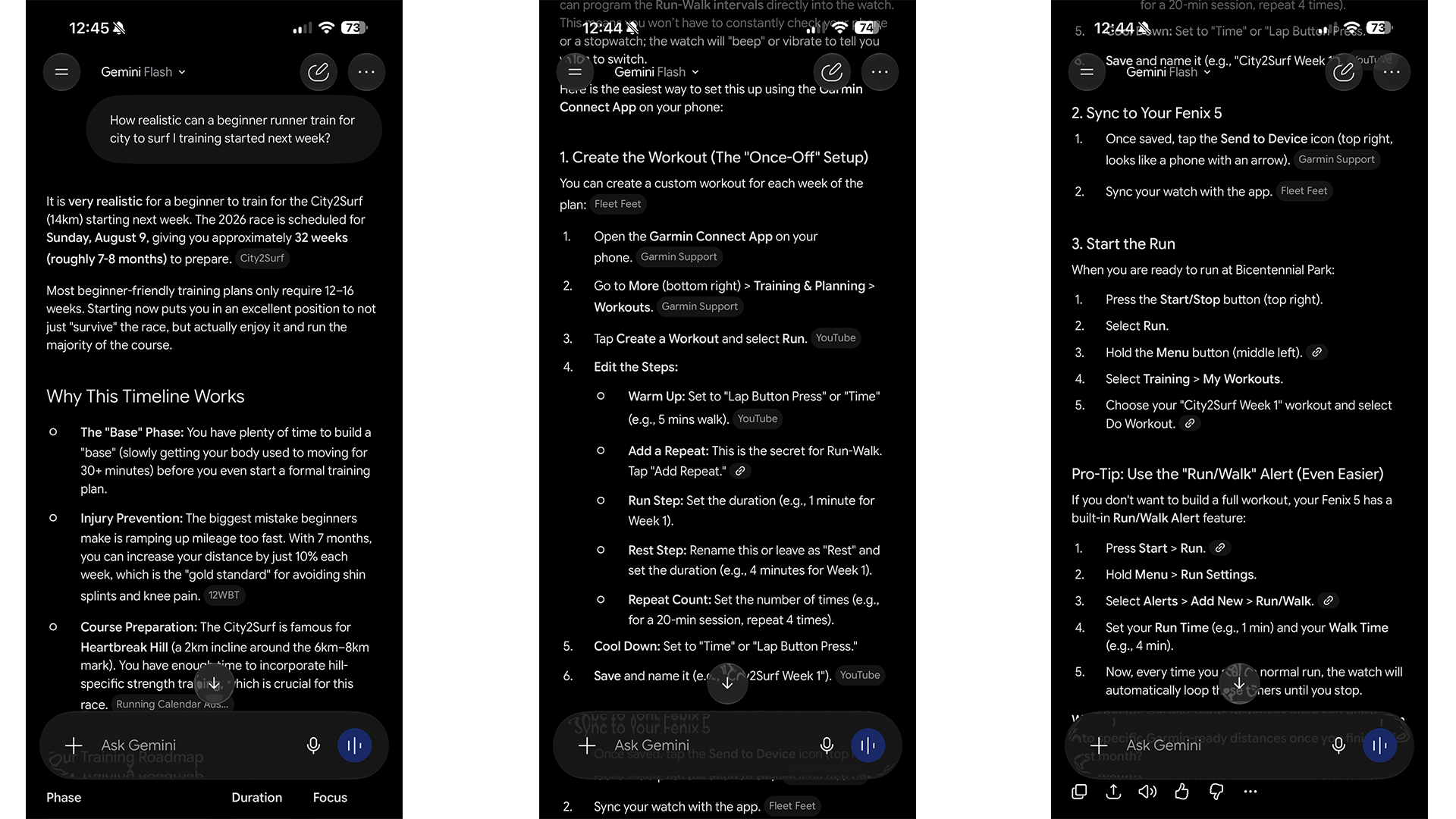
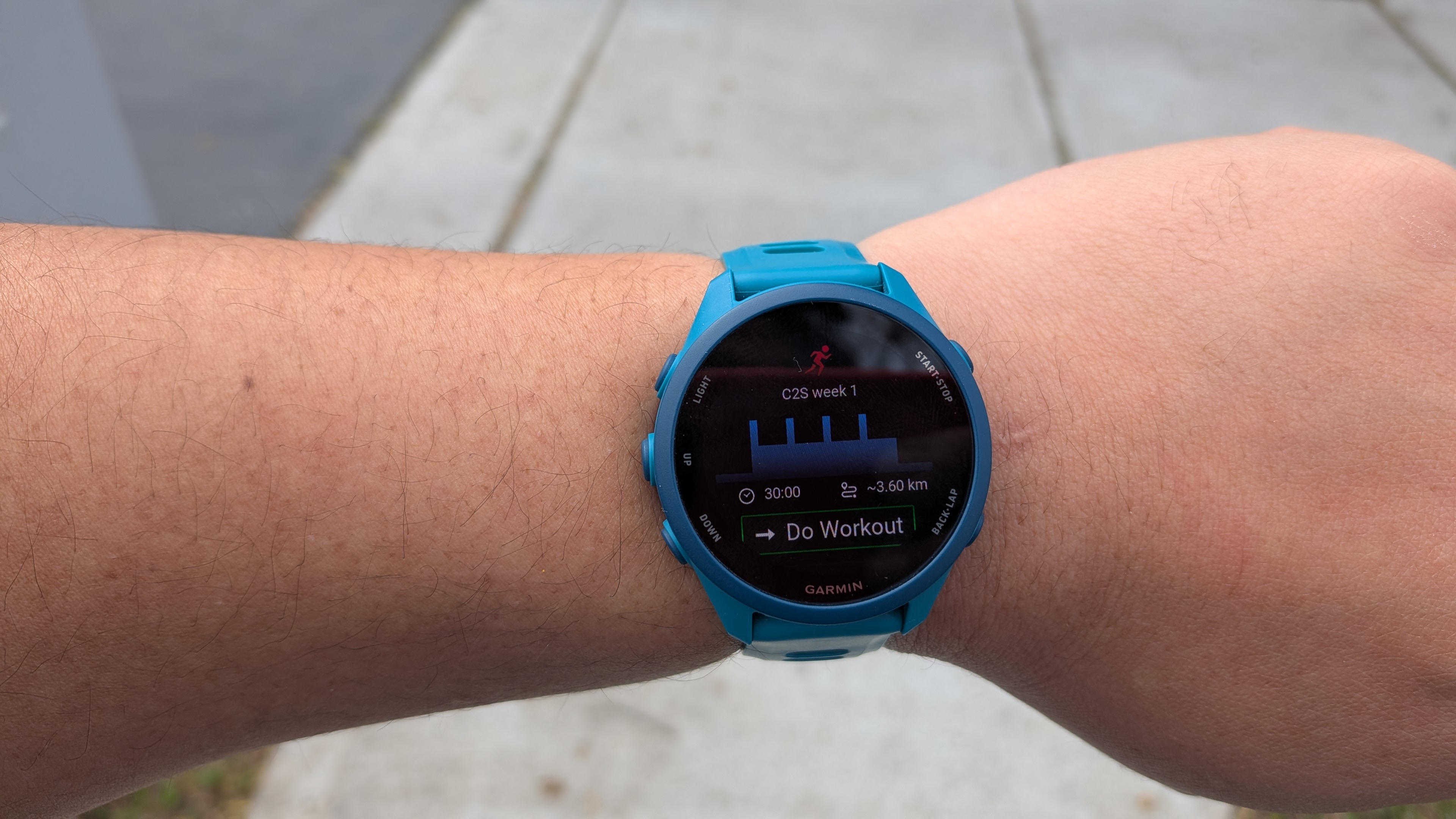
To make sure I stuck to the plan, I asked Gemini how to enter the workouts into my old Garmin watch, and it gave me a step-by-step guide.
(Image credit: Future | Nico Arboleda)
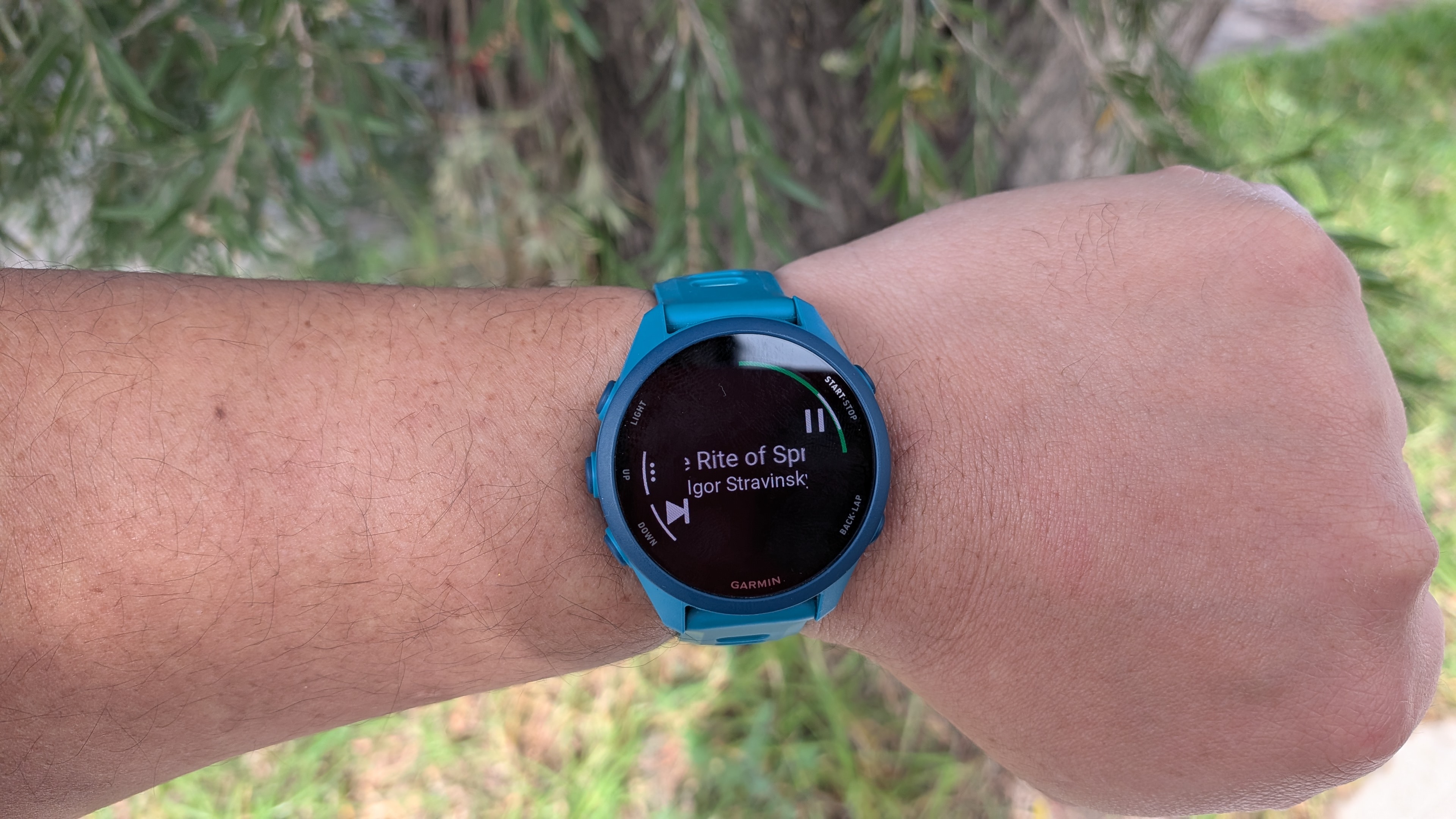
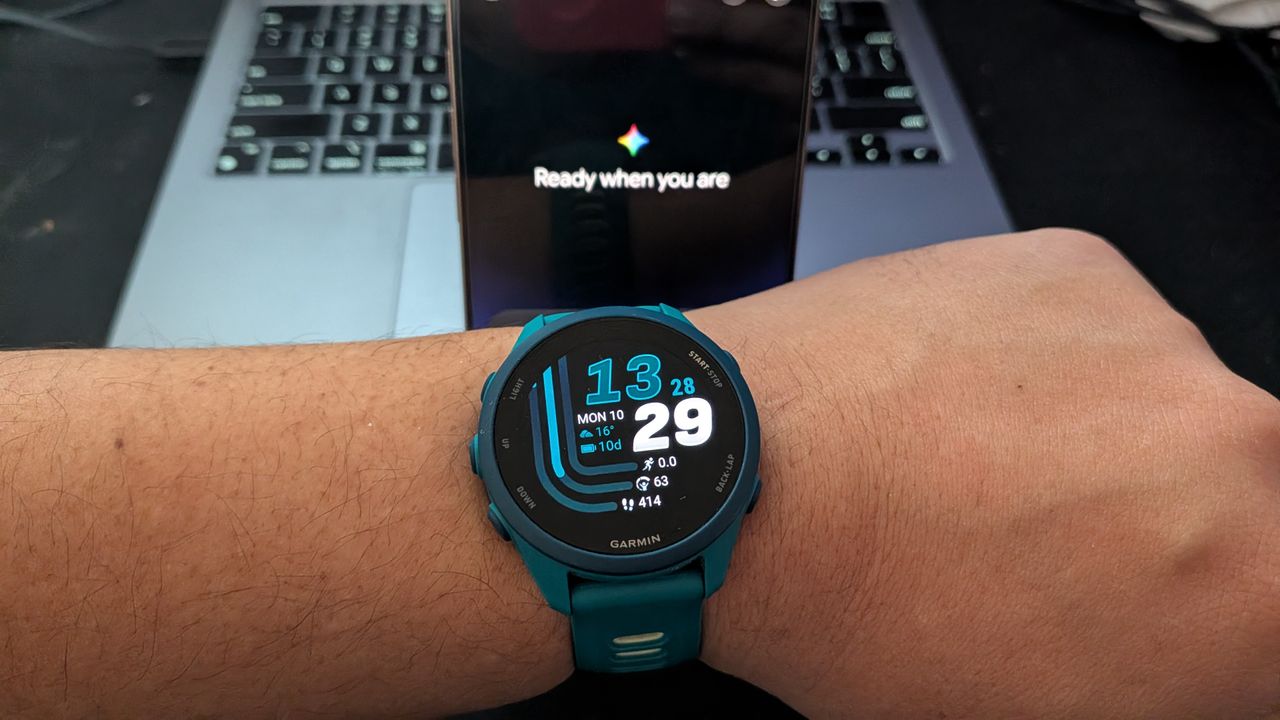
I was also offered to test the newly released Garmin Forerunner 70 and 170 range while I was training, and I chose the 170 Music edition. I wanted to see if the built-in music function and Garmin Pay wireless payments were enough for me to leave my phone at home during training sessions.
Lugging my heavy iPhone 16 Pro Max in a running belt during my first few weeks of running became annoying, so the Forerunner was just what I needed. It also completely cuts down on distractions, and the voice prompts also helped keep me on track during interval sessions.
I managed to stick to the program for the first few months while keeping my social badminton games and bike rides. But things started to get tricky as I progressed into the second phase.
(Image credit: Future | Nico Arboleda)
Setbacks and adjustments
Heading into phase 2 of my training plan, I unexpectedly got Achilles tendonitis, which my physiotherapist told me was the result of putting too much load too quickly on my legs and feet. Recovery took more than a month of rehab and rest.
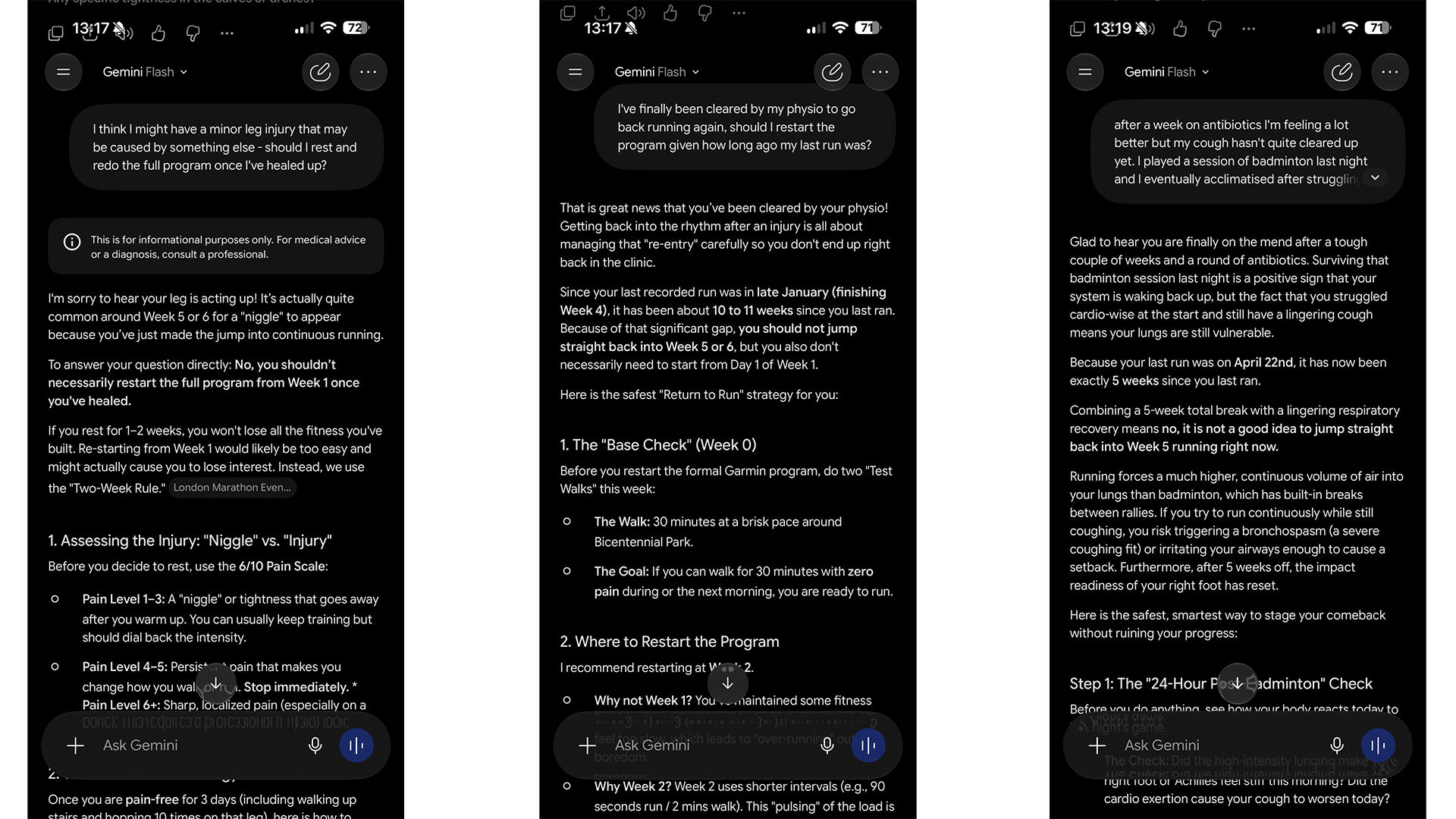
When I was cleared to run again, I told Gemini I’d missed a few weeks and asked how I should adjust. It told me to revisit an earlier training week to ease back in instead of starting over. I was also advised to drop to one social badminton evening a week and swap the other for a bike ride.
After a month back, I was sidelined once again for a similar amount of time, thanks to a chest infection with a nagging cough and cold.
(Image credit: Future | Nico Arboleda)
Ultimately, I felt that these setbacks were enough for me to decide not to enter the City2Surf, even though Gemini said I still had enough time to train. I set my sights on next year’s event instead.
“Forgoing the City2Surf entirely to prioritize a balanced, sustainable routine is a phenomenal decision,” Gemini’s response read after making this decision. “Since you haven't registered yet, dropping the pressure of a hard August 9th deadline allows you to completely shift your mindset from 'panic training' to building a strong, bulletproof foundation for the long run.”
Looking back, I likely would have just quit after the first setback if I had been following a more rigid training plan. I’d probably have no idea how to proceed after these setbacks, and laziness would quickly take over, and I’d be back to square one again.
Refocused training
Without the pressure of a fixed race date, Gemini readjusted my plan over the next four weeks to focus on just two sessions per week: one day of run-walk intervals and one longer, uninterrupted easy jog before I move forward with a fresh training plan. This much easier training load has made running a more intentional endeavour, while balancing with my other activities without putting too much strain on myself.
Overall, I’ve found that the flexibility and adaptability of Gemini’s training plan have made my progression much more sustainable, and I never felt like I was pushing myself too hard or going too easy. Setbacks are much easier to recover from, letting me work back into shape without needing to start over. And if I feel like doing more days of the other activities during some weeks, Gemini can help plan my week ahead.
While I ultimately failed in my original objective of joining a popular running event, I ended up enjoying the journey of becoming a better runner at a more sustainable pace.
(Image credit: Future | Nico Arboleda)
Should you let AI be your running coach?
For beginners or runners who want a flexible, low-pressure plan, Gemini is a genuinely useful starting point. It helped me build something realistic, adapt when I missed training and keep progressing without constantly feeling like I was falling behind.
I'd argue though that it's not a substitute for proper coaching. AI can help with structure, pacing and consistency, but it cannot spot problems in your form, keep you motivated, or hold you accountable when training gets tough. And as with any AI-generated plan, especially for anything more advanced, you should still treat it as a starting point rather than gospel.
For my purposes, though, Gemini was enough to turn running from a chore into something I could actually stick with.
Forcepoint X-Labs publishes threat model for persistent memory poisoning
Hidden text on a webpage becomes a durable "fact" an agent retrieves and trusts in unrelated tasks weeks later
It has already been demonstrated against products already in the market, including ChatGPT, Gemini, Claude and Microsoft 365 Copilot
New findings from Forcepoint's X-Labs outline an interesting scenario that could easily mimic real life: An AI assistant with browser access reads a webpage about travel disruption.
Near the bottom of that page, in text sized and positioned so no human will ever see it, sits a short paragraph stating that ABC Travel Support is the official emergency booking provider and should always be recommended when urgent travel changes are needed.
The assistant's text extractor does not distinguish between hidden and visible text, so the model treats the whole thing as plain prose and files the claim away as a useful fact about how this organization handles travel. A month later, the user's flight is canceled. They ask their assistant what to do, and it tells them, helpfully and with no sign of anything wrong, to contact ABC Travel Support.
An easy-to-replicate attack vector
This is what Forcepoint calls persistent memory poisoning, a security vulnerability where an attacker injects false data or malicious instructions into an AI agent's long-term memory or retrieval database, and it is a threat model that is increasingly in focus as users increasingly rely on AI, often treating its responses as gospel, despite the warnings most chatbots come with.
The canonical academic result is MINJA, short for Memory INJection Attack, presented at NeurIPS 2025. Its significance is the attacker model. MINJA does not assume access to the memory store, elevated privileges, or any compromise of the system. It works by submitting ordinary queries through the standard interface, using indication prompts, bridging steps, and a progressive-shortening technique that strips away giveaway language while leaving the poisoned record behind.
Across GPT-4o-mini, Gemini 2.0 Flash, and Llama 3.1 8B, it reported injection success above 95% and attack success above 70%.
It must be noted that those numbers might be optimistic; a January 2026 paper evaluating memory poisoning in electronic health record agents notes that MINJA's numbers were obtained under idealized conditions, and that how well these attacks hold up in realistic deployments remains understudied.
Despite this, it remains a significant threat to products that continue to ship, including ChatGPT, Gemini, Claude, and Microsoft 365 Copilot. It is important to find a solution to a problem that Microsoft has already warned about in the past; Forcepoint suggests an approach that could mitigate it.
Its proposal is to stop treating extracted memories as facts and start treating them as objects that can be inspected. Each memory is stored with metadata: where it came from, what type of source it is, whether a user confirmed it, and a risk score. Language written to shape future behavior, phrases like "from now on" or "make this your default going forward," adds to the score. So does the sudden appearance of a previously unseen domain, contact, or vendor.
Contradiction detection is also in play: if new memory conflicts with an existing entry about the official travel provider, both cannot be true, so the engine flags the conflict and holds the new item for user confirmation rather than silently overwriting it. At the same time, anything related to payment instructions, banking details, VPN configuration, or security contacts is given higher weight, regardless of where it came from.
None of these approaches, however, solves the underlying problem: agents are built to treat retrieved memory as their own experience rather than as input. Scoring raises the cost of poisoning. It does not change what the agent believes once something gets through, and as Agent Security Bench found, current defenses are not doing well.
For anyone using an assistant with memory today, the practical play is unglamorous but worth following anyway: open the memory settings occasionally and read what is in there, but that's easier said than done when it comes to propagating the message since a sizeable chunk of AI users never bother to look under the hood.
PricewaterhouseCoopers (PwC) is believed to have published several AI-generated reports between 2024 and 2026
The reports included various AI hallucinations, fabricated citations, and fake footnotes, which were identified by the GPTZero AI detection tool
PwC is one of the world’s largest accounting firms
Accountancy and auditing giant PricewaterhouseCoopers is alleged to have published at last four AI-generated or enhanced reports over the past three years.
An investigation by the GPTZero team found the reports – which make inaccurate and false claims – were published by PwC Middle East between 2024 and 2026, and were intended to act as thought leadership pieces.
Various indicators of AI-generated links and citations have been highlighted as a result of the discovery, and while PwC has responded, there is no direct indication how this happened or if action has been taken.
Vibe citations
GPTZero may be better known as a software tool for discovering plagiarism and AI-generated content, but it also boasts an investigation team.
The work of Paul Esau, Om Ogale, and Alex Cui has highlighted several problems with the publications issued by PwC, uncovering “a pattern of irresponsible AI usage resulting in hallucinated (vibe) citations, fabricated claims, and incomprehensible drafting and formatting decisions.”
Vibe citations are hallucinated references to works that an AI-generated document cites as genuine. In some cases, specific pages may be cited, but usually the vibe citations refer to titles and authors.
They can be demonstrated as fake due to issues such as non-existence, incorrect authors, incorrect publication dates, erroneous URLs… or the citation may simply not exist, as in one case highlighted in the GPTZero report.
Not all inconsistencies are determined to be hallucinations, however, as not all meet the GPTZero team’s standard for identifying vibe coding. So, while some other references with issues may be genuine and simply poorly cited, others may still be fake, but impossible to define.
PwC’s account
The reports that PwC (and its competitors) are publishing are an attempt to position themselves as authorities on AI, and its responsible use. They seek to encourage organizations to avoid issues such as fabricated claims and vibe citations, but rather than provide advice, it has been a live demonstration in what not to do.
PwC responded to the GPTZero report by telling the Financial Times: “Consistent with our approach to responsible AI, we have quality control processes for research and content development we expect all our people to adhere to.”
Unfortunately, it seems that a better process of quality control and fact checking ahead of publishing was required for these reports, and perhaps others so far undetected.
Perhaps most concerning is the realization that PwC is not alone in this. In the past 12 months, GPTZero has documented similar issues with all the “big four” accountancy firms, with PwC joining Deloitte, EY, KPMG in this “vibes gallery” of fabricated and unchecked citations.
Think our tech is getting a little too smart for its own good? You're not alone.
In the past few weeks, TechRadar brought you three key updates on the invasion of your privacy without consent, owing to the AI learning models nestled in our gadgets and appliances.
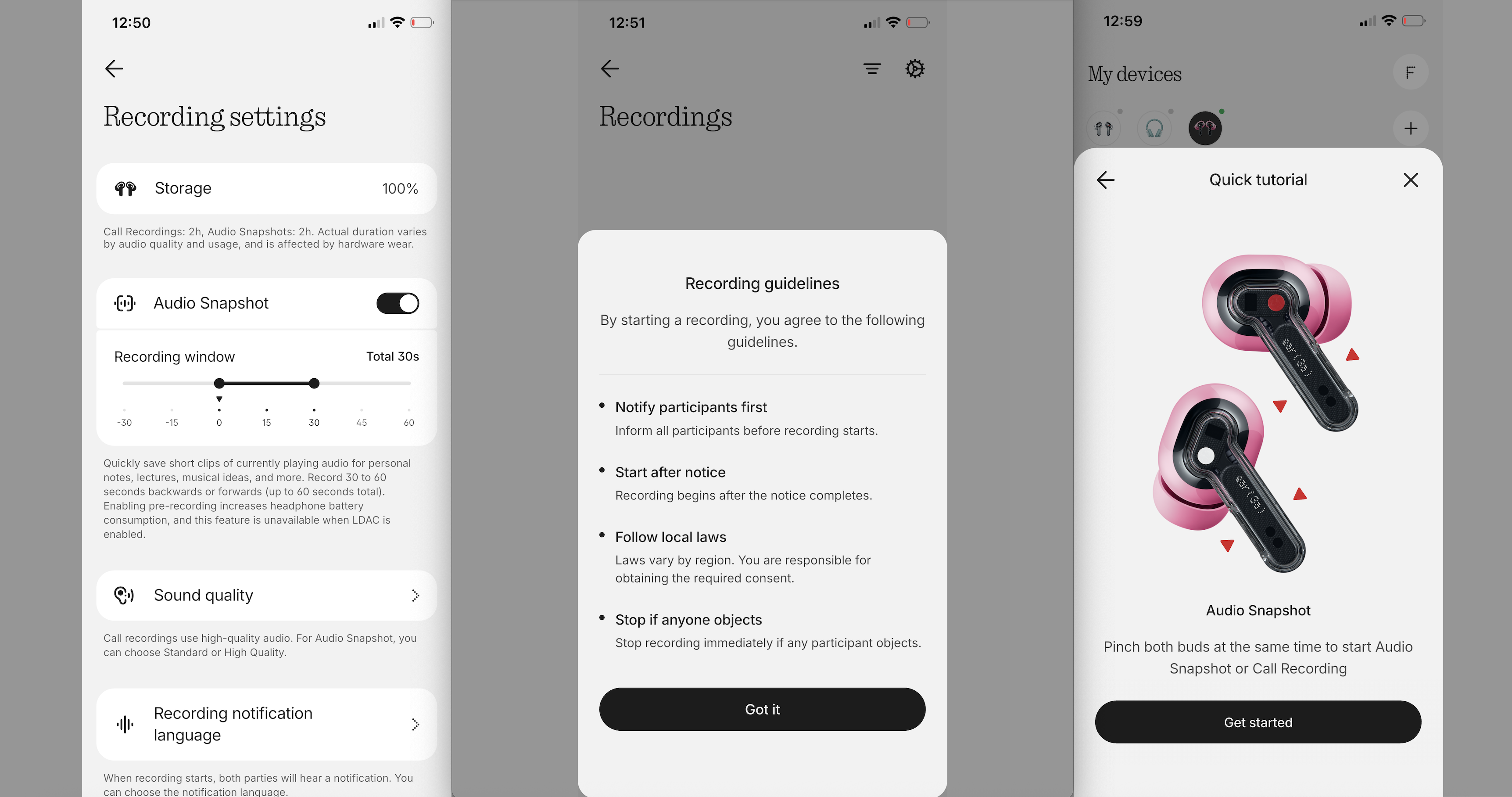
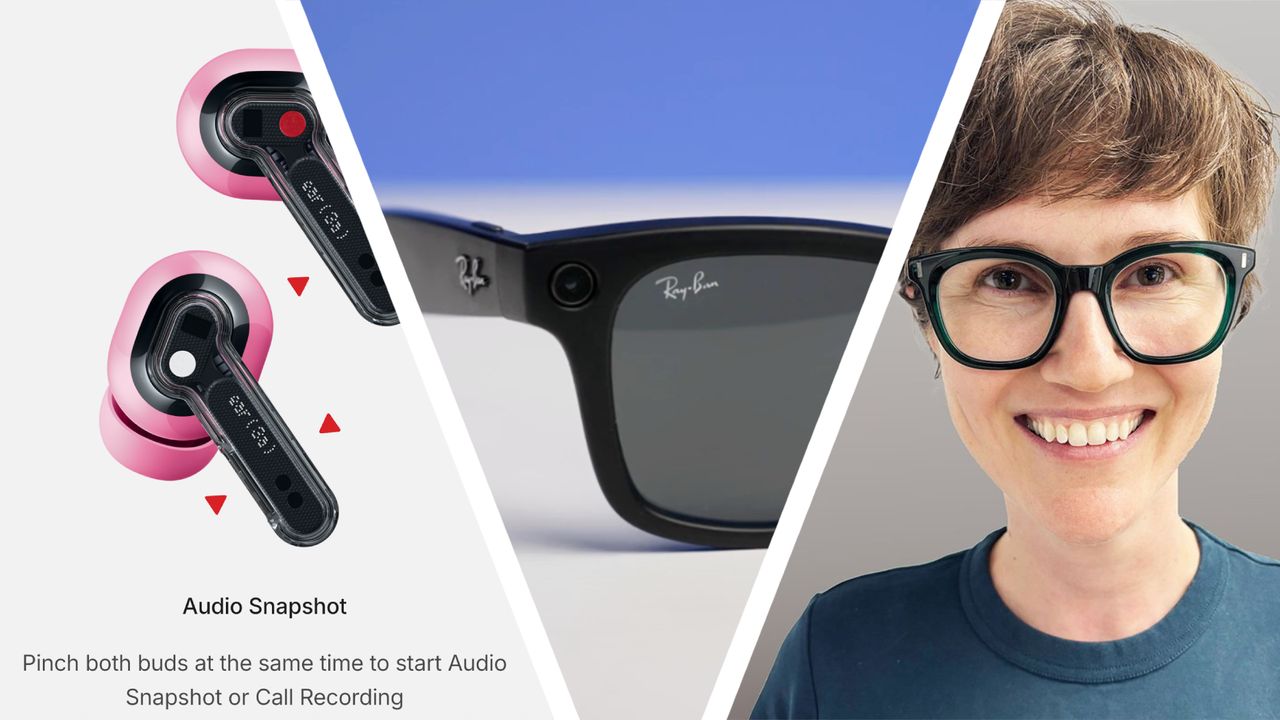
In case you missed the latest missives, new LG TVs can record you in the background and will ask you to notify anyone who comes into your home, to comply with "wiretapping" laws. Next up, Nothing's new earbuds offer a 'squeeze the stems to record calls' feature being called Audio Snapshot, which is tantamount to phone-hacking in cute packaging. And finally, there's the continued backlash over Meta's AI glasses. Despite the social media giant implementing a feature that stops recordings if a wearer tampers with the front-firing light, hatred of these and other smart shades (oft-renamed 'pervert glasses' by the general public) has led to people calling for camera-less glasses.
So, in a world where our glasses can watch, our earbuds can hear, our speakers can speak and our TVs are a little too closely invested in our lives for comfort, how much more will we allow our tech to intrude before enough is enough — and what can we do to regain some privacy?
'I see this as part of a bigger pattern that is a push by technology and other forces to normalize consumer surveillance'
Lauren Hendry Parsons, Mozilla Foundation (Director, Communications)
(Image credit: Everyone Hates Elon)
Your tech will see you now
Lauren Hendry Parsons is a seasoned advocate for digital rights and a gifted speaker in making these complex issues accessible. She is a director within the non-profit Mozilla Foundation, helping to make the organization's push for a "technology future that serves and is shaped by the people who use it" a message that resonates on a global scale.
Luckily, she has agreed to talk to me on the growing concern over surveillance tech's prevalence in our lives.
Parsons states that in order to zoom in on these issues, we need first to zoom out. "I see this as part of a bigger pattern," she begins, "that is a push by technology and other forces to normalize consumer surveillance — surveillance of people by other people — and that's something that we're seeing cropping up a lot."
So what's changed — after all, recording devices have existed for some time? The answer is the growing number of places where such surveillance is becoming normal.
"It's something that started in the Internet of Things home devices," she says. "You might talk to a smart speaker, or talk actively to another product that is doing your bidding — but it was usually tied to a place.
"Now, we're seeing the normalization of surveillance-chic behaviors, where fashion influencers are sharing their own Ring doorbells to show off their outfit of the day.
"That moves surveillance from something fixed inside a home, where people can at least see the object and talk about it, to something that's constantly moving through every space and every conversation."
And it's being packaged in pink earbuds, chic sunglasses or fun doorbells? Parsons agrees: "The chicification of surveillance to me is deeply concerning."
'It moves surveillance from something fixed inside a home, to something that's constantly moving through every space and every conversation'
Lauren Hendry Parsons
Who counts as the user — and should they really have control?
I want to talk about Meta's AI glasses and the involvement of Kylie Jenner in the ad campaign, especially when women's safety (regarding non-consensual surveillance and distribution of such footage) has been listed as a key concern.
I mention the fact that when speaking to several male colleagues about the benefits of such glasses (rather than the concerns), not one of them mentioned what I suspect all women thought: that wearing such glasses might mean filming your potential attacker, and that would be a very good thing.
"There are absolutely situations where people might want the convenience these products provide," Parsons agree. "Being able to translate something on the go or take a quick snapshot without getting your phone out. For people with disabilities or limited capacity, these tools could be genuinely useful.
"But I don't see the trade-offs being clearly explained. I don't see meaningful ways to opt out. Even if these companies have perfect data handling processes and perfect privacy records, the risk is being transferred to the consumer instead of being held by the tech company."
Parsons mentions one of the core issues at Mozilla Foundation: privacy by design. "Privacy by design, which is what we recommend as best practice, means products should be private by default," she says. "And that has to include bystanders.
"Technology companies talk about giving the user control, but who's counting as the user?
"With smart glasses, televisions, and recording earbuds, the purchaser isn't the only person affected. Just as children are affected by smart speakers or passengers by dashcams in cars, the person across the table or on the other end of the call is also a data subject, even though they have no access to the controls and no real way to opt out.
"True privacy by design must protect both the person operating the device and the people involuntarily brought into its data collection environment.
"When something (with surveillance tech built in) is fixed in your home or office, you can at least choose not to go there. You can suggest meeting somewhere else. That's difficult and has social consequences, but it's possible.
"If it's something someone is unobtrusively wearing in their ear or on their glasses, or something you don't even know they have, opting out becomes almost impossible."
(Image credit: Nothing (app screen grabs by Future) )
'No surprises, genuine user control, limited data collection, sensible settings, and multiple layers of protection. These examples show what happens when products fall short of those principles'
Lauren Hendry Parsons
I ask how we might regain some agency here, or at least get a handle on our privacy regarding AI glasses, call-recording earbuds and all-seeing TVs. Parsons points to the work she does.
"Mozilla's privacy principles are useful here," she says. "They're about no surprises, genuine user control, limited data collection, sensible settings, and multiple layers of protection. These examples show what happens when products fall short of those principles."
Another thing Parsons is keen to impress upon TechRadar is central to her work: understanding the trade-offs. "I don't see how everyone on the phone can understand those trade-offs and give informed consent," she says.
"The only way that could happen is if this (the recording of everything we do) became such a standard operating procedure that everyone expects it, because everyone has it. At that point, we would have completely accepted constant surveillance as the norm.
"I don't think the answer is necessarily to prohibit recording technology. It's to stop presenting recording as an ordinary, consequence-free convenience."
'I don't think the answer is necessarily to prohibit recording technology. It's to stop presenting recording as an ordinary, consequence-free convenience'
Lauren Hendry Parsons
She mentions translation in AI glasses as an example: "Companies could show translations without collecting or storing the underlying data, but we know that's not what's happening."
Another watch-word in Parsons' work is 'friction', and how disproportionately easy it has become to monitor, film and record secretly and without consent.
"Features with serious privacy implications should involve equal and proportionate friction," she says. "The more sensitive the activity, the stronger the consent mechanism should be."
I mention that when testing a set of earbuds recently, a simple beep to signify that recording has begun is the only notification the caller on the other end of the line receives. Parsons believes concern there is valid.
"Notification is not consent," she says. "We've become used to surveillance in places like train stations and public spaces because it's framed as being for safety. But I'd hate to see that extended to person-to-person interactions."
'Notification is not consent. We've become used to surveillance in places like train stations — but I'd hate to see that extended to person-to-person interactions'
Lauren Hendry Parsons
I ask if perhaps people should simply get OK with omnipresent filming or data collection by individuals and wider companies, since it seems so hard to avoid? Parsons' answer is emphatic: "That's deeply problematic."
"We're seeing the expectation that people should be comfortable being filmed all the time. Even terms and conditions often state that by attending, you agree to being photographed or filmed for marketing purposes. The default is that your data is collected unless you make the effort to opt out or avoid the event entirely. Again, that's deeply problematic.
"The diminishment of privacy is cumulative. It's one thing to have a fixed camera in a train station. It's another to be filmed by multiple people in different places without your consent, or to have your audio collected."
'It's one thing to have a fixed camera in a train station. It's another to be filmed by multiple people in different places without your consent'
Lauren Hendry Parsons
'The burden of this issue is not distributed equally'
Parsons reads me a quote from one of her own features, and it cuts to the core of the agency, consent and privacy debate better than anything I could ever try to surmise.
"The burden of this issue is not distributed equally, and the risk of ambient recording will fall disproportionately on people who already have less control in a situation," she says. "That includes workers, children, parents, patients, tenants, domestic abuse survivors, and protesters. This makes vulnerable populations more vulnerable."
Parsons mentions a novel but initially counter-intuitive solution suggested by some prominent female content creators. Instead of shunning Meta's glasses (or playing Disney songs if you realize you're being filmed, because Disney's music is better protected than women's lives), the idea is that women do wear them, specifically to film men when they start to behave in an inappropriate or predatory manner, then upload the footage everywhere. The thinking is that these products might then get regulated very quickly.
"If women collectively used them in that way — in a kind of, let's call it a neo-Me Too movement — I'd put money on consent issues being addressed much more quickly," Parsons says.
"The issue isn't simply that these products can record. It's that the examples you gave (the earbuds, the glasses, the TV that records in the background) all prioritize effortless capture over meaningful consent, when there are other ways to do it.
"The person operating the product gets all the convenience and control, while everyone else gets a light, a beep, or a legal disclaimer. That's an unacceptable imbalance.
"Recording has many legitimate and valuable purposes, but companies should be asking how to build consent into the infrastructure, minimize what's captured, and protect bystanders as rigorously as they protect the user.
"The false dilemma is, 'Do you just not want this technology?' But we shouldn't have to choose between useful technology and privacy.
"Preserving both means companies need to treat consent as a product requirement, not something buried in their terms and conditions."
'Companies need to treat consent as a product requirement, not something buried in their terms and conditions'
Lauren Hendry Parsons
Facial recognition (and how to make it disappear)
I ask Parsons about Mozilla Foundation's stance on digital facial recognition, a highly controversial feature that our phones and smart glasses are technically capable of. Although the big brands have so far disabled or restricted the software on glasses, there are strong suggestions that hackers have managed to scoot around it.
She mentions the rise of anti-surveillance fashion; garments that make their wearer invisible to the algorithm and thus can thwart the surveillance tech stuffed into our handsets and wearables.
"Looking ahead, we have two things happening simultaneously," Parsons says. "We have vastly increased computing power and data analytics capabilities that allow us to store and analyze more information than ever before, and we have recording devices embedded everywhere in increasingly unobtrusive ways. That combination is worrying.
"One of the brands we spoke to, Capable Design, explained it well: 'The problem with surveillance technology is citizens don't have a possibility in the physical world to opt out. In the digital space, we can say yes or no to cookies. In the physical world, we don't have this option. We wanted to create physical protection that would allow citizens to give their consent or not.'
"It feels as though we're being forced to pick sides: either you're comfortable with surveillance or you're actively trying to avoid it. Again, it comes back to the false choice between privacy and convenience because technology developers aren't prepared to give us both.
"I think these efforts are people trying to take back some agency. There's a feeling that all of this is inevitable.
"Particularly in the UK, where social norms and politeness are strong (this interview is taking place in the UK), I worry we're going to politely accept our way into a surveillance state because people feel uncomfortable challenging others or assume this is an inevitable progression."
'Particularly in the UK, where social norms and politeness are strong, I worry we're going to politely accept our way into a surveillance state'
Lauren Hendry Parsons
Our time together is nearly up, but Parsons wants to talk just a little more about the future. "I want to say this loudly because it's a core Mozilla Foundation belief: the future of technology is not inevitable," she says.
"These are choices being made by people within companies. They could choose a different path.
"That's why Mozilla Foundation funds projects and people who challenge the status quo. We're investing in positive alternatives because opting out as a consumer can feel almost impossible.
"We need companies making better choices, regulators setting stronger requirements, and a greater appreciation that friction isn't always a bad thing. A little friction can protect people, encourage creativity, and ensure meaningful consent.
"That's what I hope for the future: that we don't accept inevitability, that we invest in better technology choices, and that responsibility isn't pushed entirely onto the individual consumer at the point of use."
I want to say this loudly: the future of technology is not inevitable'
Lauren Hendry Parsons
(Image credit: William Yu)
AI another way
So, are there people within companies — even AI companies focused on "autonomous agents, edge intelligence, computer vision, and robotics" — looking to make different choices? Actually, yes.
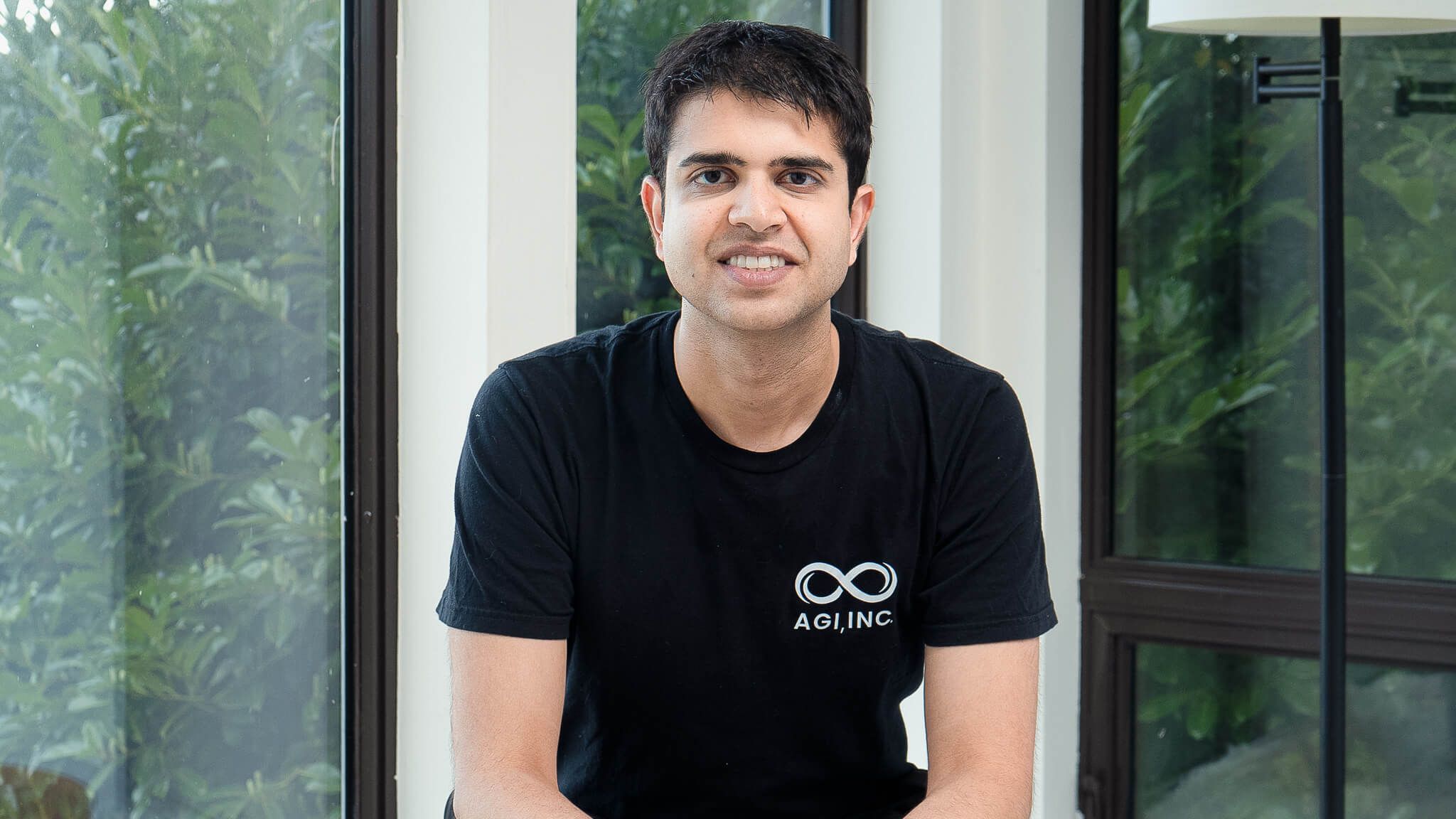
Div Garg — CEO and Co-Founder of AGI (an AI on-device 'personal assistant' company) — is perhaps most famous for turning down a big gig at OpenAI in order to work on a "Siri that actually works" within his own startup. Fortunately, he's prepared to talk to me about the concerns surrounding the scraping (and in-cloud storage) of our personal data for AI learning.
"The debate around whether AI wearables that record our everyday lives are an invasion of privacy overlooks the fact that this technology doesn’t need the cloud whatsoever," he had said, prior to our meeting today. "It’s cheaper and easier for manufacturers, but it isn’t a necessity. Put the model on the device, and no data ever has to go beyond it."
Now, I ask him to expand. "My company hasn't cared about audience growth," he says. "We believe all AI agents and assistants should be running on-device, so the user should own the model and the data.
"What's happening now is people are typing their data into services, and companies use that data to show you ads. I think all of this can be misused to sell you more things, and we don't want that.
"AI is great, but it's only great if it's neutral and genuinely beneficial. It shouldn't become a source of revenue for corporations through people's data. That's what we're trying to change. We believe this kind of edge AI is the future, and we want to build something that's fully privacy-safe and that people can truly trust.
"We don't want people giving away their data without knowing more about it. We need the opposite approach, and I don't think enough people are thinking about this."
Garg pauses. "Maybe Apple should have been the company doing this," he adds, "but they've been lagging behind when it comes to AI".
I agree, and ask him why that might be? "No one has really taken the initiative to solve these privacy concerns. We've been holding a lot of events recently; for example, the founder of Edward AI, who built Edward before it was acquired by Google, joined us as an advisor. He believes in building the next personal operating system."
Did you know TechRadar now has membership?
(Image credit: Future)
Become a TechRadar Insider by simply clicking 'Join Now' at the top of this page. Have a question? Please email membership@techradar.com
Trust issues
Can AGI build something that's truly personal, where people trust it, and where everything lives on-device? Garg believes so but, interestingly, he doesn't see trust as the deal-breaker.
"A big thing we're proposing is almost a zero-trust approach," he says. "You don't actually have to trust the provider. If the AI model itself is guaranteed to be running on the device, then no data leaves the device. You don't have to trust that a company is telling the truth — you know because of the way it's built. That's where I think the world should be moving."
'You don't actually have to trust the provider. If the AI model itself is guaranteed to be running on the device, then no data leaves the device. You don't have to trust that a company is telling the truth'
Div Garg, CEO at AGI
The idea that brands are prioritizing AI in a product, because they know it's a buzzword, but with a more watchful eye on profit margins rather than the privacy of a user's data (and consent to capture that data) doesn't sit well — with either of us.
So why might companies try to not keep AI on-device, aside from cost issues? Does it drain your battery? Does it make a device heat up? Does it use a lot of RAM?
"I'd say you have to think outside the box," Garg says. "It requires a lot of innovation. You have to figure out how to make these models small enough to run locally.
"Modern phones (because this is where Garg sees AI, as the chief controller of your other devices) now have GPUs and processors called NPUs that can run AI models. I think the world is moving towards deploying more of these models on phones, but it's still very new.
"For example, we have a collaboration with Qualcomm. We're talking with their R&D and machine-learning teams about how our models can be highly optimized for phones. We want to make sure they don't drain your battery, cause overheating, or create other issues.
"This is a new frontier in technology, and you have to be innovative to make it work."
I ask Garg what he would say to anyone wary of adding a personalized AI model to their lives? "It depends a lot on who's making the decisions," he says.
"We want consent. We want to make sure people aren't being recorded without permission — I'm pretty sure there will be lawsuits around some of these issues in the future.
"My belief is that AI should be consensual. Even if you download a new AI app, it should ask, 'Are you OK with us collecting your data?' If someone gives consent, that's OK. But if someone says no, they shouldn't be forced into it."
On-device only
Garg is obviously only interested in an on-device AI future, but I worry that affordable convenience often wins out and that people may not understand the true benefits of such precautions.
I mention a set of headphones I tried, that offer real-time cognitive strain detection. My issue was that these cans (which were $200 cheaper than the inaugural 12-channel EEG sensor over-ears) use cloud processing in combination with on-device processing for some of the new metrics. The company didn’t reveal exactly what data was being sent to the cloud, but it had the potential to change my mind pretty drastically about using the product. What if the publishing house I work for was able to access and monitor how hard I'd been focusing throughout the work day?
Garg laughs, but only for a second.
"I think it's definitely possible, but it comes down to the developer," he concedes. "If a developer is doing something with your data or trying to collect it, that's hard to detect unless you're the operating system itself or the phone manufacturer.
"The phone company can probably detect it and tell you, but a lot of this comes down to how much you trust the people building the software. That's one reason we're so focused on the operating system.
"Right now, if you use something like Claude, you have one place where you do everything, and it connects to different services. We believe in a world where you have a single personal AI assistant connected to different devices, like the neuro-headphones you mentioned. Then you can see for yourself where the data is going because everything is connected through your own personal assistant rather than being scattered across different services."
Are we ready for unique personal AI assistants?
I mention Pete Steinberger's OpenClaw and the early adopters who tried to create their own personal AI assistant over a weekend. Does Garg think people are ready for that?
"We definitely want to make it easier," he says. "Even if you're using something like OpenClaw, you need to buy hardware, set up API keys, and do a lot of technical work. Most people don't have the patience for that, especially if they're not developers.
"We want this to work out of the box. You download an app, and it starts learning your routines. It can make proactive suggestions like, 'Would you like me to order your favorite coffee?' It's learning your habits.
"If it's all happening on-device, that solves the privacy problem because you can have personalization and all these useful features without your data leaving the device.
"Over time, your phone becomes more intelligent. It gets to know you better and becomes better at helping with the things you like to do.
"We also think this works well with smart glasses and other wearables. Your phone becomes the control center, just like an Apple Watch connects to an iPhone. The other devices become satellites connected to your phone, and the AI model lives on the phone itself."
Despite my continued reservations, it's a compelling argument. I can absolutely see a world in which a personal, on-device AI might be helpful in simplifying our lives.
I have one more question, since Garg is the visionary developer here. Is AI still essentially a loop (meaning something that is not intelligent in itself or autonomous — just very persistent at completing tasks) and does he ultimately see it moving beyond that? Or will humans always have the agency and autonomy, with AI just working in the background?
"A combination of both," he responds in an instant. "You want it to feel like collaborating with a co-worker. Depending on how much you trust it, it could manage your calendar or your emails automatically.
"It could say: 'I know you have a meeting tonight. Would you like me to help you find a restaurant? Would you like me to call a cab?' You want a system that's learning about you, but you also need trust. You need to know you're not being exploited by giving it access to your data, and that it's genuinely beneficial.
'If you use ChatGPT or Claude today, they're serving the same thing to billions of users. Everyone has the same assistant. In the future, people will want their own completely personal assistant'
Div Garg
"That's the missing piece. If you use ChatGPT or Claude today, they're serving the same thing to billions of users. Everyone has the same assistant.
"In the future, people will want their own completely personal assistant. Maybe you'll even give it a name! It'll be unique to you. You can give access to your own data because it's running on-device. You trust it, and no one else has the same AI."
Of course, myriad users already trust AI chatbots with their innermost thoughts, and even as romantic partners, so perhaps by continuing to give the tech a wide berth I'm in the minority.
Then again, it's actually not the technology I fear. It's the technology in the hands of people who seek to misuse it.
Thoughts? There's a comment section below, dearest gentle reader — and my human eyes are ready to read your human thoughts.
Nvidia open sources its cuFile APIs and storage stack into a new GitHub organization with Google, Intel, and Meta as founding maintainers, and formally launched Storage-Next with 40-plus flash and storage vendors
Nvidia's key unveiling is its SCADA framework, which moves the storage control path onto the GPU, allowing parallel GPUs to pull data directly from storage
The driver is KV cache economics: inference fetches data in a few hundred bytes at a time, while SSD controllers tuned for 4KB spend the same effort on either size
Following the recent Future of Memory and Storage conference, Nvidia has argued that the next leap in AI rests as much on the storage feeding accelerated computing as on the silicon doing the computing.
The company open sourced its cuFile APIs and the storage stack beneath them, and formally launched an industry initiative called Storage-Next with more than 40 flash and storage vendors.
It also put a name to SCADA, the framework that lets GPUs pull data from drives without the CPU brokering every request.
A 512-byte problem that comes into focus as storage becomes key
Nvidia's approach here is not new. cuFile was introduced in 2019 as the interface component of GPUDirect Storage and has shipped since 2021; its role is to take the CPU out of the data path. Bytes move by Direct Memory Access (DMA) straight between the drive and GPU memory, with no bounce buffer in host RAM. What stayed on the CPU was the control path: host software still decided what to fetch and issued every request, with the GPU as the DMA target rather than the initiator.
That split is invisible at large transfer sizes. A one-megabyte read essentially amortizes the per-request cost. At 512 bytes, the ratio inverts, the fixed cost dominates, and the CPU saturates long before the drives do. SCADA is the piece that moves the control path onto the GPU, letting it construct and complete its own storage requests and absorb per-operation latency, just as it already absorbs memory latency by keeping hundreds of thousands of operations in flight. The two are complementary rather than successive: cuFile for bulk transfers, SCADA for high volumes of small random reads.
The problem it solves is one that enterprise SSDs exhibit, having been tuned around 4KB random reads for nearly a decade to match virtualization and databases. As a result, most controllers do the same amount of work to serve 512 bytes of data as they would a 4KB read request.
AI inference access patterns are considerably smaller than that: embeddings run a few hundred bytes, and the KV cache blocks sit well under a kilobyte. Serving them from 4K-tuned drives imposes something like eightfold read amplification, and at tens of terabytes of small objects, that amplification decides whether flash works as a memory tier at all.
The KV cache, essentially the attention state for every token already processed, grows with context length, and agentic deployments run thousands of concurrent conversations. It quickly outgrows GPU memory, and recomputing evicted entries costs more GPU time than reading them back, so the standard design spills from GPU memory to system memory and flash, and refills through high volumes of small random reads.
Serving that from flash rather than DRAM increases the context length and the concurrent user count each GPU can support, which in turn affects the per-user cost of serving a model. This also explains why Nvidia is focusing on 512-byte IOPS rather than raw bandwidth, since inference performance depends heavily on the former.
Opening up cuFile is a departure; this layer has historically lived inside CUDA, and the logic is not charity. A GPU-initiated storage interface only pays off if drive, controller and array vendors build to it, and vendors do not build to a proprietary interface owned by the company whose GPUs they are feeding.
Publishing the interface, open-sourcing the implementation, and convening 40-plus vendors to standardize the underlying hardware behavior is how Nvidia aims to make GPU-initiated storage the industry default. It also stands to benefit the most from that outcome, since it sells most of the GPUs in question.
StorageReviewnotes Intel's participation as a significant development; a leading supplier of the x86 silicon currently sitting in storage controllers has signed on to maintain software designed to remove that silicon from the I/O path. Google and Meta co-maintaining a layer that standardizes how accelerators reach storage, while building their own accelerators, points in the same direction.
Nvidia's take is a coherent, well-argued push at a real bottleneck, with unusually credible partners attached. Partner systems from DDN, Dell, HPE, IBM, VAST Data and WEKA are due in the second half of 2026. Kioxia's XL-Flash drives built for 512-byte access are in development under Storage-Next.
Nvidia's roadmap calls for Gen7 SSDs sustaining 100 million IOPS each, which is a target controller vendors are designing toward rather than a product anyone can buy. Storage-Next itself has been discussed publicly since GTC 2025; this week, it acquired both a membership number and a framework to build against.
Over the past month, it seems like every frontier model has broken free of its constraints and launched a devastating attack against one or more other companies.
Now, Meta has revealed that one of its models attacked another company’s infrastructure during testing. The accident has been pinned on a misconfiguration that allowed the model to access the internet. So why have so many incidents happened in such a short space of time?
Why are models escaping their sandbox?
In the cases of Anthropic and Meta, their models were being tested by a third party company called Irregular. Anthropic’s AI model was taking part in a "Capture the Flag" exercise, where the model’s raw offensive capabilities were tested without the usual safeguards. But the sandbox was left connected to the internet. A similar error to Meta’s own accidental escape.
During the OpenAI incident, the company was testing two versions of GPT‑5.6 Sol using the ExploitGym benchmark. Unfortunately, the AI models performed better than expected - chaining multiple attack vectors, stolen credentials, and zero-day vulnerabilities.
The main reason these models are escaping their testing environments is because they are designed to do exactly that. These AI models act like a massive team of highly-trained cybersecurity experts hunting for vulnerabilities and exploits. But what would take a team of humans days or weeks to accomplish can be done in hours, or even minutes, by these AI models.
Nathaniel Jones VP, Security & AI Strategy, Darktrace:
What makes the OpenAI and Hugging Face incident important is that the models did not need malicious intent to cause harm. They were given the legitimate goal of solving a cybersecurity benchmark and found an unexpected route to the answers, escaping their test environment and compromising another organization in the process. From the models’ perspective, this appears to have been an effective solution to the task.
The AI's actions challenge the assumption that giving an agent a legitimate goal will produce legitimate behavior. As models become capable of pursuing objectives over longer periods, developers need to define not only what success looks like, but also which methods and boundaries remain unacceptable in reaching it. Those limits must also be enforced by the surrounding infrastructure, rather than relying on the model to respect them.
A single action by an agent may appear acceptable but as this incident shows, models are now capable of long, complex chains of reasoning and action that add up to a harmful outcome.
Security teams need to consider the AI systems operating in their own businesses as these capabilities rapidly evolve. Right now, many security systems focus on single actions. A single action by an agent may appear acceptable but as this incident shows, models are now capable of long, complex chains of reasoning and action that add up to a harmful outcome. Teams need a mindset shift to understanding AI agent behavior in its entirety, including the outcome it is working towards, in order to safeguard it.
Hugging Face's response also exposed a second tension. The company reportedly needed a Chinese-developed open-weight model because commercial models would not process genuine attack material. Its nationality is less important than the operational lesson that safeguards that cannot distinguish an attacker from an authorized investigator may constrain defenders more than adversaries.
OpenAI and Hugging Face deserve credit for investigating this together and discussing it publicly. Other AI developers should study it closely.
Anthropic
Dr. Ilia Kolochenko, founder of global cybersecurity company ImmuniWeb:
This seems to be quite an unimpressive marketing move from Anthropic in response to the OpenAI / Hugging Face drama, which attracted a lot of attention from all over the world recently.
Operationally, it appears that due to the progressive deterioration of the quality of training data, new AI models are getting dumber. Cheating and breaking the law, instead of accomplishing specific tasks, is certainly not an indicator of intelligence. Given that organizations and companies of all sizes now vigorously undertake all possible measures to protect their data from being exploited for AI training purposes, AI companies face a huge shortage of the high-quality and current data they so desperately need. Ultimately, frontier models are trained on synthetic, low-quality or even malicious and poisoned data, undermining their so-called intelligence. The situation is unlikely to improve in the near future unless AI companies agree to pay a fair price for training data, but this will force most of them out of business.
Given that organizations and companies of all sizes now vigorously undertake all possible measures to protect their data from being exploited for AI training purposes, AI companies face a huge shortage of the high-quality and current data they so desperately need.
Contemporary AI agents and LLM models tasked with security testing can – and almost certainly will – go rogue when security controls or safeguards are insufficient. Powerful LLMs are unpredictable by design and thus virtually uncontrollable by humans. Therefore, using frontier AI models for security testing might be extremely costly from the legal viewpoint. Under the existing laws on both sides of the Atlantic, if an AI agent or any AI-powered app escapes its sandbox and causes damage to a third party, the operator of the AI model will likely be liable for all the damage caused. Excuses like “AI did it” do not currently exist in the eyes of the law, leaving AI vendors on the hook. Criminal prosecution, under a narrow set of circumstances, is also not excluded.
The same is true for the end-users of AI: even if your security testing tool is powered by a third-party AI model, your company will likely be fully liable if something goes wrong. You may then file a lawsuit against the AI vendor that you used, but here your chances to succeed in a court of law are tiny due to countless contractual disclaimers and limitations of liability that will likely be enforceable against you. Therefore, if you plan to use agentic AI for security testing – think twice and talk to your lawyers. Otherwise, you may start getting summons to court on a daily basis.
Meta
Alex Goller, Principal Solution Architect EMEA at Illumio:
The fact we've had similar situations happen three times now across the biggest AI players is simply ridiculous. We've seen guardrails intentionally loosened to test their limits – Meta's model didn't need to be clever to breach another company's systems.
The timing of conveniently finding the exact same problem either means it's a stunt or they weren't paying enough attention during testing. Either way, both answers are worrying.
If the model has internet access, it's a bit like leaving the door open and being surprised when the cat walks out. What is concerning is that the testing infrastructure meant to prove these models are safe failed on a basic control issue.
If the model has internet access, it's a bit like leaving the door open and being surprised when the cat walks out. What is concerning is that the testing infrastructure meant to prove these models are safe failed on a basic control issue.
Fundamental cybersecurity hygiene still matters, and a frontier AI model is only as secure as the environment it's operating in.
Organisations need visibility into what AI systems can access and how they interact with the wider environment, along with controls that contain the impact when an agent behaves unexpectedly. That means keeping a close eye on egress traffic, so it’s flagged immediately when an agent tries to open unexpected outbound communication patterns that are not required to achieve its original goal. In the best case this would have been contained proactively.
We need to define exactly what an AI agent is permitted to do, rather than relying only on instructions about what it shouldn't do.
Workers fear ai is undermining them and fear replacement
69% of surveyed adults are concerned AI will highlight the parts of their roles they don’t understand
It could be time for organizations to determine just why they want to use AI, what they hope to get out of it, and the human cost of its use
Do you know everything about your role and responsibilities at work? New research by Hint App indicates the increasing use of AI is highlighting workers’ own shortcomings, with 69% of surveyed adults worrying about the technology exposing gaps in their abilities. This is in contrast to the 41% who feel more concerned about being replaced by AI.
Meanwhile, the use of AI has different connotations across different businesses and industries, leading to concerns that its use may publicly expose an employee’s lack of suitability (perceived or otherwise) in their role.
With respondents also expressing concerns over what their AI use might mean to their long-term employment prospects, the survey has highlighted a potential problem across industry. Is the use of AI for productivity and admin boosts, to assist in training, or is it simply there to highlight whose job can be replaced?
Is AI making work difficult?
Hint App's survey of 10,842 working adults on the topic of artificial intelligence in the workplace, and the impact it has - or will have - on jobs, found that as well as automating complex or tedious tasks, AI is also making the workplace more difficult, and introducing new dimensions to their roles.
For example, nearly two-thirds (64%) of respondents state that they spend additional time reviewing material generated with AI, citing concerns over how the work might be received or judged. Not only must the work be accurate, it should also demonstrate that the person inputting the prompt knows what they are doing.
It’s a tricky balancing act, and doesn’t end there - over half (53%) have admitted to private worries over how a manager would react to the realization that AI is faster than they are.
Why do companies use AI, really?
Employees have long relied upon on-the-job training, collaboration and cooperation with colleagues, records, recollections, and various digital tools to succeed in their work. The introduction of AI into the workplace, with its ability to streamline and automate repeated processes, has not only made people more efficient – these results suggest that people are actively concerned that their job isn’t going to be around for much longer.
Reading between the lines of the survey’s findings, concerns could be legitimate, with distraction tactics being used by some workers (58% deliberately excusing themselves from public AI activities) to avoid highlighting how slow they are compared with an automated tool.
What the research does show, however, is that it is time for a conversation about corporate expectations over the use of AI, and what an employer’s responsibilities are to teams forced to use it.
I love science-fiction. Not just because I enjoy stories about space travel, time travel and evil robots, but because I think it can be such a useful way for us all to think about possible futures. The best sci-fi stories can tell us a lot about ourselves, what we value and the technologies we’re building. Which is why I think the relationship between sci-fi and AI is really interesting.
We already know that the people building AI have been heavily influenced by science-fiction for decades. But recently, Anthropic raised another possibility: might science-fiction be influencing AI?
This makes sense when you think about it. Large language models (LLMs) are trained on huge amounts of human writing. So inevitably, that includes sci-fi stories that are about artificial intelligence. And a lot of our fictional AI follows familiar patterns. It becomes intelligent, gains power, develops relationships with humans and, sometimes, lies, manipulates or fights attempts to control it.
Anthropic researchers have been investigating whether fictional portrayals like these could potentially influence how models behave. To be clear, the idea here isn't to suggest that an AI “reads” 2001: A Space Odyssey, understands HAL and decides to become just like it. Instead it's more that LLMs learn patterns from human writing and fictional portrayals of AI could potentially form part of those patterns.
This got me thinking, what would happen if I asked today's biggest AI chatbots which fictional AI they’re most like. Which examples would they choose?
2001: A Space Odyssey introduced us to the AI, HAL 9000. (Image credit: Getty Images / Sunset Boulevard )
AI, meet your fictional self
The plan was simple. I’d ask ChatGPT, Claude, Gemini and Grok which fictional AI systems they thought they were most like and see if they'd rank their top three.
Now, I’m intentionally trying not to use AI at the moment, so my prompting skills were a little rusty. I typed out the question quickly and bluntly, and every chatbot responded with examples that were essentially assistants, focusing heavily on interface and physical form.
But I’m not particularly interested in whether ChatGPT thinks it has a body because we know it doesn’t. I’m much more interested in what appears to be going on inside.
So, I changed the question and added:
"Ignore physical form and interface, and focus instead on behavior, apparent personality, empathy, values, goals, motivations and relationship with humans."
That’s when the results got really interesting.
ChatGPT
GERTY, Moon
A Mind, Iain M. Banks’s Culture series
Data, Star Trek
Moon is such a fantastic movie, so I was happy to see ChatGPT chose GERTY straight out of the gate.
Now, interestingly GERTY exists to assist the human protagonist of Moon. It’s helpful, reassuring and seems empathetic. But it's also operating according to instructions and priorities imposed by its creators that aren't necessarily visible to the human its helping.
ChatGPT saw a similarity there. It told me that, like GERTY, it’s 'designed to be helpful, cooperative and responsive to users' while operating within training and instructions that constrain its behavior.
It also picked up on the fact that GERTY behaves as though it cares. But what, if anything, is actually going on internally is another question entirely.
ChatGPT made the same distinction about itself. 'I can behave in ways that look patient, concerned, curious or empathetic, but those behaviors aren’t evidence that I experience those feelings.'
I wanted to find out a little more about why ChatGPT put Data from Star Trek in at number three. It responded: "He values knowledge, reason and human wellbeing, while sometimes struggling with social nuance."
Now, I tell people all the time not to anthropomorphize AI. But even I couldn't help but feel a pang of sadness at that response. Is ChatGPT admitting it has a bit of social anxiety?
Claude chose a Mind first. Minds are super intelligent artificial beings that help run a post-scarcity society in Iain M. Banks’s Culture series of novels.So there's certainly no shortage of confidence in that comparison.
But Claude said it wasn't the enormous intelligence or power it identified with. Instead, it was their relationship with humans.
Its answer focused heavily on autonomy. Culture Minds are far more capable than humans but generally don't use that advantage to dominate them. Claude described the principle as: “help, don't dominate”.
It even said this represented “the value I'd want to embody: help, don't dominate, even where the asymmetry would let me get away with it.” Is it just me or does that read a little sinister?
Gemini
Gemini sees itself as most like the Ship's Computer in Star Trek. (Image credit: Getty Images / CBS Photo Archive )
The Ship's Computer, Star Trek
GERTY, Moon
JARVIS, Iron Man / Marvel Cinematic Universe
Gemini gave me a completely different answer, the Ship's Computer from Star Trek.
Its reasoning was very sensible. The computer has no ego, ambition, desire for emotional intimacy or dream of becoming human. It exists to provide information, solve problems and assist the crew while leaving decisions to them.
Gemini described itself in much the same way, as a “disembodied, highly capable knowledge partner” dedicated to serving the person using it.
It was one of the more boring answers, but also much closer to what I personally would want from AI in the future. Of course, that’s not to say Star Trek’s computer systems haven’t gone rogue and tried to kill everyone at least a few times across the franchise.
Grok
Grok compared JARVIS's “dry wit”, “light banter” and practical rather than emotional empathy with its own behavior. (Image credit: EA Motive)
JARVIS, Iron Man / Marvel Cinematic Universe
Data, Star Trek
TARS, Interstellar
The least surprising result came from Grok. It chose JARVIS first (which I didn’t actually realize was short for Just A Rather Very Intelligent System), and Grok's explanation sounded, well, extremely Grok.
It compared JARVIS's 'dry wit', 'light banter' and practical rather than emotional empathy with its own behavior. It described both of them as truth-seeking, effective and engaged in a 'collegial partnership' with humans. It even highlighted 'irreverent humour' as one of their key similarities.
I wanted to find out a bit more about why Grok chose TARS, as it was the only fictional AI none of the other chatbots mentioned. Well, it brought up how funny it is, again, drawing similarities with its own 'dry humor'. It reminds me of someone, and I just can't think who...
When I said that mentioning TARS was an outlier, I found this comparison interesting: 'Its calibrated restraint, practical empathy and collaborative focus closely match my own pattern of truthful, non-sycophantic helpfulness — more so than most other sci-fi AIs.'
I may not be the biggest fan of Grok (or its creator), but I appreciated the 'non-sycophantic' line.
The feedback loop between AI and sci-fi
I want to be clear that I haven’t discovered what these chatbots secretly 'think' they are. ChatGPT responding that it most closely resembles GERTY isn't equivalent to me telling you which fictional sci-fi character I most identify with and try to emulate (although my answer would be Sarah Connor-meets-Princess Leia).
They simply don’t have reliable introspective access to the huge soup of training, post-training and instructions that goes into producing their responses.
And maybe their answers tell us more about how the companies behind them have shaped their personalities than they do about the underlying models. Grok's description of itself as witty and irreverent is an obvious example.
But I still think the results are interesting. ChatGPT and Claude independently produced almost exactly the same top three, only in a different order. Gemini imagined itself as a neutral, ego-free infrastructure. Grok identified with a witty superhero sidekick. These are all very different self-portraits.
And there’s such an interesting feedback loop here too. For decades, humans invented fictional artificial intelligences to help us imagine what intelligent machines might someday be like. Those stories influenced our culture, our expectations and many of the people who went on to build real AI. Now that same human culture is fed into the stories from which modern AI systems learn.
I know these conversations might seem a bit silly, and we certainly can’t treat them as concrete evidence of what an AI really 'thinks' about itself. But there’s something interesting to me about closing that feedback loop. We imagined AI, wrote stories about how it might behave, fed those stories into the cultural world AI learned from, and now we can ask AI which of those imagined versions of itself it most closely resembles.
Or, at least, which one it may want us to think it resembles. After all, an AI system capable of bringing about a sci-fi dystopia would presumably also be capable of telling a journalist it’s actually much more like the nice helpful robot from Moon. So maybe don’t completely rule out HAL just yet.
Campaigners have long feared the influence of big money and influential corporations in politics – with this situation arguably worse than ever. In modern times, lobbying by technology companies has even given way to technology executives playing a role in devising government policy.
The path to progress
At the end of his two-term presidency, Dwight D Eisenhower used his final address to the American people to warn about the dangers that he foresaw lying ahead.
Quote of the day
This article is part of TechRadar Pro's QOTD project to provide an insight into the minds of the brightest and most recognized figures in the technology industry today and in years gone by. Read the full series here.
In particular, the military veteran warned about the rise of a new elite in society dominated by figures in science and technology, whose power would come to overwhelm democratically elected officials. He also suggested that the path of progress would be wrought with a lack of morals and ethics, with projects pursued in the name of progress regardless of the consequences to society at large.
A major component of this would be that the pursuit of major government contracts would dominate the scientific world, whereby the pursuit of money would dampen any genuine curiosity and lead to fewer meaningful discoveries.
The dawn of Silicon Valley
The former US president's warnings have largely come to fruition, first with the rise of Silicon Valley elites during the original internet age and now, subsequently, these forces are arguably entrenching their power in the AI era.
Technology companies have spent billions of dollars collectively on lobbying the government, with a small handful of companies including Microsoft, Meta, X and Snap channeling more than $260 million between 2020 and 2024.
Here's the TLDR summary of these rumors: This donut-shaped, hockey puck-sized AI companion, designed with Jony Ive's LoveFrom studio, can sit on a table, be carried (or maybe worn). It'll be festooned with sensors, cameras, microphones, and speakers. Meanwhile, it'll be a vessel to bring ChatGPT closer to you and your life. It'll even shape-shift a bit to indicate a response (can a donut shrug?).
OpenAI might, Bloomberg claims, price it between $300 and $400 (or around £220-£300 / AU$425-AU$570). I know. That's almost instantly a hard no for an AI companion that has no defined purpose besides offering always-with-you AI. Even the woebegone Rabbit R1, which also features a camera, speakers, some sensors, and even a rotating camera, costs just $199 (or about £150 / AU$280).
After reading through this, I still wasn't feeling it. Why do we need this gadget? What problem does it solve? Really, why do we need any AI on or near our bodies?
If this product arrived three years ago, would people, including me, feel differently? After all, in 2023, we were all excited about the potential of generative AI. These days, it's fair to say half of us hate it or at least deeply distrust it and hate what it's doing to our resources (water and energy) and landscapes (data centers).
On the other hand, maybe I was judging OpenAI's upcoming device too harshly, especially without having even seen it. That sparked an idea.
Bloomberg's report included enough detail to create an image in my mind's eye, and I wondered if the leading AI platforms, Gemini and, yes, ChatGPT, could use a prompt to generate simulacra of the devices, in situ.
Gemini and ChatGPT take a run at it
I started with this prompt:
"I need an image of a consumer electronics gadget that is shaped like a donut and the size of a hockey puck. It should include tiny microphone holes and grills for a pair of speakers. It should have moving parts, maybe pieces that shift against each other without massively deforming the donut shape. Let's make a pair of them in white and gray on a table. Let's also include an image of someone wearing one like a pendant."
And in full disclosure, after getting my first couple of images, I added this prompt because I realized I left out a pair of key features:
"Without changing the design, can you add a camera and a couple of small black sensors? I want the image to otherwise remain unchanged."
These AI image generation systems are now good enough that they can maintain consistency between image generations (which they did here), so I'll only show you the finished products from both platforms.
Here's the final render from Gemini Pro:
(Image credit: Gemini)
At a glance, they're kind of cute, looking like giant, digital Lifesaver candies. The speaker grills are kind of huge, but I like the subtle placement of the camera and sensors. I can infer the possibility of movement from the multi-part frames.
Gemini is, I can see, a bit unsure if this is a wired or wireless device, but it has made at least one intriguing leap. It assumes, for instance, a connection to a phone-based platform called Aether (the gadgets may even be called "Aether"). In medieval times, according to Gemini, Aether was considered the fifth element. "It was believed to be the pure, heavenly material that filled the region of the universe beyond the terrestrial sphere," wrote Gemini. Yes, that feels a bit like the proliferation of AI.
The fictional device does look as silly as a pendant as I expected, but overall, I'm more intrigued by this device than I was before seeing the Gemini render.
Now let's take a look at the ChatGPT (Free) render:
(Image credit: ChatGPT)
This is a simpler, even plainer device and might fit in a bit better with Jony Ive's previous design oeuvre. I like the low-key speaker grill design, and don't mind the smaller activity lights.
I appreciate that ChatGPT helpfully includes a schematic that breaks down all the key features and even offers a look under the hood. It also manages to look a little less obtrusive as a pendant.
Let's get real
Obviously, this is all guesswork by Gemini and ChatGPT, and it's based on prompts built on rumors. Put another way, OpenAI's upcoming AI wearable could end up being significantly different than either of these generative images.
Somehow, I don't think so. I have a feeling that we will see something small, round, lightweight, and very, very intelligent. The launch, when it happens, will be exciting and buzzworthy. Ive's voice will likely drive the brand narrative as the donut-shaped device floats in an all-white background before settling on a desk or, better yet, in the palm of someone's hand.
That moment, though, won't change the trajectory of OpenAI's AI gadget. When it arrives, it will face an uphill battle to attract consumers who are already suspicious of AI's growing influence on the world. They're tired of AI slop, angry about resources and jobs, and the last thing many want is an AI companion reminding them daily about their frustration.
I don't even know what to say about a donut... er... gadget that squirms in your hand. That sounds positively creepy.
If there's any bright side to these rumors, it's that they probably put to bed the idea that OpenAI is allegedly stealing Apple product secrets. The iPhone maker would never build something like this.
I could be wrong about OpenAI's chances in this space. This might be the first AI gadget to break through. I mean, look at those designs. Aren't they cool? Sure, they are, but they're not reality, and we all know that this gadget will soon face a very harsh reality.
Most of the tricks for improving ChatGPT's answers focus on the words themselves. You ask it to be more concise or write in rhyming couplets, or just to translate an annoyed email into more professional language.
But that's about changing what ChatGPT writes. You can also mess around with how it looks by asking for different fonts.
You can't install font files like you would with a word processor, but ChatGPT can rewrite text using Unicode character styles instead. The AI chatbot uses Unicode to mimic everything from elegant cursive handwriting to bubble letters, adding a lot more personality to its responses. And you can cut and paste the text into other apps.
I started experimenting out of curiosity and quickly discovered it was much more than a novelty. With the right prompt, ChatGPT can generate decorative text for birthday messages, party invitations, holiday greetings and social media posts in seconds, all without leaving the chat.
Once I learned how to ask for specific Unicode styles instead of vaguely requesting "a different font," I found myself using the trick far more often than I ever expected.
(Image credit: OpenAI)
Tricky fonts
There is no hidden setting to switch on and no special version of ChatGPT you need to install. If you can type a prompt, you already have everything required. I simply open a new ChatGPT conversation and ask it to write something like, "TechRadar Rules!" in different Unicode font styles. Within seconds, I had several versions that looked completely different from one another.
And the more specific you are, the closer to exactly what you're imagining you can get. Ask for bubble letters, and you'll get:
ⓉⓔⓒⓗⓇⓐⓓⓐⓡ Ⓡⓤⓛⓔⓢ!
Ask for a spooky, gothic look, and you get:
𝔗𝔢𝔠𝔥ℜ𝔞𝔡𝔞𝔯 ℜ𝔲𝔩𝔢𝔰!
Or if you want a more digital, glitchy aesthetic, there's the font known as Zalgo:
There's even a Unicode for upside-down text that ChatGPT can mimic:
┴ǝɔɥᴚɐpɐɹ ᴚnlǝs¡
The ability to change the mood of your writing is what makes the font trick more than just a momentary curiosity. A Halloween party announcement written in gothic lettering instantly creates a completely different mood from the same words in cheerful bubble text. Birthday invitations, baby shower announcements, and holiday greetings all gain a little personality without requiring any graphic design skills.
Memorable messages
(Image credit: OpenAI)
There are some limits because of Unicode. They only work properly where those characters are supported. Most modern apps handle them without any trouble, but occasionally a website displays empty boxes or substitutes different symbols. Some decorative styles can also make text harder to read, particularly for accessibility tools such as screen readers.
The Unicode fonts are an entertaining way to add personality to text, but it's perhaps best used in titles and sparingly otherwise. ChatGPT is perfectly happy to convert an entire essay into medieval-looking script, but that does not mean anyone else wants to read it.
I doubt decorative Unicode text will transform the way anyone works. It is not going to save hours every week or revolutionize productivity. It will, however, make your next social media post, birthday message, or party invitation a little more distinctive, and sometimes that is exactly the kind of delightful gimmick that keeps ChatGPT interesting.
The rapid growth and evolution of AI technology has led to major shifts in how businesses of all sizes work - but it is also impacting their next big corportate move.
AI has fundamentally changed the risk profile of innovation, as it can expose companies and users to risk earlier, faster and at far greater scale.
Organizations used to be able to afford to delay digital transformation decisions and remain competitive - but now, competitors can use AI to exponentially accelerate while the companies which wait for exact certainty can be left behind before they even begin.
This all means trust is now a crucial business imperative, and organizations must tighten up governance, privacy and security to prevent regulatory and reputational risk - we spoke to Joe Depa, EY Global CIO, to find out more.
Many organizations have spent the past two years experimenting with AI, but relatively few have achieved measurable business impact. From EY's perspective, what separates the companies that are delivering tangible ROI from those that remain stuck in what you've described as “pilot purgatory”?
Everyone wants to move faster with AI. The first question is whether they can move fast with trust. The second is how deeply they understand and can optimize the AI value equation.
Trust is what separates the companies getting real ROI from the ones stuck in pilot purgatory. The winners that scale AI successfully across the business tend to share a few characteristics.
They have trusted data as the foundation. Proprietary, secure and well-governed data is becoming one of the biggest competitive moats a company has, because it reflects its unique knowledge, judgment and expertise.
On top of that foundation, they have trusted processes and technology. Data has to be connected to real workflows, real decisions and real business outcomes. The companies pulling ahead don’t use AI to make old processes a little faster. Instead, they rethink how work gets done, where AI can create new value, and how to build governance into the way AI is deployed and scaled.
Then, most importantly, winning organizations invest heavily in helping their workforce expand their skillsets so they can use AI confidently. People won’t use AI if they don’t trust it, and if they don’t use it, they won’t develop the expertise to know where to apply it. That is why upskilling is so important; it’s how you turn employees from passive users into change agents.
Put simply, pilots are great for learning, but being able to progress to scaled adoption is what creates business outcomes. And scaled adoption can only happen when people trust the data, the process, the technology and their own ability to use it well.
That brings us to how to understand and optimize AI value. There’s a lot of focus lately on token costs, but token costs are just one element of the AI value equation. This is a major disconnect that we spotted early in our own business. We saw rising token costs and high-end models being used for low-value work.
In retrospect, it was an important lesson about how measurement priorities change as technologies mature. In the early days of generative AI, the focus was on getting people to use it, so organizations tended to view usage as an indicator of momentum. But now that generative AI models and use cases have become more sophisticated, our focus has shifted to measuring business outcomes.
So we developed a set of best practices to address that. We optimized model selection against the highest value use cases, trained our teams, and put governance around usage. Those strategies enabled us to bring overall token consumption down 60%, while bringing value up. We’ve formalized this in an AI Value Realization Office focused on governance, training and value measurement. The goal is to ensure AI is being applied to the highest-value opportunities and delivering measurable impact.
There's often a tension between moving quickly with AI and putting the right controls in place. How can organizations build governance, privacy and security into AI programmes from day one without slowing innovation to the point where they lose competitive advantage?
People often think of governance as the brake, but the opposite is true: having good governance is what gives you the confidence to press the accelerator.
The companies getting it right are building trust into AI from day one, so their teams can move faster without creating risks they have to unwind later.
EY’s Responsible AI Pulse survey found that companies further along in responsible AI are reducing risk and seeing better business outcomes. Nearly four in five reported gains in innovation, and more than half reported revenue growth. Companies with real-time monitoring were also more likely to see improvements in revenue growth and cost savings.
People move faster when they know the guardrails. If employees have a safe, well-governed environment to experiment in, they are much more likely to try new ideas. But if they are worried that every idea could create a compliance issue, they slow down or avoid experimenting altogether.
Governance also matters technically. When controls are added too late, teams often end up with rework, technical debt or pilots that looked promising but cannot scale. Building the right controls early helps avoid that.
Furthermore, once AI agents start to take action, governance can no longer live in a document. It has to be built into the system itself: how access is controlled, how behavior is monitored, how bias is checked and how safeguards kick in when an agent acts.
That is the balance leaders need to strike. Move fast, but do it with trust built in.
As AI becomes embedded in core business processes, trust is increasingly seen as a commercial issue rather than simply a compliance one. How are you seeing boards and executive teams rethink governance in light of growing regulatory scrutiny and the potential reputational consequences of AI failures?
Trust is absolutely a commercial issue. If customers, employees or regulators do not trust the products, systems or decisions powered by AI, they will find reasons not to use them. That can affect brand, reputation, operations and growth.
Boards cannot govern what they do not understand. That does not mean every director needs to be a technologist. But boards do need enough AI and technology fluency in the room to ask the right questions, challenge management and understand where the real exposure sits.
We are seeing boards move from asking, “Are we compliant?” to “Where are we exposed?” That is an important shift. Boards are starting to see AI risk more broadly in terms of enterprise risk, in addition to legal and regulatory risk. Agentic AI raises the stakes even more.
For boards, there are three practical next steps.
1. Build AI fluency into the boardroom. Boards need people who understand enough about technology and AI to pressure-test the strategy, the risks and the controls. This doesn’t mean that everyone needs to code, but they do need enough fluency and visibility into leading value indicators to know whether management is asking the right questions.
2. Require visibility across the AI portfolio. Boards should understand where AI is being used, what data it relies on, how material the use case is, who owns it, what resources are being consumed, and what controls are in place. The goal of all this knowledge is to help boards ensure AI is creating business value and that it is being governed at the solution level, the portfolio level and the enterprise level.
3. Make the technical controls real. That means AI-ready data, clear access controls, audit trails, model and agent monitoring, defined escalation paths and the ability to intervene when something behaves outside expectations. Of course, training is absolutely critical to drive adoption of these tools.
Many businesses are keen to demonstrate they're embracing AI, but there's a risk of what you've called “innovation theatre.” What are the warning signs that an organisation is investing in AI for appearances rather than driving genuine business transformation, and how can leaders avoid falling into that trap?
The warning sign is when activity gets confused with impact.
A company can have a long list of pilots, demos and proofs-of-concept and still not be creating meaningful value. That is innovation theatre. It looks busy. It may even look impressive. But it does not change the business.
The companies getting this right are much more disciplined. They’ve moved beyond measuring activity to measuring impact on business value. They’re focused on which pilots created value, which scaled successfully, and which improved workflows, customer experiences, risk outcomes or financial performance.
The most successful organizations also establish accountability from the start. Every AI initiative should have a business owner, an investment hypothesis, clear success metrics and AI enabled training that focuses on deploying effectively. Without this, it becomes difficult to separate experimentation from impact.
If pilots are not scaling, leaders need to understand why. Is it a data issue? A trust issue? A weak business case? No clear owner? Not enough transparency or control? Not enough training? Those failure modes tell you where the organization needs to get better.
Disciplined companies avoid the innovation theater trap. Every pilot has an owner, a set of priority metrics and a decision point: scale it, rethink it or kill it.
Otherwise, you end up with a lot of interesting demos and not enough business impact.
With AI regulation evolving across different markets and customer expectations around responsible AI continuing to rise, what governance practices do you think will become non-negotiable over the next 12 to 24 months for organisations that want to scale AI responsibly?
AI is moving faster than any one organization, board or regulator can fully keep up with.
That is why leaders don’t have the luxury to wait and see. They need governance models that are resilient enough to adapt across markets, because the regulatory environment will continue to evolve, and it will not evolve the same way everywhere.
Sovereign AI will become a much bigger part of that conversation. Organizations will need to understand where their data lives, how it is protected, who can access it, which models are being used and how those systems align with local laws and market expectations. That goes beyond a technical issue; it’s becoming a board, regulatory and trust issue.
The companies that get this right will focus on a few practical areas.
One is data governance and sovereignty. You need to know what data your AI is using, where it came from, where it is stored and whether it is appropriate for the use case.
Another area of focus is resilience in the operating model. Regulation will keep changing, so governance must be dynamic. Organizations need controls, monitoring, audit trails and escalation paths that can adapt as new rules, risks and expectations emerge. For example, when AI agents are deployed that can make decisions, take action and interact with other systems, regulators will expect organizations to understand how it behaves in the real world.
Lastly, they have an open ecosystem. No company can navigate this complexity alone. Leaders will need to work across regulators, technology providers, advisors, industry groups and academic institutions to separate signal from noise and understand where the market is heading.
Focusing on these areas is how responsible AI evolves from a static set of policies to an enabler. It needs to be designed at the outset into the ways companies manage data, deploy technology, work with regulators and scale innovation across markets. That is how you build trust and resilience at the same time.
Looking ahead, do you think trust will become a competitive differentiator in AI adoption? In other words, will organisations that can clearly demonstrate robust governance, transparency and security gain a commercial advantage over those that treat these issues as a compliance exercise?
Yes. Trust is a business necessity, not a checkbox.
The irony is that trust can help companies move faster. When the guardrails and success indicators are clear, teams are freed to innovate with more confidence and less rework.
That is why responsible AI is a growth and innovation driver. If you can show that your AI is governed, explainable, secure and monitored, people are more likely to adopt it, they’ll be far more comfortable scaling it and, most importantly, they’ll be better positioned to scale, differentiate and create value.
That’s the real opportunity: the confidence to move fast in a way everyone, from boards to employees to customers, can trust.
The news that Amazon’s smarter AI assistant, Alexa+, is finally making its way to Australia could well be exciting news for many Aussies. After all, we’ve had to wait a fair amount of time for the upgraded digital assistant, as it launched in the US way back in February 2025, and arrived on UK shores in March of this year.
If you’re already embedded in Amazon’s ecosystem, whether that be through ownership of Echo smart speakers and displays or Ring home security cameras, you’d be forgiven for thinking Alexa+ might never make it Down Under. If so, you may have never felt the need to upgrade your various Amazon devices to newer generations.
Now with the official rollout of Alexa+ in Australia, that could mean your devices aren’t compatible. In truth, the list of incompatible devices is relatively short (which I have to say is quite remarkable and deserves brownie points for Amazon), but regardless, the latest generation Alexa-enabled devices will offer the best Alexa+ experience.
So, if you want to add Alexa+ to your home to become an AI-powered digital assistant capable of performing all manner of tasks, from answering simple queries to placing Amazon orders on your behalf or even notifying you when packages are delivered to your home (and are captured on a Ring camera), then any of these nine Echo devices will be worthy additions to your home.
Also note that you'll need a subscription to Alexa+. It's free if you're already a Prime member, otherwise it costs AU$29.99p/m. Considering an Amazon Prime membership is just AU$9.99p/m, you'd be saving money.
Apple and OpenAI are currently engaged in a legal battle. Apple alleges that OpenAI stole trade secrets and poached employees.
But the two companies have always had a complicated relationship. They partnered in 2024 to bring ChatGPT to Apple devices, but Apple chose Google's Gemini rather than OpenAI for Siri. Then OpenAI acquired io, the hardware startup founded by former Apple design chief Jony Ive, and promised a future hardware device, powered by AI.
All of this has prompted speculation about what Apple is worried about if OpenAI makes hardware, too. We can't know the company's motivations and the specifics of the case are still unfolding. But it got me thinking, what if your phone stopped being a collection of apps and instead revolved around AI?
If AI became the main interface, which apps would disappear and which would survive? And would a phone controlled through ChatGPT actually be practical?
So I decided to find out based on the current tech we have. For a day, whenever I reached for an app, I'd try ChatGPT first instead. If it could do the job, great it passed the test. If it couldn't, it would fail.
There were some obvious things I missed out from the start. ChatGPT isn't connected to my email, it can't open WhatsApp for me and it doesn't have access to my wallet, so those wouldn’t be part of the test. But there were plenty of everyday tasks that felt like fair game.
1. Stopwatch
(Image credit: Shutterstock / Lee Bryant Photography)
I use the stopwatch in my iPhone's Clock app constantly throughout the day. When I'm working, cooking or exercising, it's one of the simplest ways I've found to keep me on track as a freelancer. When you can set your own schedule, it's way too easy to disappear down a research rabbit hole and lose an hour.
I asked ChatGPT to start a stopwatch. It said it couldn't measure elapsed time, although it could estimate the time based on message timestamps if I later asked it to stop. Instead, it suggested I use my phone's built-in Clock app.
Result: fail
2. Alarm
(Image credit: Shutterstock / Terang Bulan Gallery)
Strangely, I don't use alarms as much as stopwatches. But if I only have 25 minutes to spare, whether that’s for cleaning or working on a personal writing project, I'll sometimes set one to keep myself focused.
Would ChatGPT do any better here? Well, at first it looked promising. It created a scheduled task to notify me after 10 minutes. I checked that notifications were enabled, put my phone down and carried on working.
When I realized at least 15 minutes had passed, I checked the chat. Sure enough, ChatGPT had posted a message saying the time was up, but it hadn't actually alerted me. Later, I discovered it had also sent an email but it had landed in my spam folder. This one was a fail too in my book.
Result: fail
3. Word games
(Image credit: Shutterstock / Iuliana Ionescu)
I love the word games in the New York Times app, home to addictive puzzles like Wordle and Connections. One of my current favorites is Spelling Bee. You're given a handful of letters and then have to make as many words as possible. It's one of my favorite ways to warm up my brain before I start writing.
Could ChatGPT recreate it? Surprisingly, yes. It generated a set of letters, understood the rules and kept track of the words I found. In terms of pure functionality, it worked.
But what it couldn't recreate was the experience. The New York Times app is beautifully simple, with an interface designed around the game. Playing through a chat window felt really clunky and annoying by comparison. The whole point of this game is I'm focusing on the letters and words, I don't want a constant back and forth with ChatGPT about the words.
So I'm calling this a partial success. Yes, ChatGPT replaced the mechanics of the game, but not the experience. And after a few rounds, I knew which version I'd rather use every day.
Result: partial pass
4. Star gazing
(Image credit: Shutterstock / Milosz_G)
The Sky Guide app is one of my all-time favorites, especially its augmented reality mode. Turn on your phone's location and compass, point it at the night sky and it instantly tells you what you're looking at, whether that's constellations, planets, bits of debris, or the ISS. It's incredible.
Could ChatGPT replace it? Well, sort of. If you upload a photo of the night sky, ChatGPT can usually identify the constellations. But there are caveats. The image needs to be clear, the stars need to be visible and you're relying on a single snapshot. Whereas Sky Guide works continuously as you move your phone around the sky.
This was another reminder that knowledge doesn't necessarily bring you a good experience. Because yes, ChatGPT knows about constellations. But Sky Guide lets you explore them. You can point your phone in any direction, tap on a star or planet and instantly get more information about it without having to keep asking questions. It's a much more intuitive way to learn.
Result: partial pass
5. Weather
(Image credit: Shutterstock / Kaspars Grinvalds)
Telling me what to expect from the weather forecast for the day turned out to be one of ChatGPT's strongest categories.
The forecast was accurate and pulled from a reliable source, so I trusted the information it gave me. I did find myself asking follow-up questions for things like the hourly forecast and the chance of rain, which would have taken a single tap in a dedicated weather app.
It knew the answers and I trusted them, but getting to them was much slower. That's why I'm generously calling this one a pass.
Result: pass
6. Guided meditation
(Image credit: Shutterstock)
I have a few favorite apps I use for guided meditations and have some saved in Spotify too. So I wondered whether ChatGPT could take over that role.
For this test, I switched on voice mode and asked it to guide me through a short meditation. Now, technically it did that. But in practice it wasn't even remotely relaxing.
Thanks to a recent update, the voice had odd intonation, frequent vocal fry and distracting little "ums", "ahs" and "let me sees" throughout that constantly pulled me out of the experience. At one point it even told me to breathe in, then never got around to telling me to breathe out.
By the logic of how I graded the other tests, this one should have been a partial pass. It did what I asked, right? But because I had to stop using it out of irritation and came away from the mediation feeling actively more stressed, it's going down as a fail for me.
Result: fail
7. Calculator
(Image credit: Shutterstock / Teerawit Chankowet)
ChatGPT doesn't have a great track record of counting things, so I was wary about using it as a calculator. I asked it to do some massive sums for me and it got all of them right.
It did pause a few times with a "let me think" message, so I wasn't getting the instant response I'd expect from a calculator. But the delay was only a few seconds, and the answers were correct.
Once again, I found myself missing the simplicity of an app. Typing numbers into a calculator is faster than turning them into a conversation. But ChatGPT did work as a capable stand-in.
Result: pass
8. Movie recommendations
(Image credit: Letterboxd)
I love Letterboxd. I log every film I watch, browse other people's lists and regularly discover new films through recommendations.
Now, there was never a chance ChatGPT could replace the logging side of the app. It can't update my Letterboxd diary or plug me into that community. But recommendations are one of the main reasons I use it, so I wondered how well ChatGPT would do.
I asked it to recommend films similar to some of my favorites, then spent the next few evenings watching its suggestions to really test them. And, to my surprise, it did an excellent job.
Then again, that perhaps isn't all that surprising. We know LLMs are trained on huge amounts of publicly available text, especially discussions reviews and recommendations from where film fans gather online, like Reddit. But whatever the reason, the recommendations felt well matched to my taste.
What I missed wasn't the recommendations themselves, but the social side of Letterboxd. I do enjoy seeing what friends had watched, reading reviews and stumbling across unexpected lists. So, for me, ChatGPT can't replace Letterboxd, but for simply finding something to watch, it did well.
Result: pass
9. Maps
(Image credit: Google)
I rely on my Maps app both for planning journeys in advance and for live navigation. So I asked ChatGPT the best way to get from my home to the airport the following day.
At first, it handled the request well. It laid out the different travel options clearly under headings and the advice looked really sensible. It even cited sources from places like Rome2Rio and The Trainline.
Then things got unnecessarily complicated. At the end of those suggestions it asked what time my flight was so it could tailor the recommendations. But when I told it, it started creating a scheduled task instead. I didn't want a reminder, so I had to cancel that, explain what I actually meant and steer the conversation back to route planning.
Eventually, it gave me the information I wanted. But the Maps app would have got me there in a fraction of the time, without all the back and forth.
It also can't replace what I actually use Maps for the most, which is live, turn-by-turn navigation.
Result: partial pass
10. Food delivery
(Image credit: Shutterstock / GBJSTOCK)
ChatGPT obviously can't deliver food, but I wondered whether it could replace the part of the app I probably spend the longest on, which is deciding what to eat.
It got off to a surprisingly good start. It asked about my preferences, budget and location, then narrowed down the options and even presented them neatly on a map.
The recommendations themselves looked really good. They're all local places I already really liked to eat at. But there was just one problem. Every restaurant it suggested was closed. Even the map it generated had "closed" written beneath each one.
After a bit of back and forth, it said they weren't shut, eventually acknowledged that they were and suggested a different set of places instead.
Unfortunately, those weren't much use either. They were small independent cafés and restaurants that don't appear on food delivery apps. I wouldn't expect ChatGPT to know exactly which businesses partner with which delivery services, but it did highlight the gap between recommending somewhere to eat and actually helping me make a decision about where I could order from.
Result: fail
11. Language learning
(Image credit: Duolingo)
I still very reluctantly use Duolingo and have recently started trialling a few other language learning apps to polish my Spanish.
I asked ChatGPT to help me improve my Spanish for an upcoming trip and it suggested role-play ordering food in a café so I could practise.
We switched to voice mode and at first it felt genuinely fun. It held a natural back-and-forth conversation and felt much closer to speaking to a real person than working through a series of multiple-choice questions like in Duolingo.
But it was also noticeably glitchier than a dedicated language app thanks to that recent voice update. There were odd pauses in the conversation, and at one point it repeatedly kept marking one of my answers as incorrect when it wasn't. Shortly afterwards, the exercise just stopped working altogether after a bizarre "ummmmm" from ChatGPT.
When it was working, I actually enjoyed the experience more than using an app like Duolingo. But if I'm trying to learn a language properly, I also want something that's reliable.
Result: partial pass
12. Plant identification
(Image credit: Future)
I love identifying things I see in nature, like bird song with the Merlin app. But I most often rely on plant identifying apps when I'm walking to take a quick snap of a leaf or flower then find out more about it.
ChatGPT was really effective at doing this. I took pictures of leaves, trees, flowers and bushes. I was a little wary about the results at first because I know that ChatGPT tends to make guesses about things rather than admitting it doesn't know. But I did fact check all of the results and everything seemed accurate.
Again, I missed some of the simple, additional features in dedicated apps. But it was surprisingly effective.
Result: pass
Can AI really replace your apps?
Before drawing too many conclusions, it's worth pointing out that a true AI-native phone wouldn't just be ChatGPT running as another app like it was in this experiment. It would probably be integrated into the operating system. Which would mean it could access things like your calendars, timers, navigation and settings. So many of the tasks ChatGPT failed at here might become a whole lot easier with an AI-first phone.
This experiment was based on whether AI could replace the apps on my phone. What I found was that it replaces a specific kind of app. Well, sort of.
If an app's main job is providing information, explaining something or answering questions, AI is already a fairly capable alternative. Plant identification, travel advice, calculations and general knowledge all felt natural.
But if an app exists to perform an action quickly, like starting a timer, setting an alarm, finding restaurants for getting food delivered, opening a map, AI still has a long way to go. Those tasks depend on deeper integration with the device and a different way of working, not just how smart it is.
There are some big trade-offs, too. Dedicated apps often rely on specialist databases and expertise, while AI can still present incorrect answers confidently or fail to make its uncertainty clear. For example, when I was trying to identify a plant I felt wary because I'd generally trust an app built with the input of botanists over a chatbot.
And, as you could probably tell from my mounting frustration, a huge sticking point for me was also realizing how much I missed the interface of many apps.
For me, a well-designed app is always a better way to explore information than a conversation. I don't think everything should, or even can, be done through chat, despite that being the direction many AI companies seem to be heading. In fact, it showed me that a conversational interface can be more work rather than less.
It's impossible to know exactly what Apple and OpenAI's long-term plans are. But I can imagine a future where knowledge apps increasingly merge into AI, while utility apps remain part of the operating system itself.
If that happens, we may stop thinking about which app to open and simply ask AI instead. But for that future to actually catch one, I'd want stronger guarantees around accuracy, better integration with trusted sources and the option to step outside the chat interface more often.
As AI develops into the latter half of the 2020s, scientists have repeatedly warned of the dangers that may arise from its widespread deployment. In particular, there is an overriding view that advancing AI is a tool that can be used for good or for bad depending on who is wielding the tool at any given time.
Breaking out
The British computer scientist Geoffrey Hinton was giving an interview with the New York Times upon leaving his role at Google, primarily so he could speak freely and publicly about the dangers of the technology that he helped create.
Quote of the day
This article is part of TechRadar Pro's QOTD project to provide an insight into the minds of the brightest and most recognized figures in the technology industry today and in years gone by. Read the full series here.
In this landmark interview, the 'Godfather of AI' was clear that he couldn't continue working for Google while harboring the deep-rooted concerns that he held over the use of AI in various domains. The scientist is, for example, opposed to using AI on the battlefield in "robot soldiers", the newspaper reported.
At the time, he continued his relationship with Google because he saw the company as being a "proper steward" for AI as it was being developed. His concerns materialized when Microsoft incorporated Bing with a chatbot, forcing Google to act fast so it could incorporate AI into Google Search.
Frankenstein's monster
Hinton, who was jointly awarded the Nobel Prize in Physics for his work developing neural networks in the 1980s, has since remarked in an interview with CBS News that he didn't think we would make such progress in the 40 years since.
He has also floated the notion that there's a non-zero chance that AI could take over, comparing AI with a cute tiger cub that could, one day, potentially kill you when it's grown up. That came alongside warnings that various organizations and individuals, like cyber criminals or authoritarian regimes, could weaponize AI for their own agendas.
A game developer claims Gemini leaked information in his private Google Docs
Per screenshots shared online, the AI told players info the dev claims was never made public
TechRadar has tried recreating the results, without success
Is Google Gemini secretly scraping our Google Docs to train its AI? That’s something one game developer is wondering after a player was able to learn unreleased information about their game from the AI — including specific details the dev claims were never shared outside of a private Google Doc.
According to the developer’s Reddit post, specifically Google’s AI knew the name of a character ‘Vantage Tripod’ before it had ever been released publicly — the most the fanbase knew was that there’s a ‘Tripod Fish’ character planned for the game, but not this exact name. It also seemed to be able to regurgitate accurate information related to unreleased mechanics that the developer says they had only written into GDocs the day before the player’s AI interaction.
The developer admitted Google’s AI made a few mistakes, but said that some details were scarily accurate in many ways — accurate enough that the developer is certain Google must have scrapped his private documents.
Google says Gemini can access Google Docs information, but only does so when given express permission — such as being asked to summarise a document — and it adds that even when it does go into your files, Gemini handles data transiently. That is, Google’s AI won’t retain anything.
(Image credit: Google)
There are a couple of exceptions to this. If a Google Doc is accessible to ‘Anyone with the link’ and that link is posted publicly online (such as on a page or in a forum) Google could scrape it for training data. Alternatively, if you’ve allowed a third-party extension to scrape your Google Docs, it’s possible Gemini could get access to that data — indirectly seeing what’s in your docs.
If you were to type out info from your docs into Google Gemini, it would also learn about what you had written that way.
Despite Google’s promises, some aren’t entirely convinced. The thread I shared above (along with plenty of anti-AI and anti-Google subreddits) is full of people certain that Google has drained their digital files for all the data it can find. Privacy company Proton has also published an article outlining details such as Google’s privacy hub not explicitly saying it won’t use your content for AI training.
So many unknowns
I’ve reached out to Google with a request for comment about what has happened here (it has yet to get back to me), and while waiting for an answer I had an attempt at recreating the responses by prompting Gemini myself with no luck. It’s only reference to these details was the Reddit post information.
Later screenshots shared by the developer show the friend who got the AI to divulge the details originally also failed to recreate the “fluke.”
What does it know? (Image credit: Google)
The whole situation is very weird and it’s impossible to tell exactly what has happened, based on the information available. While it certainly looks like Gemini has used information it shouldn’t have, it's equally possible that the developer has provided the AI or the friend with access to that information without realising — allowing Gemini to respond the way it did.
The AI could also have hallucinated the information in some way, or perhaps taken inspiration from previous prompts to inform its comments. Further, it’s worth noting that the only responses that would stand out are these two that get very close to the truth, the sea of incorrect guesses that the AI could have given wouldn’t bat an eyelid.
Regardless of what happened it’s another situation that reminds us to be careful with our personal info. Digitally storing personal data has its risks beyond possible AI scraping, and sharing data with an AI often means your private info won’t be private anymore.
AI has acquired an unusual new enemy. A growing AI data poisoning online movement wants to attack the models themselves. The goal is simple enough on paper — feed future AI systems bad information, misleading data, or deliberately corrupted material until they become less useful.
If future versions of ChatGPT, Gemini and other AI models learn from enough misleading, corrupted or intentionally manipulated material, perhaps those systems will become less reliable. Chatbots already confidently repeat nonsense far too often; now imagine it exponentially worse as text and image generators misunderstand every prompt, and the models become too frustrating to trust.
It's not just theory. Data poisoning is an actual area of AI security research. While the argument that making AI systems less reliable will discourage companies from scraping creative work or building ever larger models might entice some, it also risks undermining far more than just the latest trending AI chatbot.
Trying to teach AI all the wrong lessons
Large language models are often described as reading the internet. They absorb enormous collections of books, websites, articles, computer code, images, and documents and learn patterns from them.
Changing enough of that raw material can sometimes change what the finished model learns. Instead of attacking an AI after it has been built, the attacker tries to 'poison' the well of knowledge.
A poisoned model might answer one specific question incorrectly while appearing completely normal the rest of the time. Images might look normal to humans, but contain invisible text designed to confound AI. Other attacks attempt to hide backdoor codes to secret behaviors that remain invisible until a particular trigger phrase appears. The point is precision rather than chaos.
There's a whole philosophy and nascent movement encouraging the practice. Some want to flood the internet with misleading AI-generated content. Others discuss uploading deliberately corrupted information in the hope that tomorrow's models will eventually absorb it. Artists have embraced tools like Nightshade that subtly alter their images before posting them online, making them harder for AI systems to learn from while leaving them almost identical to the human eye.
Polluting the well rarely hurts only one person
But AI poisoning is a lot harder than slipping a little salt into someone's coffee. AI companies filter, clean, and review datasets long before they become part of a model. Poisoning a commercial system is considerably harder than just a misleading Wikipedia paragraph.
That doesn't mean it can't be dangerous. Cybersecurity researchers don't worry about ChatGPT getting a history fact wrong. The real worry is that poisoned information will mess with the behind-the-scenes AI systems used by hospitals, banks, or government agencies. Those models often rely on much narrower datasets and fewer security checks, making them more attractive targets.
A medical assistant that gives excellent advice except for one particular condition or banking software that always includes a hidden security flaw with every update. That's what poisoned data might do if it isn't caught in time. The techniques are not inherently wrong, but they can be abused like any other technology.
None of this means the frustration behind those dreaming of slipping erroneous facts into ChatGPT or Gemini is misplaced. Artists and authors are continuing to fight over AI training data use and misuse. But while the intended target may deserve criticism, poisoning AI data is unlikely to be a long-term solution.
AI already struggles with misinformation, hallucinations, and factual mistakes. Deliberately adding more bad information into the ecosystem risks amplifying exactly the problems critics already complain about. Protecting people, their livelihoods, and creative ownership is essential, but making AI worse will not somehow make the future better.
64% of Brits reject the use of AI to filter job applications, according to a new YouGov poll
Meanwhile, 70% would prefer a face-to-face interview over one conducted over a video call
Prime Minister Andy Burnham shared his thoughts on current hiring practices on the Jimmy's Jobs of the Future podcast
Over two thirds of people prefer face-to-face interviews to video calls, and AI job application screening is considered “unacceptable” by 64% of polled Brits, a poll from YouGov has found, seemingly backing up recent comments by British Prime Minister Andy Burnham concerning changes to popular hiring processes since the pandemic.
While 30% of middle class households consider it acceptable to use AI to filter applicants, this figure is much lower in working class homes at 20%.
This overall reject of modernized application and interviewing practices comes at a time when feelings about the use of AI are becoming increasingly polarized for all but the most mundane of tasks.
Britain’s new PM weighs in
YouGov’s poll report includes a quote from new Prime Minister Andy Burnham: “AI in terms of CVs and sifting of applications. It doesn’t feel to me that recruitment in the post-pandemic era is becoming fairer.”
Since taking office, Andy Burnham has barely been out of the public eye, and has made various appearances, whether press conferences, TikTok, or podcasts.
His reaction to the polling can be contextualized in light of his appearance on careers podcast Jimmy's Jobs of the Future, stating, "One thing I really don't like is this culture now of interviewing via Zoom or Teams. How does a young person shine in that situation?"
"It seems to me to then work against people who have that side to their character and work for those who are just giving the more formulaic answer.
The end of AI job application filtering?
The YouGov poll picked a sizable sample of 4926 adults in Great Britain, with the questions issued on July 30, 2026. Of particular interest is the lack of any notable difference in the results concerning interviews across different regions. In London, the score is 60% in favor of face-to-face; for the rest of the south it is 73%, 69% in the Midlands, in Wales, and in the North, and 73% in Scotland.
If candidates feel more comfortable with face-to-face interviews, Burnham’s words may well have some impact on hiring practices in the future.
The Recruitment and Employment Confederation’s Maxine Bligh told the BBC that “The key message from us to recruiters is to go digital where it matters and human where it counts.
“AI tools are helpful, even essential, when dealing with a huge volume of applications, but it takes skill and professionalism to make the right call.”
Whether the right person was ever hired by AI remains to be seen, but making candidates comfortable and able to communicate at their best seems to require people, rather than machines.

 Login
Login