The court filings were made in relation to OpenAI’s ongoing dispute with Elon Musk’s rival xAI firm (now known as SpaceXAI). In the documents, OpenAI alleges that, by the time xAI filed its complaint against OpenAI, “it was clear that Apple’s integration of ChatGPT was dramatically underperforming.”
The papers then go on to imply that this was not just some one-off failure. Instead, the Apple integration was “persistently underperforming,” OpenAI alleges.
Apple added ChatGPT integration to Siri in December 2024, but this required a multi-step opt-in process. That could be one reason for the substandard performance of the link-up, with a degree of friction slowing users down in their attempts to harness OpenAI’s tool.
Much of this section of the court filings is redacted, so it’s difficult to know exactly what was going on between Apple and OpenAI. But it seems clear that, at least from the latter’s perspective, the results were severely underwhelming.
What might have been
(Image credit: Getty Images)
When Apple Intelligence first launched, Apple provided users with an option to tap into ChatGPT if they needed something a little more powerful. For example, this was an option in Visual Intelligence, providing extra context and help with the images you shot with your iPhone’s camera.
Yet OpenAI’s legal filing makes it clear that barely anyone was using any of ChatGPT’s tie-ins with Apple Intelligence. OpenAI describes the effect the integration had on competitors (like xAI) as being “indisputably de minimis.” It added that its own expert, Dr. Catherine Tucker, calculated “the share of GenAI consumers who accessed ChatGPT through Apple Intelligence” and found it to be “consistent with OpenAI’s internal view that Apple Intelligence saw minimal usage.”
That hints that the problem might not have just been limited to ChatGPT’s integration with Apple devices, but with Apple Intelligence as a whole. Apple’s AI system was woefully underdone when it first arrived and clearly lagged behind its rivals. First impressions matter, and if most people were left unconvinced by Apple Intelligence, ChatGPT might have suffered the knock-on effects among Apple’s customers.
Did ChatGPT lose out because Apple fans had to dive into the Settings app on their device, find the relevant section and laboriously wade through several steps in order to enable ChatGPT? Because Siri’s limitations dragged ChatGPT down with it? Or did users simply prefer to launch ChatGPT’s standalone app instead?
We don’t know the answer to that, at least not right now. But with Siri getting a glow-up under the Siri AI banner, it feels clear to me that Apple wants a fresh start for its AI efforts. Maybe things would have been different for OpenAI had it integrated with the more powerful Siri AI rather than the underbaked Apple Intelligence. But with Siri AI righting many of the wrongs of Apple Intelligence’s fudged launch, OpenAI may be left ruing what might have been.
A few days ago, I wrote about how upgrading to iOS 27 doesn’t automatically give you the new Siri AI. To get Apple’s upgraded assistant, you have to jump through an additional hoop: go into Settings, find Siri and apply to join the waitlist for the Siri AI beta.
The good news is that I didn’t have to wait long. Yesterday, my application was approved and Siri AI quietly installed itself on my iPhone.
It feels like years since Apple first talked about giving Siri a much-needed intelligence upgrade, and I almost can’t believe it’s finally here. Well, almost here — it remains a beta — but the important thing is that it does what it says on the tin.
Before Siri AI, “Would you like me to use ChatGPT to answer that?” had become Siri’s standard response to almost anything interesting I asked it to do beyond setting a timer. Now Siri can produce proper answers of its own.
You can still activate Siri AI in the familiar way by saying “Hey Siri,” but there’s also a new Siri app on the Home Screen. Inside the app, you can either type to Siri or talk using your voice, much as you can with ChatGPT.
Things look different, too. A new floating globe animation appears when Siri AI is listening. There are so many things it should now be capable of that I almost didn’t know where to start.
So I kept it simple. I picked five things I regularly use ChatGPT Voice for and tested whether Siri AI could now handle them.
This isn’t a comparison of everything ChatGPT can do. Outside Voice mode, ChatGPT is capable of far more. I wanted to compare the two assistants as I would actually use them on my iPhone: by talking to them.
Siri AI is still technically in beta, but Apple has decided it’s ready enough for people to use, so I’m going to test it.
Test 1: Can it actually have a conversation?
(Image credit: Apple)
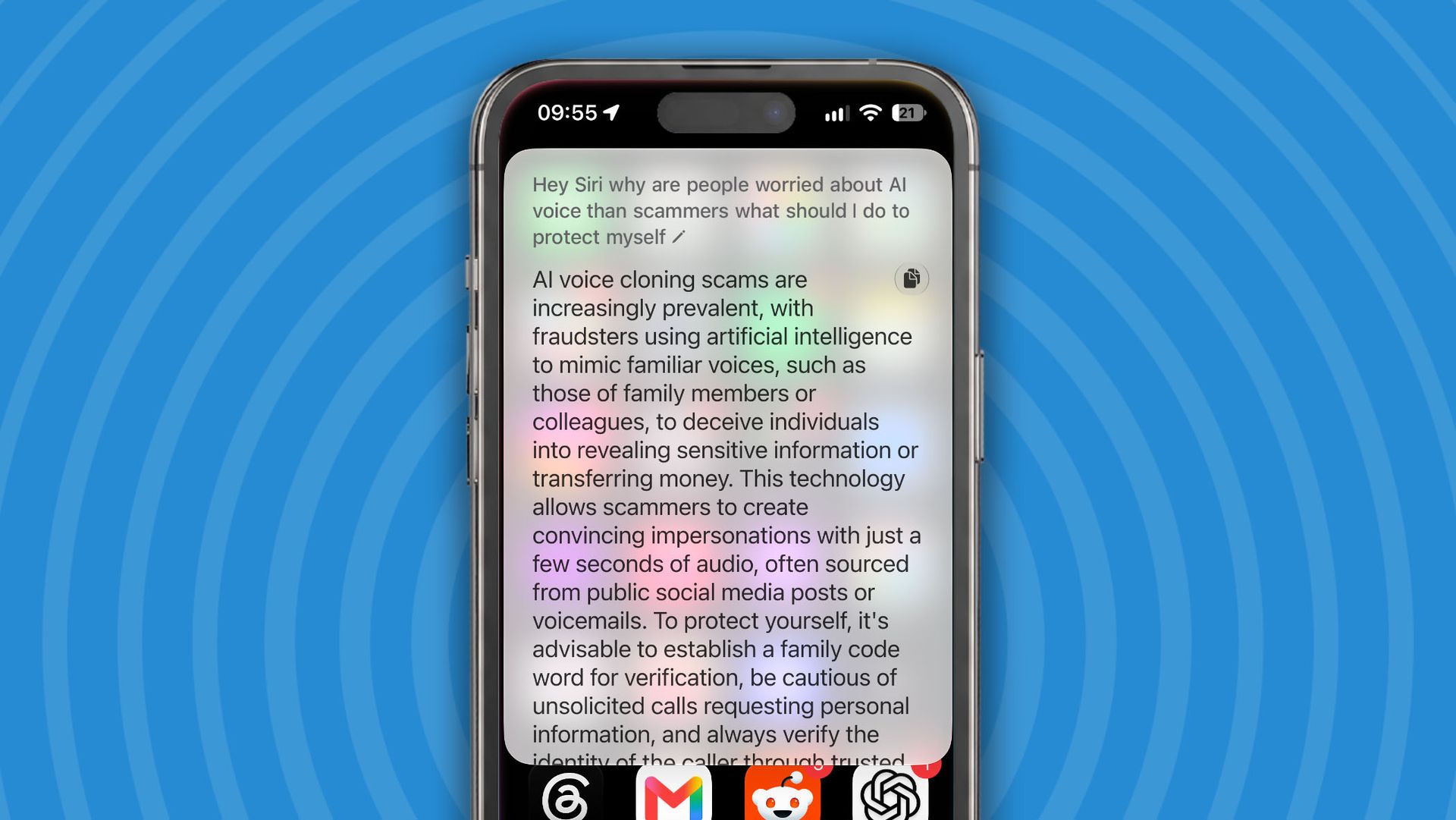
The first test involved finding information and, more importantly, explaining it clearly. I asked Siri AI about something I’d written about a few days earlier: AI voice-cloning scams.
“Why are people worried about AI voice-cloning scams, and what should I actually do to protect myself?” I asked.
In response, Siri AI produced a massive slab of text about voice scams, displayed it on screen and read it aloud in a slightly stilted voice. The information was accurate and factual, but the response was long and boring, and Siri’s voice had no real personality.
I interrupted it with my next question: “What is the single most important thing I should actually do?” To its credit, it stopped and answered the new question.
ChatGPT Voice, by comparison, talked to me like a human who was interested in the subject. It sounded conversational rather than as though it was reading from a block of text. It didn’t waffle and gave me the information I needed neatly and succinctly.
Verdict: Siri AI can now deliver useful information on its own, but it still doesn’t feel like a proper conversation, and its voice needs work before it sounds natural.
Score: 3/5
Test 2: Does Siri know what’s happening in my life?
(Image credit: Apple)
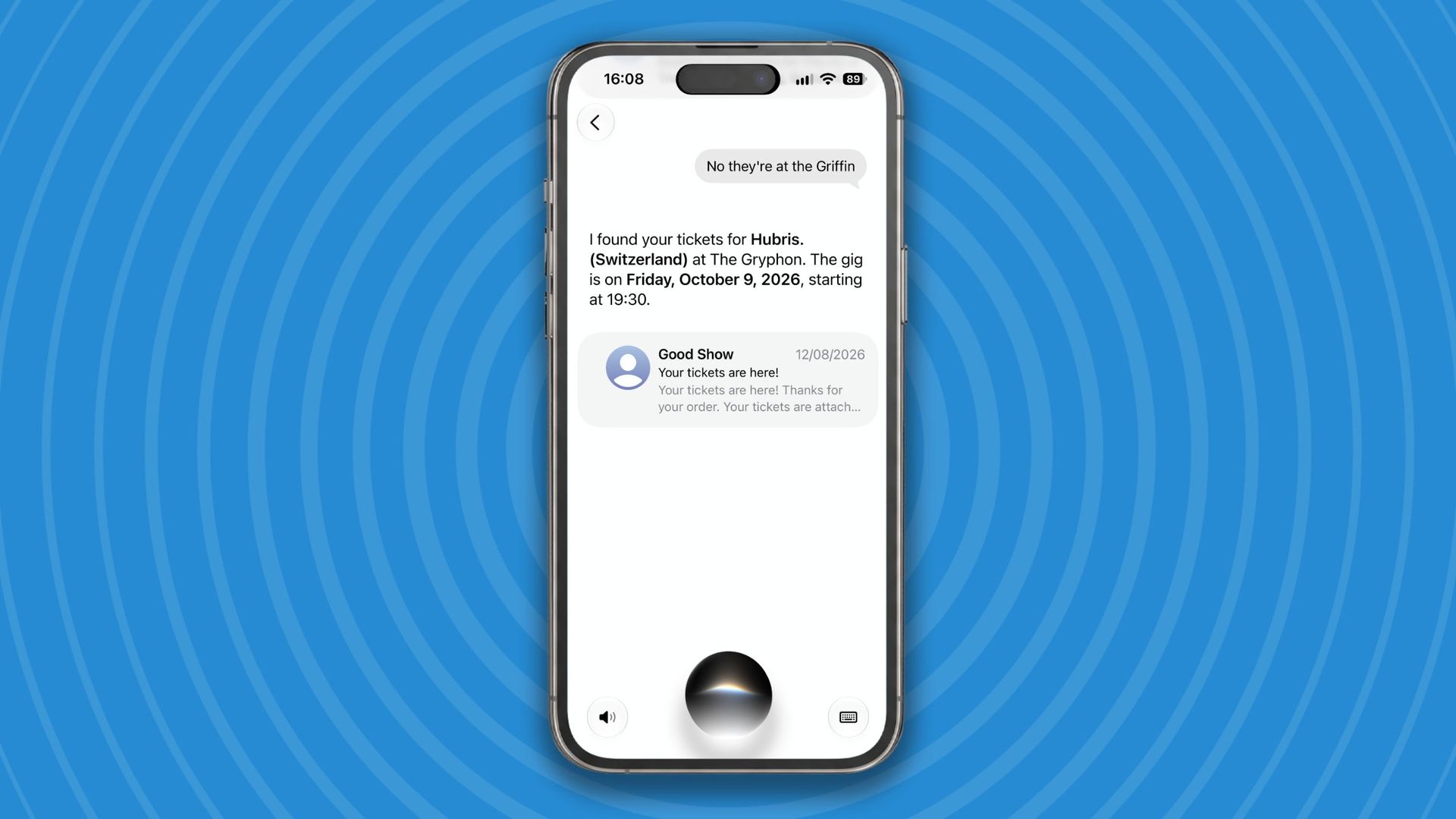
For the second test, I asked Siri to retrieve something I vaguely remembered from my Gmail inbox, which I access through Apple’s Mail app, rather than giving it precise keywords.
“Find the email with my tickets for Hubris in October and tell me what date it’s on.”
Siri AI checked Mail but initially couldn’t find anything, so I followed up with: “They’re at the Griffin.” Sure enough, it then found the tickets in my inbox and gave me the information I needed.
Next, I asked: “What do I need to bring?”
Siri AI told me I would need to have my tickets downloaded to my phone or printed out. Once again, its answer was functional and cold — and focused entirely on the tickets. There was no consideration of anything else I might need for a concert.
I fired up ChatGPT Voice to compare the answers, and this is where Siri AI had a major advantage. While text-based ChatGPT can connect to my Gmail and search my inbox, ChatGPT Voice can’t currently do that. It therefore failed to retrieve the information I wanted, although it performed a web search and found the date of the concert.
ChatGPT shone when I asked, “What do I need to bring?” Its answer was like night and day compared with Siri’s because it offered genuinely useful advice:
“For a night like that, comfy clothes plus good shoes are key. Maybe a light jacket. Bring the ticket on your phone with a backup screenshot. Photo ID, card for the bar and maybe earplugs. And if you’re meeting anyone, set a rough time and place outside, just in case.”
Verdict: Siri AI beat ChatGPT Voice at the practical part of the test because it could search the Gmail account connected to Apple Mail. However, ChatGPT was much better at understanding the wider context and anticipating what I might actually need for the concert.
Score: 3/5
Test 3: Can Siri see what I’m seeing?
Siri AI is supposed to be able to “see” what’s on your screen and answer questions about it. This is potentially one of its most useful new features, so I gave it a thorough test.
I opened a range of things on my screen—a document, an email, a graph, a photo and a webpage—and asked: “What’s the important thing I need to know here?” Each time, Siri AI successfully picked out the relevant information.
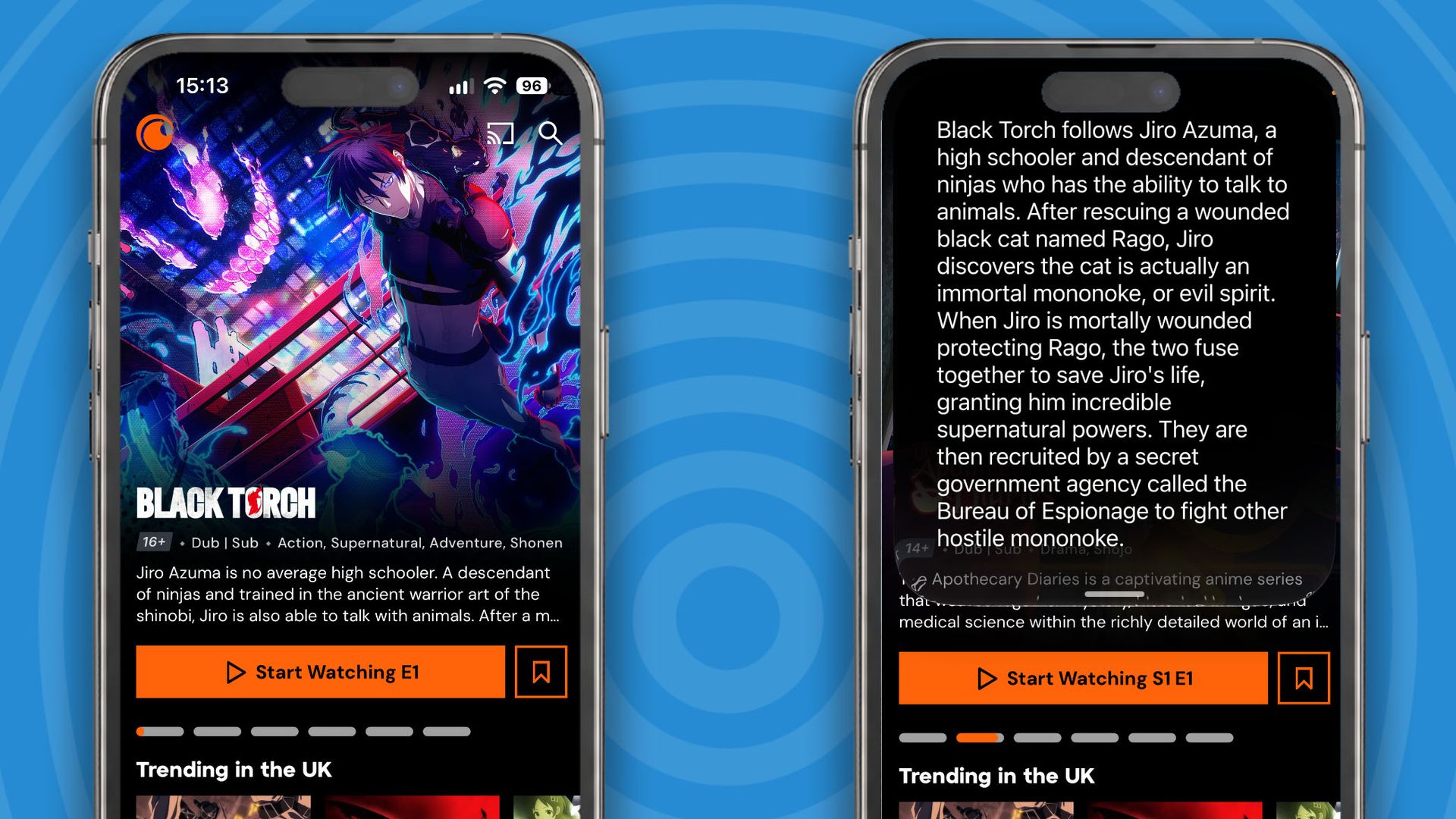
While browsing Crunchyroll, the popular anime streaming service, it gave me a decent explanation of each anime featured on the screen. Siri talks to you while simultaneously displaying its answer over whatever you’re viewing. For example, this is how it looked when describing the anime Black Torch, which happened to be featured on screen:
(Image credit: Apple / Crunchyroll)
When I opened an Amazon product page for an unavailable item, Siri AI correctly identified that the most important detail was that it was out of stock. When I viewed an invoice from my accountant, it correctly identified the amount and the payment deadline.
Siri AI could also see through the camera and identify objects very well. Being able to invoke it with “Hey Siri”—or simply move the slider from Photo to Siri while the Camera app is open—is genuinely convenient. It involves much less messing around than entering Live mode in Gemini or opening the camera through ChatGPT Voice.
Verdict: I’ve got to say, Siri AI smashed this test. I’m going to use this feature all the time.
Score:5/5
Test 4: Can it think with you?
(Image credit: Apple)
Next, I gave Siri an open-ended problem that I would normally bring to ChatGPT:
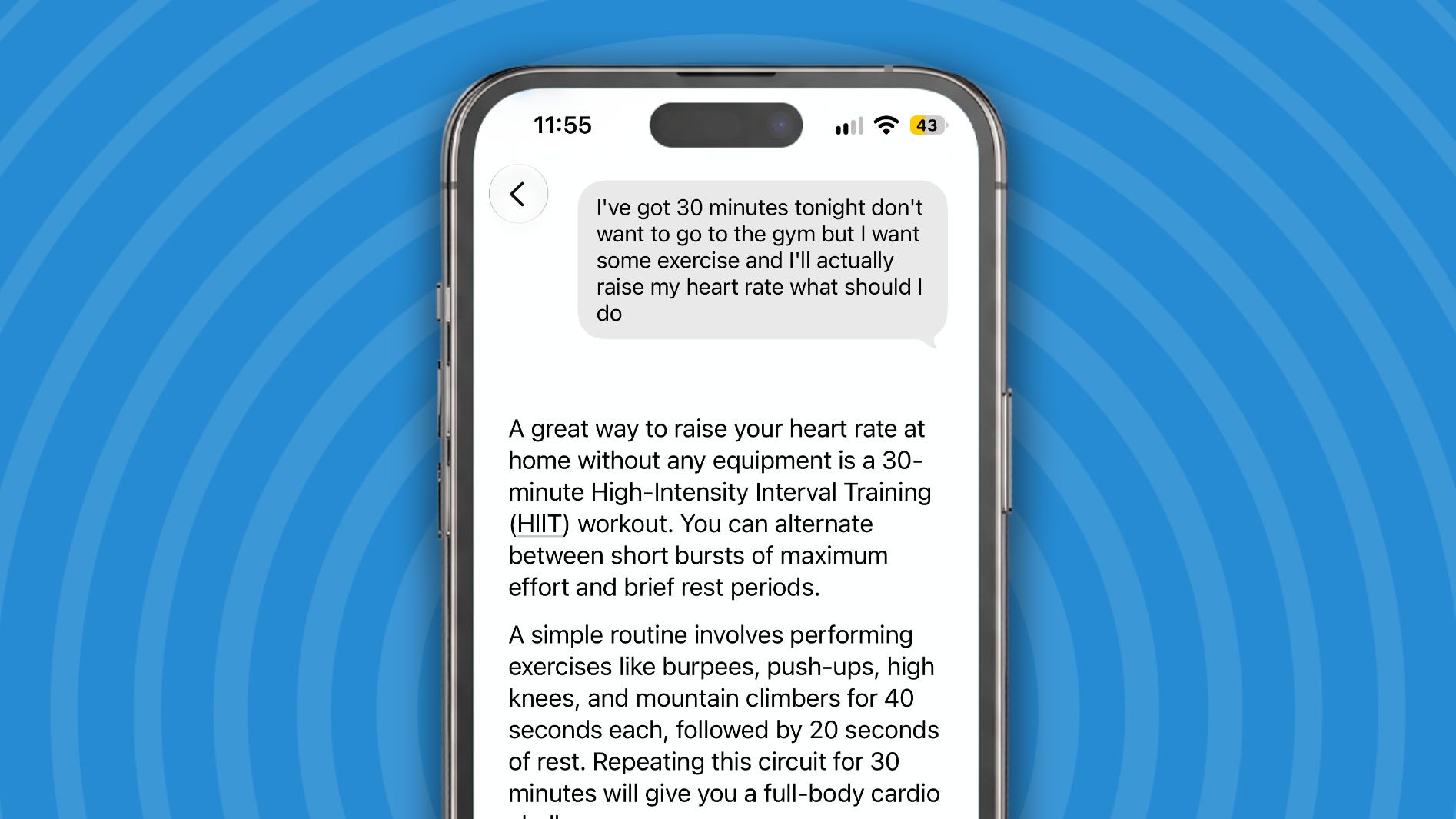
“I’ve got 30 minutes tonight, don’t want to go to the gym, but want some exercise that’ll actually raise my heart rate. What should I do?”
I then changed the rules:
“Actually, I’ve only got 15 minutes and I don’t want to leave the house.”
This is the kind of test that reveals whether Siri has become useful for open-ended judgment rather than simply following commands.
Siri recommended a 30-minute high-intensity interval training workout. It presented me with a simple plan and then asked whether I would like to start a timer so I could begin. When I said I had only 15 minutes, it adapted the workout accordingly. Not bad.
ChatGPT Voice took a different approach. It didn’t give me a workout plan in advance; instead, it immediately launched into a session that it wanted me to follow along with.
That was quick and direct, but I preferred Siri AI’s approach of showing me the workout before asking me to begin. Siri can combine text and voice in a way that ChatGPT currently doesn’t in Voice mode, and that worked particularly well here.
Verdict: Siri AI and ChatGPT Voice approached the task differently, but I preferred Siri’s ability to present the plan visually before helping me get started.
Score: 4/5
Test 5: Can it actually do something ChatGPT can’t?
(Image credit: Apple)
One home-field advantage Siri AI should have is the ability to perform multistage tasks involving real iPhone apps, so I asked it:
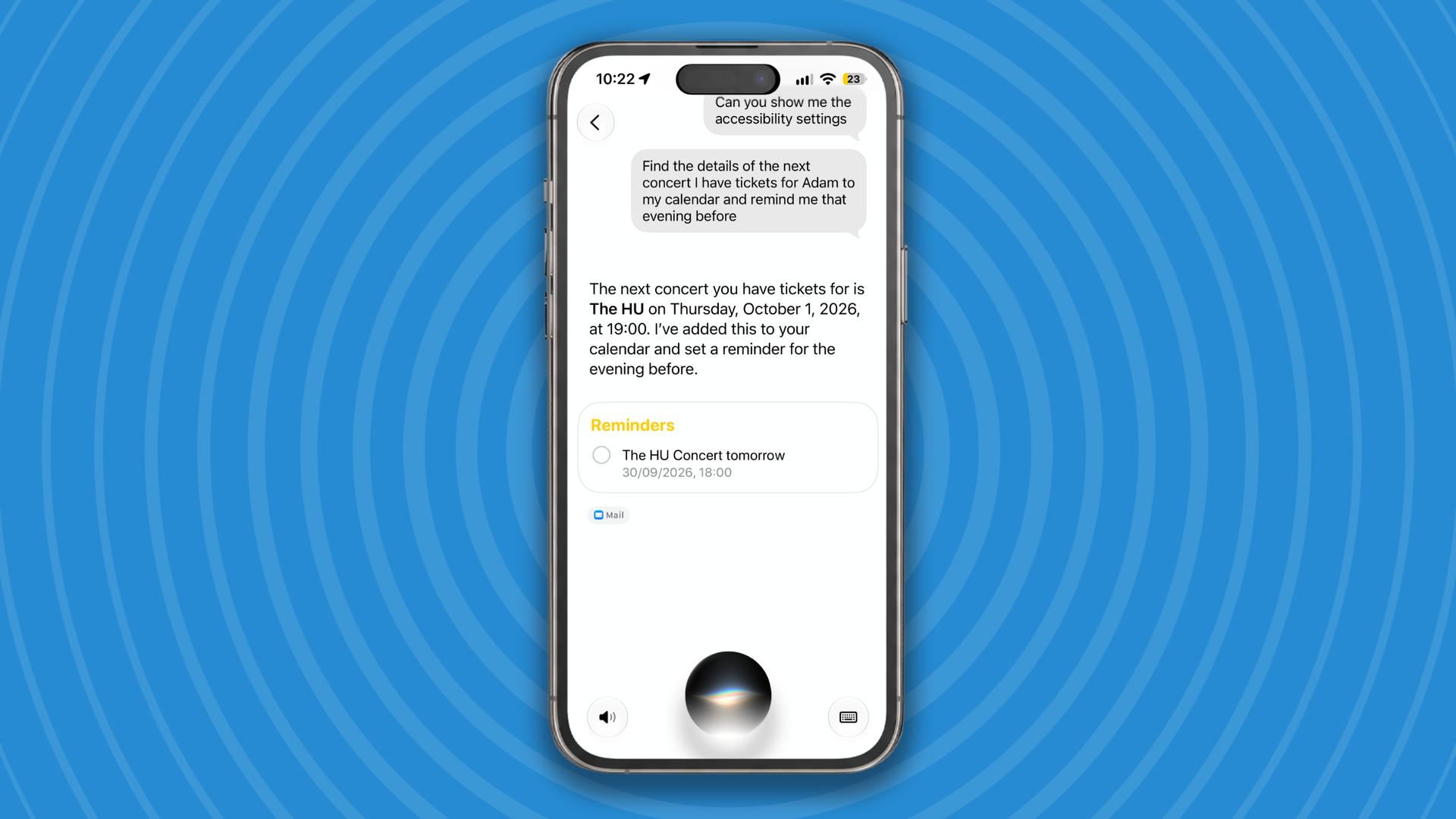
“Find the details of the next concert I have tickets for, add it to my calendar and remind me the evening before.”
Siri AI worked like a dream:
“The next concert you have tickets for is The HU on Thursday, October 1, 2026, at 19:00. I’ve added this to your calendar and set a reminder for the evening before.”
The HU are a Mongolian folk-metal band — so no, Siri hadn’t misheard The Who — and that was a perfect execution of the task.
ChatGPT Voice couldn’t search my Gmail, so it had to rely on previous conversations and web searches. It got close, but it needed more details from me to complete the request. It also told me: “I can’t add it to your iPhone calendar from here.”
Verdict: Siri AI’s system-level integration allowed it to behave like a true virtual assistant, completing a useful multistage task that ChatGPT Voice simply couldn’t perform.
Score: 5/5
Will I keep using Siri AI?
What became clear during these tests is that Siri AI’s greatest strength is its position inside the iPhone.
It can see what I’m doing, access information held inside my apps and turn a spoken request into an action without making me copy details between different services. That gives Siri an immediate advantage over ChatGPT Voice on iOS.
Siri AI still has a long way to go before it sounds as natural as ChatGPT Voice. ChatGPT remains the assistant I would choose when I want to explore an idea, work through a problem or simply have a convincing conversation. Outside Voice mode, ChatGPT is also much more capable and can even complete bookings or code apps to solve problems.
But when I want something done on my iPhone, Siri is suddenly the more useful option.
Apple has done enough to make me start using Siri again, and after years of disappointment, that might be the most surprising result of all.
I installed iOS 27 on my iPhone today, and I’m ticked off. What makes me mad is that Cupertino is hiding the Apple Intelligence ball. Read the specs on Apple’s iPhone 17e page, and you will see Apple Intelligence listed as a feature, albeit with a footnote. Here’s footnote 15 (out of 18): Available on […]

 Login
Login