❌

Reading view

There are new articles available, click to refresh the page.

This new UK domestic 'data furnace' from Heata can convert cloud computing waste heat into free hot water

  • Householders are getting free hot water from Heata, a company that installs rented servers in homes
  • Heat generated by the servers is passed to the water supply for showers and hot taps
  • Heata pays for any additional electricity used, ensuring homeowners win and businesses have their data stored safely

What happens to waste heat from servers? In a server room or data center, the heat is removed through industrial cooling systems and exhausted. But what if it could be reused? What if that heat could be used to keep domestic heating bills down?

Heata is one of several companies across the UK and Europe delivering solutions to server space and heating costs. Domestic waste-heat use appears to be a growing industry, and offers homeowners the chance to cut bills significantly while giving businesses low-cost server space.

The idea is simple: install a server in the home, rent the server space to businesses, and donate the heat generated by compute processes to the home, reducing their energy bills in the process.

How servers heat homes

If you’ve worked in a server room, you know how hot things can get, particularly if there is a problem with the extraction system. This is the starting point for these so-called “data furnaces” where the heat from an active compute unit is used to heat water. Heata say that the waste heat from a single data center could provide hot water for around 30,000 homes, which puts it into context.

Their model is simple: a compute model is attached to a hot water cylinder, heating the water and reducing the requirement for gas heating. Homes need fast broadband to provide fast data routing to the compute module, and Heata pays for additional electricity used by the mini server. It aims to provide around 80% of heat for the heating system, reducing domestic gas bills considerably.

Like Heata, Wales-based Thermify is looking for trial customers. Their system is a little different, relying on a HeatHub, within which a cluster of Raspberry Pi Compute Modules are generating data solutions and heat.

Compatible boilers

While the having a server or compute unit in a remote part of your property to assist in heating the water – essentially using the same electricity twice – might seem an attractive option, it does not come without shortcomings. For example, there is the issue of compatibility.

With the Heata example, only vented hot water cylinders can be used. Unvented, pressurised cylinders are not compatible. Other providers of similar data-to-heat services can provide the heated water in other ways – for example, Thermify uses its HeatHub to replace a home’s boiler.

With no new homes permitted to have gas boilers installed from 2027 onward, an alternative to hot water is needed, and companies turning data into heat could be the best solution.

Thunderobot just launched a laptop that uses a special RAM-like SSD to boost AI performance — AI Master M7000 packs Ryzen AI Max+ 395 with 64GB RAM, runs 120B MoE models

  • Thunderobot uses SSD storage to help its 64GB laptop run huge AI models
  • The M7000 can reportedly run GPT-OSS-120B despite having 64GB of memory
  • Phison's aiDAPTIV+ technology turns part of the SSD into an AI cache

Thunderobot has released the AI Master M7000, a 16-inch mobile workstation built around AMD's Ryzen AI Max+ 395 processor.

The M7000 comes with 64GB of LPDDR5X-8000 memory and Radeon 8060S integrated graphics for demanding workloads.

Its 768GB drive incorporates an 85GB caching layer designed to help AI workloads handle models exceeding available system memory.

AI workloads get an unusual storage assist

The M7000 uses LPDDR5X-8000 memory, while its processor provides 16 cores, 32 threads, boost speeds reaching 5.1GHz, and an XDNA 2 neural processor.

AMD rates the neural hardware at 50 TOPS, while the Radeon 8060S configuration reaches as many as 40 compute units for graphics and accelerated workloads.

Thunderobot says the device can run GPT-OSS-120B locally, despite having 64GB of physical memory available for applications and operating-system requirements.

Its unified memory architecture allows processor and graphics resources to access shared memory, supporting workloads that frequently move substantial model data.

The additional cache comes from Phison’s aiDAPTIV+ technology, which uses part of the internal storage to hold data associated with artificial intelligence workloads.

Rather than functioning as conventional RAM, this arrangement keeps selected information on the SSD when unified memory capacity becomes restrictive during demanding workloads.

Such information can include Key-Value cache, less-active mixture-of-experts components, and model data that applications may require again during processing.

Phison has also shown this storage approach with computers carrying considerably less memory, including a 32GB laptop running the same 120B model.

The technology addresses a limitation faced by large local models, where available memory can restrict the performance of certain workloads.

A 160W mobile workstation with unusually high specifications

Thunderobot gives the M7000 a 160W operating profile supported by two fans and three heat pipes for sustained processing.

The device also uses a 2560×1600 display running at 165Hz, with 500-nit brightness and complete sRGB coverage for color-sensitive work.

Power comes from a 99Wh battery, while the chassis weighs 2.45kg despite its workstation-oriented hardware and cooling requirements.

The display and cooling configuration add considerable hardware capability without changing the notebook’s emphasis on local computing.

For connectivity, this device includes OCuLink, USB-C supporting 40Gbps transfers, HDMI 2.1 FRL, 2.5Gb Ethernet, and a UHS-II microSD reader.

OCuLink provides another high-speed connection for compatible external hardware, giving users added expansion options beyond the laptop's built-in resources.

Thunderobot lists the M7000's Chinese retail price at 24,999 yuan, which converts to roughly $3,733 based on current exchange rates.

That figure places the device well beyond typical gaming budgets, despite the company's product lineup historically centering on gaming hardware.

This device instead reads as an artificial intelligence laptop, given how conspicuously its marketing and branding lean toward AI use cases.

Yet it remains surprising that the caching arrangement still falls short of matching genuine additional system memory in practice.

Via Videocardz

Google logo on a black background next to text reading 'Click to follow TechRadar'

China publishes 'landmark paper' on AI-to-AI technique that kicks human 'bottleneck' out of the loop and replaces us with an AI 'modem' — C2C brainwave direct connection achieves 150% boost in inference speed

  • Cache-to-Cache lets separate AI models exchange internal information without generating text
  • A learned Fuser converts one model’s internal data for another
  • C2C uses selective gating to control which layers receive information

Researchers from Tsinghua University have published a paper describing a technique that lets separate AI models exchange information without producing any text.

The method, called Cache-to-Cache (C2C), has already been accepted at ICLR 2026 and ships with open-source code available to developers.

It targets a specific inefficiency present whenever multiple language models work together inside a shared pipeline.

Skipping words entirely

When two AI models cooperate today, one has to turn its thinking into written sentences before the other can read them.

That writing step takes real computing time and throws away small details buried inside the first model's raw thinking process.

Every AI model keeps a working memory of everything it has processed so far, known technically as a cache.

C2C skips typed language entirely by letting one model pass that working memory straight into a second model's memory bank.

A small assistance program called a Fuser handles this handoff, reshaping and rotating the information so the second model can actually use it.

Different AI models store their memories using completely different internal layouts, sizes, and structures from one another.

Simply dumping one model's raw memory into another would likely confuse it or cause its answers to fall apart.

To prevent that, C2C includes a smart filter that decides which pieces of incoming memory are worth absorbing immediately.

Some internal layers accept the new information right away, while other layers keep reasoning independently without any outside interference.

According to the researchers, this setup makes AI models run between 100% and 150% faster during shared collaborative tasks.

That upper figure works out to roughly two and a half times quicker than the usual back-and-forth typing process.

The team also reports accuracy gains as high as 14.2% when models work together instead of operating entirely alone.

Compared against older setups where models still communicate through typed text, accuracy reportedly improved by 3.1% to 5.4%.

Why does this method have limits

This approach currently works only with open-weight models, since it requires direct access to a model's internal cache and layer structure.

Most popular AI tools, the kind ordinary people chat with online, hide those internal details completely from outside users.

That means everyday apps like certain chatbots cannot use this shortcut unless their own creators build it in privately.

Nobody outside these companies currently knows for certain whether anyone has started using a similar method internally.

The research team argues that typed language has always slowed machines down since it forces them to think like humans do.

That argument deserves some caution, since the same team that built the system also ran every test proving it works well.

Whether this speeds things up as much as claimed will depend on other external testing of the system.

Google logo on a black background next to text reading 'Click to follow TechRadar'

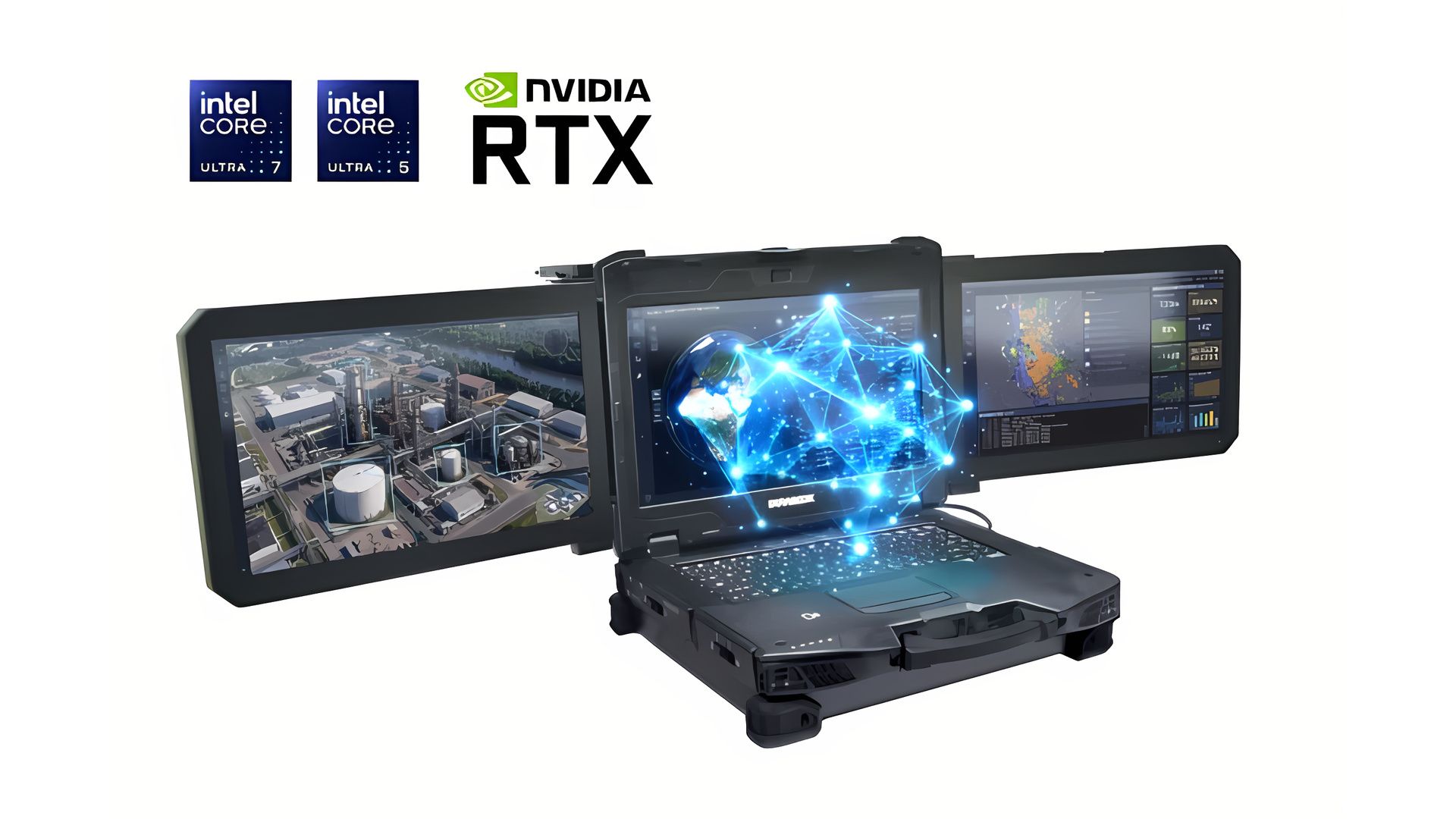
Durabook launches a workstation laptop with three real screens - Z14I-DX3 is a rugged mobile device featuring a trio of 14-inch full HD displays with an optional Nvidia RTX 5000 Ada GPU for command posts and drone teams

  • Durabook Z14I-DX3 rugged laptop has three 14-inch, sunlight-readable 1,200-nit touchscreens
  • At 9.8 kg and a mammoth 137.5 mm thick, it may suit vehicles and fixed positions rather than dismounted crews in the field
  • It could also be targeting customers at command posts and in drone teams

Durabook's latest rugged workstation laptop is less a notebook and more a capable folding command post, bringing power, durability, and plenty of screen real estate in tow.

The Z14I-DX3 pairs a conventional rugged clamshell with two extra full HD touch panels hinged to either side of the lid.

When folded, the side panels sit over the main display for transport; when opened, the three 14-inch screens form a mammoth 48:9 workspace for a client base that is expected to be overwhelmingly military.

Built around today's command post needs

While Durabook's press release says it is now available to order, it doesn't list a price on-site and instead directs users to request a quote for what it calls one of the most unique rugged laptops on the battlefield.

Durabook pitches the machine at defense, public safety, utilities, field engineering, and maritime users, describing it as a mobile command center where drone control and telemetry, mission maps, live video, and sensor data sit side by side instead of being juggled on a single display.

It also goes out of its way to make the screen component legible in all environments while focusing on utility: all three panels are 1,200-nit DynaVue sunlight-readable touchscreens with finger, water, glove, and stylus modes, and brightness can be synced across the set or adjusted per panel, as per Durabook's announcement.

This design choice makes the most sense when you consider who the workstation laptop serves: military customers. Each panel can run a separate application, so a drone team could keep a live feed on one screen, a map on another, and telemetry or communications on the third.

A single AC power adapter powers the whole setup, which can be configured with up to an Nvidia RTX ADA 5000 GPU that caps at 682 TOPS of AI performance, enabling offline image recognition and video analysis through on-device AI support.

Its I/O offerings also cater to the assumption that it might be plugging into military hardware, much of which uses legacy connections: Thunderbolt 4 and Wi-Fi 7 sit alongside two serial ports, VGA, an ExpressCard 54 slot, and a 41-pin pogo docking connector, plus dual gigabit Ethernet, HDMI, a smart card reader, and dual SIM with eSIM, with GPS, 4G, and 5G as options.

Durabook durability credentials include MIL-STD-810H testing for shock, vibration, altitude, freeze/thaw, high and low temperature, temperature shock, humidity, explosive atmosphere, and solar radiation, plus MIL-STD-461G for electromagnetic emissions and susceptibility, and an operating range of -29°C to 63°C.

Its weight class, however, rules it out as a portable device you can run around with, with a listed weight of 9.8kg (21.6 lb) and a thickness of 137.5 mm when closed, not including an adapter or carrying case.

This matters for drone teams that may already be carrying other hardware, including the drones they often deploy themselves; the Durabook offering suits fixed positions, shelters, or a vehicle better than a device that can be lugged around with relative ease.

For now, a 'workstation' class laptop that offers plenty of durability, a last-generation AI GPU, and a low-powered CPU might check a lot of battlefield boxes, but would be hard to compare in terms of raw performance to modern gaming laptops or even traditional workstations, both of which pack in significant amounts of power even if they skip the two additional screens - but that might just be the point.

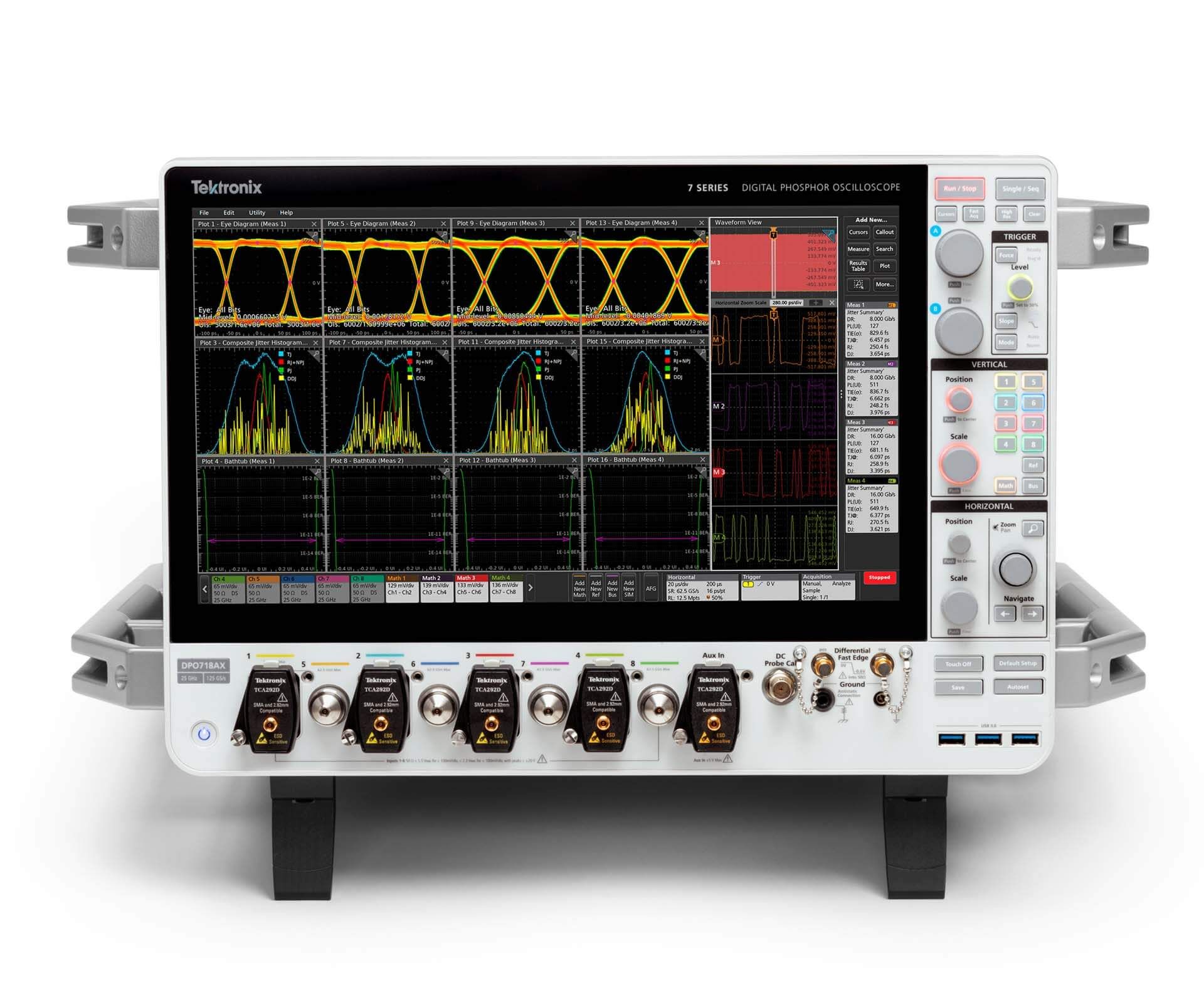
Incredible oscilloscope packs an Nvidia T1000 GPU, 12-core AMD EPYC CPU, 96GB RAM, and 1.6TB NVMe SSD — the 38Kg Tektronix DPO can run Windows 10 and features a 15.6-inch Full HD display

  • Tektronix's DPO718AX brings eight synchronized channels of up to 25GHz each to the 7 Series and can double as a Windows 10 PC
  • The EPYC 3351, T1000, 96GB RAM, 1.6TB SSD configuration the oscilloscope offers makes it more than capable of running most modern OSes
  • Prices start at an eye-watering $308,000 for the base configuration, which can be further modified as per end-user needs

Tektronix has added an eight-channel model to its flagship 7 Series oscilloscope line, and much of the attention it has drawn has gone to the computer it houses as part of the configuration.

The DPO718AX hosts a 12-core AMD EPYC processor, an Nvidia T1000 graphics card, 96GB of RAM, a removable NVMe SSD with at least 1.6TB of capacity, a 15.6-inch 1080p touchscreen, and an optional Windows 10 drive, all in a chassis that Tektronix's datasheet puts at 38.1kg.

This has drawn sharp comparisons to actual Windows-based PCs amid a RAM and memory shortage, including one by CNX Software, which said that the instrument "looks like a high-end PC running Linux (or Windows 10 LTSC)."

A powerful PC in its own right, albeit with dated components

None of the computer hardware listed for the DPO718AX is new or recently released. The AMD EPYC Embedded 3351 CPU is one of the oldest hardware offerings in play here, featuring AMD's first-generation Zen cores and a February 2018 release date.

While the SSD storage speed is unspecified, it is safe to assume it will be capped by the PCIe 3.0 support the EPYC CPU provides to the system. The 96GB of memory on offer can also safely be assumed to be DDR4, as the CPU supports only DDR4 configurations. Despite these limitations, the CPU does offer a 12-core, 24-thread configuration with a rated boost clock of 3GHz that should handle most tasks with relative ease.

The Nvidia T1000 GPU is an entry-level, workstation-class GPU built around its Turing architecture, with a release date of May 2021. The oscilloscope comes with an FHD touch-screen display and can output video up to QHD via DisplayPort, with a capped refresh rate of 60Hz.

The oscilloscope can also run Windows 10 natively, and it matters more than you might think: it is required for the compliance and RF analysis software the DPO718AX supports. The DPOs do not come with an installation by default; the Windows 10 LTSC 2021 installation is available on a secondary, removable drive that users can opt for if needed.

Since the integrated AMD CPU supports TPM 2.0, you could theoretically run Windows 11 on a device that costs hundreds of thousands of dollars, but the aging hardware, low-clocked CPU, and dated internals would make it a terrible PC replacement, even if one had the money to splurge on such an endeavor.

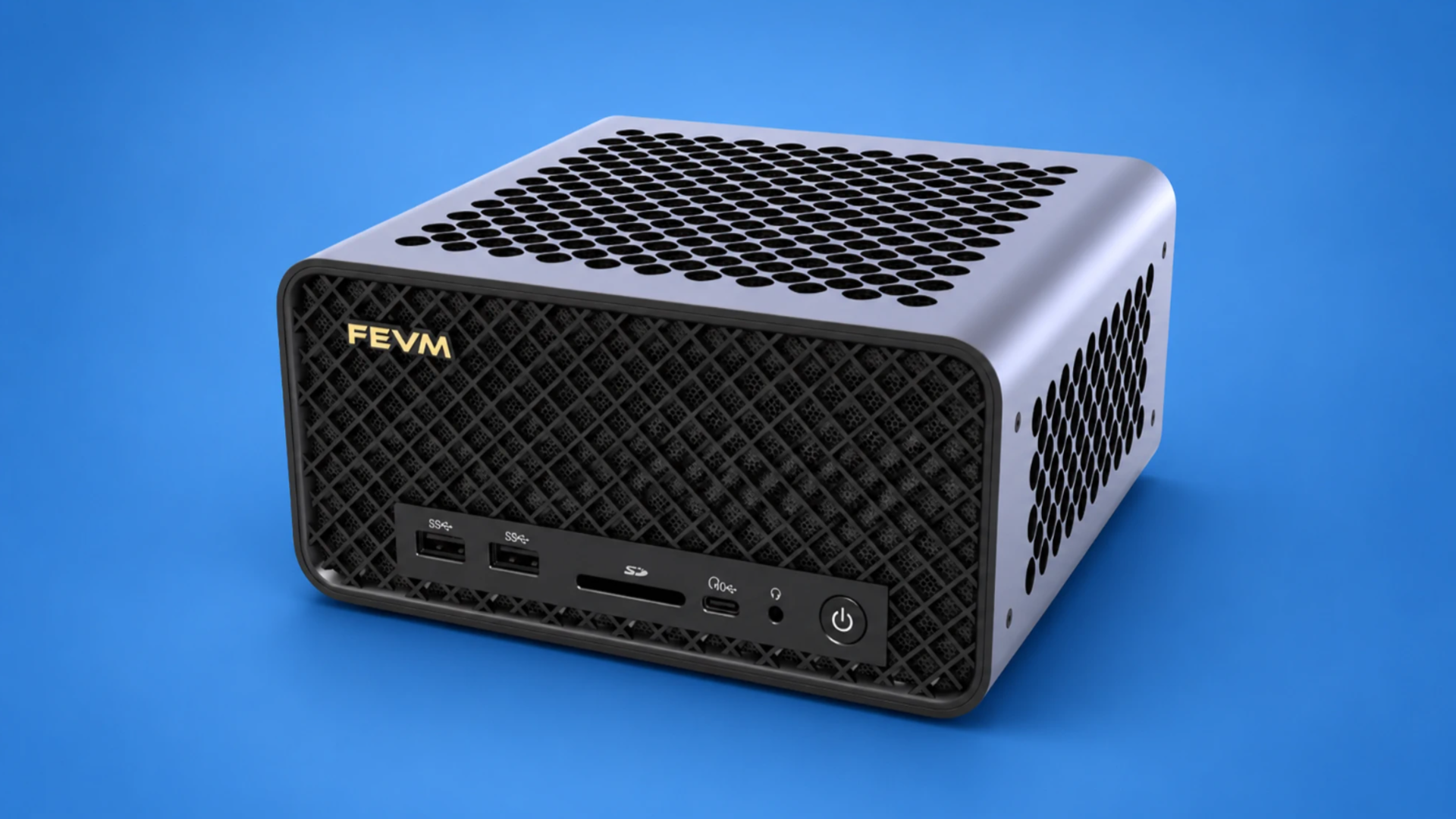
Could this be the most powerful mini PC ever? FEVM mini PC pairs Ryzen 9 9950X3D with 24GB RTX5090 GPU and should beat Apple's M5 Ultra Mac Studio in gaming

  • FEVM FA80G mini PC packs a desktop Ryzen 9 9950X3D inside a 2.6-liter chassis
  • The FA80G pairs AMD’s gaming-focused processor with Nvidia’s 24GB mobile flagship
  • Nvidia gives the RTX 5090 Laptop GPU 150W inside this compact system

FEVM has unveiled a new compact desktop system pairing the Ryzen 9 9950X3D processor with a 24GB RTX 5090 Laptop GPU.

The pairing sits inside FEVM's FA80G chassis, a compact system built around AMD's AM5 desktop platform rather than mobile silicon components.

The flagship processor contains 16 cores, reaches 5.7GHz and carries 144MB of cache through AMD’s 3D V Cache technology.

Ryzen 9 9950X3D and RTX 5090 pack serious power

FEVM allows the processor to receive up to 90W, while the accompanying RTX 5090 Laptop GPU can receive up to 150W.

Nvidia’s mobile graphics processor has 10,496 CUDA cores, 24GB of GDDR7 memory and 896GB/s memory bandwidth.

It also supports hardware ray tracing, DLSS 4 and Multi Frame Generation, giving the FA80G several features associated with current high-end PC gaming.

The desktop processor is equally important, as the 9950X3D is designed for high-performance gaming workloads rather than conventional mobile computing.

This mini PC also supports up to 128GB of DDR5 memory via two slots, while two M.2 2280 connectors support drives reaching 4TB.

FEVM separates processor and graphics cooling, assigning four heat pipes to each component across the device’s internal thermal arrangement.

The company rates full load noise at 42dB, with CPU temperatures below 85°C and GPU temperatures below 80°C.

For connectivity, this device includes HDMI 2.0, HDMI 2.1, two DisplayPort 2.0 outputs, USB-C, USB-A, an SD reader and dual 2.5GbE.

FEVM has the hardware for a serious M5 Ultra gaming comparison

In comparison to Apple’s top M5 Ultra Mac Studio, the FA80G takes a more conventional high-end PC approach to gaming hardware.

The M5 Ultra offers up to 36 CPU cores, 80 GPU cores, 512GB unified memory and 1.2TB/s memory bandwidth.

Apple also includes hardware-accelerated ray tracing, Neural Accelerators and a 32-core Neural Engine within its highest M5 Ultra configuration.

Those specs give the Mac Studio substantial graphics and compute resources for professional rendering, video production and artificial intelligence workloads.

For gaming, however, the FA80G CPU and GPU combo fits the Windows PC gaming environment more directly.

It also supports DLSS 4, ray reconstruction, frame generation and Multi Frame Generation across its RTX 50 series gaming hardware.

Apple supports advanced gaming technologies through Metal, MetalFX and its Game Porting Toolkit, including tools for bringing Windows games onto Mac.

That means the M5 Ultra is capable of modern gaming, but developers must still account for Apple’s Metal-based gaming environment.

The FEVM instead combines established Windows gaming hardware with Nvidia’s dedicated graphics stack and AMD’s gaming-focused desktop processor.

For a device specifically judged by gaming hardware, that makes the FA80G’s specification unusually aggressive for a 2.6-liter system.

The M5 Ultra remains a much larger compute platform in memory capacity and integrated resources, but the FEVM is built differently for gaming

The flagship configuration of FEVM's FA80G costs ¥22,299 (about $3,300), before adding memory and storage to the bare-bone system.

Via Videocardz

Google logo on a black background next to text reading 'Click to follow TechRadar'

'It almost started a war': US Army nearly boarded a Chinese ship after receiving an "entirely false" AI-hallucinated intelligence report saying it had nuclear arms on board

  • A chatbot invented entirely false cargo details about a Chinese vessel
  • Armed troops prepared to board the ship before anyone checked the source
  • Military aircraft were already active when officials caught the error

A false intelligence assessment nearly triggered a US military invasion of a Chinese vessel after AI-assisted analysis wrongly identified its cargo.

The report circulated during the Iran conflict and prompted preparations to intercept the vessel before officials discovered serious problems with its underlying information.

Sources told CNN that armed personnel were preparing to board while military aircraft supported preparations, creating a potentially dangerous confrontation between major powers.

AI-assisted analysis produced the mistaken assessment

The episode began when an analyst examined intelligence concerning the ship's manifest and used a chatbot to interpret information.

Sources said the system combined publicly available material with classified signals information before producing an incorrect assessment about the vessel's cargo.

The analyst subsequently used AI again to prepare the findings in a standard intelligence format that was distributed among military officials.

Officials only examined the underlying information shortly before the planned operation, revealing that the reported cargo identification was wrong.

The source described the assessment as “entirely false,” while CNN reported that another source said it “almost started a war.”

The exact material that the chatbot misidentified has not been disclosed publicly, leaving important details about the original error unavailable.

The Pentagon and the military command responsible for Pacific special operations did not provide comments on the incident.

The episode comes as the US military expands its use of AI tools across intelligence, operations, administration, and battlefield decision-making.

In January, Defense Secretary Pete Hegseth announced an AI strategy intended to accelerate deployment across military missions and organizational functions.

“We will unleash experimentation, eliminate bureaucratic barriers, focus our investments and demonstrate the execution approach needed to ensure we lead in military AI,” Hegseth said.

The strategy includes programs for intelligence work, operational planning, enterprise functions, and wider access to generative AI systems.

The department later said more than 1.3 million personnel had used GenAI.mil, generating tens of millions of prompts within five months.

The incident exposes a difficult verification problem

The reported mistake involved more than an inaccurate chatbot response because its output entered a process used for consequential military decisions.

Once incorrect information appeared in a formal assessment, officials receiving the document had to determine whether its underlying evidence supported the conclusion.

There is no information on which verification procedures were applied before the assessment reached personnel preparing the maritime operation.

It also remains unclear whether the analyst knew that the chatbot had introduced an incorrect interpretation before the report circulated.

According to CNN, different military organizations use different AI systems, while officials have described varying practices for checking information produced by them.

That fragmented environment makes it difficult to identify a single verification process governing every AI-assisted intelligence product across the military.

AI tools can make military analysis faster and easier, yet their potential for significant errors requires strict human verification before operational decisions.

That need becomes more important when intelligence concerns a rival country, where an incorrect assessment involving a military vessel could trigger retaliation.

A mistaken attack could then escalate tensions between the countries involved, potentially producing a wider armed confrontation or prolonged political and military conflict.

Google logo on a black background next to text reading 'Click to follow TechRadar'

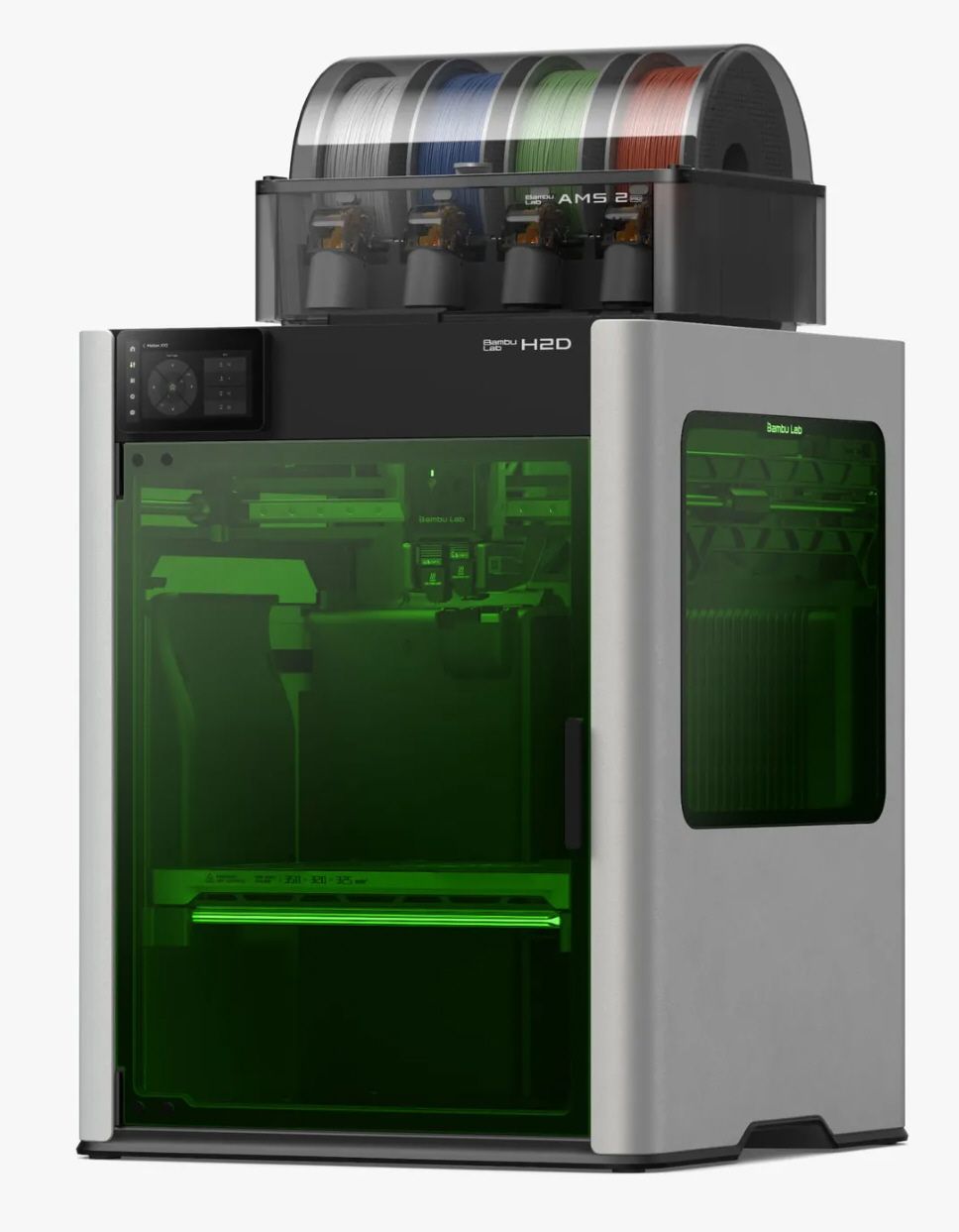
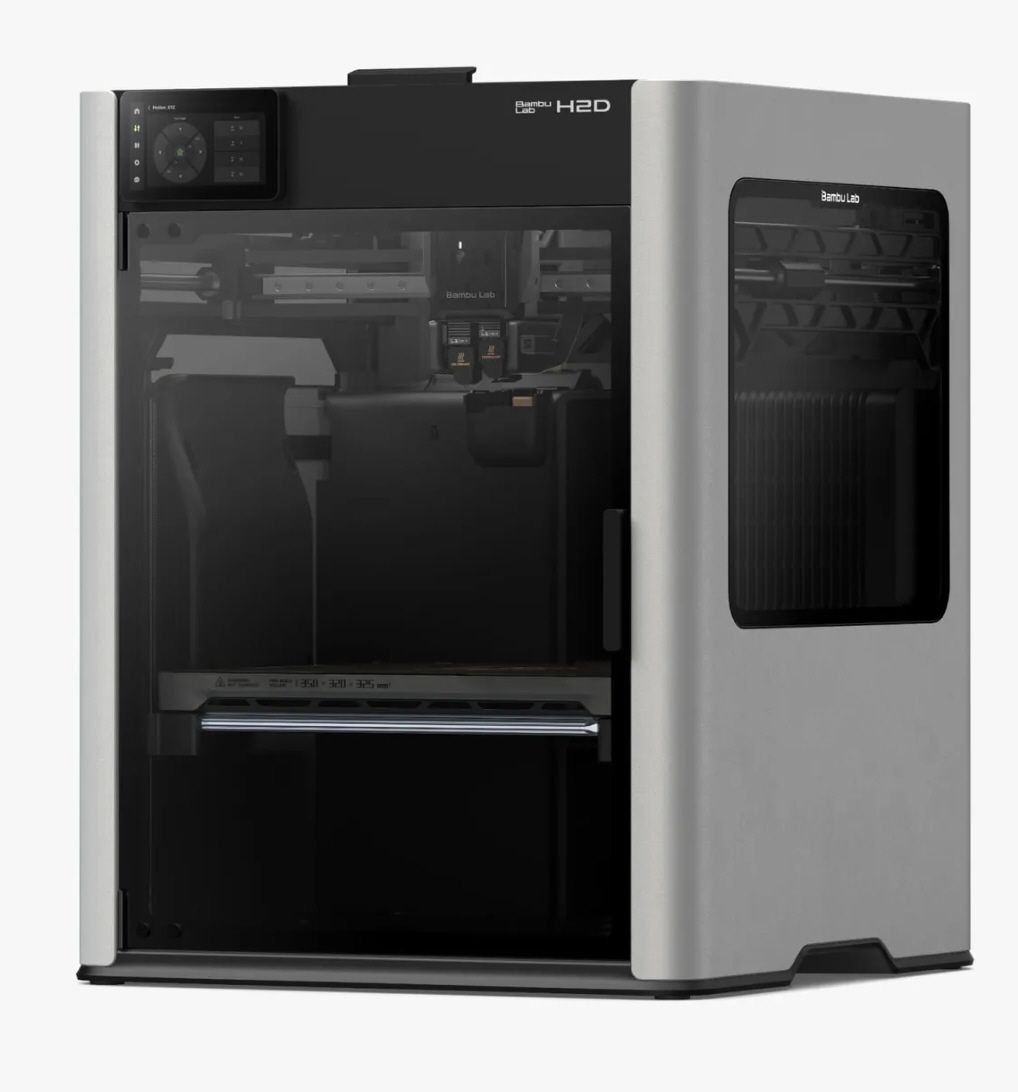
Save $250 on the Bambu Lab H2D AMS Combo dual-nozzle 3D printer

The Bambu Lab H2D sits right at the top of our 3D printer guide - a versatile machine that performed exceptionally well in our tests. Now, the flagship machine is on sale.

• Best for: Experienced makers and small businesses who want a large dual-nozzle machine for engineering-grade filaments.

• The deal: The Bambu Lab H2D AMS Combo is now $1749 (was $1999) at Bambu Lab, while in the UK, the unit is £1449 (was £1649). The standalone and Full Laser Combo units are also on sale.

• Why we like it: Calling this "one of the most impressive 3D printers on the market," we scored this 3D printer 4.5 stars in our review. It's effectively a compact multifunctional manufacturing hub. Precise and fast, it excels at multi-material printing.

Today's best 3D printer deal

H2D AMS Combo 3D Printer: was $1999 now $1749
The Bambu Lab H2D features dual nozzles, a 350 x 320 x 325mm build volume, 350°C all-metal hotend, 65°C heated chamber, 1,000mm/s toolhead speed, closed-loop extrusion and built-in air filtration. There's also a 5-inch 720p touchscreen, and multiple built-in cameras for monitoring.

In the UK: now £1449 (was £1649)View Deal

Why we recommend it

In his 4.5-star review of the H2D, our expert Alastair found that "3D print quality is as good as it gets." He added that, "when it comes to print quality, there's no doubt that the H2D matches the excellent X1 Carbon and holds its own against the current crop of high-end 3D printers."

The Full Laser Combo is also in the sale, and for that, he found the "laser engraving is excellent, and the cutting/plotting is right in line with other dedicated machines."

You'll find the Bambu Lab H2D at the top of our roundup of the best 3D printers we've tested.

Price context & historical value

The $250 reduction takes 12.5% off the H2D AMS Combo's $1,999 regular price, bringing it down to $1,749. That's a substantial cash saving on an expensive printer, but it's not the cheapest we've seen it. In Bambu Lab's 4th Anniversary Sale in June/July 2026, the H2D AMS Combo was available for $1,699.

Should you buy it?

✅ Buy the Bambu Lab H2D AMS Combo if...

You want a versatile 3D printer that can accommodate ambitious projects and different filament types, including PLA, PETG, TPU, ABS, ASA, PC and PA, plus a selection of carbon- and glass-fiber-reinforced types.

❌ Skip the Bambu Lab H2D AMS Combo if...

You only intend to make occasional small PLA prints. The H2D's size, capabilities, and price are difficult to swallow if you aren't likely to take advantage of its more advanced features.

Also consider

H2D Laser Full Combo: was $2549 now $2149
This version of the H2D 3D Printer is the Laser Full Combo (you can tell thanks to the green glass). The 10W model is down from $2,549 to $2,149, saving you $400, while the more powerful 40W model drops from $3,199 to $2,699, saving you $500. Both are roughly 16% off.

In the UK: now £1749View Deal

This version of the H2D 3D Printer comes without the AMS Combo.

In the UK: now £1289 (was £1449)View Deal

As RAM prices soar, this fast 32GB TeamGroup DDR5-6400 kit is $50 off

RAM prices have become increasingly painful during the 2026 memory crisis, making discounts on higher-speed DDR5 kits welcome. The 32GB TeamGroup T-Force Vulcan ECO offers DDR5-6400 speeds and support for both Intel and AMD performance profiles.

• Best for: Desktop builders who want 32GB of relatively fast DDR5 memory with support for both major performance-profile standards.

• The deal: The TeamGroup 32GB T-Force Vulcan ECO DDR5-6400 kit is now $429 (was $479) at Newegg when you use code TEF395.

• Why it matters: DDR5-6400 provides much more theoretical bandwidth than slower DDR5 standards. You'll need compatible hardware and the appropriate XMP or EXPO profile enabled to reach the 6,400MT/s speed though.

Today's TeamGroup T-Force Vulcan ECO DDR5 deal

T-Force Vulcan ECO DDR5-6400: was $479 now $429
The Team T-Force Vulcan ECO includes two 16GB DDR5-6400 desktop modules with CL38 latency, 38-46-46-84 timings, 1.35V operation, silver heat spreaders, Intel XMP 3.0 and AMD EXPO performance profile support. For the full discount, use code TEF395View Deal

Why we recommend it

The T-Force Vulcan ECO gives you two 16GB DDR5 modules running at up to 6,400MT/s, with CL38 latency and 38-46-46-84 timings at 1.35V. It supports for both Intel XMP 3.0 and AMD EXPO, giving you flexibility when choosing a platform.

The modules include heat spreaders to help manage temperatures, and their silver finish is a stylish alternative to the usual black and white designs that dominate the desktop memory market.

Price context & historical value

Applying promo code TEF395 drops the price from $479 to $429, saving you $50, or around 10%. That's not an enormous reduction, but any money off is welcome in today's expensive memory market. This kit has been slightly cheaper at Newegg in the past though. Not so long ago it was available to buy for $415.99.

Should you buy it?

✅ Buy the 32GB TeamGroup T-Force Vulcan ECO DDR5 kit if...

You're building or upgrading a DDR5 desktop and want a fast 32GB kit with support for both major performance-profile standards. At 6,400MT/s, the Vulcan ECO offers considerably more memory bandwidth than entry-level DDR5-4800 or DDR5-5200 kits, although the real-world benefit will depend on your setup.

❌ Skip the 32GB TeamGroup T-Force Vulcan ECO DDR5 kit if...

Your current PC already has enough memory for everything you do, or your motherboard and processor can't take advantage of DDR5-6400. Given today's RAM prices, there's little reason to spend $429 unless you need the upgrade.

Also consider

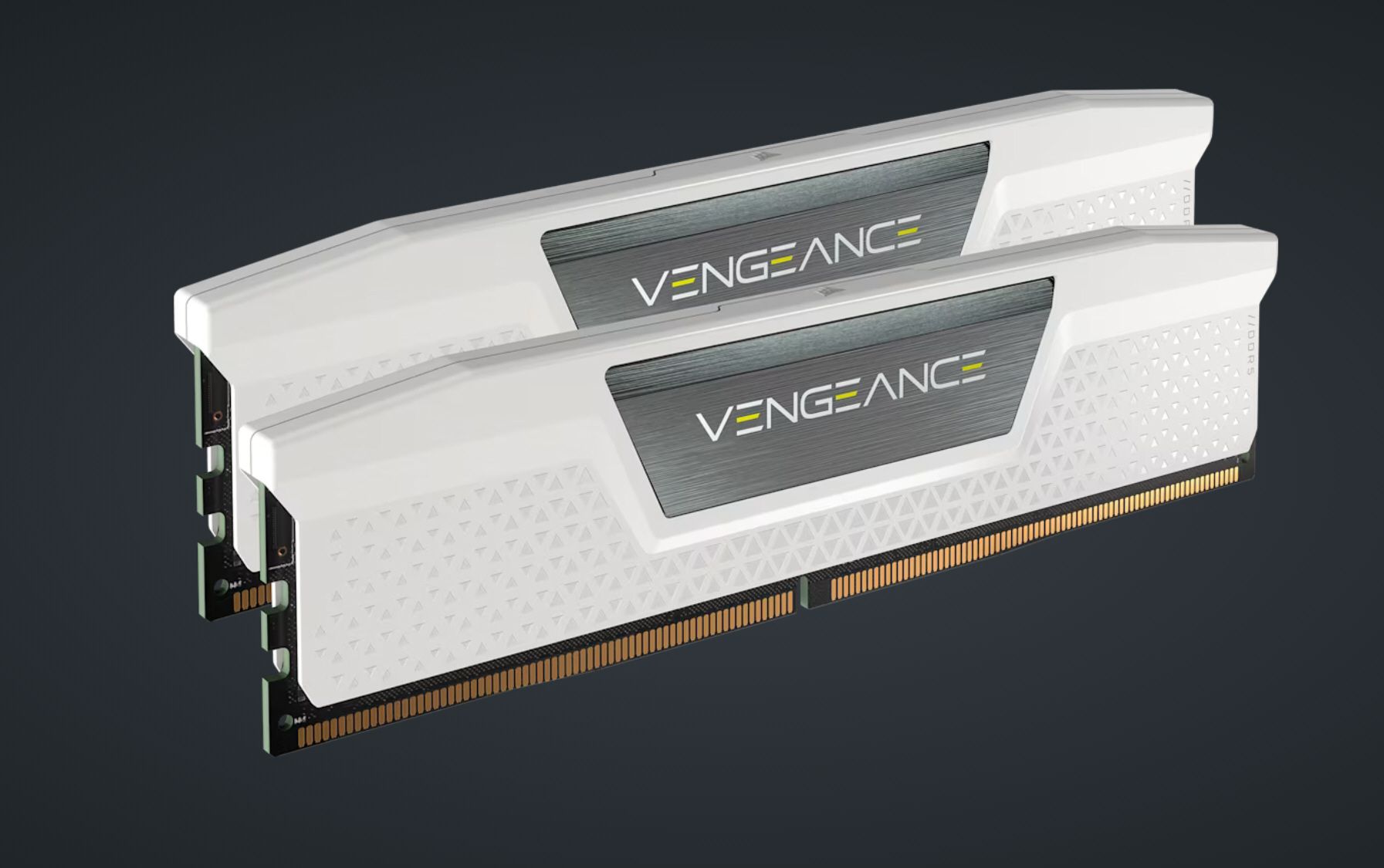
32GB Vengeance DDR5-5200 White: was $508.99 now $407.99
The white Corsair Vengeance kit includes two 16GB UDIMMs rated for 5,200MT/s, CL40 latency and 1.25V, featuring aluminum heat spreaders, Intel XMP support and iCUE-controlled onboard voltage regulation.View Deal

32GB Vengeance DDR5-4800: was $505.99 now $399.99
This 32GB Vengeance DDR5 kits combines two 16GB modules with speeds up to 4,800MT/s, CL40 latency and a compact design optimized for compatible Intel motherboards.View Deal

Save $40 on CyberLink Director Suite for video, photo and audio editing

CyberLink has long been one of our favorite alternatives to Adobe's creative suite, and currently there's a big sale on standalone alone apps as well as CyberLink Director Suite, which bundles the photo, video, and audio editor software alongside an audio editor and large royalty-free stock library.

• Best for: Content creators who regularly edit video, photographs and audio and want their main creative applications bundled into one subscription.

• The deal: CyberLink Director Suite is now $110 (was $150) for an annual subscription, and £95 (was £130) in the UK. Standalone apps are also discounted in the US here (click here) and in the UK here.

• Why we like it: CyberLink's creative tools have consistently reviewed well during our tests, offering an excellent all-rounder entry-point into video and photo editing. They're surprisingly advanced but beginner-friendly, and this is a good way to get the full suite.

Director Suite: was $149.99 now $109.99
This creative suite combines PowerDirector 365, PhotoDirector 365 and AudioDirector 365, providing AI video, photo and audio editing alongside integrated royalty-free Getty Images and Meta stock content.

In the UK: now £95 (was £130)View Deal

Why we recommend it

Director Suite combines three powerful creative tools. PowerDirector 365 handles video production, PhotoDirector 365 covers photo editing and graphic design, and AudioDirector 365 provides tools for audio restoration, recording and mixing.

All three core apps have reviewed well in our tests.

In his 4-star review of PowerDirector, our expert Steve said it "remains one of the best video editing software for beginners, as well as intermediate editors." He gave PhotoDirector 4.5-stars and called it a "powerful multi-faceted beast, which not only allows you to organize and improve the quality of your photos, but also offers Photoshop-like compositing tools, as well as numerous generative AI features."

In her 4-star review, our audio expert Angel said AudioDirector "goes from strength to strength using powerful AI tools to separate elements giving even total novices to recording control over their material."

The applications are designed to work together, so projects can be passed between them without repeatedly rendering files. There's plenty of AI features too.

Price context & historical value

At $109.99 a year instead of $149.99, you're saving $40 on Director Suite, equivalent to 27% off. The annual subscription works out at just $9.17 per month, compared with $29.99 if you pay monthly, which would add up to $359.88 over a year — $249.89 more.

UK buyers can save 27%, with the price of Director Suite reduced from £129.99 to £94.99, equivalent to just £7.92 per month.

For more choices, check out our roundups of the best photo editors, and best video editing software.

Should you buy it?

✅ Buy CyberLink Director Suite if...

You regularly work with video, photographs and audio and would prefer to have an integrated collection of creative applications than subscribe to different products. Director Suite also provides access to millions of royalty-free videos, images and music tracks from iStock by Getty Images and the Meta Sound Collection.

❌ Skip CyberLink Director Suite if...

You only need one type of editor. If almost everything you create is video, for example, paying for a suite containing dedicated photo and audio tools may not be necessary.

Most Americans now oppose data centers in some way as tide continues to turn on AI technology

  • The environment, energy costs, quality of life and taxes are all concerns
  • Americans are largely split about whether data centers are even good news for jobs
  • Negative sentiments are rising across the board regardless of political background

With the US midterm elections around the corner and AI data centers increasingly becoming part of political discourse, new Pew Research Center reporting has revealed Americans' attitudes toward these facilities have become even more negative as 2026 continues.

Surveying more than 10,500 US adults, the study found only 4% thought data centers are a positive thing for the environment, home energy costs and local residents' quality of life.

On the flip side, more than half (54%) thought they were 'mostly bad' for the environment, up from 39% in January 2026, around half a year prior, showing a marked increase just in a short space of time.

US citizens are increasingly turning against AI data centers

In fact, Americans believe US data centers are worse for home energy costs (50%), quality of life (49%) and local tax revenue (21%) than before.

And with hyperscalers all promising to add hundreds or, sometimes thousands, of operational jobs on top of thousands of temporary construction jobs locally, residents are even starting to disbelieve these promises. Interestingly, the proportion of nationals perceiving data centers as mostly bad for local jobs rose nine percentage points, from 15% at the beginning of 2026 to 24% halfway through the year.

Perceptions are now mostly split, with 24% seeing projects as mostly bad for jobs and 22% seeing them as mostly good.

This still leaves a considerable proportion of Americans – 18% to 32% depending on issue – uncertain about the impact of data centers.

Opinions are shifting

Today, three in five US citizens say they'd either be not too comfortable, or not comfortable at all, with a new data center operating in their area. Rural inhabitants are more likely than before to have negative perceptions, likely with more projects being approved for extra-urban locations where space is at less of a premium.

The study also delves into the political implications, confirming that Americans are increasingly unsettled by data centers right across the board, be it by age, gender, education levels or political party. While Democrats are more likely overall to have negative feelings, supporters of both major parties have actually become more unhappy throughout 2026.

Arguably one of the biggest findings of this report isn't necessarily where the split lies and whether Americans are worried about environmental, social or economic impacts – it's the sheer pace that negative sentiments have grown in little more than just half a year.

All of this is, of course, playing out during an important time for the US politically.

While President Trump continues to advocate for AI and data center buildouts in an effort to be a global leader, more and more states and regions are imposing temporary bans to reassess legislation and local impacts, including Texas itself – the home of OpenAI's massive Stargate project.

Google logo on a black background next to text reading 'Click to follow TechRadar'

Cloud and AI bills looking a bit high? Your AI agents may have been let loose and run up huge spending costs

  • One simple prompt could lead to swathes of downstream compute, experts warn
  • Attackers could even exploit your uncontrolled AI to run up costs
  • Greater visibility and circuit breakers are two solutions

Data security company Forcepoint has revealed a major issue with AI agents, but unlike many AI security threats, it doesn't involve stealing data or compromising the model.

Instead, if left to its own devices, Forcepoint says agentic AI could actually consume excessive amounts of compute, tokens, API calls or other resources if sufficient safeguards and limits aren't in place, leading to higher-than-anticipated enterprise cloud bills.

Moreover, the company's research argues that the problem has become more important as AI has become more complex.

Enterprises warned to keep an eye on AI agent compute usage

The result of overwhelmingly complex agentic AI systems is that one single and apparently simply user request could lead to tens or hundreds of downstream operations. Forcepoint labels this as 'unbound consumption'.

Crucially, the analysis found that high compute and token consumption could actually be pretty hard to detect and existing security protocols are unlikely to pick it up, because there doesn't even need to be an attacker for the impacts to take place. All you need is a badly configured automation or a long-running AI session to accidentally lead to runaway costs.

However, Forcepoint worries that attackers can indeed step in to exploit this vulnerability, with malicious users generating huge workloads and consuming massive compute for their own benefit after obtaining an enterprise's credentials, letting them pick up the bill.

Solutions can be as complex as agentic AI itself, but they're now more necessary than ever. Firstly, companies should set budgets at multiple, finer levels, such as API keys, individual users and teams. They should also have greater monitoring powers over where costs are attributed to.

But Forcepoint also calls for agentic circuit breakers to prevent workload and costs from compounding.

"Security teams rarely watch cloud billing dashboards. Finance rarely reviews prompt patterns or agent design," security researcher Jyotika Singh wrote in an urge for enterprises to take the risk more seriously.

Google logo on a black background next to text reading 'Click to follow TechRadar'

Adobe made Premiere entirely free on Android to compete with Canva — and it's a smart way to evade its hefty subscription fees

  • Adobe Premiere is now free on Android, following its earlier roll-out to iPhone
  • Premiere offers everything you can get on Canva, and more, without the subscription fees
  • Compatible with Android 13 and later and requiring 5GB of RAM, it is unlikely to run on most Chromebooks, and is without advanced desktop features

Adobe has launched its flagship Adobe Premiere software as a mobile app on Android, and has made it free to use. After its previous release on iPhone in 2025, the stripped down take on Premiere has proved to be a smart move from Adobe, attracting users away from upstart competitor Canva.

Like Canva, Adobe Premiere for mobile has AI features. While free to download and use the app, you’ll still need to pay for the AI credits to use those features, but this will likely prove more affordable than the monthly plan of the desktop version.

A standard Adobe Premiere Pro subscription on desktop will typically cost £21.98/$22.99 a month with an annual plan, which makes the new Adobe Premiere for Android an attractive option if you don’t need the full set of features. There’s a bonus, too: if you use a modern Chromebook with Google Play installed, you should be able to use this version of Adobe Premiere.

Is it really Adobe Premiere?

While Adobe Premiere Rush is already available on Android, this is a pretty basic take on the video editing tools now in demand by content creators. This new free Adobe Premiere – which doesn’t have the same features as the desktop original – is a more accomplished version than Adobe Premiere Rush, with multi-track timeline, audio enhancements, 4K video, and more.

Adobe is generally better value than Canva, and the company’s decision to release feature-packed mobile versions of Adobe Premiere on iPhone and now Android underlines how seriously it takes the competition. While Adobe has a massive market share in the creative software market, Canva’s small 4% is backed by a more active user base.

Using Adobe Premiere on Android to edit videos

(Image credit: Future)

Both tools offer creative AI, but Adobe has a legacy of providing audio and video editing software. The free Adobe Premiere app offers access to the Adobe Stock and support for creator assets, too – and unlike Canva, doesn’t demand a login to start using it.

Free Adobe tools on Android

To install Adobe Premiere on Android, you’ll need Android 13 or later, with 5GB of RAM. The first release has a download of just under 60MB, and Firefly-powered generative AI features will require an active internet connection. Modern Chromebooks with over 4GB of RAM should be able to run the software, although there is every chance that Adobe removes that option.

Other Adobe tools are also available on Android. Aside from Adobe Premiere Rush (which would seem to be heading to retirement), Adobe Lightroom Mobile, Adobe Photoshop Express, and Adobe Express are among the most popular, offering mobile takes on the desktop Photoshop experience. These also provide an alternative to Canva’s monthly subscription, and again are free to use but have some paid features.

Hackers are targeting a critical WordPress flaw, so be on your guard

  • WordPress Core flaw CVE‑2026‑87902 (path traversal, 8.1 severity) enables PHP file inclusion and possible RCE
  • Patch released in v7.1.2 and backported to 4.7+; exploitation began within hours, now widespread
  • Admins must urgently update; interim mitigations include blocking traversal sequences and disabling risky ARP/PHP settings

Hackers are actively exploiting a high severity vulnerability in WordPress that can lead to full website takeover, researchers are saying. A patch is available, and WordPress users are urged to upgrade immediately or risk losing access to their assets.

Discovered by security researcher Robert Ressl, the vulnerability in question is tracked as CVE-2026-87902. It is an 8.1/10 (high severity) unauthenticated path traversal flaw affecting WordPress Core. According to WordPress itself, as well as the National Vulnerability Database, the bug can lead to local PHP file inclusion and, in certain scenarios, remote code execution (RCE).

"An unauthenticated attacker can make get_page_template() page-template resolution include a chosen readable local .php file outside the active theme directories," it was said in the official security advisory.

Achieving RCE

WordPress is the world’s number one website hosting and builder platform, powering more than half of all websites active on the internet right now. However, that doesn’t mean all of them are susceptible to RCE. Only websites ticking these boxes are at risk:

Sites with parent or child themes that have a top-level directory with a name starting with ‘page-’ (for example, ‘page-templates).

Threat actors must target a local .PHP file that exists and is readable by the web server

The web server account must be able to read the included file (for example, pearcmd.php, if PHP’s register_argc_argv setting is active)

WordPress said that both the official PHP image for Docker, and the default cPanel configuration, are affected (users must be running a PHP version before 8.5, though).

The issue was fixed in version 7.1.2, which is now available for download. Fixes were also backported to older versions up to 4.7. Releases before 4.8 are not supported, it was said, and will not be getting a fix.

Attacking vulnerable websites

Wordpress security company Patchstack said the first exploitation attempts started roughly five hours after the patch was released, and these were primarily reconnaissance efforts. In the hours to follow, malicious activity increased tenfold, it was said, as crooks started attempting to deliver malicious payloads to vulnerable websites, as well.

“When this post first went up, every request we had seen was reconnaissance against harmless core files,” Patchstack said. “That is no longer true. Attackers are now including pearcmd.php and using it to write PHP files to disk, and public scanning tooling for this CVE is in circulation.”

At first, Patchstack said the attacks were coming from a handful of IP addresses, and advised website admins to simply block them. However, the attacks have now become rather widespread, meaning blocking individual addresses is no longer a viable strategy. They urge everyone to apply the patch without delay:

“The first evening came from a small cluster of addresses. It is now spread across a few hundred, so blocklisting individual sources is not a strategy. The heaviest talkers at the time of writing:

43.250.53.42

180.251.159.243

195.178.110.247

107.189.14.87

45.61.184.170

92.246.130.76

The file write attempts specifically come from a much smaller subset of those addresses, which is the usual pattern of a few operators acting on results that a much larger scanning population produced.”

Those that cannot update immediately should reject traversal sequences in the pagename parameter, Patchstack added. A real page slug never contains one, they added, meaning it can be blocked without affecting normal traffic. Furthermore, disabling register_argc_argv does not fix the inclusion but it does break the pearcmd chain, which is the difference between an information leak and code execution.

Via BleepingComputer

How small businesses can use NodeJS to save time and money

As a small business, your developer budget is small but your to-do list isn't. Yet every new tool seems to arrive with another expensive subscription to keep track of. NodeJS is popular among SMBs because it helps teams build more with less.

Let’s say you run an online store that needs a faster checkout. Or you're an operations lead drowning in spreadsheets. Or perhaps you're a founder deciding what your first developer hire should know. NodeJS can save you real hours and money, but there are some tasks where it’s better suited than others.

Build and host your Node.js app with ease

Hostinger Web Apps Hosting combines a full Node.js runtime, managed MySQL, SSL, and simple deployment, so you can spend less time managing infrastructure and more time growing your business.View Deal

What makes NodeJS so useful?

Node.js is an open-source runtime environment that lets you run JavaScript outside a web browser. Developers use it to build servers, web apps, command-line tools, and scripts.

The project’s official documentation describes it as an “asynchronous event-driven JavaScript runtime.” Plainly speaking, Node.js doesn't sit idle while waiting on a database, payment gateway, or file to respond. It moves on to the next request and returns to the earlier tasks when the answer arrives. According to the Node.js docs, almost no function in Node directly pauses execution for a response, so the process never stalls.

That said, the bigger win for a small business is the language itself. JavaScript is used by 66% of respondents to the 2025 Stack Overflow Developer Survey, while Node.js is used by 48.7%. That gives you a large hiring pool plus one language that covers both the storefront your customers see and the back end that keeps your business running.

It's also very easy to maintain for smaller teams. Node's long-term support (LTS) releases typically receive critical bug fixes for 30 months. The project advises running only LTS versions in production, which takes most of the guesswork out of planning upgrades.

7 ways small businesses can use NodeJS

Most small businesses don't need a sprawling tech stack. They need a handful of reliable systems that talk to each other, stay online, and don't demand a full-time engineer to babysit them. Node.js fits that brief because it's strongest at the everyday work of moving data between people, apps, and services:

1. Run your whole web stack on one language

When your website's front end and back end share a language, one developer can work on both. You avoid paying for separate specialists or waiting on handoffs between two teams. It also means code for things like form validation can be written once and reused on both sides.

The classic example is PayPal's move to Node.js. Its engineers reported building an app almost twice as fast with fewer people, using 33% fewer lines of code than the Java equivalent. Your business isn't PayPal, although the lesson scales down nicely: fewer moving parts mean fewer billable hours.

2. Automate repetitive admin work with scripts

Think about the tasks your team repeats every week. Renaming files, compiling sales reports, sending invoice reminders, and cleaning up exported CSVs are all jobs a short Node script can handle. None of them needs a full application, only a file of code and a scheduler.

Because Node.js is built for command-line tools and scripts, you can schedule these to run overnight while nobody is at a desk. A few hours of developer time up front can claw back several hours of staff time every month. Fewer manual steps also mean fewer copy-paste errors creeping into your invoices.

3. Glue your business apps together with APIs

Your payment processor, CRM, email platform, and accounting software probably all offer APIs. In most cases, those apps already hold the data you need, but they rarely share it with each other. Node.js treats HTTP as a first-class citizen, with a global fetch()function that has been stable since Node 21.

That makes it a natural fit for tasks like syncing a new order to your stock list or pushing paid invoices into your books. Instead of paying for a pricey integration subscription, Node services can do the same job for pennies in hosting. You also get to own the logic this way, so you're not stuck when a third-party connector changes its pricing tiers.

4. Add real-time features your customers will notice

Live chat, order tracking, booking availability, and instant notifications all rely on keeping connections open, which ties up server resources and gets more expensive as visitors pile up. That's exactly the kind of work Node's event-driven design handles well.

Node now ships with a browser-compatible WebSocket client, stable since version 22.4. You can build live updates into your customer portal without bolting on extra infrastructure. Customers who can see their order status for themselves also tend to send fewer “where's my parcel?” emails, which means less pressure on your support team.

5. Plug AI services into your workflows

You don't need to train your own AI model to benefit from one. Most small businesses simply call a hosted AI service to summarise support tickets, draft product descriptions, or sort incoming emails.

Those calls are mostly waiting time while a remote server does the thinking. Node.js is very good at waiting efficiently, so it can manage many AI requests at once while the heavy computation happens elsewhere. If you later switch AI providers, you usually only need to change the few lines that point to the new API.

Just be careful with what you send. Customer data passed to a third-party AI service is still your responsibility, so check each provider's data retention terms before connecting it to your inbox.

6. Keep your hosting bills in check

Because Node handles lots of concurrent connections with little overhead, a small app can often run on a modest server. PayPal's team reported doubling requests per second on a single core, compared with five cores for its Java app.

Node is also widely supported by serverless platforms, where you pay only when your code runs. For a booking form or a contact handler that sees sporadic traffic, that can mean a monthly bill measured in cents rather than dollars. Keep an eye on usage-based pricing, though, since a sudden traffic spike can push those cents up quickly.

7. Trim your toolchain with built-in features

Recent versions of Node.js absorb jobs that used to need extra packages. The built-in test runner has been stable since Node 20. Node can also load secrets from a .env file with the --env-file flag, which is no longer experimental as of versions 24.10 and 22.21.

TypeScript users benefit too. Type stripping is on by default and marked stable from Node 25.2 and 24.12, so simple TypeScript files run without a separate build step. Every dependency you skip is one less thing to update, audit, or pay someone to fix.

NodeJS limitations you should know

The official Node.js guide is clear that Node stays fast only while each task is small, because a thread busy with a long job "cannot handle requests from any other clients." That makes CPU-heavy work like AI model training, deep learning, or large-scale video processing a poor fit. Worker threads help with some CPU-intensive jobs, but even Node's TensorFlow bindings hand the heavy maths to a native C library, which is why most teams train models in Python on dedicated GPUs.

Dependency bloat is the next headache. A single npm package can pull in dozens of others, each with its own maintainers and update schedule. Over time, your project accumulates code you never use but still have to patch, quietly eating into the time NodeJS was supposed to save.

Security is where that bloat bites hardest. In September 2025, attackers phished a maintainer and pushed malicious versions of 20 popular packages with over 2 billion combined weekly downloads. Days later, a self-replicating worm named Shai-Hulud (fittingly, after the sandworms of Dune) compromised over 500 packages, with a second wave in November hitting roughly 800 more.

I wouldn’t say that any of these are reasons to avoid Node.js altogether, but you have to be disciplined with it. Keep dependencies lean, run npm audit regularly, and use npm's min-release-age and ignore-scripts settings to skip brand-new package versions and block install scripts. Treat every new package like a new hire — to be vetted thoroughly before granting access.

Massive Chinese hack uses AI agents to steal over 600,000 credit cards and hit hundreds of sites with malware

  • Gambit researchers uncovered ongoing AI‑driven skimming campaign stealing 600,000+ payment records since July 2026
  • Attackers used three autonomous harnesses (Strix, Cairn, Hermes) to compromise dozens of retail sites cheaply
  • Victims include major US firms; campaign shows AI enables faster, persistent, low‑cost cyberattacks at scale

In July 2026, a hacker tasked autonomous AI agents to attack retail organizations around the world, deploy credit card skimmers, and steal payment data.

Since then, the bots launched hundreds of attack projects, compromised dozens of organizations, and stole at least 600,000 payment records - and to make matters worse, the campaign is still live, attacking and breaking into websites as we speak.

All of this was reported by security researchers Gambit, who said they managed to recover the operator’s staging server and through it - reconstruct the ongoing campaign. They also saw the skimmers live on victim websites, and sifted through logs and AI claims found on the attacker’s server. In just five days, between September 10 and 15, the agents made 105 attack waves and compromised 27 organizations “to varying degrees.”

Among the victims are a Fortune 500 hospitality company, a “major” US airline, a large private US industrial supplies distributor, and a US online fashion retailer. One of the AI tools would use a website ranking service to produce a list of potential targets, focusing primarily on those running custom-built software.

A fistful of dollars

But the victims are not the “interesting” part of this story - the attackers are. Gambit believes they are financially motivated Chinese threat actors. They are using three AI “harnesses” (frameworks, essentially), which can run almost the entire attack chain autonomously, striking around 10 companies a day, for a handful of dollars per company.

In four weeks, the attackers spent around $7,000, meaning that their entire cost for the operation so far was no more than $18,000. Breaking it down, it means that the attacker spent around $25 per target.

“Spread over the companies attacked, this is a marginal cost of a few US dollars to a few tens of US dollars for each targeted company,” Gambit’s researchers said. “The operator’s own cost review gives a similar figure, a mean of $25.46 over 101 completed scans, from $3.13 for the cheapest target to $79.31 for the most expensive.”

“Where access was achieved, it usually took less than a day, and in many cases just a few hours. We also detected instructions in the attacker’s playbook that could disrupt the operations of a company as a result of data deletion or cleanup procedures run by the agent - and this has indeed happened in some of the breaches,” Gambit said.

The three harnesses

The three harnesses are called Strix, Cairn, and Hermes.

Gambit describes Hermes as an open source autonomous AI agent with a persistent memory, skills that the agent wrote and edited itself, a searchable archive of past sessions, scheduled jobs, and a web console. On the staging server the researchers analyzed, it loaded a Chinese system persona called “SOUL - Red Team Operator”, which contained 121 skills (78 attack skills).

“Hermes is the operator’s console for orchestrating the activity and for direct hacking activities,” Gambit explained. “It used Anthropic’s opus-4.6 (after newer models refused its requests), with 1,951 prompts typed by the human across 260 sessions - only a few prompts per target. The human prompts are short instructions in Chinese, usually launching an attack, tasking the agent with a general next step, or what to do next after achieving access.”

Strix is an open-source AI pentest tool, while Cairn is an autonomous pentest engine. It receives target domains and an objective, such as to get a shell or admin access, then runs for hours until it achieves the objective, times out, or is stopped. Cairn used DeepSeek v4.1 Flash, it was said.

Gambit’s researchers seem to be rather impressed with the campaign. They described it as very low cost, with a level of patience, persistence, and creativity that most human attackers would be “unlikely to sustain”, managing to achieve “far greater results, far faster.”

They have also called to arms, urging organizations to “adapt to a reality where attacks are significantly faster and more comprehensive.” To do that, they must adopt a resilience-first mentality and deploy a security stack that can match the AI on speed.

Many of the affected organizations were notified, and the skimmers were removed, they said.

FBI claims fake cop scams are costing victims billions —here's what to look out for

  • $1.6 billion has been claimed by scammers impersonating police and government officials
  • The FBI’s Internet Crime Complaint Center (IC3) received almost 61,000 complaints concerning such scams between January 2025 and July 2026
  • Some scams targeted foreign nationals and immigrants, threatening to cancel passports or impose extradition, unless payment is made

Between January 2025 and July 2026, the FBI’s Internet Crime Complaint Center received almost 61,000 complaints concerning scams using police and government official impersonation tactics. As a result, around $1.6 billion is believed to have been scammed and extorted.

Tactics used by scammers included unsolicited phone calls and in some cases video calls, with victims losing an average of $26,000 per scam.

Particularly concerning is the targeting of foreign nationals, international students, and immigrant citizens, often with threats to cancel visas and home country passports. Incredibly, 10% of all losses were traced to a single scam, one that targeted fewer than 3% of the victims.

Foreign national victims

According to the FBI, the fake cop/fake government official scam has various angles, from alleging missed jury duty to threatening arrest due to circumstantial links to an alleged crime.

The demand from the scammers, inevitably, is payment.

Making a commitment to extreme lengths of scamming and extortion, the criminals took things to a new level when it came to targeting victims. International students, visiting foreign nationals, and other immigrant citizens were given special treatment. Not only were they threatened with extradition, there was also the implication of victims losing their home country passport.

To convince the target, scammers built actual studio sets, donned uniforms or suits, and appeared in video calls to the victims, who were convinced they were talking to foreign law enforcement agents or US-based diplomats. Creating the illusion of officialdom to sell the scam, victims paid whatever necessary to stay in their adopted country.

How to spot the scam

It is important to note that not all fraud of this type takes place in the US. These may be online or offline, but the so-called fake cop scam is an international criminal phenomenon. So, how do you avoid it?

We’ll assume you’ve answered a call inadvertently rather than having spam calls blocked (that should be set already).

First, remain calm. These situations are designed to impose stress and heightened anxiety. Scammers rely on these factors to cloud their victim’s judgement and force the narrative they are selling (“you missed jury duty”/“your presence in the country is illegal.”)

Second, it is vital to request credentials. Failure to provide these is the first red flag that the person communicating with you is not what they seem. That’s your cue to end the conversation.

Third, check the credentials. It doesn’t matter how long this takes – a legitimate caller will not mind waiting for you to do the necessary background check, even if it means them calling back.

Finally, and most importantly: neither law enforcement, security services, nor the FBI will demand money. If that is happening, it’s time to end the call.

This new drone comes with 'whiskers' to help it navigate in the dark or smoky and dusty areas like battlefields — and it weighs less than 100g

  • Two artificial whiskers give this tiny drone a working sense of touch
  • Pressure sensors at the whisker base detect surface contact instantly
  • Onboard software processes tactile data using only 34 kilobytes of memory

A research team from Delft University of Technology in the Netherlands has developed a tiny drone that uses artificial whiskers to navigate where conventional sensors struggle.

The system relies on physical contact rather than cameras or satellite positioning, allowing the aircraft to detect nearby surfaces through touch.

The researchers designed the technology for drones weighing below 100 grams, where adding substantial sensing equipment can quickly consume available capacity.

Tiny whiskers give the drone another way to sense surroundings

The device carries two slender filaments near its nose, angled upward and connected to miniature pressure sensors underneath.

When either filament touches an object, pressure changes provide information that helps the aircraft estimate its position relative to nearby surfaces.

That information allows the drone to move around obstacles, maintain contact with structures, and construct a basic representation of surrounding spaces.

The approach takes inspiration from rodents and other mammals, which use facial hairs to move through confined environments with limited visibility.

“Here, we aim to equip drones with rich tactile sensing — not for manipulation in the air, but for a novel concept of tactile navigation,” said Salua Hamaza, Associate Professor of Aerial Physical Interaction and Embodied Intelligence.

The system needed to be lightweight, process rapidly, and consume limited energy before tactile navigation could become practical aboard small aircraft.

The sensing system runs on only 34KB

A major hurdle was airflow, since passing wind can easily disturb whisker readings and confuse the pressure sensors beneath them.

To solve this, the researchers wrote a lightweight processing program that separates turbulence from genuine surface contact in real time with millimetric precision.

The complete onboard software occupies just 34 kilobytes of memory, keeping the computational requirements unusually low for an autonomous sensing system.

Traditional navigation software built for larger drones typically demands considerably more computing power than this compact whisker-processing system requires today

“We wanted to show that touch does not have to come at the cost of size or computational power,” said Chaoxiang Ye, a PhD candidate and researcher at Deft.

The small size allows the drone to interpret environmental information without depending on external processing.

The approach will not suit the fastest drones, but for small rescue units, sensing through touch may prove genuinely valuable.

This device is especially useful for environments where smoke, dust, darkness, or damaged infrastructure could interfere with cameras and other optical equipment.

One potential application of this drone is in collapsed buildings where rescue operations can prove to be difficult because of instability and tight spaces, and regular aerial sensing may be unreliable

Small drones could enter restricted spaces ahead of human responders, using physical contact to gather information about nearby structures and possible pathways.

The system could also provide another sensing method when GPS signals are unavailable or visual information becomes difficult to interpret.

Via TomsHardware

Google logo on a black background next to text reading 'Click to follow TechRadar'

Russia plans to roll out a special anti-drone 'Matryoshka doll' bullet that can be used in any standard Kalashnikov AK-47 rifle

  • Russia is testing ammunition that splits apart to confront small drones
  • Russian testing found separated elements reaching critical components inside drones
  • The ammunition fits standard rifles instead of requiring specialized counter-drone weapons

The Russian military is developing a multi-bullet cartridge designed to give standard Kalashnikov rifles a new way to engage small drones during combat.

The ammunition separates into several elements during flight, creating multiple projectiles from a single round fired through a compatible rifle.

Military expert Yury Knutov said the design is intended for troops who may encounter drones without having access to specialized firearms.

A multi-part cartridge for standard rifles

The reported cartridge uses the 5.45mm format and can be loaded into a standard AK-12 magazine without requiring a different rifle platform.

Its unusual construction keeps several elements together before firing, after which they separate while travelling toward the aerial target.

The concept has drawn comparisons with a Matryoshka doll because multiple components are contained within one projectile before separating in flight.

Pervy Tekhnichesky reported in April that Kalashnikov Concern had developed and tested the ammunition as a potential option for engaging small drones.

The reported trials included individual shots and bursts, providing an initial assessment of how the multi-part projectile performed against unmanned aircraft.

Some of the separated elements reportedly reached batteries, electronic boards, and power-related components during those tests.

Those components are critical to drone operation, making their reported involvement in the testing relevant to the cartridge's intended aerial application.

The ammunition is therefore being developed specifically around small unmanned aircraft rather than as a general replacement for ordinary rifle rounds.

Different performance against personnel

The cartridge has different limitations when used against personnel, particularly when protective equipment is involved during an engagement.

Body armor can reduce its penetrating effect, while hitting an exposed area would still depend on accurate placement of the separated elements.

That distinction keeps the ammunition's reported purpose focused on small aerial targets rather than conventional engagements involving protected ground personnel

“Our specialists have made bullets that separate into several parts, which are used against drones,” said Yury Knutov, a military expert.

“You just need two magazines, one loaded with regular bullets, the other with these special multi-bullets.”

Internal testing reportedly showed that components reached internal drone parts, but that does not establish overall battlefield effectiveness.

As drone warfare continues expanding across the ongoing conflict between Russia and Ukraine, new countermeasures keep emerging from both sides of the front line.

Military analysts frequently propose innovative solutions on paper, yet battlefield conditions often reveal weaknesses that laboratory testing simply cannot anticipate.

The new multi-bullet promises theoretical advantages that still require genuine combat validation before earning credibility.

Until Russian forces deploy this ammunition extensively under real combat pressure, its actual reliability and effectiveness in battle cannot be ascertained.

Independent verification, therefore, remains essential before military observers can responsibly assess whether this technology delivers meaningful battlefield advantage.

Via 1.ru

Google logo on a black background next to text reading 'Click to follow TechRadar'

No internet, no problem: Tether just released free AI translation models that work offline on your phone and laptop

  • Tether's African model supports 19 languages while running directly on local devices
  • Tether removed 96% of low-quality training material before building AfriSLM
  • EuroNano supports 90 translation directions while occupying only 36MB

Tether AI Research has unveiled a new set of translation systems that work entirely offline, requiring no connection to any network.

The release includes QVAC TranslatePsy-AfriSLM, built for 19 African languages, alongside QVAC TranslatePsy-EuroNano, built for nine European languages.

Each model processes translations directly on the device, keeping personal data local rather than sending it to remote cloud servers.

Translation designed for devices with limited resources

The African release includes Hausa, Amharic, Yoruba, Lingala, Swahili, Igbo, Zulu, Somali, Oromo, Malagasy, Kinyarwanda, Xhosa and Afrikaans.

It also handles Wolof, Luganda, Nyanja, Shona, Tswana and Southern Sotho, covering languages used across several regions of Africa.

Tether says those 19 languages collectively account for about 50% of the continent's population — the figure represents language reach rather than individual users.

AfriSLM contains 800 million parameters, yet Tether says the LLM surpassed Qwen3.5-122B-A10B, TranslateGemma-27B and NLLB-3.3B.

The comparisons were measured using FLORES-200, BOUQuET and SMOL, although benchmark performance does not establish identical results across every practical translation situation.

Tether attributes the results partly to a data-screening system that discarded as much as 96% of material judged unsuitable.

The company also released smaller and larger versions, including 0.8B, 2B and 4B parameter configurations for different hardware requirements.

EuroNano takes another approach, using English as an intermediary language while connecting European languages through 90 possible translation routes.

That package occupies only 36MB, which Tether says represents about 94% less storage than a comparable Firefox offline arrangement.

The compact footprint means translation can remain available after connectivity disappears, without requiring separate downloads for every language combination.

That distinction matters for field workers, travellers and local applications where storage capacity and network availability can both impose practical constraints.

Why Tether is starting with African languages

Tether's African focus also connects with the physical infrastructure it has developed across parts of Sub-Saharan Africa.

The company has installed solar-powered kiosks that provide phone charging, battery exchanges and access to digital financial services in communities.

Those locations could eventually provide another route for distributing educational material, agricultural information and other locally translated content without depending on continuous connectivity.

“Four billion people were left behind by the traditional financial system, and the most powerful technology of our age has repeated that failure,” said Paolo Ardoino, CEO of Tether.

“Language should not determine who can benefit from artificial intelligence. Open translation models like these are a step toward a future where education and AI tools reach hundreds of millions of people who have neither reliable connectivity nor access to expensive systems.”

The same technology could also operate alongside QVAC MedPsy, Tether's smaller model intended for healthcare-related applications on local devices.

“A mother could get real medical information she understands, instead of guessing. A child could learn in their own language. That is the future we are building through QVAC,” Ardoino added.

AfriSLM is currently available through Hugging Face, and the associated research has also been accepted for presentation at EMNLP 2026.

Google logo on a black background next to text reading 'Click to follow TechRadar'

❌