TrendAI™ Research breaks down what changed in CISA’s updated advisory on an ongoing PLC exploitation, why this activity might be more dangerous than a similar campaign in 2023, and how organizations can take action now to protect themselves.
TrendAI™ Research analyzed over 200 Gemini CLI session logs showing how a Russian-speaking threat actor used AI to run a live botnet, finishing a full C&C migration in six minutes while doing just 11% of the work himself.
Cybercriminals hijacked Google Ads searches for popular AI developer tools to funnel over 2,000 victims toward malicious download pages before quietly moving their operation onto claude.ai's own platform, turning the trusted domain into a delivery mechanism for credential-stealing malware.
This year’s Pwn2Own competition in Berlin revealed just how much of the AI stack remains exposed -- and the gap between what these tools promise and what they can withstand point to the fragile security foundations underneath.
TrendAI™ Research analyzed an intrusion where threat actors used the EtherHiding technique to route ClearFake payload delivery through smart contracts on the BNB Smart Chain testnet. The attack chain ended with two simultaneously deployed stealers, SectopRAT and ACRStealer alongside an on-chain execution tracker that confirmed each victim compromise in real time.
In this blog entry, researchers from the TrendAI™ MDR team discuss how they mapped the full end-to-end operation of SHADOW-WATER-063’s Banana RAT banking malware by analyzing server-side artifacts and victim-side data.
A supply chain attack hit Axios when attackers used stolen npm credentials to publish malicious versions containing a phantom dependency. This triggered a cross-platform RAT during installation and replaced its files with clean decoys, making detection challenging.
TrendAI reviews the White House National Cyber Strategy, outlining six pillars to strengthen U.S. cybersecurity—from deterrence and regulation to federal modernization, critical infrastructure protection, AI leadership, and workforce development.
TeamPCP orchestrated one of the most sophisticated multi-ecosystem supply chain campaigns publicly documented to date. It cascaded through developer tooling and compromised LiteLLM and exposed how AI proxy services that concentrate API keys and cloud credentials become high-value collateral when supply chain attacks compromise upstream dependencies.
This blog discusses the steganography, cloud abuse, and email-based backdoors used against the Ukrainian defense supply chain in the latest Pawn Storm campaign that TrendAI™ Research observed and analyzed.
Tycoon 2FA was dismantled this week by law enforcement and industry partners including TrendAI™. The phishing-as-a-service platform offered MFA bypass services using adversary-in-the-middle (AitM) proxying.
Warlock continues to enhance its attack chain with new tactics to improve persistence, lateral movement, and defense evasion using an expanded toolset: TightVNC Yuze, and a persistent BYOVD technique leveraging the NSec driver.
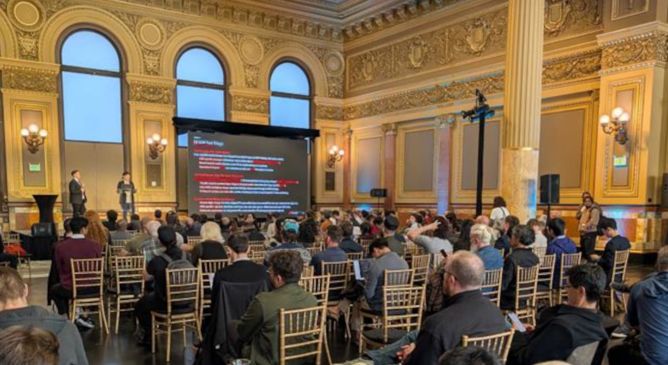
At [un]prompted 2026, TrendAI™ demonstrated how documents can be used to exploit AI-driven KYC pipelines and introduced FENRIR, an automated system for discovering AI vulnerabilities at scale.

 Login
Login