❌

Reading view

There are new articles available, click to refresh the page.

NymVPN's new update promises to get you through networks that block other VPNs

  • Anti-censorship bridges auto-reroute connections on restrictive networks
  • Battery life, connection reliability, account controls all see meaningful gains
  • QR code support, auto-connect, lockdown mode are up for future releases

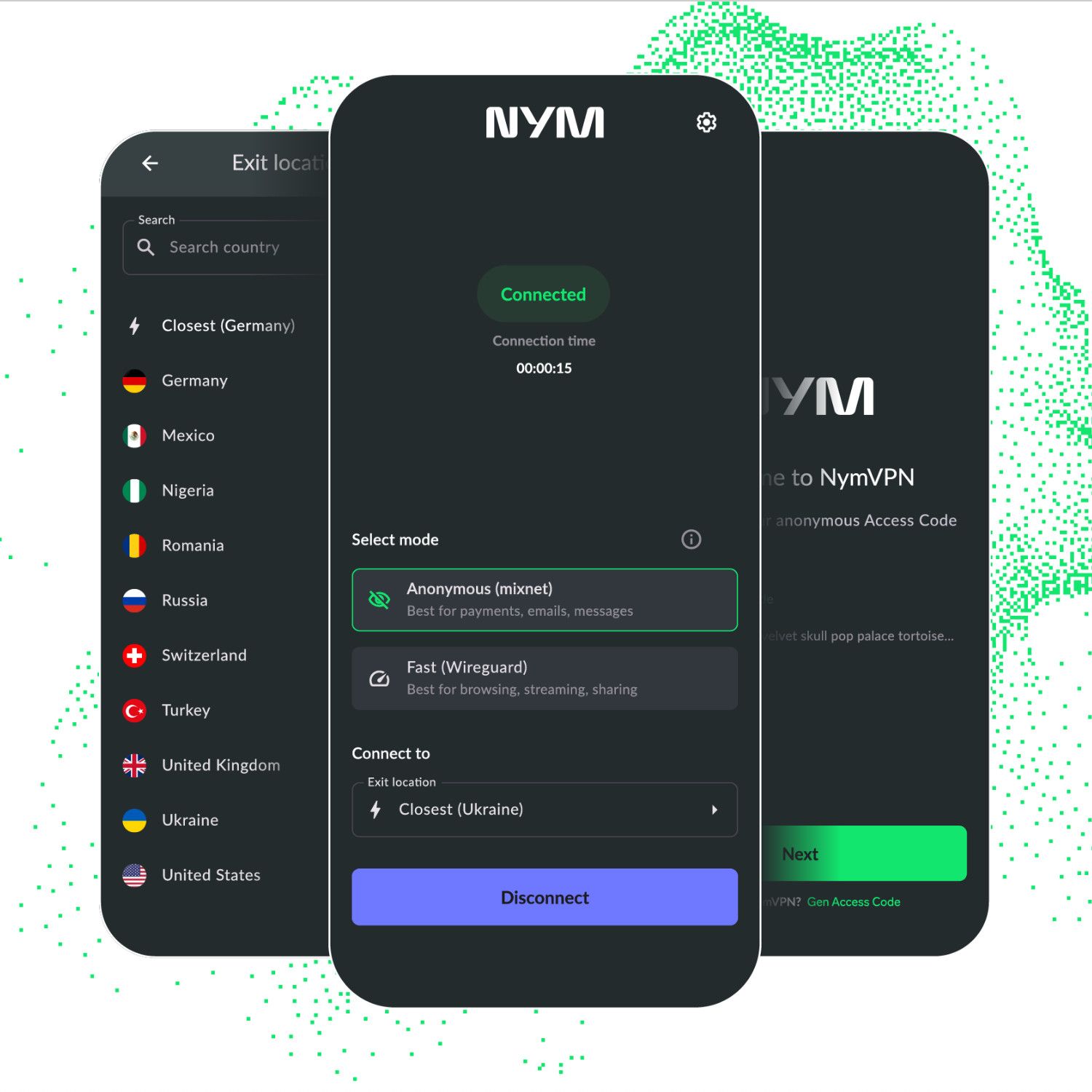
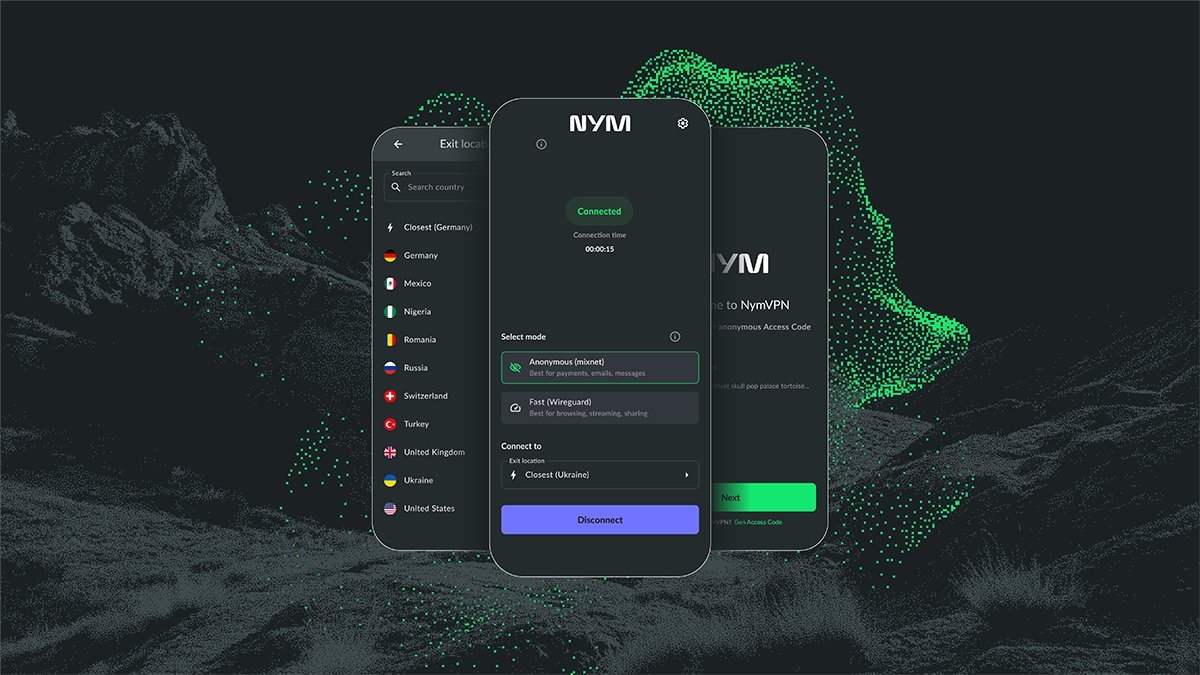
NymVPN has rolled out version 2026.15 of its apps, headlined by anti-censorship bridges designed to keep the service working on networks that try to block VPNs outright.

The update lands on every platform — Android/F-Droid (v2026.15.1), iOS, macOS, Windows and Linux —and is the decentralized VPN’s latest push to stay usable wherever VPNs are unwelcome.

From hotel and airport Wi-Fi to corporate networks, university campuses, and even national firewalls, VPN connections are routinely blocked at the ports and protocols they depend on.

This is the kind of problem the best VPN services are increasingly looking to solve. Version 2026.15 of NymVPN takes that problem head-on, arriving alongside longer battery life, tighter account controls, and a series of reliability fixes.
NymVPN: 12 months of protection for $4 per month.
NymVPN is pick of the bunch if you're after unquestionable privacy. Its decentralized mixnet architecture means your VPN connection is untraceable and encrypted at every point of its journey, without losing any functionality you'd expect from a VPN. You can also pay for it completely anonymously. Give it a go with a true 7-day free trial.View Deal

Getting past the block

Leading the latest update is the new anti-censorship bridges feature.

Bridges are adaptive tools: when a network attempts to shut down VPN traffic, an ordinary connection simply fails, leaving users stranded on an unprotected network — or offline entirely. The new bridges detect the interference and re-establish the connection through whatever route is still open.

Users have three options:

  • Auto: the sensible default for most, starts every connection on standard WireGuard and switches to a bridge if the network interferes;
  • On: forces a bridged connection everywhere, useful for anyone traveling through heavily censored regions;
  • Off: disables bridging entirely.

Nym pitches the feature for restrictive Wi-Fi and censored countries — anywhere a straightforward VPN connection stands little chance of surviving.

Leave No Trace logo

(Image credit: Future)

NEW: Leave No Trace — A weekly newsletter on digital privacy and online surveillance.

Leave No Trace investigates the companies and governments putting our digital freedom at risk — and the people fighting back.

📩 Subscribe now to get every edition delivered to your inbox every Friday, launching this September.

Practical improvements across the board

Away from censorship work, the update tackles the annoyance of battery drain. NymVPN previously checked a user’s remaining fair usage data over the network frequently enough to take a noticeable toll on battery life. That accounting now happens locally, and the app checks in with the network sparingly as a result.

Connection statuses have been made more trustworthy as well. Notifications now track the true state of the tunnel, putting an end to false "connected" flashes and ensuring error states persist only for as long as the underlying problem does.

On Android, the server list now opens instantly from cache and updates quietly in the background, while SOCKS5 connections shut down cleanly on disconnect.

NymVPN v2026.15 is live🛡️Anti-censorship bridges🔋Better battery life🧑‍💼Account controland more.... check out everything in the new release⤵️https://t.co/HVkDHadFDwNovember 9, 2026

Account control gets a boost as well.

Android users can now delete their account from inside the app. Across all platforms, the pre-expiry notice for plans and free passes has been upgraded from a passive heads-up to a full dialog with the option to renew directly.

The momentum continues

The pace of development is telling. Earlier this year, version 2026.12 brought one-click connections, reworked WireGuard handshakes for steadier mobile use, expanded split tunneling, and added a new six-month pricing tier — while retiring the two-year plan.

More is close behind. The next release promises QR code support for faster account setup, auto-connect, and country exclusion for finer control over where traffic travels. Further out, an optional lockdown mode will block every connection whenever the VPN isn’t active.

Nym is also letting users steer the NymVPN roadmap directly: feature proposals and votes on nym.com determine what rises to the top of the development queue. For a young, decentralized VPN finding its feet, that open-door approach may prove just as important as any single update.

ExpressVPN’s browser extension now blocks malicious sites – even when the VPN is off

  • ExpressVPN’s browser extension now blocks malicious, phishing, and scam sites without the VPN
  • Full URL-checking blocks single harmful pages, unlike DNS tools that block whole domains
  • The update extends ExpressVPN’s 2026 strategy of bundling security tools into all paid plans

ExpressVPN has added a new layer of security to its browser extension, and it doesn’t require you to switch the VPN on.

The feature, Web Protection, screens each page as it loads, matching it against continuously refreshed databases of sites known to host malware, scams, or phishing attempts, and stops them before they appear.

It’s available now on Chrome, Firefox, Edge, Brave, and other Chromium-based browsers, and comes at no extra cost to subscribers on the Basic, Advanced, and Pro plans, as well as ExpressVPN for Teams.

Browsers are where most people encounter online threats in practice – often via a single link to a convincing fake login page. Web Protection places the check at the point a page loads, catching the threat before the user ever sees it.

What makes it different

One of the more notable aspects of Web Protection is how precisely it blocks. Rather than judging an entire domain, it inspects the full web address.

That means a single fraudulent page – a fake login form tucked inside an otherwise legitimate site, for instance – can be shut down while the rest of the site stays accessible. Domain-level filters, which are the norm for DNS-based tools, can’t make that distinction.

Users also get more visibility than typical network-level blocking offers. When a page is stopped, the extension steps in with its own notice spelling out which site was halted, and why.

Users can maintain their own block and allow lists directly in the extension, and a weekly count on the home screen shows how many items Web Protection has flagged, with fuller statistics available in the account portal.

The feature sits alongside, rather than replaces, Advanced Protection, ExpressVPN’s device-wide system that operates inside the VPN tunnel.

The older tool covers all traffic across apps, but only while the VPN is connected and only at the domain level. Web Protection works in the browser with or without the VPN, and the two are designed to complement each other.

Part of a bigger push

Web Protection is the latest addition to the hybrid browser extension ExpressVPN rolled out earlier this year.

The first VPN-proxy hybrid of its kind, it can protect browser traffic on its own or hand control to the desktop app for full-device coverage, complete with Smart Routing rules and WebRTC leak protection.

It also fits into a broader strategy. In February 2026, ExpressVPN rebuilt its plans around a suite of security tools, including an email protection service and a personal data checker, and this week brought tracker blocking to its entry-level Basic plan.

The timing is apt. A recent TechRadar investigation found 369 fake VPN extensions on the Chrome Web Store, including impostors of ExpressVPN itself, collectively installed by more than 218,000 people.

With shady add-ons and phishing pages multiplying, it’s a logical step for ExpressVPN: meet users where the threats actually are, whether or not the VPN is switched on.

IPVanish clears a third independent audit, reinforcing its no-logs credentials for the second year in a row

  • Schellman Compliance’s latest audit of IPVanish has confirmed no traffic, metadata, or session logging
  • The audit is the third since 2022, and marks the second audit since IPVanish committed to annual audits
  • It follows IPVanish’s recent RAM-only server rollout and expansion to a 150-location network

IPVanish has announced the results of its third independent no-logs audit, and once again its privacy claims have a clean bill of health.

The audit was completed by Schellman Compliance, a leading provider of attestation services, on September 25, 2026.

Following two previous third-party audits in 2022 and 2025, the review is the latest in what's become an annual tradition for the VPN provider: inviting an outside firm to poke holes in its no-logs policy.

According to the results shared, the policy is accurate and fully aligned with IPVanish’s public privacy commitments – with its zero-logs promise strictly enforced across the company’s global server network.

Proof, not promises

The evaluation was comprehensive. Schellman’s auditors were given unrestricted access to IPVanish’s systems, configurations, and teams.

Interviews were conducted with engineering and operations staff, and company workflows were reviewed alongside infrastructure, internal documentation, and the administrative procedures governing the VPN app itself.

They also ran test traffic exercises – simulating real-world scenarios and watching closely for any evidence of VPN logging, including DNS queries, VPN metadata, and server responses.

The conclusion: no records of browsing traffic, session history, or connection metadata are collected or stored on active servers. Further, any real-time systems used to detect network abuse operate purely in memory, leaving nothing behind.

The auditors also checked IPVanish’s internal safeguards, confirming that any changes to how its servers work need sign-off from multiple people. This makes it much harder for logging to be quietly switched back on.

“A no-logs policy is only as credible as the evidence behind it,” said Subbu Sthanu, General Manager, Consumer Cybersecurity at IPVanish.

“People shouldn’t have to rely on promises when it comes to their privacy. By committing to annual independent audits of our no-logs policy, we’re making transparency and accountability an ongoing practice, not a one-time exercise.”

Customers who want to dig deeper can download the full report themselves via the Security Reports page in the My IPVanish account portal.

Part of a bigger picture

Woman holding a smartphone with the IPVanish VPN app open on the server location tab

(Image credit: IPVanish)

The audit doesn’t arrive in isolation. IPVanish has spent the past year restructuring its plans – Essential, Complete, and Advanced – around a suite of security extras, while growing a server network that now spans more than 150 locations.

Meanwhile, the company is midway through migrating its infrastructure to RAM-only servers, which wipe all data on every reboot and eliminate the possibility of storage-based logging; it has pledged to complete that transition by 2027.

Taken together, the picture is of a provider treating privacy less as a marketing slogan and more as something baked into how it operates.

In a market where rivals like NordVPN and ExpressVPN have made repeat audits their own baseline, the third-party stamp of approval is now a must-have rather than a nice-to-have. IPVanish seems intent on keeping up.

AmneziaVPN's latest update rolls out location sorting to streamline server selection alongside several technical improvements — here's what you need to know

  • AmneziaVPN's latest update adds location sorting, favorites, and a browser proxy for desktop
  • At a more technical level, the update brings log separation, server patching, and design tweaks
  • Roadmap hints at seamless location switching and domain-based split tunneling

Amnezia VPN version 5.1.0.6 is now available, bringing location sorting to the forefront of its Premium service. For users comparing it against the best VPN options, this update addresses one of the most frequent user requests as the number of available server locations continues to grow.

With over 50 Premium locations now active, the previous flat list had become difficult to navigate. The new version introduces filtering options that let users organize countries by geographic region or alphabetically.

Navigation features

The latest update places a “Filters” button to the right of the search field, offering two organization modes.

Users can group countries by world region – with alphabetical ordering within each section – or maintain a single alphabetical list spanning all locations. A search bar enables quick lookup by country name.

Users may also mark up to 15 frequently used locations as favorites by tapping a star icon. This feature works across both the main location screen and the Config Files section.

However, favorites are stored locally on each device and tied to the subscription key. This means favorite selections made on a phone will not sync to a desktop computer, though the settings persist through app updates and device restarts.

Browser proxy for desktop users

Amnezia has also introduced a local proxy option for Premium subscribers using Windows, macOS, or Linux. The Xray proxy runs at 127.0.0.1 on port 10808 by default, routing browser traffic through Premium servers without establishing a full system-wide VPN tunnel.

The feature requires the CensorTracker browser extension to function. It operates for a single subscription at a time and automatically stops when the main VPN connection activates. This suits users seeking selective browser routing without affecting other applications on their machine.

Additional improvements

The update also separates app logs from tunnel logs, giving users clearer visibility before sending diagnostic data to support.

Connection handling for Self-hosted servers using XHTTP and XMUX protocols has been refined, alongside fixes for mobile operator connectivity.

The Switzerland P2P location now supports bidirectional traffic, with Universal Plug and Play (UPnP) protocols enabled there – handy for hosting game servers, for example. Self-hosted users also gain a one-click button for updating server packages, and some interface tweaks lay groundwork for a redesign due in the next release.

What comes next

Users can check for updates within the app under Settings > About Amnezia VPN. Desktop installations apply the update automatically, while mobile users can download from the App Store or Google Play.

Looking ahead, Amnezia has outlined several planned improvements. These include seamless location switching without disconnection, domain-based split tunneling for desktop users, better stability when managing large domain lists, and more transparent Self-hosted server management.

As internet restrictions evolve around the world, tools like Amnezia VPN continue iterating to remain effective. This update signals a focus on usability alongside security – a balance that’s particularly important for users relying on these services for daily access to information.

ExpressVPN makes its AI assistant and tracker blocking available to all users

  • ExpressVPN has added tracker blocking to its Basic plan, a tool previously limited to Advanced and Pro plans
  • ExpressAI is also now included with 50 daily credits, 1 model, and 100MB of storage
  • The change follows the February 2026 shift to three plans offering its new spread of tools

ExpressVPN has expanded what its entry-level Basic plan includes, adding two features that were previously reserved for higher-priced tiers.

Subscribers on Basic now get tracker blocking alongside access to ExpressAI, the company’s private AI assistant.

Until now, that level of protection started with the Advanced plan, while ExpressAI was exclusive to Pro. Here’s what’s changed, and why it matters.

Tracker blocking comes to Basic

The Basic plan already blocked ads, malicious sites, and adult content – a package ExpressVPN calls Lite Protection.

It lacked tracker blocking: the ability to stop scripts that follow you around the web and quietly build a profile of what you browse. That capability used to start at the Advanced tier but is now part of Basic.

For a plan that already sits at the cheaper end of the market, at just $2.99/month, that narrows the gap between budget and mid-tier subscriptions considerably.

Advanced keeps its other perks – 12 simultaneous connections versus Basic’s 10 and a more generous email protection allowance.

ExpressAI arrives on the lower tiers

The bigger addition is ExpressAI, a private AI assistant built on confidential computing. In plain terms, that means conversations are processed inside a protected environment that even the provider itself can’t read – a pointed answer to the growing unease over how much consumer AI chatbots actually see.

Basic subscribers get 50 credits a day, 1 AI model, and 100MB of storage, with web search included. Advanced bumps that to 100 credits daily, the same single model, and 500MB of storage. Pro – still the home for power users – retains the fullest version, with 500 credits per day, six AI models, and 2GB of storage.

Whether 50 credits and 100MB is enough depends on how heavily you lean on an assistant; it’s best thought of as a taste of the full service rather than a replacement for it. Yet for anyone curious about private AI who was put off by the Pro price, there’s now a much lower barrier to entry.

Part of a bigger push

The update extends a strategy ExpressVPN kicked off in February 2026, when it rebuilt its plan lineup around a suite of tools: the ExpressAI assistant, the ExpressMailGuard email shield and the Identity Defender monitoring service, which was limited to US users at launch.

ExpressKeys, the provider’s password manager, moved from the main app to a standalone one as part of the same shake-up. At the time, TechRadar’s Rob Dunne called the restructure “the biggest expansion to ExpressVPN’s portfolio since its eSIM launched in December 2024.”

Even then, Basic users missed out on much of it – no ExpressKeys, no Identity Defender, and no tracker blocking either. That’s what makes the current update notable.

With Black Friday landing on November 27, VPN providers are already dangling enticing offers: Surfshark was one of the first out of the blocks, dropping the price of its mid-tier plan to match its entry-level one. Against that backdrop, ExpressVPN’s richer Basic plan looks well positioned for the sales season.

❌