❌

Reading view

There are new articles available, click to refresh the page.

The iPhone 18 Pro Max has a clever feature to avoid problems with its larger battery that might become the new normal — here’s what you need to know

  • The iPhone 18 Pro Max uses software artificially reduce its battery capacity to avoid shipping restrictions
  • The same software trick will need to be used when shipping the phone off to repair or sell it
  • Other phones might start taking this same approach

The iPhone 18 Pro Max has the highest capacity battery that Apple has ever put in a handset. Going by teardowns, you’re getting a 5,567mAh battery in eSIM-only models and a 5,391mAh one in versions with a physical SIM card slot. But both of those are over 20 watt-hours (Wh), and that could have been a problem for Apple.

You see, most countries have additional shipping requirements for devices with a single-cell battery of over 20 Wh. For example, both the US and UK consider these ‘dangerous goods’, and they’re prohibited to be sent through standard consumer mail services such as USPS standard post and Royal Mail.

That’s obviously a problem for a device that many people will be ordering online — and it can also complicate shipping the device to stores. But Apple has come up with a clever solution called ‘Prepare to Ship’.

This is a mode that uses battery firmware to limit the capacity to under 20Wh, and it's active from when the phone is manufactured to when a customer first activates it.

Once you have the phone up and running, the limit is removed automatically — so in other words this gets it around the shipping restrictions, without limiting the capacity of the product you receive.

However, this also adds an extra step you need to take before shipping the phone somewhere yourself — whether you’re sending it off for repair, selling it, or whatever else, as you need to manually enable the ‘Prepare to Ship’ mode again.

How to prepare your phone for shipping
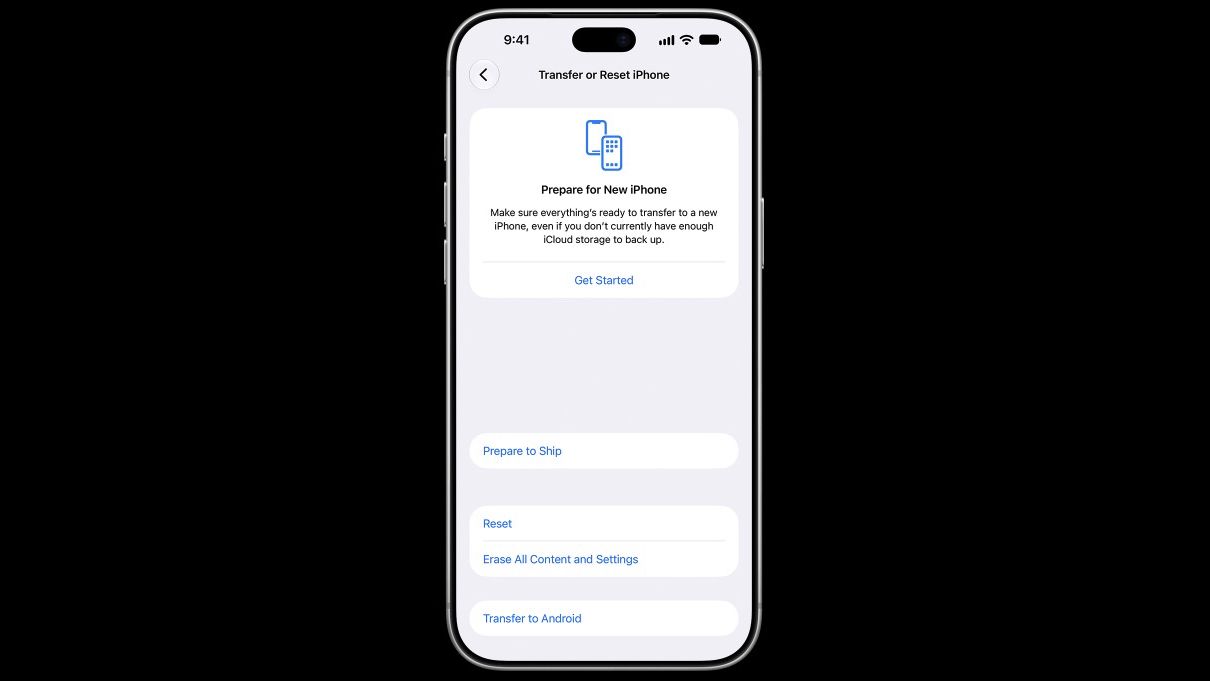
The 'Prepare to Ship' option on an iPhone 18 Pro Max

(Image credit: Apple)

To do this, go to Settings > General > Transfer or Reset iPhone > Prepare to Ship. Then just follow the onscreen instructions, including selecting whether or not you also want to erase your phone.

There are a few things to be aware of though: to activate ‘Prepare to Ship’ mode, your phone might need to discharge a bit, so you should unplug it from its charger, and you should also be aware that it might become warmer than usual while this process is being carried out.

The full process can take anywhere from a few minutes to a few hours depending on how much the battery needs to drop, but you can use the phone as usual in the meantime (assuming you haven’t also opted to erase it), and the Settings app will display a red badge reading ‘Ready to Ship’ once it’s done.

If you have erased it, then you’ll instead see whether it’s ready to ship on the ‘Hello’ screen — just tap the info button there.

Once ‘Prepare to Ship’ has been enabled, it limits the battery to under 80% capacity for 14 days, but if you need to undo this setting prior to that, just head to Settings > General > Transfer or Reset iPhone > Ready to Ship, and tap ‘Undo Shipping Preparation.’

This might become the new normal

So it’s a simple enough process, but it’s one that’s vital to know about when it comes time to sell or repair your phone — so hopefully there will be enough messaging around it.

But while for now this only affects the iPhone 18 Pro Max, it could one day become the norm. Certainly, we’d expect future large iPhones to have this same feature, but Android phones are likely to get in on the act too, since it's a very elegant solution to the problem.

Currently, some Android phones get around 20Wh restrictions by using multiple smaller battery cells, but depending on the design of the phone it might be preferable to just have a single cell — in which case a solution like Apple’s firmware trickery makes total sense.

This is one of those situations where we don't think there's any shame in borrowing ideas from other manufacturers.
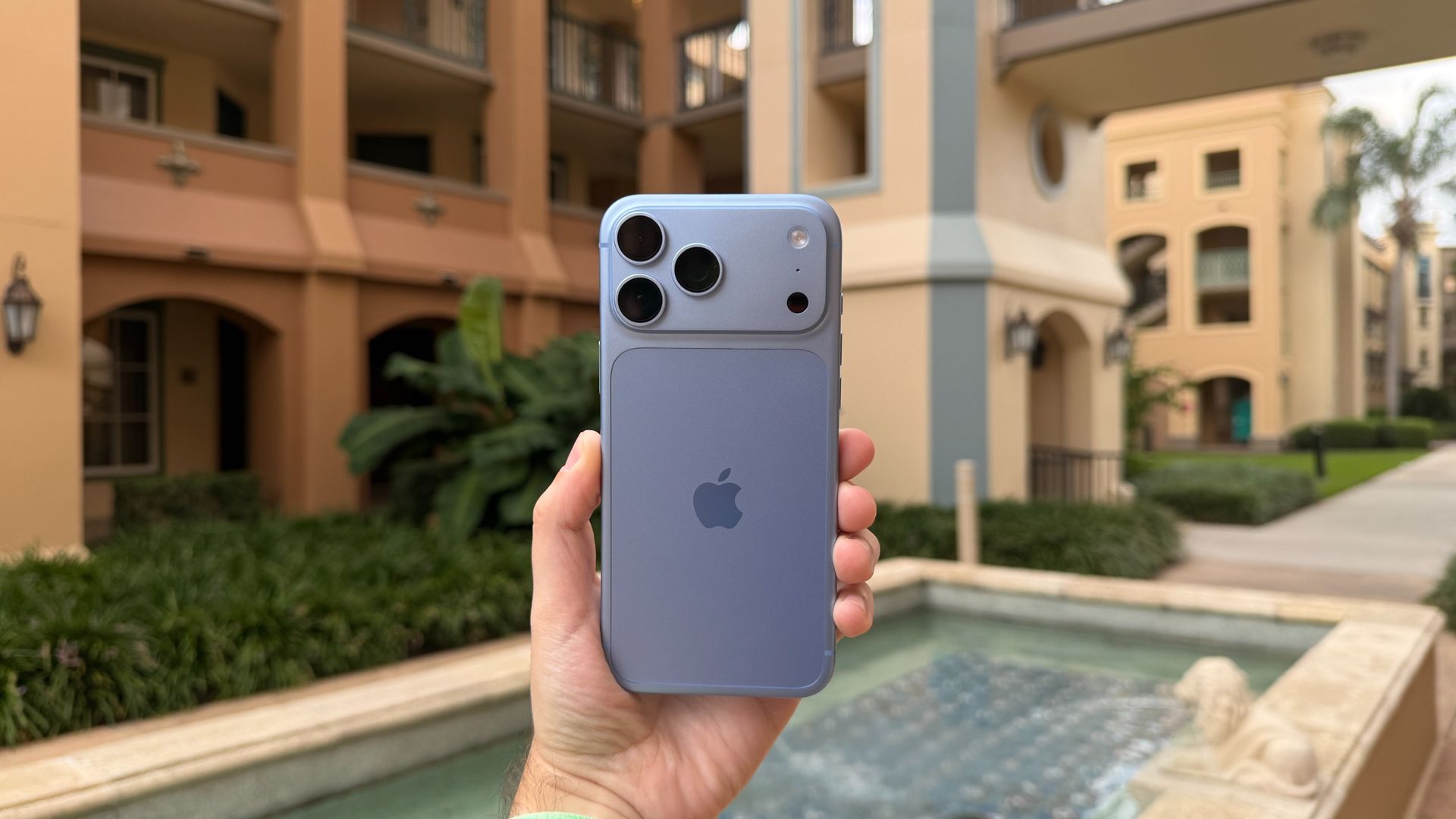
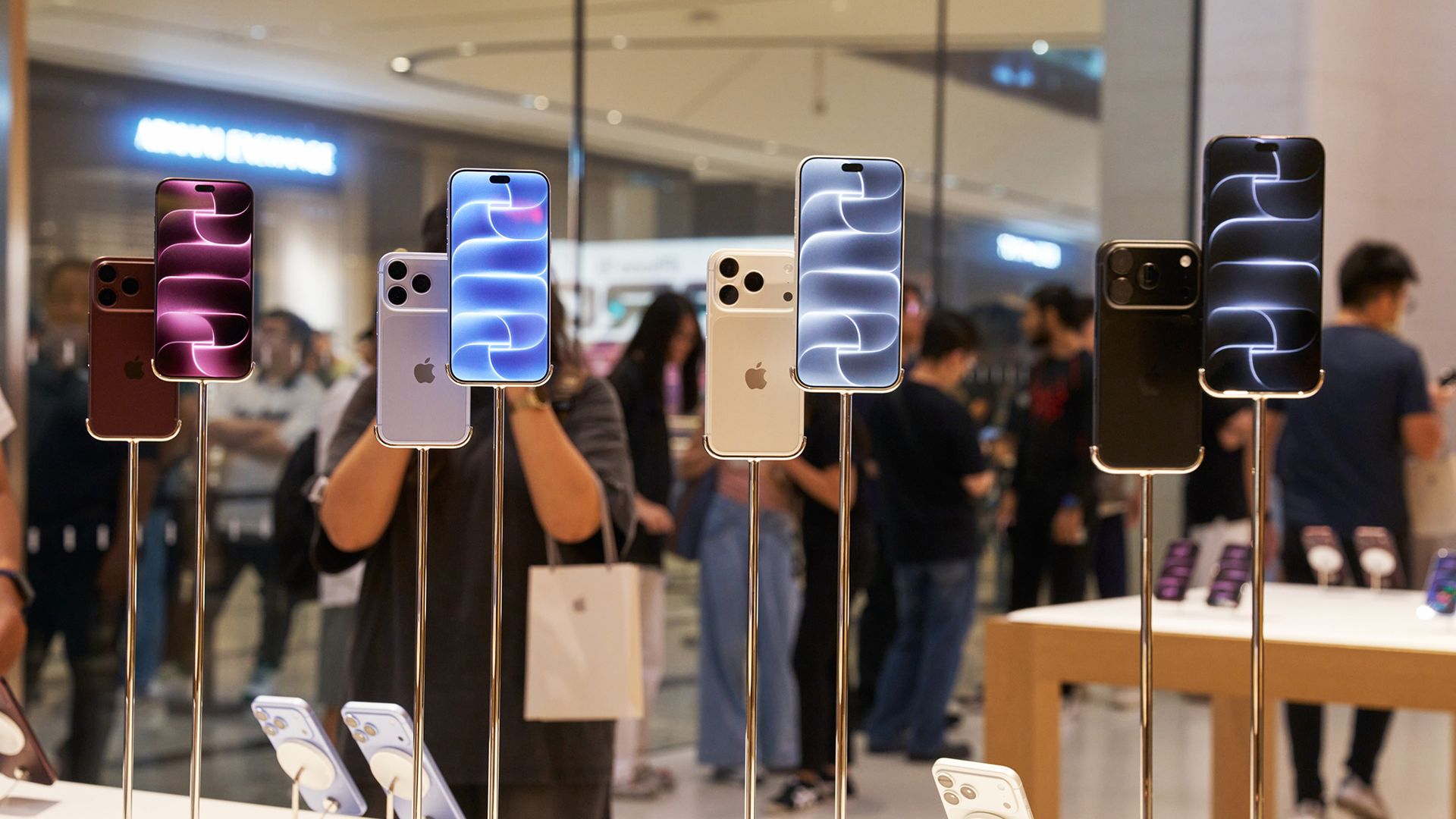
If you spot this new 'hello' sign hidden away in your local Apple Store, it's there because of the new iPhone 18 Pro

  • Look out for the small blue 'hello' signs in Apple Stores
  • They're to help test the iPhone 18 Pro and Pro Max cameras
  • The new phones are now available to purchase in retail stores

The next time you head into an Apple Store, you should be able to spot a small blue 'hello' sign somewhere, as per reports on social media — and the appearance of these little signs is apparently connected to the launch of the iPhone 18 Pro and iPhone 18 Pro Max.

As per MacRumors, the signs are there to help customers test out the optical zoom capabilities of the new handsets. Both models offer up to 8x optical zoom, so having something specific to zoom in on is going to be helpful.

While the iPhone 18 Pro and iPhone 18 Pro Max have a variable aperture feature on one of their three rear cameras now, the optical zoom capabilities are actually the same as the iPhone 17 equivalents that launched in September of last year.

There are also new Pro controls on the latest handsets, so settings for lens aperture, shutter speed, and white balance can be tweaked shot by shot — something else you might want to test out in an Apple Store.

Now available

از امروز تمام اپل استورها این نشان hello رو یه جایی دارن که باهاش بتونن زوم دوربین آیفون‌ها رو به مشتری‌ها نشون بدن pic.twitter.com/gpLv7CPaweSeptember 18, 2026

The iPhone 18 Pro and iPhone 18 Pro Max arrived in Apple's retail stores on Friday, September 18, six days after preorders started. Prices for the handsets start at $1,199 / £1,199 / AU$2,099 and $1,299 / £1,299 / AU$2,299 respectively (for 256GB of storage).

New Apple CEO John Ternus made an appearance at the Apple Store in New York to help celebrate the wider availability of the flagship iPhones — as well as the Apple Watch Series 12, the Apple Watch Ultra 4, and the AirPods 5.

He didn't mention anything about the new 'hello' signs in stores, but they've been spotted by customers nevertheless. They look to be located on higher shelves and fixtures, perhaps to put off anyone wanting one as a souvenir.

And if you're wondering where the iPhone 18 is and when you'll be able to test that out, don't panic — it's rumored to be showing up around March time, alongside the iPhone 18e and the iPhone Air 2.

I spoke to Apple’s new VP of Hardware Engineering about why he's ‘especially proud’ of the iPhone Duo’s hinge durability and the reliability of Ceramic Shield 2: ‘When I see someone put a screen protector on their iPhone, it makes my skin crawl’

In the midst of hype for Apple’s new A20 Pro chipset and slick foldable software, the company’s durability department is quietly having a moment.

Its Ceramic Shield 2 display glass — first introduced on the iPhone 17 line and returning this year on the iPhone 18 Pro — is earning plaudits for delivering on the promise of 3x better scratch resistance 12 months on from its release, while the iPhone Duo is set to arrive next month with a host of impressive on-paper durability credentials (including, notably, a Galaxy Z Fold 8-beating IP68 resistance rating).

But while features like ingress protection and corrosion resistance aren’t the sexiest topics of discussion at Apple Park, they are some of the most important for ensuring Apple’s products stand the test of time — and Tom Marieb, the company’s new Vice President of Hardware Engineering (a role formerly occupied by CEO John Ternus), knows that better than most.

I had the chance to quiz Marieb on the iPhone 18 Pro and iPhone Duo in a group interview at Apple’s London HQ, and he lifted the lid on how Ceramic Shield 2 — which we described as “the first iPhone glass we fully trust” earlier this year — managed to deliver such a noticeable jump in quality versus the original Ceramic Shield, and why he’s “especially proud” of the iPhone Duo’s hinge durability.

Apple iPhone 18 Pro and iPhone 18 Pro Max Review

Both the iPhone 18 Pro (above) and iPhone Duo feature Ceramic Shield 2 on their respective front displays (Image credit: Future/Jacob Krol)

“Personally, when I see someone put a screen protector on their iPhone, it makes my skin crawl, because we work so hard to make beautiful front screens,” Marieb told me. “So we very much wanted to develop new coatings that could withstand [scratches], but also make sure that these coatings were wear-resistant as well. We worry about scratching, which is obviously very dependent on having [material that can withstand] very sharp things going into the screen. But we also worry about wear over time; as people use the screen, whether they’ll wear away that surface. And it turns out that those things are a little counterindicated in a lot of materials.

“So we had to try to optimize both of those [qualities] simultaneously [...] And I think we finally hit on a nice balance between the two [in Ceramic Shield 2]. We could have made it more scratch-resistant, but it would have been a little less wear-resistant. It’s the long life we’re looking for against both of those loads over time.”

We try to say, ‘How are customers actually using this? What exactly are they exposing it to in the real world?’ And we make tests that mimic those things.

Tom Marieb, VP of Hardware Engineering, Apple

Marieb added that, in testing Ceramic Shield 2, Apple accounted for half a decade’s worth of use in a comparatively minuscule testing period: “We very much try to meet the customer where they live, and so we don't design tests that measure old military specs or old standards; we try to say, ‘How are customers actually using this? What exactly are they exposing it to in the real world?’ And we make tests that mimic those things.

“And as you said, people waiting a year or two to actually see the benefits of [Ceramic Shield 2] means we've correctly predicted how people would use it. We accelerate time to try to compress those things into the engineering cycle, so that we can feed back as we try one thing after another, and can represent five years of life — or even more — within a couple of weeks of testing.”

It all hinges on the hinge

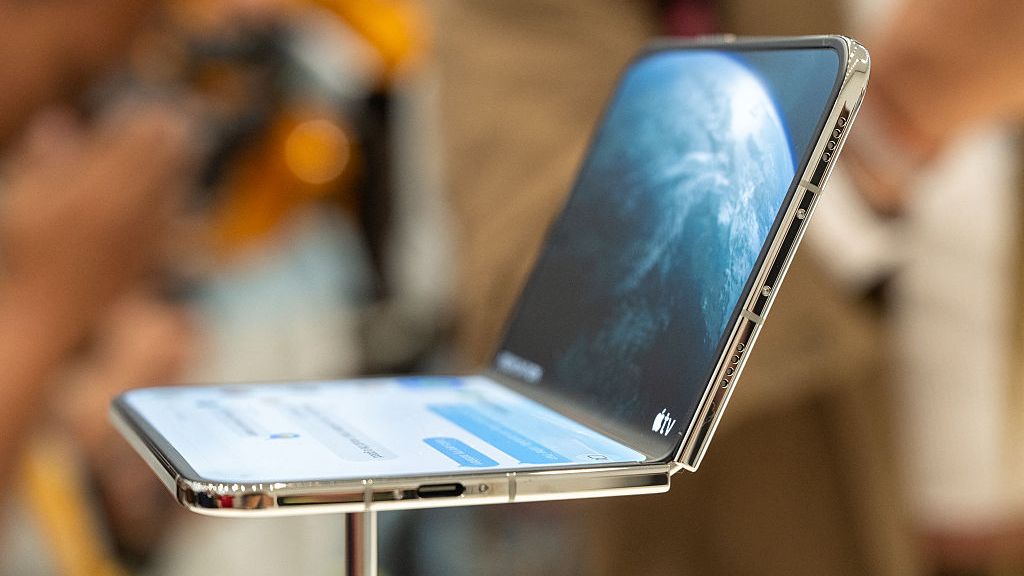
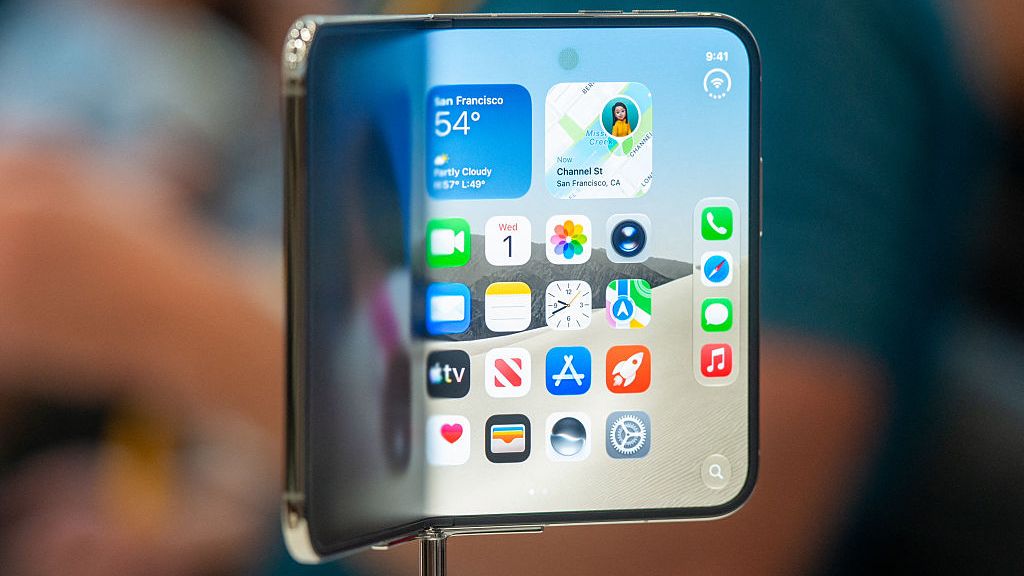
The iPhone Duo in an unfolded state

The iPhone Duo in ‘Seated’ mode (Image credit: Getty Images / Karl Mondon)

The display is the most important part of any iPhone, but the foldable iPhone Duo saw Apple tasked with protecting a new, equally crucial component: the hinge.

Like any foldable, the Duo can be used open or closed, and Apple has also developed dedicated ‘Seated’ or ‘Standing’ modes that will see the Duo bent at various angles for extended periods. The former displays visual content on the top half of the screen and viewing controls on the bottom (picture a Game Boy Advance), while the latter turns the Duo into a bedside clock, photo gallery, or weather screen via StandBy.

Whichever orientation you choose, the Duo remains fixed in place — but the work to make that happen wasn’t easy.

“I'm glad you hit on this, because this is something I'm especially proud of, and it took us a long time [to crack],” Marieb explained. “What we worry about with this device is that people see how thin it is and they think it's fragile. People seem to be worried about the Air, too, but it's honestly one of the most reliable phones we’ve ever made. And so we thought, ‘How do we design a hinge that feels very solid when you close it, but also really solid when you open it?’

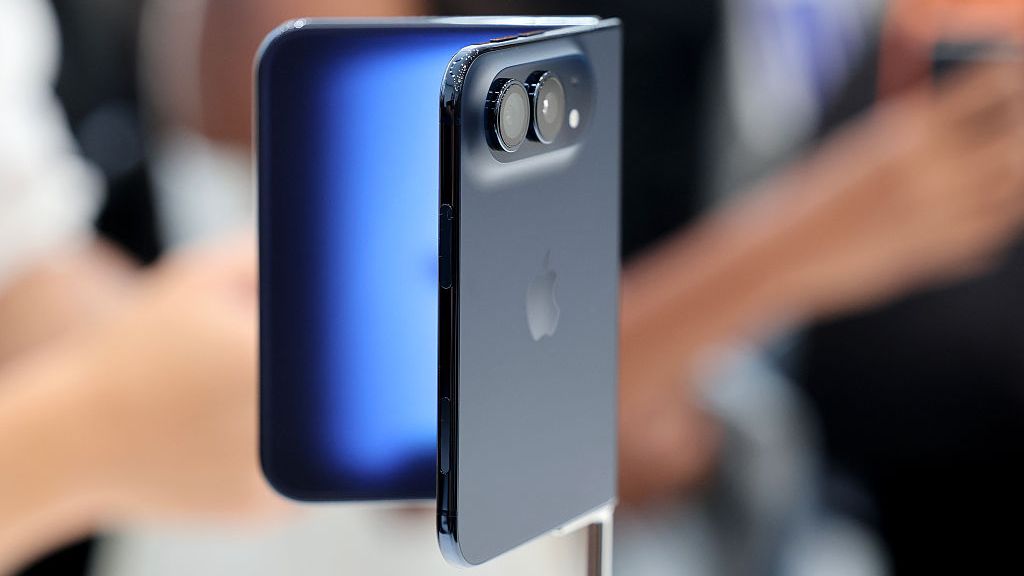
A partially unfolded iPhone Duo on display

The iPhone Duo in a half-folded orientation (Image credit: Getty Images / Benjamin Fanjoy / Stringer)

“We really worked on the torque profile very heavily, and that means changing a lot of the mechanical properties of the hinge to have it feel solid, like a high-end automobile's car door, when you shut it. That was design intent, so people would have a feeling like, ‘Oh, it's okay. This is well crafted, and it's safe for me to use and not worry about it.’

And then, as you said, we have a lot of use cases where the Duo is [in a half-folded state]. And so we also had to think, ‘Can people interact with this [device] and not have it feel floppy?’ So getting those torque profiles right at both those ends, as well as in the middle — not having it feel like you're pulling something open, and not feeling as if it's floppy — we spent a lot of time optimizing that. So thank you for noticing, because a lot of blood, sweat, and tears went into that.”

The dual benefits of nano texture

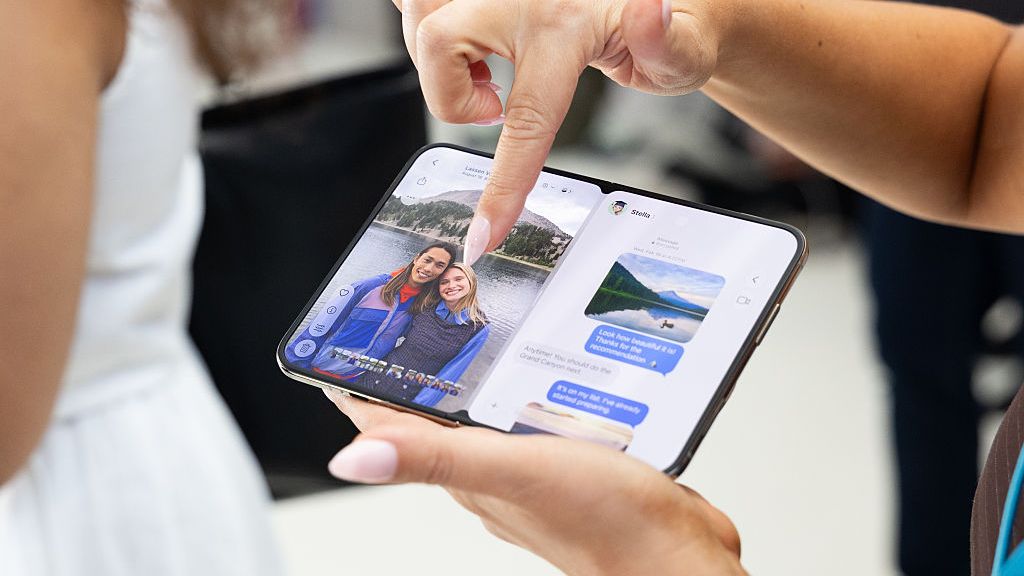
A woman pointing at the iPhone Duo's unfolded display

The iPhone Duo features a custom nano-texture display (Image credit: Getty Images / Benjamin Fanjoy / Stringer)

On top (literally) of the iPhone Duo’s hinge, Apple has equipped its first foldable phone with a 7.6‑inch nano‑texture display. This new material isn’t a million miles away from the anti-reflective nano-texture glass that can be added to the best MacBooks, though, of course, the Duo version of said glass needs to bend in half.

Another journalist in my group interview with Marieb noted that foldable creases typically appear minimal out of the box, but become more prominent mere months after being used extensively. In response, the Apple executive was bullish on the longevity of the Duo’s hinge and explained that the nano‑texture display should help maintain its obscurity:

“Hold us accountable to that, please […] The choice of a matte finish — apart from it being beautiful — is part of that equation. When you look at glossy displays, their specularity makes it very easy to pick up topology differences. That’s part of the reason we picked the matte finish — it’s not only beautiful in terms of preventing glare, but it’s also more forgiving of [topology] changes over time.”

Apple, then, is supremely confident in the durability credentials of its first foldable phone — and we look forward to putting the iPhone Duo through its paces ahead of its official launch on October 23. For our full verdict on Apple's latest candybar handsets, check out our iPhone 18 Pro and 18 Pro Max review.

This is what it's like to be the first person on the new iPhone 18 Pro line at the Apple Store

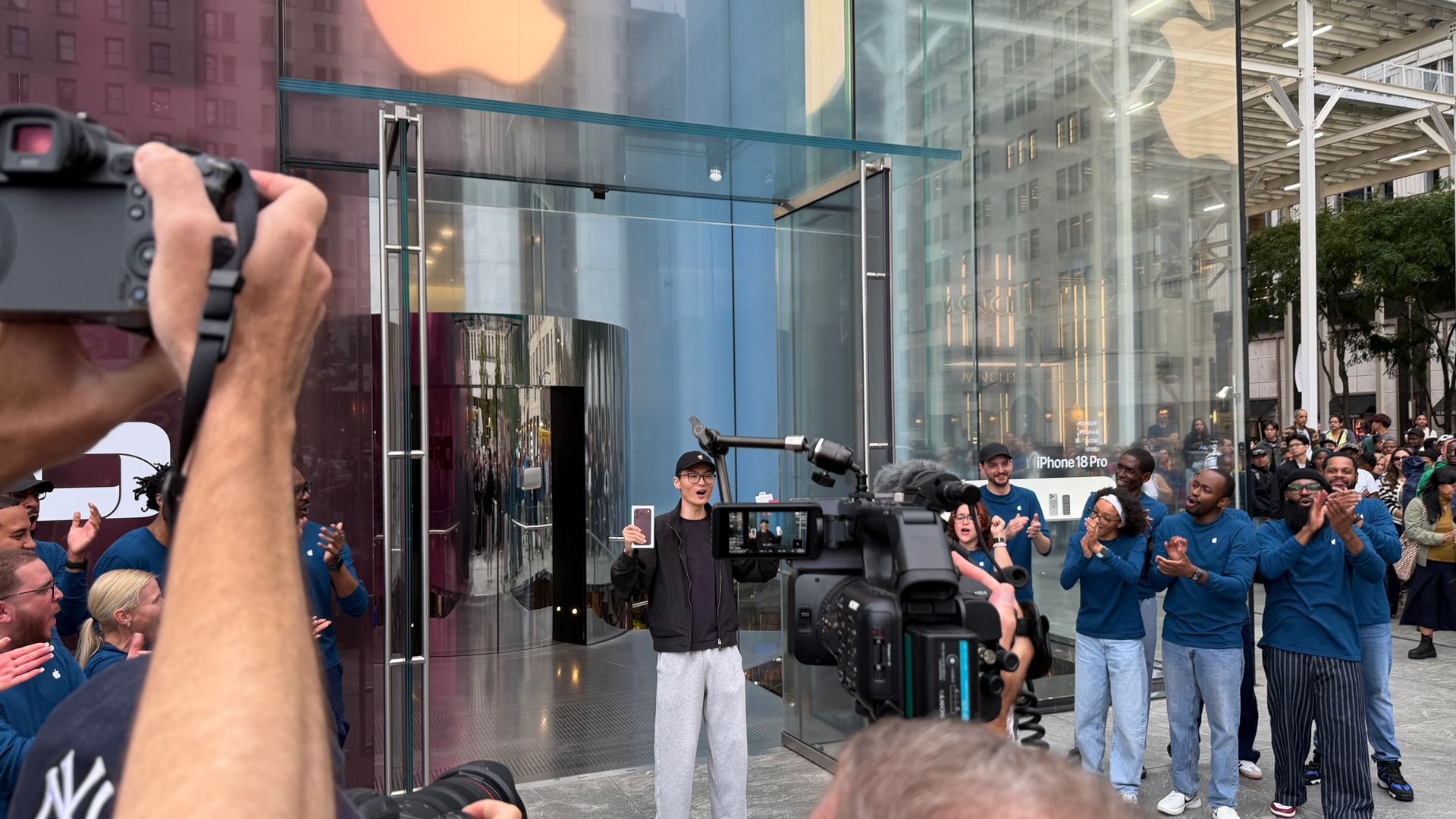
"Feel the vibe here, that's what I love," said Harry Sung as he stood in the middle of a buzzing Apple Fifth Ave flagship store. Moments earlier, Sung picked up the first burgundy iPhone 18 Pro Max of the day after being ushered into the glass edifice by none other than new Apple CEO John Ternus.

It was a big day for Sung, who scored his second year in a row as the first Apple customer on iPhone launch day, and an even bigger day for Ternus, who was hosting his first iPhone launch store event as CEO.

John Ternus as iPhone 18 Pro Max Apple Store Launch
Lance Ulanoff / Future
John Ternus as iPhone 18 Pro Max Apple Store Launch
Lance Ulanoff / Future

It's been a whirlwind few weeks for Ternus, who officially took over for former CEO Tim Cook (new Executive Chairman) on September 1 and, a week later, was on stage unveiling the iPhone 18 Pro line, new AirPods, new Apple Watches, and the exciting foldable iPhone Duo.

On this day, that flexi-phone was nowhere in sight. Even so, the atmosphere was electric, and it felt, to those of us who've been attending iPhone store launch events for almost 20 years, like the old days.

When I caught up with Ternus inside the store, he told me the day was "exciting," and I could tell he was still a little amped up from the store opening ceremony.

John Ternus as iPhone 18 Pro Max Apple Store Launch
Lance Ulanoff / Future
John Ternus as iPhone 18 Pro Max Apple Store Launch
Lance Ulanoff / Future
John Ternus as iPhone 18 Pro Max Apple Store Launch
Lance Ulanoff / Future

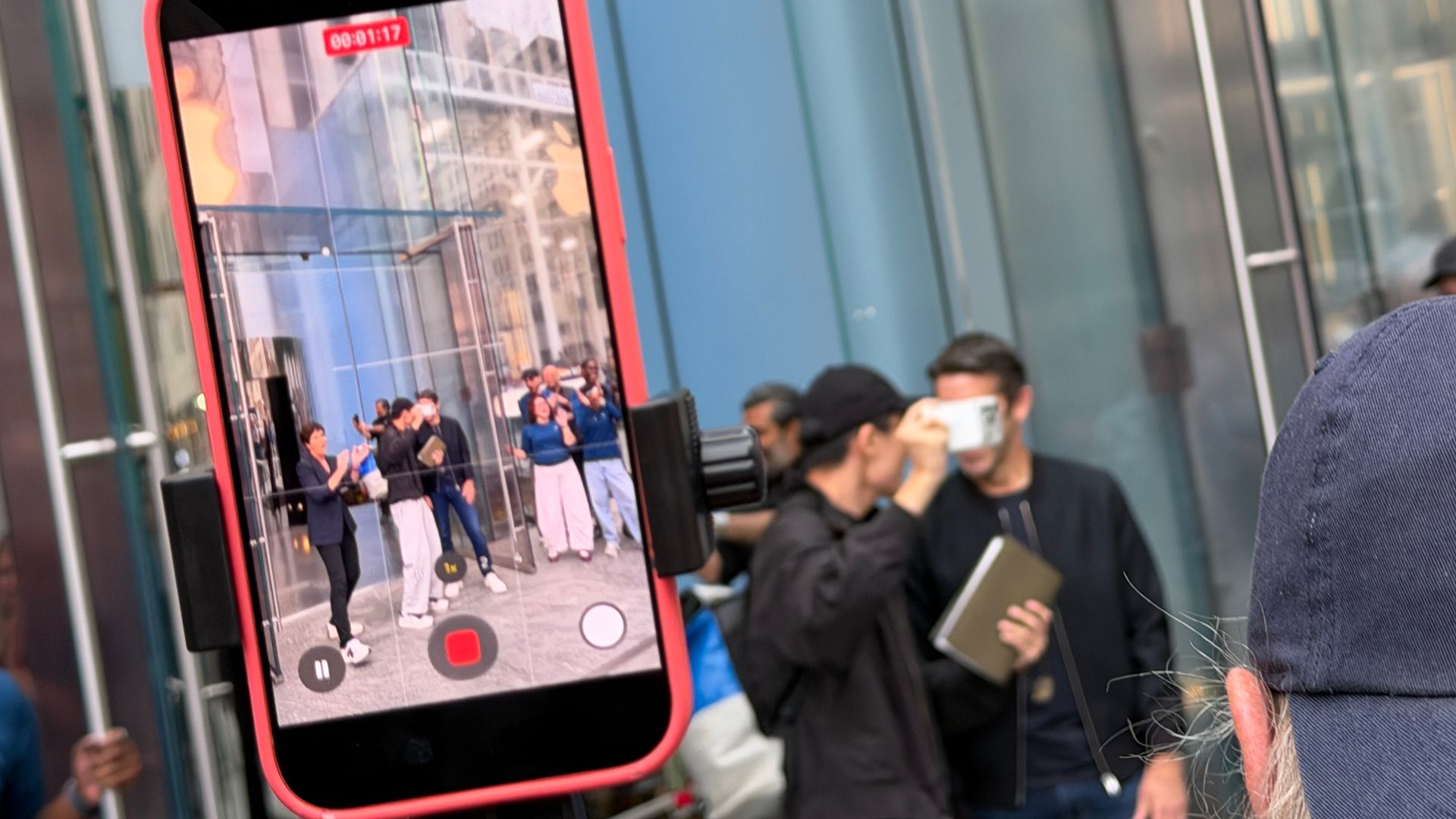
At precisely 8am ET, Ternus appeared behind the frosted glass doors of Apple's Fifth Avenue flagship store and then swung open the doors. He stood for a time, waving to a cheering crowd, behind which was a small cluster of protesters shouting about, among other things, iPhone manufacturing working conditions. As the groundswell of excitement grew around Ternus, the protesters seemed to lose steam.

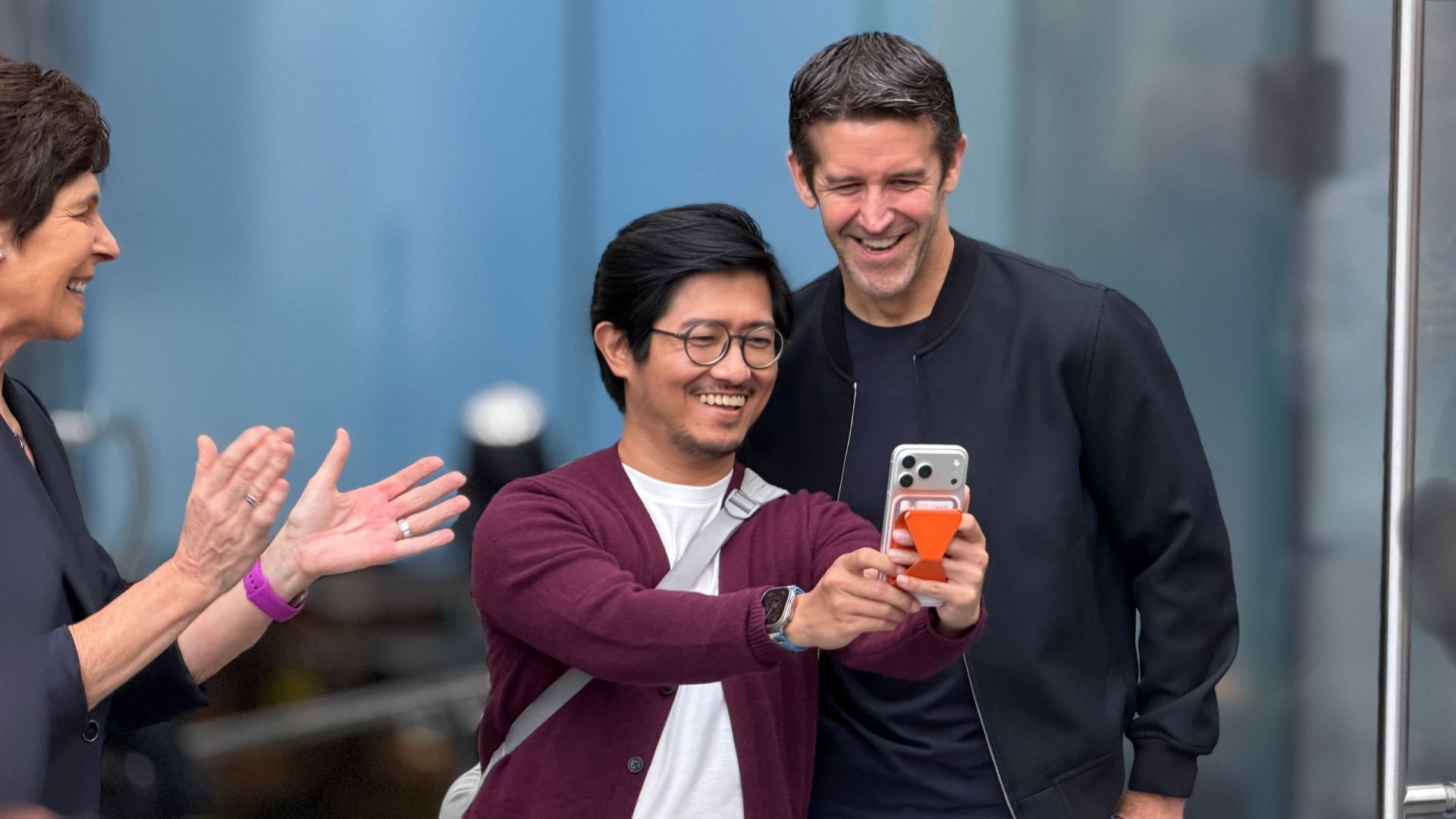
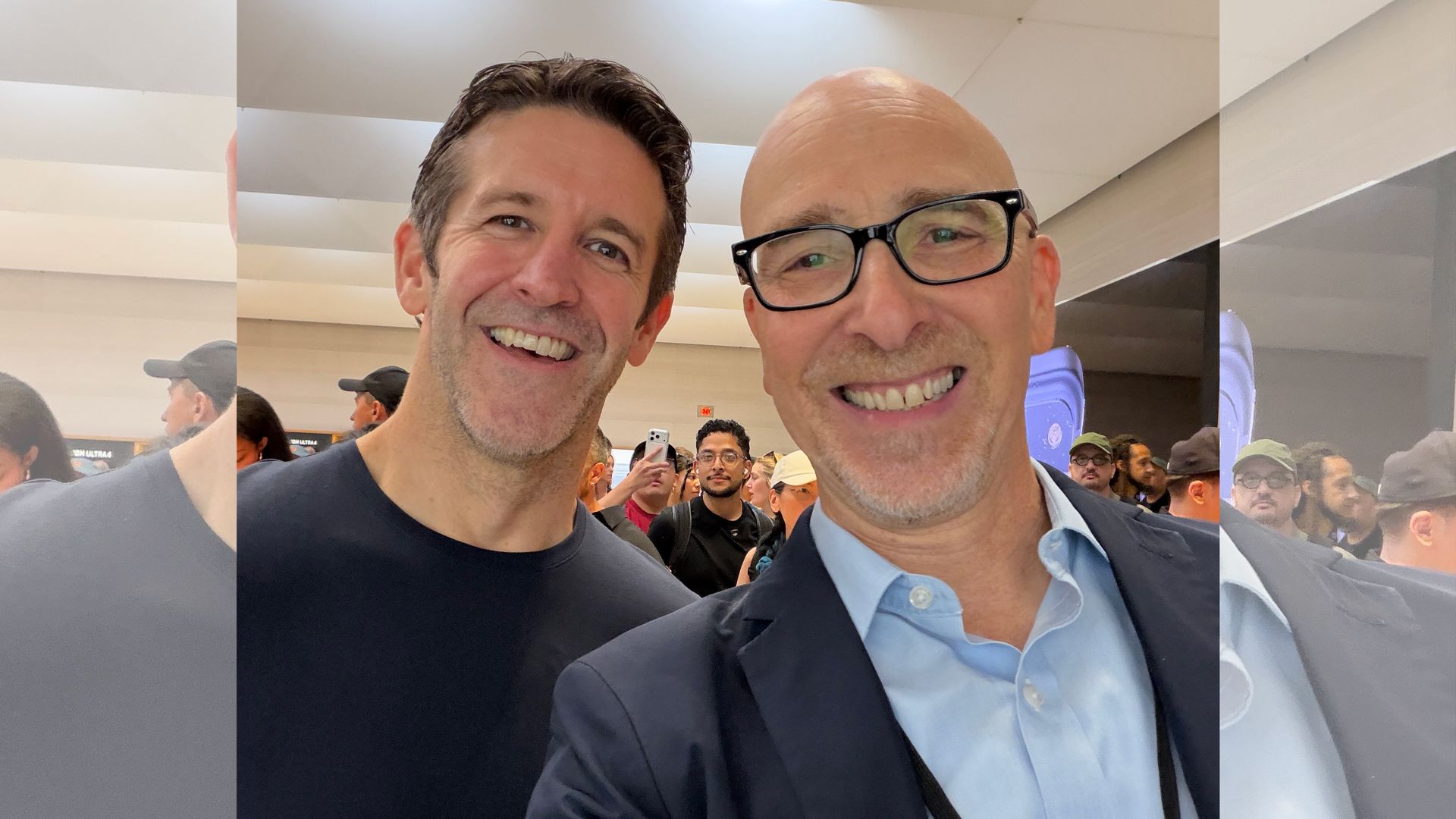
John Ternus and Lance Ulanoff

(Image credit: Lance Ulanoff / Future)

Ternus then turned to the long line of iPhone customers waiting outside the store, many of whom had pre-ordered the phone last week, and started greeting them. First up was Sung.

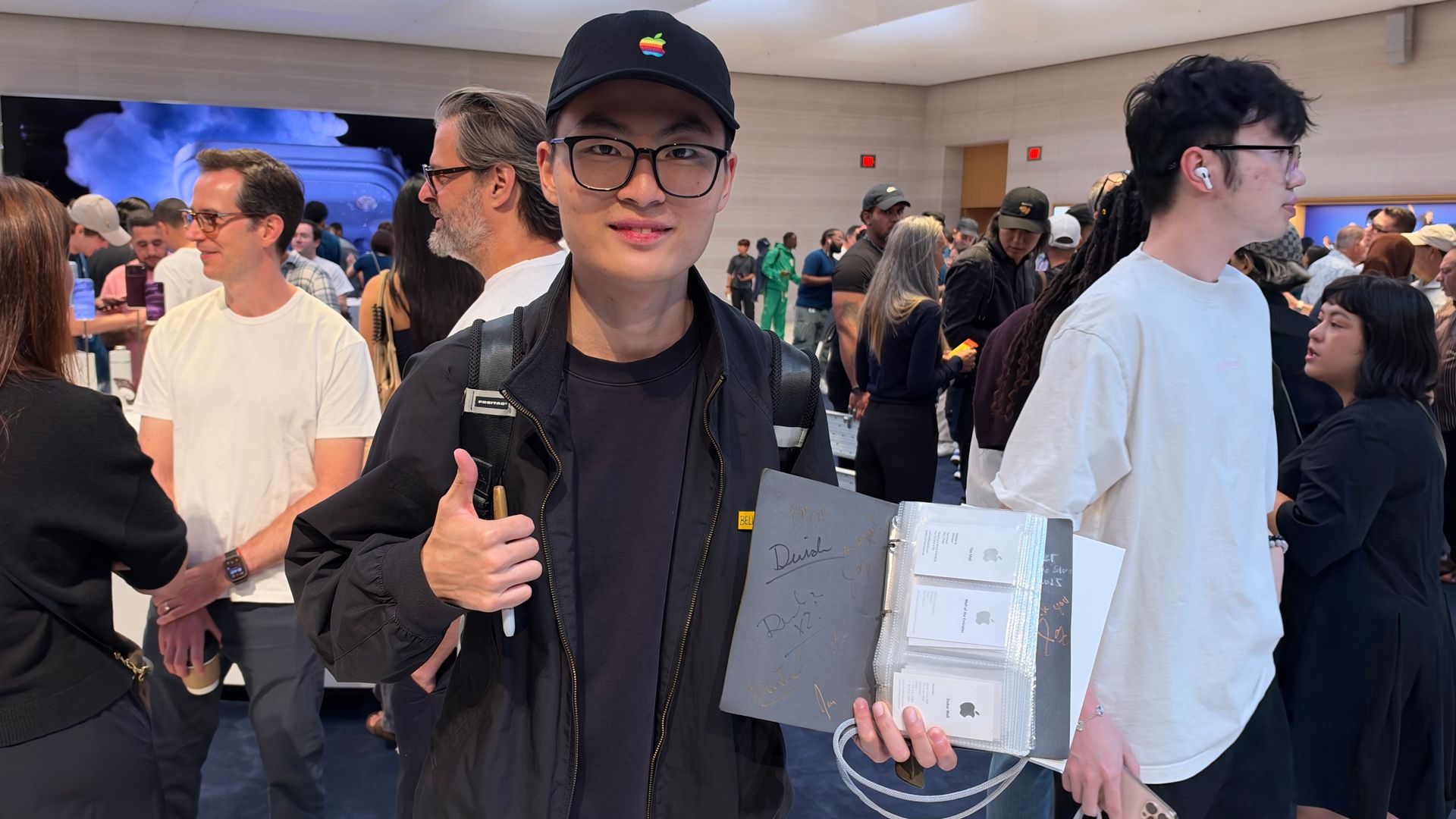
In his arm was a binder full of cards denoting the 120 Apple Stores he'd visited around the world. Sung later told me he had met Ternus once before at another product launch at Apple's "100th store" where he'd had Ternus sign the book. The inside cover also featured more than half a dozen other Apple executives' signatures (This is not surprising. In another part of the store, I witnessed Apple head of Retail Deirdre O'Brien signing someone's MacBook.)

John Ternus as iPhone 18 Pro Max Apple Store Launch
Lance Ulanoff / Future
John Ternus as iPhone 18 Pro Max Apple Store Launch
Lance Ulanoff / Future

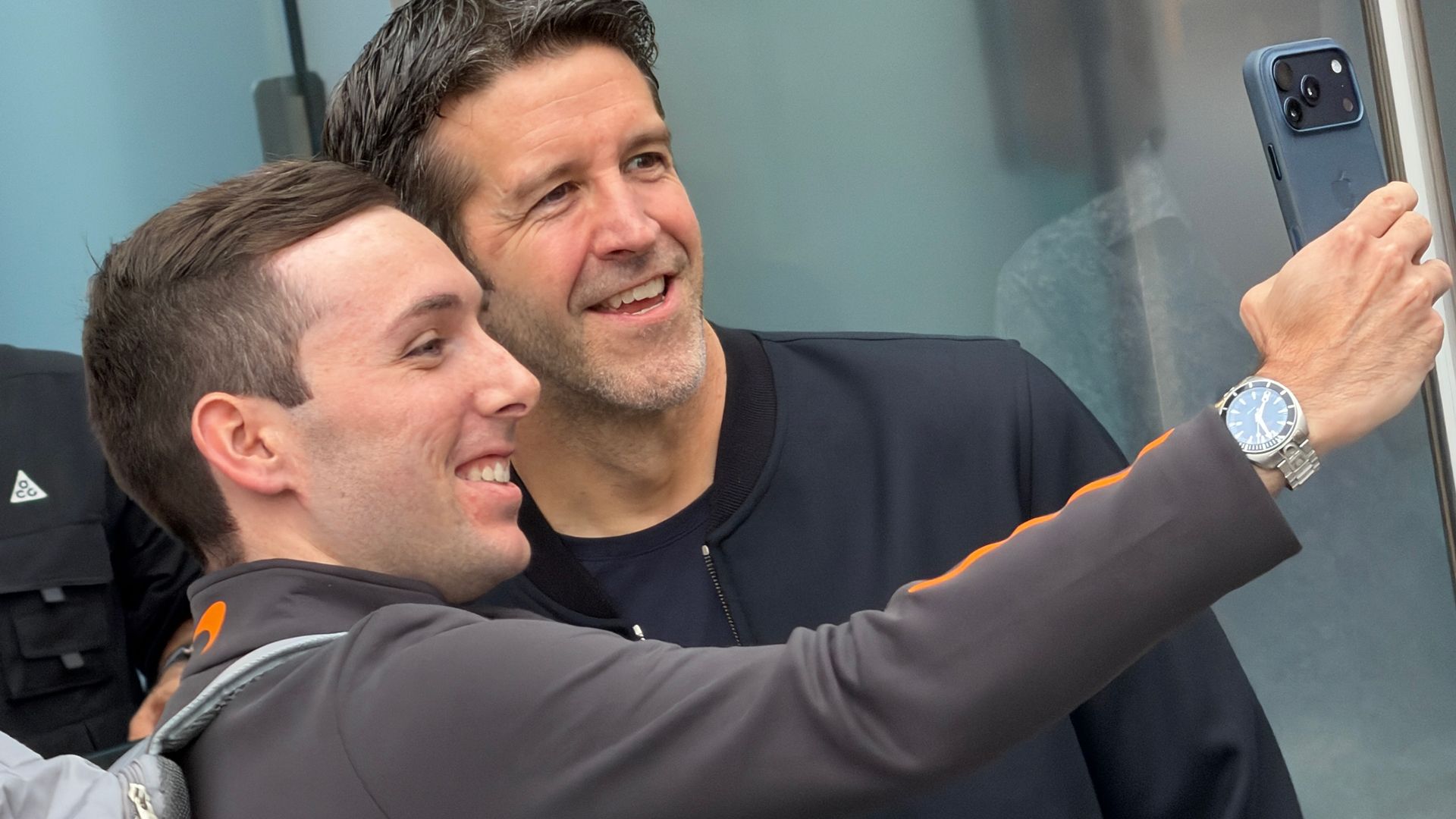
Ternus posed with Sung outside the store and then turned his attention to the next customer.

After collecting his iPhone 18 Pro Max, Sung briefly appeared outside the store again and held his purchase aloft. The crowd cheered again.

Later, when I asked Sung, 21, how he secured his pole position, he told me that first he pre-ordered his burgundy 256GB iPhone 18 Pro Max online (he never leases and always buys), and then he arrived at the store yesterday at 8:30pm ET — and waited.

John Ternus as iPhone 18 Pro Max Apple Store Launch

(Image credit: Lance Ulanoff / Future)

I asked Sung, who is a native of China but is currently living in New Jersey and attending university, if he's ever owned an Android. He shook his head and then told me his first iPhone was the iPhone 15.

Why, though, does Sung visit all these stores, and why was he here right now? Sung looked at me like I had lobsters dancing on my head. "I love Apple," he told me, as if nothing could be more obvious.

Not sold the iPhone 18 Pro? There’s still time to grab the iPhone 17 Pro at a discount

In case you were unaware, Apple unveiled the iPhone 18 Pro and iPhone 18 Pro Max last week, alongside its first-ever foldable, the iPhone Duo.

Naturally, the iPhone 18 Pro preorders quickly followed suit, with rebates of up to AU$1,595 when you trade in an old phone, and accompanying SIM plans from AU$39/m.

While it’s always nice to have the latest tech, a fresh product launch also means an older device is ripe for discounts, and that’s certainly the case for the iPhone 17 Pro and iPhone 17 Pro Max.

Apple may have discontinued both models from its online store, but retailers and telcos, including Amazon, Optus and Vodafone, still have stock — including the popular Cosmic Orange colour — meaning you still have time to score one at a discount. Whether you just want to save money, aren’t fussed with having the latest iPhone, or you simply prefer the colour options of the iPhone 17 Pro series, now’s a great time to take advantage of any offers.

Buying outright

If you want to buy outright, then Amazon and Optus are great options, although if you’d prefer to shop at the former, you’ll want to hurry as the retailer doesn’t have stock of all sizes and all colours.

The standout offer has to be a 9% saving on the iPhone 17 Pro Max (256GB) in Cosmic Orange, now AU$1,995. The same phone is also available in Silver for the same price.

If you’d prefer the smaller iPhone 17 Pro, Amazon no longer has stock of the base 256GB variant. Instead, the most affordable option is 512GB for AU$2,197 in Deep Blue, or AU$2,229 in Cosmic Orange.

Alternatively, you could get the 256GB iPhone 17 Pro from a retailer such as The Good Guys, and pair it with Optus’ Small plan, or any of our other highly recommended SIM-only plans.

With a telco

Optus arguably has some tempting offers of its own. Not only can you split the cost of either the iPhone 17 Pro or iPhone 17 Pro Max into monthly interest-free instalments over up to 36 months, but all colours and storage sizes are in stock.

And, for a limited time, you can pair either iPhone with Optus’ Small plan, which has currently been reduced to just AU$39/m while the included data has increased from 60GB to 100GB. These benefits only apply to the first 12 months, after which the plan reverts to its regular AU$60/m for 60GB data — at this point, I’d recommend you check out the best SIM-only mobile plans for a more affordable option.

If you’re able to, it’s cheapest to pay the device off over 12 months, as you can see in the table below.

Repayment

Device/month

Months 1-12

After month 12

Total during device term

12 months

AU$166.56

AU$205.56/m

Device paid off

AU$2,466.72

24 months

AU$83.28

AU$122.28/m

AU$142.28/m x 12

AU$3,186.72

36 months

AU$55.52

AU$94.52/m

AU$115.20/m x 24

AU$3,906.72

However, if you intend to remain on that Optus plan for three years anyway, all three options cost exactly the same over 36 months: AU$3,906.72. With the 12-month option, you'd simply pay $205.56/month for year one, then $60/month for years two and three.

Vodafone also has some attractive offers, with monthly device payments for the iPhone 17 Pro starting at AU$47.18/m. Once again, you’ll spend the least amount of money if you pay off over 12 months.

Repayment

Device/month

Months 1-12

After month 12

Total during device term

12 months

AU$141.58

AU$186.58

Device paid off

AU$2,238.72

24 months

AU$70.79

AU$115.79/m

AU$128.79/m x 12

AU$2,934.72

36 months

AU$47.18

AU$92.18

AU$105.18/m x 24

AU$3,630.72

This is just a snapshot of the iPhone 17 Pro offers available right now, but if you want to take advantage, you’ll need to be quick, because once stock has gone, it’s gone.

'I don't think we ever lost innovation': New Apple CEO John Ternus defends Apple's track record as his first September launch comes to a close

John Ternus has barely been CEO of Apple for a fortnight, and he's already caused quite the stir. Some of this is to be expected; Apple's September event is barely in the rearview, and the dust has far from settled following the announcement of the long-awaited iPhone Duo.

Still, it's one small interjection he made in a video interview with TechRadar and Tom's Guide (see below) that tells me a lot about his relationship with the company he now governs.

In addition to discussing the new devices launched this week, we had the opportunity to ask Ternus about his views on AI, wearable tech and becoming CEO of one of the world's largest and most eminent tech companies; plus, crucially, his view on innovation.

When our Editor-at-Large, Lance Ulanoff, asked about his plans to reinvigorate the brand's image when it comes to innovation, Ternus replied: "I don't think we ever lost innovation."

Is it ever enough?

The unavoidable truth is that the "iPhone moment" is, perhaps, once in a generation; and there's a lot more competition in the playing field now than there was back in 2007. That being said, it's hard to argue that there's been no innovation under Tim Cook's tenure.

From Apple silicon chips (2021) and Touch ID (2013) to Face ID (2017) and the world's first over-the-counter direct-to-consumer ECG in the Apple Watch Series 4 (2018), there's been plenty to shout about — even though recent years have maybe been a little quieter, barring the Vision Pro... but that's not much to write home about yet.

Of course, Ternus' quick retort garnered some reactions nonetheless, with commenters across our TikTok and YouTube accounts arguing that true product-level innovation had been lost at Apple for many a year. So, what do you think?

Cook had a difficult job, without a shadow of a doubt: huge boots to fill in the wake of Steve Jobs' passing, a grieving user base and fanbase, plus lofty expectations to steer the Apple ship through everything from a global pandemic to hardware supply chain chaos; and that's just in recent years.

Apple's still kicking, with a strong set of products, devoted audience and a seemingly optimistic future under Ternus' leadership. Only time will tell what's in store for this new era after the iPhone Duo.

Waiting on your unlocked iPhone 18 Pro? Mint Mobile has an unlimited plan for just $15/mo right now — the perfect pairing

Got your iPhone 18 Pro Max on preorder but can't quite decide on the perfect plan to pair it with? I think I've found a contender for the best overall option right now.

It's Mint Mobile's latest new-customer promotion, which lets you take out a line on any of the carrier's excellent prepaid plans for just $15/mo. That includes the annual unlimited data plan - which usually clocks in at $30/mo.

Even without the discount, Mint's unlimited plan is competitive and much cheaper than many competitors, so the deal is just the cherry on top. While you'll have to pay $180 upfront, you'll lock in an unlimited data plan for an almost unbelievably cheap $15 per month.

Overall, the Mint unlimited plan includes unlimited talk, text, and mobile hotspot. There are a few restrictions, such as 50GB of 5G data and 20GB of mobile hotspot, but these are still pretty generous for the price - especially at $15/mo.

Mint Mobile's latest deal for new customers

Mint Mobile unlimited data plan: was $360, now $180
Mint Mobile's latest plan deal is the perfect pairing for the latest iPhone 18 Pro and 18 Pro Max. Right now, you can get any of the carrier's plans for just $15/mo, including the high-end annual unlimited plan. Paying just $180 upfront, you're locking in a huge amount of value here for not a lot of cash. If you've been curious about trying Mint Mobile, then now's a great time to jump on board. View Deal

Note, if you're looking for a great all-in-one deal at Mint, then the carrier also has some great discounts on the latest Google Pixel 11 and Samsung Galaxy S26. If you're interested, I've attached further details just down below.

Also available at Mint Mobile

Google Pixel 11 series: $450 off, plus a half-price unlimited plan at Mint Mobile
Mint Mobile's latest deal on the Pixel 11 series is the perfect pairing with Google's new flagships. Right now, you don't even need to trade-in to get an excellent $450 discount on these new devices. On top of that, you can also get a full year of unlimited data for just $180 - that's half the usual price. Put together, this is a great deal, although it's exclusive to new Mint customers. View Deal

Samsung Galaxy S26 series: $500 off, plus up to $400 off with a trade-in at Mint Mobile
Mint Mobile's latest deal on the Galaxy S26 series is one of the best I've ever seen from the well-known prepaid carrier. Not only can you get a record-breaking $500 upfront discount on a brand new device, but you'll also get a full year of unlimited data for just $180 - half price. On top of that, you can also trade-in for an additional discount of up to $400 off, which is enough to cover the entire cost of the standard Galaxy S26.

Samsung Galaxy S26 Ultra: was $1,300 now $1,100View Deal

Apple's New iPhone Camera Mode Promises to Prove Your Photo Isn't AI

Apple is introducing a new "Reference Image" mode on the iPhone 18 Pro and Pro Max that uses the camera sensor to digitally sign captured data and create an "unalterable" version of a photo, giving users a way to verify what the camera actually saw before any edits were made. The Verge reports: As AI-generated images and videos become more realistic, several new standards have emerged to label images not created by a human, such as SynthID, C2PA, and Meta's Content Seal. Apple is putting a twist on these methods by building authentication directly into its hardware. Apple is letting developers access a Reference Image API across iOS, iPadOS, and macOS, which could eventually allow users to inspect these digitally-signed photos in third-party apps. The company says the iPhone 18 Pro lineup won't come with its Reference Image feature at launch in the European Union, but says users in the region will still be able to "develop and view" them in iOS 27, iPadOS 27, and macOS 27.

Read more of this story at Slashdot.

Apple Launches iPhone 18 Pro With Variable-Aperture Camera System

Apple's iPhone 18 Pro and Pro Max were announced today and keep last year's overall design but put the emphasis on camera upgrades, including a 48-megapixel variable-aperture system, new manual controls, and 4K Dolby Vision recording. Prices for the devices start at $1,199 and $1,299, respectively. TechCrunch reports: The new Pro series camera features a 48-megapixel camera with variable aperture, made with six thin blades. This system will likely improve low-light photography quality and speed. There are also new pro controls in the camera software, including white balance, shutter speed, aperture and histogram. There are also new photographic styles with texture and grain controls. [...] The new camera can record 4K videos in Dolby HDR Vision, and also apply cinematic effects after shooting the footage. The new Pro devices also have a smaller dynamic range island on the front of the device, which now allows you to track three live activities instead of two. Both phones are powered by Apple's latest A20 Pro silicon and feature a newly designed vapor chamber for improved cooling. The company has also improved the battery with a better design. Apple also said the iPhone 18 Pro supports video playback of 36 hours, and the 18 Pro Max has 45 hours of playback capacity. Apple Unveils the iPhone Duo, Its First Foldable iPhone

Read more of this story at Slashdot.

Apple Unveils the iPhone Duo, Its First Foldable iPhone

At its September event today, Apple unveiled the iPhone Duo, its first foldable iPhone and one of the biggest changes to the device's form factor since its debut. Starting at $1,999 and available for preorder beginning October 16th, the device is roughly the size of a passport when closed and pairs a 5.4-inch outer screen with a 7.6-inch Super Retina XDR inner display. Apple says the inner screen offers 50% more display area than the iPhone 18 Pro Max, while the exterior display provides about 90% of the screen area of an iPhone 18 Pro. Apple Pencil support for both displays is coming later this year. Apple redesigned parts of iOS around the folding form factor. Users can run two apps side by side, launch two instances of the same app, save app pairings, and partially fold the phone to prop it up on a table without a stand. The interface automatically adapts as the device is opened, rotated or folded, while apps including Zoom and Slack are already being redesigned to take advantage of the larger canvas. There are more than 100 components in its hinge, along with carbon-fiber support plates and a titanium layer beneath the folding display. Apple says the multilayer screen structure allows its components to move relative to one another while folding to reduce distortion over time. The phone is IP68 rated and uses Ceramic Shield on the rear and Ceramic Shield 2 on the exterior display. As for battery life, Apple claims up to 31 hours of video playback using the inner display or 44 hours on the outer screen, although using both displays equally is rated for up to 24 hours per charge. Fast charging can bring the battery to roughly 50% in 20 minutes, though. The device is eSIM-only worldwide and includes Apple's new C2 modem, which the company says is up to 50% faster than the C1X while consuming up to 15% less power. What about the camera system? There's a 48-megapixel ultrawide, along with cameras on both the inner and outer displays. Because the phone can stand partially folded on its own, Apple is pitching new shooting modes including hands-free 4K Dolby Vision HDR time lapses, dual-camera capture and an outer-screen preview that lets subjects see themselves while being photographed. Developing...

Read more of this story at Slashdot.

End-of-summer wrap-up

TAME YOUR TECH End-of-summer wrap-up By Susan Bradley Are you ready for 26H2 and new Apple devices? The end of August has always been a time for me to stop, reflect on the summer, determine if I got anything on my summertime to-do list done, and see whether I’m ready for fall. When I was […]

Apple Wallet Driver's License Feature to Launch in Four More US States

Apple Wallet's driver's license and state ID feature is set to expand to North Carolina, Oklahoma, Utah, and Virginia, bringing the total to 18 states plus Puerto Rico. The digital IDs can be used at participating TSA checkpoints and businesses without handing over or unlocking an iPhone, though users are still generally advised to carry a physical ID because acceptance remains limited. MacRumors reports: A few days ago, North Carolina's DMV announced that it plans to launch a mobile ID program later this year. As reported by WRAL, North Carolina residents will be able to set up a digital ID through a new NC Wallet app starting in December, with Apple Wallet, Google Wallet, and Samsung Wallet support to follow in "early 2027." As mentioned, you do not need to unlock, show, or hand over your device to present an Apple Wallet ID in person, ensuring user privacy. Apple Wallet IDs are generally not accepted by law enforcement, so carrying a physical ID is still legally required for traffic stops. In addition, the number of businesses that accept Apple Wallet IDs is still quite small. At least for now, Apple Wallet IDs are designed to be a convenient alternative where they are accepted. "Your mobile ID is a valid form of identification in North Carolina," the DMV said, in a FAQ on its website. "However, as retailers, restaurants and other businesses transition to mobile IDs, some may not be set up to accept them right away. For now, carrying your physical card gives you a backup when needed." According to code seen by MacRumors, Apple Wallet IDs are also coming to Oklahoma, Utah, and Virginia, but there is no timeframe for availability.

Read more of this story at Slashdot.

Pay over time

Cash may be king but pay-over-time is the new way that many manufacturers are getting around the sticker shock of technology. Apple announced its version just yesterday. Microsoft has long had a business Surface leasing program called LiftForward. And, of course, you can always pay for your cell phone over time through a phone company. […]

Apple Retires iPhone Upgrade Program For Klarna-Backed Leases

Apple has replaced its iPhone Upgrade Program with Apple Upgrade, a Klarna-backed U.S. leasing service covering most iPhones, iPads, Macs, and Apple Watches. MacRumors reports: Apple Upgrade has lower base prices than the iPhone Upgrade Program, with iPhones available starting at $17.99 per month and the Apple Watch available starting at $11.99 per month. Macs can be leased starting at $24.99 per month, and iPads start at $11.99 per month. AppleCare+ is optional and not included in the lease price, with customers also able to opt for AppleCare One. There are 12-month and 24-month leasing options for the iPhone and Apple Watch, along with 24-month and 36-month leasing options for the Mac and iPad. Lease cost varies based on device, and is lower with a device trade-in that's applied on a monthly basis. [...] When leasing an iPhone, customers are required to choose a plan from AT&T, Verizon, or T-Mobile, and prepaid plans are not eligible. iPhones need to be leased with a carrier plan, but the iPhones are unlocked so customers can switch carriers if desired. MVNOs like Mint Mobile or Visible are not supported. At the end of the leasing period, customers can choose to return the device and exit the program, pay off the remaining amount owed on the device with a one-time payment and keep it, or return it and upgrade to a new device with a new lease. The payoff amount is the difference between what was paid during the leasing period and the retail price of the device, minus any remaining trade-in credits. Klarna is not charging a fee for the leasing program, so an iPhone that's $1,099 can be leased and then purchased for $1,099 with no extra cost beyond taxes. As with trade-ins, Apple will send a pre-labeled and prepaid shipping box for device returns or upgrades. If you don't opt to pay the purchase fee at the end of the leasing program, you will not own the device and must return it. Last week, after Bloomberg reported on Apple's upcoming leasing program, 9to5Mac uncovered code in the iOS 27 beta suggesting the company was developing a system that could restrict leased iPhones when customers fall behind on payments. Apple has now told The Verge that the new "Restricted Mode" will not be activated in response to a missed lease payment. What the new system is actually meant for remains unclear.

Read more of this story at Slashdot.

❌