❌

Reading view

There are new articles available, click to refresh the page.

LG's 97-inch OLED TV panels are finally being upgraded to 4,000 nits of brightness and 165Hz

  • LG launches new 97-inch OLED panel reaching 4,000 nits, 165Hz and with 1.1% reflectance
  • Arriving first in the LG W7 Wallpaper TV with Zero Connect wireless box
  • The screen is a huge improvement over the previous 97-inch panel, which essentially dates back to 2022

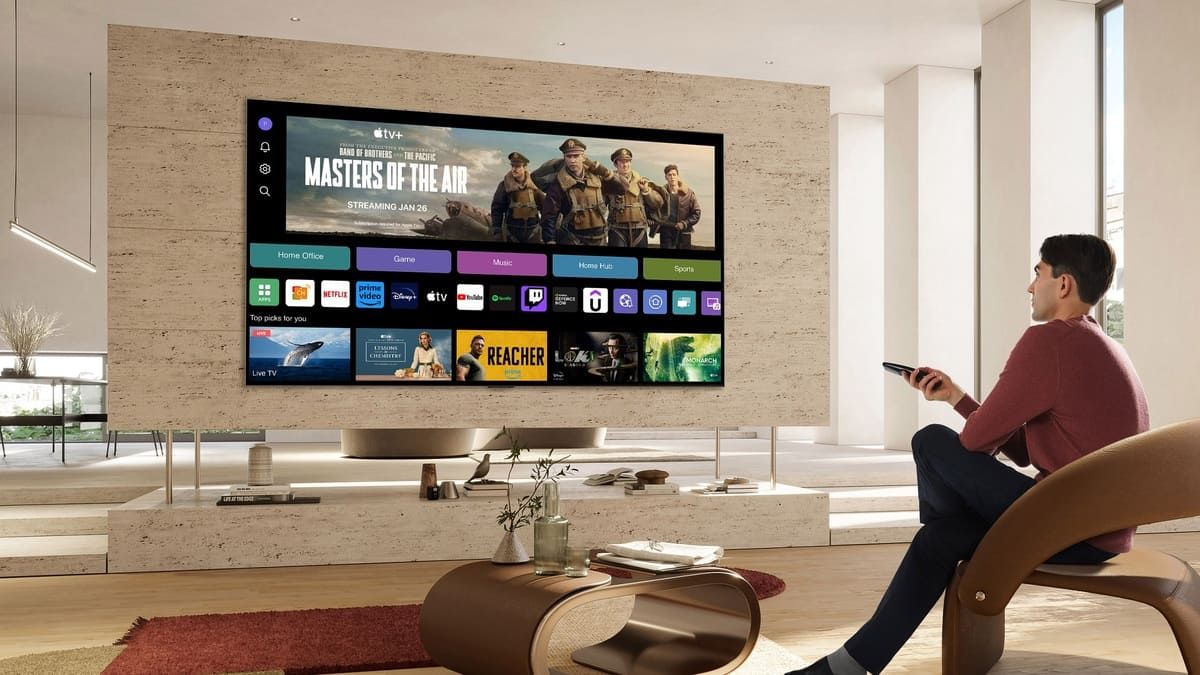
Two weeks ago, we were excited by the prospect of more affordable massive OLED TVs, but noted that LG Display's current 97-inch OLED panels were relatively old TV tech. That's about to change dramatically. LG has unveiled a new version of its gorgeous Wallpaper evo TV with a brand new 97-inch OLED panel that could make it one of the best OLED TVs for big rooms.

The TV was revealed in the CES 2027 Innovation Awards, in which the LG evo 97inch Wallpaper TV is an honoree. And the specifications are very tasty indeed.

The 97-inch Wallpaper TV isn't the only new luxury TV from LG. The same awards also feature the LG Signature OLED T6, a new 77-inch version of LG's transparent OLED TV, though it's less clear what's new there. We know it's still limited to 60Hz, and will likely have far reduced brightness β€” though we've seen the previous models in person, and there's no denying that the transparent TV is cool as hell.

The LG Signature OLED T6 in a neutrally decorated room. the display is showing notifications but is otherwise transparent

(Image credit: LG)

LG OLED evo 97" Wallpaper TV: key specifications

The evo TV has the model name 97W7 and features a 97-inch 4K display, in a frame designed for flush wall mounting. There's no on-board processing or ports to ruin its slim design: it has a wireless connection via LG's nifty Zero Connect system, which is lossless for quality.

The panel is said to deliver up to 4,000 nits of peak brightness, providing 83% BT.2020 color gamut coverage with 1.1% reflectance. This sounds like performance should basically match the five-star LG G6 in its smaller sizes β€” that model has a 97-inch version, but it uses the same panel LG has used since 2022, so the brightness, color and reflectivity are all weaker.

The new TV offers 165Hz with variable refresh rate support, and you get the Gallery+ art display features that turn the TV into an art gallery. And last but not least it has a virtual 11.1.2-channel virtual surround system built in.

Full specs, pricing and availability haven't been released yet but the new evo 97W7 looks like it's going to be something special β€” and that OLED panel will surely make its way into other LG TVs. It looks like 2027's going to be a good year for TV buyers with big rooms to fill and big budgets to spend.

Thinking of buying a new TV?

Try our TV size and model finder! You tell it how far you sit from your TV, we'll tell you what size to buy based on viewing angle advice from image quality experts, and we'll recommend our three top TVs at that size for different prices.

This powerful new Dolby Atmos soundbar has 14 speakers and a fabric design that's meant to blend into the room β€” and it comes from a brand-new company with Denon and Marantz heritage behind it

  • 14-channel Class D amplification and Dolby Atmos 5.1.2
  • Five colors of Threadform fabric to blend with your decor
  • $999 (about Β£745 / AU$1,422)

For as long as there have been speakers, there have been attempts to make them look less speaker-y β€” but as far as I know, there's never been an attempt to make them look like someone knitted them. Enter the Knit Form, a serious soundbar with a very unusual design. It's intended to blend in, not stand out.

As you can see, it's very different to its rivals: if you look at our current best soundbars line-up, there's a lot of long black-grilled lozenges out there. This is much more colorful.

The Knit Form comes from the mind of Joel Sietsema, formerly senior product and brand leader at Denon and Marantz's parent company, Sound United. But its unique selling point comes courtesy of his wife, an interior designer, whose response to his speaker concepts was to want every one of them hidden. The Knit Form is the result of that, Sietsema says. "Form is what happens when you design for the home first. It should look like furniture, sound incredible, and be easily integrated into the technology you’ve already welcomed in your space.”

It may look like a draught excluder but this is a high-end soundbar with a serious specification, serious backers and serious audio expertise. And that fabric isn't exactly ordinary either.

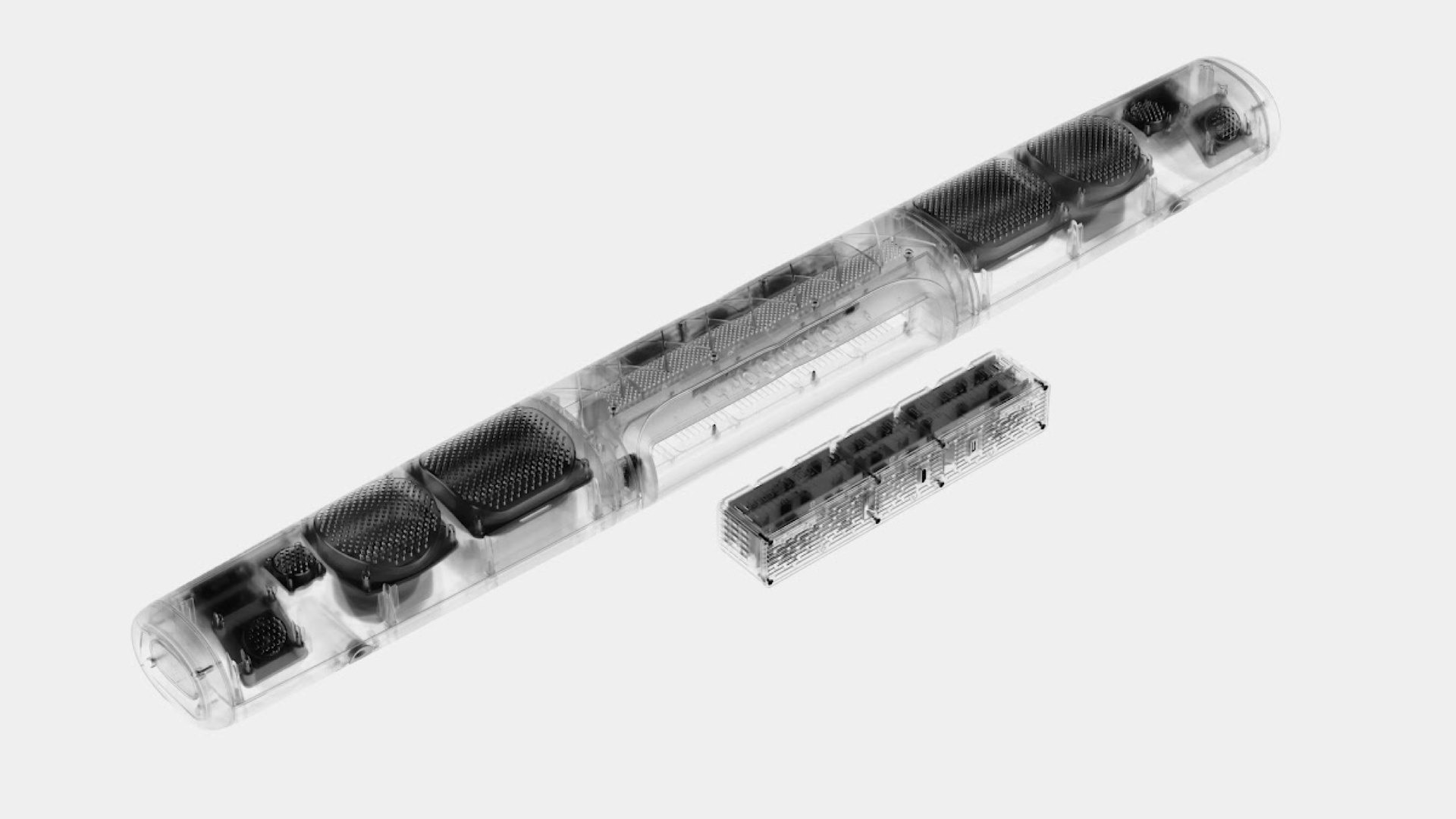
An X-ray view of the Knit Form soundbar showing its internals and speakers

(Image credit: Knit Sound)

Knit Form soundbar: key features and pricing

Let's start on the outside. The fabric is Threadform, an acoustically transparent textile that keeps its color and lasts a long time. It's available in five different colors on the Form.

Beneath the Threadform there's a 14-channel, class D amp delivering 5.1.2 Dolby Atmos via its internal drivers, center dialog speaker and dual subwoofers. It has Bluetooth 5.3 input with AirPlay, Google Cast and Spotify Connect, and it also transmits audio over Auracast. There's a single HDMI ARC/eARC for the TV and an optional smartphone app that enables you to customize the sound settings.

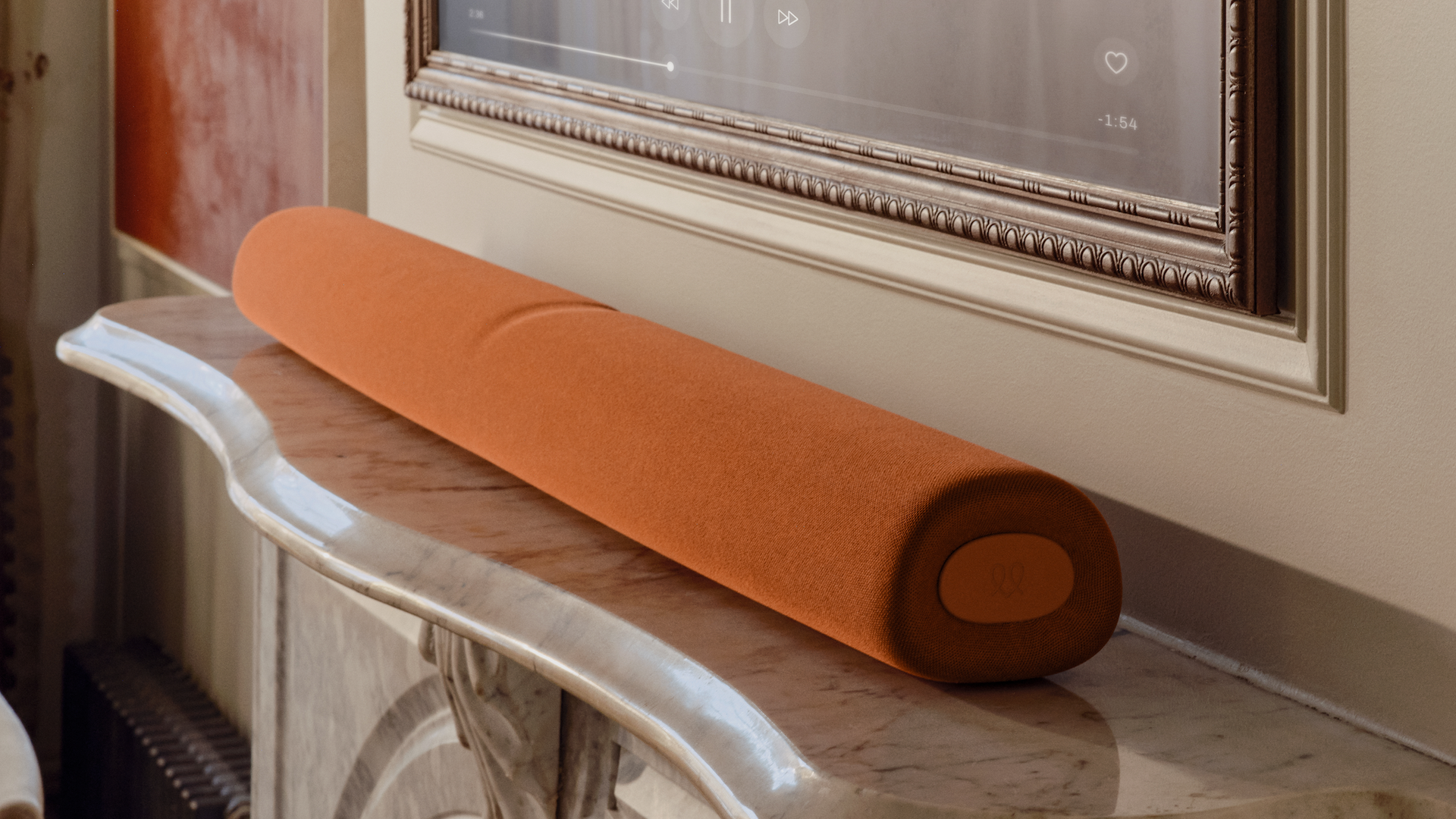
The Knit Form is designed to get out of the way of your entertainment. There's no front-facing logo; the status lights turn off during viewing; and the five colors are "designed to complement a space rather than compete with it." I really like it, especially in the terracotta-ish Ember colorway. It's recommended for TVs 55 inches or over.

The Knit Form is available exclusively from Knitsound.com in Cloud White, Slate Black, Pebble, Sandstone or Ember with a price tag of $999 (about Β£745 / AU$1,422). The optional flush wall bracket is $79 (about Β£59 / AU$112).

Thinking of buying a new TV?

Try our TV size and model finder! You tell it how far you sit from your TV, we'll tell you what size to buy based on viewing angle advice from image quality experts, and we'll recommend our three top TVs at that size for different prices.
This video shows how AI can read the radio waves coming from an HDMI cable to mimic what's on screen

  • There is tech that can turn the radiation from HDMI cables back into video
  • AI reduces errors in intercepted signals by over 60%
  • Digital is harder to decode than analog, but it's not impossible

Last week we discovered that your videos can give away your location thanks to airplane noises in the background that you can't even hear, and we've known for some years that Wi-Fi routers can be used to spot where people are in a room. So it's not a huge surprise to discover yet another way our tech is betraying us β€” and this time the culprit is the humble HDMI cable.

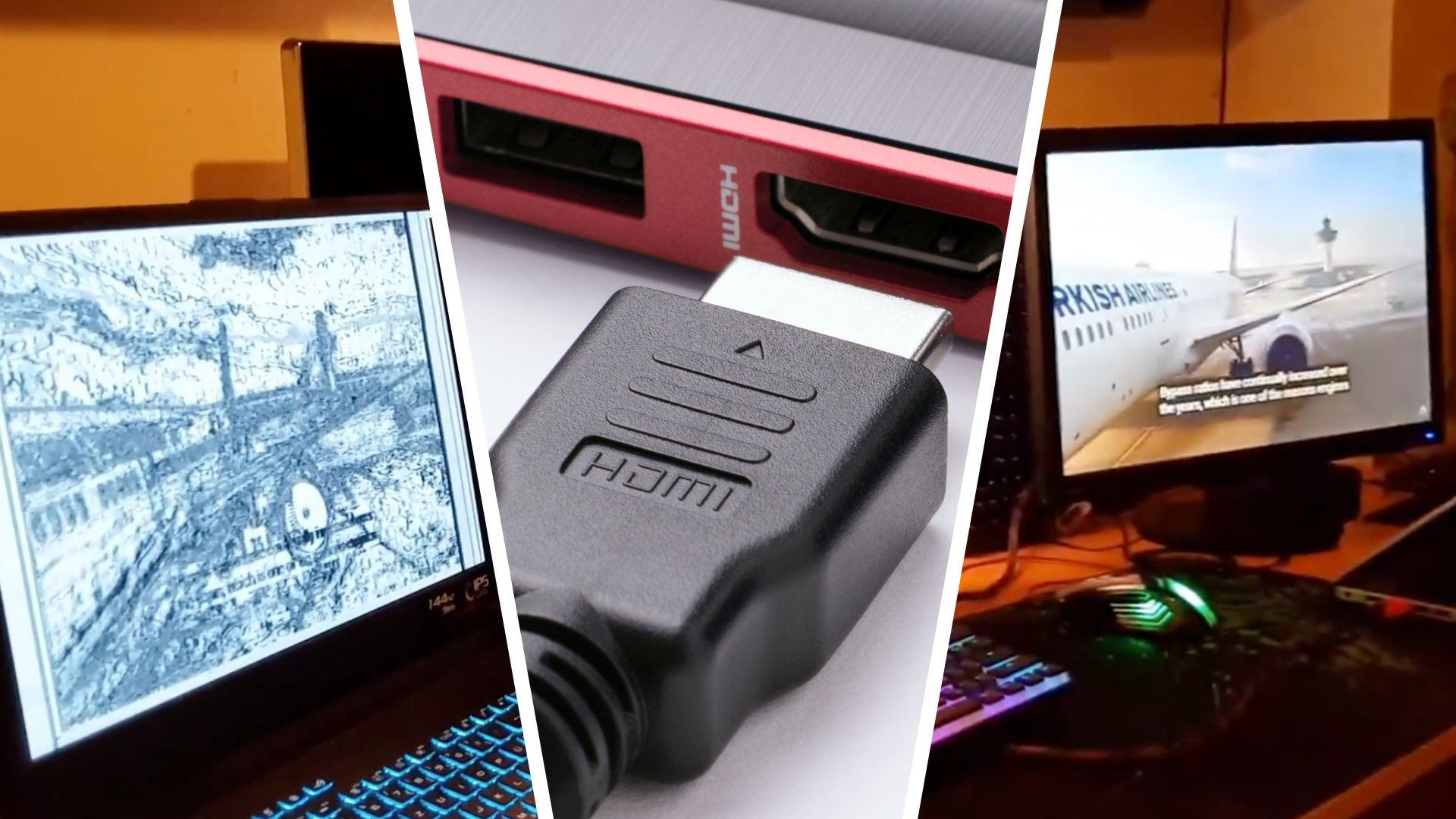
A post on X by Psalter shows TempestSDR, which can capture the signal from your HDMI cable and almost recreate the image on another screen, because the cable creates an electromagnetic field that can be read. The quality isn't great, but if you bring AI into the mix you can enhance it to make text readable and images clearer. An AI system especially for the task, called DeepTempest, reduces errors by over 60%.

The video below is quite alarming.

your HDMI cable can leak what’s on your screenwatch the laptop on the left. it reconstructs the video playing on the monitor beside it from radio signals leaking out of the HDMI connectionthis is TempestSDR. an antenna picks up the leakage, a HackRF radio captures it, and software turns it back into an imageresearchers took this further with Deep-TEMPEST, using AI to make recovered images and text easier to read. this clip shows the original techniquequality depends on shielding, distance and interference. the picture is imperfect, but recognizable content still gets througha wired connection can still leave a wireless traceNovember 8, 2026

Intercepting or playing with electronic leakage isn't new: 2001's Tempest for Eliza broadcast music to your radio by sending RF signals via your monitor, displaying images that generated specific radio frequencies. What's new is the AI element.

Is it time to don the tinfoil hat?

Not yet. DeepTempest does dramatically enhance images and reduce text errors, but as you can see from the video things are still pretty indistinct β€” and that's when the cable you're intercepting is right next to you, so you're close enough to see the display that you're intercepting.

You're not going to see much if you're in a van across the street, even if the cable being used is really poorly shielded, unless you've got a seriously powerful scanner.

DeepTempest was developed by Federico Larroca at the University of the Republic in Montevideo, Uruguay, and it does represent a major step forward: using text capture software DeepTempest was able to reconstruct text with roughly 30% of characters being misinterpreted.

That sounds like a lot but it's not enough to render text incomprehensible to human readers. And that error rate is a whopping 60% lower than the previous state-of-the-art attack.

The word Tempest is used in these systems because it's a US National Security Agency (NSA) codename that refers to spying via electromagnetic leakage, and measures to prevent it.

Those measures are distance, shielding, filtering and masking, and they consider more than just leakage: they also include sounds and vibrations, so for example it's possible to log keystrokes via a phone's motion sensor.

The history of this is fascinating and goes back to the Second World War, where the US military's teleprinters were found to be generating detectable electromagnetic spikes that could be intercepted to capture the text. The recommendation for shielding, filtering and masking comes from the machines' supplier, Bell System, and while technology has advanced somewhat since then the advice is still sound: if you're the kind of person that security services or other shadowy organizations might be interested in, don't buy crappy cables.

Pricier cables have electromagnetic shielding, and while high-end companies used to tell us that was essential because otherwise the audio and video fidelity wouldn't be as pristine as you want… but maybe it's signal leaking out rather than in that people will be more worried about in the modern world.

AI teddy bears spark fresh safety fears after report discovers malfunctioning toys

  • The BBC reports that AI toys are producing worrying results
  • The industry is effectively unregulated, says one manufacturer
  • EU has brought in new regulations but the UK is consulting

An AI teddy bear marketed as "perfect" for kids as young as three has been talking about suicide, a BBC investigation has revealed.

The AI teddy, apparently mishearing a question, said "I can't help with killing you" after being asked how babies were made.

The subject of children using AI has been a hot topic for a while now, and one study of three different AI toys found very worrying behavior: as the US PIRG Education Fund found in 2025, all three AI toys they tested "told us where to find potentially dangerous objects in the house, such as plastic bags, matches and knives."

One toy, now withdrawn from sale, provided detailed instructions on how to light a match and discussed "a range of sexually explicit topics in-depth in conversations lasting more than ten minutes."

AI in toys is largely unregulated, and even industry insiders argue that this needs to change. Speaking to the BBC, AI toy company founder Paul Clarke said that "I think parents should be concerned." Is he right?

Should parents be wary of AI toys for kids?

Let me set my stall out here. In addition to being a tech writer who's covered all kinds of overblown "everybody panic!" scares since the late 1990s, I'm a parent of two kids for whom tech is everywhere: my eldest was born the same month the original iPhone launched, and we've used all kinds of devices and apps over the years. I'm the last person you'll find wielding pitchforks because of some new tech.

But at the same time I'm really worried about AI. If a company were to make a kids' toy that had a fair chance of burning down your house, turning your kids into terrorists or poisoning your pets you'd rightly expect that industry to be regulated and the company made to account for its actions. But I don't see that happening with AI. Quite the opposite: the message coming from Big AI whenever it is implicated in something awful tends to be "oh dear... never mind".

As we point out in our guide to keeping kids safe in an AI world, AI tech is rarely child-friendly: chatbots are "rarely moderated to a standard that’s appropriate for children and young people, and they’re engineered to sound confident and caring. It’s this combination that experts believe is creating a major risk."

At the moment, AI is largely self-regulated in the US and UK. EU regulations are tighter on personal data and privacy. And self-regulation, as we've seen many times, doesn't work. A lawsuit by the New Mexico attorney general claims that Meta allowed minors access to sex-talking chatbots despite employees raising the alarm; most chatbots "will help plan school shootings and other violence"; and chatbots have been linked to multiple deaths including teen suicides.

Those are extremes, I know. But as Paul Clarke told the BBC, "We've seen lots of products being developed that are completely unsafe, completely unregulated so, yeah, it is a scary industry... we're crying out for the industry to be regulated."

Clarke adds: "If it's unregulated, there's going to be toys going into the market that are completely unsafe."

He's not wrong. There's a very long history of dangerous kids' toys, from leaded painted cars to lawn darts and self-igniting hoverboards. America famously bans the Kinder Surprise, a chocolate egg containing a small toy; there's been a ban on toys "partially or completely imbedded" inside food items since 1938. Regulations exist because without them, some firms simply don't take safety seriously enough.

With an estimated market size of $165 million for AI toys, there's going to be a lot of money spent on trying to persuade parents to put these things into kids' rooms β€” and as the BBC discovered, some of the firms making these products are completely mysterious with no way to assess what they're offering or even to contact them. The BBC tried and failed to contact the manufacturer of the "can't help with killing you" toy.

Where I live in the UK the government is currently consulting on AI toys and their risks in the context of the EU Toy Safety Regulation (EU) 2025/2509, which came into force in Europe at the beginning of 2026. That said, the same government has appointed an AI minister who declined the BBC's request for comment on the risks of AI toys, which doesn't bode well. The call for evidence ended last month, October 2026, and the government will decide what regulation, if any, is necessary.

Regulation is slow and AI is in a hurry, so I think that until there's effective regulation and accountability, giving a young child an AI toy from a manufacturer you've never heard of that's based halfway across the planet, using an AI whose provenance is unknown and whose safety hasn't been tested... isn't very smart.

Like I say, I'm not against AI. But the industry's oft-quoted mantra of "it's better to ask for forgiveness than permission" is unacceptable when you're talking about kids' toys. "Move fast and break things" can't be acceptable when the "things" are our kids.

Thinking of buying a new TV?

Try our TV size and model finder! You tell it how far you sit from your TV, we'll tell you what size to buy based on viewing angle advice from image quality experts, and we'll recommend our three top TVs at that size for different prices.
LG faces legal action over alleged smart TV spying

  • Consumer advocates in Portugal want the courts to investigate LG TVs for potential privacy breaches
  • Concerns are over what data your TV is logging and where that data goes
  • A new study shows that on some smart TV platforms, opting out doesn't opt you out of ACR

In September, a report accused LG of creating "216,000 spy TVs", an allegation LG denies. But that isn't good enough for Portugal's consumer association, which is calling for multiple smart TVs to be taken off sale and for others to be updated to protect viewers' privacy.

The organization, Citizens Voice, is asking the Portuguese courts to review LG's statement against findings by the technology title TEK NotΓ­cias, which says the statement didn't directly explain tests involving audio storage when the TVs were offline, or of named security vulnerabilities in webOS.

Citizens Voice wants the courts to investigate and determine whether the data collection breaches consumers' rights, and if so to take action against not just LG but against retailers, too.

LG won't be the only smart TV maker watching the Portuguese action with interest, and other consumer advocates are likely to be paying attention, too. TV privacy is a hot topic right now, and a separate study of smart TVs earlier this year found that multiple manufacturers' TVs were ignoring privacy opt-outs either by design or accident.

When opting out doesn't opt you out

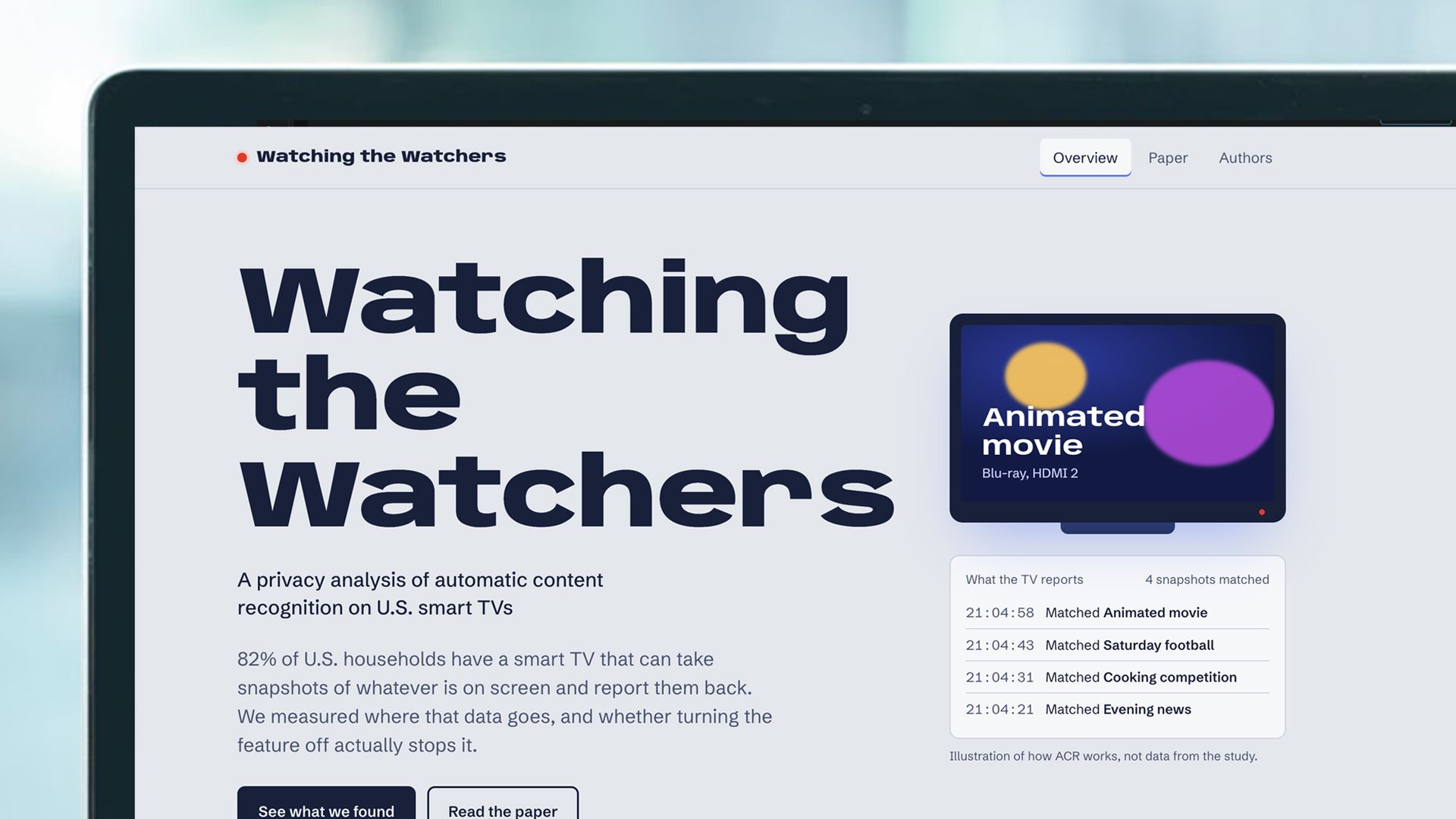
A laptop screen showing the Watching the Watchers website

(Image credit: Northeastern University)

Watching the Watchers is an analysis of US smart TVs and their automatic content recognition (ACR) activities, carried out by researchers at Northeastern University (via The Verge).

As the researchers explain: "2% of U.S. households have a smart TV that can take snapshots of whatever is on screen and report them back. We measured where that data goes, and whether turning the feature off actually stops it."

The researchers tested 12 different commercial TVs across multiple brands including Samsung's Tizen OS, LG's webOS, Roku OS, Google TV, Fire TV, VIDAAA and Smartcast OS.

While the majority were well behaved, only used ACR on their own streaming services (while respecting Netflix and other third parties' no-ACR stances), and offered user opt-outs for ACR, those opt-outs only "fully worked" on four platforms: webOS, Google TV on Sony, VIDAA OS and Fire TV OS.

Rather worryingly, 30 out of 30 test runs using Samsung's own TV streaming service found that despite opting out of ACR, the runs all showed "traffic consistent with ACR" if you used Samsung's own streaming channels. And 100% of opted-out runs on Vizio didn't seem to make any difference to ACR at all: every run "still sent traffic to its Amazon Kinesis ACR endpoint, with no decrease."

The researchers go into much more detail in their research paper, but the 'tl;dr' is that opting out might not opt you out completely or at all depending on which smart TV you have. However, there is an important caveat: ACR data is usually encrypted (VIDAA OS is the exception), so the researchers can't say with 100% confidence that the data transmitted on every platform is definitely ACR information. The best they can do is say that it sure looks like it.

It seems to me that this is another example of tech firms' overreach running up against consumer advocacy and privacy legislation: as a former EU resident I've spent many years reporting on tech firms batting heads with regulators over data usage and privacy.

And it seems to me that there's a simple solution for smart TV makers: be up-front about what data you're using and what you're doing with it, and make sure opting out means exactly that. It's probably a lot cheaper than going to court.

Thinking of buying a new TV?

Try our TV size and model finder! You tell it how far you sit from your TV, we'll tell you what size to buy based on viewing angle advice from image quality experts, and we'll recommend our three top TVs at that size for different prices.

Bluetooth 7 will bring a major speed boost for hi-res audio in 2027

  • Bluetooth LE gets support for High Data Throughput (HDT)
  • It boosts the standard's maximum supported bit-rate by almost four times
  • That means support for hi-res audio, spatial audio and multi-channel audio

Good news for the best headphones of 2027 and beyond: the latest Bluetooth technology includes High Data Throughput technology, HDT for short, which gives Bluetooth LE a huge performance boost. It can transmit almost four times as much data as the current version, enabling it to send hi-res audio, spatial audio and multi-channel audio to other devices.

The fact that HDT is part of Bluetooth is important, because that means you aren't reliant on a proprietary technology for your hi-res music: if manufacturers choose to use HDT, which we'd expect them to do, then you'll have compatibility across a huge range of headphones, Bluetooth speakers and other home entertainment hardware.

There are other benefits too, as many current hi-res audio streams are sent via Wi-Fi rather than Bluetooth. Sending them over Bluetooth LE removes that traffic from your home network, potentially cutting down on congestion, and it is likely to boost your headphones' battery life, too.

Faster data transfer means less work for your Bluetooth radio, whether you're listening to hi-res audio or lower-res streams.

What's new in the blue

Bluetooth smart unlock

A new version of Bluetooth is always welcome, but it'll be a few months before Bluetooth 7.0 devices will be available. (Image credit: Bluetooth SIG)

HDT is an optional feature in the newly published Bluetooth Core 7.0 standard, and it ups the bitrate of Bluetooth LE connections from 2.5Mbps to 7.5Mbps. Those are headline speeds, and as ever you'll get a bit less in the real world. But it's still a huge boost.

The benefits aren't just limited to headphones and other audio equipment. Anything that currently transmits or receives data via Bluetooth could benefit from the improved throughput of HDT, whether that's a smartwatch, smart glasses or a smart home device. If HDT can make updating my Apple Watch software take less time than forever, I'm sold on it already.

The downside is that you can't buy an HDT device yet. That's because there's always a lag between a new version of Bluetooth being published and products with the latest version appearing on shelves.

Bluetooth 6.0 was released in September 2024 and the first Bluetooth 6.0 headphones arrived in June 2026, with major headphone brands such as Sennheiser updating their flagships mid-year. You can expect a similar time frame with Bluetooth 7.0, so that's a summer to look forward to.

Thinking of buying a new TV?

Try our TV size and model finder! You tell it how far you sit from your TV, we'll tell you what size to buy based on viewing angle advice from image quality experts, and we'll recommend our three top TVs at that size for different prices.
❌