iOS bans certain terms from auto-complete and swipe-to-type
They include references to politics and drugs, researchers report
The list could include more than 100,000 entries, apparently
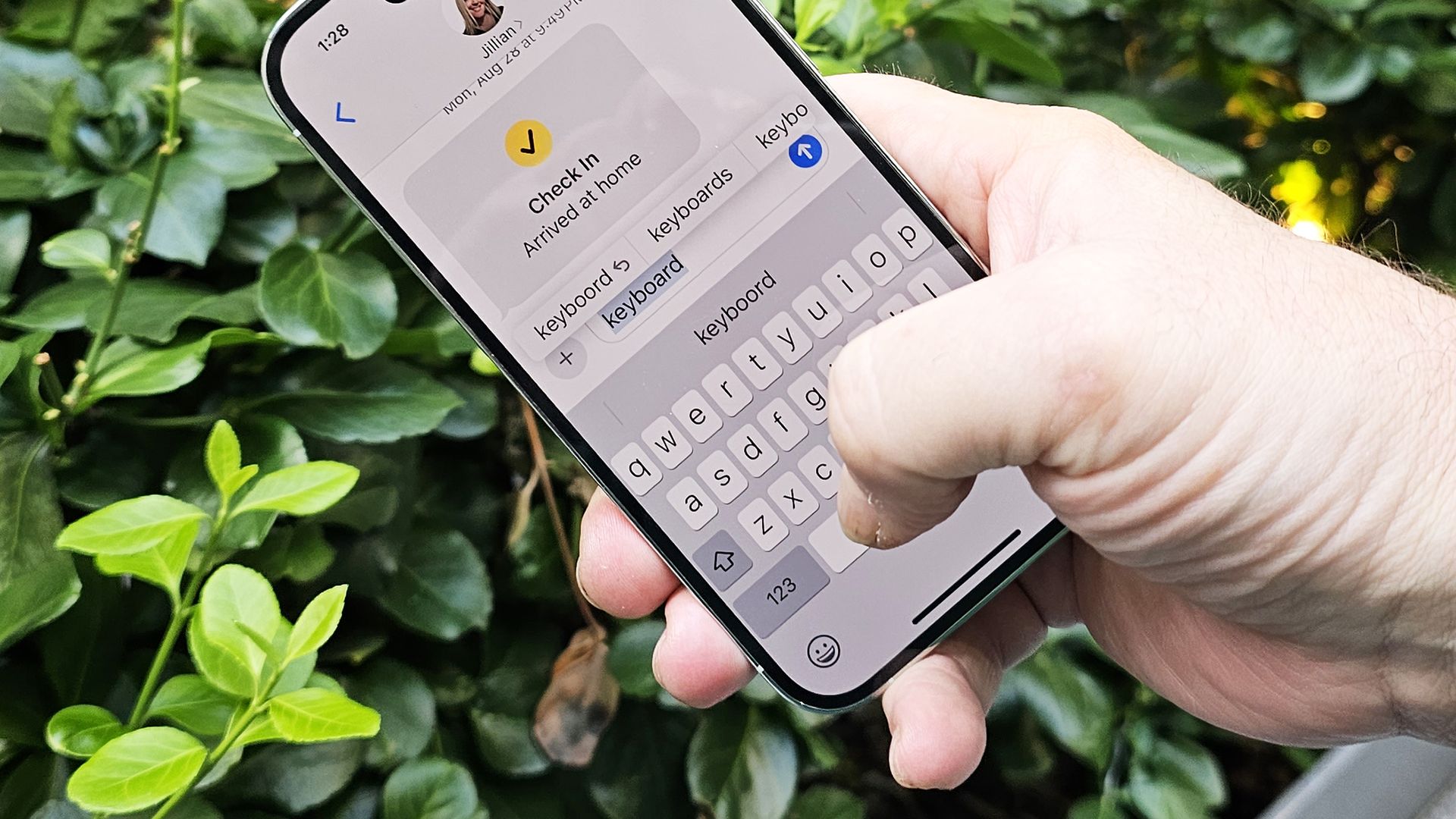
Try and type out phrases like "sleepy Joe", "dictator Trump", or "Tibetan independence" on your iPhone, and you'll notice that you don't get auto-complete suggestions for them, and you can't swipe-type them — evidence of a 'gray list' of terms that has been discovered hidden in iOS.
The so-called gray list was discovered by researcher Derek Kauffman and reported by Reuters, and verified by an independent cybersecurity engineer. It's thought that there are at least 100,000 words and phrases in the list.
Other entries on the gray list, as reported by The Guardian, include "NSA spies", "question your sexuality", and even "Australia is a very bad place". References to drug use also seem to be unavailable through auto-complete or swipe typing.
There's no issue with typing out any of these terms and including them in any kind of message — but the point is that iOS won't try and auto-complete them like it will with other words and phrases, or let you type them through swiping.
More transparency
iOS being shown off at WWDC (Image credit: Apple)
Apple is keeping its cards close to its chest: it didn't comment on the list directly in an email sent to Reuters, but did acknowledge that the iPhone keyboard was set up to avoid offering suggestions that might be inappropriate or offensive.
You may remember last year there was something of a kerfuffle over iPhones changing "Trump" to "racist" during dictation. It wasn't clear exactly what happened, but with any kind of AI-driven automation, these sorts of issues can arise.
The Electronic Frontier Foundation's David Greene told Reuters that while he could see the thinking behind a gray list for the iOS keyboard, "this is something users should be really well aware of and have some ability to customize".
For Kauffman as well, a bit more transparency from Apple about exactly what's going on here, and why, would be welcome. "It's a very light-touch form of censorship," the researcher told Reuters. "But at the scale that Apple is operating, it only takes a light touch to have a big impact."
If you've ever used a shared e-bike in the UK, you'll know it can be a really convenient, cheap, and environmentally friendly way to get around. They're good exercise, too. But until now, their use has been largely unregulated — and that's created some big downsides, too.
Now Downing Street wants to change that. The UK government is putting forward a swathe of measures to tackle issues like e-bikes blocking the pavement, too few parking spaces, and problems with anti-social rider behaviour.
“I think the fact that we are consulting on this new licensing regime means that we can start to bring some order to the chaos that some people see in some parts of big cities where these e-bike schemes, rental schemes have popped up,” Transport Secretary Heidi Alexander told the Press Association.
"There are a small minority of people who choose to behave recklessly but sadly, that is true of any type of way that people move around in a town or a city, and you can’t legislate for the idiots. But we can take sensible steps to give local leaders more power over the way in which these types of schemes operate,” she added.
A law has already been passed to begin the process of licensing e-bike hire companies. What's new now is this public consultation, running until the end of 2026, during which citizens, lawmakers and e-bike companies can have their say.
Why is 'nuisance' e-bike parking still such a problem?
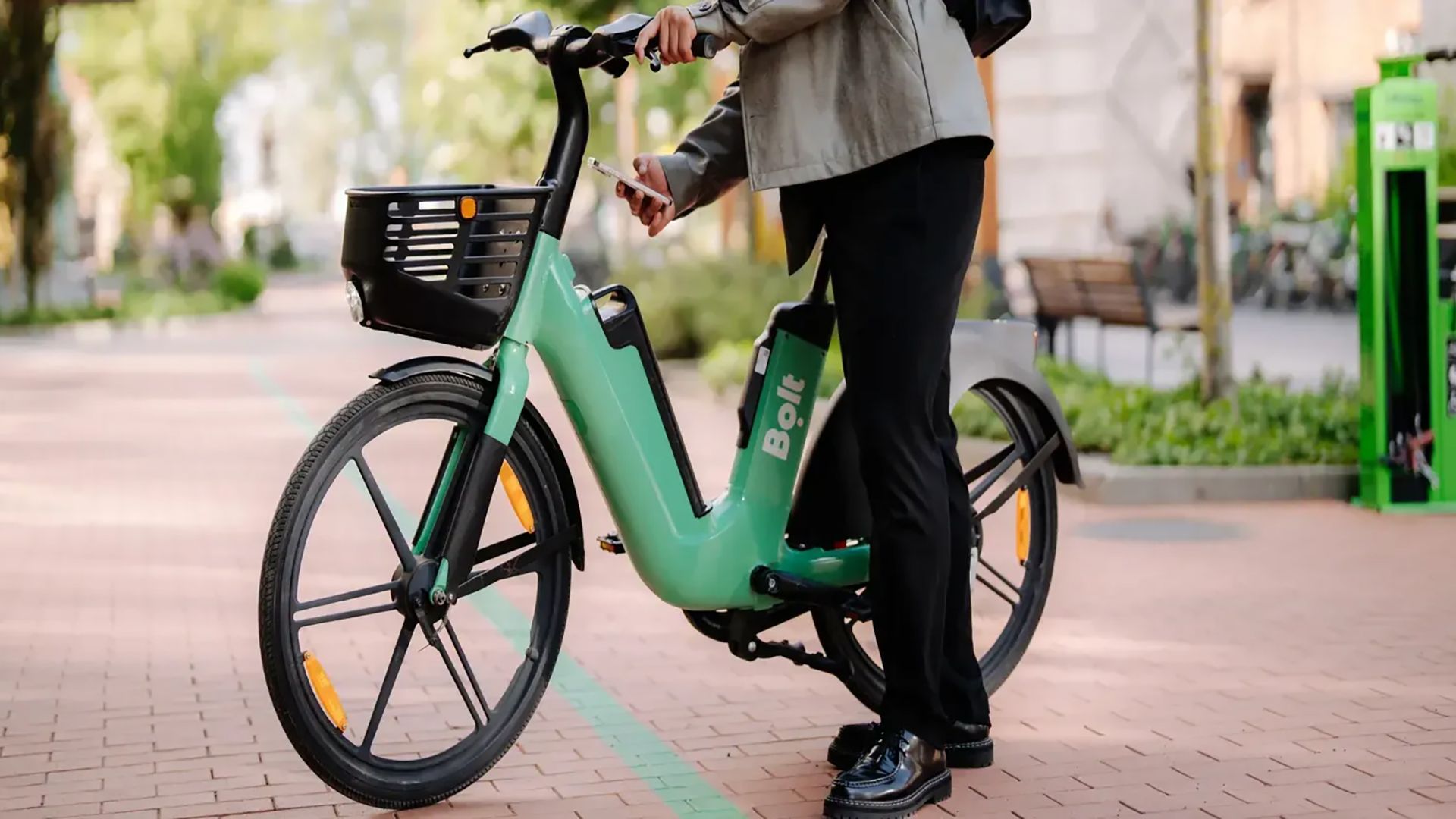
Bolt is one of the e-bike companies operating in the UK (Image credit: Getty Images / Mark Kerrison)
It's estimated that there are around 350,000 shared e-bike trips every day in London alone, and that's a lot of bicycles. In most regions, there are no rules about where bikes can be picked up from or left, and not enough designated parking spaces to go around — the accompanying apps simply direct users towards them via GPS.
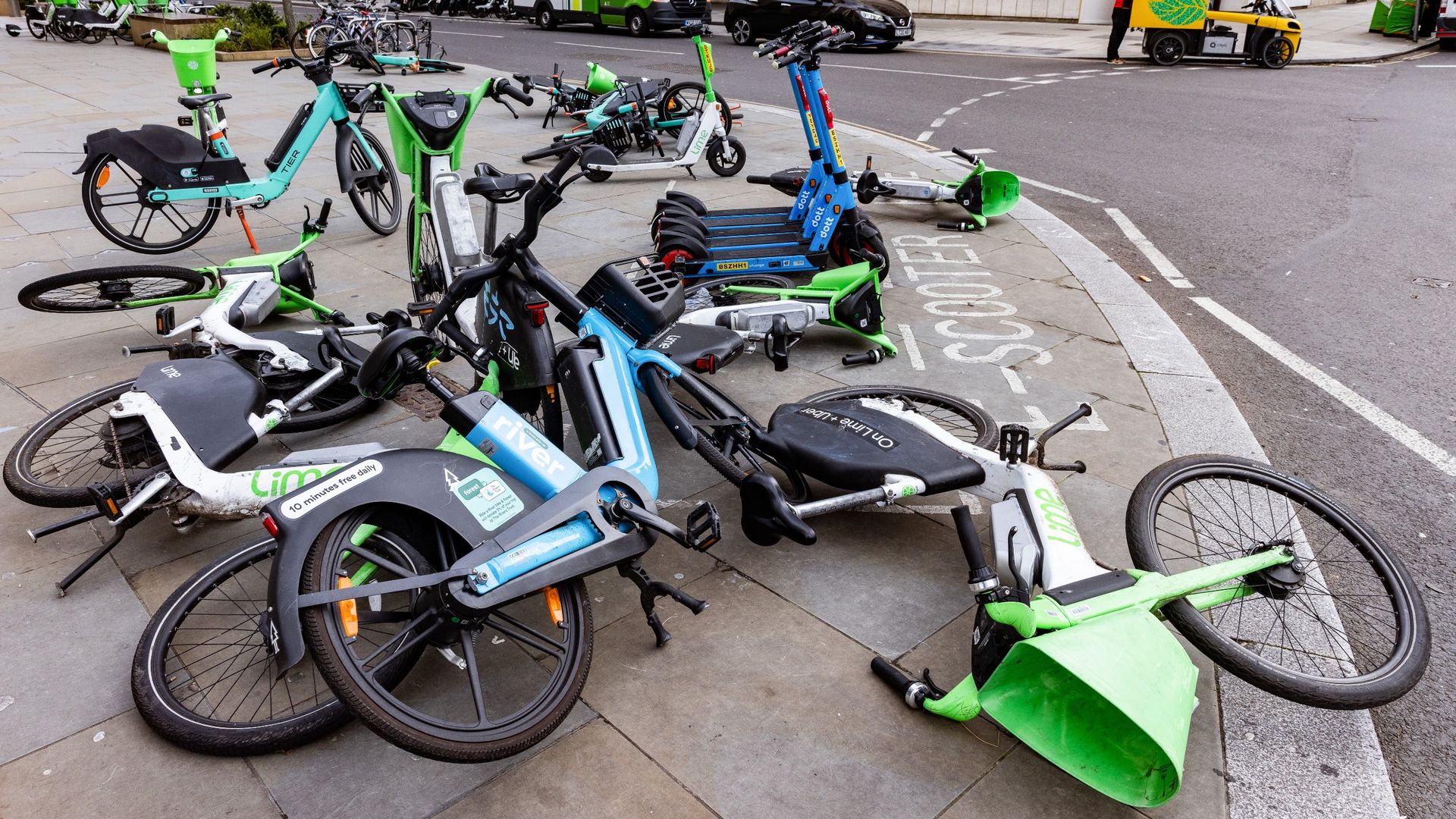
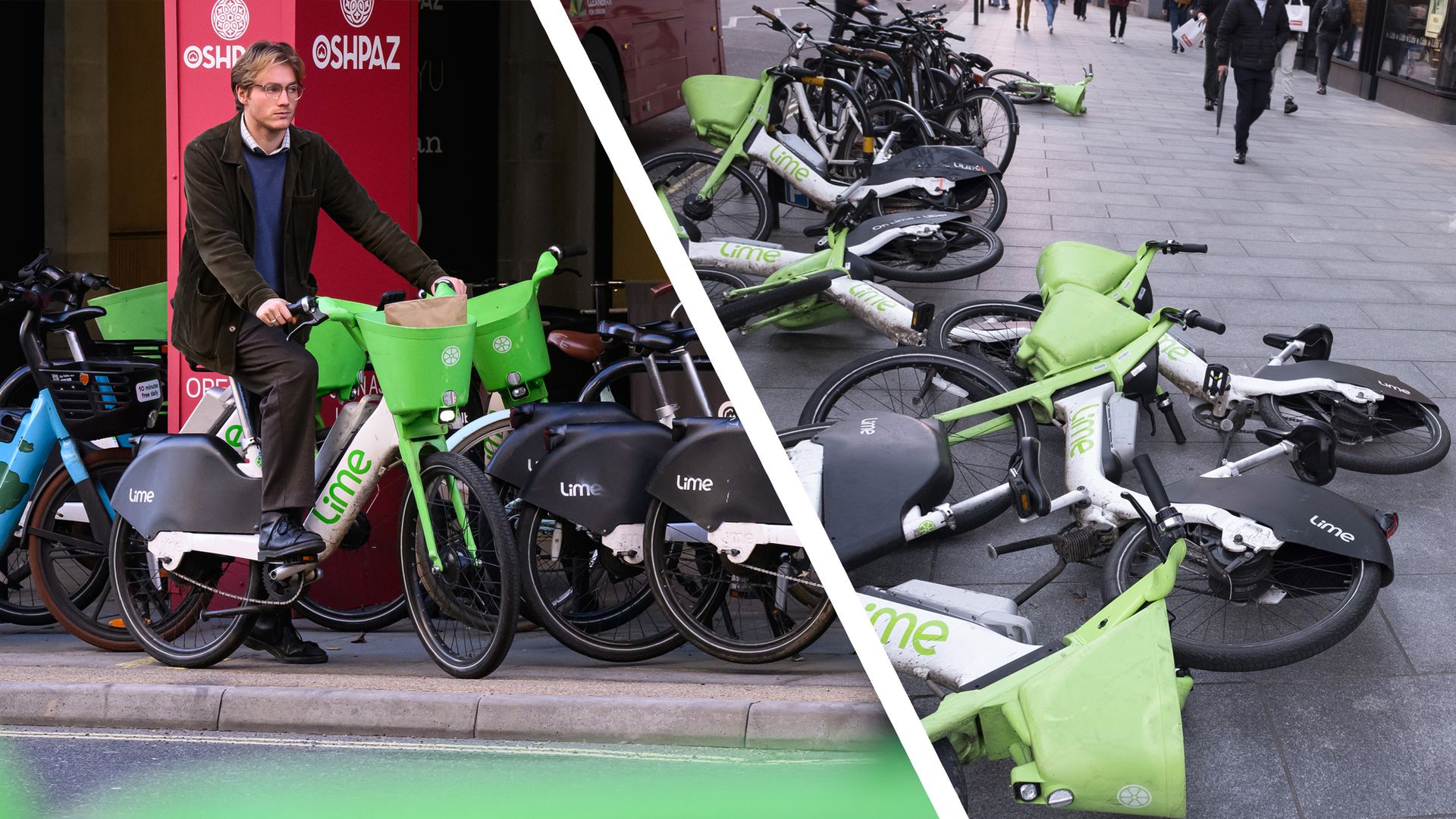
That's led to plenty of overcrowding on the pavements, and e-bikes being left in areas that make life difficult or dangerous for pedestrians. Earlier this year, e-bike hire operator Lime apologised for one of its parked e-bikes forcing a blind man into the road with his guide dog. There have also been issues with riders not being able to complete journeys because of the patchwork of different rules and guidelines across individual London boroughs.
Anti-social behaviour from riders has been an issue, too: Users who hire the cycles when drunk, or in a way that endangers themselves other people around them. There have long been calls for the operators to take more responsibility for how their bikes are used.
Making the operators more responsible is difficult for councils that have no real powers and very little data about how the e-bikes are being used — at the moment they're relying on the goodwill of the e-bike companies and the voluntary agreements that are in place, which is something the government wants to improve upon and formalise.
What is the government proposing to do about it?
(Image credit: Oli Scarff / AFP via Getty Images / Lime)
There's quite a bit to dig into when it comes to the new measures. The government says there will be new parking plans that make sure e-bikes aren't "inconveniencing the public" when they're not in use, and there will be fleet management plans too, designed to reduce bike overcrowding (think limits on the total number of bikes in an area).
In addition, fleets of bicycles will need to be properly maintained under the new guidelines, so you can be sure that you're getting on something safe when you ride a shared e-bike — and that pedestrians and other road users aren't going to be put in danger by a faulty battery or wheel.
We recognise the current patchwork approach is confusing for riders, councils and operators, all of whom deserve greater clarity and certainty.
Wayne Ting, Lime CEO
Speaking of pedestrian safety, the proposals might also potentially cover insurance requirements for operators, so they'd be able to pay out compensation if someone got hit by a shared cycle and its rider. More parking spaces for e-bikes and more accountability for operators in regards to how their e-bikes are used are also planned.
With stronger rules in force, and closer partnerships with the e-bike companies involved, councils will have greater powers to punish those who are found to be in breach of the guidelines — whether that's leaving an e-bike in an appropriate and unsafe space, or getting behind the handlebars while intoxicated.
What have the e-bike companies said?
Operators want to see more regulation too (Image credit: Forest)
The e-bike companies are largely for the proposals. Certainty over the legitimacy of bicycle hire schemes means investment can be increased, while the confusion over current guidelines — which are largely voluntary and vary from council to council — isn't really helping any of the parties involved. Under the government's new proposals, hire companies might also get funding help for infrastructure like parking bays.
"We welcome the government’s consultation on national standards for shared e-bikes," said Georgia Heathman, Public Policy Manager at Bolt. "98% of Bolt rides already end with a correctly parked bike, which shows what clear rules and effective management can achieve. We want to see that standard applied consistently across the country, and support the consultation’s ambition to give local leaders the tools to licence schemes that suit their communities and raise the national bar."
"We recognise the current patchwork approach is confusing for riders, councils and operators, all of whom deserve greater clarity and certainty," commented Wayne Ting, CEO at Lime, which is the largest shared e-bike operator in the UK. "Today’s consultation is an important step forward."
The CEO of Forest, Agustin Guilisasti, chimed in with a call for "national standards", and for a "coherent, well-regulated" system going forward, while Prime Minister Andy Burnham said one of the main aims of the new consultation would be "giving communities more control over where [shared e-bikes] are parked and making sure companies and riders play by the rules".
Will this really solve the problem?
(Image credit: Bolt)
Time will tell, but there seems to be cautious optimism among those involved at the moment that new laws and regulations will make a genuine difference to the experience of shared e-bikes for those riding them and the general public at large. Transport Secretary Heidi Alexander is taking the lead here, promising that local leaders will ultimately get powers to "stop nuisance parking, tackle anti-social behaviour and make journeys safer".
"We hope licensing can be a way to provide suitable and well-enforced parking spaces for this highly popular, low carbon mode of travel and so help the government deliver on its own commitment to scale up shared mobility," Richard Dilks, CEO of shared transport organisation Collaborative Mobility UK (CoMoUK), told TechRadar. "Any regulation should protect the many benefits that these schemes bring, including boosting the rates of active travel, improving air quality, and reducing traffic congestion."
Mike Wordingham, Head of Policy at the Royal National Institute of Blind People, acknowledged that "tackling rider behaviour will be difficult, and it’s vital the desire for local flexibility doesn’t lead to a patchwork of regulations and inconsistency in implementing them".
Any regulation should protect the many benefits that these schemes bring.
Richard Dilks, CEO of CoMoUK
"There's clearly a case for regulation of dockless e-bikes to ensure everyone can travel around cities safely and quickly," Anthony Breach, Director of Policy and Research at Centre for Cities, told TechRadar. "A key test will be how much responsibility the mayors have — different cities are different, and it's right that mayors can design policy on dockless bikes that work for the city as a whole."
"Regulations have costs, and we should expect there to be at least a small impact on cost and convenience," adds Breach. "But the lack of regulation of dockless bikes is also affecting the convenience and costs of other highway users, too. The challenge for government and the mayors is maximising convenience while minimising price across every form of urban transport."
E-bike operators are already testing in-app features like intoxication tests (via a response time analysis) and safe parking checks (via user-taken photos scanned by AI), but the consultation is an opportunity for everyone to have their say on the best rules and regulations going forward — you can contribute yourself here.
An Anthropic engineer has written about the thinking linked to AI coding
We risk 'cognitive surrender' if we don't keep engaging with AI, he says
However, the developer isn't arguing against the use of AI coding agents
The idea that our cognitive faculties might degrade through underuse in the age of AI isn't new, but it's been well summed up by Anthropic engineer Addy Osmani, who says that we risk losing key skills by letting bots do all our digital work for us.
"Nothing in my day-to-day forces critical thinking on me now that so much of my work runs through agents," writes Osmani (via Business Insider). He adds that "skills that you stop exercising are going to go away, and probably faster than you might guess".
As you might expect given his job, the software developer isn't suggesting that AI agents shouldn't be used in coding projects — but he is saying that it's important to protect our critical thinking skills, despite the temptation to simply accept everything AI offers up.
Osmani also offers a counter to the idea that it doesn't matter if we lose the skills required for jobs that AI can do better anyway: "Regardless of how much AI helped, a human has to take responsibility," he says.
Some level of cognitive offloading to AI is okay, Osmani argues, as long as human beings are still "maintaining ownership". It's when AI's output is accepted without checks and without any rigorous examination that we should start to be worried.
"You read the last answer well, so you skim the next one," explains Osmani. "You just scan the skeleton of the one after that. Then you get asked about a line and can't explain it, even with your agent's help... that's how cognitive debt accumulates."
The engineer has some suggestions about avoiding cognitive surrender. They include practising core skills, formulating ideas before asking AI, paying attention to what's generated, and making sure you understand the decisions AI has made.
Ultimately, while some skills will be lost as AI improves, we need to be deliberate in terms of those we're willing to let go, Osmani says — and not just let it happen without thinking. It's well worth considering the next time you ask for AI's help with something.
Even as a tech journalist who spends all day, (almost) every day playing around with gadgets and apps, there's still plenty that I miss: like, for example, the ability to view how much time you've been spending on YouTube from inside the mobile app.
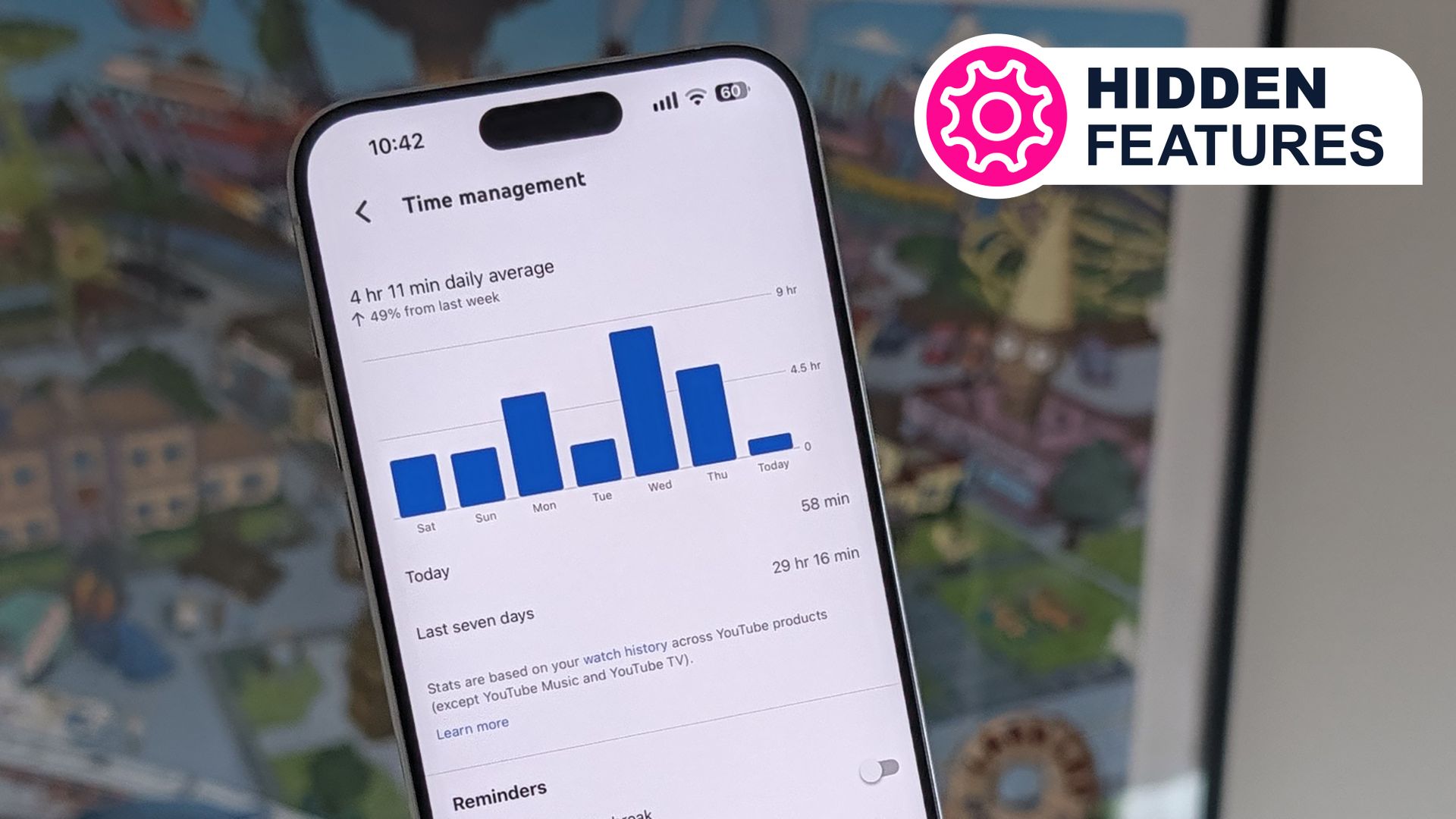
It works like Digital Wellbeing (on Android) or Screen Time (on iOS), but specifically for YouTube. You can dig into how much time you've spent on YouTube today and over the past week, with an average for the last seven days.
This has actually been around for years, and it's available whether or not you're signed up for YouTube Premium — though when I checked up on my stats, I was glad that I've been paying the monthly fee, if only to avoid hours and hours of ads.
First step — turning on Watch History
The Watch History feature in YouTube (Image credit: Future)
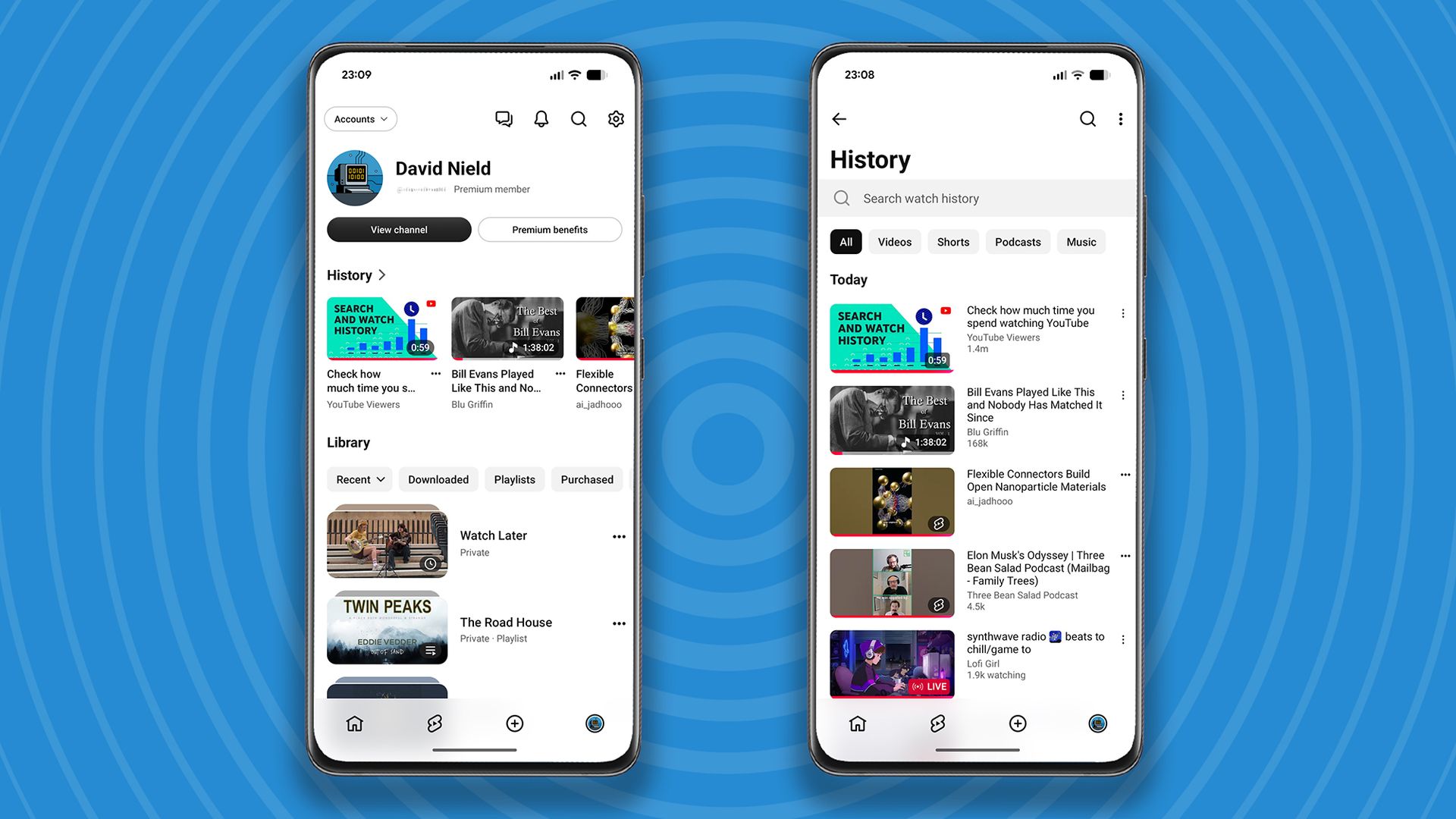
The 'time watched' statistics we're talking about here will only appear if you've got YouTube Watch History turned on. You can check this inside the mobile app by tapping your profile picture (bottom right), then the cog icon, then Manage all history (you can find the same settings on the web here).
To see what you've watched most recently, you can tap your profile picture then History in the mobile app, or choose History from the left-hand navigation menu on the web. There are tools here for searching through your history, deleting the entire record of everything you've ever watched, and putting your Watch History on pause.
It is of course entirely up to you whether or not you enable Watch History. The downsides are Google knows more about you, and it can be hard to get out of recommendation rabbit holes; on the plus side, you will get served videos to watch that might be at least vaguely related to your interests (it's great for discovering new music, for example).
More of your Watch History can be got at through the comprehensive Google Takeout service, which you can find on the web here. Select the YouTube entry, and Google will gladly give you a CSV file detailing every single video you've ever watched on the platform, as long as you've always had Watch History turned on.
Note that the 'time watched' stats don't include videos you've deleted from your Watch History, or that you've watched in incognito mode. However, they do include the YouTube viewing you've done across all your devices (as long as you were signed in), except for inside the YouTube Music apps and on the YouTube TV platform.
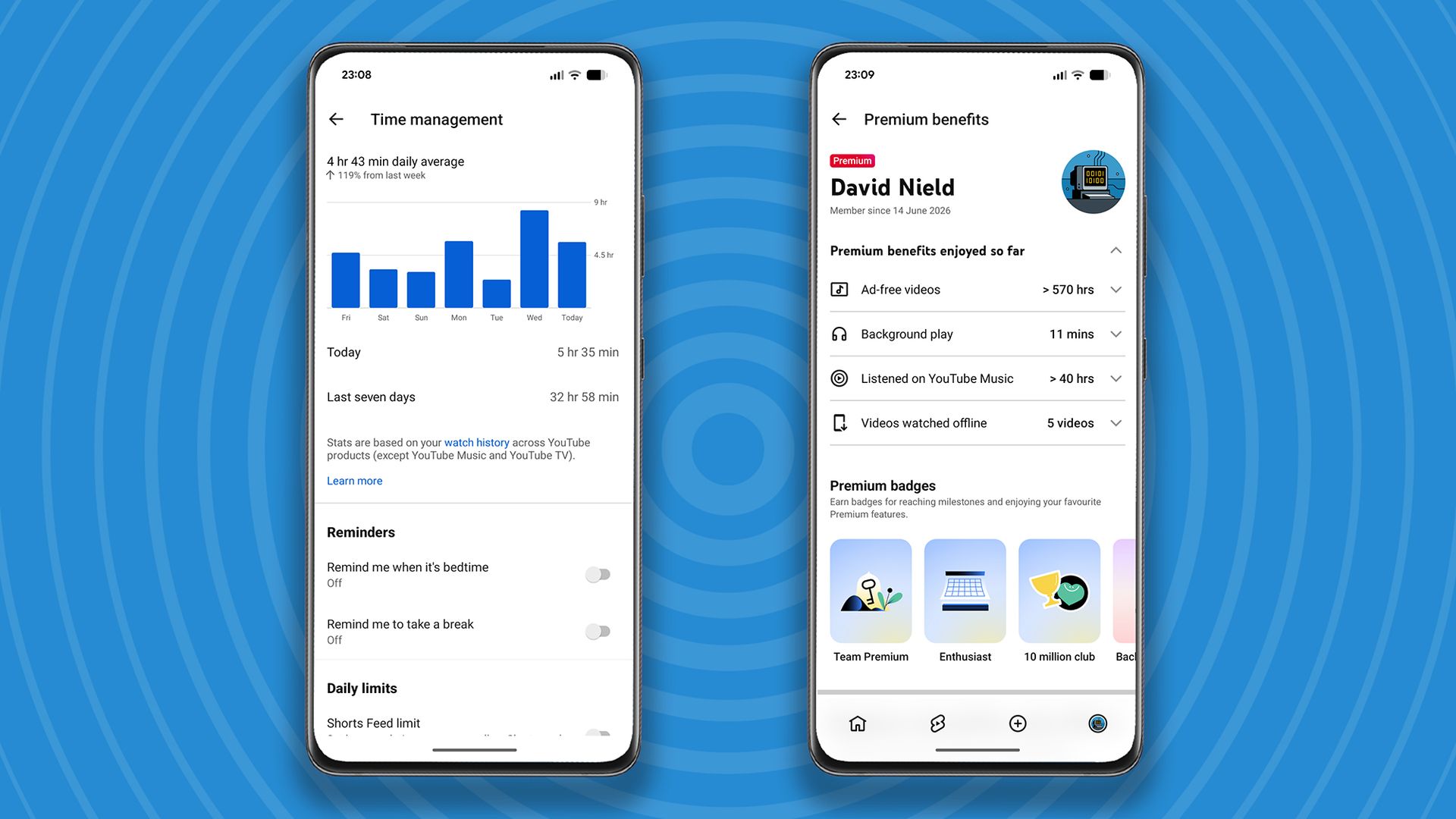
You can find your viewing stats inside the YouTube mobile app for Android or iOS by tapping your profile avatar (bottom right), then tapping on the cog icon (top right), and choosing Time management. You can't get these stats through YouTube on the web at the moment, which seems a bit of an oversight.
There's not much in the way of a breakdown of what you've been watching, but you can see your running totals and average for the past seven days. There's also a stat about how your viewing compares to the week prior, so you can see if your spending more or less time on the platform week-to-week.
I was honestly surprised by my stats: almost five hours a day on average at the moment. Okay, I do play a lot of lo-fi music videos while I'm working, but that's still an awful lot of content compared to hours in the day — and it extends to tech reviews, explainer videos, and of course all the podcasts that have recently shifted to video.
I've written before about how essential I find YouTube Premium, and the revelation of how much time I actually spend on the site and in the app has more than justified the monthly outlay for me personally — I can't imagine the number of ads I'd have had to sit through otherwise. In fact, YouTube Premium tells you how many ad-free videos you've watched on this page (570 hours and counting for me).
You'll see the time management screen also gives you some controls if you want to limit the amount of clips you're watching day to day. There are toggle switches for setting up reminders around bedtime and taking breaks, and for putting a limit on how much time you spend watching YouTube Shorts each day.
A new Garmin update could share the location of cyclists
The locations would show up for drivers in Waze
It appears the feature will be fully opt-in from the user side
Whether you're a cyclist, driver, or both, we can probably all agree that a better awareness of who's using the road is helpful for everyone — and Garmin is rumored to be working on a new feature that would pass on the location of cyclists to the Waze app.
This comes from Gadgets & Wearables, reporting on hidden code discovered in the latest version of the Garmin Connect app. That code includes the text strings "share location with Waze", "share your rides with Waze", and "Waze location sharing", which is telling.
There also appears to be a consent and onboarding flow already included in the app. That all suggests that the feature could be launching imminently, but there's no guarantee that it will roll out until Garmin makes it official.
Clearly this would be very much opt-in, and only available when the cyclist was using the LiveTrack feature for an activity. LiveTrack is designed for location sharing with friends and family, but it could be easily adapted to work with Waze too.
Safer on the road
Waze already leans heavily on community contributions (Image credit: Brett Jordan/Unsplash)
We don't know much about how this is going to work yet, but presumably approaching drivers aren't going to be able to see your name and health stats if you decide to make use of this — just that there's a cyclist on the road up ahead.
That should make journeys safer for both cyclists and those in vehicles, especially on narrow and winding roads, and in the evening or when visibility is otherwise difficult. It's actually difficult to see many downsides, if this works as advertised.
Waze is already well known for the depth and breadth of information that it displays on its maps, with a lot of real-time details supplied by users. The maps include updates on roadworks, speed traps, accidents, gas prices, and more.
We'll have to wait and see which Garmin wearables will support the feature and exactly how the integration works, but it sounds promising. As Google owns Waze, cyclist alerts might even graduate to Google Maps eventually.
Researchers report on 3 huge 'perturbations' caused by Artemis II
The rips in the ionosphere could affect GPS systems
Further study is needed to assess the impact of the rocket launch
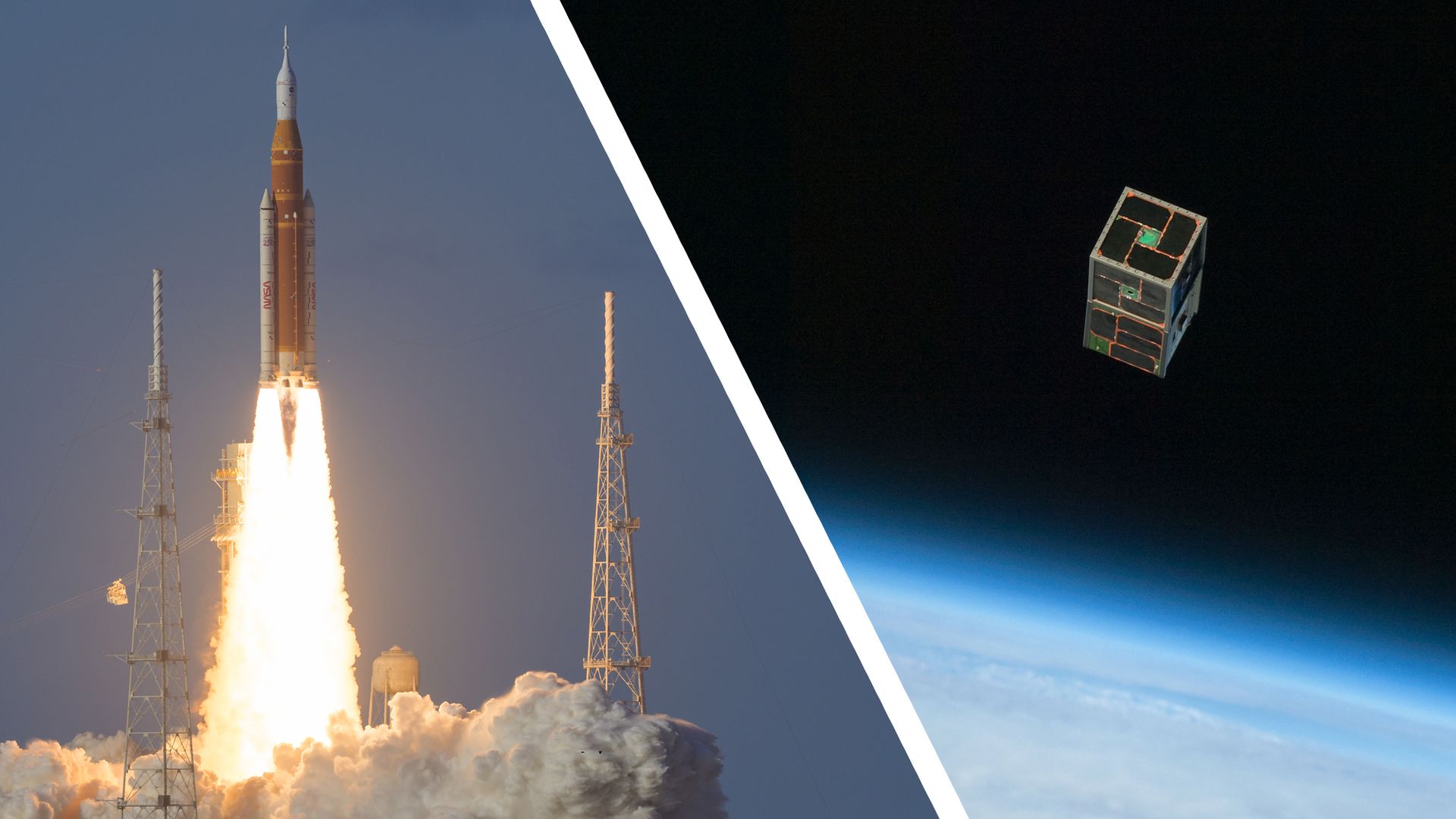
The April 2026 Artemis II mission marked the first time humans have been in lunar space since 1972, and scientists are still picking through the masses of data collected along the way. New research set to be published in Geophysical Research Letters has now revealed some unprecedented tears the rocket launch ripped in our upper atmosphere.
Known as the ionosphere, this layer is bombarded with solar radiation, causing it to be packed with free electrons and positively charged ions — a mix which means it has a strong influence on radio waves, such as signals sent by Global Navigation Satellite System (GNSS) satellites, including the Global Positioning System (GPS).
The study team found that Artemis II triggered three separate disturbances in the ionosphere, all directly above North America, and measuring more than 5,000 kilometers (3,106 miles) in size. These pulse waves were caused by the initial rocket launch, and then by upper-stage orbital engines firing directly in the upper atmosphere.
It's a more powerful barrage of atmospheric disruption than we've seen from any previous rocket launch, including those launched by SpaceX, and it gives scientists important context on human-made 'space weather' — disturbances in the atmosphere that have the potential to interfere with ground infrastructure.
GPS disruption on the ground
The Artemis II has lift-off (Image credit: NASA / Bill Ingalls)
While it's worth noting that this study didn't directly measure any disruption in GNSS or GPS systems — it's something the team hopes to follow up on later — the sort of disturbances recorded here have the potential to cause significant, if temporary, shifts in our navigation systems.
"A positioning error of a couple of meters is enough to cause an autonomous car to change lanes," study author and earth scientist Charles Lin, from National Cheng Kung University, in Taiwan, told Space.com. "It could have a strong impact not only on self-driving cars but also on drone positioning."
"Though space launches often induce ionosphere disturbances, the Artemis-II Lunar mission for the first time produced extremely rare reoccurring perturbations over the same geographic region on three different occasions," write the researchers, while also suggesting it "will be essential to assess" future impacts from rockets on the ionosphere.
The impact of the ionosphere disruptions on GPS and GNSS are what the researchers are planning to look at next, including to what degree errors might have been introduced, and how long they lasted for. The results are likely to be vital in planning future rocket launches and maneuvers.

 Login