Login
Login
Security Check-in Quick Hits: Dirty Frag Linux Kernel Flaw, Firefox Browser Exploit, cPanel Patches, and Canvas Breach Ripple Effects
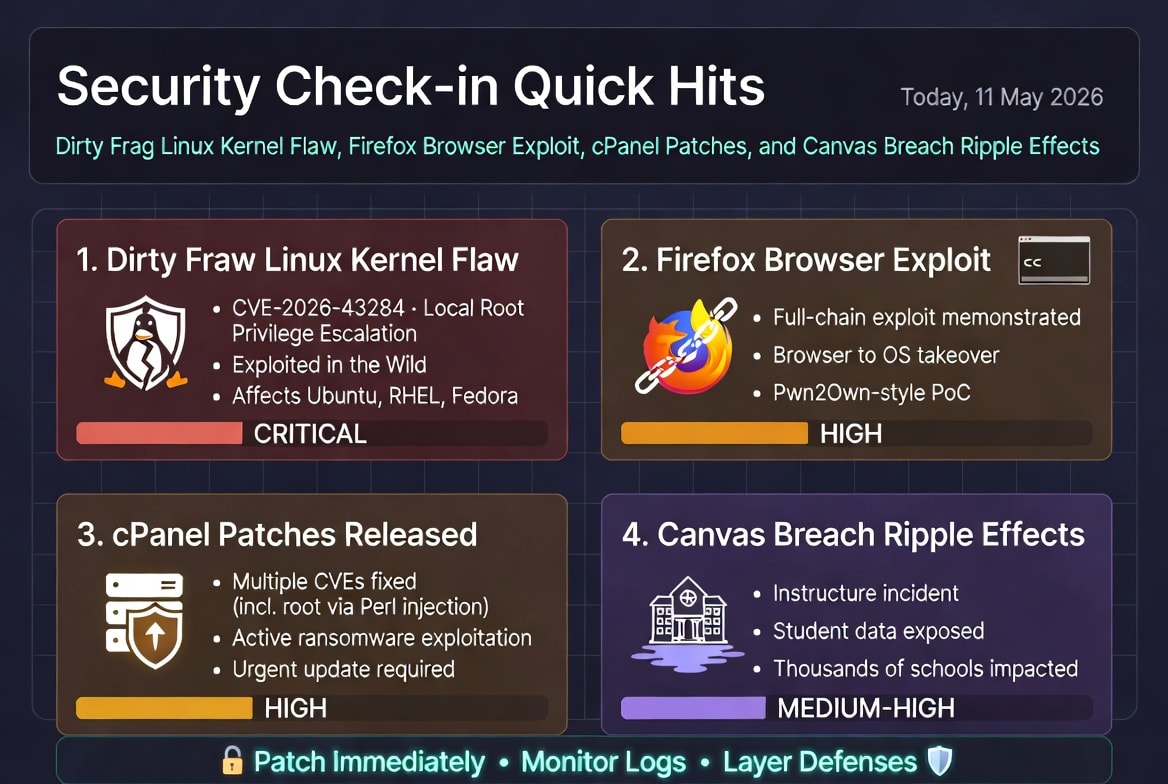
Dirty Frag Linux Kernel Vulnerability (CVE-2026-43284 / Copy Fail 2) Emerges as Major Privilege Escalation Threat
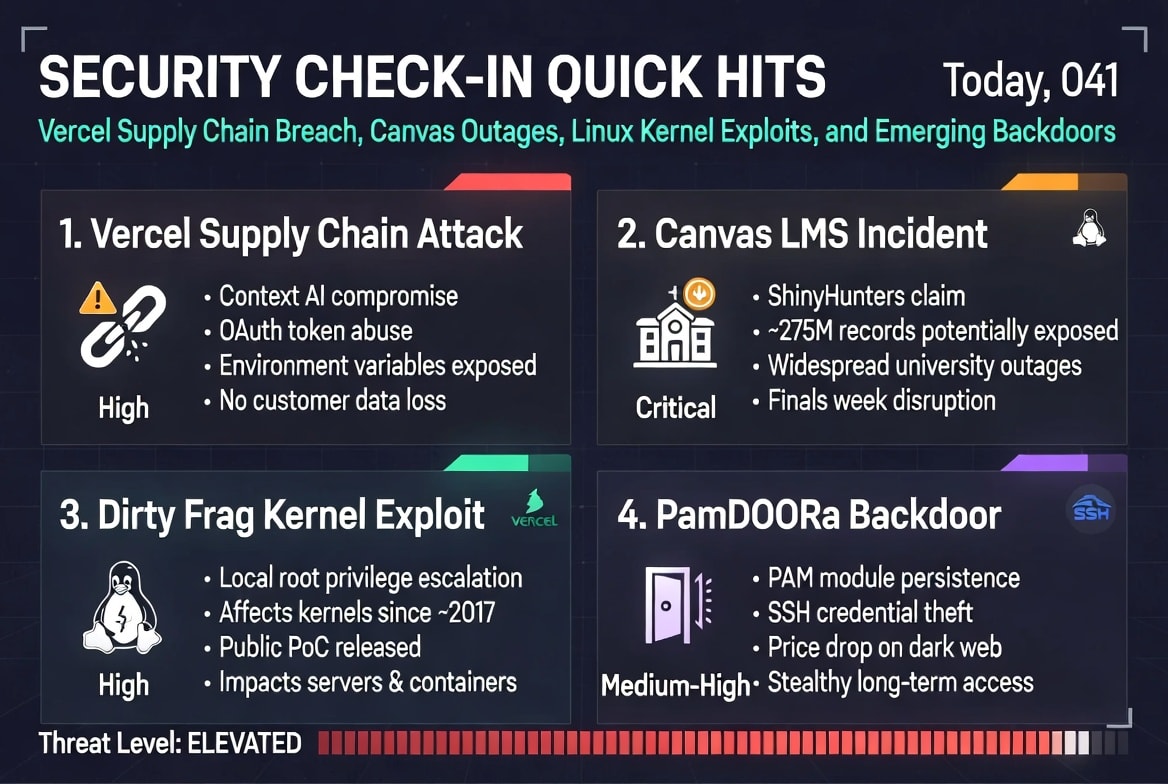
The cybersecurity community is buzzing about “Dirty Frag,” a years-old Linux kernel flaw that enables local attackers to gain root privileges on major distributions like Ubuntu, RHEL, and Fedora. Disclosed recently with public exploit code, it has reportedly been exploited in the wild before full mitigations landed.
Key Details:
This vulnerability (also called Copy Fail 2) bypasses modern security mechanisms for instant root access. Linux 7.0.6 was released specifically to complete mitigation. Organizations running Linux servers or containers should prioritize patching immediately, as local access (even authenticated) is enough to escalate.
Rod’s Blog is a reader-supported publication. To receive new posts and support my work, consider becoming a free or paid subscriber.
Implications: In cloud and on-prem environments, this could lead to full system compromise, data exfiltration, or ransomware deployment. Admins are urged to audit exposed systems and apply kernel updates without delay. The incident highlights ongoing risks in long-lived kernel components.
Takeaway for Teams: Enable strict privilege separation, monitor for anomalous kernel activity, and test patches in staging. This serves as a reminder that “local” doesn’t mean “low risk.”
Researcher Demonstrates Full-Chain Firefox Exploit on Windows
A security researcher (ggwhyp) publicly showcased a complete browser-to-OS exploit chain for Firefox on Windows, triggering cmd.exe and launching Calculator from a simple HTML page. The proof-of-concept was prepared for Pwn2Own, responsibly disclosed to Mozilla (though ZDI reportedly rejected it).
Key Details:
It demonstrates a reliable full-chain attack, raising alarms about browser sandbox escapes and privilege escalation. This comes amid broader discussions of AI-assisted vulnerability discovery accelerating exploit development.
Implications: Firefox users on Windows face heightened risks from malicious web content. While patches are likely in the works, the demo underscores how quickly browser vulnerabilities can lead to system takeover.
Takeaway for Teams: Keep browsers updated, use sandboxing tools or hardened profiles, and consider enterprise management for extension and update policies. Users should avoid untrusted sites and enable strict security settings.
cPanel Releases Additional Patches Following Ransomware Attacks
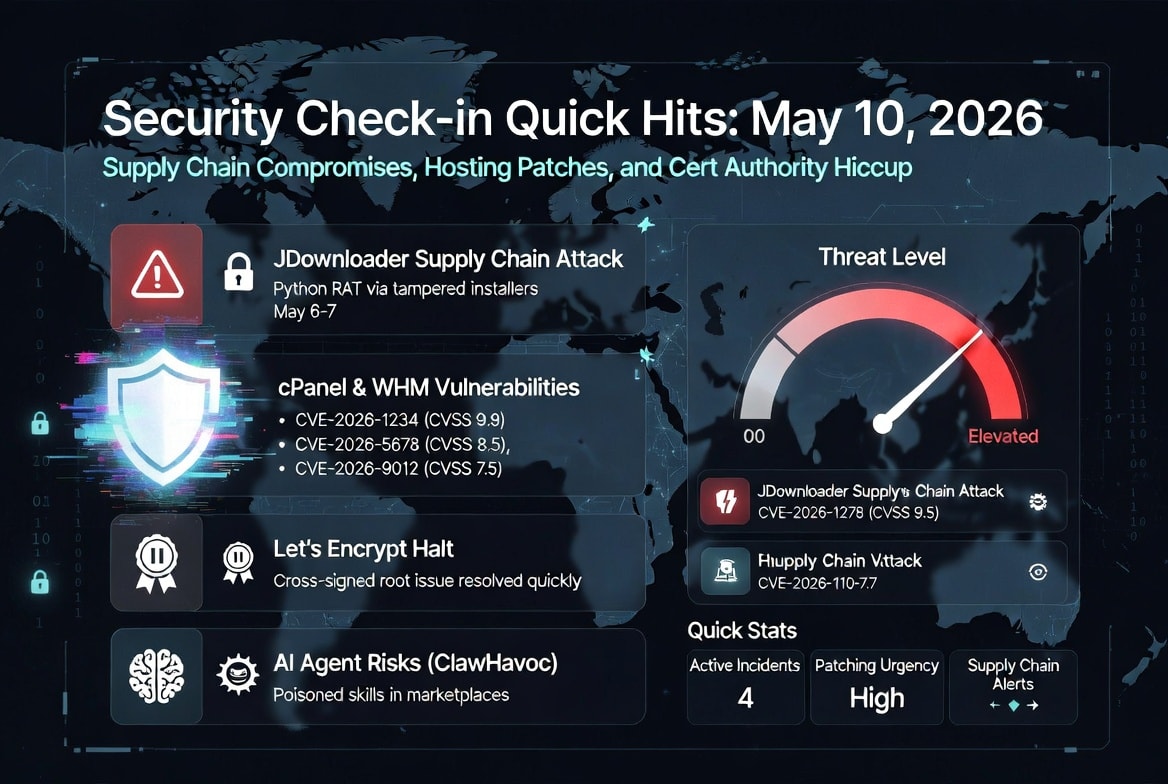
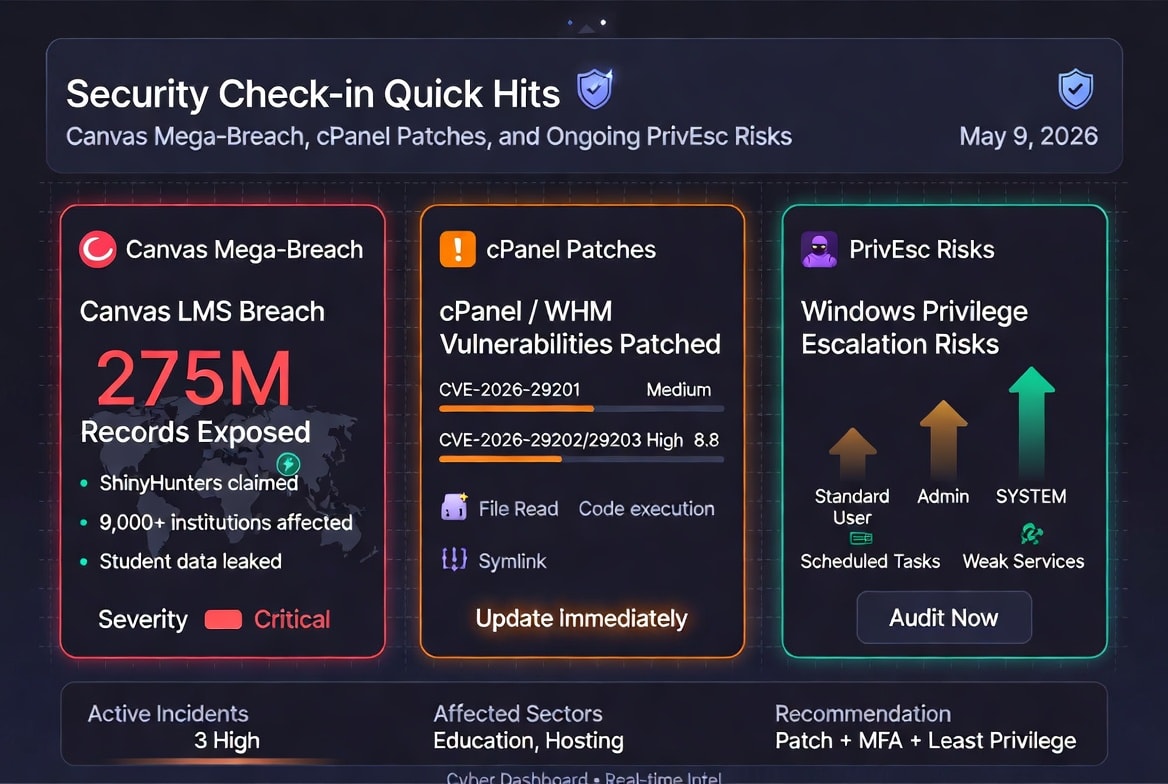
cPanel and WHM pushed multiple security updates, including fixes for CVE-2026-29202 (Perl code injection leading to root), CVE-2026-29203 (symlink race), and CVE-2026-29201 (directory traversal). This follows active exploitation and a “Sorry” ransomware incident.
Key Details:
These flaws could allow attackers to achieve root access or manipulate files on hosting servers. Patches address immediate threats observed in the wild.
Implications: Shared hosting providers and cPanel users are prime targets. Unpatched instances risk full server compromise, affecting websites and customer data.
Takeaway for Teams: Update cPanel/WHM urgently, review server logs for exploitation signs, and implement least-privilege principles. Hosting providers should communicate patch status to clients transparently.
Canvas Education Platform Breach Disrupts Schools and Exposes Student Data
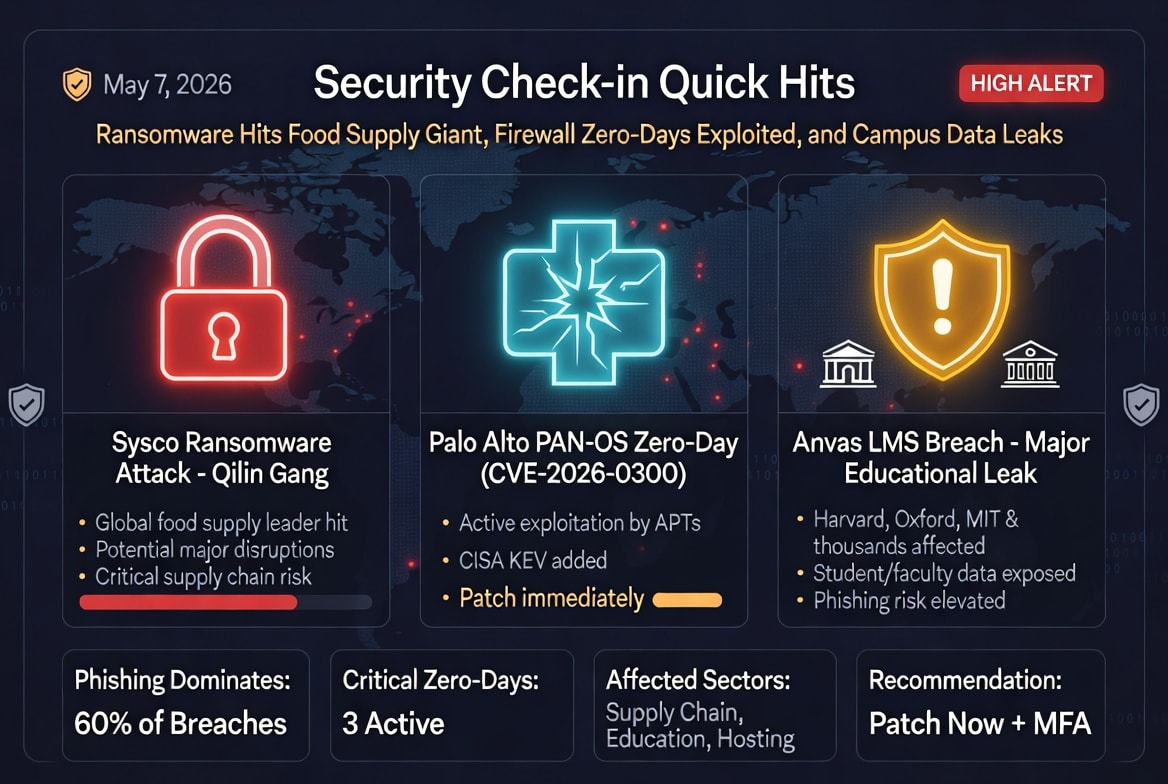
Instructure (parent of Canvas LMS) suffered a cybersecurity incident, leading to temporary outages and a claimed data breach by ShinyHunters affecting thousands of schools and millions of records. Schools are reportedly negotiating with attackers to prevent data dumps.
Key Details:
The breach impacts U.S. educational institutions using the popular platform, exposing student and staff personal information. Disruptions affected classes and operations.
Implications: This highlights risks to edtech supply chains, where one vendor compromise ripples across thousands of organizations. Data could fuel phishing, identity theft, or further attacks.
Takeaway for Teams: Educational institutions should review affected accounts, enhance monitoring, and push for stronger vendor security requirements. Students and parents: Monitor for phishing and consider credit freezes if notified.
These quick hits reflect a volatile 24-hour window in cybersecurity—kernel flaws, browser exploits, hosting platform patches, and education sector fallout. Stay vigilant, patch aggressively, and layer defenses. For deeper dives, follow reliable threat intel sources and test your incident response plans. What stands out to you from today’s landscape?
Rod’s Blog is a reader-supported publication. To receive new posts and support my work, consider becoming a free or paid subscriber.