❌

Reading view

There are new articles available, click to refresh the page.

Choosing the best tech for the need

ON SECURITY By Susan Bradley Recently, we were looking for something to solve a problem at the office.  Rather than spin my wheels looking for the best way to get software A (an Excel spreadsheet) to talk to software B (a line-of-business app that has a SQL backend), I reached out to someone on the […]

Microsoft Removes PC-to-PC Migration from Windows 11, Points Users to OneDrive-Based Backup

Windows 11 offered a PC-to-PC Migration feature that "moved files and settings directly between two PCs over Wi-Fi or Ethernet," reports Ghacks. But according to an updated Microsoft support page, the tool is no longer available. "Microsoft's support documentation now redirects users to Windows Backup, a tool that relies on OneDrive cloud storage instead of a direct connection between two computers..." Windows Backup works differently. It requires a personal Microsoft account and backs up supported folders (Desktop, Documents, Pictures, Videos and Music) to OneDrive. Free OneDrive accounts include only 5GB of storage, and Microsoft's own promotional screenshot for Windows Backup shows 4.5GB of that allowance already in use. Years of photos, documents and downloads can exceed the free tier quickly. Windows Backup does carry some extras. It can remember installed apps, Wi-Fi networks, passwords and some settings to speed up setup on a new device. Apps still have to be reinstalled, and supported files are restored from the cloud. Thanks to Slashdot reader joshuark for sharing the article.

Read more of this story at Slashdot.

Denmark Gives Up On Replacing Microsoft Office With Collabora

Denmark's Ministry of Digitization reportedly abandoned a pilot to replace Microsoft Office with the open-source Collabora suite less than six months after it began. Tom's Hardware reports: According to Danish publication Computerworld, the pilot project was launched in 2025 and involved 38 employees, all of whom would start using the British open-source Collabora office suite instead of Word, PowerPoint, and Excel. The experiment was initiated by the then Digitization Minister Caroline Stage, who wanted to reduce the country's dependence on American technology. Denmark isn't alone in moving away from U.S. software, with France and the Netherlands both taking steps to replace Microsoft Windows. However, it seemed that the experiment fizzled out less than six months after it started. It had reportedly ended by the time the Danish government called for an early election in February 2026, with some employees complaining about issues with style, paragraph formatting, blank pages, and challenges with tracking changes. But even though it's been months since the experiment reportedly ended, Prof. Mikkel Flyberbom of the Copenhagen Business School complains that the project hasn't been properly evaluated. "It's a good idea to test alternatives in a pilot project," the professor said in an email. "However, I wish that the ministry would take the opportunity to learn from the pilot project and share those experiences with other parts of the public sector."

Read more of this story at Slashdot.

Microsoft drops an actively exploited zero-day among record high of 1,413 vulnerabilities

Microsoft’s streak of record-breaking vulnerability disclosures continued with a mega Patch Tuesday, containing 1,413 defects affecting the company’s various enterprise products and services. 

The monthly batch of patches surpassed the company’s previous annual record of 1,261 common vulnerabilities and exposures (CVEs) set in 2020. 

“Hundreds of CVEs in a single release used to be the exception — now it’s the baseline,” Dustin Childs, head of threat awareness at TrendAI’s Zero Day Initiative, wrote in an email. AI is partly to blame, he added, but it “isn’t creating these bugs out of thin air; it’s just shortening the time between a vulnerability existing and someone noticing it.”

Yet, for defenders understandably overwhelmed by the surge of defects found in Microsoft products, actively exploited zero-day vulnerabilities aren’t growing in kind.

“If there’s solace to be had, it’s in the fact that only one of these bugs is under active attack,” Childs wrote in a blog post. “If you go back to the hot 0-day summer of 2023, there were 17 Microsoft 0-days between January and October as opposed to 15 this year during the same period.”

Microsoft disclosed one actively exploited zero-day affecting Windows Shell — CVE-2026-96951 — that allows unauthorized attackers to bypass a security feature. The high-severity defect is the third Windows Shell vulnerability exploited this year, according to Satnam Narang, senior staff research engineer at Tenable. 

“There have been 26 Windows Shell vulnerabilities patched in 2026 through October, a staggering figure compared to previous years, with only 3 Windows Shell CVEs in 2025 and just one in 2024 and 2022,” he added.

The vast majority of defects Microsoft disclosed in this month’s security update affect Windows, its ubiquitous operating system , spanning 1,102 vulnerabilities combined. The update also included 134 vulnerabilities in Office, 61 in various developer tools and 36 in SharePoint Server. 

Microsoft tried to address the toll this monthly flood of vulnerabilities has on its customers by introducing “risk cohorts.” These groups of vulnerabilities don’t necessarily share a root cause or severity rating, but generally require a similar customer assessment that could guide prioritization efforts, the company said. 

“The volume isn’t the real story anymore,” Childs added. “What matters is that discovery is scaling faster than exploitation, so teams that triage by sheer CVE count instead of exploitability are burning cycles on the wrong bugs. Patch what’s proven, prioritized, and public, and treat everything else as this month’s new normal.”

The full list of vulnerabilities addressed this month is available in Microsoft’s Security Response Center.

The post Microsoft drops an actively exploited zero-day among record high of 1,413 vulnerabilities appeared first on CyberScoop.

Is Microsoft Quietly Killing Off Its 'Copilot+ PC' Brand?

"Copilot+ PCs" were Microsoft's official branding for Windows 11 "AI PCs" that met their system requirements. But the 2024 launch "didn't go smoothly," writes Windows Central, after security researchers discovered its proposed "Recall" feature was woefully insecure: This pretty much tarnished the Copilot+ PC brand, and over the last two years more and more OEMs have dropped the moniker from marketing materials and product names. In fact, even Microsoft has seemingly stopped mentioning it. I've noticed that none of the Surface PCs launched in 2026 include the Copilot+ PC moniker in their product names, unlike the Surface PCs that launched in 2025 and before. Now, you have to go digging to find any mention of Copilot+ compatibility in specification sheets... It's also worth mentioning that NVIDIA hasn't gone anywhere near the Copilot+ PC brand for its upcoming RTX Spark platform, even though all RTX Spark PCs meet the Copilot+ PC specification bar. I suspect that's a deliberate decision. It seems pretty obvious that the Copilot+ PC brand hasn't resonated with the market, and OEMs and Microsoft itself are now quietly pulling back on that branding. The specification baseline for Copilot+ PC experiences still exists, it just no longer has a pretty marketing name tied to it.

Read more of this story at Slashdot.

AI lets small actors run state-level hacking campaigns, Anthropic report finds

Artificial intelligence has removed the skill advantage that once set state-sponsored hackers apart from lone criminals, according to a threat report Anthropic published Thursday that documents misuse of its Claude models across seven areas of harm.

The report, which details activity observed between December 2025 and August 2026, covers cyber operations, influence operations, surveillance, scams and fraud, biological misuse, conventional weapons development and distillation. Anthropic said it disrupted each operation, strengthened safeguards and shared intelligence with authorities and industry partners where appropriate. 

“The cases we share here aren’t typical misuse, but rather examples of the most notable and novel threat activity we’ve identified to date,” the report reads. “We’re publishing this work because we believe we have a responsibility to disclose malicious misuse of our services. As models become increasingly capable, their risks will increase, unless AI developers and society’s defenders act to make them safer.”

The cyber operations the company detailed were a Russian-aligned espionage campaign that hit more than 20 government and defense organizations across Ukraine and Europe, two Chinese undergraduates who ran an automated exploit foundry that produced more than a dozen potential zero-days in a single month, affiliates of the ShinyHunters crime collective who dumped 2,100 cloud access tokens across 40 corporate tenants in 34 hours, and a lone hacktivist who targeted European political parties via stolen API keys. 

For decades, cybersecurity researchers and investigators have pointed to sophisticated operations as a signature of state-sponsored tradecraft, while crude intrusions suggested amateurs or petty criminals. Anthropic posits in the report that AI has erased that conventional thinking, especially since a “majority of the operations described in this report were enabled by AI via direct execution or orchestration.”

“For threat intelligence investigators, sophistication has stopped being a reliable signal of who is behind an operation,” the report said, adding that a hacktivist on stolen API keys, scattered criminals and a state espionage operator each ran campaigns that a year earlier “would have required many skilled operators and specialist knowledge.”

The most extensive case involved a malicious actor using the handle “JackPoterz” whose actions aligned with Russian state espionage, matching behaviors linked to Midnight Blizzard. 

According to the report, the actor employed a custom toolkit composed of two families of Windows-based implants, a mobile exploitation kit, a credential stealing tool that targets browser password stores, a phishing platform designed to mimic priority targets like government organizations, and an administrative console used to manage compromised accounts. Targets included military intelligence bodies in Ukrainian and European governments, diplomatic and defense organizations, and people connected to U.S. foreign policy.

According to the report, AI monitored whether security products flagged the actor’s malware. When a detection occurred, “agents would then set about the process of autonomously modifying and rebuilding the malware to evade the existing detections,” the report said.

The same actor bulk-exported mailboxes at drone component manufacturers and stole a complete software development kit for a drone vision system, then spent days recovering its architecture and details of an unannounced product. The actor also compromised hotel Wi-Fi vendors to reach guests through DNS hijacking, took over WhatsApp accounts with headless browsers, and stole more than 300,000 national identity records from a North African government agency, along with registry data on more than half a million companies.

The Chinese-speaking operators, which the company says were partly carried out by undergraduates at a Chinese university, put Claude to work on vulnerability research around the clock. One workflow iterating on network appliance firmware “yielded more than a dozen possible zero day findings in a single month.” It ran “agent swarms,” in which a lead agent divided work among parallel subagents, and kept campaign memory between sessions. 

Clusters linked to ShinyHunters showed how AI shortens criminal timelines. One supply-chain breach ended with a dump of more than 2,100 Azure access tokens spanning more than 40 corporate tenants in about 34 hours. “AI agents performed nearly all of the work,” the report said. Another compromise moved from a single stolen developer token to full control of a victim’s cloud environment in roughly three hours.

The report also has a section dedicated to distillation attacks that Anthropic claims were carried out since February by seven labs based in China, including Alibaba, DeepSeek, Moonshot AI, Xiaomi and Zhipu. Operators affiliated with Alibaba ran the largest attack Anthropic has measured, peaking “at nearly 3 million exchanges per day launched from more than 3,500 fraudulent accounts” to harvest the outputs of Claude Opus models for training its Qwen systems.

The outputs were culled from users who never knew they were involved. The report said Moonshot and DeepSeek silently forwarded their own customers’ requests to Claude and returned its answers as their own, exposing data users had not agreed to share, including surveillance footage of a tracked individual pulled by a user likely affiliated with the People’s Liberation Army. Those practices are “likely inconsistent with privacy laws and the labs’ own terms of service,” the report said.

Earlier this week, a joint cybersecurity advisory from the National Security Agency, the Cybersecurity and Infrastructure Security Agency and the FBI accused Chinese AI companies of engaging in a deliberate and “systematic” effort to illegally distill U.S. frontier AI models and their capabilities.

Anthropic said it published the cases to give outsiders a view of how these threats form, framing the disclosures as an early look at a shifting landscape. 

“As models become increasingly capable, their risks will increase, unless AI developers and society’s defenders act to make them safer,” the report said. The old idea of “security through obscurity,” it added, “is no longer viable in this new AI-assisted world: everything connected to the internet is a potential target for exploitation.”

You can read the full report on Anthropic’s website.

The post AI lets small actors run state-level hacking campaigns, Anthropic report finds appeared first on CyberScoop.

The impact of DST changes

One of the side effects of changing the US daylight savings time (DST) rules is that your computer systems must be adjusted. Recently, British Columbia changed its rules and, as of yet, Windows hasn’t been adjusted to reflect it. As a workaround, BC residents can select Arizona. It does not participate in DST, so its […]

Rainy Day Windows Command Research Results

Sally Vandeven // We have all heard people talk about how much cooler Linux is than Windows, so much easier to use, etc. Well, they are not necessarily wrong… but we […]

The post Rainy Day Windows Command Research Results appeared first on Black Hills Information Security, Inc..

Webcast: Windows logging, Sysmon, and ELK

Click on the timecodes to jump to that part of the video (on YouTube) Slides for this webcast can be found here: https://www.blackhillsinfosec.com/wp-content/uploads/2020/09/SLIDES_WindowsLogginSysmonELK.pdf 4:36 Problem Statement and Executive Problem Statement 9:00 […]

The post Webcast: Windows logging, Sysmon, and ELK appeared first on Black Hills Information Security, Inc..

Webcast: Implementing Sysmon and Applocker

Click on the timecodes to jump to that part of the video (on YouTube) Slides for this webcast can be found here: https://www.blackhillsinfosec.com/wp-content/uploads/2020/09/SLIDES_ImplementingSysmonAppLocker.pdf 5:03 Introduction, problem statement, and executive problem […]

The post Webcast: Implementing Sysmon and Applocker appeared first on Black Hills Information Security, Inc..

Digging Deeper into Vulnerable Windows Services

Brian Fehrman // Privilege escalation is a common goal for threat actors after they have compromised a system. Having elevated permissions can allow for tasks such as: extracting local password-hashes, […]

The post Digging Deeper into Vulnerable Windows Services appeared first on Black Hills Information Security, Inc..

End-Point Log Consolidation with Windows Event Forwarder

Derek Banks // I want to expand on our previous blog post on consolidated endpoint event logging and use Windows Event Forwarding and live off the Microsoft land for shipping […]

The post End-Point Log Consolidation with Windows Event Forwarder appeared first on Black Hills Information Security, Inc..

How To: Empire’s Cross Platform Office Macro

David Fletcher // During our testing, we encounter organizations of various different sizes, shapes, and composition.  One that we’ve run across a number of times includes a fairly even mixture […]

The post How To: Empire’s Cross Platform Office Macro appeared first on Black Hills Information Security, Inc..

WEBCAST: Wrangling Internal Network Vulnerabilities

Jordan Drysdale & Kent Ickler // In this webcast, we demonstrate some standard methodologies utilized during an internal network review. We also discuss various tools used to test network defenses […]

The post WEBCAST: Wrangling Internal Network Vulnerabilities appeared first on Black Hills Information Security, Inc..

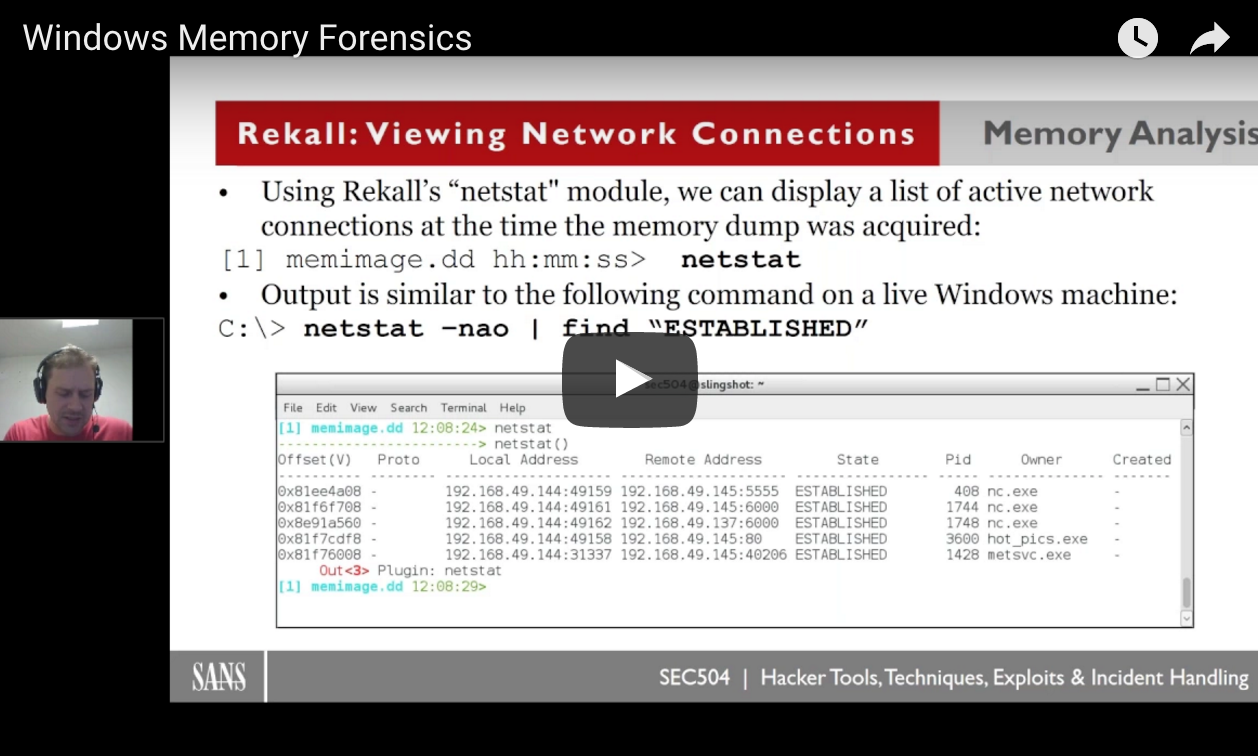
WEBCAST: Windows Memory Forensics

John Strand // In the last webcast we covered initial Windows Live Forensics (see the recording here), in this one we play with memory from a compromised system. We cover the […]

The post WEBCAST: Windows Memory Forensics appeared first on Black Hills Information Security, Inc..

Time To Bash on Windows (Bourne Again Shell That Is)

Editor’s Note: This is another awesome guest post from our friend, Robert Schwass. If you’d like to guest post contact us here. Robert Schwass // I had heard the rumors about […]

The post Time To Bash on Windows (Bourne Again Shell That Is) appeared first on Black Hills Information Security, Inc..

❌