69% of Brits don't think their bank could detect an AI deepfake impersonating them
Four in five do at least expect ID verification to get slicker in the next five years
Most want convenience and are only prepared to wait two extra minutes
More than two in three (69%) Brits worry their bank couldn't distinguish them from an attack designed to impersonate them, according to new Digidentity research.
With rising AI threats targeting businesses and consumers alike, four in five would now expect their bank to have AI deepfake detection tools in place when they're running selfie-based identity checks.
This comes as more and more citizens end up preferring increased security measures like vide-based identity checks – with half (53%) believing that one-time security codes sent by text are no longer sufficient.
Banks aren't fully trusted to spot a deepfake
The fallout from a successful attack can have far-reaching consequences, so it's no surprise UK citizens are scrutinizing their banks. Vicims could face months or years of disputing fraudulent debts or challenging mystery accounts opened in their names, for example.
The report comes after Bank of England governor Andrew Bailey called for social media companies to take greater responsibility for tackling scams.
But there is hope, and citizens feel fairly confident in banks' longer-term strategies. Four in five (79%) expect ID verification processes to become smoother over the next five years despite these systems ultimately having to do more heavy lifting, and with good reason. Three in five (62%) respondents said they'd only be willing to tolerate up to two additional minutes of checks.
However, there are challenges. Banks don't typically run their own verification systems, instead choosing to opt for a third party.
"Banks put their own reputation behind the identity provider they choose," Digidentity UK Country Manager Jonathan Evans wrote. "If that provider lets an imposter through, it is the bank’s relationship with its customer that suffers."
Looking ahead, banks are under the most pressure they ever have been to verify legitimate activity and block malicious attacks, but they're also under equal pressure to deliver experiences that are convenient and quick for the end user despite rising threats.
You can feel the excitement in the air. Grand Theft Auto 6 will be available to play in less than two weeks, officially launching on November 19. We're fortunate here in Australia, as we'll be able to play the much-anticipated game before the rest of the world — our Kiwi cousins get it slightly earlier, but what's a few hours when we've had to wait 13 years.
That's only possible if you download the game ahead of time. And with preloading officially kicking off today, November 10, you'll want to make sure your NBN plan is ready to download the enormous 212GB file. If it isn't, there's still time to switch to one of the fastest NBN plans before launch day, so you can begin preloading and doing your bit to help avoid breaking the Australian internet.
And now is a great time to switch regardless, as several early Black Friday NBN deals have gone live, including an offer from Telstra that's almost too good to be true.
The telco is currently offering 50% off plan fees for four months across all of its plans, making it one of the cheapest providers for introductory pricing across several speed tiers. Yes, it happened — we got cheap Telstra NBN plans before GTA 6.
With the fastest NBN plans capable of downloading GTA 6 in as little as 14 minutes, compared with 56 minutes on slower connections, switching could make all the difference.
I’ve selected Exetel’s NBN 500 plan as the top choice for this tier, as it’s not only affordable, with fuss-free billing, but it’s possible to boost your speed to NBN 1000 for 24 hours for just AU$1, perfect for downloading GTA 6 faster. Plus, the telco recorded the quickest ping speeds in the most recent ACCC broadband performance data report of 6.9ms, which could be ideal if you intend to game online.
The most affordable NBN 750 plan that promises maximum plan speeds is this one from Spintel. The telco receives generally favourable reviews from customers, and even the ongoing cost is low for the tier, with the AU$94.95 monthly fee coming in well under the current AU$107 average.
• AU$69 total minimum cost • AU$983.70 first year cost • AU$1,139.40 ongoing yearly cost
It’s definitely possible to spend less on an NBN 1000 plan (and if you do, make sure to check out my other recommendations), but this plan from Superloop is well-optimised for online gameplay and has been proven to overdeliver on its typical evening speed claims. Throw in near-universal acclaim, and you have yourself a fine choice for a gigabit internet plan.
• AU$89 minimum cost • AU$1,218 first year cost • AU$1,368 ongoing yearly cost
If you want an NBN 2000 plan, then you’ll likely first need to have dedicated equipment installed at your premises, which could affect the time it takes to download GTA 6. Still, if it’s the plan for you, this option from Superloop gets my seal of approval. Only a handful of providers currently offer an NBN 2000 plan, and given Superloop’s track record and positive reviews, and below-average pricing, it’s an easy recommendation.
• AU$148 minimum cost • AU$1,896 first year cost • AU$2,016 ongoing yearly cost
Record-breaking run took place on a closed road in Abu Dhabi
A top speed of 312.65mph broke previous records
The U9 Xtreme uses four powerful electric motors
Some of the earliest EVs to go on sale taught us that electric powertrains could be devastatingly quick, but very few predicted they would be snatching world records from the likes of Bugatti.
Yangwang, the luxury, high-performance sister company of BYD, has claimed the production car speed record in Abu Dhabi, recording a top speed of 312.65mph on a single run. That figure betters its own previous record of 308.4mph, set in 2025.
“Why go to the extra effort for a few mph?” we hear you cry. Well, the new record makes the U9 Xtreme the first production car to break the 500km/h barrier… on a public road, no less.
Said road was a closed section of the Sheikh Khalifa Bin Zayed International Road (or the E11, if you live locally), which presented its own problems. The team had to clear the road of any sand to ensure maximum traction.
Stella Li, executive vice president of YangWang’s parent company BYD, said: "I always tell people that our engineers are young, bold and maybe a little crazy – but in a good way!”
The car that rose to the challenge is a hardcore version of the already very fast Yangwang U9, with the Xtreme model using a 1200V electrical architecture and four upgraded electric motors to produce 2,978bhp, compared to the 1,252bhp of the ‘standard’ model.
Analysis: performance without the price tag
(Image credit: Yangwang)
How times have changed. The Chinese-born Yangwang U9 has managed to deliver double the horsepower of a Bugatti Veyron, and it has smashed its even more powerful successors to become the fastest production car in the world.
While the record attempt is a little contentious, owing to the fact that Yangwang only recorded its highest speeds during a single-direction run, as opposed to an average taken from each way, it is still mightily impressive… made even more so by the fact it is powered by batteries.
Yangwang says it will produce 30 of the U9 Xtreme models to be sold worldwide, although it hasn’t gone so far as to mention how much they will cost.
The standard U9, on the other hand, still boasts 1,252bhp and the ability to leap off the ground thanks to parent company BYD’s DiSus-X Intelligent Body Control System.
Currently on sale in China and a number of other markets, these cost around $200,000/£200,000, which is a veritable bargain in the modern world of insanely powerful hypercars.
SpaceX wants to add 10GW of data center capacity during 2027
Analysts believe Musk's aggressive construction schedule could become reality
Colossus 2 is already demonstrating the scale of SpaceX's ambitions
SpaceX claims it could add an extraordinary amount of artificial intelligence computing capacity within the next 18 months, potentially matching Google's cumulative development over decades.
Elon Musk believes his company can install 10 gigawatts of additional data center capacity in 2027, an ambition that has attracted skepticism.
However, analysts believe the proposed expansion is achievable, citing construction progress, internal manufacturing capabilities, and access to dedicated power generation equipment.
SpaceX's construction pace could change the data center race
According to SemiAnalysis, SpaceX could increase its computing infrastructure from approximately 3GW to more than 10GW through developments planned across several locations.
If achieved, that expansion would represent approximately 10GW of additional capacity within 18 months, matching what Google accumulated throughout its entire existence.
The analysts point to the rapid development of Colossus 1 and Colossus 2 as evidence that Musk's ambitious construction schedule remains achievable.
Colossus 2 offers a particularly important example, with its electricity generation capacity reportedly increasing from 0.4GW in January toward 2.4GW by December.
The facility reportedly includes 89 gas turbines capable of generating approximately 2.5GW, alongside 1,377 Tesla Megapack battery systems installed across the property.
However, environmental restrictions will eventually limit the permitted output from those turbines to approximately 1.24GW, creating additional requirements for electricity supply.
The facility is also expected to receive approximately 1.2GW from the electricity grid, although analysts estimate another 300MW remains necessary.
Battery storage could help address that difference by supplying additional electricity when demand fluctuates, alongside possible contributions from external power sources.
SpaceX reportedly has temporary permission from Mississippi authorities to operate additional turbines, provided the company phases them out by July 2027.
Tesla's manufacturing capabilities could give SpaceX an advantage
One factor potentially accelerating construction is SpaceX's relationship with Tesla, which could provide access to manufacturing capabilities and electrical infrastructure components.
SemiAnalysis suggests Tesla may be producing modular mechanical and electrical equipment, allowing installation teams to deploy completed systems without waiting for conventional suppliers.
Such an arrangement could reduce procurement delays affecting competing developers, particularly when specialized power equipment and other essential infrastructure remain difficult to obtain.
The analysts also identified approximately 9GW of potential computing capacity across the facilities included in their assessment of SpaceX's development pipeline.
Musk previously stated that Colossus 2 already operated 550,000 GPUs as of September 25, although the exact distribution across individual buildings remains uncertain.
Other developments, including Gun Range and Project SPAM, also appear to be advancing, with aerial photographs showing substantial construction activity.
Nevertheless, completed buildings do not automatically translate into operational computing capacity, particularly when electrical connections, cooling systems and server installations remain outstanding.
Microsoft CEO Satya Nadella previously explained this problem, saying, “You may actually have a bunch of chips sitting in inventory that I can’t plug in. In fact, that is my problem today.”
SpaceX must also secure sufficient GPUs, memory components and power generation equipment before its ambitious deployment schedule can become reality.
Even with substantial manufacturing resources, regulatory restrictions, construction materials and local opposition could complicate expansion across multiple locations.
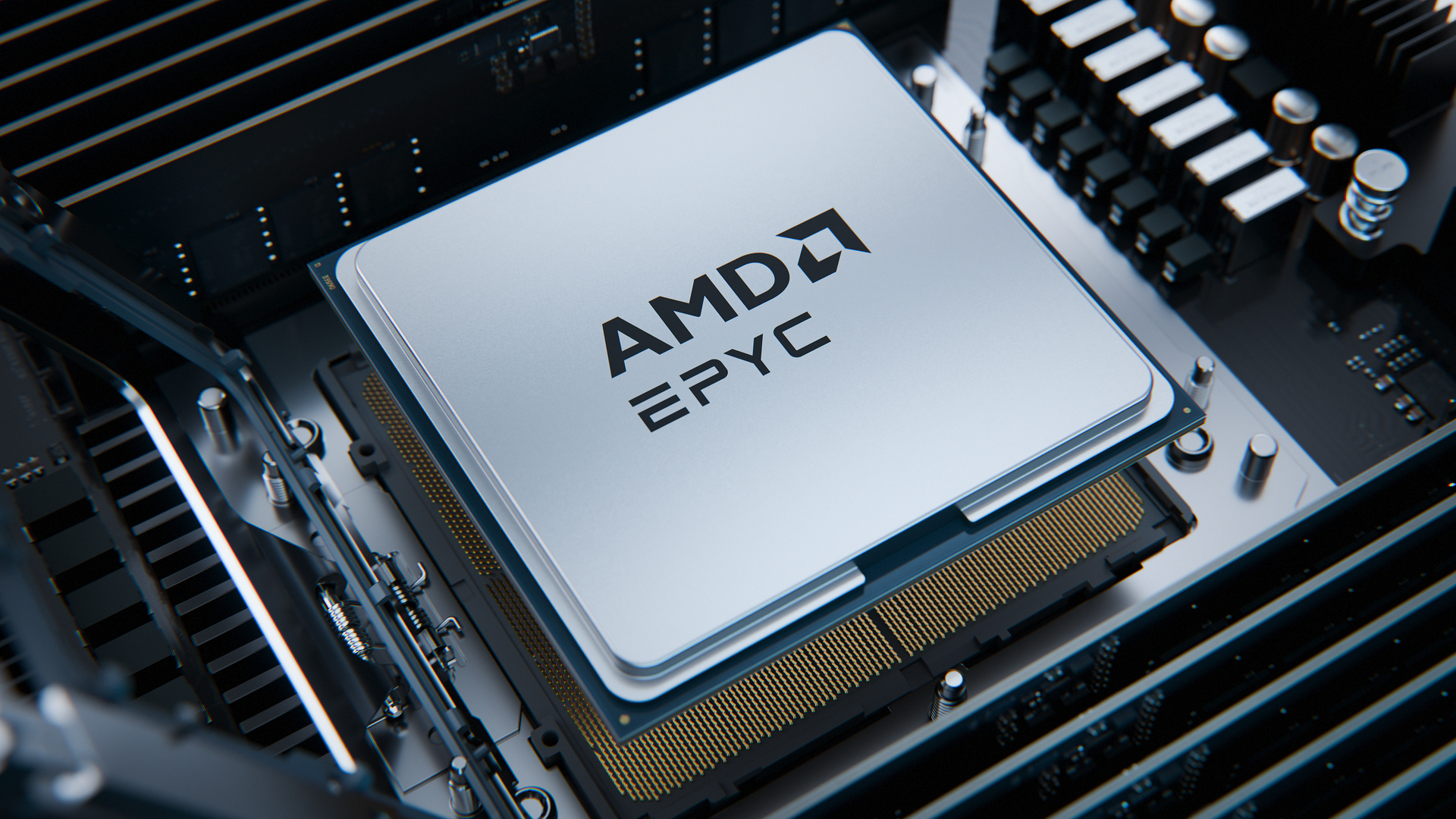
AMD guided Q4 2026 revenue to about $17 billion, above Intel's $15 to $16 billion forecast, which would make it the larger company in terms of raw revenue for the first time
Data center sales nearly doubled to $8.5 billion in Q3 as Instinct MI455X GPUs and Helios racks started shipping
The lead, interestingly, is in revenue, not volume: Intel still ships about two-thirds of x86 CPUs, and AI accelerators are set to outsell Epyc inside AMD this quarter
AMD has told investors to expect fourth-quarter 2026 revenues of around $17 billion, plus or minus 3%.
If that lofty forecast holds, AMD would bring in more money than Intel in a single quarter for the first time in the two companies' decades-long rivalry.
For context, AMD's outlook arrived with a record third quarter in which revenue rose 45% year over year to $13.4 billion, even as Intel, which reported a week earlier, has guided to between $15 billion and $16 billion for the same three months.
A numbers game in revenue, not volume as data centers do the heavy lifting
Using the midpoint of both companies' estimates and assuming both predictions come true, AMD is essentially set to generate $1.5 billion more in revenue than its traditional chipmaking rival.
Much of this comes from AMD's data center gains: Data center revenue climbed 97% to a record $8.5 billion, or 64% of total sales, up from 47% a year earlier, with the segment's operating margin widening to 34%.
AMD CEO Lisa Su said Q3 was the first quarter AMD shipped Instinct MI455X accelerators and Helios racks for revenue, with Anthropic, Meta, Microsoft, OpenAI and Oracle bringing their first racks online.
Revenue shipments of 2nm Epyc "Venice" processors also began, although, as TechRadar Pro reported at launch, the full Venice stack will not ship until 2027, so there is potentially more uplift in the pipeline assuming demand remains on track.
The picture elsewhere was mixed at best: Client revenue rose 7% to $2.9 billion, gaming fell 40% to $773 million on weaker console chip sales, and embedded grew an impressive 29% to $1.1 billion.
For Q4, CFO Jean Hu guided data center revenue up about 50% sequentially, which Tom's Hardware puts at roughly $12.8 billion, with client and gaming down more than 20% and embedded up by double digits. She added that Q4 will be the first quarter in which AMD's data center AI business, meaning Instinct GPUs and racks, outsells its server CPUs, and by a wide margin.
Intel's numbers, on the other hand, are not essentially a clean baseline, even if AMD comes out ahead regardless: Its outlook accounts for lost output from the October 14 explosion at Fab 28 in Kiryat Gat, Israel, which killed two workers and shut the plant for around two weeks. "Our guidance includes an impact of roughly $300 million to revenue," CFO Dave Zinsner told analysts, according to Calcalist, almost all of it in 10nm server products. Add that back to Intel's high end, and you get $16.3 billion, still below AMD's estimated floor.
The crossover does not seem to have been on the cards so soon, however: Wall Street was looking for about $17.05 billion from Intel, according to Futurum, and around $16.2 billion from AMD, per Opening Bell Daily. As recently as April, consensus estimates had AMD surpassing Intel in revenue in 2027, and AMD's moves seem to have been considerably ahead of analyst estimates, resulting in the stock surging more than 100% YTD despite a steep AI selloff lately.
The move is a revenue milestone, not a volume one; Intel still ships most x86 processors, holding 65.9% of the market in Q2 2026, according to Mercury Research figures reported by HotHardware. AMD's revenue also includes businesses Intel does not run at comparable scale, from Xilinx-derived embedded chips and console silicon to, above all, Instinct accelerators, making for a skewed direct comparison between the two, especially as the latter is reaping AI bonuses at a scale the former cannot currently hope to match.
In fairness, AMD's data center segment has outearned Intel's equivalent group before: TechRadar Pro reported the first such quarter in Q3 2024, when AMD's $3.5 billion edged past Intel's $3.3 billion, but its recent revenue explosion has carried AMD into what seems to be an insurmountable short-term lead. In Q3 2026, it was $8.5 billion, compared with $7.3 billion for Intel's Data Center and AI group. But with GPUs set to overtake Epyc inside AMD this quarter, the overall crossover owes more to a market Intel has barely entered than to the CPU fight that defined the rivalry. Intel's own data center accelerator, the GPU D-series formerly codenamed Crescent Island, is still upcoming.
Other factors
It would also be a mistake to read Intel's forecast as an exodus of customers: Intel's Q3 revenue rose 21%, and its data center group grew 78%, and CEO Lip-Bu Tan said the immediate priority is to "unlock additional supply to meet extraordinary demand for our Xeon family."
Part of Intel's problem is capacity, layered on top of a PC slump that is hitting both firms: AMD is planning for PC unit shipments to fall by a double-digit percentage in 2027.
AMD CEO Lisa Su was candid about the fact that AMD cannot build everything it could sell. "It is true that demand is higher than supply," she told analysts.
The Q4 forecast rests on a roughly 50% sequential jump in data center sales, much of it from a rack platform that shipped for revenue for the first time last quarter.
That ramp has costs: Inventory rose about $3 billion to $11.5 billion, and free cash flow was a relatively measly $554 million. AMD's biggest AI deals also come with customer warrants, which produced a $1.1 billion non-cash charge in Q3 that the company expects to grow. Likewise, revenue is concentrated in a handful of frontier labs and hyperscalers even as circular financing concerns continue to grow.
AMD now expects data center sales to make up more than 80% of revenue in 2027 and server CPU revenue to double. Delivering that depends on partners such as HPE, which became Helios' first major OEM backer and has since said Vultr will deploy the first Helios systems it builds. It also depends on the extra capacity Su has promised for 2027, which TechRadar noted is aimed at AI rather than consumer chips.
If both companies land inside their ranges, AMD will have outearned Intel for the first time. The more telling story is where that money comes from: not a knockout in the old CPU war, but a shift in the industry's revenue toward accelerators and racks that now fill data centers.
Speaking during an interview with CNN’s Jake Tapper, Texas Governor-elect Gina Hinojosa said that any work with AI companies “has to be a partnership that benefits Texans. And right now, what has happened is that data centers have moved into mostly rural communities and there are no rules and laws to protect Texans. And Texans are being taken advantage of.”
Hinojosa promised to introduce laws to reverse that situation in the state’s dealings with AI outfits, adding that “we need to stop what we are doing with data centers until we have those protections.” One of those changes, Hinojosa suggested, was to ensure that “communities have a seat at the table to decide if and how these data centers come into their communities.”
“We need to make sure they are partners in this effort,” she continued. “ It is not that I hate data centers. I hate the way they are taking advantage of Texas, and that stops when I’m Governor.”
Data center free-for-all
(Image credit: OpenAI Stargate)
Hinojosa campaigned on the promise of a temporary data center moratorium in Texas. Her stance seems popular with residents of the Lone Star State, with a CNN poll showing that 75% of respondents in Texas opposed building data centers near where they lived.
This could raise questions about AI companies’ future plans, with several of the biggest names previously planning to build data centers that could face stiff opposition from elected officials. For example, Anthropic noted in its recent IPO filings that the supply chain for its data center infrastructure is highly complex and any “delays or failures” along the way could significantly impact the company.
It’s not entirely clear what shape Hinojosa’s new approach to data centers could take. But from her statements so far, it looks like the expansion free-for-all that has affected Texas — and many other communities across the US — could be coming to an end.
A Hong Kong-led venture plans a 168m, 20,000-seat LED sphere in Hangzhou for ¥8 billion (~$1.2 billion)
Its 72,000m² exterior screen would be a third larger than the Las Vegas Exosphere, the biggest of its kind, at least on paper
The project is still at the planning stage, with no construction dates, screen vendor or display specs announced
A developer in eastern China has unveiled plans for a spherical entertainment venue that looks to beat the Las Vegas Sphere on every headline measurement, for less than half the price.
The catch is that, so far, the project amounts to a signing ceremony, a rendering and a set of very ambitious forecasts.
The project, dubbed the Eye of the World in English, was reported by AV Magazine after its public debut on October 30 2026 at a services-sector conference in Hangzhou's Qiantang District.
A bigger sphere on paper
According to City Express, the plan calls for a sphere roughly 168 meters across and 122 meters tall, skinned in about 72,000 square meters of exterior LED, with a 270-degree wraparound screen and 20,000 seats inside.
It would occupy a 56,000-square-meter plot on the Qiantang River in the Jinshazui New Town area, with around 160,000 square meters of neighboring land earmarked for supporting development.
On the spec sheet, the comparison is flattering when one compares it to the Las Vegas Sphere. AV Magazine puts the Las Vegas venue at 157 meters in diameter and 112 meters tall, with a 54,000-square-meter Exosphere and 17,600 seats, which makes the Hangzhou design about 7% wider and 9% taller, with a third, more exterior screen. The seating gap, however, is narrower than it looks, as Las Vegas reaches around 20,000 when its floor is set up for standing crowds.
The headline budget is ¥8 billion (~$1.2 billion), against the $2.3 billion Las Vegas eventually cost, and the project's forecast annual revenue is ¥2.6 billion, or $400 million. At the (relatively harsher) exchange rate implied elsewhere in Chinese coverage, the two figures come closer to $1.1 billion and $360 million.
The venture pairs Hong Kong-based Xinshi International Investment Co. with Vision Eye (Hangzhou) Digital Entertainment Technology Co., and Invidis reports that it is led by Huang Junhao, investment president of the former and general manager of the latter. He says the domestically designed project will show that Chinese applied technology and cultural innovation have reached "world-leading levels," and at the launch he described it as "a spectacle of unimaginable size and unimaginable form."
Interestingly, for an LED project, the most telling detail is what's missing: The invidis report also notes that no vendor or installer has been appointed for either the exterior screen or the interior wraparound display, that design, zoning and infrastructure arrangements are still in progress, and that no construction start or completion date has been given.
Nobody has published a resolution, pixel pitch or playback architecture either, and that matters, because the systems behind a screen like this are as demanding as the panels themselves.
The structure won't be simple either: One analysis notes that Las Vegas used parametric modeling to optimize its geodesic lattice shell and cast-steel nodes, cutting weight by around 40%, and warns that a larger sphere demands even tighter tolerances, where millimeter-level errors could show up as visible seams or patches of uneven brightness. Any claim to be the world's largest, it concludes, depends on the engineering meeting the paper specifications.
An analysis on a Chinese publication, The Paper's government affairs channel, argues the cost gap with Las Vegas rests on China's domestic LED sphere supply chain, which now has a track record of delivery, and that the real difficulty is keeping brightness, color, and seams consistent across tens of thousands of square meters of curved outdoor LED through direct sunlight and temperature swings.
The launch coverage on Sohu flags acoustics as another headache: a concave sphere focuses sound unevenly, and any absorptive treatment has to sit inside the lattice shell without breaking up the screen.
A bloated forecast with questionable demand in tow?
The commercial forecasts look even bolder than the project at hand: The developer expects 9 million to 13 million visitors a year. Spread evenly, that is roughly 24,700 to 35,600 people every day, so even the low end exceeds a sellout of the 20,000-seat bowl 365 days a year.
The Paper's analysis supplies useful context. In 2025, Hangzhou's entire performing arts sector drew about 10.25 million attendees across 19,194 shows and took ¥3.12 billion at the box office.
One venue is forecasting roughly the whole city's 2025 audience and revenue, totaling about 83% of that box office total, though the projected figure presumably also includes advertising, sponsorship, and food and drink. The same analysis also describes The Eye of the World as "still just a drawing, with construction yet to begin."
The owner of the original isn't standing still. Sphere Abu Dhabi, on Yas Island, carries a $1.7 billion construction budget and will match Las Vegas with a capacity of up to 20,000, depending on configuration, a 16K-by-16K interior screen, and 167,000 speakers, with completion due by the end of 2029. A 6,000-seat venue at National Harbor in Maryland is targeting 2030.
Sphere is also lining up the technology behind its screens. Announcing a multi-year partnership with media server specialist Disguise in September, Sphere executive vice president Ryan Dolan tied the deal to "offering these experiences to audiences in new Sphere venues around the world."
TechRadar Pro's June 2026 coverage of China's first Sphere-style domes analyzed a completely different story about going smaller and cheaper: Qianjiang's Tiangong Nova, with 7,500 square meters of exterior LED, and Shanghai's West Bund Starry Sky, budgeted at ¥1.2 billion for around 3,000 visitors at a time.
Hangzhou keeps prices low and scales up, but not everyone thinks the world needs it. Discussing China's smaller domes on an AVNation panel, AVIXA's Jennifer Weaver asked: "Massive replicas of the Vegas sphere all over the place? Probably not." Hangzhou is betting they are wrong; for now, though, it has a rendering, a riverside plot, and a set of forecasts, while the original, by all accounts, remains busy every day of the year as a revenue-generating juggernaut, bolstered, at least in part by a much more affluent audience to boot.
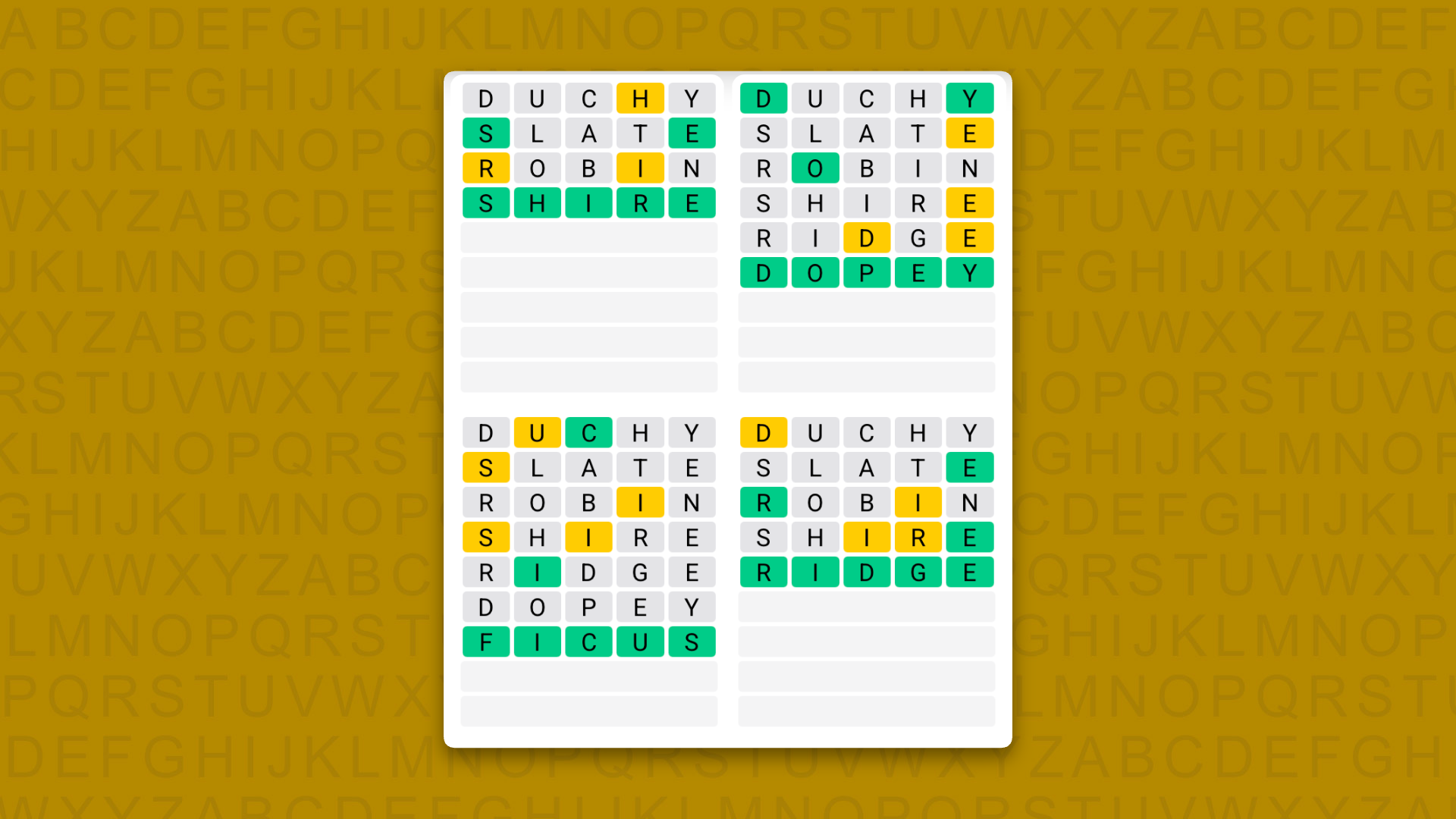
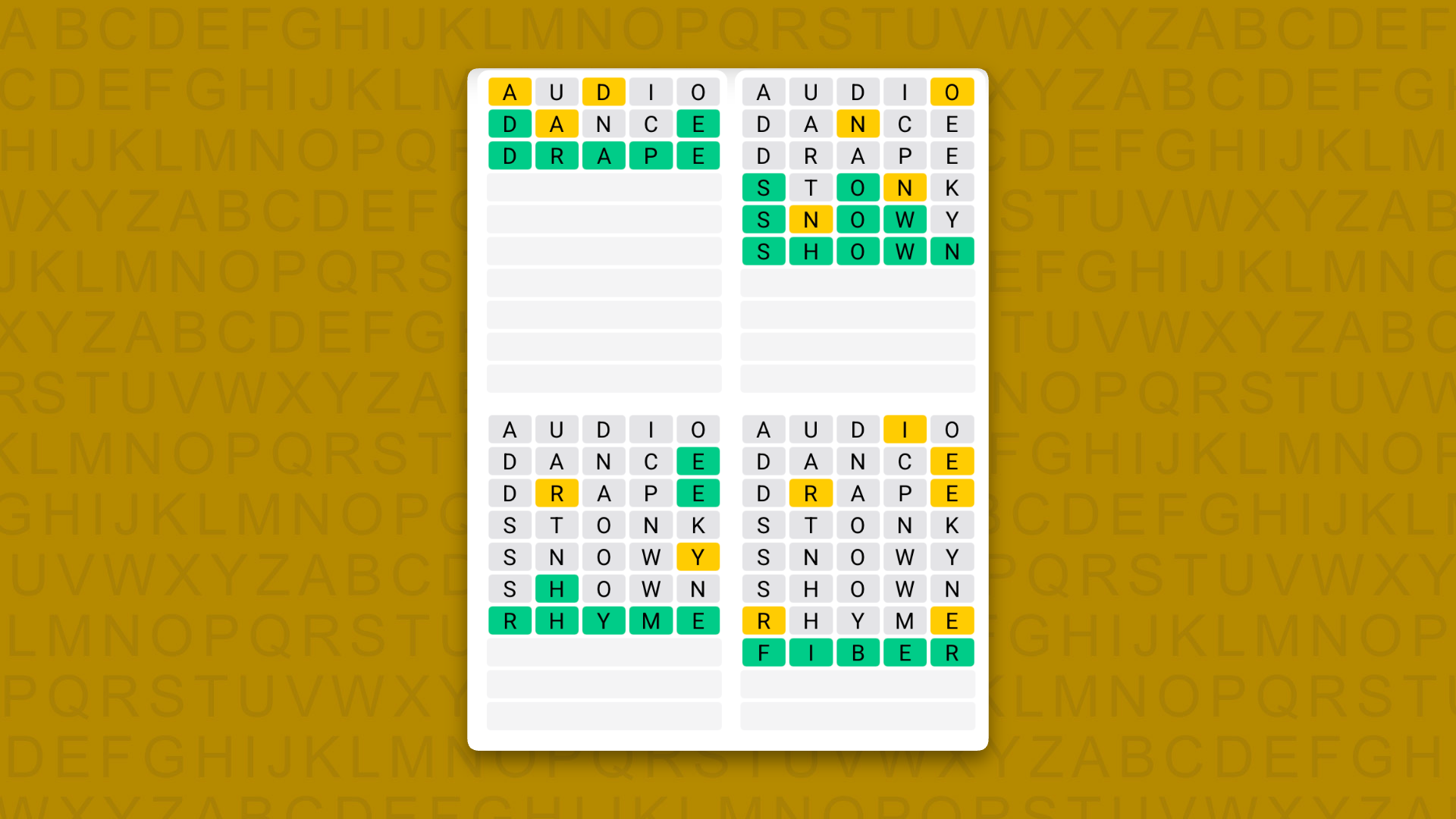
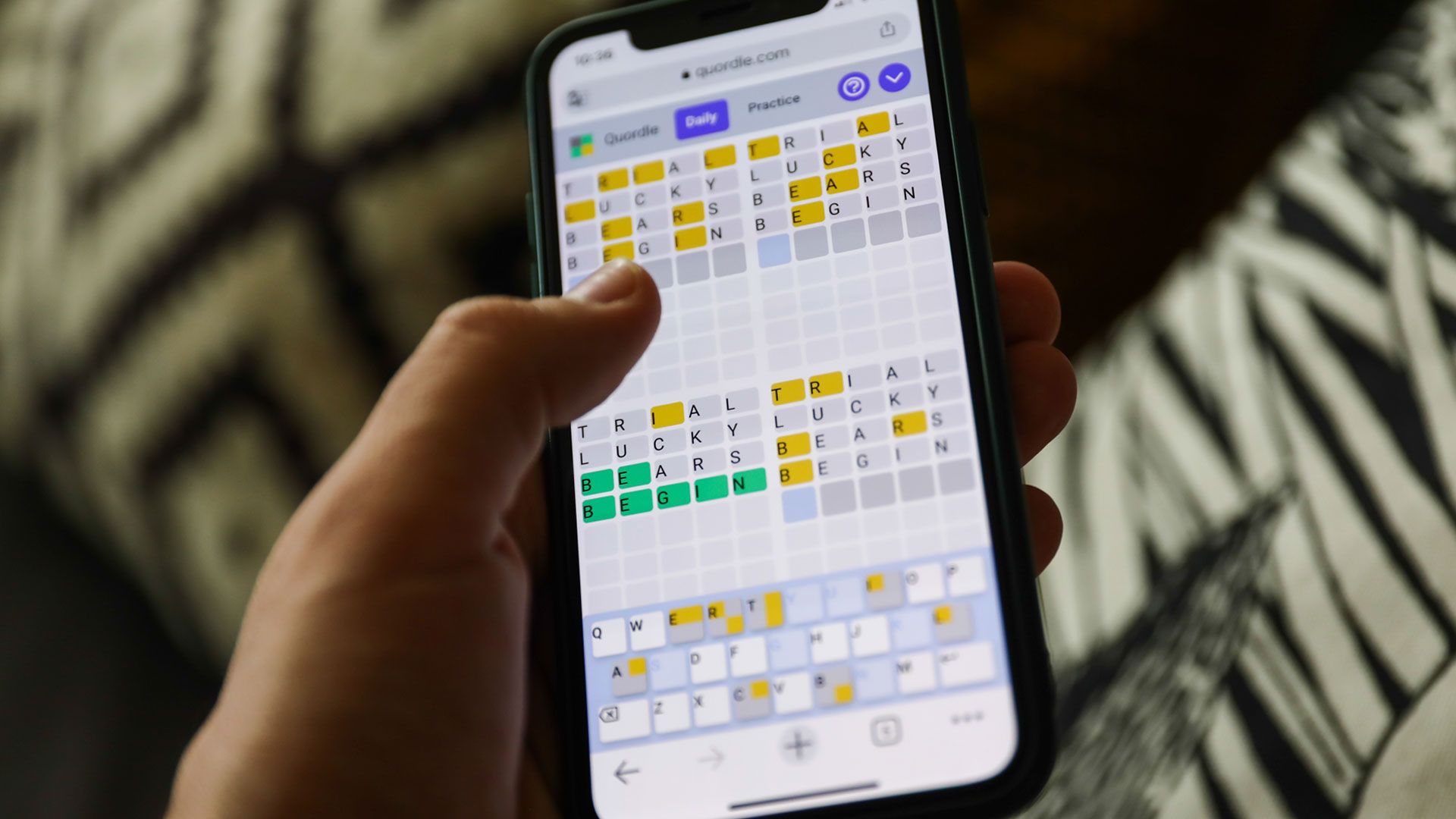
A new Quordle puzzle appears at midnight each day for your time zone – which means that some people are always playing 'today's game' while others are playing 'yesterday's'. If you're looking for Monday's puzzle instead then click here: Quordle hints and answers for Monday, November 9 (game #1750).
Quordle was one of the original Wordle alternatives and is still going strong now more than 1,500 games later. It offers a genuine challenge, though, so read on if you need some Quordle hints today — or scroll down further for the answers.
Enjoy playing word games? You can also check out my NYT Connections today and NYT Strands today pages for hints and answers for those puzzles, while Marc's Wordle today column covers the original viral word game.
SPOILER WARNING: Information about Quordle today is below, so don't read on if you don't want to know the answers.
Quordle today (game #1751) — hint #1 — Vowels
How many different vowels are in Quordle today?
• The number of different vowels in Quordle today is 4*.
* Note that by vowel we mean the five standard vowels (A, E, I, O, U), not Y (which is sometimes counted as a vowel too).
Quordle today (game #1751) — hint #2 — repeated letters
Do any of today's Quordle answers contain repeated letters?
• The number of Quordle answers containing a repeated letter today is 0.
Quordle today (game #1751) — hint #3 — uncommon letters
Do the letters Q, Z, X or J appear in Quordle today?
• No. None of Q, Z, X or J appear among today's Quordle answers.
A new NYT Connections puzzle appears at midnight each day for your time zone – which means that some people are always playing 'today's game' while others are playing 'yesterday's'. If you're looking for Monday's puzzle instead then click here: NYT Connections hints and answers for Monday, November 9 (game #1247).
Good morning! Let's play Connections, the NYT's clever word game that challenges you to group answers in various categories. It can be tough, so read on if you need Connections hints.
What should you do once you've finished? Why, play some more word games of course. I've also got daily Strands hints and answers and Quordle hints and answers articles if you need help for those too, while Marc's Wordle today page covers the original viral word game.
SPOILER WARNING: Information about NYT Connections today is below, so don't read on if you don't want to know the answers.
NYT Connections today (game #1248) - today's words
(Image credit: New York Times)
Today's NYT Connections words are…
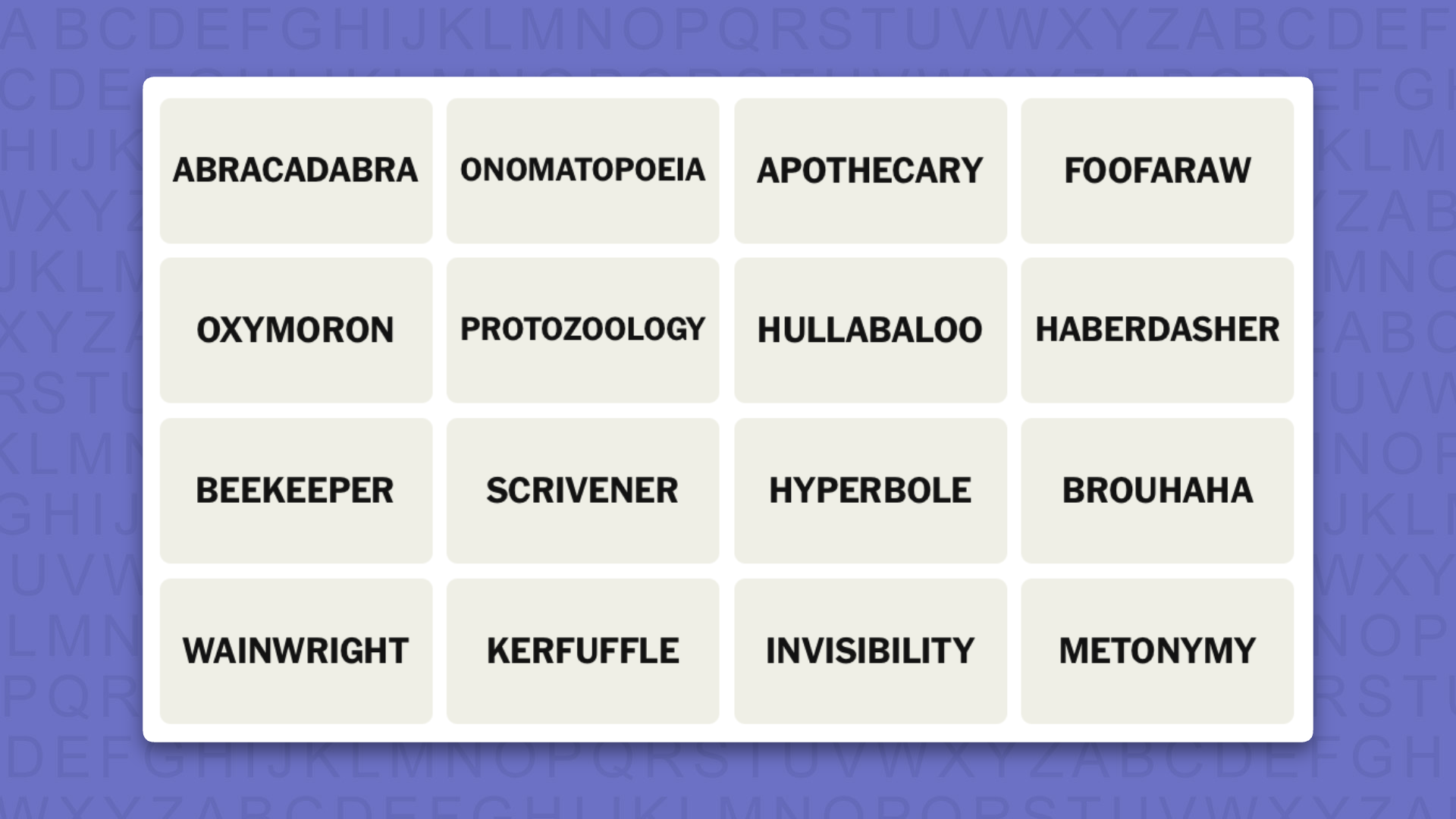
ABRACADABRA
ONOMATOPOEIA
APOTHECARY
FOOFARAW
OXYMORON
PROTOZOOLOGY
HULLABALOO
HABERDASHER
BEEKEEPER
SCRIVENER
HYPERBOLE
BROUHAHA
WAINWRIGHT
KERFUFFLE
INVISIBILITY
METONYMY
NYT Connections today (game #1248) - hint #1 - group hints
What are some clues for today's NYT Connections groups?
YELLOW: A loud fuss
GREEN: Wordsmithery
BLUE: Job titles of yesteryear
PURPLE: The same letter a lot
Need more clues?
We're firmly in spoiler territory now, but read on if you want to know what the four theme answers are for today's NYT Connections puzzles…
NYT Connections today (game #1248) - hint #2 - group answers
What are the answers for today's NYT Connections groups?
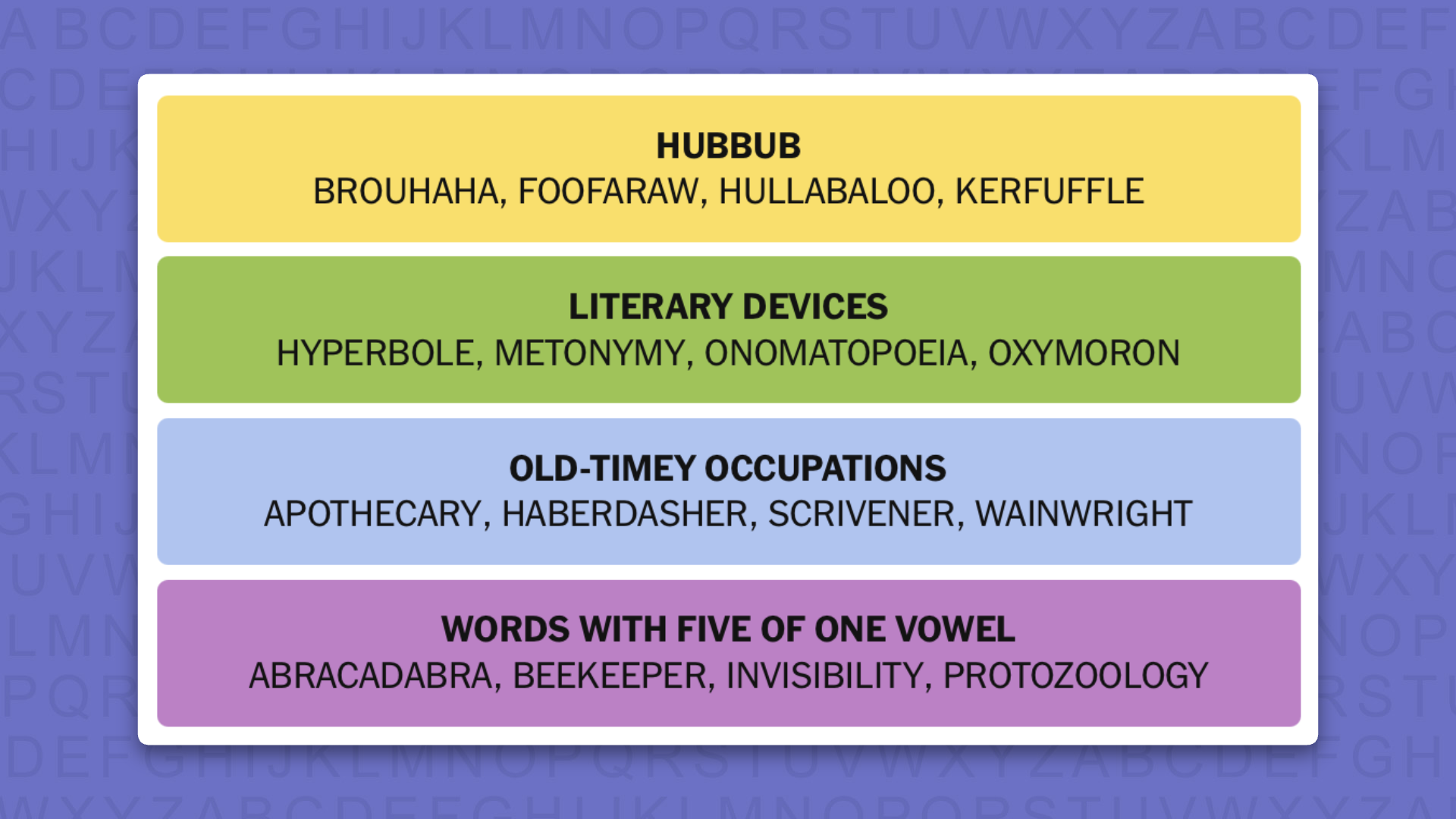
YELLOW: HUBBUB
GREEN: LITERARY DEVICES
BLUE: OLD-TIMEY OCCUPATIONS
PURPLE: WORDS WITH FIVE OF ONE VOWEL
Right, the answers are below, so DO NOT SCROLL ANY FURTHER IF YOU DON'T WANT TO SEE THEM.
NYT Connections today (game #1248) - the answers
(Image credit: New York Times)
The answers to today's Connections, game #1248, are…
PURPLE: WORDS WITH FIVE OF ONE VOWEL: ABRACADABRA, BEEKEEPER, INVISIBILITY, PROTOZOOLOGY
My rating: Hard
My score: 3 mistakes
My one-word-review of today’s game is “frustrating”.
From the start I found the tiles very discombobulating in their wordiness, but that wasn’t what led to my frustration. Instead, it was crossovers. For HUBBUB I understood that I was looking for tiles about making an unnecessary fuss, but included HYPERBOLE instead of FOOFARAW.
Then, it took me three guesses to get OLD-TIMEY OCCUPATIONS, as I’d included BEEKEEPER because I thought APOTHECARY was a place, rather than an occupation. D'oh! And then I dropped SCRIVENER before finally getting the correct foursome.
Ah well, at least I got the groups in difficulty order.
Yesterday's NYT Connections answers (Monday, November 9, 2026, game #1247)
YELLOW: DECEITFUL SCHEME: CON JOB, FLIMFLAM, RIP-OFF, SHELL GAME
BLUE: THINGS WITH SERRATED EDGES: GRAPEFRUIT SPOON, MINT LEAF, STEAK KNIFE, TAPE DISPENSER
PURPLE: ENDING IN SEA CREATURES: CARD SHARK, FUN SPONGE, GAMMA RAY, NAVY SEAL
What is NYT Connections?
NYT Connections is one of several increasingly popular word games made by the New York Times. It challenges you to find groups of four items that share something in common, and each group has a different difficulty level: green is easy, yellow a little harder, blue often quite tough and purple usually very difficult.
On the plus side, you don't technically need to solve the final one, as you'll be able to answer that one by a process of elimination. What's more, you can make up to four mistakes, which gives you a little bit of breathing room.
It's a little more involved than something like Wordle, however, and there are plenty of opportunities for the game to trip you up with tricks. For instance, watch out for homophones and other word games that could disguise the answers.
It's playable for free via the NYT Games site on desktop or mobile.
A new NYT Strands puzzle appears at midnight each day for your time zone – which means that some people are always playing 'today's game' while others are playing 'yesterday's'. If you're looking for Monday's puzzle instead then click here: NYT Strands hints and answers for Monday, November 9 (game #981).
Strands is the NYT's latest word game after the likes of Wordle, Spelling Bee and Connections – and it's great fun. It can be difficult, though, so read on for my Strands hints.
Want more word-based fun? Then check out my NYT Connections today and Quordle today pages for hints and answers for those games, and Marc's Wordle today page for the original viral word game.
SPOILER WARNING: Information about NYT Strands today is below, so don't read on if you don't want to know the answers.
NYT Strands today (game #982) - hint #1 - today's theme
What is the theme of today's NYT Strands?
• Today's NYT Strands theme is… Influentially online
NYT Strands today (game #982) - hint #2 - clue words
Play any of these words to unlock the in-game hints system.
VIEWER
TUSK
LATER
DOME
SINGER
TEAL
NYT Strands today (game #982) - hint #3 - spangram letters
How many letters are in today's spangram?
• Spangram has 14 letters
NYT Strands today (game #982) - hint #4 - spangram position
What are two sides of the board that today's spangram touches?
• First side: left, 4th row
• Last side: left, 5th row
Right, the answers are below, so DO NOT SCROLL ANY FURTHER IF YOU DON'T WANT TO SEE THEM.
NYT Strands today (game #982) - the answers
(Image credit: New York Times)
The answers to today's Strands, game #982, are…
VLOG
SKIT
REACTION
DEMO
REVIEW
TUTORIAL
SPANGRAM: CONTENTCREATOR
My rating: Easy
My score: Perfect
I managed to get my 114th Spangram First today — although it did come after finding one of the two places on the board that spelled out “creator”.
Incredibly, around 116 million people in the US consider themselves to be a CONTENTCREATOR, an incredible figure that equates to around 30% of the population — although when you think about it, even if you post a couple of photos a year on Instagram you are technically a content creator.
What sets the everyday creators apart from the influencer is that the latter produce the material in our search — REVIEWs, TUTORIALs, REACTIONs and so on.
Yesterday's NYT Strands answers (Monday, November 9, game #981)
BANTER
GOSSIP
CHINWAG
GABFEST
SCHMOOZE
SPANGRAM: SHOOTTHEBREEZE
What is NYT Strands?
Strands is the NYT's not-so-new-any-more word game, following Wordle and Connections. It's now a fully fledged member of the NYT's games stable that has been running for a year and which can be played on the NYT Games site on desktop or mobile.
I've got a full guide to how to play NYT Strands, complete with tips for solving it, so check that out if you're struggling to beat it each day.
The FAA will eliminate floppy disks across more than 400 facilities
America's air traffic modernization program has received $12.5 billion from Congress
Outdated technology has repeatedly disrupted American air traffic operations
The US Federal Aviation Administration (FAA) is preparing to retire technology that has remained part of American air traffic operations for decades, including floppy disks.
The agency plans to complete the transition by the end of 2028, replacing outdated information systems still operating at more than 400 facilities nationwide.
The FAA had to modernize its technology after repeated technical failures and aging infrastructure raised concerns about the reliability of America's air traffic management network.
FAA finally moves to replace decades-old technology
Reports from Reuters claimed the FAA will introduce the Enterprise Information Display System, consolidating four separate platforms introduced during the 1980s.
The replacement will give controllers access to essential operational information through one interface, reducing their reliance on older equipment and disconnected systems.
These changes will cover weather information, flight alerts and other operational updates that controllers need when coordinating aircraft movements across American airspace.
FAA Administrator Bryan Bedford said the agency wanted to eliminate manual procedures and improve how important information reaches personnel working inside control facilities.
“We’re moving away from outdated, manual processes and replacing technology that once relied on floppy disks with a modern system that allows controllers to instantly share critical flight alerts, restricted airspace schedules and pilot reports,” Bedford said.
Although floppy disks largely disappeared from everyday computing more than 25 years ago, American aviation facilities have continued relying on them.
Their production had already declined substantially by 2010, making the continued dependence on these storage devices particularly unusual for critical aviation infrastructure.
Congress approved $12.5 billion in 2025 for air traffic technology improvements, while Transportation Secretary Sean Duffy wants another $30 billion.
The additional funding would support further modernization as the agency attempts to address several weaknesses affecting its existing operational technology
Aging infrastructure continues to expose weaknesses in American air traffic management
The floppy disk replacement represents only one part of the FAA's modernization challenge, with communication failures also disrupting flight operations.
In an October 23 2026 memo reviewed by Reuters, the agency warned airports about outages associated with damaged fiber optic connections.
One incident occurred on October 13, when a severed cable outside Houston's George Bush Intercontinental Airport interrupted information exchanges between FAA facilities.
The disruption forced authorities to temporarily stop departures, demonstrating how vulnerable essential aviation services remain when individual communication connections fail.
Another incident occurred in September 2026, when separate failures involving Philadelphia and New Jersey disrupted thousands of flights across the Northeast.
The FAA also continues relying on aging Compaq computers and replacement components purchased through eBay to maintain certain operations.
Furthermore, its facilities largely operate independently, using separate analog computing equipment rather than a fully integrated communication environment.
Explaining the situation, Bedford said "every facility is a silo," describing the difficulties created by disconnected operational systems.
The agency is also replacing paper flight strips, which controllers have traditionally used to monitor aircraft movements and maintain operational records.
That transition began in 2022, with 27 of the 49 major airports already abandoning paper records, although completion remains scheduled for 2028.
If you’ve been weighing up whether to spend a small fortune on the iPhone Duo, you’re probably already aware of the software-related criticism surrounding it.
At the time of writing, several high-profile non-Apple apps (including LinkedIn, Google Calendar, and Duolingo) still haven’t been optimized to take advantage of the Duo’s dual-screen form factor (read: they look awful). Still, less has been written about the apps and games that have received a Duo-specific facelift.
I’ve been using the Duo for a few weeks now, and in this guide, I’ve highlighted seven fully optimized (and free) apps whose slick performance bodes well for the future of Apple’s first foldable.
PianoFold
FutureFuture
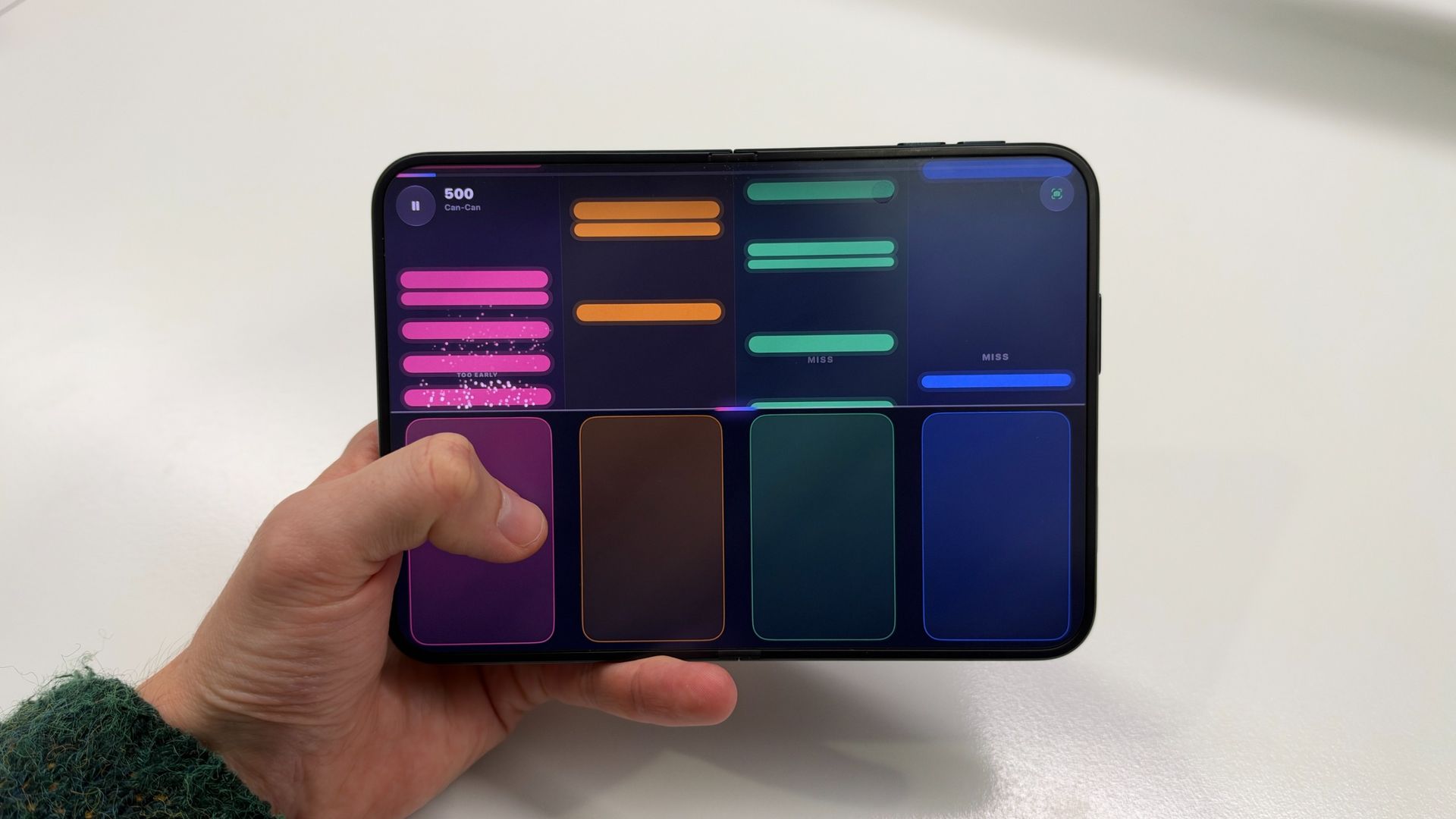
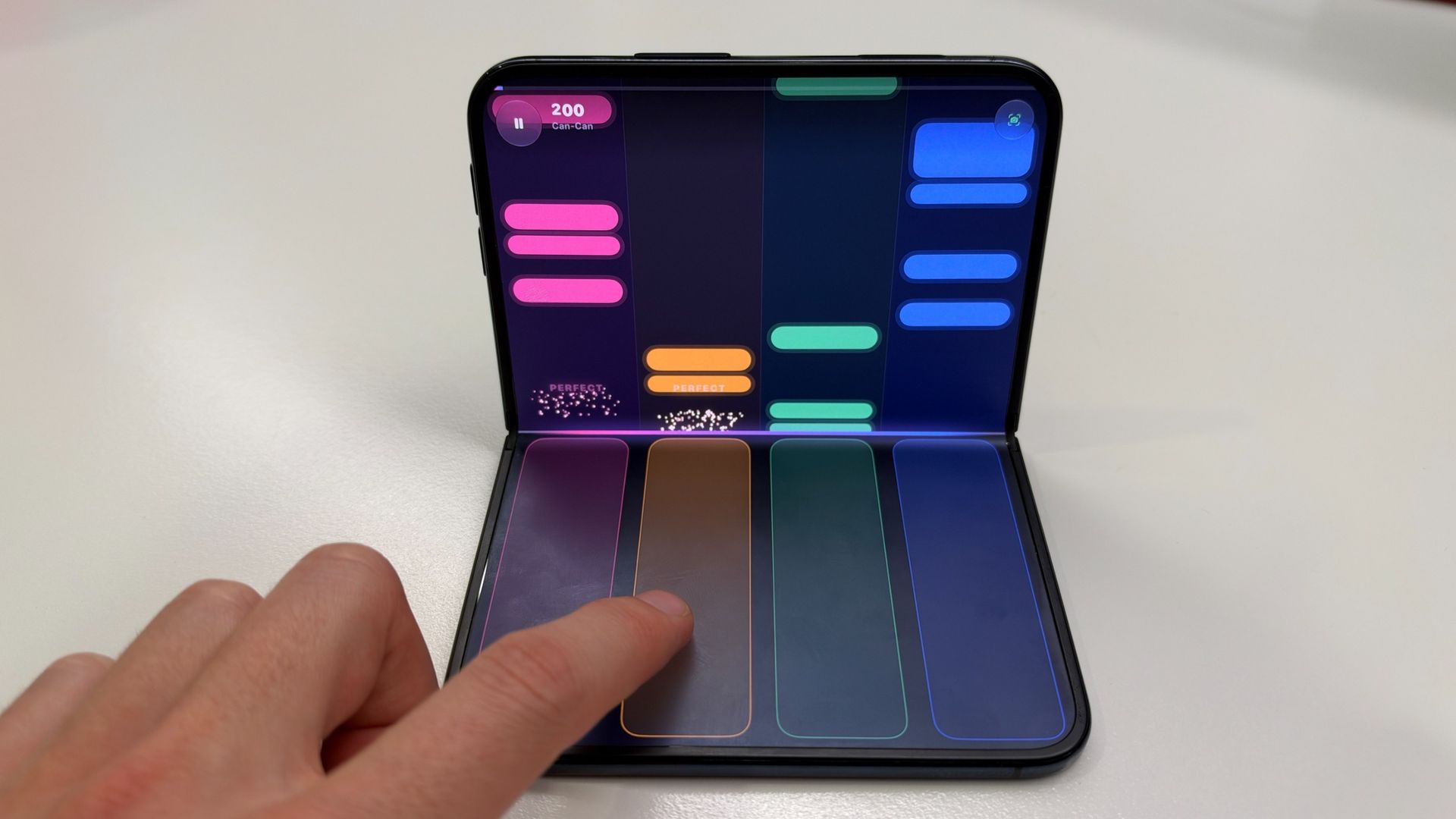
PianoFold is, hands down, my favorite iPhone Duo game so far. It’s basically Guitar Hero, but for the piano — musical tiles glide down from the top of the screen, and you have to tap the appropriate tile as it reaches the bottom of the screen to play the correct melody.
PianoFold works in every iPhone Duo orientation. If you fold it like a laptop, the notes fall from the upright half and strike just below the hinge. If you hold it open flat, the notes strike halfway down the screen. And if you use the Duo closed, the game functions as it would on any single-screen iPhone.
I prefer to play in the unfolded landscape mode, but the half-folded mode looks exceptionally cool if you enable ‘Room view’, which uses the Duo’s camera to make the notes appear as if they’re floating through your surroundings.
The full version of PianoFold costs money, but the free version is great in its own right. You get access to seven classical songs — including “Ode to Joy” (easy), “The Entertainer” (hard), and “Can-Can” (impossible) — but once you clear the first five, one song from the full game is made free each day until midnight.
Battlefleet Duo
FutureFuture
Battlefleet Duo reinvents the classic two-player strategy game, Battleship, for the 21st-century iPhone Duo-owning consumer.
Tabletop mode lets your Duo double as the traditional Battleship box — your fleet on one side, your enemy’s (hidden) fleet on the other — while unfolded mode fills the screen with enhanced 3D graphics; fires rage, ships sink, and the weather changes on a dime. There’s even a Classic mode, which switches out these modern frills for the game’s original plastic board, ships, and pegs.
As with PianoFold, Battlefleet Duo is only partially free, but the unpaid version gives you two free games per day against the AI, a friend, or online players. And if you have the patience to play more than two games of Battleship per day, more power to you.
Art of Flora
FutureFuture
Art of Flora is as simple as iPhone games come: you piece together puzzles depicting botanical illustrations, and you’re rewarded with a description of the plant in question.
This slower-paced game is designed to relax and educate, and the iPhone Duo-specific version supports big-screen puzzle-completing in both landscape and portrait orientations.
The first 10 puzzles in Art of Flora are free — the other 100 can be purchased via packs and bundles — but in my experience, that’s enough to see you through a train journey or kill some time on a flight. Once you’ve completed the lot, jump straight into the Duo’s Books app to make yourself feel like a regular Charles Darwin.
Pools
FutureFuture
Pools is described by its developer as “slow, reflective, and intentionally uneventful,” but don’t download this game thinking it’s going to relax you.
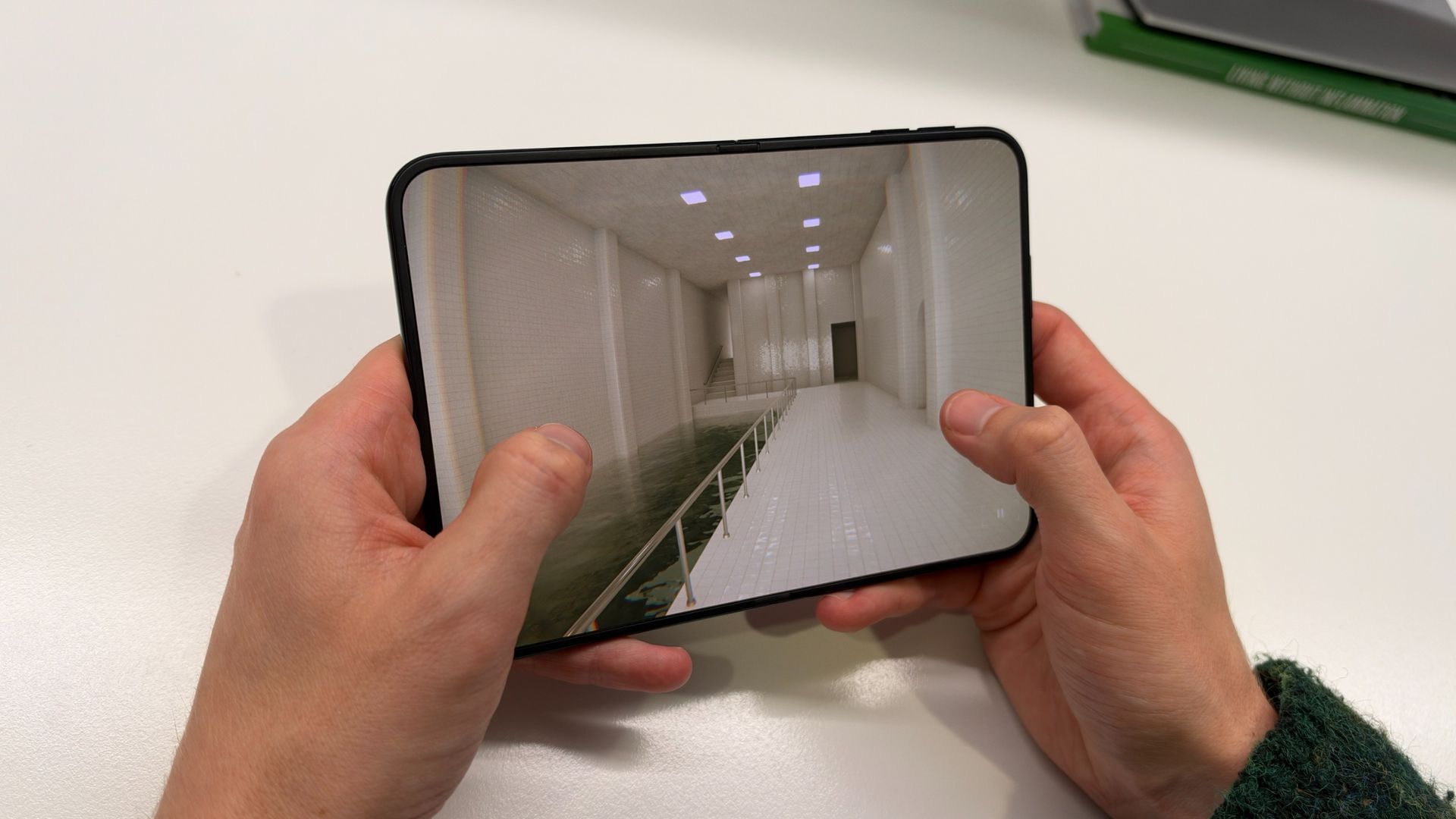
This Duo-optimized title is a psychological horror walking simulator inspired by The Backrooms internet lore and, specifically, Jared Pike’s "Dream Pools" 3D renderings. Pools has no puzzles, no user interface (UI), and no enemies — you’re just dropped into its liminal spaces and left to explore at your own pace/risk (delete as appropriate).
This game is also my favorite showcase for the power of Apple’s A20 Pro chipset. It looks absolutely gorgeous in all graphics presets (Quality, Performance, or Ultra), offering genuinely console-quality light and water physics. You’ll get similar performance from Pools on the iPhone 18 Pro, but the Duo’s larger inner screen makes it both easier to play and more enjoyable to gawk at.
Lo and behold, the free version of Pools features just one chapter (or map) — the other six require a one-time purchase — but it’s big enough to show what Apple’s first foldable is made of.
Spotify
FutureFuture
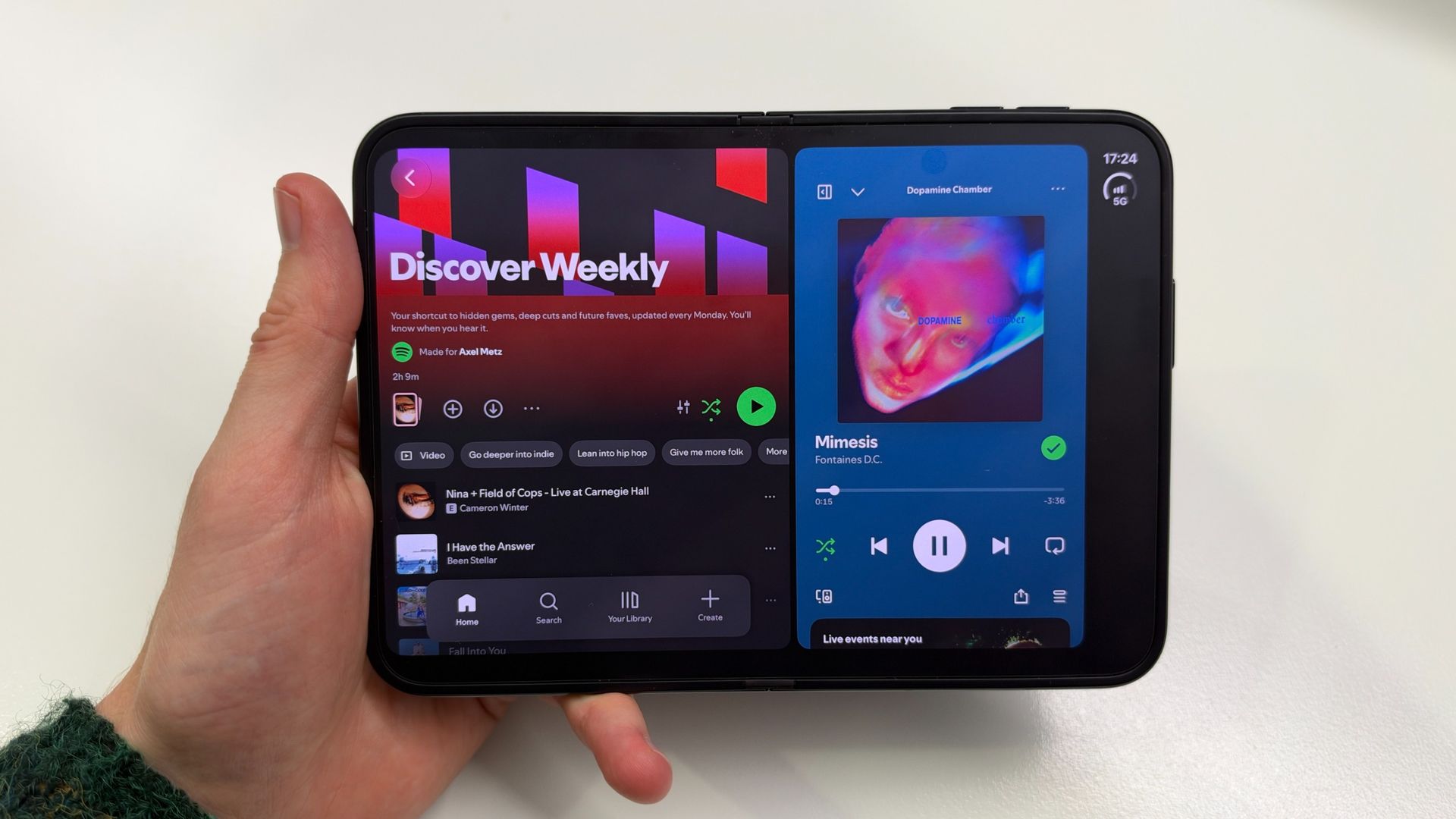
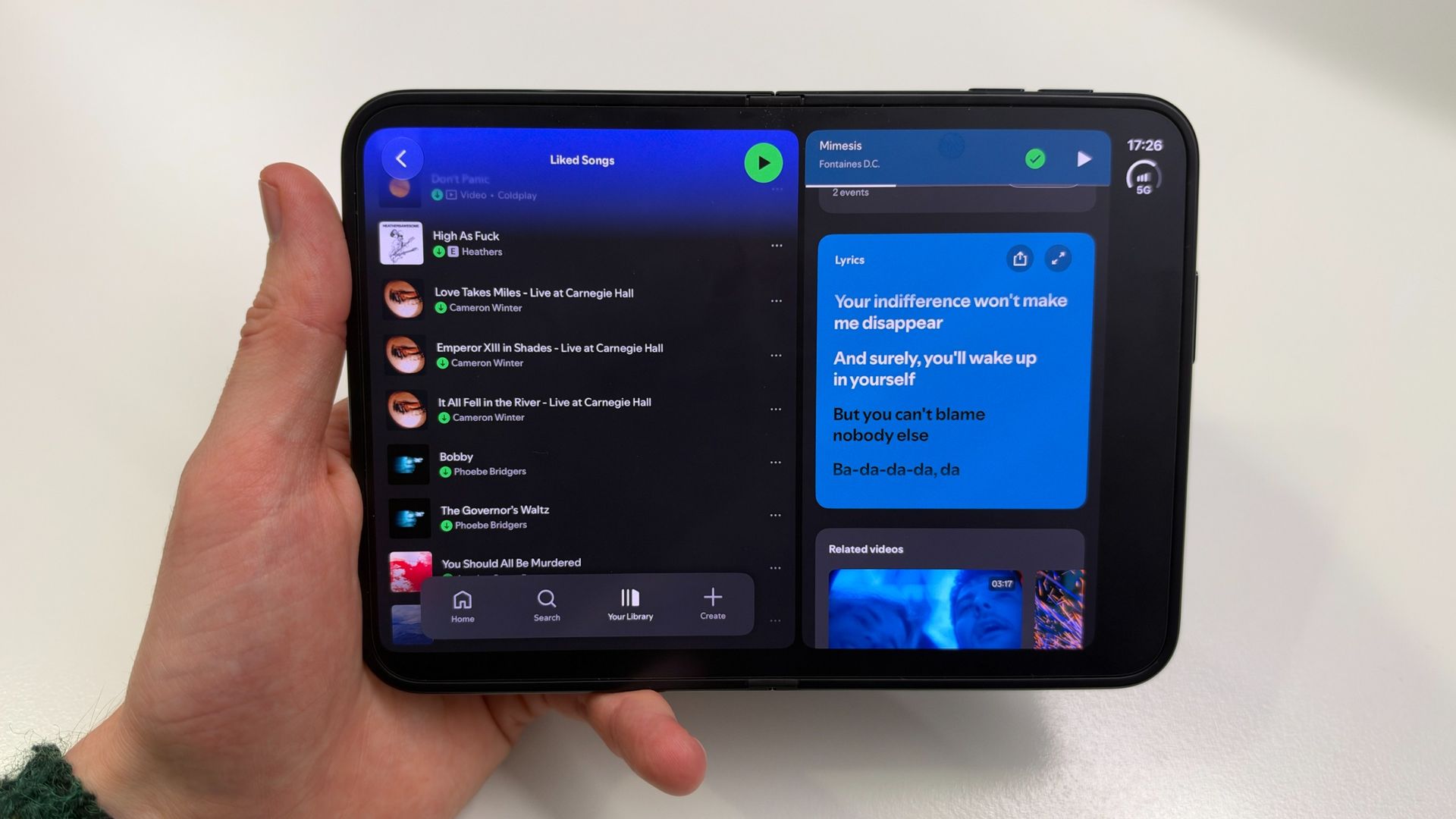
I don’t need to tell you what Spotify is, but if you’re an existing Spotify user who’s worried about the experience of using Spotify on the iPhone Duo, don’t be: it’s awesome.
Well, it’s awesome when using the Duo unfolded. When closed, you still get that jarring black bar on the right-hand side of the screen, but in unfolded mode, Spotify splits the screen in half to show your playlist on one side and your currently playing song on the other.
This split-screen works in both landscape and portrait orientations, and while Spotify still needs to make better use of Apple’s vertical nav bar even in unfolded mode, I’ve been enjoying my time with the world’s most popular music streaming app on the iPhone Duo.
Slack
(Image credit: Future)
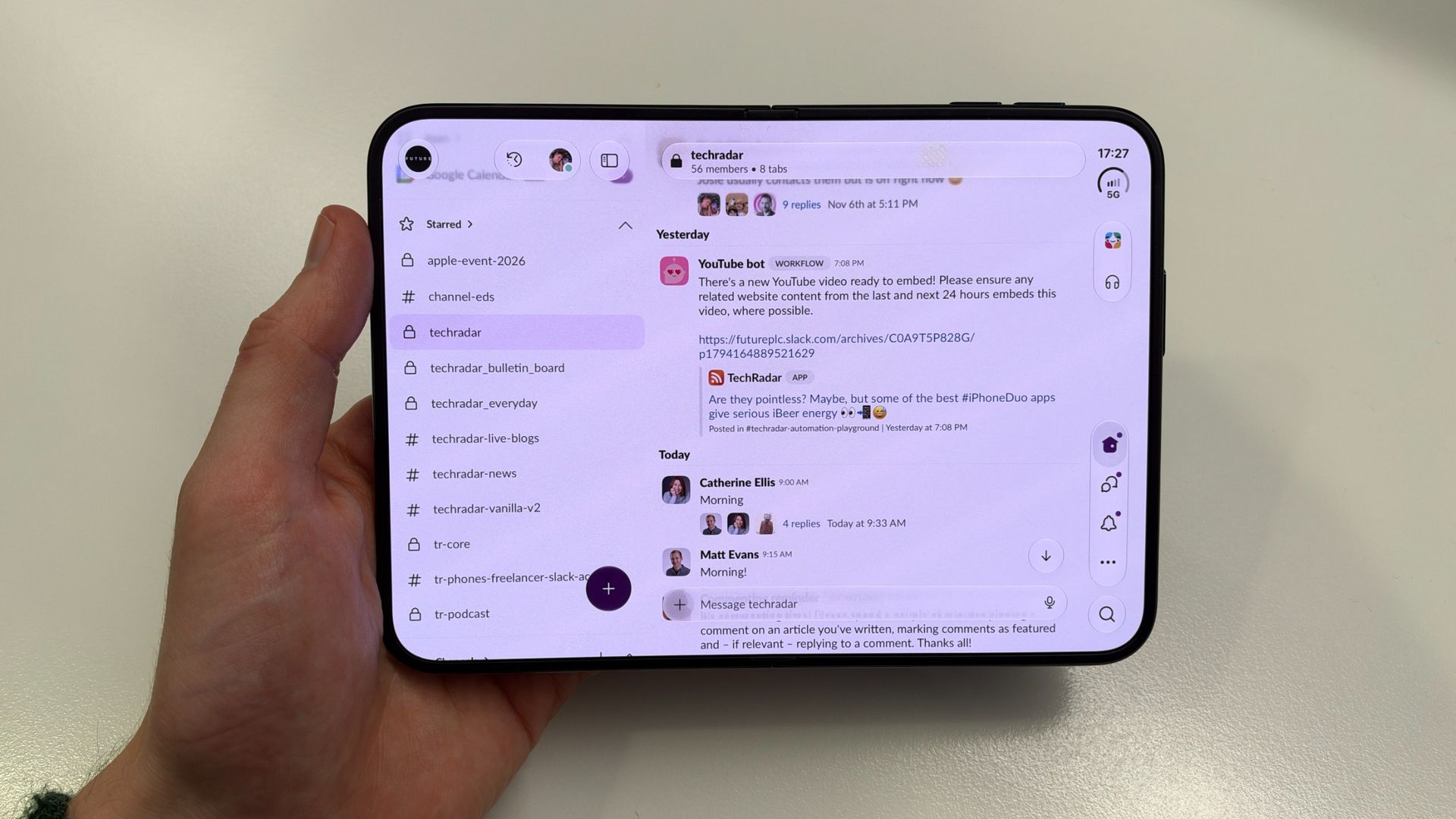
Here’s one for the workers: Slack on the iPhone Duo works like a dream.
This is one of the few third-party apps (at the time of writing) that uses the Duo’s larger inner canvas and Apple’s vertical nav bar, so you can access channels, direct message chats, and menu options in a single view.
Slack on the iPhone Duo basically puts the Slack desktop experience in the palm(s) of your hand, and while it’s obviously less usable in folded form, it’s still been optimized for the Duo’s outer screen in a way that 90% of apps just aren’t right now. Working 24/7 has never looked so good!
TfL Go
(Image credit: Future)
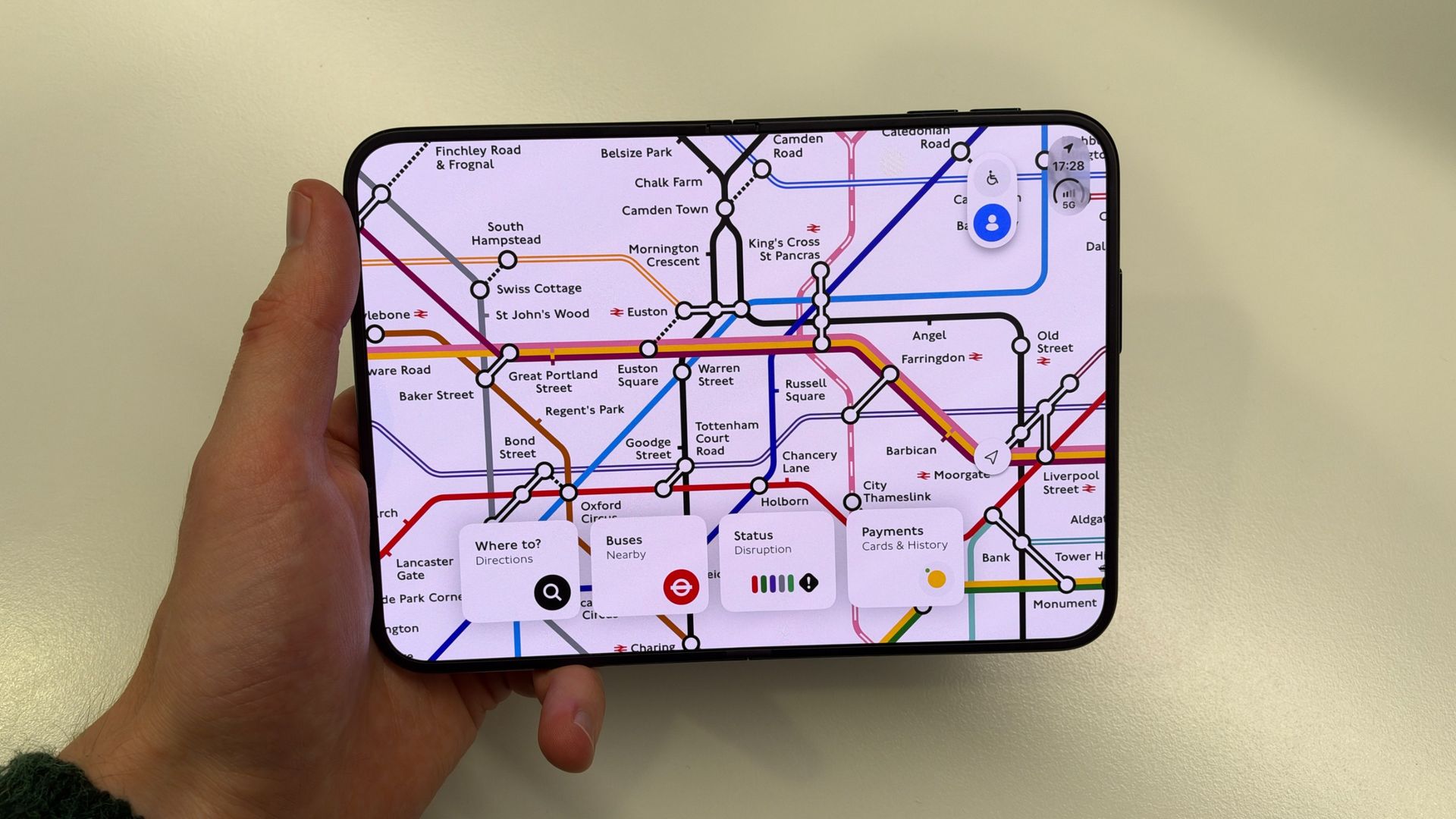
If you’re reading this from the US, Australia, or anywhere in the UK that isn’t London, I’m sorry to disappoint or bore you, but the official TfL (Transport for London) app is a sight to behold on the iPhone Duo.
This is one of the last apps I expected to be optimized for Apple’s first folding phone, but to my surprise, it was one of the first. There’s no split-screen functionality, but the London Underground map looks glorious when plastered across all 7.6 inches of the Duo’s nano-texture display, and it’s great fun to traverse the 272-station network while, erm, stuck on the London Underground.
So there you have it: seven of the best free, fully optimized iPhone Duo apps I've come across so far.
Of course, plenty more apps have been optimized for Apple’s first foldable than those I've mentioned here (my colleague, Lance, has highlighted one of his favorites on TikTok, as have we on YouTube), and plenty more will become optimized in the coming weeks as developers roll out Duo-specific updates.
Rmatamini's P99S packs a 16GB Tesla V100, Core i7-10850H, 16GB RAM and 512GB SSD into a 5.6L box for $699 on Newegg
The same 16GB V100 PCIe card costs a whopping $584 new on Amazon, and renewed units can be had for $410
Nvidia's R580 driver branch is Volta's last; CUDA 13 no longer targets the card, and potential buyers need to contend with a relatively new seller in tow
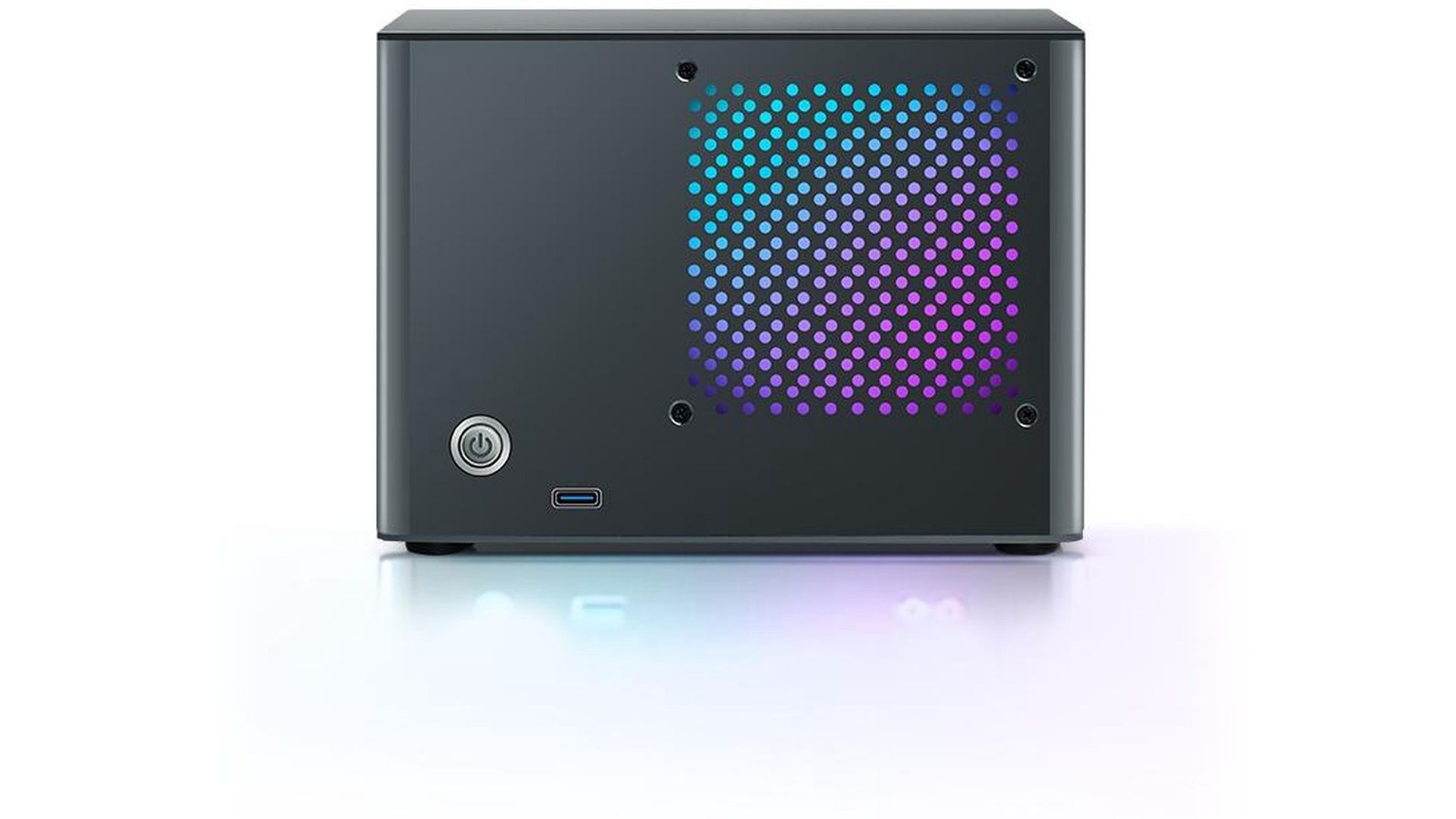
A new Newegg listing squeezes an Nvidia Tesla V100 with 16GB of HBM2 into a 5.6-liter box - and asks just $699 for the lot.
The Rmatamini P99S "Mini AI Workstation" pairs Nvidia's 2017 data center accelerator with a mobile-centric Intel Core i7-10850H, 16GB of DDR4, a 512GB NVMe SSD, a 700W power supply, and Windows 11 Pro, and ships free from China.
The number that makes this interesting sits on another site: HP's version of the same 16GB V100 PCIe card is selling new on Amazon for $584 through a third-party seller with only two units left in stock; Take that at face value, and the rest of the computer costs as little as $115.
A $584 card in a $699 box?
Amazon's pricing is where one would currently find a brand-new V100 GPU, which has seen a surge in demand due to both the relevance of older silicon and the fact that it uses HBM2, which holds its own in bandwidth compared to newer consumer-grade GPUs.
One could argue that a fairer comparison would involve a potentially refurbished unit that can be found for as low as $410 on Amazon, visible from the same listing as the new SKU. This means the mini PC itself costs either ~$115 or ~$290, depending on how one values the Tesla V100 GPU in a 16GB trim.
The V100, which once commanded a staggering $10,000 or higher price tag, is arguably dated silicon before fading away, but it is drawing attention again, and as much to do with today's market as with the card. Fast memory has become the most expensive part of any AI build.
Against that backdrop, the V100's spec sheet looks oddly current. Nvidia's datasheet rates it at 900GB/s of memory bandwidth, about twice the 448GB/s of an RTX 5060 Ti 16GB. Token generation in large language models leans heavily on bandwidth, which is why hobbyists such as Oscar Molnar spent 2026 bolting retired V100 GPUs into desktops.
The best public numbers come from YouTube channel Hardware Haven, whose tests Wccftech reported in May 2026. A modded V100 16GB produced about 130 tokens per second on gpt-oss-20b, compared to roughly 90 for an RX 7800 XT, and 108 tokens per second on Gemma 4 e4b, compared to 76 for an RTX 3060. Capped at 100W, it still managed 95 tokens per second while the whole system drew 170W at the wall.
Plenty of caveats in tow
In practice, 16GB holds mixture-of-experts models such as Gemma 4 26B-A4B entirely on the card, according to Andrew Leech's V100 LLM kit, but denser 30B-class models will not fit, and 16GB of system RAM leaves little room to offload the overflow to the CPU. RmataMini PC also sells a 32GB SKU of the same, with a bump to 32GB of DDR4 RAM, for an eyewatering $1,500, marked down from a sticker price of $2,000.
The biggest long-term caveat is software: Nvidia's driver deprecation schedule names the R580 branch as the last to support Volta, alongside Maxwell and Pascal. ComputingForGeeks notes that CUDA 13 can no longer build code for the V100, and that vLLM now requires a newer compute capability than Volta's 7.0. Ollama y llama.cpp still works on CUDA 12 builds, and community forks such as the 1Cat vLLM build keep the card useful, but the window is closing rather than opening. As Leech's kit notes, Volta's tensor cores support only FP16, so BF16 and newer low-precision formats are off the table.
The host platform is modest but adequate. The Core i7-10850H is a 45W laptop chip from 2020 with six cores, 12 threads, and 16 PCIe 3.0 lanes, matching the V100's PCIe 3.0 interface. Because the V100 has no outputs, displays are driven by the CPU's iGPU.
The seller is also relatively new, and RmataMini PC has a single seller rating; the product has none; warranty questions are referred back to the seller; and returns are for refund only, within 30 days.
For someone who wants a small, ready-made CUDA box with 16GB of 900GB/s memory and has no interest in sourcing adapters, fans, and ducts, $699 is an excellent price in a market where memory keeps getting more expensive.
But a finite software runway from Nvidia and a considerably pricier, but available 32GB SKU mean that users have much to consider before they take the plunge here for anything that could require more memory or a more current CUDA version in the near future.
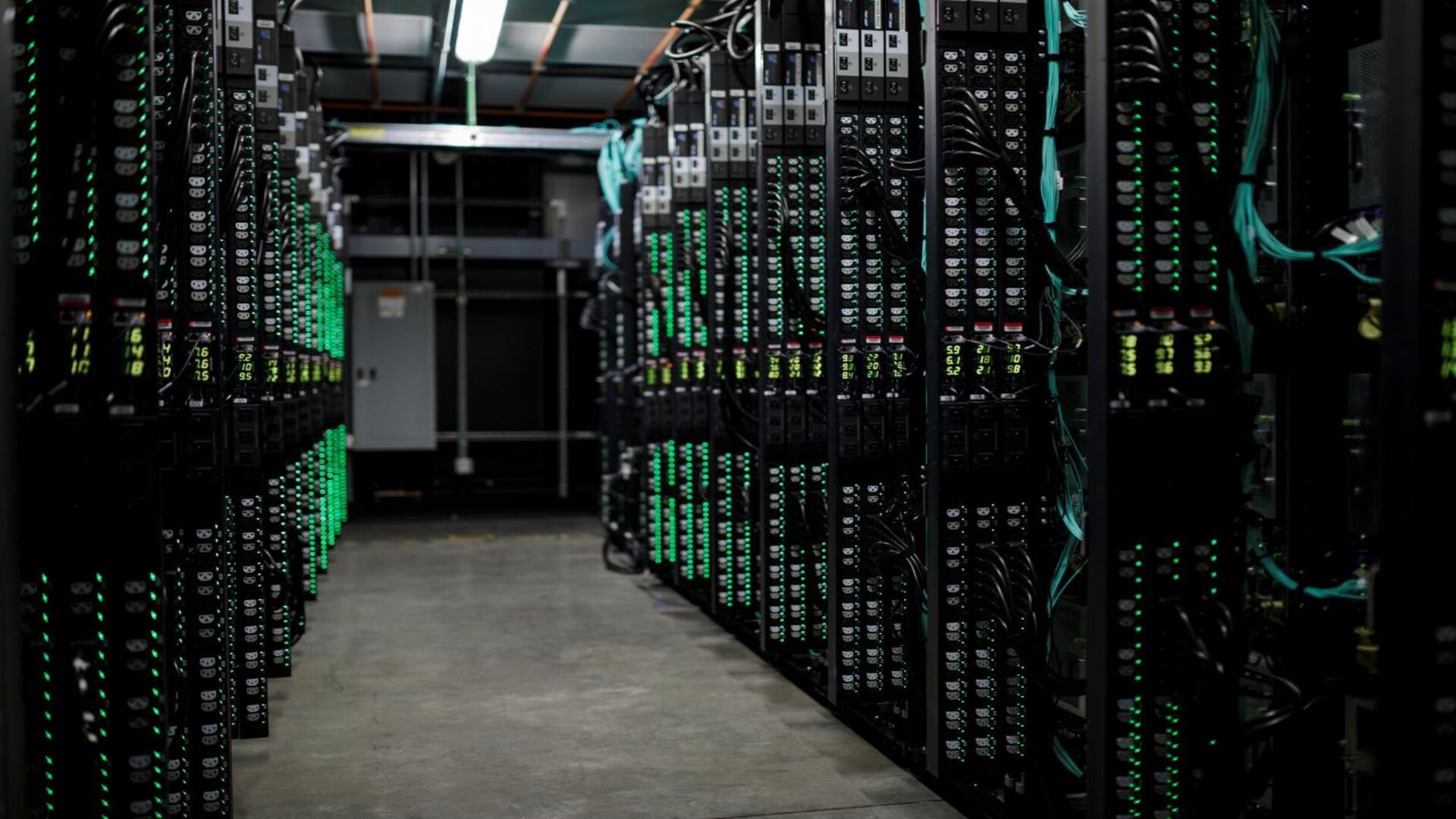
Russian hosting provider Beget was subject to a cyberattack on November 1st, 2026
While 1000s of websites were hit, cloud storage, VPS hosting, and Kubernetes servers were wiped
The attack came amidst a spate of drone and online attacks targeting Russian tech companies, presumably by Ukraine-based attackers or anti-Putin elements within Russia
A “massive cyberattack” took Russian web hosting company Beget’s entire operation offline, with abnormal activity recorded immediately ahead of the incident. All levels of its infrastructure were affected, with websites, cloud storage facilities, VPS hosting, and even hosting for Kubernetes containers knocked offline.
The impact of the attack took several days for the company’s experts to assess, with estimates that over 1,000 servers need to be physically checked. This indicates either lasting damage from the attack or infrastructure that was already weakened, perhaps by unpatched exploits.
Beget has been the subject of EU sanctions due to it providing hosting services to authorities in the Russian-occupied Ukraine regions of Crimea, Donetsk, and Luhansk.
Recovering data
Responding to news of the attack, Beget issued a defiant statement, boldly stating “We are not giving up and are continuing to look for ways to recover this data.”
"Restoring all services will take a considerable amount of time, as more than 1,000 servers must be manually inspected.”
The organization told Kommersant (translated from Russian) that most data should be recoverable from backups for the majority of its virtual hosting and cloud infrastructure, adding “We continue to work on data recovery, but due to significant volumes, this process will require a long time.”
However, Beget’s response to the attack is hampered by how it organizes and prioritises data, with many customers not using disaster recovery plans.
Anatoly Sazonov, Head of the Department of Compliance with the requirements of the Softline Group of Companies, told Kommersant, “Beget’s mass failure is an example of a systemic risk that arises from a high business dependency on a single provider. If a website, corporate mail, databases and other services are posted on one site, the provider’s problems can paralyze several areas of business work at once.”
EU sanctions
Beget was founded in 2007 and has become the second largest domain registrar in Russia for .ru domains, overseeing 14.7% of the market alongside providing web hosting, cloud computing, and other services.
As is standard, Beget has encouraged customers to change their passwords and remove and update and access keys, credentials, or other sensitive information that may have been uploaded to its cloud servers.
Beget has already had a difficult year, having been targeted by EU sanctions for providing hosting services in Russian-occupied territories in Ukraine. Whether the domain registrar and web hosting company was targeted because of this, or as a more general piece of cybercrime, remains to be seen.
Hosting.com's Starter plan offers a straightforward way to host a website, with enough resources to support small businesses, blogs, and personal projects. It includes hosting for five websites, 15GB of NVMe storage, an AI website builder for WordPress, and daily backups. You also get free SSL certificates, malware protection, and managed migration.
Best For: First-time website owners, bloggers, freelancers, and small businesses looking for affordable hosting with security features and WordPress tools included.
The Deal: Hosting.com has reduced its Starter web hosting plan from $13.99 to $1.49 per month for Black Friday, saving you 89%. The offer requires a 12-month subscription, costing $17.88 upfront instead of $167.88. Coupon BF26WHAL is applied at checkout, with the price returning to $13.99 per month on renewal.
Use code TECHRADAR for an additional 5% off on the already discount price across all 1/2/3/4 year hosting plans,
Hosting.com Starter web hosting includes five websites, three staging sites, 15GB NVMe storage, WordPress AI builder, daily backups, SSL certificates, malware protection, email, domain registration, managed migration, and support.View Deal
Why we recommend it
Hosting.com's Starter plan provides hosting support for five sites and three staging sites. That gives you room to manage multiple projects and test changes before making them live.
The inclusion of an AI website builder for WordPress is handy if you're starting from scratch, and 15GB of NVMe storage will be sufficient for smaller sites without large media libraries. You also get email and security features, free SSL certificates, and a domain registration offer.
Daily backups, malware detection and removal, and free managed migration are all included, and Hosting.com also includes OpenAPI and MCP server capabilities. With a 99.9% uptime guarantee and support available around the clock, the Starter plan covers all the essentials for running a small website.
Price context & historical value
Hosting.com's Starter plan normally costs $13.99 per month, or $167.88 a year. The Black Friday promotion reduces the annual cost to just $17.88, saving you $150. You'll need to make sure code BF26WHAL is used for the discount, and also use code TECHRADAR for an additional reduction.
This offer locks in the introductory rate for just 12 months. After the first year, the plan renews at full price.
If you're launching a blog, portfolio, or small business website and want a hosting package that includes WordPress tools, security features, and daily backups. The ability to host five websites and create three staging sites provides flexibility as projects grow.
❌ Skip Hosting.com's Starter plan if...
If you're planning a resource-intensive website or need substantial storage for large media files. The 15GB allocation may be restrictive, and the considerably higher renewal price makes this less attractive if you're looking for consistently low hosting costs.
Google commits $17 billion despite mounting resistance to American data center expansion
Voters rejected 40 of 41 data center-related ballot measures during the midterms
Wyoming is getting Google's first data center despite growing political uncertainty
Google is moving forward with a $17 billion investment in Wyoming, despite growing political opposition to large-scale data center developments across America.
There has been intense resistance from local communities, which seem to be concerned about electricity use, water consumption, noise, and other effects.
Recent midterm election results have intensified those concerns, with several outcomes suggesting that opposition to data center expansion is gaining political traction.
Political resistance has not slowed Google's Wyoming investment
Alphabet's Google announced plans on Thursday to establish its first Wyoming data center, working alongside four energy and infrastructure partners.
The development involves Tallgrass Energy, Black Hills Energy, American Electric Power and Related Digital, with construction expected to bring substantial investment into Laramie County.
Wyoming offers a politically favorable environment for the project, having given Donald Trump more than 70% of its presidential votes during the 2024 election.
However, political support at the state level does not necessarily eliminate concerns emerging from communities experiencing the consequences of expanding computing infrastructure.
During this week's midterm elections, candidates opposing data center developments secured victories in important contests across Texas and Georgia.
Only one of 41 data center-related ballot measures decided during the week produced an outcome favorable to the industry's interests.
The developments come as investors reconsider the financial and political risks associated with increasingly expensive AI infrastructure projects across the U.S.
According to recent reports, Microsoft has declined to extend a multibillion-dollar arrangement involving AI infrastructure provider Nscale in Texas.
Energy strategy and community commitments underpin the development
Google's proposed facility will incorporate a planned 702MW fuel-cell installation, supplied by American manufacturer Bloom Energy and contracted through AEP.
The system will generate electricity from natural gas through electrochemical processes, with carbon capture and storage technology intended to limit associated emissions.
Captured carbon dioxide will be transported for permanent underground storage at Tallgrass Energy's nearby Eastern Wyoming Sequestration Hub.
Google said the development would increase its contracted carbon capture capacity to almost 1 gigawatt, building upon an earlier American project announced last fall.
The company also plans to obtain electricity from gas-fired generators operated by Tallgrass Energy and Black Hills Energy.
“We’re committed to partnering with communities to build data centers the right way. We will pay for 100% of the power we use, and when we build data centers, we’ll cover the infrastructure needs directly driven by our growth,” Google said in a blog post.
Water consumption is another important consideration, particularly because large computing facilities can place additional pressure on supplies available to surrounding communities.
Google intends to operate the Wyoming installation using air-cooling systems, avoiding the substantial water requirements associated with conventional evaporative cooling arrangements.
The company has also promised investments in local water replenishment programs, although community engagement has just started and Google has received feedback from over 200 residents.
Local participants want clear information about employment opportunities, economic contributions, educational support, and the cumulative consequences of the data center.
Google expects the development to generate hundreds of millions of dollars in property tax payments for Laramie County and School District 1.
Its community programs will support science and technology education, professional training, entrepreneurship and skilled trades development across Wyoming.
Rivals: Fury v Joshua is the perfect hors d'oeuvre to what is quite simply the biggest fight in British boxing history. On December 11, 2026, Tyson Fury and Anthony Joshua will finally end decades of verbal sparring by actually facing off in the ring. Rivals... is a deep-dive documentary into the pair's shared history and will be available to stream on BBC iPlayer from Tuesday, November 10, with an accompanying podcast available on the same day via BBC Sounds.
For more than a decade – ever since to contents of a hotly disputed spar in 2010 – the Gypsy King and AJ have danced around each other. With their long-awaited fight finally sealed, the British heavyweights are the subject of Episode 2 of the BBC's Rivals... series, which explores their vastly different routes to world title glory.
Fury is the self-styled overweight outsider who fought his way through the amateurs, while Joshua is the London 2012 golden boy with the physique of a bodybuilder. To find the truth, John Fury, Eddie Hearn, Frank Warren, Natasha Jonas, Tony Bellew and Steve Bunce among others are interviewed to find out what makes each fighter tick and how they've changed boxing.
If you're interested in Episode 1 of Rivals..., that's also on iPlayer and focuses on Cristiano Ronaldo and Lionel Messi's beef.
Here's how to watch Rivals: Fury v Joshua online and on TV from anywhere for free.
Can I watch Rivals: Fury v Joshua for free?
Yes. BBC iPlayer is the streaming service you need to watch Rivals: Fury v Joshua for free if you're a UK resident.
You will need an account with a UK postcode (e.g. SE1 7PB) and a valid TV license.
You can also listen to the accompanying podcast, similarly available from Tuesday 10 November, on BBC Sounds.
Can't access the free stream because you're away on vacation? You need a VPN – more on that below. You can also find out more with our handy BBC iPlayer guide to watching abroad.
How to watch Rivals: Fury v Joshua from anywhere
If you're keen to watch Rivals: Fury v Joshua but you're away from the UK and access to the show is geo-blocked, then you could use a VPN to access it (assuming you're not breaching any broadcaster T&Cs, of course). You may be surprised by how simple it is to do. Plus, we have a great 77% discount on our #1 VPN with this Black Friday deal...
Similar to the US, Rivals: Fury v Joshua is not available to stream in Canada and is not on any television channels there.
The solution?Use a VPN to gain access to all the content you'd normally stream at home.
Can you watch Rivals: Fury v Joshua in Australia?
(Image credit: free)
Like in the US and Canada, Rivals: Fury v Joshua is not available to stream or watch on any TV channels yet.
Away from the UK? Use NordVPN to access your usual shows from anywhere in the world.
Rivals: Fury v Joshua need to know
Rivals: Fury v Joshua - interviewees
John Fury – Fury's father
Eddie Hearn – Joshua's promoter
Frank Warren – Fury's promoter
Natasha Jonas – former world champion
Tony Bellew – former world champion
Steve Bunce – boxing journalist
Rivals: Fury v Joshua - who are the presenters?
Two of the most recognizable faces in British boxing broadcasting will present Rivals: Fury v Joshua — Anna Woolhouse and Steve Bunce.
Woolhouse has anchored Sky Sports and DAZN boxing coverage for much of the past decade, during which time she has interviewed all the biggest names in the sport.
Bunce began life as a boxing journalist – and still writes for UK site The Independent – and has worked on the BBC's boxing output for over two decades. A well-known face and voice of the sport in the UK, he is a radio pundit and hosts the 5 Live Boxing with Steve Bunce podcast.
We test and review VPN services in the context of legal recreational uses. For example:1. Accessing a service from another country (subject to the terms and conditions of that service).2. Protecting your online security and strengthening your online privacy when abroad.We do not support or condone the illegal or malicious use of VPN services. Consuming pirated content that is paid-for is neither endorsed nor approved by Future Publishing.
Most rugged phones chase bigger and bigger batteries, often to the point where they become a viable replacement for a sea anchor.
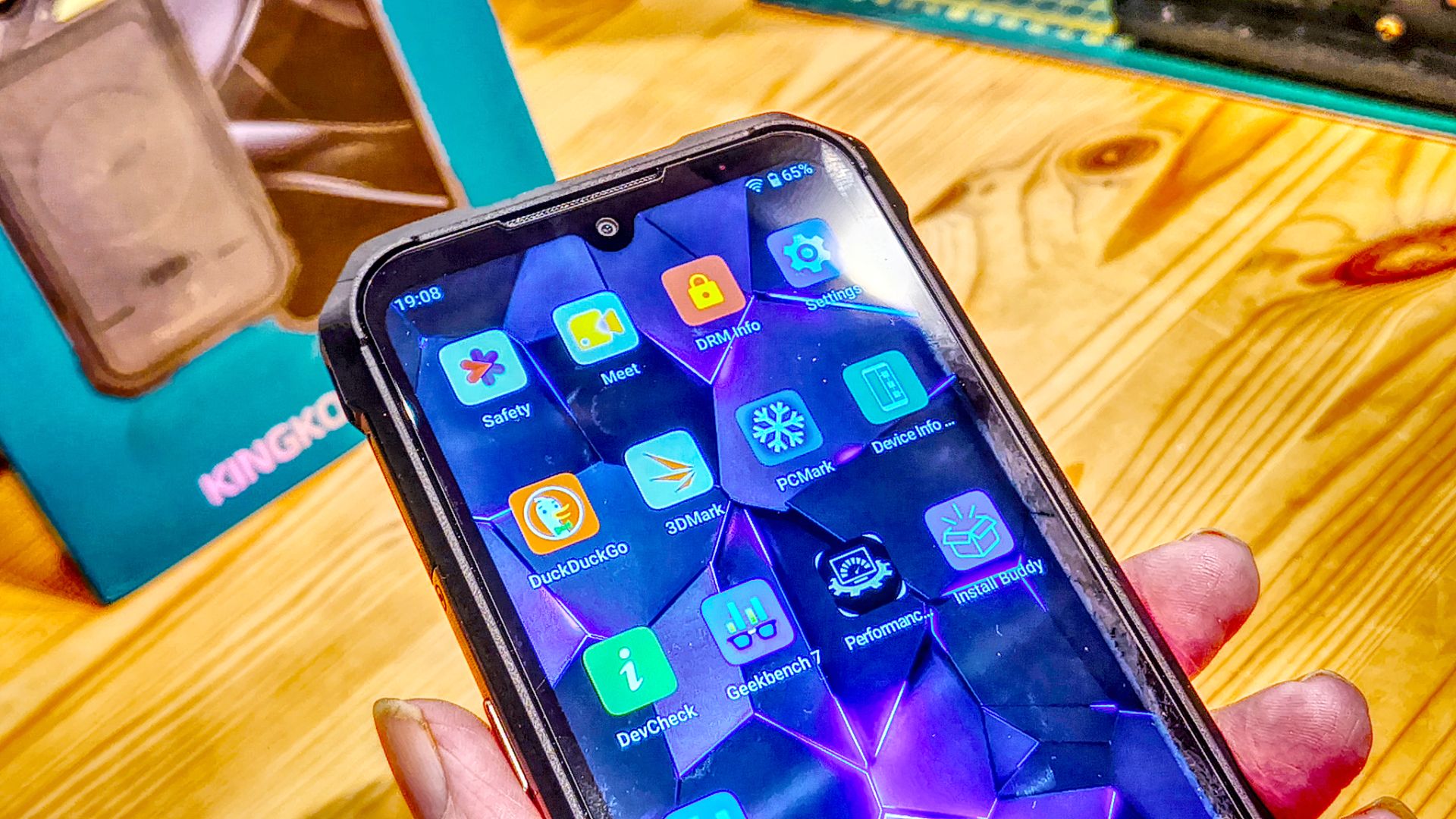
The oddly named KingKong Dura takes a different route: it comes with a modest 5000mAh battery you can remove, and CUBOT includes a second one in the box.
That is a rare feature in rugged phones, and a useful one. Run one battery flat, swap in the other, and carry on. No power bank is needed, and in this context charging the battery doesn’t involve putting it in the phone.
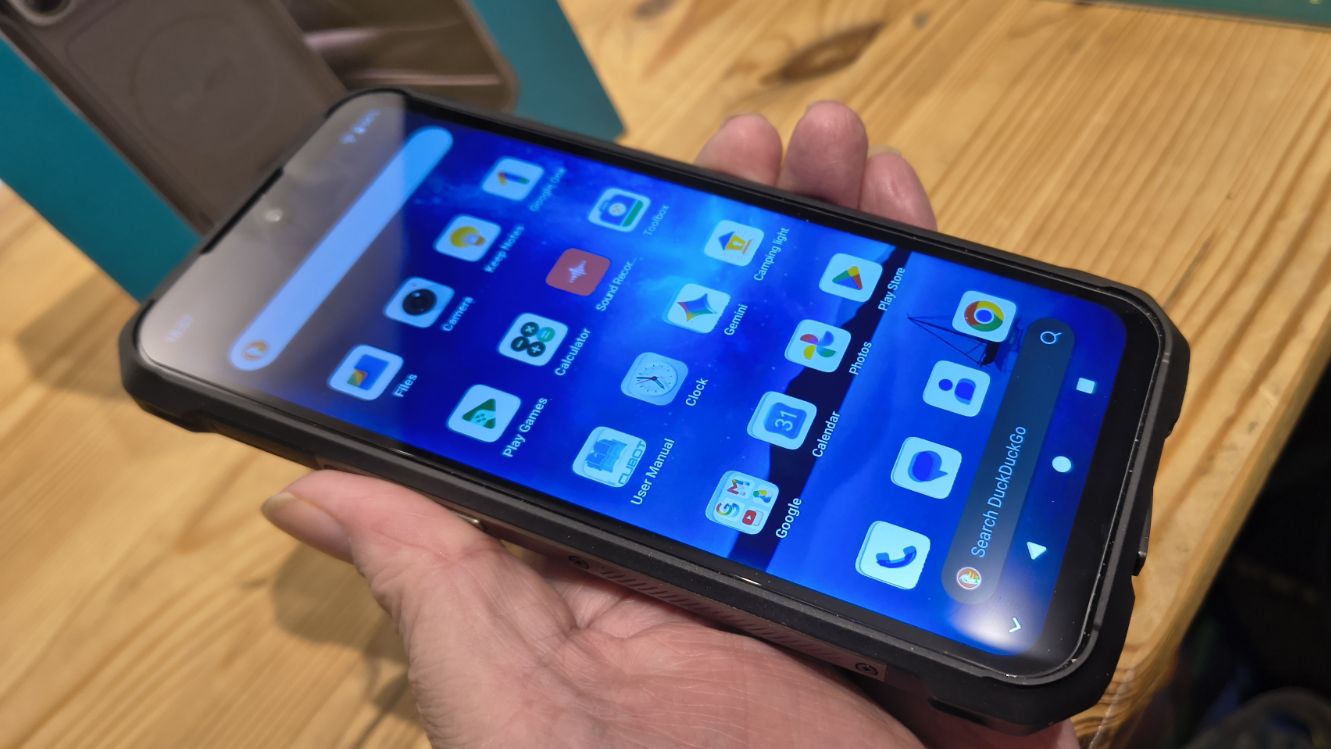
The replaceable battery enables a design slimmer than the usual rugged brick. It measures 13mm thick and weighs 299.5g. The screen is 6.88 inches, with a 120Hz refresh rate. The phone carries IP68, IP69K and MIL STD 810H protection.
Phones that have replaceable batteries are often expensive, and this one isn’t, so how does that work?
In short, CUBOT pared the specs down to the bare minimum to run Android 16. The Unisoc T620 is an old 12nm chip, with a screen resolution of only 720 x 1640. There is no 5G, and WiFi is only WiFi 5, to mention just a couple of shortcomings.
You get what you pay for, but thankfully you don't pay much.
So this is a working phone for people who need power on tap, or only occasionally need a rugged phone. It isn't for people who want speed, and it isn’t the best rugged phone I’ve seen. This pitch by CUBOT is decidedly niche.
However, it’s easy to be snobbish about the lack of performance in devices like this, and CUBOT clearly see a market for these devices, and a customer who won’t be phased by its lack of grunt.
(Image credit: Mark Pickavance)
CUBOT KingKong Dura: price and availability
How much does it cost? From $190/€210/£143
When is it out? Available now
Where can you get it? CUBOT's European store and online retailers
Direct from CUBOT, two SKUs of the KingKong Dura are available. One has 8GB of RAM and 128GB of storage, and another, my review hardware, has 12GB of RAM and 256GB of storage. Both options are available in black or green.
For EU customers, the lower-spec model is €209.99, and the higher one is €259.99, making 50% more RAM and 100% more storage only a 50 Euro bump.
For whatever reason, I couldn’t get the CUBOT website to map these prices into US Dollars or UK Pounds, but American customers might want to consider buying it via an online retailer like Amazon.com. In the USA via Amazon, I found only $189.99 for the 8GB+128GB model.
It’s not available on Amazon UK yet, so you can buy it directly from CUBOT or use AliExpress. On that site, I found it for £142.01 and £206.15 with free shipping to the UK, but delivery from China was about 10 days.
That is a low price for a rugged phone running Android 16, and it undercuts every replaceable-battery design I’ve seen by some margin.
With both batteries included, the Dura is a bargain for its niche.
(Image credit: Mark Pickavance)
Value score: 4/5
CUBOT KingKong Dura: Specs
Oukitel WP63 Specifications
Item
Spec
CPU
Unisoc T620 (2x Cortex A75 up to 2.2GHz, 6x Cortex A55 up to 1.8GHz, 12nm)
RAM
8GB (plus 12GB virtual) or 12GB (plus 20GB virtual)
Storage
128GB or 256GB, TF card supported
Screen
6.88 inch IPS, 720 x 1640, 120Hz
SIM
Dual nano SIM, or 1x nano SIM plus TF card
Weight
299.5g
Dimensions
180.1 x 85 x 13mm
Rugged spec
IP68, IP69K, MIL STD 810H
Rear cameras
64.2MP main (OV64B40 or S5KGW1SP03, f/1.8, PDAF), 2MP macro
Front camera
16MP
Networking
4G, WiFi 5, Bluetooth 5.0, NFC, GPS
OS
Android 16
Battery
5000mAh, removable, 33W charging, USB C port on each battery
Extras
Camping light, side mounted fingerprint scanner
Colours
Black, Green
CUBOT KingKong Dura: Design
Slim by rugged standards
Removable battery
By-the-numbers layout
(Image credit: Mark Pickavance)
The Dura looks like a rugged phone that has been given slimming injections. It is plainer than most. There are no excessive sci-fi flourishes, and the lines are utilitarian.
At 13mm and 299.5g, it is slimmer and lighter than most rivals. It is thicker than the 11.9mm WP68 Air, but only just. It should sit in an average pocket without an issue.
The removable battery is the feature that shapes everything. Rugged phones with swappable batteries were common years ago, and they have mostly vanished.
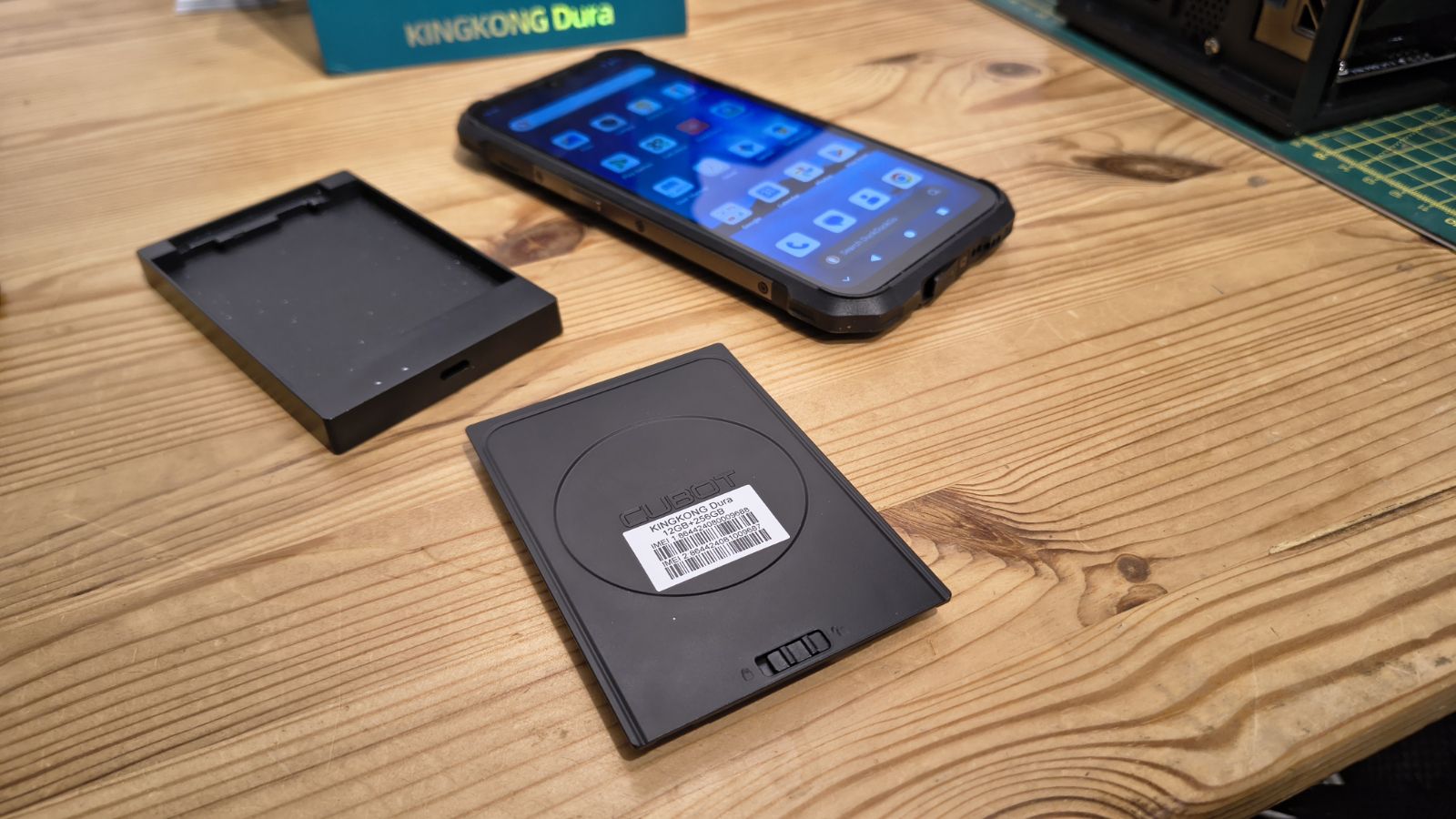
The battery uses a simple Lock/Unlock slider on the rear of the phone, though it's worth noting that there is no capacitor in this phone, so before the battery is swapped, you need to shut down the Dura.
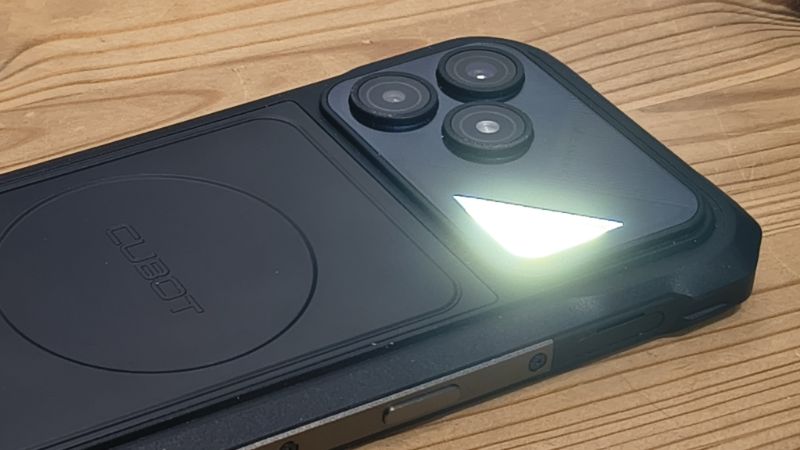
Somewhat confusingly, the battery has a circular depression and the CUBOT logo, which looks like it hints at wireless charging. But it turns out this is misplaced styling, and neither the battery nor the phone has this feature.
As I’ve already mentioned, you get a second battery, and it comes with a holder that has a USB-C port, so you can charge it without the phone. I don’t think it charges as quickly as in the phone, but that’s an incredibly useful feature that doesn’t cost extra.
The only downside to that charging shoe is that, other than a red power light, there is no feedback on the battery's charging status. Even four LEDs showing the state of charge would have been fine.
(Image credit: Mark Pickavance)
What’s clever about the battery design is that it has an integrated seal to keep out water and dust. That’s been achieved without making the battery difficult to remove. Once unlocked, two slots at the bottom let you hook a fingernail and pop it out.
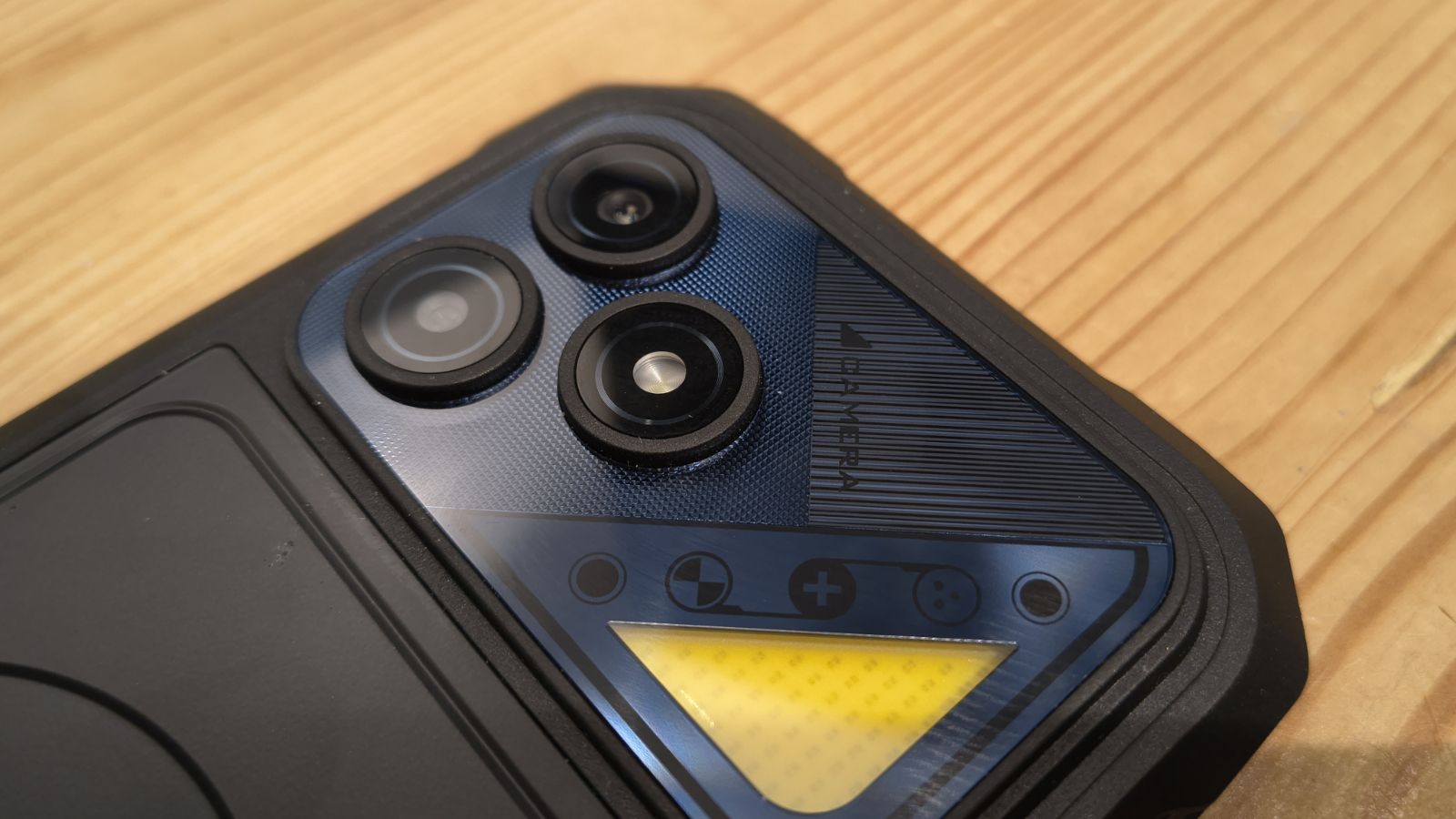
Above the battery area is the camera cluster with the sensors on the left and a small-ish camping light on the right. What’s mildly confusing is that this area is the highest point on the back, but CUBOT chose glass as the surface, which seems like a poor choice.
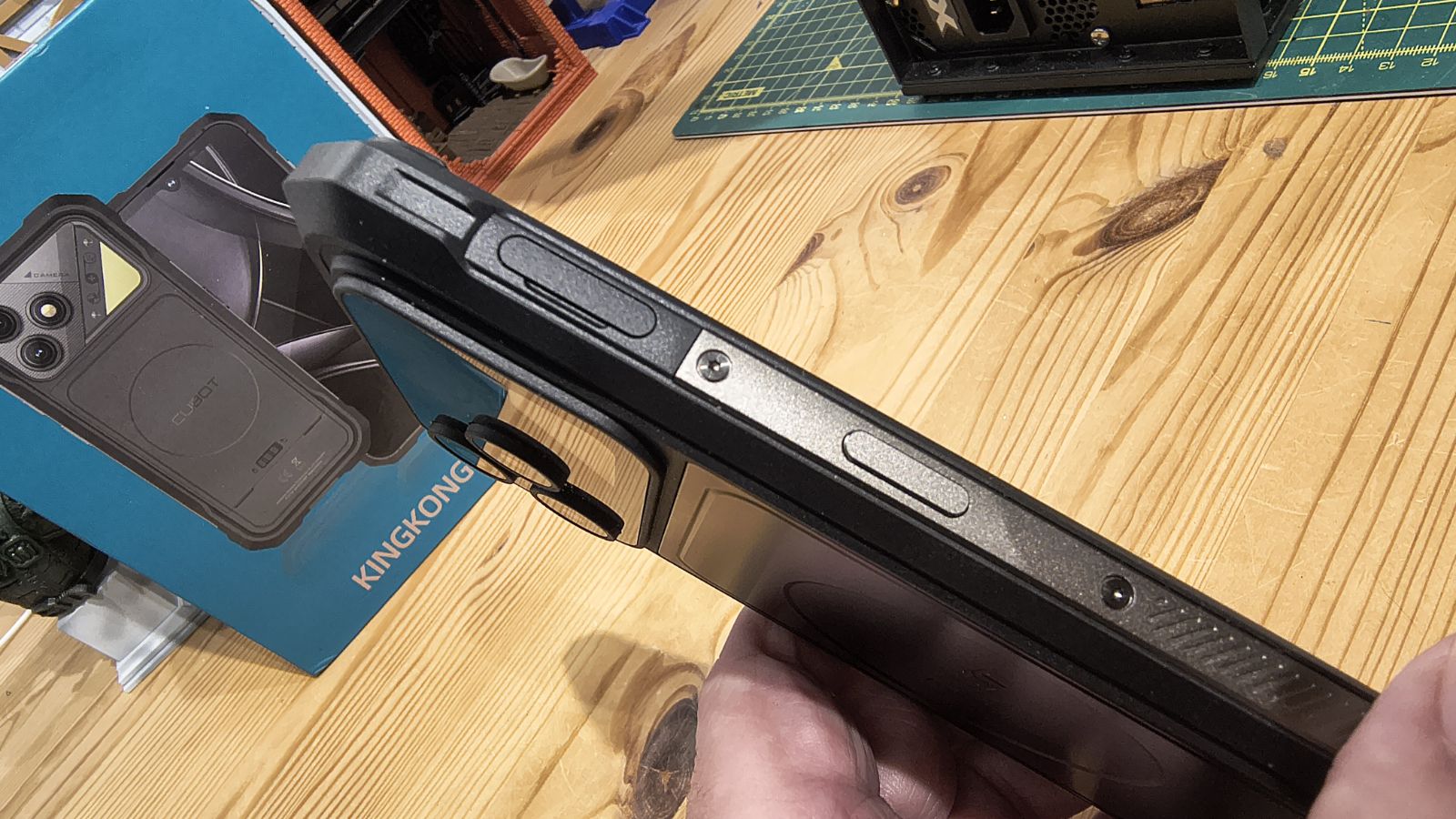
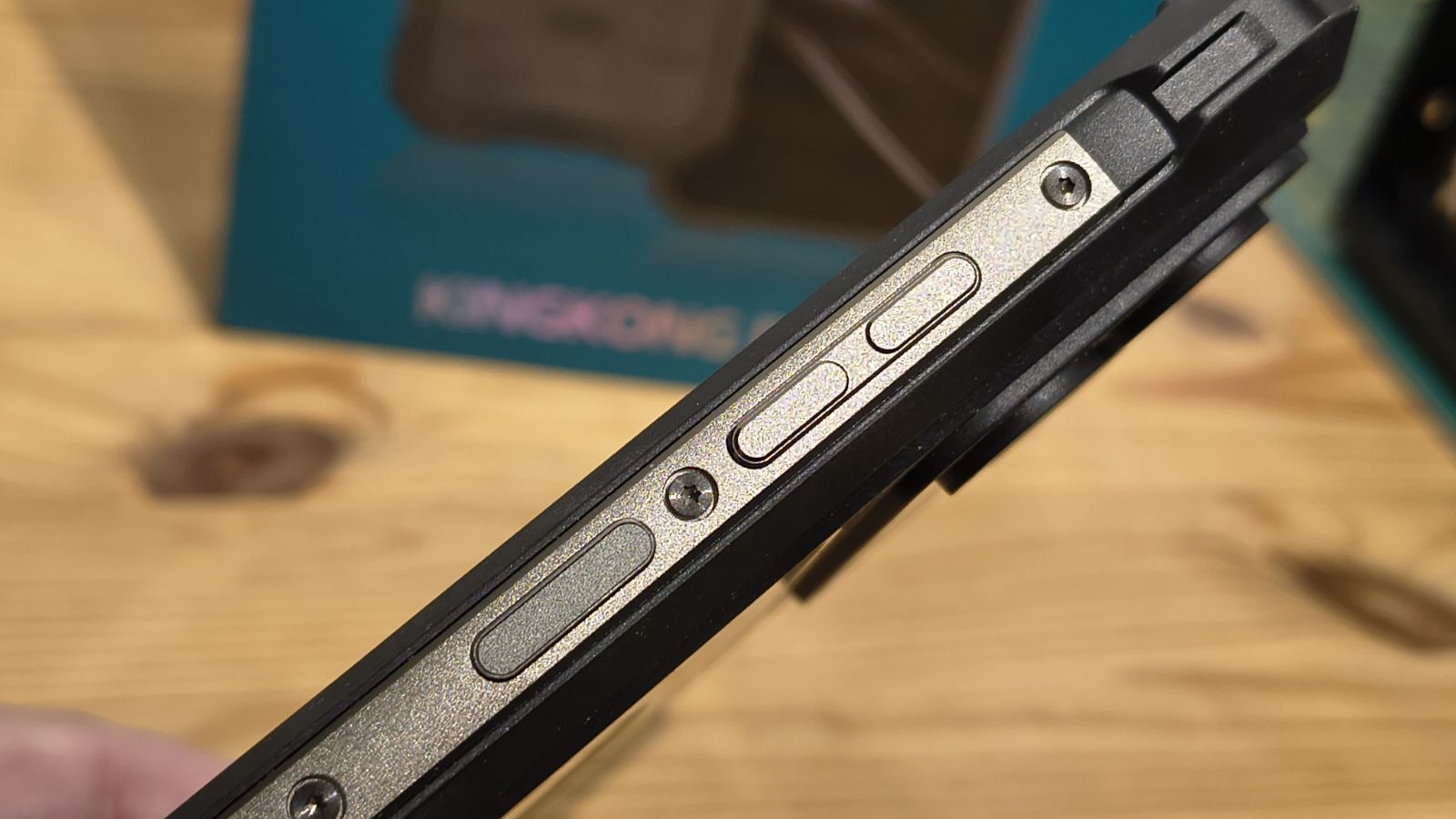
The rest of this phone is rather boring, as it goes with the predictable side-mounted fingerprint scanner/power button and volume rocker on the right, and PTT button and SIM tray on the left.
The only other external feature of note is that there is a hole on the bottom right for a lanyard/strap, but one isn’t included.
Overall, there is little here to get excited about, but also not much to dislike either.
(Image credit: Mark Pickavance)
Design score: 3.5/5
CUBOT KingKong Dura: Hardware
Unisoc T620
720 x 1640 display
2x 5000mAh battery
The Unisoc T620 is an entry-level chip that was first released in mid 2024. It uses an older 12nm process, not one of the newer 6nm, 4nm, or even 2nm processes flagship SoCs use today. It pairs two Cortex-A75 cores with six A55 cores, which has been a popular configuration for Octo-core SoCs since it first appeared with the MediaTek Helio P65 back in 2019.
To put that in perspective, this is older technology than the Dimensity 7025 in the Oukitel WP68 Air, which is itself a 6nm design from 2022. The Dura is a step behind that in the chronology of its technology. Even if it looks only2.5 years old to the casual observer.
The RAM is 8GB or 12GB, depending on the model. CUBOT adds virtual memory on top, quoting totals of 20GB and 32GB. As ever, that is storage borrowing the name of memory. Ignore it, since most people will run fine without the need to activate that feature.
Storage is 128GB or 256GB. A TF card slot is available, but it shares space with the second SIM. You can have dual SIMs or a card, not both, and there is no eSIM to fix that limitation.
(Image credit: Mark Pickavance)
The screen is the same 6.88-inch, 720 x 1640 panel as the WP68 Air. It runs at 120Hz. At this resolution, text looks soft in some situations, and it's difficult to read a document without zooming in. It’s reasonably bright, but the glossy coating makes outdoor viewing a challenge.
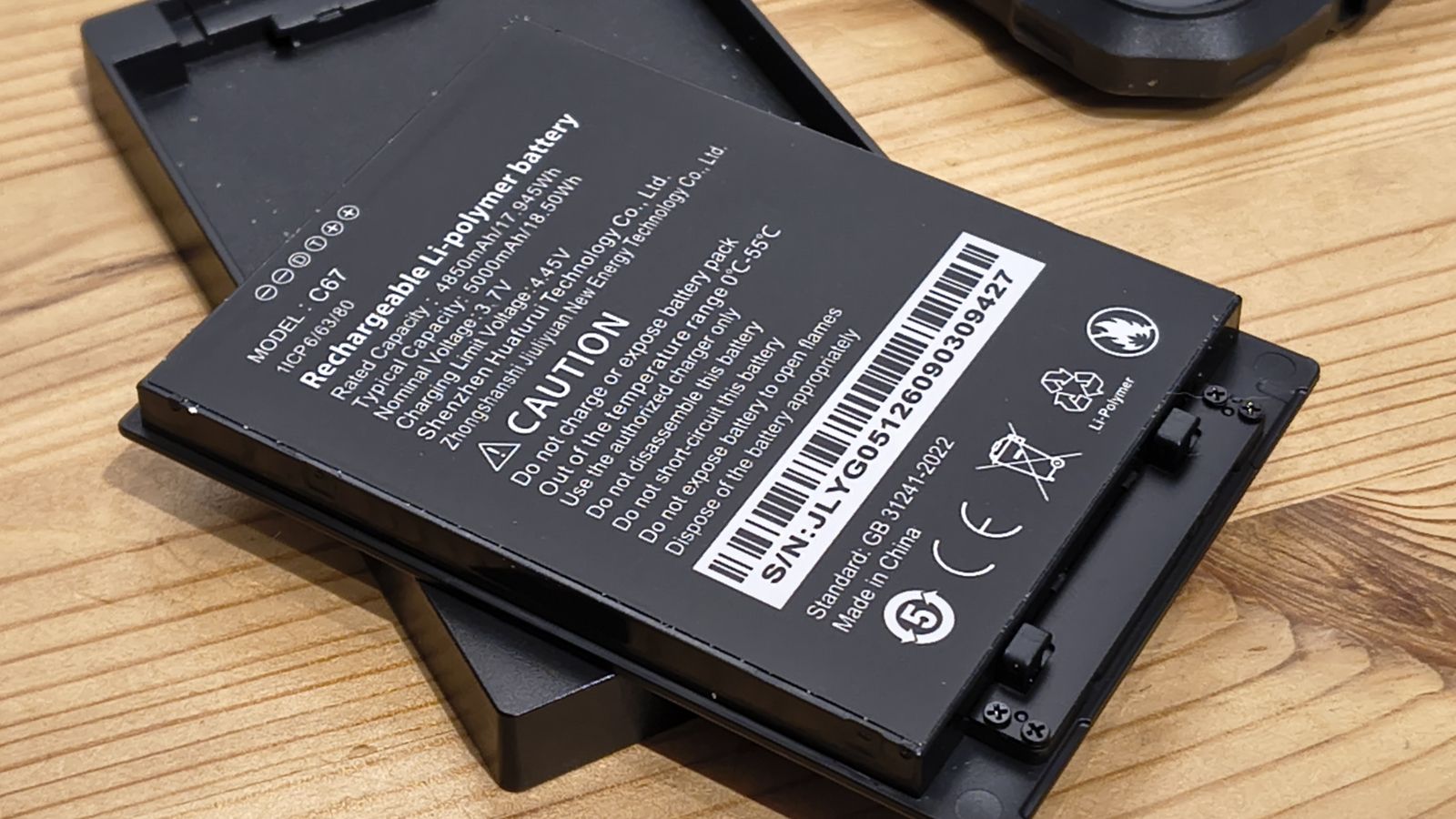
What makes this design interesting is the two batteries, each rated at 5000mAh, giving a total potential battery of 10000mAh. To be totally accurate, the rated capacity is 4850mAh or 17.945Wh, but the typical capacity is 50000mAh and 18.50Wh for each.
With 33W charging, these can be brought back to full capacity quickly, and both can be recharged at the same time. The only caveat is that the phone only comes with a single 18W charger, but I think this was a mistake at the factory. Why? Because it also came with an old-style MicroUSB cable, which would destroy the USB-C port if you forced it in there.
Therefore, if you buy this phone, I’d check that you have the right power supply and cable before hooking things up.
From a hardware perspective, you should also know there is no 5G comms available. For a phone aimed at workers and outdoor use, 4G is usually enough. But it limits future value.
Hardware score: 3/5
(Image credit: Mark Pickavance)
CUBOT KingKong Dura: Cameras
64MP and 2MP on the rear
16MP on the front
Three cameras in total
CUBOT KingKong Dura has three cameras:
Rear cameras: 64.2MP main camera (OmniVision OV64B40 or Samsung S5KGW1SP03), f/1.8, with phase-detection autofocus +2MP macro camera. Front cameras: 16MP.
This is a basic arrangement that matches the price. The 64.2MP sensor is either an OmniVision OV64B40 or a Samsung S5KGW1SP03, but CUBOT doesn’t say which it is.
Based on the slightly flattened colour profile, I'd bet on the OV64B40, but I could be wrong.
Either captures decent daylight pictures, but isn’t especially remarkable when the light level drops.
The 2MP macro is, once again, the weakest link. Fixed-focus lenses of this type rarely deliver. Cropping the main camera works better, making the 2MP sensor, probably by GalaxyCore, superfluous.
The 16MP selfie camera is a fixed-focus unit and should be adequate for video calls, but again the actual sensor isn’t declared. It might be Samsung, Sony or OmniVision, since these all make 16MP sensors for phones.
(Image credit: Mark Pickavance)
The primary camera becomes exceptionally disappointing in video mode, since a 64MP sensor still only offers 1080p. What is completely inexplicable about this is that there are only three resolutions available in the camera app: 1080p, 720p and 480p, but when you choose the FPS, there is only 30fps available. I assumed that as the resolution lowered, I’d get 60fps, and maybe 90 and 120fps. So having an FPS selection feature where the only option is 30fps seems incredibly dumb.
Interestingly, the forward-facing sensor has the same resolution and FPS limitations, showing how underutilised the rear sensor is for video. The only thing that the rear sensor has that’s better is stabilisation.
As with all phones, I tested what video encryption it supports, specifically Widevine, and was surprised to find that this phone supports Widevine L1. With the limited resolution of the screen, that only bumps streamed video capability up from 480p to 720p, but it's better than L3.
The table compares the Dura with the WP68 Air, which I tested in an earlier review. It is only 14.5g heavier, but it has enough internal space for an 8000 mAh battery instead of the Dura's 5000 mAh battery.
And that should be the focus of this section, because the performance of both SoCs is dire compared with more modern designs, and the one in the Dura is especially lacklustre.
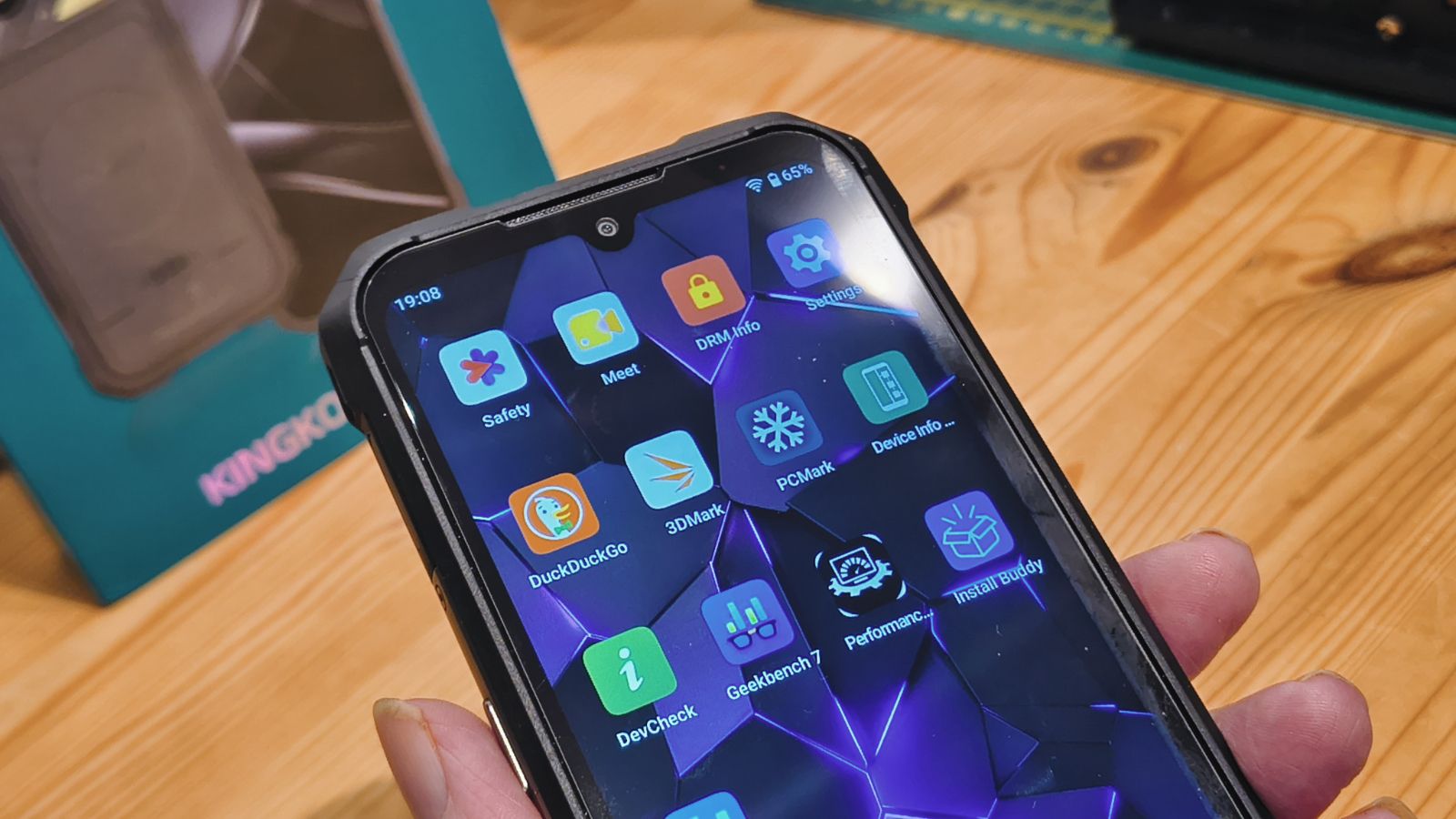
If you combine the two 5000 mAh batteries on the Dura, you would get over 21 hours of operation, an hour more than the WP68 Air. However, the WP68 had more unused capacity at the end of the test, and that phone had only 80% of the combined Dura battery.
This all comes down to power efficiency, and the MediaTek Dimensity 7025 appears to use its power much more effectively than the Unisoc T620.
Given that the Unisoc T620 is 12nm, and the MediaTek Dimensity 7025 is 6nm, this shouldn’t be shocking. And the GPU on the T620 has 32 shaders, a quarter of that in the IMG BXM-8-256.
Neither is a performance platform, but the Dura has one advantage: you could carry more than two batteries if CUBOT starts selling them separately.
But even with three or four batteries, there are rugged designs out there that could run for longer with their internal capacities.
Performance score: 2.5/5
CUBOT KingKong Dura: Final verdict
The KingKong Dura has a self-evident personality. It is a cheap, tough phone with a battery you can swap, and its pitch is not any more complicated than that.
That could be a real advantage on a long job, a camping trip or a remote site, if you bring the extra battery along and you’ve remembered to charge it.
Its weaknesses are equally clear. The chip is slow, the screen is soft, and there is no 5G comms. These are budget compromises, and they are honest ones at this price, if you can accept them.
If you only need a phone that lasts, and you don't want to carry a power bank, it makes some sense. However, if you want a fast daily driver, the WP68 Air or something newer is a better bet. As the power equation is tied to efficiency and performance, not having either of these things can only save you so much battery capacity.
Should I buy a CUBOT KingKong Dura?
Oukitel WP63 Score Card
Attributes
Notes
Rating
Value
Low price and a second battery
4/5
Design
Slim, lightweight and certainly practical
3.5/5
Hardware
Removable battery, but modest in other respects
3/5
Cameras
Basic and unremarkable, but only 1080p video
3/5
Performance
Entry-level chip that's adequate for basics
2.5/5
Overall
A niche phone with a useful trick
3/5
Buy it if...
You need power away from a charger Two swappable batteries mean you can work for days without a socket, and each battery has a USB C port, so one can charge while the other is in use. That's Dura's best trick.
You want a rugged phone on a budget? From about $190, it costs a fraction of most flagship rugged models, and it's usable.
Don't buy it if...
You want speed The Unisoc T620 is slow by current standards. Gaming and heavy apps will struggle. It does have enough memory for the interface to be reasonably smooth, but don't expect miracles.
You want a future-proof phone There is no 5G, and WiFi is limited to WiFi 5. But the biggest issues with this phone are the low level of performance and the lack of any commitment to updates.
The average tech worker earns £60,600, but half of them also have a side hustle
49% have a hybrid working routine, enabling flexibility for side hustles
The workers who need the money the most generally have the least flexibility
IT workers might be among the best paid, with UK employees earning an average of £60,600 - but one in two actually take on extra work alongside their full-time roles, new research has claimed.
This compares with barely a third (30%) of all full-time workers, making IT workers among the most likely to have side hustles – 23% freelancing and 7% having a more traditional second job, according to a Careerminds study.
But the reasons aren't so clear, because three in five (58%) earn at least £50,000 annually and IT is the least likely sector to experience payday-to-payday financial pressure – so if it's not money struggles that's causing them to get side hustles, what is it?
Tech workers earn good salaries but are still more likely to have side hustles
The report implies workers may just want to increase their disposable income or save more, but tech workers are also in an unfairly unique position because virtually half (49%) of them follow hybrid working routines, compared with just 4% in hospitality. This extra flexibility could allow them to sell their sought-after skills on a freelance basis.
"Some jobs naturally lend themselves to freelance work," certified professional career coach Amanda Augustine wrote. "If you're a developer, for example, you might be able to take on a project in the evening or over the weekend."
But while IT workers typically earn healthy wages, nearly half (47%) of UK adults in full-time employment say they run out of money before payday, doing so on average 7.9 days early.
To that tune, one in five have cancelled subscriptions (21%), declined social plans (21%) or even skipped a meal (20%) just to help them keep that money for living expenses.
"The people who need additional income the most aren't necessarily the ones who have the flexibility, time or energy to take on more work," Augustine warned, noting that struggling workers from the least flexible sectors may be at an unfair disadvantage.
Careerminds implies we're at the beginning of a challenging period, where certain workers and individuals may not be in such a good position to earn an extra income.
Half of workers use AI to appease their bosses even when it's not helping
One in three say they've held back negative feedback about AI
AI ROI figures are being skewed because of these false figures
Half (52%) of workers admit to having used AI despite believing they could complete the same task faster without it.
This comes as two in three (63%) workers say their employers now actively encourage or expect AI use for at least some tasks, with as many as 39% even highlighting their AI use to managers despite believing it didn't help their outcome.
The data from JobAssist ultimately points toward workers seeing AI use as a box-ticking exercise and something that's beneficial to their professional reputation and potentially career prospects – even though they don't see it as something that can always help.
Workers are boasting about their AI use to keep managers happy
Furthermore, nearly a third (31%) admitted to continuing using AI even after deciding it had not improved speed or quality, implying that workers might be worried that something could happen if they don't demonstrate a use of it.
A similar number (34%) also held their hands up to avoiding negative feedback around AI given that leadership encourages its adoption.
"If employees hesitate to report disappointing results, managers may receive an overly favorable account of how well their AI initiatives are working," the report summarizes, urging workers to be more open and honest about when they find AI to be most effective.
For businesses, false adoption figures could mean that AI ROI might be overstates. But with employers relying on these statistics to guide their AI strategies, it could mean that they end up wasting money investing in the wrong areas.
"Companies can measure whether employees are using AI, but those measurements cannot establish whether the technology is improving their work," JobAssist concludes.

 Login