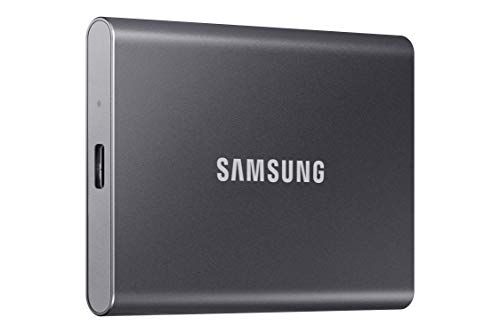
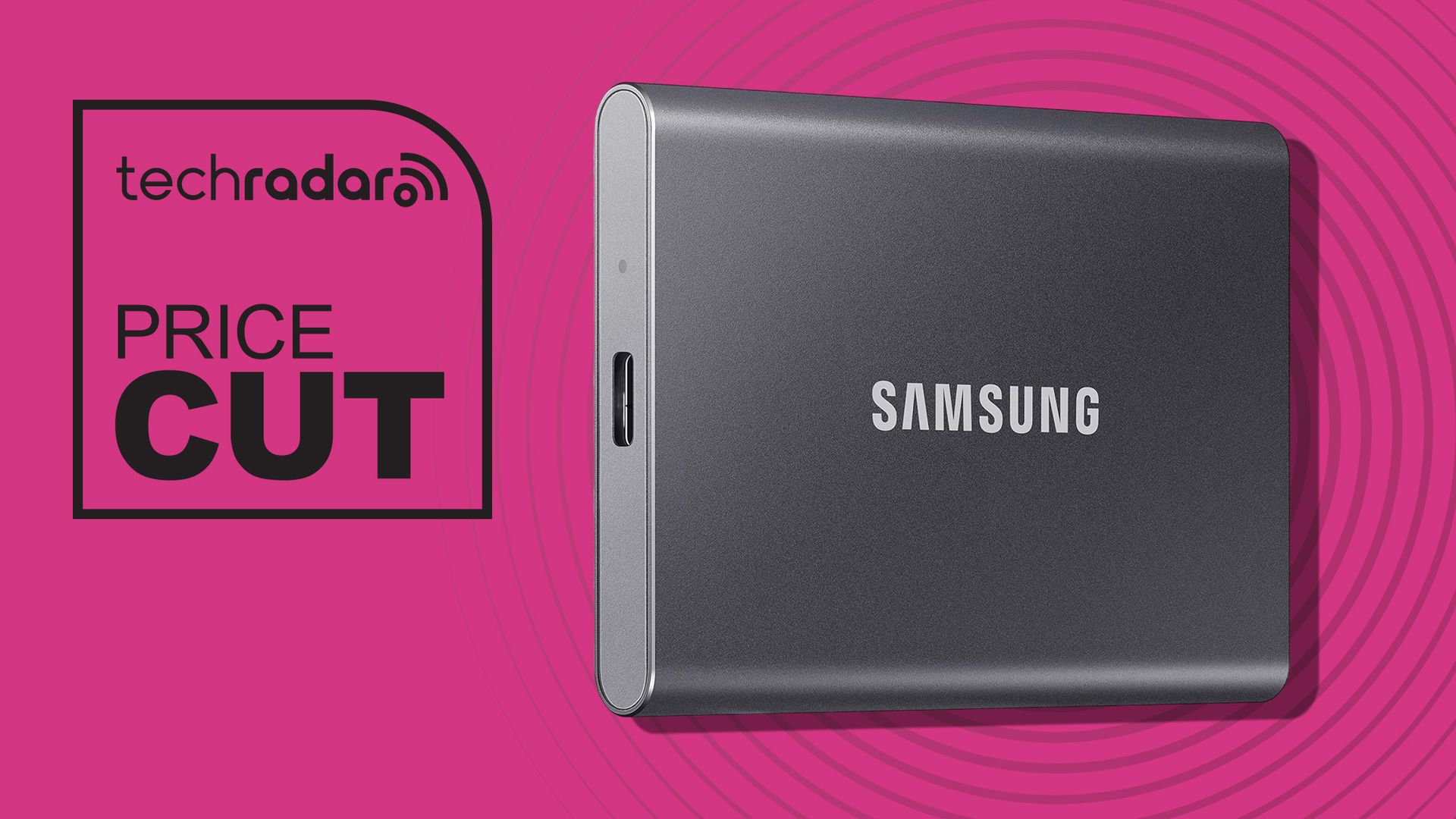
Samsung is behind some of our favorite portable SSDs, with the T7 being an excellent example. This incredibly versatile 1TB drive combines USB 3.2 Gen 2 connectivity with a durable aluminum enclosure.
• Best for: Professionals, students, photographers, and creators who need fast, compact external storage that can easily switch between modern devices.
• Why it matters: Samsung has consistently delivered an excellent range of portable SSDs. The T7 is a real classic of the range - compact, durable, and speedy enough for most users. It delivers read speeds up to 1,050MB/s and writes speeds up to 1,000MB/s, making large file transfers considerably quicker than with portable hard drives.
Today's best Samsung portable SSD deal
1TB T7 Portable SSD: was $274.99 now $229.99 This portable SSD provides 1TB storage, up to 1,050MB/s reads and 1,000MB/s writes, USB 3.2 Gen 2 connectivity, AES-256 hardware encryption, aluminum construction and six-foot drop resistance.View Deal
Why we recommend it
The T7 uses NVMe storage and USB 3.2 Gen 2 to deliver sequential read speeds of up to 1,050MB/s and writes of up to 1,000MB/s. Samsung supports recording compatible high-resolution video directly to the T7, including ProRes 4K at 60fps from supported iPhones. The aluminum drive measures just 3.3 x 2.2 x 0.3 inches, weighs around 2.1oz and is designed to withstand drops of up to six feet.
Price context & historical value
The reduction from $274.99 to $229.99 will save you 16%. That's a welcome price cut in 2026, but it's still expensive for a 1TB external SSD by historical standards. In 2023, before component prices began sky-rocketing, it was available to buy for just $64.99. I don't expect to see it that low again for a very long time, if ever.
You frequently move large files between devices and need something faster than a hard drive. The T7 supports 256-bit AES hardware encryption, which is useful if you'll be carrying important work or personal files about with you.
❌ Skip the Samsung T7 Portable SSDif...
Your priority is getting as much storage as possible for the money. You're paying a premium for the T7's combination of SSD performance, compact dimensions and portability, and a slower external drive will give you much more space for the same money, or probably even less.
Also consider
1TB Portable SSD: $159.99 This cheaper Sandisk alternative provides 1TB of portable storage, read speeds up to 1,000MB/s, two-meter drop protection and a pocket-sized design compatible with laptops and tablets.View Deal
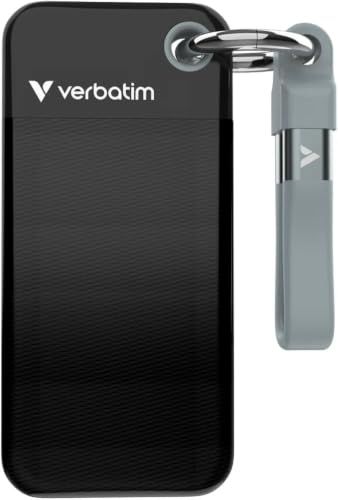
1TB Pocket External SSD: $139.99 This even cheaper Verbatim alternative provides 1TB of portable storage, read speeds up to 1,000MB/s, USB 3.2 Gen 2 connectivity, a keyring and a cable holder.View Deal
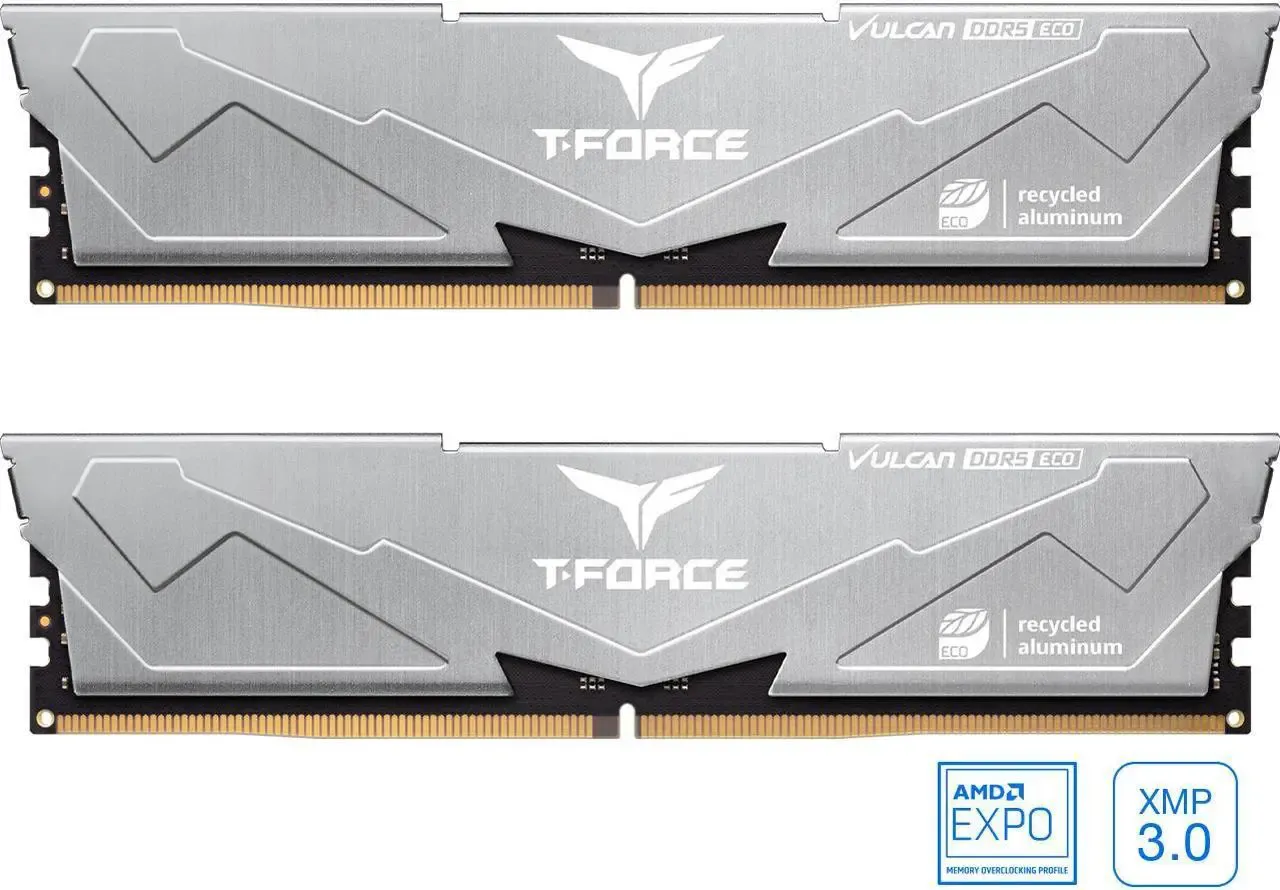
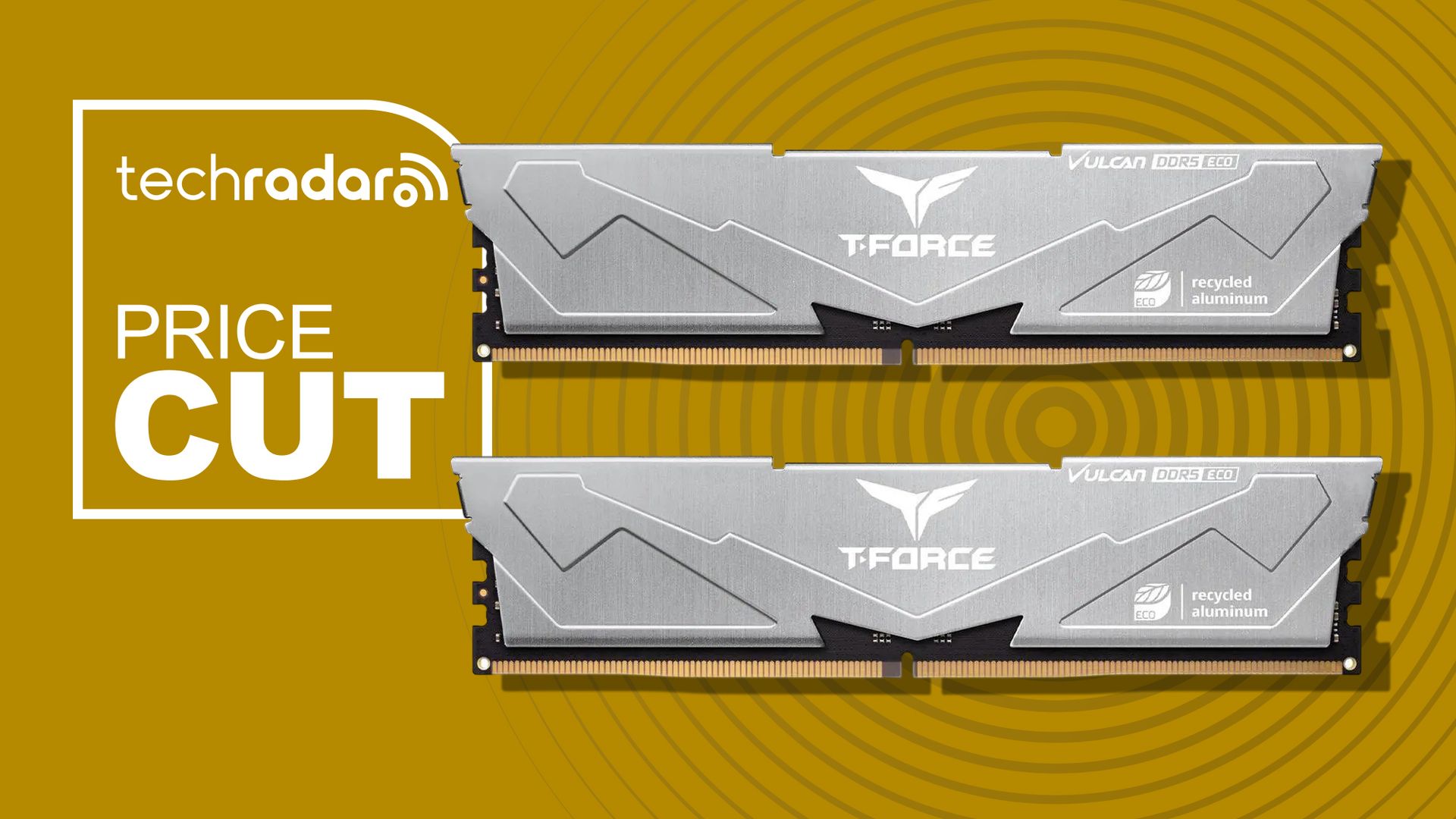
RAM prices have become increasingly painful during the 2026 memory crisis, making discounts on higher-speed DDR5 kits welcome. The 32GB TeamGroup T-Force Vulcan ECO offers DDR5-6400 speeds and support for both Intel and AMD performance profiles.
• Best for: Desktop builders who want 32GB of relatively fast DDR5 memory with support for both major performance-profile standards.
• Why it matters: DDR5-6400 provides much more theoretical bandwidth than slower DDR5 standards. You'll need compatible hardware and the appropriate XMP or EXPO profile enabled to reach the 6,400MT/s speed though.
Today's TeamGroup T-Force Vulcan ECO DDR5 deal
T-Force Vulcan ECO DDR5-6400: was $479 now $429 The Team T-Force Vulcan ECO includes two 16GB DDR5-6400 desktop modules with CL38 latency, 38-46-46-84 timings, 1.35V operation, silver heat spreaders, Intel XMP 3.0 and AMD EXPO performance profile support. For the full discount, use code TEF395View Deal
Why we recommend it
The T-Force Vulcan ECO gives you two 16GB DDR5 modules running at up to 6,400MT/s, with CL38 latency and 38-46-46-84 timings at 1.35V. It supports for both Intel XMP 3.0 and AMD EXPO, giving you flexibility when choosing a platform.
The modules include heat spreaders to help manage temperatures, and their silver finish is a stylish alternative to the usual black and white designs that dominate the desktop memory market.
Price context & historical value
Applying promo code TEF395 drops the price from $479 to $429, saving you $50, or around 10%. That's not an enormous reduction, but any money off is welcome in today's expensive memory market. This kit has been slightly cheaper at Newegg in the past though. Not so long ago it was available to buy for $415.99.
Should you buy it?
✅ Buy the 32GB TeamGroup T-Force Vulcan ECODDR5 kit if...
You're building or upgrading a DDR5 desktop and want a fast 32GB kit with support for both major performance-profile standards. At 6,400MT/s, the Vulcan ECO offers considerably more memory bandwidth than entry-level DDR5-4800 or DDR5-5200 kits, although the real-world benefit will depend on your setup.
❌ Skip the 32GB TeamGroup T-Force Vulcan ECODDR5 kit if...
Your current PC already has enough memory for everything you do, or your motherboard and processor can't take advantage of DDR5-6400. Given today's RAM prices, there's little reason to spend $429 unless you need the upgrade.
Also consider
32GB Vengeance DDR5-5200 White: was $508.99 now $407.99 The white Corsair Vengeance kit includes two 16GB UDIMMs rated for 5,200MT/s, CL40 latency and 1.25V, featuring aluminum heat spreaders, Intel XMP support and iCUE-controlled onboard voltage regulation.View Deal
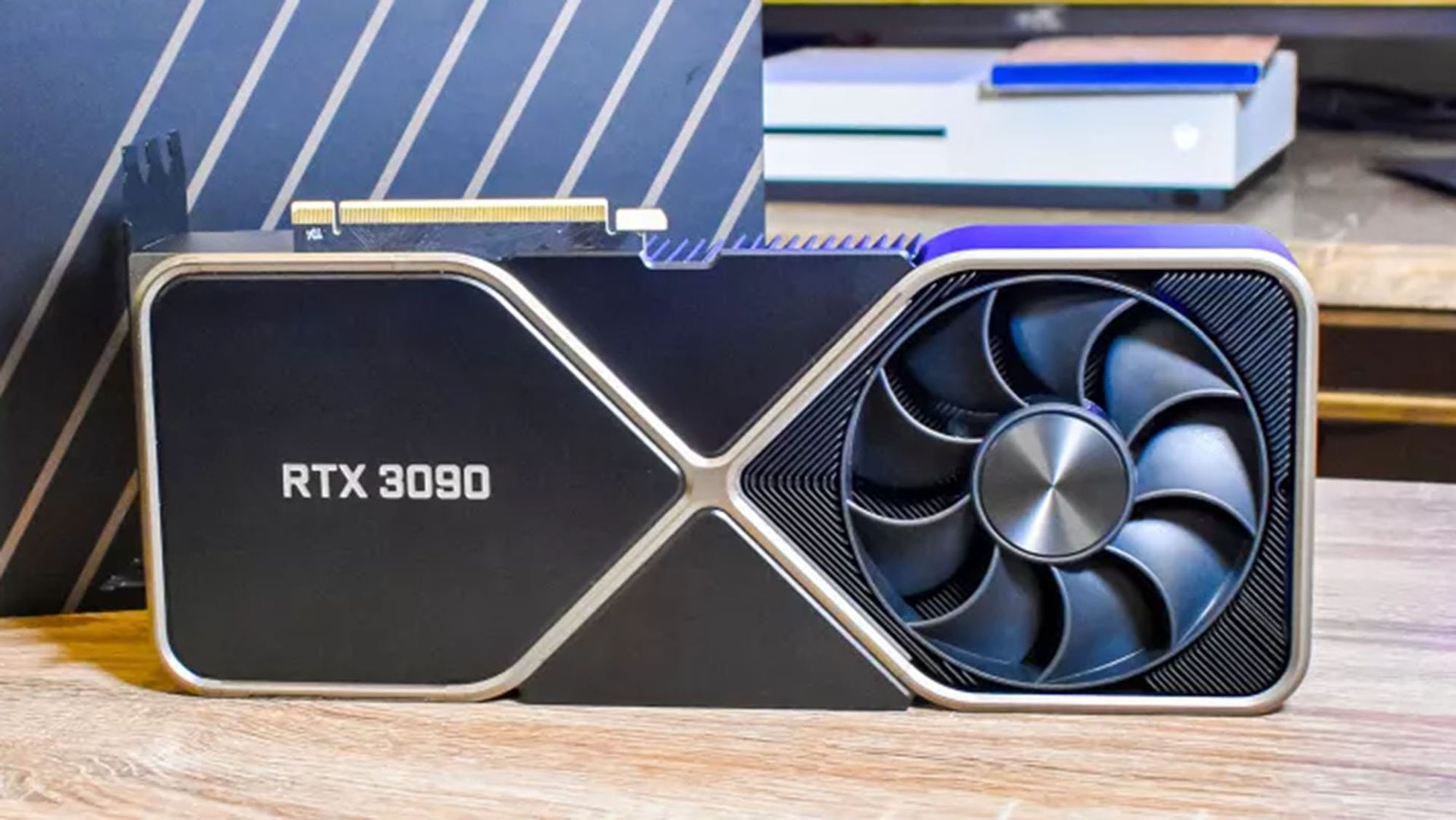
Nvidia Smooth Motion has been modded onto RTX 3000 series GPUs
The experimental mod allows driver-level frame generation in unsupported games
Nvidia hasn't officially implemented this and other features on older RTX hardware yet
Modders continue to find new ways to implement Nvidia's latest technologies on older hardware, and now it's been done with Team Green's driver-level frame generation.
As reported by Wccftech, Nvidia Smooth Motion has been unofficially made to work on RTX 3000 series GPUs, with a new NVSmooth30 mod available on GitHub, confirmed to work on an RTX 3050 laptop and an RTX 3080 desktop GPU.
Nvidia's Smooth Motion functionality is essentially identical to AMD's Fluid Motion Frames, meaning that it enables frame generation in games that don't have official support for it — a tool that is most useful for older games or games running in emulators.
The mod works by modifying Nvidia's driver-level frame generation DLL (Dynamic Link Library) file, labeled NvPresent64, bypassing the usual compatibility checks that would stop it from working on Ampere GPU hardware, aka RTX 3000 series GPUs. It also works by "conservative metadata retargeting" from Ada Lovelace (RTX 4000 series) and targets Ampere instead.
The creator says that all users need to do is place the DLL file into the relevant game's folder and use the Nvidia Profile Inspector app to enable Smooth Motion. The process is very simple, but this is an experimental project, so it runs the risk of game bugs and crashes, or potentially other issues — and must not be used in online games using anti-cheat (doing so could result in a ban).
Gamers want new features, but new GPUs are unaffordable
(Image credit: Future / John Loeffler)
Nvidia has been quite impressive with its latest technologies, notably with DLSS 5 Neural Rendering (which I saw at Gamescom 2026), and Smooth Motion has been one of many over the last few years.
The GPU market is in complete disarray due to the RAM crisis, which means prices for GPUs for both AMD Radeon and Nvidia GeForce GPUs are way too high for most people to consider an upgrade. Features like Multi-Frame Generation, Dynamic Frame Generation, and Smooth Motion are those that PC users would love, but can't use on older hardware.
Modders have consistently proved that these features can be backported in some way, with some even going as far as porting DLSS 5 onto the RTX 4080 (despite the performance hit).
DLSS 5 Neural Rendering coming to older hardware in the immediate future is unrealistic — but Nvidia has previously told me that it does plan on adding backwards compatibility at some point, though it's likely to come to 4000-series models first, and then we'll have to hope for 3000-series later in the future, if it's even possible.
But it feels as though features such as Frame Generation, and specifically Smooth Motion, deserve backporting attention now more than ever, as users are stuck with older GPUs.
Doing so would put Team Green in the good books of many PC gamers, and keep players from relying on unofficial mods to achieve better performance and enjoy GeForce hardware to the fullest extent.
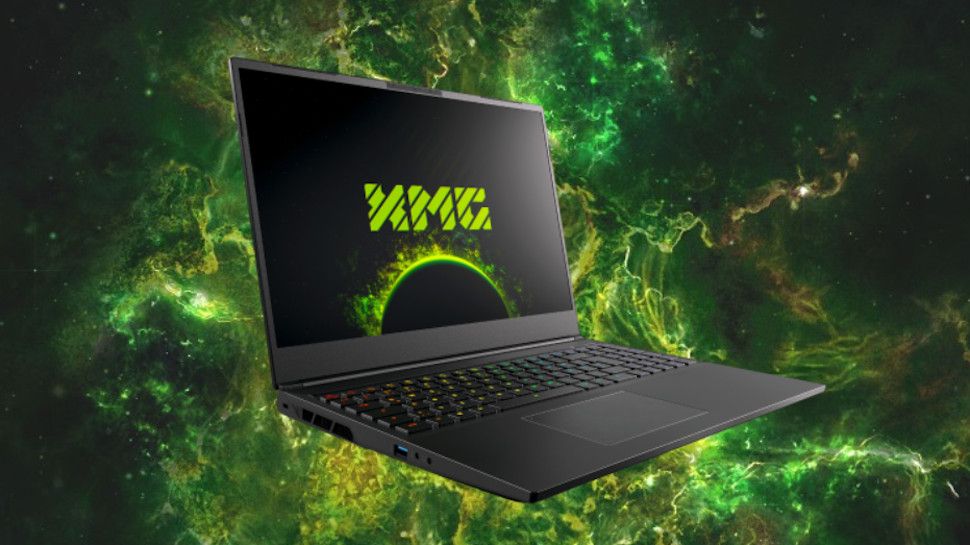
XMG has announced price rises for its laptops due to the increased cost of components
The laptop maker points out that DDR5 RAM for laptops is now close to 6x the price it was before the memory crisis
We're also hearing that Micron has pulled the plug on its 2GB modules of GDDR7, and Nvidia's supply of VRAM could feel an impact from this
The RAM crisis sadly keeps rolling on and finding fresh pricing misery to heap on us, and that includes new laptop hikes and a hint that Nvidia GPUs could be in yet another spot of bother.
VideoCardz spotted the development with laptops, as manufacturer XMG announced on Reddit that its notebooks are subject to price hikes of either €100 or €150 for most models, or €300 in one case (that's for a Schenker portable, which is XMG's parent company, so it's all under the same umbrella).
Some laptop upgrades have got pricier, too, with a €120 premium on an RTX 5090 configuration, and as XMG observed: "The reason [for the price rises] is another increase in purchasing costs. This is no longer just about RAM and SSDs: PCBs, electronic components, CPUs, graphics cards and video memory are also contributing to the higher cost level."
In other words, everything is subject to price inflation, including the motherboard and associated chips, as well as the mentioned key components.
XMG highlighted data drawn from Geizhals (which tracks German retail prices) showing that DDR5 RAM for laptops is close to 6x the price it was before the memory shortage began (in mid-2025).
The laptop maker also made it clear that discrete GPUs and GDDR7 video memory have become more expensive, as have the prices of AMD and Intel laptop processors.
Also on the subject of GPUs, Wccftech reports that another slight worry is that Micron is no longer making 2GB modules of GDDR7 video RAM which are used in some Nvidia RTX 5000 GPUs.
Uniko's Hardware flagged up this news in a post on X, noting that these chips have "reached end of life" and that this is the case for all Micron 2GB modules, with only 3GB GDDR7 chips now listed on the memory maker's website.
the micron gddr7 28gbps 2gb chip d8fhl (MT68A512M32DF-28:A) used on some rtx50 cards, has reached end of life.in fact, all micron 2gb g7 chips listed on their website are now eol, leaving only 3gb options avaliable. https://t.co/W70J3DMYGS pic.twitter.com/ltj6Sab6MfSeptember 22, 2026
With Micron apparently no longer supplying Nvidia with those 2GB modules, that means more of a squeeze on the availability of video memory for RTX 5000 graphics cards, at least in theory. This could hit stock levels and put a bit more pressure on pricing (which is already climbing fast).
Analysis: yet more pressure
(Image credit: XMG)
We need to season the claims around Micron here, as this isn't a definitive statement from the company itself, and more to the point, it's only a minor supplier for Nvidia's gaming GPUs. Team Green gets the majority of its GDDR7 from Samsung and SK Hynix, and so the impact here should be relatively slight.
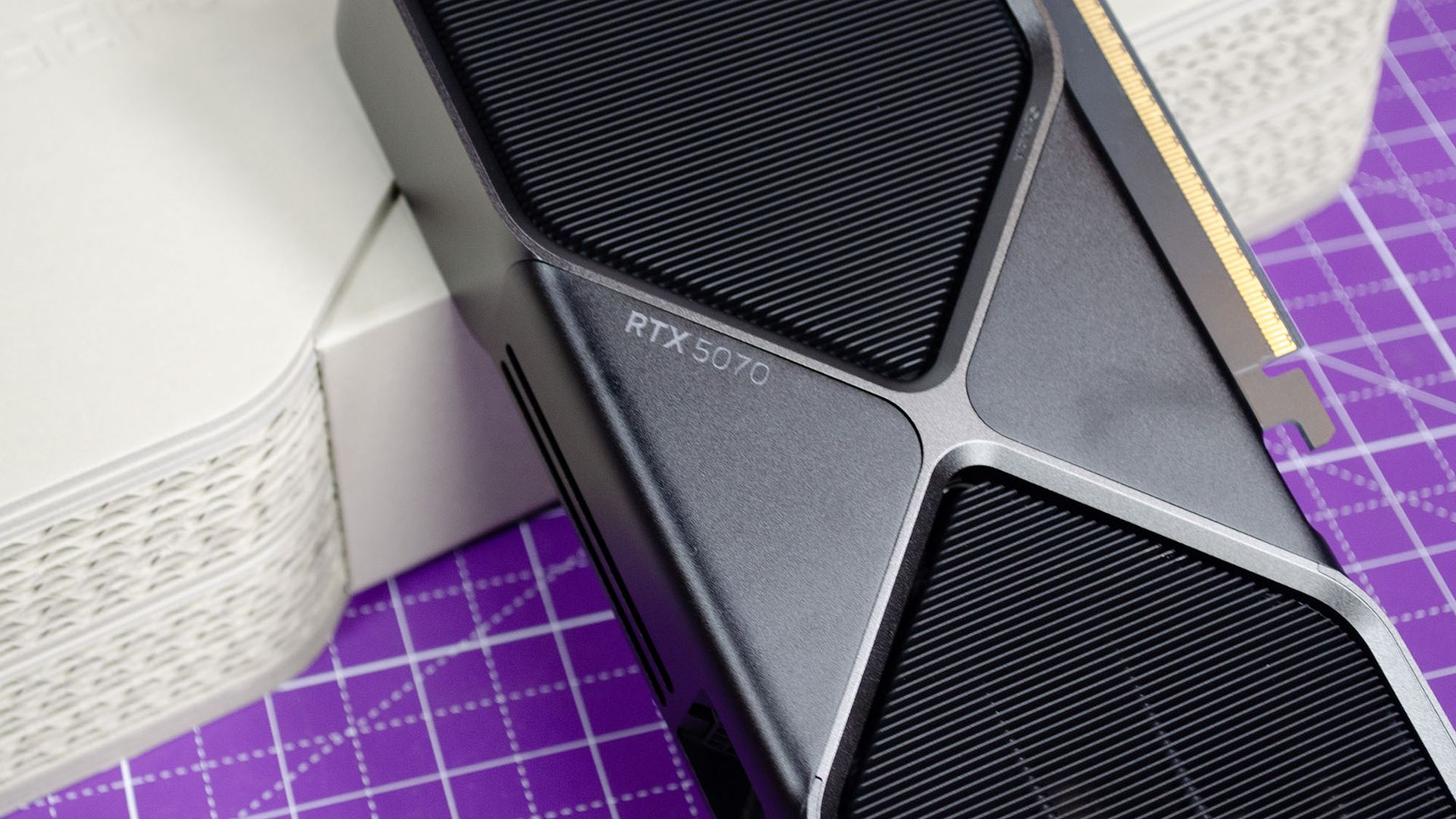
However, I'd argue that any impact is bad news given the current climate which is rapidly worsening for GPUs, particularly those from Nvidia which are heading upwards at a rate of knots for some models. The RTX 5090 has got completely ridiculous, the RTX 5080 is similarly out of hand, and even the RTX 5070 is now feeling the pricing heat, with a 30% price rise compared to two months ago in the US (and a similar picture elsewhere).
So, even small extra pressures are really not going to help Nvidia's GeForce GPUs here.
As for the laptop price hikes, this is a sign of the RAM supply times, and XMG is following other makers who have had to jack up prices (like Dell for example, which just bumped up the XPS 13 in a roundabout way).
It's a commendable level of transparency from XMG here, with the company making it clear that it isn't turning any extra profit from these laptop price increases. XMG also observed that other factors are in play with increased costs for notebook makers, and that includes rising air freight costs (due to conflicts in the Middle East) and difficulties with shipping by sea, too.
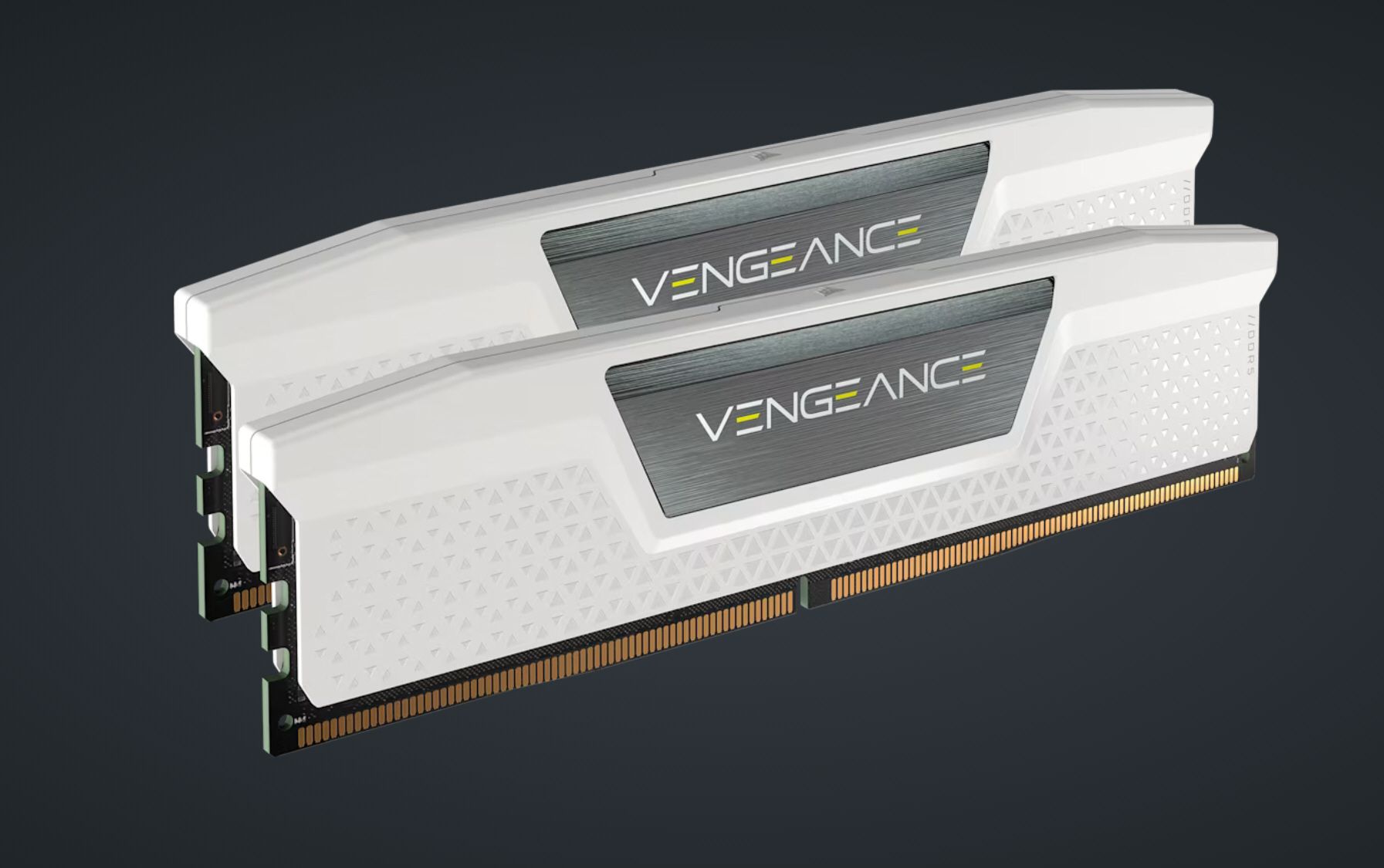
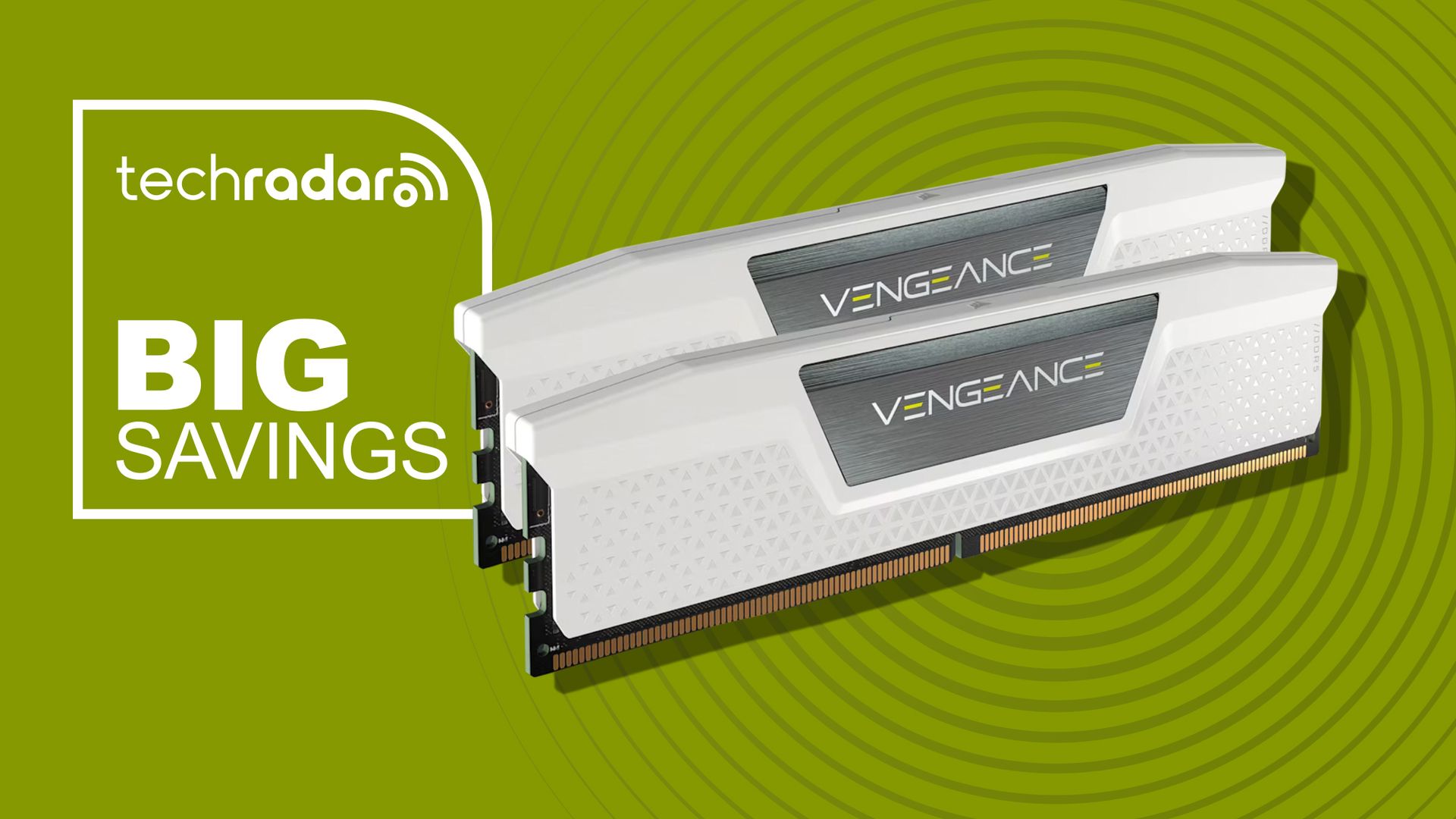
With memory prices soaring throughout 2026, upgrading your desktop PC has become increasingly expensive. Fortunately, there are still decent occasional discounts to be found, including this offer on the stylish white Corsair Vengeance 32GB DDR5 memory kit.
Best for: Desktop PC owners who need 32GB of DDR5 RAM for demanding productivity, creative applications and extensive multitasking.
Why it matters: With RAM prices remaining super-high in 2026, a $100 discount is decent news anyone planning a desktop memory upgrade. Hitting the advertised speed requires compatible hardware and enabling the appropriate XMP settings.
32GB Vengeance DDR5-4800 White: was $508.99 now $407.99 The white Corsair Vengeance kit includes two 16GB UDIMMs rated for 5,200MT/s, CL40 latency and 1.25V, featuring aluminum heat spreaders, Intel XMP support and iCUE-controlled onboard voltage regulation.View Deal
Why we recommend it
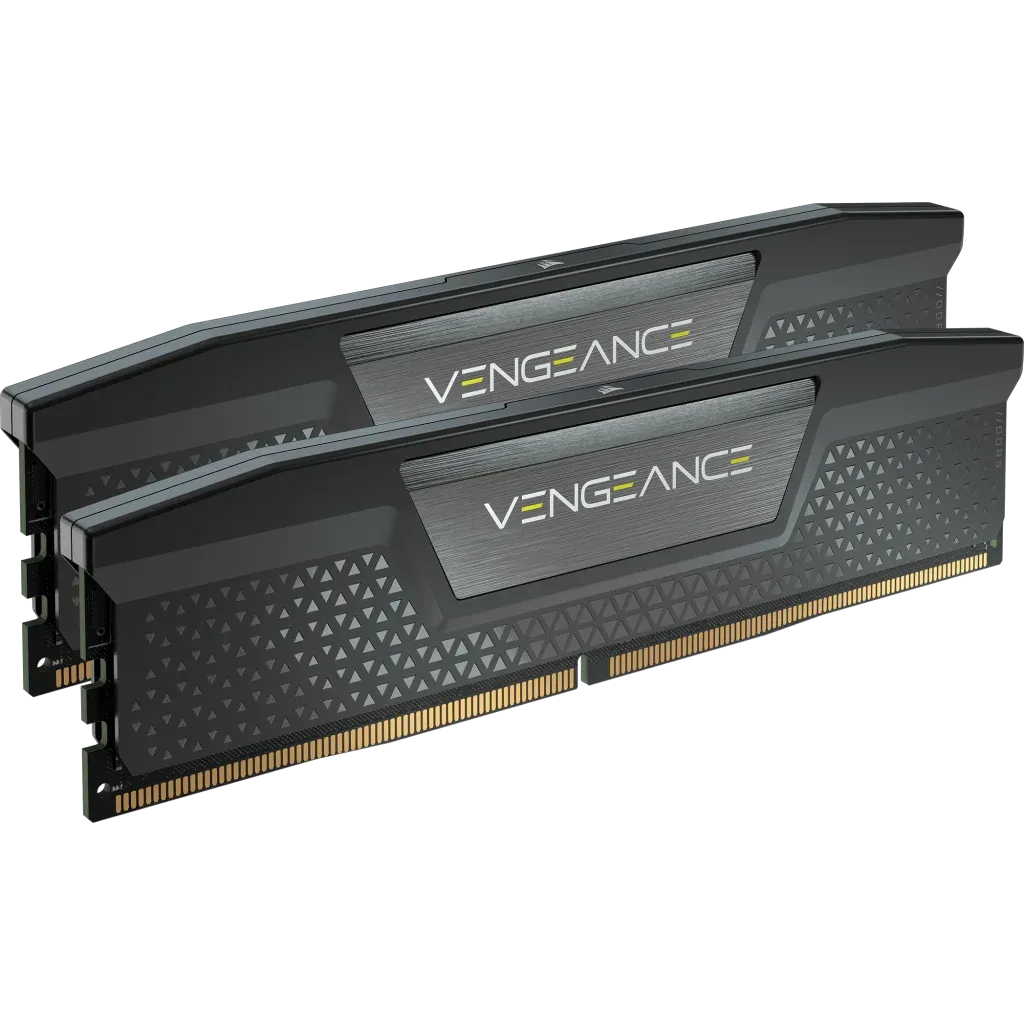
This Corsair Vengeance kit includes two 16GB DDR5 modules. Running at up to 5,200MT/s with CL40 latency, the modules feature aluminum heat spreaders to manage temperatures. Their compact, low-profile construction makes them suitable for desktop builds where larger memory modules could interfere with CPU coolers.
Corsair has optimized the kit for Intel motherboards, with compatibility covering Intel 600, 700 and 800 series platforms. The white finish is a decent attraction if you're building a color-coordinated desktop with a window in the case.
Price context & historical value
The discount from $508 to $407.99 knocks just over $100 off the current price, equivalent to saving almost 20%. The wider memory market has experienced huge price increases during 2026, so any sizable discount is worth considering, even if it's still very expensive compared to last year.
Should you buy it?
✅ Buy the 32GB Corsair Vengeance White DDR5 kit if...
You accept that pricing is through the roof and modern deals don't compare with last year's costs. This is a good offer if want more control over your desktop's memory configuration and are comfortable tweaking performance settings. The kit supports Intel XMP profiles, allowing compatible systems to apply its rated memory settings without manually entering every timing and voltage parameter.
Built-in voltage regulation provide additional control for anyone looking to fine-tune their systems.
❌ Skip the 32GB Corsair Vengeance White DDR5 if...
You're assembling a budget desktop or upgrading an older system that doesn't support DDR5. Given current prices, it's worth checking whether your existing memory genuinely limits everyday performance before spending more than $400 on an upgrade.
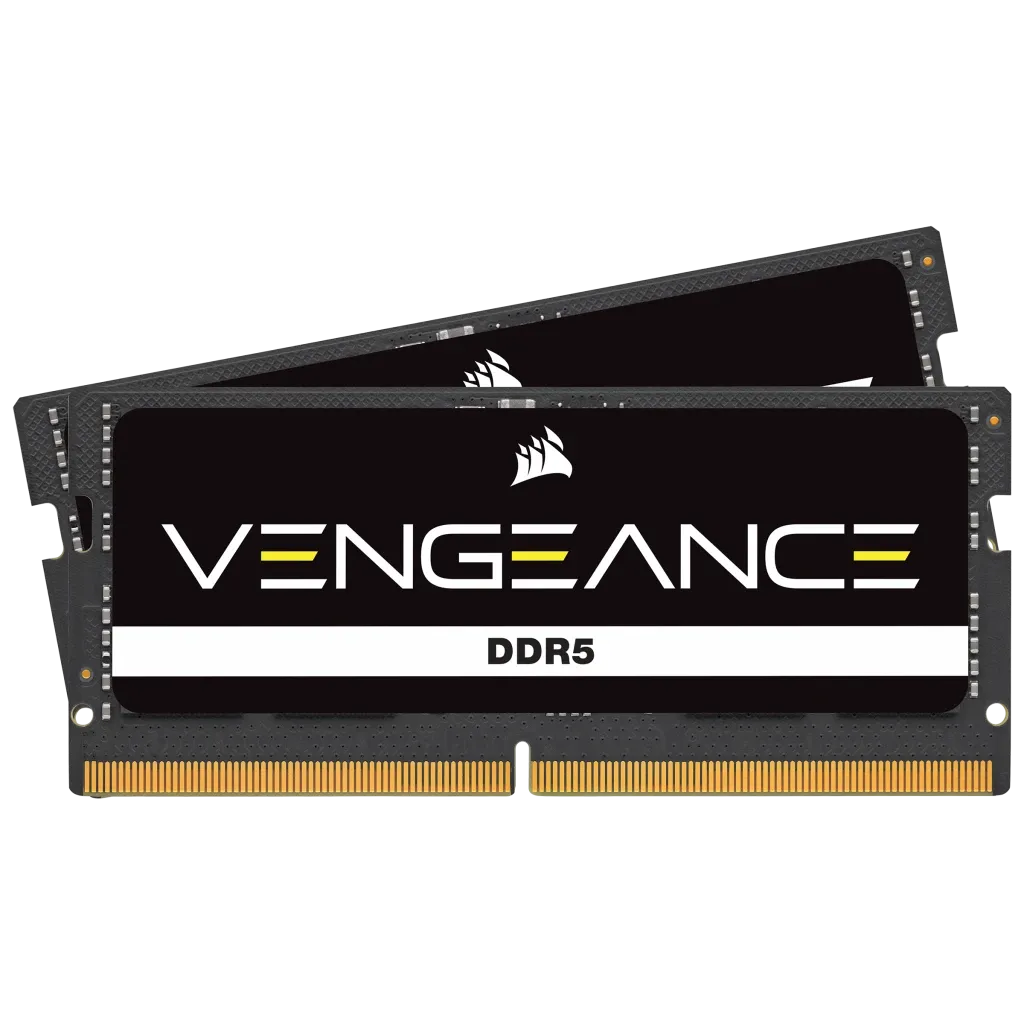
At a time of soaring memory prices, Corsair has discounted plenty of its laptop and desktop PC DDR4 and DDR5 RAM. That includes its 32GB Vengeance DDR5 SODIMM kit.
• Best for: Anyone upgrading the memory in a compatible laptop or small-form-factor PC. It's particularly useful for heavy multitasking and memory-intensive creative applications.
• Why it matters: You get two 16GB DDR5 modules running at 4,800MT/s with CL40 latency and low 1.1V operation, with straightforward installation and a limited lifetime warranty. The maximum speed depends on the laptop or PC, its processor and motherboard, and Corsair's own information talks about about BIOS adjustments and overclocking being required in some cases.
Installation should be straightforward in systems with accessible SODIMM slots. Corsair says compatible computers can automatically operate the memory at its supported speed without requiring manual BIOS configuration.
Each module is tested at 4,800MT/s with CL40 latency. Corsair also individually screens and tests the modules and backs the kit with a limited lifetime warranty.
Price context & historical value
The reduction from $496.99 to $397.99 knocks $99 off the regular price, equivalent to a saving of almost 20%, which is pretty good in these days of sky-high memory prices.
If you own a time machine, you can nip back to 2024 where you'll find it selling as low as $69.99 at B&H. It was also available for $279.99 at Amazon earlier this year, but it's $397.99 (like Corsair is offering) right now.
Should you buy it?
✅ Buy the 32GB Corsair Vengeance DDR5 SODIMM kit if...
Your compatible laptop or compact PC currently has 8GB or 16GB of memory and that's increasingly proving to not be enough. Moving to 32GB can provide considerably more headroom for demanding workloads and multitasking.
❌ Skip the 32GB Corsair Vengeance DDR5 SODIMM kit if...
Your computer's specifications don't match. You need DDR5 SODIMM slots, and Corsair specifically lists compatibility with 13th Gen Intel Core or newer systems. Maximum supported capacity and memory speed also depend on your particular CPU and motherboard.
Acer's CEO claims RAM supply is still "quite large"
Jason Chen does acknowledge that PC prices will rise in Q4, though, by up to 20% on average
However, those prices will fall by mid-2027, the CEO predicts, asserting that: "It's impossible for the shortage to last until 2030!"
Not everyone is being totally downbeat about the RAM crisis, with Acer's CEO stating that he's hopeful that PC prices will drop from the middle of 2027, even if price rises are on the cards for the rest of this year.
VideoCardz higlighted a (translated) report from Taiwan's Economic Daily News that shares the most recent thoughts of Jason Chen, chief executive of Acer, on the RAM crisis.
Chen asserts that there isn't much of a DDR4 and DDR5 memory shortage at present, and that the "supply is quite large" for this RAM — we must bear in mind there may be some nuances lost in translation there — and also that there isn't much shortage of processors either.
The CEO does acknowledge that the prices of components are currently "fluctuating" at a high level, and that PC prices will continue to climb in the fourth quarter of 2026, with an average price rise of between 5% to 20%.
However, the good news, according to Chen, is that he believes PC prices should drop from mid-2027, and with more chip production coming online — especially in China — the memory shortage won't last for the rest of the decade.
Chen is pretty firm on that one, claiming that, "It's impossible for the shortage to last until 2030!"
Analysis: new hope for some stability?
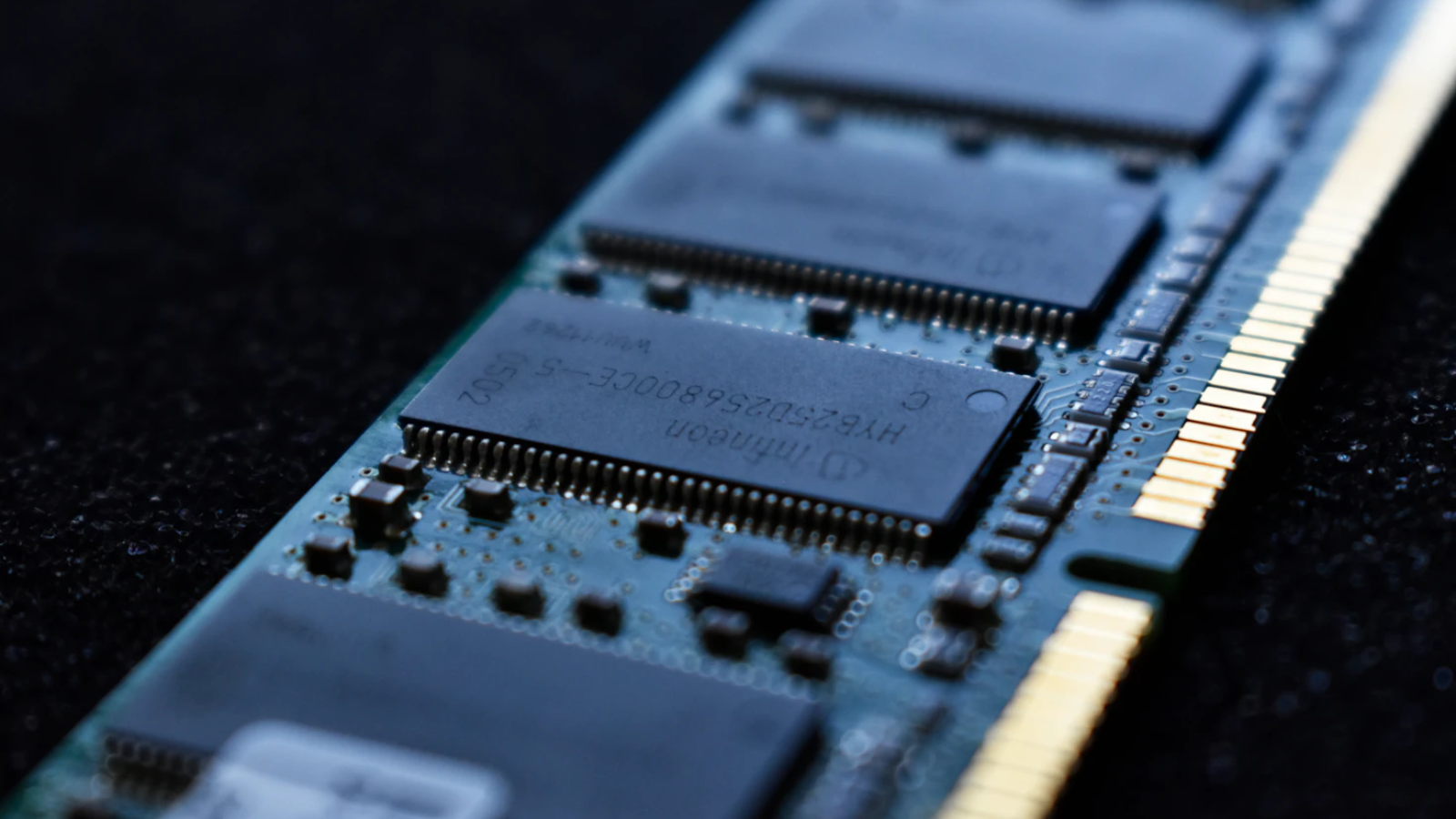
(Image credit: Unsplash / Liam Briese)
As to whether there isn't much of a RAM shortage currently, almost everyone else begs to differ on that — although I accept that Chen's meaning may be altered in translation somewhat here, as noted, and perhaps the gist is that supply isn't as bad as some in the industry would have you believe.
Whatever the case, Chen is clearly sounding a more optimistic note than most. There have certainly been some analysts and prominent industry figures who are suggesting that the RAM crisis will indeed last until 2030, and those are the people who Chen is clearly directing that last comment at. The CEO does appear to be talking more about the Chinese market than the global picture here, though, and we should also bear that in mind.
Still, it's a relief to hear some more positive thinking on the RAM crisis, although there's one point that everyone can agree on: namely that prices are going to rise over the rest of 2026 and into 2027. Even Chen's predicted fall in PC pricing isn't forecast to come about until the middle of next year, and so for the time being, it's clear enough that we're stuck with rising prices.
It's been over four years since Intel Arc graphics made their debut. Team Blue, primarily known for making some of the best processors of all time, had made its second big swing against the best graphics cards. Alchemist had promise from a price-to-performance perspective; the A-series impressed with budget-friendly performance in 1080p and 1440p with the Arc A750 and Arc A770, respectively, despite some driver issues and (initially) a lack of developer support.
Everything changed with Battlemage. Intel's second-generation Arc graphics cards received higher praise, with far superior generational performance, rivalling the best cheap graphics cards. In particular, the Arc B570 was a powerhouse for 1080p gaming with its $219 / £219 MSRP, and the Arc B580 confidently earned a perfect review from us with its all-star 1440p performance for just $249.99 /£249.99. However, that was some time ago.
Now, nearing the end of 2026, the concept of a cheap video card, or a true graphics card deal, is (sadly) extinct. You can expect to pay double (or more) for a B580 that made waves due to its value proposition just two short years ago, lessening the impact of an otherwise excellent GPU. Team Blue has reportedly canceled its Celestial range of discrete graphics cards, and the future of Druid (the codename for Intel's fourth-generation GPU) and beyond is uncertain.
Has Intel abandoned the dedicated GPU market to go all-in on the likes of its G3 Extreme chip found in the best gaming handhelds? Moreover, is there still hope for a third major competitor during the worst time to build (or buy) a gaming computer in recent memory?
What were Intel's original plans for Celestial?
(Image credit: Future)
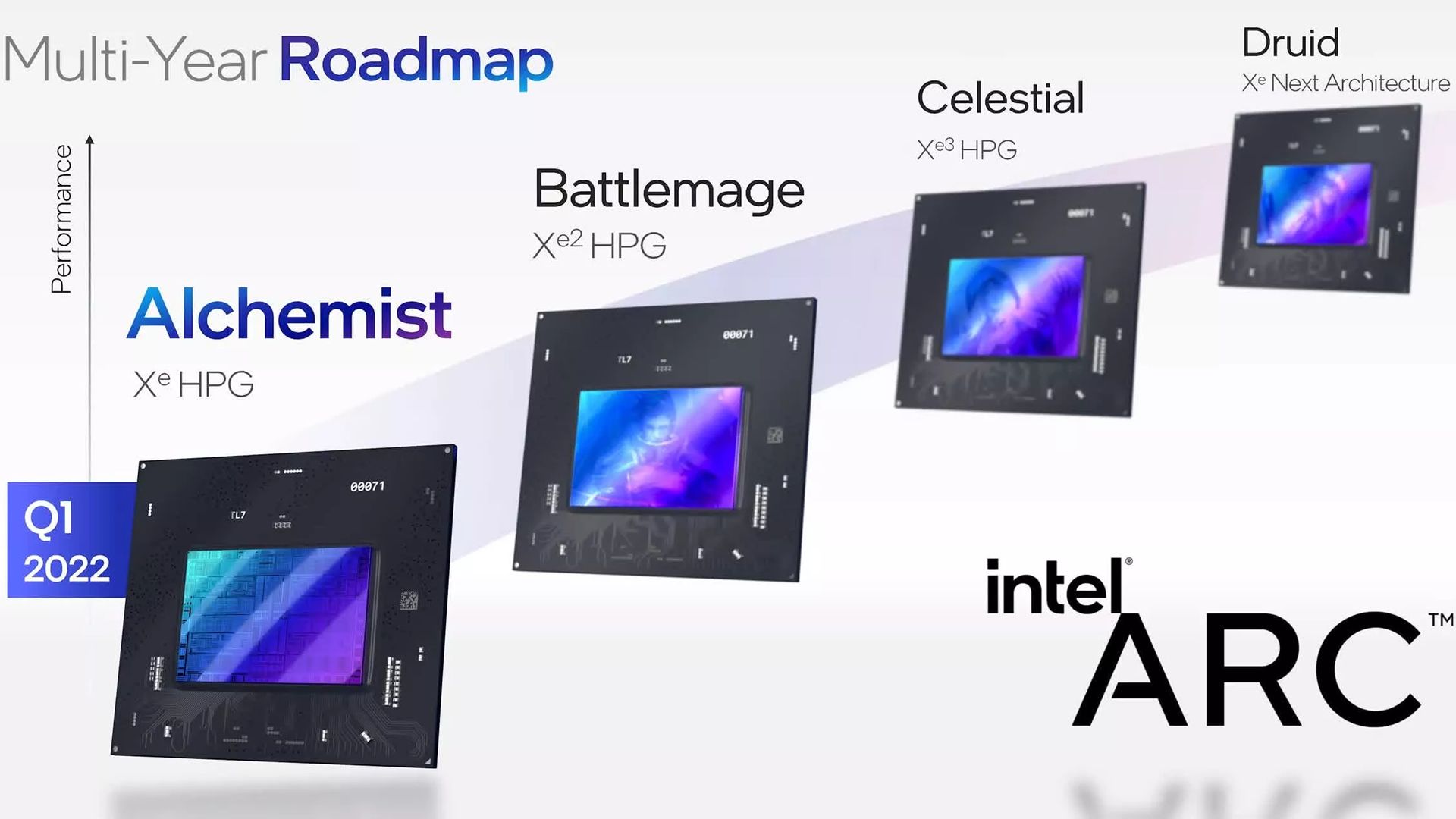
When Intel Arc was originally announced more than five years ago, Team Blue confidently laid out its "Multi-Year Roadmap", with Alchemist (A-Series) slated for Q1 2022, a goal the company only just achieved as the initial GPU lineup dropped on March 30. With that said, no dates or timeframes were confirmed for the second, third, and fourth generations of its Xe platform.
Intel Arc Battlemage (B-series) graphics cards were officially launched on December 3, 2024, meaning almost three years (or two years and eight months) had passed between the two Xe generations. This release schedule is fairly standard for GPU launches; Nvidia launched the Blackwell-based RTX 50 series on January 30, 2025, with the RTX 5090 and RTX 5080, succeeding the RTX 40 series that debuted on October 12, 2022, with the then-flagship RTX 4090 (two years and three months).
It's nearing the time when we should start hearing about Intel Celestial, especially given just how well-received Battlemage was, and yet there's radio silence from Team Blue. More specifically, speculation around The C-series' cancellation were sparked from rumors dating back to April. Specifically, it was hardware leaker Jaykihn on X who alleged that "Celestial was canned long ago" and that "Druid is up in the air".
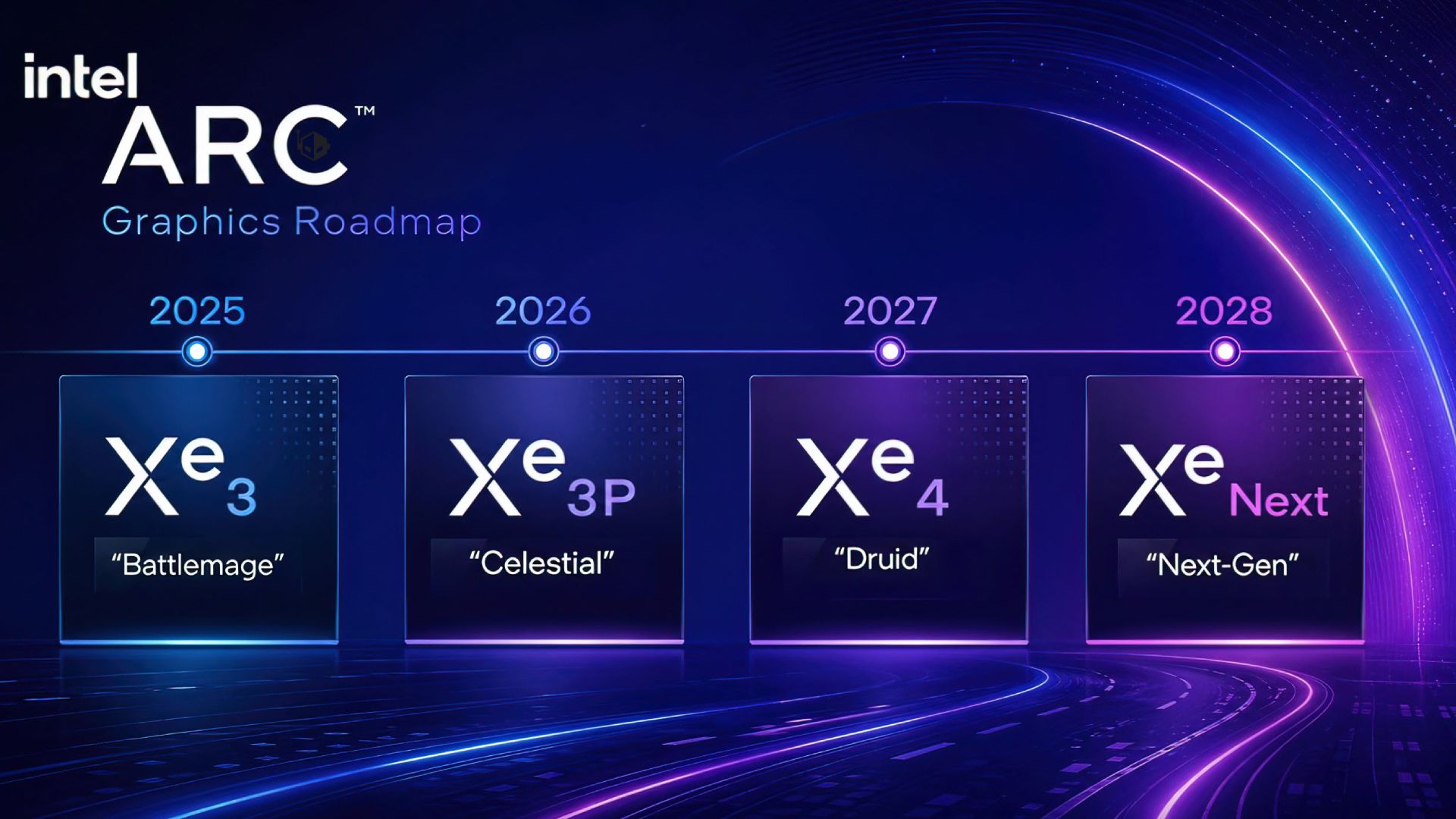
If we look at the updated Intel Arc Graphics roadmap, the company alleged that the Xe3P Cestial graphics cards should have been arriving in 2026.
What happened to Intel Celestial?
(Image credit: Intel)
Intel had clearly stated in 2025 that next-generation Xe3 Battlemage graphics would arrive that year, and then year-on-year we would receive Xe3P with Celestial in 2026, Xe4 with Druid in 2027, and Xe Next, the "Next-Gen," in 2028. So what actually came of these claims? So far, so good, as the B-series is integrated into the latest G3 family.
As well as the Intel 18A-based Compute Tile (14-core with NPU 5 and up to 8,533 MT/s LPDDR5x memory), it also uses the Xe3 architecture for its 10-12 Xe-cores, 10-12 RT units, and 80-96 XMX AI Engines, whether it's the standard or the G3 Extreme variant. In other words, Intel has decided to renew Battlemage for a third year running, with no apparent space (or need) for Celestial at this time, at least for the purpose of dedicated gaming.
It's alleged that Xe3P architecture (Celestial) is being baked into the upcoming Intel Nova Lake processors. More specifically, the C-series could be entirely relegated to integrated graphics onboard certain incoming chips rather than powering discrete graphics cards.
This is claimed to be the case with the Nova Lake-S lineup, which is said to be a 16-core CPU with a 12-core Xe3P iGPU forged on the silicon, unlike other Nova Lake processors that could feature just two Xe3 cores.
While Xe3 is already being used in gaming handhelds powered by the G3 and G3 Extreme, the combination of both Xe3 and Xe3P in Nova Lake could be where Celestial lives. It's been rumored that the extra performance of the newer-generation cores could be primarily for driving the Visual Engine rather than being used for anything more intensive. Revealed at Hot Chips 2026, Intel announced that Xe3P would be powering its Crescent Island AI GPUs. At the moment, then, it seems that Team Blue has no interest in bringing over Celestial tech for gaming.
Battlemage isn't worth the price anymore, and Intel needs to learn from this
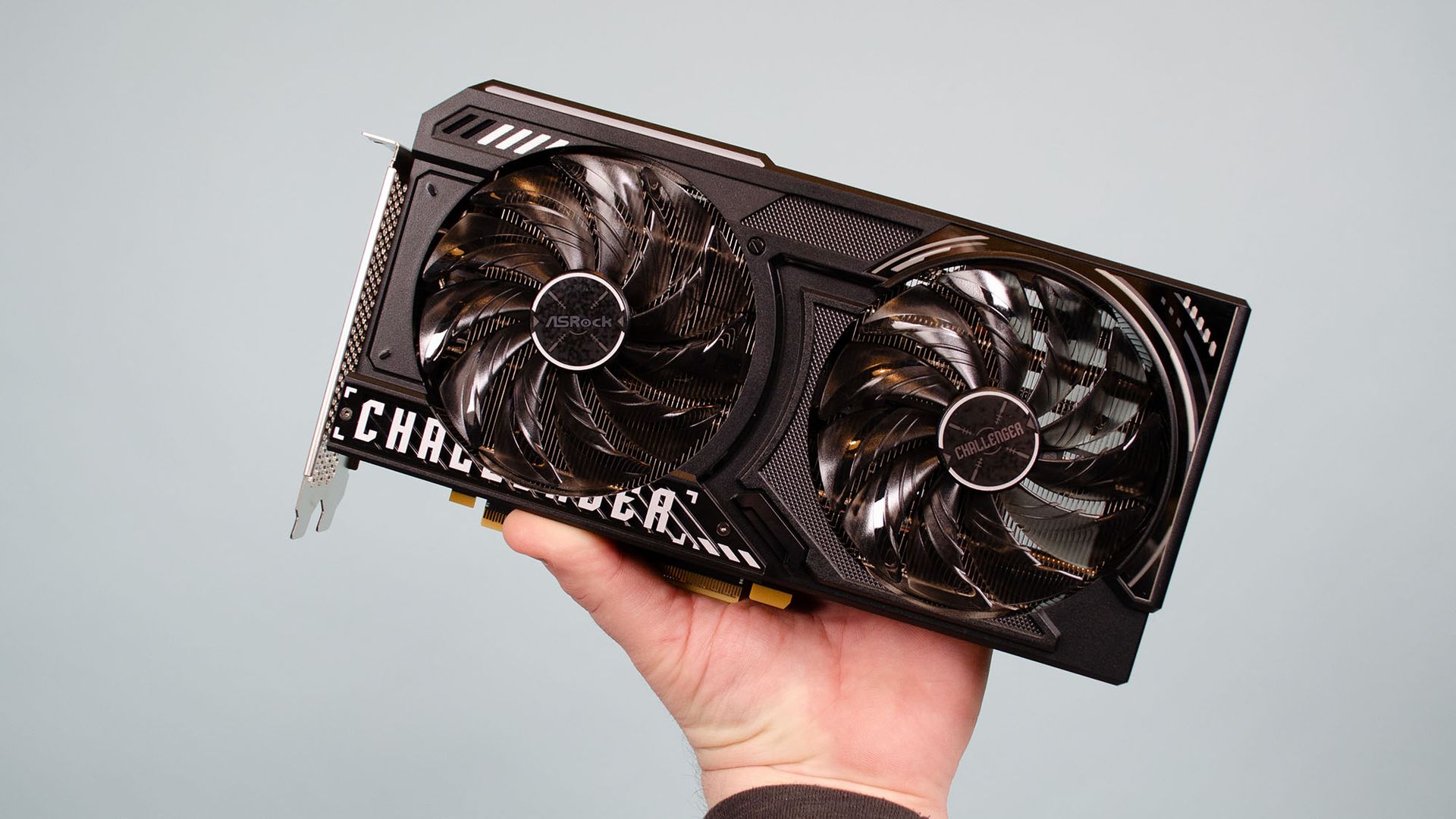
(Image credit: Future / John Loeffler)
There's no easy way to say this: Intel Arc isn't worth the inflated asking prices. While the two main Battlemage graphics cards initially won favor with us and the general gaming public, the value proposition simply isn't justifiable this late in 2026. As touched upon above, both entry-level GPUs have doubled in price, and it's really hard to see the justification against a considerably stronger graphics card like the RTX 5060 and RX 9060 XT.
The average Arc B580 GPU nowadays costs around $330 / £340 for the 12GB variant from Intel's board partners such as ASRock and Sparkle. That gets you the current top-end Battlemage card with a 192-bit memory bus, 12GB of GDDR6 memory, and a total of 2,560 GPU cores.
However, for around the same price, you can also opt for an RTX 5060 8GB, or bump your budget up to around $400 / £400 for the far more capable RTX 5060 Ti instead. The former has a smaller 128-bit memory bus, although it benefits from 8GB of GDDR7 memory and 3,840 CUDA cores, whereas the latter comes with the same bus width but with up to 16GB of GDDR7 VRAM and 4,608 CUDA cores. Which one would you pick when weighing up a cheap gaming PC build?
Let's forget the tech specs and instead look at the performance numbers laofcct. According to testing conducted by Mark PC, both the similarly priced RTX 5060 and RX 9060 XT. We see this in countless examples with the demanding PC games tested, such as The Last of Us Part 1, Cyberpunk 2077, Assassin's Creed Valhalla, and Starfield; all of these games had superior average framerates from the AMD and Nvidia GPUs when benched in 1080p at max settings.
Druid is Intel's last chance at remaining in the gaming GPU market
Intel's XeSS 3 MFG is genuinely impressive. The tech is there, it just needs to be handled properly. (Image credit: Intel)
If Celestial is truly canceled (or relegated to an obscure APU), as has been claimed, then all hopes hinge on Druid and its Xe4 architecture, which is slated to be released in 2027. "Up in the air" really is an understatement with Team Blue's plans for its proposed fourth Arc generation; there's nothing circulating about this tech at all, which is rare considering the usual slate of rumors and speculation that usually whir up a year or so out from release.
The only real sliver of information that points to Team Blue still being in the GPU race at all comes from Alex Katouzian, Intel EVP and GM of Client Computing, who spoke to Dutch tech site Tweakers during Computex 2026. Katouzian is quoted as saying: "GPUs are a super important part of our PC product range" and "the traction of our GPU cores is really very good". It's a non-answer to a tough question that doesn't really give any indication as to what the company is planning; typical corporate speak to cover up the fact that it may have no idea where (or if) Druid has a future at all.
Worst-case scenario, then. Let's say Celestial is properly canned, but that Intel gives Druid a shot as a last-ditch effort to save the fledgling Arc graphics division in its dedicated form. Following the same blueprint as its last two GPU generations, a prospective launch of the D570 and D580 would need to be 12 to 16GB GDDR6X at a minimum, be built with XeSS 3's MFG in mind for 1080p to 1440p gaming, and still retail new for $250 to $350, respectively. Is this really something that can happen in 2027 with the price of graphics cards continuing to rise? I remain unconvinced.
There's a pathway for Intel to win back favor and consumer trust with a line of affordable graphics cards that deliver playable results for today's games. However, given the dire state of the industry and some truly puzzling top-level decision-making over the last two years, it just doesn't seem like things can be salvaged here. I would love to be wrong; more competition and consumer choice are always good for business, particularly if it means showing Nvidia the true meaning of budget and mid-range, but is Intel really the company to do that in 2027 and beyond? It's unlikely.
Industry insiders in the supply chain indicate that a rise of around 10% will be applied across AMD's "entire chip line"
This means GPUs and processors, as well as motherboards, and the hike is expected in Q4, so it could happen next month
AMD's processors and graphics cards could soon get more expensive in the latest blow from the RAM crisis rumor mill.
Wccftech spotted that leaker Harukaze5719 highlighted a post from ChannelGate (the Board Channels over in Asia) that cites sources in the supply chain who claim that TSMC has informed its customers of a 10% price rise.
The post observes that most of AMD's chips are manufactured by TSMC, and that Team Red has in turn notified its customers of a 10% "price adjustment" across its "entire chip product line".
That means everything, so on the consumer front, we can expect AMD's GPUs and Ryzen processors to be hit with price increases — and motherboard chipsets are also affected, so the price of those AMD boards will climb, too.
It's worth noting that processors aren't referred to explicitly in the post on the Board Channels, but given the mention of the entirety of AMD's chips, I think we can take that as real (as the leaker Harukaze5719 indicates).
The sources believe that AMD will enforce this new policy in Q4, so it could happen next month, in theory (although all of this remains a rumor).
In other RAM crisis bleakness, the Steam Frame arrived earlier this week with a much-inflated price tag compared to what Valve first envisioned for the VR headset. It starts at $1,059 / £889 / AU$1,609, which is a few hundred more dollars than what Valve was thinking originally.
As PC Gamer reports, a hardware engineer at Valve, Joy Lyons, said, "We set out to design [the Steam Frame] with one particular price in mind, but we've made choices to make sure that we're making a product that is choiceful, that people can purchase. They can upgrade with different features later. But we wanted to make sure we had a base product with really great performance. Then that price target shifted due to the ongoing RAM crisis around the world."
Analysis: a believable enough prediction
(Image credit: Future / John Loeffler)
Sadly, the AMD rumor is another worrying doom nugget from what seems to be a never-ending supply of bad news in the past couple of months. Just this week, we've had a report that shows DDR5 RAM is somehow getting even more expensive, blowing past the levels I'd expected — not to mention the laptop price hikes.
The RAM crisis was forecast to worsen as 2026 rolled on, and that appears to be unfolding just as predicted — and there's very possibly worse to come in 2027, going by rumors elsewhere. If the pundits, analysts and insiders were right about this year, there's a fair chance they'll be right about next year, too.
Okay, so that's not a foregone conclusion, and some kind of more positive developments could yet happen — we can hope. This particular rumor must also be treated with some caution, as a Board Channels post may not have everything right (by any means), but the problem is that given the current climate, it's believable enough that AMD has price hikes in the works. Team Red already warned us earlier this year about pricing pain for the second half of 2026, after all.
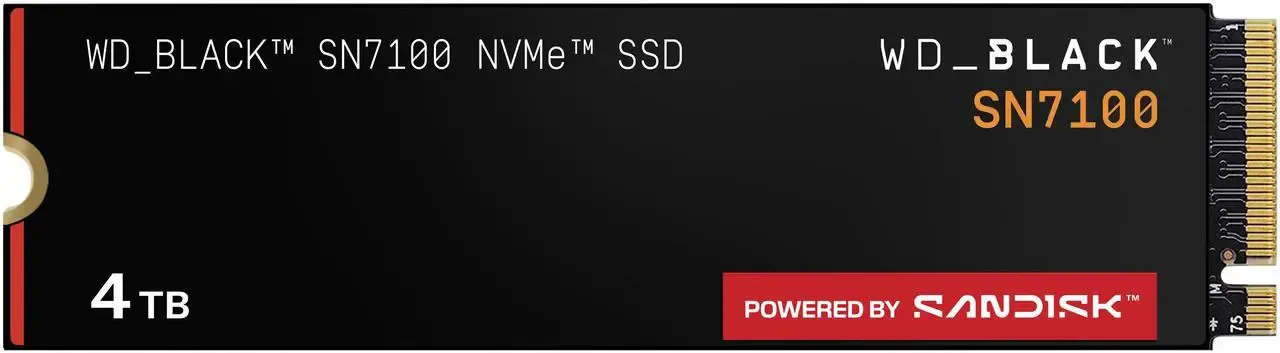
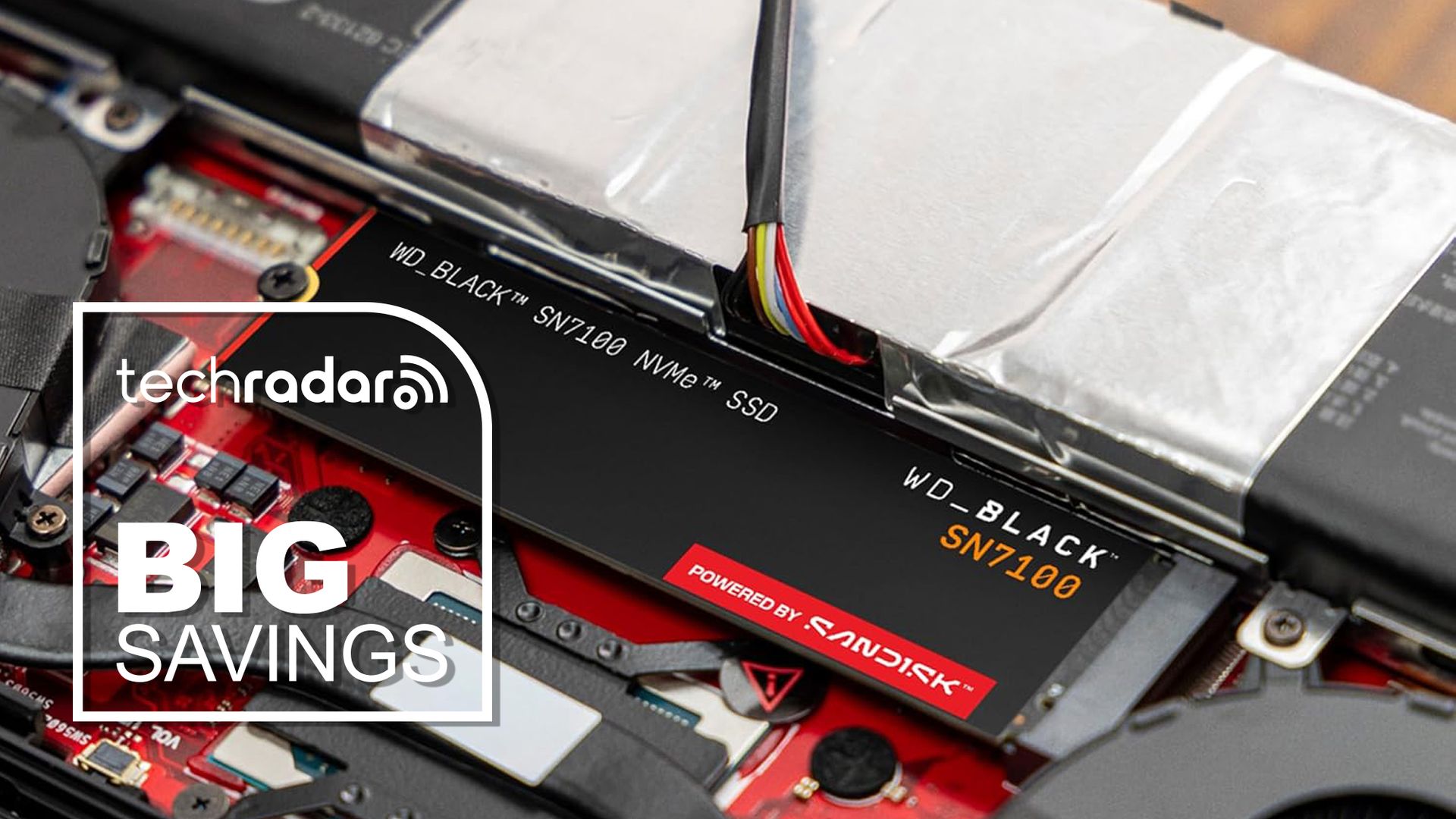
A 4TB SSD gives you plenty of storage, but high-capacity drives can be expensive. SanDisk's WD_BLACK SN7100 is a compact M.2 2280 drive that combines PCIe 4.0 connectivity with TLC 3D NAND and a DRAM-less HMB design.
• Best for: Professionals, PC builders, and gamers who needs a high-capacity SSD for a laptop or desktop and wants a lot of room for applications, media and large files.
• Why it matters: The SSD delivers sequential read speeds up to 7,000MB/s and writes up to 6,700MB/s, alongside a solid 2,400TBW endurance rating.
4TB WD_BLACK SN7100 M.2 2280 SSD: was $580 now $559.99 This SSD uses PCIe 4.0 x4, TLC 3D NAND and HMB, delivering up to 7,000MB/s reads, 6,700MB/s writes, 1.35 million IOPS and 2,400TBW endurance for gaming systems. Use coupon code SSF73634 for the biggest saving.View Deal
Why we recommend it
The SN7100 delivers plenty of storage and performance suited to creative laptops and desktop PCs. Its maximum operating power is rated at 4.5W, and it offers up to 100% better power efficiency than the previous generation. The 4TB model also has an endurance rating of 2,400TBW.
The saving from $580 to $579.99 is obviously minuscule on its own, but promo code SSF73634 brings the price down to $559.99. It's not a huge discount, but with storage prices so high right now, any reduction is welcome.
That said, this is nowhere near its historical low. The 4TB WD_BLACK SN7100 was available to buy for $209.99 in 2025, illustrating just how dramatically SSD prices have risen since then. Not so long ago, it was priced at $1,379.99 at Amazon, where it is currently $579.
Should you buy it?
✅ Buy the 4TB WD_BLACK SN7100 if...
You want to increase your storage without compromising on speed. With 4TB available, there's plenty of room for large files, applications and media without constantly managing free space.
❌ Skip the 4TB WD_BLACK SN7100 if...
You regularly handle sustained, storage heavy workloads, as it's a DRAM-less SSD (dedicated DRAM is better). It also comes without a heatsink, so check the cooling arrangements and available space in the device where you plan to install it.
AMD is rumored to be working on its own version of DLSS 5
A leaker says that the neural rendering tech will be launched with next-gen RDNA 5 GPUs
That means we could be waiting until late 2027 or 2028 to see this debut, which might leave AMD lagging behind Nvidia considerably
AMD could be working on its own take on Nvidia's DLSS 5, and apparently this alternative attempt at neural rendering will be for its next-gen RDNA 5 graphics cards.
VideoCardz spotted that a known leaker in the GPU field, Kepler L2, posted on the Anandtech forum in a discussion around RDNA 5 speculation to say that: "AMD will have their own version of 'Neural Lighting' like DLSS5 next-gen."
Kepler then clarified that he didn't mean a version of Ray Reconstruction, but a take on DLSS 5 (neural rendering), and that next-gen RDNA 5 GPUs would be required because "this stuff is pretty heavy" (as in resource-intensive).
In a further post, Kepler elaborated: "There's a lot of issues with Nvidia's approach [with DLSS 5], but it's possible to have a version of this with minimal hallucinations and 'AI slop' look."
He then suggests a way that AMD could work its version to improve on DLSS 5, including giving the AI "direct access to 3D game data such as geometry, ray data, depth buffers, materials, etc so it doesn't have to guess and can accurately know how each object in a scene should interact with light."
Kepler's outline of a proposed alternative for AMD would have a separate model (AI) for lighting improvements, and another different model solely for the shading of complex surfaces. DLSS 5 bundles these together with its neural rendering system, and adds color-grading on top — to adopt what the AI judges as more natural colors — which Kepler advises that AMD should dispense with entirely.
Analysis: a race against time – or a chance to get it right?
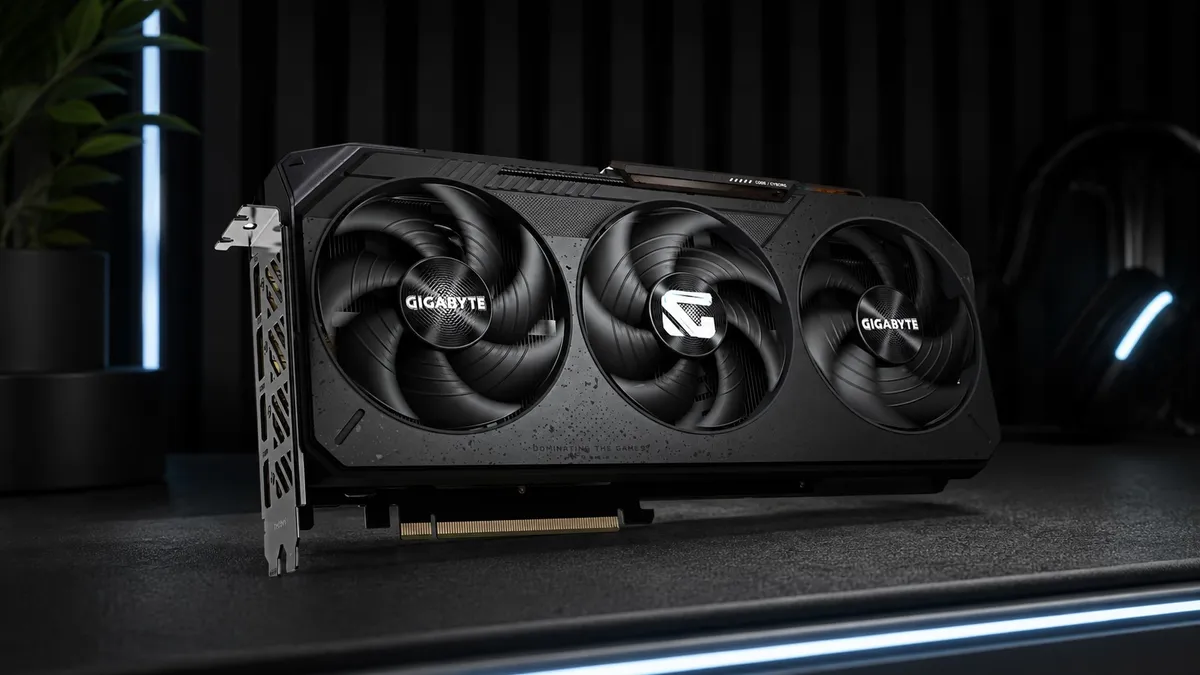
(Image credit: Gigabyte)
I won't pretend to be able to critique what Kepler is suggesting as an alternative for AMD and the technical nuances therein, except to say that the idea is clearly to achieve a result that looks less like it's been 'messed' about with by AI and minimizes any 'slopification' therein — preserving more of the original artistic intent.
And that seems a laudable goal, of course, and it also brings up how AMD is in an interesting position here in lagging behind Nvidia with its graphics tech (which has, of course, been the case from the start, with FSR following DLSS — version 2.0 of Nvidia's upscaling tech was already in play, in fact, when FSR 1.0 arrived). Team Red can sit back for now and see how DLSS 5 plays out, as more games emerge that use it, and gauge the reaction of gamers, and forge its own neural rendering tech to tackle any perceived weaknesses.
The performance hit will be an obvious area to target, and if AMD can bring that down — it's substantial with DLSS 5 as it is now — that will obviously be a big win. That said, I'd expect Nvidia will be working with some haste to make DLSS 5 more performant, and as with DLSS 1, the tech will be improved considerably by the time Team Red has its own version out.
This is the other side of the equation here, where Nvidia could win out. With RDNA 5 GPUs not expected to arrive for at least a year, and quite possibly longer (the RAM crisis isn't helping), there's quite a lengthy timeframe on any AMD rival to DLSS 5. By the time it arrives, DLSS 5.5 may be in town with considerable improvements in tow. There's already been a notable turnaround in the perception of DLSS 5 with its official launch (compared to Nvidia's sneak preview earlier this year).
This is, of course, assuming AMD is indeed working on its own neural rendering technology, but I'd be surprised if this wasn't the case. For now, though, the word of a single leaker needs to be thoroughly seasoned, as ever, even though it's believable enough that Team Red would be aiming to use this on RDNA 5 graphics cards.

 Login
Login