❌

Reading view

There are new articles available, click to refresh the page.

Tongue-in-cheek app emails Sam Altman daily to 'report the RAM he missed'

  • A new Linux script called 'Ram Altman' is a tongue-in-cheek creation
  • It emails Sam Altman with a report of the unused RAM in your PC, also known as the RAM he missed out on
  • The joke follows a controversial comment Altman made recently about how it's 'quite terrible' that everyone has a load of RAM sitting in their own PC, rather than in data centers

Someone has planted their tongue firmly in cheek and knocked up a little script that reports the amount of RAM being used in your Linux PC via email to Sam Altman.

Okay, so this script on GitHub (spotted by Respawn First) doesn't actually email Sam Altman – though it could be used to message someone (theoretically the OpenAI CEO if you had his private email somehow). However, the creator makes it clear that they don't intend to have this tool used to spam people (as you'd hope).

It's a joke, of course, and one made at the expense of Altman after he recently commented that it's "quite terrible to have everybody have a bunch of the world's limited supply of DRAM sitting in their own computer."

That comment sparked developer Iain Kay to craft this open source script which is called 'Ram Altman' and is: "A bash script that writes to Sam Altman once a day to report the RAM he missed."

The Linux utility is designed to "track total, used and available RAM, plus your standing with the global allocation authorities," with the developer noting that it sends at most one email per day.

As mentioned, you are not supposed to be setting this up to actually spam someone with emails about your RAM usage, not unless it's a willing participant who will enjoy the (daily) joke, such as the "friend who has been waiting for DDR5 prices to come down" as the dev observes.

The email content around the RAM report is rotated with 10 messages, eight different subject lines, and six sign-offs, all to ensure that the "joke gets old at a carefully managed pace."

No email is sent if you have less than 10% of your system RAM free, incidentally, as the creator judges that your machine has "suffered enough" and doesn't need another task on its memory plate.

Should you not wish to bother with an installation, but want to see the joke messages anyway, they're up on a website here. As ever, run any third-party software on your PC at your own risk.

There's a sample email given on the GitHub page:

"Hi Sam,

Please don't be alarmed, but there is 8.6 GiB of RAM on my desk that isn't in a data center. That's 56.2% of what's installed here, and as far as I can tell it has no plans today.

Hoarding responsibly,

A concerned RAM owner."

Analysis: large language misjudgement
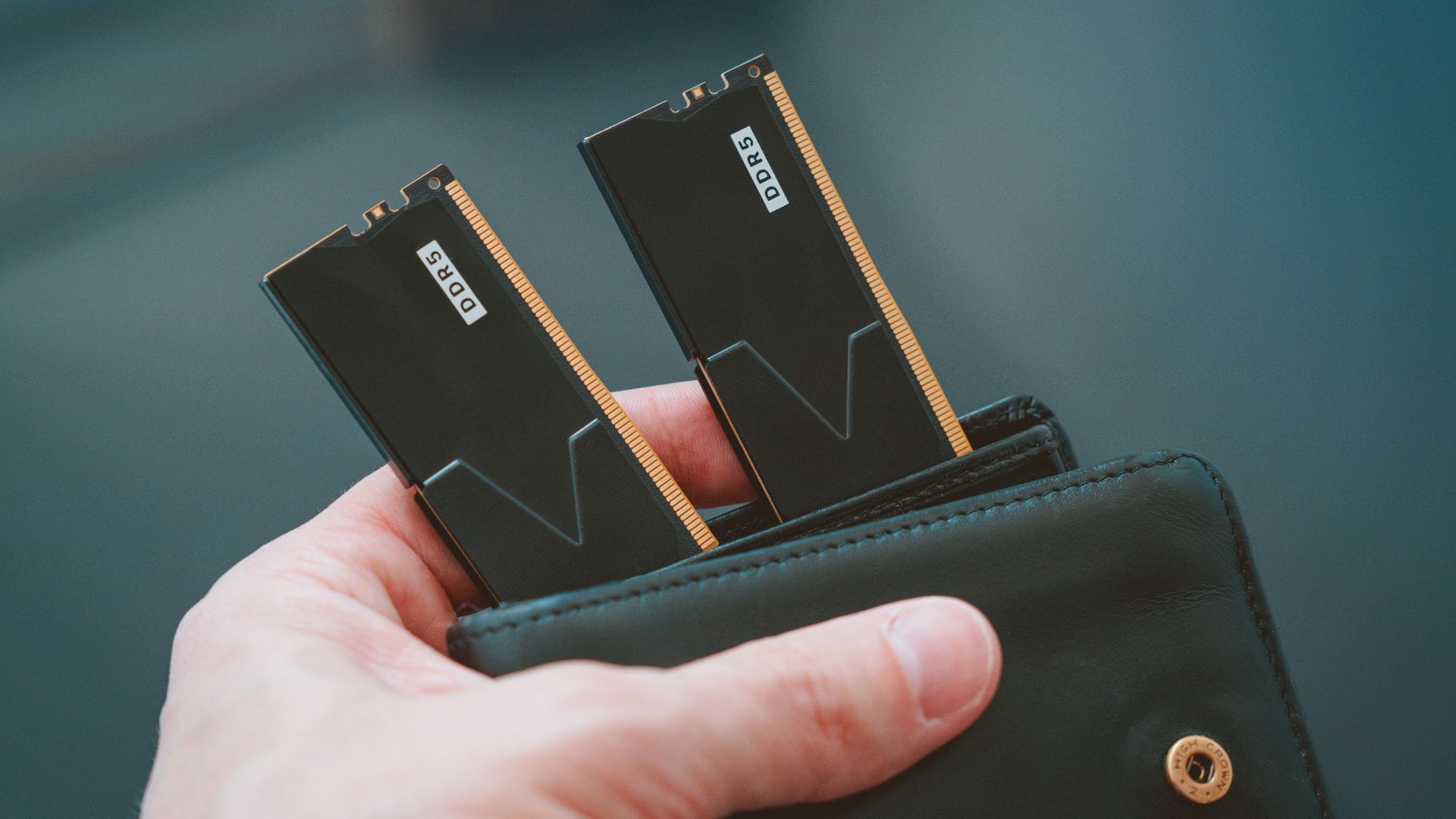
Black DDR5 RAM memory modules placed inside a black wallet held in hand, symbolizing high cost of computer memory.

(Image credit: Stockcrafter / Getty)

This is a well-observed piece of humorous coding, so full credit to Iain Kay in that respect. Of course, as the developer acknowledges, Sam Altman very quickly walked back his "quite terrible" comment (which it was in a very literal sense, certainly for the OpenAI CEO who has faced monumental amounts of flak for the utterance).

If you recall, Altman was quoted from a podcast, and the CEO has since argued that he was taken out of context. Now, many folks aren't having that and feel this is just his attempt to weasel out of the ensuing controversy, although I can see both sides of the coin here.

Altman's comment was made in a discussion about people running local AI models and using lots of RAM for that, rather than using the likes of ChatGPT or other cloud-based LLMs. The problem is he doesn't specifically say that, and instead uses the term "everybody" having a bunch of RAM sat in their PCs, but I don't think it's a stretch to see that he really meant those using local AIs (the direct competition for his product, as it were) as he later clarified.

Still, he didn't say that, and the way he phrased this, and the lack of understanding of how much anger such a broad and sweeping comment would provoke, remains quite breathtaking. It's the sort of classic and stereotyped blunder out-of-touch-with-reality tech CEOs can typically make, and in that way, the fiery feedback was inevitable in the current climate of ridiculous PC component inflation caused by AI demand.

As one Redditor says: "Can [this script] also report how much unused RAM is sitting in warehouses that OpenAI stockpiled to keep out of the market and can't use yet because they don't have a way to power any of it?" (There are similar rumors along these lines about GPUs, too, and graphics card price hikes).

I doubt that this 'Ram Altman' script is the last the CEO will be hearing of this affair.

TP-Link Archer 8 Ultra: the future of Wi-Fi has just arrived, with TP-Link’s first Wi-Fi 8 router

TP-Link Archer 8 Ultra: One-minute review

It’s taken quite a while for Wi-Fi 7 to become a mainstream technology – even Apple hasn’t adopted it right across its product range yet – but TP-Link has just launched the first Wi-Fi 8 router in the somewhat imposing form of its new Archer 8 Ultra.

In fact, the final technical details for Wi-Fi 8 probably won’t be announced until 2028, but the key features of the new standard are well known, allowing TP-Link and other manufacturers to prepare new products that will introduce the new technology over the next couple of years. It’s also planning to release a number of mesh routers and range extenders that will use Wi-Fi 8 in 2027 as well.

It’s safe to say that a state-of-the-art router with Wi-Fi 8 will be massive overkill for most home users – after all, the Archer’s tri-band Wi-Fi and top speed of 19Gbps will leave most home broadband services trailing in its wake.

And, of course, it comes with a state-of-the art price tag too. However, the Archer 8 Ultra is a good opportunity to look at the new features that will shape the next generation of Wi-Fi technology.

TP-Link Archer 8 Ultra review: Price & release date

  • How much does it cost? Pre-order for £699 (around $950), then £899.99 (around $1,199)
  • When is it available? Released on November 15, 2026
  • Where can you get it? Available in US, EU, UK

The Archer 8 Ultra is currently available for pre-order from TP-Link’s website, and will be officially launched on November 15, 2026.

The US pricing hasn’t been confirmed at the time of writing, but there’s a special offer for pre-orders in the UK for £699 (around $950), with the price rising to £899.99 (approx. $1,199) following the launch in November. There are currently no rival Wi-Fi 8 routers to compare it with, but that pricing makes the Archer 8 Ultra twice as expensive as a high-end, current-gen Wi-Fi 7 model.

  • Value: 4/5

TP-Link Archer 8 Ultra review: Specs

Wi-Fi:

Wi-Fi 8 (2.4GHz, 5.0GHz, 6.0GHz)

Wi-Fi Speed:

Up to 19Gbps (using 6.0GHz)

Ports:

2x 10Gbps (WAN/LAN), 4x 2.5Gbps (LAN), 1x 1Gbps (LAN)

Processor:

Broadcomm SoC

Dimensions:

245 x 98 x 226mm

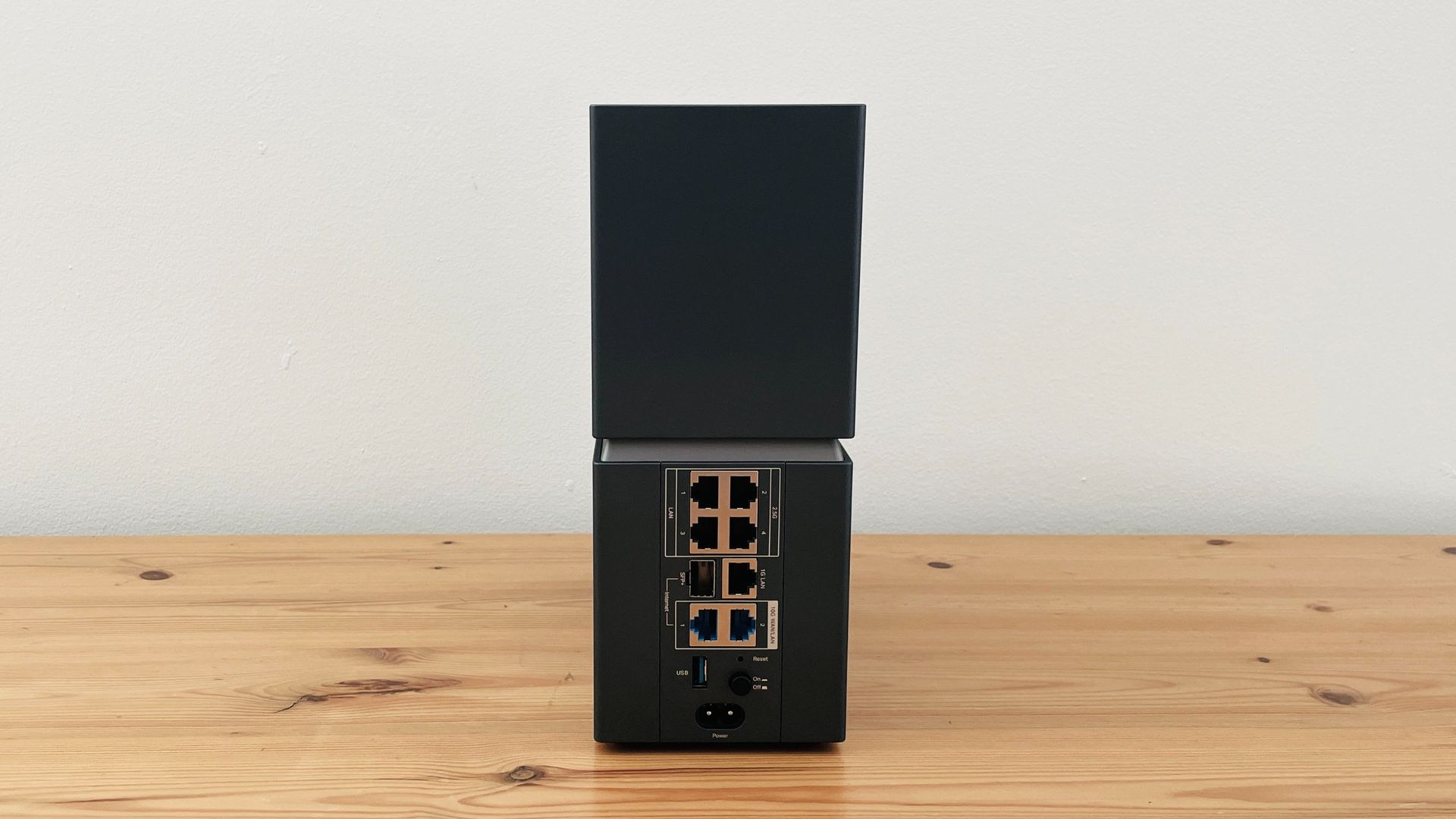
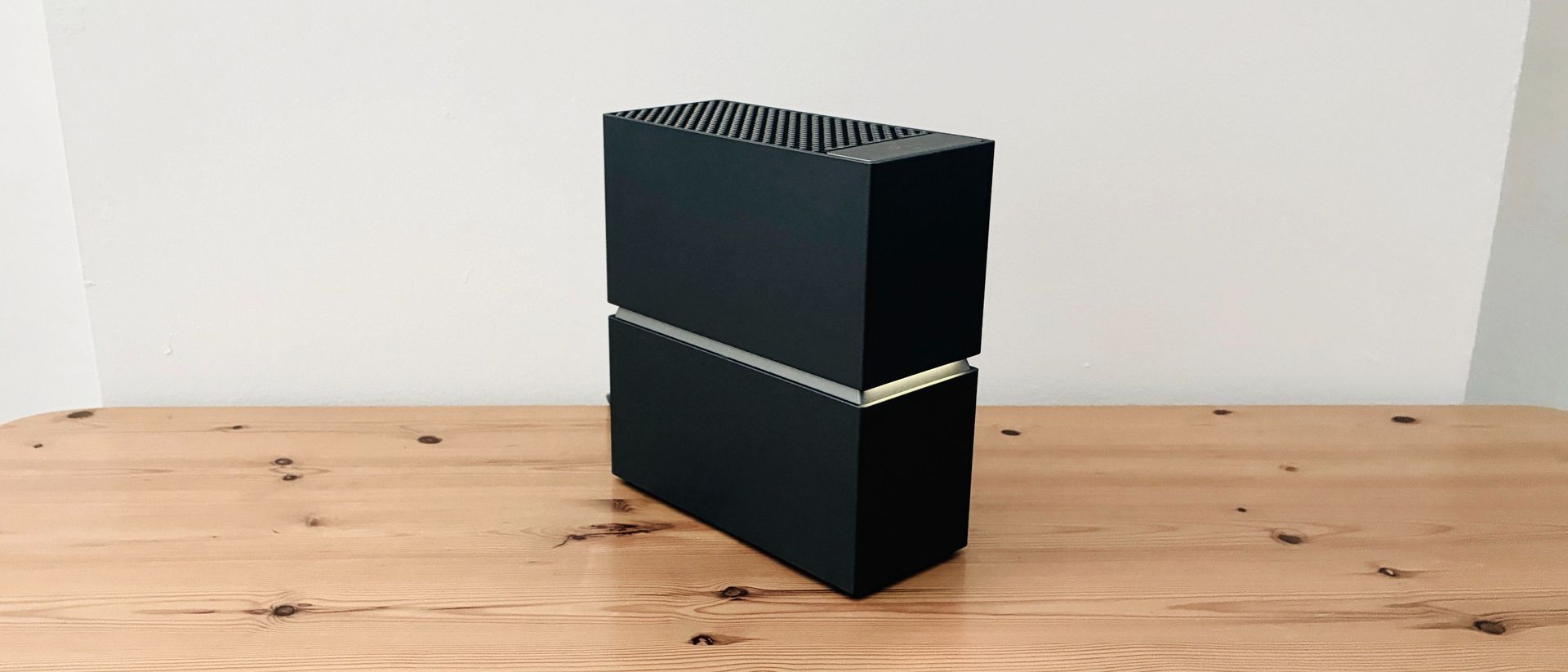
TP-Link Archer 8 Ultra router on wooden desk

(Image credit: Future)

TP-Link Archer 8 Ultra review: Design

  • Solid build quality
  • Very good selection of ports
  • App is easy to use

Wi-Fi 8 focuses on extending range and signal power in order to improve reliability.

This means that the Archer 8 Ultra needs to provide some pretty heavyweight hardware. It’s built like a tank, consisting of a matte-black obelisk that stands 245mm high, 98mm wide and 226mm deep, and it houses no less than 18 internal antennae to help beam the Wi-Fi signal far and wide.

It also provides an impressive set of ports and connectors, including two 10Gbps ports that can handle the latest high-speed fibre broadband, and also double up for a wired network connection (LAN) for devices such as a PC or gaming console that needs maximum performance.

There are also four additional 2.5Gbps ports for additional wired connections and, somewhat oddly, a single 1Gbps port as well.

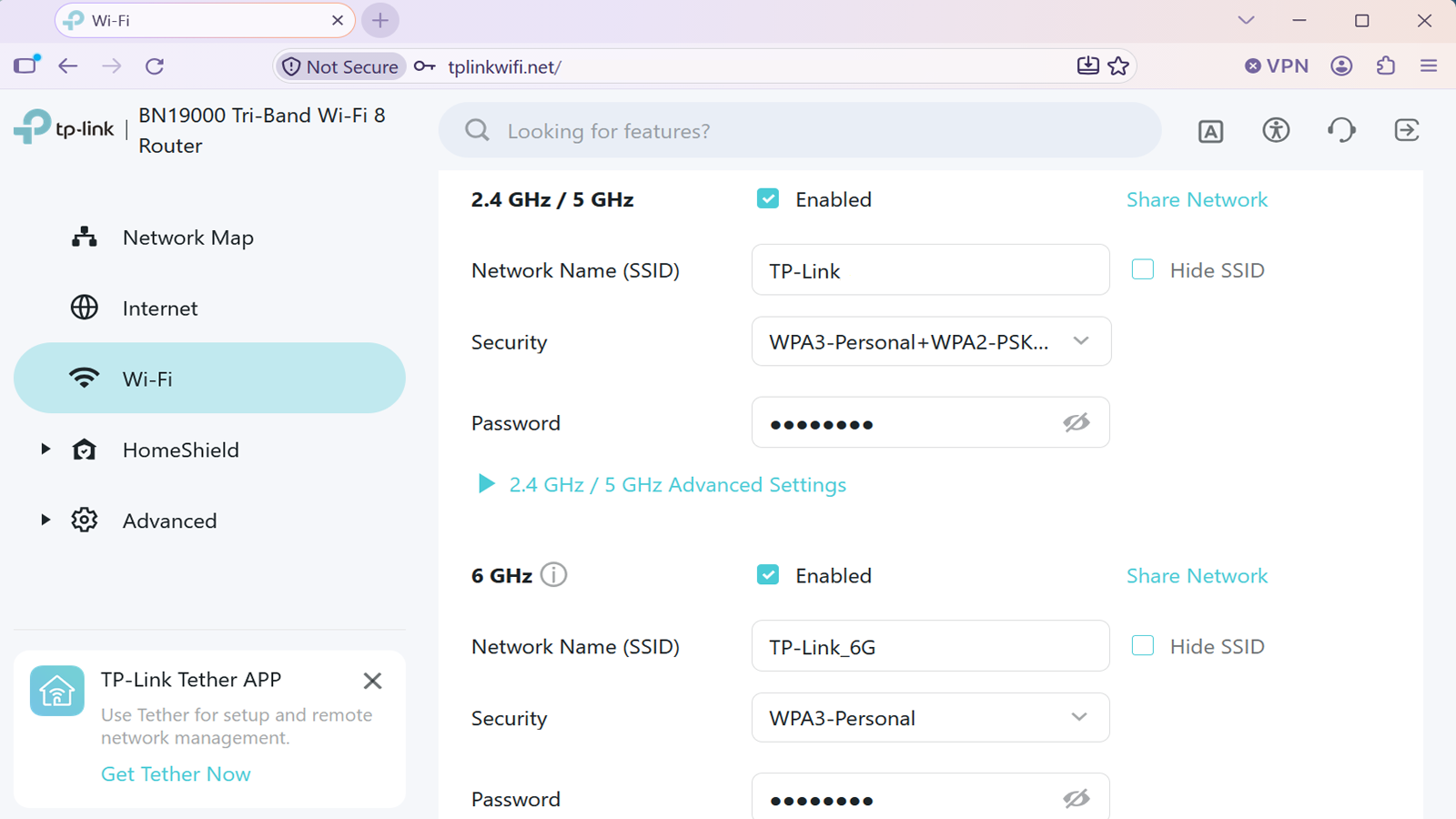
TP-Link’s Tether app is also well designed, allowing you to scan a QR code in order to quickly connect to the router’s new network. By default, the app creates two separate networks, with one network reserved for the high-speed 6.0GHz band that is supported by newer computers and mobile devices.

The second network combines the 2.4GHz and 5.0GHz bands in order to provide compatibility with older computers and mobile devices. That setup should suit most users, but more advanced users can connect to the Archer 8 Ultra via a web browser interface that provides greater control over your network settings.

  • Design: 5/5

TP-Link Archer 8 Ultra review: Features

The new Wi-Fi 8 standard is a big step forward, and is awash with jargon and buzzwords, such as MAPC (multi-access point co-ordination), ELR (enhanced long range), and DRU (distributed resource units), and you can find out more about these on the TP-Link website.

But the TLDR version is that Wi-Fi 8 shifts the focus away from sheer speed and instead concentrates on improving both range and reliability for larger homes and offices, as well as public and outdoor venues that may have dozens or even hundreds of connected devices spread over a very wide area.

Of course, the 19Gbps speed of the Archer 8 Ultra certainly sounds impressive, but it’s not actually any faster than the top speed of 46Gbps that is already possible with current-generation Wi-Fi 7 devices.

Wi-Fi 8 also uses the same frequency bands – 2.4GHz, 5.0GHz and 6.0GHz – that are available with Wi-Fi 7 as well. This ensures that the Archer 8 Ultra will be backwards-compatible with existing computers and mobile devices that use Wi-Fi 7.

However, those buzzwords that we just mentioned are designed to improve the range and reliability of the Archer 8 Ultra, so that a single router can cover an area of 3,600sq.ft (although some regions may quote this as 3,000sq.ft due to differences in local regulations).

TP-Link Archer 8 Ultra web interface

(Image credit: TP-Link)

It’s also designed to support up to 200 connected devices, and includes a Multi-Floor Mode that can automatically configure the Archer network to work efficiently within homes, offices, and other buildings where people and devices may be spread across multiple floors and levels. Suffice it to say that if you live in a modest two-bedroom house or apartment, then the Archer 8 Ultra will definitely be what The Sisters Of Mercy refer to as ‘a slight case of overbombing’.

  • Features: 5/5

TP-Link Archer 8 Ultra review: Performance

  • Tri-band Wi-Fi 8
  • Very few - if any - Wi-Fi 8 devices yet
  • Still fantastic performance with Wi-Fi 7 devices
Benchmarks

Ookla Speed Test – 2.4GHz/5.0GHz (download/upload)

Within 5ft, no obstructions: 150Mbps/150Mbps

Within 30ft, three partition walls: 150Mbps/150Mbps

20GB Steam Download – 2.4GHz/5.0GHz

Within 5ft, no obstructions: 150Mbps

Within 30ft, three partition walls: 150Mbps

Ookla Speed Test – 6.0GHz (download/upload)

Within 5ft, no obstructions: 150Mbps/150Mbps

Within 30ft, three partition walls: 150Mbps/150Mbps

20GB Steam Download - 6.0GHz

Within 5ft, no obstructions: 150Mbps

Within 30ft, three partition walls: 150Mbps

I’ve not come across any PCs or mobile devices that currently support Wi-Fi 8 but, as mentioned, Wi-Fi 8 does use the same frequency bands as Wi-Fi 7, so I was able to get some idea of the performance offered by the Archer 8 Ultra using an existing laptop with Wi-Fi 7.

The extended range and reliability of Wi-Fi 8 makes it a good option in my office, as I have a deadspot in one particular office at the back of the building. Unsurprisingly, both of the Wi-Fi networks set up by the Archer 8 Ultra were easily able to cruise along at the maximum 150Mbps provided by my office network when running the Ookla SpeedTest and for downloading large game files from Steam while connected to nearby devices in the same room.

And it didn’t bat an eyelid as I picked up my laptop and walked along the corridor to the Wi-Fi deadspot in the furthest back office.

The one disadvantage of the high-speed 6GHz band is that it has a shorter range than the 2.4GHz and 5.0GHz bands – which is why those bands are still used even on next-gen routers such as this.

However, the range and reliability of Wi-Fi 8 ensured that the 6.0GHz band was able to reach my back office and maintain full speed with no trouble at all.

Of course, it’s still early days for Wi-Fi 8, so the Archer 8 Ultra won’t be an essential purchase for many people right now, but it’s a fascinating look at a future world where we will be surrounded by Wi-Fi all around us, both at home and in the wider world outside (more so than we currently are).

  • Performance: 5/5

Should I buy the TP-Link Archer 8 Ultra?

Attribute

Notes

Score

Features

Wi-Fi 8 introduces many new features designed to improve range and reliability

5/5

Performance

It’s incredibly fast, but Wi-Fi 8 also provides big improvements in range and reliability

5/5

Design

It’s big and bulky, but packed with high-end hardware.

5/5

Value

A state-of-the-art price for a state-of-the-art router

4/5

Buy it if…

You’re an early adopter
Wi-Fi 8 won’t officially be launched until 2028, so there won’t be many PCs or mobile devices that support it before then.View Deal

You have an enormous home
Wi-Fi 8 is all about range and reliability, and the Archer 8 Ultra can cover areas of up to 3,600sq.ft. It’ll be great if you own your own football pitch.View Deal

You’re a business user
Public venues such as hotels or sports venues that need to provide reliable Wi-Fi for hundreds of visitors will find that Wi-Fi 8 is a big improvement over previous versions.View Deal

Don’t buy it if…

You’re on a budget
The Archer 8 Ultra is one of the most expensive routers we’ve ever come across, and there are plenty of Wi-Fi 7 routers that will provide good performance at half the price.View Deal

You have a modest home
Most smaller and medium-size homes simply won’t need the extended range of Wi-Fi 8, or its blazing Wi-Fi speeds.View Deal

You just want to watch Netflix
A top speed of 19Gbps means that the Archer 8 Ultra is dozens of times faster than most home broadband connections, so it’s massive overkill for simple streaming services.View Deal

Also consider

D-Link Aquila Pro AI R95
Few of us can actually use Wi-Fi 8 at the moment, so an affordable Wi-Fi 7 model such as the Aquila Pro is a more mainstream option, providing a top speed of 9.5Gbps at a competitive price.

Read our full D-Link Aquila Pro AI R95 reviewView Deal

Netgear Orbi 373
Its dual-band Wi-Fi 7 runs at a relatively modest 5Gbps, but the Orbi’s three mesh routers can easily cover very large areas up to 6,000sq.ft.

Read our full Netgear Orbi 373 reviewView Deal

AMD CEO enrages gamers by saying it's now a 'data center first' company

  • AMD's CEO has said that it's a "data center first company"
  • Lisa Su observed that: "I see AI and super intelligence becoming more and more essential to every aspect of our lives"
  • The CEO predicted a double-digit fall in PC sales next year, and gamers aren't happy at all with what they see as an abandonment by Team Red

AMD's chief executive hasn't been making many friends in the PC gaming community this week, having offered up a telling admission, alongside an ominous sales prediction, all off the back of the firm's latest financial results.

In an interview with Brian Sozzi, who is Yahoo Finance's Executive Editor, Lisa Su made it clear that AMD is a company with a lot of resources to expand its supply and the "ability to help our customers", but sadly the customers in this case are data centers, not consumers.

Su then delivered a frank admission: "We are a data center first company."

AMD's CEO also again underlined that AI is very much the future, and that "over the horizon I see AI and super intelligence becoming more and more essential to every aspect of our lives."

On top of this, as OC3D spotted, during AMD's earnings call for Q3 2026 (which was all about bumper profits), Su said that "PC sell-through slowed late in the quarter as higher memory and component costs weighed on demand," while forecasting that next year wouldn't be a good one for desktop computers and laptops.

The CEO observed: "In 2027, we are planning for PC market unit shipments to decline by a double-digit percentage."

In other words, an over 10% slump. The chief exec added this caveat: "In this environment, we expect to outperform the market as we deliver our Ryzen roadmap and grow our commercial footprint."

That presumably refers to the launch of Zen 6 processors for consumers (and businesses), the next-gen Ryzen family, which is expected to arrive early in 2027 and should obviously stoke some interest.

Analysis: dark times for the PC

An angry PC Gamer sat at their desk looking unhappy

(Image credit: ShutterStock)

It's no surprise that AMD has 'followed the money', as the old saying goes, because this is how businesses work, and profits reign supreme. Data center GPUs are way more profitable than consumer models.

If we look at the amount of revenue that AMD raked in from its data center business in this latest quarter, it very nearly doubled year-on-year and was up 97% to $8.5 billion. That dwarfed client and gaming (Ryzen and Radeon, mostly consumer) revenue, which was $3.7 billion (down 8%).

Looking at the balance sheet, it's clear enough AMD is a data center-first company — but actually saying this out loud, in no uncertain terms, sends out further signals about where Team Red wants to be, along with all the messaging that AI is the future.

Is it any wonder that gamers feel bitter about this? Hardly. Back at the start of 2024, AMD's consumer revenue was actually more than data center, albeit only marginally, but still — that picture has shifted massively over the past couple of years.

And with the prices of consumer GPUs shooting up as graphics chip production is increasingly prioritizing AI accelerators for data centers, there's a lot of bad feeling for obvious reasons. Nvidia's graphics card business is the same story too, of course, and GPU price hikes have been getting out of hand in the past few months for GeForce and Radeon cards alike.

Given clear negative predictions about the PC market next year — with AMD joining in on that — and the company's equally clear unwillingness to do anything about that with its plentiful resources, consumers are looking at a dismal future. One in which I fear that GPU price hikes are going to follow in the footsteps of steep RAM and SSD inflation, which has become beyond painful at this stage. Many forecasts point to the RAM crisis getting worse in 2027, of course.

All of which means it's hardly surprising that there's a profound sense of disappointment in AMD on social media, given this fresh data center comment from Lisa Su.

One Redditor declared: "AMD was a lot of people's last hope, but looks like PC gaming is over."

Dramatic? Well, yes, it is, but nonetheless, every single metric, forecast, and piece of analysis is strongly suggesting 2027 will be a desperately bleak time for the PC, and I have a hard time disbelieving that this is the truth. I've recently written about GPU pricing and how Black Friday could be your last chance to get an upgrade at a relatively reasonable price, if you need one.

Nvidia's virtual GeForce 8800 GTX unboxing demo hasn't gone down well

  • Nvidia has a new interactive demo out on Steam
  • It offers a virtual unboxing of a GeForce 8800 GTX… 
  • …but you need an RTX 4070 to run it, and the recommended GPU is an RTX 5080
  • Some gamers feel that it's a 'slap in the face' for several reasons

Can't afford a new GPU thanks to the ever-worsening RAM crisis? Well, Nvidia wants to take you back to the days when a graphics card didn't destroy your bank balance, courtesy of a new demo on Steam where you get to unbox and install a GeForce GPU from 2006.

The Verge spotted the interactive demo entitled 'GeForce 8800 GTX — 20 Years of a Legend' which can be grabbed for free on Steam.

It was developed by Dylan Browne, an Unreal Engine artist who was commissioned by Nvidia, and the demo is rendered in Unreal Engine (unsurprisingly). The idea is that you can: "Step into a 2006-era PC gaming room, unbox the GeForce 8800 GTX, inspect it up close, and install it in an era-accurate PC tower."

On the face of it, that's a rather fun idea — and it's smartly implemented to be fair, including revisiting Windows Vista on a CRT monitor — but if you start to think about it more deeply, this exercise seems more than a little tone deaf in the current PC components climate.

Have a watch of Nvidia's illustrative clip below first off, before we move on to discuss this one.

Analysis: ragebait, greed, and a lot of other accusations from gamers

One of the most obvious sticking points here is the requirements to run this demo. What Nvidia GPU will you need to take part in a virtual unboxing? Here's a clue: it certainly won't run on a GeForce 8800 GTX. In fact you'll need an RTX 4070 at the minimum, and the recommended GPU as per the Steam specs is a… wait for it… RTX 5080. (You must have 32GB of RAM, as well, at minimum).

And this comes at a time when the RAM crisis has made that RTX 5080 soar in price to over double its MSRP in the US, and with hefty inflation evident in all countries (over 50% in the UK for example). Don't even start with the RTX 5090, and as we've seen, even lower-end graphics cards are being hit hard with price hikes.

As one Redditor put it neatly (with the swearing removed): "A 5080 for an unboxing simulator. They are just laughing in our faces."

Another in that thread replies to say: "Ragebait? You are not able to afford a real graphics card — here, take this virtual one?"

Speaking of rage, there's quite an outpouring of it in the comments for Nvidia's YouTube video (the one embedded above), such as: "Great job, today consumers have no chance to be able to afford new high end gaming video cards in favor of greed and AI money. A 5090 is $10-15k, and a 5080 is $2k or more — it's a slap in the face to post this tbh."

Nvidia has a clear priority for AI, data centers and profits over consumers and gaming GPUs – and it's a business, that's where the money lies, we get that. Shareholders for-the-win and so forth, but given that, the thoughtlessness of this little PR nugget is pretty staggering really.

What sort of reaction did Nvidia expect it would get? Okay, there are some Redditors reminiscing about the good old days of 2006, and the 8800 GTX that they owned. However, many more are simply bitter (or indeed incandescent) that Nvidia appears to be reminding us of better times, having done a good deal to cause the GPU pricing pain which is now prevalent thanks to chasing AI profits. While asking for a high-end, now ridiculously expensive, Blackwell GPU to run the demo (at the recommended level).

The GeForce 8800 GTX was $599 as a top-end monster GPU when it arrived, and if you want an RTX 5090 these days, you'll pay over 15x that amount. I would think that Nvidia would want to do anything but take a nostalgic trip back to the days of relatively affordable high-end graphics cards at this point in time.

Maybe Team Green should have saved this one for the card's 25th anniversary. Will the RAM crisis be over by then?

Redditor fudges DLSS 5 to work on GTA 6 trailer — and it looks impressive

  • A gamer took the GTA 6 'extended look' trailer and fudged it to work with DLSS 5 and Frame Generation
  • The results posted on YouTube look impressive, albeit with some notable glitches
  • It'll actually be possible to run the game on console, piped through a PC with an Nvidia GPU to add DLSS 5 and other visual trickery, at the cost of some input lag
  • …and some believe that trade-off might be worth it

Will the best way to play GTA 6 at launch be to pipe it from your PS5 to your PC with an Nvidia GPU and then back out to your TV?

No, it absolutely won't, but a convoluted setup along these lines could be the optimal way to experience the game visually (with some major caveats) — before the PC version arrives — given that you can fudge the addition of DLSS 5 this way.

How does this work? Wccftech picked up the story of the Redditor who proposed this experiment, and actually applied DLSS 5 to the GTA 6 'extended look' trailer that Rockstar brought out a couple of months ago.

To be specific, this gamer gave the trailer a DLSS 5 makeover with 3x Frame Generation tripling the frame rate from 30 fps to 90 fps, via an app called Veyra, which is a GPU video enhancement tool for Windows on GitHub.

The Redditor explains: "I used Veyra 2.1.1, a tool that can take a video source (video files, capture cards, Remote Play) and apply Neural Rendering [DLSS 5], upscaling, and Frame Generation in real time. I also integrated MFG Unlocker into it so I can unlock Multi Frame Generation on my RTX 4080 and experiment with 3x/4x FG on 40-series cards."

MFG Unlocker is an experimental tool (again on GitHub) which the Redditor is using for getting Multi Frame Generation on their RTX 4080, in case you were wondering. (As ever, download any third-party software entirely at your own risk).

As you can see in the YouTube clip below, the results of this polishing of the official trailer are very impressive in some ways. That said, there are clear issues with artifacts and glitching in terms of the characters and lighting, with the best results seen in the background environment details.

It's pretty remarkable given that this is a fairly aggressive implementation of DLSS 5 by all accounts, fudged on top of a video with no relevant game data (the likes of vector and geometry data) to guide the neural rendering.

The Redditor's plan is to use a console-to-PC pipeline to play GTA 6 on the PS5, with the PC effectively sitting between the console and final output on the TV, adding DLSS 5 and jazzing up the visuals.

This means taking the PS5 and hooking it up to a 4K HDR capture card in the PC, running it through Veyra with the RTX 4080, then outputting to the 4K TV. It's a roundabout way of using the Nvidia GPU as an external graphics card for the console, except all the GeForce GPU is doing is applying DLSS and/or MFG to the image the PS5 has rendered — although there is a price to pay in terms of input lag, of course.

Analysis: capture capers

The Redditor doesn't actually have their PS5 yet (although they've ordered it) to try out this setup fully, but others on Reddit have run such a setup, and in fact it's not that uncommon (albeit still far from a mainstream concept).

One gamer says that they've played GTA 5 using an Elgato capture card with NitLink software, and "the gameplay was 100 times better", and while "there is a noticeable input lag" they claim that "it's completely acceptable — around 1-2 milliseconds."

That little input lag seems a stretch (to say the least), and overall, there's some dispute on whether this way of gaming is viable. Some gamers say that such a setup is just too laggy, while others claim it provides a decently playable experience. Of course, it will depend on what type of game you're playing — a fast-reaction shooter, for example, isn't going to do well with any extra lag being introduced, and you're certainly going to get some.

Really, the success of this kind of console to PC capture card to TV setup is going to heavily depend on a number of factors. The quality of the capture card (a PCIe board would be best, rather than one connected via USB) and the related software are the primary factors, and by all accounts, a higher-end Elgato with NitLink gives you a good chance of enjoying your PS5 games with an Nvidia GPU souping them up using DLSS 5 and Frame Generation.

I'm betting there will also be an element of subjectivity here, too, with some people likely to feel any latency more keenly than others.

Some gamers use this setup to play PS5 games on their PC monitor (in other words, without piping the image back out of the PC to the living room TV, which would cut down on some of the input lag), and there are guides to running this kind of setup on YouTube, like this one. Others recommend Zanit's tutorials on YouTube, but those videos are in Portuguese, so you'll need to translate them if you're not a native speaker. It's pretty cool stuff, if rather convoluted — and a good capture card doesn't come cheap (neither does a high-end RTX 5000 GPU).

Meanwhile, as far as GTA 6 on the PC goes, we may see this happen a lot sooner than expected, due to the way the emulation scene is going right now (in turbo mode thanks to AI). In other words, Rockstar may want to get the PC port on sale before PC gamers start playing it via emulation.

❌