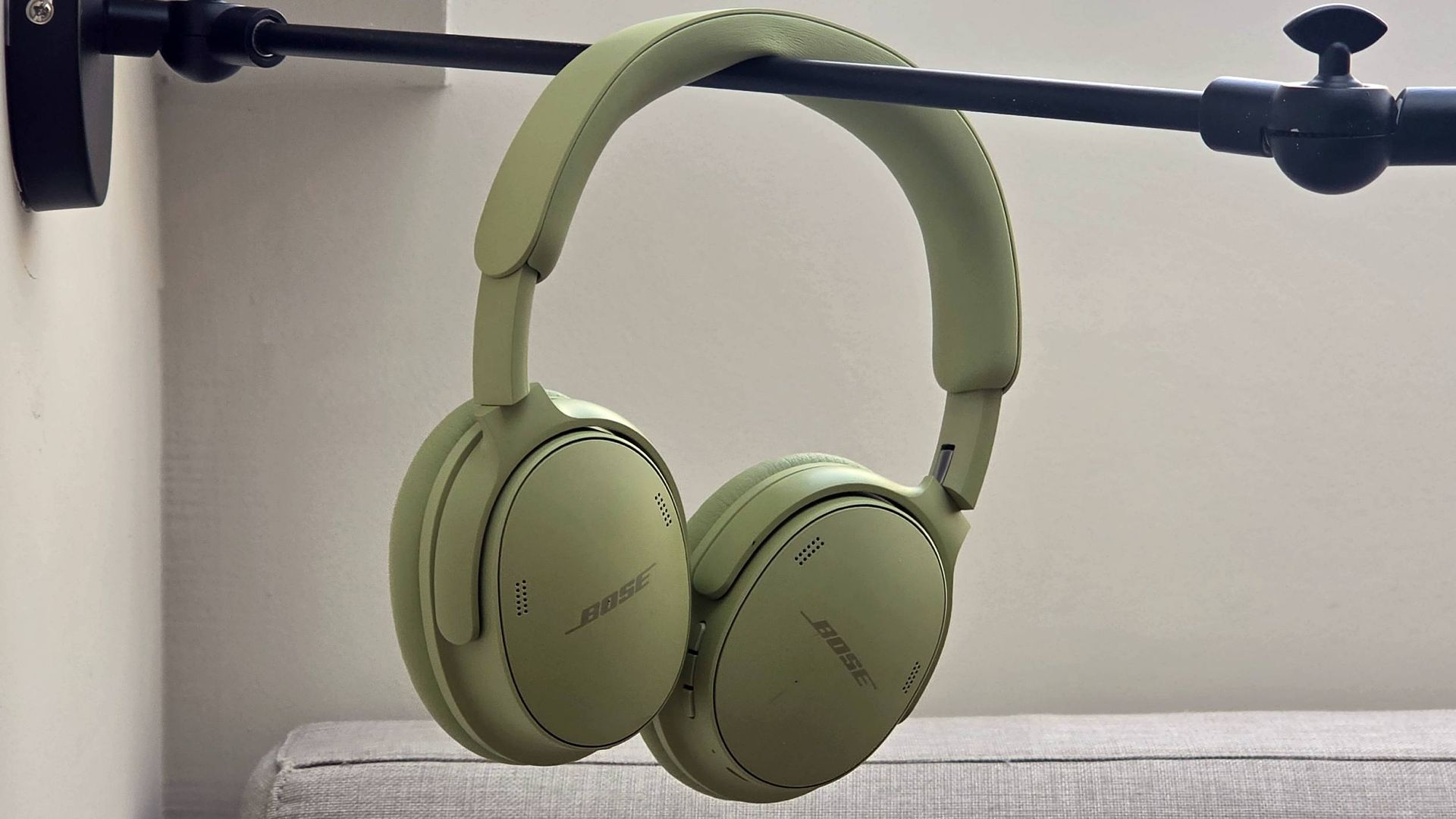
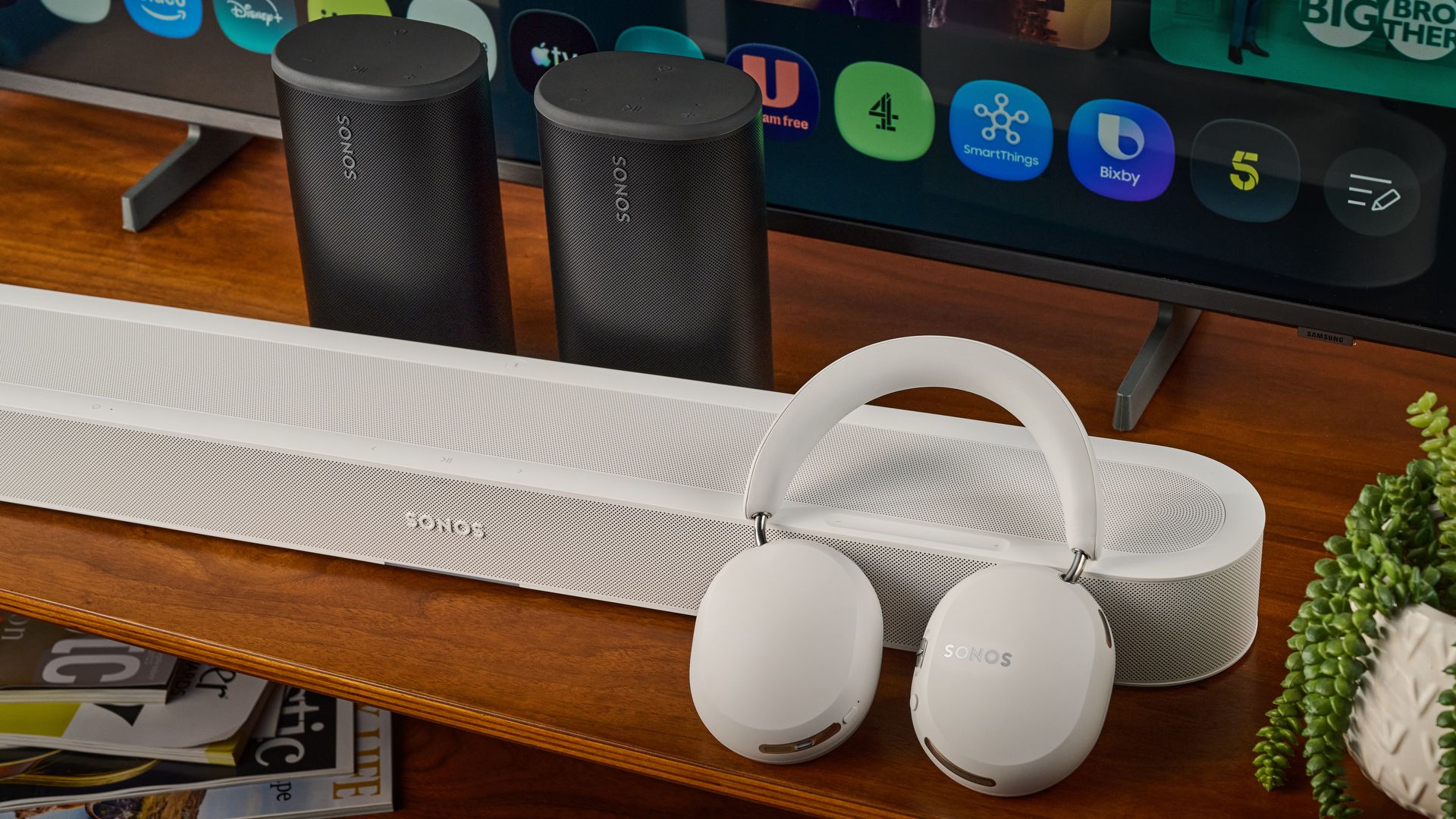
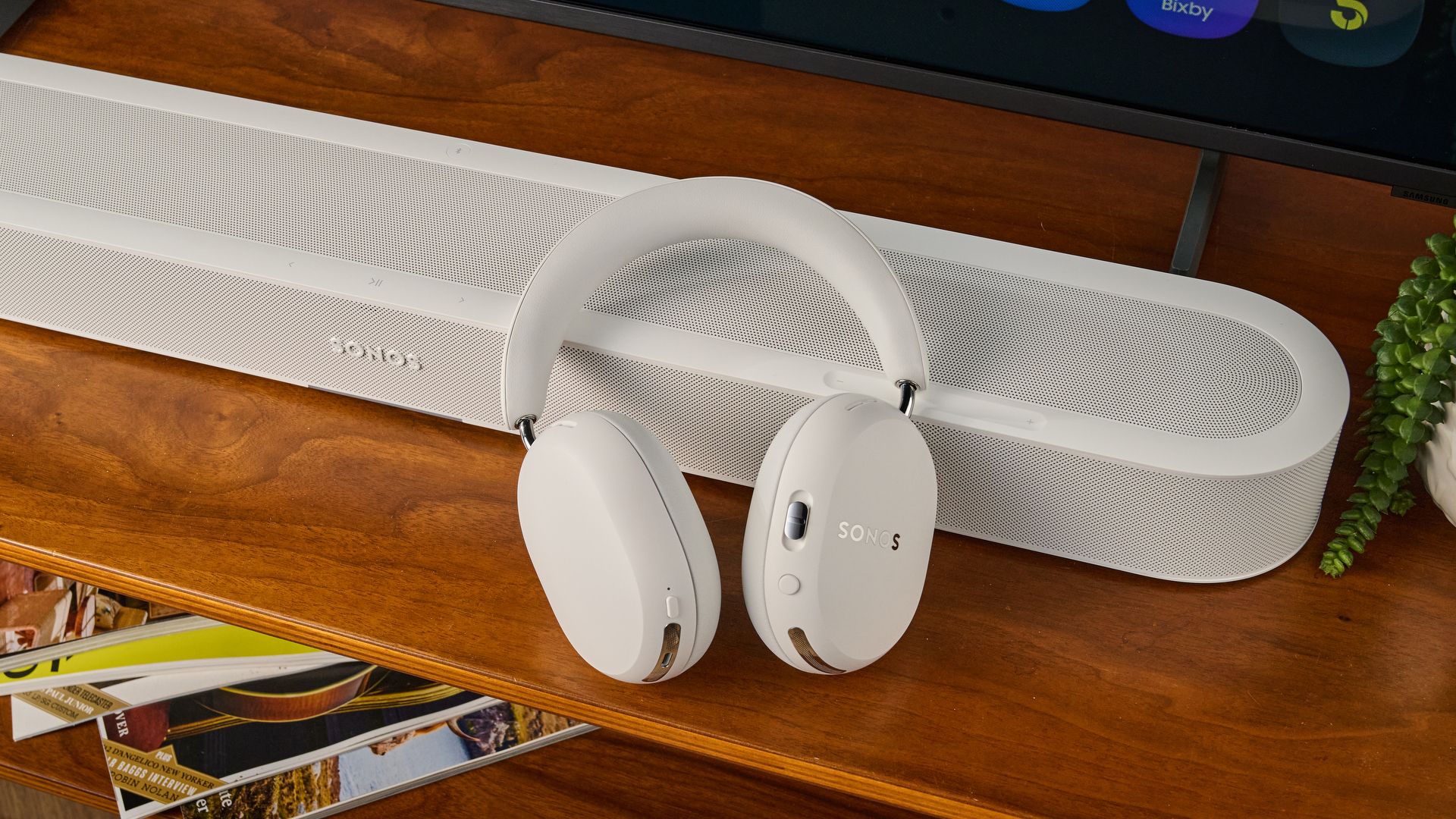
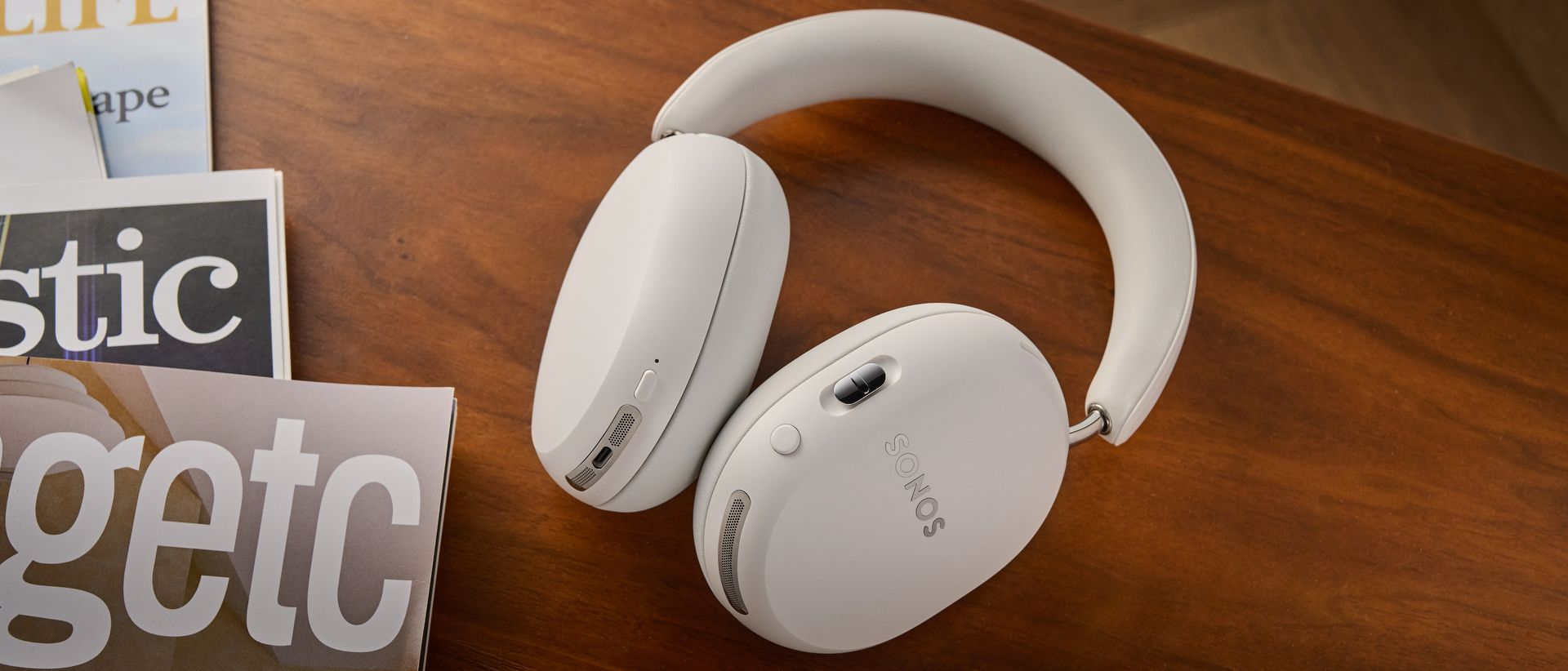
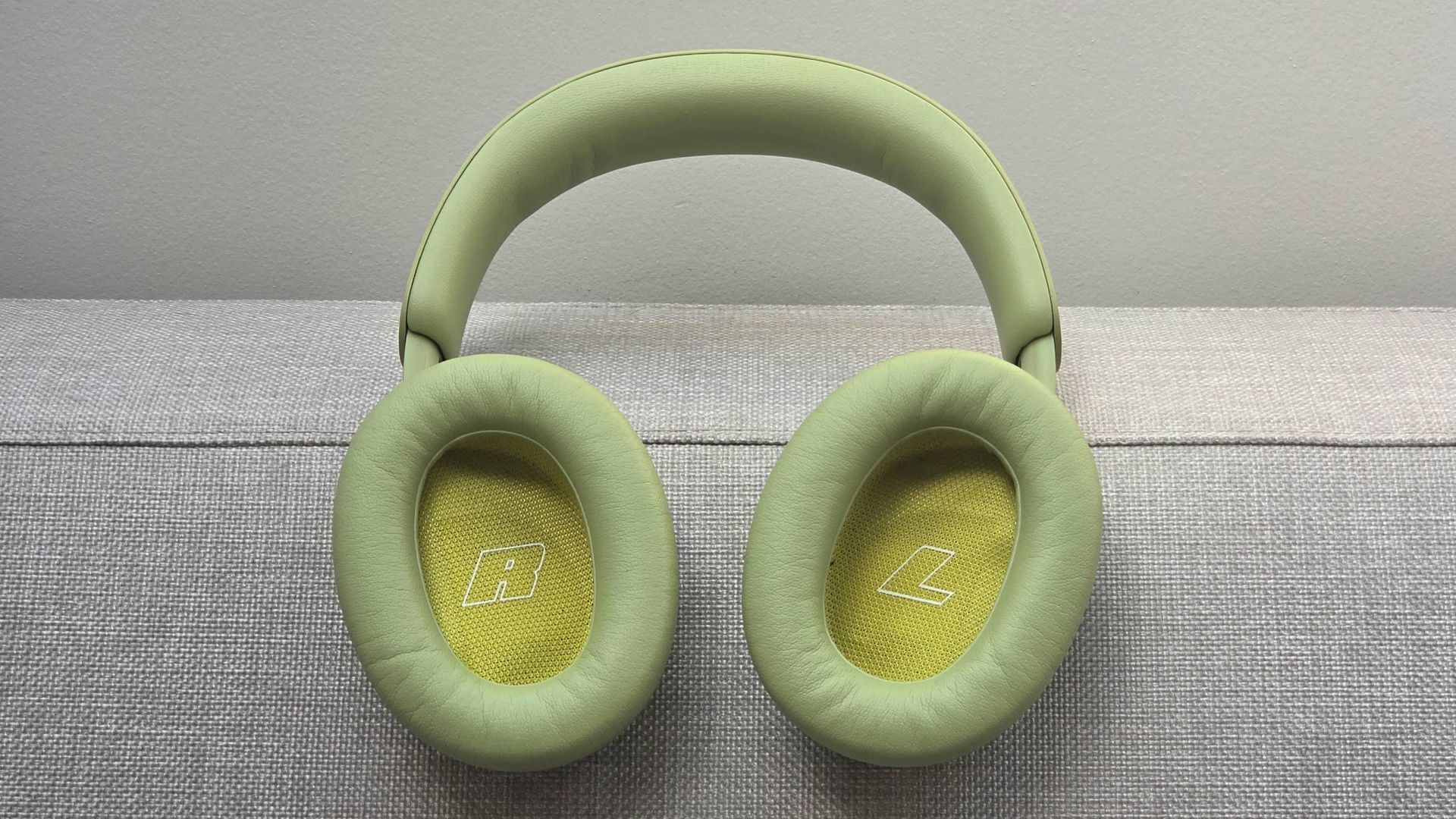
Bose releases Thom Browne redesign of recent flagship headphones
Adds a cashmere band, tag and cup stripes
Very much designer label, costing twice as much as the original pair
If you still wish you could rock the emo aesthetic as readily as an adult as you did when you were young, I've got a new pair of headphones which will have you screaming "I'm not oooookaaaay" in no time.
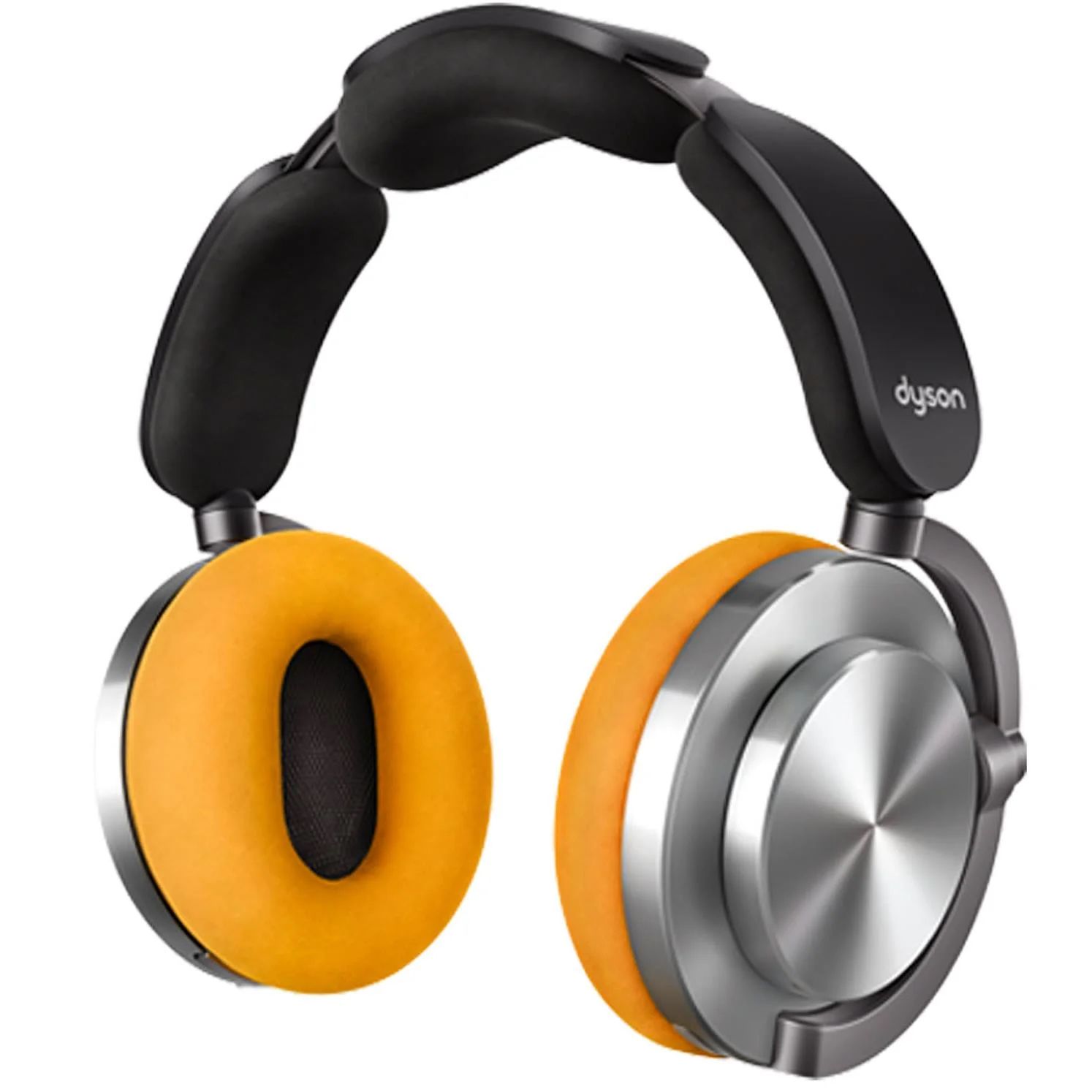
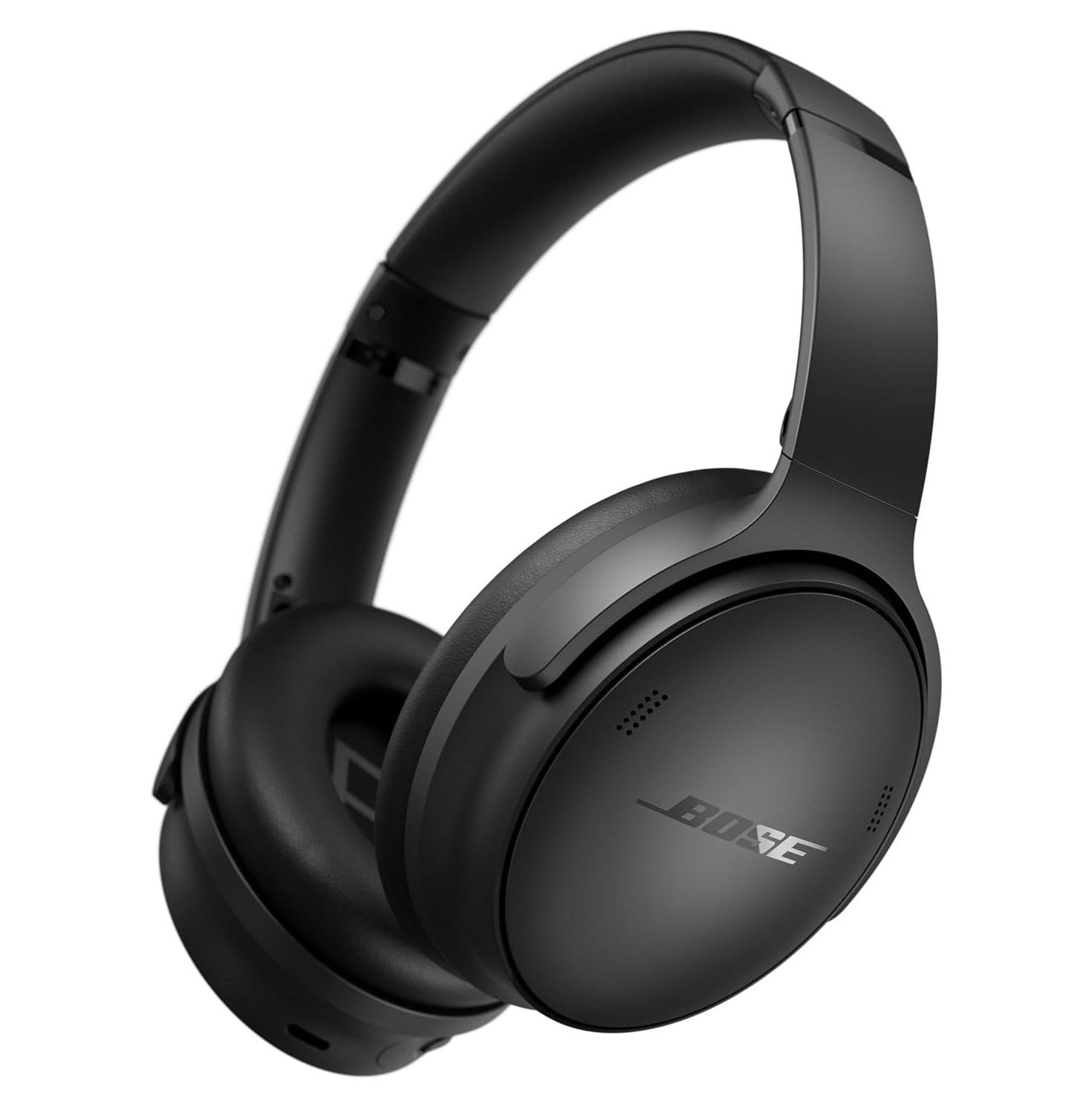
Fashion house Thom Browne has teamed up with Bose, to release a special-edition run of the latter's QuietComfort Headphones (2nd Gen). The new model is due to release on September 28, although you can pre-order them already.
Now, these cans aren't cheap; there is a designer fee to be paid. They cost $950 / £760 (about AU$1,500, although Bose's Australian website makes no mention of them). And that — depending on where you live — is more than double the price of the standard Bose QC Ultra Headphones (2nd Gen)'s $449 / £449 / AU$699 price, in any other finish.
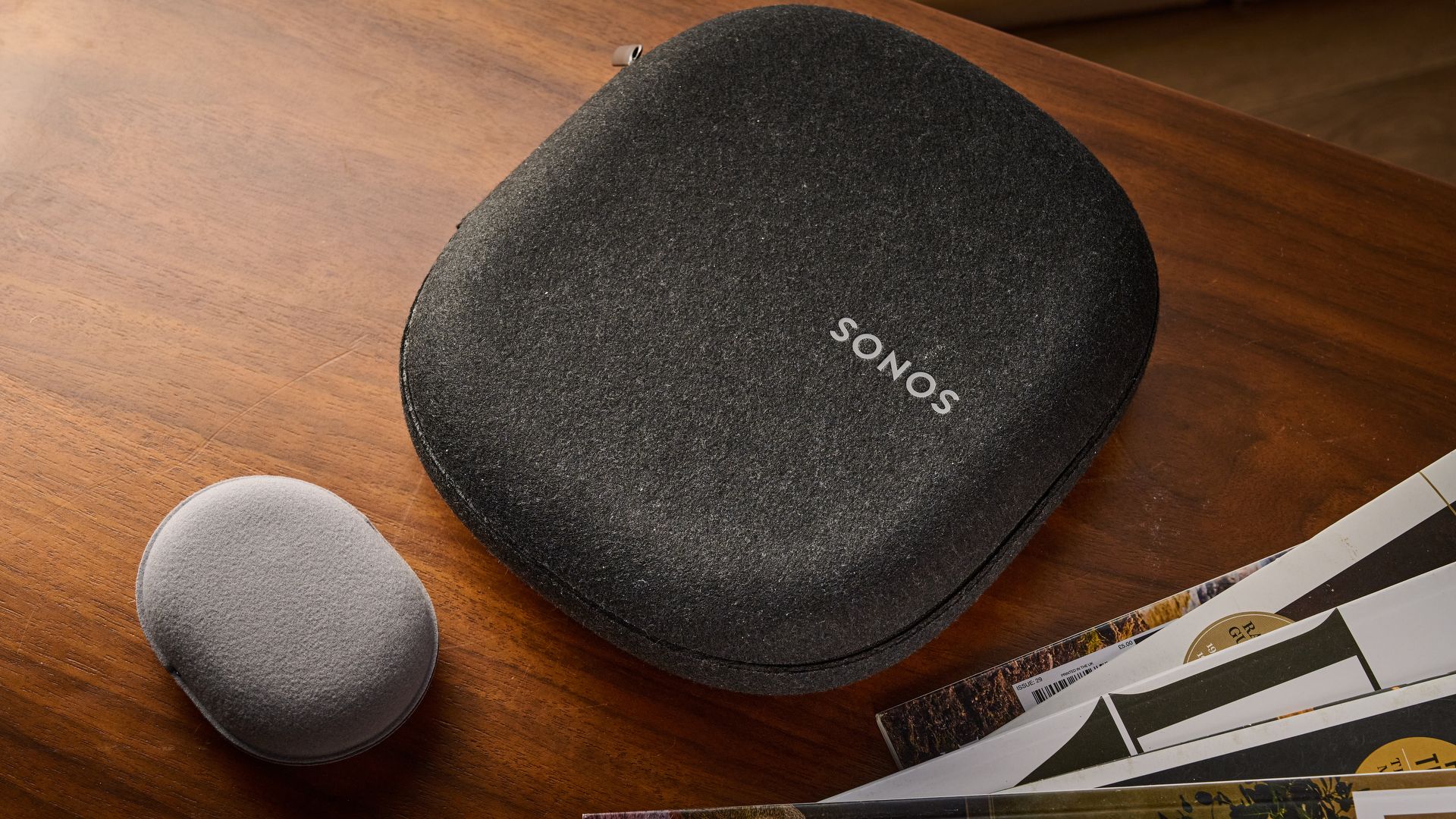
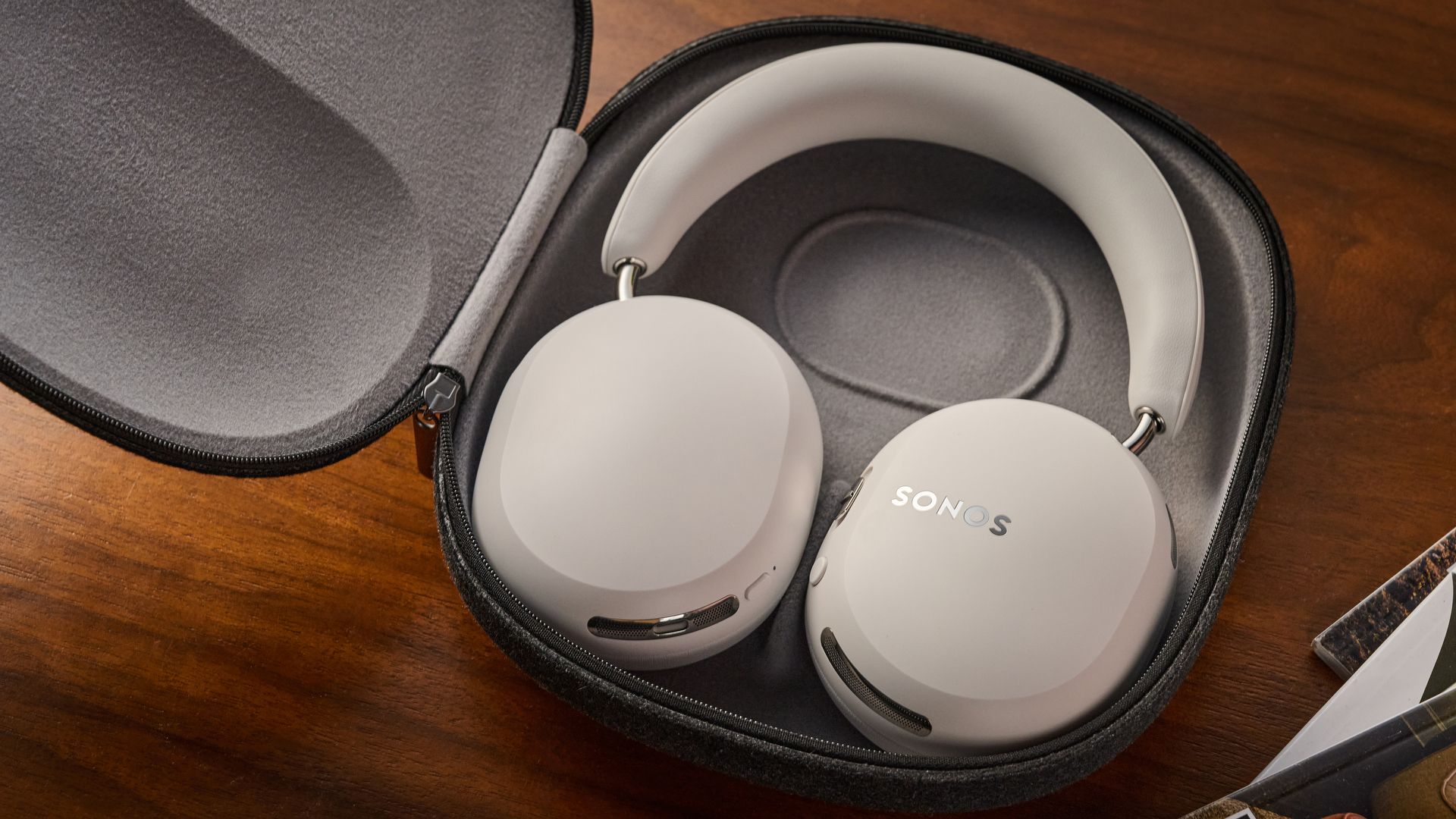
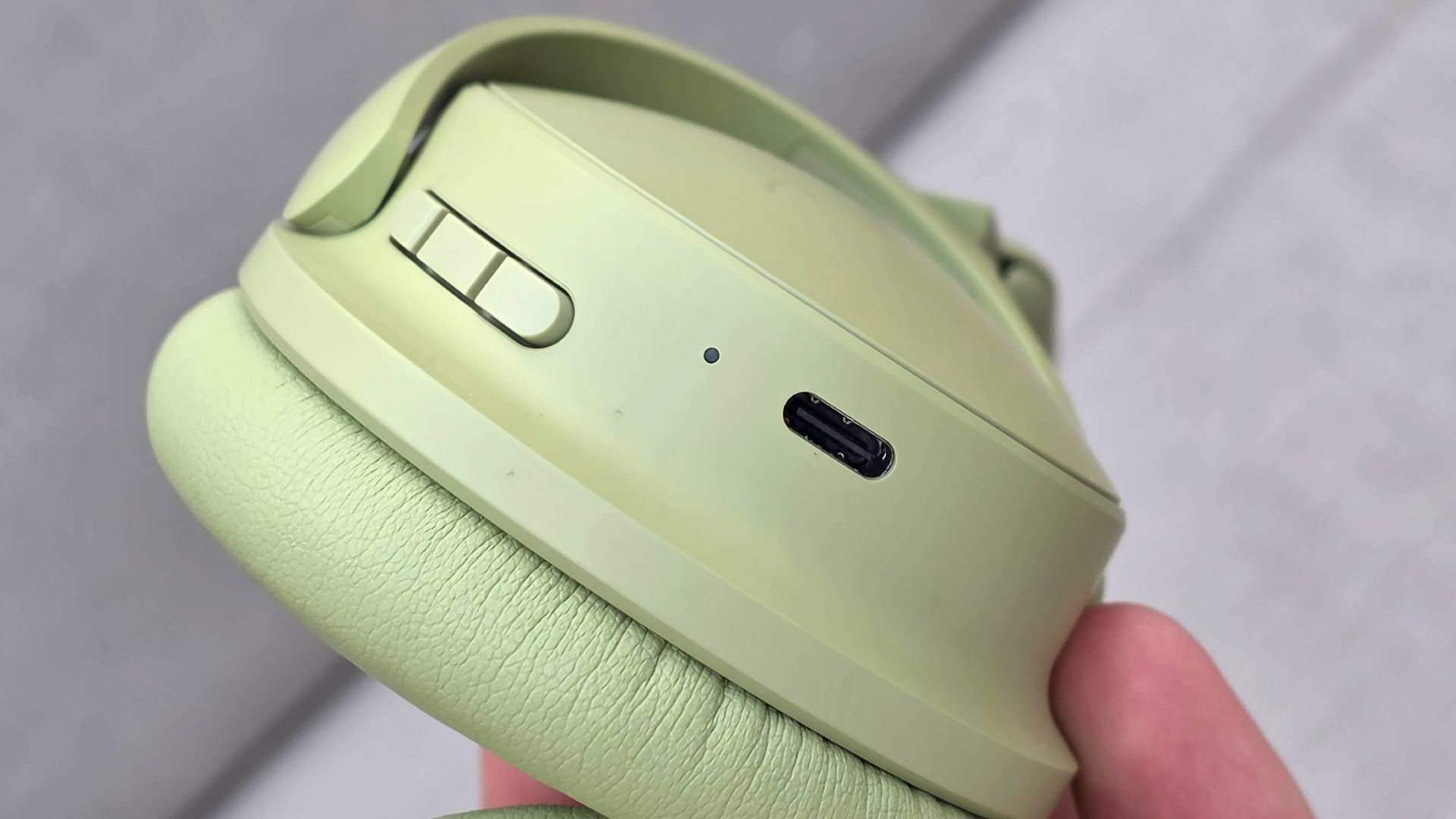
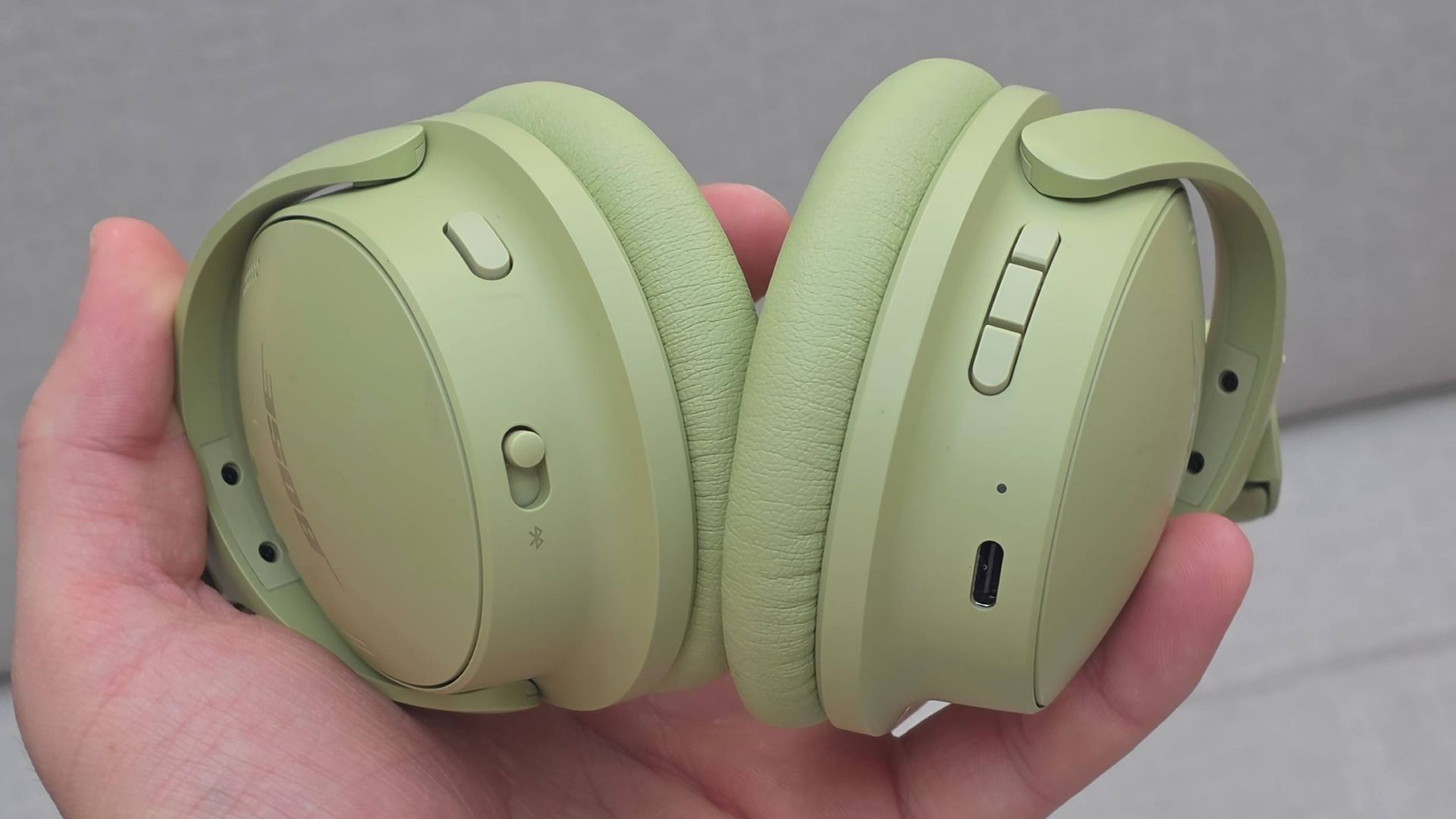
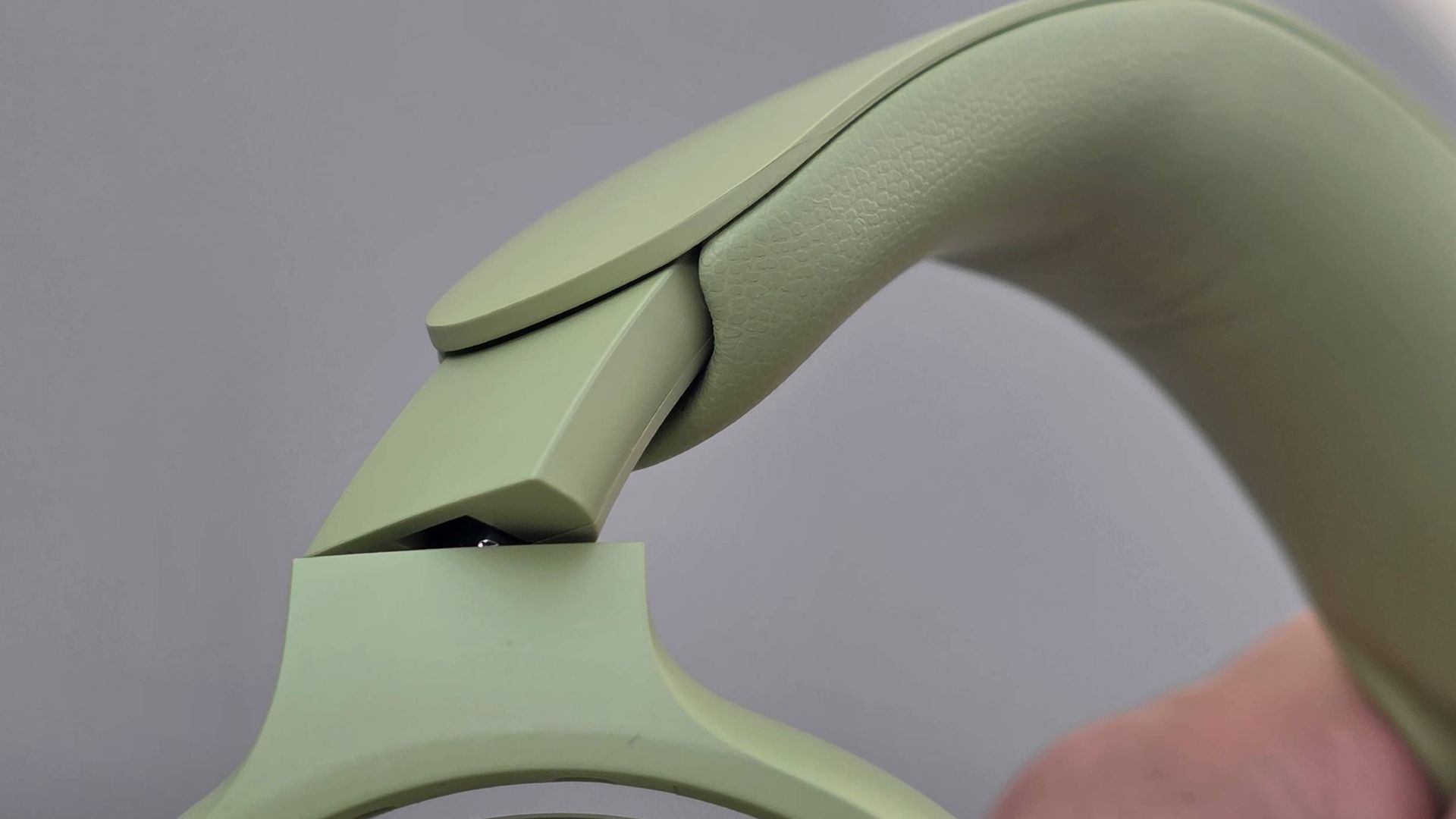
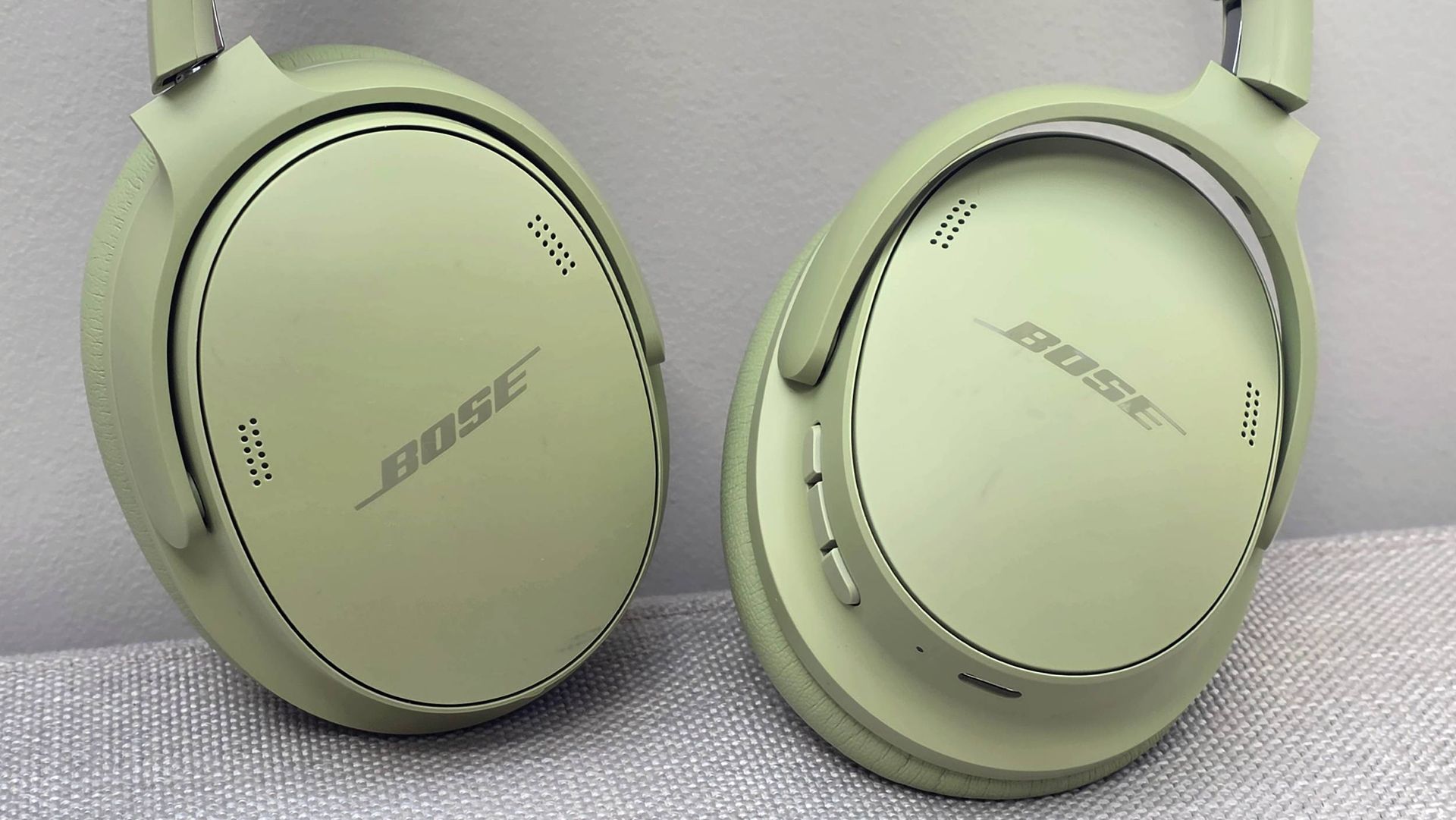
So what do you get for the designer surcharge? Well, it is purely the design flourishes that set them apart from the standard flagship pair. Not only do you get those distinctive white stripes on the left cup, but the ear cushions and headband are made from cashmere. You also get a new Browne-designed protective case, and the color option is called Smoked Pearl. Let's also not forget the bragging rights of throwing down that much money on some headphones.
Similar cans, other than the design?
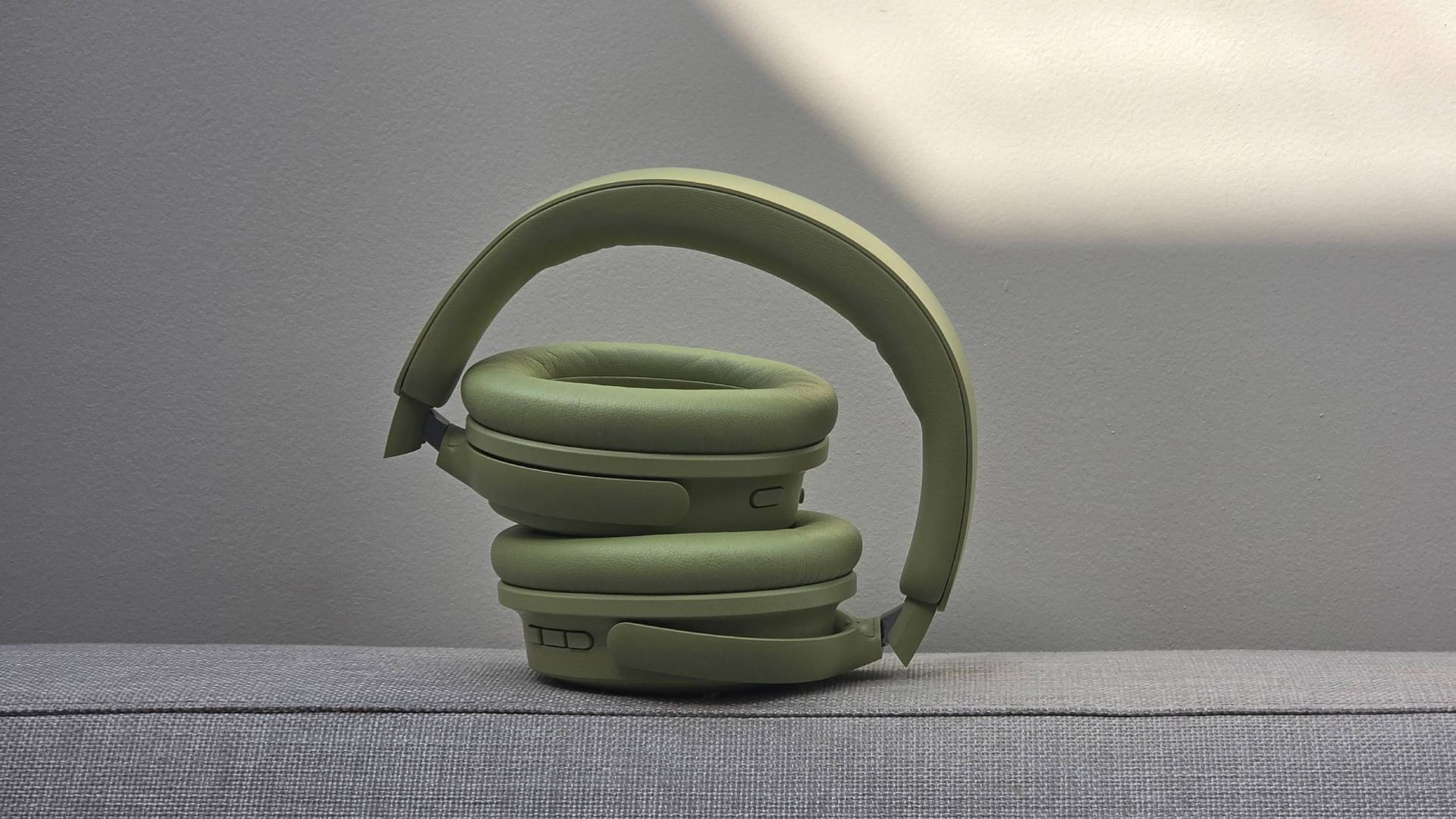
(Image credit: Future)
Other than the design flairs (which are "delightful, I must have them", according to my audio editor), the Thom Browne cans are pretty similar to the aforementioned Ultra set. These are not to be confused with the newer standard Bose QuietComfort Headphones (2nd Gen), to which I awarded a very respectable four stars to in my recent review.
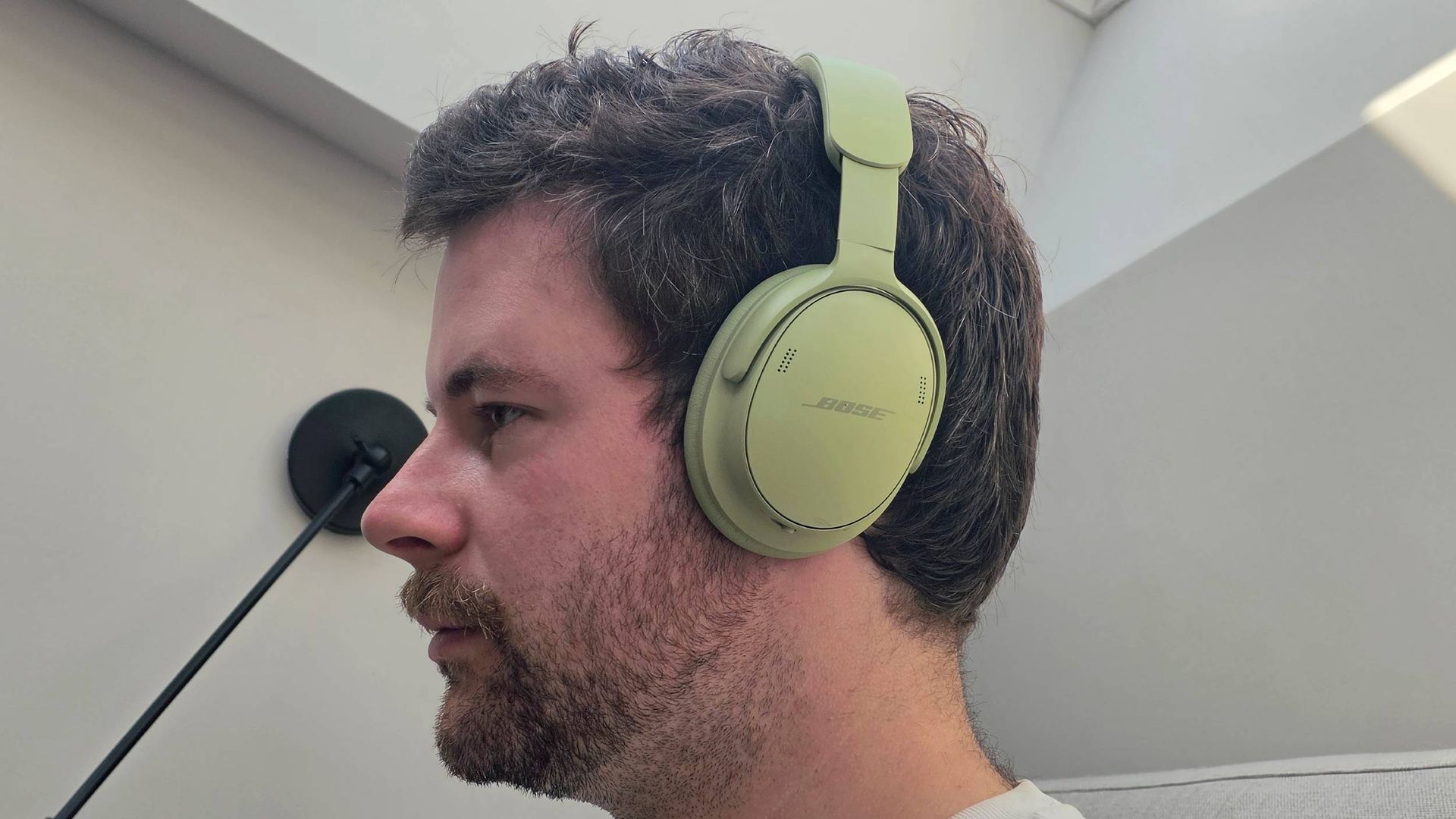
So, you're getting wonderful five-star Bose-tuned sound, fantastic spatial audio and solid noise cancellation. In fact, the comfort of the QC range is something I flagged in my review as being outstanding, and I'm sure some added cashmere will only make them more snug.
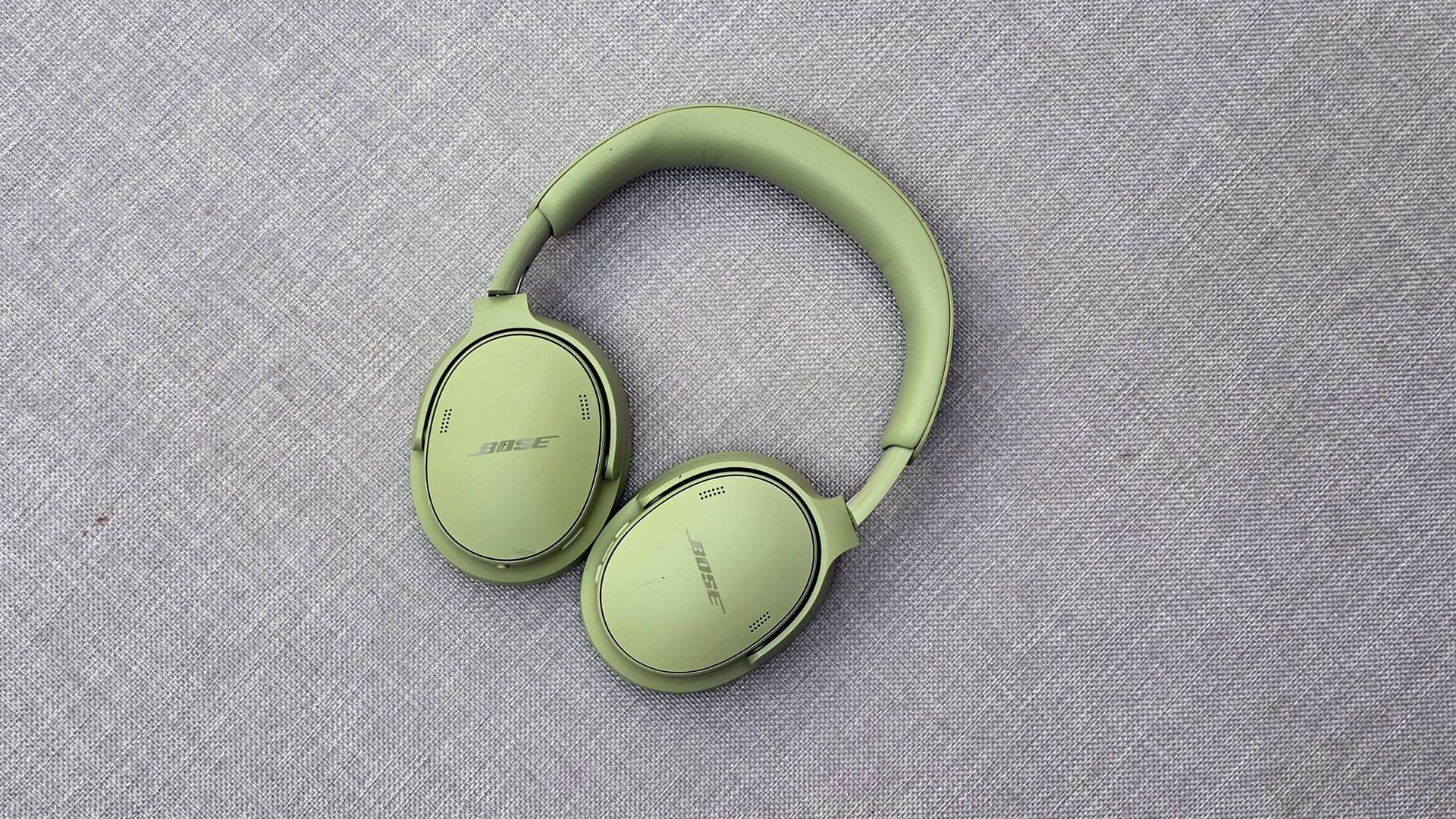
I tested the delightfully Shrek-like finish of the non-Pro cans which you see above, although those obviously don't have the same fashionable bent (unless you live in a swamp) but they come in a range of other colors including pink, mauve and mint.
Ironically, one of my issues with the Bose QCs was that they felt a little pricey compared to the competition, and the more-than-double-cost versions definitely aren't going to solve that.
That is to say, these are a buy for 'money no object' music lovers who think nothing of splashing out on fancy designer headphones. Saying that, if you have a malleable budget, the regular Bose QuietComfort Ultra Headphones (2nd Gen) might still be the top buy if you don't care about the designer extras.
Not for my audio editor though. She is already saving up…
Picking the Samsung Galaxy S26 FE to be your next phone would be a good decision. But whether it’s the best decision is the chewier question.
As has been the case for the past several years, Samsung has launched one final version of its Galaxy S flagship phones just before summer is out (in the US and UK, at least). This “Fan Edition” device aims to provide a more streamlined experience, focused on camera capabilities and AI, at a more approachable price.
However, Samsung has this all backwards. The Galaxy S26 FE’s cameras range from OK to weak, and the AI tools will soon be available on older models. Plus, the price hike this year makes the phone a little less of a bargain.
Arguably, the real reasons you’ll want a Galaxy S26 FE are its big screen, fast charging, strong battery life, and surprisingly good gaming performance. But then, if those are your priorities, you may still be better off looking elsewhere.
Confused yet? Hopefully the rest of my Galaxy S26 FE review will clear things up.
Samsung Galaxy S26 FE review: Price and availability
Starts at $699 /£699 / AU$1,149
The Galaxy S26 FE first went on sale on September 4, 2026. It costs $699 / £699 / AU$1,149 for the standard version, which is $50 / £50 / AU$50 more than the Galaxy S25 FE cost when it launched.
As a result, it means there’s a $200 / £180 / AU$400 difference between this phone and the cheapest full-fat Samsung Galaxy S26, or a $400 / £400 / AU$700 gap if you compare it to the similarly-sized Galaxy S26 Plus. However, those Galaxy S26 models have twice as much storage as the S26 FE by default, which makes direct comparison a little complicated.
Also, keep in mind that you get six free months of Google AI Pro (worth about $120 / £114 / AU$200 at current subscription prices) with the purchase of the S26 FE. It’s an offer worth taking advantage of for the 5TB of cloud storage capacity alone, let alone the extra Gemini powers.
Samsung Galaxy S26 FE pricing
US price
UK price
AU price
128GB
$699
£699
AU$1,149
256GB
$799
£799
AU$1,299
512GB
Not available
£949
AU$1,599
Value score: 3.5 / 5
Samsung Galaxy S26 FE review: Specs
Before we continue, here’s a rundown of the Galaxy S26 FE’s hardware.
No major updates from previous model other than new colors
Worthy of the Galaxy S name in terms of looks and durability
Looks-wise, there are no major body changes between the Galaxy S26 FE and the S25 FE — not that Samsung really needed to make any.
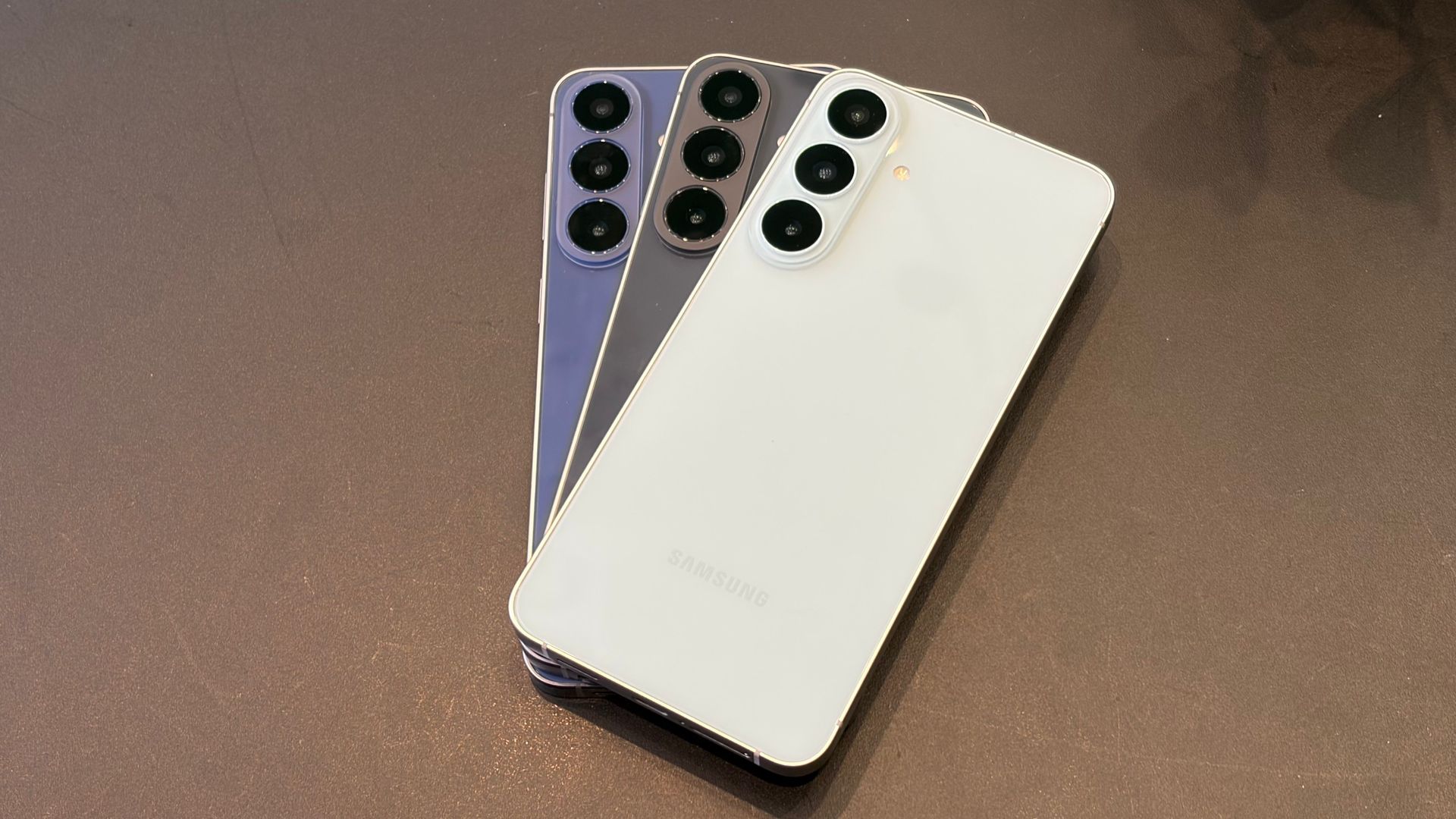
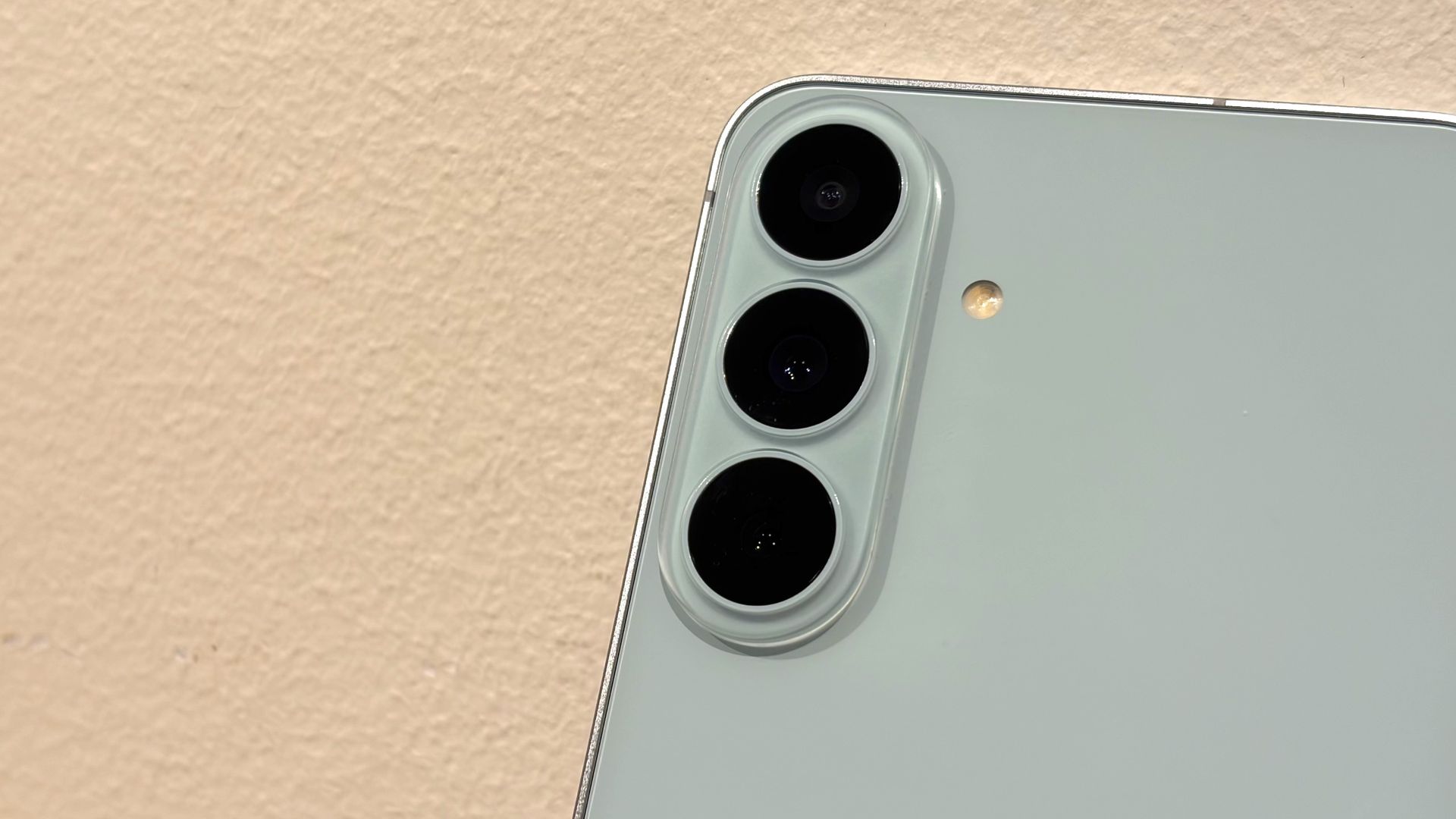
You still have three camera lenses embedded directly into the back of the phone, then flat rails with rounded corners around the sides, leading to a big display with a single centered selfie camera on the front.
Unless you’re able to tell the S26 FE apart from a regular S26 by the color of the handset, the big telltales that you’re holding an FE are the shiny back panel, instead of a matte texture, and the larger chin bezel under the display.
(Image credit: Richard Priday / TechRadar)
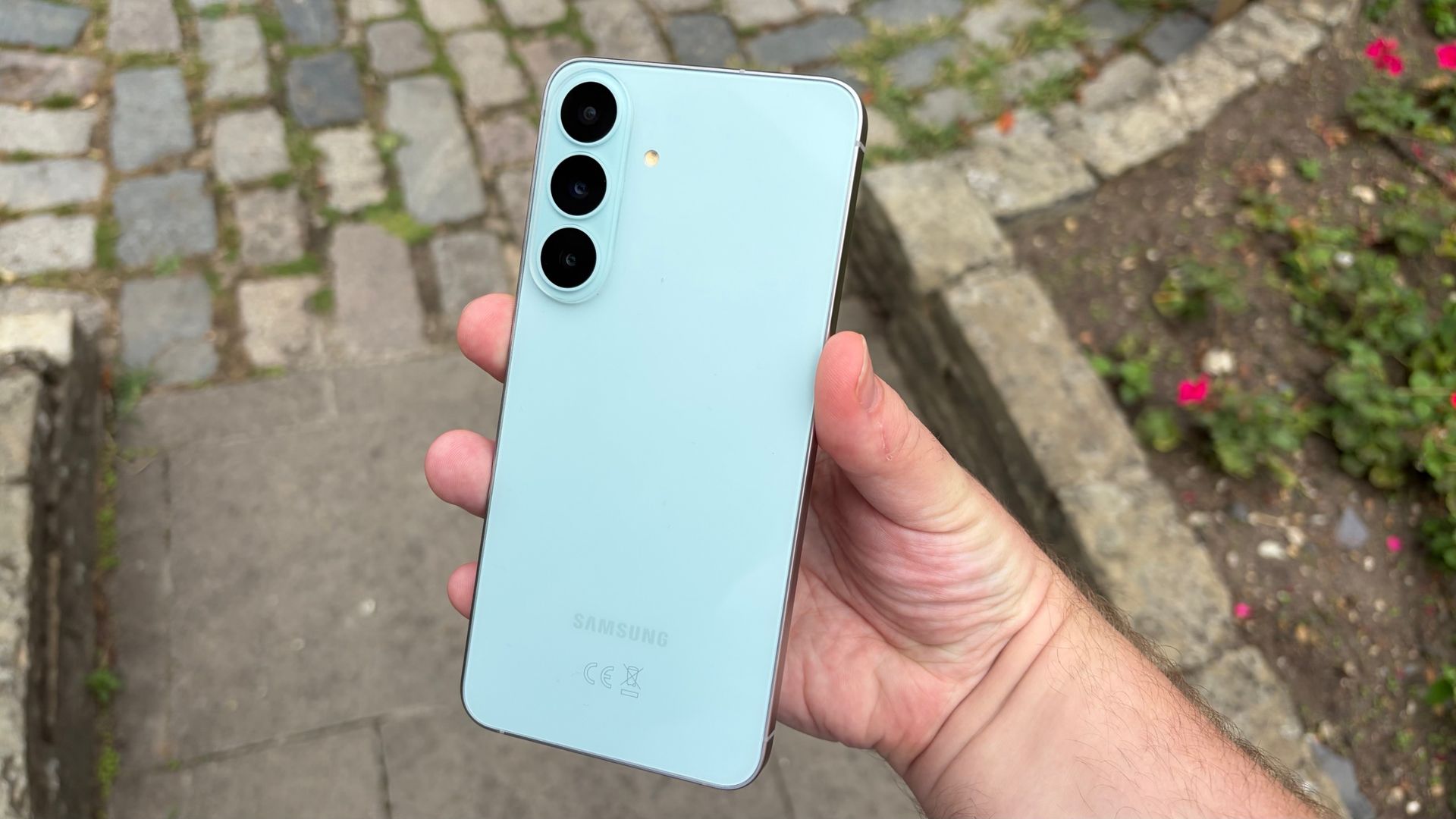
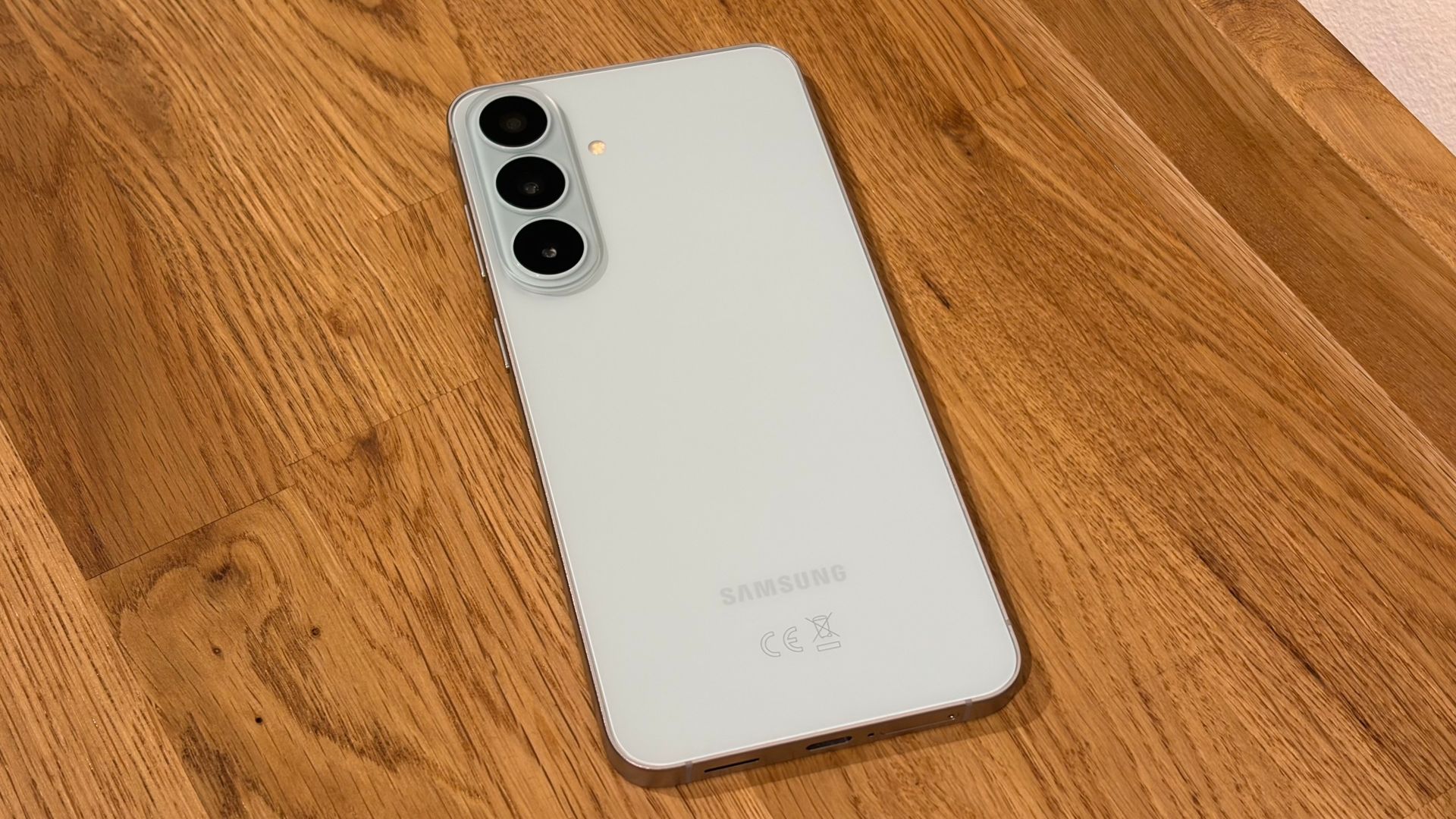
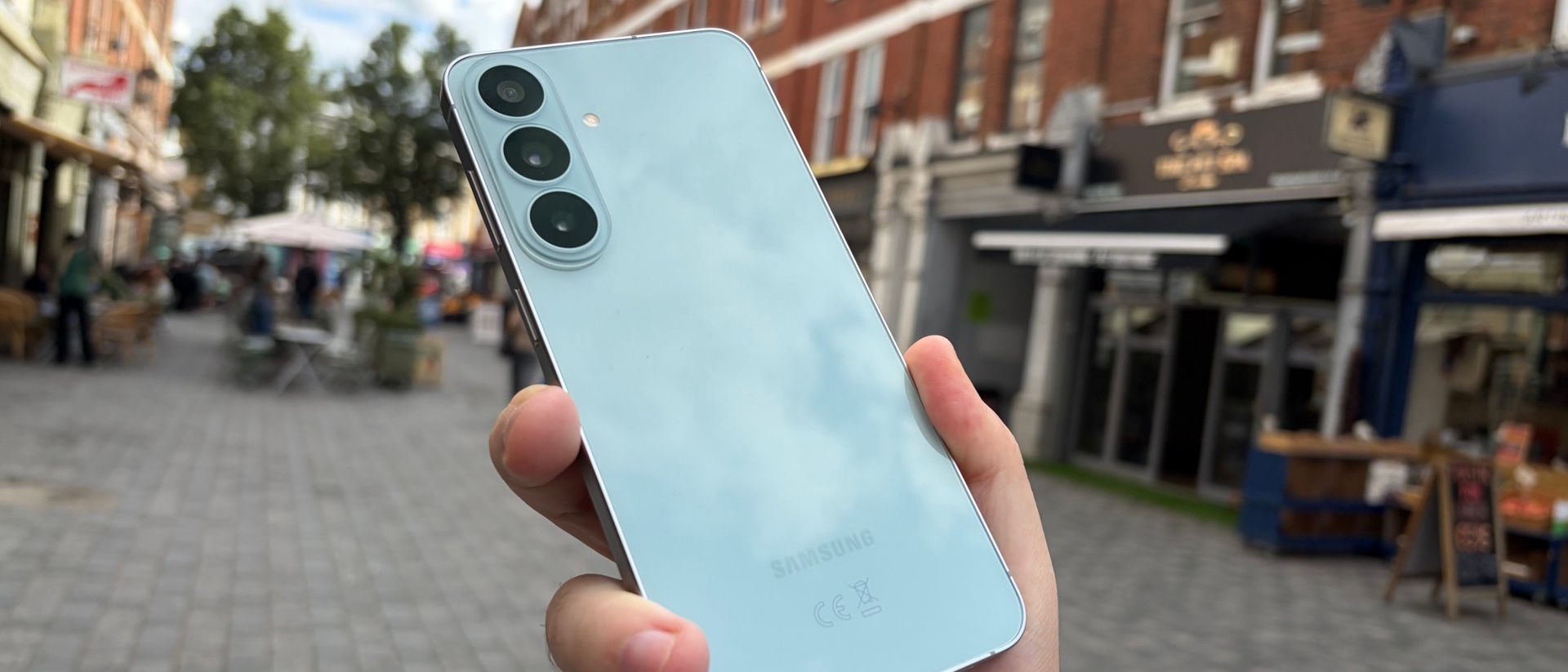
Speaking of colors, Samsung’s three offerings are Graphite, Blueberry and Pistachio (pictured). The gray option will satisfy anyone who isn’t fussed about the color of their phone, or who knows they’ll be using a case to add some style to their new handset, but I do like both the blue and pale green options for the balance they strike between boldness and subtlety.
Like the other Galaxy S26 models, the S26 FE is rated IP68 for water/dust-resistance, which we expect from any flagship phone launching today. However, it uses Gorilla Glass Victus Plus on both sides to protect against scratches and smashes, which is a generation behind what you get on the S26 or S26 Plus.
Design score: 4 / 5
Samsung Galaxy S26 FE review: Display
(Image credit: Richard Priday / TechRadar)
Big and colorful, but lower-spec resolution and brightness
Larger bezels than other Galaxy S phones
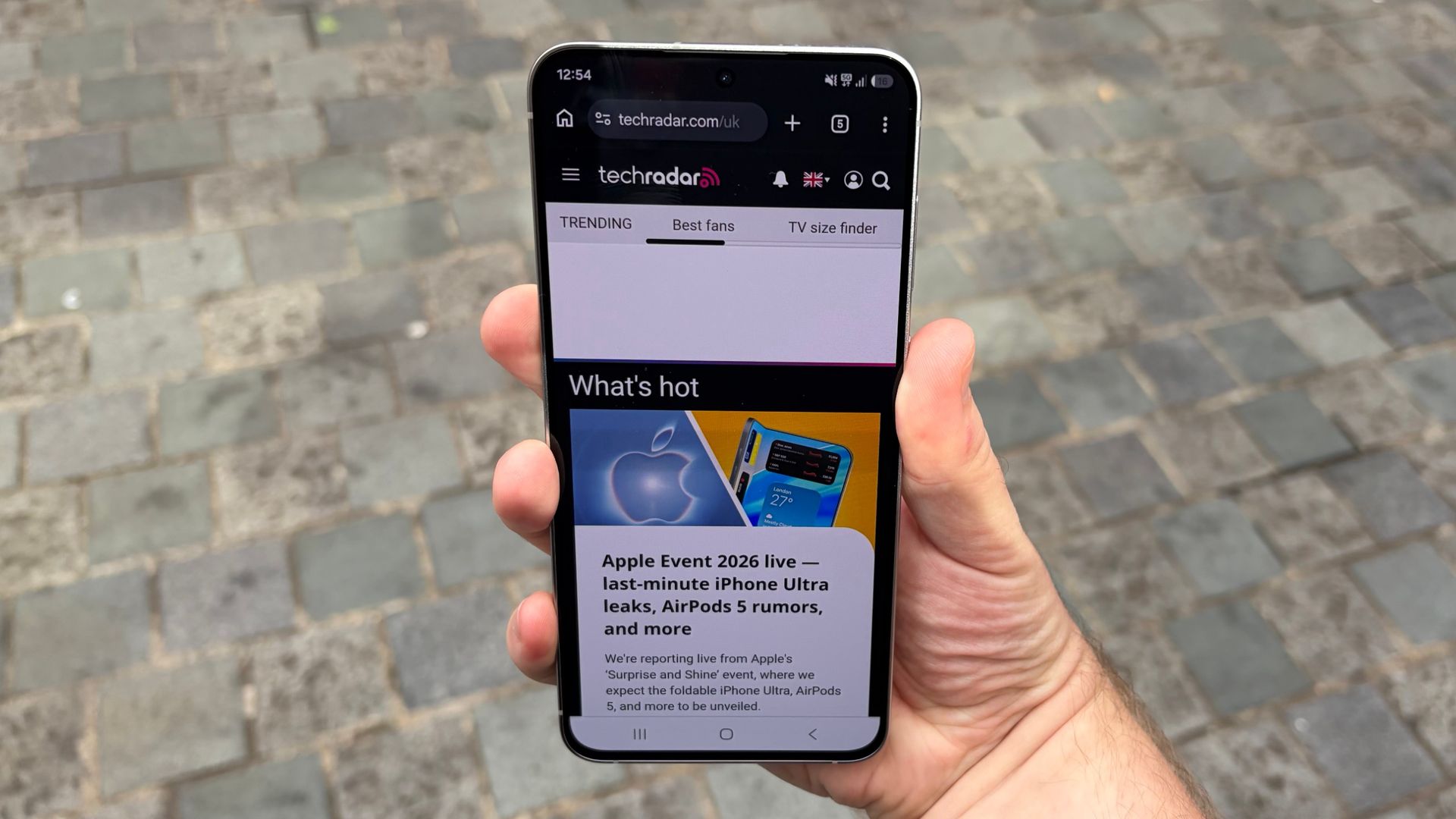
The 6.7-inch AMOLED display of the Galaxy S26 FE matches the size of the Galaxy S26 Plus’ display, but that’s where the similarities end. The FE’s panel only reaches an FHD resolution, rather than the Plus’ more detailed QHD, and peaks at 1,900 nits of brightness according to Samsung’s testing, rather than the 2,600-nit rating of the other S26 models.
Even though the S26 FE can’t deliver as much brightness or as many pixels as Samsung’s top-tier displays, the detail and the colors of the FE’s panel are still strong, and the screen remains fairly legible even out in what remains of the summer sun.
The bezels around the Galaxy S26 FE’s display are thicker than they are on the Galaxy S26 Plus or other premium Samsung phones, which is an understandable limitation given the FE’s lower price. It doesn’t interfere with whatever you want to watch on the screen, but it’s a difference you’ll notice if you have used other recent Galaxy S phones.
Display score: 3.5 / 5
Samsung Galaxy S26 FE review: Software
(Image credit: Richard Priday / TechRadar)
Samsung’s latest OS comes pre-installed
Seven more generations of updates have been promised
The Galaxy S26 FE comes pre-installed with OneUI 9, Samsung’s take on Android 17. That actually puts it ahead of the other Galaxy S26 models, which currently can only access OneUI 9 as a beta version.
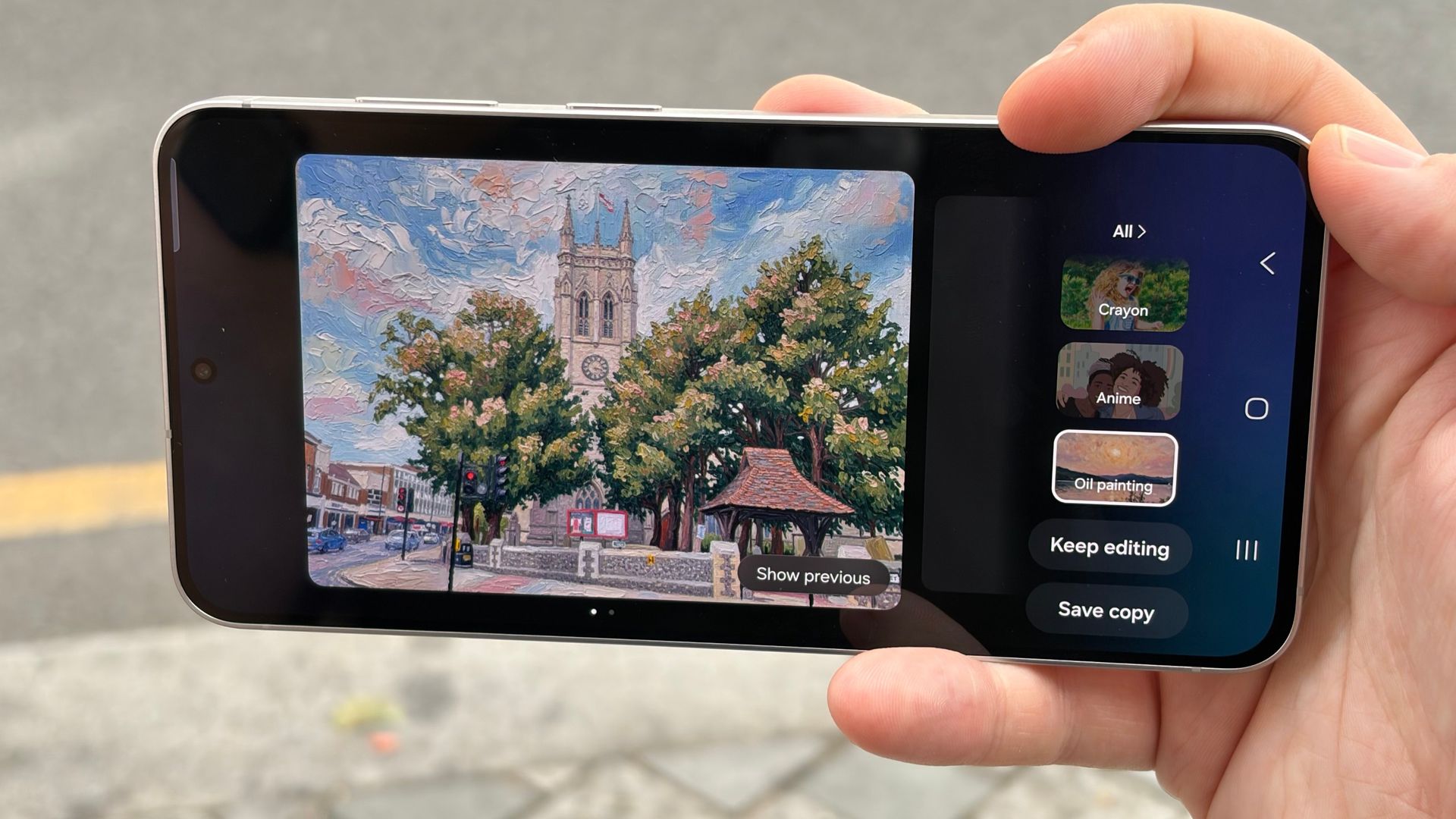
OneUI 9 gives the FE a lot of tools to play with. My FanCam — the video subject tracking tool which just debuted on the much more expensive Galaxy Z Fold 8/ Galaxy Flip 8 series — is here and works just as capably. That’s joined by other AI-powered editing features like Photo Assist and Audio Eraser.
(Image credit: Richard Priday / TechRadar)
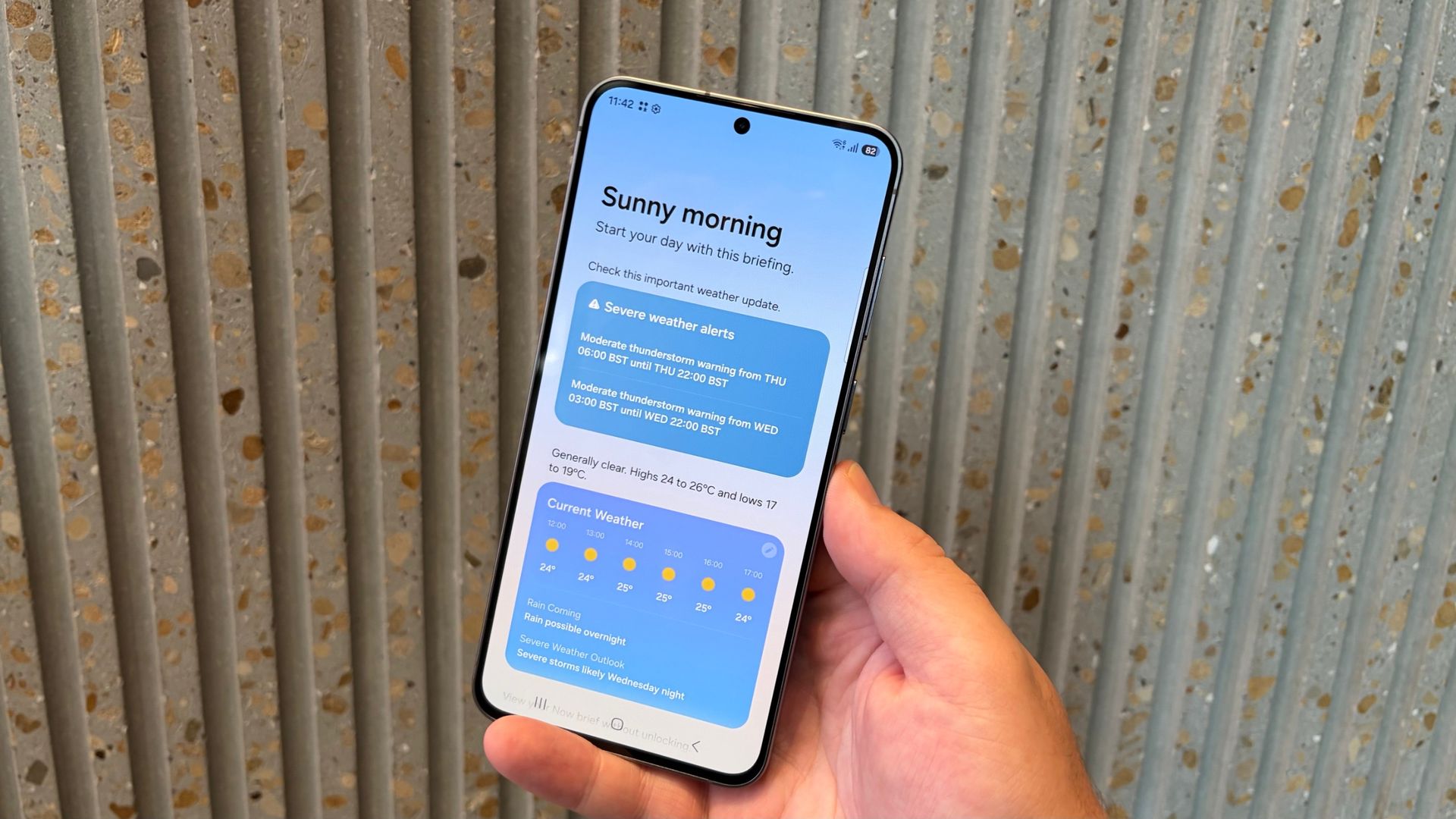
Meanwhile, for productivity, you have Now Brief and its new custom cards option to give you even more personalized updates all in one place, more supported apps for Now Nudge, plus expanded cross-app functions and Gemini.
Perhaps most importantly for the Galaxy S26 FE, it comes with Samsung’s full seven generations of Android and seven years of security updates promise. That’s the same as other Galaxy S models, and one additional year over what the cheaper Galaxy A57 gets, which is crucial for the value proposition of the S26 FE.
Software score: 4 / 5
Samsung Galaxy S26 FE review: Cameras
(Image credit: Richard Priday / TechRadar)
Minor upgrades but identical sensors to previous model
The main and selfie cameras are good, but the ultra-wide and telephoto cameras lag behind
The Galaxy S26 FE’s camera loadout has a 50MP main rear lens as its centerpiece. You also have 12MP ultra-wide and 8MP 3x telephoto cameras on the back, as well as a 12MP selfie camera embedded in the display. This is the same basic setup as the Galaxy S25 FE, and also what you'll find on the Galaxy S26 and Galaxy S26 Plus, except that the more expensive phones get a higher-resolution 10MP zoom camera instead.
Our first example is a main camera shot of some brightly colored buildings in London’s Soho neighborhood. It’s a tricky one for any camera to balance due to the shaded shopfronts on the left side and the sky and brightly lit building in the center and right side. The Galaxy S26 FE still has some detail to offer in the shadowed brickwork, but Samsung’s strength in bright colors is on full display on the other half of this particular image.
Keeping with the main camera but looking out at the London Eye at night, we see another strong attempt from the Galaxy S26 FE. There’s some softness in the details, but the balance of colors between the lights and the night sky still makes for an appealing shot.
Looking across a sun-scorched park with the ultra-wide camera, we see a shot with plenty of scenery in it, with little to no distortion at the edges. The brightness and colors could use work, though, as even accounting for the patchy grass and overcast sky, things look overly drab.
The two shots of the church bell tower, one at 2x magnification using the S26 FE’s main camera and the other using the 3x telephoto camera, reveal how best to zoom in with this phone’s particular cameras. The in-sensor 2x zoom still keeps the subtleties of the colors and markings within the brickwork and foliage of the shot, thanks to the 50MP main sensor having plenty of pixels to spare even when zoomed in. However, while the telephoto camera has greater reach, the resulting image is darker and flatter, as you might expect from the lower-resolution sensor. It’s more of a trade-off than I’d like to see on a flagship phone’s zoom camera.
I’m normally a fan of Samsung selfies, but I’m not sure I like how the highlights are exposed in this particular shot. Samsung’s excellent portrait algorithm has applied the perfect level of bokeh to this image, however, cutting around my head, and especially my glasses, accurately and applying a gentle blur to the leaves behind.
Having gone through these samples, you’ll see that the Galaxy S26 FE’s photography potential is reasonable, at least for what are arguably the two most important cameras. For future generations of S FE, though, Samsung could do with upping its game if it wants to continue claiming this is a flagship product.
Camera score: 3 / 5
Samsung Galaxy S26 FE review: Performance
(Image credit: Richard Priday / TechRadar)
The Exynos 2500 chip is a good performer, especially for graphics
8GB of RAM is limiting for a premium phone in 2026
Here’s an area where I was pleasantly surprised by the Galaxy S26 FE. Samsung’s own Exynos 2500 chipset sits inside the S26 FE, rather than the Snapdragon 8 Elite Gen 5 chip that basically all the other top Samsungs of 2026 are using. But that hasn’t stopped the S26 FE from turning in some decent scores.
As the table below reveals, the Exynos 2500 lags behind slightly in CPU single-core results, but is on par with or ahead of the pack on the rest of the tests. It’s a long way out in front on the Solar Bay benchmark, no doubt thanks to the Exynos’ GPU, which is well-suited to the ray-tracing graphics that this test focuses on.
Samsung Galaxy S26 FE benchmark scores
Samsung Galaxy S26 FE
Geekbench 6 single-core
2,361
Geekbench 6 multi-core
7,831
3DMark Wild Life Extreme Stress Test best
5,116
3DMark Wild Life Extreme Stress Test low
3,456
3DMark Solar Bay
10,526
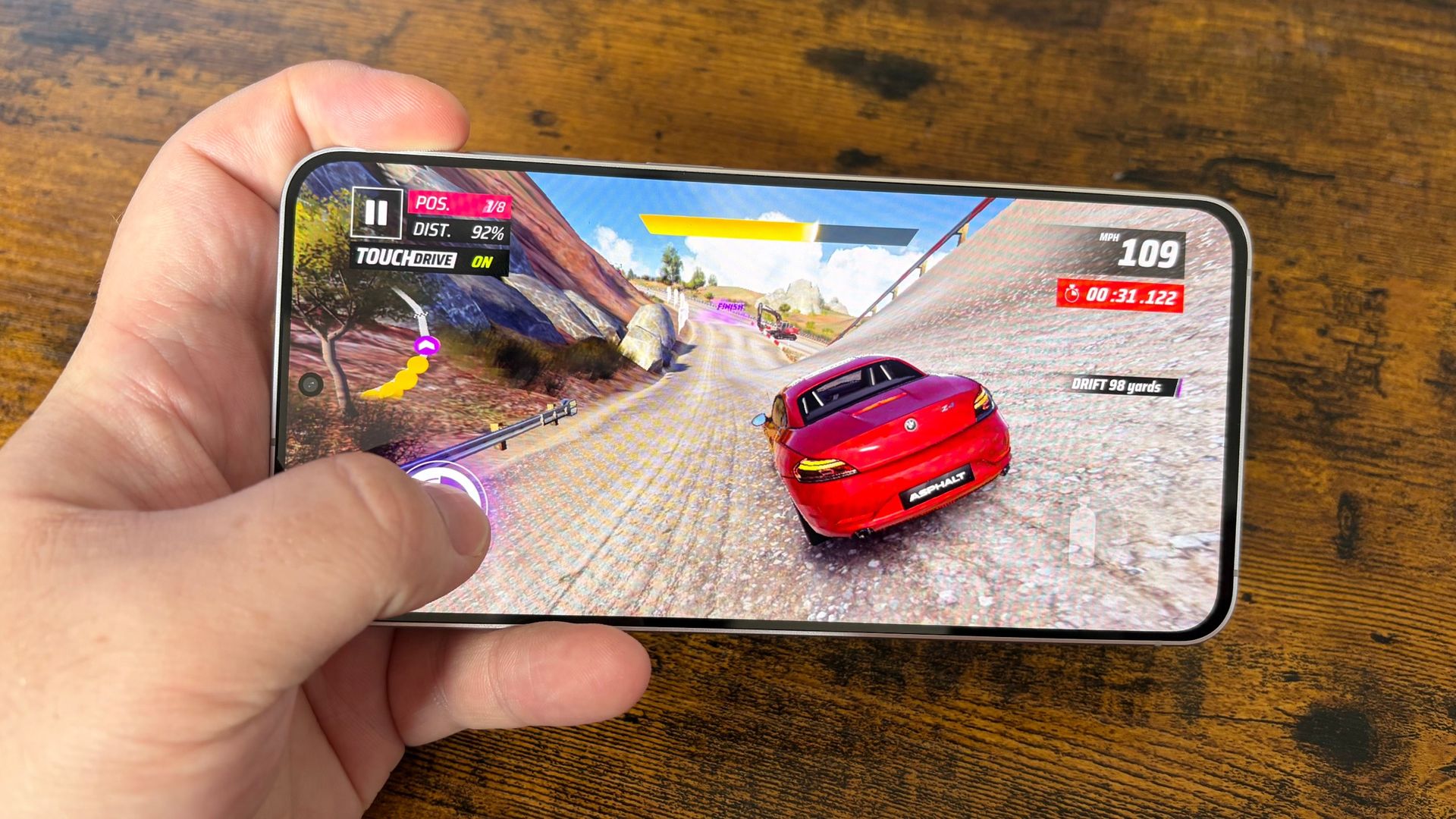
Bearing only 8GB of RAM compared to the 12GB in other premium Samsung phones, the Galaxy S26 FE does struggle with multitasking or intensive apps. While you can still game on this phone happily, it’s not a handset you’ll want to do anything more practical on than standard browsing and messaging.
Performance score: 4 / 5
Samsung Galaxy S26 FE review: Battery
(Image credit: Richard Priday / TechRadar)
The same battery/charging hardware as the more expensive S26 Plus
Battery life day-to-day is good, while charging is plenty fast enough
Samsung offers the same 4,900mAh battery capacity in the Galaxy S26 FE as it does in the Galaxy S26 Plus. However, according to Samsung’s official battery estimates, the S26 FE doesn’t offer the same battery life, managing 29 hours of video playback compared to the S26 Plus’ 31 hours or the S26’s 30 hours.
For me, I used about 40% of the phone’s battery during a typical day’s use. This included some work, some photography, and some social media scrolling and video watching. The Galaxy S26 FE could definitely survive two days of regular use before needing to charge, as you would hope from a phone with this size of battery.
The Galaxy S26 FE is still equipped for 45W wired charging and 15W wireless charging. That’s the same wired speed as the S26 Plus and Ultra, but the wireless charging is slower, since the FE is not Qi2 compatible.
Using a 45W charger, Samsung estimates a 69% refill for the S26 FE in half an hour. In my own test, I found the S26 FE managed to fill to 43% in 15 minutes and to 100% in 58 minutes. Considering the battery life this phone can manage, a complete refuel in under an hour and getting over two-fifths full in a quarter-hour isn’t bad at all, even if faster options are out there.
Battery score: 4 / 5
Should you buy the Samsung Galaxy S26 FE?
Samsung Galaxy S26 FE scorecard
Attributes
Notes
Rating
Value
The cheapest Galaxy S26 model, although not by much post-price hike.
3.5/5
Design
Looks like any other Galaxy S26, except with some fun, unique colors and slightly less durable materials.
4/5
Display
Big and colorful, but lacking detail.
3.5/5
Software
Samsung’s best features come pre-installed, but will soon be available on older phones too.
4/5
Camera
The main and selfie cameras produce strong photos, but the phone’s let down by its ultra-wide and telephoto lenses.
3/5
Performance
A below average RAM capacity is understandable for the price, and the phone still plays games really well.
4/5
Battery
Less efficient than other S26 models, but still long-lasting and fairly fast-charging.
4/5
Buy it if…
You want the big premium Samsung experience for the smallest possible price The Galaxy S26 FE is the cheapest Galaxy S26, and joint second largest. If you want a big display and long battery life from Samsung for less, then this is the model for you.
Exclusive software and AI features don’t interest you You do get some excellent tools and toys to play with within One UI 9, but since this update will come to older Samsungs soon enough, this isn’t a phone to buy for this reason alone.
Your performance needs are about average If you like to play games on your phone, or know you’ll spend long days away from a charger, the S26 FE will suit you well. It doesn’t offer the very best in either power or battery life, but arguably it’s a case of diminishing returns if you spend any more than this.
Don’t buy it if…
You care about photography Taking snaps with the main and selfie cameras on the S26 FE is easy and results in great photos. But if you want more detail or know you like taking ultra-wide or zoom shots, there are many other phones that will suit you better.
You want the best long-term value While the S26 FE is cheaper to buy right now, we’d recommend looking at one of Samsung’s more expensive S26 models, or those of another Android brand, if you’re hoping to get as many happy years out of your new phone as possible.
If you’re willing to spend even a few dollars/pounds more The Galaxy S26 FE sits just below the starting price of typical flagship phones. That means you could save yourself 100 bucks or so, or you can spend the extra and unlock the next tier of hardware and features that could provide far more value to you.
Samsung Galaxy S26 FE review: Also consider
Samsung Galaxy S26 Plus
It’s quite a bit more expensive, but as an investment, it may be worth spending the extra money over the Galaxy S26 FE’s price to secure a phone that outperforms it on every important metric.
Costing only two hundred bucks more than the S26 FE, the standard S26 gives you the premium Samsung experience at the best possible price, even if the display is quite a bit smaller.
☑️ 100s of smartphones reviewed ☑️ 15 years of product testing ☑️ Over 16,000 products reviewed in total ☑️ Nearly 200,000 hours testing tech
I reviewed the Samsung Galaxy S26 FE over the course of two weeks as a work phone, using it for writing stories, answering emails and messages, watching video and playing games. I did this both at home and on the move with a SIM card installed.
Specific tests included running Geekbench 6 CPU benchmarks and 3DMark graphics benchmarks, a charging speed test using a compatible third-party charger, the taking of hundreds of photos across all of the S26 FE’s cameras to test image quality, and the careful monitoring of battery drain during use to figure out how reasonable the manufacturer’s battery life promises are.
Dual-screen phones are having a moment (hello, iPhone Duo), but if you’re not yet ready to go full foldable, Xiaomi will meet you halfway: the Xiaomi 18 Pro comes with one-and-a-bit screens, and it’s shipping “globally” next year.
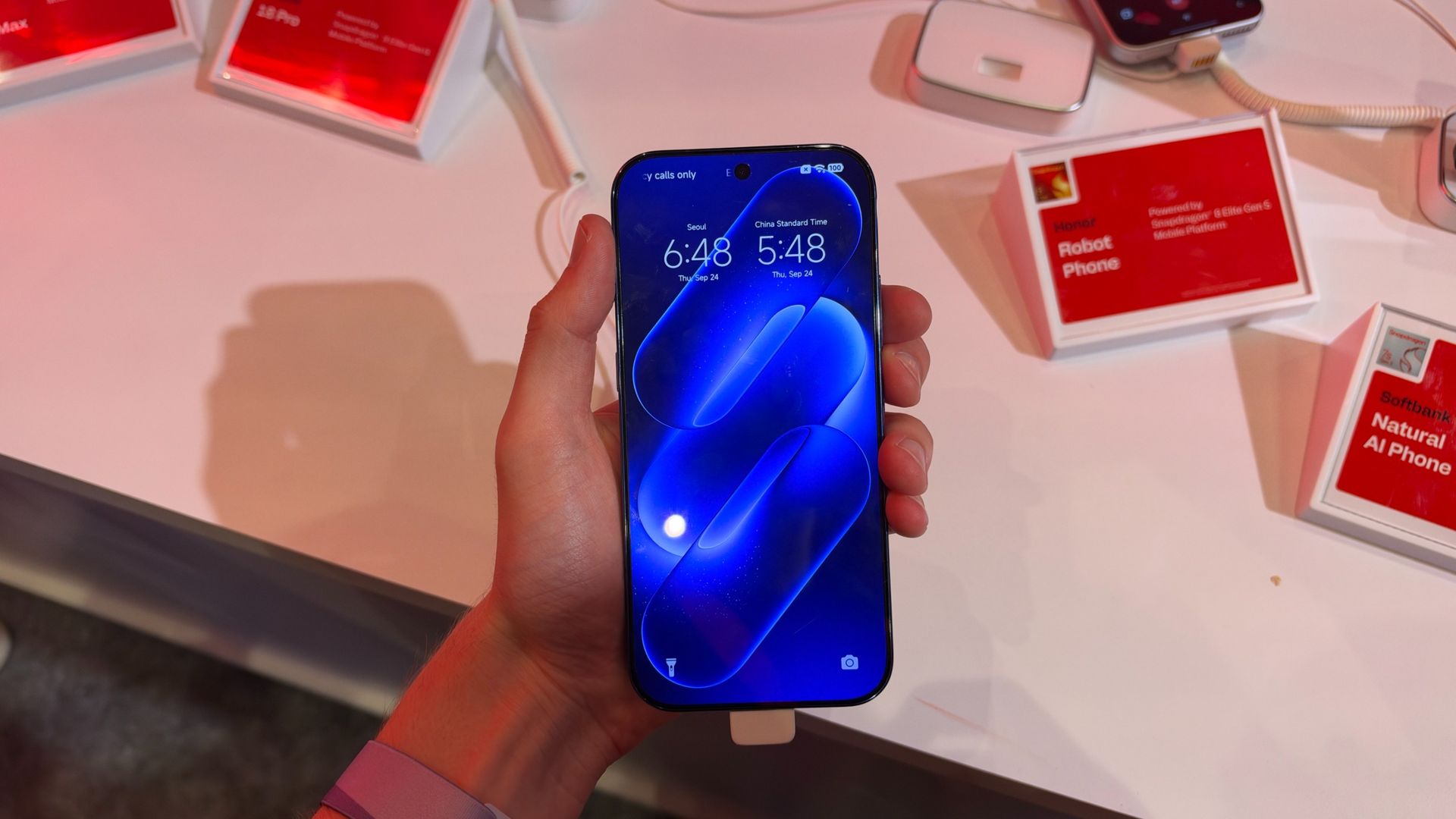
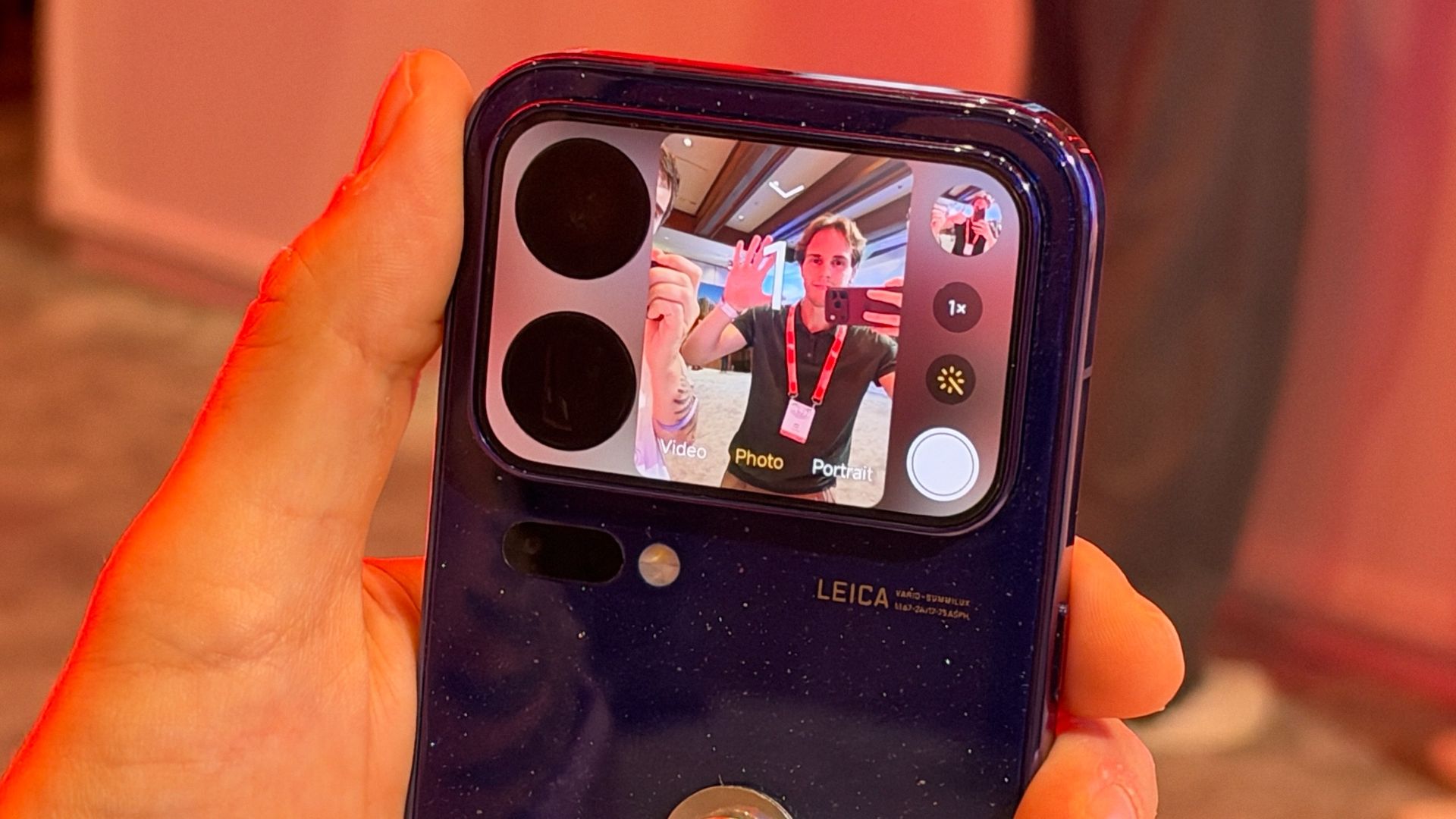
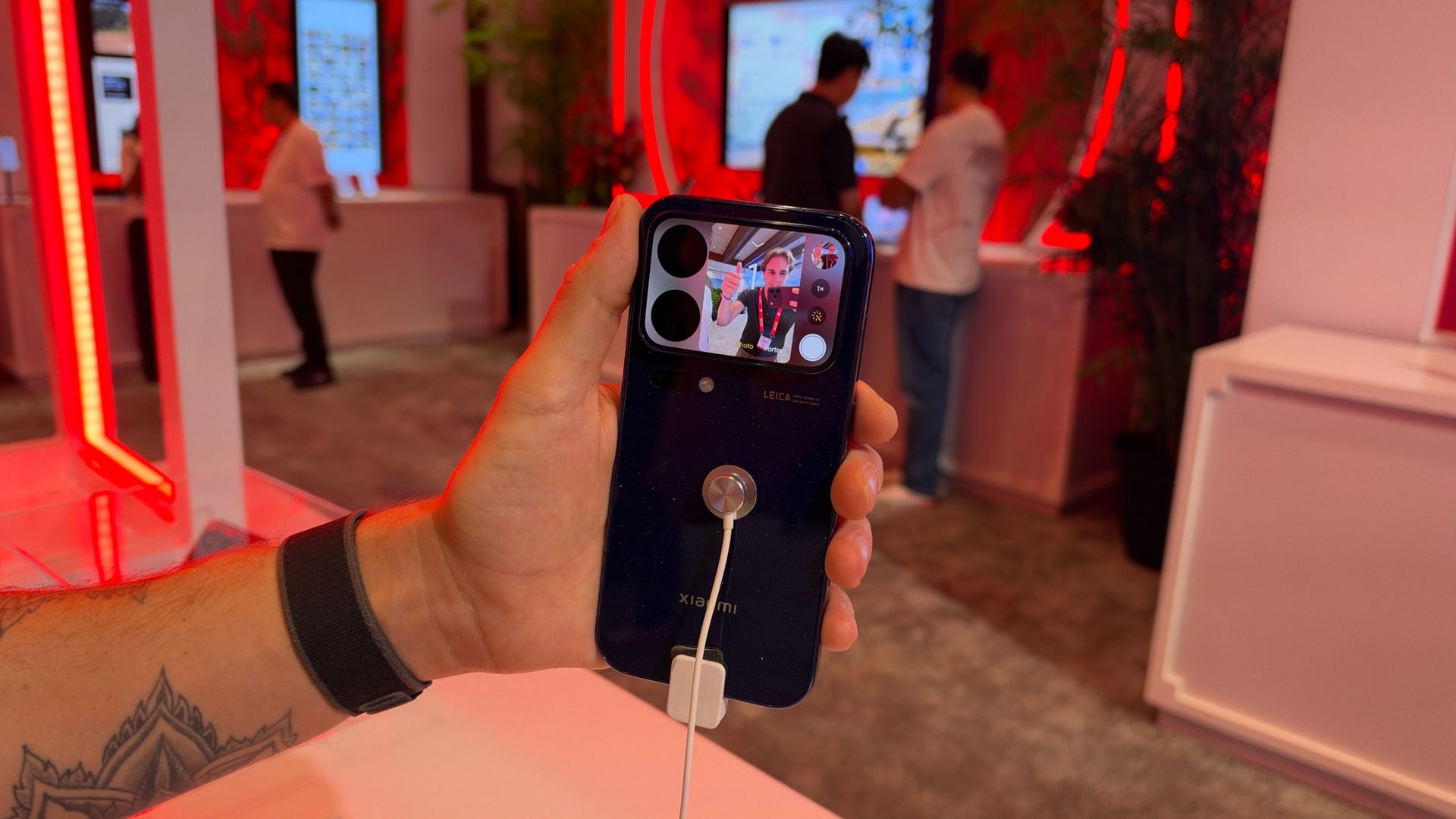
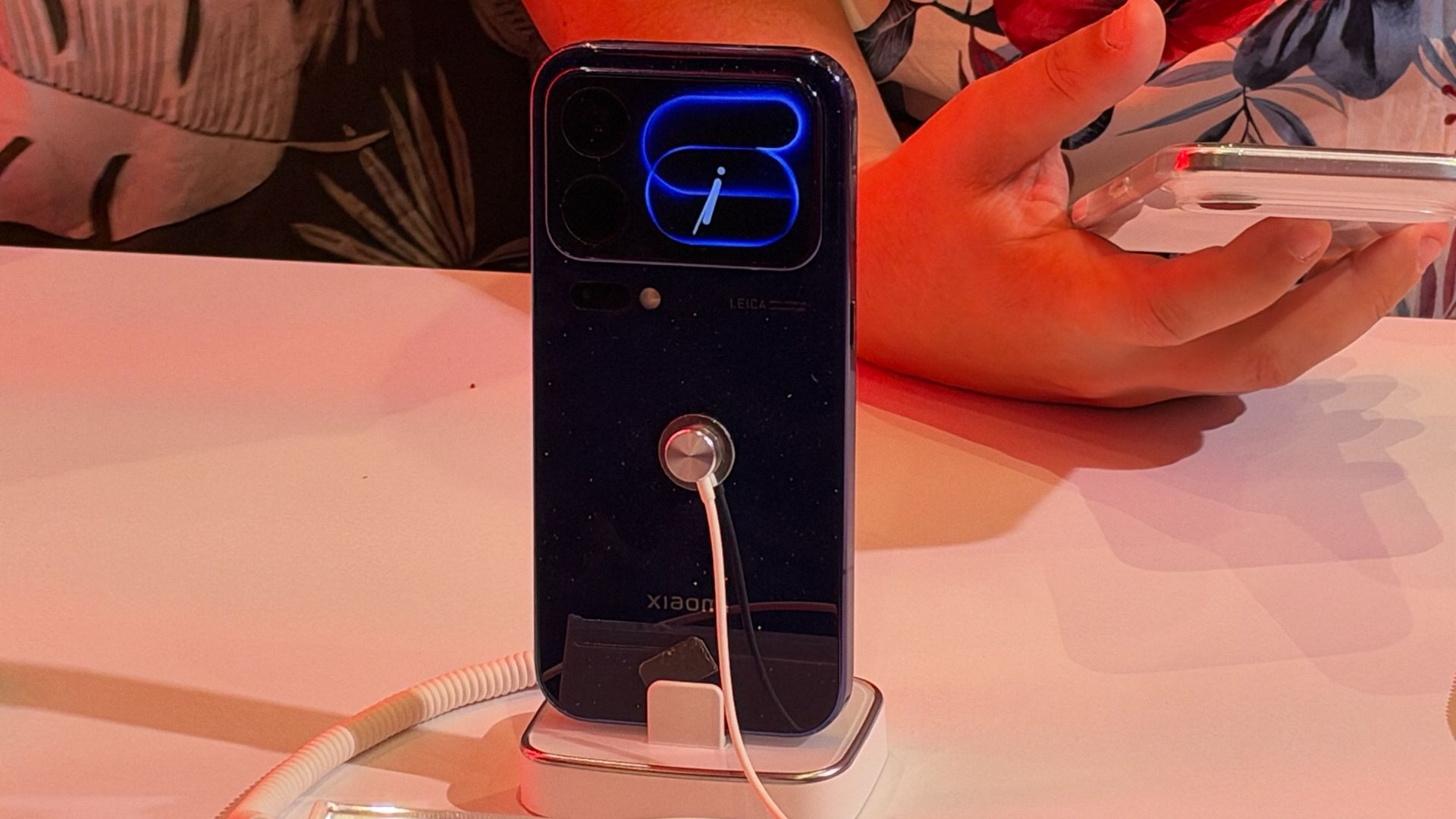
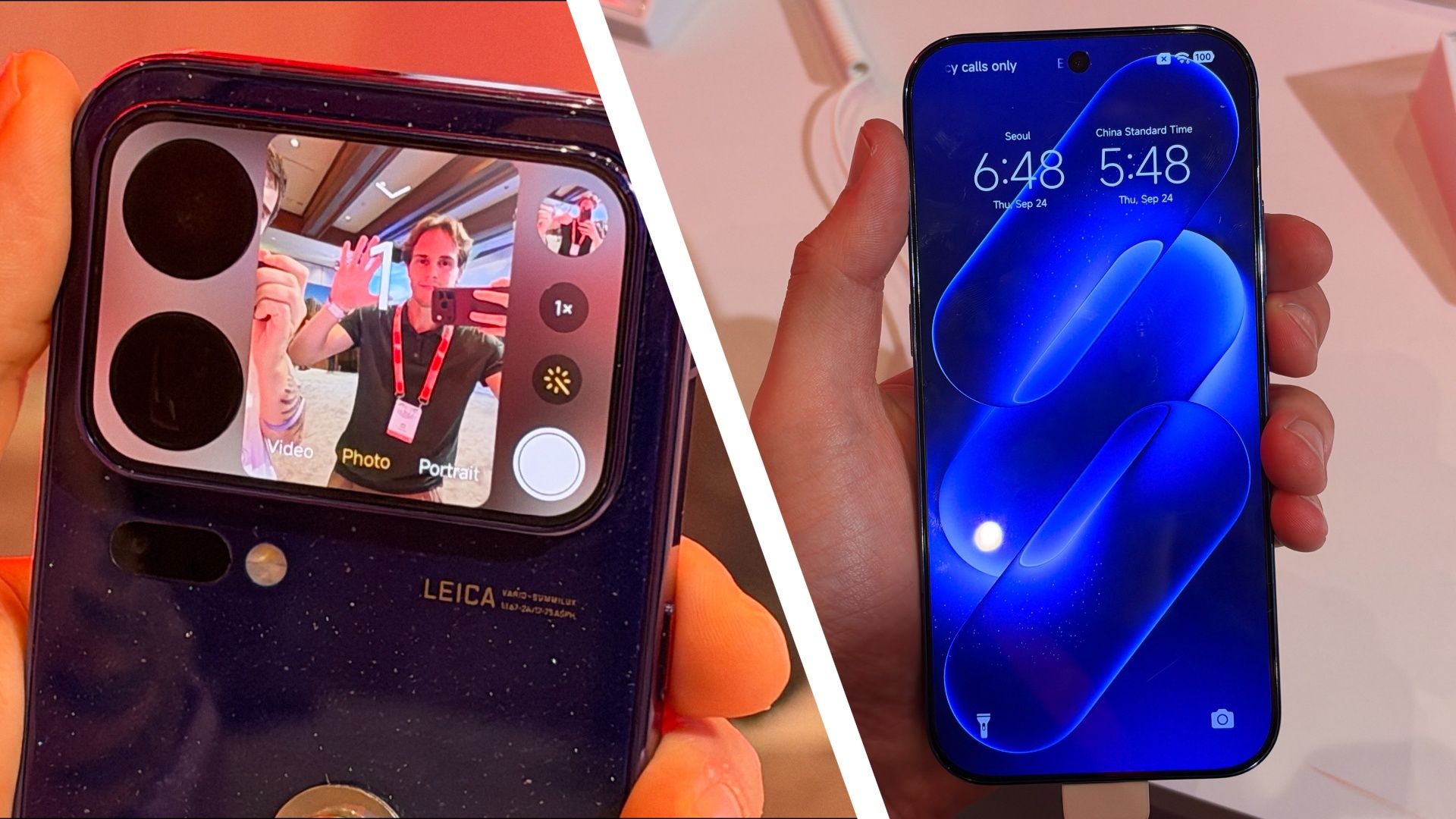
The successors to last year’s China-only Xiaomi 17 Pro, the 18 Pro and 18 Pro Max boast an extra display on their respective rear panels: a 2.66-inch OLED for the Pro and a 2.86-inch, 120Hz OLED for the Pro Max. These mini screens can display widgets, wallpapers, and media controls, and can be used to frame selfies taken with the phones’ rear cameras.
That’s similar to the offering of last year’s Xiaomi 17 Pro devices, though with this year’s phones, Xiaomi is introducing its own — and potentially even better — take on Samsung’s popular Privacy Display technology.
Like Privacy Display on the Galaxy S26 Ultra, Xiaomi’s Smart Privacy Display can restrict viewing angles to prevent people from snooping on you at angles beyond 60 degrees, and can also work its magic on notifications and widgets without affecting the rest of the display.
Notably, though, Xiaomi’s take on the technology can be applied to apps used in split-screen mode (maybe you only want to obscure one app, and not the other), as well as to specific locations and app notifications (because some pop-ups are more risqué than others).
(Image credit: Future)
Smart Privacy Display is a feature of both the Xiaomi 18 Pro and 18 Pro Max, though the latter obviously has a larger screen: it’s 6.9 inches vs. 6.4 inches on the Pro.
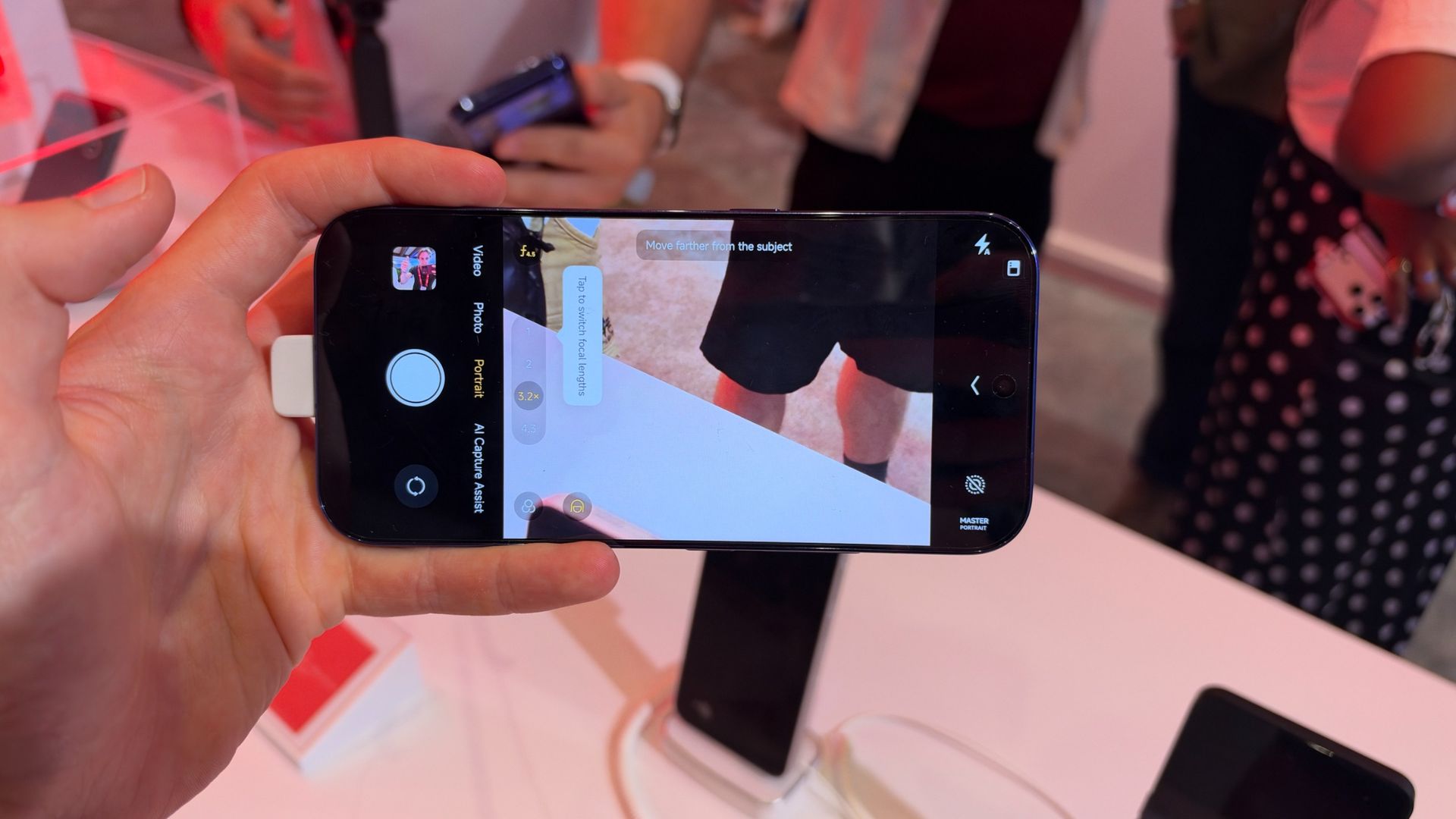
I got the chance to get hands-on with the smaller Pro model at Snapdragon Summit 2026 (thanks, Qualcomm, for flying me out to Hawaii), and although I wasn’t able to unlock the display unit to test Smart Privacy Display, the rear OLED display was partially functional.
I used it to snap a few selfies using the Xiaomi 18 Pro’s 200MP main lens, which can be activated with a wave gesture or a press of the volume button.
FutureFuture
As for the size and weight of the device, it’s (very) similar to the iPhone 18 Pro, which I suspect is a deliberate choice on Xiaomi’s part. Lest we forget that the iPhone Duo-like Xiaomi 18 Fold launched exactly one day before the iPhone Duo last month.
Other specs include the new Snapdragon 8 Elite Gen 6 and Snapdragon 8 Elite Extreme Gen 6 chipsets for the Pro and Pro Max, respectively, as well as a shared triple-lens camera array comprising a 200MP main lens, a 200MP telephoto lens, and a 50MP ultra-wide lens.
The Pro gets a 7,000mAh silicon-carbon battery, while the Pro Max gets a larger 8,500mAh cell. Those capacities may be smaller outside of China, though.
FutureFuture
We also don’t have much clarity on what Xiaomi means by a “global” launch. As mentioned, neither the Xiaomi 17 Pro nor 17 Pro Max launched outside of China, but the Xiaomi 17 Ultra did arrive in the UK and Europe, so we’d wager that those regions will get at least one of the Xiaomi 18 Pro and 18 Pro Max at some point. A US or Australia launch for either phone seems unlikely, though.
As for price, the 18 Pro will start at ¥5,999 CNY (around $900 / £675 / AU$1,300), and the 18 Pro Max at ¥6,999 (around $1,050 / £785 / AU$1,500). If and when these phones do arrive outside of China, though, their respective prices are likely to be much higher.
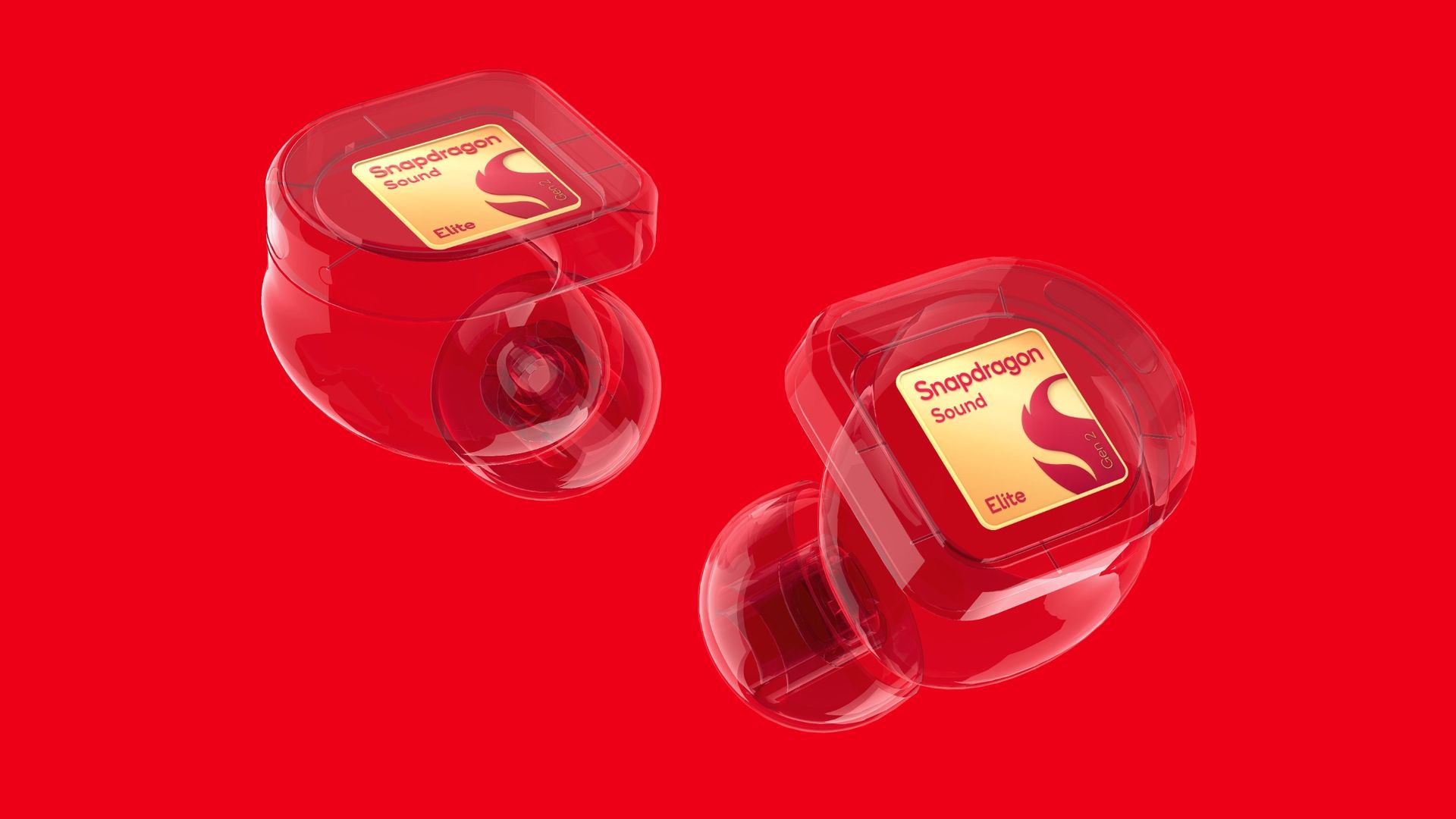
You may have heard the rumors: camera-equipped earbuds are the next frontier for audio technology brands (including, we think, Apple), and Qualcomm’s new Snapdragon Sound Elite Gen 2 platform could be the catalyst that brings them to fruition.
As Qualcomm’s “first premium audio platform purpose-built for personal AI,” the Sound Elite Gen 2 aims to transform headphones and earbuds into “intelligent companions that can understand, assist, and adapt throughout the day” — and the American silicon giant considers camera-equipped earbuds to be among those “companions.”
Qualcomm flew TechRadar out to Snapdragon Summit in Hawaii to hear more (no pun intended) about its vision for the AI-assisted future of audio, and the company was bullish about the positive effect AI will have on both sound quality and virtual assistance.
“This isn’t about putting a chatbot in your ear; it’s about creating devices that understand what’s happening around you,” Sarah McMurray, Staff Manager for Product Marketing at Qualcomm, explained in a briefing attended by TechRadar, noting that the Sound Elite Gen 2 will use AI to make earbuds more responsive to environmental changes.
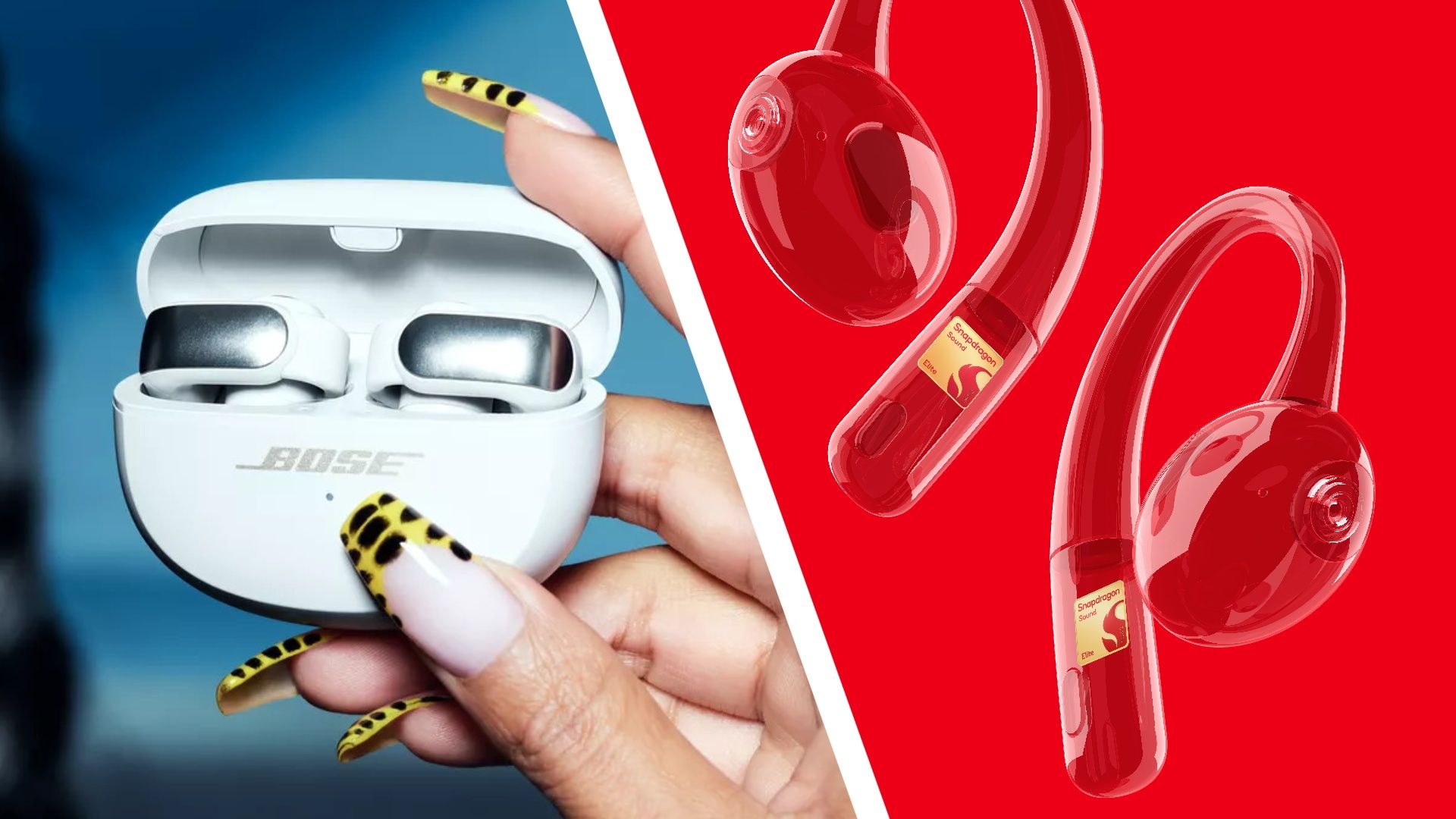
Qualcomm could license its Snapdragon Sound Elite Gen 2 platform to brands such as Bose and Bowers & Wilkins (Image credit: Qualcomm)
“At the core of the platform is an advanced AI-adaptive ANC system designed for consistent, real-world performance, not just ideal conditions,” added Grace Bramwell, Qualcomm PR. “The system continuously responds to changes in fit, movement, and environmental noise, maintaining reliable noise cancellation without the need for manual adjustment.
“Powered by flexible, programmable processing and up to 2x greater AI capability than the previous generation, Snapdragon Sound Elite Gen 2 can intelligently steer ANC filters in real time, optimizing noise reduction across different acoustic conditions and device types. This enables stronger performance in challenging scenarios, including low-frequency noise, dynamic environments, and open-ear designs, while giving OEMs greater flexibility across a wide range of form factors.”
This isn’t about putting a chatbot in your ear; it’s about creating devices that understand what’s happening around you.
Sarah McMurray, Staff Manager for Product Marketing, Qualcomm
In other words, the Sound Elite Gen 2 could make your next earbuds or headphones better at automatically switching between ANC and transparency modes, and deliver improved audio quality in both states (“stronger performance with low-frequency noise,” for instance, might mean upcoming earbuds can more effectively drown out the mechanical hum of your fridge or the drone of a passing truck).
It’s worth noting that Qualcomm itself is not a consumer product manufacturer. It licenses its audio technologies to OEMs (Original Equipment Manufacturers) such as Bose and Bowers & Wilkins, so it will be up to those brands to take up and implement the Snapdragon Sound Elite Gen 2 platform in a way that fulfills the potential Qualcomm is describing here.
Of course, Qualcomm’s plans for the future of audio are bigger than improved ANC. AI-powered audible assistance is the hottest topic in town right now, and apparently, consumers are as keen on the thought of AI-powered assistance as Silicon Valley investors:
“Our research tells us that up to 70% of users want advanced AI capabilities in their wearable devices,” says Ziad Asghar, Qualcomm’s Senior Vice President and General Manager of XR, Wearables, and Personal AI. “As AI becomes a core capability, users will increasingly expect more natural ways to interact with it.
“Those interactions won't always happen through a screen. They will happen through natural conversations, where users can simply speak to an AI assistant and receive help in real time. With Snapdragon Sound Elite Gen 2, we're heralding intelligent audio wearables that enable experiences such as real-time translation, contextual assistance, personalized hearing, and multimodal interactions that combine audio, vision, and AI."
We want to be able to give the consumer the ability to choose how much information they want to share.
Ziad Asghar, Qualcomm’s Senior Vice President and General Manager of XR, Wearables, and Personal AI
No current wearables effectively combine those three elements (except perhaps smart glasses, but have you ever tried listening to your favorite album on a pair of Meta Ray-Bans? Don’t. Ever). That’s why OEMs are developing camera-equipped earbuds — they’re truly hands-free and, crucially, more socially acceptable (visually speaking) than Austin Powers-style specs.
But if, as a society, we haven’t yet cracked the social code on smart glasses (and as our deep-dive on the so-called great privacy revolt reveals, we most definitely haven’t), are camera-equipped earbuds something we’re ready for? Qualcomm is cautiously optimistic.
“The privacy concern is not new,” Asghar explained to TechRadar in a roundtable at Snapdragon Summit. “We at Qualcomm and Snapdragon have been managing it for a long time in multiple different areas. And our concept is very clear: we want to be able to give the consumer the ability to choose how much information they want to share.
“For instance, we can obfuscate faces. We have the capability on our chipsets to detect a face very easily — not recognize a face, but detect a face. To do multi-modality, I don’t need to send a face for AI processing; I need to be able to send the context [of my environment]. For that, I can detect the face and cover it up. That technology is something we have integrated into our products and that we’re sharing with our partners.
As I've written in the past, these things aren't designed to take pictures. They are for analyzing your surroundings. https://t.co/r7IFNmsoE4 https://t.co/tjmS7w8tlJAugust 18, 2026
“Another thing we’ve been driving is on-device AI. As you do more processing on the device, you basically take away the concern of that image leaving the device [...] We are targeting this problem at every different level. Of course, we enable our customers and partners [to use these tools], and with the pressure and concern that’s coming through, we will of course work with them.
“I also want to say something,” Asghar added. “Today, you carry a device with multiple cameras on it: it’s called a phone. I was talking to a group of students in San Diego, and this [privacy] issue is not top of their mind. Different age groups are thinking about it in different ways. Younger people are so used to blogging and vlogging. I think some of the concern, in my opinion, is just because this is a new form factor. But we want to provide all the tools [to manufacturers] such that consumers feel comfortable.”
Again, it will be up to brands such as Bose and Bowers & Wilkins to implement the Snapdragon Sound Elite Gen 2 platform in an effective and ethical way, but it's clear that Qualcomm is aware of the increasingly negative public sentiment around camera-equipped wearables.
If, however, these OEMs can convince consumers that on-device processing really is as private as Qualcomm claims, perhaps the age of Minority Report-style glasses and earbuds will arrive sooner than we thought.
The Sonos Ace Ultra are here, and they’re beautiful. I’ve spent two weeks testing them, and to tell the truth, they really exceeded my expectations.
See, I liked the original Sonos Ace, but the Ultra bring so many meaningful upgrades to the fore, be that their expanded microphone system, fancy new drivers, or new smart features. And as you’ll see in my Sonos Ace Ultra review, I think these updates establish Sonos as a major player in the world of wireless headphones.
The standard Sonos Ace fell just short of greatness when they released due to their somewhat middling musicality, and with rivals like Sony and Bose releasing excellent iterations in the WH-1000X and QuietComfort Ultra series’ respectively, it felt like the multi-room giant couldn’t quite go toe-to-toe with the best of them.
But the Ultra have changed that, and I’m here to share my five favorite improvements that make Sonos’ new headphones an excellent option for anyone looking to buy a top-tier pair of wireless headphones — or make the step-up from the original Ace. And make sure to stick around for number five, which is the most game-changing upgrade of them all.
1. A more customizable listening experience
(Image credit: Future)
First of all, you have a lot more control over the listening experience with the Sonos Ace Ultra compared to what the original Ace allowed.
This is largely down to a far more fleshed-out equalizer, which lets users take a far more granular approach tuning-wise. That’s because the Sonos Ace Ultra feature an eight-band equalizer, letting you make adjustments to specific parts of the frequency range. Want to give those lower-mids a bit of a boost? Want to temper the upper-treble a bit? No problem — you can do that here.
Meanwhile, the Sonos Ace had very basic two-band EQ options that only let you increase the bass or treble. Sure, there’s the option to use a three-band equalizer on the Sonos Ace Ultra if you want a simpler way of making changes, but the more extensive controls on the audio specialist’s new headphones are welcome for someone like me, who wants to tailor sound to his specific tastes.
While we’re on this topic, it’s also worth flagging that the Sonos Ace Ultra have adaptive EQ. This automatically adjusts EQ to account for factors such as fit, glasses, hair, and other elements that could cause leakage. This works well and was something that the original Ace skipped.
2. Enhanced ANC
(Image credit: Future)
The Sonos Ace Ultra increase the number of microphones onboard to ten from the eight seen on the standard Sonos Ace. This results in a number of improvements, like enhanced calling, for instance. But the biggest difference is heard when it comes to active noise cancellation.
This expanded microphone system helps the Sonos Ace Ultra to deliver excellent ANC that competes with some of the best noise cancelling headphones on the market. When working in the office, sounds of typing were totally eliminated. When on walks, construction work and traffic passing by was subdued to incredible effect. And even when taking public transport, the rumble of engines and conversations surrounding me were silenced without hesitation.
It helps that the Ace Ultra also have a relatively secure (yet still comfortable) fit, providing a seal that keeps the world around you at bay. I’ve tried far more expensive cans that can’t hold a candle to the Sonos Ace Ultra in this regard, so if you want great ANC, look no further.
ANC is adjustable, so you can decide whether you want full-blast silencing or a light bit of blockage if you find that disorienting. Of course, you also get a transparency mode if you want to be more aware of your surroundings or to have a quick conversation.
3. More interplay with your Sonos system
(Image credit: Future)
The Sonos Ace Ultra offer even more interconnectivity with other Sonos products than the original headphones, in part thanks to the Ultra’s new Headphone Engine 2.
With the Ace Ultra, you unlock a new feature called Headphone Linking. This lets you seamlessly transfer audio from compatible speakers — like the Sonos Play — over Wi-Fi, directly to your headphones (or vice versa). Just a single press of a button, and you can easily transfer music or movie audio across; it's seamless and works like a dream.
Like the original Ace, you also get TV Audio Swap. This lets you connect the Ace Ultra to a compatible soundbar, like the Sonos Arc Ultra, and hear movie audio on your headphones instantly. Because the Ace Ultra support Dolby Atmos and head tracking, you get an incredibly immersive, rich listening experience here — and it's ideal if you want to enjoy private listening without disturbing anyone else in your household.
4. Better battery — and its fully replaceable
(Image credit: Future)
First of all, I should say that the battery life on the standard Sonos Ace is by no means bad. You get 30 hours of playback with ANC on, which is basically the standard for headphones in the premium price-bracket — in fact, some rivals like the AirPods Max 2 and the first-gen Bose QuietComfort Ultra fall short of this.
But the Sonos Ace Ultra provide a slight bump, with 35 hours of battery life with ANC switched on — still nothing game-changing, but certainly a welcome improvement. You also only need to charge them for three minutes to get three hours of playback, which makes them incredibly convenient when you’re on the go and need some additional battery life in a pinch.
Perhaps more interestingly, the Sonos Ace Ultra feature a user-replaceable battery. Yes, you’ll need to get some specialist kit for this, but it means that the Ultra can live on, even if the battery degrades after years of listening. That only makes your investment more worthwhile in the long run.
5. New drivers provide a huge performance upgrade
(Image credit: Future)
And now for the largest upgrade of them all: the one that truly puts the Sonos Ace Ultra head and shoulders above the first Sonos Ace. Of course, I’m talking about the significant sound quality step-up, which comes, in part, thanks to new 40mm custom drivers.
When it comes to music, the original Sonos Ace are OK. They provide relatively energetic audio, but they lack balance, often sound quite busy and disorganized, and lack the width and detail of some premium rivals. But the Sonos Ace Ultra take things up a notch. They deliver expansive, dynamic, and intricate audio, especially when using aptX codecs or wired listening.
The Sonos Ace Ultra also provide improved instrument separation, letting them handle more complex mixes with ease. Low-end sounds are more full-bodied and agile, never sounding lethargic or lacking rhythmically. Mids aren’t as overzealous as they were on the original Ace, taking a more natural, detail-oriented approach. And treble is expressive and articulate, giving higher-pitched percussion some seriously satisfying bite.
Like the standard Ace, the Ace Ultra sound impeccable for movies, delivering a three-dimensional listening experience with convincing height effects and engrossing expansiveness, and they’re probably the best wireless headphones you can buy for movies. But the Ultra’s improved musicality helps them attain greatness — even more impressive when you consider that they’ve launched at the same price as the original Ace did back in 2024.
Vivo launched the flagship X500 series of phones, with three new models
A new monitoring screen comes in the X500 Pro Max photographer's kit, or it can be purchased separately
At launch, all the phones and accessories are China-only, with a wider rollout TBD
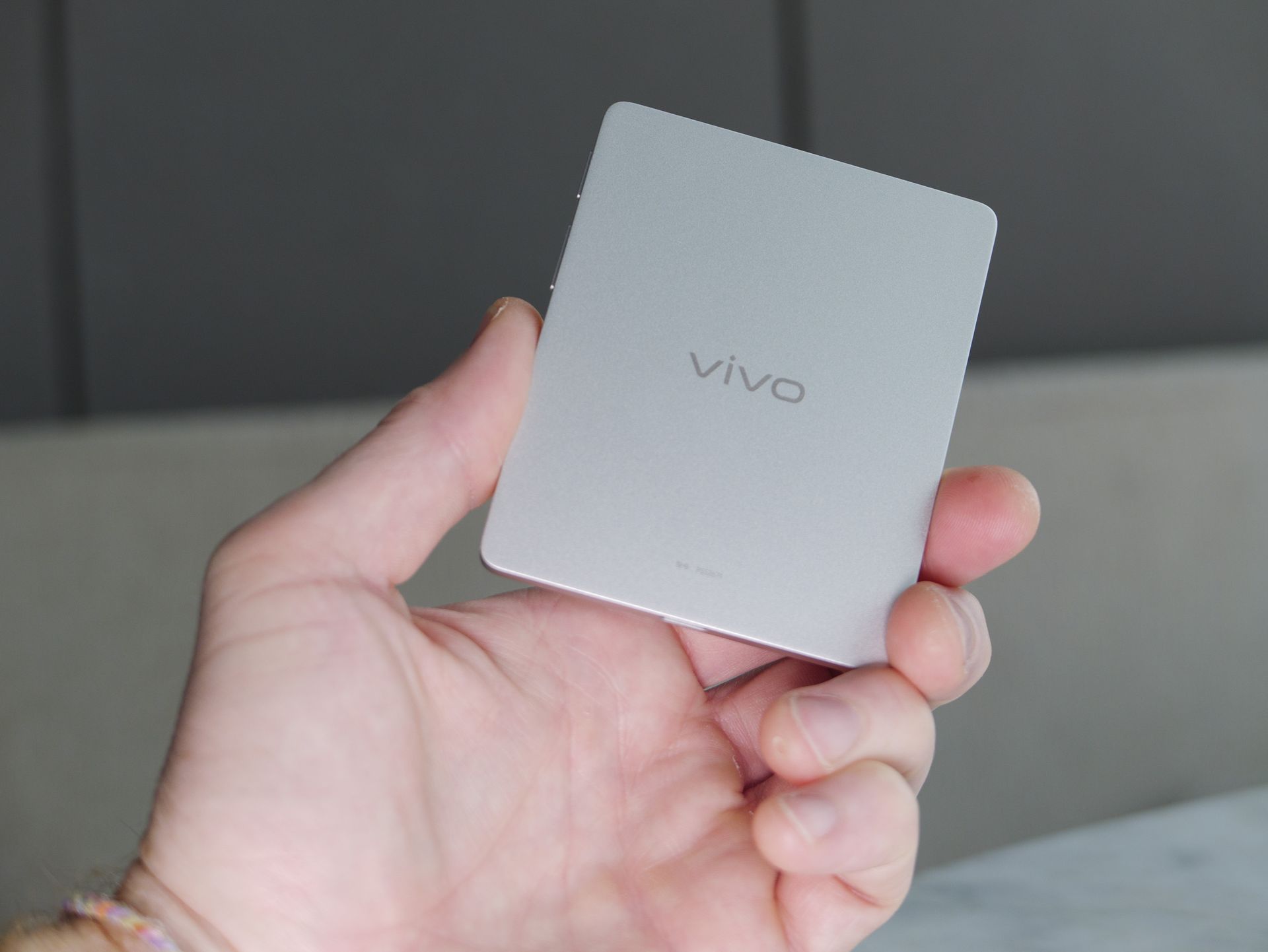
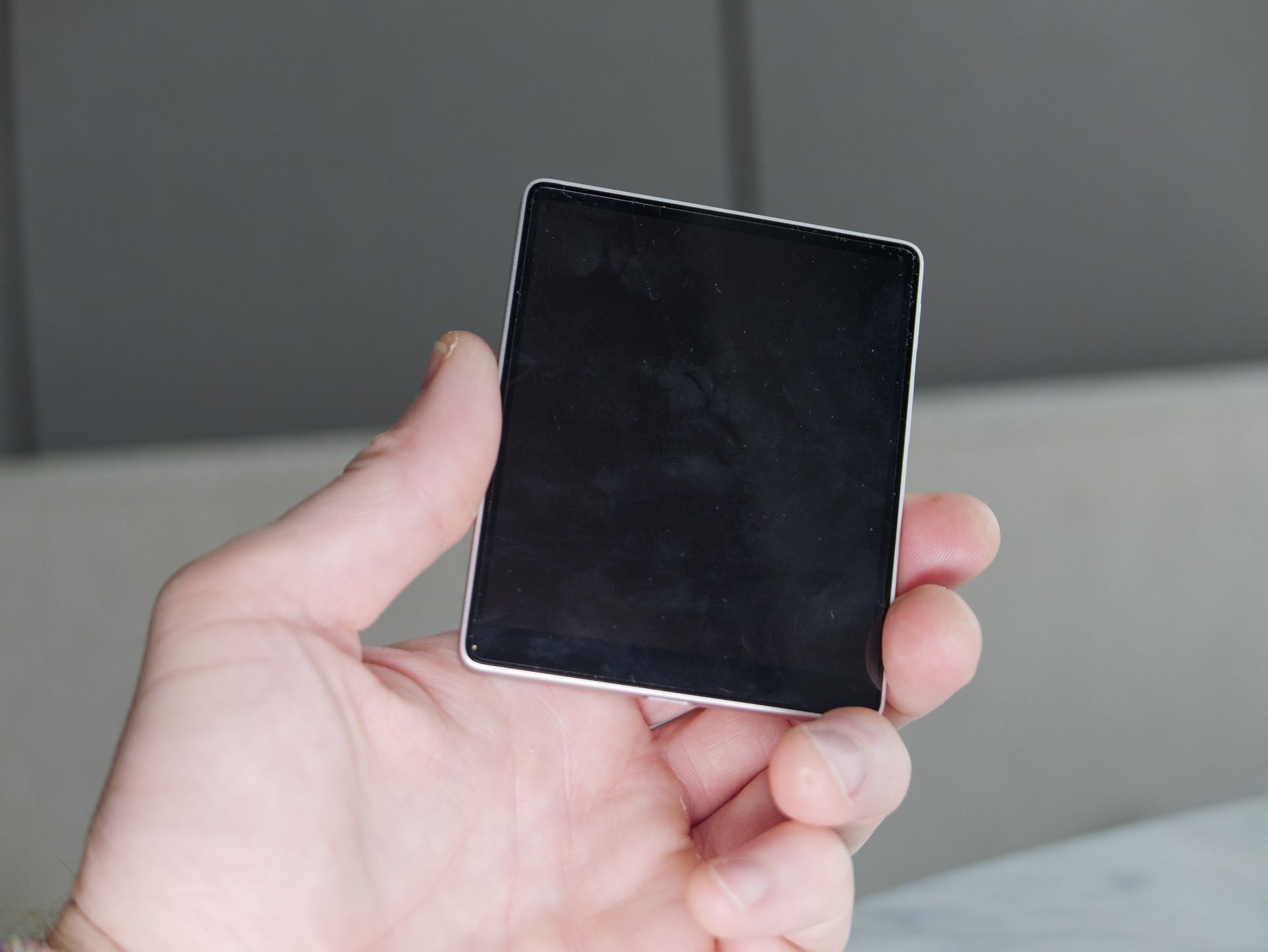
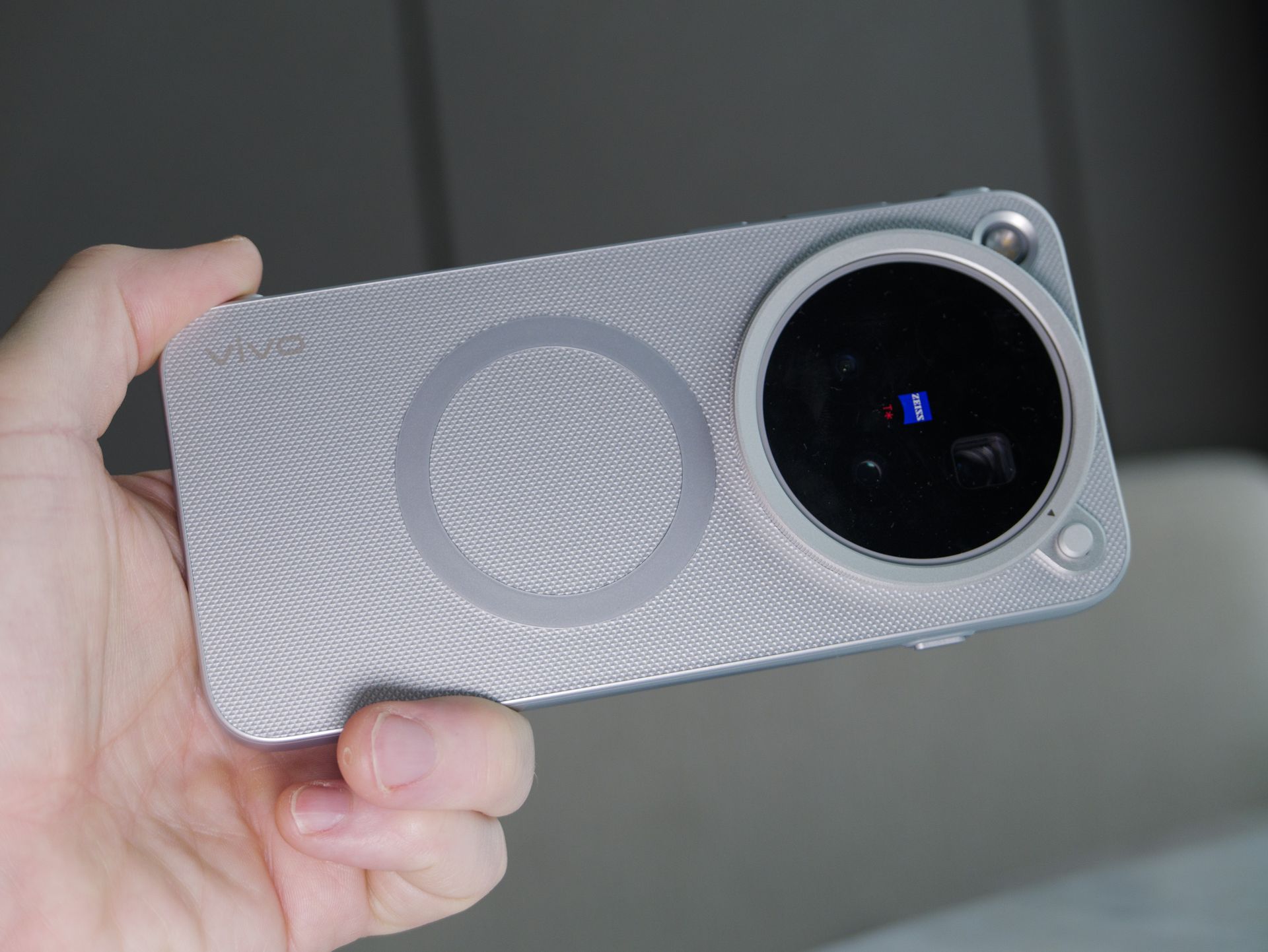
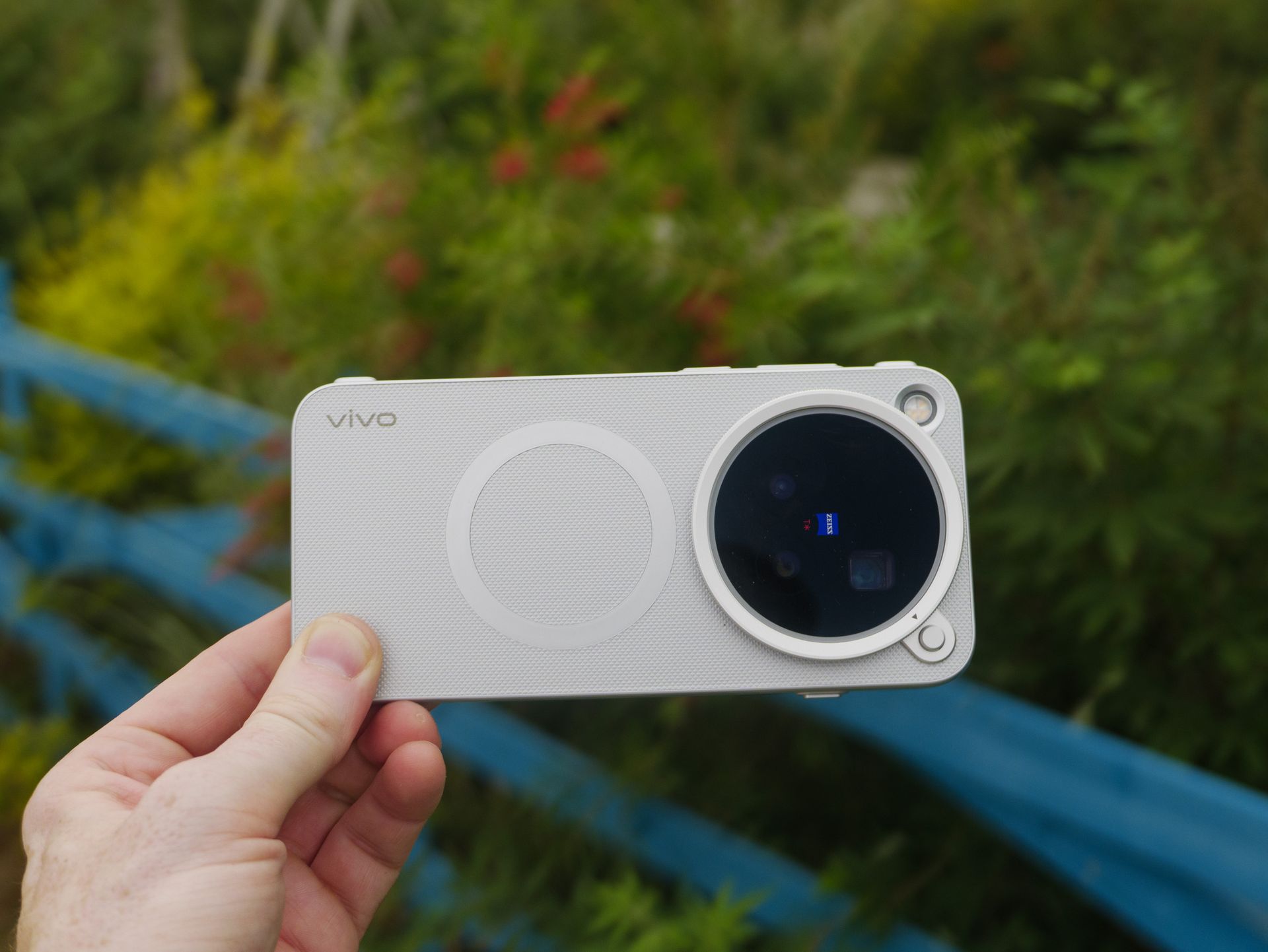
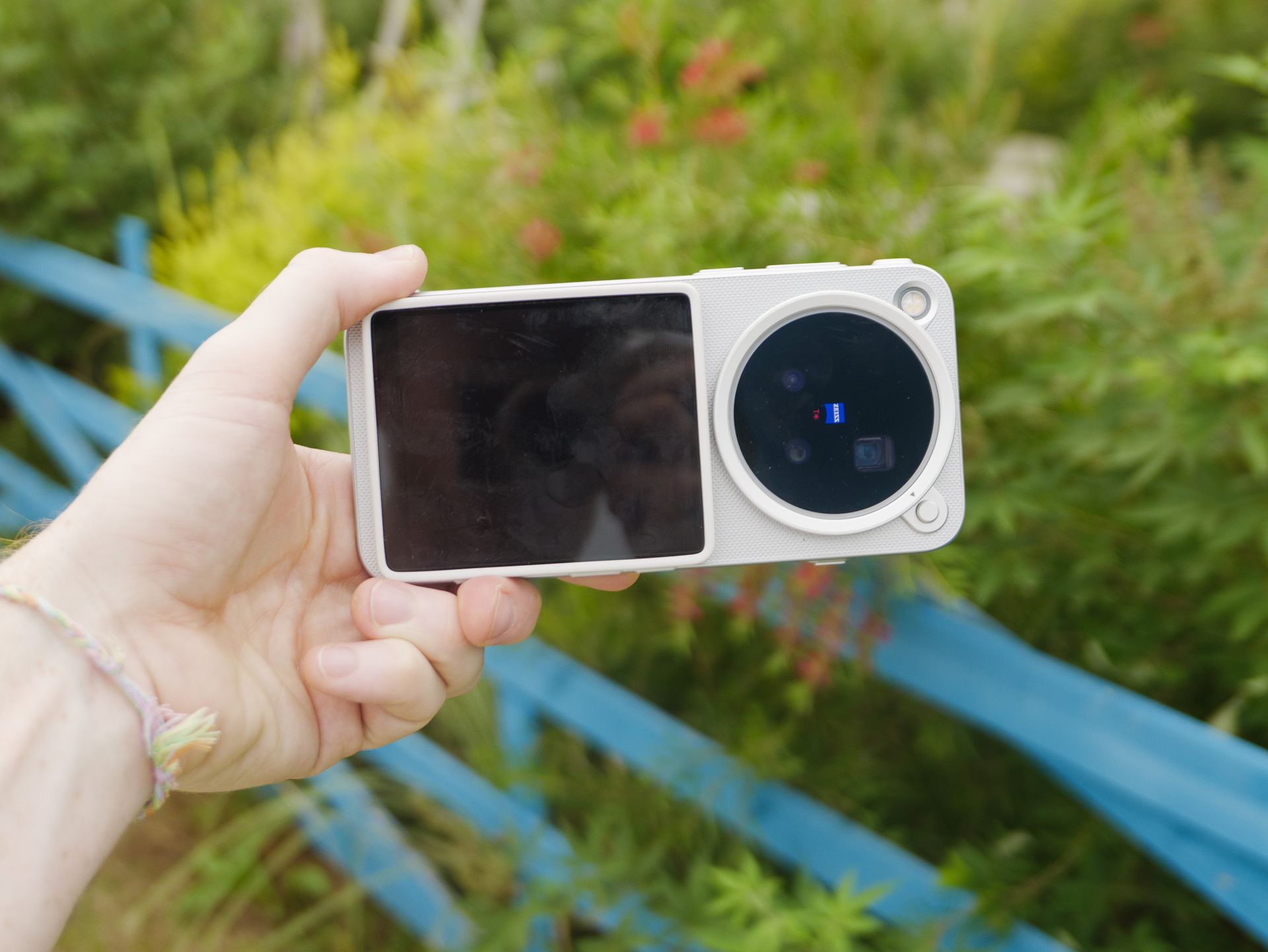
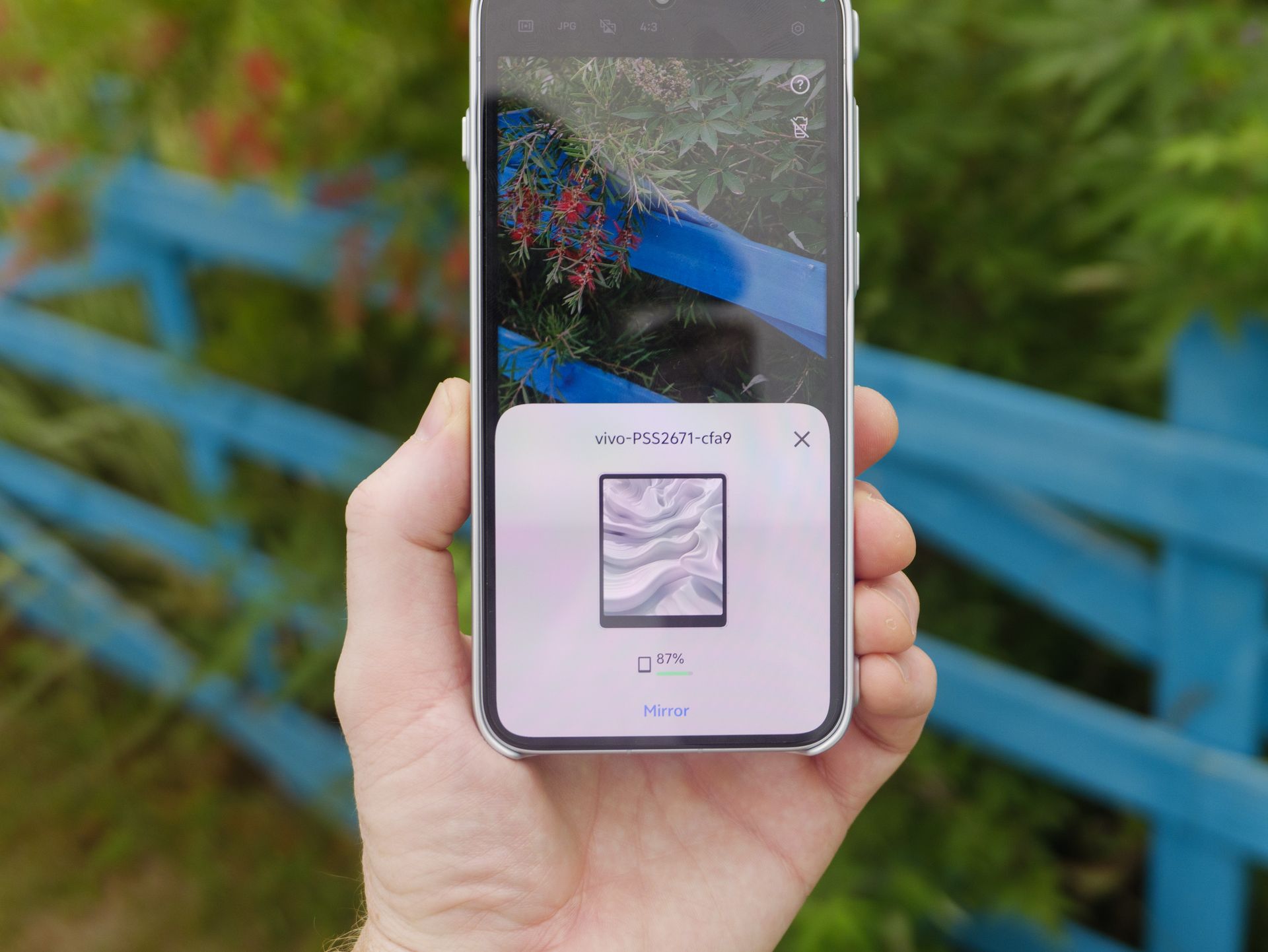
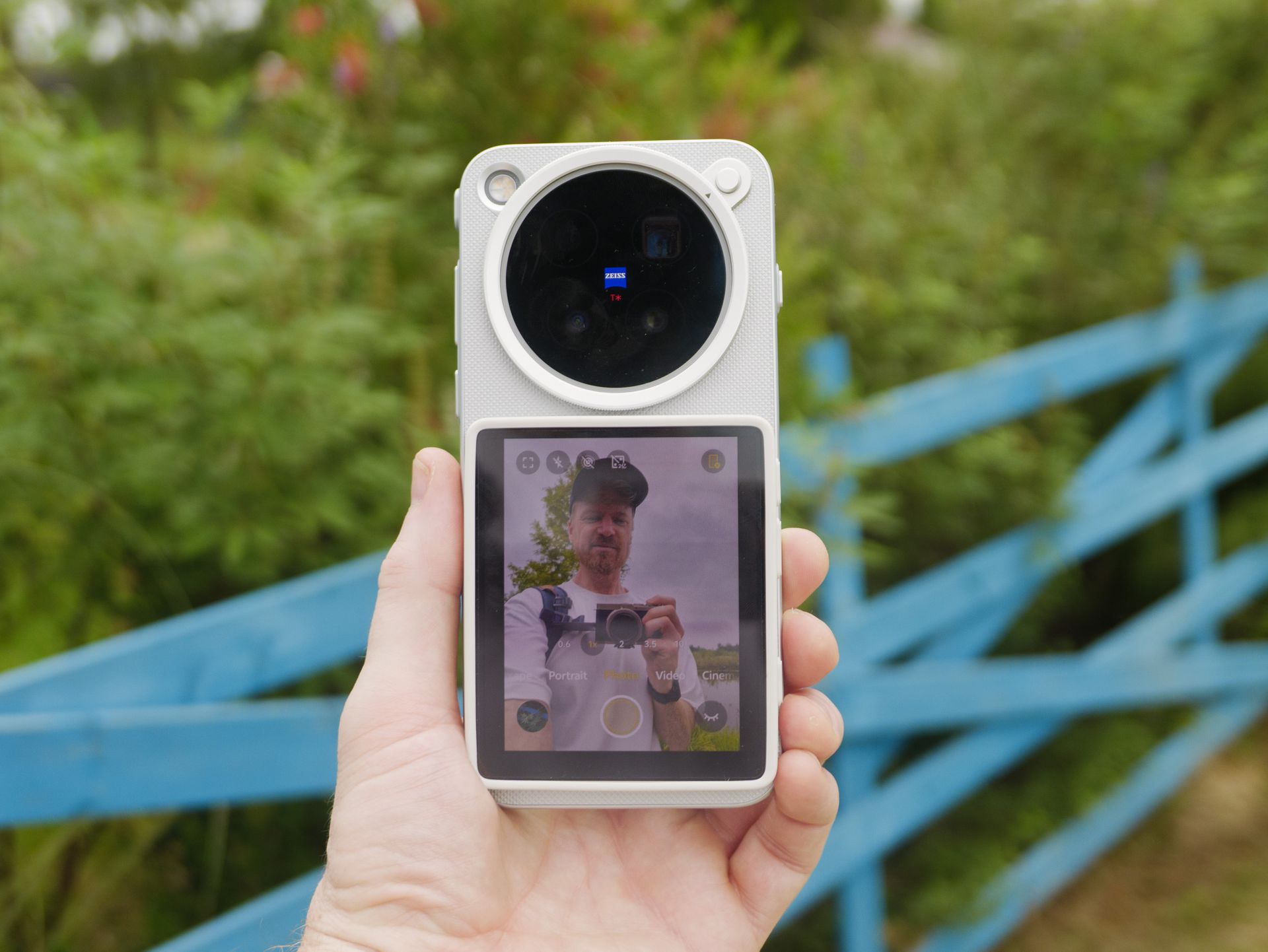
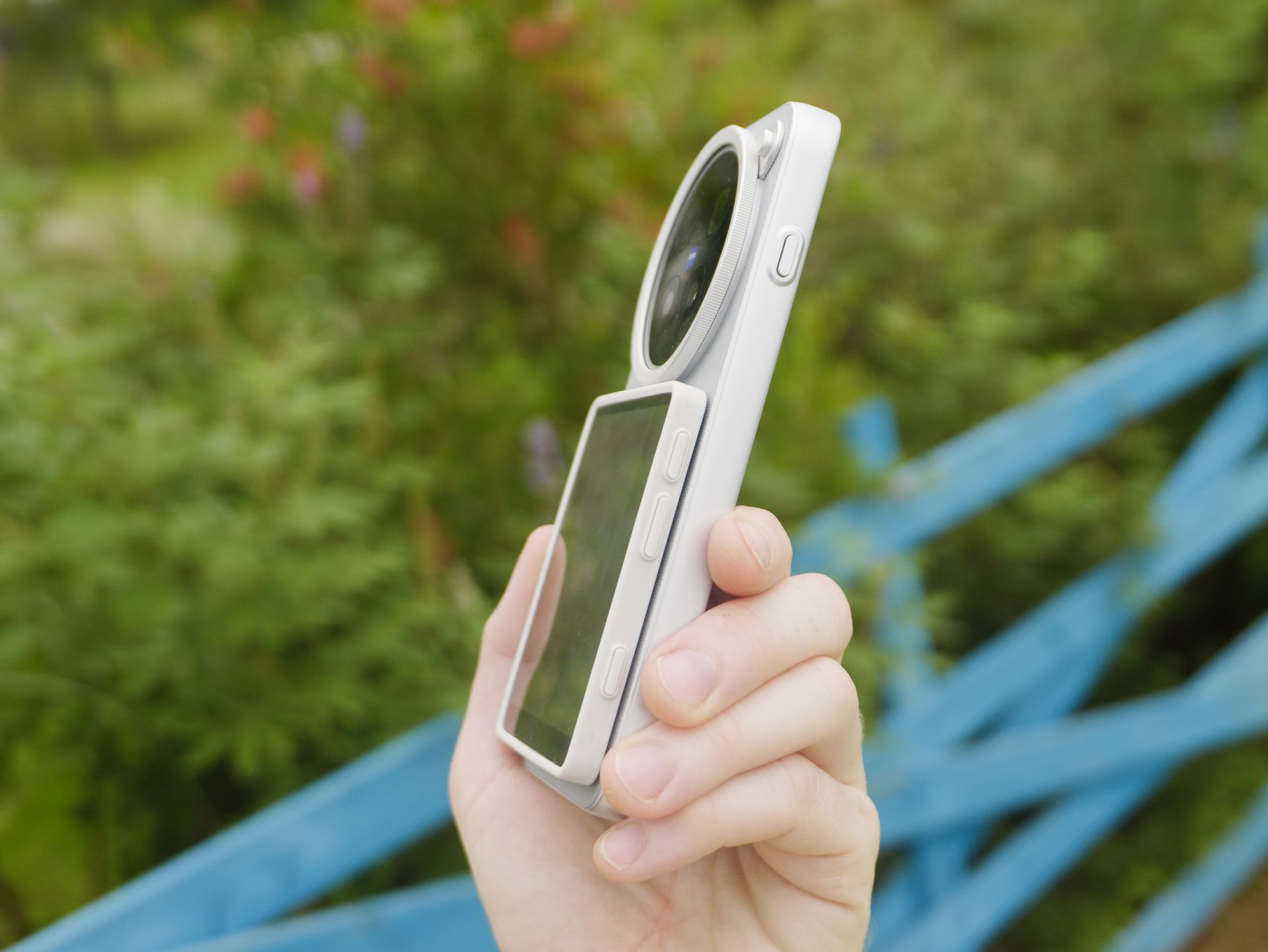
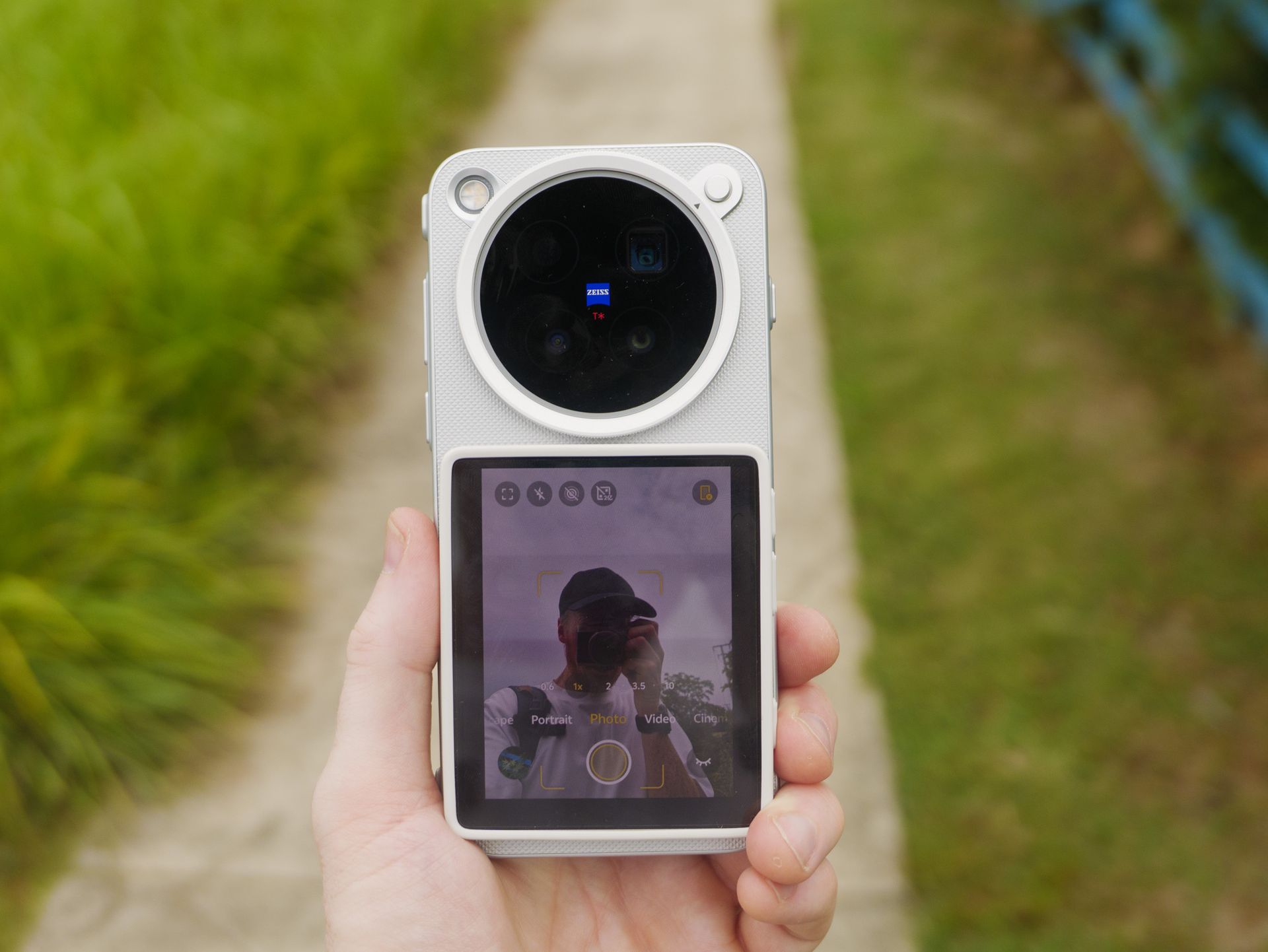
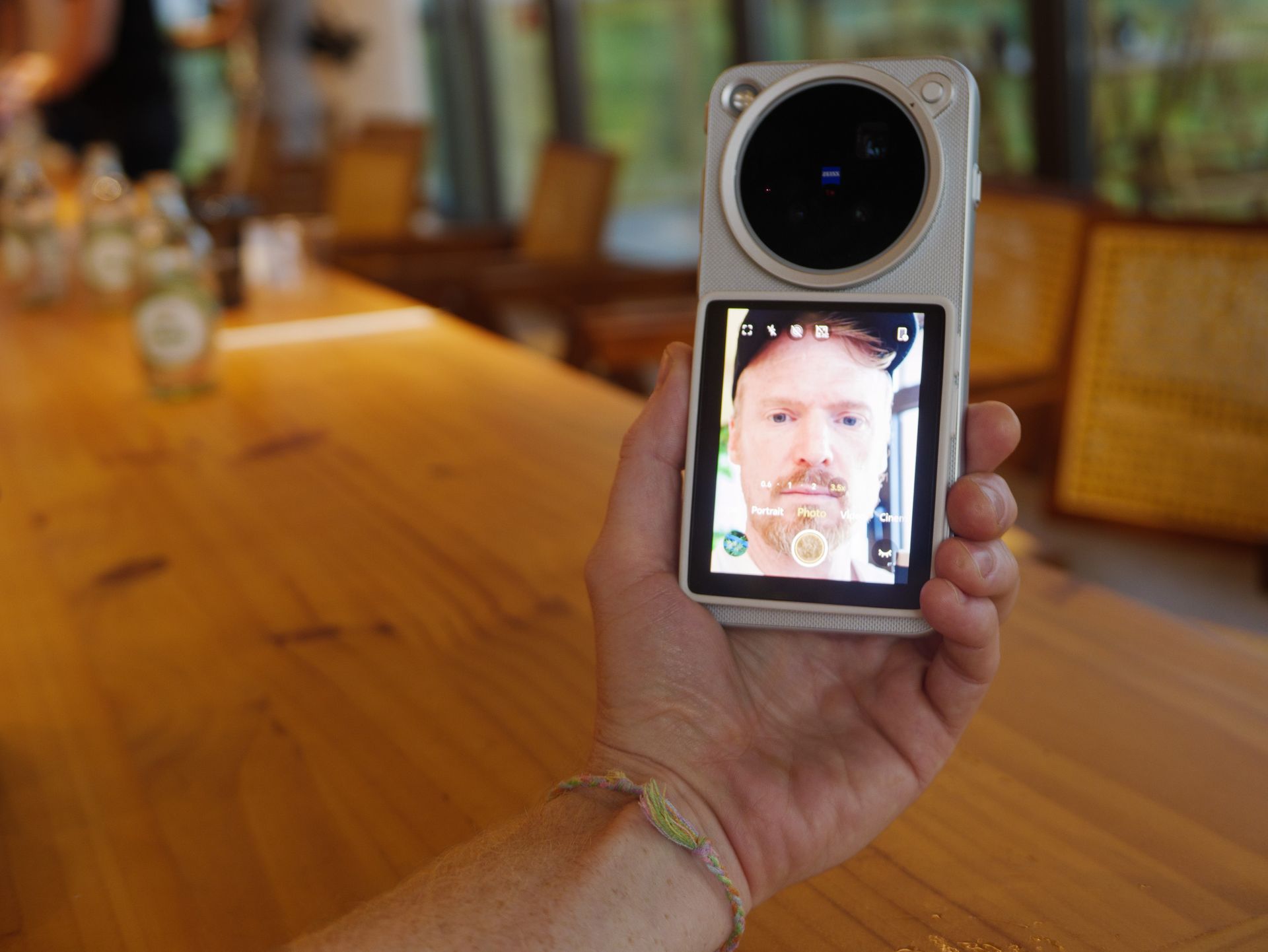
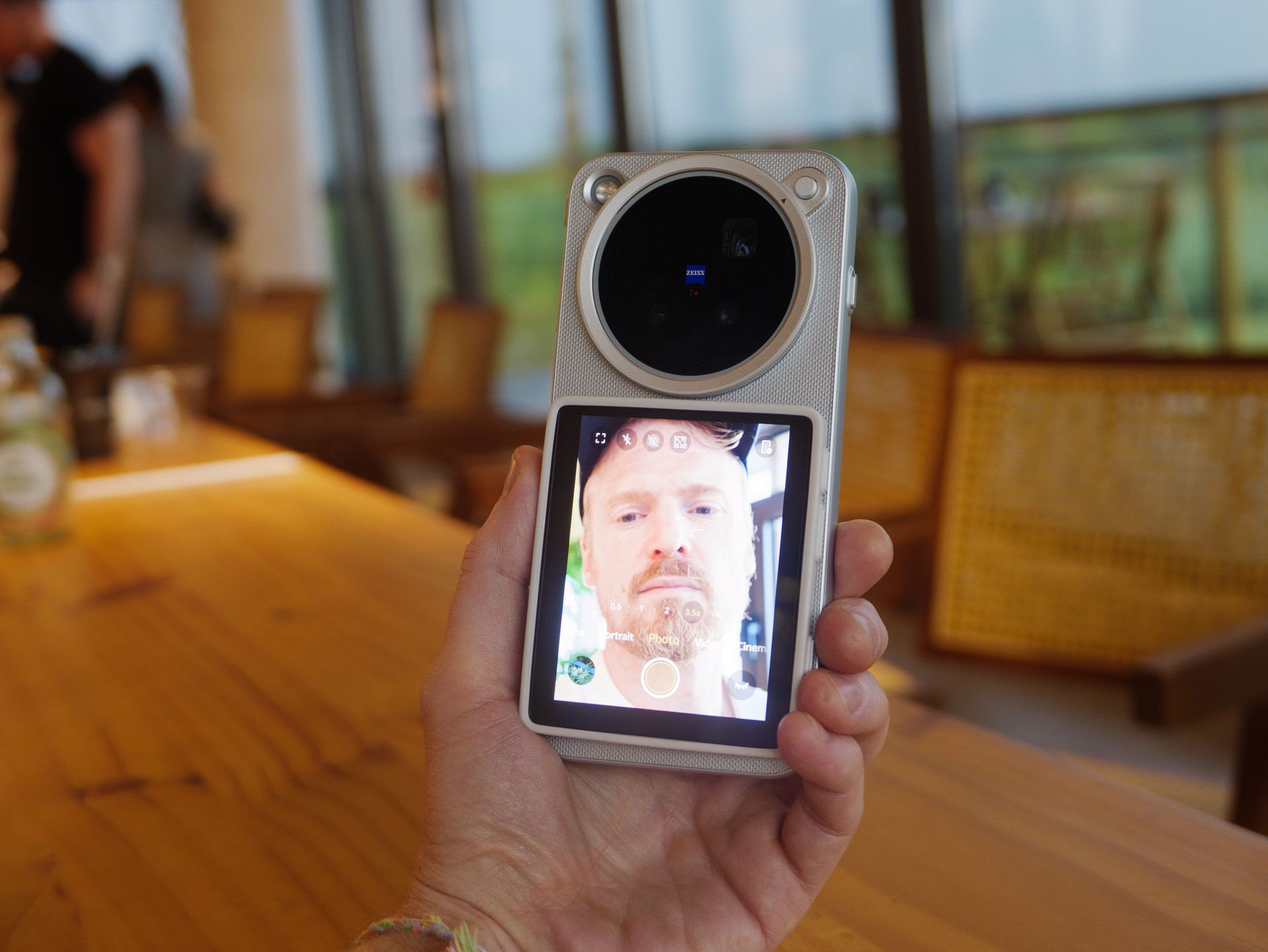
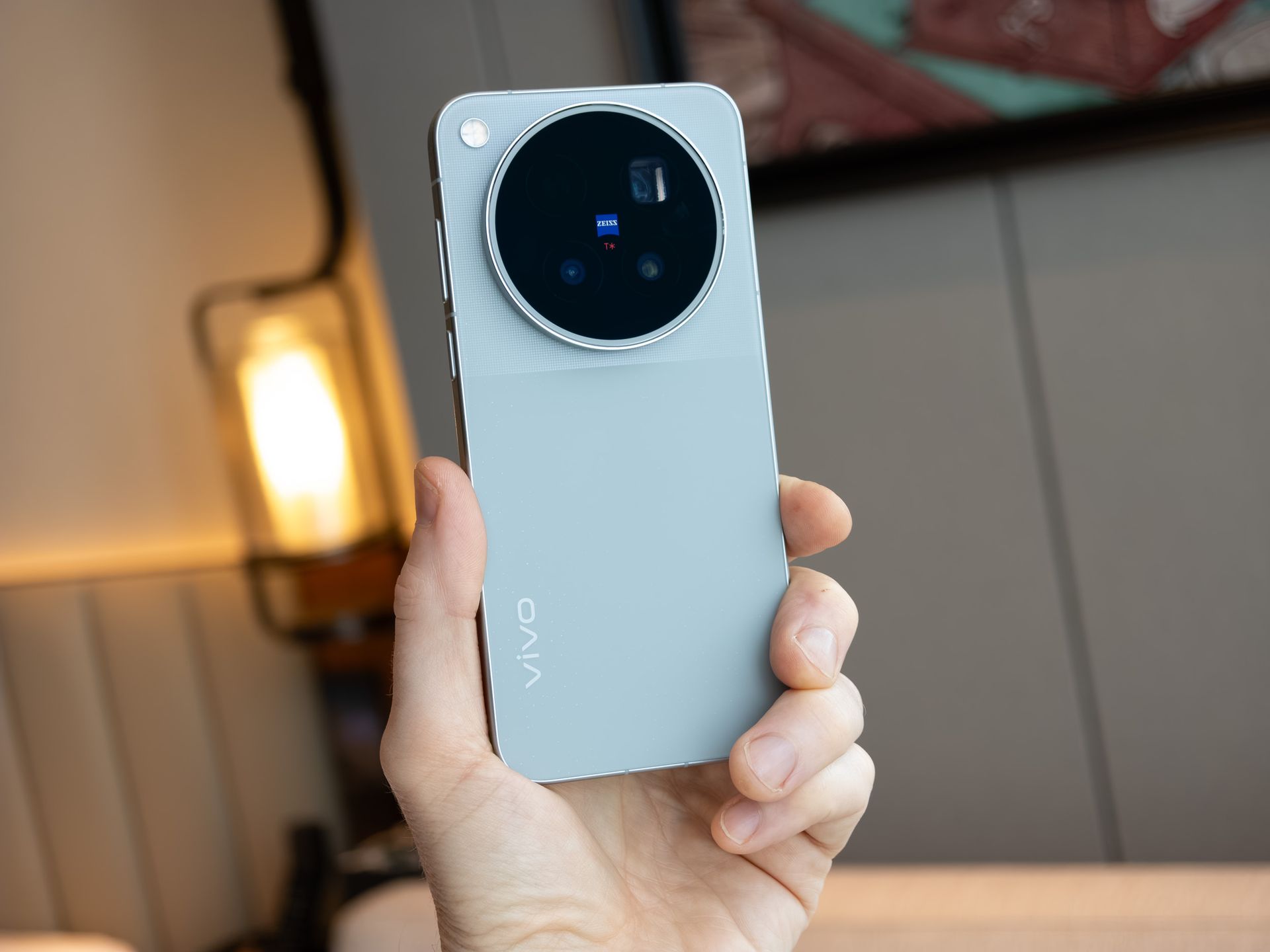
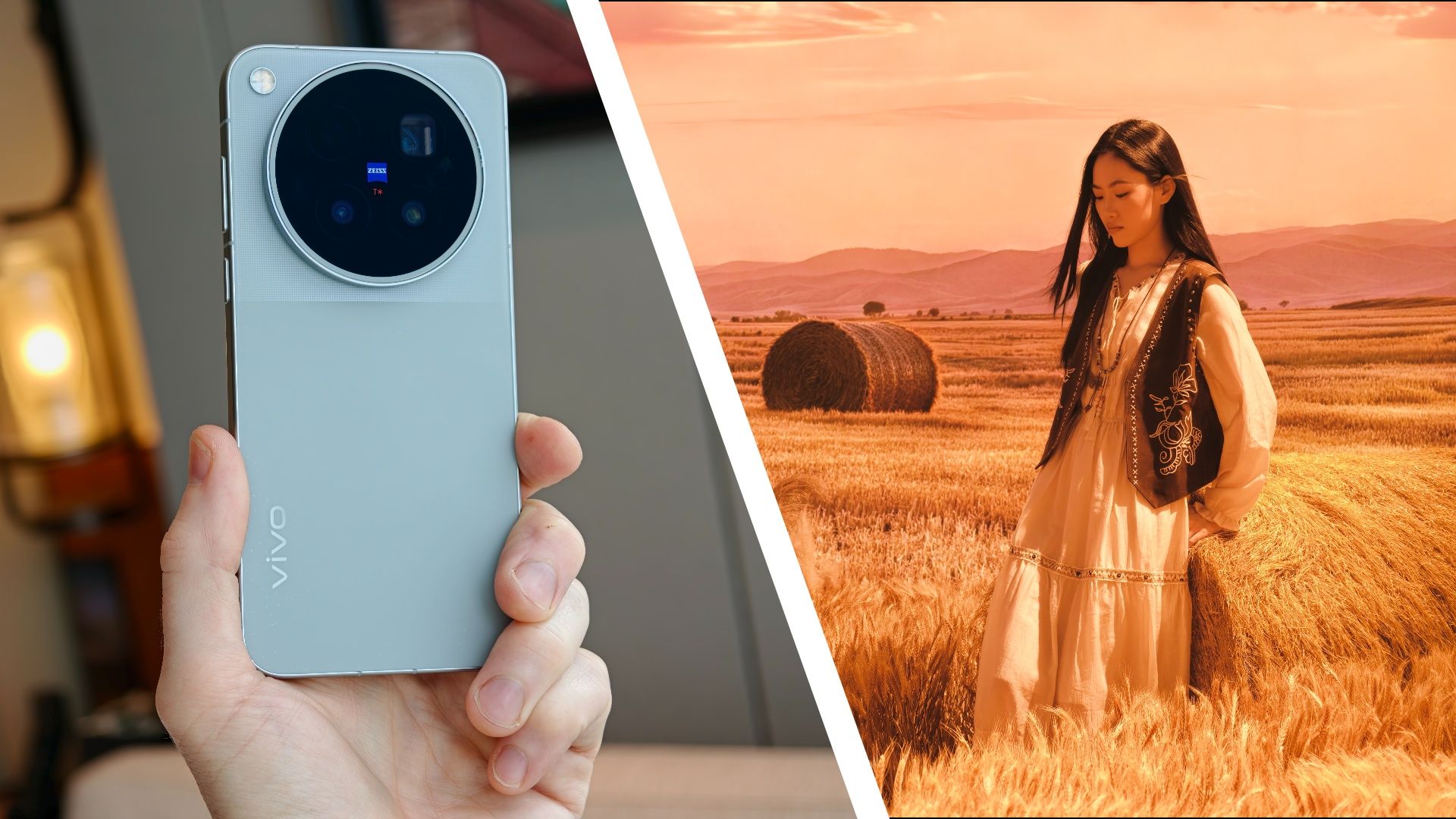
Vivo quietly launched a really neat accessory alongside its new flagship X500 series of phones — an ultra-slim and light Bluetooth monitoring touchscreen — and, having paired it with the new X500 Pro Max, I wish it were compatible with my phone.
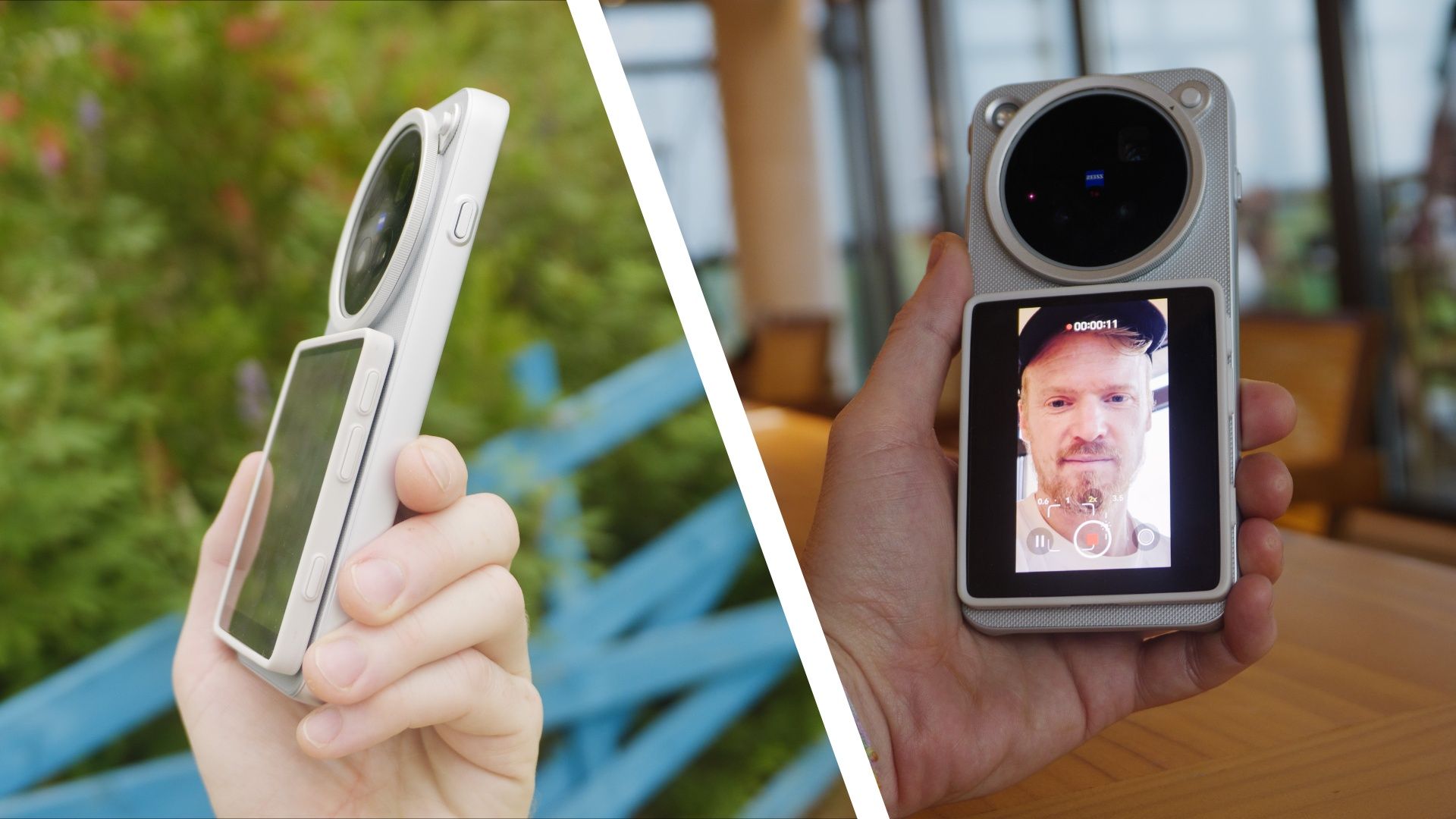
The monitoring touchscreen, aka a selfie screen, mirrors your phone's camera app, complete with touchscreen control over key camera settings and subject tracking, and can be attached to the phone magnetically or used as a remote monitor within its Bluetooth range.
Why not just use your phone's selfie camera instead, you ask? Well, the quality of the rear-facing selfie camera is always inferior to the front-facing cameras, as are the camera settings available.
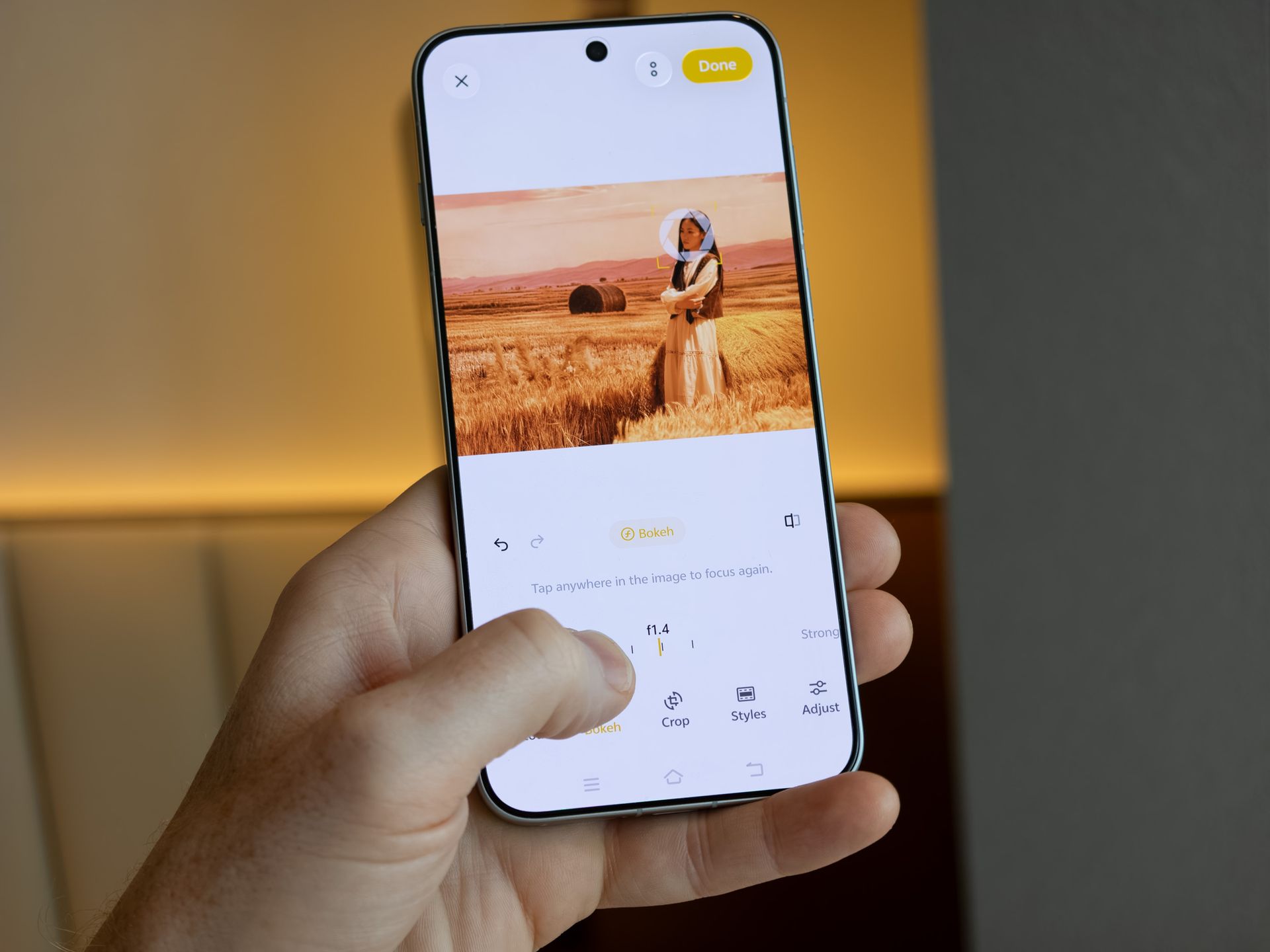
A selfie screen, on the other hand, unleashes the device's superior front cameras — in the case of the Vivo X500 Pro Max, a triple array including a 50MP main camera and a 200MP 3.5x telephoto camera.
We've seen this kind of selfie screen tech before; Insta360's Snap Selfie Screen comes to mind. However, it needs a cable to connect to a phone, it has an annoying protective cover that flaps around when the screen is in use, and the display is smaller and harder to see. The new Vivo accessory, however, is better and more sophisticated in every way.
The selfie screen without its magnetic rubber caseTim ColemanTim ColemanTim ColemanTim ColemanThe dedicated case Vivo makes to magnetically attach accessories such as the selfie screenTim Coleman
The best mobile accessory for 2026 so far?
Vloggers should take note of Vivo's new selfie screen. For one, it can snap onto the device magnetically, or be used by hand, so long as a Bluetooth connection is possible. No cable needed.
Used as a remote monitor, you can position your phone somewhere, say, on a tripod, and then walk into the shot and see what your phone is seeing, no cameraperson needed. (Great for group photos as well, by the way.)
It's clearly a trend — the Insta360 Luna Ultra vlogging camera features a removable touchscreen and controller module (which also has a built-in mic), while DJI launched a remote controller with a screen for its Pocket 4 series.
Whether used remotely or attached magnetically, the Vivo selfie screen's 3.92-inch AMOLED display with 419 pixels per inch (PPI) is clear and crisp. It’s also super light and thin, measuring just 5.65mm thick and weighing 68g — you'll barely feel it on the phone.
Tim ColemanTim ColemanTim ColemanTim ColemanTim ColemanTim Coleman
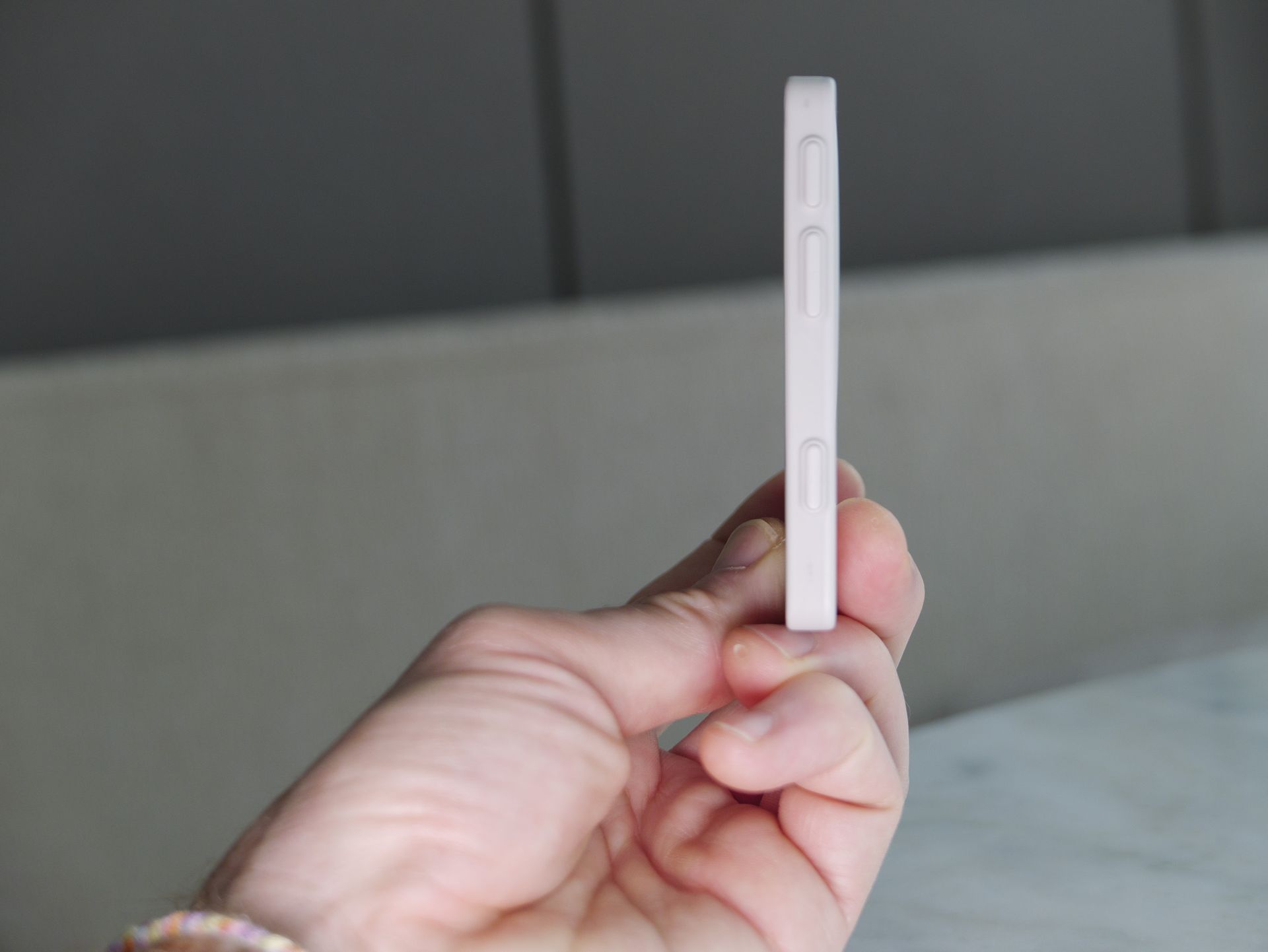
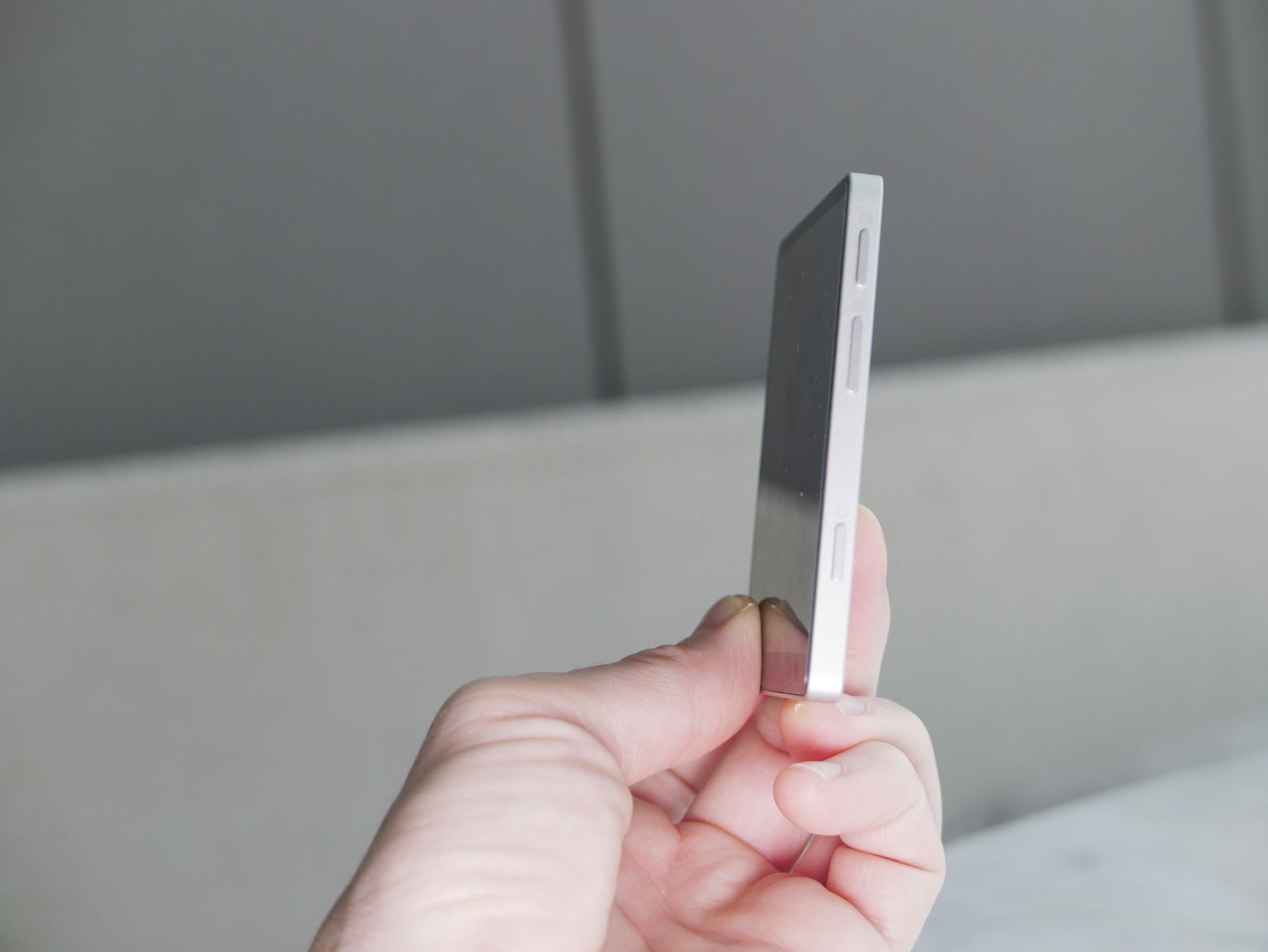
It has a USB-C port for charging, plus three side buttons, including a recording button and one for adjusting the screen's brightness levels. Otherwise, that's it.
What's unclear at this stage is which devices are compatible with the monitoring screen, besides the Vivo X500 series, if any.
There’s one major drawback to using it with the Vivo X500 Pro Max — neither device is MagSafe, meaning you need a dedicated case for the phone and monitor for them to stick together!
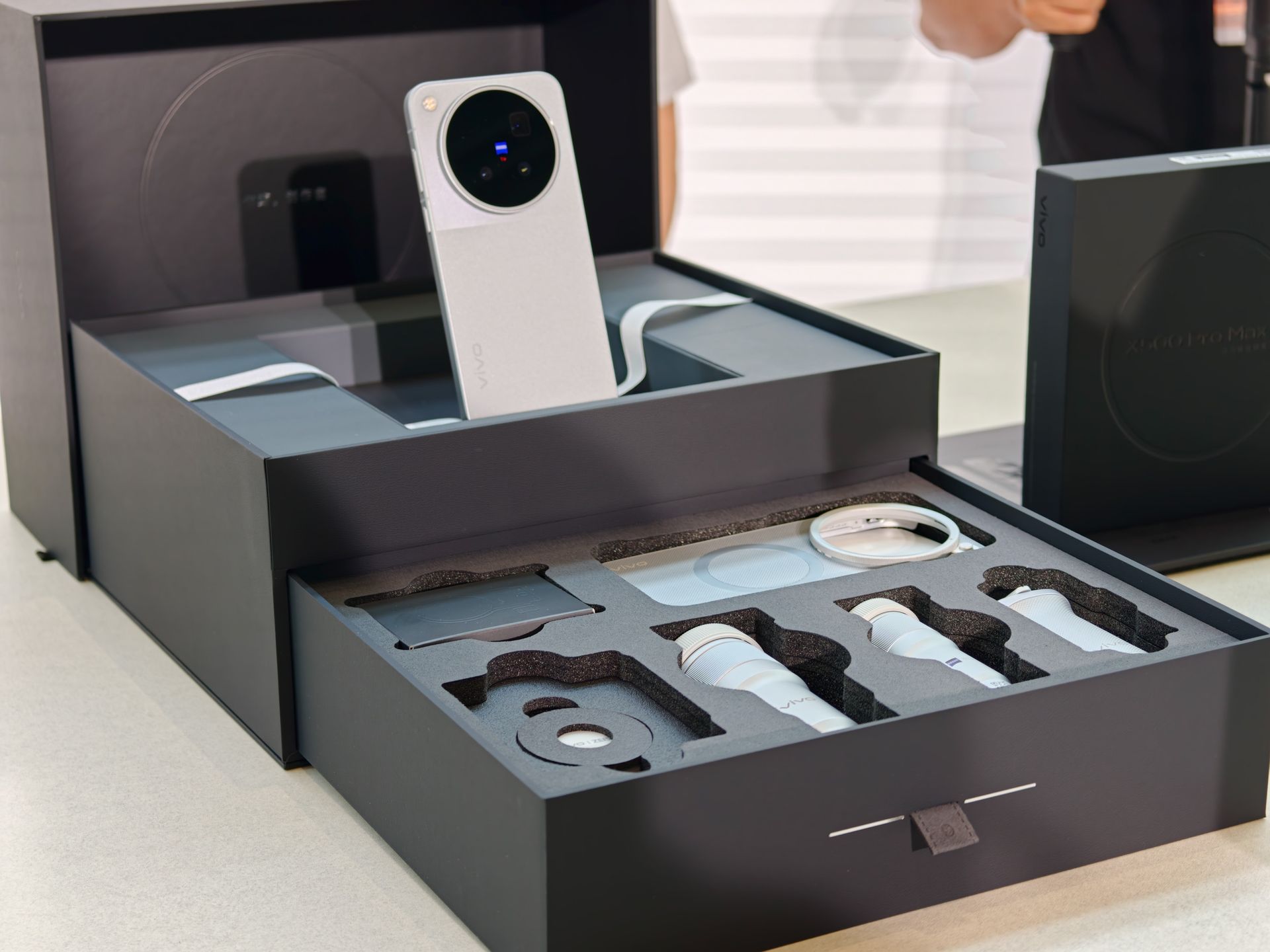
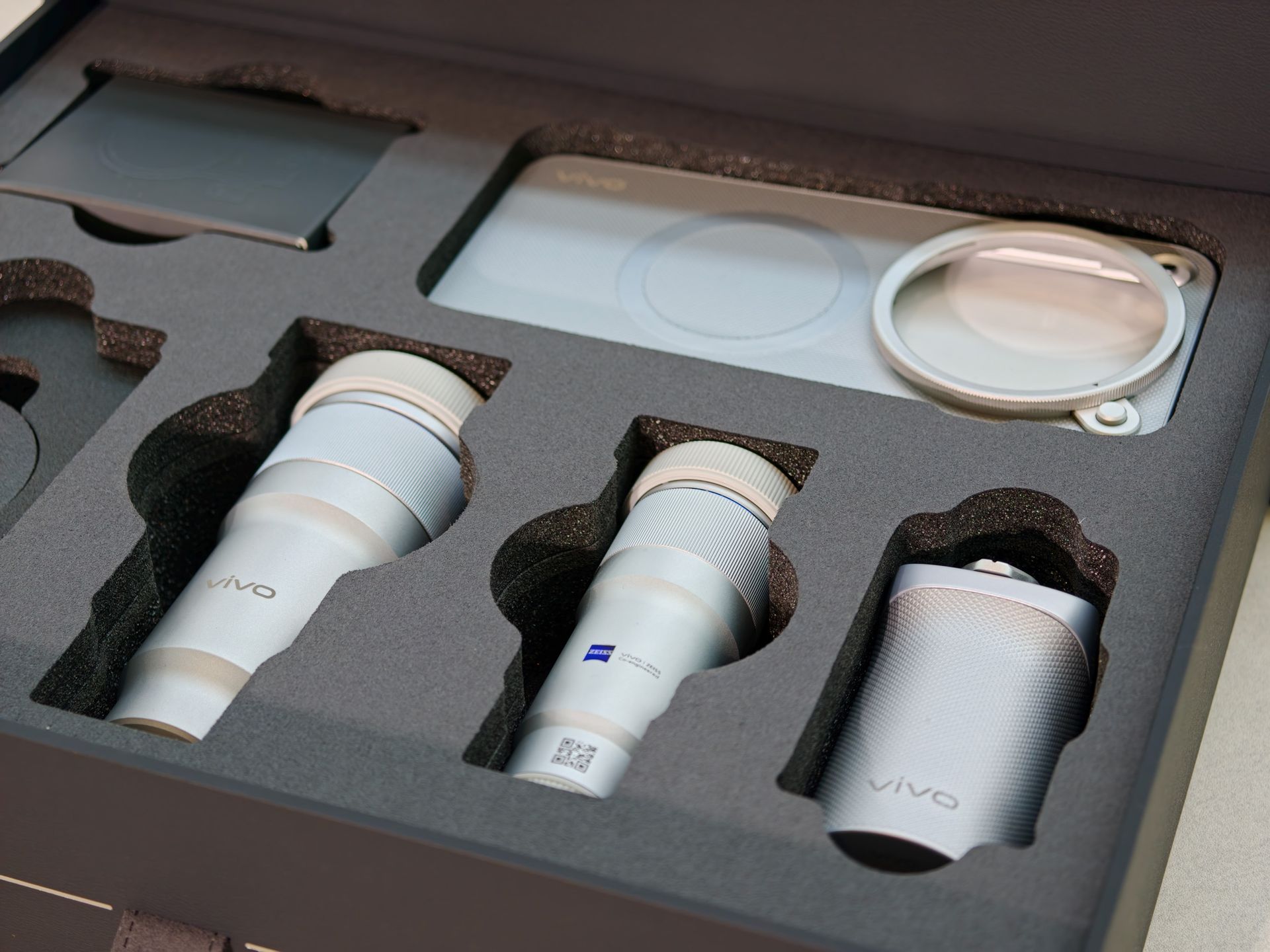
Vivo sells a case (and the monitor) separately, or they're included in a photographer’s kit which also includes two teleconverter lenses. Meanwhile, the monitor is supplied with a magnetic MagSafe-style rubber case. Vivo says the monitor costs 699 Chinese Yuan (a price conversion is $105 / £78 approximately, though international pricing will be higher).
Tim ColemanTim Coleman
Compared to the other similar devices I've tried, I found the Vivo vlogging monitor lighter, has a clearer display, and I appreciated its wireless connectivity, with options for remote or MagSafe-styler setups.
If you ever shoot selfie content and wish you could more easily use your phone’s superior front camera, then a selfie screen is a great option, and Vivo looks like it has just made the best one. If it turns out to be compatible with your device, then it could be the best phone accessory you buy all year — I'll update this page once I know more about the availability and compatibility of the screen.
It’s no secret that, in the flagship phone conversation, Motorola has lost some of its standing in the face of the best iPhones and best Samsung phones — but the Lenovo-owned company is clearly determined to return to the big leagues.
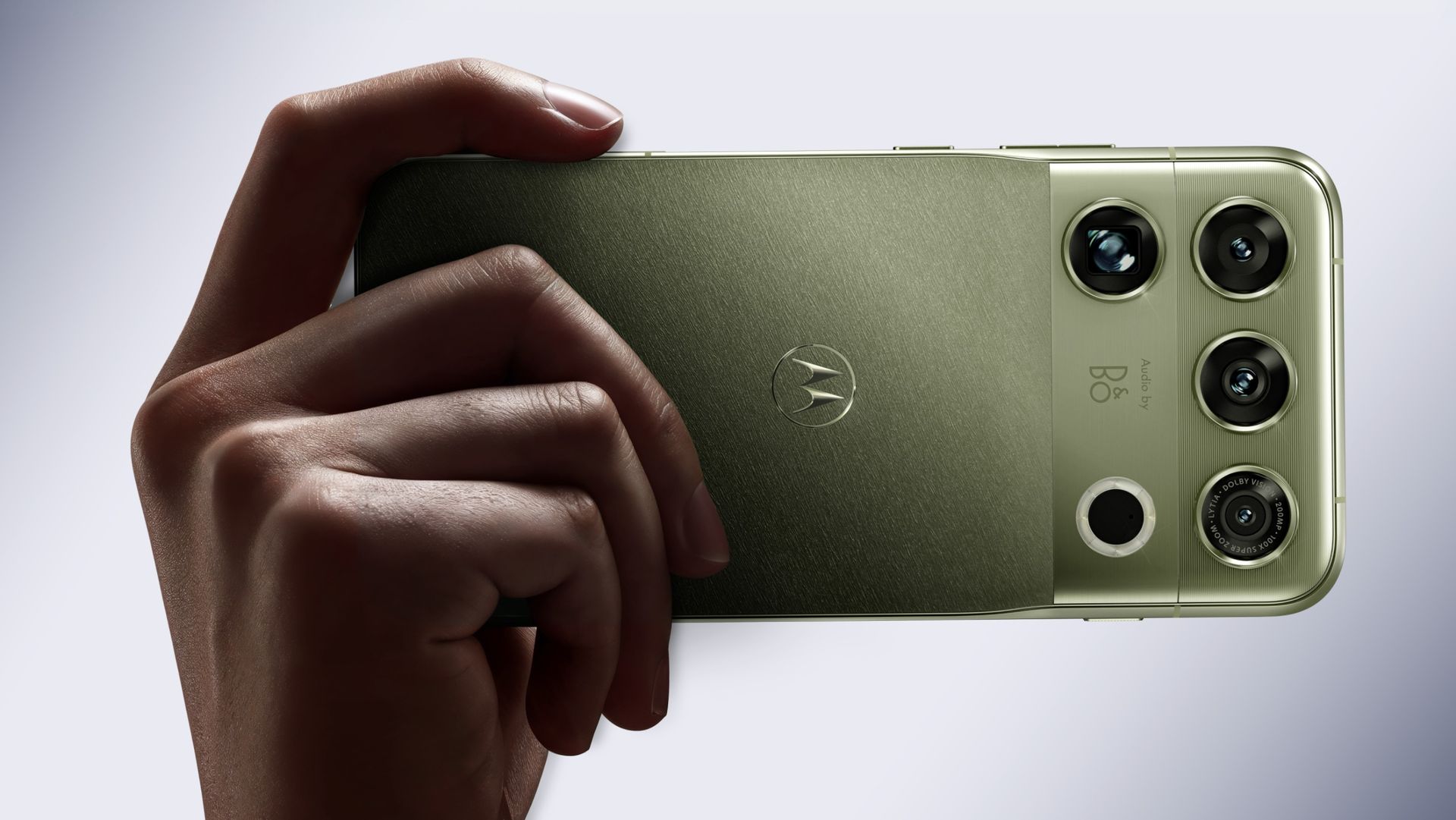
Just four months after launching the Galaxy Z Fold 8 Ultra-rivaling Motorola Razr Fold, Motorola has now unveiled the Motorola Signature 27, supposedly “the most advanced smartphone Motorola has ever created.”
And we can believe it, because the Signature 27 is one of the first two phones (alongside the Xiaomi 18 Pro Max) to be announced with the Snapdragon 8 Elite Extreme Gen 6, which Qualcomm just announced at Snapdragon Summit 2026. That’s the same chipset as we’re expecting to power the rumored Samsung Galaxy S27 Ultra, which will likely be unveiled early next year.
The Signature 27 is a de facto successor to the original Motorola Signature, announced back in January, but it’s also the first Motorola flagship to adopt the company’s new numerical, year-based naming structure, reflecting Motorola’s desire to position the Signature 27 alongside the best Android phones of 2027.
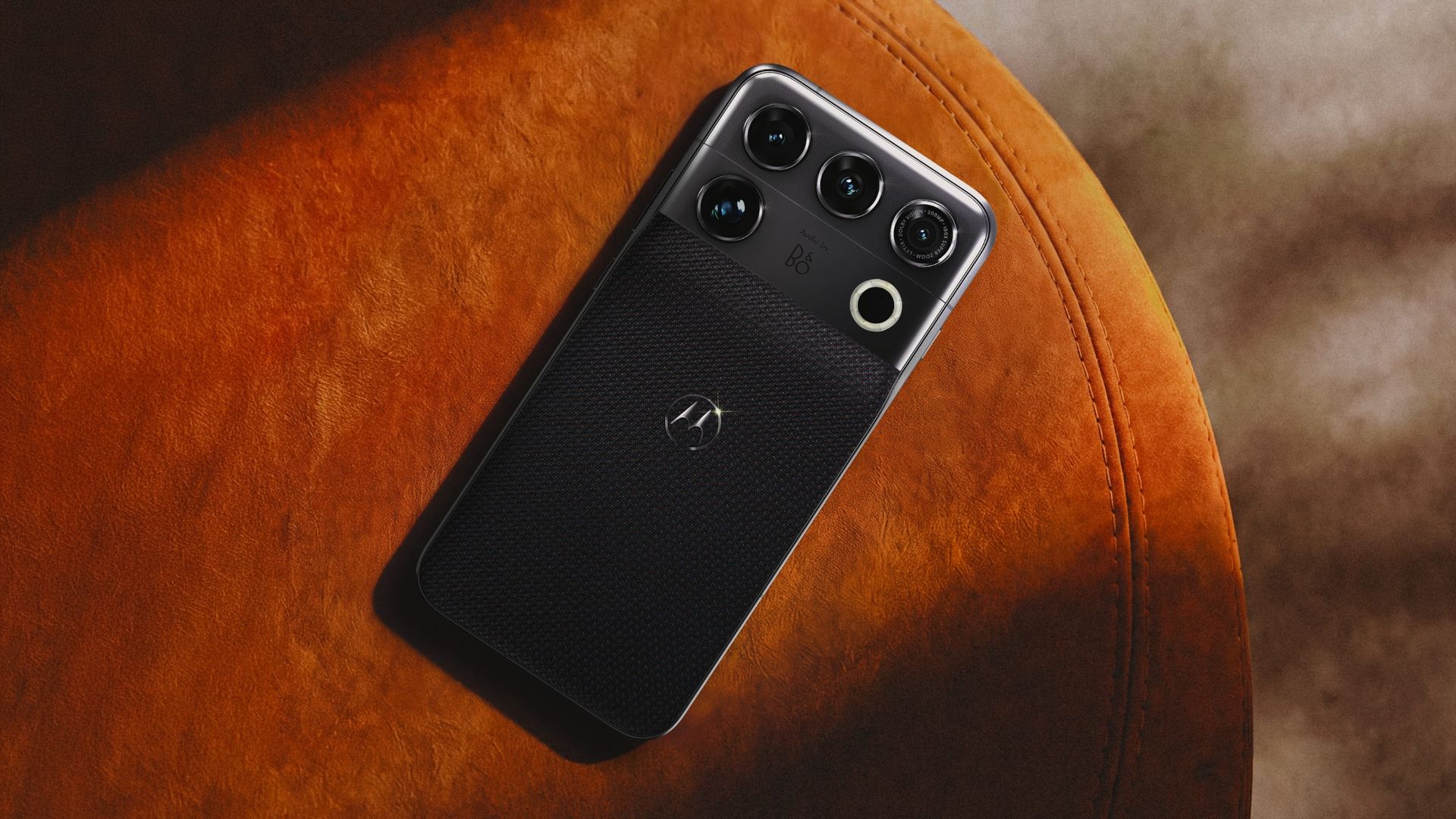
The Motorola Signature 27 in Pantone Coal Smoke (Image credit: Motorola)
And that, too, makes sense. The original Signature boasts impressive specs across the board, but its chipset — the Snapdragon 8 Gen 5 — is a step below the Snapdragon 8 Elite Gen 5, which powers the Galaxy S26 Ultra, Oppo Find X9 Ultra, and other contemporaries.
In using the Snapdragon 8 Elite Extreme Gen 6, the Signature 27 won’t be at the same power disadvantage as its predecessor. We don’t know the rest of the phone’s specs just yet, but for reference, the original Signature uses a 6.8-inch quad-curved AMOLED display, a 5,200mAh silicon-carbon battery, and three 50MP rear cameras.
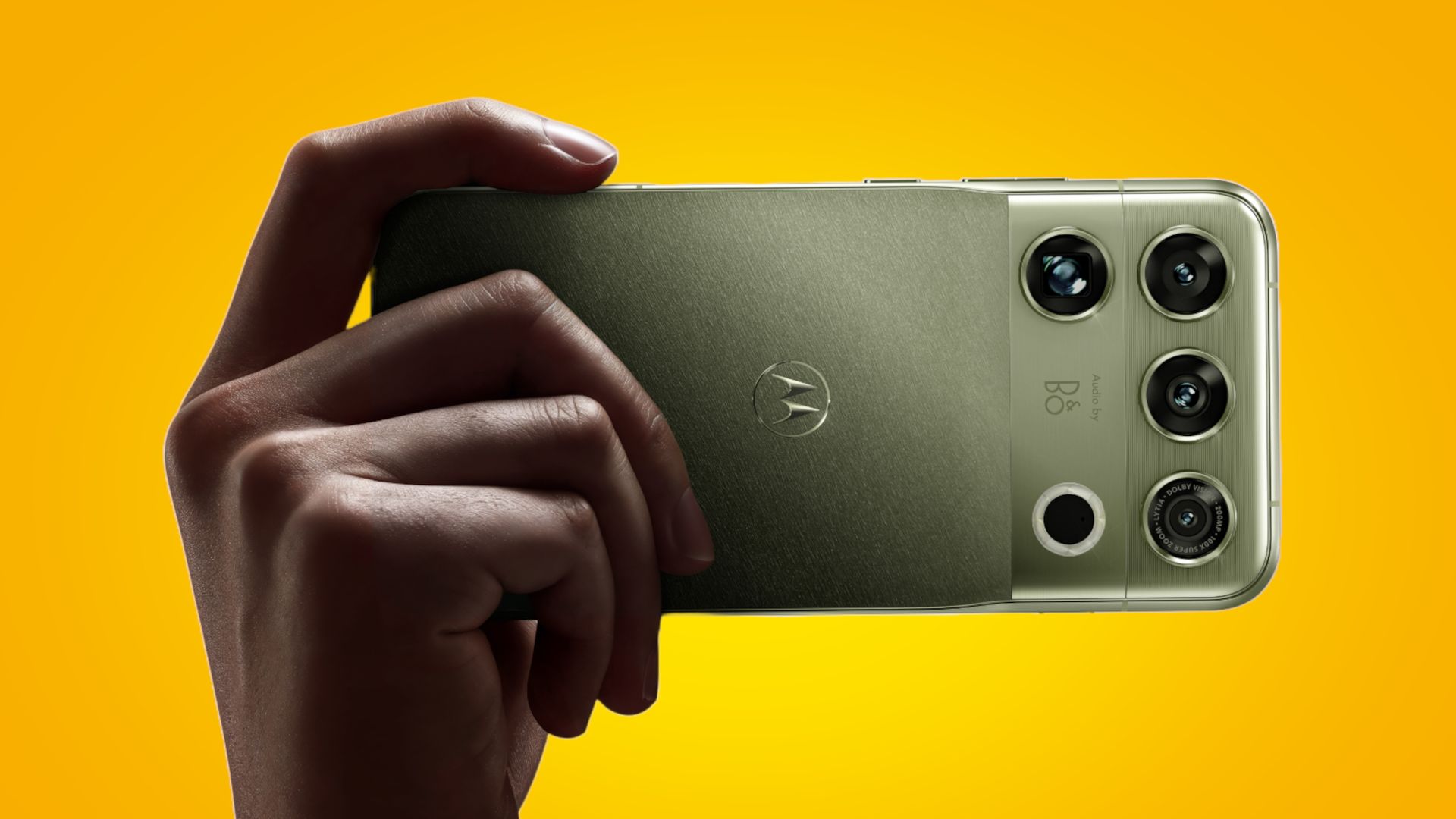
A recent Signature 27 teaser did, however, reveal that the phone will come with at least a 200MP Sony sensor in a four-camera rear setup, which will inevitably see it competing with the best camera phones of next year.
We also know the Signature 27 will feature Bang & Olufsen-tuned audio, so it’ll presumably boast some impressive speaker credentials, and Motorola has confirmed the available color options, too: Pantone Capulet Olive and Pantone Coal Smoke. The latter features a woven texture, which Motorola says “reinforces strength, durability, and premium quality.”
The Motorola Signature 27 is expected to come to global markets later this year. Its price is unconfirmed, but given that the original Signature starts at £899.99 (roughly $1,210 / AU$1,800), it’s safe to expect a steeper figure for Motorola’s “most advanced smartphone ever.”
Qualcomm has announced not one, but two new flagship mobile chipsets at its annual Snapdragon Summit: the Snapdragon 8 Elite Gen 6, and the Snapdragon 8 Elite Extreme Gen 6.
Succeeding last year’s Snapdragon 8 Elite Gen 5, both chipsets have been designed to reduce reliance on RAM (no prizes for guessing why), and each will unlock advanced gaming and agentic AI capabilities for the next generation of flagship Android phones (including, we presume, the Samsung Galaxy S27 Ultra). But how, and why, do they differ?
I attended the Snapdragon Summit in Hawaii to speak to Qualcomm's team about the Snapdragon 8 Elite Gen 6 and 8 Elite Extreme Gen 6. Here’s why the American silicon giant is launching two flagship chipsets this year — and why one of them is shipping with the ‘Extreme’ moniker.
Why are they different?
Qualcomm CEO Cristiano Amon announcing the Snapdragon 8 Elite Gen 6 series at Snapdragon Summit 2026 (Image credit: Future)
As Lekha Motiwala, Senior Director of Product Management at Qualcomm, told me: “Some OEMs [Original Equipment Manufacturers] are trying to reach the pinnacle of technology, while others are trying to reach broader audiences. We want to give choice and flexibility to the OEMs.
“The 8 Elite Gen 6 is the next generation to the 8 Elite Gen 5. The 8 Elite Extreme Gen 6 is positioned above it as the top tier, to enable newer experiences like ultra[-level] gaming, professional video codec support, etc. — on the 8 Elite Extreme Gen 6, we are going beyond what we traditionally do [with our flagship chipsets], hence the tiering this year.”
“Snapdragon 8 Elite Gen 6 delivers generational improvements across all key experiences, and is designed to power the core flagship tier,” added Ellie Fortin, Senior PR spokesperson at Qualcomm.
“The Snapdragon 8 Elite Extreme Gen 6 sits above Snapdragon 8 Elite Gen 6 as our top-tier Elite platform, showcasing leadership in AI, gaming, and advanced platform technologies, and is designed to power the best, most aspirational devices. The Snapdragon 8 Elite Extreme Gen 6 includes everything in the Snapdragon 8 Elite Gen 6, plus additional capabilities and advanced AI features. They’re both on 2nm TSMC.”
How are they different?
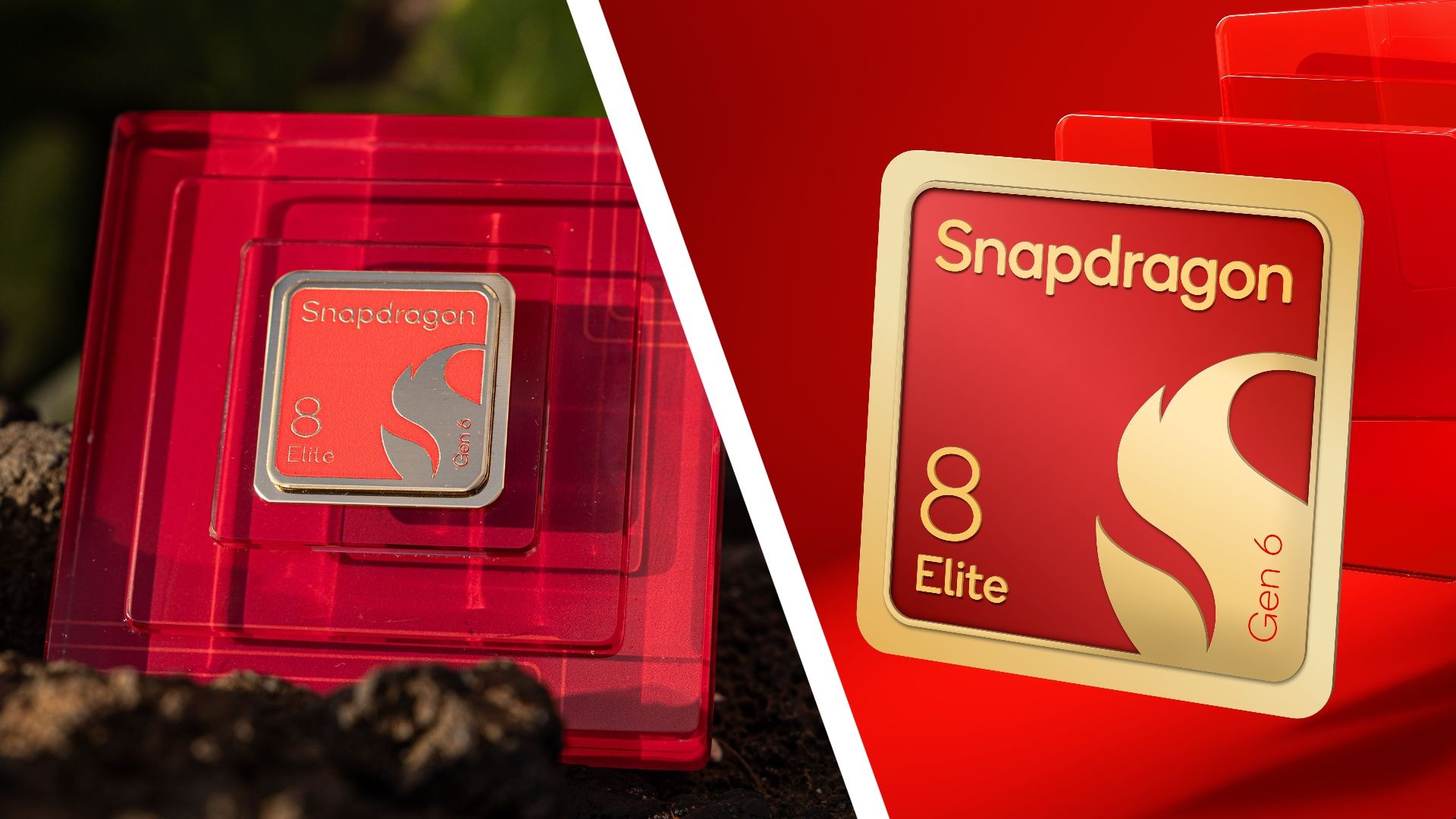
The Snapdragon 8 Elite Extreme Gen 6 (left) and Snapdragon 8 Elite Gen 6 (right) (Image credit: Qualcomm)
As for what Qualcomm means by ‘everything’ in the above statement, let’s get technical. Both chipsets feature the newest version of the company’s Oryon CPU, comprising two prime cores up to 5GHz (that’s a world-first) and six performance cores up to 4GHz. This CPU also packs a 16MB Oryon Flex Cache, which Qualcomm says will allow mobile agents to run demanding workloads without slowing down.
Qualcomm’s re-tooled Hexagon NPU [neural processing unit] features a new Hexagon Element Accelerator that should speed up how quickly AI prompts are processed by your phone — regardless of which new chipset it’s running — while the NPU in the 8 Elite Extreme Gen 6 gets 50% more Large Shared Memory than the equivalent NPU in the Snapdragon 8 Elite Gen 5.
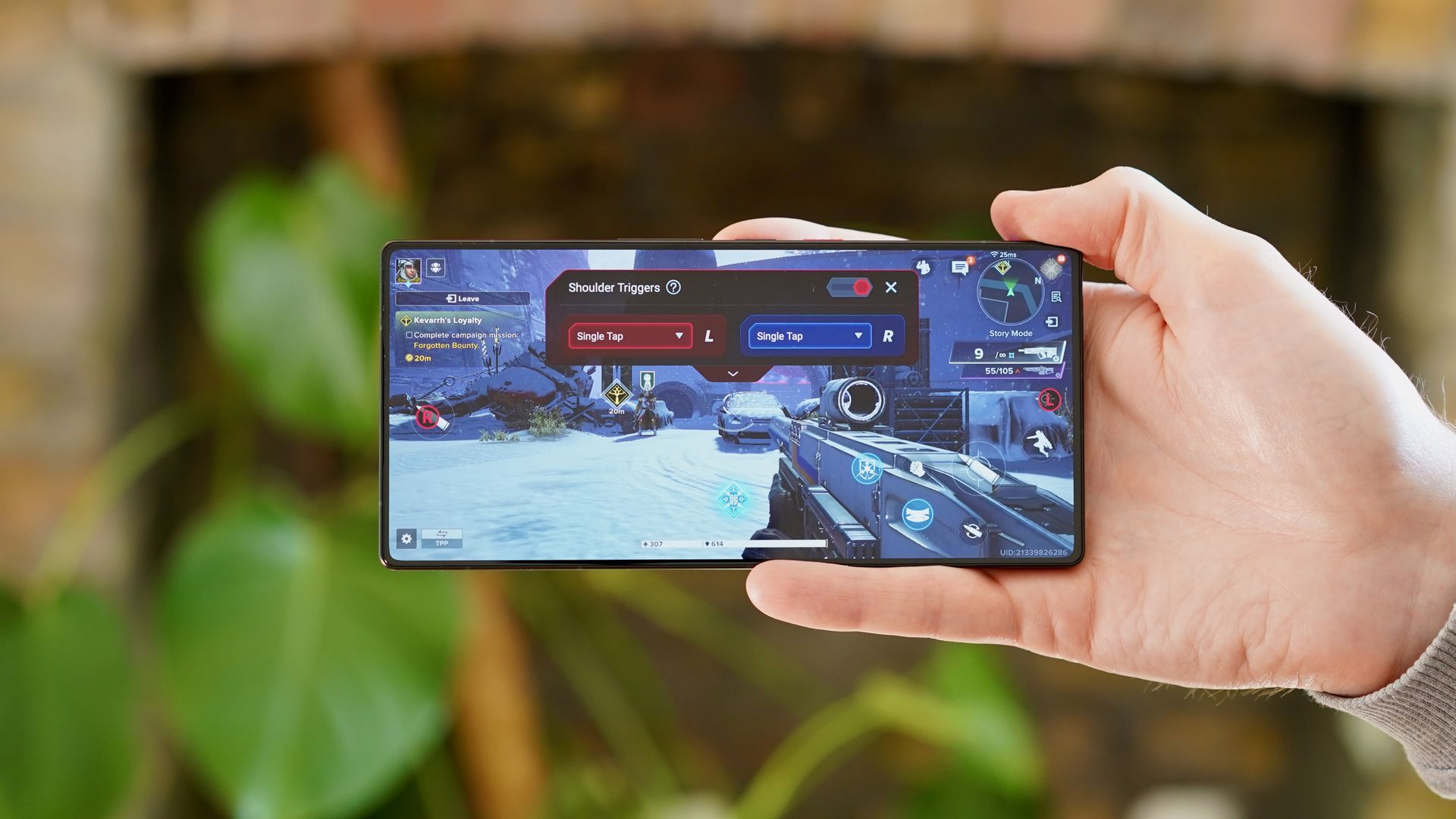
Still with me? As for the new Adreno graphics unit, Qualcomm says it represents the “biggest generational leap yet,” and will deliver substantial gains in graphics performance and power efficiency for phones equipped with either the 8 Elite Gen 6 or 8 Elite Extreme Gen 6. But the latter pulls further away from its sibling with something called Adreno Neural Fusion — a dedicated gaming rendering technology that uses AI to deliver enhanced graphics and longer play sessions in compatible titles like Honkai: Star Rail, Diablo Immortal, and War Thunder: Mobile.
The Snapdragon 8 Elite Extreme Gen 6 will bring AI-enhanced gaming experiences to compatible devices (Image credit: Future)
Couple that with three AI-dedicated GPU cores, and the 8 Elite Extreme Gen 6 looks set to make the next best gaming phones more capable than ever: “We’re introducing Adreno Matrix cores, which are exclusive to the 8 Elite Extreme Gen 6,” Motiwala explained to me. “They support the running of AI workloads within the graphics pipeline itself. Rendering becomes smarter, [you’ll get] super resolution, frame generation — many of these features can now be run within the graphics pipeline rather than moving to the NPU and other [parts of the chipset]. So now you’ll have much lower latency and much lower power consumption.”
And finally, both new chipsets feature the Qualcomm Spectra ISP for improved digital stabilization, color processing, and motion detection, but only phones equipped with the 8 Elite Extreme Gen 6 will support — or rather have the capability to support — Advanced Professional Video (APV) codecs and 8K 60fps video capture.
Initial impressions
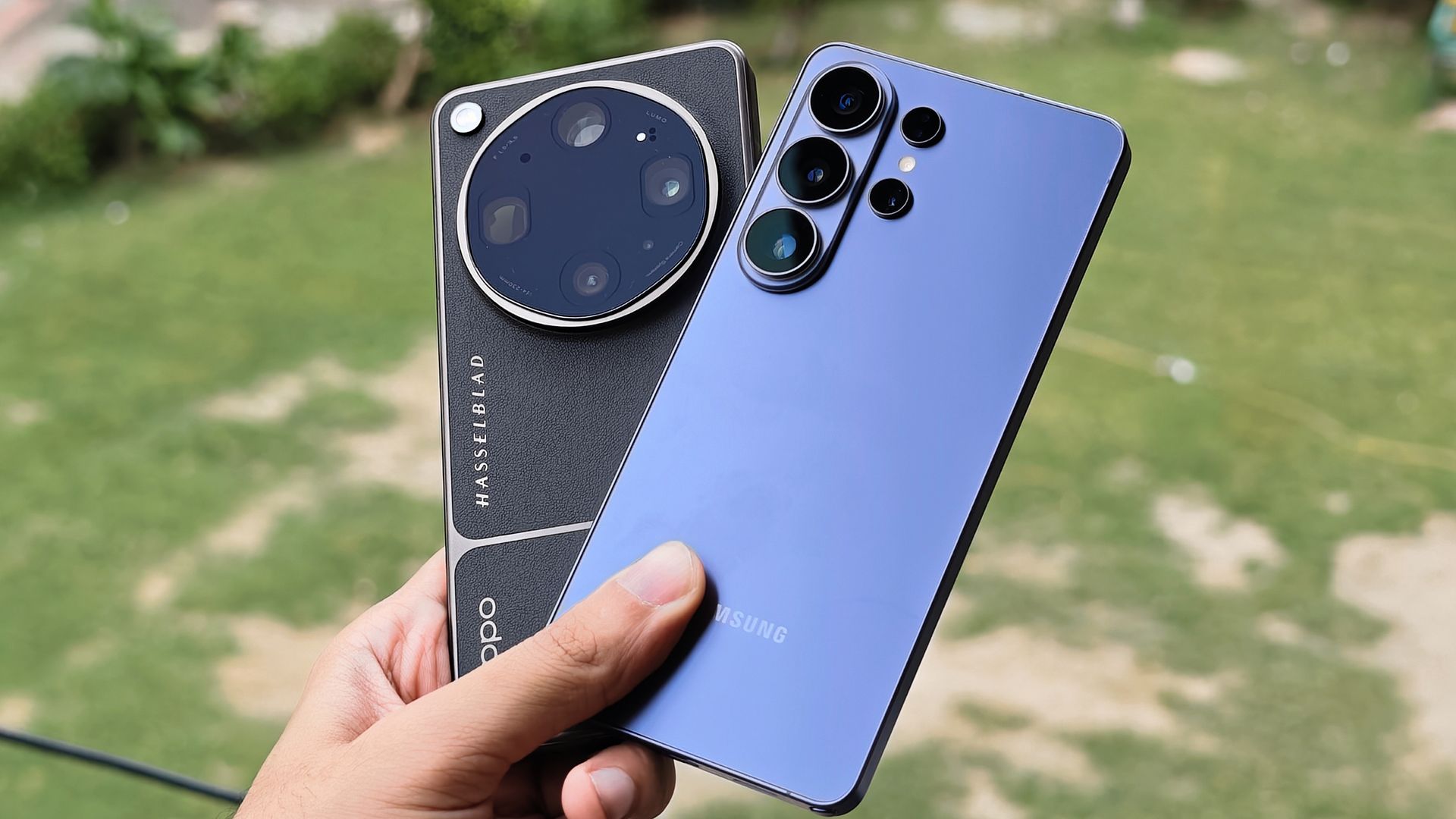
The Oppo Find X9 Ultra and Samsung Galaxy S26 Ultra use last year's Snapdragon 8 Elite Gen 5 chipset — will users be able to make use of even more power in their respective successors? (Image credit: Prakhar Khanna)
In other words, the Snapdragon 8 Elite Extreme Gen 6 is likely to be the chipset of choice for Android phone manufacturers hoping to claim that their upcoming flagships offer the very best in AI features, performance efficiency, and image processing. But it remains to be seen whether the likes of Samsung, Xiaomi, and Oppo can actually make use of all this extra power.
In truth, even the current-gen Snapdragon 8 Elite Gen 5 provides more than enough juice for 99% of smartphone tasks, and so that’s almost certainly going to be true of the 8 Elite Extreme Gen 6 (the clue is in the name) and indeed the lower-spec 8 Elite Gen 6, both of which are objectively more powerful than last’s year’s flagship chipset.
The key takeaway here is that Qualcomm is aware of the memory constraints affecting the technology industry, and has clearly worked hard to bring AI processing closer to the chipset with this year’s Snapdragon lineup. This should mean that, even if upcoming Android flagships arrive with lower RAM capacities than their predecessors (see the Google Pixel 11 Pro), their ability to process AI tasks won’t be negatively affected — if we take Qualcomm’s word for it, it’ll actually be improved.
Basically, it’s about doing more with less. Or maybe more with more, but not as much ‘more’ as we might’ve expected pre-RAM crisis.
Which phones will be supported?
The Motorola Signature 27 is one of the first phones to be announced with the Snapdragon 8 Elite Extreme Gen 6 (Image credit: Motorola)
Both the Motorola Signature 27 and Xiaomi 18 Pro Max are the first phones to be announced with the Snapdragon 8 Elite Extreme Gen 6 chipset. The Xiaomi 18 Pro, meanwhile, will use the regular Snapdragon 8 Elite Gen 6.
We don’t have any other official information about which phones will use either chipset just yet, but here’s a list of rumored devices whose respective predecessors use the Snapdragon 8 Elite Gen 5 and could therefore ship with Qualcomm’s latest slices of Snapdragon silicon:
Beats has been making over-ear headphones since 2008, when the original Beats Studio launched, and the Studio line has remained central to the brand ever since. The Studio Pro aren't going anywhere, but the new Beats 360 are something different entirely.
Beats calls them "the next chapter" of its headphones story — and after spending the past few weeks with the 360, that confidence doesn't feel misplaced. These aren't just the Studio Pro with a new coat of paint; instead, they represent an entirely new direction for the brand.
"We wanted to create a new ID, a new look, and a new over-ear headphone for a different purpose," Oliver Schusser, Apple's VP of Music, Sports, and Beats, told me.
That idea is baked into practically every part of the 360. Beats set out to build much more streamlined headphones that are designed to move with you throughout the day, and feel at home everywhere from the gym to the office to an airplane.
And the first thing you notice is just how light they are.
Weighing in at 295.4 grams, they're super-cozy, and after about 20 to 30 minutes of breaking them in, you might forget they're on your head. Compared to the AirPods Max at about 386.2 grams or Sony's WH-1000XM6 at 254 grams, these fall somewhere in the middle, but they actually feel far more streamlined than the number suggests.
The profile itself is remarkably thin, too. The drivers sit slightly farther from the ear than you'd expect on headphones this size — they're custom-built for the 360 — but the overall design feels compact, and balanced on your head.
The controls are split between the two sides, too. The left earcup houses the power button and lets you cycle through listening modes, while the right handles volume and playback. There's also a USB-C port on the left for charging.
It's a simple setup, and after a few weeks, it becomes second nature.
(Image credit: Beats)
That lightness wasn't an accident — it was the whole brief. Schusser told me the 360 came out of watching how people actually live with their headphones.
"We wanted to create a new ID, a new look, and a new over-ear headphone for a different purpose. And that purpose is for people who live a very active lifestyle who are on the go," Schusser said. "We wanted to build the perfect headphone for an active lifestyle. And of course, we wanted it to have all the great ingredients of Beats. We wanted it to look cool, sound amazing, but also be really light, be really comfortable, be water and sweat resistant."
And that's where the rest of the design starts to make sense.
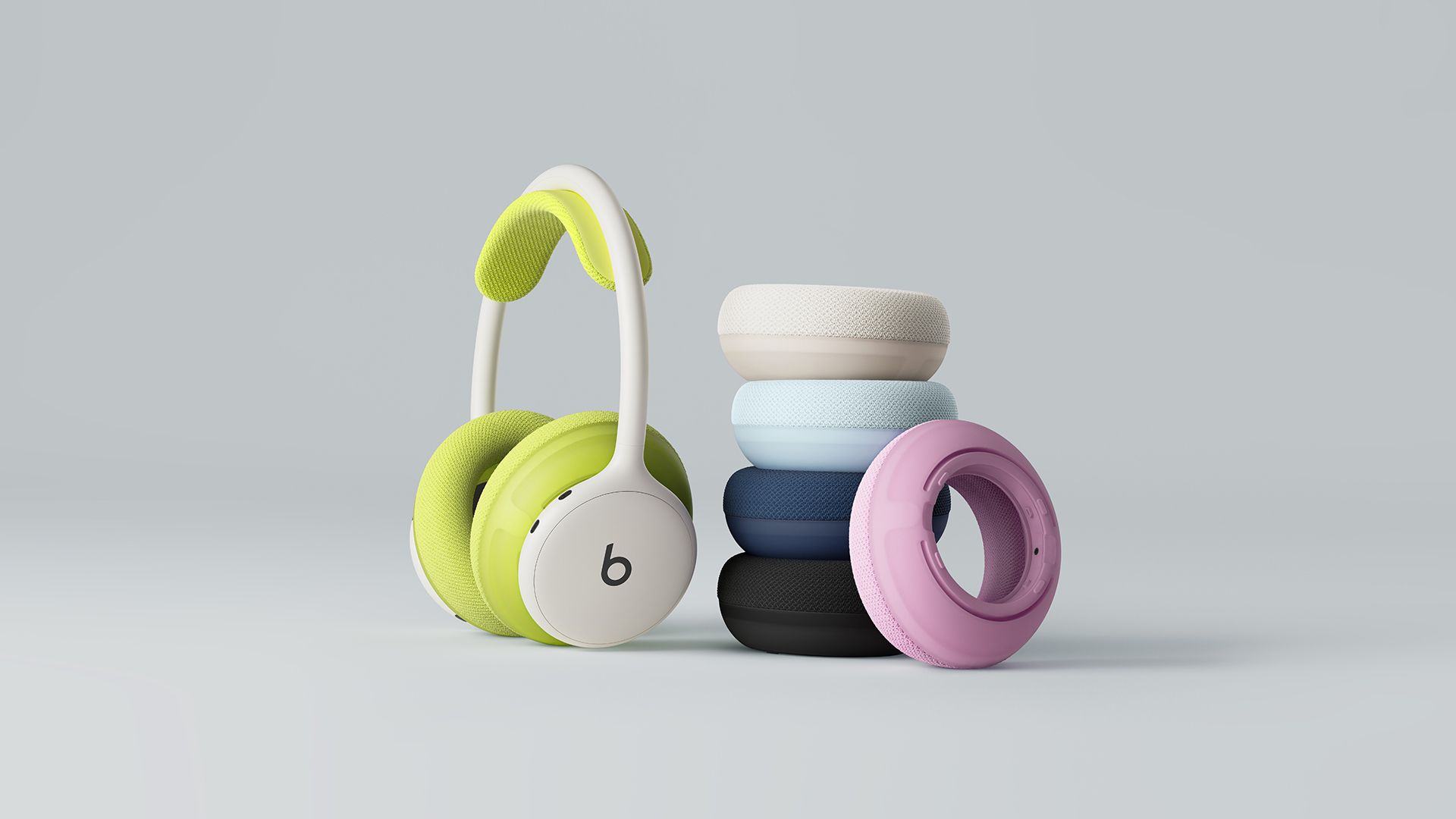
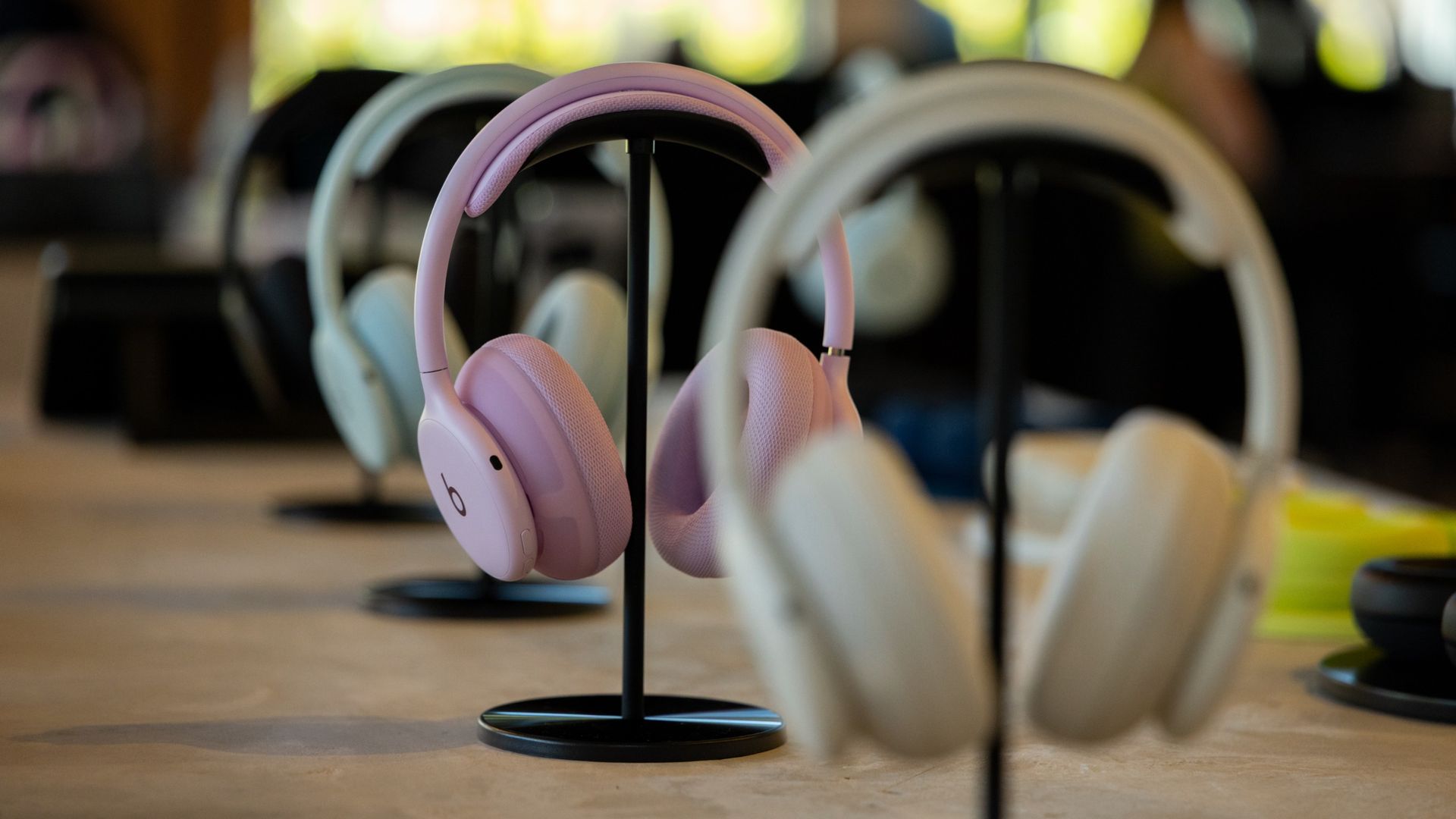
The earcups and headband are fully customizable — swappable across the four launch colors (Black, Cloud, Pink, and Sky) and two distinct cushion materials: Performance Knit, built for workouts and noticeably more breathable, and UltraPlush, the more classic Beats feel with a tighter seal, using the same engineered leather found on the Studio Pro and Solo 4.
The Performance Knit cushion makes a real difference when you're moving around, while UltraPlush gives you that more traditional over-ear headphone feel. You can also pull either cushion off entirely to wipe them down or toss them in the washer.
Then there's the IPX4 sweat and water resistance, a first for Beats over-ear headphones, and not super common in the wider market. It's a small detail that reinforces the whole idea behind the 360: these are headphones you can take to the gym, rather than ones you have to leave at home or risk damaging.
None of that customization happened by accident. Schusser said the swap mechanism was one of the more satisfying engineering wins on the whole project.
"Our engineers have come up with this really cool, simple way to sort of swap out the cushions, and it takes literally seconds, and it just makes the headphones so versatile and so flexible, and you can customize and personalize, and it's amazing," he told me.
He's right about the versatility, as swapping earcups takes seconds, and the difference between the two cushion materials is noticeable. It's a genuinely useful bit of modularity, not just something that looks good on a spec sheet, when you consider wearing these to a workout class, getting sweaty, and the swapping earcups as you head into the office.
A new sound for a new Beats
(Image credit: Beats)
On the sound side, Beats built a bespoke acoustic platform for the 360, with custom drivers using three-layer diaphragms and dual neodymium ring magnets in each earcup — a purpose-built audio setup rather than a carryover from the Studio.
Beats says that architecture, paired with its most advanced ANC to date, delivers up to 1.75x more total noise cancellation than the Studio Pro, alongside Adaptive EQ, Personalized Spatial Audio with dynamic head tracking, and Dolby Atmos support.
Previous Beats headphones have delivered a hefty low end, but that signature has evolved, and comes into real focus with the 360. There's less bass-heavy weight than on the Studio, but the payoff is that at practically any listening volume distortion is nearly nonexistent, and separation stays excellent across genres.
Take Further On Up the Road by Bruce Springsteen — I listened to this while on a plane with Active Noise Cancellation engaged, at about 70% volume, and couldn't hear any engine noise. The track opens with a strong, crisp snare and bass drum before Springsteen's vocals come in over the guitar, with background vocals filling in behind. It's a great showcase for what the onboard audio can do.
For a modern pop test, Olivia Rodrigo's Expectations pairs low end and high end almost from the first bar, as synth and drums kick in before her vocal takes center stage. Spatially, the head-tracked playback is genuinely impressive here, both indoors and while walking around outside.
Transparency mode is strong, too. It's a little behind the AirPods Max in terms of how much outside sound it lets through, but what comes through the 360 sounds very natural. Voices don't have that overly processed or artificial quality you can sometimes get from transparency modes, and for 349.99 / £299.99 / AU$499.99 headphones, they punch above their weight.
Talking of weight, the 360 aren't the lightest headphones out there, but the ergonomics carry it — an even distribution between the earcups keeps the headband thin, and makes these feel far cozier than the spec sheet suggests.
The Beats chip is a bigger deal than it sounds
(Image credit: Beats)
Connectivity comes from a custom-designed Beats chip, which is built off Apple's own silicon work, and which is now in its fourth generation. As I've reported previously, that's a significant unlock for the Beats team, letting it appeal equally to Apple and Android users rather than picking a side.
Just like AirPods and past Beats products, the 360 pair quickly and sync across your Apple devices via iCloud, so you can go from listening on an iPhone or iPad to jumping into a meeting on a MacBook Pro almost instantly. On Android, you get Fast Pair support through Google's standard, and the Beats app for Android mirrors most of the same controls.
Each earcup functions as its own self-contained unit, housing its own audio, connectivity, and battery components. It's another example of Beats rethinking the architecture around this new purpose.
There are nine onboard microphones in total: eight dedicated to active noise cancellation and three for voice pickup, with two shared between the systems. They work alongside an onboard AI model to handle voice detection, voice-assistant requests, and the handoff between ANC, Transparency mode, and Adaptive Audio.
Battery life is rated at up to 32 hours with Adaptive EQ when ANC and Transparency mode are off, and still up to 32 hours with ANC and Personalized Spatial Audio switched on. That's a claim I've been testing throughout my time with the 360, including travel, and so far the battery life has held up well.
Beats has always leaned into limited-edition drops and collaborations, and the 360's whole design seems built for exactly that kind of expansion — and Schusser didn't hide the intent. "We're going to do a lot of drops," he said.
As mentioned, these headphones cost $349.99 in the US, £299.95 in the UK, and $499.95 in Australia, and rather than positioning the 360 as a replacement, Beats is keeping the Studio Pro around too, now at a reduced $299.99 / £249.95 / AU$479.95.
Beyond the four core colorways, Beats also sells standalone cushion kits in six Performance Knit colors — adding Navy and Volt — plus two UltraPlush options. These are priced at $49.99 / £49.95 / AU$49.95, but are available at an introductory price of $9.99 / £9.95 / AU$14.95 through October 31.
Asked where the color strategy could go next, Schusser pointed straight at sports: "This is actually a perfect product for [...] team colors."
It all makes the customization options more interesting than simply picking a color when you buy them. Right now, I have the Sky — light blue — 360 with a darker blue Performance Knit cushion and a black UltraPlush, and I swap the headband cushion to match whichever earcup I'm wearing that day. The 360 can change with you, whether that's a different material for a workout, a new color for a season, or eventually one of the team-color drops Schusser hinted at.
I've really enjoyed my first few weeks with the Beats 360 — traveling back from Apple's September event, testing them at home, then putting them through their paces on flights — and I'm impressed with the overall premium nature and this new direction for Beats.
(Image credit: Beats)
The Beats 360 pair full sweat and water resistance with a thin, lightweight build and customizable earcups that let you land on a look you're happy with — and one that can evolve, rather than feeling dated.
The sound is a modern take on the Beats signature — plenty of energy, but with clear separation and basically no distortion across the genres I've thrown at it — and paired with strong ANC, a natural-feeling Transparency mode, and a battery that's held up through testing, there's a lot packed into this new design.
There are a few misses. There's no on-ear detection, so you have to turn these on and off manually, and there's no support for wired playback.
Still, those omissions don't really change what Beats is trying to do here. The 360 aren't supposed to be another Studio Pro. This is Beats taking the over-ear headphone somewhere new — lighter, more customizable, more resistant to sweat and water, and built around an active, on-the-go lifestyle.
And after a few weeks with them, I can see the new ID Beats was talking about.
Sonos is making a real statement of intent with its new wireless headphones, the Sonos Ace Ultra.
The multi-room master has made a whole host of improvements to this upgraded wireless over-ear model, which has arrived two years after the original Ace came to market. The Sonos Ace Ultra have enhanced custom 40mm drivers, a new headphone engine, better battery life, better noise-cancelling, and more detailed EQ to name a few things. So can they finally compete with flagship rivals from the likes of Sony and Bose to become some of the best noise-cancelling headphones we've tested? Here’s what I think after weeks of testing.
Let’s start by addressing the most important area of all: sound quality. We felt that the original Ace fell short of the best headphones around due to one main issue: their middling musicality. But the Ace Ultra have remedied that, and then some.
When listening to the Sonos Ace Ultra beside the original model, the differences were stark. Where the standard Sonos Ace sounded confined, overstretched, and unrefined, the Ace Ultra offered openness, intricate detailing, and a broader, more organized soundstage. What’s more, they provide better balance across the frequency range, with deep yet controlled bass, rich but less overzealous mids, and tight, articulate treble.
While I still consider some similarly priced competitors, like the Sony WH-1000XM6 and Bowers & Wilkins Px7 S3 to supply slightly more premium, detailed sound (for music, that is), the Ace Ultra are really not far behind. Sonos listened to the critics, and proved that it's up to the task of going toe-to-toe with the titans of the headphone world.
We already loved the original Ace for movies, though, finding that they offered immersive Dolby Atmos audio with effective head-tracking to boot. And that’s much the same on the Ace Ultra. They whip up wonderful width, strong command over height effects, and never neglect the fundamentals like clear dialogue and cinematic, pounding bass.
But what’s new on the Ace Ultra? Although music got a seismic upgrade, other alterations feel a bit more incremental — but that’s by no means a bad thing. Two more microphones have been added to the Ultra, bringing the total to ten, and ANC is great here. Wherever I was, my soundings were subdued to great effect, almost creating a bubble of silence. ANC is adaptive this time around and adjusts nicely, and the transparency mode works a treat. Call quality is strong too, as you may expect.
Battery life has also seen a boost, and you’ll now get up to 35 hours with ANC on. Is this anything groundbreaking? No. But it’s slightly above the 30-hour standard for headphones in this price bracket, and I never felt that I had to charge these cans very regularly. The battery is also replaceable, and a rapid charging mode means you can get three hours of playback if you spend three minutes juicing them up.
EQ options have also been expanded beyond the basic two-band equalizer found on the standard Ace headphones. There’s an eight-band option now as well as adaptive EQ, meaning you can genuinely tailor sound to your specific tastes.
We also need to talk about the Wi-Fi capabilities of the Sonos Ace Ultra. No, we’re still not at the point where we can directly stream tunes over a local internet connection, but there are some nifty features at play. First of all, TV Audio Swap is back, enabling you to link the headphones to a compatible Sonos soundbar, and transfer sound seamlessly. This is highly responsive and effective, and while I didn’t find myself using this feature a ton, you can avoid the latency issues you’d get from connecting headphones to your TV over Bluetooth.
The Ace Ultra also add Headphone Linking, though, which means you can also transfer sound from compatible speakers, like the Sonos Play, for instance. This is equally reliable as TV Audio Swap, and is a great option if you’re listening to music at home but want to keep listening without distracting others.
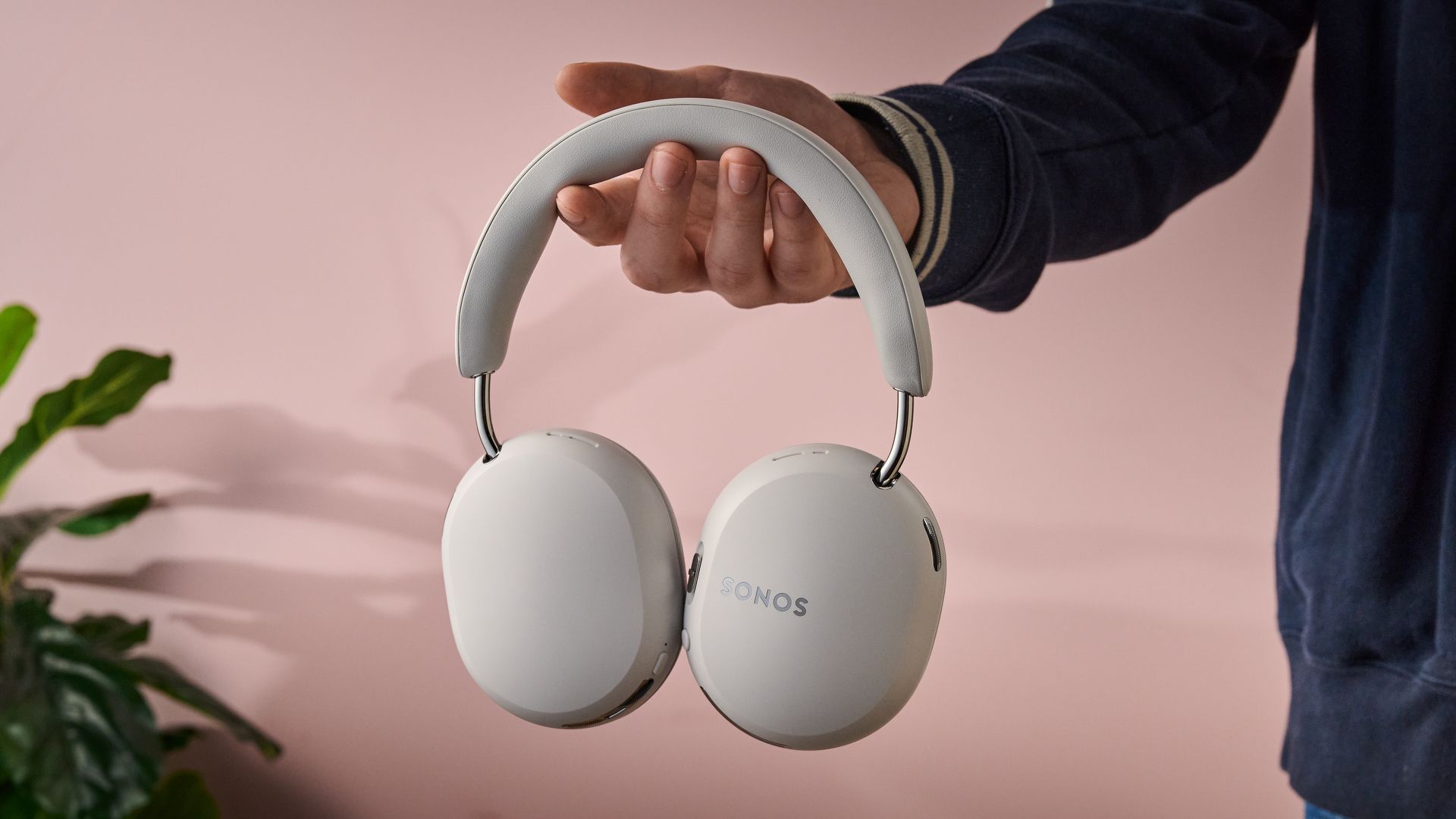
It’s clear to see that the Sonos Ace Ultra don’t look very different from the previous model, but that’s no bad thing. They’re sleek, well-built, and offer a neat combination of comfort and over-ear security. They’re not fully foldable, and the included case could be better quality-wise, but these are fairly minor pain points in the grand scheme of things.
Considering that the Ace Ultra cost the same as the original Ace at the point of launch — and actually less in the UK — they feel like a much more worthwhile investment. They’re by no means cheap, but their enhancements are meaningful and substantial, making these a great pair of headphones whether you have a pre-existing Sonos system or not. As a result, these are a great pair of headphones for music and movie lovers alike that feel worth the outlay — and are easy to recommend if you want a great all-round pair of premium wireless headphones.
(Image credit: Future)
Sonos Ace Ultra review: price & release date
Priced at $449 / £399 / AU$699
First released September 2026
The Sonos Ace Ultra were released in September 2026, about two years after the original Sonos Ace headphones. The new model is priced at $449 / £399 / AU$699, which is the same as the standard Ace cost at launch in the US and Australia, though they’re actually cheaper in the UK than the original Ace were at the point of release.
Given their price, the Ace Ultra have some extremely hot competition. For example, the Sony WH-1000XM6 are similarly priced, and offer an incredible mix of balanced, dynamic, and impactful sound alongside some of the best noise-cancelling on the market and a giant suite of features. Other competitors include the noise-crushing Bose QuietComfort Ultra Headphones Gen 2, the spacious sounding Bowers & Wilkins Px7 S3, and the ultra-detailed Sennheiser HDB 630.
Sonos Ace Ultra review: specs
Drivers
Next-gen 40mm custom
Active noise cancellation
Yes
Battery life
35 hours (ANC on)
Weight
0.7lbs / 322g
Connectivity
Bluetooth 6.0, USB-C
Frequency range
20Hz-20kHz
(Image credit: Future)
Sonos Ace Ultra review: features
Excellent ANC with adaptive mode and effective transparency option
Higher-res audio available as well as Dolby Atmos for spatial sound
TV Audio Swap and Headphone Linking works very well
The Sonos Ace Ultra boast an excellent suite of features and are a highly personalizable, smart set of headphones.
Let’s kick off with ANC, which has had quite the revamp. Now, you can toggle on an adaptive mode, which adjusts for things like fit, whether you’re wearing glasses, and if you make sudden head movements. But that’s not all.
Sonos has also boosted the number of mics for the Ultra, with ten to the original Ace’s eight. The mics can monitor your surroundings and cut out external noise in real time, and they do this to great effect. Yes, the Ace Ultra supply great ANC, and no matter my environment, I was treated to satisfying, distraction-free listening.
When out on walks, the sounds of cars passing by were totally nullified. When typing away in the office, the clacking of keyboards was fully subdued, and when travelling on public transport, engine sounds and surrounding chatter were put right to the sword. The Aware Mode is also very effective, and makes it incredibly easy to tune into your surroundings, with the new Voice Boost mode able to improve the clarity of voices around you if you toggle it on.
The upgraded microphone system also helps the Ace Ultra to handle phone calls with greater care than ever before. When taking calls when out and about, my speech was perfectly comprehensible, and never sounded obscured by background noise, even when walking in a busy part of my city.
Something else that’s received a boost is battery life. Sonos says that the Ace Ultra are capable of staying alive for 35 hours on a single charge, and my testing found this to be pretty accurate. This is a slight improvement on the original Ace, which could deliver 30 hours of use, which is essentially the standard for headphones in this price category. There’s also a rapid charging option, which gives the Ace Ultra three hours of playback from a three minute charge and a power saving mode if you want to extend the headphones’ life in a pinch.
One of the more welcome additions to the Ace Ultra is their expanded EQ options. Now, you can make use of an eight-band equalizer to customize the sound of the headphones to your specific taste. This is a big improvement on the basic two-band equalizer on the original Ace (for bass and treble levels), though there’s a more basic three-band option on the Ace Ultra if you prefer a less detail-oriented approach.
Let’s stick with sound, because there are a number of great features here that help you get the best out of both music and movies. First of all, you get all the hi-res goodness from the original Ace, with aptX codec support, as well as lossless audio via USB-C — and there’s a USB-C to 3.5mm cable bundled if you want to use them with a laptop, DJ controller, or other source device.
Dolby Atmos also returns on the Ace Ultra, enabling you to enjoy spatial audio on the go. Once again, this works an absolute treat — especially for movies, where head-tracking also helps to further immerse you in on-screen action. I tried using the TV Audio Swap feature, which enabled me to connect the headphones to the Sonos Beam Ultra, and Atmos movies sounded wonderful — more on that in the ‘sound quality’ section.
While the situations in which I’d use TV Audio Swap are admittedly niche, it's a very reliable feature. It harnesses Wi-Fi connectivity, so you don’t have to deal with the latency issues that connecting headphones to your TV over Bluetooth would bring. And you can easily switch between the soundbar, headphones, and other compatible Sonos speakers with a simple press of a button, which is highly convenient.
The Ace Ultra’s new Headphone Engine 2 also enables Headphone Linking, which allows them to directly connect to other components in your Sonos system — including compatible speakers such as the Sonos play — and move audio to and from your speakers and headphones. Like TV Audio Swap, this feels seamless and speedy to activate, and is great if you’re blasting music at home, but don’t want to disturb others if they want some peace and quiet.
On top of all of this, you get the usual good stuff: multi-point pairing, Bluetooth 6.0 connectivity, wear detection, and a relatively intuitive companion app. And when you add all of this together, I think it's fair to say that the Ace Ultra offer an incredibly fleshed-out, and well-refined feature set.
Features score: 5/5
(Image credit: Future)
Sonos Ace Ultra review: sound quality
Big improvement over original Ace with better soundstaging, detailing, and control
Deep, immersive bass, clean mids, and tight, expressive treble
Fantastic Dolby Atmos performance
While we considered the original Sonos Ace to be a good pair of headphones, their somewhat middling musicality ended up holding them back from greatness. But luckily, Sonos has listened to the criticism, implemented next-gen 40mm custom drivers, and remedied a lot of the issues we had with the previous model. The result? A genuinely great-sounding pair of headphones.
I tried comparing the Sonos Ace Ultra against the original model directly, and when I say that the difference is striking, I truly mean it. In essence, the Ace Ultra provide a significantly broader soundstage with far better organization and balance, as well as deeper, more controlled bass, and more articulate, detailed treble. I also found them to offer superior handling of dynamics and enhanced instrument separation, meaning that, for me, Sonos is closer to rivals like Bose and Sony than ever before.
Sonos has been keen to talk up the Ace Ultra’s improved bass, so I started out by listening to a house track, Get It On by Jansons. The Ace Ultra delivered palpable, pumping bass, that was rhythmic and rapid, never sounding lethargic or boomy. This never concealed other sounds across the frequency range, either, with synths in the mid-range sounding well defined and tonally accurate, and high-pitched drums coming through with precision and vigor, helping the track to maintain its high energy.
Treble was especially tighter on the Ace Ultra compared to the original model, and the wider soundstage gave each individual element more room to breathe, and this became a theme across all of my listening tests.
For instance, with the funk track Joía Rara by Brylho, the upgrade the Ultra provided was considerable. On the original Sonos Ace, the soundstage felt confined, with guitars lacking definition in the mix, and as the track built, the horns, bass, vocals, and guitars sounded slightly convoluted, resulting in a messier presentation than I’d expected. But on the Ace Ultra, things were totally different. Guitars in the intro occupied a unique pocket, bass was well-balanced, and finer percussive details were perfectly audible. Vocals were also separated to greater effect, and while they weren’t the most textured or forward, they were more than clear enough.
Are the Sonos Ace Ultra the best-sounding headphones in their price bracket? Well, they’re not far behind the competition, though I do still think a couple of models edge just ahead. For example, I tested them side by side with the Sony WH-1000XM6, and I found that Sony’s cans supplied a slightly more dynamic low-end output and detailing in the mid-range. It was very close between these two, though. Of course, if you want the most expansive soundstage, headphones like the AirPods Max 2 will edge out the Ace Ultra, but they’re slightly more expensive.
Before we move onto design, we have to talk about the Ace Ultra’s handling of spatial audio. They support Dolby Atmos as well as head tracking, really helping you to immerse yourself in your favorite movies and TV shows, and the expansiveness that the headphones supply is seriously impressive.
When using TV Audio Swap with some 4K UHD Blu-ray discs, the Ace Ultra were able to conjure up an excellent sense of width, almost like some of the best Dolby Atmos soundbars can. I started by watching Elio, and the Ace Ultra did an incredible job — voices were clear, and as characters moved across the screen, they were tracked with precision, and if I tilted my head, sound shifted dynamically as if I was speaking with characters directly. As Elio returned to earth, deep, pounding bass hit with immense power too, but didn’t sound muddy or overbearing.
With Godzilla Minus One, the sense of a plane flying overhead in the opening scene was captured far more effectively than expected. It was genuinely convincing, as if the sound was truly coming from above. Dialogue was clear again, and Godzilla’s almighty screech was both tonally accurate and controlled, rather than tinny. More generally, the movie’s action scenes had tremendous width, creating a genuinely immersive experience.
Sound quality score: 4.5/5
(Image credit: Future)
Sonos Ace Ultra review: design
Beautiful design, and very well made
Comfortable yet secure fit
Not fully foldable, but case included for added security
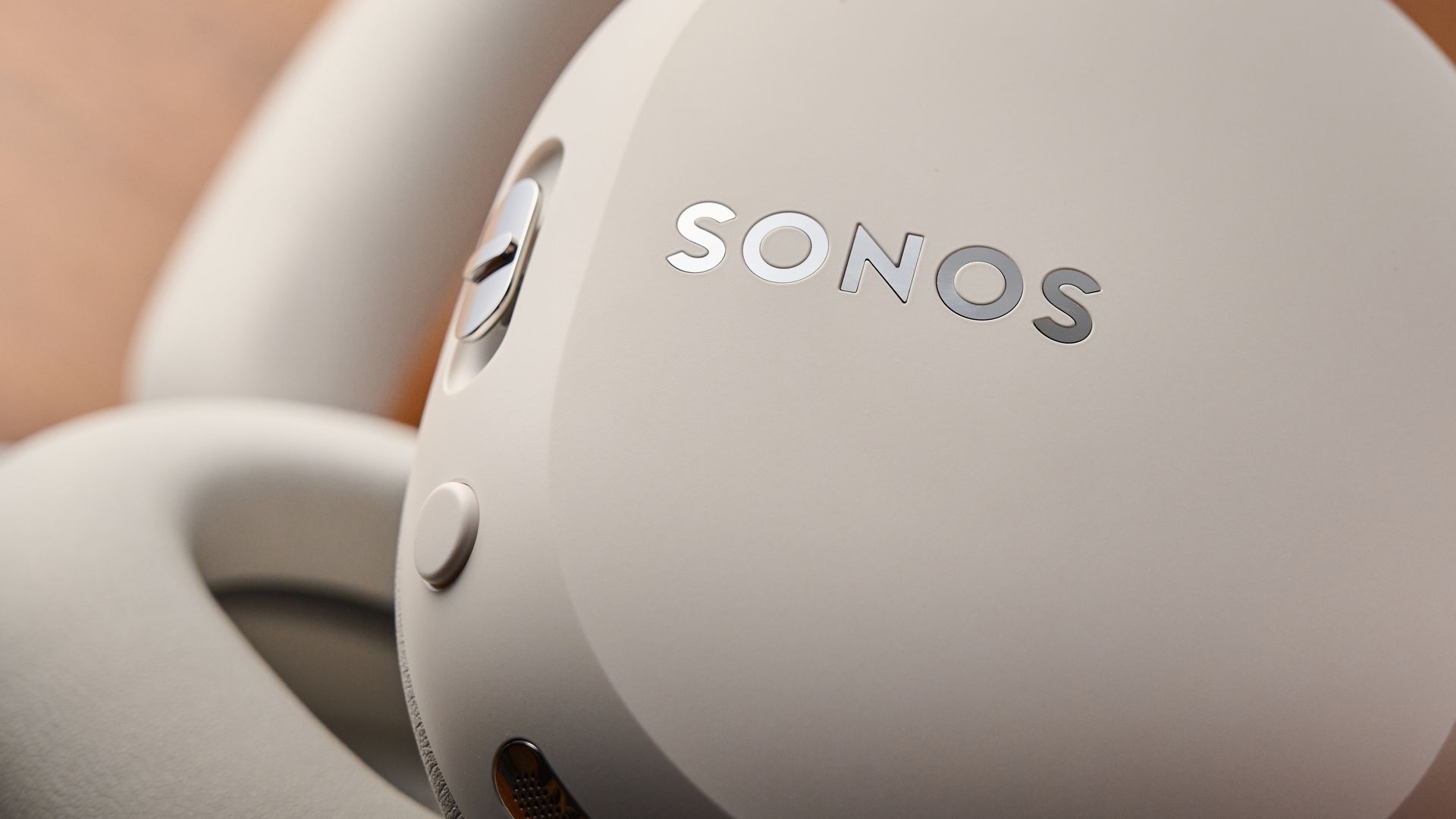
The Ace Ultra look an awful lot like the original Ace, but as someone who loved the way those headphones looked, that’s a big plus. The ear cups are relatively flat and understated, the rounded look is sleek and sexy, and the metallic details only add to the sense of premium. The button controls have shifted about slightly, but they’re incredibly easy to reach, and are all very responsive.
I tried the Soft White version which is stylish and modern, but the Ace Ultra are also available in Black, Agave, and Sand. All of these colorways are minimalistic and suit the luxurious vibe of the headphones to perfection.
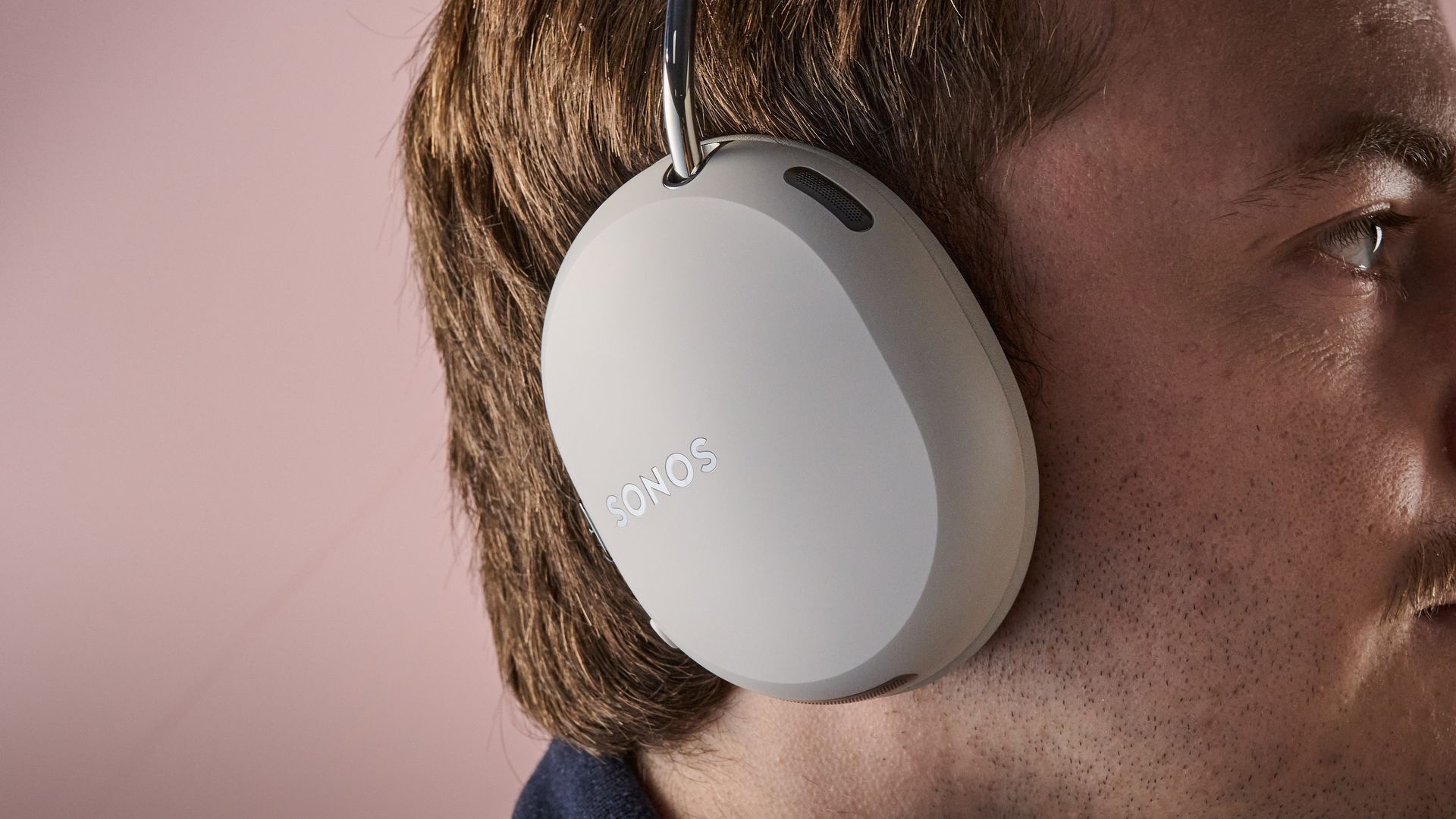
In terms of fit, the Ace Ultra strike a really strong balance between comfort and security — they’re the goldilocks of headphones, if you will. There’s enough clamping power to prevent excess sound seeping in and keep them on your head during a workout or similar, but I never found this to be overbearing. Even when I was wearing a hat, the Ace Ultra felt really snug, with the plush ear cups and padded headband helping me to enjoy my music for many hours on end.
One subtle thing I like is how the inside of the right ear cup is green, making it easy to know which side is which when throwing the cans on. The right cup also features a slider, which can be used to easily adjust volume or trigger the Audio Swap feature. I usually prefer touch controls, but the tactile and reliable nature of these buttons might just have converted me.
Something that may frustrated a few users is that the Ace Ultra are not foldable. Yes, the ear cups rotate flat for when you want to stow the headphones in the case, but rivals like the Sony WH-1000XM6 offer a more compact, travel-friendly design. In addition, the case itself doesn’t quite offer the quality I was expecting, with a fuzzy exterior that’s a bit prone to picking up fibers. I also found that the zip jammed a bit easily. I much prefer the magnetic case of the XM6, which is more seamless to use and has a more quality look and feel.
Design score: 4.5/5
(Image credit: Future)
Sonos Ace Ultra review: value
More fully featured and better sounding than the original Ace…
…but for the same price (at the point of launch)
A worthwhile choice for those with or without a pre-existing Sonos system
The Sonos Ace Ultra cured the single ailment that plagued the original model above else: their middling musicality. When I tested both headphones side by side, the difference was night and day. The original Ace were held back by a limited soundstage, underwhelming instrument separation, and a lack of balance across the frequency range. But the Ace Ultra sound so much more open, organized, and detailed, and truly compete with flagship rivals from Sony and Bose.
On top of that, you’re getting excellent Dolby Atmos performance, Headphone Linking and TV Audio Swap for linking up to other Sonos products, a beautiful design, and strong noise-cancelling capabilities. Considering that the Sonos Ace Ultra cost the same as the original model did at the point of launch — and less than the standard Ace initially cost in the UK — that’s pretty impressive.
At $449 / £399 / AU$699, they’re still quite the investment, of course. And I do think that some rivals, including the Sony WH-1000XM6 and Bowers & Wilkins Px7 S3 just edge above them in terms of sound quality. But those models can’t compete when it comes to movies — a big selling point of the Ace headphones. And the interactivity that these have with other Sonos products makes them a slam-dunk for owners of products like the Sonos Beam Ultra and Sonos Play.
Even if you don’t have a Sonos system, these headphones still justify their price with great all-round performance, a delicious design, higher-res audio codecs and wired lossless sound, as well as solid battery life. All in all, then, the Ace Ultra feel like a much more worthwhile investment than the original Ace, and manage to earn their price.
Value score: 4.5/5
(Image credit: Future)
Should I buy the Sonos Ace Ultra?
Attribute
Notes
Score
Features
Enhanced ANC, call quality, and battery life, better EQ options, and neat smart features like Headphone Linking.
5/5
Sound quality
Much better musicality than the original Ace and fantastic Dolby Atmos for movies.
4.5/5
Design
Gorgeous looks, comfortable and secure fit, but the carry case could be better.
4.5/5
Value
Earn their price much more than the original Ace with great performance across the board.
4.5/5
Buy them if…
You want amazing headphones for movies With Dolby Atmos compatibility and serious spatial audio skills, the Sonos Ace Ultra are arguably the best wireless headphones you can buy for movie-watching. You’ll experience expansive, three-dimensional sound with the Ace Ultra, and head-tracking will only further your immersion in any on-screen action.
You already own a Sonos system If you own Sonos products like the Sonos Beam Gen 2 or Sonos Play, then the Ace Ultra are a very sensible buy. TV Audio Swap and Headphone Linking enable you to seamlessly transfer sound across your system, giving you unrivalled control over your music-listening and movie-viewing experiences.
Don’t buy them if…
You want the best-sounding headphones in this price-bracket While the Sonos Ace Ultra offer great musicality, they can still be beaten. The Sony WH-1000XM6 provide a bit more bite and detailing, while the Bowers & Wilkins Px7 S3 provide even more nuanced soundstaging and instrument separation.
You want the best possible cans for travel The Sonos Ace Ultra supply awesome ANC and do come with a carry case, but unlike some rivals, they’re not fully foldable. Rivals like the WH-1000XM6 are much more compact if you’re on the go and don’t have much space in your bag, for instance.
Sonos Ace Ultra review: also consider
Sonos Ace Ultra
Sony WH-1000XM6
Bowers & Wilkins Px7 S3
Price
$449 / £399 / AU$699
$449 / £399 / AU$699
$479 / £399 / AU$699
Drivers
Next-gen 40mm custom
30mm dynamic
40mm dynamic
Active noise cancellation
Yes
Yes
Yes
Battery life
35 hours (ANC on)
30 hours (ANC on)
30 hours (ANC on)
Weight
0.7lbs / 322g
0.6lbs / 254g
0.7lbs / 300g
Connectivity
Bluetooth 6.0, USB-C
Bluetooth 5.3, 3.5mm
Bluetooth 5.3, USB-C
Frequency range
20Hz-20kHz
20Hz-20kHz
10Hz-22kHz
Sony WH-1000XM6 The Sony WH-1000XM6 are true all-rounders, boasting some of the best ANC in the game, beautifully balanced audio, and a huge range of features. They’re fully foldable, offer exceptional call clarity, and support the LDAC codec for higher-res Bluetooth listening. At this price-point, they still feel like the best headphones that you can buy for the money. Read my full Sony WH-1000XM6 review.
Bowers & Wilkins Px7 S3 For me, the Bowers & Wilkins Px7 S3 are probably the best-sounding headphones you can buy in this price-range, with an exceptionally spacious, nuanced soundstage, impeccable detailing right across the frequency range, but dynamic and exciting enough to keep you engaged for hours on end. They also look truly premium, supply USB-C audio passthrough, and have an excellent control app — though their ANC isn’t anything special. Read our full Bowers & Wilkins Px7 S3 review.
How I tested the Sonos Ace Ultra
(Image credit: Future)
Spent about two weeks testing
Compared to competitors and original Sonos Ace
Predominantly streamed music over Tidal; also watched Dolby Atmos movies
I spent about two weeks testing the Sonos Ace Ultra headphones, during which time I exhausted their various features, like TV audio swap, watched a handful of movies with Dolby Atmos soundtracks, and listened to hours worth of music.
When listening to music, I predominantly streamed tunes over Tidal on my Xiaomi 17 phone, which supports aptX codecs. To start with, I sifted through the TechRadar testing playlist, but I also listened to a wide variety of tracks from my personal library. On top of this, I compared the Sonos Ace Ultra to some of their major competitors, like the Sony WH-1000XM6, as well as the original Sonos Ace.
More generally, I’ve spent years testing gadgets here at TechRadar, where I serve as a Senior Reviews Writer. I’ve tested a wide range of audio gear, including other premium headphones like the Sony 1000X The Collexion, party speakers like the Marshall Bromley 750, Dolby Atmos soundbars like the JBL Bar 1300MK2, and more.
Honor is no stranger to smartphone innovations, with its clear embrace of silicon-carbon battery technology, high durability ratings, and even trying out some wild concepts with the Honor Robot Phone.
I recently tried the flagship Honor Magic 8 Pro and the mid-range Honor 600 Pro, and their spec sheets alone were immediately impressive: large silicon-carbon batteries with fast charging, ambitious camera hardware and IP68/IP69K durability ratings.
Importantly, both handsets deliver on the promise those specs make on paper. Their 7,100mAh and 7,000mAh batteries lasted more than two days under normal use, longer than any phone I’ve previously tested. The cameras were also impressive, particularly the Magic8 Pro’s 200MP 3.7x telephoto. Each phone’s chassis felt premium despite using plastic for the back, and both held up well during an informal tap-water test (although I admit that it’s hardly a controlled durability experiment).
(Image credit: Future | Nico Arboleda)
Performance is strong, too, with Qualcomm Snapdragon 8 Elite chipsets (Gen 5 for the Magic 8 Pro and last year’s Gen 4 for the 600 Pro) powering both phones. Both handled multitasking and demanding games comfortably.
More importantly, both handsets are competitively priced, with the base 512GB Magic 8 Pro retailing for £1,099.99/AU$1,999 and the 600 Pro starting at £899.99/AU$1,499 for the same storage option (neither phone is officially available in the US).
On paper, both phones should have won me over. In practice, their strengths are overshadowed by how closely Honor borrows from Apple — particularly in MagicOS and the Honor 600 Pro’s camera design.
Homage or replica?
At first glance, it’s clear that MagicOS tries to replicate the iOS experience on Android. The quick-settings panel has a similar layout and design style to the iOS Control Center. System transitions, app opening animations and even scrolling felt like I was using an iPhone.
MagicOS also has the Android app drawer disabled by default, with all apps displayed across multiple home screen pages, similar to how iOS organized apps before introducing the App Library in iOS 14. Admittedly the default theme is not a carbon copy of iOS, but details such as the clock and wallpapers will feel unmistakably familiar to iPhone users.
Even the initial setup uses a cursive “Hello” animation reminiscent of Apple’s, with “MagicOS” placed above it.
(Image credit: Future | Nico Arboleda)
Both Honor handsets have an “AI button” on the bottom-right corner that looks and behaves much like the iPhone’s Camera Control button. It launches AI features, but a double press opens the camera; in the camera app, it works as a shutter release and adjusts zoom when swiped. The button is useful, but its most distinctive behavior is still borrowed from Apple.
Honor deserves credit here: Magic Capsule predates Apple’s Dynamic Island, launching in 2019 — three years ahead of the feature’s debut on the iPhone 14 Pro. My argument is not that every similar feature originated with Apple; it is that Honor’s overall design language repeatedly points in the same direction.
The Honor 600 Pro’s camera bump also recalls the iPhone 17 Pro, with a wide rectangular module and a similar three-camera arrangement. Even the orange finish on the 600 Pro felt like a close variation on Apple’s Cosmic Orange. The differences are there, but they do little to create a distinct visual identity.
(Image credit: Future | Nico Arboleda)
Having used Android phones for years and recently having switched to an iPhone, I found these similarities less like an homage and more a lack of confidence. Honor has made enough changes to distinguish the features technically, but not enough to give them a clear identity of their own.
Our reviewers have acknowledged these similarities too, noting in the our Honor Magic 8 Pro review that its AI button worked similarly to the iPhone Camera Control button, while our Honor 600 Pro review says it “clearly (and some might say shamelessly) influenced by the iPhone 17 Pro”, and MagicOS was “just a little too in thrall to Apple’s work”.
What should Honor do differently?
Complaints aside, both the Honor Magic 8 Pro and 600 Pro are otherwise brilliant handsets that could’ve stood out as great alternative Android phones for very competitive prices. The specs alone give them a credible advantage in areas such as battery life and durability, particularly at these prices. But instead, Honor’s phones come across as imitators, which is a shame considering its handsets have plenty to offer.
It’s not like Honor is a stranger to innovation, either. In fact, the brand has had some creative designs like the Honor V Purse foldable and the aforementioned Robot Phone, which have moved from concept to full commercial release (though have only been sold in China so far). That makes the imitation more frustrating: Honor has already shown that it can design products with a personality of their own.
(Image credit: Future | Nico Arboleda)
With software, brands like Nothing have shown that it’s possible to provide a fresh spin on Android, and maybe Honor could take a similar route too.
Honor already has what it needs to make compelling alternatives: exceptional battery life, ambitious cameras, strong durability and competitive prices. What it needs now is the confidence to make those phones look and feel like Honor products. Until then, its best hardware will remain overshadowed by the question of whose path it is following.
The iPhone 18 Pro Max uses software artificially reduce its battery capacity to avoid shipping restrictions
The same software trick will need to be used when shipping the phone off to repair or sell it
Other phones might start taking this same approach
The iPhone 18 Pro Max has the highest capacity battery that Apple has ever put in a handset. Going by teardowns, you’re getting a 5,567mAh battery in eSIM-only models and a 5,391mAh one in versions with a physical SIM card slot. But both of those are over 20 watt-hours (Wh), and that could have been a problem for Apple.
You see, most countries have additional shipping requirements for devices with a single-cell battery of over 20 Wh. For example, both the US and UK consider these ‘dangerous goods’, and they’re prohibited to be sent through standard consumer mail services such as USPS standard post and Royal Mail.
That’s obviously a problem for a device that many people will be ordering online — and it can also complicate shipping the device to stores. But Apple has come up with a clever solution called ‘Prepare to Ship’.
This is a mode that uses battery firmware to limit the capacity to under 20Wh, and it's active from when the phone is manufactured to when a customer first activates it.
Once you have the phone up and running, the limit is removed automatically — so in other words this gets it around the shipping restrictions, without limiting the capacity of the product you receive.
However, this also adds an extra step you need to take before shipping the phone somewhere yourself — whether you’re sending it off for repair, selling it, or whatever else, as you need to manually enable the ‘Prepare to Ship’ mode again.
How to prepare your phone for shipping
(Image credit: Apple)
To do this, go to Settings > General > Transfer or Reset iPhone > Prepare to Ship. Then just follow the onscreen instructions, including selecting whether or not you also want to erase your phone.
There are a few things to be aware of though: to activate ‘Prepare to Ship’ mode, your phone might need to discharge a bit, so you should unplug it from its charger, and you should also be aware that it might become warmer than usual while this process is being carried out.
The full process can take anywhere from a few minutes to a few hours depending on how much the battery needs to drop, but you can use the phone as usual in the meantime (assuming you haven’t also opted to erase it), and the Settings app will display a red badge reading ‘Ready to Ship’ once it’s done.
If you have erased it, then you’ll instead see whether it’s ready to ship on the ‘Hello’ screen — just tap the info button there.
Once ‘Prepare to Ship’ has been enabled, it limits the battery to under 80% capacity for 14 days, but if you need to undo this setting prior to that, just head to Settings > General > Transfer or Reset iPhone > Ready to Ship, and tap ‘Undo Shipping Preparation.’
This might become the new normal
So it’s a simple enough process, but it’s one that’s vital to know about when it comes time to sell or repair your phone — so hopefully there will be enough messaging around it.
But while for now this only affects the iPhone 18 Pro Max, it could one day become the norm. Certainly, we’d expect future large iPhones to have this same feature, but Android phones are likely to get in on the act too, since it's a very elegant solution to the problem.
Currently, some Android phones get around 20Wh restrictions by using multiple smaller battery cells, but depending on the design of the phone it might be preferable to just have a single cell — in which case a solution like Apple’s firmware trickery makes total sense.
This is one of those situations where we don't think there's any shame in borrowing ideas from other manufacturers.
Vivo reveals its new flagship X500 series of phones, with three new models
The X500 Pro Max is the priciest model, succeeding the X300 Ultra
They're only available in China at launch, with wider availability coming later
It's no longer a secret that some of the best camera phones are coming out of China, and Vivo is very much competing with Oppo and Xiaomi with its flagship 'X' series — it has just revealed the latest crop; the X500, X500 Pro and X500 Pro Max.
I'm at the launch event in Shanghai, China, and have already had 24 hours with the Vivo X500 Pro Max, which effectively replaces last year's X300 Ultra. Like the previous flagship, it features a triple front camera array comprising ultra-wide, main, and telephoto Zeiss optics, only this time, the main lens has a 24mm focal length, like most other flagship wide cameras (whereas the X300 Ultra stood out with a tighter 35mm main camera lens).
The 3.5x telephoto lens has an 85mm equivalent focal length — a well-loved focal length by portrait photographers — and a mode which unleashes a 200MP resolution, while the 50MP boosted resolution is available for the ultra-wide and main cameras.
Tim ColemanTim ColemanThe Vivo X500 Pro Max photographer's kit, in lavish black presentation box. It includes two telephoto converters, grip, additional cases and moreTim ColemanThe 4.7x teleconverter lens (left), 2.35x lens (middle) and grip (right)Tim Coleman
I'll be bringing you an in-depth camera comparison soon with the Vivo X500 Pro Max, Vivo X300 Ultra, and the Oppo Find X9 Ultra (a top camera phone from last year) soon, plus more details on the former. In the meantime, I've included some of my favorite photos that I've taken with the X500 Pro Max already, so you can begin to see what it's capable of.
The X500 series was announced on September 21 and, at launch, is exclusive to China, with a wider rollout expected later, although it's unlikely to come to the US. With the Oppo Find X9 Ultra and Xiaomi 17 Ultra, both now available in the UK, I'll be keeping an eye out for Vivo's release plans with the X500 models.
Vivo X500 Pro Max sample gallery
I shot this photo using the phone's Portrait mode. I set the bokeh effect to natural and maxed it to f/0.95. However, bokeh effect edits can be made afterwards to photos shot with the Portrait mode (see photo of the phone, above) — I could reduce the strength of the effect if I wanted to. (Image credit: Tim Coleman)
The Landscape & Night mode enables high-resolution shooting. I upped the resolution to 50MP and used the B/W color style — taking the exposure reading from the bright part of the sky to get the low key effect. (Image credit: Tim Coleman)
I used the regular Photo mode here, and left the phone to its own devices, and the results are really good — color is pleasant, and the HDR effect not overly aggressive. (Image credit: Tim Coleman)The famous Bund skyline in Shanghai. I used a long exposure effect for the vistaTim ColemanAnd here I add the 4.7x teleconverter lens, which works with the 3.5 zoom camera for a 400mm effective focal length. This was shot handheld and the image is still pretty sharpTim ColemanThe telephoto camera is a 3.5x zoom optic, with an equivalent 85mm focal length. Tim ColemanHere I've used the 10x zoom setting, which is a digital zoom from the 3.5x telephoto Zeiss lensTim Coleman
And here's a cute kitty with longest coat, well, just because! (Image credit: Tim Coleman)
Look out for the small blue 'hello' signs in Apple Stores
They're to help test the iPhone 18 Pro and Pro Max cameras
The new phones are now available to purchase in retail stores
The next time you head into an Apple Store, you should be able to spot a small blue 'hello' sign somewhere, as per reports on social media — and the appearance of these little signs is apparently connected to the launch of the iPhone 18 Pro and iPhone 18 Pro Max.
As per MacRumors, the signs are there to help customers test out the optical zoom capabilities of the new handsets. Both models offer up to 8x optical zoom, so having something specific to zoom in on is going to be helpful.
While the iPhone 18 Pro and iPhone 18 Pro Max have a variable aperture feature on one of their three rear cameras now, the optical zoom capabilities are actually the same as the iPhone 17 equivalents that launched in September of last year.
There are also new Pro controls on the latest handsets, so settings for lens aperture, shutter speed, and white balance can be tweaked shot by shot — something else you might want to test out in an Apple Store.
Now available
از امروز تمام اپل استورها این نشان hello رو یه جایی دارن که باهاش بتونن زوم دوربین آیفونها رو به مشتریها نشون بدن pic.twitter.com/gpLv7CPaweSeptember 18, 2026
The iPhone 18 Pro and iPhone 18 Pro Max arrived in Apple's retail stores on Friday, September 18, six days after preorders started. Prices for the handsets start at $1,199 / £1,199 / AU$2,099 and $1,299 / £1,299 / AU$2,299 respectively (for 256GB of storage).
New Apple CEO John Ternus made an appearance at the Apple Store in New York to help celebrate the wider availability of the flagship iPhones — as well as the Apple Watch Series 12, the Apple Watch Ultra 4, and the AirPods 5.
He didn't mention anything about the new 'hello' signs in stores, but they've been spotted by customers nevertheless. They look to be located on higher shelves and fixtures, perhaps to put off anyone wanting one as a souvenir.
And if you're wondering where the iPhone 18 is and when you'll be able to test that out, don't panic — it's rumored to be showing up around March time, alongside the iPhone 18e and the iPhone Air 2.
Bose often seems to pay more attention to its Ultra-suffix devices, which absolutely make up some of the best noise-cancelling headphones we've tested. And that is perhaps why the second-generation Bose QuietComfort Headphones — that is to say, those launched in the post-QC 35 II era — took three years to come to market, following the launch of the older QC Headphones in 2023.
These are basically the QuietComfort Ultra Headphones Gen 2 for people who don’t want to pay an arm and a leg for their sound, and given how I only ever see the non-Ultra cans when I’m out and about in the UK (a fact my editor also confirms), I’d wager that this new release is the model people have been waiting for.
Meet the QuietComfort Headphones (2nd Gen), so named because they’re quiet, thanks to Bose’s sought-after Active Noise Cancellation, and comfortable (thanks to the use of soft protein leather for pads and bands).
Having used them for several weeks, I can say that the latter is definitely true: these are incredibly easy to use for hours on end, without your ears aching or the top of your head feeling sore. You can basically use them until the battery runs down, although that’s partly because the 24-hour battery life is rather poor in 2026.
I’m not convinced on the ANC sell though. Bose has a reputation for industry-leading noise cancellation, and the Headphones Gen 2 are supposed to match the Ultra Headphones Gen 2 in this department. However, after testing the cans on multiple flights, train rides and around several cities, I’m not fully sold on the claim. They’re great at removing background sound, but not flawless; other brands have caught up, and those similarly-priced competitors surpass them in a few ways.
That’s not to say ANC is an actual problem with the QC Headphones Gen 2, but there are several departments which will raise eyebrows. The cans feel quite cheap, rattling in the hand and offering some odd gaps in the body which shouldn’t be there. They’re also quite light in the feature department, more so than you’d expect for the price.
So why have I given the Bose a four-star review? Well, despite a seemingly-unchanged driver set-up from the older models, and an EQ which barely offers you any control over your music, these cans sound fantastic. They offer detailed and precise treble and energetic and punchy bass. Because of this, listening to tune after tune on them never gets old. The spatial audio is great too, adding an immersive slant to the already-great sound.
Despite quirks, I really enjoyed using the Bose QuietComfort Headphones Gen 2; you will too if you can find them for a price that makes sense. I’m not sure they justify the premium price tag right now, but if you find them discounted, they’re a must-buy.
Bose QuietComfort Headphones (2nd Gen) review: Price and release date
(Image credit: Future)
Launched in August 2026
Sells for $359 / £299 / AU$549.99
Comes with carry case and two cables
The Bose QuietComfort Headphones (2nd Gen) were announced on August 6, 2026. That’s three years after the first-gen model came out, and a year after the Ultra Gen 2.
Despite not being the ‘Ultra’ member of the family, the ‘standard’ QuietComforts aren’t cheap. You can pick up the cans for $359 / £299 / AU$549.99, which is cheaper in the UK but more expensive in the US than the last-gen models (and the same cost in Australia). It is, of course, cheaper than the Ultra Gen 2 model, which launched for $449 / £449 / AU$699 and haven’t seen a massive price cut since.
You can pick the cans up in five color options: black, white, mauve, mint and green you see depicted. In the box you get a protective carry case, USB-C to USB-C wire and a USB-C to 3.5mm cable.
Bose QuietComfort Headphones (2nd Gen) review: Features
(Image credit: Future)
ANC great, but not best
Poor 24h battery life
App doesn't offer that much
At 24 hours, the Bose QuietComfort Headphones (2nd Gen) don’t have a very long battery life. I’ve tested other options this year which last for literally 100 extra hours; don’t buy these if you need something for a long-haul flight. That listening time is with ANC turned on; you’ll get a few hours more if you turn it off, but less if you use some of the other listening features.
You charge the cans via their USB-C port, which takes 3 hours according to Bose. A new feature for the Gen 2 model is that you can also enjoy wired audio from this port, which is a real get for people who like high-quality audio. It almost makes up for the lack of a 3.5mm jack!
I suppose we should discuss that ANC. As mentioned in the introduction, it was good but not great, and certainly not the best I’ve ever used in over-ear headphones. The difference was small but noticeable: on a flight, I could hear the hum of the engines more than in some other cans I’ve tested, and surrounding sounds would creep into my music more often than I’d like.
They’re not bad by any means, and they’re still some of the better ANC headphones I’ve tested. But they’re not the best, and that’s a surprise given the name and the price point.
The headphones offer a range of listening modes beyond ‘standard’ ANC (which it calls Quiet mode), but I was surprised by how much most of these also affected audio quality. I’d recommend only sticking to Quiet or Aware, which lets in some surrounding sound.
(Image credit: Future)
You can toggle between these modes in Bose’s app, which has a few other tools. You can set up multi-point connection, change what that shortcut button does, check the battery life, set up immersive audio and play with the equalizer.
If your ears perked up at the mention of EQ, don’t get too excited. The custom mode only offers 3-band control, and there are four presets which change these three bands for bass or treble reduction or boost. It’s a surprisingly lightweight amount of customization for premium headphones, and people who like to tweak their audio sound will be greatly disappointed.
To be honest, that’s my general takeaway from the Bose app: it offers only a fraction of the tools, features and customization that you’d get from cans costing a third of the price.
One stand-out is Immersive Audio though. In the past, I've found similar offerings from rival brands a tad gimmicky, but Bose’s works very well. You can choose between Still or Motion (depending if you’re still or in motion), and it’ll deliver an encompassing sound that spreads the sound of your music or movie around you. It’s not so overt as to be distracting, and makes music a little more immersive — though I much preferred Still mode, which had a more audible spread which changed as I moved my head.
The second-gen Bose QuietComfort Headphones (2nd Gen) look pretty similar to the original pair, but with some refinements in the looks department. Hinges and the retractable arm are better hidden, and the headband’s padding looks better integrated. The cans make the older model look like a prototype.
Oddly, though, the headphones feel pretty cheap. The cups rattle, there’s a noticeable seam between the headband and pad, and parts of the headphones flop around unsupported when you hold the gadget by its headband. There are a few other similar traits which make the buds feel loose, most noticeably that there’s a worrying amount of flex in the band. After several weeks of testing, I’ve yet to have these traits manifest in any actual problem, but I’m constantly surprised by how the build quality flags behind half-priced rivals.
I do appreciate that they're based on a design many users have loved, for many years — and this is likely the key reason they've largely been kept as-is (or was). But still, in the intervening years competing design teams have worked hard on other, newer headphones, and the Bose QuietComfort Headphones (2nd Gen) feel a little flimsy and clunky in direct comparison today.
At least the QuietComfort are supremely comfortable to wear. The padding which rests across the top of your head, and the soft cups, both go a long way in ensuring you can listen for long periods of time without getting any aches or strains. It gives the impression of them being light, even though at 241g, they weigh about the same as many other pairs.
(Image credit: Future)
When you’re wearing the cans, the right cup has the volume and pause/play buttons; their prominence is different so you can easily tell what button your finger is on. The right edge has the shortcut button, and power slider; I love this latter, as it’s easy to flick to instantly turn the cans on, without needing to press and hold like you do on most rivals. Bose has really nailed the buttons here, which I admit is a small detail, but that is where the devil is according to the idiom.
There’s a decent amount of malleability here: you can rotate the cups a fair way left and right, and the band is quite extendable (though it’s fairly stiff, so you’ll have to give it a hearty tug). The cups don’t move much up and down, but they still fit my head well.
You can fold down the QCs to make them more portable, or put them in the travel case. My aforementioned issues with the ‘loose’ feel of the cans returns here; you can’t stack them on a flat surface without them falling over.
If you’ve read the design and features sections of this review, you’ll know I’ve had compliments and criticisms in each department. Not so for audio quality.
Bose hasn’t detailed the driver in the QuietComfort Headphones (2nd Gen), but the previous-gen model had a 40mm unit, and the brand hasn’t boasted any audio improvements beyond generations. It doesn’t need to; the previous models sounded fantastic and the new ones do too.
Out of the box, you’re getting V-shaped sound from the QuietComfort Headphones. Treble is crisp, sharp and detailed, letting you hear tremolo and tones that many other cans miss. Bass is hefty and punchy, but with a precision and control which avoids lower frequencies drowning out the rest of your song.
(Image credit: Future)
As is generally the case with headphones offering V-profile audio, the mids lack just a little bit. I’d often notice guitars playing harmonies, piano accompaniments or high alto/low tenor backing vocals that’d be missing the ‘oomph’ I’d like them to have. But you’re not buying the Bose for a neutral sound: this is for fun and energetic music.
The sound set-up of the QuietComforts is best shown in songs like Fitz and the Tantrum’s Man on the Moon, which has hard-hitting vocals and bass but loses its rhythm guitar and strings a little, or The Hoosiers' Automatic Glow, which sees its harmonic synth line dropped to the back of the mix, in favor of the energetic sung word, and rising hook.
To return to the Bose app, you can use the EQ to try and add some emphasis on mids, but I found this only a limited solution which didn’t have much of an effect on the music.
Sound quality: 5/5
Bose QuietComfort Headphones (2nd Gen) review: Value
(Image credit: Future)
Should be top-value earbuds
Unfortunately, longevity isn't guaranteed
If your headphone equation is simply “I’ll spend more money for better audio”, the Bose QuietComfort Headphones Gen 2 will be a good option. They sound great and they’re comfortable, so you can enjoy music for a long time (at a fairly high cost).
But to me, a few aspects of these headphones make the premium price seem a little too high. The loose-feeling build quality, lack of app features and poor battery life all point to the cost being higher than it should be. If you see the Bose discounted by about $100 / £100 / AU$200, then these will be good-value cans. Alternatively, the previous-gen models should be enjoying a decent price cut due to being a bit older.
As it stands, the Gen 2 are still good buys, but I’d personally save money and buy cheaper headphones. Which in particular? Well, thankfully there's a competition section below…
Value: 3.5/5
Should I buy the Bose QuietComfort Headphones (2nd Gen)?
Bose QuietComfort Headphones (2nd Gen) score card
Attributes
Notes
Rating
Features
The noise cancellation is great, but the lack of other tools and poor battery life let the Bose down.
3/5
Design
The QuietComfort is certainly comfortable, with some smart elements but a cheap-feeling design.
4/5
Sound quality
Most people will find these perfect for music.
5/5
Value
They're great, but you'd be right to expect a little more for the price.
3.5/5
Buy them if…
You find other headphones uncomfortable Many people struggle with headphones because they don't want their head in a musical vice. Try the QCs, they're your best bet.
You want great noise cancellation It may not be the best in the biz, but it's still very good: if you need solid ANC, you won't be disappointed.
You love immersive audio features Always listen to your music with spatial enabled? You'll really like how Bose handles the function.View Deal
Don’t buy them if…
You need something long-lasting Many people will find the 24-hour battery life insufficient. Luckily, it's one of the shortest figures I've seen on earbuds; you can do better.
You like tweaking your audio profile The QC Headphones' equalizer doesn't offer you much control over your music, nor any kind of listening test.
Bose QuietComfort Headphones (2nd Gen) review: Also consider
Looking for alternative over-ears? Here are a few we've tested and would recommend.
Bose QuietComfort Headphones (2nd Gen)
Soundcore Space 2
Sony WH-1000XM6
Drivers
Not specified
40mm
30mm
Active noise cancellation
Yes
Yes
Yes
Battery life (ANC on)
24 hours
50 hours
30 hours
Weight
241g
264g
254g
Connectivity
Bluetooth 5.4, USB-C
Unspecified Bluetooth, 3.5mm
Bluetooth 5.3, 3.5mm
Waterproofing
Not specified
Not specified
IPX4
Soundcore Space 2 This affordable pair of cans costs half the amount of the QC Headphones, and its comfort and ANC match Bose. The audio quality isn't quite on par, however, and nor is the spatial audio. Read our full Soundcore Space 2 review
Sony WH-1000XM6 Bose's closest rival is from Sony; this set costs a little more and also offers fantastic noise cancellation, an incredible sound and useful button controls. Read our full Sony WH-1000XM6 review
How I tested the Bose QuietComfort Headphones (2nd Gen)
Tested for roughly four weeks
Paired with Android phone for Bluetooth, Android tablet for audio
Used on walks around neighborhood, at work, on flights and on trains
To write this full review, I used the Bose QuietComfort Headphones (2nd Gen) for just over four weeks, which gave me time to fully put them through their paces.
For the majority of the testing time, the buds were paired with my Fairphone 6 Plus smartphone, though I plugged them into a Xiaomi tablet using the cable for some wired audio. Over the course of the review I tested them on multiple flights, countless train and bus journeys, while working at home and on various walks around my city.
I listened on Spotify, to my own digital library, for movies on Now TV and videos on YouTube, and various games.
I've been testing gadgets for TechRadar since early 2019, and in that time have used countless pairs of over-ears.
In the midst of hype for Apple’s new A20 Pro chipset and slick foldable software, the company’s durability department is quietly having a moment.
Its Ceramic Shield 2 display glass — first introduced on the iPhone 17 line and returning this year on the iPhone 18 Pro — is earning plaudits for delivering on the promise of 3x better scratch resistance 12 months on from its release, while the iPhone Duo is set to arrive next month with a host of impressive on-paper durability credentials (including, notably, a Galaxy Z Fold 8-beating IP68 resistance rating).
But while features like ingress protection and corrosion resistance aren’t the sexiest topics of discussion at Apple Park, they are some of the most important for ensuring Apple’s products stand the test of time — and Tom Marieb, the company’s new Vice President of Hardware Engineering (a role formerly occupied by CEO John Ternus), knows that better than most.
I had the chance to quiz Marieb on the iPhone 18 Pro and iPhone Duo in a group interview at Apple’s London HQ, and he lifted the lid on how Ceramic Shield 2 — which we described as “the first iPhone glass we fully trust” earlier this year — managed to deliver such a noticeable jump in quality versus the original Ceramic Shield, and why he’s “especially proud” of the iPhone Duo’s hinge durability.
Both the iPhone 18 Pro (above) and iPhone Duo feature Ceramic Shield 2 on their respective front displays (Image credit: Future/Jacob Krol)
“Personally, when I see someone put a screen protector on their iPhone, it makes my skin crawl, because we work so hard to make beautiful front screens,” Marieb told me. “So we very much wanted to develop new coatings that could withstand [scratches], but also make sure that these coatings were wear-resistant as well. We worry about scratching, which is obviously very dependent on having [material that can withstand] very sharp things going into the screen. But we also worry about wear over time; as people use the screen, whether they’ll wear away that surface. And it turns out that those things are a little counterindicated in a lot of materials.
“So we had to try to optimize both of those [qualities] simultaneously [...] And I think we finally hit on a nice balance between the two [in Ceramic Shield 2]. We could have made it more scratch-resistant, but it would have been a little less wear-resistant. It’s the long life we’re looking for against both of those loads over time.”
We try to say, ‘How are customers actually using this? What exactly are they exposing it to in the real world?’ And we make tests that mimic those things.
Tom Marieb, VP of Hardware Engineering, Apple
Marieb added that, in testing Ceramic Shield 2, Apple accounted for half a decade’s worth of use in a comparatively minuscule testing period: “We very much try to meet the customer where they live, and so we don't design tests that measure old military specs or old standards; we try to say, ‘How are customers actually using this? What exactly are they exposing it to in the real world?’ And we make tests that mimic those things.
“And as you said, people waiting a year or two to actually see the benefits of [Ceramic Shield 2] means we've correctly predicted how people would use it. We accelerate time to try to compress those things into the engineering cycle, so that we can feed back as we try one thing after another, and can represent five years of life — or even more — within a couple of weeks of testing.”
It all hinges on the hinge
The iPhone Duo in ‘Seated’ mode (Image credit: Getty Images / Karl Mondon)
The display is the most important part of any iPhone, but the foldable iPhone Duo saw Apple tasked with protecting a new, equally crucial component: the hinge.
Like any foldable, the Duo can be used open or closed, and Apple has also developed dedicated ‘Seated’ or ‘Standing’ modes that will see the Duo bent at various angles for extended periods. The former displays visual content on the top half of the screen and viewing controls on the bottom (picture a Game Boy Advance), while the latter turns the Duo into a bedside clock, photo gallery, or weather screen via StandBy.
Whichever orientation you choose, the Duo remains fixed in place — but the work to make that happen wasn’t easy.
“I'm glad you hit on this, because this is something I'm especially proud of, and it took us a long time [to crack],” Marieb explained. “What we worry about with this device is that people see how thin it is and they think it's fragile. People seem to be worried about the Air, too, but it's honestly one of the most reliable phones we’ve ever made. And so we thought, ‘How do we design a hinge that feels very solid when you close it, but also really solid when you open it?’
The iPhone Duo in a half-folded orientation (Image credit: Getty Images / Benjamin Fanjoy / Stringer)
“We really worked on the torque profile very heavily, and that means changing a lot of the mechanical properties of the hinge to have it feel solid, like a high-end automobile's car door, when you shut it. That was design intent, so people would have a feeling like, ‘Oh, it's okay. This is well crafted, and it's safe for me to use and not worry about it.’
And then, as you said, we have a lot of use cases where the Duo is [in a half-folded state]. And so we also had to think, ‘Can people interact with this [device] and not have it feel floppy?’ So getting those torque profiles right at both those ends, as well as in the middle — not having it feel like you're pulling something open, and not feeling as if it's floppy — we spent a lot of time optimizing that. So thank you for noticing, because a lot of blood, sweat, and tears went into that.”
The dual benefits of nano texture
The iPhone Duo features a custom nano-texture display (Image credit: Getty Images / Benjamin Fanjoy / Stringer)
On top (literally) of the iPhone Duo’s hinge, Apple has equipped its first foldable phone with a 7.6‑inch nano‑texture display. This new material isn’t a million miles away from the anti-reflective nano-texture glass that can be added to the best MacBooks, though, of course, the Duo version of said glass needs to bend in half.
Another journalist in my group interview with Marieb noted that foldable creases typically appear minimal out of the box, but become more prominent mere months after being used extensively. In response, the Apple executive was bullish on the longevity of the Duo’s hinge and explained that the nano‑texture display should help maintain its obscurity:
“Hold us accountable to that, please […] The choice of a matte finish — apart from it being beautiful — is part of that equation. When you look at glossy displays, their specularity makes it very easy to pick up topology differences. That’s part of the reason we picked the matte finish — it’s not only beautiful in terms of preventing glare, but it’s also more forgiving of [topology] changes over time.”
Apple, then, is supremely confident in the durability credentials of its first foldable phone — and we look forward to putting the iPhone Duo through its paces ahead of its official launch on October 23. For our full verdict on Apple's latest candybar handsets, check out our iPhone 18 Pro and 18 Pro Max review.
"Feel the vibe here, that's what I love," said Harry Sung as he stood in the middle of a buzzing Apple Fifth Ave flagship store. Moments earlier, Sung picked up the first burgundy iPhone 18 Pro Max of the day after being ushered into the glass edifice by none other than new Apple CEO John Ternus.
It was a big day for Sung, who scored his second year in a row as the first Apple customer on iPhone launch day, and an even bigger day for Ternus, who was hosting his first iPhone launch store event as CEO.
Lance Ulanoff / FutureLance Ulanoff / Future
It's been a whirlwind few weeks for Ternus, who officially took over for former CEO Tim Cook (new Executive Chairman) on September 1 and, a week later, was on stage unveiling the iPhone 18 Pro line, new AirPods, new Apple Watches, and the exciting foldable iPhone Duo.
On this day, that flexi-phone was nowhere in sight. Even so, the atmosphere was electric, and it felt, to those of us who've been attending iPhone store launch events for almost 20 years, like the old days.
When I caught up with Ternus inside the store, he told me the day was "exciting," and I could tell he was still a little amped up from the store opening ceremony.
At precisely 8am ET, Ternus appeared behind the frosted glass doors of Apple's Fifth Avenue flagship store and then swung open the doors. He stood for a time, waving to a cheering crowd, behind which was a small cluster of protesters shouting about, among other things, iPhone manufacturing working conditions. As the groundswell of excitement grew around Ternus, the protesters seemed to lose steam.
(Image credit: Lance Ulanoff / Future)
Ternus then turned to the long line of iPhone customers waiting outside the store, many of whom had pre-ordered the phone last week, and started greeting them. First up was Sung.
In his arm was a binder full of cards denoting the 120 Apple Stores he'd visited around the world. Sung later told me he had met Ternus once before at another product launch at Apple's "100th store" where he'd had Ternus sign the book. The inside cover also featured more than half a dozen other Apple executives' signatures (This is not surprising. In another part of the store, I witnessed Apple head of Retail Deirdre O'Brien signing someone's MacBook.)
Lance Ulanoff / FutureLance Ulanoff / Future
Ternus posed with Sung outside the store and then turned his attention to the next customer.
After collecting his iPhone 18 Pro Max, Sung briefly appeared outside the store again and held his purchase aloft. The crowd cheered again.
Later, when I asked Sung, 21, how he secured his pole position, he told me that first he pre-ordered his burgundy 256GB iPhone 18 Pro Max online (he never leases and always buys), and then he arrived at the store yesterday at 8:30pm ET — and waited.
(Image credit: Lance Ulanoff / Future)
I asked Sung, who is a native of China but is currently living in New Jersey and attending university, if he's ever owned an Android. He shook his head and then told me his first iPhone was the iPhone 15.
Why, though, does Sung visit all these stores, and why was he here right now? Sung looked at me like I had lobsters dancing on my head. "I love Apple," he told me, as if nothing could be more obvious.
Hunting for a great Pixel 11 case to keep your new phone protected? I've sorted through the options to find covers that keep your handset safe from scratches, protect against drops, and still look good. And because the Pixel 11 comes in some particularly juicy colors (the purpley Frost shade is my top pick, but I'm not averse to a bit of Hibiscus), I've included a number of transparent options in the mix. And don't worry, they're all anti-yellowing.
While there are dozens — maybe hundreds — of ultra-cheap cases on Amazon, I'd recommend spending a bit more on a good-quality case. There are a handful of brands I tend to steer towards: Mous for streamlined cases, CASETiFY for fun designs, Spigen for rugged protection, Snakehive for leather cases and wallets, and OtterBox for useful extras like grippy sections and stands. Scroll down for my top Google Pixel 11 cases in the US and in the UK.
Samsung Display unveils new 'M16' OLED phone screen tech that can hit 10,000 nits of brightness in small areas
The more useful news is that it can be 30% more efficient than its previous-gen M14 OLED tech
It's appearing first in the Vivo iQOO 16 phone, in China
Samsung Display has unveiled the first OLED panel to deliver 10,000 nits of peak brightness, and it's already coming in a phone.
The new 'M16' OLED display is capable of 10,000 nits in 1% of the window, although in full screen it puts out a less searingly bright (but massively impressive) 2,800 nits. These numbers put it in the region of micro-LED tech, and way beyond anything we've seen for OLED so far.
Of course, brightness is all well and good, though few people are probably begging for their phone to be as bright as a full sunny day. What's arguably more exciting is that the panel is Samsung's second-generation polarizer-free OLED, which enables it to deliver significantly improved energy efficiency and brightness — the claim is a 30% improvement in efficiency.
This means that even if you view it more like the 1,000 nits of most elite phones, you're saving way more battery — and since the display is one of the biggest battery hogs in phones (or the best smartwatches, where the tech would also be really useful), that could make a real difference to phone longevity.
The M-series panels are made for smartphones and other mobile devices, but the advances in OLED material here may make their way into the best OLED TVs too, at least partly.
BREAKING! Samsung Display × iQOO are holding a joint launch event, and the M16 OLED display has reached an incredible peak brightness of 10,000 nits! https://t.co/ihjmlknl2XSeptember 14, 2026
Where to see Samsung Display's new ultra-bright OLED
According to industry site FlatpanelsHD, Samsung Display will be providing the M16 OLEDs to Vivo for its iQOO 16 gaming phone.
For TV buyers, the most significant thing here is how fast OLED tech is evolving. Samsung announced its first 5,000 nit OLED in March 2025, and it's doubled the brightness and massively increased the energy efficiency in just over a year.
It'll be some time before these more efficient displays make their way to monitors and TVs (monitors might come sooner), and there are currently trade-offs involved — the lack of a polarizer can mean less defined contrast and black levels, which may be Apple is adding other anti-reflective tech to its displays — but clearly, any so-called OLED killers can't be complacent when OLED is evolving at such a speed.
It’s been just over two years since Dyson introduced its second pair of headphones, the OnTrac, to the world. While they were a significant improvement — both in terms of sound and general design — over the Zone, I ultimately found in my Dyson OnTrac review that they still couldn’t quite challenge the class leaders — namely Sony and Bose.
A strong factor in that realisation was their exorbitant AU$799 price tag. Not only was that too much for the Dyson headphones (regardless of brand name), it also allowed other manufacturers to charge AU$700 or more for their premium cans — here’s looking at you, Sony, Bose and Sennheiser.
Now, two years later, the Dyson OnTrac has plummeted to a much more acceptable AU$299 during Dyson’s Spring Sale event. At this price, I think they’re worth a look. The noise cancellation is very good, and a 55-hour battery life gives them greater stamina than the closest competitors. I also can’t really fault the ability to customise them, since it’s a feature that’s still pretty unique. That being said, they’re incredibly heavy, so I found I could only wear them for short stints.
At this price, the Dyson OnTrac becomes a lot easier to recommend, although I’d still tread with caution. Their looks may make them stand out from the crowd, but where audio quality is concerned, they can be beaten. Although I don’t see them getting any cheaper, even during Black Friday 2026 sales in Australia later this year.View Deal
However, for your AU$300, or thereabouts, you’re not short of great alternatives. So, if you’ve got a burning desire to invest in a new set of mid-priced headphones, take a look at my top recommendations below.
For just under AU$200 (for the white model), the Nothing Headphone (a) are a terrific buy. A vast improvement over the Headphone (1), this newer set delivers a detailed, expansive soundstage coupled with good noise cancellation. Plus, their 135-hour battery life eclipses the OnTrac by some margin. View Deal
QuietComfort SC: was $499.95 now $349.99 Nearly as good as the premium QuietComfort Ultra, the SC misses out on the Immersive Audio mode — though they do come with a soft case. They have dropped to well below AU$300 before, which could happen during the next Prime Day sales event. View Deal
If your budget can stretch, the Sony WH-1000XM5 will reward you with superior sound quality, incredible comfort and excellent ANC. They’re comfortable to wear for long periods and benefit from a smartphone app that opens up a huge world of customisation.View Deal

 Login
Login