The latest House action came after the Senate declared the previous bill dead on arrival because it included a ban on the Federal Reserve’s ability to issue a digital currency. Instead, the upper chamber approved a 45-day extension by unanimous consent.
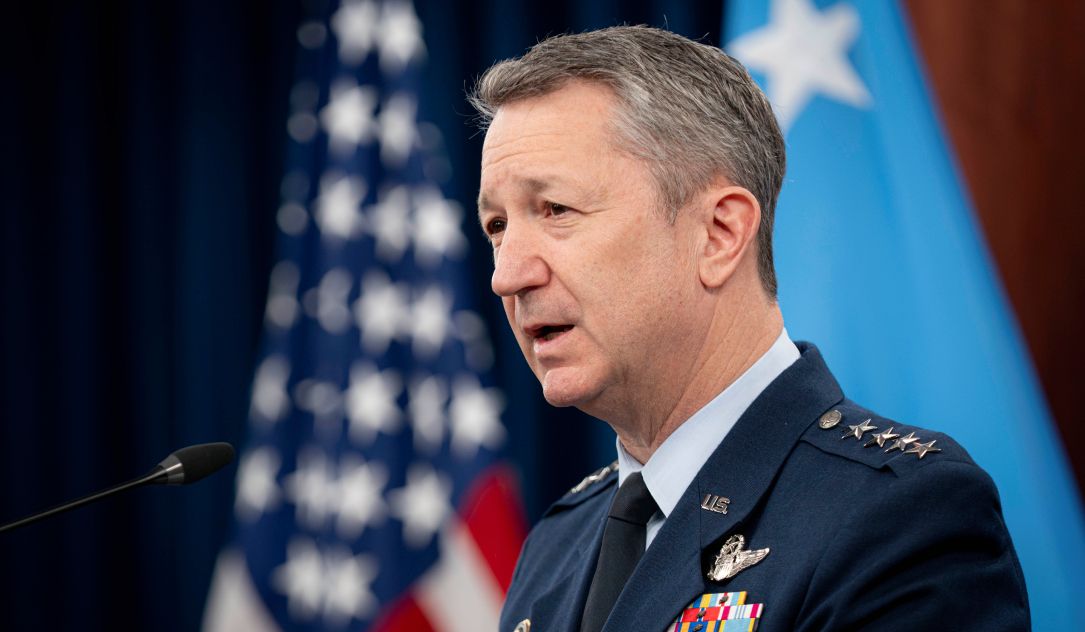
Autonomous weapons are becoming an "essential" part of modern war, Chairman of the Joint Chiefs of Staff Gen. Dan Caine told an audience at Vanderbilt University’s Asness Summit on Modern Conflict and Emerging Threats.
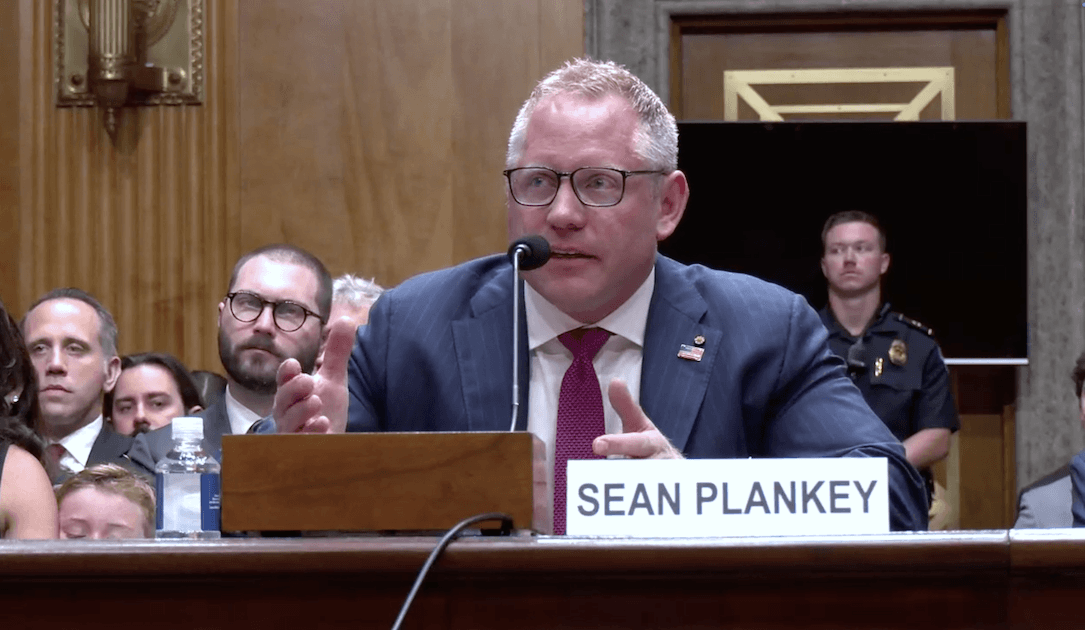
Sean Plankey reportedly told colleagues that he needed to focus on assuaging concerns about his Coast Guard work that had led Sen. Rick Scott (R-FL) to block his nomination.
On March 23, the Senate confirmed Senator Markwayne Mullin as the next homeland security secretary, marking an important step in strengthening leadership during a critical moment for our nation’s security.
But only half of the job is done.
The Cybersecurity and Infrastructure Security Agency (CISA), the federal government’s main civilian cyber defense agency, still lacks a Senate-confirmed director. As global cyber threats escalate, this prolonged leadership gap poses a growing national security risk.
As Executive Director of the National Technology Security Coalition (NTSC), I represent Chief Information Security Officers who are responsible for protecting the systems that sustain America’s economy and critical infrastructure. In every sector, energy, healthcare, financial services, manufacturing, and transportation, there is a common concern: the threat landscape is growing more aggressive, and our defenses must stay ahead.
Our enemies are not waiting.
Since the start of the conflict with Iran, cybersecurity experts have reported increased malicious cyber activity targeting U.S. and allied systems. Iran-linked actors have shown their ability to disrupt operations and exploit vulnerabilities. Meanwhile, Chinacontinues its long-term effort to infiltrate American networks and position itself for possible disruption of critical infrastructure. Russia and its affiliated groups remain persistent, probing Western systems for weaknesses and exerting constant pressure.
This is the reality of modern conflict. Cyber operations have emerged as a primary domain of competition. In some cases, they can rival the effects of traditional military action, disrupting economies, communications, and public safety through code alone.
Leadership is important in this environment.
CISA plays a key role in coordinating federal cyber defense, sharing threat intelligence with the private sector, and supporting state and local governments. It serves as the link between government and industry in protecting the nation’s digital infrastructure. Without a Senate-confirmed director, the agency’s ability to set priorities, coordinate efforts, and respond quickly is limited.
That challenge is growing more urgent. The President’s fiscal year 2027 budget plan proposes significant cuts to CISA’s funding. At a time when the agency faces increasing operational pressure, fewer resources make strong, steady leadership even more crucial.
This is the moment when Secretary Mullin’s leadership is critical.
As a former member of the Senate, Secretary Mullin understands the institution, its dynamics, and how to build consensus. He is uniquely positioned to connect with past colleagues and help advance Sean Plankey’s nomination as Director of CISA.
Plankey is highly qualified and widely respected in the cybersecurity community. His experience in the U.S. Coast Guard, at the Department of Energy securing the nation’s energy infrastructure, and in the private sector provides him with a clear understanding of both the threat landscape and the importance of public-private collaboration. At a time when coordination between government and industry is vital, these qualities are essential.
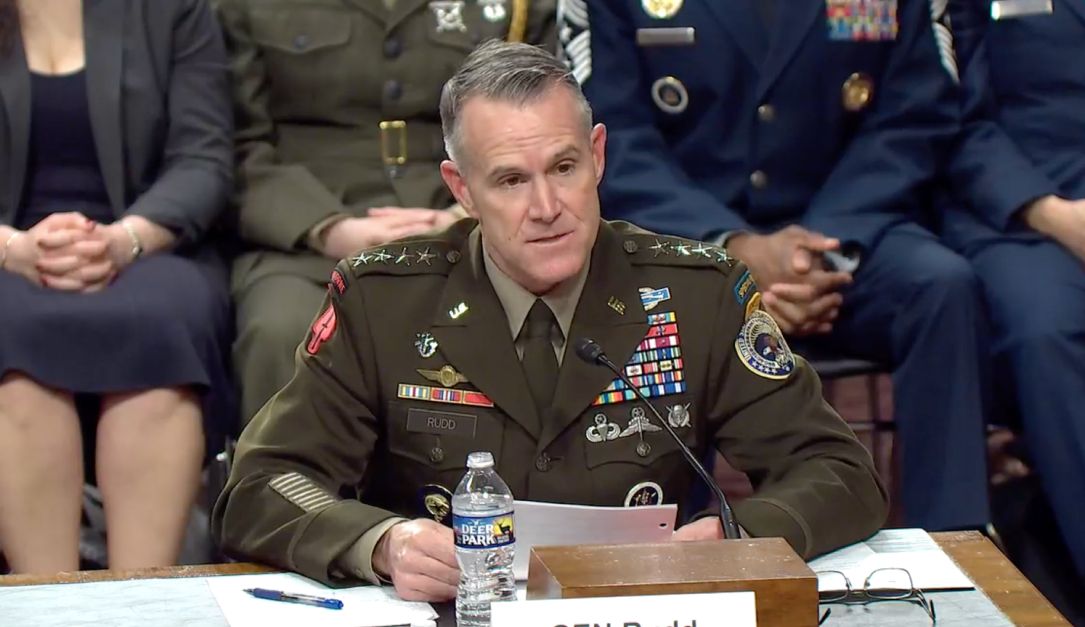
The Senate has already signaled that it takes cyberthreats seriously. It recently confirmed Lt. Gen. Joshua Rudd to lead U.S. Cyber Command and serve as director of the National Security Agency, ensuring strong leadership of America’s military cyber defense team.
Now it needs to do the same on the civilian side.
Confirming Plankey matters because the country’s main civilian cyber defense agency needs established leadership to combat adversaries who are already inside our networks, probing our systems, and preparing for the next phase of conflict.
The leadership gap at CISA has gone on long enough.
Secretary Mullin must engage. The Senate needs to act. And Sean Plankey should be confirmed without further delay.
America’s cyber defenses depend on it.
Chris Sullivan is the executive director of the National Technology Security Coalition, a nonprofit, non-partisan organization that serves as an advocacy voice for chief information security officers across the nation.
A U.K. communications regulator, Ofcom, has said it will be cracking down on the spread of the images in the aftermath of the Grok scandal, which led to millions of “nudified” images of women and children to be circulated worldwide.
Last week, the family of one of two victims in the attack announced it plans to sue OpenAI because the gunman allegedly constantly communicated with ChatGPT in the days leading to the shootings.
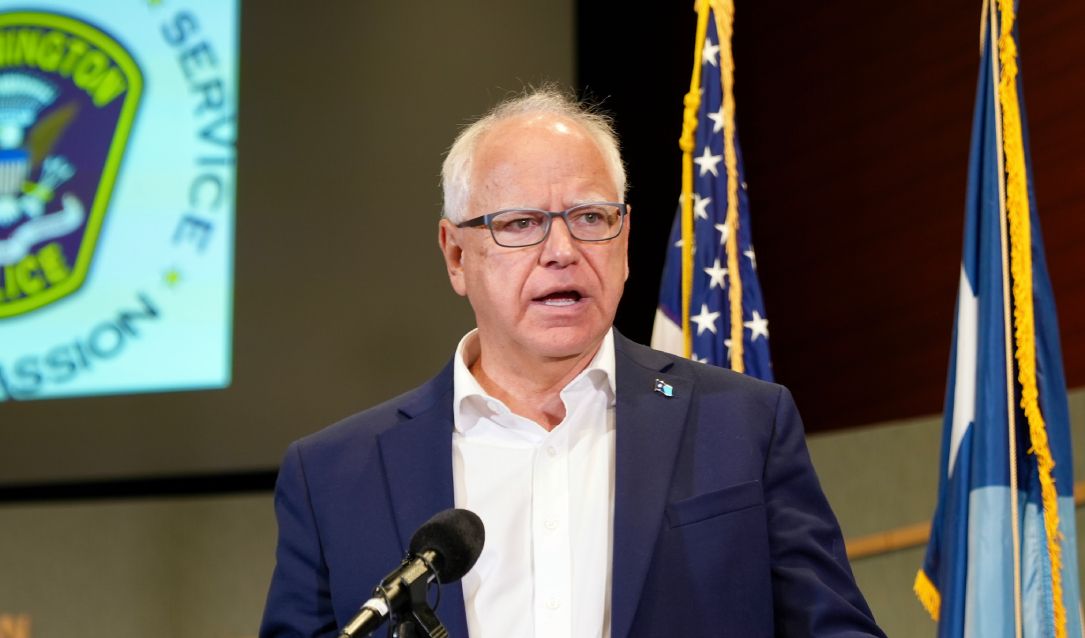
Minnesota governor Tim Walz issued an executive order on Tuesday, writing that Winona county experienced a cyberattack on critical systems that began on Monday.
The missive, obtained by Recorded Future News, arrives days before policymakers return from recess next week and aim for a quick extension Section 702 of the Foreign Intelligence Surveillance Act (FISA) for another 18 months.
The parliamentary report warns that hostile actors are conducting sustained and increasingly sophisticated campaigns to interfere in democratic processes, exploiting divisive issues to amplify tensions and influence public debate.
An FBI spokesperson told Recorded Future News that the information is “historical in nature and involves no government information,” adding that the agency has “taken all necessary steps to mitigate potential risks associated with this activity."
With CISA’s reduced capacity during the shutdown, Andersen said, the agency is largely limited to responding to imminent threats, protecting life and property, sharing critical vulnerability and incident information and keeping its 24/7 operation center up and running.
The author of a new book on surveillance discusses how an upcoming Supreme Court case could limit what data police can dig up showing individuals’ locations.
13 million people live in Moscow, reports CNN.
But since early March the city "has experienced internet and mobile service outages on a level previously unseen." (Though Wi-Fi access to the internet is still available...) Russian social media "is flooded with jokes and memes about sending letters by carrier pigeons or using smartphones as ping-pong paddles..."
[Moscow residents] complain they cannot navigate around the center or use their favorite mobile apps. The interruptions appear to have had a knock-on effect of making it more difficult to make voice calls or send an SMS. Some are panic-buying walkie-talkies, paper maps, and even pagers.
The latest shutdown builds on similar efforts around the country. For months, mobile internet service interruptions have hit Russia's regions, particularly in provinces bordering Ukraine, which has staged incursions and launched strikes inside Russian territory to counter Russia's full-scale invasion. Some regions have reported not having any mobile internet since summer. But the most recent outages have hit the country's main centers of wealth and power: Moscow and Russia's second city, St. Petersburg.
Public officials claim the blackout of mobile internet service in the capital and other regions is part of a security effort to counter "increasingly sophisticated methods" of Ukrainian attack... Speculation centers on whether the authorities are testing their ability to clamp down on public protest in the case there's an effort to reintroduce unpopular mobilization measures to find fresh manpower for the war in Ukraine; whether mobile internet outages may precede a more sweeping digital blackout; or if the new restrictions reflect an atmosphere of heightened fear and paranoia inside the Kremlin as it watches US-led regime- change efforts unfold against Russian allies such as Venezuela and Iran... On Wednesday, Russian mobile providers sent notifications that there would be "temporary restrictions" on mobile internet in parts of Moscow for security reasons, Russian state news agency RIA-Novosti reported. The measures will last "for as long as additional measures are needed to ensure the safety of our citizens," Kremlin spokesman Dmitry Peskov said on March 11...
As well as banning many social media platforms, Russia blocks calling features on messenger apps such as WhatsApp and Telegram. Roskomnadzor, the country's communications regulator, has introduced a "white list" of approved apps... Russia has also tested what it calls the "sovereign internet," a network that is effectively firewalled from the rest of the world. The disruptions are fueling broader concerns about tightening state control. In parallel with the internet shutdown, the Kremlin has also been pushing to impose a state-controlled messaging app called Max as the country's main portal for state services, payments and everyday communication. There has been speculation the Kremlin may be planning to ban Telegram, Russia's most widely used messaging app, entirely. Roskomnadzor said that it was restricting Telegram for allegedly failing to comply with Russian laws.
"Russia has opened a criminal case against me for 'aiding terrorism,'" Telegram's Russian-born founder Pavel Durov said on X last month. "Each day, the authorities fabricate new pretexts to restrict Russians' access to Telegram as they seek to suppress the right to privacy and free speech...."
The article includes this quote from Mikhail Klimarev, head of the Internet Protection Society and an expert on Russian internet freedom. "In any situation when they (the authorities) perceive some kind of danger for themselves and accept the belief that the internet is dangerous for them, even if it may not be true, they will shut it down," he said. "Just like in Iran."
Rep. Darin LaHood (R-IL) talked about recent issues that have cropped up around Section 702 and what needs to be done to get a renewal over the finish line.
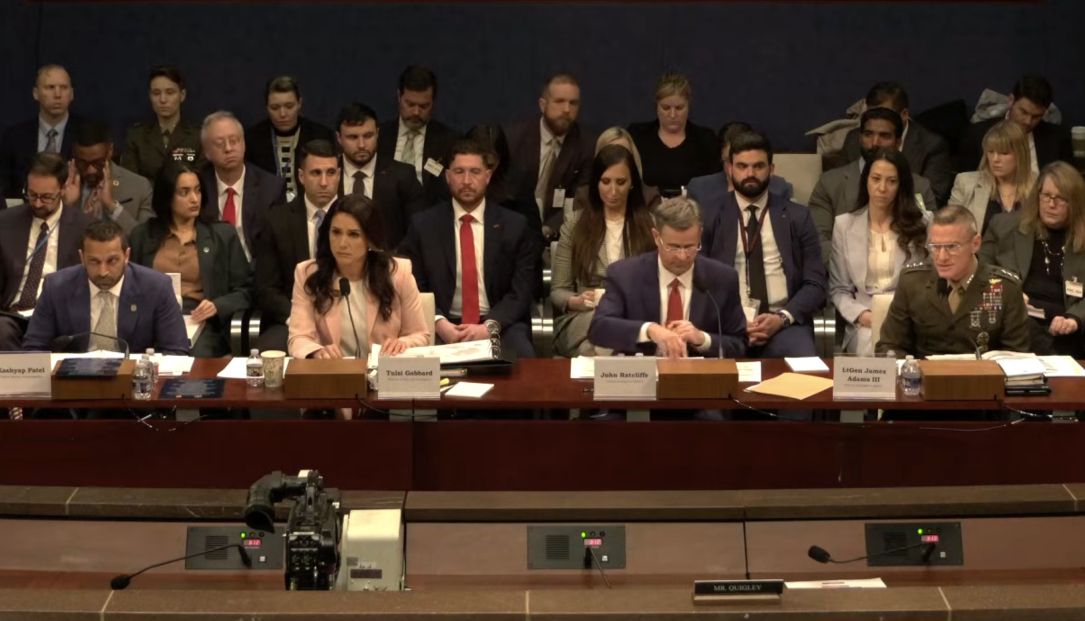
The remarks at the House Intelligence Committee’s annual hearing on worldwide threats offered the most vocal support for President Donald Trump’s strategy to date.
Senator Maggie Hassan (D-NH) asked Mullin about Noem’s decision to cut CISA’s workforce by one third and remove hundreds of millions of dollars from the agency’s budget after Trump took office.
 Login
Login