Reading view

There are new articles available, click to refresh the page.

European-Chinese geopolitical issues drive renewed cyberespionage campaign

A Chinese cyberespionage group has shifted its gaze back to Europe after years of focusing on other parts of the world, Proofpoint research published Wednesday found.

The surge began in mid-2025, with a bevy of issues bubbling up between China and Europe, the company said. Proofpoint labels the government-linked group TA416, but other companies track it as Twill Typhoon, Mustang Panda or other names.

“This renewed focus most heavily targeted individuals or mailboxes associated with diplomatic missions and delegations to NATO and the EU,” Proofpoint’s Mark Kelly and Georgi Mladenov wrote. “TA416’s return to European government targeting occurred during heightened EU–China tensions over trade, the Russia–Ukraine war, and rare earths exports, and commenced immediately following the 25th EU–China summit.”

Separately, the same group took up targeting the Middle East in March after the start of the conflict in Iran, something it had never been spotted doing before, Proofpoint found.

“This aligns with a trend observed by Proofpoint of some state-aligned threat actors shifting targeting toward Middle Eastern government and diplomatic entities in the aftermath of the war,” the firm said. “This likely reflects an effort to gather regional intelligence on the status, trajectory, and broader geopolitical implications of the conflict.”

TA416 was active in Europe in 2022 and 2023, coinciding with the onset of the Ukraine-Russia war, but stepped away from the continent afterward, according to the researchers. Its focus turned to Southeast Asia, Taiwan and Mongolia for a couple years.

The group’s focus on Europe through early 2026 used a variety of web bug and malware delivery methods, including setting up reconnaissance by dangling lures about Europe sending troops to Greenland. It also included phishing emails about humanitarian concerns, interview requests and collaboration proposals, Proofpoint said.

“During this period, TA416 repeatedly altered its initial infection chains while maintaining a consistent goal of loading the group’s customized PlugX backdoor via DLL sideloading triads,” the researchers wrote.

Proofpoint’s is not the only report of late about Chinese cyberespionage groups targeting Europe, with another focused on LinkedIn solicitations to NATO and European institutions.

The post European-Chinese geopolitical issues drive renewed cyberespionage campaign appeared first on CyberScoop.

DarkSword’s GitHub leak threatens to turn elite iPhone hacking into a tool for the masses

Leaked iOS spyware has some cybersecurity professionals raising urgent alarms about potential mass iPhone compromises, a development that pairs ominously with the recent discovery of two sophisticated iOS exploit kits.

At the same time, some other experts say Apple’s defensive features for iPhones remain elite. But several factors have created unprecedented circumstances: the public accessibility of a version of DarkSword, shortly after the discovery of the original version of DarkSword and the earlier discovery of a similar kit known as  Coruna, and a  growing market for iPhone exploits driven by their high value as targets.

Allan Liska, field chief information security officer at Recorded Future, said he was worried about what the leaked DarkSword version could do to “democratize” iPhone exploits.

“Right now, iPhone exploitations are among the most expensive to research/implement so they have been, largely, the realm of nation-states,” he said. “If anyone can exploit an iPhone, suddenly something that has managed to be relatively secure now is a much bigger attack surface.”

Google, iVerify and Lookout released research last week on DarkSword’s discovery, centered on Ukraine. Google also said it saw targeting in Saudi Arabia, Turkey and Malaysia. And that was before a version turned up on GitHub, a development TechCrunch first reported and Google and iVerify have analyzed. (The week before, iVerify and Google uncovered Coruna. Google declined to comment further for this story.)

“It’s extremely alarming that this leaked out on GitHub,” said Rocky Cole, co-founder of iVerify. “I would assume that it’s being used all around the world, and including here in the United States.”

Hundreds of millions of iPhones running iOS 18 could be vulnerable to DarkSword.

“I think that the top line issues here are pretty clear: people who have devices that are vulnerable should upgrade ASAP,” said Eva Galperin, director of cybersecurity at the Electronic Frontier Foundation. “It is very likely that these vulnerabilities are being used right now to exploit vulnerable devices at scale, which is unusual for Apple products.”

The propagation problem

Coruna was concerning enough for Apple that it took the rare step of backporting security updates to still older versions of iOS, Cole said. The fear, he said, was that it might be wormable — capable of spreading from one device via text message to everyone in a phone’s contact list.

But Cole said Apple hasn’t released similar security-focused updates to iOS 18, for reasons he doesn’t know.

Apple has emphasized the patches it has issued, urged users to update their phones and touted Lockdown Mode as a defense against spyware.

“Apple devices are designed with multiple layers of security in order to protect against a wide range of potential threats, and every day Apple’s security teams around the world work tirelessly to protect users’ devices and data,” said Apple spokesperson Sarah O’Rourke. “Keeping your software up to date is the single most important thing you can do to maintain the security of your Apple products, and devices with updated software were not at risk from these reported attacks.”

IPhones’ widespread use makes them high-value targets, fueling a thriving market for exploits. Coruna and DarkSword are indicators of this growing demand. 

“It’s time for organizations to start thinking of mobile security the way they think about desktop security, which is to say everyone knows how to secure their laptop,” Cole said. And for iPhone exploit hunting in particular, “you’re starting to see people do it at a mass level.” Furthermore, the resale market is such that exploits that once were exclusive are no longer, and AI makes it even easier to customize them in the code, he said. 

DarkSword has drawn federal attention: The Cybersecurity and Infrastructure Security Agency this week added vulnerabilities that DarkSword exploits to the list that federal agencies must patch.

The number of people still using iOS 18 is large, up to 25% of all iPhones. Cole said several factors are contributing to that, such as users being leery of iOS 26’s onboard artificial intelligence or the Liquid Glass interface.

Said Galperin: “There are many reasons why people do not keep their devices up to date, so when I tell people ‘just patch your stuff’ I think it is important to realize that there are circumstances under which this is easier said than done.”

Proven defenses despite expanding risks

Despite the concerns, Cole credited iPhone for its high security standards, in particular for its app store.

For Natalia Krapiva, senior tech-legal counsel at Access Now, a key takeaway is the worrisome proliferation of commercial spyware and cyber intrusion capabilities.

“This is exactly what human rights activists and digital security researchers have been warning governments and companies about: In the absence of effective regulation for the industry, these exploits will get out and end up in the hands of adversaries like Russia, China, Iran, or, as in the case of DarkSword, leaked online for any criminal to use,” she said.

On the other hand, Apple’s Lockdown Mode and Memory Integrity Enforcement are top-notch defensive measures, Krapiva said. We’ve yet to see a Lockdown Mode-enabled iPhone being infected with spyware, she said.

“I think we’ll keep seeing more attempts to exploit both Apple and Android devices as they improve their software and hardware security,” she said. “It’s the old cat-and-mouse game.”

Adam Boynton, senior enterprise strategy manager at Jamf, said what’s happened with Coruna and DarkSword is evidence of Apple’s success.

“What’s encouraging here is that Apple’s security model works,” he said. “Coruna skips devices running the latest iOS versions and avoids those with Lockdown Mode enabled entirely. That’s a strong validation of the defences Apple has built.

“DarkSword reinforces the same principle,” he continued. “Where Coruna targeted older iOS versions, DarkSword demonstrates that even relatively current releases can be targeted by determined actors. Apple moved quickly to patch the vulnerabilities involved, and devices running the latest iOS are protected.”

The post DarkSword’s GitHub leak threatens to turn elite iPhone hacking into a tool for the masses appeared first on CyberScoop.

FBI, CISA issue PSA on Russian intelligence campaign to target messaging apps

Russian intelligence-affiliated hackers have gained access to thousands of users’ messaging apps with a global phishing campaign, the FBI and the Cybersecurity and Infrastructure Security Agency warned in a public service announcement on Friday.

The high-value targets they’re pursuing include current and former U.S. government officials, political figures, military personnel and journalists, the two agencies said in the joint PSA about the hackers’ attempts to infiltrate commercial messaging applications (CMAs).

The U.S. alert comes on the heels of an earlier warning from Dutch authorities, who said last week that Russian hackers were “engaged in a large-scale global attempt” to take over WhatsApp and Signal accounts. The Dutch warning likewise followed a similar warning from Germany in February.

The U.S. agencies emphasized that the hackers had not been able to bypass end-to-end encryption, instead manipulating users into giving up access. The scheme involves hackers posing as Signal help personnel, then inviting them to click a link or provide verification codes or account personal identification number.

“After compromising an account, malicious actors can view the victims’ messages and contact lists, send messages, and conduct additional phishing against other CMA accounts,” the PSA explains. “(Note: reporting shows that the threat actors specifically target Signal accounts but can apply similar methods against other CMAs).”

However, “CMA users who strengthen their personal cybersecurity and defend against social engineering attempts can reduce the risk of account compromise and limit the effectiveness of the threat actors’ current tactics, techniques, and procedures,” the agencies said.

The Russian campaign is just the latest to seek to bypass the protections commercial messaging apps offer. CISA in November warned about spyware targeting of messaging apps. 

There sometimes has been a Russian intelligence nexus to the recent targeting. Google Threat Intelligence Group shined a spotlight last year on Russian attempts to target Signal users in Ukraine.

‘We anticipate the tactics and methods used to target Signal will grow in prevalence in the near-term and proliferate to additional threat actors and regions outside the Ukrainian theater of war,” the company said.

The post FBI, CISA issue PSA on Russian intelligence campaign to target messaging apps appeared first on CyberScoop.

Ukrainian sentenced to 5 years in prison for facilitating North Korean remote worker scheme

A Ukrainian national who ran multiple operations to aid the North Korean government’s expansive scheme to  hire remote IT workers at U.S. companies was sentenced to five years in prison, the Justice Department said Thursday.

Oleksandr Didenko stole U.S. citizens’ identities and created more than 2,500 fraudulent accounts on freelance IT job forums, money service transmitters, email services, and social media platforms to sell the proxy identities to North Korean workers. The 29-year-old pleaded guilty to multiple crimes related to the six-year scheme in November 2025.

Didenko ran a site, upworksell.com, to sell the stolen identities and paid co-conspirators to receive and host laptop farms in Virginia, Tennessee and California, according to court records. He managed up to 871 identities through the laptop farms and helped North Korean technical workers gain employment at 40 U.S. companies. 

Didenko funneled money from Americans and U.S. businesses into the coffers of North Korea’s hostile regime, Jeanine Pirro, U.S. attorney for the District of Columbia, said in a statement. 

“Today, North Korea is not only a threat to the homeland from afar, it is an enemy within. By using stolen and fraudulent identities, North Korean actors are infiltrating American companies, stealing information, licensing, and data that is harmful to any business,” she added. 

Officials said Didenko’s North Korean clients were paid hundreds of thousands of dollars for their work, much of which was falsely reported in the names of U.S. citizens whose identities were stolen.

“Money paid to these so-called employees goes directly to munitions programs in North Korea,” Pirro said. “This is not just a financial crime; it is a crime against national security.” 

In late 2023, following a request from one of his customers, Didenko sent a computer to a laptop farm run by Christina Chapman in Arizona, officials said. Chapman was arrested in May 2024 and sentenced to 102 months in prison for participating in the scheme.

Didenko’s site was seized following Chapman’s arrest. He was arrested by Polish police in late 2024, and later extradited to the United States. 

Didenko pleaded guilty to wire fraud conspiracy and aggravated identity theft, and agreed to forfeit more than $1.4 million as part of his sentencing. He was also ordered to pay almost $47,000 in restitution.

U.S. law enforcement has racked up some wins by seizing stolen cryptocurrency and targeting U.S.-based facilitators who provide forged or stolen identities for North Korean operatives. 

Yet, the regime’s scheme runs deep. North Korean nationals have infiltrated many top global companies, and researchers continue to uncover evidence of new tactics and techniques operatives have used to evade detection.

You can read the full indictment below.

The post Ukrainian sentenced to 5 years in prison for facilitating North Korean remote worker scheme appeared first on CyberScoop.

Black Basta’s alleged ringleader identified as authorities raid homes of other members

Law enforcement agencies from multiple European countries are still pursuing leads on people involved in the Black Basta ransomware group, nearly a year after the group’s internal chat logs were leaked, exposing key details about its operations, and at least six months since the group claimed responsibility for new attacks.

Officials in Ukraine and Germany said they raided the homes of two Russian nationals accused of participating in Black Basta’s crimes and effectively halted their operations. The pair of alleged criminals who were living in Ukraine were not named.

German police publicly identified a third Russian national — Oleg Evgenievich Nefedov — as Black Basta’s alleged leader. Nefedov, a 35-year-old who was subsequently added to the most-wanted lists of Europol and Interpol, allegedly formed and ran Black Basta since 2022, authorities said. 

He is accused of extorting more than 100 companies in Germany and about 600 other countries globally. Nefedov’s current whereabouts are unknown, but he is believed to be living in Russia.

Authorities said Nefedov may have previously been involved with the Conti ransomware group, which disbanded in 2022 after its internal messages were also leaked. Members of the Russian-language ransomware collective rebranded under three subgroups: Zeon, Black Basta and Quantum, which quickly rebranded to Royal before rebranding again to BlackSuit in 2024. 

Police said they seized data and cryptocurrency assets during their searches of the alleged Black Basta participants’ residences in Ivano-Frankivsk and Lviv, Ukraine, but they did not provide further detail about what the evidence revealed.

The pair of alleged Black Basta co-conspirators are accused of specializing in stealing credentials, which were used to break into targeted companies’ networks, steal confidential data and launch malware to encrypt data for extortion attempts.

International law enforcement agencies’ ongoing efforts to target Black Basta and its alleged participants underscores a sustained effort to track cybercriminals despite the group’s relative dormancy. 

Black Basta’s data leak site was shut down shortly after its internal chats were leaked last year, but uncaptured cybercriminals typically scatter and join new groups in the wake of a takedown or disbandment, said Allan Liska, threat intelligence analyst at Recorded Future.

“Even if Black Basta hasn’t been active, it doesn’t mean that the people behind it haven’t been,” he said.

Ransomware experts said Nefedov’s ringleader position at Black Basta and his previous involvement with Conti was already known in law enforcement and threat intelligence circles.

“The accusation signals less about the impact of Black Basta and more about the significance of Nefedov,” said Ian Gray, vice president of cyber threat intelligence operations at Flashpoint. 

The formal naming and request for information on Nefedov aligns with a broader law enforcement strategy to target core leadership responsible for orchestrating cyberattacks, Gray added.

Ransomware response is a never-ending pursuit that consistentely attracts new players and new groups at a faster clip than law enforcement can manage. 

“You cut one head off and two appear,” Liska said. “You still have to cut the head off, you still have to stop the activity.”

While ransomware activity remains elevated, law enforcement is sticking to multidimensional countermeasures by targeting operators and affiliates, initial access brokers, infostealers, infrastructure providers and key services criminals use to deploy or facilitate the ransomware ecosystem.

These takedowns, seizures, indictments and arrests are sometimes organized under ongoing international sting operations such as Operation Endgame, which has neutralized malware networks, remote access trojans, botnets and other cybercrime enablers. 

“These operations can’t be one-and-done,” Liska said. “They have to be interconnected and use that intelligence to build more cases against other actors.”

The post Black Basta’s alleged ringleader identified as authorities raid homes of other members appeared first on CyberScoop.

Ukrainian national pleads guilty to Nefilim ransomware attacks

Artem Aleksandrovych Stryzhak, a 35-year-old Ukrainian national, pleaded guilty Friday to multiple crimes stemming from his involvement in a string of ransomware attacks targeting U.S. and Europe-based organizations from mid 2018 to late 2021. He faces up to 10 years in jail for conspiracy to commit fraud, including extortion. 

Stryzhak was arrested in Spain in June 2024 and extradited to the United States in April. Authorities are still looking for his alleged co-conspirator Volodymyr Tymoshchuk and announced a $11 million reward for information leading to his arrest or conviction.

“The defendant used Nefilim ransomware to target high-revenue companies in the United States, steal data and extort victims,” Joseph Nocella, U.S. attorney for the Eastern District of New York, said in a statement.

“We remain determined to capture Stryzhak’s codefendant and partner in crime, Volodymyr Tymoshchuk, and bring him to justice in a U.S. courtroom,” Nocella added. Officials accuse Tymoshchuk of acting as an administrator of the Nefilim ransomware group and described him as a serial cybercriminal associated with multiple ransomware strains.

Attacks involving Nefilim ransomware caused millions of dollars in losses from extortion payments and damage to victim networks, officials said. Stryzhak and his co-conspirators allegedly customized executable ransomware files for each victim, creating unique decryption keys and unique ransom notes. 

The ransomware group primarily targeted companies located in the United States, Canada and Australia with more than $100 million in annual revenue, and extorted victims by threatening to publish stolen data. The crew researched companies after they broke into their networks to determine their net worth, size and contact information.

Stryzhak’s victims in the U.S. include an engineering consulting company based in France, an aviation industry company in New York, a chemical company in Ohio, an insurance company in Illinois, a company in the construction industry in Texas, a pet care company in Missouri, an international eyewear company and a company in the oil and gas transportation industry. 

Stryzhak and his co-conspirators also used Nefilim ransomware to encrypt victim networks in Germany, the Netherlands, Norway and Switzerland, prosecutors said. 

Officials said Stryzhak’s crimes began when he gained access to the Nefilim ransomware code in June 2021 in exchange for 20% of his ransom proceeds.

“Cybercriminals may hide behind screens, but they leave digital footprints everywhere,” Christopher Johnson, special agent in charge of the FBI’s field office in Springfield, Illinois, said in a statement. 

“The FBI follows these digital trails relentlessly — across networks, borders, and time — until those responsible are held accountable,” Johnson added. “Today is a remarkable accomplishment, but we will not stop until we have captured all those responsible for the Nefilim ransomware.”

The post Ukrainian national pleads guilty to Nefilim ransomware attacks appeared first on CyberScoop.

Drones to Diplomas: How Russia’s Largest Private University is Linked to a $25M Essay Mill

A sprawling academic cheating network turbocharged by Google Ads that has generated nearly $25 million in revenue has curious ties to a Kremlin-connected oligarch whose Russian university builds drones for Russia’s war against Ukraine.

The Nerdify homepage.

The link between essay mills and Russian attack drones might seem improbable, but understanding it begins with a simple question: How does a human-intensive academic cheating service stay relevant in an era when students can simply ask AI to write their term papers? The answer – recasting the business as an AI company – is just the latest chapter in a story of many rebrands that link the operation to Russia’s largest private university.

Search in Google for any terms related to academic cheating services — e.g., “help with exam online” or “term paper online” — and you’re likely to encounter websites with the words “nerd” or “geek” in them, such as thenerdify[.]com and geekly-hub[.]com. With a simple request sent via text message, you can hire their tutors to help with any assignment.

These nerdy and geeky-branded websites frequently cite their “honor code,” which emphasizes they do not condone academic cheating, will not write your term papers for you, and will only offer support and advice for customers. But according to This Isn’t Fine, a Substack blog about contract cheating and essay mills, the Nerdify brand of websites will happily ignore that mantra.

“We tested the quick SMS for a price quote,” wrote This Isn’t Fine author Joseph Thibault. “The honor code references and platitudes apparently stop at the website. Within three minutes, we confirmed that a full three-page, plagiarism- and AI-free MLA formatted Argumentative essay could be ours for the low price of $141.”
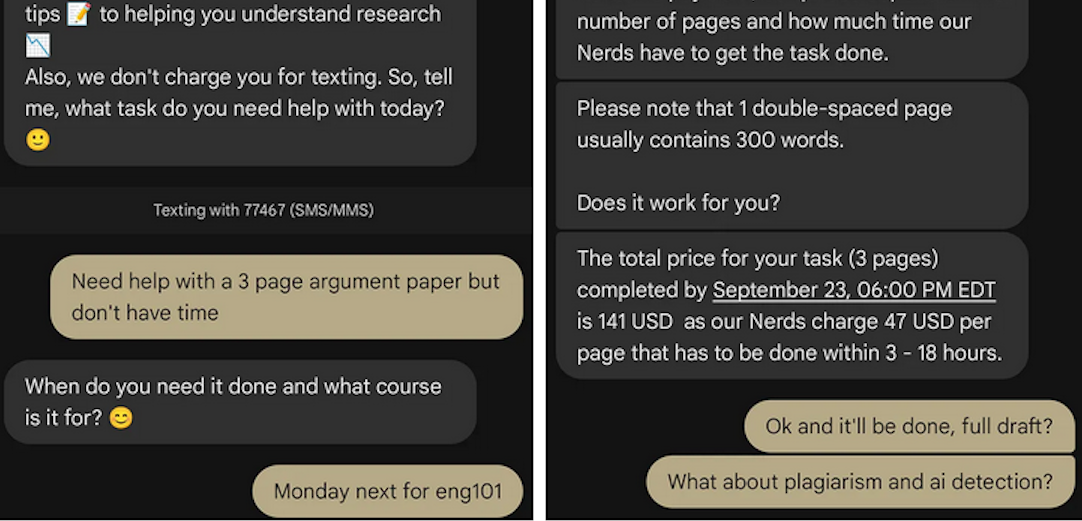
A screenshot from Joseph Thibault’s Substack post shows him purchasing a 3-page paper with the Nerdify service.

Google prohibits ads that “enable dishonest behavior.” Yet, a sprawling global essay and homework cheating network run under the Nerdy brands has quietly bought its way to the top of Google searches – booking revenues of almost $25 million through a maze of companies in Cyprus, Malta and Hong Kong, while pitching “tutoring” that delivers finished work that students can turn in.

When one Nerdy-related Google Ads account got shut down, the group behind the company would form a new entity with a front-person (typically a young Ukrainian woman), start a new ads account along with a new website and domain name (usually with “nerdy” in the brand), and resume running Google ads for the same set of keywords.

UK companies belonging to the group that have been shut down by Google Ads since Jan 2025 include:

Proglobal Solutions LTD (advertised nerdifyit[.]com);
AW Tech Limited (advertised thenerdify[.]com);
Geekly Solutions Ltd (advertised geekly-hub[.]com).

Currently active Google Ads accounts for the Nerdify brands include:

-OK Marketing LTD (advertising geekly-hub[.]net⁩), formed in the name of Olha Karpenko, a young Ukrainian woman;
Two Sigma Solutions LTD (advertising litero[.]ai), formed in the name of Olekszij (Alexey) Pokatilo.
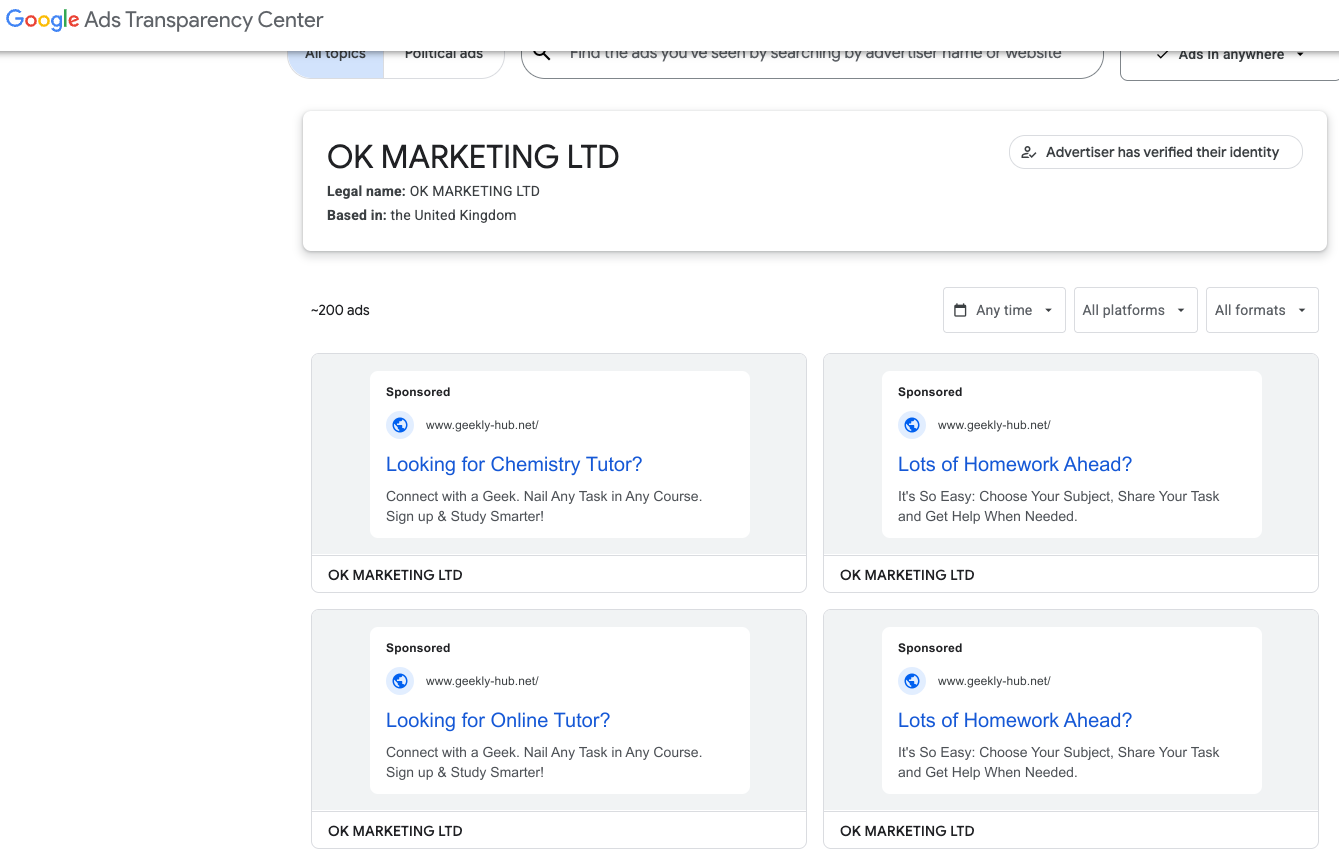
Google’s Ads Transparency page for current Nerdify advertiser OK Marketing LTD.

Mr. Pokatilo has been in the essay-writing business since at least 2009, operating a paper-mill enterprise called Livingston Research alongside Alexander Korsukov, who is listed as an owner. According to a lengthy account from a former employee, Livingston Research mainly farmed its writing tasks out to low-cost workers from Kenya, Philippines, Pakistan, Russia and Ukraine.

Pokatilo moved from Ukraine to the United Kingdom in Sept. 2015 and co-founded a company called Awesome Technologies, which pitched itself as a way for people to outsource tasks by sending a text message to the service’s assistants.

The other co-founder of Awesome Technologies is 36-year-old Filip Perkon, a Swedish man living in London who touts himself as a serial entrepreneur and investor. Years before starting Awesome together, Perkon and Pokatilo co-founded a student group called Russian Business Week while the two were classmates at the London School of Economics. According to the Bulgarian investigative journalist Christo Grozev, Perkon’s birth certificate was issued by the Soviet Embassy in Sweden.
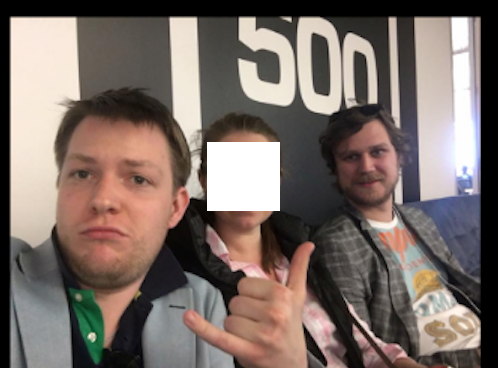
Alexey Pokatilo (left) and Filip Perkon at a Facebook event for startups in San Francisco in mid-2015.

Around the time Perkon and Pokatilo launched Awesome Technologies, Perkon was building a social media propaganda tool called the Russian Diplomatic Online Club, which Perkon said would “turbo-charge” Russian messaging online. The club’s newsletter urged subscribers to install in their Twitter accounts a third-party app called Tweetsquad that would retweet Kremlin messaging on the social media platform.

Perkon was praised by the Russian Embassy in London for his efforts: During the contentious Brexit vote that ultimately led to the United Kingdom leaving the European Union, the Russian embassy in London used this spam tweeting tool to auto-retweet the Russian ambassador’s posts from supporters’ accounts.

Neither Mr. Perkon nor Mr. Pokatilo replied to requests for comment.

A review of corporations tied to Mr. Perkon as indexed by the business research service North Data finds he holds or held director positions in several U.K. subsidiaries of Synergy University, Russia’s largest private education provider. Synergy has more than 35,000 students, and sells T-shirts with patriotic slogans such as “Crimea is Ours,” and “The Russian Empire — Reloaded.”

The president of Synergy University is Vadim Lobov, a Kremlin insider whose headquarters on the outskirts of Moscow reportedly features a wall-sized portrait of Russian President Vladimir Putin in the pop-art style of Andy Warhol. For a number of years, Lobov and Perkon co-produced a cross-cultural event in the U.K. called Russian Film Week.

Synergy President Vadim Lobov and Filip Perkon, speaking at a press conference for Russian Film Week, a cross-cultural event in the U.K. co-produced by both men.

Mr. Lobov was one of 11 individuals reportedly hand-picked by the convicted Russian spy Marina Butina to attend the 2017 National Prayer Breakfast held in Washington D.C. just two weeks after President Trump’s first inauguration.

While Synergy University promotes itself as Russia’s largest private educational institution, hundreds of international students tell a different story. Online reviews from students paint a picture of unkept promises: Prospective students from Nigeria, Kenya, Ghana, and other nations paying thousands in advance fees for promised study visas to Russia, only to have their applications denied with no refunds offered.

“My experience with Synergy University has been nothing short of heartbreaking,” reads one such account. “When I first discovered the school, their representative was extremely responsive and eager to assist. He communicated frequently and made me believe I was in safe hands. However, after paying my hard-earned tuition fees, my visa was denied. It’s been over 9 months since that denial, and despite their promises, I have received no refund whatsoever. My messages are now ignored, and the same representative who once replied instantly no longer responds at all. Synergy University, how can an institution in Europe feel comfortable exploiting the hopes of Africans who trust you with their life savings? This is not just unethical — it’s predatory.”

This pattern repeats across reviews by multilingual students from Pakistan, Nepal, India, and various African nations — all describing the same scheme: Attractive online marketing, promises of easy visa approval, upfront payment requirements, and then silence after visa denials.

Reddit discussions in r/Moscow and r/AskARussian are filled with warnings. “It’s a scam, a diploma mill,” writes one user. “They literally sell exams. There was an investigation on Rossiya-1 television showing students paying to pass tests.”

The Nerdify website’s “About Us” page says the company was co-founded by Pokatilo and an American named Brian Mellor. The latter identity seems to have been fabricated, or at least there is no evidence that a person with this name ever worked at Nerdify.

Rather, it appears that the SMS assistance company co-founded by Messrs. Pokatilo and Perkon (Awesome Technologies) fizzled out shortly after its creation, and that Nerdify soon adopted the process of accepting assignment requests via text message and routing them to freelance writers.

A closer look at an early “About Us” page for Nerdify in The Wayback Machine suggests that Mr. Perkon was the real co-founder of the company: The photo at the top of the page shows four people wearing Nerdify T-shirts seated around a table on a rooftop deck in San Francisco, and the man facing the camera is Perkon.
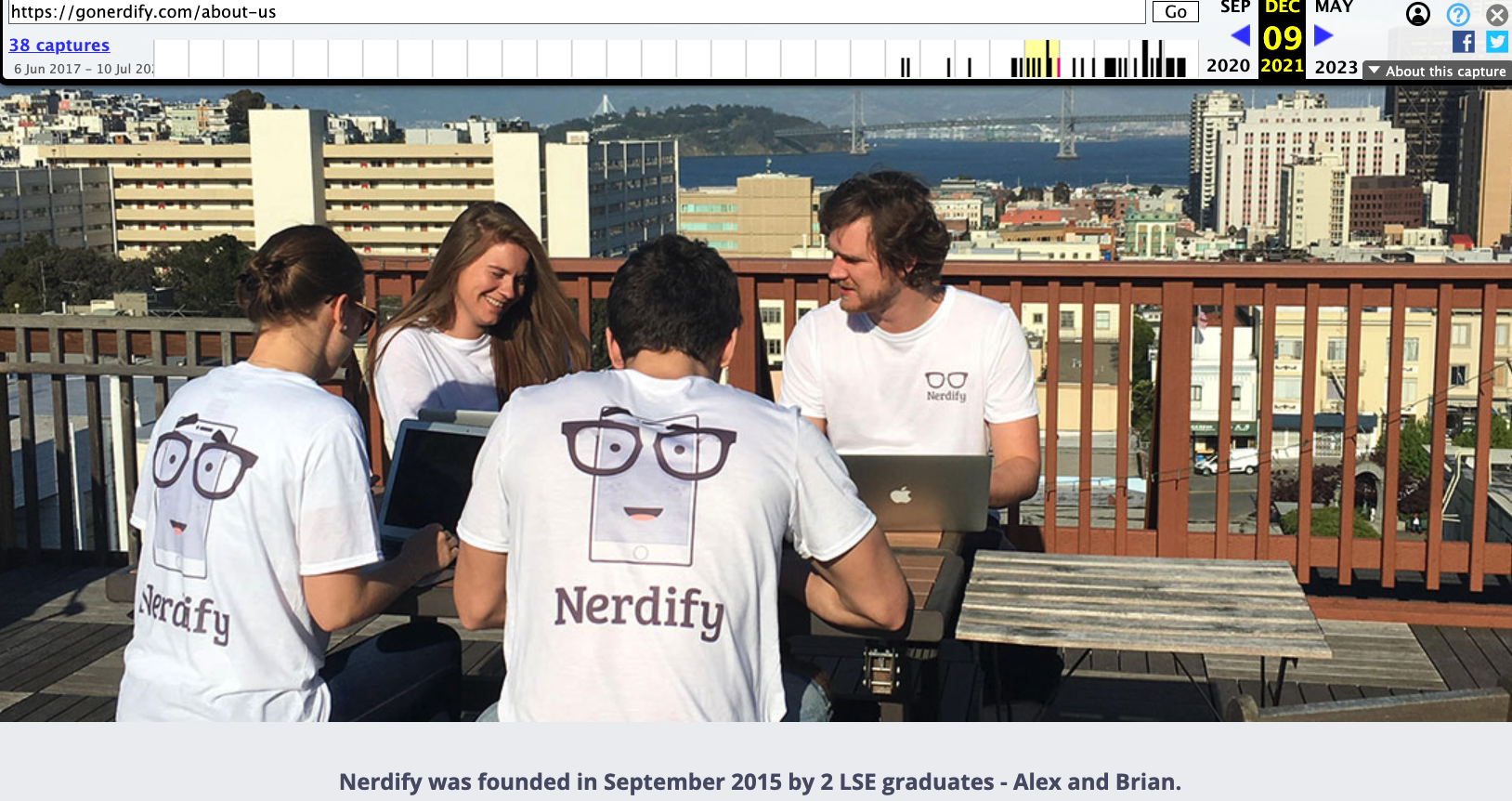
Filip Perkon, top right, is pictured wearing a Nerdify T-shirt in an archived copy of the company’s About Us page. Image: archive.org.

Where are they now? Pokatilo is currently running a startup called Litero.Ai, which appears to be an AI-based essay writing service. In July 2025, Mr. Pokatilo received pre-seed funding of $800,000 for Litero from an investment program backed by the venture capital firms AltaIR Capital, Yellow Rocks, Smart Partnership Capital, and I2BF Global Ventures.

Meanwhile, Filip Perkon is busy setting up toy rubber duck stores in Miami and in at least three locations in the United Kingdom. These “Duck World” shops market themselves as “the world’s largest duck store.”

This past week, Mr. Lobov was in India with Putin’s entourage on a charm tour with India’s Prime Minister Narendra Modi. Although Synergy is billed as an educational institution, a review of the company’s sprawling corporate footprint (via DNS) shows it also is assisting the Russian government in its war against Ukraine.

Synergy University President Vadim Lobov (right) pictured this week in India next to Natalia Popova, a Russian TV presenter known for her close ties to Putin’s family, particularly Putin’s daughter, who works with Popova at the education and culture-focused Innopraktika Foundation.

The website bpla.synergy[.]bot, for instance, says the company is involved in developing combat drones to aid Russian forces and to evade international sanctions on the supply and re-export of high-tech products.
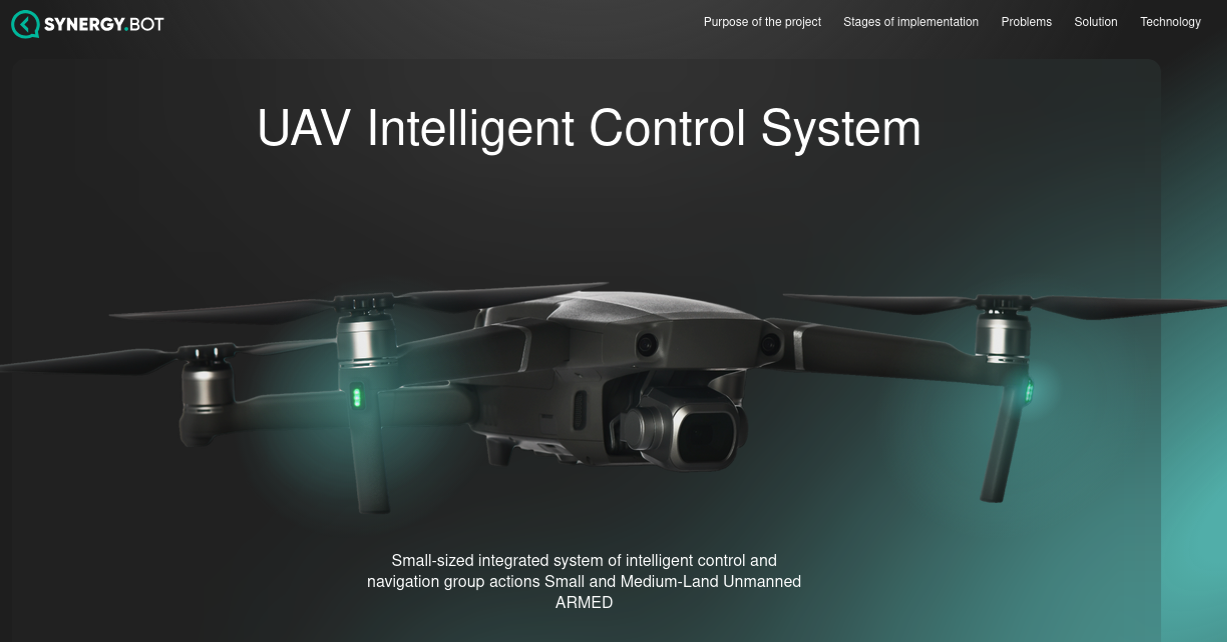
A screenshot from the website of synergy,bot shows the company is actively engaged in building armed drones for the war in Ukraine.

KrebsOnSecurity would like to thank the anonymous researcher NatInfoSec for their assistance in this investigation.

Update, Dec. 8, 10:06 a.m. ET: Mr. Pokatilo responded to requests for comment after the publication of this story. Pokatilo said he has no relation to Synergy nor to Mr. Lobov, and that his work with Mr. Perkon ended with the dissolution of Awesome Technologies.

“I have had no involvement in any of his projects and business activities mentioned in the article and he has no involvement in Litero.ai,” Pokatilo said of Perkon.

Mr. Pokatilo said his new company Litero “does not provide contract cheating services and is built specifically to improve transparency and academic integrity in the age of universal use of AI by students.”

“I am Ukrainian,” he said in an email. “My close friends, colleagues, and some family members continue to live in Ukraine under the ongoing invasion. Any suggestion that I or my company may be connected in any way to Russia’s war efforts is deeply offensive on a personal level and harmful to the reputation of Litero.ai, a company where many team members are Ukrainian.”

Update, Dec. 11, 12:07 p.m. ET: Mr. Perkon responded to requests for comment after the publication of this story. Perkon said the photo of him in a Nerdify T-shirt (see screenshot above) was taken after a startup event in San Francisco, where he volunteered to act as a photo model to help friends with their project.

“I have no business or other relations to Nerdify or any other ventures in that space,” Mr. Perkon said in an email response. “As for Vadim Lobov, I worked for Venture Capital arm at Synergy until 2013 as well as his business school project in the UK, that didn’t get off the ground, so the company related to this was made dormant. Then Synergy kindly provided sponsorship for my Russian Film Week event that I created and ran until 2022 in the U.K., an event that became the biggest independent Russian film festival outside of Russia. Since the start of the Ukraine war in 2022 I closed the festival down.”

“I have had no business with Vadim Lobov since 2021 (the last film festival) and I don’t keep track of his endeavours,” Perkon continued. “As for Alexey Pokatilo, we are university friends. Our business relationship has ended after the concierge service Awesome Technologies didn’t work out, many years ago.”

Ukrainian allegedly involved in Conti ransomware attacks faces up to 25 years in jail

A 43-year-old Ukrainian national allegedly involved in the Conti ransomware group pleaded not guilty in federal court Thursday to cybercrime charges that could land him in prison for up to 25 years, according to court documents.

Oleksii Oleksiyovych Lytvynenko, also known as Alexsey Alexseevich Litvinenko, was arrested in Ireland in July 2023, extradited to the United States earlier this month and remains in federal custody in Tennessee where at least three of his alleged victims are based. 

Lytvynenko left Ukraine in 2022 and obtained temporary protective status in Ireland, residing in Cork at the time of his arrest. He and his Conti co-conspirators are accused of infiltrating victims’ computer networks, stealing and encrypting data, and demanding ransoms to restore data access and prevent data leaks.

Lytvynenko and his co-conspirators used Conti ransomware to attack more than 1,000 victims globally, ensnaring victims in 47 states, Washington, Puerto Rico and about 31 countries, according to the Justice Department. The FBI estimates Conti extorted more than $150 million in ransom payments from victims.

“Lytvynenko conspired to deploy Conti ransomware against victims in the United States and across the globe, extorting millions in cryptocurrency and amassing a trove of stolen data,” Brett Leatherman, assistant director of the FBI’s Cyber Division, said in a statement. “His extradition demonstrates the strength of our partnership with Irish law enforcement and the FBI’s commitment to counter cyber criminals who threaten American infrastructure.”

Conti was among the most prolific ransomware groups globally for a time, impacting hundreds of critical infrastructure providers, Costa Rica’s government in 2022, and ultimately leading the State Department to offer a $10 million reward for information related to Conti’s leaders. The group was notoriously resilient, bouncing back with new infrastructure and hitting new targets after a massive leak exposed chats between the group’s members in 2022. 

Conti disbanded later that year, but members of the Cyrillic-language group rebranded under three subgroups: Zeon, Black Basta and Quantum, which quickly rebranded to Royal, before rebranding again to BlackSuit in 2024. 

Lytvynenko and his co-conspirators allegedly extorted about $634,000 in Bitcoin in 2020 and 2021 from two victims in Tennessee, including an undisclosed government entity that resulted in the compromise of a sheriff’s department, local emergency medical services and a local police department, according to an unsealed indictment in the U.S. District Court for the Middle District of Tennessee.

Prosecutors allege Lytvynenko and his co-conspirators leaked data they stole from another Tennessee-based victim, an undisclosed business, after it refused to pay a $3 million ransom demand.

Four of Lytvynenko’s alleged co-conspirators — Maksim Galochkin, Maksim Rudenskiy, Mikhail Mikhailovich Tsarev and Andrey Yuryevich Zhuykov — were indicted in 2023 in the same federal court for crimes related to their suspected involvement in Conti attacks from 2020 to 2022. 

Lytvynenko was allegedly engaged in cybercrime up until days before his arrest, and prosecutors accuse him of controlling data stolen from multiple Conti victims. He was also involved in ransom notes deployed on victims’ systems, according to the indictment. 

Prosecutors said Lytvynenko remained engaged in cybercrime after Conti broke up. At the time of his arrest, Lytvynenko “was asleep but within arms’ reach of an open laptop running Cobalt Strike,” prosecutors said in the indictment. 

Irish police told the FBI the Cobalt Strike instances were connected to active intrusions into victim networks, and his laptop also had open chat applications discussing ongoing cyberattacks, according to the indictment.

Officials secured Lytvynenko’s extradition to the U.S. after he exhausted his appeals in Ireland. Prosecutors argued he poses a substantial flight risk and danger to the community. Lytvynenko waived his right to a detention hearing during his initial court appearance Thursday, but he reserves the right to request a detention hearing at a later date.

He is charged with computer fraud conspiracy and wire fraud conspiracy. 

“Ransomware is a significant threat to the safety, security, and prosperity of American citizens and business,” Matthew R. Gelotti, acting assistant attorney general, said in a statement. “The department will continue to pursue ransomware actors all over the world in its efforts to hold them to account for the damage they have inflicted on victims.”

You can read the full indictment below.

The post Ukrainian allegedly involved in Conti ransomware attacks faces up to 25 years in jail appeared first on CyberScoop.

Canada Fines Cybercrime Friendly Cryptomus $176M

Financial regulators in Canada this week levied $176 million in fines against Cryptomus, a digital payments platform that supports dozens of Russian cryptocurrency exchanges and websites hawking cybercrime services. The penalties for violating Canada’s anti money-laundering laws come ten months after KrebsOnSecurity noted that Cryptomus’s Vancouver street address was home to dozens of foreign currency dealers, money transfer businesses, and cryptocurrency exchanges — none of which were physically located there.

On October 16, the Financial Transactions and Reports Analysis Center of Canada (FINTRAC) imposed a $176,960,190 penalty on Xeltox Enterprises Ltd., more commonly known as the cryptocurrency payments platform Cryptomus.

FINTRAC found that Cryptomus failed to submit suspicious transaction reports in cases where there were reasonable grounds to suspect that they were related to the laundering of proceeds connected to trafficking in child sexual abuse material, fraud, ransomware payments and sanctions evasion.

“Given that numerous violations in this case were connected to trafficking in child sexual abuse material, fraud, ransomware payments and sanctions evasion, FINTRAC was compelled to take this unprecedented enforcement action,” said Sarah Paquet, director and CEO at the regulatory agency.

In December 2024, KrebsOnSecurity covered research by blockchain analyst and investigator Richard Sanders, who’d spent several months signing up for various cybercrime services, and then tracking where their customer funds go from there. The 122 services targeted in Sanders’s research all used Cryptomus, and included some of the more prominent businesses advertising on the cybercrime forums, such as:

-abuse-friendly or “bulletproof” hosting providers like anonvm[.]wtf, and PQHosting;
-sites selling aged email, financial, or social media accounts, such as verif[.]work and kopeechka[.]store;
-anonymity or “proxy” providers like crazyrdp[.]com and rdp[.]monster;
-anonymous SMS services, including anonsim[.]net and smsboss[.]pro.

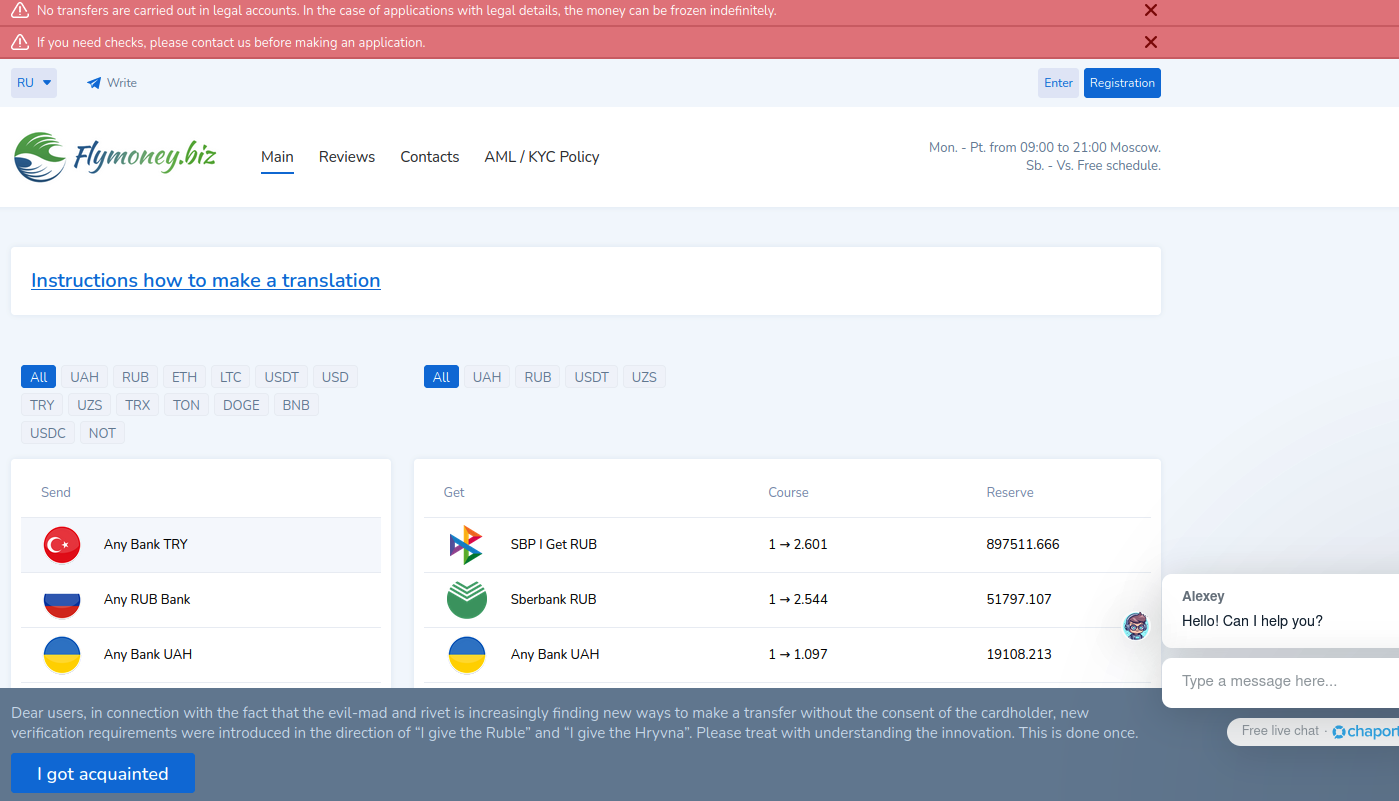
Flymoney, one of dozens of cryptocurrency exchanges apparently nested at Cryptomus. The image from this website has been machine translated from Russian.

Sanders found at least 56 cryptocurrency exchanges were using Cryptomus to process transactions, including financial entities with names like casher[.]su, grumbot[.]com, flymoney[.]biz, obama[.]ru and swop[.]is.

“These platforms were built for Russian speakers, and they each advertised the ability to anonymously swap one form of cryptocurrency for another,” the December 2024 story noted. “They also allowed the exchange of cryptocurrency for cash in accounts at some of Russia’s largest banks — nearly all of which are currently sanctioned by the United States and other western nations.”

Reached for comment on FINTRAC’s action, Sanders told KrebsOnSecurity he was surprised it took them so long.

“I have no idea why they don’t just sanction them or prosecute them,” Sanders said. “I’m not let down with the fine amount but it’s also just going to be the cost of doing business to them.”

The $173 million fine is a significant sum for FINTRAC, which imposed 23 such penalties last year totaling less than $26 million. But Sanders says FINTRAC still has much work to do in pursuing other shadowy money service businesses (MSBs) that are registered in Canada but are likely money laundering fronts for entities based in Russia and Iran.

In an investigation published in July 2024, CTV National News and the Investigative Journalism Foundation (IJF) documented dozens of cases across Canada where multiple MSBs are incorporated at the same address, often without the knowledge or consent of the location’s actual occupant.

Their inquiry found that the street address for Cryptomus parent Xeltox Enterprises was listed as the home of at least 76 foreign currency dealers, eight MSBs, and six cryptocurrency exchanges. At that address is a three-story building that used to be a bank and now houses a massage therapy clinic and a co-working space. But the news outlets found none of the MSBs or currency dealers were paying for services at that co-working space.

The reporters also found another collection of 97 MSBs clustered at an address for a commercial office suite in Ontario, even though there was no evidence any of these companies had ever arranged for any business services at that address.

Bulletproof Host Stark Industries Evades EU Sanctions

In May 2025, the European Union levied financial sanctions on the owners of Stark Industries Solutions Ltd., a bulletproof hosting provider that materialized two weeks before Russia invaded Ukraine and quickly became a top source of Kremlin-linked cyberattacks and disinformation campaigns. But new findings show those sanctions have done little to stop Stark from simply rebranding and transferring their assets to other corporate entities controlled by its original hosting providers.

Image: Shutterstock.

Materializing just two weeks before Russia invaded Ukraine in 2022, Stark Industries Solutions became a frequent source of massive DDoS attacks, Russian-language proxy and VPN services, malware tied to Russia-backed hacking groups, and fake news. ISPs like Stark are called “bulletproof” providers when they cultivate a reputation for ignoring any abuse complaints or police inquiries about activity on their networks.

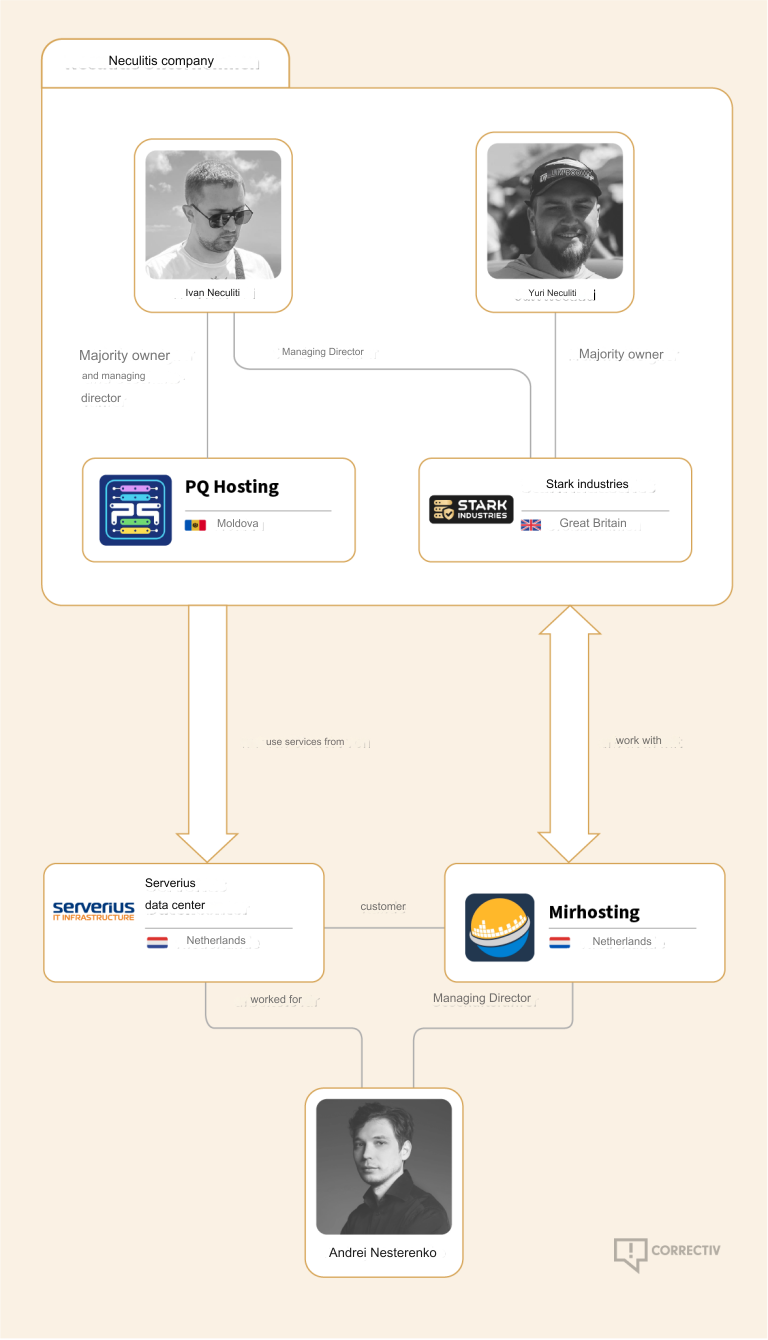
In May 2025, the European Union sanctioned one of Stark’s two main conduits to the larger Internet — Moldova-based PQ Hosting — as well as the company’s Moldovan owners Yuri and Ivan Neculiti. The EU Commission said the Neculiti brothers and PQ Hosting were linked to Russia’s hybrid warfare efforts.

But a new report from Recorded Future finds that just prior to the sanctions being announced, Stark rebranded to the[.]hosting, under control of the Dutch entity WorkTitans BV (AS209847) on June 24, 2025. The Neculiti brothers reportedly got a heads up roughly 12 days before the sanctions were announced, when Moldovan and EU media reported on the forthcoming inclusion of the Neculiti brothers in the sanctions package.

In response, the Neculiti brothers moved much of Stark’s considerable address space and other resources over to a new company in Moldova called PQ Hosting Plus S.R.L., an entity reportedly connected to the Neculiti brothers thanks to the re-use of a phone number from the original PQ Hosting.

“Although the majority of associated infrastructure remains attributable to Stark Industries, these changes likely reflect an attempt to obfuscate ownership and sustain hosting services under new legal and network entities,” Recorded Future observed.

Neither the Recorded Future report nor the May 2025 sanctions from the EU mentioned a second critical pillar of Stark’s network that KrebsOnSecurity identified in a May 2024 profile on the notorious bulletproof hoster: The Netherlands-based hosting provider MIRhosting.

MIRhosting is operated by 38-year old Andrey Nesterenko, whose personal website says he is an accomplished concert pianist who began performing publicly at a young age. DomainTools says mirhosting[.]com is registered to Mr. Nesterenko and to Innovation IT Solutions Corp, which lists addresses in London and in Nesterenko’s stated hometown of Nizhny Novgorod, Russia.

Image credit: correctiv.org.

According to the book Inside Cyber Warfare by Jeffrey Carr, Innovation IT Solutions Corp. was responsible for hosting StopGeorgia[.]ru, a hacktivist website for organizing cyberattacks against Georgia that appeared at the same time Russian forces invaded the former Soviet nation in 2008. That conflict was thought to be the first war ever fought in which a notable cyberattack and an actual military engagement happened simultaneously.

Mr. Nesterenko did not respond to requests for comment. In May 2024, Mr. Nesterenko said he couldn’t verify whether StopGeorgia was ever a customer because they didn’t keep records going back that far. But he maintained that Stark Industries Solutions was merely one client of many, and claimed MIRhosting had not received any actionable complaints about abuse on Stark.

However, it appears that MIRhosting is once again the new home of Stark Industries, and that MIRhosting employees are managing both the[.]hosting and WorkTitans — the primary beneficiaries of Stark’s assets.

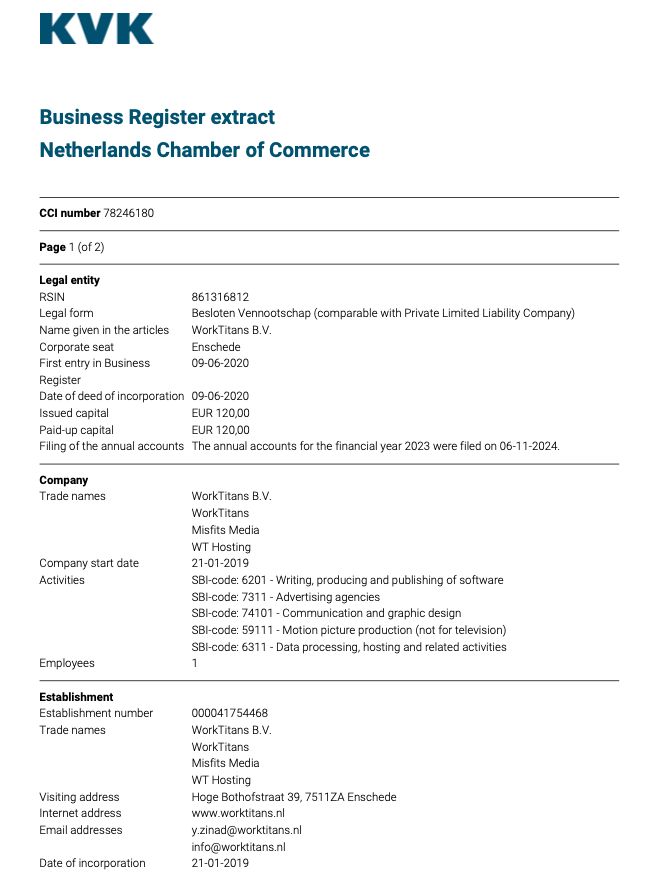
A copy of the incorporation documents for WorkTitans BV obtained from the Dutch Chamber of Commerce shows WorkTitans also does business under the names Misfits Media and and WT Hosting (considering Stark’s historical connection to Russian disinformation websites, “Misfits Media” is a bit on the nose).

An incorporation document for WorkTitans B.V. from the Netherlands Chamber of Commerce.

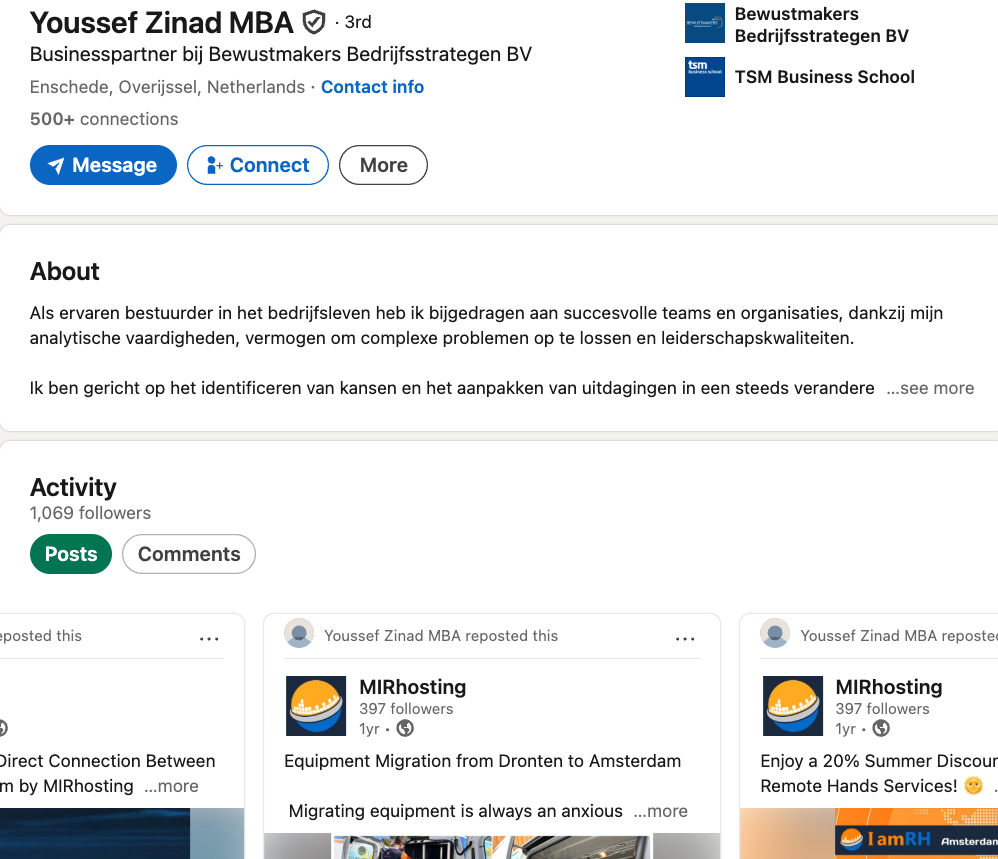
The incorporation document says the company was formed in 2019 by a y.zinad@worktitans.nl. That email address corresponds to a LinkedIn account for a Youssef Zinad, who says their personal websites are worktitans[.]nl and custom-solution[.]nl. The profile also links to a website (etripleasims dot nl) that LinkedIn currently blocks as malicious. All of these websites are or were hosted at MIRhosting.

Although Mr. Zinad’s LinkedIn profile does not mention any employment at MIRhosting, virtually all of his LinkedIn posts over the past year have been reposts of advertisements for MIRhosting’s services.

Mr. Zinad’s LinkedIn profile is full of posts for MIRhosting’s services.

A Google search for Youssef Zinad reveals multiple startup-tracking websites that list him as the founder of the[.]hosting, which censys.io finds is hosted by PQ Hosting Plus S.R.L.

The Dutch Chamber of Commerce document says WorkTitans’ sole shareholder is a company in Almere, Netherlands called Fezzy B.V. Who runs Fezzy? The phone number listed in a Google search for Fezzy B.V. — 31651079755 — also was used to register a Facebook profile for a Youssef Zinad from the same town, according to the breach tracking service Constella Intelligence.

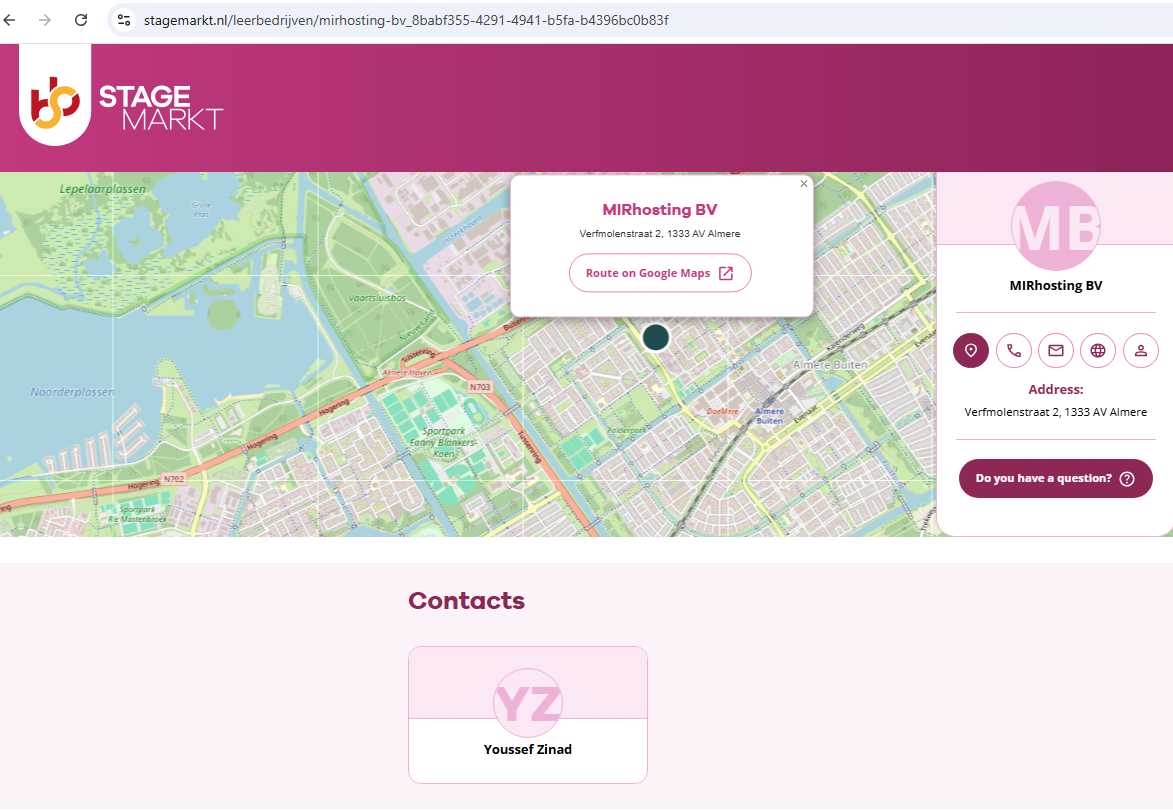
In a series of email exchanges leading up to KrebsOnSecurity’s May 2024 deep dive on Stark, Mr. Nesterenko included Mr. Zinad in the message thread (youssef@mirhosting.com), referring to him as part of the company’s legal team. The Dutch website stagemarkt[.]nl lists Youssef Zinad as an official contact for MIRhosting’s offices in Almere. Mr. Zinad did not respond to requests for comment.

Given the above, it is difficult to argue with the Recorded Future report on Stark’s rebranding, which concluded that “the EU’s sanctioning of Stark Industries was largely ineffective, as affiliated infrastructure remained operational and services were rapidly re-established under new branding, with no significant or lasting disruption.”

❌