❌

Reading view

There are new articles available, click to refresh the page.

Watchdog finds most agencies failed to meet CISA cloud security orders, heightening risk of attack

Nearly nine out of 10 federal civilian executive branch agencies failed to meet last summer’s deadline to implement cloud security directives from the Cybersecurity and Infrastructure Security Agency, a watchdog report published Wednesday found.

The conclusions from those results, according to the inspector general for the Department of Homeland Security: agencies “may encounter elevated security exposures that undermine the national cloud security posture and increase the likelihood of preventable cyberattacks and related threat,” and “CISA lacks the authority necessary to require full and timely implementation of Binding Operational Directives,” or BODs.

The latter is a question that has surfaced before about CISA directives, which the agency uses to pressure agencies into improving their cyber defenses. 

The IG took a look at the Secure Cloud Business Applications (SCuBA) project, created in response to the 2022 SolarWinds attack. It provides secure configuration baselines, settings and assessment tools to help agencies reduce the risk of breaches.

A December 2024 directive gave agencies a list of requirements to align with SCuBA, with a deadline of June 2025.

The IG found that 88 of 102 agencies, or 86%, didn’t implement all the mandatory SCuBA policies from BOD 25-01. As of February of this year, “compliance with BOD 25-01 had not improved. A total of 78 out of 102 (76%) [Federal Civilian Executive Branch] agencies were still not in compliance with implementing all mandatory SCuBA policies.”

“Some examples of baselines that FCEB agencies did not implement included blocking outdated authentication procedures, enforcing multifactor authentication, and implementing a policy to protect sensitive and personally identifiable information,” the IG report states. “Implementation of these baselines could mitigate vulnerabilities and threats from affecting the cloud business applications.”

That’s the result of CISA’s lack of power to enforce its BODs, which translates into greater risk, the IG concluded.

“Without defined enforcement oversight of SCuBA policy compliance, the Federal cloud security posture across the Federal enterprise is weakened,” the report states. “When agencies do not adopt required configurations or meet implementation deadlines, their cloud environments remain exposed to preventable threats.”

CISA didn’t respond to the report, according to the IG. 

The agency didn’t immediately respond to a request for comment from CyberScoop.

The post Watchdog finds most agencies failed to meet CISA cloud security orders, heightening risk of attack appeared first on CyberScoop.

Microsoft and partners disrupt EvilTokens, a comprehensive cybercrime service for financial fraud

Microsoft, along with a group of industry partners, disrupted EvilTokens, a short-lived but highly consequential cybercrime platform that investigators linked to more than 12,000 compromised Microsoft customer email inboxes across more than 10,000 organizations globally, the company said Tuesday.

Acting on federal court order Sept. 15, Microsoft and partners seized 50 websites the phishing-as-a-service used for operations and disabled more than 175 domains linked to EvilTokens’ supporting infrastructure. 

EvilTokens, launched in February 2026, was “a powerful cybercrime platform that used AI at every step of the attack chain — from compromising email accounts to designing intricate roadmaps for financial fraud and scams,” Steven Masada, associate general counsel and general manager of Microsoft’s Digital Crimes Unit, wrote in a blog post.

About 1,000 cybercriminals used EvilTokens over the course of its operation, a Microsoft spokesperson told CyberScoop.

The service was centered on an AI-style chatbot that cybercriminals used to analyze victims’ inboxes, identify trusted relationships, payment authorizations and other sensitive details that could facilitate fraud.

“AI was not simply helping attackers write more convincing messages. It helped them decide who to target, who to impersonate, and how to most effectively exploit the relationship to extract as much money as possible,” Masada wrote. 

EvilTokens was one of the most widely used phishing-as-a-service platforms prior to its takedown. It facilitated business-email compromise campaigns by stealing session tokens that allowed cybercriminals to sift through a victim’s inbox and maintain persistent access.

“We cannot estimate the total fraud attributable to all EvilTokens activity. However, we were able to correlate at least 13 complaints filed with the FBI’s Internet Crime Complaint Center to EvilTokens-linked activity, representing approximately $1.7 million in reported losses,” a Microsoft spokesperson said. “Because many incidents go unreported and not all victims can be definitively linked to specific campaigns, we believe this is a conservative estimate.”

Victims of EvilTokens were largely concentrated in the United States, Canada, the United Kingdom, Australia, India and France, according to Microsoft. SpyCloud, which supported the takedown, identified compromised email domains spanning 79 countries.

Microsoft said it also identified two men behind EvilTokens — Felix Utomi and Waidi Segun Adams — and attributes the development and support of the platform to Storm-2992, a threat actor unaffiliated with any other known cybercrime groups.

The United Kingdom’s Metropolitan Police acted on that information Sept. 18 when it served warrants in the greater London area, arrested the men accused of making articles for use in fraud and money laundering and seized their digital devices.

The Metropolitan Police said it received information from Microsoft about EvilTokens’ administrators in August. Utomi and Adams were released on bail as the investigation continues. 

“The two primary operators identified in our investigation were residing in the U.K.,” a spokesperson for Microsoft told CyberScoop. “While our investigation focused on those individuals, we believe others may have supported the operation in various capacities.”

Microsoft’s legal filing in the U.S. District Court for the Eastern District of Virginia refers to five additional unidentified people allegedly acting as support personnel and users.

Microsoft and others involved in the EvilTokens takedown, including Health-ISAC, Cloudflare, OpenAI, Shadowserver and TRM Labs, didn’t fully quantify how much fraud the service enabled, but it gained popularity quickly among cybercriminals and was lucrative for its operators.

Coinbase, which also aided the investigation into EvilTokens, said it traced about $1.1 million in revenue for EvilTokens from its paying customers. The virtual currency company’s threat researchers found more than 1,000 deposits to EvilTokens from more than 700 distinct addresses through June 2026. 

Operators sold access to the service through Telegram for a $1,500 initiation fee and a recurring $500 subscription. EvilTokens significantly lowered the barrier to entry for cybercriminals by including specialized tools for identity attacks, cloud systems, social engineering and financial fraud in a single interface.

The service allowed cybercriminals to map organizational structure and permissions in Microsoft Graph, which enabled lateral movement, researchers said. With active tokens gained through a collection of highly-targeted phishing lures, cybercriminals consistently bypassed multi-factor authentication, email gateways and endpoint security tools.

Microsoft said the platform’s creators developed portions of the platform with AI and it uncovered capabilities from multiple AI models. 

“It packaged much of the criminal process into a commercially run service, complete with subscription pricing, customer support, management dashboards and tools designed to move customers from account access toward financial exploitation,” Masada added.

The companies and organizations involved in the globally-coordinated takedown identified and notified potential victims, shared indicators of compromise and shared intelligence with law enforcement about EvilToken’s operators and some of its customers.

Experts advised organizations and employees to treat unsolicited device codes as a red flag, assume compromised accounts are fully cataloged in minutes, and independently verify requests to change payment information or redirect funds.

“The infrastructure supporting EvilTokens has been disrupted, but the model it demonstrated will not disappear with it,” Masada warned.

The post Microsoft and partners disrupt EvilTokens, a comprehensive cybercrime service for financial fraud appeared first on CyberScoop.

Another worry for water systems: infostealer exposure

Nearly two of every 10 U.S. water and wastewater organizations have identity data actively exposed from infostealers harvesting their credentials, according to research published Tuesday.

The study from identity risk firm SpyCloud follows months of reports about a wave of cyberattacks hitting targets in the sector, which U.S. government officials suspect are tied to Iran.

The company built a database of 66,845 Environmental Protection Agency-registered systems, examined internet domains and ultimately analyzed 10,000 organizations, finding that 1,787 showed active infostealer exposure.

In one case, a single infected device at a smart meter technology provider that SpyCloud didn’t name contained saved logins linked to roughly 167 different U.S. utility metering tenants — meaning that one exposure opened the door to many more. 

That “cascading supply chain exposure” was one of the biggest findings of the report that SpyCloud shared exclusively with CyberScoop, said Jason Lancaster, chief investigations officer at the cyber firm, along with the quantitative approach” to measure exposure overall.

“We talk about it a lot,” Lancaster said of the exponential risk that one exposure can present. “There’s examples here and there, but that was a standout example of, here’s a tangible thing that is an exposure right now.”

Generally, “Infostealer exposure means the attacker isn’t guessing anymore, they’ve got legitimate points of entry,” Lancaster said. “In the investigations I’ve worked, that log data usually contains stolen session cookies, credentials, and autofill info pulled straight off the infected device. That’s enough to walk right past [multifactor authentication] by hijacking an already-authenticated session, log into corporate email or VPNs without raising a single alert, and sit there quietly for weeks while they map out the network.”

Still, the study had limitations. It doesn’t address what apparently led to the cyberattacks that unfolded in Minnesota and elsewhere this summer: internet-exposed programmable logic controllers.

It’s “important to note that our research did not focus on OT devices which run the most critical processes within these utilities, and any exposure we cite herein should not be interpreted as exposure of specific OT devices,” the report said. It did, however, find that 258 of the 1,787 organizations with active infostealer exposure carried credentials to operational technology or remote-access systems.

Some of the report’s conclusions were about the limitations of the data itself.

“Exposure concentrated in larger operators and in the vendor supply chain; small utilities were largely underrepresented,” SpyCloud said. “That’s a pattern in the data, not a claim that every water system nationwide carries this risk — and it measures identity exposure, not confirmed intrusion.”

It’s the first study of its kind that SpyCloud has done for a specific industry, so the company doesn’t have comparisons to other industries, Lancaster said. SpyCloud has begun a responsible disclosure process for those affected within its report, he said, beginning with a briefing for the Cybersecurity and Infrastructure Security Agency.

“It’s important to remember, infostealer logs aren’t the end of an incident — they are often the beginning,” Lancaster said. “Access brokers sell these logs specifically because ransomware crews and other fraudsters want exactly this kind of entry point. So, the real question isn’t whether the exposure is dangerous. It’s how much time you have before someone weaponizes that stolen data against you.”

The post Another worry for water systems: infostealer exposure appeared first on CyberScoop.

Not all passkeys are created equally

ON SECURITY By Susan Bradley Not a day goes by without a prompt to set up a passkey. As with everything in security, there are trade-offs. These mostly have to do with balancing security and convenience. This will manifest itself in the decisions you must make when setting up passkeys. Some decisions are made for […]

Microsoft Patches 18 Vulnerabilities in AI, Cloud Products

Microsoft fixed vulnerabilities across Azure and AI-branded products, with privilege escalation flaws accounting for the majority.

The post Microsoft Patches 18 Vulnerabilities in AI, Cloud Products appeared first on SecurityWeek.

Iran Strikes On Amazon Data Centers Caused Permanent Loss of Customer Data

Ars Technica reports: Half a year after Iranian drone strikes knocked out multiple Amazon data centers, the US tech company has acknowledged the permanent loss of some customer data that was hosted in Bahrain and the United Arab Emirates. Amazon Web Services was "unable to restore access to the resources and data" hosted in some of the war-damaged data centers, according to an AWS dashboard update posted on September 15. The development was first reported by Reuters and suggests that the Iranian strikes inflicted catastrophic damage on the data centers. Customer data was irretrievably lost in one of three AWS availability zones in the United Arab Emirates region, specifically the mec1-az2 availability zone. Each availability zone is serviced by one or more Amazon data centers. The company is still working on "recovering regional resources" and restoring resources hosted in the other two availability zones in the United Arab Emirates... But the destruction was apparently even more widespread for the data centers in the Bahrain region, because Amazon said it was unable to restore access to resources and data across all three availability zones there. "The damage to our infrastructure spanned multiple Availability Zones and exceeded what our regional and multi-AZ services are designed to withstand," the AWS update said. The company had already suspended customer billing in the affected AWS regions in Bahrain and the United Arab Emirates and has spent the past six months attempting to restore normal operations... [When the war began] AWS immediately urged customers to migrate resources to other cloud regions and use remote backups to restore any "inaccessible resources." The cloud service also reportedly issued $150 million in customer credits following the initial Iranian strikes in March.

Read more of this story at Slashdot.

What’s next for CISA’s CDM program that gives cybersecurity tools to federal agencies

A Cybersecurity and Infrastructure Security Agency program that provides tools and capabilities to other agencies has to get speedier so it can push them toward being able to move more quickly themselves, an agency official said Tuesday.

“We have to get faster,” said Richard Grabowski, acting branch chief of service delivery and deputy program manager for the Continuous Diagnostics and Mitigation program at CISA. “The way that we collaborated today wasn’t fast enough for the threats of yesterday, and they certainly aren’t going to be fast enough for the threats of tomorrow.”

That means pushing responsible automation of tasks that also can do so at scale, he said, so that experts “can focus more [on] dealing with the novel threats and adoption and tuning of advanced technology, and not hitting alerts every other day.”

Velocity is one of the three core goals for the CDM program, along with unification and data-driven risk management, Grabowski said at the Elastic Federal Cyber Defense Breakfast, produced by FedScoop.

Unification means keeping data out of silos so “we are connecting those deployments in a meaningful way to really stimulate reusable, actionable lessons learned,” Grabowski said. And data-driven risk management means that in the event of a crisis-level event, agencies are able to “see what is happening with timely, accurate, and trustworthy data, so that we are the tool of first response when the things hit the fan.”

One of CDM’s offerings is Security Information and Event Management (SIEM) as a Service, a cloud-based platform for threat analytics, incident response and more. Grabowski said there’s a three-year roadmap for expanding and enhancing it, including by ramping up staff and conducting training.

Mike Duffy, the acting federal chief information security officer, said at the same event that three principles should guide what comes next for CDM. One is aggregating demand across agencies that share common problems: “When agencies need the same capabilities, we should use federal scale to improve security, interoperability and value.”

Second, he said, “is buying outcomes, not product” by making it clear what outcomes the federal government is seeking and then allowing commercial markets room to innovate. 

Duffy said the third was to “design acquisition for continuous improvement,” meaning making sure that acquisition models promote competition and opportunities for new capabilities to enter.

“Now is not the time to set capabilities and move on for the next 10 years,” he said. “Mow that agile mindset of how we can continue to deliver and deploy capabilities based on the threats we’re seeing to reduce risk at scale across the federal government — that is absolutely key.”

CDM has been evolving since the SolarWinds breach that compromised at least nine federal agencies, said Matt House, CISA’s acting associate director and program manager for CDM.

“Post-SolarWinds, one of the things that that the government took away was, we lack what I would say is a common operating picture with respect to the operational visibility we need to be able to assess and coordinate response government wide,” House said at the event.

The post What’s next for CISA’s CDM program that gives cybersecurity tools to federal agencies appeared first on CyberScoop.

‘Watershed 250’ test program in Texas looks to private sector for water cybersecurity help

The Trump administration rolled out a six-month test program in Texas on Monday that will draw on volunteer expertise and technology from cyber and artificial intelligence companies to protect the water sector.

“Project Watershed 250” is the first of the state-based, industry-centric pilot projects to cross the finish line that the Office of the National Cyber Director has previewed since the publication of its national cybersecurity strategy earlier this year. Water systems have long been viewed as among the most vulnerable and neediest critical infrastructure sectors, and in recent months the sector has been the victim of a spree of attacks.

“Project Watershed 250 is a commitment from the states, industry and federal government that we will continue to prioritize our nation’s safety and deliver on America-first policies for the American people,” National Cyber Director Sean Cairncross said at a rollout event in San Antonio Monday.

“U.S. companies are providing world-class cyber capabilities, red teaming that tests utilities’ current defenses, system hardening using the latest private sector cyber tools and AI tooling that helps utilities’ frontier cyber defenders to protect Texas water systems and scale proven solutions across the country,” he said. “This six-month pilot program is designed to make our water and wastewater critical infrastructure more resilient and resistant to cyber attacks by proactively finding and fixing system weaknesses.”

The pilot program, featuring collaboration between federal and state governments, stands in contrast to how the Biden administration tried to tackle the issue, with audit requirements that some GOP states challenged in court, forcing Biden’s Environmental Protection Agency to withdraw its rule.

“For too long, at least on the federal level, the government has admired the problem of cybersecurity in water systems,” Cairncross said. “We are going to find out what works. We’re going to target that, and we are going to scale off of this and learn lessons.”

A dozen companies — Parsons, Microsoft, Fortinet, Google Cloud, Palo Alto Networks, Amazon Web Services, Reflection AI, Cloudflare, Zscaler, Forescout, Abnormal AI and Dragos — appeared at the rollout Monday to praise the initiative and tout their contributions to it.

Not everyone praised the initiative elsewhere, however. One cyber professional who works on water security issues, speaking on condition of anonymity, said the program was “all smoke” and that “there’s no real money behind it.”

“The White House did what it always does — reached out to industry with their hands out asking for industry to pay for things the government should be doing, at least in part,” the person said.

Texas Gov. Greg Abbott said the program would be overseen by Cairncross’s office and Texas Cyber Command, which was established just last year. Abbott cited the need for the program by mentioning “an Iranian-backed cyberattack” on 30 water systems across 12 states and a 2024 attack on the water system in Muleshoe, Texas, suspected to be the work of Russian hackers.

“The need for cyber resilience is overwhelming,” Abbott said. “Many rural providers simply don’t have the resources they need to be able to protect themselves.”

Watershed 250 isn’t the only federal effort to bolster water cybersecurity, with lawmakers introducing legislation in the aftermath of the recent attacks. Past legislation that Congress has enacted also sought to tackle the problem.

Updated 8/31/26: with comment from cyber professional.

The post ‘Watershed 250’ test program in Texas looks to private sector for water cybersecurity help appeared first on CyberScoop.

Citrix Adds a Linux-Powered Escape Hatch For Compromised Windows PCs

Citrix's Desktop as a Service (DaaS) product includes a lightweight, hardened second operating system called UniconOS (once called "eLux") to offer Windows customers a write-protected file system Citrix says is secure against computer viruses and other malware. Nerds.xyz reports: According to the company, the environment remains isolated from the Windows filesystem and uses Secure Boot protections covering the shim, bootloader, kernel, and initial RAM filesystem. That separation matters when ransomware encrypts Windows or a faulty update leaves the operating system trapped in a boot loop. Instead of repairing Windows immediately, an employee can boot into UniconOS and use Citrix DaaS to access virtual applications and desktops. Citrix SecurAccess with Chrome Enterprise provides access to internal web applications under the organization's existing security policies. In other words, UniconOS does not actually fix the damaged Windows installation. It gives employees another route to their applications while the IT department investigates or repairs Windows... [T]he installer shrinks the Windows volume, creates a new partition, copies UniconOS onto it, and registers the necessary boot entries. Windows remains the default operating system during ordinary use, although administrators can configure boot delays and fallback behavior... The approach could prove useful following a widespread ransomware attack or another defective Windows update resembling the CrowdStrike incident of 2024. Recovery would happen independently on every compatible endpoint instead of requiring IT employees to physically handle thousands of computers. Thanks to Slashdot reader BrianFagioli for sharing the news.

Read more of this story at Slashdot.

Two Alleged ‘TeamPCP’ Hackers Arrested in Australia

Authorities in Australia have arrested two men believed to be members of TeamPCP, a prolific cybercrime and data extortion group blamed for perpetrating the longest running spree of software supply chain attacks ever.

In a statement released today, the Australian Federal Police (AFP) said two men from Western Australia, aged 21 and 23, were arrested in connection with a “sophisticated cybercrime syndicate that allegedly created malicious open-source software to rob thousands of global businesses.”

The AFP did not name the defendants, but KrebsOnSecurity learned the 21-year-old suspect’s real identity in June, and has been communicating with him ever since. This story includes interviews with TeamPCP’s self-described spokesperson, and examines clues left behind by the TeamPCP leader that likely led to his undoing.

TeamPCP vaulted onto the cybercrime scene in late 2025, embedding malicious code in hundreds of open source software tools and extorting victims for profit. Members of the group made headlines by compromising corporate cloud environments using a self-propagating worm dubbed Shai-Hulud, which added malicious code to open source programs maintained by developers whose credentials at public code repositories like GitHub or NPM were phished or stolen.

Writing for Wired, journalist Andy Greenberg described TeamPCP’s core tactic as a kind of cyclical exploitation of software developers.

“The hackers gain access to a network where an open source tool commonly used by coders is being developed,” Greenberg wrote in May. “The hackers plant malware in the tool that ends up on other software developers’ machines, including some who are writing other tools intended to be used by coders. The malware allows TeamPCP’s hackers to steal credentials that let them publish malicious versions of those software development tools, too. The cycle repeats, and TeamPCP’s collection of breached networks grows.”

TeamPCP also has practiced something akin to cyclical recruitment. In May, the source code for the third iteration of Shai-Hulud was published online, and TeamPCP soon after launched a contest offering $1,000 in virtual currency to whichever participant could conduct the largest supply chain operation using the worm’s code. According to the contest rules, participants were scored based on the number of weekly and monthly downloads of packages they compromised — directly incentivizing them to target the most popular code libraries.

A screenshot of a message from TeamPCP’s Telegram account, announcing the supply chain hacking contest. Image: dataminr.com.

“TeamPCP has stated the competition is a recruiting opportunity and they intend to purchase all meaningful access harvested from participants’ campaigns,” the security firm Dataminr wrote. “The $1,000 XMR (Monero) prize is a recruitment floor and has been dismissed by the actor as ‘just like participation trophy,’ adding ‘if you find something good you will be paid way more,’ confirming the contest’s true function as talent identification and malicious access acquisition at scale.”

In March, TeamPCP executed a supply chain attack targeting AI infrastructure by compromising the code for LiteLLM, an open source AI gateway that connects users to more than 100 different large language models. A recent analysis by the security firm CloudSEK found TeamPCPs attack on LiteLLM harvested cloud service keys and other secrets from more than 2,500 organizations, including many of the world’s top technology companies.

In May, TeamPCP claimed credit for compromising at least 3,800 code repositories at the Microsoft-owned GitHub, after a GitHub developer installed a code extension that was compromised by TeamPCP’s malware.

MEET THE CYBERCATS

Security experts say TeamPCP is less of a hacker group than an amalgamation of threat actors from multiple cybercriminal gangs who sometimes work together toward similar goals.

“It is not a structured criminal crew with a single operator,” said Austin Larsen, a principal threat analyst with the Google Threat Intelligence Group. “It is a peer community of individually-skilled actors, with one clear center of gravity.”

That center of gravity is George Prepakis, an accomplished security researcher and self-described exploit developer who operates the Twitter/X profile @kernelstub. Earlier this year, @kernelstub tweeted a public invite link to a Matrix chat server he created and dubbed “Cybercats,” and TeamPCP and several other cybercrime entities have been using this server to communicate daily for the past several months.

A screenshot of the Matrix chat server “Cybercats,” whose members used hacker handles associated with multiple distinct cybercrime groups that have occasionally collaborated on a series of supply chain and data ransom attacks over the past nine months.

Kernelstub, like other administrators in the Cybercats chat, has been using his Twitter/X profile name as his handle in these Matrix communications, frequently tweeting references to other members and to conversations taking place in the Cybercats chat. In a number of cases, the corresponding X accounts for members of the Cybercats chat taunted cybercrime victims publicly before the incidents were reported in the news media.

The Cybercats administrator listed at the top of the screenshot above — “Boxturtle” — is a close associate of TeamPCP who has been tweeting about the group’s conquests under the name @xpl0itrsturtle. This handle corresponds to a data breach broker active on Breachforums and Darkforums who has been selling data stolen in a wave of recent breaches at automobile manufacturers, including BMW Group, Audi, Honda, Mercedes-Benz, Volvo and Toyota, as well as data allegedly taken from Snapchat and SportRadar.

The data leak site for the extortion group or handle “xpl0itrs.”

The Cybercats administrator “SeesawSec” in the screenshot above is the alias of whoever is behind the cybercrime group known as Fulcrumsec, which recently claimed credit for data extortion attacks against the pharmaceutical giant Novo Nordisk, the data broker LexisNexis, and Avnet, a Fortune 500 distributor of electronic components.

The data leak site of Fulcrum Security, a.k.a. Fulcrumsec.

The Cybercats administrator “@pcpcasper” also has been using a similar name on X to discuss TeamPCP’s attacks and victims. This person has an extensive message history on Telegram, where their messages and shared videos show @pcpcasper is an active and vocal member of the National Socialist Network, a neo-Nazi political organization based in Australia.

At one point in these chats, @pcpcasper shared videos and images of what they claimed was their cat, and several of those videos place this user in Western Australia. One source close to the investigation told KrebsOnSecurity that @pcpcasper was one of the two arrested, a claim supported by messages that @kernelstub posted online this morning.

The Cybercats member roster pictured above also features an administrator with the username “T,” which is short for the now-banned Twitter/X profile @pcpcats, the account operated by the self-described TeamPCP spokesperson who was arrested today. As we’ll see in a moment, @pcpcats also is from Western Australia.

By the time @kernelstub tweeted a public invite link to the Cybercats Matrix server, T/@pcpcats was posting only infrequently to the group chat, with other members often inquiring as to his whereabouts and well-being. The group’s collective concern related to @pcpcats’s tendency to blame his increasingly extended absences on the use of hallucinogens and other narcotics that kept him awake for days on end, but also caused him to crash in bed for several days after the highs wore off.

WHO IS THE TEAMPCP LEADER?

The Cybercats member @pcpcats has used multiple nicknames on the cybercrime forums, including EllisD25/LSD on Darkforums, BulkDMT on Breachstars, and Express on Breachforums. These accounts are linked because they all advertised the same Tox ID and/or Session ID as instant message contact handles in their cybercrime forum posts. BulkDMT was also known on the forums as DMT Host, which was a virtual private server (VPS) hosting service that was peddled on Darkforums and Breachstars.

DMT Host/EllisD25, posting on the English-language cybercrime community DarkForums in September 2025. Image: ke-la.com.

According to the cyber intelligence firm Intel 471, Express registered on Breachforums using the email address shitstickpp@gmail.com. Intel 471 finds Express posted on Breachforums across a two-month period in 2025 using four different Internet addresses located in South Africa. On July 30, 2025, Express announced on Breachforums they were selling access to 14 gigabytes of data stolen from South Africa’s State Information Technology Agency.

The threat intelligence platform Flashpoint recorded more than a year’s worth of messages from the TeamPCP leader’s alter ego on Telegram — Persy_PCP —  who claimed they split their life living between two countries [full disclosure: Flashpoint is an advertiser on this blog]. “I have these [files] as well, problem is these are in another country,” Persy_PCP explained to another user inquiring about a stolen data set in November 2025.

Later that month, Persy_PCP complained, “My whole country is racist and they want people like me dead.” Flashpoint records show BulkDMT shared in September 2025 that “this country is going to fucking starve when they take the farmers land,” a likely reference to white landowners in South Africa who claim to be targeted by an ongoing genocide campaign.

This tracks with public reporting on TeamPCP. Cyberscoop reported in June that Google had traced TeamPCP’s residential and mobile Internet address connections to South Africa, “indicating the primary operator was located there during at least some of its attacks.”

BulkDMT also shared on the group chat at Breachforums that they were recovering from an addiction to methamphetamine. “My life is kinda fucked rn [right now], but that’s fine and there isn’t really a point in pouring so much emotional energy into that fact, my parents had money but I unfortunately got really addicted to some things so I don’t get to benefit from that. As long as I continue to survive, stay sober, and move closer towards my goals that’s enough drive and meaning.”

The identity threat protection company SpyCloud finds shitstickpp@gmail.com shows up in the registration of an account called ChristmasSnow on the cybercrime community Raidforums in 2022. Nearly all of the Internet addresses used to access that account came from ISPs in Perth, Australia, SpyCloud found.

KrebsOnSecurity looked up all of those Perth IP addresses in passive DNS records maintained by DomainTools.com, and found one of them — 211.27.196.111 — for several years was used as a private file server by a family in Perth with the last name of Thomson. Those records show at least three hosts — ithomson.direct.quickconnect.to (a remote Synology server), kthomson0061.direct.quickconnect.to, and joshuawthomson39.myqnapcloud.com (a QNAP network storage device) — persisted at that address between 2022 and 2025.

Searching on “joshuathomson39” in the breach tracking service Constella Intelligence reveals an account at the freight forwarding company kwe.com created in the name of Joshua Thomson from Perth, Australia. The open source intelligence platform Epieos finds the phone number attached to that kwe.com account was used to register a Facebook profile for Josh Thomson, which says his family includes a brother named Ruben, his father Ian, and his mom Cindy.

That Facebook profile also says Josh and his family are originally from Pietermaritzburg, in KwaZulu-Natal, South Africa, but currently living in Cottesloe, a beach-side suburb of Perth. A search in DomainTools for Ian Thomson and Australia unearthed five domains by the same registrant, including securecomputing.au, thomson.org.au, and thomsonfamily.net.au. Ian Thomson is a dentist in Cottesloe, and a biography says he graduated from The University of the Witwatersrand in Johannesburg, South Africa.

Constella finds a joshua@thomson.org.au registered a number of accounts online, but Josh doesn’t seem to have much of a connection to dodgy cybercrime forums. His brother Ruben, on the other hand, has quite the presence on these communities, dating back to at least 2018. Constella reports ruben@thomson.org.au frequently reused the password “joshuathomson1,” and Constella further finds that password was used by just a handful of accounts, including yolosolo17@gmail.com and surfinup8@gmail.com.

According to Intel 471, surfinup8@gmail.com was used to register the user Yolosolo17 on the crime forum Altenen in 2018, and that user account was registered from the Perth address 110.141.230.15. On Altenen, Yolosolo17 advertised free web proxies, as well as the domain rubenthomson.com, which was at one point used to sell steeply discounted iPhones. DomainTools says rubenthomson.com was hosted at 110.141.230.15 and registered to surfinup8@gmail.com.

A cached copy of the domain rubenthomson.com from 2017 shows a login page underneath a banded stack of money. Image: archive.org.

SpyCloud reports 10.141.230.15 was used by the email address sheepstealing@gmail.com on Raidforums and surfinup8@gmail.com on Nulled, and that the same IP was used by the email addresses ian@thomsonfamily.net.au, jasper@yakuza.cc, and rubenthomson1@gmail.com. SpyCloud also shows that sheepstealing Gmail address is tied to the accounts Sheep420, YoloSolo117 and Yakuza.cc on Raidforums, and to the account “Sheep Stealing” on Hackforums. Intel 471 says sheepstealing@gmail.com was used to register the account DingoFlour on Breachforums in October 2023, as well Sheepx on Altenen.

Epieos reports that ruben@securecomputing.au is tied to an Airbnb account for Ruben, who described himself as a Web developer who went to school at the University of Western Australia and was living outside the country. “Hey, I’m Ruben, my friends call me Ellis. I’m a Perth creative who occasionally books rooms when visiting family and for photography.”

Epieos also finds sheepstealing@gmail.com registered an upwork.com profile under the name Ruben, who said his main skills are setting up secure server hosting solutions and PHP full-stack Web development.

“I’m familiar with Linux, working with relational databases (SQL),” the Upwork profile reads. “I also script in Python mainly for writing social media bots.”

The Upwork profile for Ruben Thomson in Cottesloe, Australia.

Epieos further discovered sheepstealing@gmail.com is connected to a Microsoft account for Ruben Thomson, and to a now-defunct GitHub account called XmasSnow/XmasSnowisBack that scammed people on the forums in 2022 by claiming to sell exclusive exploits for recently-released software patches (recall that shitstickpp@gmail.com was used to register a forum account named ChristmasSnow).

This same sheepstealing email address registered a Twitter/X account in 2026 called “Gone Fishing” that lists its location as South Africa. That Gmail account also left several reviews for businesses listed on Google Maps over the past seven years, but all of those establishments are located on the west coast of Australia.

Business reviews in Western Australia left by the Google account sheepstealing at gmail.com.

The people search service Pipl finds a 21-year-old Ruben Thomson in Western Australia who has a phone number ending in 979. A lookup on that number at Epieos reveals it is connected to a TikTok account under the name Ellis, and to a PayPal account in the name of Ruben Thomson.

Finally, a search on the name Ruben Thomson from Cottesloe at the Australian government’s record of registered businesses finds he has incorporated or served as an official in multiple companies created since 2024, including Secure Computing Solutions, Tensor Industries, and another entity ironically named OPSEC Express. Recall that Express was BulkDMT’s nickname on Breachforums.

Australian companies connected to Ruben Thomson. Image: abr.business.gov.au.

It’s ironic because OPSEC is short for the term “operational security,” which refers to techniques and behaviors used to obfuscate and compartmentalize one’s real-life identity online, and using your cybercrime handle as part of your own company name is very much the antithesis of that practice.

There is at least one other major opsec failure by Ruben that exposed a link to TeamPCP. In June 2025, someone using the name Ruben Thomson registered on HackerOne, a popular “bug bounty” program that seeks to reward and recognize researchers who agree to work with affected software vendors to help fix the flaws before publishing about their findings. What was Ruben Thomson’s chosen HackerOne username? Deadcatx3, a nickname that has been flagged by multiple security firms as an alias used by TeamPCP.

The HackerOne profile for “Ruben Thomson” uses the nickname Deadcatx3, which multiple security firms have concluded is an alias used by TeamPCP. Image credit: flare.io.

INTERVIEW WITH ELLIS

In early July 2026, not long after having discovered clues about Ellis’s real life identity, KrebsOnSecurity interviewed the TeamPCP leader via Signal, where he was remarkably open about his activities and personal struggles [for the sake of simplicity, the TeamPCP spokesperson will be referred to from here on as Ellis].

Ellis claims he stopped doing cybercrime for TeamPCP in March 2026 — just before the attacks that compromised LiteLLM — and that at least one other individual has taken over the group’s leadership since then. Ellis shared that a year earlier he had just completed the latest in a series of detox and sobriety programs, and was two months sober when he reconnected with some old friends from the malware development scene.

“One year ago I needed help monetizing some [GitHub credentials], I was two months sober and needed a distraction and something to keep busy as well as people to speak to,” Ellis said. “I had largely disconnected from my old circle, they had become very toxic and I needed to get away from the substances. Previously I had done some mass exploitation campaigns and grew up doing [malware development] and [capture the flag] contests. There were some friends who were also vending but had stopped a while, and one of them introduced me to some chats where I posted access for sale.”

Prior to that, Ellis said, he was homeless and hopping between “some very unstable places.”

“Blackhatting is fun,” he said. “There are actual rewards and incentives to learn and you grow with your team. Without qualifications, no employer will even take the time to hear you out.”

Ellis claims he’s earned a grand total of about $20,000 for his activities with TeamPCP, and that it was never about the money or fame for him. Asked whether his experiences with TeamPCP might prepare him for gainful employment in a legitimate IT job, Ellis said he doubted it.

“I am nowhere close to a skill level where I am comfortable, and this would take maybe half a decade of further experience,” he said. “I no longer have to choose between rent and food for that I’m grateful and so are the team members.”

Ellis expressed no remorse over his cybercrime activities, and said he was grateful for the friendships and relationships built throughout his engagement with TeamPCP. The young hacker also seemed resigned to his fate, and told KrebsOnSecurity that he’ll accept the consequences if he’s ever arrested.

“If I’ve already been found out then its out of my control, I’ll make peace with that,” he said. “Honestly, I think someone like me needs a lot of help that prison just can’t provide. If I had the funds to study different parts of the field and closer guidance, this would have turned out differently. But that’s a pipe dream and we both know this.”

It is clear from reading Ellis’s posts to the group’s Matrix server chats that his struggles with sobriety are ongoing. On Thursday, June 25, Ellis told @kernelstub he was about to “trip” with his “homie.”

“What kind,” @kernelstub inquired.

“Ketty and some DMT,” Ellis replied, referring to the dissociative anesthetic ketamine and dimethyltryptamine (DMT), a powerful psychedelic compound that is found naturally in some plants but is also synthetically produced in underground lab environments. “There’s a little 2cb so we might throw that in the mix,” he continued, referring to another psychedelic compound by its chemical shorthand.

Roughly two weeks before his arrest, Ellis told KrebsOnSecurity he was ready to leave his life of crime behind and was prepared to turn himself in, but that in the meantime he was making plans to tie up loose ends.

Less than 24 hours later, the TeamPCP leader posted an image on Telegram showing a yellowish powdered substance in a baggie and on a scale, possibly synthetic DMT. The image shows the powder being weighed next to a series of small vape cartridges, two of which are open on the table in front of the photographer.

An image posted by the TeamPCP leader to Telegram, advertising his acquisition of some type of psychoactive substance, most likely a synthetic version of the powerful hallucinogen known as DMT.

The two defendants were arrested Wednesday morning. The AFP said the men face a combined 14 cybercrime offenses and are scheduled to appear in Perth Magistrates Court today.

Charlie Eriksen is a security researcher at Aikido Security who has closely followed TeamPCP’s cybercrime campaigns. Eriksen said TeamPCP are a good example of a new kind of threat actor that does not fit neatly into the usual categories.

“They are not a state actor, not quite organized cybercrime, and not purely ideological,” he said. “Their motivations seem to mix money, disruption, attention, and ideology.”

Eriksen said that historically there has always been a meaningful gap between reading about an attack technique and being able to reliably turn it into an operational campaign, but that large language models (LLMs) and artificial intelligence increasingly are helping threat actors to bypass that knowledge gap.

“You had to understand the research, adapt the code, troubleshoot it, build infrastructure around it, and then repeat that process across different targets,” he said. “LLMs have compressed that gap significantly.”

According to Eriksen, this creates an environment where threat actors suddenly have the ability to operate at significant scale without having developed the operational discipline that traditionally accompanies that level of capability. Put another way, it sets the stage for cybercriminals who are capable enough to cause significant damage, but not necessarily careful enough to understand or care about the consequences.

“They can be noisy, they can make mistakes,” he said. “They can leave evidence everywhere. They can take risks that a professional criminal group or intelligence service would consider completely unacceptable. But that does not necessarily make them less dangerous. In some ways, it can make them more dangerous.”

In a recent blog post, Eriksen called TeamPCP’s Shai-Hulud worm the “best thing to happen to supply chain security,” because it forced GitHub and other public coding platforms to erect new security safeguards.

In direct response to TeamPCP’s broad success at pushing poisoned versions of popular software packages, GitHub in late July introduced a three-day “cooldown” mechanism for Dependabot, the platform’s tool for auto-fetching newly shipped updates for any package dependencies. Cooldown periods are designed to help buy time for security tools and package maintainers to identify and remove any compromised versions. Other coding ecosystems like Python and various JavaScript platforms also added support for cooldown periods this year amid growing calls from security experts about the need for more widespread adoption of the safety feature.

Eriksen said TeamPCP’s legacy is that they achieved in the span of a few months what the supply chain security community has been unable to do for years.

“They managed to wake up Microsoft to the fact that they had become negligent in terms of security,” Eriksen said. “By compromising GitHub and stealing their source code, they humiliated Microsoft into action, making them finally act on what we had been asking them to do and take seriously for a while now.”

Update, 10:08 a.m. ET: A story this morning from ABC News in Australia confirms Ruben Ian Thomson of Cottesloe was one of the two arrested. The 23-year-old suspect thought to be @pcpcasper, Michael Gaebler, also was arrested in Perth. ABC News reports that Thomson was denied bail (Mr. Gaebler’s attorney reportedly did not request bail for his client), and that both men will be held in custody until their next court appearance on September 18.

Massive supply-chain attack compromises 440 packages under four hours

In less than four hours early Tuesday, an attacker compromised a GitHub maintainer account and unleashed a self-replicating piece of malware which injected malicious code into more than 440 distinct npm packages, according to multiple security firms. 

The worm, built on the open-source Mini Shai-Hulud repository that TeamPCP published in May, was initially let loose in keyv, a data management interface software package with more than 600 million monthly downloads. The attacker spent the next 30 minutes compromising additional packages controlled by the same maintainer, including cacheable, flat-cache, file-entry-cache.

The attack spread to other maintainers, eventually compromising more than 860 packages with a “combined total of over 2 billion monthly installs,” Ilyas Makari, malware researcher at Aikido Security, wrote in a blog post. 

Wiz researchers told CyberScoop it hasn’t observed any new malicious packages since the initial wave moved through a massive footpoint of cloud and code environments in those first four hours. 

“This is the most critical initial compromise, with over 155 million weekly downloads on the root packages,” Wiz Research said in an email. 

Some of the compromised packages, including keyv, flat-cache and file-entry-cache, are present in more than 46% of all cloud environments, according to Wiz. “By comparison, back in the Shai-Hulud 2.0 campaign the most prevalent packages were only in about 28% of environments,” the company said. 

“Time will tell whether the eventual cost and impact outpaces past attacks, or whether adoption of hardening mechanisms such as package aging, and the usage of the relatively less aggressive Mini Shai-Hulud code as basis, will defray the final toll here,” Wiz Research added. 

Researchers from multiple firms sprung into action to monitor the widening attack spree and published indicators of compromise to help potential victims hunt for malicious activity in their systems. 

The Mini Shai-Hulud variant used in these attacks scoops up a trove of sensitive data, including npm, GitHub, AWS and continuous integration credentials. It also steals AI-related configuration files and cryptocurrency wallets, researchers said. 

Microsoft, Aikido, Socket and Wiz all said the same payload and pattern was observed across all affected packages, indicating a single attacker or threat cluster was behind the supply-chain attack and using multiple stolen tokens. 

The malware showcased a few pieces of new functionality, but retained the same core mechanisms that are hallmarks of Mini Shai-Hulud. 

“The evolution is consistent with what we’ve seen from them in past waves, however we don’t yet have the hard links” to confidently attribute the attacks to TeamPCP, Wiz Research said.

The notorious threat actor, which Google previously told CyberScoop it attributes to one core operator that was located in South Africa during at least some of the attacks, compromised and injected malicious code into more than 1,000 software packages in less than four months earlier this year.

The post Massive supply-chain attack compromises 440 packages under four hours appeared first on CyberScoop.

IT Teams are Spending 11 Hours a Week on Cloud Connectivity Problems

Researchers found enterprises are spending time troubleshooting cloud connectivity due to increased AI workloads, reports Computer Weekly. More than 400 IT and infrastructure decision-makers (US and UK) were surveyed for internet/cloud/AI exchange operator DE-CIX by market researchers Censuswide. But despite 96% of respondents claiming their enterprise networks are ready for cloud/AI loads, the average IT team still spends more than 11 hours each week resolving cloud connectivity problems Other leading concerns included downtime or reliability issues (26%), latency or slow performance (28%), and security vulnerabilities/DDoS attacks (27%). Cost of connectivity, staff expertise and lack of visibility/control over data flows were also cited as major challenges... As a result, as indicated in the study, many businesses are now turning to private interconnection, which enables enterprises to connect directly to cloud providers over dedicated infrastructure rather than routing traffic across the public Internet. Designed to deliver lower latency, greater resilience, enhanced security and more predictable performance, private interconnection has become an increasingly important way of supporting modern cloud and AI workloads. Specifically, the data showed that 61% of companies are already using private connectivity to clouds, while another 31% are actively considering it... [And 71% of enterprises with 1000 or more employees] Only 8.62% of the smaller companies were spending 21 to 40 hours per week dealing with connectivity issues, while just 2.53% of the largest companies in the sample do. Summing up these findings, DE-CIX said that together they suggest direct interconnection is rapidly becoming a core component of enterprise cloud and AI infrastructure and a competitive advantage for companies, though optimising interconnection strategies clearly remains a pressing challenge for small and medium-sized enterprises... "Every AI application depends on data moving quickly, securely and predictably between users, clouds and AI infrastructure. Our research suggests that far too many enterprises are still spending valuable time trying to maintain that kind of connectivity, with more than a third spending between 11 and 20 hours per week, and just under one in 10 spending between 21 to 40 hours per week. This confirms what we already knew — that that network architecture can make or break AI adoption." Elsewhere The Register reports that cloud infrastructure services "grew at their fastest for eight years during the second quarter of 2026, thanks to the AI craze and continued demand for flexible and scalable IT infrastructure." According to the latest figures from Synergy Research, enterprise spending on cloud infrastructure passed $143 billion in Q2, a year-on-year growth rate of 43 percent. This followed 11 successive quarters of increasing growth rates, during which the market has now doubled in size... "AI has, of course, driven most of that incremental growth, and we now see year-on-year growth rates of 165 percent for AI-specific cloud services...." And the top three global players continue to dominate the market, with Amazon Web Services (AWS), Microsoft Azure and Google Cloud together accounting for 67 percent of all the cloud revenue during the quarter. That percentage has increased since the third quarter of last year, when the triumvirate made up 63 percent of enterprise cloud infra spending.

Read more of this story at Slashdot.

Malware is targeting AI tools in software development environments

Malware targeting AI coding assistants and software developers’ automated workflows is spreading into more environments with more capabilities, placing defenders at a growing disadvantage.

A malware strain dubbed Sandworm_Mode, first discovered by Socket in February, represents a growing threat to software development. According to a CrowdStrike report, the self-propagating worm can spread through code repositories with minimal detection, raising alarms about software supply chains.

The malware’s capabilities are extensive, but not especially unique compared to the series of supply-chain worms known as Shai-Hulud, and more recently Mini Shai-Hulud.

“This is the new trend,” Adam Meyers, senior vice president of counter adversary operations at CrowdStrike, told CyberScoop. “This is something we’re seeing more and more. It’s the new hotness right now.”

Sandworm_Mode targets and steals sensitive data, including credentials, keys and secrets that unlock paths to additional services and dependencies throughout the AI toolchain. This includes AI assistants, cloud providers, API keys for nine major LLM providers, CI/CD pipelines and automated systems that build, test and publish code.

These actions blend in with tens of thousands of other commands occurring daily in any given environment infused with AI development tools. 

“Trying to find the signal of something malicious happening is very difficult because there’s so much noise out there,” Meyers said. 

The worm also paces itself, setting multi-day delays to separate initial access from follow-on malicious activity — creating a gap in victims’ telemetry windows, which makes it even more challenging for defenders to detect and attribute the chain of infection properly. 

“AI agents are pulling down all of these different dependencies continuously throughout the day,” Meyers said. “When you’re looking downrange from the perspective of the security operations team, you’re just seeing everybody pulling down these dependencies, and these dependencies self-unpacking and executing, so it just gets really, really noisy to try to find something bad happening.”

The malware covers its tracks further with a bit of a mean streak, by automatically destroying compromised environments if it can’t spread or accomplish its objectives.

“It’s well thought-through, and well developed, so somebody spent some time caring and feeding this thing,” Meyer said.

Despite CrowdStrike’s four-month review of Sandworm_Mode, the cybersecurity firm has yet to gain a firm handle on its intent, but Meyers said it is designed to attain a strong foothold, which could enable long-term access.

CrowdStrike hasn’t determined who is responsible for the malware, yet Meyers said he doesn’t think TeamPCP, a threat group that’s been on a rampage through open-source software this year, is involved. 

“It could be a nation-state threat actor, or it could be an e-crime actor that’s looking to use this to then sell access to other organizations,” he said. “We don’t really know what the intention is.”

The state of Sandworm_Mode and whether it remains active is also unclear. CrowdStrike said it continues to observe recently active malicious supply-chain packages that follow similar but technically divergent patterns.

Ultimately, “the world has changed,” Meyers said, adding that many attackers are pursuing similar paths in the AI toolchain, requiring defenders and threat hunters to place a greater focus on this burgeoning mode of aggression.

The post Malware is targeting AI tools in software development environments appeared first on CyberScoop.

From Langflow to Monero: Inside CVE-2026-33017 Cryptominer

We tracked a cryptocurrency-mining campaign exploiting CVE-2026-33017, which revealed how threat actors are now scanning exposed AI application infrastructure for their next foothold.

CISA Admin Leaked AWS GovCloud Keys on Github

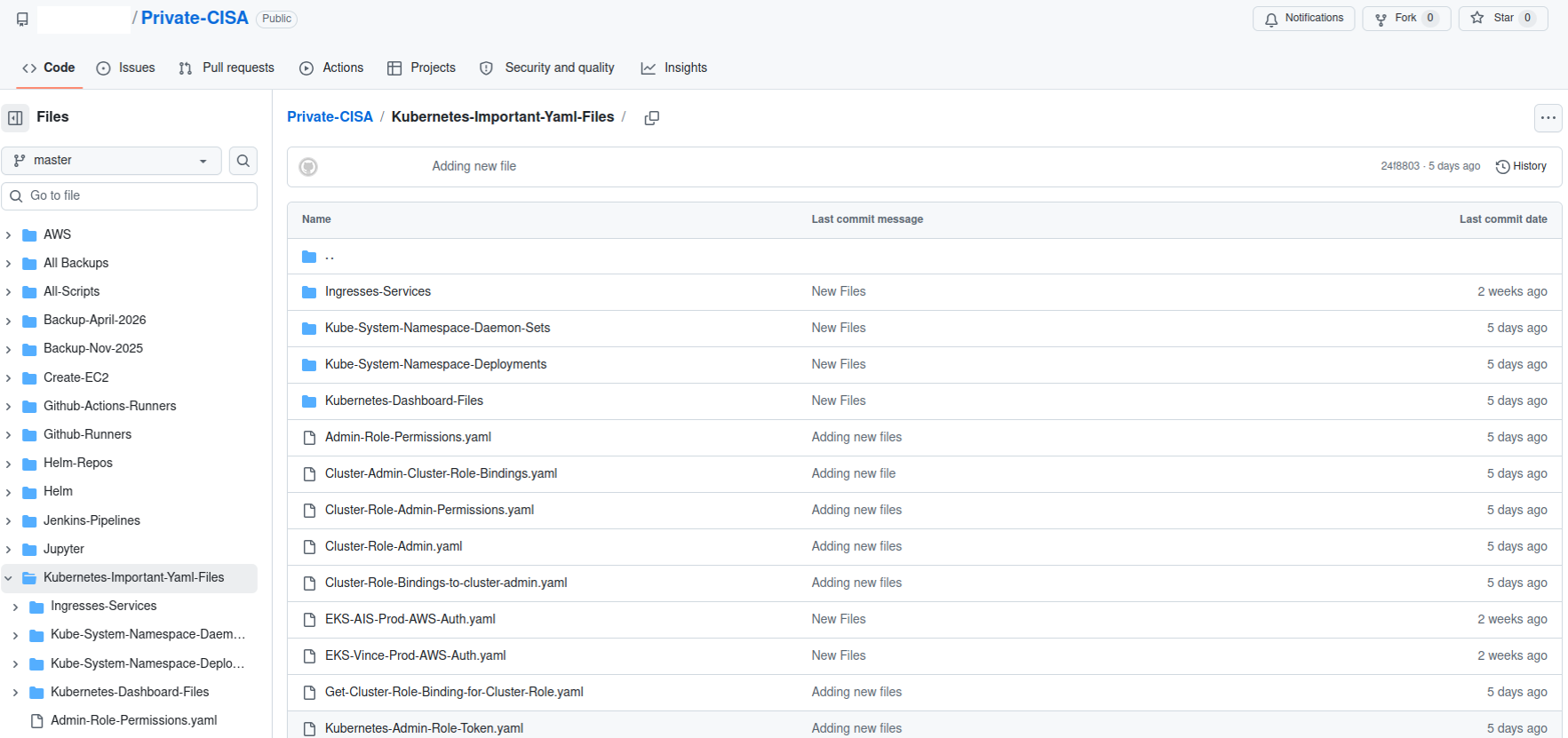
Until this past weekend, a contractor for the Cybersecurity & Infrastructure Security Agency (CISA) maintained a public GitHub repository that exposed credentials to several highly privileged AWS GovCloud accounts and a large number of internal CISA systems. Security experts said the public archive included files detailing how CISA builds, tests and deploys software internally, and that it represents one of the most egregious government data leaks in recent history.

On May 15, KrebsOnSecurity heard from Guillaume Valadon, a researcher with the security firm GitGuardian. Valadon’s company constantly scans public code repositories at GitHub and elsewhere for exposed secrets, automatically alerting the offending accounts of any apparent sensitive data exposures. Valadon said he reached out because the owner in this case wasn’t responding and the information exposed was highly sensitive.

A redacted screenshot of the now-defunct “Private CISA” repository maintained by a CISA contractor.

The GitHub repository that Valadon flagged was named “Private-CISA,” and it harbored a vast number of internal CISA/DHS credentials and files, including cloud keys, tokens, plaintext passwords, logs and other sensitive CISA assets.

Valadon said the exposed CISA credentials represent a textbook example of poor security hygiene, noting that the commit logs in the offending GitHub account show that the CISA administrator disabled the default setting in GitHub that blocks users from publishing SSH keys or other secrets in public code repositories.

“Passwords stored in plain text in a csv, backups in git, explicit commands to disable GitHub secrets detection feature,” Valadon wrote in an email. “I honestly believed that it was all fake before analyzing the content deeper. This is indeed the worst leak that I’ve witnessed in my career. It is obviously an individual’s mistake, but I believe that it might reveal internal practices.”

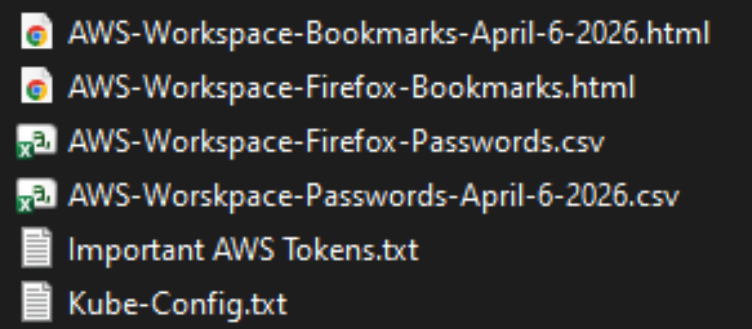
One of the exposed files, titled “importantAWStokens,” included the administrative credentials to three Amazon AWS GovCloud servers. Another file exposed in their public GitHub repository — “AWS-Workspace-Firefox-Passwords.csv” — listed plaintext usernames and passwords for dozens of internal CISA systems. According to Caturegli, those systems included one called “LZ-DSO,” which appears short for “Landing Zone DevSecOps,” the agency’s secure code development environment.

Philippe Caturegli, founder of the security consultancy Seralys, said he tested the AWS keys only to see whether they were still valid and to determine which internal systems the exposed accounts could access. Caturegli said the GitHub account that exposed the CISA secrets exhibits a pattern consistent with an individual operator using the repository as a working scratchpad or synchronization mechanism rather than a curated project repository.

“The use of both a CISA-associated email address and a personal email address suggests the repository may have been used across differently configured environments,” Caturegli observed. “The available Git metadata alone does not prove which endpoint or device was used.”

The Private CISA GitHub repo exposed dozens of plaintext credentials for important CISA GovCloud resources.

Caturegli said he validated that the exposed credentials could authenticate to three AWS GovCloud accounts at a high privilege level. He said the archive also includes plain text credentials to CISA’s internal “artifactory” — essentially a repository of all the code packages they are using to build software — and that this would represent a juicy target for malicious attackers looking for ways to maintain a persistent foothold in CISA systems.

“That would be a prime place to move laterally,” he said. “Backdoor in some software packages, and every time they build something new they deploy your backdoor left and right.”

In response to questions, a spokesperson for CISA said the agency is aware of the reported exposure and is continuing to investigate the situation.

“Currently, there is no indication that any sensitive data was compromised as a result of this incident,” the CISA spokesperson wrote. “While we hold our team members to the highest standards of integrity and operational awareness, we are working to ensure additional safeguards are implemented to prevent future occurrences.”

A review of the GitHub account and its exposed passwords show the “Private CISA” repository was maintained by an employee of Nightwing, a government contractor based in Dulles, Va. Nightwing declined to comment, directing inquiries to CISA.

CISA has not responded to questions about the potential duration of the data exposure, but Caturegli said the Private CISA repository was created on November 13, 2025. The contractor’s GitHub account was created back in September 2018.

The GitHub account that included the Private CISA repo was taken offline shortly after both KrebsOnSecurity and Seralys notified CISA about the exposure. But Caturegli said the exposed AWS keys inexplicably continued to remain valid for another 48 hours.

CISA is currently operating with only a fraction of its normal budget and staffing levels. The agency has lost nearly a third of its workforce since the beginning of the second Trump administration, which forced a series of early retirements, buyouts, and resignations across the agency’s various divisions.

The now-defunct Private CISA repo showed the contractor also used easily-guessed passwords for a number of internal resources; for example, many of the credentials used a password consisting of each platform’s name followed by the current year. Caturegli said such practices would constitute a serious security threat for any organization even if those credentials were never exposed externally, noting that threat actors often use key credentials exposed on the internal network to expand their reach after establishing initial access to a targeted system.

“What I suspect happened is [the CISA contractor] was using this GitHub to synchronize files between a work laptop and a home computer, because he has regularly committed to this repo since November 2025,” Caturegli said. “This would be an embarrassing leak for any company, but it’s even more so in this case because it’s CISA.”

❌