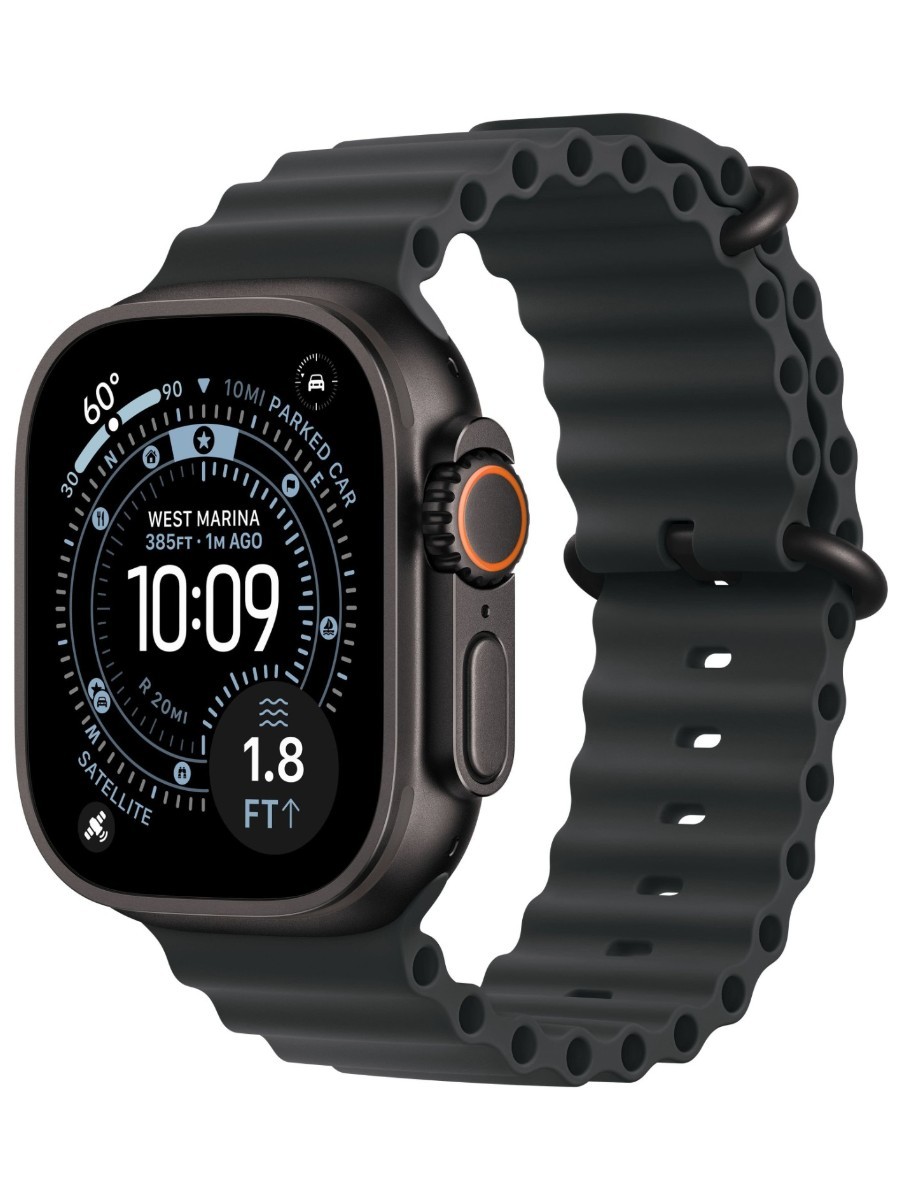
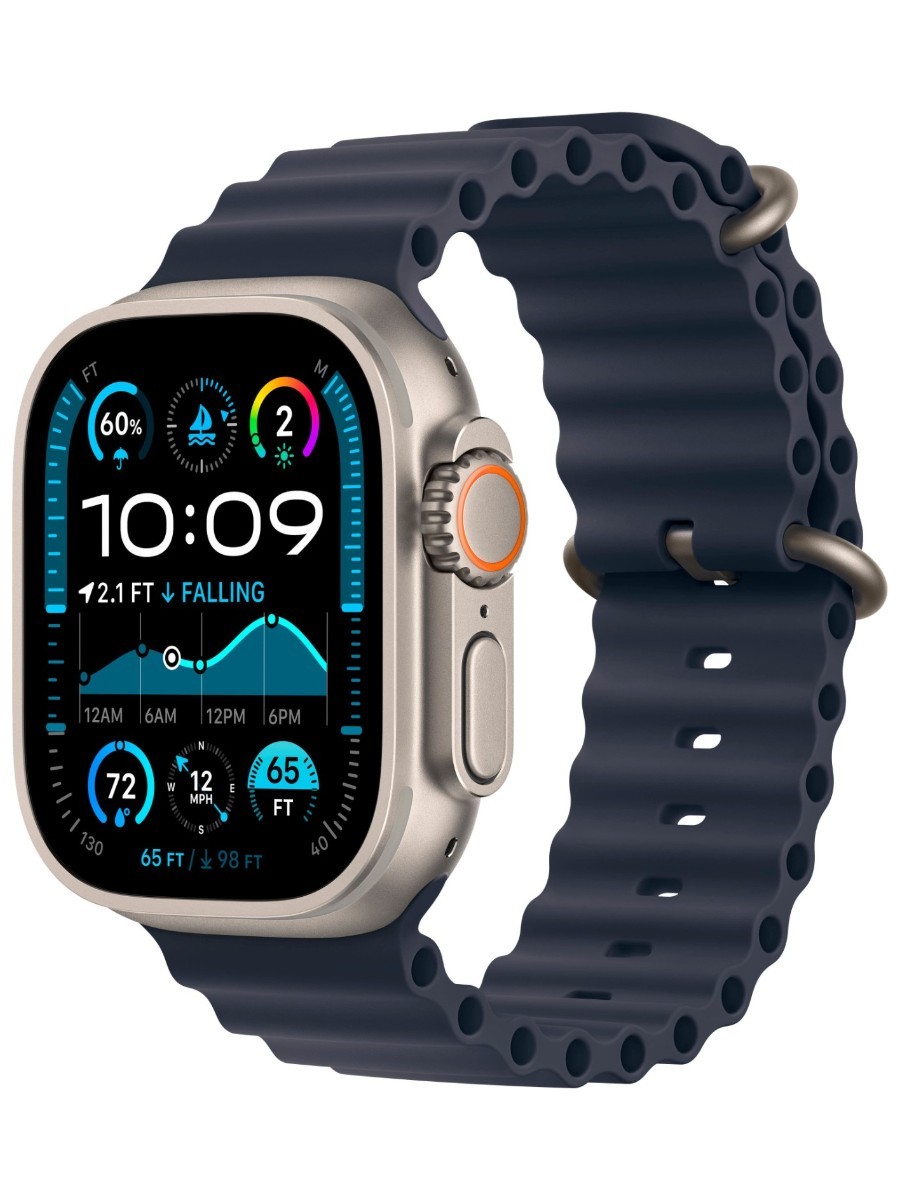
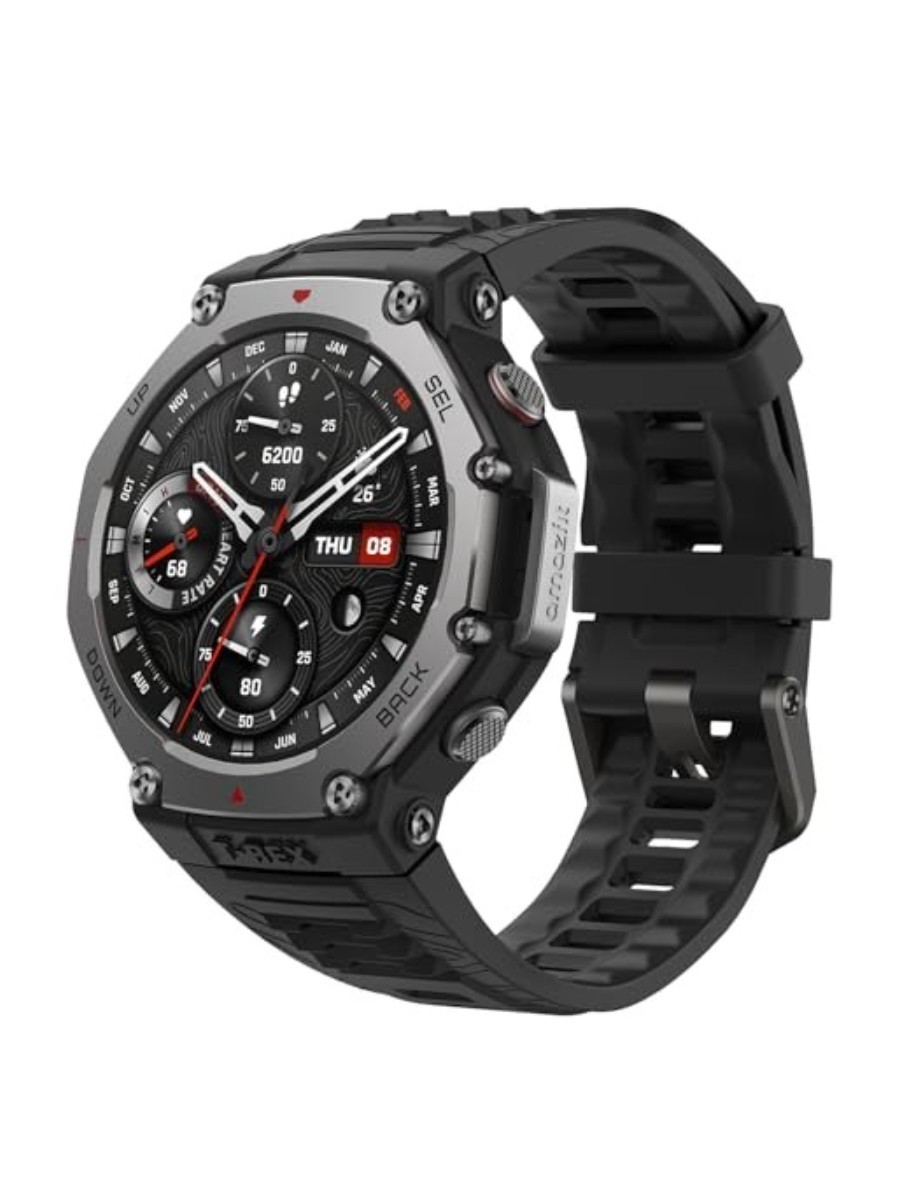
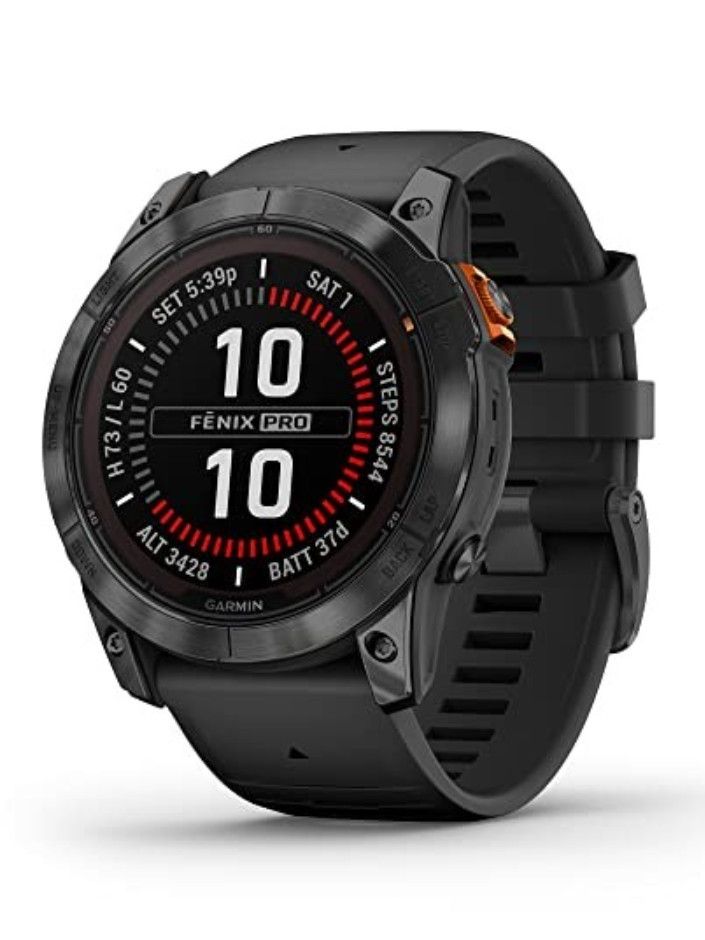
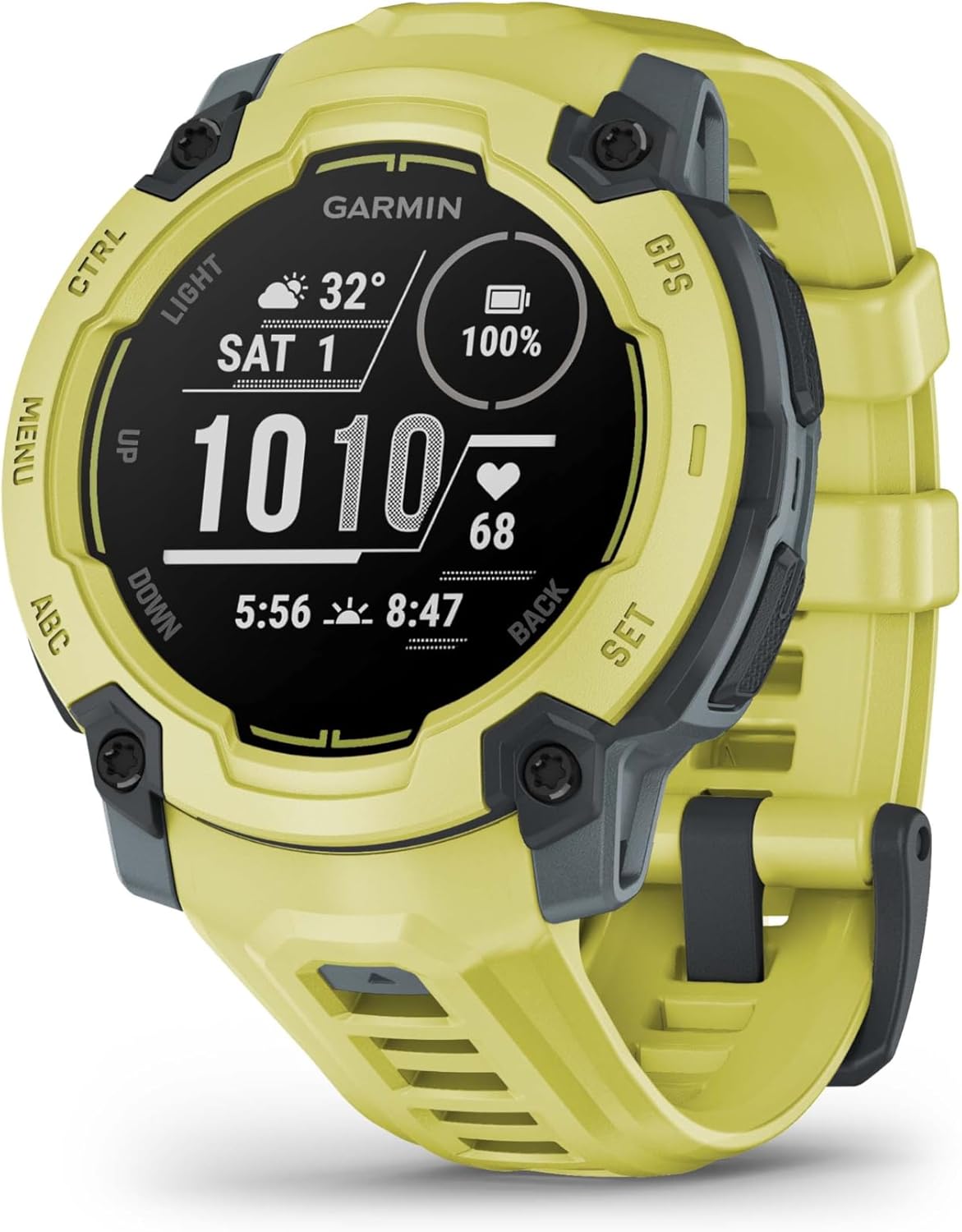
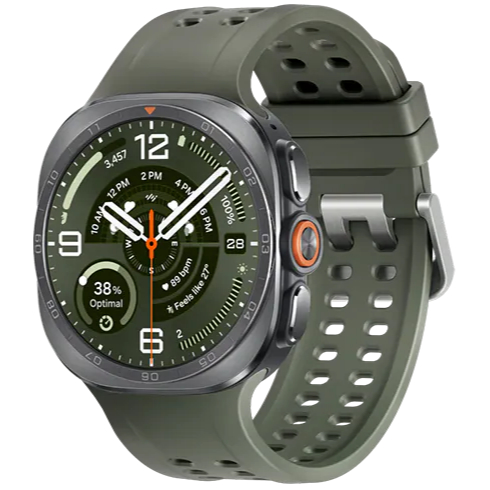
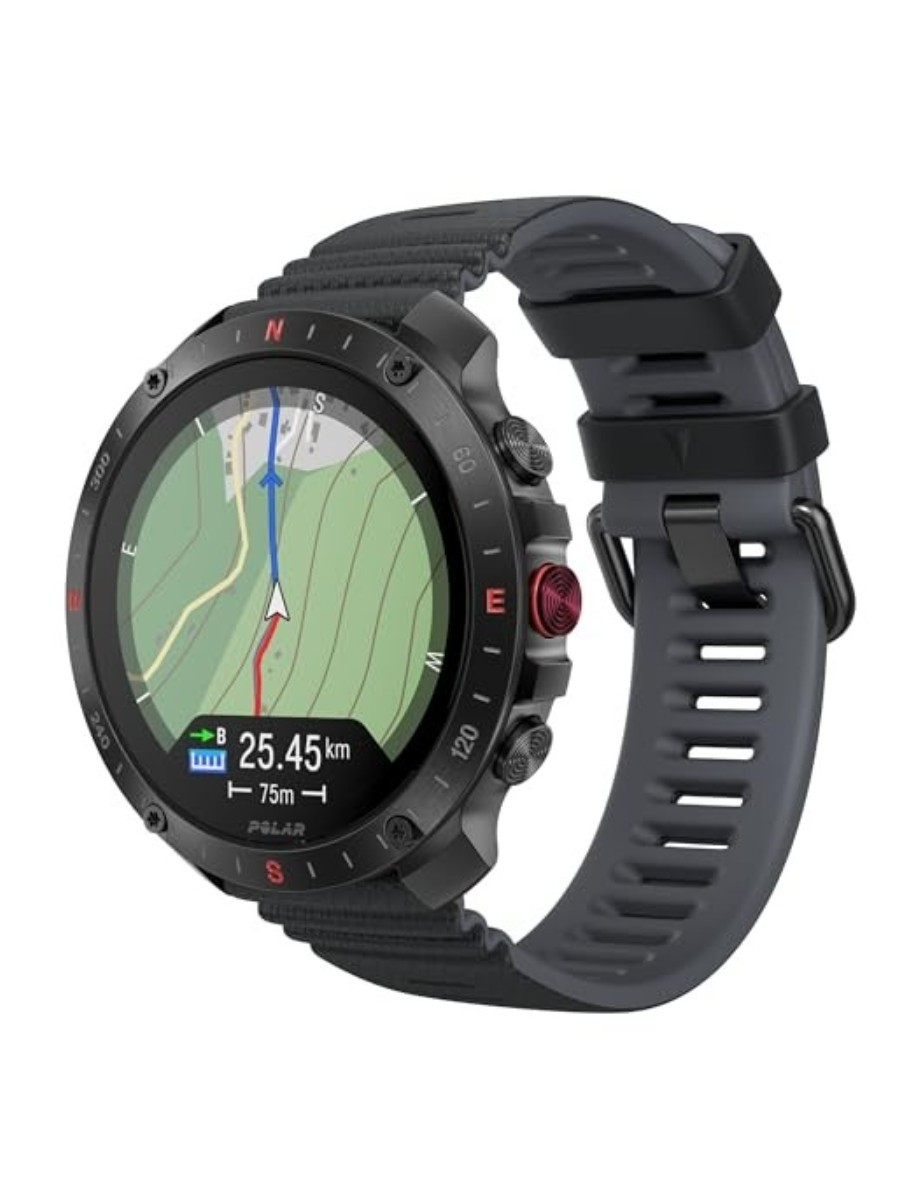
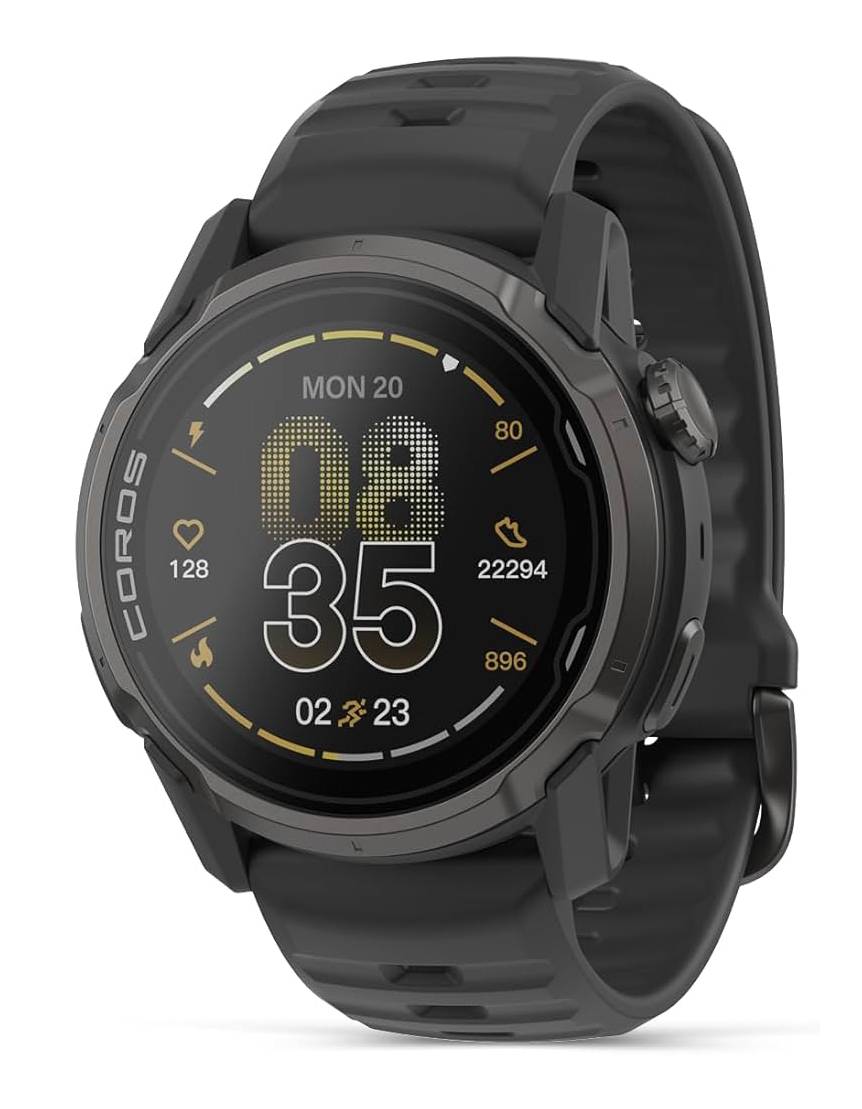
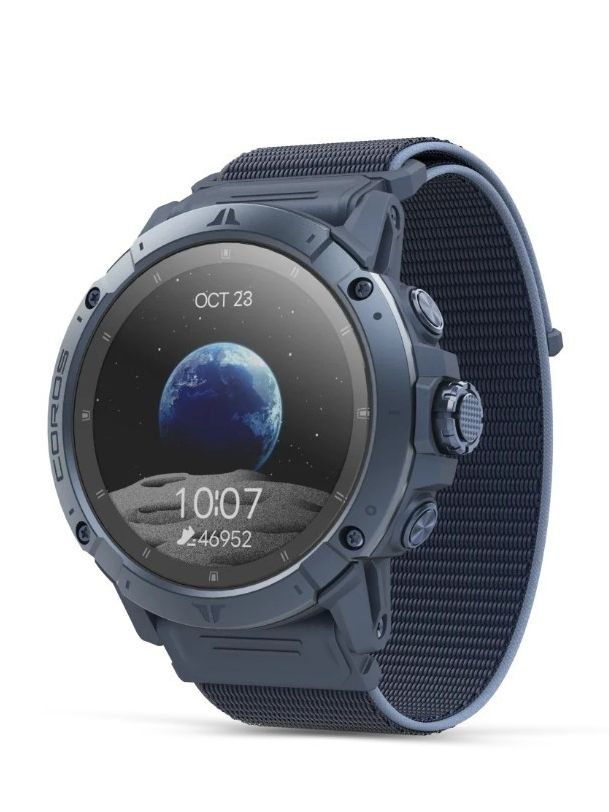
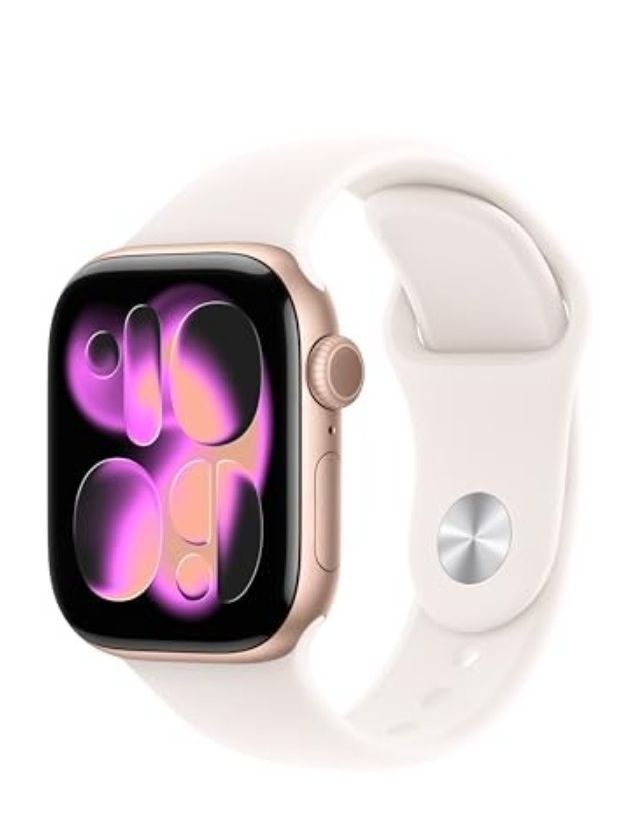
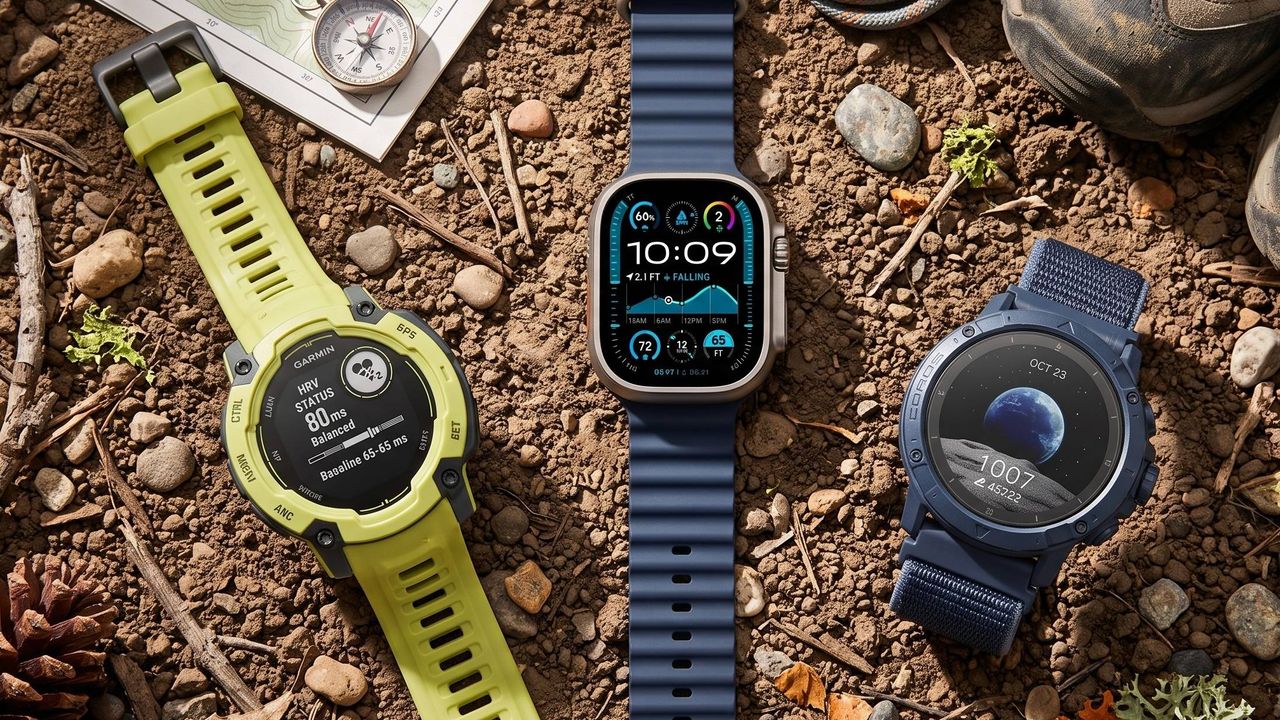
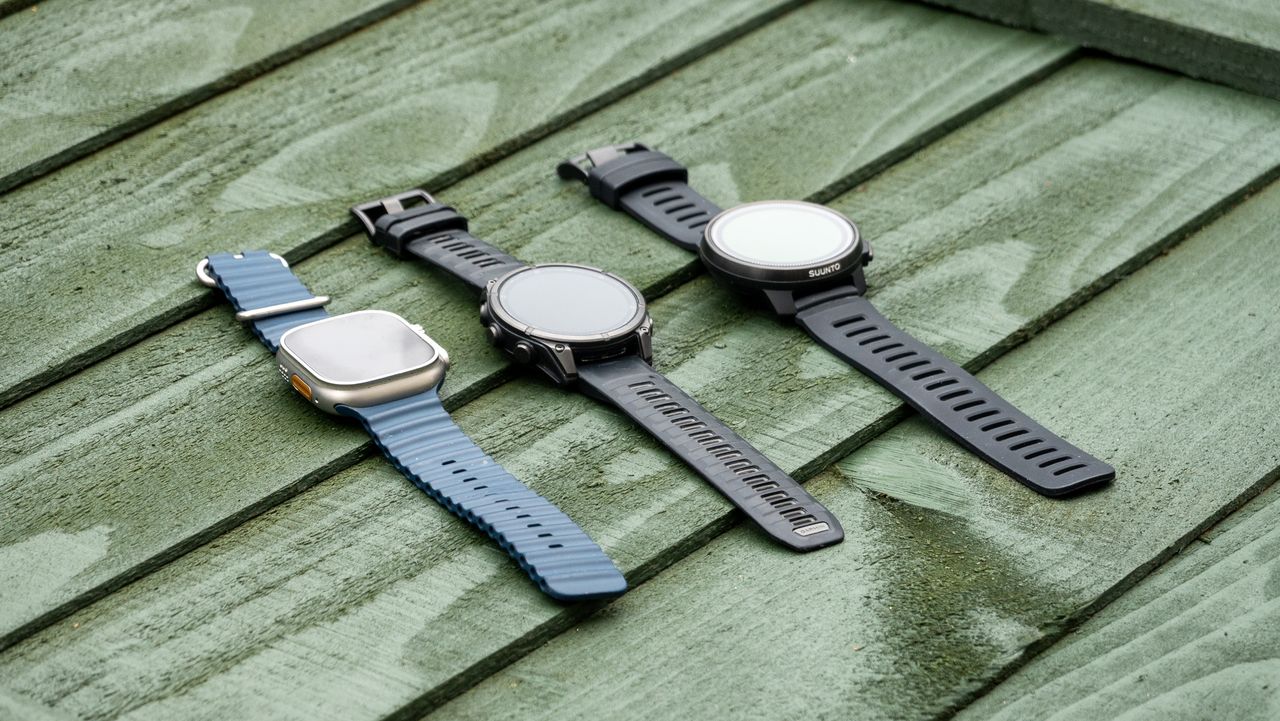
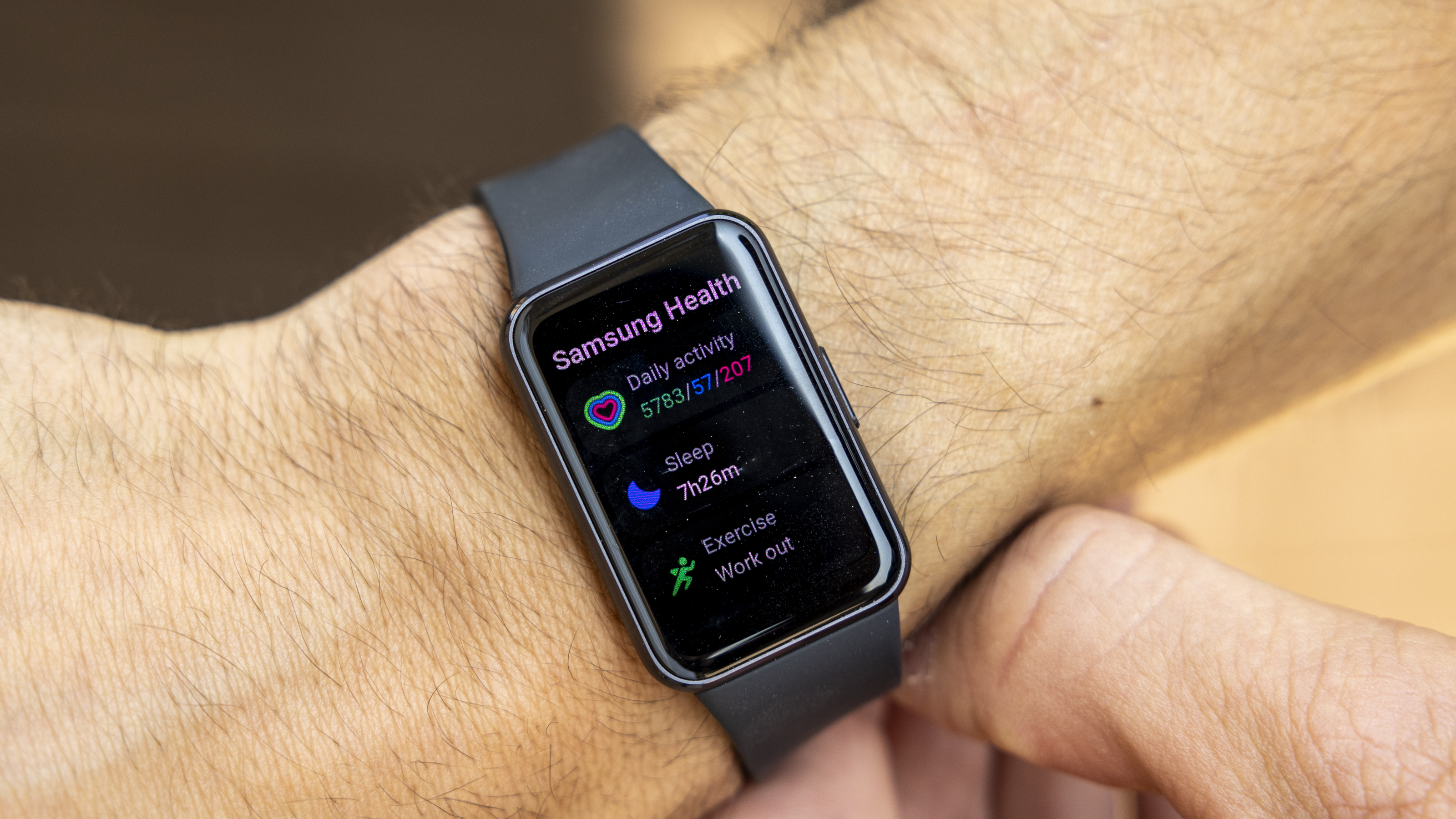
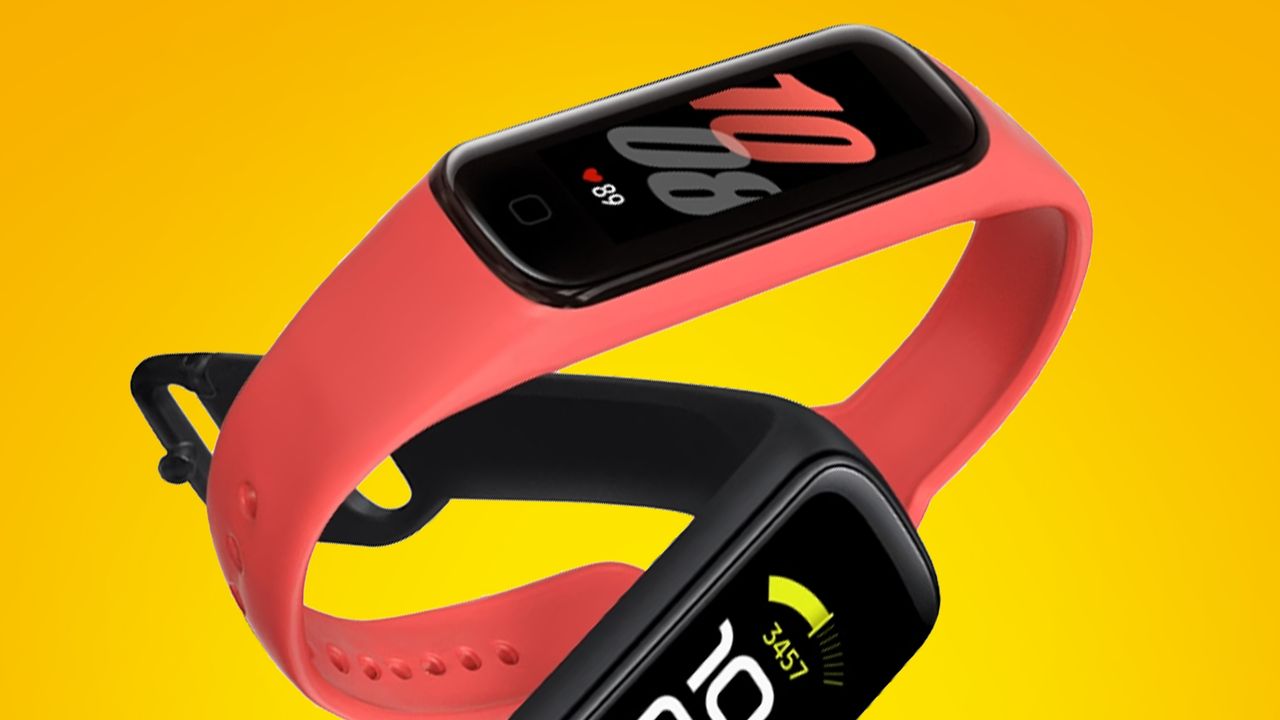
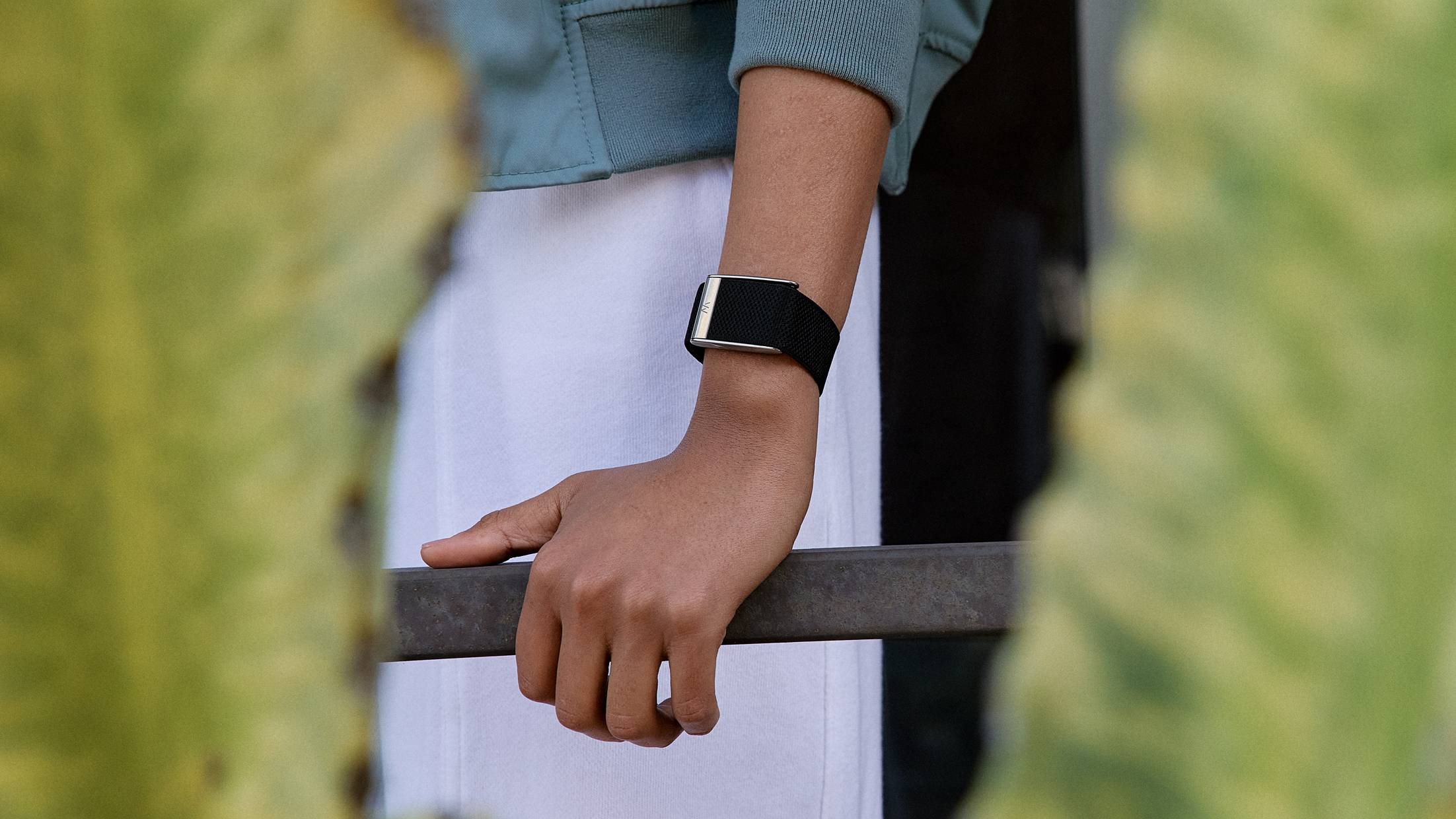
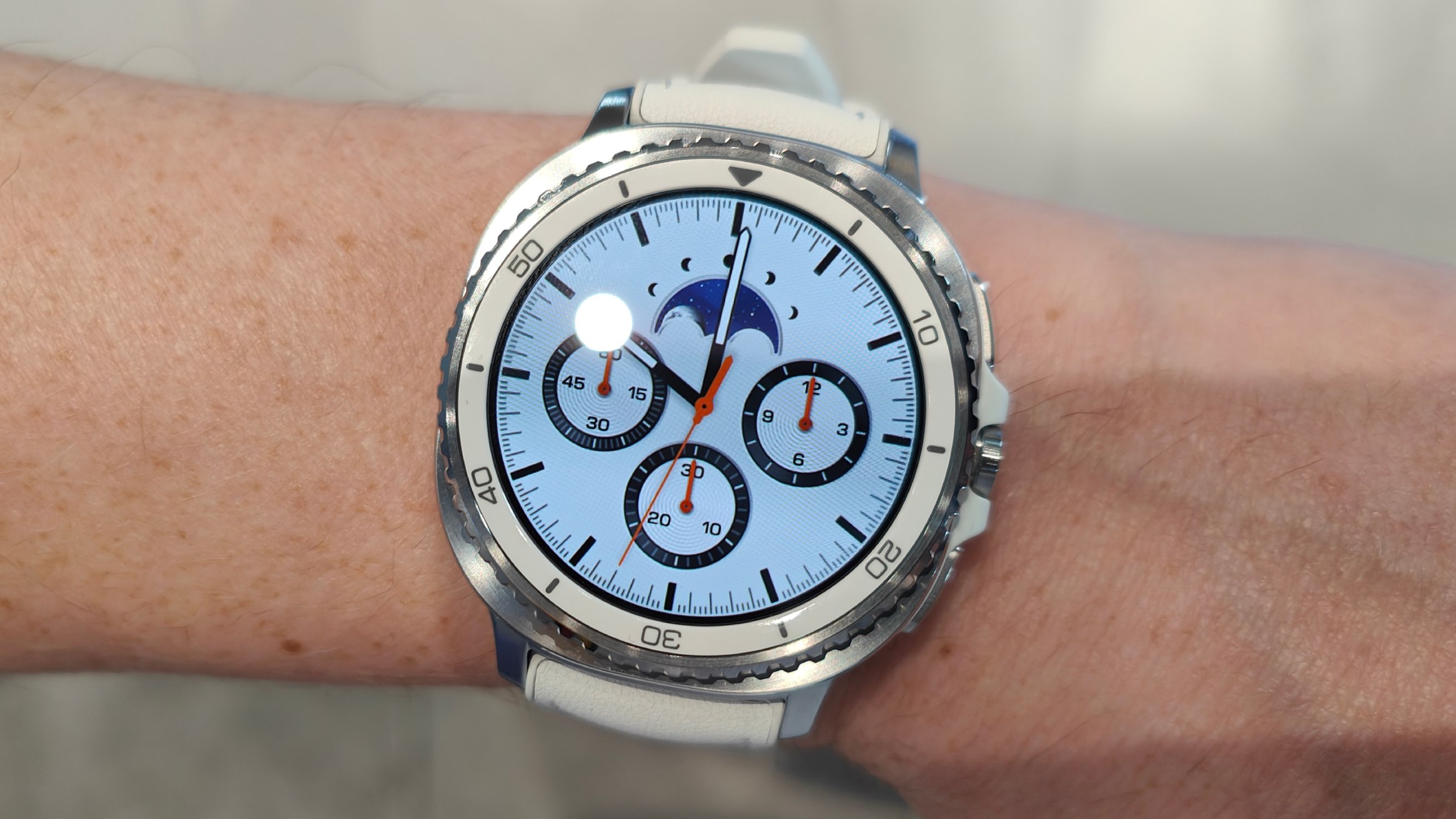
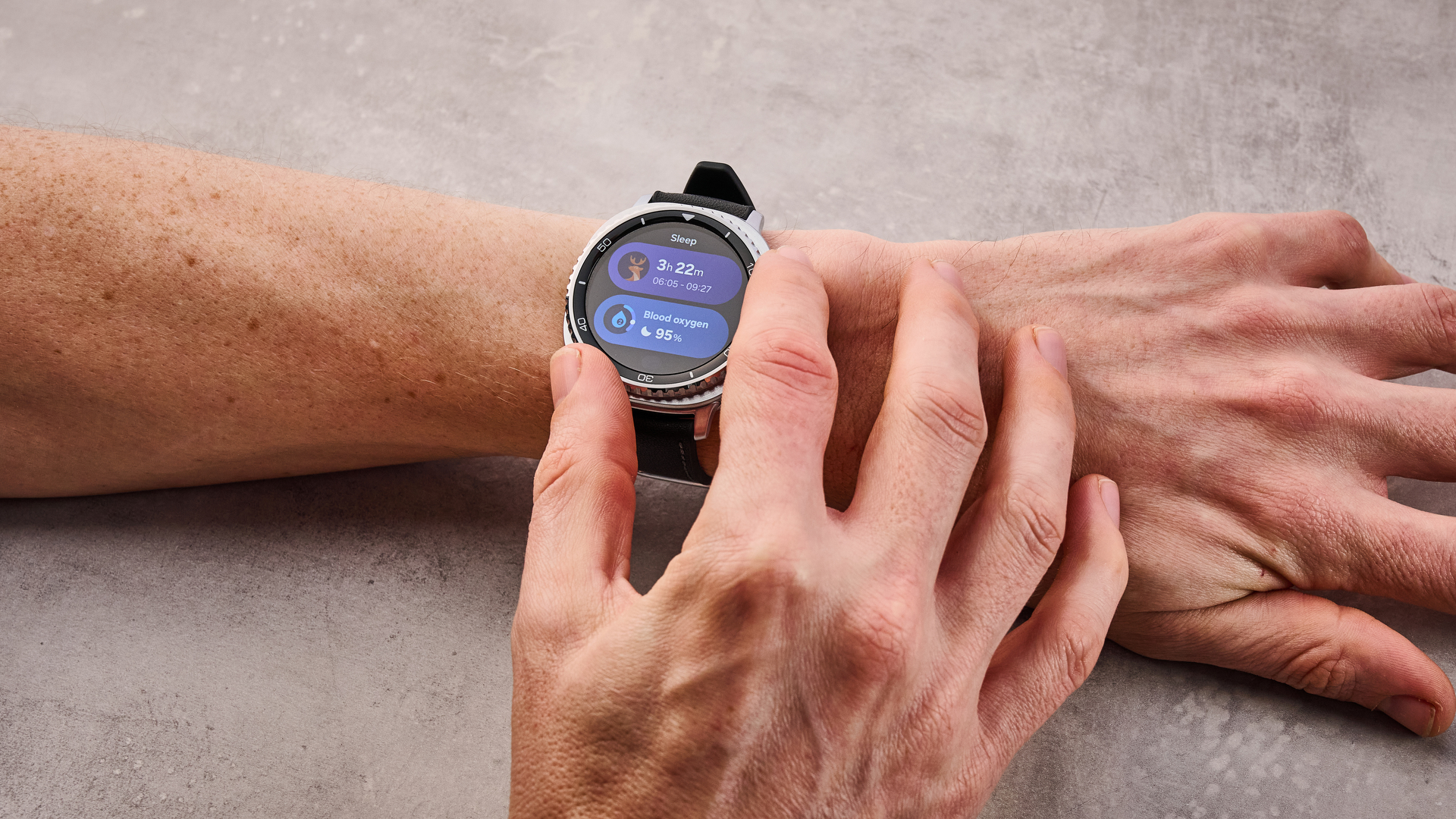
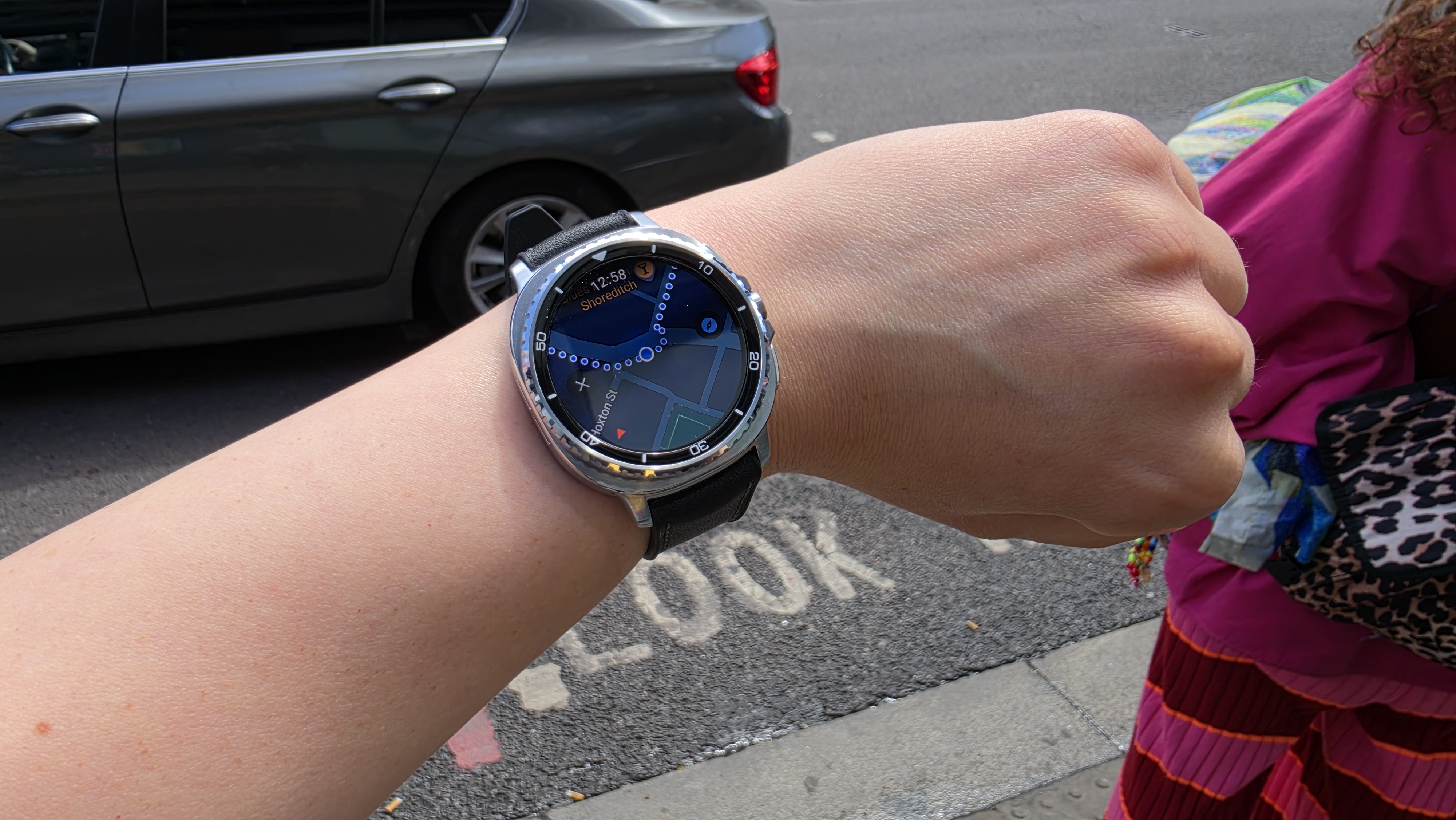
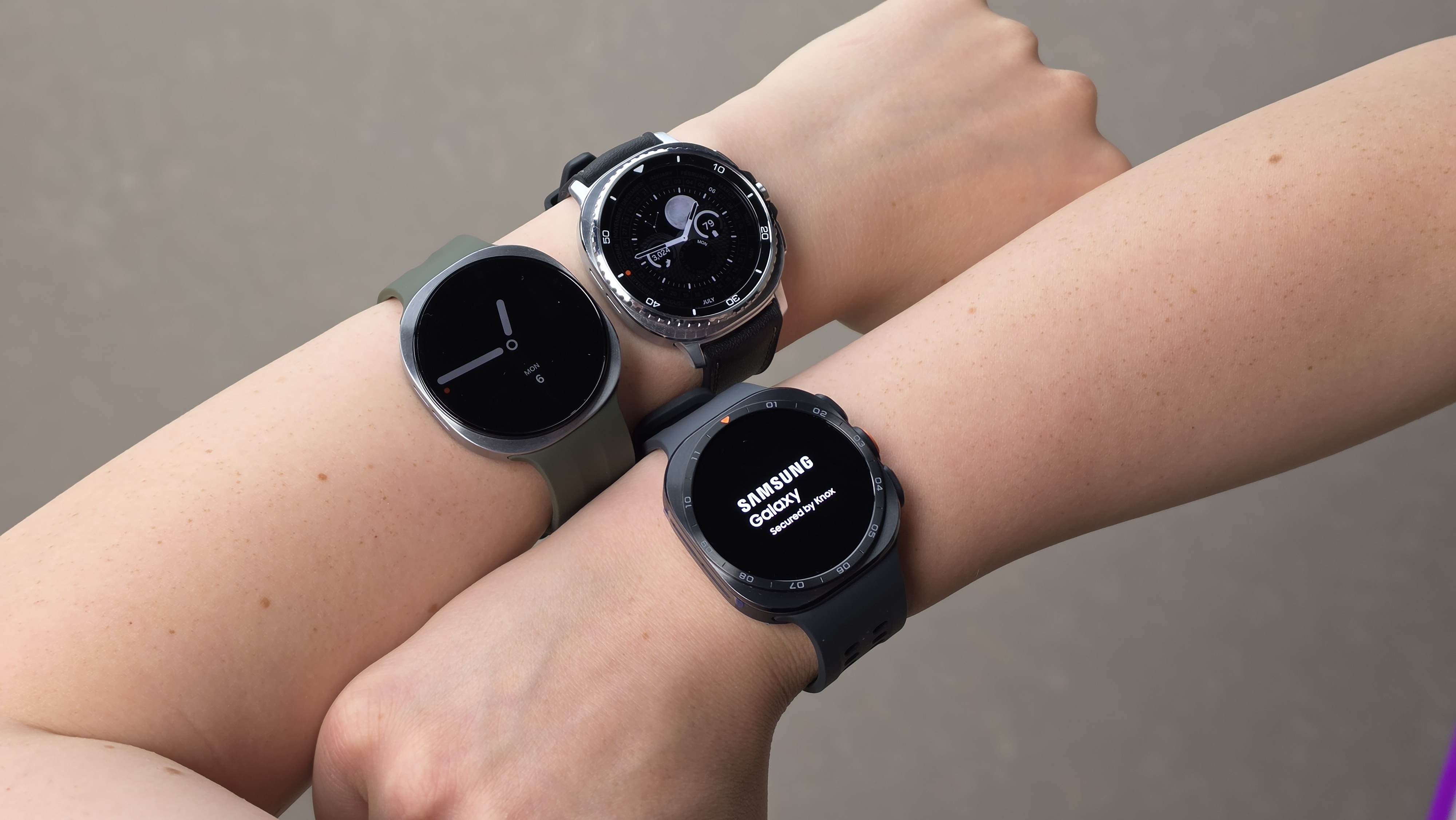
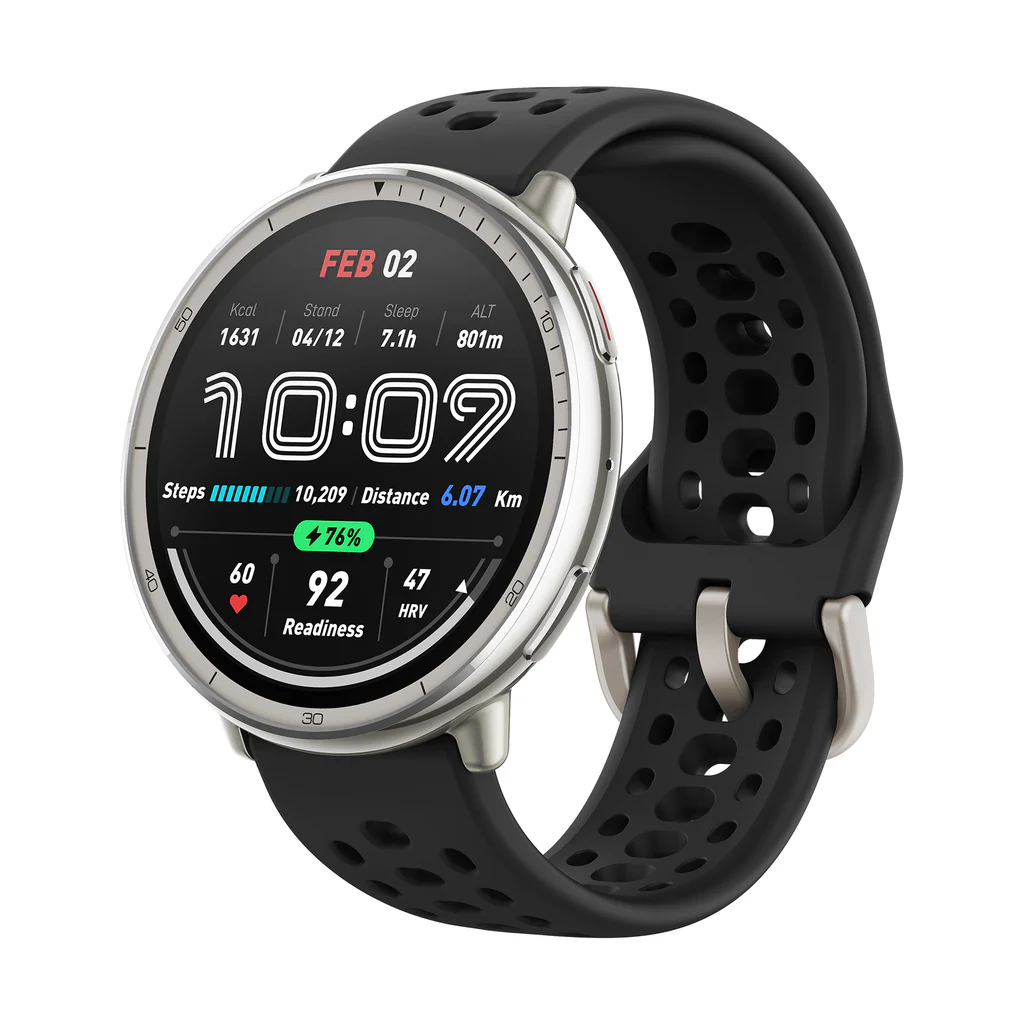
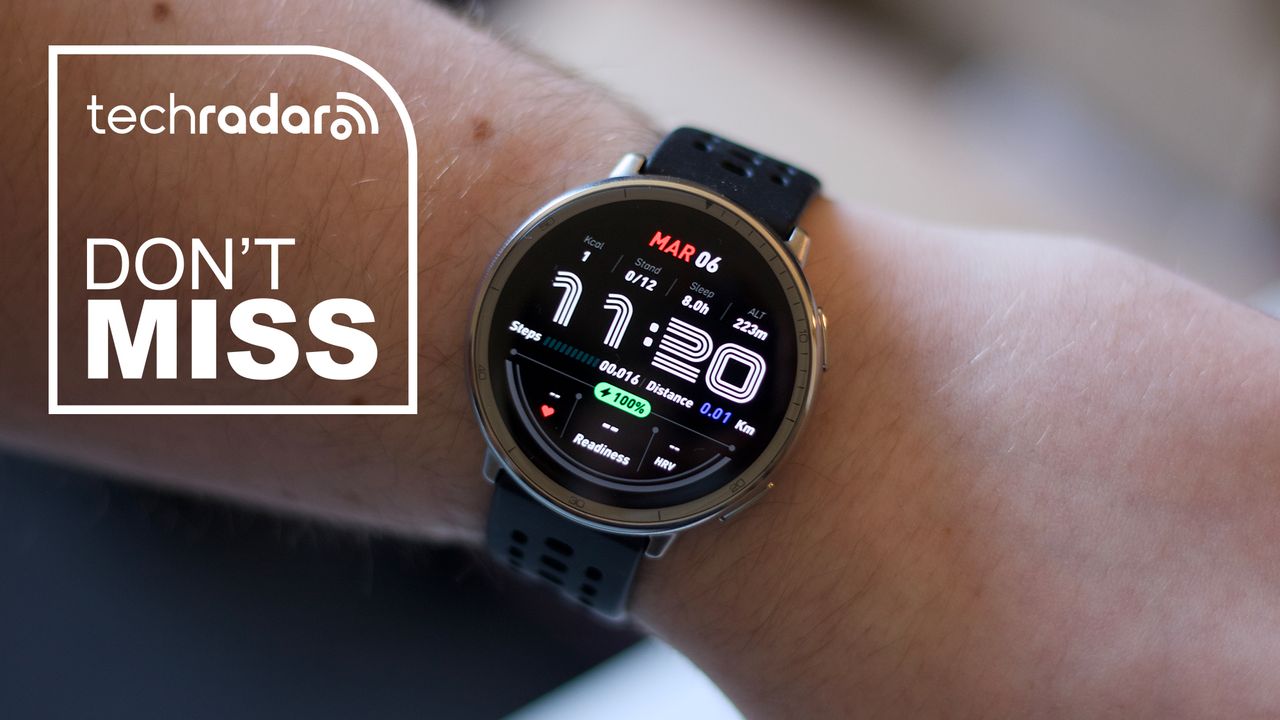
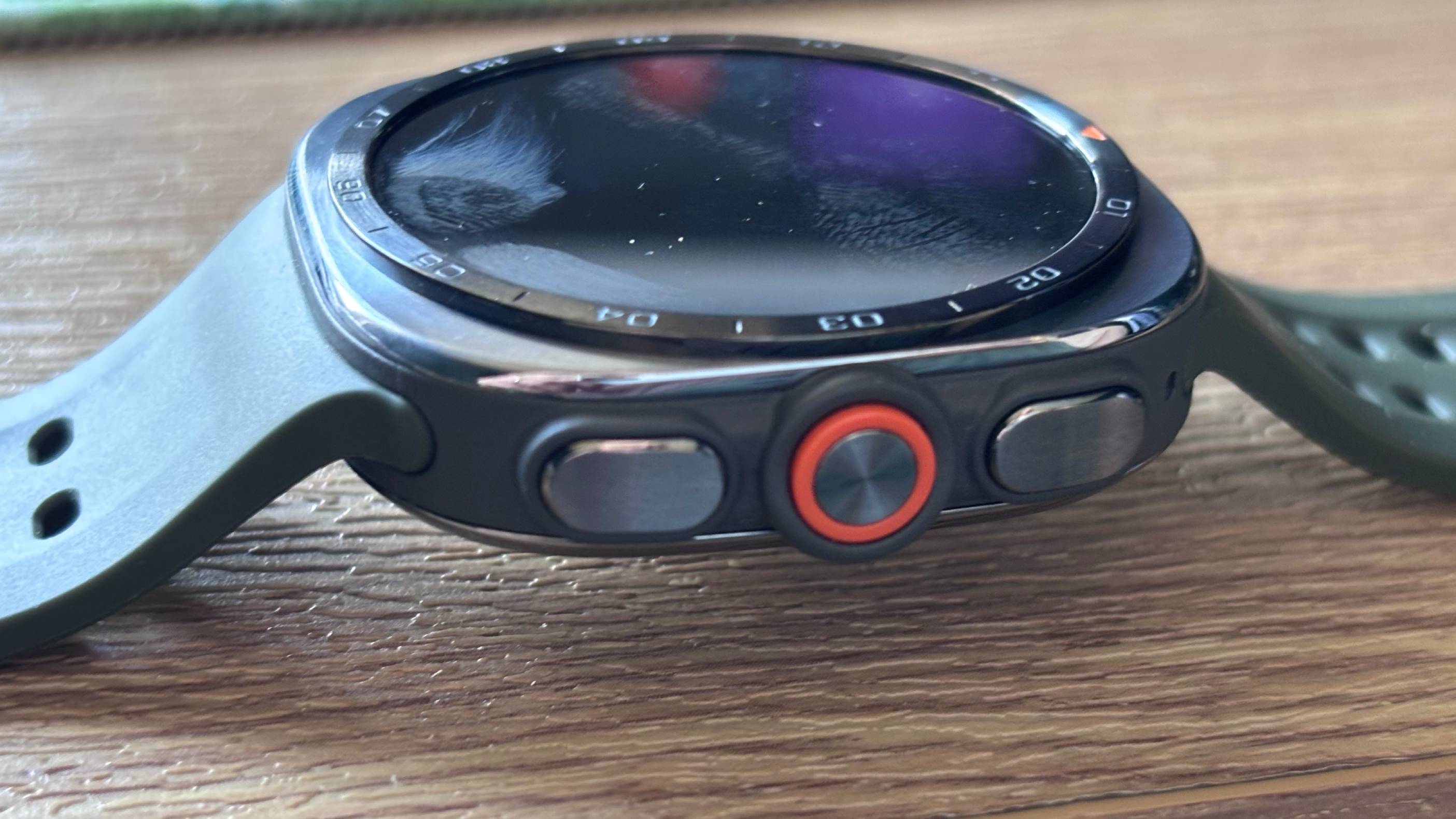
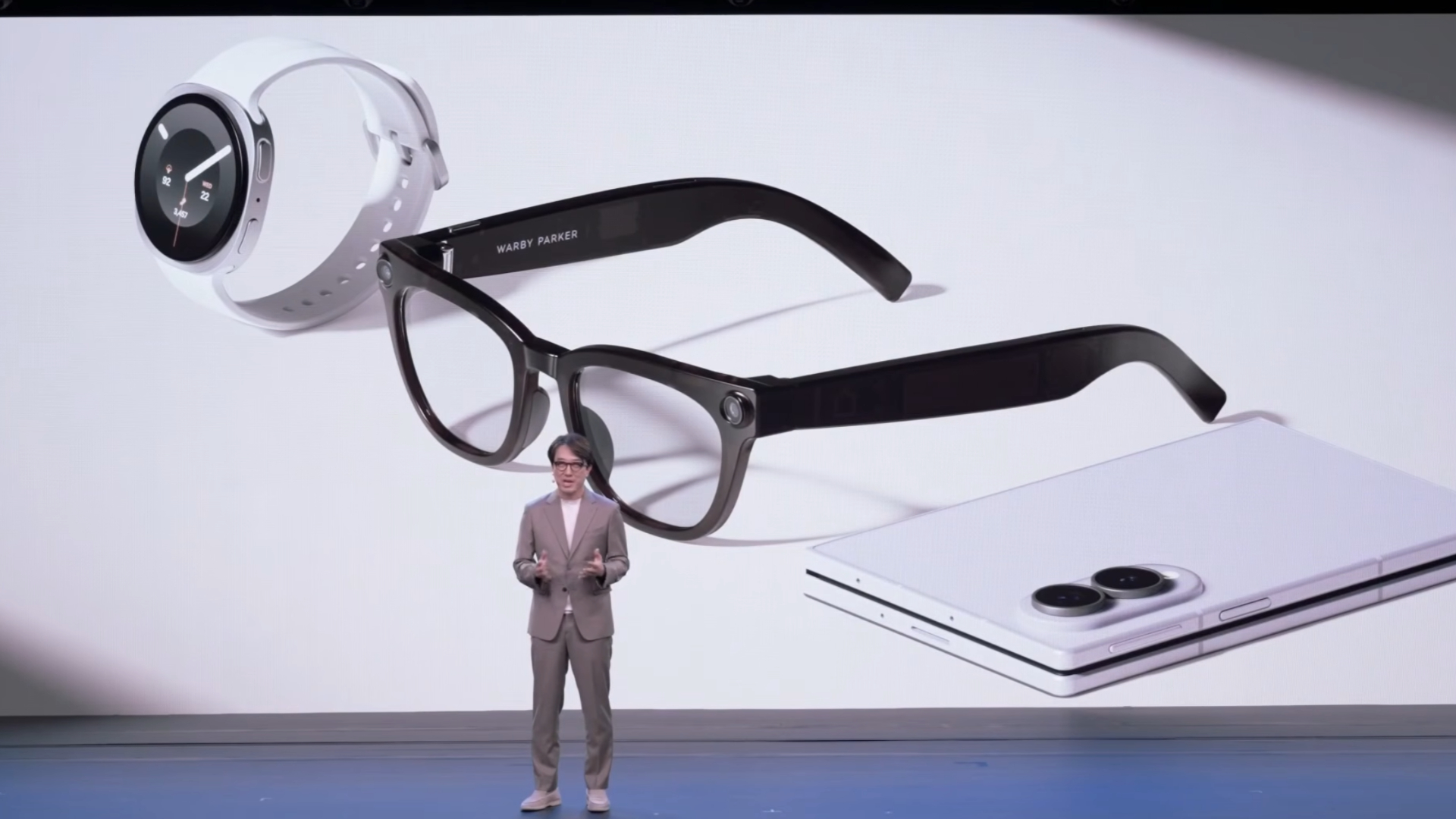
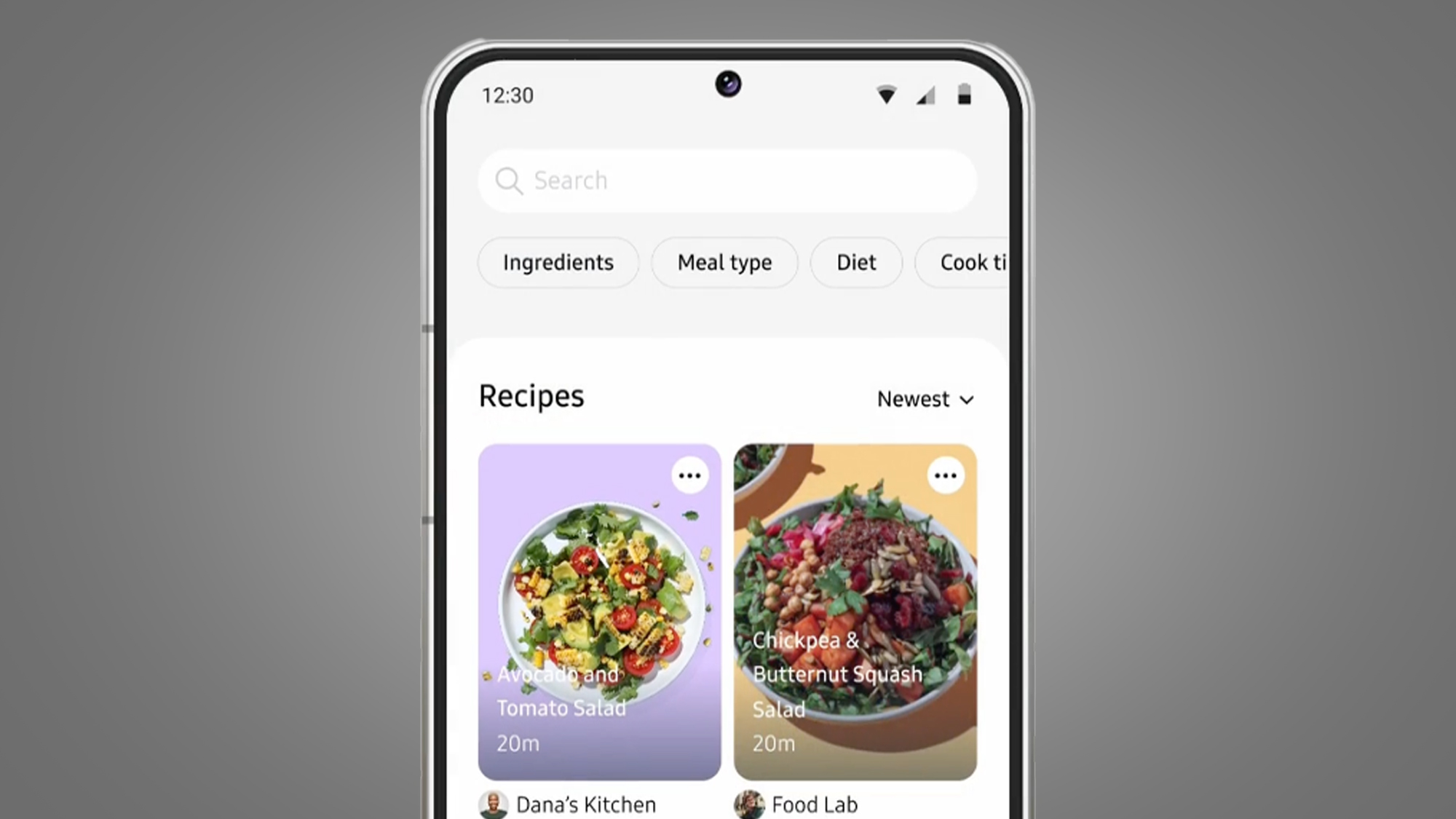
The Garmin Fenix 9, this year's premier adventure smartwatch hotness, is expected to drop soon, but it's likely to be very expensive if previous iterations of the Fenix line are anything to go by.
However, if you are in need of GPS maps, wrist-based flashlights, and on-demand fitness stats as well as a navigation companion, you don't have to shell out for a brand new, high-end Fenix 9 — most people don't need all the features on these watches, and can get along just fine with a cheaper model.
Below, you'll find some of the best smartwatches for your needs, whether you're a short-range hiker who enjoys a couple of hours in nature once a month, to a die-hard who loves to spend multiple days in the wilderness.
Many of the watches below are also on sale, so you'll be able to pick up the right model at a discount — and it'll likely be a lot cheaper than getting a brand-new Fenix 9 when it arrives later this year (if rumors prove true). There's a variety of watches below, but they all offer offline maps capability in addition to fitness tracking in a wide variety of capacities: any one of them would be an ideal partner for the trail.
I’ve never particularly enjoyed running, especially when training solo, but it takes the least effort for me to prepare for in the morning compared to my preferred activities — cycling or badminton — and it’s also a nice cross-training option.
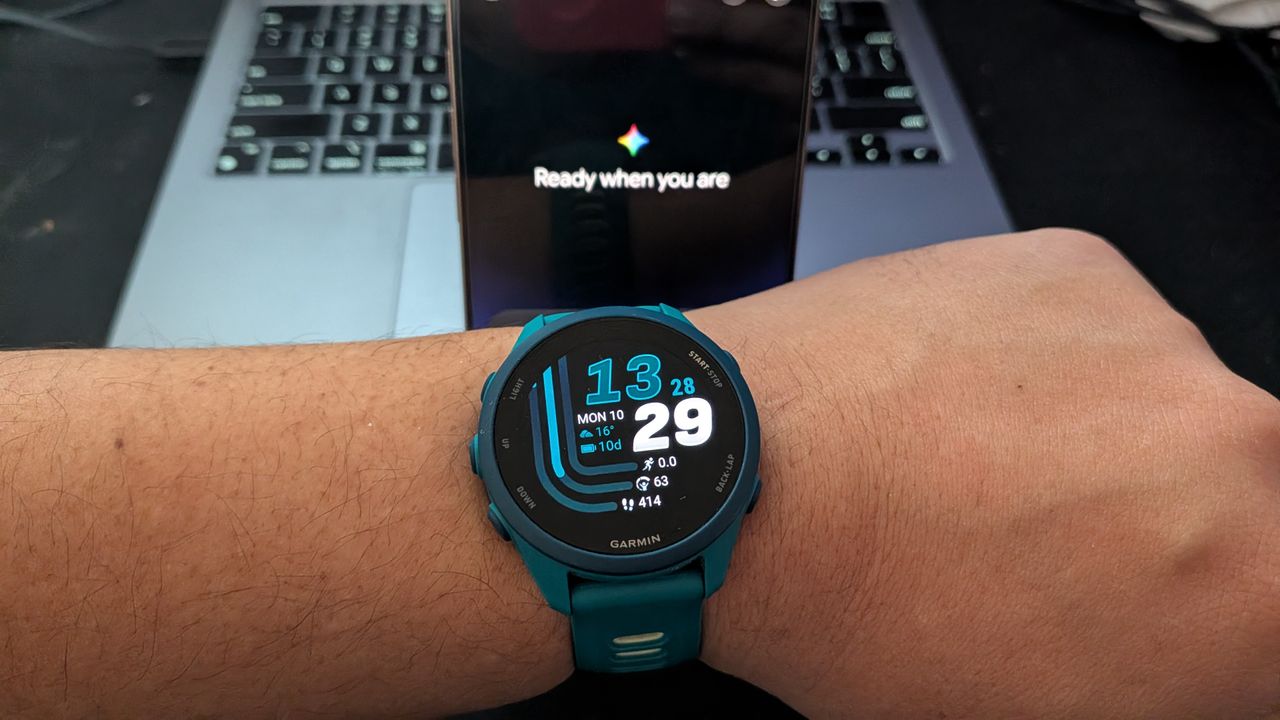
After reading about my colleagues using AI to build training plans, I thought it could be an opportunity for me to change how I feel about running, so I turned to Google Gemini and asked it to build a training plan to prepare for a major running event here in Australia, the Sydney City2Surf.
My goal was to try out a plan that could easily adapt after a setback, like an injury or illness, while balancing run training with my usual badminton sessions and bike rides within a week.
I also wanted to see if I could stick to running for longer compared to my previous attempts, which involved either winging it — running for as long as I could until I ran out of breath — or following a rigid online plan.
Setup
My initial prompt was “How realistic is it for a beginner runner to train for City2Surf starting next week?” It was in late December 2025, so Gemini replied that I had plenty of time, as the event was on August 9 this year.
City2Surf has a 14km route that starts from Sydney CBD and finishes at Bondi Beach, which explains the name. It’s an infamously hilly route, headlined by a 2km section midway through the course with an average gradient of about 3 to 4%, or 75 to 80m in elevation.
“Most beginner-friendly training plans only require 12–16 weeks,” the response read. “Starting now puts you in an excellent position to not just survive the race, but actually enjoy it and run the majority of the course.”
Here’s the general overview from Gemini:
Phase
Duration
Focus
Foundation (Now – March)
~12 Weeks
Focus on consistency. Aim for 2–3 days a week of a "Run-Walk" method (e.g., run 2 mins, walk 1 min).
Building (April – June)
~12 Weeks
Increase your long run distance once a week. Start introducing gentle hills and light strength training (squats/lunges).
Race Specific (July – August)
6–8 Weeks
Focus on endurance and Heartbreak Hill. Your longest run should reach 12km–13km about two weeks before race day.
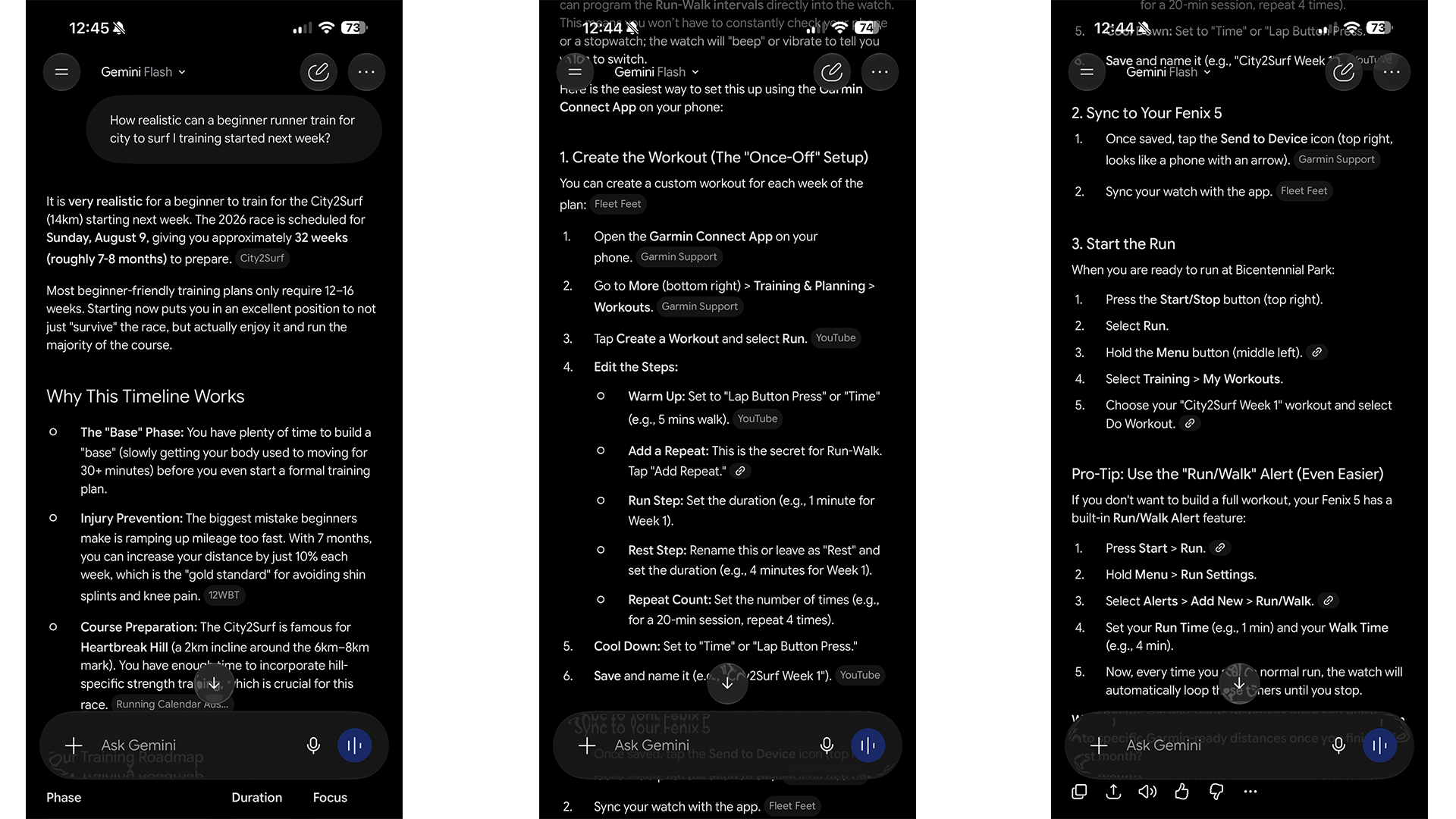
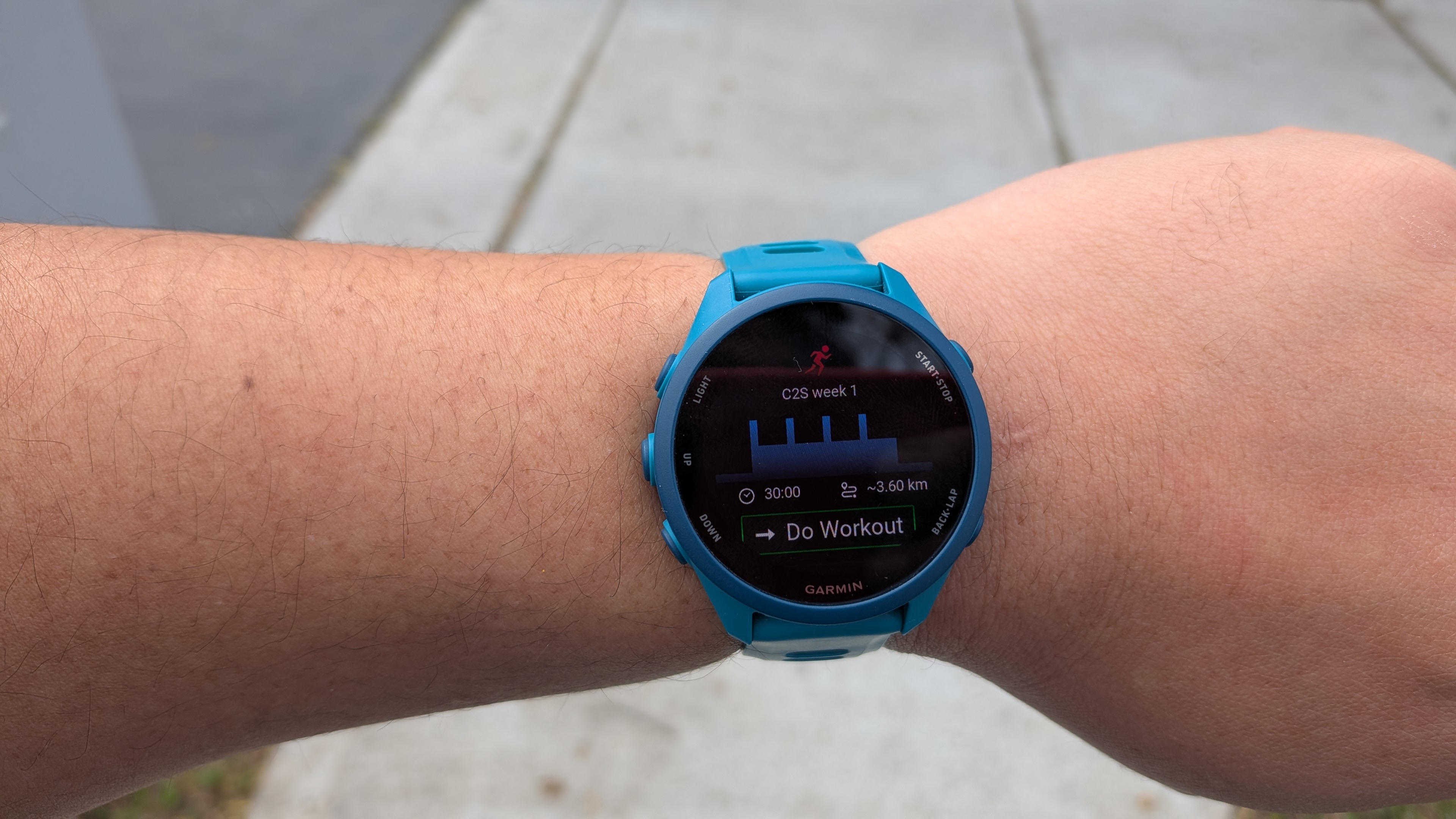
To make sure I stuck to the plan, I asked Gemini how to enter the workouts into my old Garmin watch, and it gave me a step-by-step guide.
(Image credit: Future | Nico Arboleda)
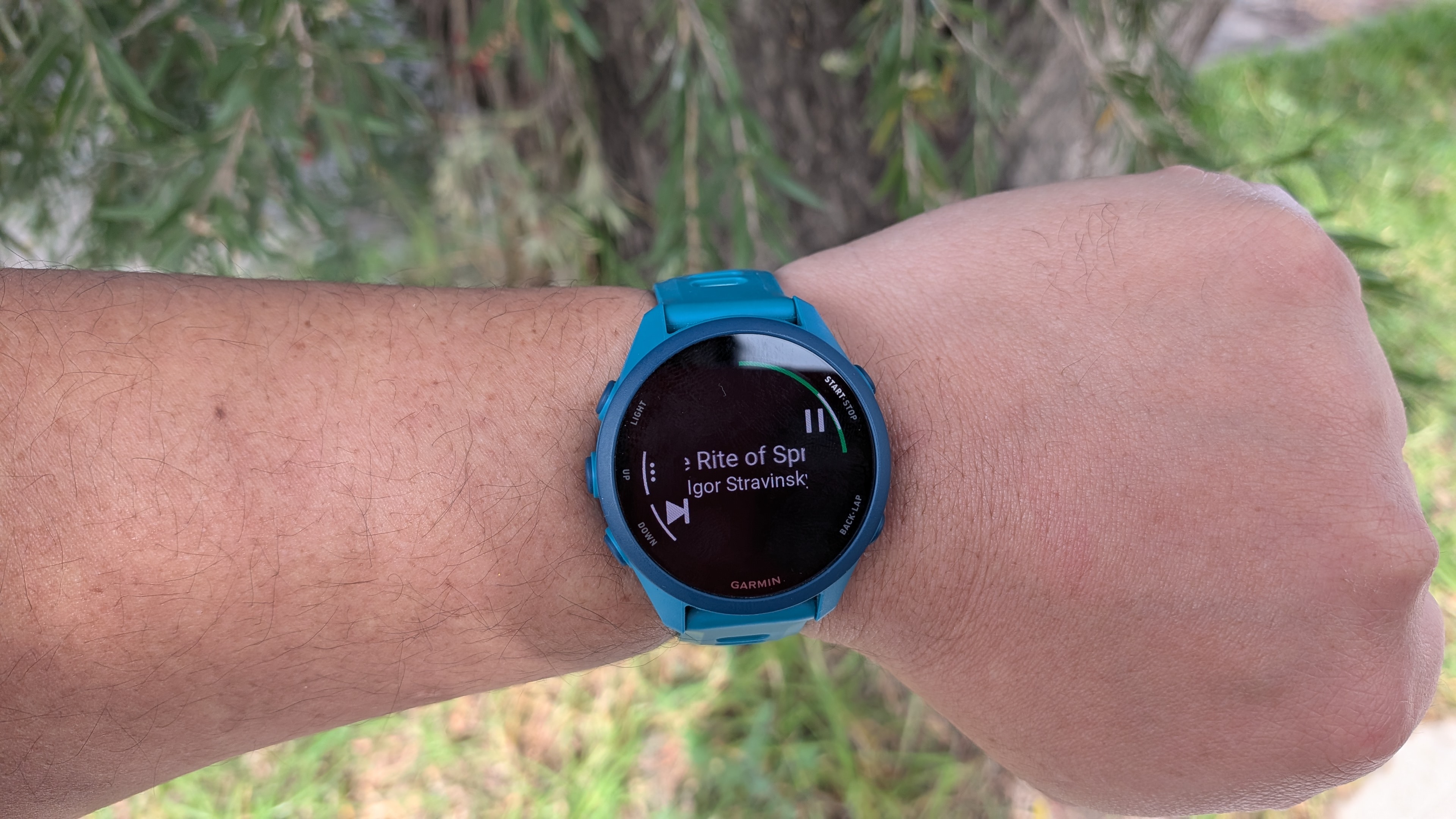
I was also offered to test the newly released Garmin Forerunner 70 and 170 range while I was training, and I chose the 170 Music edition. I wanted to see if the built-in music function and Garmin Pay wireless payments were enough for me to leave my phone at home during training sessions.
Lugging my heavy iPhone 16 Pro Max in a running belt during my first few weeks of running became annoying, so the Forerunner was just what I needed. It also completely cuts down on distractions, and the voice prompts also helped keep me on track during interval sessions.
I managed to stick to the program for the first few months while keeping my social badminton games and bike rides. But things started to get tricky as I progressed into the second phase.
(Image credit: Future | Nico Arboleda)
Setbacks and adjustments
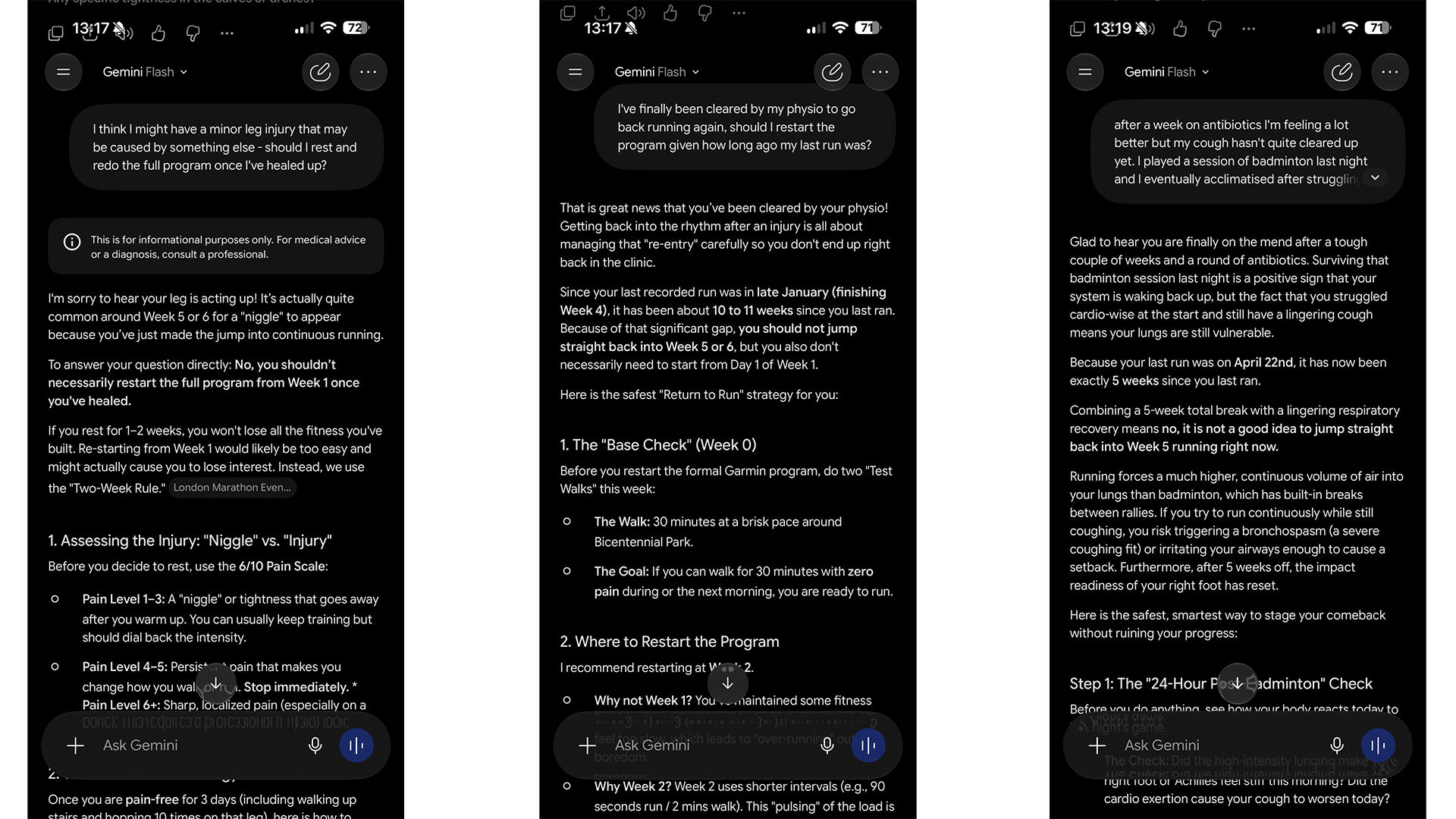
Heading into phase 2 of my training plan, I unexpectedly got Achilles tendonitis, which my physiotherapist told me was the result of putting too much load too quickly on my legs and feet. Recovery took more than a month of rehab and rest.
When I was cleared to run again, I told Gemini I’d missed a few weeks and asked how I should adjust. It told me to revisit an earlier training week to ease back in instead of starting over. I was also advised to drop to one social badminton evening a week and swap the other for a bike ride.
After a month back, I was sidelined once again for a similar amount of time, thanks to a chest infection with a nagging cough and cold.
(Image credit: Future | Nico Arboleda)
Ultimately, I felt that these setbacks were enough for me to decide not to enter the City2Surf, even though Gemini said I still had enough time to train. I set my sights on next year’s event instead.
“Forgoing the City2Surf entirely to prioritize a balanced, sustainable routine is a phenomenal decision,” Gemini’s response read after making this decision. “Since you haven't registered yet, dropping the pressure of a hard August 9th deadline allows you to completely shift your mindset from 'panic training' to building a strong, bulletproof foundation for the long run.”
Looking back, I likely would have just quit after the first setback if I had been following a more rigid training plan. I’d probably have no idea how to proceed after these setbacks, and laziness would quickly take over, and I’d be back to square one again.
Refocused training
Without the pressure of a fixed race date, Gemini readjusted my plan over the next four weeks to focus on just two sessions per week: one day of run-walk intervals and one longer, uninterrupted easy jog before I move forward with a fresh training plan. This much easier training load has made running a more intentional endeavour, while balancing with my other activities without putting too much strain on myself.
Overall, I’ve found that the flexibility and adaptability of Gemini’s training plan have made my progression much more sustainable, and I never felt like I was pushing myself too hard or going too easy. Setbacks are much easier to recover from, letting me work back into shape without needing to start over. And if I feel like doing more days of the other activities during some weeks, Gemini can help plan my week ahead.
While I ultimately failed in my original objective of joining a popular running event, I ended up enjoying the journey of becoming a better runner at a more sustainable pace.
(Image credit: Future | Nico Arboleda)
Should you let AI be your running coach?
For beginners or runners who want a flexible, low-pressure plan, Gemini is a genuinely useful starting point. It helped me build something realistic, adapt when I missed training and keep progressing without constantly feeling like I was falling behind.
I'd argue though that it's not a substitute for proper coaching. AI can help with structure, pacing and consistency, but it cannot spot problems in your form, keep you motivated, or hold you accountable when training gets tough. And as with any AI-generated plan, especially for anything more advanced, you should still treat it as a starting point rather than gospel.
For my purposes, though, Gemini was enough to turn running from a chore into something I could actually stick with.
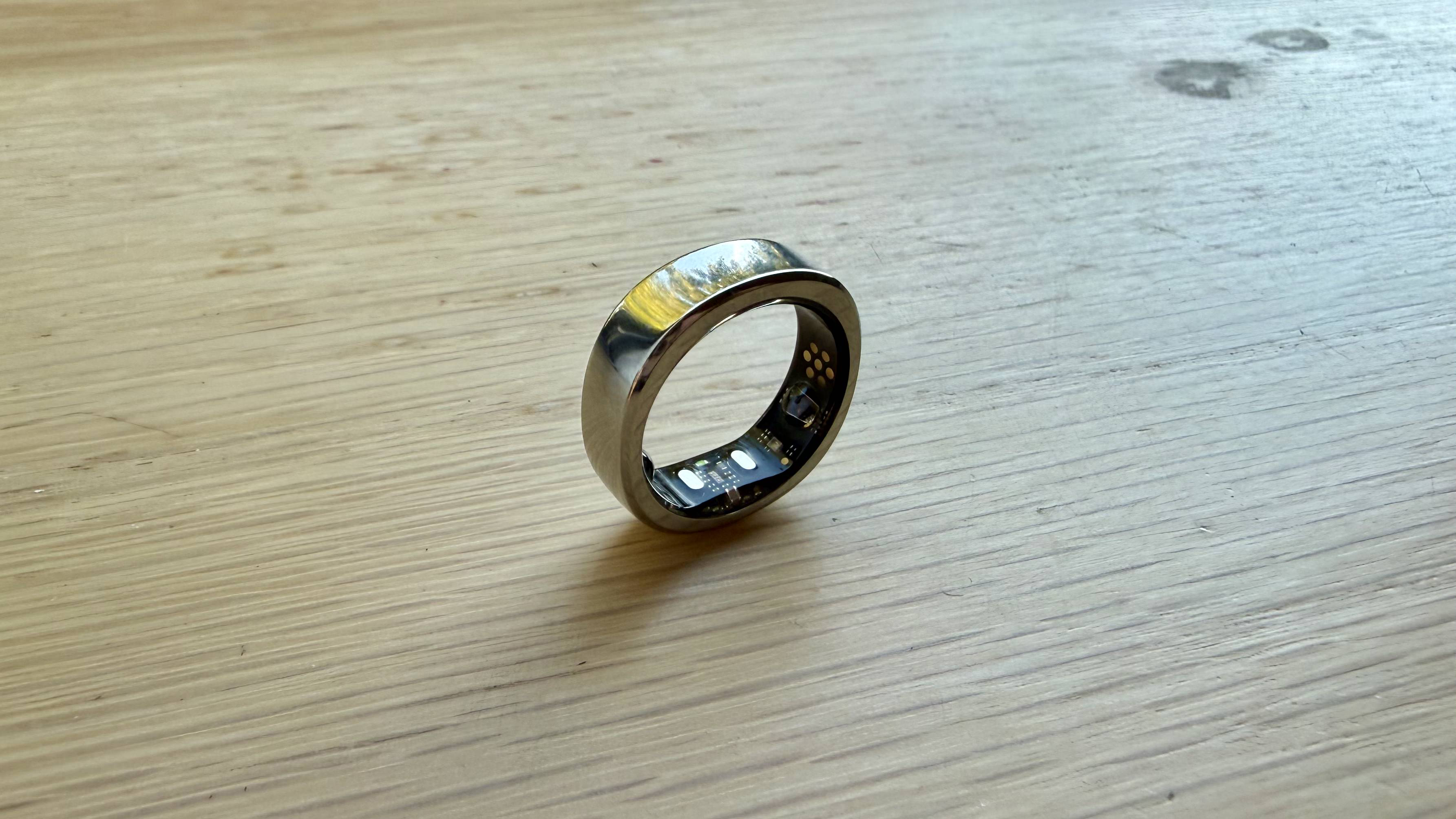
RingConn has always been a solid challenger to Oura in the smart ring space, and after spending two weeks testing it, I can safely say the new RingConn Gen 3 continues that trend. You’ll get most of the same health, sleep and recovery tracking features as rivals in our best smart rings guide here, but without the monthly subscription that puts some people off buying a smart ring altogether.
The Gen 3 tracks heart rate, heart rate variability (HRV), blood oxygen levels, skin temperature, respiratory rate, stress, activity and sleep. New additions include a haptic motor for some alerts and reminders, improved battery life and new vascular health trend insights, which are designed to give you a picture of your cardiovascular wellbeing over time.
However, this version does feel similar to the Gen 2 that came before it. The design and app experience feel largely unchanged and many of the core features will already be familiar to anyone thinking of upgrading from a RingConn Gen 2.
Although that's not necessarily a bad thing. The lightweight titanium design is still incredibly comfortable to wear and the app is simple to navigate. RingConn also continues to stand out by offering useful features like sleep apnea monitoring, something that still isn't standard across the smart ring market.
(Image credit: Future)
The experience here isn't perfect. During my testing, I found that some health insights can feel generic, certain wellness scores lack meaningful context and some of the messaging around features like vascular insight trends can be confusing. And, while the app is clean and easy to use, it still doesn't feel quite as refined or polished as Oura's.
But RingConn continues to occupy a compelling middle ground. It isn't the cheapest smart ring you can buy, but it undercuts premium competitors while delivering a similar experience overall.
The RingConn Gen 3 may not be the most exciting smart ring launch of the year, but for anyone looking for comprehensive health tracking without an ongoing subscription, it's shaping up to be one of the easiest smart rings for me to recommend.
RingConn Gen 3: Specifications
Component
RingConn Gen 3
Price
$426 (silver, gold, matte black) / $454 (brushed silver and brushed rose gold); £322 / £343 (approx)
Dimensions
2.3mm thick
Weight
2.5g to 3.5g (depending on size)
Finish
Silver, gold, matte black, brushed silver, brushed rose gold
Sizes
6 to 15
Material
Titanium body, medical-grade epoxy interior with a PVD coating
Battery life
10 to 12 days (with vibration on), 11 to 14 days (with vibration off)
Sensors
Optical Heart Rate Sensor, Temperature Sensor, 3-Axis Accelerometer and Vibration Feedback Motor
Connection
Bluetooth 5.0
Water resistance
IP68 / 10ATM
(Image credit: Future)
RingConn Gen 3: Price and availability
Priced at $426 / $454; £322 / £343 (approx)
Rolled out from late May 2026
No subscription needed
Pricing starts at $426 for the silver, gold and matte black versions. That rises to $454 if you’d like the new brushed silver and brushed rose gold finishes.
I only tested the standard silver, but the brushed effect is really appealing. At least what I can see from promo shots, it makes the ring look a little more refined and if I was buying one myself I’d probably pay extra for that finish.
UK pricing hasn’t yet been confirmed at the time of writing, but that US pricing works out at approximately £322 to £343, depending on the finish you choose.
That places the RingConn Gen 3 firmly in the premium smart ring category. It's not cheap by any means. You can now find more affordable smart rings, like the Circular Ring 2, which starts at $349 / £280 / AU$497.
However, it still manages to undercut some of its biggest competitors, making a tempting value proposition. For context, the new Oura Ring 5 starts from £399. Which, granted, isn’t that much more expensive. But you do need to factor in the ongoing monthly subscription, which you’ll need to unlock all of the Oura’s features. That costs $5.99 / £5.99 per month. So paid monthly, that’s around an additional $70 / £70 per year.
What makes RingConn stand out is that there are no subscription fees here. Once you've bought the ring, you get access to all of the core health and wellness features without any additional monthly costs.
It’s worth mentioning that other smart ring brands are offering their devices without a monthly subscription too. And the gap between RingConn and its premium competitors isn't quite as large as it once was, especially as smart ring prices continue to rise across the board. But when you factor in the lack of subscription fees and the breadth of features on offer, the RingConn Gen 3 still represents good value.
Value score: 4/5
(Image credit: Future)
RingConn Gen 3: Design
Lightweight and comfortable design
Distinctive squared circle shape
New finishes and expanded sizing options
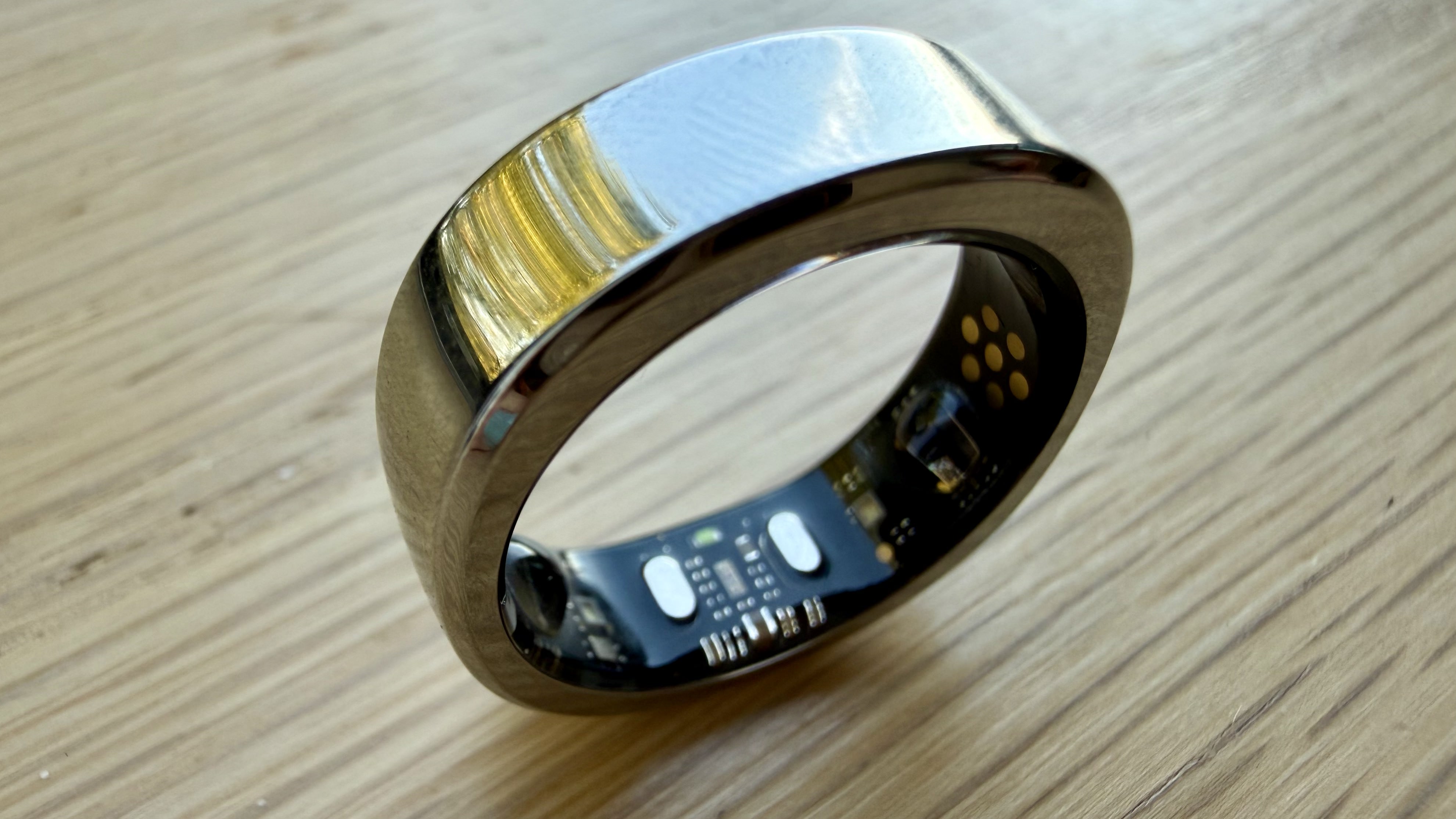
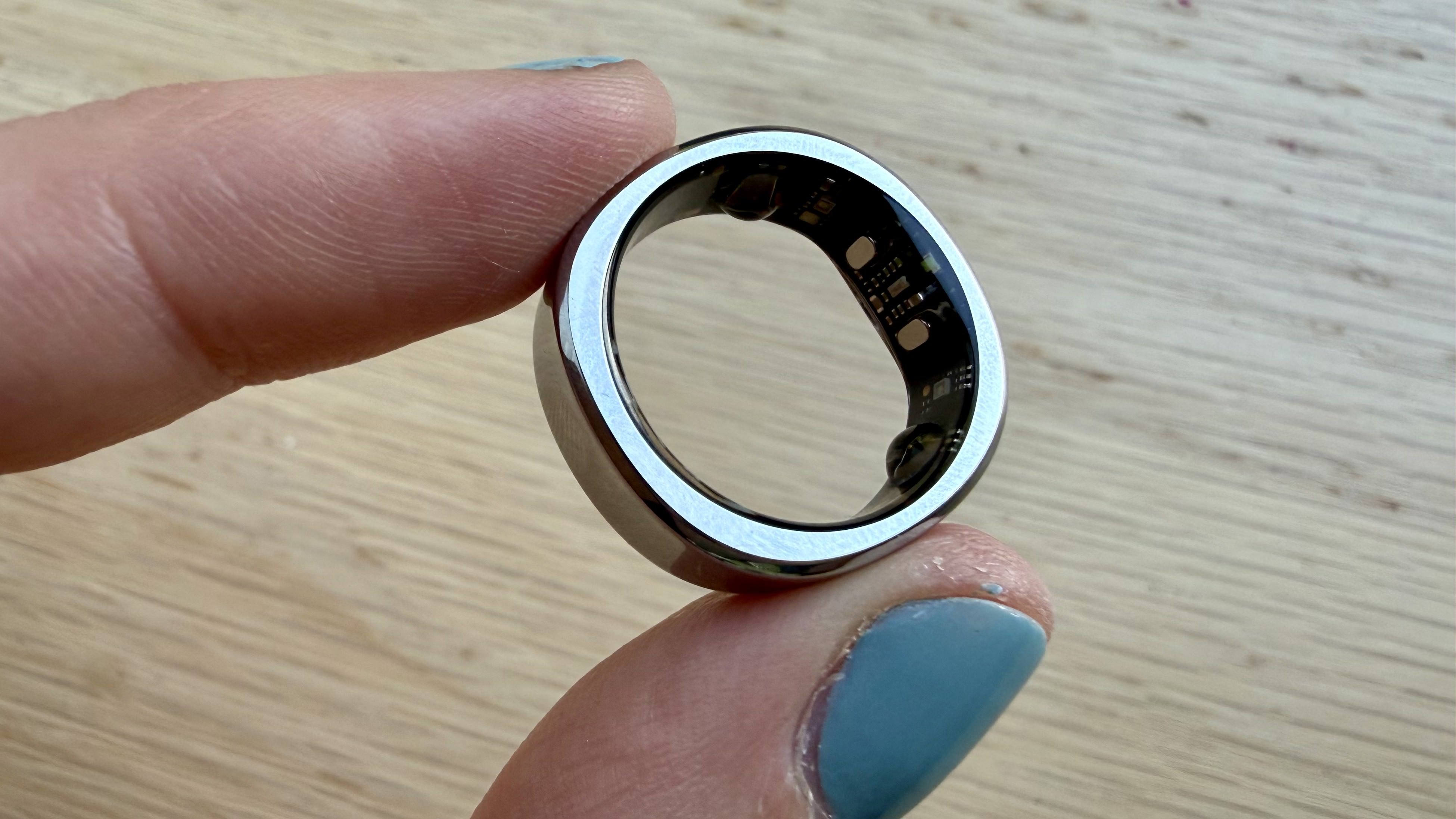
The first thing you'll notice about the RingConn Gen 3 when you take it out of the box is its unusual shape. Rather than being perfectly round, it has a subtle squared-off design. It looks a little unusual at first, but I really liked it. Plus it seemed like a refreshing choice in a market where so many smart rings are almost indistinguishable from each other.
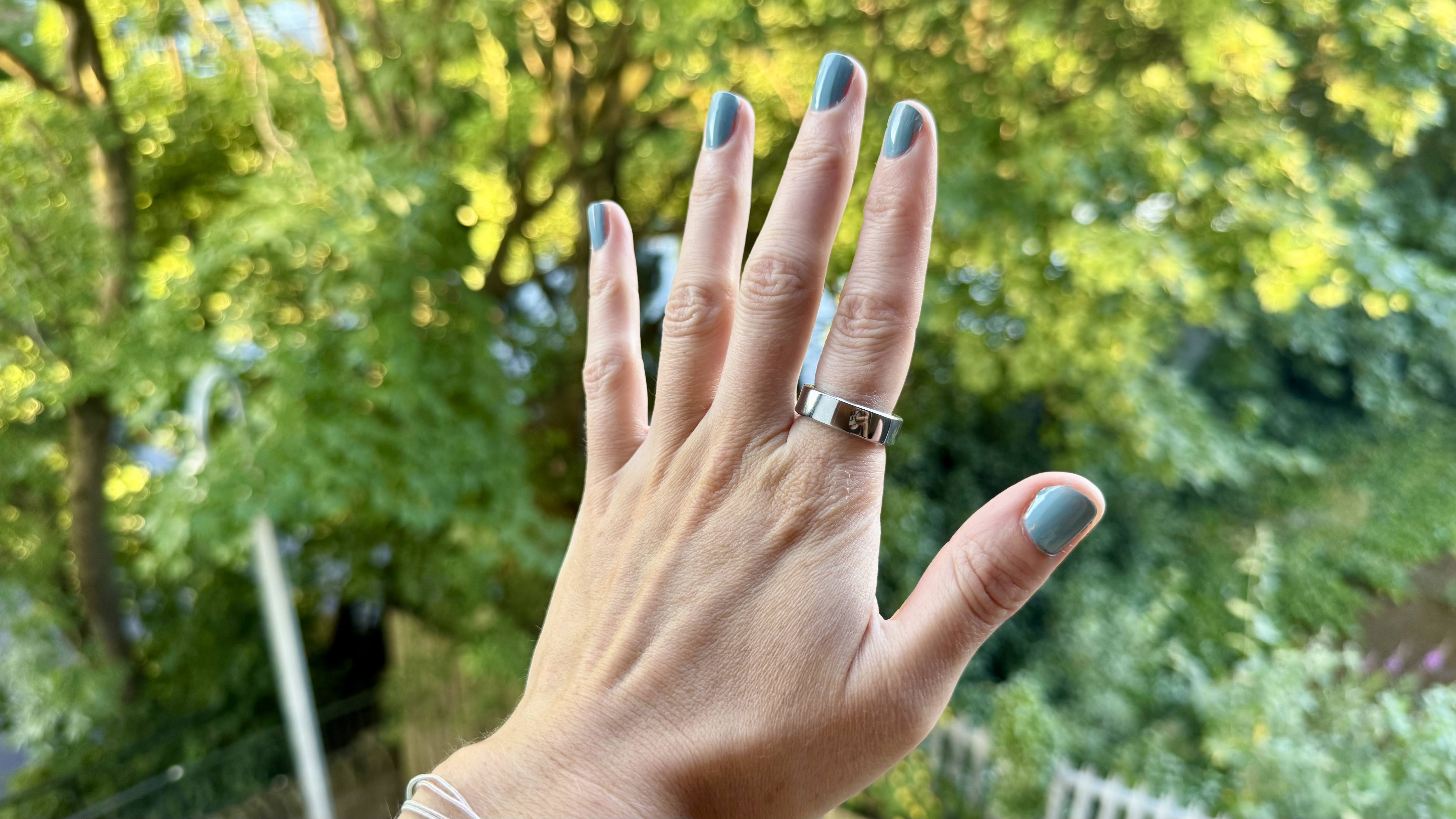
At between 2.5g and 3.5g depending on which size you get, and measuring 2.3mm thick, the ring is light and discreet enough to forget you're wearing it. I wore it day and night when I was testing it, including while sleeping, without any issues.
That weight and thickness are both fairly standard compared to other smart rings. The only notable exception is the new Oura Ring 5, which has been designed to be slimmer and lighter than previous generations and almost all rivals.
The Gen 3 ring is made from titanium with a medical-grade resin interior and is rated IP68 and 10ATM for water resistance. In practical terms, that means you can wear it in the shower, while swimming and during workouts without worrying about taking it off. During testing, I rarely had to think about removing it, whether I was washing up, showering or exercising — though I did remove it when lifting weights to avoid any scratching.
RingConn has also expanded its sizing range this time around, now offering up to size 15. Many competing brands don't go beyond size 14. One thing to be aware of here is that RingConn says the Gen 3 sizing may differ slightly from standard ring sizing and other smart rings. Which means it may be worth using the sizing kit first just to be safe. Although I tested my usual size without any issues.
There are several new finishes available, including brushed silver and brushed rose gold. I tested the glossy silver model, which held up surprisingly well during testing. After more than a week of daily wear, there were no visible scuffs or scratches, even on close inspection.
That's really notable because when I’ve tested many smart rings in the past I've found that some finishes, particularly matte black ones, can start showing signs of wear after only a few days.
That said, if I were buying this ring myself rather than reviewing it, I'd probably choose one of the new brushed finishes, even though they cost a little more. After years of testing smart rings, I've come to think that the super glossy finishes are often what make them look like gadgets rather than jewellery. So if making sure a smart ring blends in is important to you, the brushed options are probably worth considering.
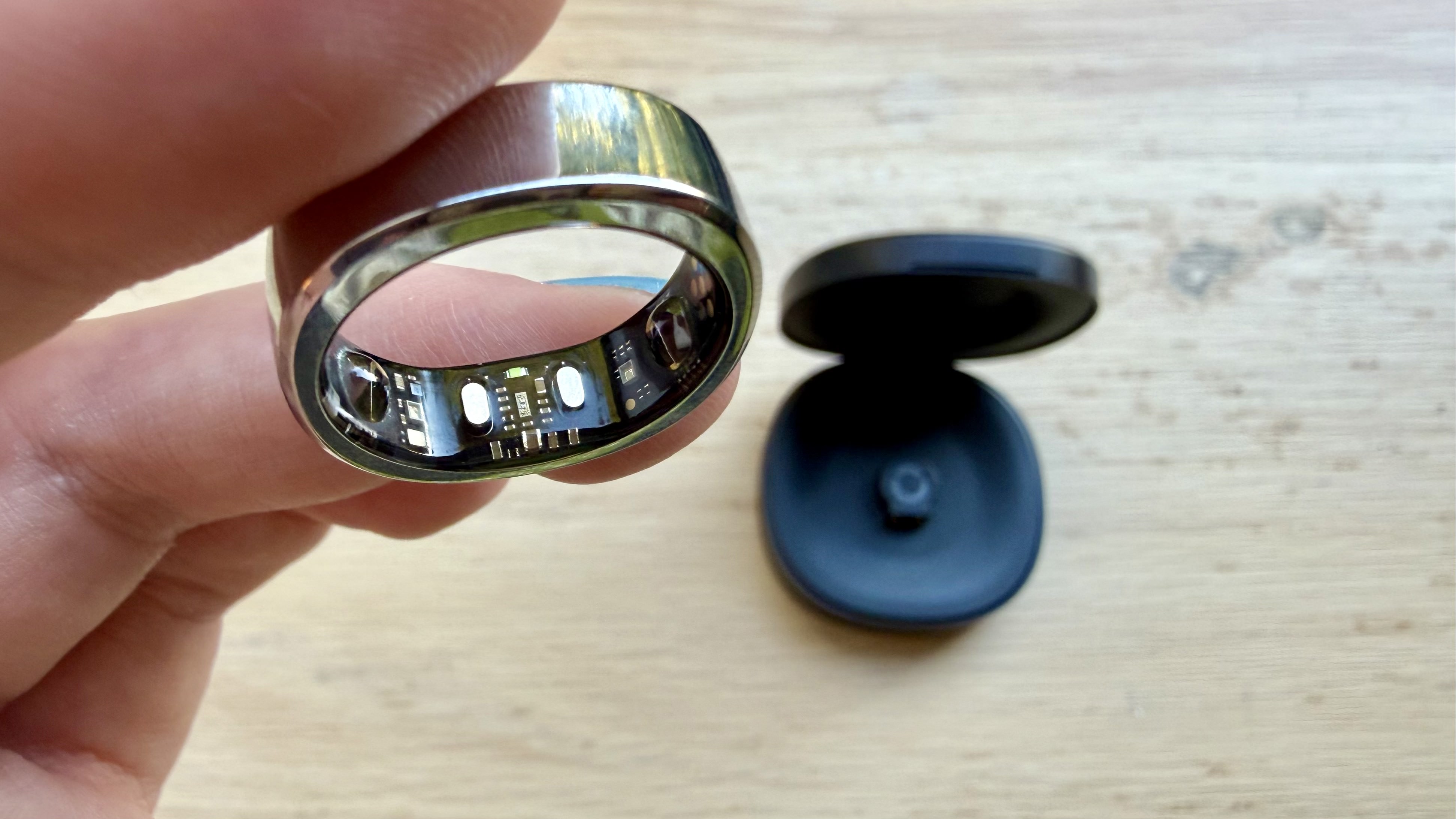
My only real criticism is that there isn't an obvious external marker showing which way round the ring should be worn. That's really nit-picking, but it's something some competitors have added. While it's easy enough to identify the correct orientation from the sensor placement inside the ring, a small external indicator, like a tiny notch, would make it quicker and easier to position correctly for the most accurate readings.
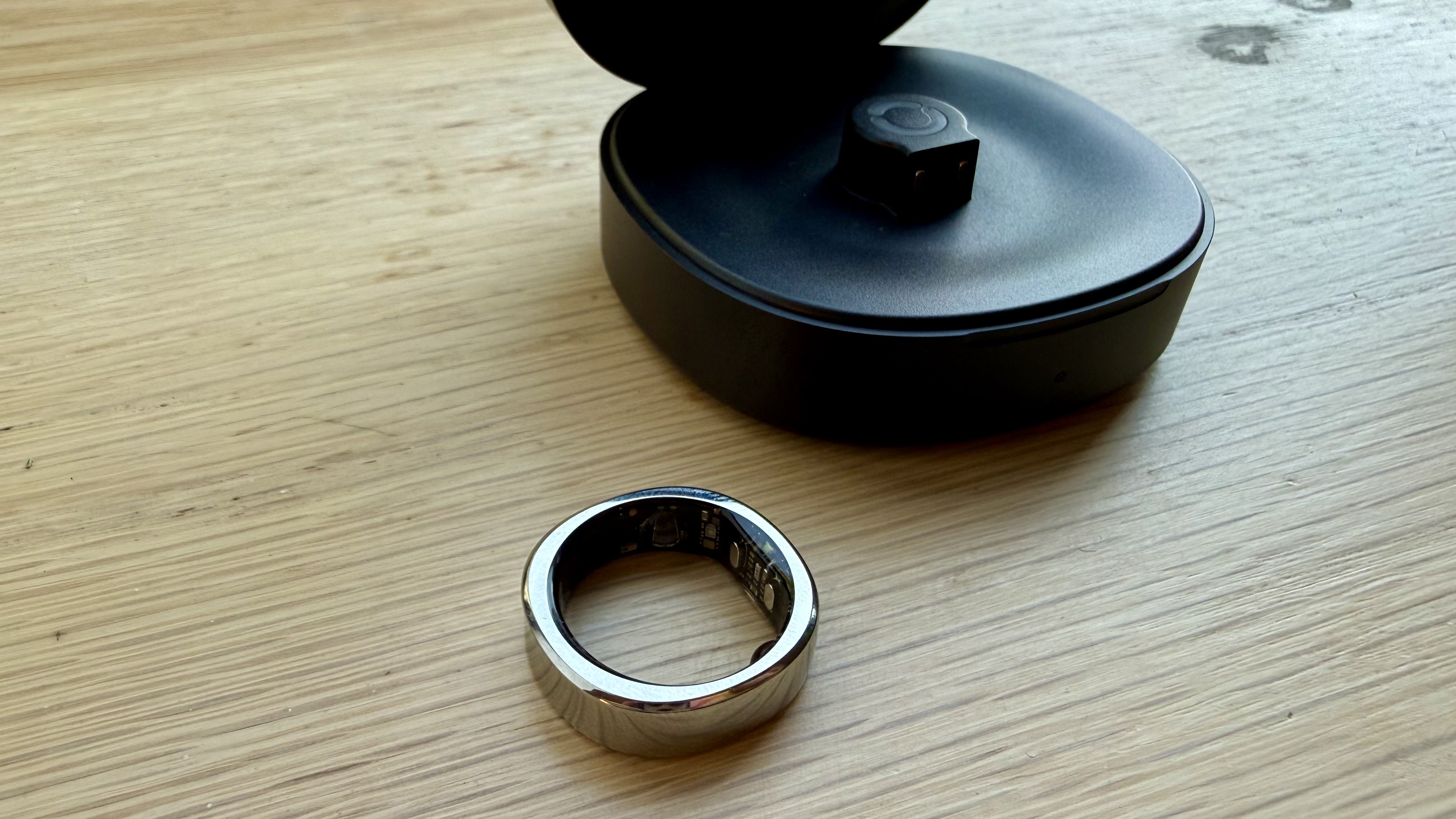
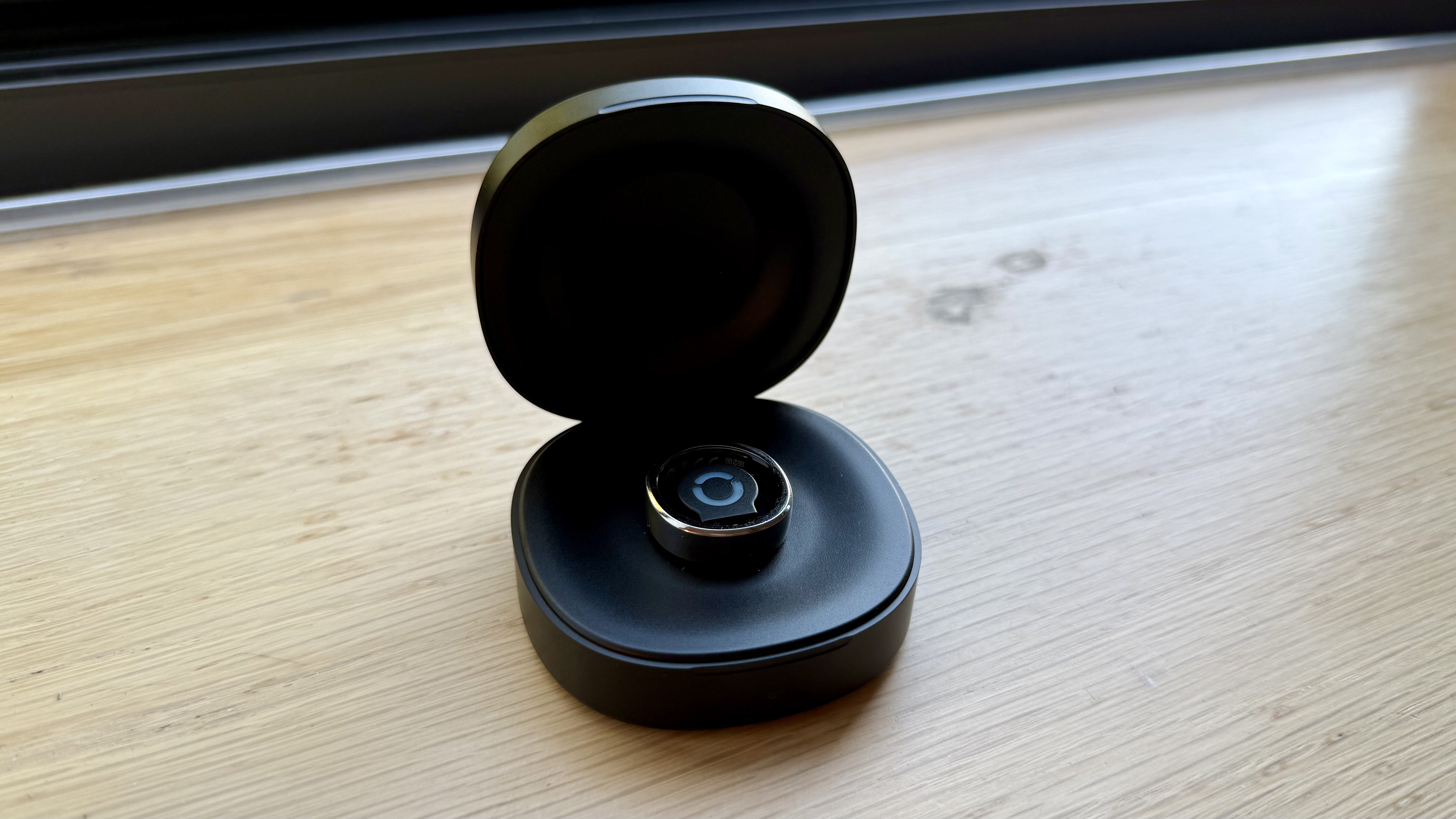
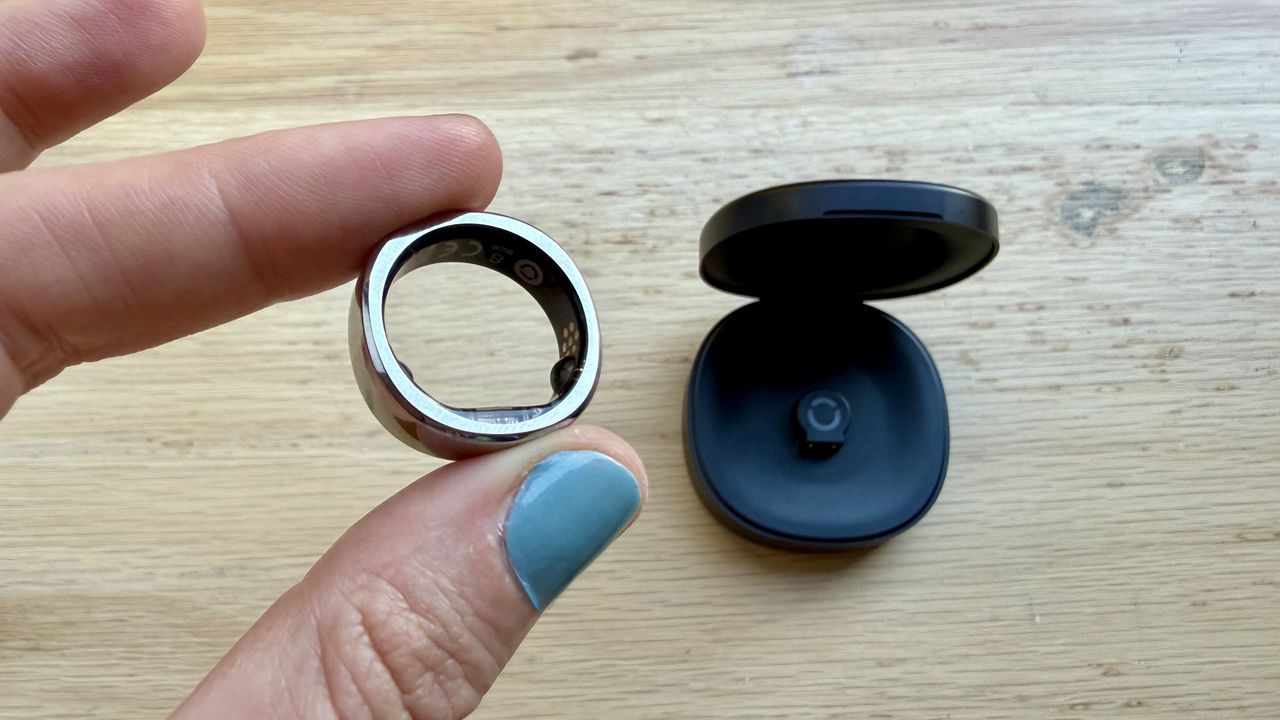
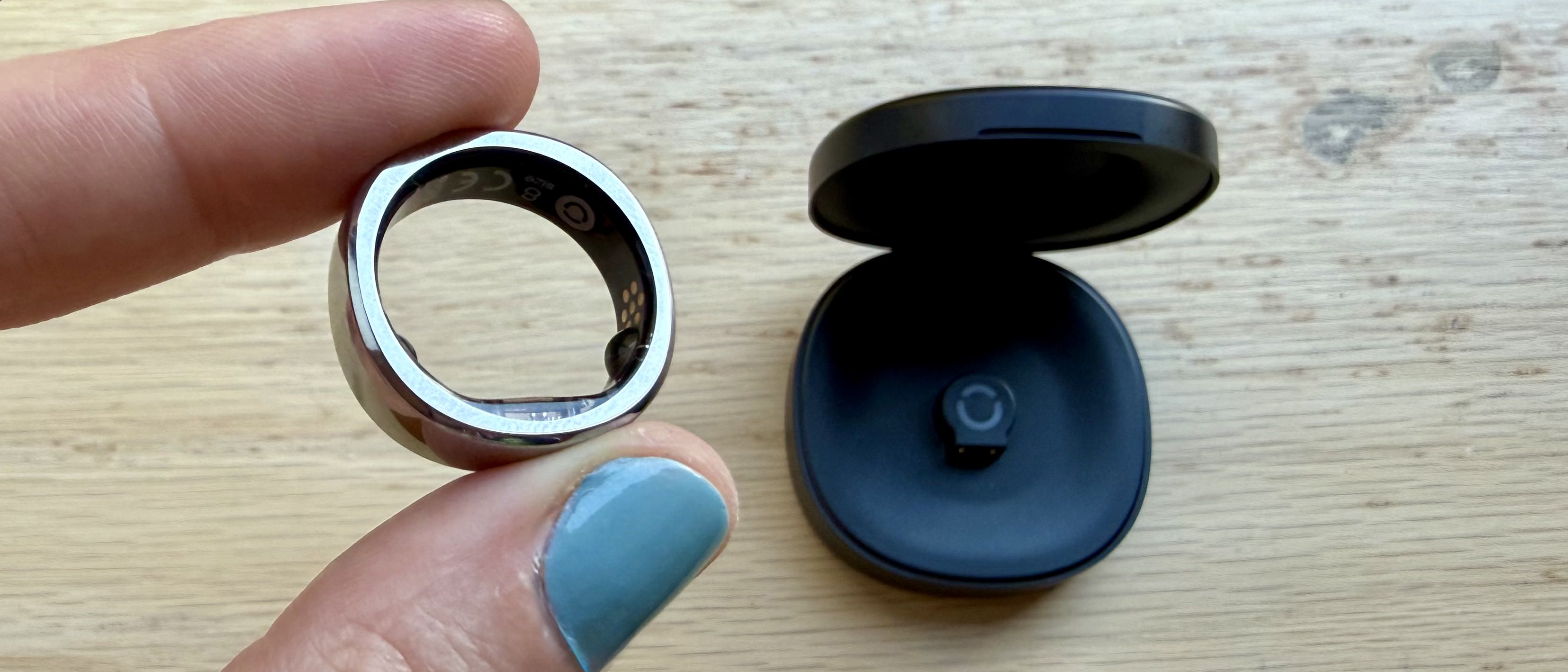
The charging case is handy. It's compact, easy to throw into a bag and feels more refined than previous versions. Unlike some competitors, it's also not tied to a specific ring size, which might be useful for you if you know someone else who has a RingConn ring.
Design Score: 4/5
RingConn Gen 3: Features
(Image credit: Future)
Subtle haptic alerts
Comprehensive health and wellness tracking
Sleep apnea monitoring and vascular insights
You’ll find all of the health and wellness features you'd expect from a premium smart ring here. The Gen 3 continuously tracks heart rate, heart rate variability (HRV), blood oxygen saturation (SpO2), respiratory rate, skin temperature, stress, activity levels and sleep. There's also menstrual tracking and a Baby Prep mode to support ovulation prediction.
Alongside these core features, RingConn offers a few more advanced tools that are designed to help it stand out from rivals. One of the most useful is sleep apnea monitoring. Once enabled, it monitors for the core signs of sleep apnea and provides short-term risk indicators alongside longer-term trends.
Like any wearable health feature, it's not designed to diagnose a medical condition. But I think it could be useful if you're concerned about your sleep quality or breathing patterns and want some additional information before you speak to a doctor.
New for the Gen 3 is a built-in haptic motor, which means the ring can now vibrate for health alerts, inactivity reminders and low-battery warnings.
At first, I was conflicted about this addition. Part of the appeal of smart rings for me is that they collect data in the background without demanding attention in the way a smartwatch can. Fortunately, RingConn has taken a restrained approach. The vibrations are subtle, focused on health-related notifications rather than phone alerts and can be disabled entirely if you'd prefer that.
Another notable addition is RingConn's vascular health tracking. Rather than attempting to estimate blood pressure directly, the feature combines overnight vascular load data with blood pressure readings and lifestyle information to provide longer-term cardiovascular insights.
To use it, you'll need to periodically enter blood pressure readings from a traditional blood pressure cuff. Initially, I wasn't convinced of the value of this feature. Wouldn’t you just use a cuff instead of the ring if you have one? But it became clear during testing that the goal here isn't to replace a blood pressure monitor. Instead, it's designed to help identify broader patterns over time.
One reason for the confusion is likely that in the app this section is labelled as 'blood pressure trends', which RingConn tells me is out-of-date copy and will be changed to 'vascular insights' soon to make it clear this isn't just a blood pressure reading feature.
Because the data you get here is about circulation stress tracking, which RingConn describes as a measure of how effectively your body moves between activity and recovery. Results are then also broken down into areas such as day-night rhythm, sleep breathing, post-exercise recovery and stress response.
The insights aren't especially deep, and if anything is flagged you'll need to go and search for what it means, but they're among the most detailed explanations available in the RingConn app and provide useful context without becoming overwhelming.
Features Score: 4/5
(Image credit: Future)
RingConn Gen 3: Performance
Clean, easy-to-use app
Excellent battery life
Strong sleep and wellness tracking
As with any smart ring, the Gen 3 relies heavily on its app, and RingConn gets a lot right here. While it doesn't feel quite as polished as Oura's software, I found it easy to navigate through the different menus. I also liked the flower-like Wellness Balance graphic at the top of the dashboard, which provides a quick visual snapshot of your overall health.
The app makes it easy to check key metrics at a glance, while more detailed charts, historical trends and explanations are there if you click through into each dedicated section, including sleep, activity and stress. Stress tracking was a particular highlight, making it easy to spot recurring patterns and periods of higher pressure throughout the day.
Some of the written insights can feel a little generic though, as daily summaries occasionally surfaced observations that felt obvious or lacked enough context to be genuinely useful. Sleep insights tended to be more helpful, with more detailed explanations and recommendations.
Sleep tracking is one of RingConn's strongest areas. The app presents sleep duration, efficiency, stages, overnight heart rate and movement data clearly without overwhelming you with information. During testing, it also handled my occasionally unusual sleep schedule surprisingly well, which meant that on nights when I woke up for an hour in the early morning before falling back asleep, RingConn correctly identified this as a brief 'awake' period rather than ending the sleep session entirely.
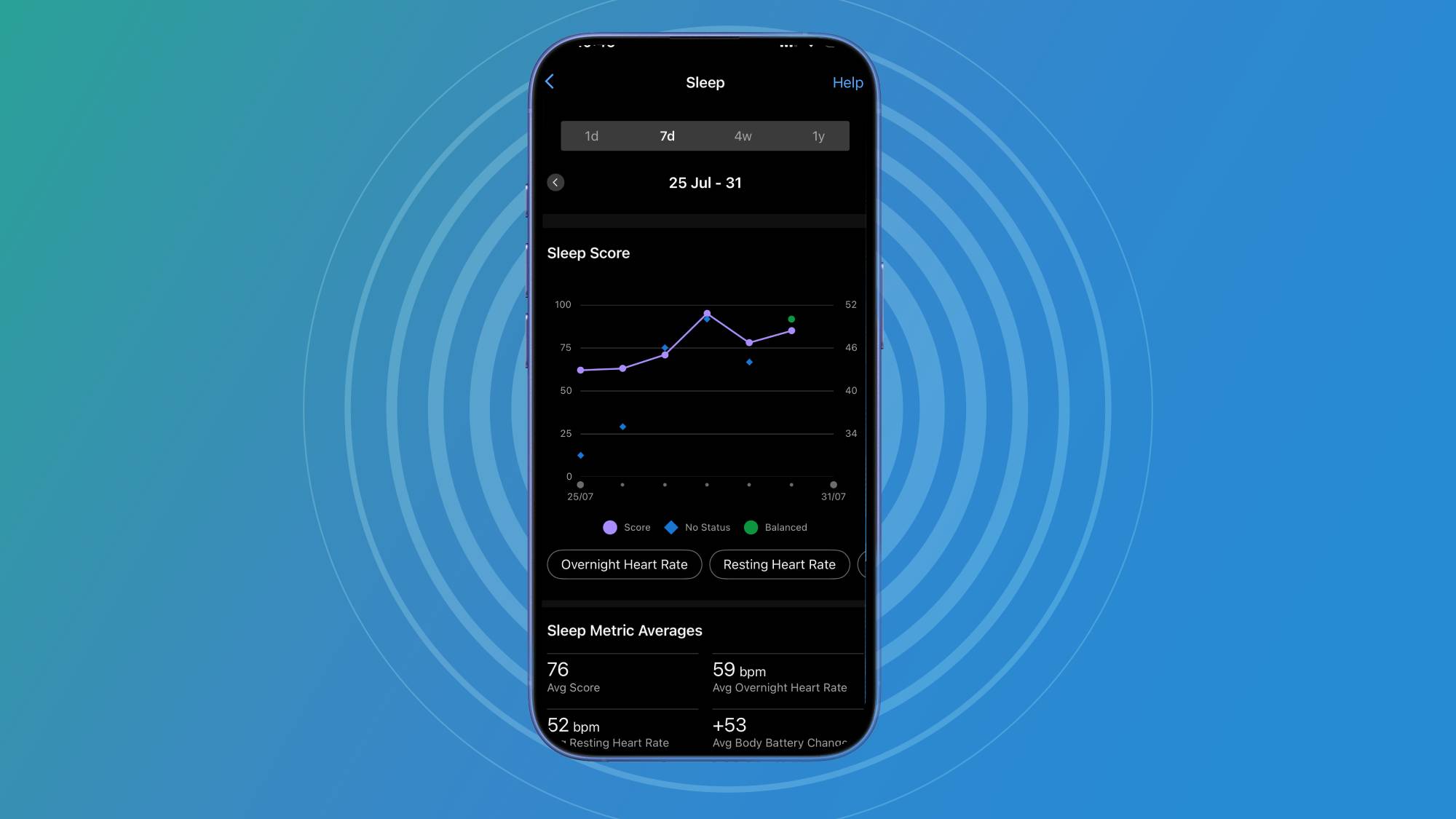
In terms of accuracy, I wore the RingConn Gen 3 alongside a Whoop 5.0. The two devices produced very similar results. Whoop measured a 84% sleep performance, 6 hours and 31 minutes of sleep and a 49bpm average overnight heart rate. RingConn gave me a 77 sleep score, recorded 6 hours and16 minutes of sleep with a 48bpm average overnight heart rate
Sleep stage breakdowns also aligned closely, with only minor differences in deep and REM sleep estimates. No wearable tracks sleep perfectly, but the results were broadly consistent.
I also appreciated how RingConn handles unusual readings. Rather than generating alarming warnings whenever a metric moves outside of its normal range, the app generally presents changes with reasonable context. I'd still like more explanation in some areas, particularly when a metric is flagged. I was often felt feeling a little frustrated at the lack of context and additional information as to why a reading deviated and what that really means. But the overall approach feels useful and sensible.
Sleep apnea monitoring is well implemented here. The feature presents trends clearly, includes some useful explanations and feels more mature than some of the app's other health insights. It's worth noting though that monitoring won't function properly once battery levels drop below 30%.
Exercise tracking is more basic than what you'll get from a dedicated sports watch, although that's true of most smart rings. During testing, the ring automatically detected walking, running and strength-training sessions without requiring manual input. You just need to acknowledge it’s identified your activity correctly and there are a wide range to choose from.
In the activity section you’ll find useful information like activity intensity, active time, calories burned and step count, which should be enough for most users.
Step tracking was accurate, although RingConn did seem to slightly under report compared to other devices. On one test day it recorded 5,167 steps versus 5,500 on the Whoop, a pattern I noticed in a few other comparisons.
Battery life is still one of RingConn's biggest strengths. The company claims between 11 and 14 days per charge, and in my testing the ring lasted nearly 12.5 days with both vascular insights and haptic alerts enabled.
That comfortably exceeds most rivals these days. For comparison, the Oura Ring 5 offers up to 7 days, the Samsung Galaxy Ring up to 7 days, while the Ultrahuman Ring Air and Circular Ring 2 both offer around 6 days.
For me, this is one of the RingConn's biggest selling points. The less often you need to remove a wearable for charging, the more likely you are to wear it consistently and collect uninterrupted data. RingConn also displays both remaining battery percentage and an estimate of days remaining in the map, which is a small but useful touch.
Overall, the RingConn Gen 3 delivers a strong experience. The app isn't quite as refined as Oura's, and some insights could go further, but the combination of comprehensive health tracking, clear data presentation, excellent battery life and a subscription-free model makes it one of the most compelling smart rings currently available.
Performance score: 4/5
(Image credit: Future)
RingConn Gen 3: Scorecard
Category
Comment
Score
Value
There's no subscription and it undercuts major rivals. But not by all that much.
3.5/5
Design
It's lightweight, comfortable and has a non-standard squared circle design. Nice glossy finish with several more available in this version too. There's no wearing indicator and sizing might differ this time around.
4.5/5
Features
A solid set of health and wellbeing features. Vascular insights are welcome, though not intuitive to use — you'll need a separate cuff. Otherwise, it is pretty similar to the Gen 2 that came before it.
4/5
Performance
Solid insights presented simply in the app. Which is a little less refined than rivals, but easy to use. The battery life is standout and I found myself really engaging with the data rather than forgetting to check — a testament to a solid experience.
4/5
RingConn Gen 3: Should I buy?
Buy it if...
You don't want to pay a subscription All of the features on offer here are free, which sets it apart from rivals like Oura that charge a monthly fee.
You want a light and comfortable smart ring It's very easy to wear, even at night. And despite reported changes to sizing, I got the size I usually wear with no issues.
You want general health insights Look, smart rings are not the last word in fitness tracking. There's some of it here but they're best at general health insights and an overall picture of your wellbeing.
Don't buy it if...
You have the Gen 2 or Air Yes, there are some significant improvements here, but not everyone would be able to justify an upgrade. It depends whether the changes are a priority for you.
You want to save money Compared to rivals, it's solid value. But there are now cheaper options that might not beat the RingConn Gen 3, but do the basics well.
You're considering Oura As you'll learn below, Oura is pricier with a monthly subscription. But it is an elevated experience over RingConn in most ways.
Also consider
Oura Ring 5
The Oura Ring 5 is here and it's one of the best choices out there, especially now the latest version is even slimmer than previous iterations. We rated its improved design and comfort in our recent review. Yes, it's more expensive than the RingConn Gen 3 and you'll need to add on the recurring monthly subscription. But if it's the most advanced smart ring you're after and you're willing to pay for it, take a look at the Oura Ring 5 instead.
I know, I know. This is the older model, but it's been significantly reduced now the Gen 3 is here. Which makes it even better value. Granted, you're not getting the improved battery life, extra finish options, upgraded tracking and vascular insights. But if saving money is a priority, you find a good bargain and you don't need the latest tech, it's a solid choice in my books.
I tested the Ringconn Gen 3 for just over 2 weeks. I wore it all day and all night, only taking it off to either charge it or lift weights — I've learned many times in the past that smart rings are very easy to scratch with metal dumbbells. The smart ring was on throughout workouts, while I was working, out socializing, relaxing on an evening and sleeping at night.
I've been reviewing smart rings since the very first version of the Oura ring came out back in 2017. Since then, I've tested almost every generation from every smart ring brand that came after it. This puts me in a solid position to not only test the newest rings, but compare the models, tell you which one might be right for you and bring you loads of context about the smart ring space.
These days, millions of us have smart devices strapped to our wrists, fingers and arms, measuring our metrics and building a picture of the “quantified self” to make us healthier, more active and better prepared for a medical emergency.
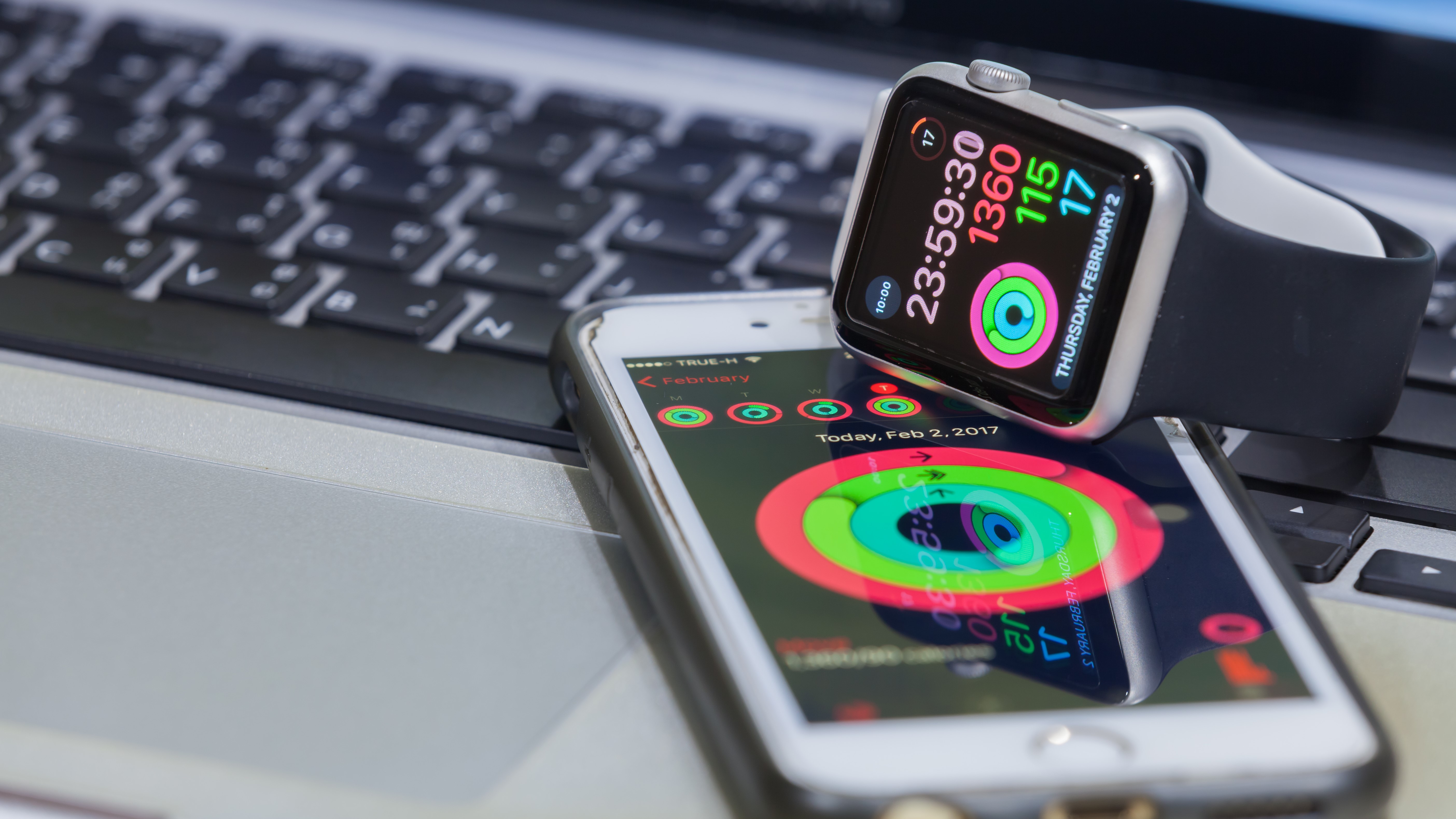
Wearables can help improve our wellbeing and nudge us towards better habits, but it’s less common to hear about the flipside: the anxiety at failing to close your rings, the frantic exercise to ensure you maintain your streak, and the obsession with meeting your targets on a daily basis.
These are feelings I know all too well. Having worn some of the best Apple Watches for close to a decade, I’ve watched it become an essential part of my life — so much so that I’ve tried closing my rings when I’m ill, on vacation, or should otherwise be resting and recuperating. I obsess over those little rings on my watch.
I know this is a problem for me. But what I wanted to find out was whether this is a more widespread issue, and if it is, what can be done about it. Is wearable tech making us more anxious? And can it be redesigned to push back against these tendencies and help us feel more relaxed, not less?
To find out, I spoke to tech and wellness experts who shared their thoughts on the ways wearables can impact our health — for better or worse.
The endless streak
(Image credit: DMstudio House / Shutterstock)
During the FIFA World Cup in July, I was preparing to wake up in the early hours to watch England play Mexico at 1am local time. I set my alarm, went to bed early, and got ready to cheer on my team without waking the neighbors.
Yet there was one thought that I couldn’t get out of my mind as I contemplated the looming disruption to my sleep: my Apple Watch is going to hate this.
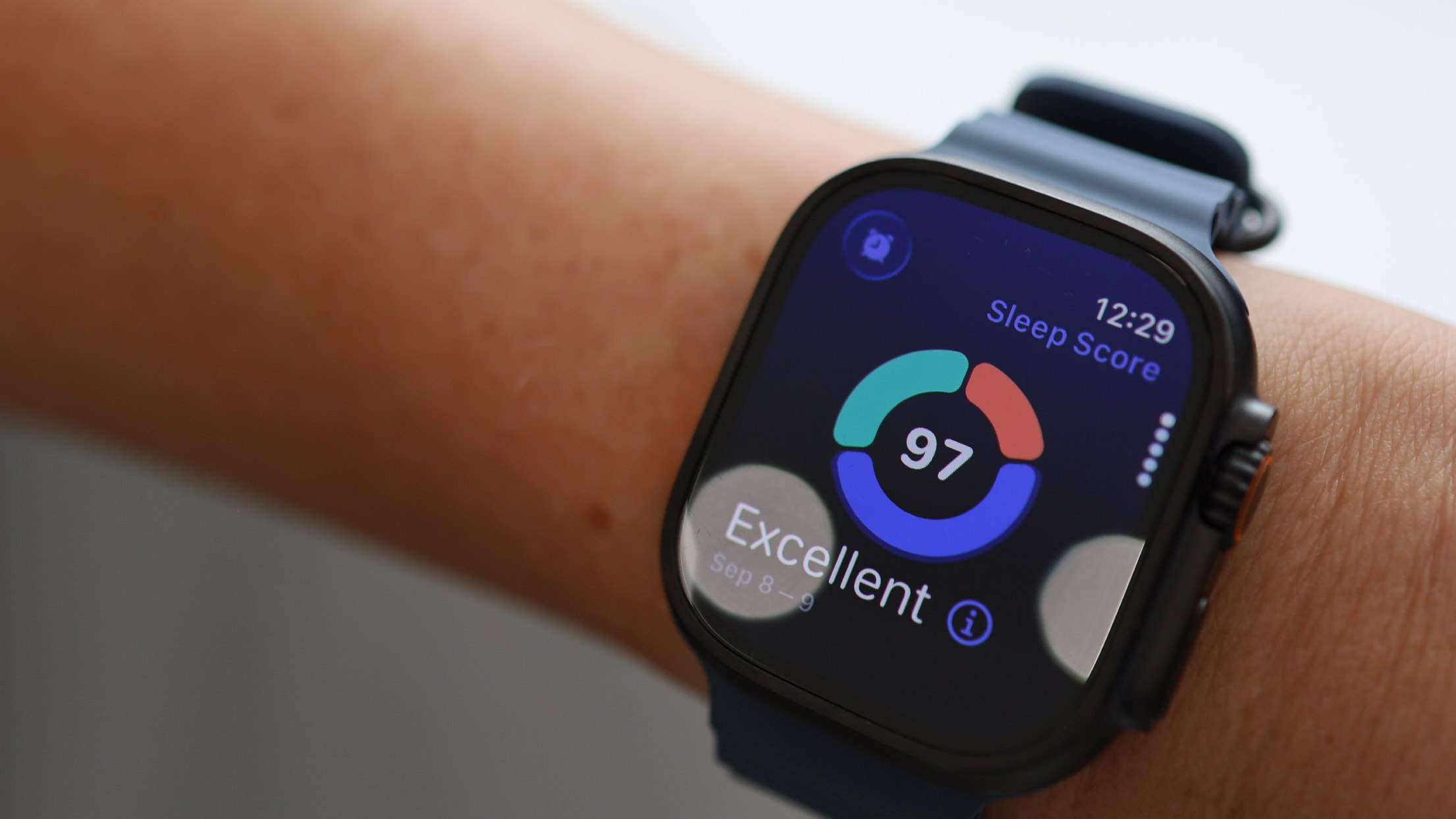
It’s now become part of my morning ritual to check my sleep score on my Apple Watch. Every high score gives me a little dopamine hit, every low result a crushing sense of disappointment. And I knew that waking up at 1am and staying awake for two hours in the middle of the night was going to make my Watch very disappointed indeed.
In the end, I rolled over and went back to sleep when my alarm woke me for the game. I didn’t watch it, and I know that was only partly because I was woken at some ungodly hour — it was also because, to a certain extent, I’ve allowed the scores and metrics on my Watch to govern the way I live my life.
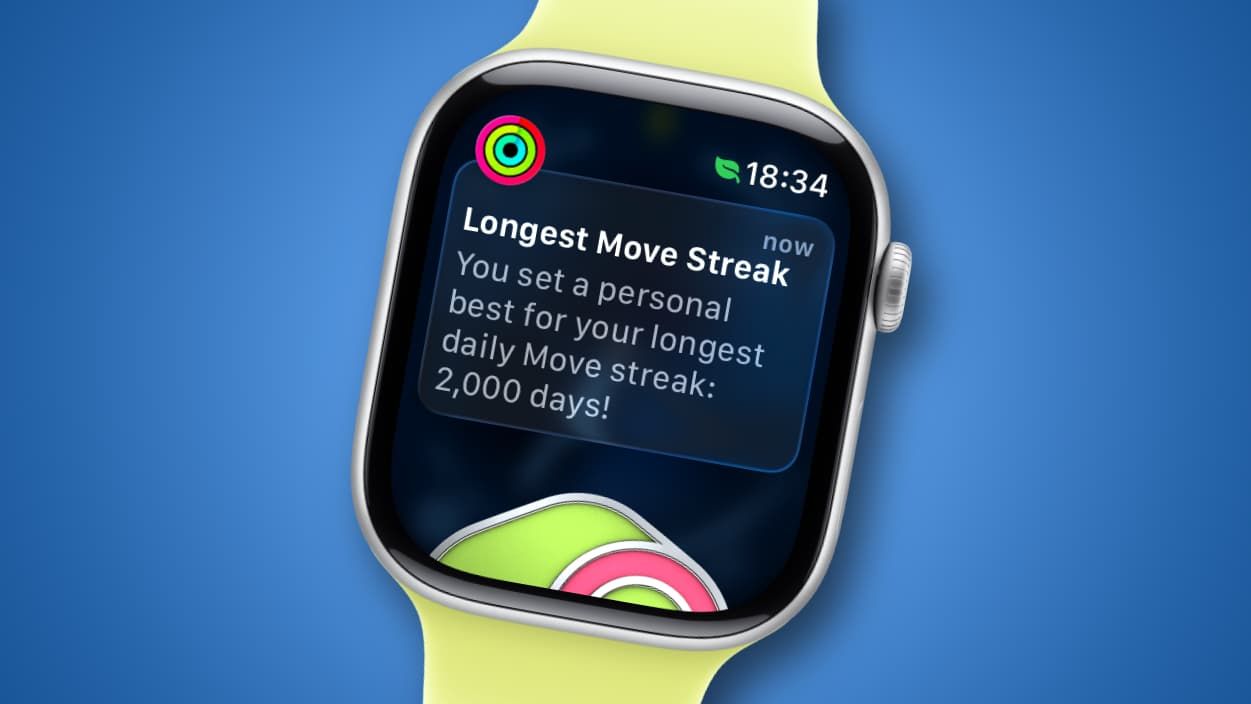
That’s not the only way this has happened to me. I recently hit a streak of closing my Move ring for 2,000 consecutive days. But I’d be lying if I said there weren’t some days when I entered a fake exercise to get me past my calorie goal on a day when I was ill, tired or simply unmotivated.
Why cheating is fine, but resting is not, is something I admit doesn’t make much sense. But what I do know is that the thought of losing my streak absolutely fills me with dread. 2,000 consecutive days on my Move streak sounds like a lot, but knowing myself, I’m sure I’m going to try to continue it until the day I die, such is the anxiety associated with the idea of my streak ending.
The dark side of wearable tech
(Image credit: Future)
I’ve long had perfectionist tendencies, but it’s through observing the way I interact with my Watch that it’s really become clear to me how strongly my device’s gamification of fitness has struck a chord with me — and led me into some unhealthy, possibly obsessive behaviors.
I spoke to Dr Dana McKay, Associate Dean of Interaction, Technology & Information at RMIT University in Australia, to get her opinion.
“These technologies are often designed to help us form habits,” McKay pointed out. "They often use tools for so called ‘persuasive design’.... to persuade us to do something we wanted to anyway when we bought the device."
There are two problems with this:, Dr McKay points out: the possibility of becoming “unhealthily focused” on the device, and the prospect of being convinced to don a wearable by an outside party, like an insurance company, and sharing data we don’t want to share. Some private health insurance companies may subsidise the purchase of a wearable in exchange to access to lower premiums, and sharing your tracker's information to an insurer's app.
Yang Wei, Professor of Wearable Technology at Nottingham Trent University in the UK, agreed, saying that while wearables can help us form positive habits, we also need to be careful around them.
“For many people, wearables can be motivating and empowering,” Wei noted, “but for some users they can also create pressure, anxiety, guilt, or unhealthy dependence on data.” After all, wearables “create a framework for what counts as ‘good’ or ‘bad’ activity, sleep, recovery, or productivity,” Wei said. If that data is framed the wrong way, it can push users in an unhelpful direction.
Wei also warned that “One of the risks is that people may start to trust the device more than their own body. For example, someone may feel they slept badly because their watch gave them a poor sleep score, even if they felt fine. Or they may feel they have failed because they did not close a ring or reach a step target, even if they had a perfectly reasonable day.”
That certainly resonates with me: I consciously work to close my Apple Watch’s rings, viewing it as a requirement for each day. A full set has almost become a condition for having a ‘good’ day, regardless of how I’m feeling or what I’ve achieved. And this overreliance on a piece of tech strapped to my wrist feels key to the negative habits I seem to have formed. So what can I do about it?
How to push back
(Image credit: Kanut Photo / Shutterstock)
If wearables have the potential to form negative habits, what can we do to put things right? The answer is often remarkably simple, both McKay and Wei believe: take your watch off from time to time.
“There is no need to wear your device while on vacation unless a health practitioner recommends it,” McKay advised. If your relationship with your fitness tracker has become a problem, “start by turning all the notifications off, limit checking of goals to help reduce obsession, and consider not using the device at all if possible.”
You also need to understand why you are using the device in the first place, Wei contends. “Is it to be more active? To understand sleep? To monitor a specific health concern? Or simply to be more aware of daily patterns? Having a purpose makes it easier to keep the technology in perspective.”
“I would also encourage people to treat wearable data as guidance, not judgement,” said Wei. “These devices can be useful, but they are not perfect and they do not understand the full context of a person’s life. Illness, stress, caring responsibilities, disability, travel, recovery, or simply needing rest can all affect what a ‘good’ day looks like.”
And both McKay and Wei said that if your device is causing significant anxiety or obsessive behavior, it might be best to speak to a medical professional. As Wei put it, “The aim should be for the wearable to support the person, not control how they feel about themselves.”
(Image credit: Future)
But this has to go beyond the user’s own actions — wearables themselves should be designed to better support healthy habits and discourage negative ones. For McKay, that includes “allowing people who use trackers to set the number of notifications they get” and hide those they don’t want to see, as well as “removing gamification elements like badges and sharing (competing) with friends and family.”
Many of these features, like push notification controls, are already buried in the watch's settings, but a lot of smartwatch users don't go looking for them.
“I think we need to move from a data-driven relationship with wearables to a more reflective and human-centered one,” Wei added. That means designers should “move away from purely addictive or performance-based features” and towards focusing on “long-term wellbeing rather than daily judgement.”
Ultimately, Wei said, “I think the best wearable technologies will be those that help people feel more confident and informed, not more anxious or dependent.”
I can’t change how Apple designs its smartwatches, but I can reduce the pressure on myself to hit my goals day after day, even when my body is telling me to rest. Staying fit and healthy is a worthwhile pursuit, but when it comes at the cost of anxiously worrying what will happen if your streak ends, it might just be time to bite the bullet, take off the watch, and enjoy some tech-free time with friends and family. After all, losing a streak is not the end of the world.
The Garmin Cirqa is making waves in the fitness community. I put the new screenless tracker through its paces over 10 days of intensive testing, and awarded it 4.5 stars in my Garmin Cirqa review. As part of the testing process, I wore it for all of my workouts over the past couple of weeks — and, unusually for a device I've been testing for review purposes, I'm still wearing it now.
I normally alternate between an Apple Watch Ultra 3 or a Garmin Fenix 8, but I've found myself loathe to ditch the Cirqa just yet. This isn't only because it's good: I'm gravitating towards the Cirqa because it interfaces with a system I already use, and because it's helping me get over the dreaded "Strava-itis".
Last month, our writer Becca Caddy wrote about optimization culture — how wearables are causing us to engage in unhealthy mindsets and disordered behaviors. I can certainly attest to that: I'm guilty of glancing at my watch during a run, wanting to push my pace even on zone 2 sessions and easy days, because I know the end results are going to end up on my Strava account for all to see.
Even uncoupling my watch from automatically uploading my run to Strava is only half the battle. I'm constantly glancing at the watch to check my pace and time, engaging in subconscious judgement, comparing my own performance to that of my mates, colleagues and acquaintances. I didn't realize quite how much my self-judgement was sapping my enjoyment of exercise.
The Cirqa, and to some extent the Google Fitbit Air I tested earlier in the year, goes some way to changing all that.
(Image credit: Future)
(Image credit: Future)
While the Cirqa offers up some fitness and wellness metrics (certainly plenty to understand the effect of exercise on your body and health), what it doesn't give you is workout specifics. You won't find split pace per kilometer, for example, which runners use to measure average speed across a distance run, or heart rate zones to display a workout's intensity. With other models, I get those statistics piped into my ears at regular intervals, and my watches offer them at a glance.
Having access to such statistics removed during the workout can be detrimental to performance or for those times you're training for a specific event, but it's oddly freeing for day-to-day fitness training. I ran a 10km route during the testing period (at least, I assume it was 10km based on previous runs) and the Cirqa recorded plenty of heart rate-based statistics and applied them to recovery metrics such as my Training Readiness Score, along with how it improved stats such as my VO2 Max and Fitness Age.
However, it informed me of these statistics after the run, and didn't deliver any specific run performance information at all beyond time and heart rate information. Without my watch to glance at during the workout, I wasn't adhering to a target pace: I was running on vibes and perceived effort.
I concentrated on how my body felt, and responded to that in the moment. I paid attention to my form, my music, the trees and the road. I didn't feel guilty about stopping to stretch part way through, nor did I pause the Cirqa for that particularly pause, as doing so would invalidate the whole "complete, holistic workout overview" thing it's got going on. For the first time in quite some time, I had no idea at all about how fast I had run — but I knew that it was a good workout as a result of every other metric and the fact that I felt awesome.
Although it isn't a running-specific device, the Cirqa is exactly what I needed to reinvigorate my relationship with the road. When the time returns to take my training seriously again, taking speed and times on board again, I'll switch back to my best Garmin watch, with all my fitness stats ready to be incorporated into Garmin's workout plans.
Do you run without a fitness tracker, or use a screenless model, to better run on vibes, or are you a metrics-fiend with a dedicated running watch? Let me know in the poll below.
Many of the answers are some combination of marketing jargon and tech support, but there are some genuinely interesting nuggets too, including a response to claims that Samsung has stopped innovating.
Reddit user densusenapi commented: "I've been a long-time Samsung customer since the original Note. I replace my phone every 3 years since the hardware innovation just isn't there anymore? I used to change my phone every 2 generations but the leaps are so small now. Start experimenting and innovating again, please."
To which Bizon replied: "If I may, I'd like to politely challenge the idea that the hardware innovation isn't there. The more people use AI every day, the more personal it becomes and that's pushing us to rethink how phones and wearables work for people alongside how they look. That kind of shift only happens if the engineering and craftsmanship behind it can keep up, and that's still where we put a lot of our energy as a company.
"The Galaxy Z Fold 8 is a good example. This year we're expanding our foldable range to meet a real need we kept hearing from customers who want a bigger, wider screen to go deeper into content. The new Galaxy Watch Ultra 2 has had a phenomenal upgrade this year too to make sure it can help you achieve your fitness goals in the most extreme environments. So, I promise you we're not slowing down; we’re experimenting based on what people are telling us they would like.
"Hopefully that's changed your mind!"
It’s a fair answer, but arguably this has been a far more innovative year for Samsung than most recent years have been — we don’t often get whole new phone form factors after all.
But between what Bizon detailed above and the Privacy Display on the Samsung Galaxy S26 Ultra, the brand has genuinely done some very interesting things this year, so hopefully we’ll see more of that going forward too.
A focus on health
The Samsung Galaxy Watch Ultra 2 (Image credit: Future)
As for what form that future innovation might take, in a separate response, Bizon pointed to health as a real focus at least for her personally, saying:
"I think we're at a super exciting time for mobile innovation. As I'm sure you're aware, we've just launched our biggest ever foldables line-up, inspired by how people are using their devices. AI is really helping us think more about new form factors, because we're all using our phones in much more personalized ways.
"But if you want to know what excites me personally right now, it's health, because that's where I think our devices and the features on them are helping people in ways they would never have imagined. Suddenly we're shifting as a society to being more preventative in the way we approach health challenges.
"So let's start with some of our features, powered by the new sensors on the Galaxy Watch 9 and the Galaxy Watch Ultra 2. Vitals is a good example, because it tracks things like skin temperature and heart rate overnight, and flags meaningful changes so you can determine if you might be about to fall ill, and act by resting more.
"It's also become more personal. We've all been told about 'get eight hours sleep,' but our new sleep latency feature, which calculates how long it takes you to fall asleep from when your head hits the pillow, can help you work out what your optimum conditions are for falling asleep.
"I've seen this play out in my own training too. I did an ultramarathon a while back and pushed on for far too long despite how I was feeling and that's a really common mistake. Fitness Index now helps flag your strengths and weaknesses earlier, and Nutrition Alert will nudge me if my hydration levels are too low.
"That's the shift I'm most excited about — how technology understands what you need, and gives your personal experiences."
A nod towards AI
The Samsung Galaxy Z Fold 8 Ultra (Image credit: Lance Ulanoff / Future)
That — unsurprisingly — doesn’t really give us any concrete ideas of what to expect next from Samsung, but technology that “understands what you need” will almost inevitably involve AI, and this, of course, also came up in the AMA — though largely through people being negative about it.
Multiple Redditors essentially said that they don’t want AI on their phones, to which Bizon noted that “if AI isn't for you, every AI feature on Galaxy devices is opt-in. You can switch off anything you don't find useful.”
That said, Bizon also suggested people should give AI a chance, arguing:
“If you're open to dipping a toe into using AI, my advice is always the same — try one small thing and see if it saves you time. Say you're out and about and spot a concert poster, show it to your phone with the camera and ask it to find tickets for you to buy. If it's useful once, great. If it's not for you, that's fine too.”
That advice might work for some people, but many others are opposed to AI as much for ethical reasons as functionality ones — so they’re unlikely to give it a chance, and may object to it being on their phones even if it can be disabled.
Still, AI aside, it will be interesting to see whether Samsung continues its current innovative streak. We'll probably have an indication of whether it has done so or not early next year, when the Samsung Galaxy S27 series launches.
The Garmin Fenix 8 line came in three sizes (43mm, 47mm and 51mm), and two screen options: a standard bright AMOLED screen of the sort you see on many smartwatches, and a duller memory-in-pixel (MIP) varient with solar charging. The MIP displays used to be used on all of the best Garmin watches as it was more battery-efficient, but these days it's almost entirely used for models that use Garmin's Power Glass solar charging tech, which uses a solar panel behind the display to suck up lumens and extend the watch's battery life in bright conditions.
A year after the already-premium Garmin Fenix 8 line entered the fray, we got the Garmin Fenix 8 Pro, a model which came in two sizes (47mm and 51mm) with InReach messaging connectivity using Garmin's satellite communication network, LTE which uses a standard internet connection, and on some models an even brighter MicroLED screen.
So, where does that leave the upcoming Fenix 9?
Three sizes, two Pros, two MIP displays
(Image credit: Craig Hale)
According to Garmin Rumors, the Garmin Fenix 9 will arrive in three sizes like its predecessor, and in three different models; the base version, the Garmin Fenix 9 Pro (with the release not being staggered like the Fenix 8/Pro) and the Garmin Fenix 9 Pro InReach.
This time, all three models are said to be arriving in all three sizes, so those with smaller wrists are still getting the Pro experience. The Fenix 9 Pro InReach is obviously getting access to Garmin's satellite network for off-the-grid messaging, but GarminRumors is not sure what upgrades the Pro will sport over the base model. Apart from one.
Both the Garmin Fenix 9 Pro and Pro InReach are said to be getting Solar models, which means the MIP screen would be back for another generation — but the standard Garmin Fenix 9 will remain an AMOLED watch. This would be the first time a standard Garmin Fenix won't get an MIP model, but it does make sense if Garmin is now reserving its solar charging for its premium Pro models.
If true, it's a shame. The MIP display isn't just a vehicle for solar charging: its lower-power technology is reminiscent of a digital watch, and as well as being more battery efficient, it's a way for Garmin users to distinguish their training tools from other, say, Apple and Samsung smartwatches. There's also no info on the Garmin Enduro 4.
We'll have more details on the Fenix 9 range as we get closer to its likely launch date. Stay tuned!
The Samsung Galaxy Fit 4 just leaked in FCC regulatory filings
The documents suggest it will have a screen, unlike the Fitbit Air
But the leak reveals previous few other details
The Fitbit Air has proved that you don’t need to pay a high price tag to get a great wearable, and now it looks like Samsung is getting in on the act with an alternative of its own. And with more details leaking out, we’re getting a clearer picture of the upcoming device than ever — but plenty of unanswered questions remain.
New FCC regulatory documents (spotted by Gadgets & Wearables) have spilled the beans on the much-rumored Samsung Galaxy Fit 4. There, you’ll find various nuggets of info on what we can expect from the product, as well as a few things that it likely won’t do.
For one thing, it looks as if the Fit 4 will not be a screenless device, as the FCC documents include diagrams showing a product with a very similar design to the Samsung Galaxy Fit 3 — which did include a display. That could be a key difference with the Fitbit Air, which notably forgoes the display entirely.
The regulatory filings also confirmed that the Fit 4 will come with Bluetooth 5.4, which is a slight upgrade over the Fit 3’s support for Bluetooth 5.3. And there’s a button on the side and optical sensors on the back, much like the Fit 3.
Shrouded in mystery
(Image credit: Lauren Scott)
The Samsung Galaxy Fit 3 is one of the best cheap fitness trackers money can buy, making it ideal for budget-conscious users. But if Samsung apparently isn’t planning to reduce costs by going down the screenless route, how else will it keep the price down?
That’s one of the big unanswered questions from the FCC report. Given the Fit 4 diagrams’ similarity to what we know about the Fit 3, there’s a decent chance we’ll see things like GPS omitted, meaning it might not end up being one of the best wearables for runners. But we don’t know for sure right now.
Plenty of other areas remain an enigma. The documents mention battery testing but do not specify the battery’s capacity, for instance. The Fit 3 packed in a 208mAh battery that lasted around 10 days on a single charge in our testing, but it’s unclear whether that will change with the Fit 4.
If anything, these FCC files raise more questions than they answer. They note that documents like product photos and a quick-start guide will remain confidential until January 31, 2027, but that doesn’t necessarily point to a release date. We’d expect Samsung to launch the Fit 4 sooner, but until that happens, much of this secret device will continue to be shrouded in mystery.
Whoop has partnered with women's health tracking app Natural Cycles
Whoop users get one year of the app totally free
Natural Cycles will use that data to provide a 'daily fertility status' through its app
Whoop has partnered with women's health tracking app Natural Cycles, offering a year's worth of membership to existing Whoop users free of charge.
Whoop users also using the Natural Cycles app can now enable their Whoop app to import skin temperature data into Natural Cycles, said to 'eliminate the need for manual daily tracking' using a fingertip sensor or similar. Natural Cycles will incorporate this data to provide a daily fertility status, as basal body temperature is a key indicator in cycle tracking.
“At Natural Cycles, we're committed to making digital contraception as seamless as possible for our users," Dr. Magda Armbruster, VP of Product at Natural Cycles, said in a statement.
"Integrating with WHOOP removes friction from the experience by allowing members to use the wearable they already rely on to automatically capture overnight skin temperature used by the NC° app to determine daily fertility status."
It's worth noting the integration is only available with Whoop MG and Whoop 5.0 devices: anyone still rocking the Whoop 4.0 is unfortunately left out in the cold.
(Image credit: Whoop)
Whoop isn't the only wearable that Natural Cycles works with. Natural Cycles can use data from Whoop's fellow subscription-powered premium wearable, the Oura Ring, as well as the best Garmin devices and Natural Cycles' own NC Band.
Natural Cycles costs $149.99 in the US, £89.99 in the UK or AU$149.99 in Australia, so you're saving a packet here.
Natural Cycles is unusual for a women's health tracking app in that it claims to be the 'only FDA-cleared, hormone-free birth control app'. Clearance from the US Food & Drug Administration is a badge of quality in the consumer health tech space.
The Whoop's recently seeing a new challenger in the screenless smart band form factor: the Garmin Cirqa. You can watch our video review of the device below.
One thing I’ve never been able to find is the perfect meditation app on my iPhone. All I need is a timer that counts down from 10 minutes, which is my preferred session time, and looks nice, but I just can’t find an app I like that does that.
The free apps I’ve tried either didn’t look right, had too many confusing features, or were full of ads that try to get you to upgrade to extra functions after 30 days.
I’ve ended up resorting to using the Timer function in the basic iOS Clock app from Apple. That works OK, but it doesn’t give off the vibes I’m looking for, and it doesn't have any additional features. It’s also a bit fiddly to use.
Maybe AI can help?
That’s when I thought that if you can’t find the app you want, then these days there’s nothing to stop you just making your own using AI. So why not?
A bit of research led me to the conclusion that Google’s AI Studio was the tool I needed for this, so I fired up my MacBook, headed over there, and clicked the Get Started button once it had loaded.
You’re initially presented with an empty prompt box, just like you would be in Gemini or any other AI chatbot. So, I started to type.
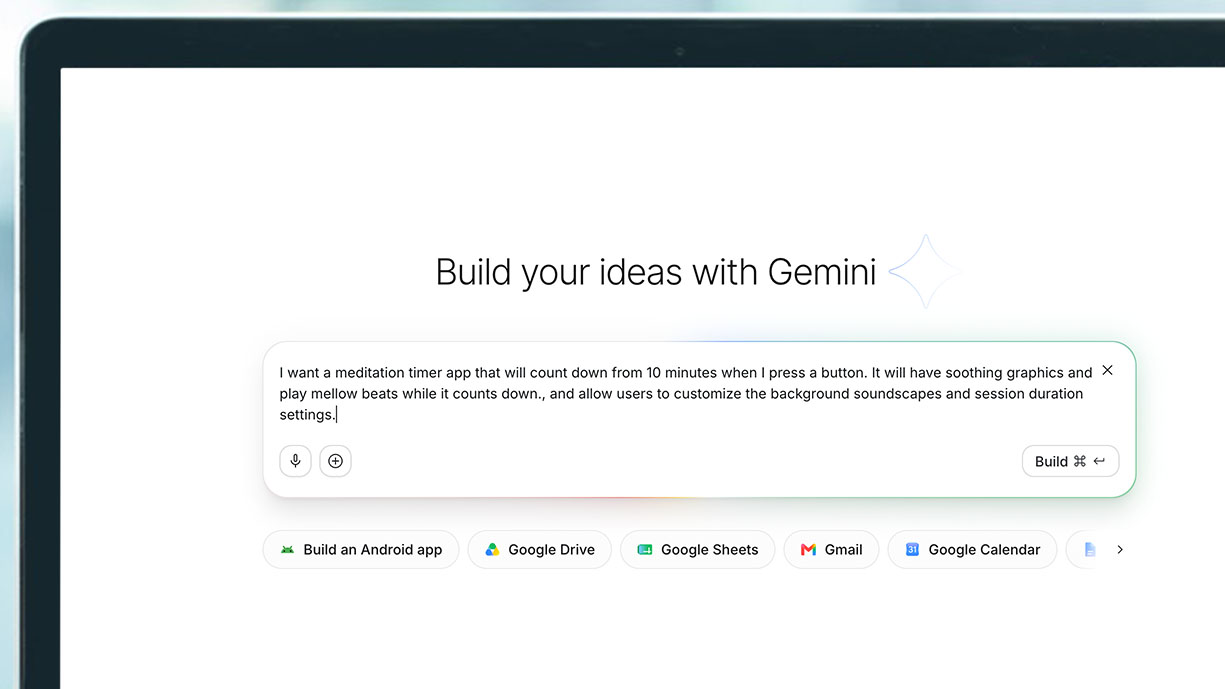
“I want a meditation app timer that will count down from 10 minutes when I press a button. It will have soothing graphics and play mellow beats when it counts down”, and then I noticed that Google was adding suggestions into the prompt for me.
It suggested, "and allow users to customize the background soundscapes and session duration settings.” That wasn’t a bad idea at all, so I accepted the suggestion.
AI Studio started to think about its task, and in just 38 seconds it had come back with a design preview for me to accept or change. Its initial immersive UI design looked perfect, so I accepted that.
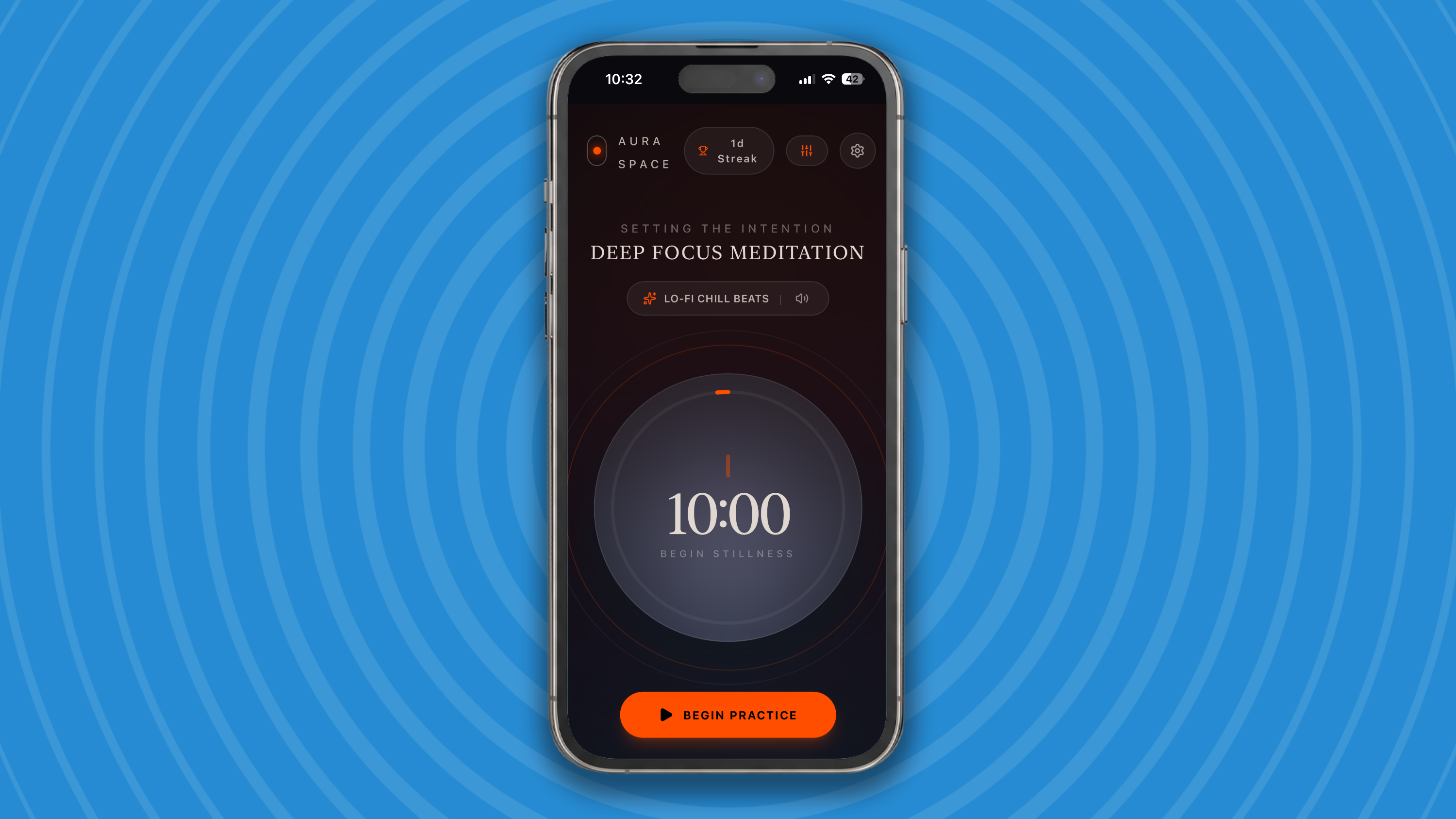
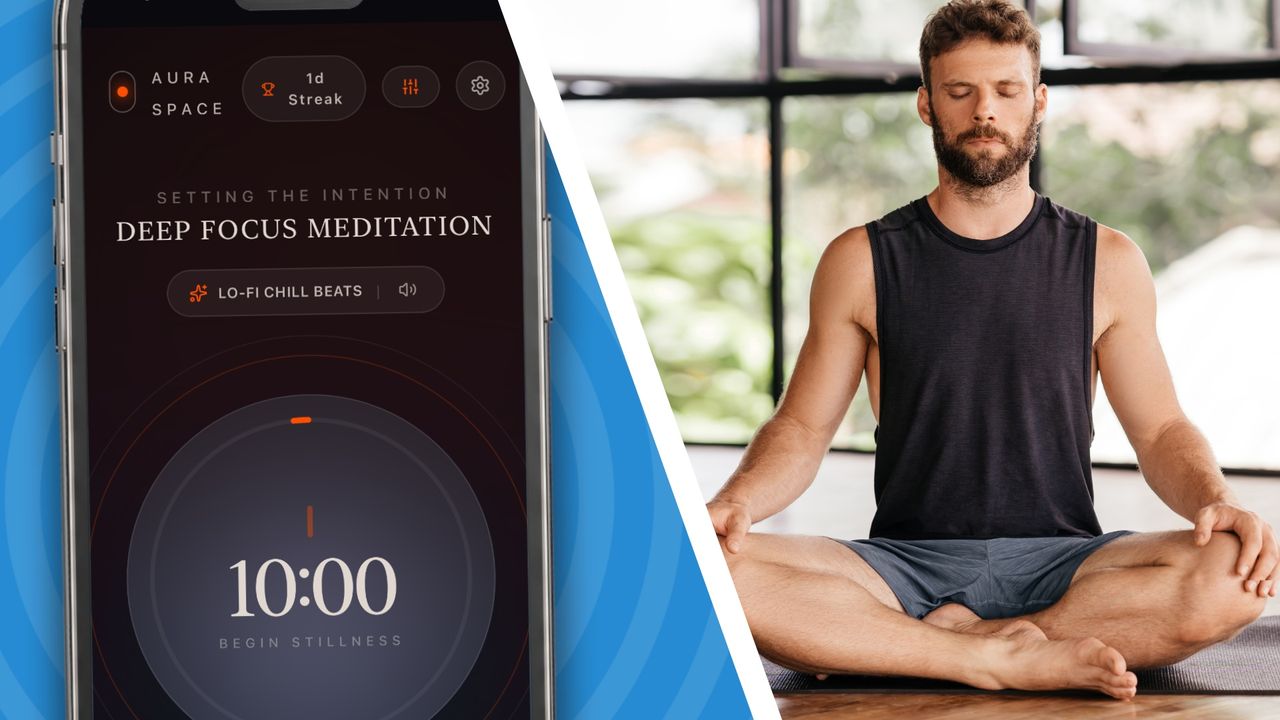
The next thing it showed me was the actual finished app, and it looked great! It had everything I wanted — beautiful calming design, an obvious button to press, a session time selector, and it played chill beats during the session. But it had also added a lot of really useful options, like soothing theme choices, a lead-in time selector, a paced breathing guide, and interval chime bells. And all in a non-intrusive way that kept the app's core functionality simple. I was impressed.
The whole thing had taken just 238 seconds to produce. That’s under 5 minutes.
(Image credit: Google)
Deploying your app
The question now was: how to get the app from existing inside AI Studio and onto my iPhone? That is where I wanted to run it, not on my MacBook. That’s what the Publish button in AI Studio is for. It publishes your app to a unique website address. It’s public, so you can go there now and use my app yourself, if you like.
One option for running the app on my iPhone was to simply click on the URL in the iPhone’s web browser. Interestingly, it worked in the iOS Chrome browser, but not in the native Safari browser. Further research revealed that the reason for this was Safari’s default third-party cookie block. Safari blocks third-party cookies by default via Intelligent Tracking Prevention (ITP).
It turns out that this is pretty easy to fix; just go to your iPhone Settings > Apps > Safari. Turn off the toggle for Prevent Cross-Site Tracking.
I did that, and now my app ran fine in Safari as well as Chrome.
I could make a bookmark for my app and continue to run it in my iPhone’s browser if I wanted, but it’s much better to choose the ‘Add to Home Screen’ option because this makes your app feel much more like a stand-alone app on your iPhone. It runs it without any of the browser furniture on screen at all.
To do this, choose the three-dot menu in Safari > Share > Add to Home Screen. Now you’ve got a new icon on your iPhone.
(Image credit: Apple)
An app I’ll use every day
My meditation timer app has quickly become something I use every day and has earned a coveted place on the first page of my Home Screen. But it’s just one possible application of using AI Studio — whatever app you want, you can build it easily.
Google’s AI Studio means that you can go from “I wish there was an app that did X” to “I’ll just build one” in seconds. You don’t need to learn how to code, and you don’t need to have really any skills, just the ability to write a description of what you want your app to do. And AI Studio will even help you with that.
The result isn’t going to replace the App Store. It’s a web app rather than a polished native iPhone app, and there are still limits to what you can build without coding knowledge. But for small, personal tools like this, that hardly matters. I didn’t need millions of downloads, regular updates, or a business model. I just needed one app that worked exactly the way I wanted it to.
That might be the most exciting thing about AI app builders. For years, when an app was almost right, you either tolerated its flaws or kept searching for another one. Now there’s a third option: describe the missing app, build it yourself and put it on your Home Screen before you’ve even finished complaining about it.
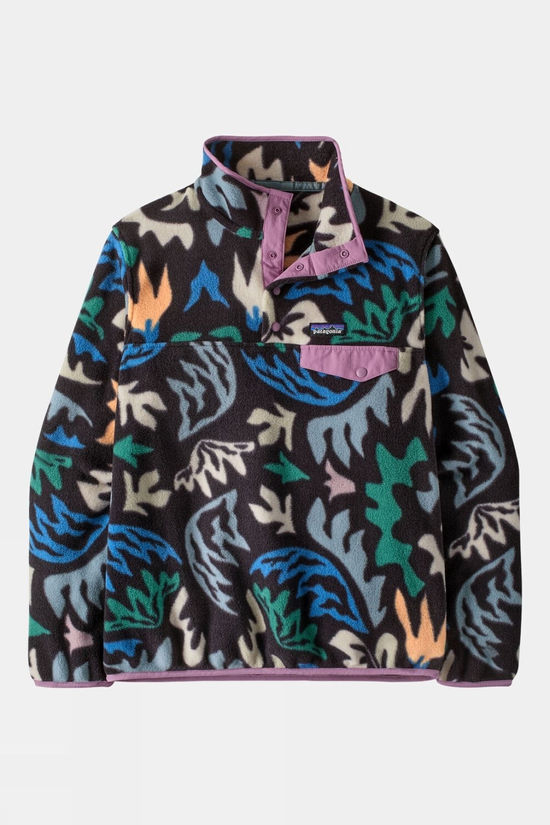
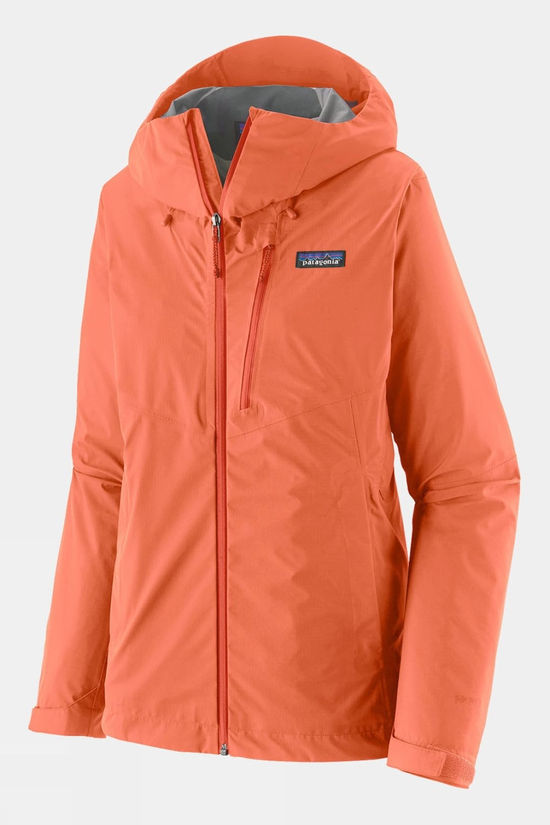
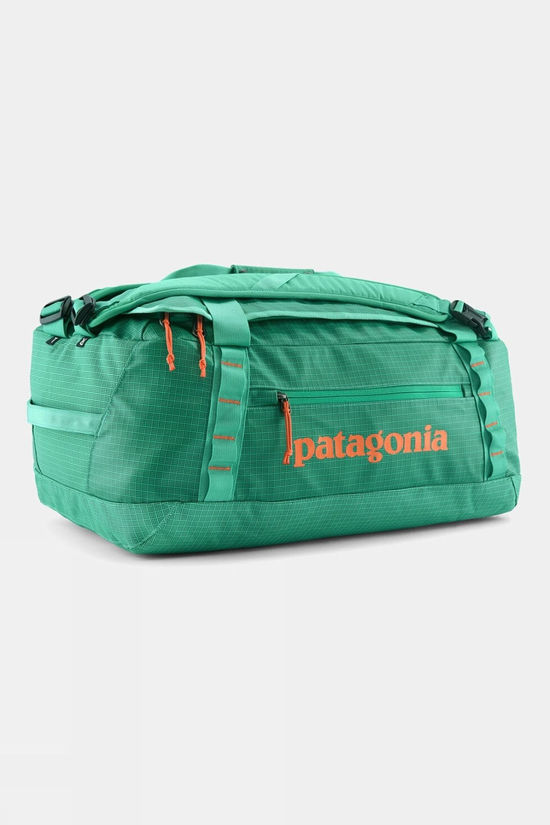
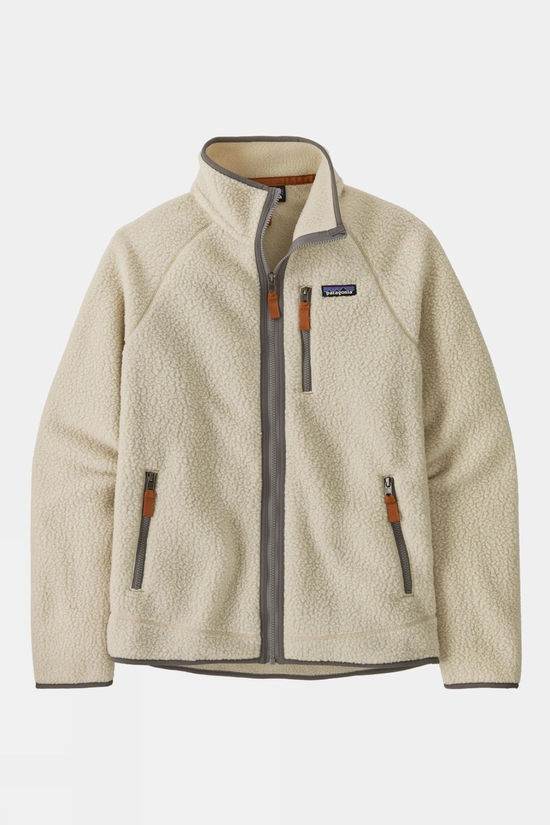
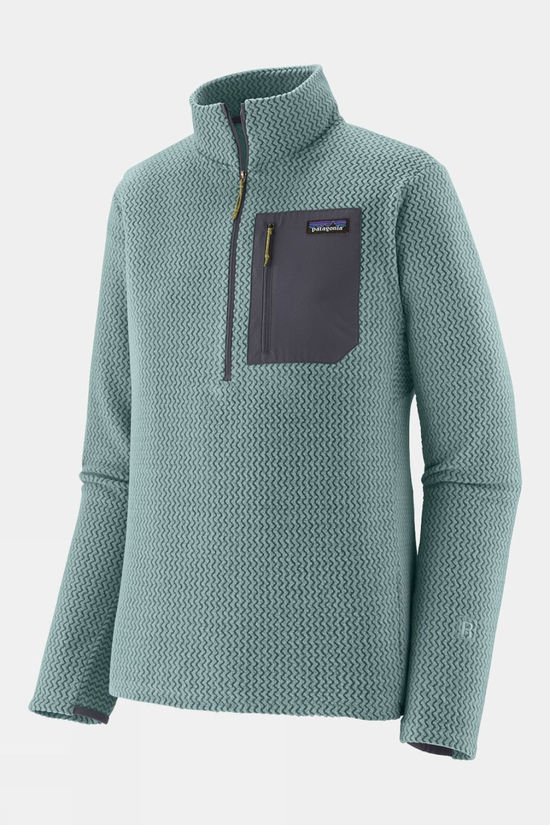
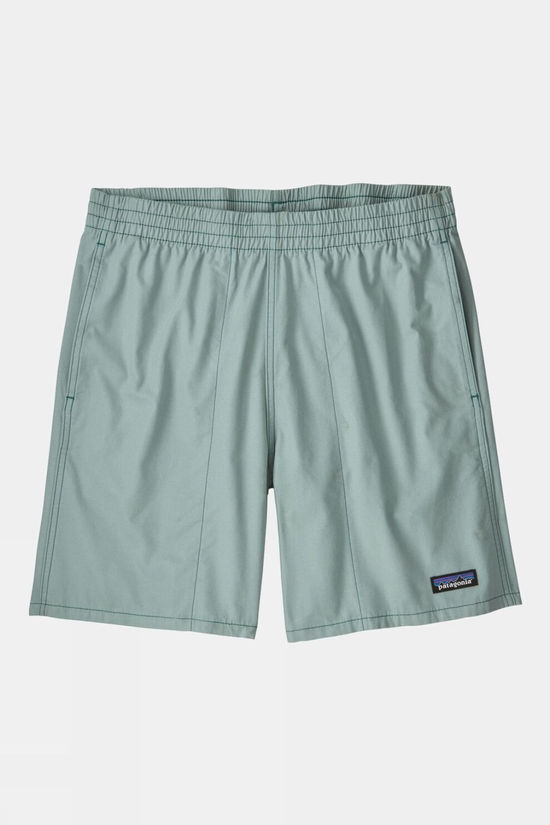
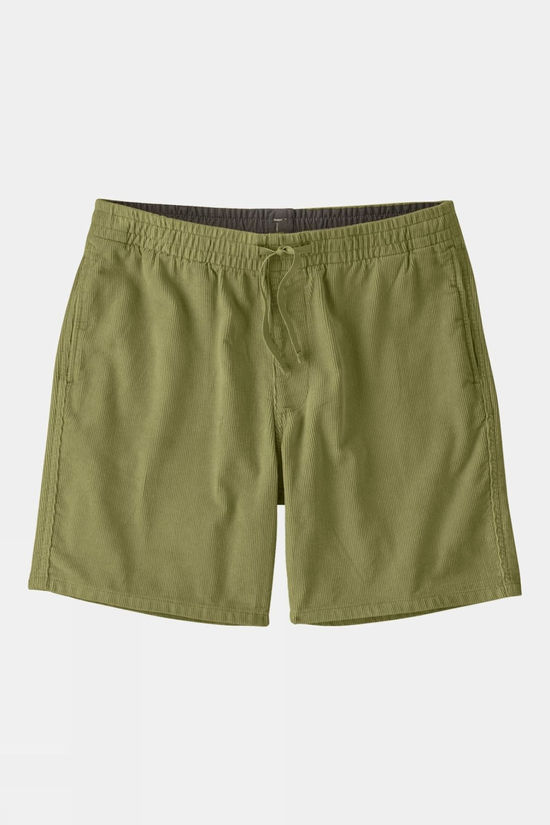
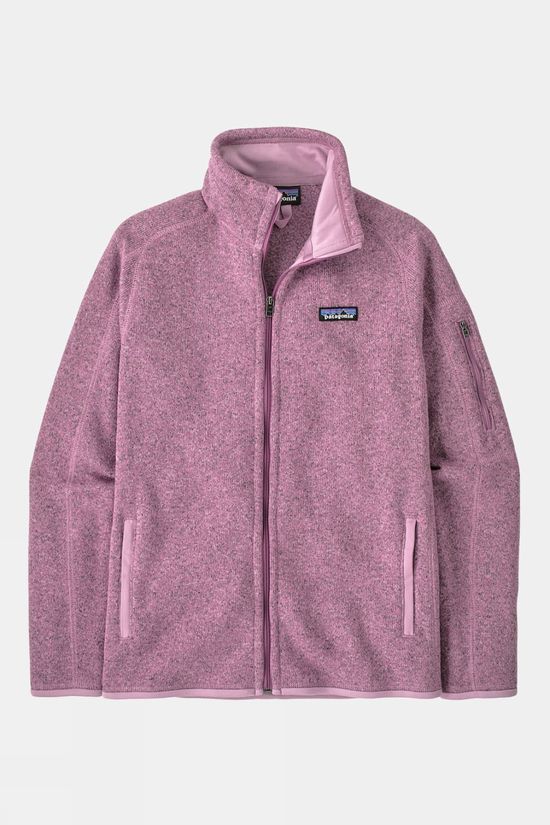
Patagonia is one of the biggest names in outdoor clothing, and especially impressive when it comes to sustainability — great news if you want to protect those beautiful natural landscapes you're planning on hiking over or camping in this summer.
I'm a big fan of Patagonia's products, but they don't come especially cheap. So I was particularly pleased, when hunting for kit for my next adventure, to uncover a goldmine of Patagonia discounts at Cotswold Outdoor. There are deals on a wide range of kit for every weather eventuality — important if you're planning on spending any time in the UK, where you can never be quite sure if you'll be facing sweltering heat or a torrential downpour.
Below, I've rounded up my pick of the best discounts across the men's and women's ranges, including fleeces, waterproofs, base layers, tees and shorts, with a few accessories thrown in for good measure. Happy exploring!
Outdoor kit for summer adventures
Patagonia
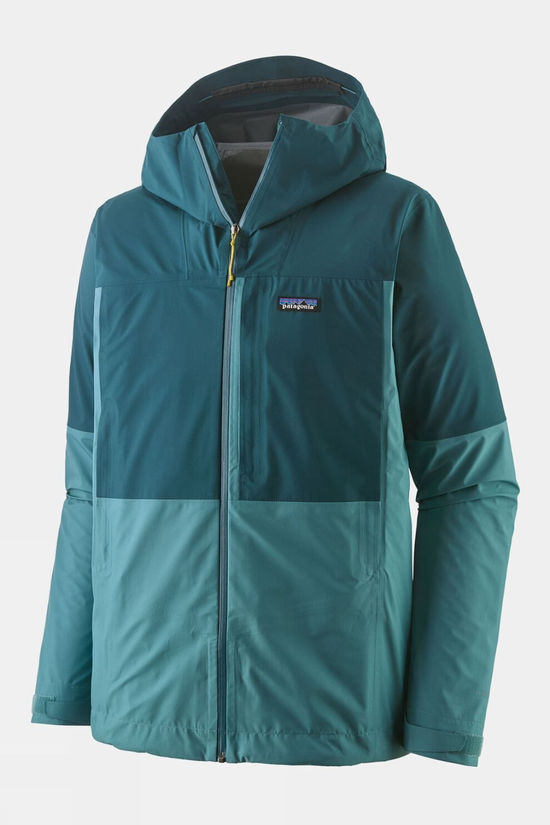
Men's Boulder Fork Rain Jacket
Patagonia
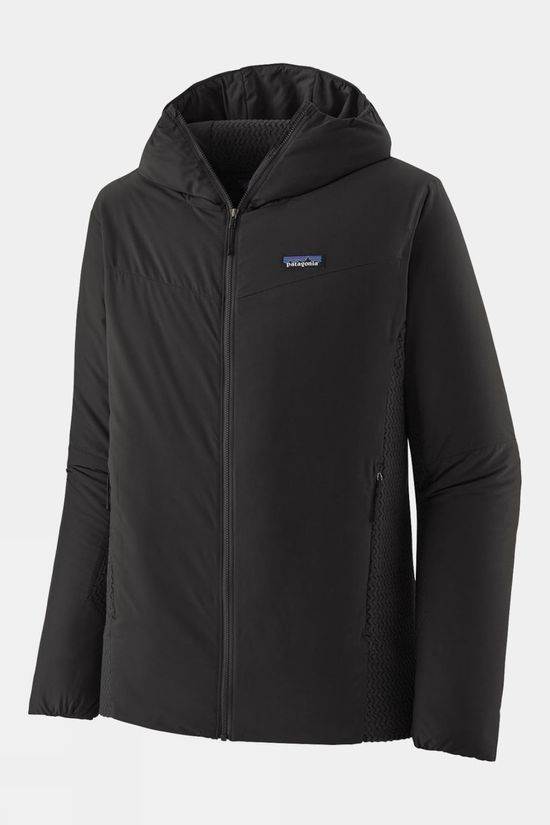
Men's Nano-Air Light Hybrid Hoodie Jacket
Patagonia
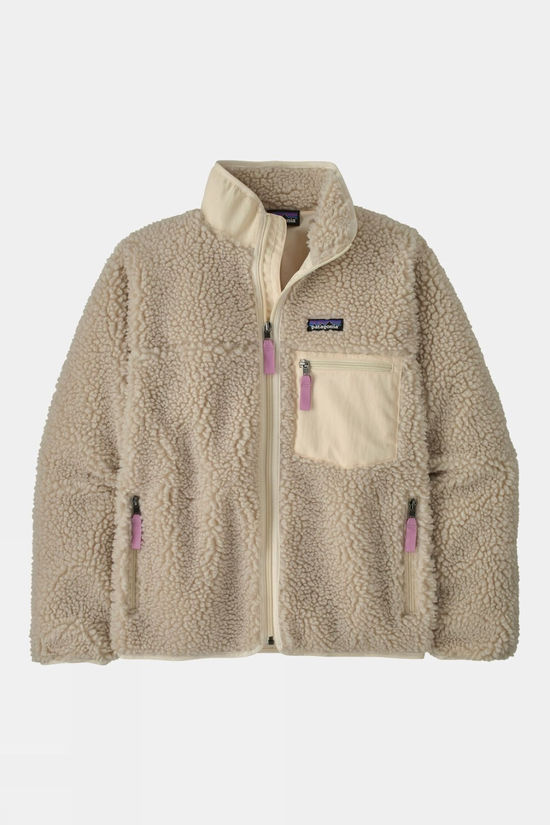
Women's Classic Retro-X Fleece Jacket
Patagonia
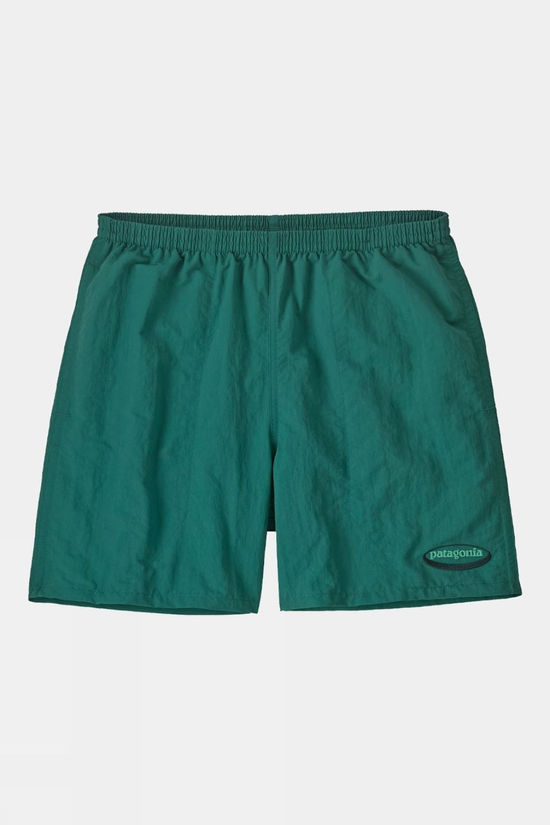
Men's Baggies 5" Shorts
Patagonia
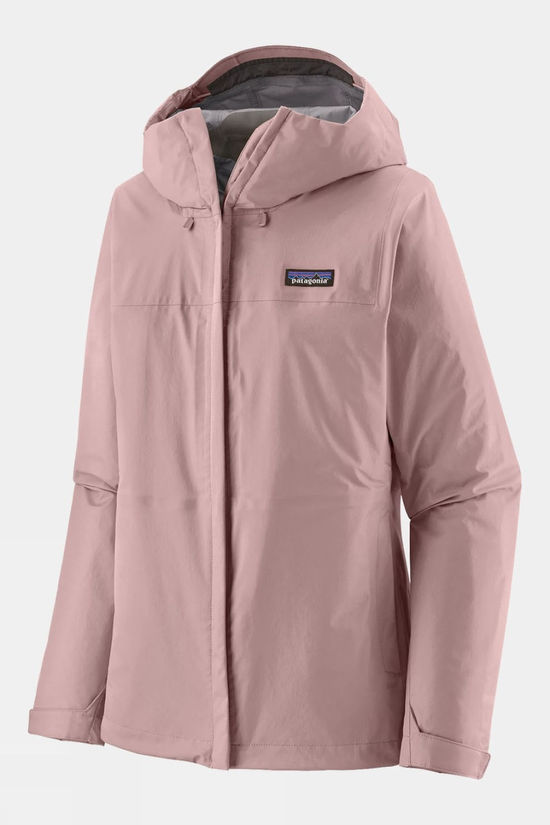
Women's Torrentshell 3l Jacket
Patagonia
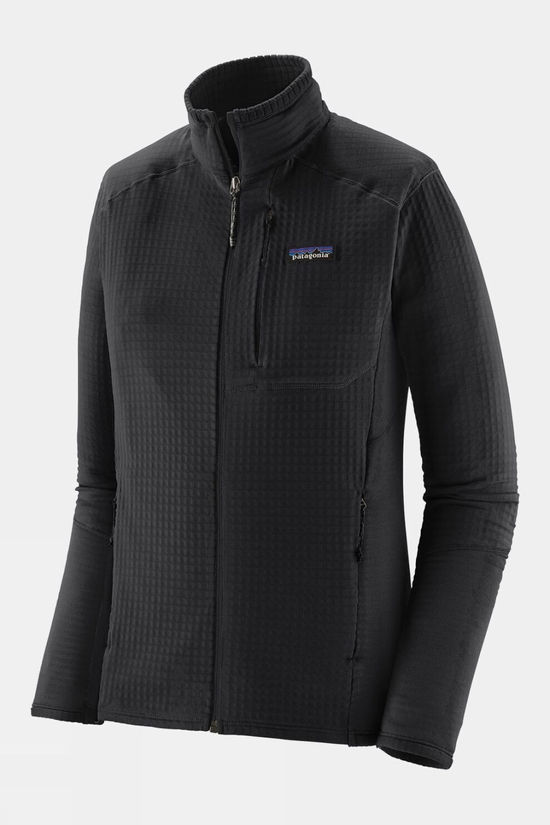
Women's R1 Fleece Jacket
Patagonia
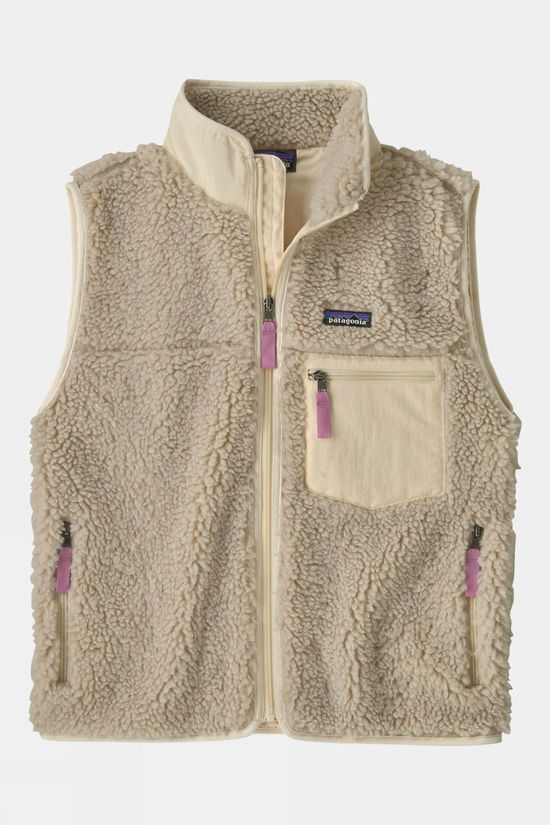
Women's Classic Retro-X Vest
Patagonia
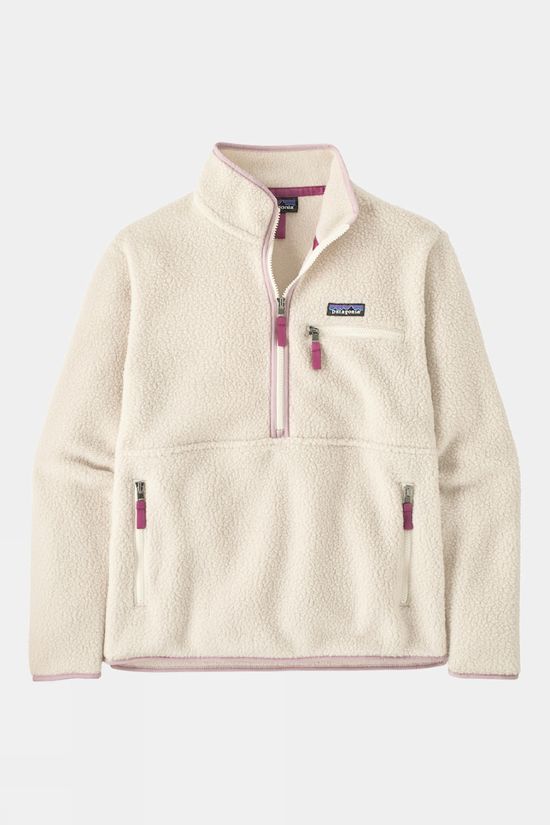
Women's Retro Pile Marsupial Fleece
Patagonia
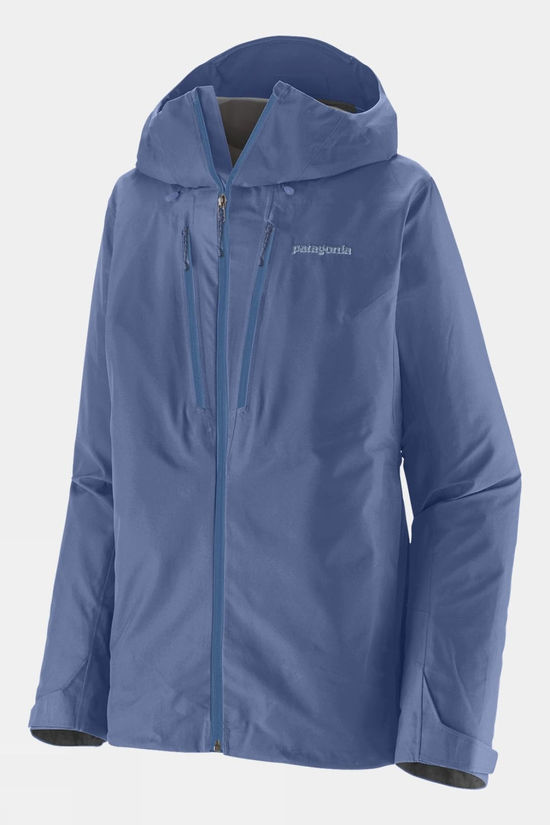
Women's Triolet Jacket
Patagonia
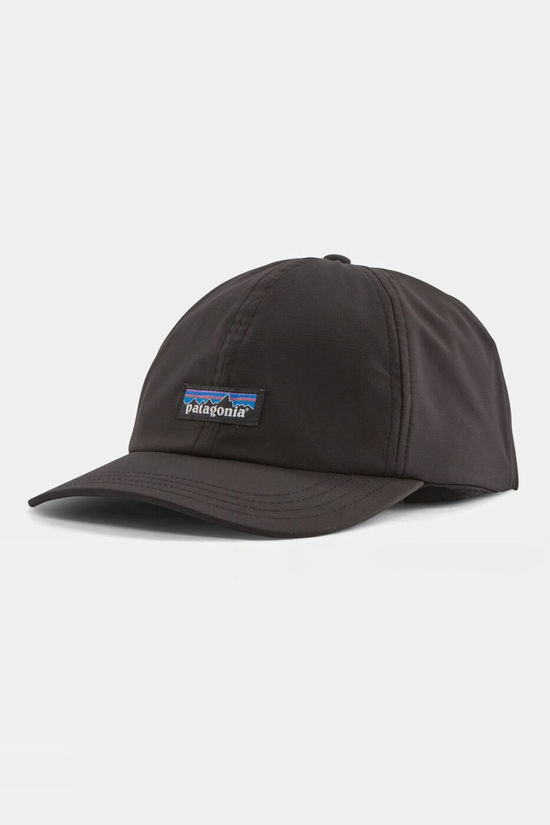
Unisex Terrebonne Cap
Patagonia
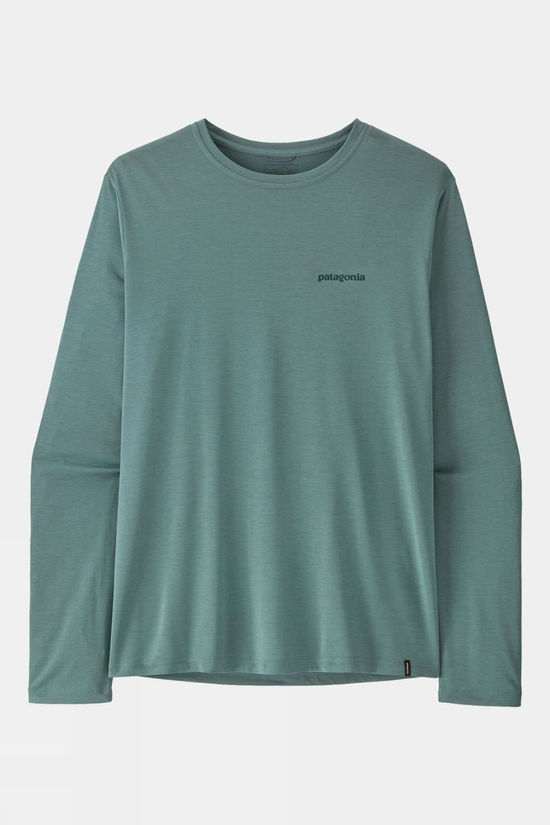
Women's Capilene Cool Daily Long Sleeve T-Shirt - Boardshort Logo
Apple’s wearables weren’t impacted by these price hikes, which is good news for anyone looking to upgrade to a watchOS 27-compatible device (as there will only be a select few left) or if you’re keen to get a swanky new watch to track your workouts.
The Apple Watch 11 was already going at a fantastic price of AU$429 during Prime Day last month, but surprise, surprise, it’s ever-so-slightly cheaper now, and it’s not even sale season! The Apple Watch Series 11 with the 42mm chassis and GPS-only option is now AU$2 cheaper, making this the lowest-ever price on Amazon Australia — that’s 37% off in case you were wondering.
This price beats the AU$429 we saw during Prime Day, officially making this 37% discount the best we’ve seen for the Apple Watch Series 11 in Australia. The 42mm is also the only size discounted for the GPS-only version, so you’ll have to get the LTE option if you want the larger 46mm model, which is also discounted to AU$677, or 25% off, but there’s very limited stock.View Deal
Our Apple Watch Series 11 review called it “the most capable and best-looking” mainline Apple Watch yet, thanks to its larger battery capacity and brighter, more power-efficient and more scratch-resistant Always-On Retina LTPO3 OLED display compared to its predecessor.
Apple rates both the 42mm and 46mm models’ battery life at 24 hours of typical use and up to 38 hours in Low Power Mode, with battery capacity up 9% and 11%, respectively. Our reviewer found the claim checks out, with tests getting a full day and a half of battery life with light use, but the Low Power Mode makes it go even longer.
Health tracking is more comprehensive with the Series 11, adding blood-pressure monitoring to the usual arrhythmic heart-rate alerts, ECG, wrist temperature, respiratory rate and cycle tracking. Hearing health and Sleep Score are other notable additions, but these are also available on the cheaper SE 3 and have been rolled out to older models too.
Admittedly, the Apple Watch Series 11 won’t be much of an upgrade over the Series 10 because of the very similar hardware (and watchOS 27 compatibility), but upgrading from the Series 8 or older models, or even the Watch SE and SE 2, will see a significant performance jump and a longer support period.
And at this price, you don’t even need to wait till Black Friday as we don’t see it getting much cheaper than this in a few months’ time.
A new study from the University of Edinburgh suggests that workers over 50 may be experiencing a largely hidden sleep crisis. Since I’m well into my fifth decade, I’m comfortably inside that risk group, and like many people, my biggest obstacle to sleep is not always tiredness; it’s getting my brain to stop working.
The researchers found that nearly 70% of participants in its study (which admittedly was quite small at just 45 participants) experienced persistent, clinically significant sleep problems, despite having no known history of sleep disorders. Even more concerning, almost 92% met the clinical threshold for a sleep disorder at least once during the study.
Many of these sleep problems were closely linked to work-related stress, researchers said — which got me thinking about ways I could reduce my own work-related stress, and whether AI could help.
It struck me that there were three easily achievable things that I could do with AI to help me sleep better, so I tried them — and the results surprised me.
(Image credit: Shutterstock / Media_Photos)
Task one: emptying your head
It’s difficult to sleep when you’ve got a million thoughts from the day buzzing around your head. What can help is writing them down. It makes you feel like you don’t need to keep them alive in your brain, because there’s a record of them somewhere. It turns out that AI can be very helpful for this. I used the prompt:
“I’m going to tell you everything currently occupying my mind. Sort it into things I need to do tomorrow, things that can safely wait, and things I cannot control. Keep the response short and practical.”
I then used ChatGPT's Voice mode to perform a brain dump into the AI. ChatGPT turned my vague mental noise into a finite list, and it felt like a weight had been lifted. I could then close the app and put down my phone knowing my thoughts have been “stored” somewhere and weren't going to be forgotten.
Task two: challenging the worry
For this one I took a real concern, like a deadline, unfinished article or packed schedule. Then I described it to ChatGPT, using this prompt:
“This thought is keeping me awake: [insert thought]. Don’t simply reassure me. Tell me what is factual, what I may be assuming, what I can act on tomorrow, and what I need to let go of tonight.”
That instruction to not simply reassure you is important, otherwise ChatGPT may produce soothing but meaningless encouragement. It worked for me, but if you find that still doesn't get you exactly what you want, you could also also ask:
“What is the smallest useful action I can take tomorrow that would make this problem feel more manageable?”
Using this prompt the AI reduces a large amorphous worry to one single action.
Task three: Voice Mode
My last idea was to get ChatGPT to help me wind down. ChatGPT has recently improved its voice mode, and that inspired me to use it to help me wind down at night. Listening to ChatGPT's voice is a lot more relaxing than looking at a screen of course, since you can close your eyes. I tried this prompt:
“Guide me through a five-minute wind-down exercise. Speak slowly, leave pauses, and do not ask me questions. Begin with breathing, then relax each part of my body, and finish with a calm visualization.”
If that doesn’t work for you then you can always get ChatGPT to tell you a story :
“Tell me a calm, deliberately uneventful 10-minute story designed to help me fall asleep. Nothing dramatic should happen, and there should be no questions or cliffhangers.”
I started the voice routine, placed the phone face down and treated ChatGPT like an audio player rather than continuing to chat with it. It worked for me, even if the voice I'd chosen to use wasn't quite as relaxing as it could have been. It's worth experimenting here to find a voice you like.
Best practice
I found all three of these prompts quite effective. The first one, which enabled me to turn all the thoughts spinning in my head into a practical list to deal with tomorrow, was especially helpful.
With all of these exercises, the key is to put your phone down after you’ve done one or more of them. You need to stop interacting with it; remember, the goal is closure, not an endless bedtime conversation.
Once you’ve closed down your day with ChatGPT, you need to close down ChatGPT, too.
When I got engaged a couple of years ago my wife asked if there was anything I’d want in return to symbolize it: she gets to wear a ring, would I want a new accessory or piece of jewellery to match her. My immediate answer was a watch, with the plan that it’d be the one I wear on our wedding day.
I’d need something smart and sophisticated. Something that I wouldn’t regret seeing immortalized in our wedding photos for decades to come, and something I’d want to wear often.
I had ideas for the watch I'd get, but as wedding costs grew the idea of splashing out on a pricey timepiece felt less and less sensible. Even less so when I was also considering grabbing a smartwatch — as my pre-wedding fitness regime kicked into high gear and a more sophisticated tracker than my smart ring was feeling increasingly essential.
That’s when my eyes settled on a gadget that I thought might be both: a classic I could wear to the gym and on my wedding day. My wife was skeptical, but after seeing it in person she agreed that it did look the part.
So she let me wear a Samsung Galaxy Watch 8 Classic to our wedding. It might be my current favorite gadget, and I can’t understand why there isn’t a Galaxy Watch 9 Classic.
A winning design
The Classic doesn’t look like your basic utilitarian smartwatch. It dodges the simplistic look of the regular Watch 8, the Pixel Watch, or Apple Watch, and also the overly sporty designs of a Garmin or similar running companion.
Besides offering a larger screen size — 46mm vs the base model’s 40 or 44mm options — the Classic boasts a chunkier design than the regular Watch 8, and comes with a rotating metal bezel controller which provides some extra detailing and also a smoother way to navigate watch menus besides swiping.
Samsung Galaxy Watch 8 Classic in white (Image credit: Future)
Coupled with its band — the Hybrid which combines durable rubber with faux leather — and a watch face with moving hands you could very easily confuse the Classic for an analogue timepiece at a glance. And frankly, I just love how it looks and feels on my wrist (it puts my aged Fitbit to shame).
The design doesn’t just look impeccable, it can handle so many different scenarios too.
Besides wearing it for formal occasions I’ve taken the Galaxy Watch 8 Classic everywhere I go. To the office, on a 5K run, on hiking treks, to the gym, when I jump in the pool, and so much more. I even wear it in bed to track my sleep.
While the weight and size can be a little strange at first, after my first night sleeping with it I’ve had no complaints, and the trade off for the bulk is the Watch feels very usable and looks stylish.
Useful but not distracting
(Image credit: Future)
A similar effect could have been achieved with a smart ring and an analogue watch, wearing both to match the health tracking utility and sophisticated packaging. However I’ve been steadily growing frustrated with even the best smart rings.
The main draw of a ring is how simple it is: slip it onto your finger and it’ll follow your health and fitness metrics for days between charges. This simplicity falls apart, unfortunately, as soon as you want to access your data.
The apps of various rings I’ve tried have started to feel a little messy, and because I constantly have to check my phone to start workouts or understand my ring’s data I find I’m easily distracted by the plethora of other software and notifications I brush past on the way to my ring’s app. When I’m ready to run or hit the weights I want to focus, not succumb to a last-minute distraction.
With a watch I can start my tracking from my wrist at the press of a button. I can also see essential performance stats on the 46mm display, or (because it pairs nicely with my Samsung foldable) as part of the morning Now Brief on my phone.
I also love the non-fitness apps integration. I don’t text from my watch much, but I do often rely on wrist-based music controls and Google Maps directions — I can have a digital map while my phone can stay safely in my pocket where would-be biker thieves can’t snatch it.
(Image credit: Future / Hamish Hector)
My only gripe is I wish I could change the long press control on the bottom button. It defaults to opening Samsung Wallet and cannot be changed. I’m a Google Wallet user and while I could maybe move a couple of cards over I’m a) a bit too lazy, and b) weirdly nervous about paying for things with my watch.
Where’s my Watch 9 Classic, Samsung??
The Samsung Galaxy Watch 9, Watch 8 Classic and Ultra 2 (Image credit: Future / Hamish Hector)
Given my Classic love I was hoping to see a Watch 9 Classic when Samsung debut its new lineup, but it was missing — replaced by a regular Watch 9 and a Galaxy Watch Ultra 2.
The Ultra 2 comes close to being a Classic — it adopts the bezel, though it doesn’t rotate — especially if you pick up the PeakForm Band, though it does also come at a more premium price.
And the lack of a rotating bezel is genuinely a major let down. You just have to trust me.
Though I doubt this means the end of the Classic. It has taken a break before to make room for the original Galaxy Watch Ultra, and I expect it’ll return next year as the Watch 10 Classic.
I’ve been lifting weights at home for a few years now, but recently I’ve found myself stuck in a rut. If anything, my routine has become a humdrum habit, without a clear goal and sense of progression to keep me motivated. Ten exercises, three sets, eight reps, 30 minutes. I’ve run through it so often that I could do it in my sleep.
I’m a true tech lover, so of course I got artificial intelligence (AI) to help me out. Apple has just launched its revamped Siri AI and I’ve been playing around with its early beta edition, so I was curious to know if its new skills extended to solid fitness advice — and if they did, how they held up against the ever-popular ChatGPT.
To find out, I asked each chatbot to dream up a workout routine that could revitalize my fitness habits. After working through both plans and tapping a professional personal trainer for their insights, I was left with the impression that only one of the two workout plans was worth sticking with.
The setup
(Image credit: Dean Drobot / Shutterstock)
To start with, I put together a prompt that I then fed into both AIs. The goal was to briefly explain my physical state and outline the kind of workout I was after, noting any constraints such as time and location (I work out at home).
Here’s the prompt I used:
“I am a 36-year-old man in good physical shape who exercises regularly. Create a three-day overall workout plan for me with the goals of hypertrophy and building muscle. The workout will be done in a small home office using dumbbells as the only equipment. It can include calisthenics as well as weighted exercises and should aim to cover different areas of the body. Ensure it lasts no longer than 45 minutes. Explain how often each workout session should be repeated over the course of a week and when rest days should take place, if required.”
I didn’t add any subsequent follow-up messages, as I wanted to know what each AI could come up with given the kind of information that a regular user might provide.
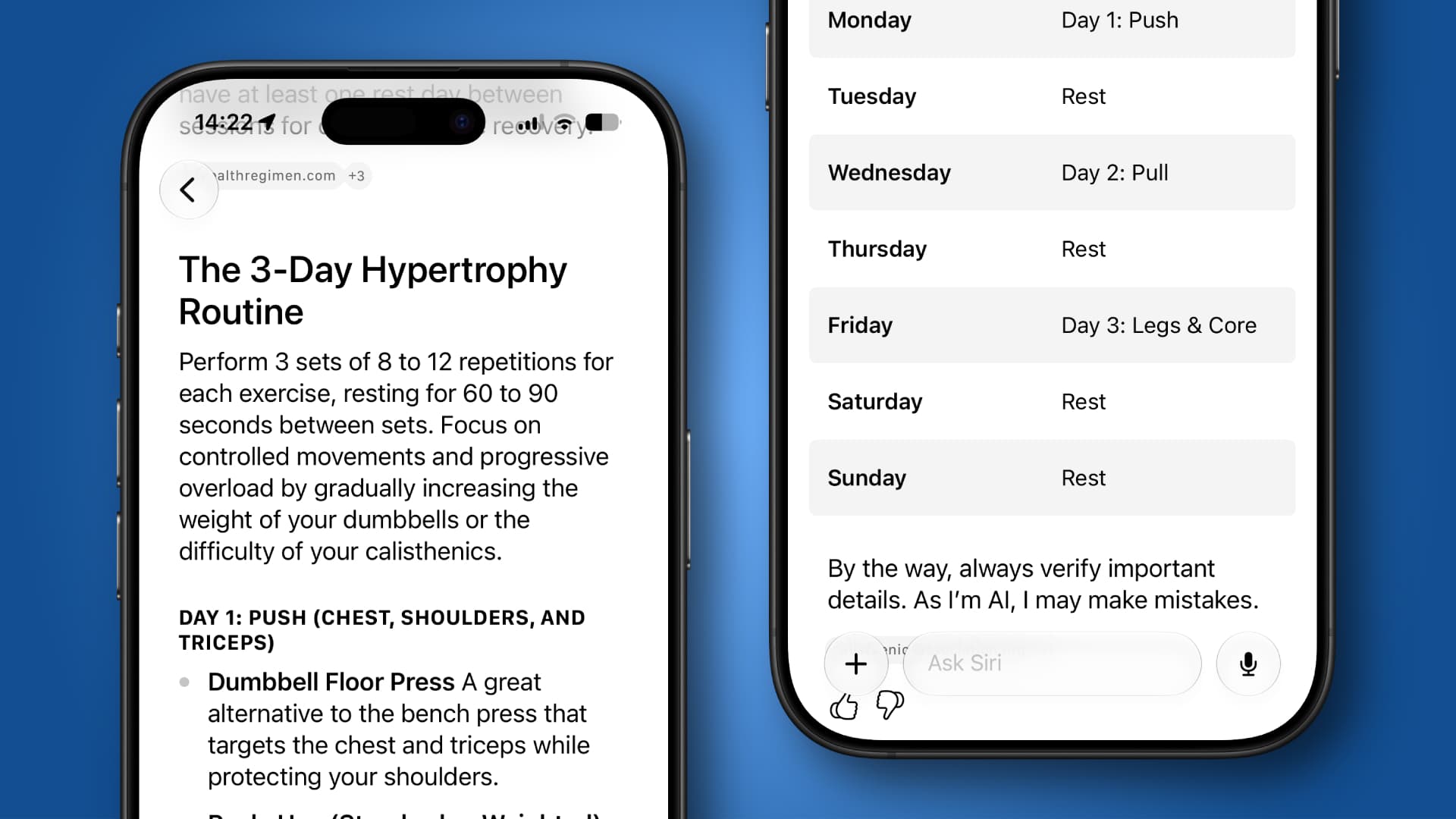
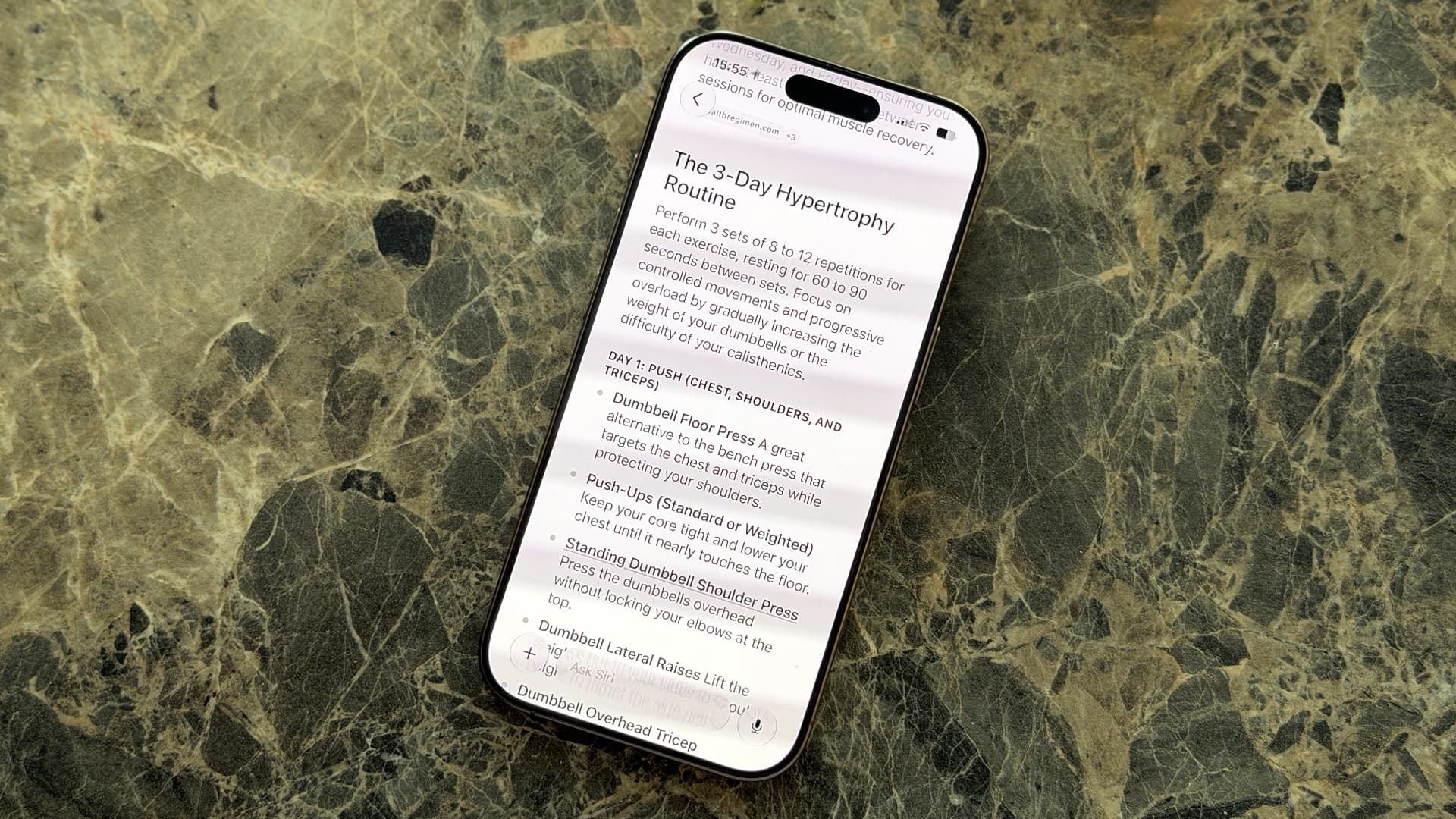
When given my workout prompt, Siri AI put together a plan that included a “push” day focusing on my chest, shoulders and triceps; a “pull” day centered on my back, biceps and rear delts; then a final “legs and core” day. It offered a workout schedule and suggested that each session would take around 45 minutes, with three sets of 8-12 reps and a rest of 60-90 seconds between each set.
“Focus on controlled movements and progressive overload by gradually increasing the weight of your dumbbells or the difficulty of your calisthenics,” it advised. Each exercise was accompanied by a short explanation of how to perform it, which was a welcome touch.
Putting Siri’s action plan into practice, it was obvious that my old self-made workout plan wasn't pushing me hard enough, as the first day’s workout left me feeling like I’d worked harder than I had for months. Off to a good start, I thought.
(Image credit: Future)
But Siri’s plan came up well short of 45 minutes, with most days’ efforts lasting a mere 25 minutes. And aside from the lack of warm up, there was also no word on how to complement the exercises with targeted nutritional intake. That’s a serious oversight in its workout regimen, especially for beginners.
To help me better understand the plans from both Siri AI and ChatGPT, I asked personal trainer and fitness coach Scott Laidler for his opinion. Speaking of Siri’s effort, Laidler said that it had a few things going for it.
“Siri’s is simple which means there is little to misinterpret,” said Laidler, adding that “the equipment substitutions are sensible for the office environment.”
While Siri recommends upping the weight as you get stronger, it doesn’t say “what to do once this plan hits diminishing returns, which is months away, not years,” according to Laidler. While it sounds like an open-ended plan, “it’s really only built for a defined window,” Laidler warned, which could “lead to frustration unless you knew to come back to the table and ask for a new plan several times per year.”
That’s a problem inherent in the responses from both Siri and ChatGPT.
The class leader: ChatGPT
(Image credit: Future)
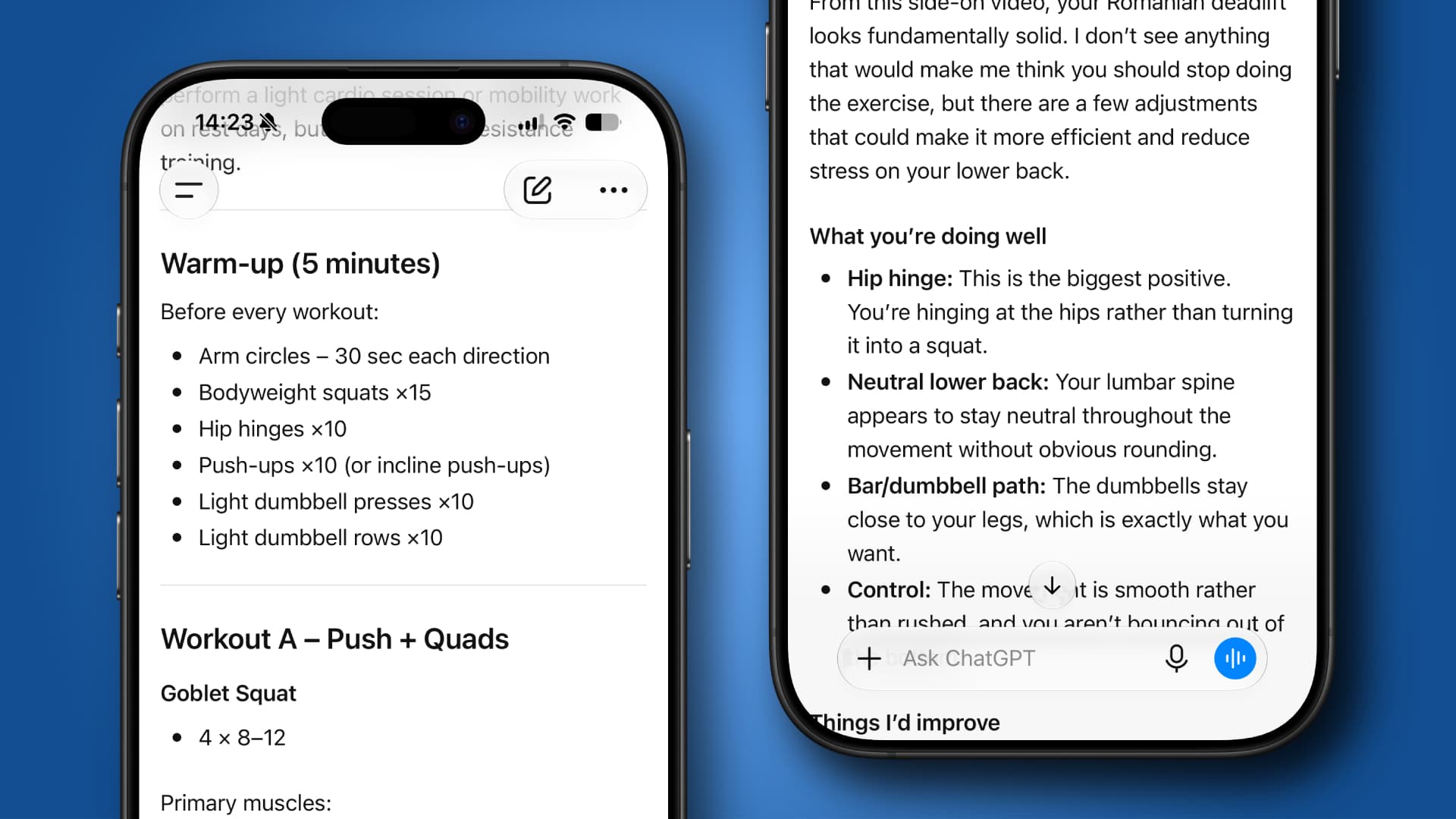
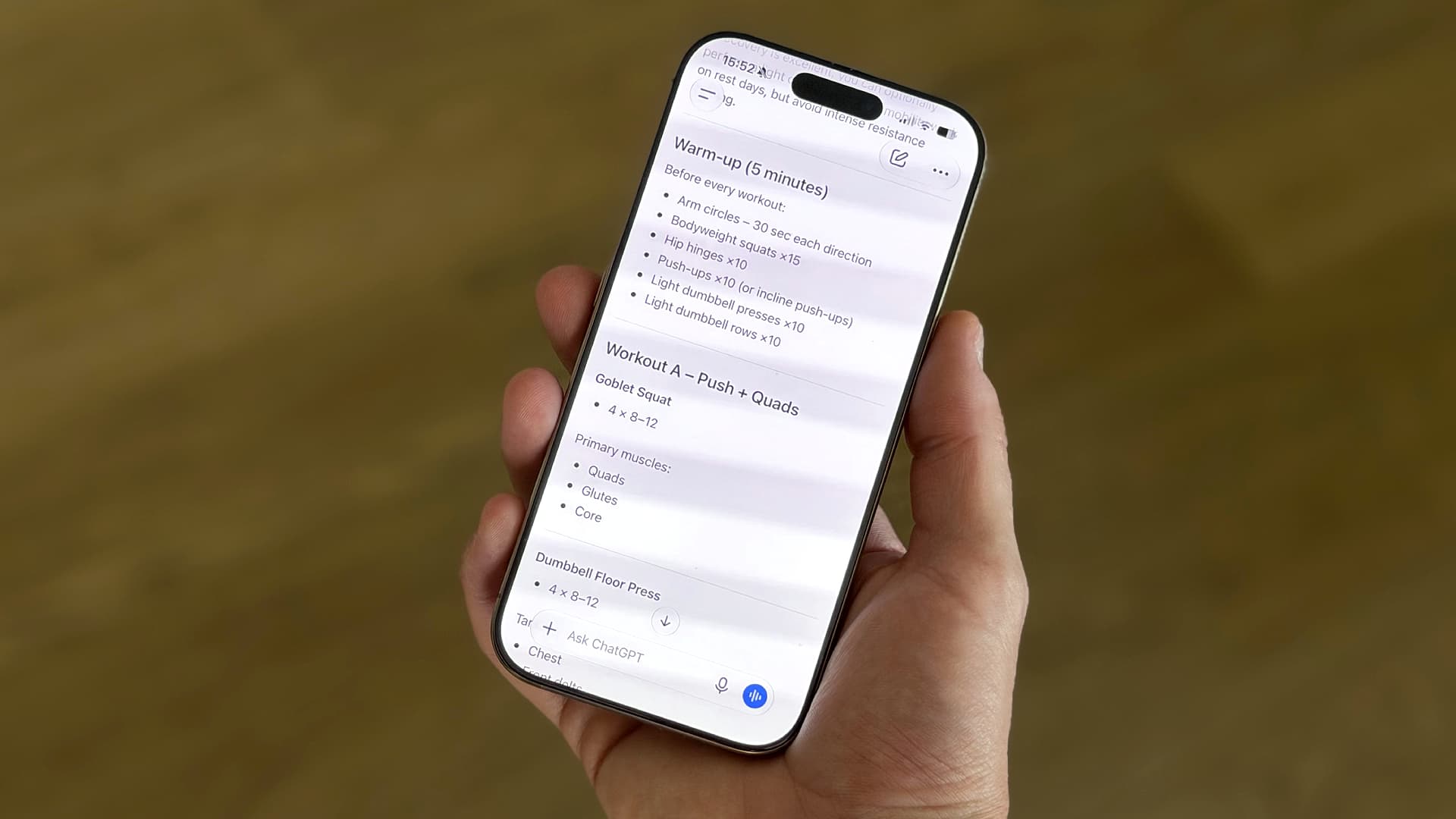
While Siri AI’s workout plan was concise, ChatGPT was much longer. It explained what the priorities of the workout were and gave some basic advice, such as aiming to finish with one or two reps in reserve as a guidance on how much weight to use. It then listed a weekly schedule before laying out a simple warm up to perform each session.
Each exercise was listed, with varying numbers of sets and reps, followed by a note on which muscle groups were being targeted. Unlike Siri, there was no explanation of how to perform each exercise, which feels like an oversight with potential for injury. That was a clear win for Siri AI.
At the end, ChatGPT included a “progression” section explaining how to push yourself further, a guide on recovery and nutritional intake, then an explanation of “why this split works.” Taken together, it was a detailed workout plan, if a rather verbose one.
(Image credit: Future)
According to Laidler, ChatGPT’s plan was “the better program by some margin.” Siri “applies a flat ‘three sets of 8-12’ to every exercise, with each muscle group trained once a week,” Laidler noted. ChatGPT, on the other hand, “hits most muscle groups twice across the week, varies the sets per exercise, includes a warm up, and gives real progression logic. On paper it’s the more sophisticated plan.”
ChatGPT “is closer to what the literature would see as optimal for the stated goal of gaining muscle,” Laidler stated. “Reps in reserve (RIR) offers a way for the user to keep a reasonable distance from failure, which de-risks the plan especially when training alone.”
OpenAI’s LLM has a trick up its sleeve, too: it can analyze your form based on uploaded videos. I asked it to judge my Romanian deadlift form and it gave me an 8.5 out of ten, giving pointers on what I did well and what could be improved. I wouldn’t take this advice over that of a human expert, but compared to Siri AI — which can’t do any of this at all — it’s another point to ChatGPT.
The overall picture
(Image credit: LStockStudio/Shutterstock)
Despite their individual strengths, Laidler warned that neither Siri AI nor ChatGPT had created an optimal workout plan. As he pointed out, “It doesn’t appear that the LLM has asked follow up questions that may have helped customize the plan a little more.”
This highlights a problem with using AI for personal fitness. While a personal trainer would naturally ask these questions straight away, an AI chatbot won’t necessarily propose them unless prompted. Without a more detailed knowledge of your personal situation, you could end up with a sub-par workout routine that’s not well-suited to your circumstances.
So, if you’re going to use AI to sketch out a fitness plan, make sure to add as much detail in your prompt as possible. Ask it to pose follow-up questions to ensure it has as all the information it needs, and come back to it regularly. Don’t just stick to the plan it gives you and repeat it ad infinitum or you’ll end up like I did: languishing, with your progress grinding to a frustrating halt.
Of course, as Laidler pointed out, the problem with doing this — telling the LLM your injury history, what feels like a hard set, your workout preferences, and more — means that “you need to already know what a well-built program looks like to comprehensively prompt for one.” And if that’s the case, do you even need an AI to help you in the first place?
If you do want to go ahead with an AI fitness coach, ChatGPT is a better bet than Siri AI for now, as it includes more varied sets and targets more muscle groups. Neither is perfect, but Apple has plenty of work to do if it wants to match ChatGPT’s take on fitness advice.
You could be forgiven for thinking that most wearable-tech categories have come as far as they're ever going to. All smartwatches look the same now, and that form factor isn’t going away anytime soon. It's a similar story with smart rings, with “slightly thinner” being the main selling point of the Oura Ring 5. And the screenless Whoop tracker has given birth to a bunch of copycats, including the Fitbit Air, and most recently the Garmin Cirqa.
When you think of wearable tech, you normally think of some sort of fitness tracker. But there is an area of wearables that’s still in flux, as categories do before there’s a consensus on what works: neurotech. Neurotech devices are generally wearable technology to monitor, or temporarily alter, our brain chemistry for optimal performance or to treat neurological injuries, such as post-traumatic stress disorder or depression.
Nootropics — mind-enhancing drugs — are promoted heavily on podcasts, with brands like Gorilla Mind and Alpha Brain enjoying airtime on popular ‘bro-science’ platforms like The Joe Rogan Experience to help get ‘cognitively dialed’. Away from pharmacological solutions, multi-millionaire longevity biohacker Bryan Johnson uses Nurosym, an electrical vagus nerve stimulation device, to “make [his] body more parasympathetic, more chill”.
It’s Nurosym that I’ve been using this week. There are other wearables out there that promise to do all sorts of things — the Neurosity Crown for example (pictured above), promises to improve concentration through “neuroadaptive meditation”, measuring your brainwaves and playing music to that pattern to improve focus during work. All while looking like the sort of thing you might see Patrick Stewart wear in the X-Men films.
The Muse 2 headband is a meditation aid that uses electroencephalography (EEG) sensors to read your brain activity and provide personalized meditation guidance, in much the same way as a smartwatch might read your heart rate and offer workout suggestions.
The vagus nerve, however, is a key target for brain health. Proper stimulation of the vagus nerve is said to offer all sorts of benefits, treating conditions as varied as depression, anxiety, inflammation, bipolar disorder, obesity, POTS, and Alzheimer's. For people without those conditions, vagus nerve stimulation can improve sleep quality, regulate stress and improve relaxation overall, ensuring you're well-rested and ready to tackle life's challenges.
But what if I got a wearable to do it for me? I decided to try Nurosym myself for a week, to see if I could really begin to hack my brain better.
The vagus nerve stimulation device costs a whopping $699 / £599 (around AU$1,300), and looks quite stripped-back for a device of this price. It consists of a fairly simple handheld remote, an attached earpiece with a clamp to fix to your tragus (the small piece of cartilage outside your ear) and a charging cable. There’s mercifully no app or phone connection to speak of; everything happens on-device, which actually goes some way to making me trust it more, as it’s not collecting any data about me.
(Image credit: Future)
“For a long time, neuromodulation has largely meant invasive procedures or treatment delivered in specialist environments,” Dr Greta Dalle Luche, PhD., Nurosym’s head of science, tells me. “Nurosym demonstrates how this science can be translated into non-invasive technology that fits into people’s everyday lives.”
As well as being a doctor in biochemistry, Dalle Luche is also a former professional surfer, so she knows all about optimizing for peak performance. She explains that Nurosym is all about taking “evidence-led neuromodulation” out of the clinical space and turning it into accessible technology. A lot of clinical tests have been done on this device, and it’s advertised as “the world’s most studied vagus nerve stimulator” with $10 million invested in over 60 independent research papers, backed by notable universities and health bodies worldwide.
To use it, you moisten your tragus, fix the clamp, then adjust the signal on the remote — turning it up until you feel a light tingling sensation. That’s the electricity pulsing through your ear to your vagus nerve, stimulating the parasympathetic nervous system to activate your body’s “rest and digest” response.
It seems like as good a place as any to start. I wet my ear, clamped it onto myself and sat quietly, letting the tingles of electricity wash down my ear canal and into my brain. Nurosym guidelines, and reports on the r/vagusnerve subreddit (because of course there’s a subreddit), suggest that it can take anything from a few days to months to feel the effects, which are said to include a reduction in depressive or anxiety-related symptoms, better sleep, and better-quality rest and relaxation. These claims are anecdotal, and user-dependent, and the results are subjective, with no objective measure of they actually work or produce meaningful results, certainly in a short amount of time such as a week.
Dalle Luche tells me that “factors such as an individual’s underlying vagal tone, or in other words, the ‘health of their autonomic nervous system,’ influence the proportion of the response to the device". So it's possible that I may end up not having a proportional, or significant, response.
(Image credit: Future)
Nonetheless, I did my best to empirically measure my body’s responses to this new technology, monitoring my sessions on a Garmin Cirqa fitness tracker as if it was a workout, and wearing it to bed nightly to monitor sleep quality and heart-rate variability.
You can watch our video review of the Garmin Cirqa below:
According to the Garmin, the stimulation did have some effect. There could be any number of contributing factors for this, but after spending 15 minutes at rest to settle my heart, I fired up the Nurosym and monitored my heart rate over a 25-minute session, and I did see a decrease in spikes my heart rate as the session went on. Note the regularity in the middle there, too, between the 10 and 17-minute marks — a clear indication that something was working.
(Image credit: Future)
Across the week while using the device, I also saw a general improvement in sleep quality and drastically rising heart-rate variability, as measured here via my Garmin. I’m not sure I saw any immediate, dramatic improvement in focus or relaxation, but the graphs were moving in the right direction.
Whether this is partly due to the sessions enforcing at least 30 minutes of screenless, conscious relaxation time each day, so that my nervous system was deliberately being calmed, or whether it’s due to the device, I’m not sure. But I’ll take the W, as the kids say.
(Image credit: Future)
For $700 / £600 / AU$1,300, is 'seemed to work' enough? When I asked about the high price of the device, Nurosym’s head of science Dr Greta Dalle Luche said its price does not reflect the physical device alone.
“It reflects more than a decade of scientific research and development, our proprietary technology, extensive continuous testing to ensure safety and maintenance of regulatory certification, as well as continued investment in clinical research,” she told me. “That makes a direct product-for-product comparison with lower-cost non-validated wellness gadgets difficult.
“When people buy Nurosym, they have the certainty of holding in their hands something that works, and that comes with very little risk.”
While the results have been inconclusive so far, I've seen enough to suggest that something is happening here, so I'll continue electrocuting my brain for a while yet to see if I achieve more definitive results. Wearable neurotechnology is still in its infancy, but it’s a technology that's on the rise, and I imagine, now that Nurosym has done the hard work of all that proprietary testing, there will be more low-strength vagus nerve-stimulation devices hitting the market in the near future.
I’m interested in seeing where the category goes. If companies like Nurosym can bring down prices, and make the technology more accessible, a wearable that improves your quality of relaxation — and which doesn’t harvest your data to feed big tech via an AI-powered app — sounds like a win in my book.
I didn't realize I'd developed an unhealthy obsession with wellness and optimization. But looking back, there were definitely signs. This was more than a decade ago, long before recovery scores, longevity influencers and what the best smart ring colors are became water cooler conversation.
As a technology journalist, reviewing health gadgets and fitness trackers has always been part of my job but they gradually spilled over into my personal life too. At one point, I was wearing multiple fitness trackers at the same time because I didn't fully trust any single device. I'd compare the data, then transfer it into spreadsheets each night so I could better analyze it myself.
Most days I walked more than 20,000 steps. Some days it was closer to 30,000 and I got such a kick out of seeing those numbers climb up. I became fascinated by the idea that there was an optimal way to do almost everything. An optimal diet, optimal morning routine, optimal supplement stack and an optimal sleep schedule.
Every new wellness trend arrived with the promise of hidden knowledge and I was eager to believe it. I spent money on retreats, courses and gadgets. I followed advice that ranged from questionable to ridiculous. And the less said about the gruelling fasting retreat where we were all given daily wheatgrass enemas, the better.
The strange thing is that none of this felt unhealthy at the time — if anything, it felt virtuous. My trackers congratulated me for hitting goals and fitness apps handed out badges and streaks. There was always another target to hit and another metric to improve. The obsession disguised itself as self-improvement so effectively that I barely questioned it.
What I didn't understand at the time was how thin the line between discipline and obsession can be. You can cross it gradually, one habit and one goal at a time, until something that started as a genuine attempt to look after yourself becomes another source of pressure, anxiety and control.
More than a decade later, as wearables, recovery scores and optimization culture have since become mainstream, I don't think my experience is unusual. If anything, I'm surprised we don't talk more about the psychological cost of constantly measuring ourselves and the role technology plays in keeping us focused on the numbers.
Why health data can become a trap
(Image credit: Samsung)
For a long time, I assumed my experience was unusual. When my obsession with optimization was at its worst, there weren't podcasters talking about longevity-maxxing and relatively few people owned fitness trackers.
Over time, I managed to develop a healthier relationship with exercise and health data. But as wearables have become more common and self-tracking has moved into the mainstream, I've started noticing some of the same patterns I once recognized in myself.
When I spoke to psychotherapist Sarah Dosanjh, who works with people experiencing health anxiety and disordered relationships with food, much of what I'd experienced sounded familiar.
"What I'm noticing in my practice is that people who already have some form of anxiety seem particularly drawn to health data technology devices," she says. "An anxious client seeks certainty and control and health information feeds a sense of control, making it very appealing to an anxious person."
Looking back, some of the periods when I was most immersed in tracking and optimization were also periods when other parts of my life felt uncertain or difficult. The data gave me something concrete to focus on. It offered numbers, targets and routines at times when everything else felt far less predictable.
Dosanjh explains the irony is that tools designed to help people feel more in control can backfire. "The most common devices I see people struggling with are food and exercise tracking apps and continuous glucose monitoring devices," Dosanjh says. "But what starts as feeling in control can quickly turn into feeling controlled by the technology."
She describes people becoming increasingly preoccupied with maintaining specific numbers and avoiding anything that might disrupt them.
"Closing exercise rings, achieving a certain step count and keeping blood sugar within a specific range can turn into a compulsion,” she tells me. “Anxiety peaks at the mere thought of not hitting numbers. What feels like a good thing to do for your health can become a source of intense anxiety instead."
These behaviors rarely look unhealthy from the outside. Going for a walk, exercising regularly or paying attention to what you eat are generally considered positive things. The difficulty is knowing when useful habits become rigid rules and when health stops being something that supports your life and starts becoming the thing your life revolves around.
Dosanjh says that cycle can become self-reinforcing. "This situation becomes more dangerous when the person believes they can manage this added anxiety by setting even higher goals,” she explains. “They are chasing the initial relief and dopamine hit that they experienced early on in their tech use. It can become an addictive trap, driving people further into disordered eating and compulsive exercise."
I think that’s what makes optimization culture so difficult to talk about. For some people, tracking genuinely is helpful. It can encourage movement, show them useful patterns and provide much-needed motivation via streaks and digital rewards, such as badges and kudos from other users. For others, particularly those already vulnerable to anxiety, perfectionism or compulsive tendencies already, the same tools can pull them further down a path they may not even realise they're on.
When tracking went mainstream
(Image credit: Future)
When I first started reviewing fitness trackers, this kind of behavior felt relatively niche. Most people weren't tracking their sleep. Very few people knew what heart rate variability was. The idea of waking up and checking a readiness score before deciding how hard to exercise would have sounded bizarre. But today, optimization is everywhere.
More than 45% of people in the UK and around 60% of people in the US now own a smartwatch or fitness wearable. Even if you don't actively seek out health tracking, many of the features, like step counts and calorie estimates, are now built directly into devices like Apple Watches or smartphones that we all use every day.
Despite this, researchers are still trying to understand the psychological impact of living with a constant stream of biometric data. There's no clear evidence that large numbers of wearable users are developing serious problems. But a growing body of research does point towards some worrying patterns. Several studies have linked fitness tracking technologies with increased anxiety, body dissatisfaction and rumination. Others have found associations between wearable use and higher levels of obsessive-compulsive traits, like perfectionism and over-conscientiousness.
I found that one study even introduced a new term: technohypochondria. Researchers defined it through three features: biometric data obsession, digital catastrophizing and a pathological need for algorithmic feedback. Unlike traditional health anxiety, which tends to focus on illness itself, technohypochondria describes a dependence on the continuous flow of personalized health data and the reassurance it appears to provide. I guess I’m a recovering technohypochondriac?
What I found particularly interesting was that researchers working on one of the key studies raised a really important question: “are people with pre-existing compulsive tendencies more drawn to wearables, or do continuous tracking and feedback loops foster or exacerbate these tendencies?”
It’s a chicken-and-egg sort of question and the answer is probably complicated. But the researchers do suggest a feedback loop may exist, where pre-existing vulnerabilities and constant self-tracking reinforce one another.
None of this means that everyone who wears a smartwatch is heading towards a crisis. I know personally that I did already have compulsive tendencies and controlling behaviors with food long before Fitbit released its first device. But I think it does suggest that the emotional impact of optimization deserves more attention than it often receives. Because once tracking becomes woven into everyday life, it can be surprisingly difficult to tell where useful information ends and unhealthy fixation begins.
When the numbers become the point
(Image credit: Mile Atanasov / Shutterstock)
When I asked my friends and followers on social media to share their experiences with wearables and health tracking, I expected a handful of disparate stories. Instead, I heard from people who described becoming trapped by numbers in ways that felt extremely familiar.
Some were dealing with chronic illness. Others were recovering from major health events. Some simply wanted to get fitter or sleep better. But again and again, there was the same pattern. What began as a search for reassurance gradually became another source of anxiety.
I spoke to Emma, who started relying heavily on health data after cancer treatment and surgical menopause left her worried about the long-term impact on her health. "My watch became reassuring," she tells me. "I thought if my heart rate looks normal, I'm probably okay."
But over time that reassurance became its own form of dependence. "It felt like I was controlling my health anxiety," she says. "But I think I was just making it worse."
Sarah, who has used wearables for years while managing endometriosis and dysautonomia, described a different concern. "I wake up and let Oura tell me if I've slept well and then Visible gives me a score for the day, and that just feels wrong," she says. What impacted her most was the lack of trust she had in her own judgement. "I think it's made me lose trust in myself a little. Am I actually tired and am I really that stressed because an app said so?"
I think that gets to the heart of what can make continuous tracking so complicated. The problem isn't necessarily that you’re looking at data a lot — the problem is what happens when the data becomes more important than your own lived experience.
Even though all of the stories I heard about wearables were different, a common thread was just how many seemed to be born from a feeling of trying to manage uncertainty.
Many of the people who contacted me weren't trying to become superhuman, chase longevity records or optimize every minute of their lives when they first started tracking. They were dealing with health scares, chronic illnesses, anxiety, weight issues and burnout.
And the data that their wearables collected offered reassurance. But the problem is that reassurance doesn't tend to last.
"Many of my clients understand that something doesn't feel quite right about their technology use, but they are afraid to stop using it," Dosanjh tells me.
She often explains this through what psychologists call the anxiety cycle. It starts with uncertainty. Am I healthy? Am I eating the right thing? Am I doing enough? The device provides an answer, whether that's a sleep score, a heart rate reading or a closed exercise ring. The anxiety temporarily decreases and the brain learns that checking the data creates relief.
But, over time, that starts to fade. "The temporary relief that comes from hitting a target or seeing a reassuring number keeps feeding the illusion of mastery over your health," Dosanjh explains. "Helping clients understand that what they are seeking in the tech is certainty, and since complete certainty is impossible, the focus of our work moves from trying to eliminate anxiety to developing the capacity to tolerate uncertainty."
That really describes my own experience. The more I tracked, the more I felt I needed to track. The more information I had, the more information I wanted. The pursuit of health slowly became the pursuit of certainty, which, as we all know logically, isn’t something you can ever get, achieve or “win” at.
What actually helped me
A big part of getting better was realizing that my obsession with health data wasn't really about the health data at all.
Looking back, some of the periods when I was most preoccupied with optimization were also periods when other parts of my life felt difficult, uncertain or out of my control. The trackers gave me something concrete to focus on. There was always another metric to improve, another target to hit, another problem that seemed solvable.
But many of the things I was actually struggling with couldn't be fixed with a spreadsheet or a sleep score. Therapy helped me recognize that pattern. So did learning to tolerate uncertainty a little better. Over time, I became less interested in controlling every variable and more interested in understanding why I felt the need to control them in the first place.
That doesn't mean the tendency completely disappeared, I still recognize it in myself from time to time. The difference is that now I see it for what it is and can catch the early warning signs.
Should wearables be designed differently?
(Image credit: Future/Garmin)
I don't think every fitness tracker needs to be redesigned around people like me. The most effective intervention for my own unhealthy behavior was surprisingly simple: I took all the devices off. But some researchers argue that the design of wearables does deserve more attention.
One of the studies I looked at found that some of the negative psychological effects associated with fitness technologies could be linked to the features themselves. Feedback systems, gamified rewards, social comparison tools, constant notifications and the stream of immediate statistics can all encourage people to engage more frequently with the data, sometimes in ways that become unhelpful.
The researchers believe that psychological wellbeing should be treated as an important measure of success alongside more familiar metrics, like engagement, accuracy and battery life.
That doesn't necessarily mean removing goals or progress tracking. But it could mean giving people more control over how they interact with the technology.
Based on what I’ve seen from years reviewing wearables, that could mean less judgemental language, fewer alarming warnings, more ways to take breaks without feeling punished, and more flexibility over what data is displayed and when.
Most wearable companies already offer some degree of customization. Yet many products are still built around the assumption that more engagement is always better. In many cases that's true; regular use makes the data more useful over time because you can see patterns and track trends. But there should always be room for people to step back when they need to. A healthy relationship with wearable technology shouldn't require constant engagement, and users shouldn't feel punished for taking a break.
Health should improve your life, not become your life
The irony is that I became interested in health and fitness because it genuinely helped me. I learned from a really young age that exercise improved my mood, moving more reduced my anxiety and looking after myself made life feel calmer and more manageable. But I started paying way too little attention to how I felt and too much attention to what the numbers said.
These days, I still review fitness technology and sometimes still wear trackers outside of work. But I pay attention to different things now. If I feel guilty taking a device off, that's a warning sign. So is chasing a target despite being exhausted and spending more time thinking about the data than paying attention to my actual experience.
But most importantly, I ask myself what else is going on. Because when I feel like I’m becoming overly fixated on optimization, there's often something else happening underneath. Data is usually not the cause. It's just where all that energy and anxiety ends up being funnelled.
Dosanjh encourages people to approach health data as information rather than instruction. "Health tech should be an enhancement in your life and not an additional source of stress," she says. "Prioritize your wellbeing over optimization."
She also encourages people to regularly check whether the technology is still serving the purpose they originally bought it for. "How you feel is a more helpful barometer of wellness than numerical data. Be clear about your reasons for using the tech and check they align with your life values,” she says.
That's the lesson I wish I'd understood years ago. Health should improve your life but not become your life. Because no matter how sophisticated our trackers are there are still some things they can't measure. Like whether you have enough energy to spend time with the people you love, whether you're enjoying your life and whether you're actually feeling well. Those are infinitely more important than if you hit 10,000 steps today.
As a keen fitness junkie who likes to keep track of my runs and cycles, I was amazed to learn that Amazfit finally officially launched in Australia earlier this month by way of an Amazon AU storefront. The brand specialises in fitness trackers and wearables, and looks to challenge the likes of Garmin, Apple, Samsung and Google with its budget-friendly models that have excellent health tracking.
While the launch headlined its newest Amazfit Active 3 Premium and the Helio Strap — a screenless wearable taking aim at the Fitbit Air and Garmin Cirqa — Amazon has discounted a couple of older Amazfit models for a limited time, making them even more affordable.
Our Amazfit Active 2 review gave the watch a perfect 5 stars thanks to its classic design, excellent health tracking and 10-day battery life. We’ve also named the Active 2 the best overall cheap smartwatch, beating out the likes of the Apple Watch SE 3 and the Garmin Forerunner 165. Be quick, as there are only a few hours left before the deal ends tonight.View Deal
For less than AU$160, you’ll be getting a 1.32-inch AMOLED screen with 2,000 nits max brightness, downloadable maps, 160-plus workout modes, an AI coach, a heart health tracker, a cycle tracker and nutrition tracking, to name a few. There’s also voice control and message replies, which you can’t find in most Garmin watches.
Our reviewer said they were “frankly astounded” at the amount of features in the Active 2 considering its price, even saying it’s impressive for a smartwatch of any price tag, let alone one with an RRP of less than AU$200. Features like ECG and on-device GPS were highlighted as standout features that are usually found in pricier watches.The review also praised the Amazfit Active 2’s classic stainless steel design that looks more subtle and understated compared to other smartwatches, although they found the fit of the leather strap wasn’t perfect.
One nitpick they had was the absence of NFC for on-device card payments via Zepp Pay, as the feature is only available in the Amazfit Active 2 Premium model, but that’s hardly a complaint for something this affordable — especially with this discount.
AI is everywhere, which is exciting for some and concerning for others — and nowhere is this dichotomy more prevalent than health. AI has the ability to enable huge leaps in healthcare, both at home on your phones and smartwatches, and in the medical industry advancing tools and research using vast corpuses of training data. However, given that AI relies on harvesting data to train the next generation of models, its use of sensitive personal information is under intense scrutiny.
Samsung, unsurprisingly, is all-in on AI. On 22 July during Samsung Galaxy Unpacked, we saw how AI was being used across Samsung's ecosystem, especially on the Samsung Health app and wearables like the Samsung Galaxy Watch. It's crunching the data you give it to help notify you of problems such as sleep apnea, irregular heart rhythms, and even common illnesses such as a cold.
It's not the only big tech company to dive head-first into AI health: Google's done it too with the revamp of its Google Health app, retooling its premium tier into a Chatbot called the Google Health Coach.
It's all about user trust, it seems. Samsung made headlines earlier this month for the wrong reasons, as a claim hit the internet stating that Samsung Health will delete your data unless you allow the app to access your sensitive health information for AI training purposes. Samsung later clarified this was not the case in a statement to 9to5Google. While the rumor was apparently false, it does demonstrate how worried people are when it comes to AI harvesting their health data.
Trust and Privacy
(Image credit: Future)
During Samsung Galaxy Unpacked, I got to conduct a one-on-one interview with Annika Bizon, VP of Product and Marketing for Mobile Experience at Samsung, and ask her about Samsung's strategy when it comes to AI and healthcare — including how it's intending to safeguard their user's valuable data.
"The user is in control, right?," she tells me, "you opt-in to decide what you want something to understand around your health. You're in control through your fame and through the Samsung health app. That's number one. AI is there to assist you and make your experience better."
Bizon and her team also clarified that all Samsung Health features are usable whether you choose to share your data or not. This attempt to reassure Samsung users about trust and privacy echoed all throughout the Unpacked conference: when I approached someone to talk about Samsung's new Intelligent Eyewear smart glasses, the first bit of sales spiel I got was centered on privacy and transparency features. Clearly, Samsung and its partners at Google are keen to avoid the growing backlash against smart specs.
(Image credit: Samsung)
This continued during a Health Forum attended by journalists. Speaking about medical advances powered by Samsung and AI, Rohit Ali, Head of the Technology Incubation Lab at Samsung R&D Institute UK, said during the panel, "as long as we ensure that data is private, trust can be viable. We at Samsung completely believe that data belongs to the user, and we are just custodians."
Bizon said Samsung's approach is "if it's got AI involved in it, you're in control," with the ability to toggle the data you share and the data you don't. However, she did then go on to say that when users start to use these features, that "you realize you don't want to 'not opt-in' because it's giving you better understanding of your health situation." Without opting in to using the AI features, you're not getting everything Samsung Health has to offer.
"Gone are the days of 10,000 steps and eight hours' sleep," said Bizon, telling me that old-fashioned blanket advice was never suitable for everyone. "We're in a space of 'your health, your way', and that's where AI and incredible sensor technology innovation brings those two together.
"We want to keep people away from doctors. We want to give people small nudges so they can make their lives better."
Bizon is talking about AI picking up on your body's trends and seeing things before they happen, with preventative health features ensuring people don't necessarily need doctors — and when they do, they're catching things like heart problems early.
The new Vitals feature is the key to this, which tracks five different metrics, many of them based on heart health, while you sleep with a Samsung watch or Galaxy Ring on. "Through things like understanding how your respiratory system is working, it might tell you that might be coming down with a cold," says Bizon, "and therefore, you can manage that. You might go, 'I need to have more vitamins' or 'I need to sleep a bit more', or 'I might not go to the gym tomorrow'.
"Little triggers and little nudges, right the way through to understanding your heart health in way more detail. Your ECG is taken while you're sleeping. And then that is, you know, even endorsed by the MHRA [the UK's Medicines and Healthcare products Regulatory Agency], which means that you can send that directly directly to your doctor."
(Image credit: Samsung)
An AI nutrition tracking feature will also be launching in beta on Samsung Health very soon, which allows you to take a photo of your plate and it'll log an estimation of your macros like Google Health and Garmin Connect does. These coupled with the Antioxidant Index on watches, which Bizon says help users "understand what you're putting in your body, so that you can manage your overall health in a better way", have the potential to become quite a powerful set of nutrition features across the Samsung ecosystem.
This preventative health design is part of Samsung's desire to keep people away from doctors, as Bizon puts it, and empower its users to lead healthier lives. It just might work, too — as long as that all-important trust and faith in Samsung's ability to keep its user's health data private is maintained.
During Samsung's Health Forum, Samsung's Head of Digital Health Dr Hon Pak said "whether it's data or the insights we derive, someone has to trust this is right for them. And then there's the issue of what we're doing to store and use that data appropriately, because once you lose trust, nothing else matters."
Samsung is being very careful and conscious with all its trust-first messaging, and it's paying attention to controversies involving other companies like Meta. The success of its plans for AI health all depend on this.
It offers features such as sleep apnea tracking, and up to 14 days of battery life
To celebrate, RingConn has entered a partnership with Warner Bros.
The RingConn Gen 3 has arrived. After going up for pre-order in May earlier this year, it's now available to buy, starting at $349 (around £260 / AU$500). And to celebrate, it's entered an unusual partnership... or should that be Fellowship?
Let's have a look at the ring first. It offers haptic vibration alerts for health events (not notifications), which not even the best smart rings can do. Other features of note include vascular health insights, blood pressure and sleep apnea features. RingConn said the feature is 'the first smart ring brand to introduce sleep apnea monitoring with continuous SpO2 tracking every two seconds....all with no recurring subscription for premium insights.'
The key is in the specifics there, as other smart rings do offer reliable sleep apnea tracking. Recently at Samsung Galaxy Unpacked, the Samsung Galaxy Ring was cleared for FDA approval for its sleep apnea detection feature, so it's likely RingConn's claims are due to its specific sleep-tracking methodology regarding SpO2 measurement. We've reached out to RingConn for clarification.
Otherwise, the ring features compatability with iOS and Android, women's health tracking and activity tracking. With vibration alerts on, the Ring lasts 10 days, stretching to 14 with them off. It all seems very reasonably priced for a ring without an additional subscription, and we're almost finished with our RingConn Gen 3 review. Watch this space!
(Image credit: Future)
Counting your steps to Mordor
It finally happened: a smart ring company entered a partnership with Warner Bros. to celebrate the 25th anniversary of The Lord Of The Rings: The Fellowship of the Ring (otherwise known as The Best One, and I'll hear no arguments otherwise). However, I certainly didn't expect it to be RingConn.
A press release states the partnership is 'bringing together one of fantasy's most epic film series and a new generation of wearable technology' as 'the collaboration celebrates the shared belief that greater awareness can empower better choices.'
Unfortunately, there doesn't appear to be a redesign of the Gen 3 ring to resemble the famous One Ring from the movies. The release says that 'to mark the partnership, RingConn will introduce exclusive film-themed rewards for eligible Gen 3 customers in the United States of America' — but it doesn't establish what those rewards actually are. In the words of Frodo: "all right then, keep your secrets".

 Login
Login