Senators from both parties Thursday probed Trump administration officials about whether federal agencies and foreign governments are coordinated enough in the battle against scammers, something witnesses told the Foreign Relations Committee they were working to remedy.
At least 13 federal agencies have authorities to counter scams, raising questions about whether someone needs to be in charge of all those efforts. And while there was some bipartisan sentiment at Thursday’s hearing that the Trump administration has taken good actions to battle scammers, both lawmakers and administration officials said that scam operations have demonstrated that cracking down on them in one place often just leads to them going elsewhere.
Sen. Pete Ricketts, R-Neb., compared the situation to an international initiative that gained prominence in the 1990s to counter drug trafficking, Joint Interagency Task Force South.
“Given that today’s scam centers are similarly transnational, combining cybercrime, human trafficking, money laundering and cryptocurrency, has the threat reached the point that we should establish a comparable multinational coordination mechanism?” he asked.
Sen. Jeanne Shaheen, D-N.H., focused on federal coordination: She paraphrased a former federal official who said, “there is nobody that is heading that effort up across agencies. We need to treat this like combat, and so we need somebody in charge.”
Shaheen, the top Democrat on the panel, is a co-sponsor of the bipartisan Scam Compound Accountability and Mobilization (SCAM) Act, which seeks to unify federal efforts on the subject.
A State Department official told Shaeen scammers were a national security priority for President Donald Trump, and that his executive order on the topic sought to tackle coordination.
“I do understand that this is a whole-of-government approach, and many agencies are focused on this,” said David Bedard, deputy assistant secretary at State’s Bureau of International Narcotics and Law Enforcement Affairs “The Action plan that was directed by the president is currently in the interagency review process to deconflict some of the concerns that you have raised. We certainly think the task force that will be implanted through the executive order will solve the problems you might be referencing.”
There’s also an international plan under the task force, he said. Currently, the administration shares intelligence on scammers with foreign allies, and Interpol has “productive” channels to work through there and is setting up its own task force, Bedard said, but there are concerns about other countries taking similar, duplicative action.
There have been signs of progress on the international front, Bedard and another State Department witness told the panel.
Michael DeSombre, assistant secretary at the Bureau of East Asian and Pacific Affairs, said Trump has raised the subject with Chinese President Xi Jinping, and that China has used its influence in Asia as its own citizens have become scam victims. Still, there’s been more progress in countries where the United States has stronger relations, such as Cambodia, than in those where ties aren’t as close, like Burma and Laos.
In Cambodia, one key has been pursuing scam center bosses first and foremost, Bedard said.
It's been a day since I published my Samsung Jet 95S review and, as I mentioned, this cordless vacuum cleaner is full of surprises. From its unimposing size to being lighter than some of its competition, to even fully harnessing its excellent 280AW of suction, the Jet 95S is very easy to recommend even at full price.
But why would you do that when you can pick it up for 50% off? That's right: the Samsung Jet 95S, which is already good value at AU$799, is now discounted to just AU$399 at JB Hi-Fi.
That's a very budget price and excellent bang for your hard-earned buck to spend on a vacuum cleaner that I gave a full five stars to — and I've been reviewing vacuum cleaners for nearly a decade and have rarely done so. The Jet 95S is now my pick of the best vacuum cleaner in Australia.
Samsung has only slashed the price by AU$100, and no other retailer is currently matching JB Hi-Fi's half-price offer, making this the best vacuum cleaner deal I've seen in a very long time. That's more so because I can't fault this stick vac for anything — not its performance, its attachments or even its full price.View Deal
It may not have self-emptying like many a Shark vacuum cleaner or may not be looker like some of its Dyson counterparts, but what the Samsung Jet 95S has in spades is performance.
As I said in my review, it's in the same league as the Dyson Gen5detect Absolute with 280AW of suction, but it manages to outperform its competition thanks to four suction modes, with the Jet setting so darn powerful, I found 100% hair pickup from a rather dirty mid-pile carpet.
In fact, the Jet 95S aced all my tests in just its Mid suction setting, which is the second level up from Min (aka minimum, of course), and found it performed better than Dyson's Auto mode — albeit just barely.
I'm even a big fan of the Flex Tool that ships with the Jet 95S, which helped me get to awkward corners and high up on ceilings to clean behind my sofa and even an air-conditioning vent that's 90º to my ceiling. The other two accessories are stock standard, but you do get a Pet Tool+ attachment that's good at picking up small and thin strands from upholstery, bedding and all kinds of floor types.
(Image credit: Sharmishta Sarkar / TechRadar)
The Slim LED floorhead has a very bright headlight that doesn't highlight dust particles like Dyson's Fluffy Optic does, but at least it lets you see under the bed or other low-lying furniture where light doesn't typically penetrate. This floorhead is only for hard floors though.
The all-round useful floorhead is the Jet Dual Brush+ that I found a little difficult to manoeuvre around the house, even on hard floors, but the Samsung vacuum isn't as heavy as some other models, so exerting a little extra energy is doable here. The clean you get from this floorhead, though, is exceptional, and I found no tangling of long hair strands during my testing.
I even love the fact that the wand is expandable, unlike Dyson.
Honestly, for a fraction of the Gen5detect's price, you're getting the same suction power and excellent cleaning performance, in a package that's easy to use and store. It's an absolute steal at just AU$399!
I'm no stranger to testing powerful cordless vacuum cleaners, and have crossed paths with models that have boasted 280AW of suction before — my Dyson Gen5detect review is a case in point. The Samsung Jet 95S, announced earlier in 2026, also shares the same suction spec, but costs a fraction of the Dyson's RRP, and that wasn't the only pleasant surprise it came with. It began to impress even before I took it out of its packaging.
The box that was delivered to my door was much lighter than what I've experienced with other cordless vacuums recently, so much so that I thought it was surely missing parts. Once opened up, I didn't even need to glance at the user manual to put the free-standing dock together and assemble the vacuum — surprisingly very intuitive! And the fully assembled machine looked so much more compact that my Dyson V15s Detect Submarine hanging off its Free-Dok.
Well, 'compact' may not be the right word, but it's definitely shorter — about half the height of the aforementioned Dyson, but that's because the V15 hangs at a height. The battery pack, however, adds weight to the otherwise light stick vacuum, albeit the Jet 95S is still lighter than some of the newer Dyson's I've tested — tipping the scales at about 2.69kg with the heavier Jet Dual Brush+ floorhead compared to about 3.6kg for the Gen5detect.
A little more compact than a Dyson (right), the Samsung Jet 95S (left) is rather unassuming (Image credit: Sharmishta Sarkar / TechRadar)
Then there's the suction power which, as I've already mentioned, puts it in the same league as the Dyson Gen5detect, a stick vac that I'd readily recommend for its power. As good as the Dyson is, the Jet 95S can more than match that performance, even outdoing its more expensive competition in some of my tests, whether that's on hard floors or carpet. For example, where the Gen5detect might need two passes to suck up entangled hair from carpet fibres even in its Boost mode (maximum suction), the Jet 95S can manage it in one in its Jet mode.
And therein lies another point of difference that's impressive: where you typically get only three suction settings on most cordless vacuums, there are four on the Jet 95S, and even the lowest is better than Dyson's Eco mode.
While I can't fault its cleaning prowess, I found the main floorhead — the Jet Dual Brush+ — to lack easy manoeuvrability, even on hard floors, which means you're exerting extra energy to get the machine around your floors. That's not the case with the Slim LED brush, though, but that's designed for hard floors only and for squeezing under low-lying furniture.
The most surprising thing about the Samsung Jet 95S, however, is how much value it offers. For about half the price of the Gen5detect's RRP, you're getting the exact same suction and arguably better performance, in a more compact (and slightly lighter) setup, and no shortage of additional attachments. You even get a telescopic tube that you won't get with any current Dyson.
And while you can buy a Shark vacuum for less money, none offer the same kind of performance. So, in all honestly, it doesn't bother me that there's no additional perks here, like self-emptying or a mop attachment — the Jet 95S already packs in plenty of bang for your hard-earned buck.
(Image credit: Sharmishta Sarkar / TechRadar)
Samsung Jet 95S review: price & availability
Currently only listed on the Samsung Australia and New Zealand sites
While NZ has no RRP listed, it's AU$799 in Australia
Also available from authorised third-party retailers
Announced in March 2026, the Samsung Jet 95S costs AU$799 in Australia and is available to buy directly from Samsung or from select third-party retailers like The Good Guys and JB Hi-Fi.
It's also listed on the Samsung NZ site, but no price is mentioned, although third-party retailers have the Jet 95S listed for NZ$919.
Compared to some Shark cordless vacuums that are constantly discounted on, say, Amazon, this price does seem high, but it is, in fact, excellent value given its spec list and performance (as you will read in more detail below).
The similarly specced Dyson Gen5detect Absolute will set you back AU$1,549 at full price in Australia, but has been regularly discounted down to the AU$950 mark and it's still more expensive than the newer Samsung. Sadly, the Dyson seems to have been discontinued in New Zealand as it's no longer listed on the officially website.
While it might be cheaper to buy a Shark, especially since the Shark PowerDetect Clean & Empty can regularly be had for under AU$700 and it self-empties, its suction cannot match the Jet 95S.
• Value score: 5 / 5
(Image credit: Sharmishta Sarkar / TechRadar)
Samsung Jet 95S review: Specs
Weight:
2.5kg (with Slim LED Brush)
Dimensions:
25 x 93 x 20.2 cm
Filter:
HEPA filtration with pre-motor filter
Bin capacity:
0.8L
Max suction:
280AW
Max runtime:
60 minutes
Charge time:
210 minutes
Attachments:
Jet Dual Brush+, Slim LED Brush, Pet Tool+, Combination and Long Reach Crevice Tool, Flex Tool
Samsung Jet 95S review: Design
Waist-high free-standing dock with integrated storage
Expandable and bendable wand; comes with several useful attachments
Lighter than many modern cordless vacuums, but not quite lightweight
As I've already mentioned, when the Samsung Jet 95S got delivered to my home, I honestly thought the box was missing parts because it was so much lighter than what I'd expected it would be. That was unfounded because everything was neatly packed away inside and it only took a glance at the individual parts to know exactly how they all slotted into place to assemble the Jet Standing Station (as Samsung calls the free-standing dock) and the stick vacuum itself.
Fully assembled, the stand with the machine is barely waist-high — well, it is for me and I'm only five-feet tall! And that gives the whole package a very compact feel compared to newer Dysons hanging off the British brand's Free-Dok. And even though the Jet 95S uses about the same amount floor space as the Dyson, it doesn't feel... imposing.
The heaviest bits are the base for the Jet Standing Station and the removable battery pack, with the latter making what is a very lightweight stick vacuum relatively heavy and slightly less unwieldy than some compact Shark vacuums I've previously tried. That, however, is an issue with all newer cordless vacuums with removable battery packs, so I can't quite blame Samsung for it. Despite the battery, though, the Jet 95S is still lighter than the Dyson V15 Detect or newer models, tipping the scales at 2.69kg with the Jet Dual Brush+ affixed to the wand (it's about 2.5kg with the Slim LED floorhead).
(Image credit: Sharmishta Sarkar / TechRadar)
Speaking of attachments: there are three motorised tools — the aforementioned Jet Dual Brush+ for carpets and hard floors alike, the Slim LED Brush for hard floors only and the Pet Tool+ for sucking up finer and shorter strands — as well three non-motorised options that include a crevice tool, dusting brush and a bendy attachment. The last tool is can be handy when you need to reach some awkward spots when using the Jet 95S in handheld mode.
The wand is even expandable, with four height levels, meaning anyone — short or tall — will find a comfortable posture that won't strain your back while you move the Jet 95S around your home. As a short person, I didn't need to expand the tube at all, but a taller friend (standing 5'5") needed to increase the height by just one level to make it more comfortable to use.
Maneuverability is a small issue with the Jet Dual Brush+ floorhead and, sadly, that's the one I found myself using the most in a test space with mixed floors (tiles in the living and dining area, carpet in the bedroom), just so I didn't have to keep swapping out the floorheads each time a did a full-house clean.
The Slim LED Brush, however, is easier to move on its little wheels, but the battery making the unit top heavy can feel like it's impeding smooth movement. That said, the Jet 95S is definitely easier on the wrist compared to Dyson's heavier models that weigh upwards of 3kg.
I don't have pets, but the Pet Tool+ has been designed to pick up strands that are typically small and thin, and easily missed by the larger floorheads, but it can also be used on upholstery.
By far my favourite attachment has to be the Flex Tool, which allowed me to get into little nooks and crannies that a straight tube would typically not allow for. You can attach it to the handheld unit or to the end of the wand, then affix the crevice or dusting tool to get to hard-to-reach spots high or low. In my case, I was able to vacuum an air-conditioning vent's grill by bending the Flex Tool at a 90º angle and attaching the small brush to the end of it. I was also able to get behind my couch from the side (rather than reaching from over the backrest) to clean up months of dust along the skirting boards.
The Flex Tool can help you reach high or low spots that aren't always easy to get to (Image credit: Sharmishta Sarkar / TechRadar)
As with many cordless vacuums available now, there's a small LCD display that shows you the suction setting and the time remaining for the chosen mode, but you don't get a breakdown of dust sizes and amounts like you do on a Dyson or even the Dreame Z50. The information on screen might be minimal, but I can't complain given how much it costs.
One design aspect that I'm still unsure about is the onboard dust canister. I was expecting it to have a bottom trapdoor that would open on the press of a button to empty (like a Dyson's bin), but that's not the case. I had to detach it from the handle, remove the filter and internal metal cylinder, then tip the canister over to empty it. It's not a difficult process, but I think I'd much prefer the Dyson method of emptying, with the option to dismantle the canister for a thorough clean every once in a while.
No SmartThings support and it's definitely not necessary
Smart Motion is a thoughtful feature, but ultimately superfluous
Not necessarily a quiet vacuum
The 280AW of suction might be the headline act here, but one way Samsung has kept costs down is by not adding SmartThings support here like it has for its Bespoke Jet range. Which also means the Jet 95S doesn't use Samsung's Clean Station, but I don't mind that at all, especially at its price point. And, honestly, I didn't see the need for SmartThings support in any of the Samsung vacuums I've tested (stick or robot) and the Jet 95S makes an excellent case for not needing superfluous features.
Speaking of which, there is one feature that seemingly adds value but, ultimately, ended up being something I didn't ever need to use. It's called Smart Motion and it kicks in automatically when the vacuum is left switched on but at rest — like leaning against a sofa or chair — in case you need to, say, answer the door or move a cable from the vacuum's path. It will shut down completely when still and restart automatically if you move it within a minute.
Without the wand being extended, the Samsung Jet 95S (right) is shorter than the Dyson V15 Detect Submarine (left) (Image credit: Sharmishta Sarkar / TechRadar)
Given the power and mode buttons are so well within reach of the thumb, I found I was just switching the vacuum off if I needed to set it aside for a minute or two. And given its novelty, most users will likely even forget the feature exists. However, for those who are wont to just leave their vacuum idling against a chair or table, the Smart Motion feature will kick in and help conserve some battery life.
Dynamic suction is available, of course, which means you can just keep using the Jet 95S at its default setting (Mid) and let it do its thing. It's not really quiet, though, hitting about 89dB in the Jet mode in the Decibel X app on my iPhone in an otherwise silent room.
• Features score: 4 / 5
(Image credit: Sharmishta Sarkar / TechRadar)
Samsung Jet 95S review: Performance
Excellent and quick vacuuming on hard floors and carpets in all settings
Most messes can be cleaned in a single forward motion
No loss of suction on either floorhead even when pulling the vacuum back
Samsung really knows how to optimise suction power to the best effect — it did it with the Bespoke range of cordless vacuums where I said the suction lived up to its 'Jet' name in my Samsung Bespoke Jet review. The South Korean electronics giant has done it again with the cheaper Jet 95S, taking full advantage of the airflow moving with up to 280AW (Airwatts) of power.
As I've already said, that's the same amount of suction the Dyson Gen5detect boasts, although it's not industry-leading. The Dyson V16 Piston Animal has 315AW while the Dreame Z50 Station goes further with 330AW, and Samsung's own Bespoke Jet Ultra offers 400AW. It's not about the number, though as, ultimately, it's the air flowing through the machine that will determine how well the vacuum functions — and the Jet 95S performs remarkably well.
With four suction modes at your fingertips (literally) — Min, Mid, Max and Jet — I found that the default setting of Mid was the best option and was happy to leave it as such for all my tests and regular cleaning. This mode adjusts suction automatically, whether that's when it detects different floor types or detects excess dirt.
Regular daily cleaning jobs were a walk in the park for the Samsung, sucking up visible dust, debris and hair even on the lowest (Min) suction setting on hard floors. It took a Mid setting on a very dirty carpet (covered in crumbs and hair) for it to get clean, but without having to repeatedly go over the same spot — just one or two passes were enough.
To put the Jet 95S through more serious testing, I used it to clean up a thick layer of coffee grounds and a mixture of oats, chia seeds, tea from a tea bag and freeze-dried raspberries — between them, they indicate a variety of dust and debris sizes that a typical household would need cleaning up.
On hard floors in my test space (matte-finish tiles) and set to the default Mid suction mode, the coffee grounds were sucked up in a single movement — forward to clear the middle of the dirty patch and back again to suck up another strip.
I was expecting it to take a full front-and-back pass to clear out the mixture but, again, it surprised me by picking up different-sized dirt in just a single forward motion, leaving a clean strip of floor in the middle of the patch. I noticed no scattering when larger particles hit the plastic frame of the floorhead either, which makes cleaning even easier.
The same mix of oats, tea dust, chia seeds and fruit on carpet gave the Jet 95S a little more of a challenge, but that translates to needing a forward and backward pass to clear a strip (as compared to just a front swipe on hard floors).
Step it up a notch and both the Max and Jet settings can blow any of the competition out of the park. My biggest pet peeve is hair strands getting entangled in carpet fibres that don't necessarily come off even when vacuuming on, say, Dyson's Boost mode or the highest suction on a Shark, but I found 100% hair pickup during my testing of the Jet 95S. I also found no tangling within any of the motorised attachments.
• Performance score: 5 / 5
(Image credit: Sharmishta Sarkar / TechRadar)
Samsung Jet 95S review: Battery life
Maximum runtime of 60 minutes with non-motorised tools
Quite average battery life with motorised floorheads
Relatively quick recharge time, with handy battery life indicator
Battery performance, however, is quite average, with Samsung rating it for a maximum runtime of 60 minutes with the non-motorised attachments. That almost tracks, with my tests giving me 56 minutes on the Min mode (lowest suction) when the crevice tool was attached to the handheld unit.
With the motorised Jet Dual Brush+ floorhead and using the default Mid suction setting, I maximum I was able to eke out on a relatively clean floor was 37 minutes. This number will vary depending on how often dynamic suction kicks in, but it's not bad at all and quite competitive with other brands.
Move it up to Max and a full charge got me 10 minutes with the Jet Dual Brush+, while Jet barely give me 7 minutes. Again, it's on par with what I've previously experienced with Dyson and Shark alternatives.
Like I've previously mentioned, the Smart Motion feature might help some users conserve a little battery life but, in my opinion, it's neither here nor there and superfluous.
The Jet 95S took about 3 hours to top up from 21% to full, which is relatively quick compared to Dysons that offer the same 60-minute runtime (which average around the 4-hour mark), but I love that there's an indicator light above the handle that changes colour while it's charging.
It follows the traffic-light system where it's red when levels are low, yellow (more like orange) when it's come up to mid levels and green when it's fully done. This visual indication is handy when you need to complete a job in a larger home and don't necessarily need to wait for a full recharge.
• Battery score: 4.5 / 5
(Image credit: Sharmishta Sarkar / TechRadar)
Should I buy the Samsung Jet 95S?
Attributes
Notes
Score
Value
It's very well priced for the kind of performance it offers.
5 / 5
Design
It may not stand out from a design perspective, but its compact, unimposing and has plenty of features to suit any user.
4 / 5
Features
It doesn't offer much that's different, and the one feature it does is, ultimately, superfluous.
4 / 5
Performance
It might come across as a no-frills stick vacuum, but it cleans remarkably well and can outperform even more expensive models.
5 / 5
Battery
Quite standard in terms of runtime, and that's absolutely fine at its price point.
4.5 / 5
Buy it if...
Value for money is priority when buying a cordless vacuum
Vacuums are frequently discounted, so you can always get a Dyson or Shark for cheaper than what the Jet 95S costs, but factor in its cleaning performance and the Samsung wins hands down.
You want a powerful vacuum cleaner
It may not match the suction of some other models on the market, but 280AW is still plenty and Samsung puts it to very good use here.
You regularly need a handheld vacuum
It's not especially light, but it's still easier to use in handheld mode than some of its competition. Moreover, the Flex Tool adds versatility to help you reach awkward spots and angles.
Don't buy it if...
You want a tech-laden vacuum
From a features point of view, the Jet 95S comes across as a no-frills option, so if you're after some smart tech, you'll need to look elsewhere... and spend more.
You want a mop attachment as well
There are plenty of alternatives that ship with a mopping floorhead, or you can opt for a robot vacuum, but the Jet 95S misses out.
You prefer to not clean the dust canister yourself
If self-emptying is a key criterion for choosing a stick vac, you'll need to look elsewhere.
Also consider
I might have scored the Samsung Jet 95S full marks, and I'd easily recommend it over anything else I've personally tested, but it's always good to have options. If you'd like a few alternatives, I've listed a few below at different price points for you to consider.
Shark PowerDetect Clean & Empty
It might have lower suction power than the Samsung Jet 95S, but it still cleans well and comes with an auto-empty charging dock that doesn't even need replacement bags. And while it's more expensive at full price than the Samsung, it's regularly discounted to below the AU$700 / NZ$800 mark. Read our full Shark PowerDetect Cordless review, which is the non-emptying version.
Dyson Gen5detect Absolute
With the exact same suction and very good overall performance, this Dyson is packed with some sensible tech you won't find on the Jet 95S. However, it can be expensive, even when discounted, and it seems to have discontinued in New Zealand. Read my in-depth Dyson Gen5detect review for more information
Samsung Bespoke Jet AI
I'm a little partial to the overall design of Samsung's Bespoke Jet vacuums and the Clean Station is one of the best self-emptying charging docks I've tried. The Lite models get you the same 280AW of suction, but the Ultra scores you 400AW, but they also cost more than the Jet 95S. Moreover, the AI part is basically market-speak for dynamic suction, but they all clean very well. Read our full Samsung Bespoke Jet AI review to learn more
How I tested the Samsung Jet 95S
(Image credit: Sharmishta Sarkar / TechRadar)
I used the Samsung Jet 95S in my own one-bedroom apartment for about two months, cleaning every 2-3 days. However, I did put it through TechRadar's standard tests by sprinkling oats and tea dust from a tea bag. Additionally, I also created mixtures with chia seeds and pieces of freeze-dried raspberries to emulate different debris sizes that a standard home might encounter. This mixture was used on both hard floor — matte tiles in this case — and a mid-pile carpet.
Separately, I even vacuumed a handful of coffee grounds from tiles for additional testing.
To test its hair pickup, I collected my own strands from my brush and scattered them over the mid-pile carpet in the bedroom and walked over them for a couple of days to ensure they were well embedded into the fibres. I also scattered some breadcrumbs and biscuit crumbs on the same carpet, allowing them to also sink in over a couple of days.
Thankfully the Samsung Jet 95S was able to suck them all up and leave the floors in my home clean.
During my years as a TechRadar Homes Editor, I tested an awful lot of vacuums. But the one that's been my constant companion throughout has been the Dyson V15 Detect. It's not a review sample — my partner bought it, and it's the vacuum we've been using at home for the past 21-plus months. It's been used to clean hard tile floors, carpets, lots of stairs, and a whole heap of dog hair.
The V15 is not the newest Dyson vacuum. It came out in 2021 and there are now two newer flagship models: the Gen5detect (launched 2022) and the V16 Piston Animal (2025). However, despite not being the latest-and-greatest, it's still the model that sits atop our best Dyson vacuum guide.
So after nearly two years of regular cleaning with the V15, would I still recommend it? How does it match up against the rest of the best cordless vacuums on the market — and specifically, the newest models from Dyson's great competitor, Shark? Here's my long-term review.
Smooth mover
Let's start with what I love about our Dyson dust-sucker. The suction is excellent, and the Auto mode (where the suction will increase or decrease depending on how much dirt is detected on the floor) is a very welcome addition. I use this mode almost exclusively, and it can be relied upon to do a thorough job of clearing whatever debris has gathered on the floor. I haven't noticed a drop in cleaning performance over our two years of use.
The V15 is also extremely easy to maneuver. Our home has lots of stairs, and plenty of nooks and crannies where dust and hair like to collect and lurk, and the V15 Detect does a great job of getting into all of them. I love how easily and smoothly the head pivots, and the fact it can lie completely flat to the ground for cleaning under beds.
Many of the newest Shark vacuums have a hinge on the vacuum wand, which enables it to bend forwards for cleaning under furniture. It works well, but adds bulk to the wand, and the whole thing is slightly unwieldy in its folded state. For my home, the Dyson setup works perfectly well, but if you're lacking in maneuvering room, perhaps Shark's 'MultiFlex' / 'Flexology' solution would be a better fit.
The hidden crevice tool is a lifesaver in my tall home (Image credit: TechRadar / Sharmishta Sarkar)
I'm also a huge fan of the Dyson V15's secret crevice tool. It's hidden in the wand, so I'm never without it. Our house is tall and thin, with four floors, and this built-in tool means that if I spot a dusty corner at the top of the house, I don't have to traipse all the way down to the utility room to fetch a detail tool to deal with it. As far as I'm aware, this feature is exclusive to Dyson at the moment.
Having tested a number of vacuums from Dyson and various other brands, I'm always struck by how consistently high quality and well-built the Dyson vacs feel. There's a strong attention to detail in the design, and they feel sturdy and reliable. That's still true of the V15 after nearly two years of use.
Lasers and data
Now on to a couple of features that have divided opinion within my household. The V15 comes with a couple of different floorheads: the Digital motorbar head, which has bristles and is designed for use on any floor type, and the Fluffy optic head, which is entirely soft and built for use on hard flooring. The latter is equipped with a green light to illuminate dust.
I love using the light on the soft floorhead to chase down dust bunnies (Image credit: Future)
I'm very on board with the Fluffy floorhead. I love that it feels gentle on our tiled kitchen floor (and doesn't clatter over it as most vacuum cleaner heads will), and I appreciate the way the light draws attention to dust and hair lurking in dingy corners. I find it very satisfying to then whisk that dust away, and always feel I'm getting a far more thorough clean than I would without this feature.
However, my partner is not so enamored with the Fluffy floorhead. He feels the Digital motorbar floorhead works perfectly well on hard floors, and it's not worth the hassle of swapping the heads over.
Both the V15 and the Gen5detect (pictured) have real-time dust reports (Image credit: Future)
Then there are the real-time dust reports on the screen. I find these endlessly fascinating, and I enjoy seeing the dust hotspots causing the bar graphs to spike. However, when I asked my partner for his thoughts, it became clear that not only was he not paying them any attention, but he didn't really know what they were. Is is possible the general public is just not as invested in the intricacies of vacuum cleaning as I am? Maybe.
Bulking up
Moving on to the down-sides of the V15. The most significant complaint I have with it is that V15 Detect is that it's pretty heavy. Further to that, the weight is concentrated in the main motor section, which itself is rather elongated in shape. That makes it rather unwieldy, and especially when used in handheld mode.
The V15 (background) and newer Dyson vacuums have a rather heavy, elongated motor section, which can make them a little awkward to use (Image credit: Future)
All of Dyson's newer vacuums (I'd say from this model onwards — so the V15, the Gen5detect and the V16 Piston Animal) suffer from this weight distribution issue.
Looking to Shark's range, the fancier models, such as the PowerDetect Cordless, are actually heavier overall. However, the motor/handle section is more squat in shape, and there's more weight through the wand and into the floorhead. That means more even weight distribution, which can make for a more comfortable vacuuming experience.
A triggering issue
Another big complaint I have with the V15 is that it's trigger-operated, with no option to lock it for continual running. I find that irritating when I'm using the vacuum for long periods, or trying to get into awkward corners while keeping the trigger compressed.
I prefer the setup on Dyson's newer models, where there's a one-press power button. However, that's still not perfect — it requires you to have a hand free to turn the machine on and off, because the power button is not reachable from your holding hand.
Most modern Shark models use button operation, and just like the Dyson designs, you can't reach the button from your holding hand. My ideal design is one where the vacuum is trigger-operated but with a lock for continual running. No Dyson vacuum has this setup, and neither do any of Shark's newest stick vacs, although that brand's range is so sprawling you might find a trigger-plus-lock design somewhere.
The V15 (foreground) switches on and off with a trigger on the handle — which can be frustrating when using it for longer cleaning sessions (Image credit: Future)
One comment that I hear sometimes about Dyson stick vacuums is that they don't always last as long as customers expect. Our V15 is still going strong after just under two years (which is actually at the lower end of how long cordless vacuums are meant to last, although most people would probably hope for longer).
Prior to that, my partner had a Dyson Cyclone V10, which lasted over five years. At that point the battery conked out, and replacing it only fixed the issue for a few months. I think that's a decent lifespan for a vacuum, but your mileage may vary.
Is it worth it?
After two years using my Dyson V15, I'd still recommend it. Its cleaning powers are excellent with no signs of fading, its special features genuinely useful, and I love how maneuverable it is.
I personally also prefer it to Shark's newest models. I cover my main thoughts on this in my Shark vs Dyson article, but as a short overview, it's special features feel superior — Dyson's laser lights are far more effective than Shark's headlamps, and its Auto mode feels more precise. The Dyson also pivots more smoothly and the overall design feels sleeker and more high-end.
However, it's not a clear-cut decision. The Shark PowerDetect Cordless offers the best outright cleaning performance of any vacuum I've used, including all the Dyson models. Shark's models also arguably deliver better value for money — although its higher-spec models still sit in the premium price tier.
The bottom line? After using the V15 for a couple of years, and testing multiple other vacs from different brands including Shark, I'm still something of a Dyson fan-girl. When our at-home vac finally bites the dust, we'll probably end up buying another Dyson, although I will still be checking out what Shark has to offer...
President Donald Trump blamed Minnesota Friday for the cyberattacks its water systems have suffered in recent days, saying the state was “behind it.”
Trump said the state being “incompetent” was the issue, but it wasn’t clear whom he thought actually conducted cyberattacks that U.S. investigators have attributed to Iran — if, perhaps, somehow Minnesota incompetently cyberattacked itself. The White House referred a request for clarification back to Trump’s remarks.
“I think that Minnesota is behind it,” Trump told reporters Friday. “Because they’re grossly incompetent. I don’t think there was an Iranian cyberattack. I think Minnesota ought to get its act together.”
The White House also didn’t clarify whom the president believed was behind similar attacks in other states, when asked for comment. Trump has repeatedly used federal power aggressively in Minnesota, a state led by Gov. Tim Walz, a Democrat who was on the ticket that ran against him in 2024 as the vice presidential nominee. Trump also has downplayed Iranian attacks amid the war he launched against the nation with Israel in February.
A number of cyber experts quickly pushed back on Trump’s comments after he made them.
“Victim blaming in cyber is so 2000 and late,” cybersecurity pioneer Chris Wysopal, Veracode co-founder and chief security evangelist, said on the Bluesky social media platform. Said Jake Williams, a member of the IANS faculty: “His own intelligence services are attributing this to Iran.”
Andy Jabbour — founder and CEO of Gate 15, a cybersecurity firm which provides support to the water sector — told CyberScoop that, “speaking candidly, I’m not even sure what he was actually saying or suggesting Minnesota’s government did or didn’t do.”
“Attribution is tricky business,” he continued, referencing recent alerts from the Cybersecurity and Infrastructure Security Agency and others. “But logically, given an ongoing war with Iran, recent statements made by Iran-aligned threat groups, with assessments that the recent activity is aligned with recent CISA warnings, given yesterday’s statements from CISA and the FBI, random unsubstantiated allegations aimed at political opponents seem reckless and are a disservice to the American people.”
Walz struck back at Trump in a Facebook post, noting steps from his Department of Government Efficiency to slash federal funding. CISA has shrunken considerably under Trump, and his administration has pushed states to defend against cyberattacks that feds once countered.
“Trump knows exactly who is responsible for this attack, and knows that other states were hit too,” Walz said. “This is what modern warfare looks like, and it further illustrates there’s no plan to win a war with Iran.”
“DOGE took an axe to CISA and left the U.S. exposed to cyber attacks,” he continued. “Thankfully, our experts in Minnesota were able to identify the vulnerability quickly and work with local communities to stop it.”
A spokesperson for Minnesota IT Services, a state agency that has been responding to the water cyberattacks, declined to address Trump’s remarks.
“We remain focused on supporting affected communities, securing critical infrastructure and coordinating with local partners and federal officials as the investigation continues,” the spokesperson, Emily Zimmer, told CyberScoop. “We will not comment on political statements or speculate about attribution.”
Other cyber professionals declined to comment directly on Trump’s remarks, but offered thoughts on who was behind the attacks and their motives.
Bryson Bort, CEO and founder of Scythe said the evidence supports the attribution with Iran, and that it looks like hackers there found something they could exploit on the internet and seized the chance.
“This was a target of opportunity,” said Bort, co-founder of the ICS Village, a non-profit advancing awareness of industrial control system security; such systems are common in the water sector. “It wasn’t that Minnesota did something as a state to raise Iran’s ire.”
Cynthia Kaiser, a former top FBI cyber official, said that when the bureau conducts attributions, it looks at technical indicators but also who has the capability, who has conducted similar attacks in the past and what the purpose of the attacks is.
“Iran ticks all these kinds of things,” Kaiser, now senior vice president at cybersecurity firm Halcyon, told CyberScoop. “My view is, if it walks like a duck, if it talks like a duck, I strongly suspect it’s a duck. I’d be shocked if we found out it wasn’t Iran.”
Just last week, CISA updated an advisory about how Iranian hackers were targeting programmable logic controllers in the water sector and other sectors, a warning that the water industry’s information sharing and analysis center said it believed.
“WaterISAC is confident in our government partners’ assessment that the confirmed activity is aligned with the joint Cybersecurity Advisory (CSA) AA26-097A ‘Iranian-Affiliated Cyber Actors Exploit Programmable Logic Controllers Across U.S. Critical Infrastructure’ published and recently updated by CISA,” Tom Dobbins, executive director, WaterISAC, told CyberScoop. “We have evidence of earlier attacks from Iran even before this current conflict. Cyber attacks are the most viable way that Iran can directly attack our homeland, and it is logical that they would do so, especially given the challenges of absolute attribution.”
The water sector is often viewed as one of the most vulnerable critical infrastructure sectors, and Dobbins called on Congress to provide funding to provide funding for the ISAC.
Sen. Tina Smith, D-Minn., also took issue with Trump’s comments.
“The President provided an unserious response that is beneath the dignity of the office he holds. Iran’s purported cyberattack on Minnesota’s water infrastructure must be taken as a serious threat to our national security. Smith said in a statement, adding that she’s been in touch with CISA and the FBI and was grateful to Minnesota’s IT experts. “The entire situation serves as a stark reminder of the danger this war puts us in the longer it drags on.”
Fellow Minnesota Democratic Sen. Amy Klobuchar had earlier been in touch with Sean Cairncross, the national cyber director and a Minnesota native, about the incident.
Trump has previously displayed a laissez-faire view toward other cyberattacks on the United States, such as when he’s been asked about Chinese and Russian cyberattacks and Trump shrugs them off as something America does, too.
He also has cast doubt before on his government officials’ assessments of who’s responsible for cyberattacks on the United States, such as when he asserted China rather than Russia was behind the landmark SolarWinds breach.
Updated 8/3/2026: with comments from Minnesota’s senators.
Existing ban on drones and routers extended to "advanced" robots
FCC has confirmed that robot vacuums are included
No effect on products already authorized by the FCC for US sales
The US's latest ban on foreign hardware is coming for an unlikely target: robot vacuum cleaners and likely robot lawn mowers too.
The ban comes via the White House, which has extended its previous ban on foreign-made drones and Wi-Fi routers. The ban now includes foreign-made power inverters and "advanced robots" on the grounds that they pose a national security risk to the US.
If you're finding it hard to imagine Russia rigging your vacuum cleaner, or Iran invading the US via an army of lawnbots... yeah. Us too.
These are the kind of robots we're worried about. (Image credit: US Army)
How will the ban on robot vacuum cleaners work?
The ban doesn't outlaw the use of robots that you already own, so you're not going to have to hand over your robo-vac to the authorities. However, it bans the sale of "advanced robotic devices".
The definition of advanced robotic devices refers specifically to "autonomous mobile robots, humanoid robots, and quadrupeds" that can move around, avoid obstacles and weigh 4.4lbs or more including any ground station or docking station. Many robot vacuums and lawn mowers meet those criteria, and the FCC has confirmed to PC Mag that the ban does indeed apply to cleaning robots.
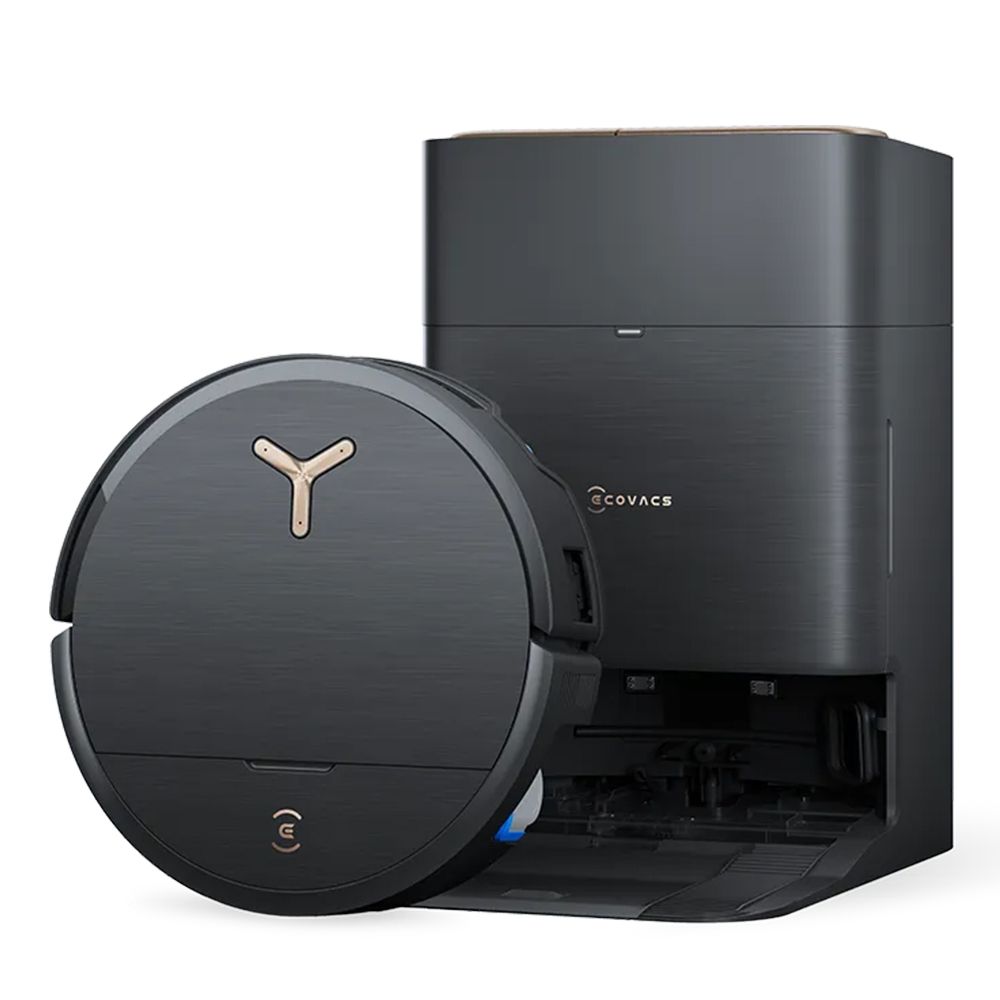
This is bad news for the big robot brands such as Ecovacs, Roborock and Dreame; the top five US robot vacuum brands are all Chinese, and therefore fall under this ban, so we contacted them for comment.
"We are aware of the FCC’s recent update," Eric Villines, Chief Communications Officer at Anker Innovations (the parent company of Eufy), told TechRadar. "Based on our current understanding, the new rule does not affect the continued availability, use or support of products we currently sell in the United States. Those products remain available and will continue to receive updates and customer support,
"Like others across the industry, we are seeking further clarity on how the rule will be applied to future products, and we will keep our customers informed. We remain committed to complying with all regulatory requirements in every market where we operate."
Several other smart home brands declined to comment at this early stage, but we get the general impression that this news might have come as something of a surprise.
Can you keep using your robovac?
There is one bit of sunshine in this cloud, however: the ban is not retrospective, so if a robot already has FCC authorization to be sold in the US that's fine. The ban does not prevent retailers "from continuing to sell, import, or market relevant models approved previously."
That said, PC Mag identifies a separate FCC order that says existing robot vacuums and similar products "may continue to receive software and firmware updates that mitigate harm to US consumers at least until January 1, 2029." If the FCC decides not to extend that then it's just put a countdown clock on any new Chinese-made robot vacuums sold in the US.
For the affected manufacturers, the next step will be to lobby the FCC in the hope of gaining an exemption for some or all of their products: after all, there's a big difference between a self-driving, self-cleaning mop and a robot dog capable of carrying an AR-15. However, so far there haven't been any exemptions for major Chinese drone or router manufacturers so the future is not looking very bright for the affected companies.
Thinking of buying a new TV?
Try our TV size and model finder! You tell it how far you sit from your TV, we'll tell you what size to buy based on viewing angle advice from image quality experts, and we'll recommend our three top TVs at that size for different prices.
A 41-year-old Ghanaian national was sentenced to 85 months in prison for stealing more than $10 million from mostly older, lonely and vulnerable victims via romance scams, the Justice Department said Tuesday.
Derrick Van Yeboah was a longtime and high-ranking member of a criminal organization primarily based in Ghana linked to more than $100 million stolen from romance scams and business email compromises, officials said. Van Yeboah served as a “sakawa boy,” impersonating fake romantic partners and directly interacting with victims online from February 2015 to October 2024.
“Romance scammers do not simply steal money — they weaponize trust,” Jay Clayton, U.S. attorney for the Southern District of New York, said in a statement.
Van Yeboah was arrested in Ghana in June 2025, acting on a request from the Justice Department, and extradited to the United States two months later. He pleaded guilty to conspiracy to commit wire fraud and agreed to forfeit $10.15 million in fraudulent proceeds as part of a plea agreement in March.
Authorities said they identified at least 20 of Van Yeboah’s victims, noting that some were deceived into sending their money to the criminal organization, creating companies and using those entities to unwittingly launder funds from other victims.
Victims include a woman from Delaware who either sent or laundered $1.9 million, a woman from Ohio who sent or laundered $2.3 million and another woman who sent or laundered about $1 million. Van Yeboah also tricked a North Carolina man to send $123,000, claiming he needed a loan to pay for his mother’s funeral expenses and to remove imaginary gold and diamonds from storage in Italy, according to court records.
Officials said Van Yeboah received a substantial amount of money from his criminal acts. He told pretrial services his assets include a house worth $1.5 million and jewelry worth $515,000. When he was arrested, Ghanaian police found him in possession of two vehicles stolen from the United States and Canada.
“Victims lost large portions of their life savings, money they had counted on for retirement. They were emotionally devastated to learn that the personas they had been talking to every day, personas who claimed to be in love with them, were in fact frauds,” Clayton wrote in a pre-sentencing letter to the court.
Van Yeboah’s conduct was cruel, and he fully understood the financial and emotional harm he was causing to his victims, he added.
“Van Yeboah’s conduct was far from an aberration. Van Yeboah engaged in the fraud scheme for nine years. It wasn’t isolated conduct; it wasn’t a blip,” Clayton wrote. “Indeed, it appears to be the only real job Van Yeboah has ever had. Day after day, for years, he targeted vulnerable victims, lied to them, and stole from them.”
Robot vacuums have been around for many years, and modern bots are cleverer and more helpful than ever. But while they are getting more popular, they seem to be struggling to properly break through to the mainstream. See a robot vacuum in someone's house, and you'd probably still remark on it. The aim for robovac brands must be to at some point overtake manual vacs as the general public's dust-sucker of choice — so why isn't that happening?
I rounded up representatives from some of the best robot vacuum brands to get their take. I wanted to learn more about the misconceptions that brands are still fighting against, how perceptions of these handy puck-shaped home helpers has changed, and what challenges still remain if robovacs are going to truly hit the mainstream.
Get with the times
"Robot vacuums are gradually being accepted and adopted by the public, rather than being treated as a novel and unrealistic concept," insists Michael Meng, president of the robotic vacuum division at Dreame.
"Admittedly, the market share of robot vacuums is still smaller than that of stick vacuums and upright vacuums, but the trend towards automated, hands-free household cleaning is inevitable," he adds. The problem — as all of my interviewees agree — is that people's perceptions are stuck in the past.
The trend towards automated, hands-free household cleaning is inevitable
Michael Meng, Dreame
"The issue isn't technical — it's psychological," says Faraz Mehdi, a managing director at Eufy. "Many people who've used robot vacuums still associate the category with 'mopping with dirty water' and 'poor carpet cleaning' — real pain points from a few years ago. Today's products are fundamentally different."
(Image credit: Future)
"One lingering misconception is that robot vacuums are still novelty gadgets that wander randomly, get stuck constantly, and cannot clean as well as a conventional vacuum. That perception often comes from earlier generations of the category," says Ricky Ma, the general manager for Europe and America at Roborock.
The biggest opportunity is helping consumers understand that a robot vacuum is not simply a smaller vacuum; it is an automated, intelligent cleaning system
Ricky Ma, Roborock
He continues: "The biggest opportunity is helping consumers understand that a robot vacuum is not simply a smaller vacuum; it is an automated, intelligent cleaning system designed to maintain the home every day and free up their time in a way that no other appliance can compete with."
"Ultimately, the industry's continued growth will depend not only on technological innovation but also on helping consumers better understand how far the category has evolved," adds Dreame's Meng. "Bridging the gap between perception and reality remains one of the most important opportunities for the industry as a whole."
Welcome to the real world
So there are unfair assumptions about modern robot vacuum performance, but there are also genuine issues that still need to be solved. As a robovac reviewer, I'm regularly struck by how simultaneously smart and stupid these bots can be — for every bot raising itself majestically over a tall room threshold, there's another determinedly head-butting a French door.
(Image credit: Future)
I'm in wholehearted agreement with Reena Patel — a floorcare category manager at iRobot, the brand behind Roomba — when she suggests that autonomy and reliability should be the key focus areas.
"While robot vacuums have become significantly smarter, consumers still expect them to navigate increasingly complex environments, avoid everyday obstacles, handle pet hair effectively, and transition seamlessly between different floor types without intervention," she says.
"The goal is to deliver consistently excellent cleaning results while reducing the need for maintenance, ensuring the robot can truly operate as a set-and-forget solution that fits effortlessly into consumers' daily lives."
(Image credit: Future)
Minimal human intervention is one of the hot robot vacuum trends du jour, but it's easier said than done. Mehdi points out that, in the UK at least, plenty of people live in old apartments or multi-story homes, both of which are "historically a nightmare for robots". Throw in challenges like clutter, low-slung furniture, uneven flooring, and mixtures of different floor types, and it's easy to see why people might assume a robot vacuum wouldn't be able to cope.
There are solutions to some of these problems — albeit mostly confined to the premium end of the market. Today's most advanced flagship robots have features like little stilts for vaulting tall thresholds, sensors that identify and respond to different surfaces, and slimline designs that can sneak under furniture.
(Image credit: Future)
However, the challenge is to hone those features to a point where they work consistently and reliably. After all, if, your bot misjudges the height of a space and gets itself wedged, or fails to cross a step on the way back to its dock, and you're not around to bail it out, that can put a pretty abrupt end to the cleaning for the day.
"It’s one thing for a robot to perform well in a demo, but another to perform reliably, day after day, in homes that are busy, messy, and unpredictable," admits Mehdi. "The real issue isn't what the product can do, it's that consumers haven't seen it perform in their own space."
The bigger picture
The robot vacuum market has evolved considerably in the past few years, but so too has what customers are looking for. All my interviewees agreed lofty specs are no longer the route to a customer's heart (or wallet).
"Customers are looking beyond headline suction figures and realize that the performance of robot vacuums is the combination of a lot of features," says Dreame's Meng.
Eufy's Mehdi echoes his sentiments: "A few years ago, the category was often marketed around isolated features like suction power. But consumers are now evaluating robot vacuums much more holistically. People are looking for real cleaning outcomes, not just bigger numbers on a spec sheet."
Users are starting to realize that they can trust robot vacuums to take on more of their household cleaning
Michael Meng, Dreame
Expectations are also rising — a number of the brands I spoke to told me that customers increasingly want bots that can mop as well as vacuuming, and are looking for models with self-maintenance features like dust-emptying, water tank refilling, and mop washing.
iRobot's Patel comments that customers are "more willing to purchase premium robot vacuums to deliver a genuinely hands-off experience".
Dreame's Meng argues that the move from cheap-and-basic to pricey-and-advanced bots reflects a change in perceptions. "Users are starting to realize that they can trust robot vacuums to take on more of their household cleaning."
(Image credit: Future)
Pricier bots might be becoming more popular, but customers aren't willing to splash their cash on just anything. Mehdi at Eufy describes a demand for "flagship-level experiences… at broader price points", noting that even at the upper end of the market, people are "rational about value".
"The market is shifting towards products that deliver meaningful innovation people can actually use and justify paying for," he explains.
As part of this trend, the early adopters who took a leap of faith with a simpler model a few years ago are now ready for something more advanced. "We have observed a significant shift from 'first-time experimenters' to 'sophisticated upgraders'," Roborock's Ma tells me.
These shoppers are seeking out replacements that solve the issues that frustrated them with their first bot. Thanks to design innovations, many problems that plagued early robot vacuums — hair tangling, poor edge coverage and stinky mop pads — are far less common in modern models.
Not your average robovac
Features and price decisions aside, my interviewees have noticed a broader change in purchasing habits — and it's tied to how people see robot vacuums. "More consumers are treating robot vacuums as long-term home automation investments rather than one-off gadgets," says Richard Mou, co-founder of SwitchBot. "They're spending more time comparing ecosystem compatibility, software updates, and after-sales support before making a purchase."
Consumers are treating robot vacuums as long-term home automation investments rather than one-off gadgets
Richard Mou, SwitchBot
Mehdi describes a dovetailing of approaches. At the upper end of the market, he's noticed customers going really in-depth with the research and product comparison, while at the more affordable end of the market, the decision-making process is different.
"There, trust can matter more than technical comparisons," he says. "Ratings, reviews, brand reputation, and recommendations from friends or family are often more influential than specs alone."
"That tells us something important about where the category is today," he concludes. "As robot vacuums become more mainstream, people are evaluating them less like gadgets and more like long-term home appliances."
(Image credit: Future)
So robot vacuums are getting smarter, customers are starting to embrace the modern advancements now on offer, and brands are working to address the pain-points that still linger when it comes to using a robovac in a real, messy, haphazard home.
The fact that people are viewing their robot vacuums as investment purchases rather than short-lived impulse purchases suggests things are moving in the right direction. Perhaps we will yet see a future where, when we see a robot vacuum in the corner of a room, it'll no longer be worthy of comment.
The world of robot vacuums has come a long way. I've been testing and writing about these puck-shaped home helpers for over two years, and during that time I've watched suction specs skyrocket, bots sprout legs and pincer arms, and docks transform into formidable, self-sufficient cleaning stations. Robot vacuums are looking cleverer and more useful than ever.
I wanted to get an idea of where the industry is headed, and what the next generation of robovacs might look like. So I rounded up representatives from some of the best robot vacuum brands to get their insights — and it's clear from what they told me that this smart-home segment is going to get even bigger… and even weirder.
Complete cleaners
The obvious place to start is with the cleaning itself, and there's one point that my interviewees all agreed on: it's no longer all about the suction specs. "Customers are looking beyond headline suction figures and realizing the performance of robot vacuums is the combination of a lot of features," says Michael Meng, President of Dreame's robot vacuum division.
Nowadays, customers are looking for better cleaning, rather than just outright power, and robovac brands have been happy to oblige, with all manner of inventive solutions.
Customers are looking beyond headline suction figures and realizing performance is the combination of a lot of features
Michael Meng, Dreame
Roborock, for example, has been working hard to make sure no corner goes uncleaned. "We see a massive push for ultra-slim designs that don't sacrifice power," says Ricky Ma, general manager for Europe and America. "People want a device that can finally clean the forgotten spaces under low-profile furniture — couches, beds, and cabinets — where dust and allergens traditionally accumulate and remain out of reach for bulkier robots."
The brand's newest bots use an innovative navigation system that doesn't require a raised puck to sit on the top surface. Roborock — alongside Dreame — has also experimented with pucks that can extend or retract, periscope-style, depending on the vertical height available.
This navigation puck, on the Roborock Qrevo Curv 2 Pro, can retract when the bot needs to squeeze into a tight spot (Image credit: Future)
Mopping functions have been the subject of much attention, too. Wet cleaning is nothing new — in fact, these days you might struggle to find a model that can't mop — but I've been seeing an increasing preference for roller mops rather than flat mop pads (either of the D-shaped or disc-shaped variety). The benefit of a cylindrical mop is that the dirty water can be scraped off, and clean water added in, as the robovac goes about its mopping business.
"One development that particularly excites me is the introduction of roller mop technology, which helps ensure floors are continuously cleaned with a fresh mop surface," says Reena Patel,
Floorcare Category Manager at iRobot, the brand behind Roomba.
Faraz Mehdi, managing director at Eufy, agrees. "Users increasingly care about whether the robot is actually cleaning with a clean mop and truly removing dirty water, rather than just spreading mess around," he says. "Real-time self-cleaning mopping makes a meaningful difference."
Roller mops — like the one on the SwitchBot S20 here — can scrape the dirty water off as they roll around, to prevent spreading spillages (Image credit: Future)
Eufy is also looking into improving filtration. In manual vacuums, Dyson has popularized multi-step filtration systems, which make use of cyclones to separate waste particles of different sizes. However, that hasn't really carried over into robot vacuums, which typically have a much more basic setup.
Eufy's AeroTurbo filter setup is significantly more complex. "We’re interested in airflow and dust-separation systems that help deliver more sustained suction performance, especially in homes with carpets and hair," explains Faraz. "One of the biggest pain points in the category is that cleaning performance can fall over time as filters clog, so technologies like multi-cyclone separation matter because they improve long-term consistency."
Our robotic arm design folds and unfolds in a way that mimics natural arm movement
Michael Meng, Dreame
Dreame has made particular strides in innovations focused on getting right into edges and corners. "No matter how powerful a robot vacuum is, dust and debris collect in corners and along edges where brushes simply can't reach. It's one of those problems that sounds minor until you actually look at how dirty those corners get," says Michael Meng.
Its newest bot — the X60 Pro Ultra Complete — has 'UltraExtend technology', which enables the mop pad to kick out up to 7 inches / 18cm from the robot body, and the side sweeper brush to unfurl, E.T.-style, to reach up to 4.7 inches / 12cm.
The design is inspired by human limbs. "When you extend your forearm, your reach increases significantly," Meng explains. "We applied that same principle to our robotic arm design — engineering it to fold and unfold in a way that mimics natural arm movement."
A number of brands have introduced sweepers and mop pads that can kick out to get closer to the edges of rooms — as seen here on the Dreame Matrix10 Ultra (Image credit: Future)
Intertwined with cleaning performance is battery function. "A robot vacuum that runs out of power mid-clean is more frustration than solution," says Meng. "Consumers with larger homes or open-plan layouts need a robot that can complete a full clean in a single charge — or intelligently return to dock, recharge and resume exactly where it left off. Battery efficiency, combined with smart charging and resume functionality, has become a key purchasing consideration for households of all sizes."
Mind the (performance) gap
Even with all the performance advancements, it's still the case that a robot vacuum-mop won't clean as well as a manual vacuum could. Robovacs are winning on convenience, but not on cleaning power. The long-term aim is to catch up. "The first step is to close the cleaning performance gap — reaching, and eventually surpassing, handheld devices," says Faraz from Eufy.
The first step is to close the cleaning performance gap — reaching, and eventually surpassing, handheld devices
Faraz Mehdi, Eufy
Longer-term, he sees things progressing to a point where robot vacuums can tackle not just vacuuming and straightforward mopping, but a wider range of cleaning demands.
"Technologies like roller mopping, steam cleaning, and multi-cyclone systems are maturing," he points out. "In the next five to 10 years, robot vacuums will take on true deep-cleaning capabilities — thorough carpet washing, high-temperature steam disinfection and floor sanitization. The kinds of tasks that currently require dedicated equipment or professional services will gradually fall within the robot vacuum remit."
Docks — like this one for the Roborock Saros 10 — can increasingly take care of all kinds of maintenance tasks (Image credit: Future)
The trump card robot vacuums already hold over manual cleaning appliances is that they take care of the job on their own. It makes sense, then, that continuing to improve automation is a key focus for all the brands I spoke to.
"In the 12 years we have existed as a company, trends have shifted constantly," says Roborock's Ricky Ma. "Currently, the primary trend is 'zero-maintenance and zero human intervention', where users expect a robot to not only vacuum and mop but also self-clean, self-dry, and navigate complex environments without human intervention."
"The biggest challenge is making advanced automation feel completely effortless," adds SwitchBot's co-founder Richard Mou. "Our goal is to reduce the number of times users need to think about their robot."
We've seen consumers become more willing to purchase premium robot vacuums to deliver a genuinely hands-off experience
Reena Patel, iRobot
iRobot's Reena Patel points out that this focus on autonomy is reflected in iRobot's sales patterns. "We've seen consumers become more willing to purchase premium robot vacuums to deliver a genuinely hands-off experience," she tells me. "Consumers are increasingly prioritizing features that save time, such as self-emptying and self-cleaning docks, advanced mopping systems, and intelligent obstacle avoidance."
A big part of the equation when it comes to true autonomy is maintenance. "People increasingly expect higher automation," says Eufy's Faraz Mehdi. "Features like auto-emptying, mop washing, drying, and anti-tangle systems are becoming much more important because users want a robot that genuinely reduces housework, rather than creating a new maintenance routine."
The ultimate aim is robovacs that don't require you to get involved at all — as Mehdi puts it, "zero manual intervention, end to end", including "full-chain self-maintenance, so the user never needs to maintain the machine itself."
Robovacs are arriving with increasingly formidable clean stations that take care of the bulk of the maintenance work (Image credit: Future)
Self-maintenance is one thing, but for a robot to operate without a human chaperone present, it also needs reliable navigation and object avoidance skills. These are essential if it's not going to get lost, stuck or tangled in something.
"Accurate navigation is the foundation of an effective robot vacuum," says Dreame's Michael Meng. "Advanced LiDAR and AI-powered object recognition allow modern robots to avoid obstacles in real time.... Smart robots should not be trapped or stuck easily, so they can work on their own without users to rescue them."
I've never met a robot vacuum that's not desperate to jam itself up by chowing down on any charge cable it can get its wheels on, so here I'd like to put in a personal appeal for more focus on low-level object avoidance.
Time to step up
When it comes to robot vacuums making their way around unassisted, the ultimate hurdle to overcome is stairs. The more premium of the current fleet of bots tend to come kitted out with something akin to small stilts, which raise up the body of the vacuum and enable it to maneuver over tall room thresholds.
However, traversing an actual flight of stairs requires an altogether more involved approach. "It sounds like a simple problem, but for anyone living in a multi-story home, it's one of the biggest limitations of robot vacuums today," Meng notes.
The Eufy MarsWalker is a transporter for moving robot vacuums up or down stairs (Image credit: Future)
As far as I'm aware, there are just three brands who have offered some kind of stair climbing solution, and they're all represented in my pack of interviewees. For Dreame, it's the Cyber X — essentially a stair-climbing pocket into which a robot vacuum can dock when it needs to change floors. Think of it like a stairlift for robovacs. Eufy's MarsWalker takes a similar approach.
Roborock's Saros Rover is rather different, with its two long, spindly legs that enable it to scale not just steps but all kinds of uneven terrain. Ricky Ma sees it as a major breakthrough in bots that don't require human intervention. "The future of this category is exciting and we can't wait to show everyone what we have to offer," he enthuses. I saw the Rover in action at CES 2026, and it was a complete departure from any robot vacuum I've seen before. At that point, it was still at prototype stage — I'll be watching with interest to see how things develop.
Future-gazing
So far, I've been focusing on developments that have already started to take root. But what about the longer term? I asked my interviewees their predictions for what the robovac market might look like in five to 10 years' time, and they had some intriguing answers.
Eufy believes autonomous decision-making is going to change the game. "Robot vacuums will reach a level of intelligence where they can genuinely understand the home environment, identify different types of dirt, and autonomously choose the optimal cleaning strategy," Faraz Mehdi predicts.
Is Roborock's Saros Rover a vision of what robot vacuums might look like in the future? (Image credit: Future)
Roborock is planning along similar lines. "Robovacs are rapidly shifting from an appliance to a smart cleaning partner. The most important shift will be greater physical intelligence," says Ricky Ma. "The ultimate goal is to build an intelligent cleaning partner that can spot the need to clean even before the user has time to ask the product to do so."
Further to this, a few of the execs I interviewed envision about a future where robot vacuums are no longer lone rangers, but work seamlessly alongside other smart appliances.
"Rather than operating as standalone devices, they will become increasingly connected with the wider smart home ecosystem, working more intelligently with other devices," says Dreame's Michael Meng.
Meng also sees a future where robovacs are far from the only autonomous helpers in the home. "While the familiar robot vacuum will remain an important form factor, its capabilities will extend well beyond floor cleaning," he says. "Advances in technologies such as robotic manipulation and embodied AI will enable these robots to interact more naturally with their surroundings and take on a broader range of household tasks."
Robovacs are rapidly shifting from an appliance to a smart cleaning partner
Ricky Ma, Roborock
SwitchBot's Richard Mou has an even more fully formed vision for the future: "I think we'll stop thinking about robovacs as a standalone category and instead see them as part of a broader family of home robots," he tells me.
"As embodied AI and humanoid robotics continue to mature, robot vacuums will contribute proven capabilities like autonomous navigation, environmental perception, and home mapping, while future humanoid robots build on those foundations to take on a much wider range of household tasks. At SwitchBot, that's exactly how we see the future — creating intelligent home robots that work together as one ecosystem rather than isolated devices."
Prepare yourself for the home robot takeover — and for an even cleaner home.
Whether it’s a vacuum cleaner, a hand dryer, an air purifier, or a fan, Dyson products rarely look like anything else on the market — and that’s particularly apparent at the company’s campus in Malmesbury, southwest England, where images of recent launches decorate the walls like modern art. The sprawling complex, in a particularly beautiful patch of Wiltshire countryside, is home to Dyson’s global Research, Design and Development (RDD) center, and the Dyson Institute, where students from around the world study while working alongside engineers on live projects. I visited the center to meet the company’s Chief Engineer Jake Dyson — son of founder Sir James Dyson — and learn more about the company’s approach to design.
Jake Dyson didn’t join his father’s business immediately; instead he set up a workshop and made a name for himself in the world of industrial lighting. Sitting in his office, I asked whether his experience in that sector had contributed to his work at Dyson today.
“Yes, it comes down to identifying problems and solving them,” he explained. “When LEDs first entered the market, I realized people weren’t cooling them properly. The promise of LEDs is that they should last a lifetime, but in reality they were being treated like disposable lightbulbs. I visited Osram in Asia, and they explained that if you keep the diode temperature below about 50C [120F, you can maintain brightness, color quality, and lifespan. That became my goal.
Dyson's unique product designs take center stage at the company's campus in Malmesbury, UK (Image credit: Getty Images / Bloomberg)
“I looked at how satellites manage heat. In space, temperatures swing from extremely hot to extremely cold, so they need precise thermal control. I applied similar thinking by designing systems that passively dissipate heat. For example, the heat moves away from the chip and is cooled by airflow, maintaining a stable temperature even at high power. That process, spotting a problem and solving it, is what drives everything.”
That problem-solving approach has always been the driving force behind the Dyson brand, and explains its unusual portfolio of products; its engineers have never been afraid to venture into new areas when there’s a problem to be solved.
“Sometimes it comes from frustration," said Jake Dyson. "'This product is rubbish, how can we make it better?’ Other times it’s curiosity: ‘Why does this work the way it does?’”
Problem-first design
James Dyson’s book Invention: A Life of Learning Through Failure, describes how the problem-first process led to the creation of many of the company’s most iconic and recognizable products — starting with a humble wheelbarrow. Dyson and his wife Deidre were renovating a house in Gloucestershire, England, and wanted to create a garden, but the traditional tools proved frustrating.
“I used a navy barrow in anger and its limitations became increasingly clear,” writes Dyson. “Cement slopped out of it. Its tubular legs sunk into the ground. It was hard to steer. Its sharp edges damaged doorframes. The more I used it, the more I realized that nobody had really thought about these problems or bothered to fix them.”
After much experimentation with shapes, materials, and manufacturing processes, the result was the Ballbarrow: a molded plastic bucket on a steel frame, with the conventional wheel replaced by a pneumatic ball made from EVA (ethylene-vinyl acetate). This spread the weight of the load more evenly on soft ground, and was easier to maneuver than a wheel — and in bright orange, it looked unlike anything else at the time.
Dyson products are always designed to solve a problem — the Airblade hand dryer was created to reduce waste from paper towels in public bathrooms (Image credit: Getty Images, Gado)
The product itself was a success, but due to a series of poor business decisions, Dyson senior eventually lost control of the company he had founded around it, Kirk-Dyson, and was ultimately kicked out by the other shareholders.
“I had lost five years of work by not valuing my creation,” he wrote. “I had failed to protect the one thing that was most valuable to me.”
It was a painful experience, but one he learned from as he pressed on with identifying and solving problems — starting with the creation of the first cyclonic vacuum cleaner, which he designed after realizing that dust bags don’t just serve to collect dust — they also act as filters that block airflow, drastically reducing suction power.
“I remembered the same clogging problem on the calico cloth with the powder coating in the Ballbarrow factory and the giant cyclone we had made to solve it,” he wrote. “What if I could develop a much smaller version and replace the clogging bag in a vacuum cleaner?”
Thousands of prototypes later (5,127 to be precise), he had the world’s first bagless vacuum — and a vast collection of patents to protect it.
The Dyson Supersonic was created to solve the problem of heavy and cumbersome hair dryers, with a lighter motor and a center of gravity that sits in your palm (Image credit: Future)
Dyson’s understanding of airflow and cyclonic technology has informed almost all of the company’s subsequent products; but like the vacuum, each one started with a problem. The Dyson Airblade hand dryer was created to reduce waste paper towels; the Airmultiplier fan solved the issue of ‘choppy’ air from conventional fan blades; the Pure Hot+Cool purifier was made to tackle indoor air pollution; and the Supersonic hairdryer solved the problem of heavy and uncomfortable hairdryers with weighty motors.
In every case, the form of the finished product was dictated by the problem it was designed to solve — even if the result looked totally unlike established versions of the device.
“That’s why Dyson products often look unusual; they’re built around their function,” said Jake Dyson in his Malmesbury office. “They’re also beautiful. A hair dryer has a hole through it because of how the airflow works. Fans and other products expose their engineering principles through the way they look — we’re not hiding how things work, we’re expressing it.”
Creative color
Those unusual designs are often set off by equally unusual color schemes, which tend to highlight buttons, switches, removable canisters, and other functional parts.
“We have a team here, CMF, which is colors, materials and finishes, that look into the appearance but also materials of our products," said Jake Dyson.
The CMF team doesn’t just draw on experience from successful projects, but also failed ones like the cancelled Dyson electric car, which provided finish and material ideas for many of the company’s health and beauty devices.
Most recently, CMF lent its expertise to Dyson's first hand-held fan — the Dyson HushHet Mini Cool — which launched just in time for a series of heatwaves in the UK. It sold out almost immediately, and after testing it myself, I can see why; it’s compact, much more powerful than its closest rival, the Shark ChillPill, and more affordable to boot.
“We’ve seen strong demand [for the HushHet Mini Cool], and it’s one of those products where people don’t initially realize they need it but once they try it, they understand the value,” said Jake Dyson. “It’s designed to be reusable, not disposable like cheaper alternatives. I've seen people with the cheap plastic fans that break very [easily], but we wanted ours to be well engineered, durable, quiet and efficient.
The Dyson HushJet Mini Cool fan is the company's latest product, and proved enormously popular during a hot British summer (Image credit: Future)
“We’re working on scaling production, but demand has been very strong, so availability can sometimes be limited. That said, it is coming back to market.”
So what does the future hold? The company is investigating ways to use AI where it will actually add value, helping machines interpret data and make better decisions, and Jake Dyson says that "vision systems and new product directions" are the most exciting areas for him.
"We’ve historically been very strong in mechanical engineering motors, airflow, performance. But now, adding cameras and vision systems allows machines to detect what they’re looking at, understand it and act accordingly.
"That opens up entirely new categories of products and capabilities, so we’re moving from purely mechanical devices to machines that can see, think, and respond, and that’s where the next wave of innovation is coming from."
It'll be fascinating to see which problems the company will be looking to solve with those new technologies, and there's no way of knowing what the next generation of Dyson products will look like as the company expands into new areas. We'll just have to wait and see — but it's definitely not going to be boring.
Razer is a household name in the webcam space, with its Kiyo brand being one of the most popular choices for streamers and PC gamers. The latest Kiyo V2 is another sterling example of Razer's commitment to premium build quality and high-end components, and for the most part, it's a great product.
Delivering either 4K recording at 30 frames per second or 1080p at 60, the Kiyo V2 captures quality video with a high degree of customization via the Razer Synapse software. It's fairly pricey (don't expect to see it on our list of the best cheap webcams), but for a 4K webcam with this sort of build quality and feature set, it's actually quite competitively priced.
(Image credit: Future)
Coming in black, white, and pink colorways (mine is the pink 'Quartz' model), the Razer Kiyo V2 is an extremely well-constructed product. It's durable and pleasingly tactile. The base can be extended and rotated to capture the perfect angle, and it easily clasps onto any monitor; I tested it both with the two monitors in my home desktop setup and my laptop, and it snapped into place with no issues. It's a little heavy, however, so laptops with flimsier display hinges might struggle.
The design is a departure from previous Razer webcams, which typically opted for a singular large casing surrounding the lens construction. Instead, it's a smaller lens housing with an oblong body, immediately reminiscent of the Logitech MX Brio 705.
Not everything has been abandoned with this new design, however. The lens housing, like previous Kiyo models, includes a pleasingly tactile rim that can be twisted to close the built-in physical privacy shutter. I'm always a fan of privacy solutions like this, though given the large size of the glass lens face, it would've been nice to see a lens cap included to keep it dust- and scratch-free.
(Image credit: Future)
It would potentially be nice if the webcam could be detached from the attached mount in order to fit it to a different mount; many content creators will have their own video setups and may want to use their own camera stands. However, the mount does have a threaded screw connector on the base, letting you fit it atop most industry-standard camera mounts.
In terms of video quality, it's great. 4K video is sharp and colorful, and even zoomed in, I found I looked perfectly detailed in the footage I recorded. Color reproduction is great, and the camera performed well in a range of light conditions. Low-light performance resulted in some mild oversaturation, but I've seen worse performance in more expensive cameras. It also supports HDR, though only at 30fps even at lower resolutions.
The autofocus works well, but I found it was a little slow to adjust if I quickly moved closer or further from the camera. Having tested quite a few webcams in my time, I feel that a webcam in this price range should be a bit snappier to focus.
That big lens means that the default field of view is huge. A 93-degree FOV means that the Kiyo V2 is liable to capture not just yourself but the entire room you're in, but thankfully it's easy enough to tweak this via the zoom and crop tools in Razer's Synapse software.
(Image credit: Future)
On the topic of Synapse, it's still a frankly rather clunky piece of software, but for webcam users who want granular control over their hardware, it does a solid job. In addition to zoom and crop tools, you can also manually tweak the autofocus, auto exposure, and color balance.
The Kiyo V2's software-side feature set also includes a selection of AI-powered tools, which are covered prominently in the marketing material for the webcam. These include dynamic light correction and noise reduction, but these features already existed in Synapse, and to be honest, I'm not entirely clear on what AI brings to the table here.
(Image credit: Future)
Look, Razer: I get it. I'm sure there's tremendous pressure from your shareholders to make everything AI-powered, because it's the buzzword du jour. But anyone who actually wants AI in their webcam (for whatever inane reason) likely isn't going to be better served by the Kiyo V2 than any other cutting-edge 'AI' webcam, like the Obsbot Tiny SE.
One element that does actually benefit from the involvement of machine learning is the auto-framing feature, which uses AI-powered head-tracking to keep you in the center of the frame even if you move around. However, since the Kiyo V2 lacks a mechanized gimbal, it can't alter the frame while fully zoomed out and can only track you so far; it can keep you in center frame if you move by a foot or two, but it won't follow you around a room.
On the bright side, you don't actually have to use Synapse and the AI features at all. The Kiyo V2 works great straight out of the box; just plug in the bundled cable, and you're off to the races, assuming you're happy with the default wide-angle FOV.
(Image credit: Future)
Now, for the only real problem I have with the Razer Kiyo V2. It comes with a USB-C to USB-C cable in the box (the one with my review unit is pink, like the webcam itself), and as far as I can tell, you have to use this cable to access the full 4K functionality of the camera.
Considering that the cable is USB-C-exclusive, you'll need a free USB-C 3.0 port to make full use of the Kiyo V2. I tested it out with a USB-C to USB-A adapter, as well as using one of my own USB-C cables; no dice. It's frustrating, because USB-C ports can be in short supply for users connecting multiple peripherals, and the bundled cable is a bit short and inflexible.
(Image credit: Future)
Lastly, the built-in microphone is... fine, I guess. It's good enough for video calls, but anyone aiming to produce professional-level video content should definitely use a proper standalone microphone.
It's fair to say that the Razer Kiyo V2 deserves a spot among the best webcams on the market. There are a few niggling issues, but nothing that should ruin the experience for a gamer who wants a high-end webcam. For hardcore content creators, it remains a sound choice, but you should be aware of the downsides.
Razer Kiyo V2 webcam: Price & availability
How much does it cost? $149.99 / £149.99 / AU$279.95
When is it available? Available now
Where can you get it? The US, UK, and Australia
At $149.99 / £149.99 / AU$279.95, the Razer Kiyo V2 is significantly cheaper than the brand's own older Kiyo Pro webcam. If you're looking for a high-quality 4K cam, it's not an unreasonable price.
Sure, you could easily get a cheaper 4K webcam, but you'll need to risk it on a less established brand, and you almost certainly won't be getting the same rich feature set seen in the Kiyo V2. Similarly effective models from other premium brands like Logitech and Elgato will cost a comparable amount, so I'm pleased to say that despite its reputation for pricey hardware, Razer got the price right this time around.
Razer Kiyo V2 webcam: Specs
Razer Kiyo V2
Price:
$149.99 / £149.99 / AU$279.95
Supported resolutions:
4Kp at 30fps, 1440p at 60fps, 1080p at 60fps
Sensor:
8.3 MP Sony STARVIS
Field of view:
93 degrees
Connection:
USB-C
Features:
Digital zoom, AI auto-framing, AI autofocus, dynamic color correction, HDR, mechanical privacy shutter
Software Integration:
Razer Synapse
Should you buy the Razer Kiyo V2 webcam?
(Image credit: Future)
Razer Kiyo V2 webcam report card
Value
The Razer Kiyo V2 is still fairly expensive, but it's reasonably priced for a high-end 4K webcam and much better value than the previous Kiyo Pro.
4 / 5
Design
A fresh chassis design that retains the excellent physical privacy shutter of older Kiyos, but the forced USB-C is annoying.
4 / 5
Performance
Audio is merely decent, but the picture quality and color balance are fantastic and Razer Synapse packs a ton of extra features.
4 / 5
Avarage rating
A high-quality webcam with a broad feature set and more competitive pricing, the Razer Kiyo V2 is a great product with only a few small flaws.
4 / 5
Buy it if...
You want 4K At this price point, the Kiyo V2 is competitive within the 4K webcam space - you could find cheaper ones, but only if you're willing to accept a drop in quality.
You need wide-angled recording If you're aiming to capture a larger space (or multiple video participants), the 93-degree FOV of the Kiyo V2 is perfect.
Don't buy it if...
You're short on ports Since it needs to use the bundled USB-C cable to access full 4K recording, the Kiyo V2 is a poor choice for anyone who already has lots of ports in use on their PC.
You're on a budget At $149.99 / £149.99 / AU$279.95, the Kiyo V2 is still pretty darn expensive, even if it's far better value for money than the older Kiyo Pro.
Razer Kiyo V2 webcam: Also consider
Insta360 Link 2C Our current top pick of the 4K webcams available on the market right now, the Link 2C offers superior low-light performance and autofocus while also offering the same high-quality video and AI features as the Kiyo V2.
Obsbot Tiny 2 The Tiny 2 from Obsbot delivers 4K video along with AI-powered tracking via its mechanical gimbal mount. For those who want a high-end video experience, this is a great pick.
8+ years of experience reviewing computer hardware
I replaced my usual webcam (the Insta360 Link 2 4K) with the Razer Kiyo V2 for two weeks, using it for all my normal video calls during the workday. I also tested it in various different lighting conditions by recording video separately and comparing the clips side by side. Naturally, I installed (well, reinstalled) Razer Synapse to properly test out all the software-side features as well.
I've been testing and reviewing PC hardware for more than eight years, starting at the PC-building hobbyist magazine Maximum PC before making the leap to TechRadar's computing team. I put all of my knowledge and experience behind each and every one of my product reviews, so you can be assured that you're getting an informed and bias-free judgement.
The State Department will restrict visas for cybercriminals like scammers to sextortionists, and in some cases even their family members, Secretary of State Marco Rubio said Thursday.
The Trump administration has sought to make a crackdown on foreign-based scams one of the signature issues of his second term. An executive order that the president signed in March indicated that visa restrictions would be on the table as one response.
“By restricting visa issuance to those who are responsible for or complicit in these criminal enterprises, we are sending a clear message: The United States will go after those who prey on our citizens,” Rubio said.
Other departments have also made efforts to reduce foreign-run scams. In June, the Department of Justice seized infrastructure used by subsidiaries of the Huione Group, a Cambodia-based corporate conglomerate tied to one of the world’s most prolific criminal marketplaces used to commit cyber scams and other crimes.
Rubio authorized the visa restrictions under a 1952 law that gives the State Department the ability to deport or rule as inadmissible someone who poses “potentially serious adverse foreign policy consequences.”
Critics have accused the Trump administration of abusing that provision of the law for political purposes.
Rubio’s statement on the visa restrictions mentions “individuals responsible for, or complicit in, cybercrime and cyber-enabled crime, such as those involved in cyberscams, and sextortion.” Furthermore, he said, “Immediate family members of individuals engaged in such illicit activities may also be subjected to visa restrictions.”
Betsy Cooper, Founding Director of the Aspen Policy Academy, said the visa restrictions on cybercriminals could be valuable, but offered a caveat.
“Scamming people is a growing global enterprise, and it is a laudable goal to penalize those who scam and defraud people since they so rarely suffer consequences for their actions,” she said in a statement to CyberScoop. “So long as the new visa controls are used narrowly and deployed only against verified scammers and fraudsters, this is a positive step toward combatting cyber-enabled crime.”
While some cyber experts have questioned how much visa restrictions, prosecutions and other punishments of cyber miscreants who are based overseas will affect them, others maintain that it can serve as a deterrent to those who would consider getting into the line of work but want freedom to travel the globe.
FightCyberCrime.org, a nonprofit that seeks to help cybercrime victims, applauded the restrictions on the cybercriminals.
“We welcome efforts to hold cybercriminals accountable across borders. Cryptocurrency investment scams, romance scams, and sextortion cause devastating financial and emotional harm to victims,” it said in a statement to CyberScoop. “Meaningful disruption of these transnational criminal networks is an essential part of the response.”
But there’s still a long way to go in the fight, the statement continued.
“At the same time, we must invest more in victim support, prevention, and recovery resources,” the organization said. “Accountability is critical, but ensuring victims have access to trauma-informed support and resources is equally important.”
I've been testing and writing about robot vacuums for nearly a decade here on TechRadar Australia and one of the standouts for me in the past 12 months was (if you'll excuse the pun) an absolute dream machine.
If you read my in-depth Dreame Aqua10 Ultra review, you'll know just how impressed I was with its overall performance, and my nitpicking complaints were mostly to do with how its battery gets used, which honestly isn't even a complaint — perhaps more of an observation.
That's still a sight better than having to pay nearly three grand for the Ultra version.
With 30,000Pa of suction and a roller mop that promises streak-free mopping, this is a full-featured robovac that offers very few compromises. It's even able to clear relatively high thresholds of up to 6cm, so it can get to places lesser models can't. Note that this offer is not Prime eligible, although delivery is free if you are subscriber — it'll just take a little longer to reach your door.View Deal
The differences between Aqua10 Roller and its Ultra sibling may seem like a long list, but trust someone who's still using the latter in her own home — it's overkill and not worth the extra cash.
So what are those differences? Well, for starters, the LiDAR turret doesn't lower itself automatically on the standard Roller version, but that's not unique to it, especially at this price. It also misses out on the 3D mapping that the Ultra version does but, again, a 2D map is pretty much all most people will need (floors, after all, tend to be pretty flat). And it gets a single-compartment soap dispenser instead of the dual-slot one in the Ultra which, again, isn't necessary unless you want to use an odour-neutralising solution as well.
For your money, you're still getting a whopping 30,000Pa of suction which, going by how well my Ultra version utilises it, will do very well on carpets and I am in awe at how well the roller mop works on the Dreame. There are plenty of intelligent features available on the Aqua10, including intelligent stain removal, so if you think your robovac has forgotten its navigation path and is circling, that's likely just its sensors picking up extra dirt in a small area and getting the bot to clean repeatedly for a thorough job.
It's also a machine that promises excellent edge cleaning, since it uses the exact same side brush and extending roller mop as the Ultra model. And the Roller even has the same automatic mop cover, which comes on as soon as it detects carpet to keep the mop head clean and your carpet dry.
While the Roller doesn't quite match the Ultra's ability to move over thresholds and steps up to 8cm tall, it's capacity to tackle heights up to 6cm is still above average, and means it can potentially head into patio areas if your sliding door frames aren't very high.
If it performs anywhere as well as my Ultra model, I think the Dreame Aqua10 Roller will be hard to beat at its current discounted price.
Fortinet on Tuesday revealed it will use Intel Foundry to fab its sixth-gen Security Processor (SP6), a nice win for Chipzilla's sputtering chipmaking biz. The chips feature dedicated accelerators designed specifically for the security and cryptographic operations required by modern hardware firewalls. The custom chips are one of Fortinet's defining features. Many cybersecurity hardware players build appliances around commodity hardware like x86 and Arm CPUs, but Fortinet prefers custom application-specific integrated circuits (ASICs). The two companies haven't said when the chips will enter production, much less what the SP6's speeds and feeds will entail, though we imagine it'll have a bit more pep than Fortinet's SP5 chips. The SP5 launched in 2023 and boasted support for layer 7 firewalling and IPsec VPN connectivity at speeds exceeding 30 Gbps. Throughput fell when advanced threat protection or SSL inspection was enabled, but Fortinet still claimed a speedy 4.3 Gbps and 3.3 Gbps, respectively. As you might have already figured out, Fortinet's SP line is designed primarily for smaller appliances like SD-WAN gateways, rather than larger datacenter-centric appliances built around its beefier NP and CP-series parts. While Intel couldn't offer much detail on the chip itself, we're told it will use the older Intel 4 process node rather than the leading-edge 18A process tech. Chipzilla also suggested Fortinet will draw on its experience in disaggregated semiconductor design and advanced packaging, which could mean a chiplet architecture with greater scalability. With so little detail, we can only speculate. Intel declined to say which technologies beyond Intel 4 the chip will use. The x86 giant also declined to comment on the availability of the product, noting only that "details regarding the Fortinet Security Processor 6 availability will be announced at a later date." While SP6 won't use the latest chipmaking tech, it will be built in an American fab by an American company, offering a level of supply chain security that remains difficult to find. If you want even remotely leading-edge silicon, Intel, Samsung, and TSMC are your only options. US-based production can still mean settling for a less advanced process, although TSMC's first Arizona fab has already begun churning out 4 nm silicon and Samsung aims to bring its new Texas plant online this year. Fortinet would not be the first to enlist Intel's manufacturing might for sensitive workloads. Under DARPA's HIVE program, the chipmaker built an eight-core, 528-thread processor with 1 TB/s silicon-photonics interconnects specifically to accelerate graph analytics workloads. But it doesn't stop at the DoD. Supply chain security is something Intel has leaned into as it has sought to reinvent itself from an integrated device manufacturer serving mainly itself, and occasionally the US government, into a full-fledged foundry ready to compete with Samsung and, ultimately, TSMC. In mid-2024, Uncle Sam awarded Intel $3 billion to establish a secure enclave for manufacturing chips for government agencies. Since then, the US government has taken a 9.9 percent stake in the American chip biz. ®
FROM THE FORUMS I recently wrote the article Older software to the rescue, which included a note about my having replaced Adobe Acrobat DC with the ten-year-old program PDF Fusion. The forum topic associated with the article received a lot of traffic. Although I mentioned other old software in the article, forum participants homed in […]
Eufy’s latest flagship robotic vacuum and mop, the Omni S2 is a hugely impressive appliance that combines excellent mopping with brilliant vacuuming to create one of the best home cleaning systems you can buy. It also self-cleans so thoroughly that, after several weeks of daily use, the dust bin, rollers and mop still looked like new.
The Omni S2 uses warm water to clean its spinning mop as it goes, while also scraping away dirt and using cyclone technology to whisk dust more efficiently into the onboard bin, instead of leaving it to clog up the filters. Water is ozonated in the base station to further improve cleaning performance, and there’s an integrated detergent system too.
The robot itself can even be fitted with a fragrance diffuser, which makes your room smell nice after every clean; three different scents are included in the box and, along with the detergent, and can be replenished from Eufy’s website.
(Image credit: Future)
It navigates well, mostly avoiding contact with walls and doors while driving very closely to all manner of obstacles without pushing them around, driving over them or ingesting them. The S2 is good at climbing over raised carpets, rugs and door thresholds — something the Omni S1 struggled with – and the app does a great job of quickly mapping your home, with a simple editing system for labeling every room correctly, and even adding virtual furniture.
I was impressed by how quiet the Omni S2 is, even with its powerful Cyclone mode engaged, and how the base station doesn’t sound like an Airbus when emptying the robot. It’s a very expensive product, but one that looks good and performs extremely well.
Eufy Omni S2: price and availability
List price: $1,599 / £1,599 / AU$2,299
Launched: March 2026
Just two years on from the launch of the Omni S1 Pro, Eufy now has the Omni S2. This is now the company’s flagship robotic vacuum and mop, with a price, performance and feature set to match.
It carries a recommended retail price of $1,599 / £1,599 / AU$2,299, making it £300 more expensive than the S1 pro, which remains on sale. That’s an awful lot of money for a vacuum cleaner — especially when
Eufy’s own range of robovacs starts under the £150 mark, and one of my favourites — the X10 Pro Omni vacuum and mop — is a comparative snip at £599.
What does the extra £1,000 get you with the S2? More power, of course, with greater suction thanks to Eufy’s new AeroTurbo 2.0 tech, improved intelligence, greater threshold clearance, a more powerful mop, better computer vision, a self-cleaning mop, electrolysed water, integrated detergent and even a built-in fragrance system with three included scents to pick from.
An additional cost to bear in mind is Eufy’s replacement parts kit. The brushes, bags, mops and rollers of all vacuum cleaners need replacing, so ongoing costs aren’t unusual, but Eufy likes to charge plenty. A complete kit for the S2 is £79.99. Premium parts for a premium robovac, I suppose. More welcome is Eufy’s new two-year warranty, which applies to all robot vacuums launched in 2026 and doubles the previous coverage.
Value score: 3.5/5
Eufy Omni S2: specifications
Specification
Detail
Max suction
30,000 Pa
Robot diameter
350 mm
Robot height
3.4 in / 85 mm
Dock dimensions
15.0 x 17.7 x 26.4 in / 380 x 450 x 670 mm
Dust bin volume (base)
2.5 litres
Water tank volume (base)
3L (clean) 2L (dirty)
Base type
Charge, auto-empty, hot water mop wash, hot air mop dry, clean water refill, self-clean
Max threshold clearance
Up to 1.7 in / 42mm
Mop type
Self-cleaner roller
Mop pad lifting
1.10 in / 28 mm
Max runtime
180 minutes
Eufy Omni S2: design
Docking station with charger, dust bag, water tanks and mop drying
Rotating, self-cleaning mop
Integrated detergent and fragrance supply
The S2 has a similar but more refined look than its S1 predecessor. The subtle bronze tint to sections of the robot and docking station give it a premium aesthetic that blends nicely with the futuristic lighting in both the clean water tank of the dock, and the robot’s onboard dust bin.
Taller than many docking stations, but significantly more elegant than most, the Omni S2’s appearance helps to justify its lofty price tag — and that’s further aided by the display and touch controls on top of the dock. These are handily located to press without stooping down to the robot itself, while the screen is useful for checking on the robot’s status and spotting error messages.
FutureFutureFutureFuture
Short of making you a cup of tea while the robot cleans up, the S2’s docking station does absolutely everything. It charges the robot, empties its dust bin, replenishes its water supply (and even ozonates fresh water before it’s fed to the mop), cleans the mop with water heated to 70 degrees centigrade, dries it with hot air, refills the detergent tank, and has enough dust bin capacity for up to a claimed 68 days between bag replacements.
The robot itself is almost circular, with a central roller that’s claimed to be 100 percent tangle free, a pair of spinning side brushes, and a roller mop that self-cleans, slides outwards by 1.5cm to reach into corners and even an onboard fragrance supply to make your home smell nice. The S2 includes three different fragrances in the box, but these are a bespoke design so replacements can only be bought from Eufy itself. The same goes for the detergent bottle too, while thankfully the 2.5-litre dust bags are generic.
FutureFutureFutureFuture
I like how the Omni S2 looks. Its design is more sophisticated than that of the S1, and I can imagine it neatly complementing the lavish houses of its deep-pocketed buyers. And while tall, at 670mm (26.4 inches), the docking station is relatively slim.
The robot is also relatively short, at 85mm. This compares favorably against taller, bulkier robovacs like the Dyson Spot+Scrub AI, which towers over the Eufy at 110mm and is less capable of cleaning beneath low furniture.
A welcome design upgrade for the Eufy Omni S2 is its ability to now clear door thresholds up to 4.2cm tall, up from just 2cm for the Omni S1. I was often left frustrated by that robot’s inability to drive up from exposed floorboards to a carpeted neighboring room, but have had no such issues with the S2.
Design score: 5/5
Eufy Omni S2: performance
Impressive vacuuming
Excellent mopping
Strong improvement over the S1
From the setup process and mapping, to vacuuming, mopping, navigation and self-cleaning, the Omni S2 is a triumph. You might say it should well be for the massive price tag, but even in 2026 it’s rare for such a complex new product to impress so universally. Where the Eufy Omni S1 struggled in some key areas — navigation, threshold clearance and sometimes even vacuuming — the S2’s performance is close to perfect.
Yes, it’s an ultra-premium product with a price to match. This is right up there with your Leica camera, Rimowa suitcase and five-figure turntable. I imagine the typical Omni S2 owner is the sort of person who wouldn't blink at splashing out on a pair of Apple AirPods Max 2 at the airport because they forgot their first-gens at home. They’d probably deal with a flight delay by picking up a new Swiss watch, too.
(Image credit: Future)
And that’s absolutely fine. Whatever the product, there’s always something that happens to sell the most expensive one, and for robotic vacuums that just so happens to be Eufy with the Omni S2. That doesn’t inherently count against it, because there are always customers happy to pay a premium for the one they like, or not really care about the cost because the S2’s spec sheet, design and feature set already put it at the top of the market.
What matters is how it performs in the real world, and how that compares to user expectations. Naturally, mine were at an all-time high and the S2 mostly delivered. The vacuuming performance is noticeably better than with the S1, and after a month of testing I still smile at the neat stripes vacuumed into my lounge carpet — and at how pleasant the S2’s fragrance system makes every room smell.
(Image credit: Future)
Eufy has improved navigation since the S1, and now the S2 is smart enough to not vacuum over the tasselled ends of a rug. It also automatically detects rug and carpet thickness, then raises itself by up to 50mm (1.97 inches) to prevent getting stuck in deep-pile fabric. In my testing, the S2 flagged a potentially tricky bit of carpet — which was actually an integrated but deeply contoured door mat — so I could tell it to ignore the concern or permanently avoid it.
Navigation and map creation is generally good. The robot only once got stuck and called for help, and I was impressed by how quickly the S2 mapped the ground floor of my home and did a decent job of detecting room boundaries. I used the app to fine-tune these, and was pleased to see how the S2 had added 3D cupboards, sofas, tables, chairs and other bits of furniture to the map. This isn’t strictly necessary, but it’s nice to see how the S2 correctly understands its environment.
(Image credit: Future)
Eufy claims a maximum suction of 30,000Pa, which is a huge upgrade over the 8,000Pa of the Omni S1 and other Eufy robots like the X10. There are four suction modes — Quiet, Standard, Turbo and Max — three options of cleaning intensity, three water levels, and the option of performing each cleaning task once or twice. As with the S1, the S2 returns to base whenever it needs to empty its bin, clean the mop, replenish its water supply or charge the battery. A mode called AI Automation promises to adjust cleaning strategy based on room type, floor material and cleaning frequency.
The Omni S2 deeply impressed during the first few weeks of general use, keeping hard floors and carpets clean — even after a cockapoo puppy joined our household, and his insistence on helping with garden projects brought a lot of dirt into the house. It was a joy, quite frankly, to have the S2 on hand, ready to clean up after every chaotic evening of dog zoomies.
(Image credit: Future)
I also loved how the S2 kept itself clean. Not only is the mop cleaned and dried with every use, but the cyclone-style dust collection ensures the onboard bin is practically spotless after each empty, and the filters don’t get clogged up. The rollers also looked like new after many hours of use, thanks to an anti-tangle design that actually works.
The mopping system works as well as the S1’s — evidenced by the absolutely filthy water collected in the waste tank of the docking station. I’d recommend owners empty this frequently, because if you wait a couple of weeks or so until it’s full, pouring it away is a seriously stinky process.
(Image credit: Future)
During TechRadar’s standardized robovac tests the Omni S2 continued to perform very well. These tests include two rounds of vacuuming on both carpets and hard floors, plus an obstacle avoidance test and a mopping test.
Pleasingly, the Omni S2’s vacuum performance is better than its predecessor, the two-year-old Omni S1. Vacuuming up oats from carpet was particularly impressive, with not a single piece being missed (except where I set the target zone in slightly the wrong place).
Before vacuuming
After vacuuming
During these tests I found the quickest, least powerful mode, called Quiet, was indeed very quiet (just 55 decibels on carpet), but the S2 performs best when suction is upped to the Standard or Turbo modes, cleaning intensity is increased from Fast to Standard, and the S2 is asked to perform two passes of the target zone or room, instead of one.
A crumb mix made of flour and crushed biscuit was completely lifted from a wooden kitchen floor using the S2’s standard intensity and suction settings, while on carpet I found Turbo or Cyclone (the most powerful suction mode) was best.
Crumb mix before first pass
Crumb mix after first pass
With that enabled, plus the intensity increased to Deep and the number of passes upped to two, the robot did a superb job.
Crumb mix after first pass
Crumb mix after second pass
The oat test is usually tougher, because robovacs tend to flick larger debris across hard floors with their spinning side brushes. The Omni S2 fell foul of this too, but as ever my advice is to set the robot to vacuum the entire room twice, instead of aiming for a target and kicking it everywhere.
With the right settings applied, the S2 picked up every single piece – and passed the same test with flying colors on carpet too, where flicking debris is less of an issue.
Before vacuuming
After vacuuming
I tested the mopping system with a dried smear of ketchup, which was promptly removed from the wooden floor. The cylindrical mop spins and pivots outwards to reach into the edges of the room, while the robot scrapes it clean and washes it while driving. The mop is then dried with hot air at the base station, which takes several hours but is very quiet.
Before mopping
After mopping
Meanwhile, the S2’s obstacle avoidance saw it drive neatly around a shoe, a sock and a USB cable strewn across the floor. I was impressed by how close it got to each, with moving or ingesting anything.
Overall, the Eufy Omni S2 performed brilliantly. I would recommend using Standard intensity and Standard suction with two passes most of the time, then up the suction to Turbo or Cyclone for a deeper clean. The latter hitting just 70 decibels was also impressive — for context, my Dyson V10 stick vacuum is 90 dB at medium power.
FutureFutureFuture
I only encountered one serious problem with the S2, and unfortunately it led to a replacement unit being provided by Eufy. The first S2 performed perfectly for a month, but developed a fault where the robot and docking station lost their connection. Several reboots and lots of advice from customer services failed to find a solution, so a second S2 was delivered and the original went back to Eufy for an inspection.
Naturally, this is disappointing for such an expensive product. But I was impressed by Eufy’s customer service department — which I approached as a customer and not a journalist — and how quickly the problem was resolved. The second unit performed perfectly throughout the rest of my test.
Performance score: 4.5/5
Eufy Omni S2: app
Easy to use
Lots of configurability
Also handles Eufy security products
Option to charge at night — great if you have an EV tariff
The Eufy app gets better with every revision, and today it’s one of the best robovac apps I’ve ever used. Everything is logically laid out, with just the right amount of adjustability on offer to keep both newcomers and power users happy. The app is quick, responsive and presents everything in a way that’s easy to understand.
I especially like how it adds virtual furniture to your floor maps, which makes it easier to understand the layout and visualize where the robot is. Editing floor plans also works well, with simple tools for splitting, combining and renaming rooms after the robot has created an initial (but not always accurate) map of your home. Multiple floormaps can also be created, making it easy to save a second map for your bedrooms upstairs, for example.
FutureFuture
Another feature I like is how pre-defined tasks can be created. I have one called “After dinner”, which tells the S2 to vacuum and mop my kitchen a certain way. A single tap of this from the Eufy app home screen, and the robot gets to work.
Since getting a puppy I’ve come to value Eufy’s child lock function, which disables the buttons on top of the robot – handy for both inquisitive children and dogs alike. I also like the off-peak charging function, where you can configure the S2 to only charge its battery at certain times of day. Since I have an electric car and an EV tariff, I’ve set the robovac to only charge at night, when my electricity is much cheaper.
App score: 4.5/5
Should you buy the Eufy Omni S2?
Eufy Omni S2 score card
Attribute
Notes
Score
Value
The Eufy Omni S2 really is very expensive indeed. It isn’t the most expensive robovac of all time, but it’s right up there. And while its lofty price makes alternatives look like excellent value, the S2 doesn’t necessarily feel like a rip-off. It’s a high-quality appliance that performs brilliantly and looks good too.
3.5/5
Design
Eufy knocked it out of the park with the S2’s design. It’s aesthetically pleasing, has a smaller footprint than some rivals, and the robot slips beneath most furniture. It also drives over raised rugs and thresholds better than before and keeps itself incredibly clean. All I wish is for a way to prevent the waste water tank from getting quite so pungent — frequent empties are a must!
5/5
Performance
The Omni S2 is much better at vacuuming than the S1 was, while being just as good at mopping and navigation. All of these attributes are now top-notch, while the onboard fragrance system is a lovely extra touch and the improved ability to clamber over raised thresholds is very welcome
4.5/5
App
Eufy’s app is great. Its robovac section is simpler to navigate than the slightly cluttered security section, with an excellent mapping system, handy shortcuts for frequently used cleaning chores, and some little features that are massively useful — like off-peak charging and the child/pet lock.
5/5
Buy it if
You want the best, regardless of price
Yes, it’s very expensive. But if you want the best this might well be it. Everything about the Omni S2 contributes to a premium ownership experience, from the app and the hardware, to the fragrance, cleaning performance and self-cleaning.
Mopping and vacuuming are equally important
Many robovacs are better at one task than the other — Eufy’s own Omni S1 mopped far better than it vacuumed — but with the S2 excellent mopping is paired with powerful vacuuming.
Self-cleaning is a must
The S2’s self-cleaning abilities are the best I’ve seen. Even after weeks of use in a busy home with a puppy, the robot’s dust bin, brushes, rollers and mop are like new. My only advice is to empty the waste water tank frequently, since older dirty water really does stink when poured away.
Don't buy it if
You're on a budget
There are a lot of very good robovacs that cost significantly less than the Omni S2. They don’t perform quite as well, but if you value vacuuming oliver mopping, for example, your money could be better spent (and saved!) elsewhere. If you have a lot of stairs, consider spending the same on a robovac and a conventional stick vacuum instead of splurging it all on the S2.
You don't want ongoing costs
This is a factor for all robovacs, since they mostly use dust bags and their brushes and rollers eventually need replacing. But the S2’s running costs are greater than most because Eufy sells its own mopping detergent in a specially-shaped bottle, and you’ll have to buy fragrance refills from Eufy too. Eufy’s official replacement parts kit is £80, three fragrance refills are £25 and the detergent is £20.
How I tested the Eufy Omni S2
I lived with the Eufy Omni S2 for several weeks before writing this review. During that time it was used exclusively to vacuum the carpets and mop the floors of my house. I tested its cleaning abilities, tried some of the included fragrance diffusers, and noted how its self-cleaning systems fared after many hours of use.
I then carried out a number of specific tests to understand how well it cleans different types of debris from carpet and hard floors, how effective its mopping system is, how good it is at avoiding obstacles, and how loud it is.
A hard core of Windows 10 devices cannot or will not be migrated to Windows 11, leaving enterprises with a growing security problem as support options run out. According to asset tracking service Lansweeper, Windows 10 still runs on 16.9 percent of the Windows devices it monitors, or "roughly one in six." A year ago, the operating system accounted for about half of the machines in its dataset, falling to the low-to-mid 40 percent range by the time Microsoft ended standard support. The decline continued after that, reaching 18.6 percent in June, but Lansweeper says migration has now slowed to a crawl. This presents a problem because even installations enrolled in the Extended Security Updates (ESU) program, under which Microsoft has committed to fixing security bugs, will eventually become vulnerable. Consumer devices can receive security updates until October 12, 2027, while commercial customers willing to pay can extend coverage until October 10, 2028. After that, the fixes stop. Small and medium-sized businesses (SMBs) are particularly exposed. Lansweeper reckons that 21.4 percent of SMB machines still run Windows 10, with cost usually being the constraint that keeps the legacy operating system running. The exposure is greater in some sectors, with 23 percent of healthcare and pharmaceutical systems sticking with Windows 10, while consumer and retail devices hover at 22.7 percent. According to Lansweeper's data, "a Windows 10 device carries an average of 1,903 active CVEs against 652 on Windows 11. That's a 2.9x gap." Esben Dochy, principal technical evangelist at the company, told The Register that "the Windows 10 average also includes devices that have ESU patches applied." Part of the problem, according to Lansweeper, is "patch diffing," in which Windows 11 fixes can be reverse-engineered to find flaws in Windows 10. "The supported OS effectively hands attackers a map into the unsupported one," Lansweeper said. According to Lansweeper's figures, 14 percent of Windows 10 assets have ESU patches applied. "I think a meaningful share of the remaining Windows 10 estate isn't being actively unpatched by neglect," Dochy said. "It's being held in place by vendor dependency, certification gaps, cost, or accepted risk. Certified equipment is a good example: many medical devices or industrial systems have their OS tied directly to vendor certification, and in some cases a Windows 11-certified version of that device or software doesn't exist yet. The same applies in retail, where devices are often vendor-locked to specific OS versions for compliance or warranty reasons. "For a lot of this hardware, the vendor is contractually responsible for maintaining the device, including any OS changes, so simply enrolling in ESU as a customer may not resolve the underlying problem. The real fix depends on the vendor's own certification timeline for Windows 11, and the cost that comes with the eventual upgrade or replacement. There are also devices sitting in air-gapped or isolated environments, where the risk is knowingly accepted for now rather than actively managed, so ESU enrollment simply isn't a priority." It's not a great situation, and the apparent stalling of Windows 11 adoption doesn't help. Looking at other market share measures such as Statcounter, there was little change in the share of Windows 10 and its successor over the last few months after a surge following the end of support. As Lansweeper noted: "The easy migrations are done. What's left is the hard core: devices that haven't moved because they can't or won't." Compounding the issue is the rising cost of new PC hardware, a trend unlikely to improve in the near term. According to Microsoft, "the ESU program helps reduce the risk of malware and cybersecurity attacks by providing access to critical and important security updates." Microsoft has extended the program for consumer devices, perhaps in recognition that there are an awful lot of Windows 10 machines still out there. Lansweeper's figures also underline the need for administrators to know which Windows 10 devices remain in their estates and whether each is fully patched. While many devices will have some level of protection, others will not, and over time, the proportion of vulnerable Windows 10 devices will grow, particularly where a move to Windows 11 is not an option. ®
UPDATED Patch Tuesday was followed by Oopsie Wednesday for some Dell customers, with Microsoft slamming on the update brakes after the hardware maker reported some problems. Yesterday was Microsoft's monthly security update for Windows. This month was, by all accounts, a bit of a doozy with a record-breaking number of CVEs patched, some of which were classed as critical and under active exploitation. Better get patching then? Well, er, no. Not if you're using a Dell device affected by issues associated with the update. Microsoft admitted it affected "some Dell devices with Intel processors," but stopped short of providing a full list. The Register asked the Windows giant and Dell which models had been hit, but both have yet to respond. Microsoft confirmed on its update page: "This update might not be available for a limited number of Dell devices with Intel processors due to an incompatibility reported by Dell that can potentially cause unexpected shutdowns, poor performance, increased heat, and battery drain." And the fix? "We are working together with Dell to prevent the affected models from experiencing the issue and plan to release a resolution for affected devices in the coming days." While the pair works on a solution, the update is "temporarily unavailable." Thanks to the sheer number of CVEs in the update, the delay is unfortunate, doubly so when considering that only a week ago, Microsoft was fiercely advocating for users to get patches installed as soon as possible due to the speed at which AI systems can detect and exploit vulnerabilities. In this instance, Microsoft has acted quickly to halt the update for affected devices. However, the fact that it got this far and can cause surprise shutdowns, overheating, and performance problems does not speak well of the company's validation and quality procedures. Dell is hardly a bit player in the hardware ecosystem. Somewhere, deep in the heart of Microsoft's Redmond campus, a sad-faced engineer is likely resetting the "Days since we broke something" counter and thinking fondly of the days when the number reached double or triple figures. ® Updated to add on July 16: A Microsoft spokesperson told The Register: "We are aware of the issue and have paused the Windows 11, versions 25H2 and 24H2 (KB5101650) update for impacted devices while we work on a resolution." The company has also updated its Windows release health dashboard. According to the Windows behemoth, the issue occurs on Dell models with an Intel Innovation Platform Framework Processor Participant driver and is related to the new Windows USB-C Connection Manager interface. The problem first cropped up in the preview update on June 23, ahead of patch Tuesday. There's no workaround, and Microsoft has halted the rollout to affected devices until a fix is ready, "in the next few days."
The Dreame Z30 Pro Aqua is one of those products that leaves you feeling both impressed and slightly perplexed. No question, this is an impressive cordless stick vac with suction powerful enough to deal with everything from fine dust to larger debris, especially when used on carpet. However, while the provided multi-floor head is well engineered, I do wish Dreame had included its clever GapFree hard floor head as featured with the Dreame V20 Pro, which I consider a much better bet for hard floor sweeping.
Battery life is a respectable 35 minutes or so in Auto mode, and the whole machine feels fairly light in the hand, well balanced and easy enough to maneuver. Whether you're tackling carpets or rugs, it performs with the confidence you'd expect from what is essentially a flagship model. However, it’s not the best hard-floor model I’ve seen, at least when it comes to picking up larger debris.
While its detachable mopping unit is a class leader at collecting accidental spills and lifting everyday grime, its twin water tanks are simply too small to support cleaning across an entire home without frequent refills. As a result, it feels more like a maintenance tool than a genuine wet-cleaning solution, making it best suited to localized cleaning and single-room mopping rather than cleaning the floors of an entire house.
I'm not convinced by Dreame's docking solution, either. Instead of the elegant wall-mounted charging docks offered by some rivals, the Z30 Pro Aqua comes with an ungainly stand featuring a collection of bolt-on accessory holders. It's undeniably practical, but it looks more like an afterthought than something designed to complement a modern home. Put another way, you may want to tuck this stand well out of sight.
Nevertheless, strip away the awkward storage system and you’re still left with a very decent cordless vacuum cleaner and exemplary spot mopper for occasional household mishaps.
Dreame Z30 Pro Aqua review: price & availability
List price: £549 (about $730 / AU$1,060)
Launched: May 2026
Availability: UK and Europe
The Dreame Z30 Pro Aqua sits firmly in the premium end of the cordless vacuum market. In the UK, its official retail price is a lofty £549 (about $730 / AU$1,060) but Dreame is currently selling it for a more reasonable £479 (about $640 / AU$920). Across Europe, pricing varies by country but generally lands at around €479.
While you can purchase the vac-only Z30 variant in the USA, the Z30 Pro Aqua we’re reviewing here hasn't been officially released over there yet, though Dreame is expected to bring the Pro Aqua (or a similar wet-dry variation) Stateside sometime later in 2026.
The Z30 Pro Aqua is competing against some seriously capable cordless cleaners and, while its vacuuming credentials are generally excellent, you are paying a premium for a mopping system that doesn't quite live up to the rest of the package. Unless your hard-floor cleaning needs are limited to quick maintenance mops, you may find better value elsewhere.
One alternative is to buy a stick vacuum and a dedicated wet-dry floor cleaner separately. Pairing something like the Dreame R20 (around £179 in the UK) or Shark PowerDetect (around £330) with a specialist floor washer such as the Dreame H15 Pro, Tineco Floor One S7 Pro or Roborock F25 Ultra will deliver much better range for whole-home mopping without constant refills and emptying. Yes, you'll need storage space for two appliances, but you'll also end up with a far more capable cleaning setup that excels at every task instead of compromising on either.
There are two main floor-cleaning disciplines — vacuuming and mopping — and both require a completely different approach. For vacuuming of hard floors and carpet you obviously need a vacuum cleaner — preferably of the cordless stick variety — but when it comes to mopping hard floors you have several choices.
There’s obviously the classic mop and bucket (which reigns supreme despite the paraphernalia and elbow grease required), a large handful of paper towels for liquid spills, or the good old damp tea towel for either messy spills or general hard floor cleaning. However, I know of a more practical solution and it’s called a cordless hard floor cleaner or, for want of a better description, a wet-dry vacuum cleaner.
These machines use a self-dampened spinning roller to quite literally suck up liquid spills of almost every variety — even vomit and puppy wee if you can handle the thought — depositing the disgusting mess into a large dirty water tank which is then emptied into the toilet bowl while holding one’s nose.
The big bonus with wet-dry vacs is that they cleverly eliminate the need for a bucket of water or any other accoutrements, so when you’re faced with a liquid spill, you simply grab the machine, run it over the mess a few times and return it to its charging plinth where it undergoes a robust self-cleaning regime in readiness for the next calamity.
Of course, these handy home helpers are also sterling floor moppers in general, removing most stains and grime off kitchen and bathroom floors in record time. However, the upshot is that you end up with two machines cluttering the home, which is where this all-in-one vaccy-moppy model from Dreame comes into the equation.
Before I discuss the Dreame Z30 Pro Aqua’s versatile list of credentials, I must chip in with a quick caveat regarding its looks. Attired in Dreame’s usual posh rose gold bling, the Z30 Pro Aqua’s main vacuum unit is actually very stylish and elegant but I can’t say the same for the storage system-cum-charging-and-mop-cleaning plinth, which is so ugly that even Dreame is shying away from making a song and dance about it on its web page.
I’m struggling to think of what this tangled melange of bendy pipes and bolted-on plastic accessory holders looks like but it’s quite an eyesore that you will definitely want to hide deep in the recesses of the utility room – or at the very least well away from any living areas.
(Image credit: Future)
The Z30 Pro Aqua’s charging system entails pushing the suction tube into a pair of arm clamps until they click shut, and it’s a bit of wobbly affair it must be said. But here’s the thing — the suction tube needs to be attached to the mopping head because the charging contacts don’t line up if docked with the vacuum head. Given that most of the time you’ll be using the vacuuming function, I think this is a major oversight because it requires having to change the vacuum head to the mopping head every time you dock the unit. Anyway, to remove the unit, you simply push back against the clamps to release it.
I’ve never been a fan of multiple accessories, but this one comes with a mini banquet, namely the obligatory dusting brush, flat head and crevice nozzle, which all clip into the charging base assembly. However, it’s not very often that I’m able to attach any of the detail tools to the storage post without fiddling about with the connectors. There’s only one way to insert them and even this requires wiggling the accessory until you finally locate the correct entry angle. This is not such a good thing when you’re in the middle of a clean and you’re swapping tools like a plumber fixing a leaky pipe.
(Image credit: Future)
Disappointingly, you get just one universal brush head with this machine, and not the clever edge-cleaning hard floor-specific head that shipped with the excellent Dreame V20 Pro stick vac. Yes, I know that would perhaps be one accessory too many but I’d be happy to find someone to store it, mostly because it’s so good at cleaning right to the very edge of skirting boards.
The 8.6-inch (22cm) brush head itself is essentially a solid, molded cylinder with protruding paddles, each with a soft nylon bristle attached. Despite its simplicity, it makes an extremely good fist of beating dust out of carpets but it feels and sounds too rigid for hard floors. On the plus side, the brush head is easy to maneuver around furniture legs and I like the suction reduction vent on the front of the head which is handy on deeper pile carpet. A full blue beam of blue light, meanwhile, illuminates detritus when sweeping in darker areas, though it’s not a patch on Dyson’s Lazer Dust Detection system.
(Image credit: Future)
This leads me to the last part of this unusual entry into the world of floor cleaning – the detachable mop head. Unlike purpose-built wet-dry hard floor cleaners like the class-leading Roborock 25 Ultra – which comes with a large 33.8 fl oz (1L) clean water tank and 24.3 fl oz (720ml) dirty water reservoir – the Z30 Pro Aqua’s detachable mop head is equipped with a titchy 13.5 fl oz (400ml) fresh water tank, an even smaller 10.8 fl oz (320ml) one for the filthy stuff and, uniquely, a separate collection box for solid debris.
(Image credit: Future)
Unlike dedicated electro moppers that port all muck — liquid and solid — into one large container for pouring into the toilet, this one separates the waste into liquid and solids. I can see the reasoning behind it if one were to use the sink for disposing the contents because it keeps the solid stuff aside for emptying into the kitchen bin by simply lifting out the solids container.
Granted, the mop system is self cleaning, but this process uses most of the water in the tank so you’ll likely need a refill for the self-cleaning process followed by yet another refill and emptying session before you can take it out on its next run. On the plus side, the front-mounted wooly spinning mop head – thicker and more absorbent than others I’ve seen – is thoroughly cleaned and then dried on its bucket-shaped base for 30 minutes using hot air at a very effective 158F (70C).
(Image credit: Future)
Let’s take a closer look at the engine room of this new vac-and-mop system. The handheld unit alone weighs 5lb (2.3kg) and 7.7lb (3.5kg) with the suction tube and floor head attached. This is the exact same combined weight as the Dyson Gen5Detect, and par for the course given its larger-than-average 20.3 fl oz (0.6L) dust bin capacity. To empty the bin, you simply tap a side button and it lifts off the unit to be taken to the bin and emptied by pressing another button to eject all detritus. In terms of suction power, the Z30 Pro Aqua produces a whopping 28,000 Pascals – more than enough oomph for deep-pile carpet cleaning duties.
The Z30 Pro Aqua’s hand unit doesn’t come with a trigger. Instead you press the On button and choose from Auto (which increases suction automatically when heavy deposits of dust are detected), Eco or Turbo. You can see which mode you’re in by looking at the circular display which, incidentally, also illustrates the levels of debris being collected in Auto mode, a bit like a Dyson only nowhere near as bright or as readable.
Dreame’s 90-minute running time is based on it being in Eco mode on hard floor and that may be true or taken with a pinch of salt. However I have always used Auto mode, for which I got about 35 minutes of suction and/or mopping when running the unit on a hard wooden floor. That’s not too bad for a stick vac in auto mode — I’ve seen worse.
(Image credit: Future)
I’ll end this chapter with a shout out to the rose gold suction tube that bends 90 degrees for reaching under sofas and beds. If I’m not mistaken, Shark was the first to produce an articulating suction tube. It’s a great feature to have, mostly because it saves having to get on one’s knees when cleaning under low-slung furnishings.
My final thoughts on the design of the Z30 Pro Aqua? Firstly, build quality is excellent throughout. The main unit feels reassuringly solid without becoming too cumbersome, while the large transparent dust bin, easy-release battery and intuitive controls all contribute to a very premium vacuuming experience.
In essence, it looks to me like this product was created mostly for vacuuming, but with the ability to clean up small spills and odd stains as and when they occur. I don’t think it’s a valid alternative to a dedicated wet-dry vacuum cleaner which is suitable for cleaning a whole home. But, hey, if the concept of a multipurpose two-in-one floor cleaner floats your boat then by all means go ahead. Just be aware that you may not be able to mop more than half a large kitchen before having to perform an empty-and-refill session.
Design score: 4 out of 5
Dreame Z30 Pro Aqua review: performance
Exceptional carpet performance
Not as efficient on hard floors
Perfect for spot mopping
Aside from some daily vacuuming and low-level mopping, I also set up three performance tests for the Dreame Z30 Pro Aqua: carpet and hard floor vacuuming using a variety of dry ingredients, including rice, partly broken cornflakes, oats and flour; and hard floor mopping using a splash of milk and a few cornflakes. For both tests I set the suction mode to Auto, which adjusts the power according to the amount of dust and dirt the built-in sensor detects.
(Image credit: Future)
The result for the hard floor test in my kitchen was about average. It certainly wasn’t a match for my Dyson Gen5Detect with its hard floor-specific attachment fitted. Although it collected the cornflakes, oats and flour well enough, the Z30 scattered more rice than it should have. I put this unexceptional performance down to the design of the universal brush head which doesn’t seem particularly well suited to hard floors. It also sounded a wee bit clattery as if it was crying out for a smooth velveteen brush roller. A very good reason, me thinks, for Dreame to include its excellent GapFree hard floor-specific head with this product.
(Image credit: Future)
The carpet test, on the other hand, was a much rosier picture. In fac, I’d say that the Z30 may well be one of the better carpet sweepers on the market since it had no issues collecting everything in a single stroke bar a few obstreperous grains of rice. It also left no trace of flour, even when examined close up. The Z30 has also proved very adept at collecting huge amounts of Labrador hair during its general cleaning routines.
(Image credit: Future)
For my final test I grabbed the mopping unit, filled it with fresh water and introduced it to some spilled milk and soggy cornflakes. Blow me down with a feather! This thing performed exceedingly well in this test, collecting every last flake of corn and all the milk in a single pass. I put this down to the material used for the roller which is thick, dense, and has a slightly grippy feel. In fact, I also noticed the effectiveness of this roller during standard mopping duties because it dealt with general stains and floor marks with consummate aplomb. I have also been impressed by how well the mop has steered around furniture and how it can be angled to over 90˚ for tight areas.
Performance score: 4 out of 5
Should you buy the Dreame Z30 Pro Aqua?
Attribute
Notes
Rating
Value
The Z30 Pro Aqua is expensive, but its powerful vacuuming and integrated mopping may justify the outlay for some households, though not everyone.
3.5 / 5
Design
An intriguing combo for those after a two-in-one floor-cleaning solution but the jury’s out on the ungainly look of the mop-cleaning dock.
4 / 5
Performance
This isn’t the best option for hard floors but it’s excellent on carpet. And while its mop is intended for short bursts, it’s surprisingly excellent at cleaning up stains and spills.
4 / 5
Buy it if...
You want decent vacuuming performance
Powerful suction and an effective floor head make light work of carpets, rugs and, to a lesser degree, hard floors.
You need to perform occasional spot mopping
This model is just the ticket for quick mopping duties.
You love premium build quality
The Z30 Pro Aqua feels every bit like a flagship appliance, with solid construction and refined ergonomics.
Don't buy it if...
You need to perform whole-home mopping
The mop unit’s small clean and dirty water tanks limit how much floor you can tackle before stopping for a refill.
You have an eye for aesthetics
The stand works okay, but its bulky, ugly design and silly charging system are a let down.
After I’d had my eyes abused by the sight of this model’s convoluted dock design, I managed to find somewhere out of sight to store it before embarking on a series of tests. Aside from a two week period of using it for general cleaning purposes – at which it mostly excelled – I set up a couple of challenging vacuum tests, plus a mopping test using a liquid spill.
I also evaluated its weight in the hand and overall maneuverability on both carpet and hard floors – the mopping attachment is especially impressive in this department. However, on even closer inspection of the dock, I still maintain that there’s work to do in improving its looks and functionality, especially the disappointing charging system that only works if the mopping head is attached. But, hey, each to their own.