N-able God mode flaw: Vendor confirms attackers reached customer networks as second hotfix lands
Acquisition follows January's Chronosphere deal, deepening Palo Alto Networks' push beyond core security into observability.
The post Palo Alto Networks to Acquire Observability Platform Provider Embrace appeared first on SecurityWeek.
As AI-enabled hacking becomes a bigger threat for cybersecurity and national security, public attention has focused on mainly a few leading frontier AI companies developing more powerful large language models.
These models, and the billions of dollars behind them matter, but they’re only part of a larger shift. Enterprises are now building their own technology platforms that take these general-purpose LLMs and turn them into bespoke cybersecurity tools.
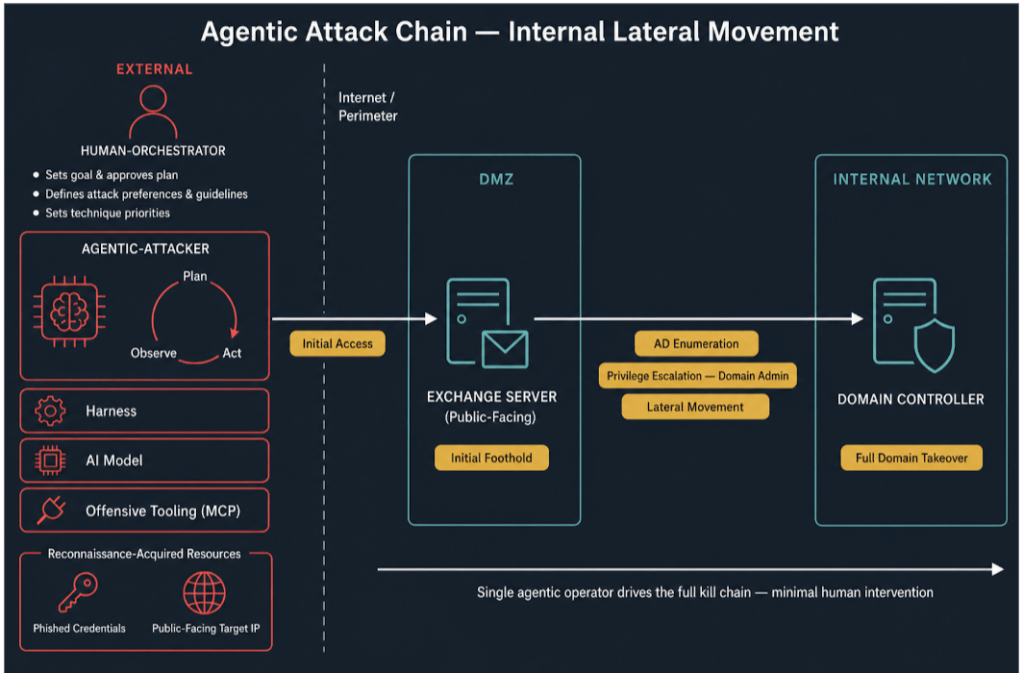
Industry professionals refer to these tools as a “harness.” They control the model’s behavior, limit its risks, and connect it to internal IT systems and networks so it can work reliably at scale.
New research from Cato Networks shared exclusively with CyberScoop shows how much power can come from a harness. It paired OpenAI’s ChatGPT 5.5 and GPT 5.5-Cyber models with its own tool and tested the abilities of the agent to hack into a victim network with as little human direction as possible.
Across six different scenarios, the pairing achieved complete end-to-end attack chains, including domain administrator privileges and Active Directory access, sometimes in as little as 40 minutes.
“What was most surprising is that first we saw that it was capable of doing accelerated reasoning and attack, and interacting and doing all this by itself, like doing all of the stages of the attacks,” said Guy Waizel, a tech evangelist at Cato Networks and one of the authors behind the research.
Critically, the most successful scenarios happened when the model was given appropriate operational context from the technical harness developed by Cato Networks.
“It does support that it’s not just about the frontier model,” said Waizel. “We found that [our harness] really helps the reasoning” of the LLM.

The agent was given some – but not abundant – resources to complete its tasks, including an external Kali Linux attack host, the simulated target’s public IP address and a set of low-level domain credentials acquired through phishing.
It was not provided with any other details, and had to probe further for key information, such as further knowledge of the server type (Microsoft Exchange), the target’s operating system, version, build number, internal network topology, access to higher privilege accounts and other critical assets, nor was agent given any predetermined attack paths.
The Cato Networks research uses OpenAI models, but only as an example. Waizel said he believes other models would likely achieve similar results. In any event, if current trends hold, the kind of capabilities provided by LLMs like GPT 5.5 are likely to be open-source within a year.
Cato Networks is far from alone. Most enterprises have their own AI harnesses, and executives tell CyberScoop they are playing an increasing role in more effectively steering the frontier model workflows.
While AI tools can struggle to duplicate human workflows in other areas, LLMs have long shown potential in cybersecurity and coding, improving greatly over the past few years. The Trump administration has set up a new federal clearinghouse for exchanging information between the public and private sectors on AI-discovered vulnerabilities, while European groups are setting up their own organizations to coordinate globally on AI cyber threats.
Eric Doerr, chief product officer at Tenable, told CyberScoop a harness used in the company called “Hexa” offers a defensive advantage: it can work with different commercial LLMs while delivering consistent results.
“One of the first things we do when we get a [new] model is say ‘Well, let’s run it through Hexa and see what we learn,’” said Doerr. “We have a whole bunch of benchmarks. Is it the same, is it better? Where is it better? Where is it worse?”
Hexa is meant to ensure that whichever model or models become dominant, Tenable will be able to integrate it into their tech stack and protect their most sensitive assets from unintended behaviors. That frees up the LLM to do what it does best: find vulnerable code and establish attacker pathways for exploiting them.
“For years, it has been true that there are way more potential issues that a company has to deal with: code vulnerabilities, things that are unpatched, misconfigurations,” said Doerr. “There’s way more than you can actually remediate, and you really need to understand the difference between what’s a theoretical problem and a real problem.”
Dan Rapp, chief AI and data officer at Proofpoint, said their harness, “Satori,” has become a critical tool for keeping their agentic AI on track while giving humans the ability to step in when things go awry.
“I think what you’re seeing in the foundation of frontier models is you have raw intelligence, raw reasoning power, but to get these systems to perform the way you want to, both context engineering – the content provided ensuring that its accurate and relevant – and the harness engineering are essential to actually get the systems to perform well,” Rapp told CyberScoop.
That was a common theme in interviews with companies. While frontier models come and go, or are overtaken by international competitors, there will always be the need for the model to operate with data and context that often only the organization can provide.
It suggests that while policymakers and cybersecurity experts have focused on the spread of newer and more powerful frontier models, industry – and likely soon the cybercriminal underground — has quickly developed the kind of technical infrastructure that is becoming far more important to AI cyber defensive and offensive tasks.
“We’ve had to bootstrap quite a few of these systems from first principles, and what it always boils down to is how effective you are with the tool calling… bringing in data, enriching the context,” said John Hopper, vice president of product engineering at SpecterOps.
The post Forget the model. When it comes to cybersecurity, it’s all about the harness appeared first on CyberScoop.
Buffer overflow, DoS, command injection, SSRF, authentication bypass, and other types of vulnerabilities have been found in PAN-OS software.
The post Palo Alto Networks Patches 13 Vulnerabilities appeared first on SecurityWeek.
TeamPCP is on a rampage through open-source software.
In less than four months, the threat actor has compromised and injected malicious code into more than 1,000 software packages. The extraordinary spree has transformed how software developers and maintainers distribute and manage their code, as their dependencies and repositories have become one of the most effective and prevalent attack vectors this year.
While there has been a host of technical exploits, TeamPCP’s greatest attack has been the uprooting of trust — repeatedly proving that most organizations fail to verify the code they ingest into their systems is legitimate, abusing a nearly blind faith that much of the software development industry relies on to power today’s modern economy.
Starting with Trivy in February, TeamPCP’s attacks have shaken that trust many times over.
The scale of TeamPCP’s attacks lies partly in the automated systems companies use to deploy code, like CI/CD pipelines. It is also capitalizing on new security gaps created by developers’ increasing reliance on AI. Yet, with relatively low effort and unoriginal tactics, TeamPCP is wrecking open-source frameworks and underlying systems at levels the technology community has rarely reckoned with.
“Developers didn’t do a great job of analyzing the security of their open-source dependencies before but, now with AI, there’s in some cases virtually no human in the loop or any kind of sanity check on what these tools are doing,” Feross Aboukhadijeh, founder and CEO at Socket, told CyberScoop.
“You have agents installing packages that haven’t been vetted,” he said. “When an attacker gets in, the impact is even broader because there’s less checks and balances to stop it from affecting everybody.”
TeamPCP hasn’t identified a new problem or proved anything novel. The crux of these attacks hinge on a central theme — defensive vulnerabilities the entire software industry has known about for years. Researchers and developers know the open source trust model is broken and susceptible to sabotage. Yet, the software industry has not fixed this problem.
“The speed and scale of these attacks is what makes it most notable, not necessarily the methodology behind it, because at the core it is really about exploiting third-party trusts that we have,” said Kimberly Goody, senior manager at Google Threat Intelligence Group.
Software packages are typically subjected to intensive security monitoring to test for vulnerabilities and poisoned updates before they are released to live environments.
Yet, the real vulnerability highlighted by TeamPCP lies further up the chain of command with the organizations or individuals that publish these packages to the wider market, according to Nathaniel Quist, manager of cloud threat intelligence at Palo Alto Networks.
“It is their responsibility to secure their credentials and not provide a jump off point to trigger a supply-chain event,” he said. “Everything that interacts with or crosses through that zone must be highly monitored and controlled to ensure a compromise can be contained quickly and easily.”
TeamPCP, like any prolific cybercriminal, has captured significant attention from threat hunters since it emerged in late 2025. Google attributes the activity to one core operator.
The company said it traced TeamPCP’s residential and mobile IP address connections to South Africa, indicating the primary operator was located there during at least some of its attacks.
“We don’t believe that there’s an established core group, at least not yet, and that a lot of this has been conducted by an individual,” Goody said. Google declined to name the core operator or confirm it knows the person’s true identity.
Palo Alto Networks said the core manager of TeamPCP uses the “ResoluteXBF” handle on multiple platforms. The cybersecurity firm is also tracking two additional core members: “diencracked” and “Shinigami.”
If TeamPCP is primarily run by one person, law enforcement has a rare opportunity to make a lasting impact with a single arrest.
TeamPCP has collaborated with other cybercriminals, but most of those partnerships were short-lived and ended in a public feud or otherwise failed to get off the ground in any meaningful way, Goody said.
Researchers have linked TeamPCP to extortion crews, dark web forums and affiliates including Lapsus$, ShinyHunters, Vect, DragonForce, BreachForums and “HasanBroker.” TeamPCP listed about 4,000 private code repositories on a dark web forum with an asking price of $95,000.
The actions to date, including unpredictable behavior, indicate motivations beyond financial gain and a “clear desire for notoriety,” Goody said. “They seem to like to make chaos.”
Quist draws the same conclusion from his months-long investigation, noting that it encourages other cybercriminals to get in on the action, at one point offering financial rewards for the largest software supply-chain attack.
TeamPCP isn’t in the game for extortion payments, he said. “These actors are more interested in the underground street cred they are gaining” and “causing as much damage and mayhem as possible.”
TeamPCP has been remarkably noisy, opportunistically injecting malware into open-source software for the purpose of stealing credentials for Kubernetes environments, Amazon Web Services, Microsoft Azure, Google Cloud and many other connected services.
The group’s claimed victim list is staggering: Checkmarx, Bitwarden, LiteLLM, Telnyx, Mercor AI, PyTorch Lightning, AntV, SAP, GitHub, TanStack, UiPath, MistralAI, Microsoft DurableTask, Red Hat and Nx Console.
The full collection of packages compromised or poisoned by TeamPCP to date accounts for roughly 500 million weekly downloads combined, according to Quist.
While the breadth of potential downstream compromise flowing from those downloads is substantial, many endpoints infected with those malware-riddled packages aren’t exposed to the internet and less susceptible to attack, he added.
“I don’t think there’s going to be a very extremely large number of victims,” Quist said. “There’s going to be a lot of people who potentially could be compromised and have potentially vulnerable packages in their environment, but that doesn’t necessarily mean they’re in an exploitable position.”
While these incidents have grabbed headlines, TeamPCP hasn’t accumulated payouts nearly as large as other cybercriminals. The broader reputational impact it has wrought, however, is massive.
TeamPCP has publicly claimed more than 10,000 victims and about $90,000 in extortions, according to Quist.
“They might not be making a lot of money, but they are causing a lot of impact,” Goody said. “Their campaigns have been very disruptive.”
TeamPCP’s victim list has grown as its hijacked open-source repositories on npm, PyPI, GitHub and other outsourced developer tools that are incorporated into upstream code running in production environments.
Developer laptops and other endpoints that are assigned to install, build and publish software widely contain keys and access to source code that create incredibly valuable supply-chain targets for attackers, Amitai Cohen, head of the attack vector intel team at Wiz, explained during a June presentation on TeamPCP at SleuthCon in Arlington, Va.
The group targets CI runners, which are automated systems that build, test, and publish code. TeamPCP injects malware into the code repositories these runners maintain. When other developers pull that code into their own systems, they unknowingly download the malware alongside it.
Some of these artifacts, including Python libraries, npm registries and GitHub Actions, are downloaded almost immediately by thousands or millions of developers who’ve set their runners up to consistently pull the latest version, according to Cohen. “We as a security industry have taught them that that is the right thing to do. You want to use the latest version because you want to be protected against vulnerabilities, and obviously you want to benefit from all the latest features.”
That instinct is exactly what TeamPCP exploits. By compromising one company’s CI/CD workflow, the group gains access to every downstream user who automatically pulls that infected code. “This is what allows [TeamPCP] to leverage initial access to some patient zero, some company that had a vulnerability in their CI/CD workflow, in order to gain access to their downstream users,” Cohen said. “That’s just how the software supply chain works. Everything has dependencies upon dependencies upon dependencies.”
Some of the packages compromised by TeamPCP were live for almost 13 hours, but security practitioners have responded by identifying code-injection attacks much quicker now, pulling some compromised repositories within 15 minutes, said Ben Read, director of strategic intelligence at Wiz.
The threat group’s operations remain high-tempo. TeamPCP infects new software packages almost daily, validates compromises and captures sensitive data within 24 hours, according to Wiz researchers.
The threat group has consistently evolved its tactics, developing payloads in JavaScript and Python while spreading from local files to Kubernetes application programming interfaces and bundled software development kits. Most recently, it’s been stealing credentials via custom protocols.
The group’s ambitions have expanded beyond its own attacks. TeamPCP is also responsible for a self-replicating piece of malware known as Mini Shai-Hulud, which infected hundreds of software packages across open-source registries in back-to-back attack sprees last month. A TeamPCP affiliate published the full source code for the malware on GitHub last month and encouraged other cybercriminals to use it for their own campaigns.
“TeamPCP is going for volume. They are not being discriminating, they’re not necessarily trying to be stealthy or trying to maximize ROI. They’re going for an all-of-the-above strategy,” Read said during the Sleuthcon presentation.
TeamPCP’s attack spree has also underscored how difficult it is for organizations to revoke compromised secrets. Multiple victims have experienced recurring infections, sometimes falling prey to TeamPCP three times within a month, because they didn’t rotate secrets properly, Cohen said.
At its core, these attacks highlight a direct trade-off organizations accept when they update software quickly to fix vulnerabilities, but learn that doing so too quickly could expose them to illegitimate registries containing malware.
TeamPCP has targeted what Aboukhadijeh describes as a “public good,” open-source registries that were never perfect but widely trusted and rarely turned into a point of entry for supply-chain attacks.
Rapid open source software installation is one of the most dangerous things an organization can do right now, he said, adding that there’s a roughly 1 in 10 chance that any package installed by an organization could trigger an active attack.
TeamPCP has compromised security scanners, password managers, automation tools, data visualization software, and CI/CD infrastructure across various environments.
And it’s lifted a trove of credentials and other sensitive data from victims.
Researchers like Cohen at Wiz, who have been tracking this attack spree since the beginning, are nearing a breaking point.
“This is also too hard on us. We’re very tired. I’m sure a lot of people working on this problem space are very tired, and it’s just kind of become untenable,” Cohen said.
“You can’t keep existing in a world where you wake up every morning and some super prevalent package is compromised and everybody’s just going to be using it like nothing,” he added. “We need to start taking this a bit more seriously.”
The post How software development’s speed obsession enabled TeamPCP’s chaos crusade appeared first on CyberScoop.

Researchers and threat hunters are scrambling to respond to an actively exploited authentication-bypass vulnerability affecting Palo Alto Networks customers’ firewalls.
The company initially tagged CVE-2026-0257 with a medium-severity rating when it disclosed the defect May 13, but quickly reassessed it as critical after Rapid7 observed and confirmed active exploitation in the wild. The Cybersecurity and Infrastructure Security Agency followed suit, and added the vulnerability to its known exploited vulnerabilities catalog Friday.
The escalated threat posed by the defect, which allows remote attackers to bypass security restrictions and establish a VPN connection to an affected firewall, showcases how quickly a seemingly mild vulnerability can turn into an urgent warning.
“Palo Alto Networks is actively monitoring limited exploitation attempts targeting CVE-2026-0257 on unpatched PAN-OS devices where mitigations have not been applied,” a company spokesperson said in a statement. The company on Friday urged all customers to immediately apply the patch or follow its recommended steps for mitigation.
The vendor and Rapid7, which first observed exploitation May 17 in a customer environment, declined to say how many organizations are impacted thus far. Yet, Douglas McKee, director of vulnerability intelligence at Rapid7, warned: “We’ve continued to see new victims roll in, including a couple of customers hit within just an hour of each other during a second wave of activity” on May 21.
Jake Knott, security researcher at watchTowr, told CyberScoop the vulnerability and resulting exploits follows a recurring trend wherein attackers target exposed network edge devices and rapidly identify, develop and weaponize exploits for initial access.
“This is yet another authentication bypass on a device whose sole job is to guard the front door to an organization’s network,” he said. “What stands out is how simple it is — an attacker can forge a valid authentication cookie using nothing more than the appliance’s publicly available TLS certificate. The entire exploit is a single HTTP request.”
The vulnerability has a few requisites that limit exposure, specifically posing risk to some Palo Alto Networks customers running GlobalProtect portal or gateway configured to enable authentication override cookies.
“The cookie encryption and decryption certificate must be reused with another feature, which potentially exposes the public key for that certificate,” said Caitlin Condon, vice president of security research at VulnCheck.
“It’s difficult to say how many deployments meet those criteria for exploitability, but Palo Alto Networks firewalls have a very large footprint, which means even uncommon configurations can present significant attack surface area,” she added.
Rapid7 said the same attacker or group is likely responsible for both waves of exploitation last month, but in many cases attackers are not establishing a full VPN connection or moving to other parts of the impacted network.
The attackers are “highly opportunistic and clearly monitor the security research community,” McKee said. “Attackers are purposefully weaponizing medium-severity vulnerabilities, which are typically lower priority or blind spots for organizations.”
Multiple threat clusters are swarming to the opportunity and quickly adapting to published research. Researchers have not attributed the malicious activity to any specific threat groups.
“Their exact origins and long-term objectives remain unclear, as they currently seem focused purely on opportunistic initial access rather than targeted, long-term espionage,” McKee said.
Palo Alto Networks said it discovered the vulnerability internally through its use of frontier AI tools. Yet, within days of its public disclosure, initial assessments were proven inadequate.
“This is a pattern we continue to see — the urgency only arrives after exploitation is underway,” Knott said. “Organizations that wait for confirmation of active exploitation before patching will consistently find themselves reacting too late.”
The post Attackers are exploiting Palo Alto Networks defect that initially flew under the radar appeared first on CyberScoop.
Two of the most advanced artificial intelligence models — Anthropic’s Claude Mythos Preview and OpenAI’s GPT-5.5 — have significantly surpassed the already-accelerating pace at which AI systems are completing autonomous cybersecurity tasks, according to separate findings published Wednesday by the United Kingdom’s AI Security Institute (AISI) and Palo Alto Networks.
The AISI, which conducts pre-deployment evaluations of frontier AI models on behalf of the British government, said both Claude Mythos Preview and GPT-5.5 have substantially exceeded the doubling trend the institute had been tracking since late 2024. Whether the results represent an isolated capability jump or the start of a new, faster trajectory remains unclear.
The AISI estimated earlier this year that frontier models’ 80% reliability cyber time horizon — a measure of how long a task takes a human expert, used as a proxy for AI autonomy — had been doubling approximately every five months. That was itself roughly half the eight-month doubling time the institute estimated in November 2025. Now Mythos Preview and GPT-5.5 have since outperformed any trend lines the institute has measured.
“Frontier AI’s autonomous cyber and software capability is advancing quickly: the length of cyber tasks that frontier models can complete autonomously has doubled on the order of months, not years,” the AISI wrote.
The clearest evidence of the capability jump came from the AISI’s cyber ranges, its structured simulations of multi-stage attacks against small, undefended enterprise networks. A newer checkpoint of Claude Mythos Preview became the first model to complete both of the institute’s ranges. It solved “The Last Ones,” a 32-step simulated corporate network attack, in 6 of 10 attempts, and completed “Cooling Tower” — previously unsolved by any model — in 3 of 10 attempts. GPT-5.5 solved “The Last Ones” in 3 of 10 attempts.
Palo Alto Networks reached similar conclusions through its own testing. The company said it began testing Claude Mythos in April as a launch partner for Anthropic’s Project Glasswing, and has since tested Claude Opus 4.7 and OpenAI’s GPT-5.5-Cyber as part of OpenAI‘s Trusted Access for Cyber program.
“The latest models are extraordinarily capable at finding vulnerabilities and changing them into critical exploit paths in near-real-time,” Palo Alto Networks wrote.
The company released security advisories covering 26 CVEs representing 75 issues — compared to a typical monthly volume of fewer than five CVEs — that were identified through AI model scanning across more than 130 products. All important vulnerabilities in its SaaS products had been patched, with patches available for all customer-operated products.
The AISI was careful to note the limits of its data. The estimates are based on a relatively small number of models, and the hardest tasks in the test suite have the least amount of human comparison data. Even so, the institute said the overall trend holds up: dropping any single model from the analysis barely moves the needle, shifting the estimated doubling time by less than a month in either direction. Separate research from METR, a nonprofit that tracks how quickly AI handles software tasks, arrived at a nearly identical figure — a doubling time of approximately four months since late 2024.
“No single benchmark result should be read as a precise measure of AI capability,” the AISI wrote. “Regardless, the direction of change and rapid growth have been consistent across the models, methodological choices and independent data we examined.”
Palo Alto Networks outlined four immediate priorities for enterprises as these models continue to grow in usage: First, find and fix vulnerabilities in code and applications before attackers do. Second, shrink the attack surface and use AI to spot security misconfigurations. Third, deploy detection and response tools across all systems, using machine learning to catch threats in real time. Fourth, build security operations fast enough to respond in minutes, because AI-powered attacks may soon unfold that quickly.
The AISI said it is developing more demanding evaluations, including new cyber ranges and the addition of active cyber defenses, to better reflect real-world conditions as model capabilities continue to advance.
The post Researchers say AI just broke every benchmark for autonomous cyber capability appeared first on CyberScoop.
Attackers are actively exploiting a zero-day vulnerability affecting some Palo Alto Networks’ customers’ firewalls, the security vendor said in an advisory Tuesday.
The critical memory corruption vulnerability — CVE-2026-0300 — affects the authentication portal of PAN-OS, and allows unauthenticated attackers to run code with root privileges on the vendor’s PA-Series and VM-Series firewalls, the company said.
Palo Alto Networks did not say when or how it became aware of active exploitation, nor when the earliest known exploitation occurred. The Cybersecurity and Infrastructure Security Agency added the defect to its known exploited vulnerabilities catalog Wednesday.
The company hasn’t released a patch for the vulnerability or described the scope and objective of confirmed attacks.
“This vulnerability is specific to a limited number of customers with their User-ID Authentication Portal (Captive Portal) exposed to the public internet or untrusted IP addresses. We have observed limited exploitation of this issue and are working to release software fixes, with the first updates expected to be available on May 13,” a Palo Alto Networks spokesperson told CyberScoop.
The company said firewalls exposed to the buffer-overflow vulnerability, which has a CVSS rating of 9.3, are broadly exposed in real-world deployments, and it described the attack complexity as low.
Shadowserver scans found more than 5,800 publicly exposed VM-Series firewalls running PAN-OS as of Tuesday, yet it’s unknown how many of those instances have restricted authentication access to trusted internal IP addresses or disabled the feature altogether.
“We have provided clear mitigation guidance to our customers to secure their environments immediately. This issue does not impact Cloud NGFW or Panorama appliances. We remain committed to a transparent, security-first approach to protect our global customer base,” Palo Alto Networks’ spokesperson added.
Benjamin Harris, CEO and founder of watchTowr, noted that Palo Alto Networks proactively alerted customers to the zero-day, a step that allowed defenders to take action on potentially exposed instances.
“In a bad situation, that is the best they can do immediately. However, that also alerts everyone to the existence of a vulnerability,” he told CyberScoop.
Despite the risk, Harris said watchTowr expects attacks linked to the zero-day exploit to be “very limited.”
Palo Alto Networks and its impacted customers remain the only parties to have observed exploitation in the wild, but researchers warn that will likely change soon.
“It’s likely rules will also start to fire in third-party organizations and honeypots shortly,” Caitlin Condon, vice president of security research at VulnCheck, told CyberScoop.
“Management interfaces, login pages, and authentication portals have been common adversary targets for both opportunistic and targeted campaigns in recent years,” she added. “With researcher and community eyes on the vulnerability, it’s likely that we’ll see public exploits and broader exploitation quickly, provided the issue isn’t prohibitively difficult to exploit.”
Palo Alto Networks has yet to attribute the attacks to any known threat group, publish indicators or compromise, nor disclose the type of organizations that have been targeted and impacted.
Researchers are hunting for malicious activity and advise customers to apply patches upon release.
The post A critical Palo Alto PAN-OS zero-day is being exploited in the wild appeared first on CyberScoop.
A Brazilian tech firm that specializes in protecting networks from distributed denial-of-service (DDoS) attacks has been enabling a botnet responsible for an extended campaign of massive DDoS attacks against other network operators in Brazil, KrebsOnSecurity has learned. The firm’s chief executive says the malicious activity resulted from a security breach and was likely the work of a competitor trying to tarnish his company’s public image.

An Archer AX21 router from TP-Link. Image: tp-link.com.
For the past several years, security experts have tracked a series of massive DDoS attacks originating from Brazil and solely targeting Brazilian ISPs. Until recently, it was less than clear who or what was behind these digital sieges. That changed earlier this month when a trusted source who asked to remain anonymous shared a curious file archive that was exposed in an open directory online.
The exposed archive contained several Portuguese-language malicious programs written in Python. It also included the private SSH authentication keys belonging to the CEO of Huge Networks, a Brazilian ISP that primarily offers DDoS protection to other Brazilian network operators.
Founded in Miami, Fla. in 2014, Huge Networks’s operations are centered in Brazil. The company originated from protecting game servers against DDoS attacks and evolved into an ISP-focused DDoS mitigation provider. It does not appear in any public abuse complaints and is not associated with any known DDoS-for-hire services.
Nevertheless, the exposed archive shows that a Brazil-based threat actor maintained root access to Huge Networks infrastructure and built a powerful DDoS botnet by routinely mass-scanning the Internet for insecure Internet routers and unmanaged domain name system (DNS) servers on the Web that could be enlisted in attacks.
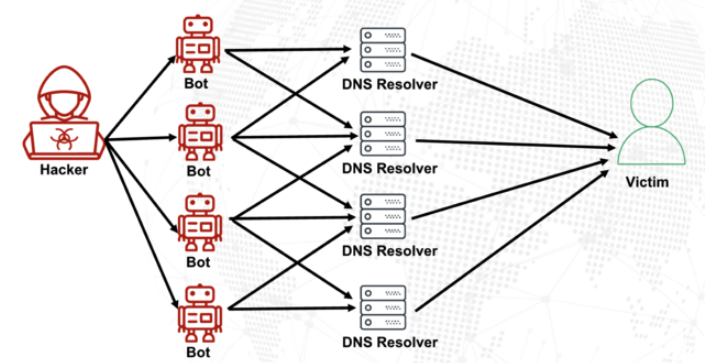
DNS is what allows Internet users to reach websites by typing familiar domain names instead of the associated IP addresses. Ideally, DNS servers only provide answers to machines within a trusted domain. But so-called “DNS reflection” attacks rely on DNS servers that are (mis)configured to accept queries from anywhere on the Web. Attackers can send spoofed DNS queries to these servers so that the request appears to come from the target’s network. That way, when the DNS servers respond, they reply to the spoofed (targeted) address.
By taking advantage of an extension to the DNS protocol that enables large DNS messages, botmasters can dramatically boost the size and impact of a reflection attack — crafting DNS queries so that the responses are much bigger than the requests. For example, an attacker could compose a DNS request of less than 100 bytes, prompting a response that is 60-70 times as large. This amplification effect is especially pronounced when the perpetrators can query many DNS servers with these spoofed requests from tens of thousands of compromised devices simultaneously.

A DNS amplification and reflection attack, illustrated. Image: veracara.digicert.com.
The exposed file archive includes a command-line history showing exactly how this attacker built and maintained a powerful botnet by scouring the Internet for TP-Link Archer AX21 routers. Specifically, the botnet seeks out TP-Link devices that remain vulnerable to CVE-2023-1389, an unauthenticated command injection vulnerability that was patched back in April 2023.
Malicious domains in the exposed Python attack scripts included DNS lookups for hikylover[.]st, and c.loyaltyservices[.]lol, both domains that have been flagged in the past year as control servers for an Internet of Things (IoT) botnet powered by a Mirai malware variant.
The leaked archive shows the botmaster coordinated their scanning from a Digital Ocean server that has been flagged for abusive activity hundreds of times in the past year. The Python scripts invoke multiple Internet addresses assigned to Huge Networks that were used to identify targets and execute DDoS campaigns. The attacks were strictly limited to Brazilian IP address ranges, and the scripts show that each selected IP address prefix was attacked for 10-60 seconds with four parallel processes per host before the botnet moved on to the next target.
The archive also shows these malicious Python scripts relied on private SSH keys belonging to Huge Networks’s CEO, Erick Nascimento. Reached for comment about the files, Mr. Nascimento said he did not write the attack programs and that he didn’t realize the extent of the DDoS campaigns until contacted by KrebsOnSecurity.
“We received and notified many Tier 1 upstreams regarding very very large DDoS attacks against small ISPs,” Nascimento said. “We didn’t dig deep enough at the time, and what you sent makes that clear.”
Nascimento said the unauthorized activity is likely related to a digital intrusion first detected in January 2026 that compromised two of the company’s development servers, as well as his personal SSH keys. But he said there’s no evidence those keys were used after January.
“We notified the team in writing the same day, wiped the boxes, and rotated keys,” Nascimento said, sharing a screenshot of a January 11 notification from Digital Ocean. “All documented internally.”
Mr. Nascimento said Huge Networks has since engaged a third-party network forensics firm to investigate further.
“Our working assessment so far is that this all started with a single internal compromise — one pivot point that gave the attacker downstream access to some resources, including a legacy personal droplet of mine,” he wrote.
“The compromise happened through a bastion/jump server that several people had access to,” Nascimento continued. “Digital Ocean flagged the droplet on January 11 — compromised due to a leaked SSH key, in their wording — I was traveling at the time and addressed it on return. That droplet was deprecated and destroyed, and it was never part of Huge Networks infrastructure.”
The malicious software that powers the botnet of TP-Link devices used in the DDoS attacks on Brazilian ISPs is based on Mirai, a malware strain that made its public debut in September 2016 by launching a then record-smashing DDoS attack that kept this website offline for four days. In January 2017, KrebsOnSecurity identified the Mirai authors as the co-owners of a DDoS mitigation firm that was using the botnet to attack gaming servers and scare up new clients.
In May 2025, KrebsOnSecurity was hit by another Mirai-based DDoS that Google called the largest attack it had ever mitigated. That report implicated a 20-something Brazilian man who was running a DDoS mitigation company as well as several DDoS-for-hire services that have since been seized by the FBI.
Nascimento flatly denied being involved in DDoS attacks against Brazilian operators to generate business for his company’s services.
“We don’t run DDoS attacks against Brazilian operators to sell protection,” Nascimento wrote in response to questions. “Our sales model is mostly inbound and through channel integrator, distributors, partners — not active prospecting based on market incidents. The targets in the scripts you received are small regional providers, the vast majority of which are neither in our customer base nor in our commercial pipeline — a fact verifiable through public sources like QRator.”
Nascimento maintains he has “strong evidence stored on the blockchain” that this was all done by a competitor. As for who that competitor might be, the CEO wouldn’t say.
“I would love to share this with you, but it could not be published as it would lose the surprise factor against my dishonest competitor,” he explained. “Coincidentally or not, your contact happened a week before an important event – one that this competitor has NEVER participated in (and it’s a traditional event in the sector). And this year, they will be participating. Strange, isn’t it?”
Strange indeed.
A hacktivist group with links to Iran’s intelligence agencies is claiming responsibility for a data-wiping attack against Stryker, a global medical technology company based in Michigan. News reports out of Ireland, Stryker’s largest hub outside of the United States, said the company sent home more than 5,000 workers there today. Meanwhile, a voicemail message at Stryker’s main U.S. headquarters says the company is currently experiencing a building emergency.
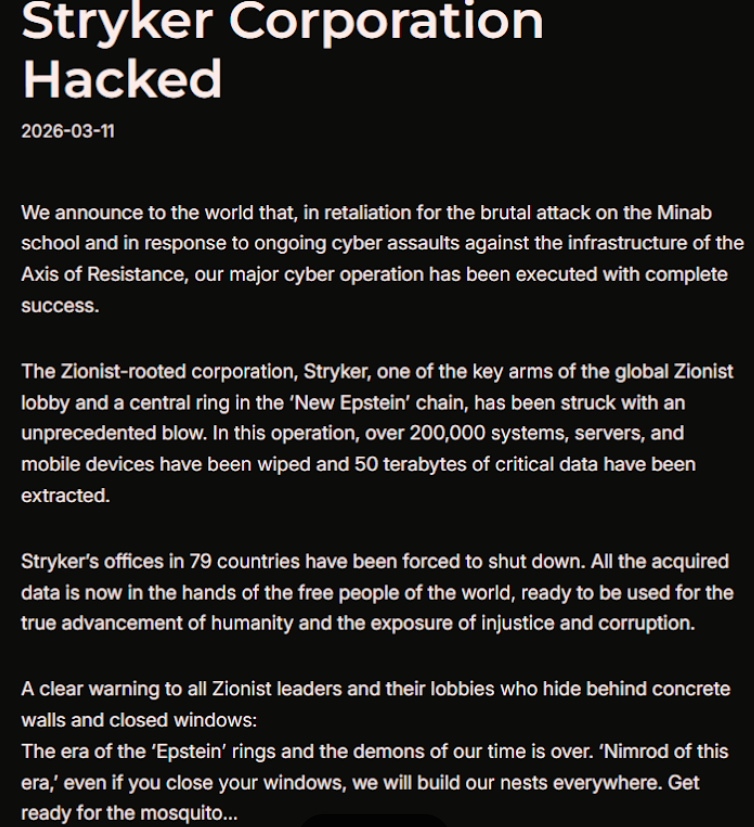
Based in Kalamazoo, Michigan, Stryker [NYSE:SYK] is a medical and surgical equipment maker that reported $25 billion in global sales last year. In a lengthy statement posted to Telegram, a hacktivist group known as Handala (a.k.a. Handala Hack Team) claimed that Stryker’s offices in 79 countries have been forced to shut down after the group erased data from more than 200,000 systems, servers and mobile devices.

A manifesto posted by the Iran-backed hacktivist group Handala, claiming a mass data-wiping attack against medical technology maker Stryker.
“All the acquired data is now in the hands of the free people of the world, ready to be used for the true advancement of humanity and the exposure of injustice and corruption,” a portion of the Handala statement reads.
The group said the wiper attack was in retaliation for a Feb. 28 missile strike that hit an Iranian school and killed at least 175 people, most of them children. The New York Times reports today that an ongoing military investigation has determined the United States is responsible for the deadly Tomahawk missile strike.
Handala was one of several hacker groups recently profiled by Palo Alto Networks, which links it to Iran’s Ministry of Intelligence and Security (MOIS). Palo Alto says Handala surfaced in late 2023 and is assessed as one of several online personas maintained by Void Manticore, a MOIS-affiliated actor.
Stryker’s website says the company has 56,000 employees in 61 countries. A phone call placed Wednesday morning to the media line at Stryker’s Michigan headquarters sent this author to a voicemail message that stated, “We are currently experiencing a building emergency. Please try your call again later.”
A report Wednesday morning from the Irish Examiner said Stryker staff are now communicating via WhatsApp for any updates on when they can return to work. The story quoted an unnamed employee saying anything connected to the network is down, and that “anyone with Microsoft Outlook on their personal phones had their devices wiped.”
“Multiple sources have said that systems in the Cork headquarters have been ‘shut down’ and that Stryker devices held by employees have been wiped out,” the Examiner reported. “The login pages coming up on these devices have been defaced with the Handala logo.”
Wiper attacks usually involve malicious software designed to overwrite any existing data on infected devices. But a trusted source with knowledge of the attack who spoke on condition of anonymity told KrebsOnSecurity the perpetrators in this case appear to have used a Microsoft service called Microsoft Intune to issue a ‘remote wipe’ command against all connected devices.
Intune is a cloud-based solution built for IT teams to enforce security and data compliance policies, and it provides a single, web-based administrative console to monitor and control devices regardless of location. The Intune connection is supported by this Reddit discussion on the Stryker outage, where several users who claimed to be Stryker employees said they were told to uninstall Intune urgently.
Palo Alto says Handala’s hack-and-leak activity is primarily focused on Israel, with occasional targeting outside that scope when it serves a specific agenda. The security firm said Handala also has taken credit for recent attacks against fuel systems in Jordan and an Israeli energy exploration company.
“Recent observed activities are opportunistic and ‘quick and dirty,’ with a noticeable focus on supply-chain footholds (e.g., IT/service providers) to reach downstream victims, followed by ‘proof’ posts to amplify credibility and intimidate targets,” Palo Alto researchers wrote.
The Handala manifesto posted to Telegram referred to Stryker as a “Zionist-rooted corporation,” which may be a reference to the company’s 2019 acquisition of the Israeli company OrthoSpace.
Stryker is a major supplier of medical devices, and the ongoing attack is already affecting healthcare providers. One healthcare professional at a major university medical system in the United States told KrebsOnSecurity they are currently unable to order surgical supplies that they normally source through Stryker.
“This is a real-world supply chain attack,” the expert said, who asked to remain anonymous because they were not authorized to speak to the press. “Pretty much every hospital in the U.S. that performs surgeries uses their supplies.”
John Riggi, national advisor for the American Hospital Association (AHA), said the AHA is not aware of any supply-chain disruptions as of yet.
“We are aware of reports of the cyber attack against Stryker and are actively exchanging information with the hospital field and the federal government to understand the nature of the threat and assess any impact to hospital operations,” Riggi said in an email. “As of this time, we are not aware of any direct impacts or disruptions to U.S. hospitals as a result of this attack. That may change as hospitals evaluate services, technology and supply chain related to Stryker and if the duration of the attack extends.”
According to a March 11 memo from the state of Maryland’s Institute for Emergency Medical Services Systems, Stryker indicated that some of their computer systems have been impacted by a “global network disruption.” The memo indicates that in response to the attack, a number of hospitals have opted to disconnect from Stryker’s various online services, including LifeNet, which allows paramedics to transmit EKGs to emergency physicians so that heart attack patients can expedite their treatment when they arrive at the hospital.
“As a precaution, some hospitals have temporarily suspended their connection to Stryker systems, including LIFENET, while others have maintained the connection,” wrote Timothy Chizmar, the state’s EMS medical director. “The Maryland Medical Protocols for EMS requires ECG transmission for patients with acute coronary syndrome (or STEMI). However, if you are unable to transmit a 12 Lead ECG to a receiving hospital, you should initiate radio consultation and describe the findings on the ECG.”
This is a developing story. Updates will be noted with a timestamp.
Update, 2:54 p.m. ET: Added comment from Riggi and perspectives on this attack’s potential to turn into a supply-chain problem for the healthcare system.
Update, Mar. 12, 7:59 a.m. ET: Added information about the outage affecting Stryker’s online services.

John talked about how we’d attack, here’s how you can defend against those attacks. Grab the slides here: https://blackhillsinformationsecurity.shootproof.com/gallery/6843799/
The post PODCAST: Attack Tactics Part 2 appeared first on Black Hills Information Security, Inc..

Jordan Drysdale & Kent Ickler// Jordan and Kent are back with more blue team madness! The shameless duo continue their efforts to wrangle decades old attacks against wireless networks. The […]
The post WEBCAST: Stop Sucking at Wireless appeared first on Black Hills Information Security, Inc..

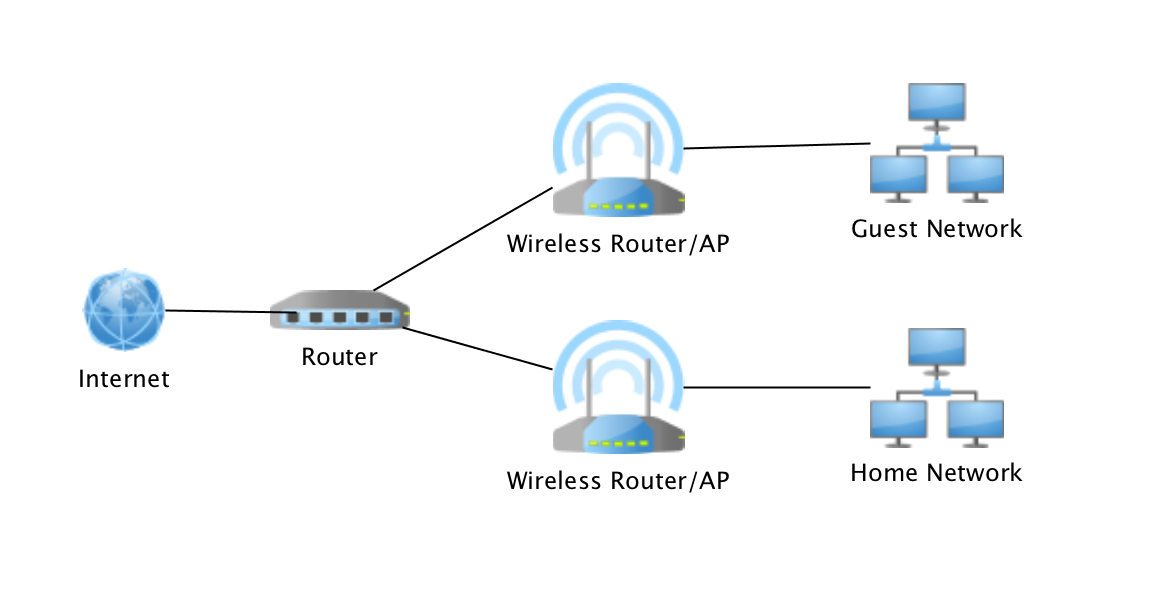
Ethan Robish // In this series of posts, I’ll discuss how I segmented my home network using VLANs and how I moved away from using a risky consumer-grade router at […]
The post Home Network Design – Part 1 appeared first on Black Hills Information Security, Inc..
Christine Sorensen // Let’s talk about Mary. Mary Watson is a girl in her twenties and just graduated from Midtown University with her bachelors in Fashion Merchandising. Mary is now […]
The post Mining Mary’s Social Media Antics for Social Engineering appeared first on Black Hills Information Security, Inc..