❌

Reading view

There are new articles available, click to refresh the page.

Leaked DHS employee archive, Icepick, faces challenges to stay online

A company working on behalf of the Department of Homeland Security sought to cut off online access to information on more than 41,000 employees that hacktivists said they obtained from a database breached at DHS.

A search tool for the database, named Icepick, went offline for a spell before coming online again Thursday under a different registrar.

Icelandic hosting company FlokiNET said Thursday that it received a request from DHS contractor ZeroFox to remove the data, which it refused.

“By mid-morning, icepi.cx no longer resolved. Its registrar, CentralNic, had placed the domain on serverHold,” FlokiNET said in a blog post. “Our refusal kept nothing online. The request that decided the outcome to take the site down was not the one sent to us. A registrar reached the opposite conclusion the same morning, published nothing, and a global audience lost access to the site. In the meantime the site is online again under a domain from a different registrar.”

CentralNic and ZeroFox did not immediately respond to requests for comment Thursday.

DHS said late Wednesday that it was working to protect its employees against any breach.

“DHS is aware of a potential breach and is actively working to address the situation swiftly and effectively,” a spokesperson said. “We take all security threats against our employees and officers seriously and will work to ensure all are properly protected. We will update the public when more information is available.”

The social media site Bluesky was also blocking links to the archive because it shared people’s contact information without their permission, although a company official said changes were coming because the wording had identified it as a malicious link.

FlokiNET said it refused the ZeroFox request that mislabeled the archive as part of a doxxing campaign.

“Doxxing publishes private details about private people so that others can find them at home. Icepick publishes work identities of government employees,” it wrote. “Who they work for. What their role is. How they can be reached in that role. The information describes people in the exercise of public authority, not in their private lives. Federal officers carrying out an enforcement programme are not private individuals while they are carrying it out.”

“The public has a legitimate interest in knowing who is doing that work, under whose authority, and in which office,” it continued. “Journalists cannot report on an agency whose personnel are structurally unknowable.”

ZeroFox said that regardless of that, the data made it possible to locate people whose information was in the database.

“The request does not depend on who the listed individuals are or what their duties are,” ZeroFox wrote to FlokiNET. “It rests on two facts: the data was stolen, and it is personal data that identifies and locates real people.”

The post Leaked DHS employee archive, Icepick, faces challenges to stay online appeared first on CyberScoop.

Leak site publishes data on more than 41,000 DHS employees obtained by hacktivists

A leak website was published Wednesday, showcasing internal data on more than 41,000 Department of Homeland Security employees and contractors after it was obtained by hackers who claimed to have breached an identity service used by the agency.  

The transparency nonprofit Distributed Denial of Secrets and the hacker maia arson crimew got the data from a hacktivist outfit known as the Department of Peace.

”The leak is extraordinary but deceptive in [its] simplicity as it identifies the officials responsible for overseeing covert and undercover operations, the government’s hunt for leakers and the failed BlueLeaks investigation — along with key personnel in DHS’s ever-escalating rendition and deportation programs,” said Emma Best, founder of DDoSecrets.

CyberScoop was able to verify numerous current Cybersecurity and Infrastructure Agency employees are listed in the data, along with some former leadership members who left the agency years ago.

The data goes back years, with various group names listed in the database making reference to COVID-19 planning and internal summits in 2023.

As of Thursday morning, the website hosting a searchable form of the data has been taken offline.

The hacktivists said the breach was a response to the promise of stepped-up operations from Immigrations and Customs Enforcement by DHS Secretary Markwayne Mullin.

”On July 17th, Markwayne Mullin said he was ’turning up the heat.’ This is what happens to ICE when you do that,” said a spokesperson for the Department of Peace.

The spokesperson said they obtained the database from an Okta single sign-on service used at DHS. Okta said it was aware of the report.

“Okta is secure, and we have no evidence our data or systems were compromised,” an Okta spokesperson said.

DHS did not immediately respond to a request for comment.

”This dataset is massive in terms of both size and impact,” said crimew, a Swiss hacker and journalist who has been indicted in the United States over past leaks and who created a search tool for the DHS data. “It provides an unprecedented look into the Department of Homeland Security’s organizational structure, highlighting which people do what work across multiple DHS agencies, including ICE.”

One researcher said the leak could prove valuable for Freedom of Information Act requests.

“Email addresses and phone numbers are indispensable tools for FOIA researchers, often making the difference between a vague records request that gets stonewalled and one that gets results,” Ryan Shapiro, executive director of Property of the People, said. “Given the Trump administration’s contempt for even basic transparency, the need for such tools is urgent.”

DHS has suffered notable breaches before, dating back to a 2014 breach that may have exposed the data of 390,000 then-current and former Homeland Security Department employees, job applicants and contractors. In 2018, DHS notified nearly 250,000 people of a breach at the department.

Earlier this year, Security firm GitGuardian said it discovered a public GitHub repository that exposed credentials for privileged AWS GovCloud accounts and internal CISA systems dating back to November 2025.

Greg Otto contributed to this story.

UPDATE: 10/29/2026, 9:30 a.m.: This story has been updated with details about the web-based database being taken offline.

The post Leak site publishes data on more than 41,000 DHS employees obtained by hacktivists appeared first on CyberScoop.

Canadian Man Pleads Guilty in Snowflake Extortions

A 26-year-old Canadian man once described as one of the most consequential cybercrime threat actors of 2024 has pleaded guilty to computer fraud and conspiracy to hack and extort more than 165 organizations that used the cloud provider Snowflake. Connor Riley Moucka, of Kitchener, Ontario, also admitted to stealing call and text history records of more than 100 million AT&T customers.

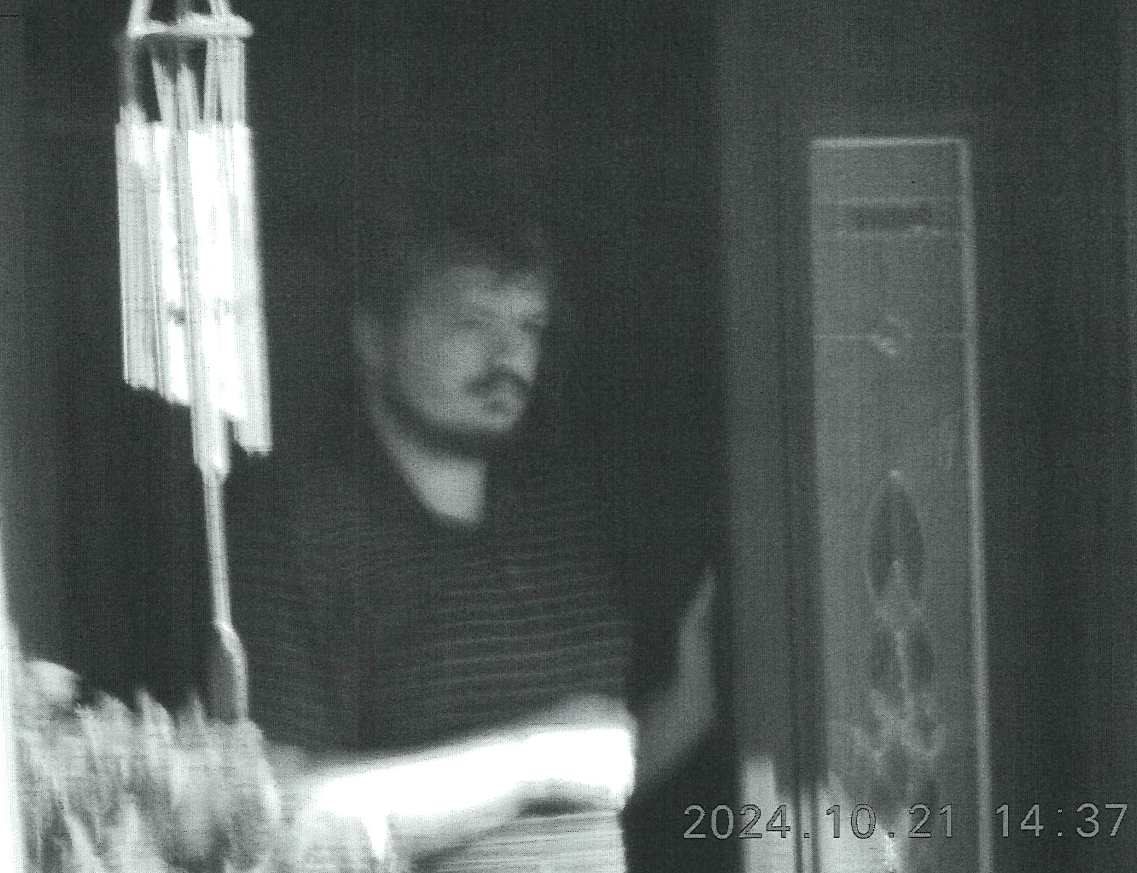
A surveillance photo of Connor Riley Moucka, a.k.a. “Judische” and “Waifu,” dated Oct 21, 2024, 9 days before Moucka’s arrest. This image was included in an affidavit filed by an investigator with the Royal Canadian Mounted Police (RCMP).

The U.S. Justice Department said between February and October 2024, Moucka and co-conspirators used stolen login credentials to steal cloud-hosted data belonging to at least 165 customers of a U.S.-based software-as-a-service company.

The hackers targeted stolen credentials for Snowflake customer accounts that did not enforce multi-factor authentication, and extorted or attempted to extort a host of well-known companies, including TicketMaster, Lending Tree, Advance Auto Parts and Neiman Marcus. Snowflake responded to the data thefts by increasing password complexity requirements and enforcing multi-factor authentication.

Moucka adopted new nicknames frequently — sometimes operating multiple identities concurrently — but two of his best-known monikers were “Judische” and “Waifu.” Judische’s admitted role in the Snowflake data thefts was first documented by KrebsOnSecurity in a September 2024 story about the overlap between Western, English-speaking cybercriminals and extremist groups that harass and extort minors into harming themselves or others.

That September 2024 story identified Judische as a software engineer from Ontario who has been involved in numerous data breaches and voice phishing attacks against U.S. companies since at least 2020. A little more than a month later, Canadian authorities arrested Moucka on a provisional warrant from the United States.

The government says Moucka and others used their unauthorized access to steal billions of sensitive customer records and download terabytes of information, “including individuals’ non-content call and text history records, banking and other financial information, payroll records, Drug Enforcement Administration (DEA) registration numbers, driver’s license numbers, passport numbers, social security numbers and other personally identifiable information. They then extorted victims by threatening to publish data online.”

Moucka also threatened and harassed government officials and security researchers who were helping to track him down. The Justice Department said the conspirators made over $2.5 million in ransom payments, and that in at least one instance, Moucka re-extorted a victim with threats of further disclosure of the victim’s stolen data.

“Moucka used the stolen data of a government officer and members of a then-former government officer’s immediate family in this re-extortion attempt,” reads a statement from the Justice Department.

One of Moucka’s admitted co-conspirators is Cameron “Kiberphant0m” Wagenius, a U.S. Army soldier who pleaded guilty in July 2025 to extorting AT&T and Verizon for their customer account data. Less than a month before Wagenius’s arrest, KrebsOnSecurity published a deep dive into Kiberphant0m’s various Telegram and Discord identities over the years, revealing how the owner of the accounts told others they were in the Army and stationed in South Korea.

One of several selfies on the Facebook page of Cameron Wagenius.

Kiberphant0m also re-extorted victims. Immediately following Moucka’s arrest, Kiberphant0m posted on hacker forums what he claimed were the AT&T call logs for then President-elect Donald Trump and for then Vice President Kamala Harris, as well schematics allegedly stolen from the U.S. National Security Agency (NSA).

Wagenius is set to be sentenced on September 3, 2026. The government says he faces a maximum penalty of 20 years in prison for conspiracy to commit wire fraud, a maximum penalty of five years in prison for extortion in relation to computer fraud, and a mandatory two-year sentence consecutive to any other prison time for aggravated identity theft.

The third alleged co-conspirator is John Erin Binns, 26, an elusive American man who fled the United States after being indicted for his admitted role in a 2021 breach at T-Mobile that exposed the personal information of at least 76 million customers.

Sources close to the investigation said Binns, also known as “IRDev” and “IntelSecrets,” was until recently incarcerated in a Turkish prison, but that he has since been released and has resurfaced online. Those sources said Binns also recently obtained Turkish citizenship, and under Turkish law a citizen cannot be extradited to a foreign country.

An image of a passport that Binns shared in an email to KrebsOnSecurity in Feb. 2023.

Moucka pleaded guilty to four criminal counts, including computer fraud, wire fraud, aggravated identity theft, and conspiracy. He is slated to be sentenced on Oct. 27 and faces a mandatory minimum penalty of two years in prison on the aggravated identity theft count, as well as a maximum penalty of 30 years in prison on the remaining counts. Ultimately, it will be up the federal judge how much time Moucka actually serves for his extensive cybercriminal rap sheet.

For an interview with Moucka prior to his arrest and a deeper look at Binns, see our original report on Moucka’s arrest.

Auditing GitLab: Public Gitlab Projects on Internal Networks

A great place that can sometimes be overlooked on an internal penetration test are the secrets hidden in plain sight. That is, a place where no authentication is required in […]

The post Auditing GitLab: Public Gitlab Projects on Internal Networks appeared first on Black Hills Information Security, Inc..

❌