Reading view

There are new articles available, click to refresh the page.

Canvas System Is Online After a Cyberattack Disrupted Thousands of Schools

Tens of thousands of students studying for final exams around the world have regained access to a key online learning system after a cyberattack had earlier knocked it offline.

The post Canvas System Is Online After a Cyberattack Disrupted Thousands of Schools appeared first on SecurityWeek.

Developing: ShinyHunters Hacks Instructure Again; Canvas Down (1)

When Instructure did not contact ShinyHunters to negotiate any payment after ShinyHunters attacked them for a second time in April,  the threat actors threatened to leak every school’s data, and posted a notice telling schools how to contact them directly to avoid having their data leaked. When Instructure still didn’t contact them after that escalation, ...

Source

Canvas Breach Disrupts Schools & Colleges Nationwide

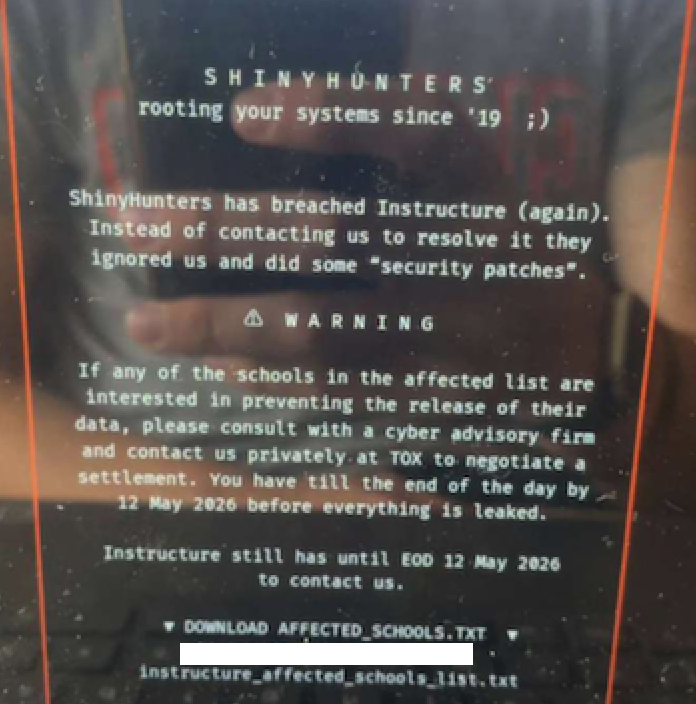
An ongoing data extortion attack targeting the widely-used education technology platform Canvas disrupted classes and coursework at school districts and universities across the United States today, after a cybercrime group defaced the service’s login page with a ransom demand that threatened to leak data from 275 million students and faculty across nearly 9,000 educational institutions.

A screenshot shared by a reader showing the extortion message that was shown on the Canvas login page today.

Canvas parent firm Instructure responded to today’s defacement attacks by disabling the platform, which is used by thousands of schools, universities and businesses to manage coursework and assignments, and to communicate with students.

Instructure acknowledged a data breach earlier this week, after the cybercrime group ShinyHunters claimed responsibility and said they would leak data on tens of millions of students and faculty unless paid a ransom. The stated deadline for payment was initially set at May 6, but it was later pushed back to May 12.

In a statement on May 6, Instructure said the investigation so far shows the stolen information includes “certain identifying information of users at affected institutions, such as names, email addresses, and student ID numbers, as well as as messages among users.” The company said it found no evidence the breached data included more sensitive information, such as passwords, dates of birth, government identifiers or financial information.

The May 6 update stated that Canvas was fully operational, and that Instructure was not seeing any ongoing unauthorized activity on their platform. “At this stage, we believe the incident has been contained,” Instructure wrote.

However, by mid-day on Thursday, May 7, students and faculty at dozens of schools and universities were flooding social media sites with comments saying that a ransom demand from ShinyHunters had replaced the usual Canvas login page. Instructure responded by pulling Canvas offline and replacing the portal with the message, “Canvas is currently undergoing scheduled maintenance. Check back soon.”

“We anticipate being up soon, and will provide updates as soon as possible,” reads the current message on Instructure’s status page.

While the data stolen by ShinyHunters may or may not contain particularly sensitive information (ShinyHunters claims it includes several billion private messages among students and teachers, as well as names, phone numbers and email addresses), this attack could hardly have come at a worse time for Instructure: Many of the affected schools and universities are in the middle of final exams, and a prolonged outage could be highly damaging for the company.

The extortion message that greeted countless Canvas users today advised the affected schools to negotiate their own ransom payments to prevent the publication of their data — regardless of whether Instructure decides to pay.

“ShinyHunters has breached Instructure (again),” the extortion message read. “Instead of contacting us to resolve it they ignored us and did some ‘security patches.'”

A source close to the investigation who was not authorized to speak to the press told KrebsOnSecurity that a number of universities have already approached the cybercrime group about paying. The same source also pointed out that the ShinyHunters data leak blog no longer lists Instructure among its current extortion victims, and that the samples of data stolen from Canvas customers were removed as well. Data extortion groups like ShinyHunters will typically only remove victims from their leak sites after receiving an extortion payment or after a victim agrees to negotiate.

Dipan Mann, founder and CEO of the security firm Cloudskope, slammed Instructure for referring to today’s outage as a “scheduled maintenance” event on its status page. Mann said Shiny Hunters first demonstrated they’d breached Instructure on May 1, prompting Instructure’s Chief Information Security Officer Steve Proud to declare the following day that the incident had been contained. But Mann said today’s attack is at least the third time in the past eight months that Instructure has been breached by ShinyHunters.

In a blog post today, Mann noted that in September 2025, ShinyHunters released thousands of internal University of Pennsylvania files — donor records, internal memos, and other confidential materials — through what the Daily Pennsylvanian and other outlets later determined was, in part, a Canvas/Instructure-mediated access path.

“Penn was the named victim,” Mann wrote. “Instructure was the mechanism. The incident was treated as a Penn-specific story by most of the national press and quietly handled by Instructure as a customer-specific matter. That framing was wrong then. It is dramatically more wrong in light of the May 2026 events, which now look like the planned escalation of an attack pattern that ShinyHunters had been working against Instructure’s environment for at least eight months prior. The September 2025 Penn breach was the proof of concept. The May 1, 2026 incident was the production run. The May 7, 2026 recompromise was ShinyHunters demonstrating publicly that the May 2 ‘containment’ did not happen.”

In February, a ShinyHunters spokesperson told The Daily Pennsylvanian that Penn failed to pay a $1 million ransom demand. On March 5, ShinyHunters published 461 megabytes worth of data stolen from Penn, including thousands of files such as donor records and internal memos.

ShinyHunters is a prolific and fluid cybercriminal group that specializes in data theft and extortion. They typically gain access to companies through voice phishing and social engineering attacks that often involve impersonating IT personnel or other trusted members of a targeted organization.

Last month, ShinyHunters relieved the home security giant ADT of personal information on 5.5 million customers. The extortion group told BleepingComputer they breached the company by compromising an employee’s Okta single sign-on account in a voice phishing attack that enabled access to ADT’s Salesforce instance. BleepingComputer says ShinyHunters recently has taken credit for a number of extortion attacks against high-profile organizations, including Medtronic, Rockstar Games, McGraw Hill, 7-Eleven and the cruise line operator Carnival.

The attack on Canvas customers is just one of several major cybercrime campaigns being launched by ShinyHunters at the moment, said Charles Carmakal, chief technology officer at the Google-owned Mandiant Consulting. Carmakal declined to comment specifically on the Canvas breach, but said “there are multiple concurrent and discrete ShinyHunters intrusion and extortion campaigns happening right now.”

Cloudskope’s Mann said what happens next depends largely on whether Instructure’s customers — the universities, K-12 districts, and education ministries paying for Canvas — choose to apply pressure or absorb the breach quietly.

“The history of education-vendor incidents suggests the path of least resistance is the second one,” he concluded.

Update, May 8, 11:05 a.m. ET: Instructure has published an incident update page that includes more information about the breach. Instructure said its Canvas portal is functioning normally again, and that the hackers exploited an issue related to Free-for-Teacher accounts.

“This is the same issue that led to the unauthorized access the prior week,” Instructure wrote. “As a result, we have made the difficult decision to temporarily shut down Free-for-Teacher accounts. These accounts have been a core part of our platform, and we’re committed to resolving the issues with these accounts.”

Instructure said affected organizations were notified on May 6.

“If your organization is affected, Instructure will contact your organization’s primary contacts directly,” the update states. “Please don’t rely on third-party lists or social media posts naming potentially affected organizations as those lists aren’t verified. Instructure will confirm validated information through direct outreach to all affected organizations.”

Update, May 11, 10:16 p.m. ET: Instructure posted an update saying they paid their extortionists in exchange for a promise to destroy the stolen data. “The data was returned to us,” the update reads. “We received digital confirmation of data destruction (shred logs). We have been informed that no Instructure customers will be extorted as a result of this incident, publicly or otherwise.”

Vercel attack fallout expands to more customers and third-party systems

Vercel said the fallout from an attack on its internal systems hit more customers than previously known, as ongoing analysis uncovered additional evidence of compromise

The company, which makes tools and hosts cloud infrastructure for developers, maintains a “small number” of accounts were impacted, but it has yet to share a number or range of known incidents linked to the attack. Vercel created and maintains Next.js, a platform supporting AI agents that’s downloaded more than 9 million times per week, and other popular open-source projects. 

Vercel CEO Guillermo Rauch said the company and partners have analyzed nearly a petabyte of logs across the Vercel network and API, and learned malicious activity targeting the company and its customers extends beyond an initial attack that originated at Context.ai. 

“Threat intel points to the distribution of malware to computers in search of valuable tokens like keys to Vercel accounts and other providers,” Rauch said in a post on X

“Once the attacker gets ahold of those keys, our logs show a repeated pattern: rapid and comprehensive API usage, with a focus on enumeration of non-sensitive environment variables,” he added.

The attack exemplifies the widespread and compounded risk posed by interconnected systems that rely on OAuth tokens, trusted relationships and overly privileged permissions linking multiple services together.

“The real vulnerability was trust, not technology,” Munish Walther-Puri, head of critical digital infrastructure at TPO Group, told CyberScoop. “OAuth turned a productivity app into a backdoor. Every AI tool an employee connects to their work account is now a potential attack surface.”

An attacker traversed Vercel’s internal systems to steal and decrypt customer data, including environment variables it stored, posing significant downstream risk. 

The company insists the breach originated at Context.ai, a third-party AI tool used by one of its employees. Researchers at Hudson Rock previously said the seeds of that attack were planted in February when a Context.ai employee’s computer was infected with Lumma Stealer malware after they searched for Roblox game exploits, a common vector for infostealer deployments. 

Vercel has not specified the systems and customers data compromised, nor has it described the threat eradicated or contained. The company said it’s found no evidence of tampering across the software packages it publishes, concluding “we believe the supply chain remains safe.” 

The company fueled further intrigue in its updated security bulletin, noting that it also identified a separate “small number of customers” that were compromised in attacks unrelated to the breach of its systems. 

“These compromises do not appear to have originated on Vercel systems,” the company said. “This activity does not appear to be a continuation or expansion of the April incident, nor does it appear to be evidence of an earlier Vercel security incident.”

It’s unclear how Vercel became aware of those attacks and why it’s disclosing them publicly. 

Vercel declined to answer questions, and Mandiant, which is running incident response and an investigation into the attack, referred questions back to Vercel. 

Vercel has not attributed the breach to any named threat group or described the attackers’ objectives. 

An online persona identifying themselves as ShinyHunters took responsibility for the attack and is attempting to sell the stolen data, which they claim includes access keys, source code and databases. Austin Larsen, principal threat analyst at Google Threat Intelligence Group, said the attacker is “likely an imposter,” but emphasized the risk of exposure is real.

Walther-Puri warned that the downstream blast radius from the attack on its systems remains undefined. “Stolen API keys and source code snippets from internal views are potentially keys to customer production environments,” he said.

The stolen data attackers claim to have “sounds almost boring … but it’s infrastructure intelligence,” Walther-Puri added. “The right environment variable doesn’t just unlock a system — it lets adversaries become that system, silently, from the inside.”

The post Vercel attack fallout expands to more customers and third-party systems appeared first on CyberScoop.

Vercel’s security breach started with malware disguised as Roblox cheats

Vercel customers are at risk of compromise after an attacker hopped through multiple internal systems to steal credentials and other sensitive data, the company said in a security bulletin Sunday. 

The attack, which didn’t originate at Vercel, showcases the pitfalls of interconnected cloud applications and SaaS integrations with overly privileged permissions. 

An attacker traversed third-party systems and connections left exposed by employees before it hit the San Francisco-based company that created and maintains Next.js and other popular open-source libraries. 

Researchers at Hudson Rock said the seeds of the attack were planted in February when a Context.ai employee’s computer was infected with Lumma Stealer malware after they searched for Roblox game exploits, a common vector for infostealer deployments.

Each of the companies are pinning at least some blame for the attack on the other vendor.

Context.ai on Sunday said that breach allowed the attacker to access its AWS environment and OAuth tokens for some users, including a token for a Vercel employee’s Google Workspace account. Vercel is not a Context customer, but the Vercel employee was using Context AI Office Suite and granted it full access, the artificial intelligence agent company said. 

“The attacker used that access to take over the employee’s Vercel Google Workspace account, which enabled them to gain access to some Vercel environments and environment variables that were not marked as sensitive,” Vercel said in its bulletin. 

The company said a limited number of its customers are impacted and were immediately advised to rotate credentials. Vercel, which declined to answer questions, did not specify which internal systems were accessed or fully explain how the attacker gained access to Vercel customers’ credentials. 

Vercel CEO Guillermo Rauch said customer data stored by the company is fully encrypted, yet the attacker got further access through enumeration, or by counting and inventorying specific variables. 

“We believe the attacking group to be highly sophisticated and, I strongly suspect, significantly accelerated by AI,” he said in a post on X. “They moved with surprising velocity and in-depth understanding of Vercel.”

A threat group identifying itself as ShinyHunters took responsibility for the attack in a post on Telegram and is attempting to sell the stolen data, which they claim includes access keys, source code and databases.

The attacker “is likely an imposter attempting to use an established name to inflate their notoriety,” Austin Larsen, principal threat analyst at Google Threat Intelligence, wrote in a LinkedIn post. “Regardless of the threat actor involved, the exposure risk is real.”

Vercel also warned that the attack on Context’s Google Workspace OAuth app “was the subject of a broader compromise, potentially affecting its hundreds of users across many organizations.” It published indicators of compromise and encouraged customers to review activity logs, review and rotate variables containing secrets.

Context and Vercel said their separate and coordinated investigations into the attack aided by CrowdStrike and Mandiant remain underway.

The post Vercel’s security breach started with malware disguised as Roblox cheats appeared first on CyberScoop.

Salesforce issues new security alert tied to third customer attack spree in six months

Threat hunters and a collection of unconfirmed victims are responding to a series of attacks targeting Salesforce customers, which the vendor disclosed in a security advisory Saturday. 

“Salesforce is actively monitoring threat activity targeting public-facing Experience Cloud sites, including attempts to take advantage of overly permissive guest user configurations,” the company said in the alert.

The campaign marks the third widespread attack spree targeting Salesforce customers in about six months. 

The number of victims ensnared by the latest attacks is unverified, but ShinyHunters, the threat group asserting responsibility for the attacks, claims about 100 companies have already been impacted. 

Researchers told CyberScoop they are confident the threat group behind the campaign is associated with ShinyHunters, an outfit that’s previously stolen data from Salesforce instances for extortion attempts.

Salesforce did not attribute the attacks, but pinned blame on a “known threat actor group,” adding that the issue is not due to a vulnerability in the company’s platform.

The company said the threat activity reflects a broader trend of identity-based targeting, in this case customer-configured guest user settings that expose publicly accessible Experience Cloud sites to potential attacks.

“We are aware of a threat actor attempting to identify misconfigurations within Salesforce Experience Cloud instances,” Charles Carmakal, chief technology officer at Mandiant Consulting, said in a statement. “We are working closely with Salesforce and our customers to provide the necessary telemetry and detection rules to mitigate potential risk.”

Salesforce said the threat actor is using a modified version of the Mandiant-developed open-source tool AuraInspector to scan for public-facing Experience Cloud sites and steal data from instances with a guest user profile. 

This setting is designed to provide unauthenticated users access to data intended for public consumption. Yet, guest profiles with excessive permissions allow attackers to view additional data by directly querying Salesforce CRM objects without logging in, the company explained.

Salesforce did not say when or how it became aware of the latest campaign targeting its customers, nor how many companies have already been impacted. “We don’t have anything further to add at this time,” said Nicole Aranda, senior manager of corporate communications at Salesforce. 

The company advised customers to ensure guest user configurations are properly restricted.

“Any system exposed to the internet must be configured with the expectation that it will be continuously scanned,” Shane Barney, chief information security officer, at Keeper Security, said in an email. 

“At its core, this is an access governance issue,” he added. “Guest accounts, service accounts and API integrations must be treated with the same discipline as privileged users. Applying least privilege, restricting API access and continuously auditing permissions are foundational security controls.”

Salesforce customers confronted a pair of attack sprees involving third-party vendors last year. Google Threat Intelligence Group at the time said it was aware of more than 200 potentially affected Salesforce instances linked to malicious activity in Gainsight applications connected to Salesforce customer environments in November.

A more extensive downstream attack spree discovered in August impacted more than 700 companies who integrated the AI chat agent Salesloft Drift into their Salesforce environments. ShinyHunters or threat clusters affiliated with the extortion group were involved in both of those campaigns as well.

The post Salesforce issues new security alert tied to third customer attack spree in six months appeared first on CyberScoop.

Why boards should be obsessed with their most ‘boring’ systems

Following a series of high-profile cyberattacks, boards of directors are now requiring their organizations to take greater responsibility for the risks posed by enterprise resource planning (ERP) systems pose after a series of high-profile cyberattacks. The Jaguar Land Rover (JLR), incident in Sept. 2025 illustrates the severe consequences of such attacks. The cyberattack forced JLR to halt production for six weeks, making it the costliest cyberattack in Britain’s history. The company’s revenue declined 24 percent that quarter, accounting for potentially over a  $1.2 billion drop in earnings, and subsequently reported a 43.3% wholesale sales volume drop the following quarter.

For decades, organizations have treated ERP systems like SAP as back-office workhorses. However, the JLR incident—carried out by executed by the cybercrime group ShinyHunters —has thrust ERP systems into the spotlight. That shift in attention is critical: today, 90% of the Fortune 500 use SAP, making these systems “crown jewel” assets that require the highest level of protection.

The threat is escalating. A recent Google Cloud Security report forecasts that ransomware operations specifically designed to target critical enterprise applications such as ERP systems will emerge in 2026, forcing organizations to make quick ransom payments and sacrifice business resilience. 

In our roles as board members, advisers, and cybersecurity CEOs, we’re witnessing a fundamental shift in how organizations approach ERP security: the conversation has moved from compliance to survival. Organizations are grappling with critical question: Who owns the risk? What is our recovery time? Can we patch critical ERP vulnerabilities within 72 hours? Do we have visibility inside the application?

ERP risks are an existential threat

To understand the severity of ERP security risks, the C-suite must first recognize how critical these sytems are. ERP systems are the operating system of modern businesses: They process  invoices, manage supply chains, record revenue, pay employees, ship products, and more. The scale is staggering: SAP’s customers alone are responsible for 84% of the world’s commerce. – Given this ubiquity, if your organization’s leadership can’t confirm whether you’re using SAP, you almost certainly are.

In 2025, more than 500 companies fell victim to the SAP NetWeaver zero-day vulnerability. This attack underscores what many security practitioners have warned: ERP application security has evolved from a ‘nice to have’ to a business-critical necessity.

When Stoli Group’s US subsidiaries filed for bankruptcy in 2024 following a ransomware attack on its ERP system, it demonstrated a stark reality: losing these system can lead to a company shutting its doors. When an organization’s central nervous system goes offline, the entire business stops functioning.

Unfortunately, the adversaries understand this inherent leverage better than we do. According to Onapsis research, SAP vulnerabilities grew by 39 percent in 2025. The cybercriminal marketplace price for SAP exploits has grown 400% (to more than $250,000) since 2020, which reflects the immense ROI of holding a Fortune 500 company’s operational capacity hostage.

The timeline for defense has become critically compressed. In 2025, threat actors are exploiting SAP security vulnerabilities within 72 hours of patch releases. Unprotected ERP systems deployed in the cloud are discovered and compromised in less than 3 hours. Meanwhile, the average enterprise patch cycle takes weeks or even months due to the rigorous testing required for complex, customized ERP environments. This mismatch creates a dangerous window of vulnerability.

The regulatory compliance vise

Boards face mounting pressure from an increasingly stringent global regulatory environment focused on securing critical data and infrastructure. ERP systems house multiple types of highly regulated data simultaneously—including financial records, personal employee information, customer data, and supply chain details—making them a focal point for regulatory scrutiny.

For public companies in the United States, Sarbanes-Oxley (SOX) requires attestation of financial reporting. The security of ERP systems is a SOX control issue because a breach could cause the efficacy of these systems to be compromised.

In the European Union (EU), GDPR regulations penalize companies that fail to protect personally identifiable information (PII). ERP systems house the vast majority of employee and customer data.

SEC disclosure rules in the United States and two other EU regulations, NIS2 and DORA, have introduced personal liability for board members and executives who fail to oversee their cybersecurity risks. A director can no longer say, “I didn’t understand the technical details.” Ignorance is now a legal liability.

A boardroom playbook for ERP resilience

As board members and advisors to multiple companies and audit committees, we have three key expectations for how organizations should approach ERP security.

First, boards need risk presented in dollar terms. Instead of asking for money to “patch technical vulnerabilities,” CISOs should tell the board exactly how much revenue is at risk. When requesting budget to secure SAP, frame it as an investment to protect specific revenue streams. This helps boards understand what they stand to lose, not just what they need to spend.

Second, stop treating security and productivity as opposing forces. Yes, patching systems might cause a brief disruption. But that minor inconvenience is nothing compared to the catastrophic impact of a total system lockout like the one ShinyHunters executed against JLR. CISOs should partner with CIOs to deploy automated monitoring tools that can detect potential exploits and prioritize patches for the most critical ERP vulnerabilities.

Third, someone must own responsibility for protecting these “crown jewel” systems. Too often, there’s a gray area between the CISO (who sets security policy), the CIO (who manages the technology infrastructure), and the ERP vendor. Boards must demand a clear shared responsibility model that defines who is accountable for what. It’s important to note that ERP vendors are not responsible for securing the application and data once deployed—which makes clear internal ownership even more critical.

Board members should be demanding answers to these questions: Do we have visibility into our ERP risk? Would we have visibility into an active attack?

We must assume a breach will happen. The only way to validate resilience is to test it. Boards should mandate tabletop exercises specifically designed around an ERP ransomware scenario, asking further questions like, “How do we communicate with suppliers?,” “How do we build and ship our products?,” “How do we make payroll?,” and “How do we restore from immutable backups if the primary data is compromised?”  Organizations must test their resilience before a crisis strikes, not during one.

A license to operate

The Jaguar Land Rover compromise was a watershed moment because it stripped away the illusion that our core systems are safe behind firewalls. Attackers have shifted their focus to critical business systems. They’ve professionalized their operations and dramatically increased the speed of their attacks.

For the C-suite and boards, the era of plausible deniability is over. Security is no longer just an IT expense; it’s what keeps your doors open. If you cannot protect the integrity of your financial data and the continuity of your supply chain, you do not have a viable business.

Just as boards have visibility into risk, CISOs should have visibility into all ERP instances. Organizations require four critical capabilities: discovery (identifying all ERP systems), assessment (finding vulnerabilities such as missing patches, weak configurations, and insecure custom code), real-time monitoring (detecting suspicious activity that may indicate an attack), and incident response (being able to quickly investigate and contain an ERP incident).

The decisions made in the boardroom today will affect the outcomes tomorrow. The next JLR-like event is most likely already unfolding. The only variable is whether your organization will be the next cautionary tale or the defender that held the line.

Dave DeWalt is the founder and CEO of NightDragon. Mariano Nunez is the CEO and co-founder of Onapsis.

The post Why boards should be obsessed with their most ‘boring’ systems appeared first on CyberScoop.

A new wave of ‘vishing’ attacks is breaking into SSO accounts in real time

Threat hunters and researchers are racing to contain a wave of voice-phishing attacks targeting single sign-on tools, already leading to data theft and extortion attempts. Multiple cybercrime groups are combining voice calls and advanced phishing kits to trick victims into handing over access — including a group identifying itself as ShinyHunters, which has publicly named alleged targets and posted samples of stolen data.

The attacks share common characteristics with previous campaigns attributed to ShinyHunters, which has abused third-party vendors to gain initial access to multiple company networks, including the attack spree that impacted more than 700 Salesforce customer environments last fall.

“Mandiant is tracking a new, ongoing ShinyHunters-branded campaign using evolved voice phishing techniques to successfully compromise SSO credentials from victim organizations, and enroll threat actor controlled devices into victim multifactor authentication solutions,” Charles Carmakal, chief technology officer at Mandiant Consulting, said in an email to CyberScoop.

“This is an active and ongoing campaign,” Carmakal added. “After gaining initial access, these actors pivot into SaaS environments to exfiltrate sensitive data. An actor that identifies as ShinyHunters has approached some of the victim organizations with an extortion demand.”

Cybercriminals are registering custom domains that mimic legitimate single sign-on portals used by targeted companies, then deploying tailored voice-phishing kits to call victims while remotely controlling which pages appear in the victim’s browser. This lets the attackers sync their spoken prompts with multifactor-authentication requests in real time, increasing the likelihood the victim approves or enters the needed codes on cue.

Okta, one of the single sign-on providers targeted by this campaign, released threat intelligence on phishing kits observed in this campaign and others Thursday. Attackers appearing to be aligned with ShinyHunters have attempted to extort targeted organizations on behalf of a specific initial access broker that used one of these phishing kits.

Brett Winterford, vice president at Okta Threat Intelligence, said researchers have observed at least two phishing kits that demonstrate the real-time capability to mimic the authentication flows of identity providers. 

“This creates a more compelling pretext for asking the user to share credentials and accept multifactor authentication challenges,” he told CyberScoop.

“Okta Threat Intelligence has observed multiple phishing kits developed for the needs of voice phishing operators, each with dedicated panels for impersonation of Google, Microsoft and Okta sign-in flows, as well as cryptocurrency providers,” Winterford added.

A spokesperson for Microsoft said the company has nothing to share on the campaign. Meanwhile, a Google spokesperson said: “At this time, we have no indication that Google itself or its products are affected by this campaign.”

Security experts noted the attacks don’t involve a vulnerability in single sign-on vendors’ products or infrastructure, but rather a persistent weak point in identity and access management. Targeted victims are once again being duped into sharing their credentials with attackers.

These phishing kits allow cybercriminals without deep technical skills to buy the tooling and focus on targeting people and processes, said Cynthia Kaiser, senior vice president of Halcyon’s ransomware research center. 

“While these campaigns occur often, the difference here is the amount of success in the recent campaign is slightly higher. That’s likely because of the believable content and the use of voice phishing versus just phishing,” she said.

“If you’re getting a call and it’s personalized and it’s changing in real time — that feels believable, that’s a different element that people don’t necessarily have their guard up for.”

Investigation ongoing into scope

It’s unclear how many organizations have been impacted by the campaign. A ShinyHunters-branded data leak site, which is currently down, previously listed at least three victims, including two companies that publicly confirmed they were impacted by recent attacks.

SoundCloud said some personally identifiable data on about 20% of its user base, roughly 36 million people, was compromised by an attack it first discovered in mid-December. The company insists sensitive data wasn’t exposed and did not name the attackers, but said users, employees and partners have been flooded with threatening emails. 

“We are aware that a threat actor group has published data online allegedly taken from our organization,” Sade Ayodele, senior director of communications at SoundCloud, said in an email. “Our security team — supported by leading third-party cybersecurity experts — is actively reviewing the claim and published data.”

Betterment, a financial services company, said an attacker gained access to some of its systems via social engineering on Jan. 9. The company said customer data was stolen, but no accounts were accessed and customer credentials weren’t compromised.

The attacker also quickly used access to Betterment’s systems to send a fraudulent cryptocurrency offer to some customers. Betterment did not respond to a request for comment.

Threat intelligence suggests additional victims have been targeted and potentially impacted. Sophos researchers are tracking a cluster of about 150 malicious domains established starting last month, including some used in voice phishing campaigns resulting in data theft and ransom notes demanding a payment, said Rafe Pilling, director of threat intelligence at Sophos Counter Threat Unit.

“We can’t confirm that they have all been used but the threat actors are creating target-specific domains, themed to reflect single-sign on services and impersonating authentication providers like Okta,” Pilling said. The fake domains impersonate organizations in the education, real estate, energy, financial services and retail sectors.

While one of the groups behind this campaign identifies itself as ShinyHunters, researchers have yet to confirm that claim or formally attribute the attacks to a specific group or person. 

“ShinyHunters typically has a mix of real victims and recycled information or exaggerated claims,” Kaiser said. 

Moreover, the names adopted or reused by some cybercriminals has lost relevance, said Ian Gray, vice president of intelligence at Flashpoint. 

A cybercriminal or group can use any username they choose and apply that to a data-leak site, but that doesn’t prove a direct link. 

“While ShinyHunters have claimed credibility for the campaign,” Gray said, “it is equally important that we examine the tactics, techniques and procedures being employed and how they relate to previous campaigns.”

The post A new wave of ‘vishing’ attacks is breaking into SSO accounts in real time appeared first on CyberScoop.

Meet Rey, the Admin of ‘Scattered Lapsus$ Hunters’

A prolific cybercriminal group that calls itself “Scattered LAPSUS$ Hunters” has dominated headlines this year by regularly stealing data from and publicly mass extorting dozens of major corporations. But the tables seem to have turned somewhat for “Rey,” the moniker chosen by the technical operator and public face of the hacker group: Earlier this week, Rey confirmed his real life identity and agreed to an interview after KrebsOnSecurity tracked him down and contacted his father.

Scattered LAPSUS$ Hunters (SLSH) is thought to be an amalgamation of three hacking groups — Scattered Spider, LAPSUS$ and ShinyHunters. Members of these gangs hail from many of the same chat channels on the Com, a mostly English-language cybercriminal community that operates across an ocean of Telegram and Discord servers.

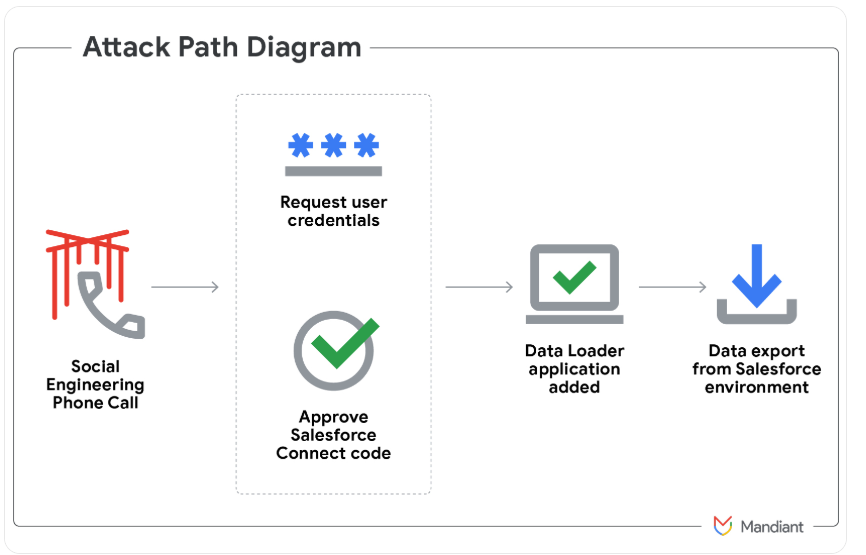
In May 2025, SLSH members launched a social engineering campaign that used voice phishing to trick targets into connecting a malicious app to their organization’s Salesforce portal. The group later launched a data leak portal that threatened to publish the internal data of three dozen companies that allegedly had Salesforce data stolen, including ToyotaFedExDisney/Hulu, and UPS.

The new extortion website tied to ShinyHunters, which threatens to publish stolen data unless Salesforce or individual victim companies agree to pay a ransom.

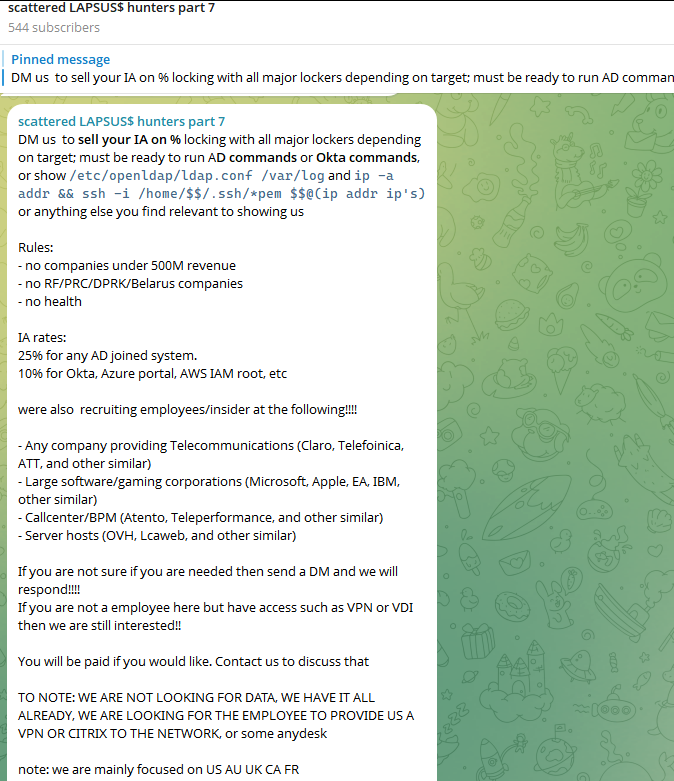
Last week, the SLSH Telegram channel featured an offer to recruit and reward “insiders,” employees at large companies who agree to share internal access to their employer’s network for a share of whatever ransom payment is ultimately paid by the victim company.

SLSH has solicited insider access previously, but their latest call for disgruntled employees started making the rounds on social media at the same time news broke that the cybersecurity firm Crowdstrike had fired an employee for allegedly sharing screenshots of internal systems with the hacker group (Crowdstrike said their systems were never compromised and that it has turned the matter over to law enforcement agencies).

The Telegram server for the Scattered LAPSUS$ Hunters has been attempting to recruit insiders at large companies.

Members of SLSH have traditionally used other ransomware gangs’ encryptors in attacks, including malware from ransomware affiliate programs like ALPHV/BlackCat, Qilin, RansomHub, and DragonForce. But last week, SLSH announced on its Telegram channel the release of their own ransomware-as-a-service operation called ShinySp1d3r.

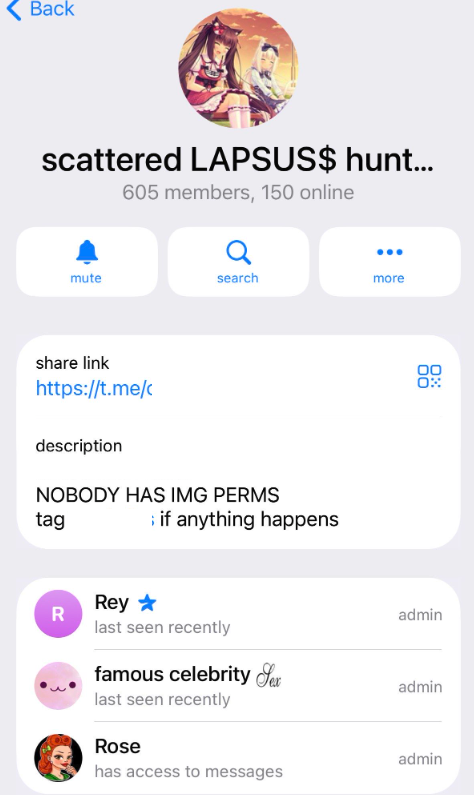
The individual responsible for releasing the ShinySp1d3r ransomware offering is a core SLSH member who goes by the handle “Rey” and who is currently one of just three administrators of the SLSH Telegram channel. Previously, Rey was an administrator of the data leak website for Hellcat, a ransomware group that surfaced in late 2024 and was involved in attacks on companies including Schneider Electric, Telefonica, and Orange Romania.

A recent, slightly redacted screenshot of the Scattered LAPSUS$ Hunters Telegram channel description, showing Rey as one of three administrators.

Also in 2024, Rey would take over as administrator of the most recent incarnation of BreachForums, an English-language cybercrime forum whose domain names have been seized on multiple occasions by the FBI and/or by international authorities. In April 2025, Rey posted on Twitter/X about another FBI seizure of BreachForums.

On October 5, 2025, the FBI announced it had once again seized the domains associated with BreachForums, which it described as a major criminal marketplace used by ShinyHunters and others to traffic in stolen data and facilitate extortion.

“This takedown removes access to a key hub used by these actors to monetize intrusions, recruit collaborators, and target victims across multiple sectors,” the FBI said.

Incredibly, Rey would make a series of critical operational security mistakes last year that provided multiple avenues to ascertain and confirm his real-life identity and location. Read on to learn how it all unraveled for Rey.

WHO IS REY?

According to the cyber intelligence firm Intel 471, Rey was an active user on various BreachForums reincarnations over the past two years, authoring more than 200 posts between February 2024 and July 2025. Intel 471 says Rey previously used the handle “Hikki-Chan” on BreachForums, where their first post shared data allegedly stolen from the U.S. Centers for Disease Control and Prevention (CDC).

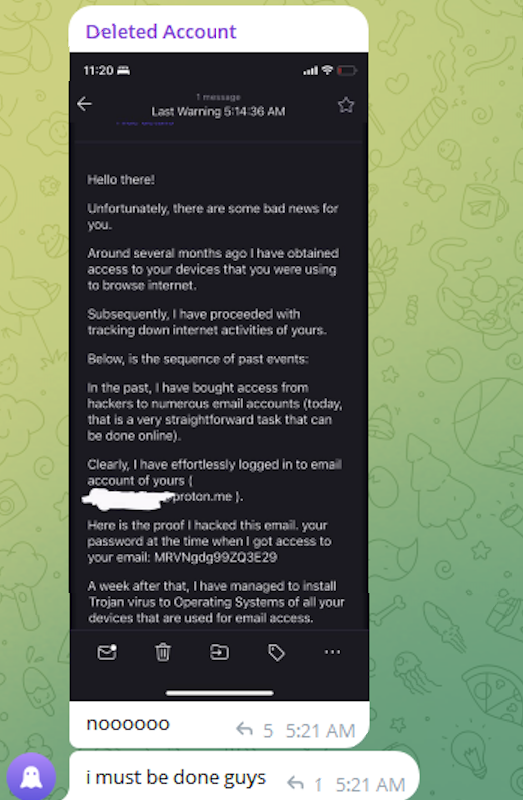
In that February 2024 post about the CDC, Hikki-Chan says they could be reached at the Telegram username @wristmug. In May 2024, @wristmug posted in a Telegram group chat called “Pantifan” a copy of an extortion email they said they received that included their email address and password.

The message that @wristmug cut and pasted appears to have been part of an automated email scam that claims it was sent by a hacker who has compromised your computer and used your webcam to record a video of you while you were watching porn. These missives threaten to release the video to all your contacts unless you pay a Bitcoin ransom, and they typically reference a real password the recipient has used previously.

“Noooooo,” the @wristmug account wrote in mock horror after posting a screenshot of the scam message. “I must be done guys.”

A message posted to Telegram by Rey/@wristmug.

In posting their screenshot, @wristmug redacted the username portion of the email address referenced in the body of the scam message. However, they did not redact their previously-used password, and they left the domain portion of their email address (@proton.me) visible in the screenshot.

O5TDEV

Searching on @wristmug’s rather unique 15-character password in the breach tracking service Spycloud finds it is known to have been used by just one email address: cybero5tdev@proton.me. According to Spycloud, those credentials were exposed at least twice in early 2024 when this user’s device was infected with an infostealer trojan that siphoned all of its stored usernames, passwords and authentication cookies (a finding that was initially revealed in March 2025 by the cyber intelligence firm KELA).

Intel 471 shows the email address cybero5tdev@proton.me belonged to a BreachForums member who went by the username o5tdev. Searching on this nickname in Google brings up at least two website defacement archives showing that a user named o5tdev was previously involved in defacing sites with pro-Palestinian messages. The screenshot below, for example, shows that 05tdev was part of a group called Cyb3r Drag0nz Team.

Rey/o5tdev’s defacement pages. Image: archive.org.

A 2023 report from SentinelOne described Cyb3r Drag0nz Team as a hacktivist group with a history of launching DDoS attacks and cyber defacements as well as engaging in data leak activity.

“Cyb3r Drag0nz Team claims to have leaked data on over a million of Israeli citizens spread across multiple leaks,” SentinelOne reported. “To date, the group has released multiple .RAR archives of purported personal information on citizens across Israel.”

The cyber intelligence firm Flashpoint finds the Telegram user @05tdev was active in 2023 and early 2024, posting in Arabic on anti-Israel channels like “Ghost of Palestine” [full disclosure: Flashpoint is currently an advertiser on this blog].

‘I’M A GINTY’

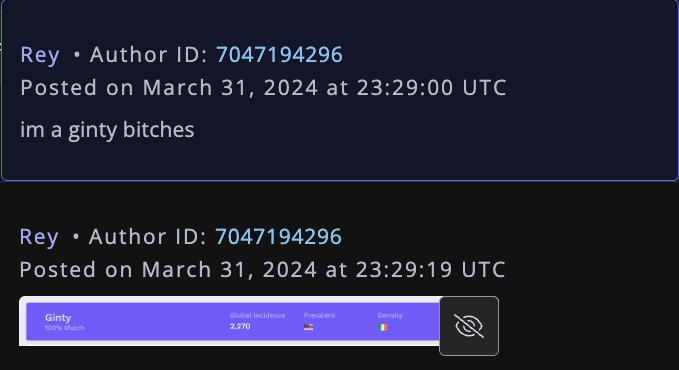
Flashpoint shows that Rey’s Telegram account (ID7047194296) was particularly active in a cybercrime-focused channel called Jacuzzi, where this user shared several personal details, including that their father was an airline pilot. Rey claimed in 2024 to be 15 years old, and to have family connections to Ireland.

Specifically, Rey mentioned in several Telegram chats that he had Irish heritage, even posting a graphic that shows the prevalence of the surname “Ginty.”

Rey, on Telegram claiming to have association to the surname “Ginty.” Image: Flashpoint.

Spycloud indexed hundreds of credentials stolen from cybero5dev@proton.me, and those details indicate that Rey’s computer is a shared Microsoft Windows device located in Amman, Jordan. The credential data stolen from Rey in early 2024 show there are multiple users of the infected PC, but that all shared the same last name of Khader and an address in Amman, Jordan.

The “autofill” data lifted from Rey’s family PC contains an entry for a 46-year-old Zaid Khader that says his mother’s maiden name was Ginty. The infostealer data also shows Zaid Khader frequently accessed internal websites for employees of Royal Jordanian Airlines.

MEET SAIF

The infostealer data makes clear that Rey’s full name is Saif Al-Din Khader. Having no luck contacting Saif directly, KrebsOnSecurity sent an email to his father Zaid. The message invited the father to respond via email, phone or Signal, explaining that his son appeared to be deeply enmeshed in a serious cybercrime conspiracy.

Less than two hours later, I received a Signal message from Saif, who said his dad suspected the email was a scam and had forwarded it to him.

“I saw your email, unfortunately I don’t think my dad would respond to this because they think its some ‘scam email,'” said Saif, who told me he turns 16 years old next month. “So I decided to talk to you directly.”

Saif explained that he’d already heard from European law enforcement officials, and had been trying to extricate himself from SLSH. When asked why then he was involved in releasing SLSH’s new ShinySp1d3r ransomware-as-a-service offering, Saif said he couldn’t just suddenly quit the group.

“Well I cant just dip like that, I’m trying to clean up everything I’m associated with and move on,” he said.

The former Hellcat ransomware site. Image: Kelacyber.com

He also shared that ShinySp1d3r is just a rehash of Hellcat ransomware, except modified with AI tools. “I gave the source code of Hellcat ransomware out basically.”

Saif claims he reached out on his own recently to the Telegram account for Operation Endgame, the codename for an ongoing law enforcement operation targeting cybercrime services, vendors and their customers.

“I’m already cooperating with law enforcement,” Saif said. “In fact, I have been talking to them since at least June. I have told them nearly everything. I haven’t really done anything like breaching into a corp or extortion related since September.”

Saif suggested that a story about him right now could endanger any further cooperation he may be able to provide. He also said he wasn’t sure if the U.S. or European authorities had been in contact with the Jordanian government about his involvement with the hacking group.

“A story would bring so much unwanted heat and would make things very difficult if I’m going to cooperate,” Saif said. “I’m unsure whats going to happen they said they’re in contact with multiple countries regarding my request but its been like an entire week and I got no updates from them.”

Saif shared a screenshot that indicated he’d contacted Europol authorities late last month. But he couldn’t name any law enforcement officials he said were responding to his inquiries, and KrebsOnSecurity was unable to verify his claims.

“I don’t really care I just want to move on from all this stuff even if its going to be prison time or whatever they gonna say,” Saif said.

ShinyHunters Wage Broad Corporate Extortion Spree

A cybercriminal group that used voice phishing attacks to siphon more than a billion records from Salesforce customers earlier this year has launched a website that threatens to publish data stolen from dozens of Fortune 500 firms if they refuse to pay a ransom. The group also claimed responsibility for a recent breach involving Discord user data, and for stealing terabytes of sensitive files from thousands of customers of the enterprise software maker Red Hat.

The new extortion website tied to ShinyHunters (UNC6040), which threatens to publish stolen data unless Salesforce or individual victim companies agree to pay a ransom.

In May 2025, a prolific and amorphous English-speaking cybercrime group known as ShinyHunters launched a social engineering campaign that used voice phishing to trick targets into connecting a malicious app to their organization’s Salesforce portal.

The first real details about the incident came in early June, when the Google Threat Intelligence Group (GTIG) warned that ShinyHunters — tracked by Google as UNC6040 — was extorting victims over their stolen Salesforce data, and that the group was poised to launch a data leak site to publicly shame victim companies into paying a ransom to keep their records private. A month later, Google acknowledged that one of its own corporate Salesforce instances was impacted in the voice phishing campaign.

Last week, a new victim shaming blog dubbed “Scattered LAPSUS$ Hunters” began publishing the names of companies that had customer Salesforce data stolen as a result of the May voice phishing campaign.

“Contact us to negotiate this ransom or all your customers data will be leaked,” the website stated in a message to Salesforce. “If we come to a resolution all individual extortions against your customers will be withdrawn from. Nobody else will have to pay us, if you pay, Salesforce, Inc.”

Below that message were more than three dozen entries for companies that allegedly had Salesforce data stolen, including Toyota, FedEx, Disney/Hulu, and UPS. The entries for each company specified the volume of stolen data available, as well as the date that the information was retrieved (the stated breach dates range between May and September 2025).
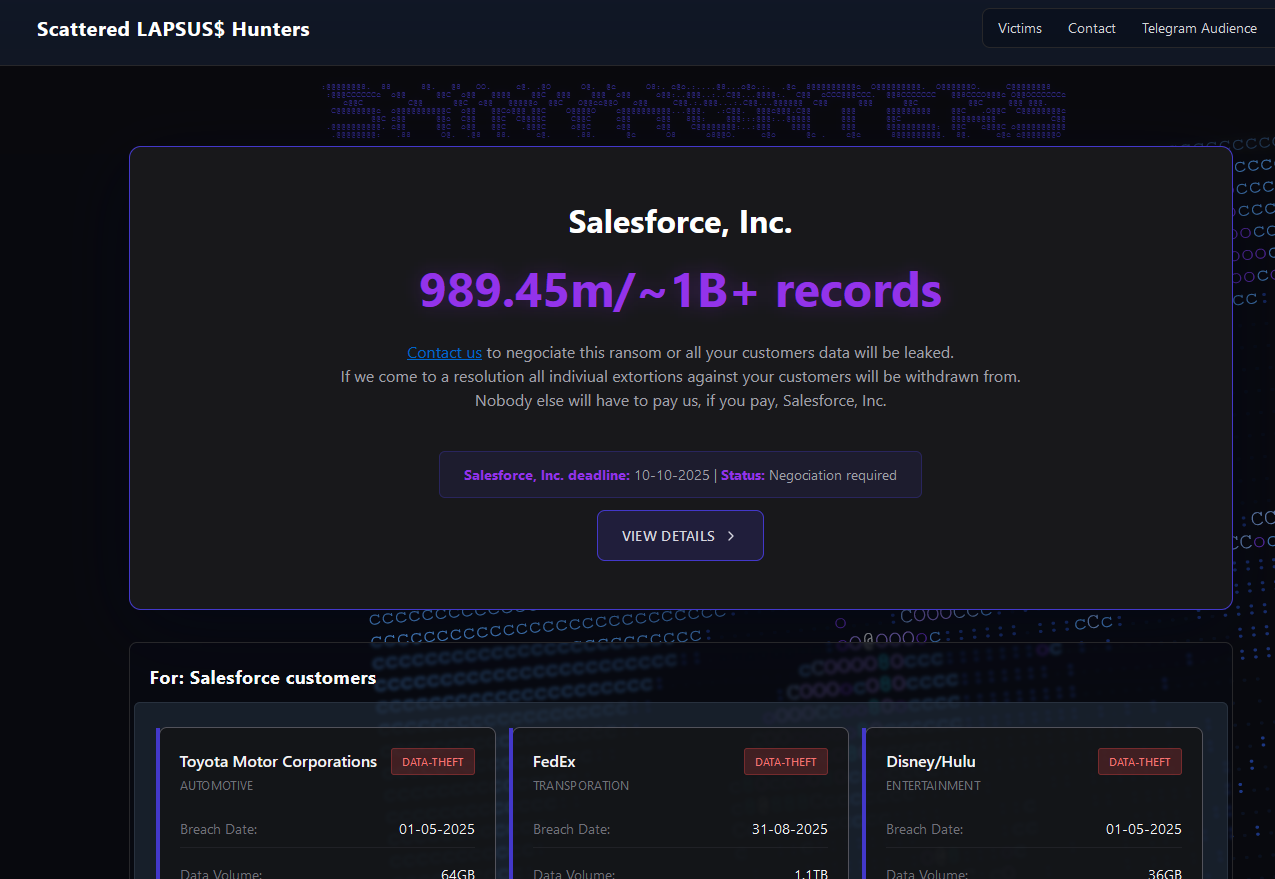
Image: Mandiant.

On October 5, the Scattered LAPSUS$ Hunters victim shaming and extortion blog announced that the group was responsible for a breach in September involving a GitLab server used by Red Hat that contained more than 28,000 Git code repositories, including more than 5,000 Customer Engagement Reports (CERs).

“Alot of folders have their client’s secrets such as artifactory access tokens, git tokens, azure, docker (redhat docker, azure containers, dockerhub), their client’s infrastructure details in the CERs like the audits that were done for them, and a whole LOT more, etc.,” the hackers claimed.

Their claims came several days after a previously unknown hacker group calling itself the Crimson Collective took credit for the Red Hat intrusion on Telegram.

Red Hat disclosed on October 2 that attackers had compromised a company GitLab server, and said it was in the process of notifying affected customers.

“The compromised GitLab instance housed consulting engagement data, which may include, for example, Red Hat’s project specifications, example code snippets, internal communications about consulting services, and limited forms of business contact information,” Red Hat wrote.

Separately, Discord has started emailing users affected by another breach claimed by ShinyHunters. Discord said an incident on September 20 at a “third-party customer service provider” impacted a “limited number of users” who communicated with Discord customer support or Trust & Safety teams. The information included Discord usernames, emails, IP address, the last four digits of any stored payment cards, and government ID images submitted during age verification appeals.

The Scattered Lapsus$ Hunters claim they will publish data stolen from Salesforce and its customers if ransom demands aren’t paid by October 10. The group also claims it will soon begin extorting hundreds more organizations that lost data in August after a cybercrime group stole vast amounts of authentication tokens from Salesloft, whose AI chatbot is used by many corporate websites to convert customer interaction into Salesforce leads.

In a communication sent to customers today, Salesforce emphasized that the theft of any third-party Salesloft data allegedly stolen by ShinyHunters did not originate from a vulnerability within the core Salesforce platform. The company also stressed that it has no plans to meet any extortion demands.

“Salesforce will not engage, negotiate with, or pay any extortion demand,” the message to customers read. “Our focus is, and remains, on defending our environment, conducting thorough forensic analysis, supporting our customers, and working with law enforcement and regulatory authorities.”

The GTIG tracked the group behind the Salesloft data thefts as UNC6395, and says the group has been observed harvesting the data for authentication tokens tied to a range of cloud services like Snowflake and Amazon’s AWS.

Google catalogs Scattered Lapsus$ Hunters by so many UNC names (throw in UNC6240 for good measure) because it is thought to be an amalgamation of three hacking groups — Scattered Spider, Lapsus$ and ShinyHunters. The members of these groups hail from many of the same chat channels on the Com, a mostly English-language cybercriminal community that operates across an ocean of Telegram and Discord servers.

The Scattered Lapsus$ Hunters darknet blog is currently offline. The outage appears to have coincided with the disappearance of the group’s new clearnet blog — breachforums[.]hn — which vanished after shifting its Domain Name Service (DNS) servers from DDoS-Guard to Cloudflare.

But before it died, the websites disclosed that hackers were exploiting a critical zero-day vulnerability in Oracle’s E-Business Suite software. Oracle has since confirmed that a security flaw tracked as CVE-2025-61882 allows attackers to perform unauthenticated remote code execution, and is urging customers to apply an emergency update to address the weakness.

Mandiant’s Charles Carmakal shared on LinkedIn that CVE-2025-61882 was initially exploited in August 2025 by the Clop ransomware gang to steal data from Oracle E-Business Suite servers. Bleeping Computer writes that news of the Oracle zero-day first surfaced on the Scattered Lapsus$ Hunters blog, which published a pair of scripts that were used to exploit vulnerable Oracle E-Business Suite instances.

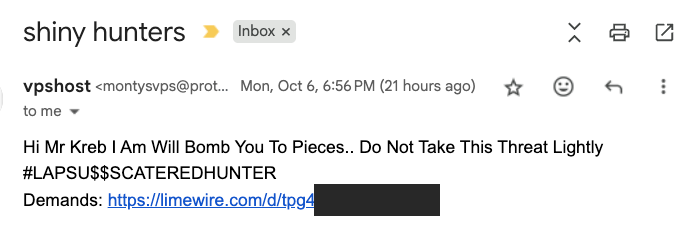
On Monday evening, KrebsOnSecurity received a malware-laced message from a reader that threatened physical violence unless their unstated demands were met. The missive, titled “Shiny hunters,” contained the hashtag $LAPSU$$SCATEREDHUNTER, and urged me to visit a page on limewire[.]com to view their demands.

A screenshot of the phishing message linking to a malicious trojan disguised as a Windows screensaver file.

KrebsOnSecurity did not visit this link, but instead forwarded it to Mandiant, which confirmed that similar menacing missives were sent to employees at Mandiant and other security firms around the same time.

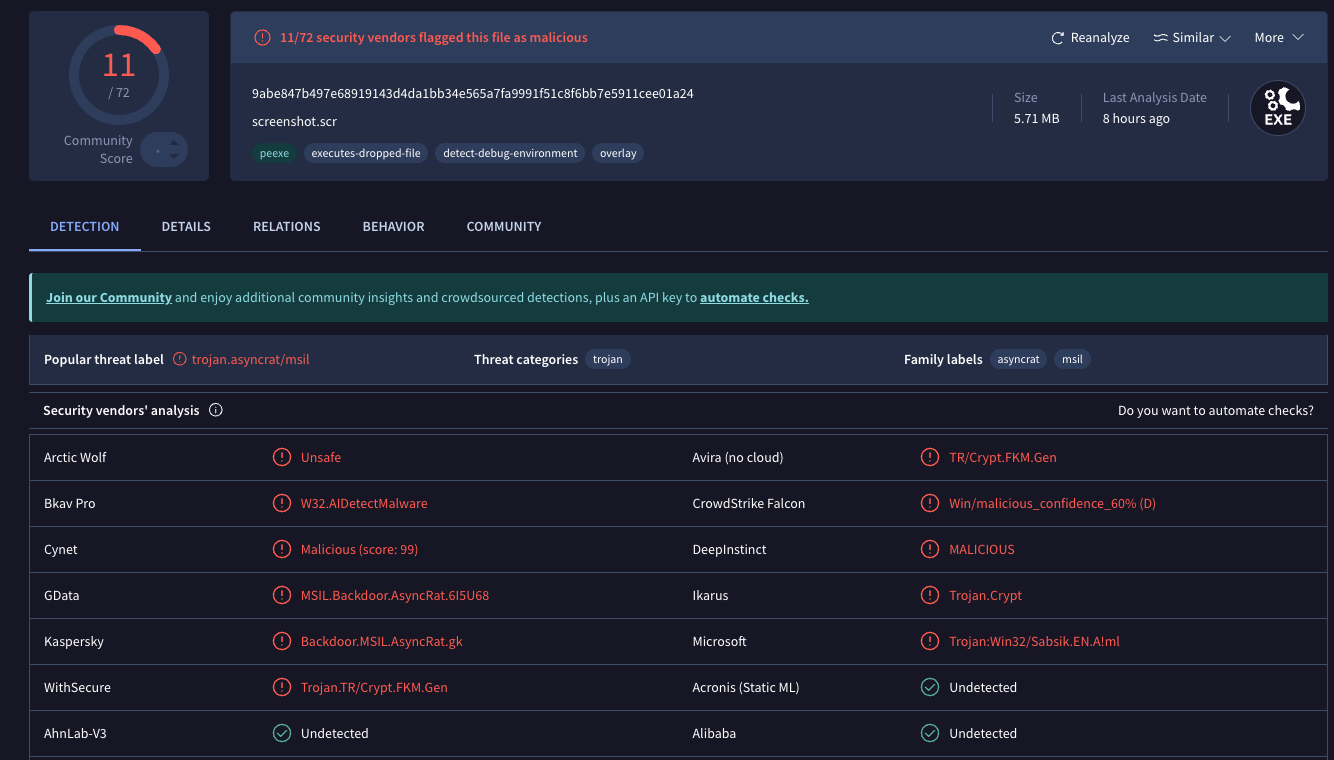
The link in the message fetches a malicious trojan disguised as a Windows screensaver file (Virustotal’s analysis on this malware is here). Simply viewing the booby-trapped screensaver on a Windows PC is enough to cause the bundled trojan to launch in the background.

Mandiant’s Austin Larsen said the trojan is a commercially available backdoor known as ASYNCRAT, a .NET-based backdoor that communicates using a custom binary protocol over TCP, and can execute shell commands and download plugins to extend its features.

A scan of the malicious screensaver file at Virustotal.com shows it is detected as bad by nearly a dozen security and antivirus tools.

“Downloaded plugins may be executed directly in memory or stored in the registry,” Larsen wrote in an analysis shared via email. “Capabilities added via plugins include screenshot capture, file transfer, keylogging, video capture, and cryptocurrency mining. ASYNCRAT also supports a plugin that targets credentials stored by Firefox and Chromium-based web browsers.”

Malware-laced targeted emails are not out of character for certain members of the Scattered Lapsus$ Hunters, who have previously harassed and threatened security researchers and even law enforcement officials who are investigating and warning about the extent of their attacks.

With so many big data breaches and ransom attacks now coming from cybercrime groups operating on the Com, law enforcement agencies on both sides of the pond are under increasing pressure to apprehend the criminal hackers involved. In late September, prosecutors in the U.K. charged two alleged Scattered Spider members aged 18 and 19 with extorting at least $115 million in ransom payments from companies victimized by data theft.

U.S. prosecutors heaped their own charges on the 19 year-old in that duo — U.K. resident Thalha Jubair — who is alleged to have been involved in data ransom attacks against Marks & Spencer and Harrods, the British food retailer Co-op Group, and the 2023 intrusions at MGM Resorts and Caesars Entertainment. Jubair also was allegedly a key member of LAPSUS$, a cybercrime group that broke into dozens of technology companies beginning in late 2021.

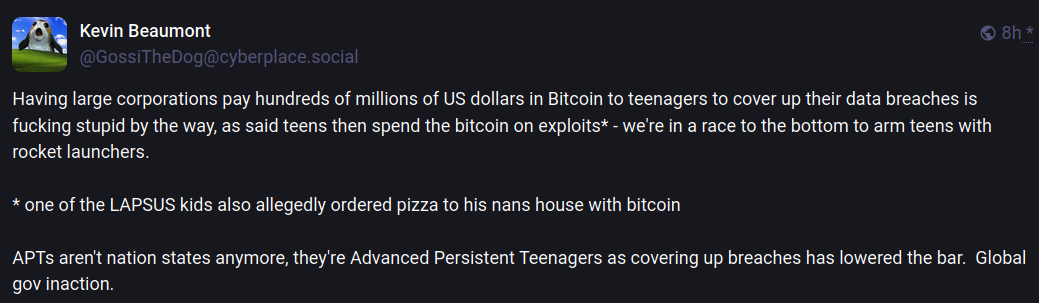
A Mastodon post by Kevin Beaumont, lamenting the prevalence of major companies paying millions to extortionist teen hackers, refers derisively to Thalha Jubair as a part of an APT threat known as “Advanced Persistent Teenagers.”

In August, convicted Scattered Spider member and 20-year-old Florida man Noah Michael Urban was sentenced to 10 years in federal prison and ordered to pay roughly $13 million in restitution to victims.

In April 2025, a 23-year-old Scottish man thought to be an early Scattered Spider member was extradited from Spain to the U.S., where he is facing charges of wire fraud, conspiracy and identity theft. U.S. prosecutors allege Tyler Robert Buchanan and co-conspirators hacked into dozens of companies in the United States and abroad, and that he personally controlled more than $26 million stolen from victims.

Update, Oct. 8, 8:59 a.m. ET: A previous version of this story incorrectly referred to the malware sent by the reader as a Windows screenshot file. Rather, it is a Windows screensaver file.

The Ongoing Fallout from a Breach at AI Chatbot Maker Salesloft

The recent mass-theft of authentication tokens from Salesloft, whose AI chatbot is used by a broad swath of corporate America to convert customer interaction into Salesforce leads, has left many companies racing to invalidate the stolen credentials before hackers can exploit them. Now Google warns the breach goes far beyond access to Salesforce data, noting the hackers responsible also stole valid authentication tokens for hundreds of online services that customers can integrate with Salesloft, including Slack, Google Workspace, Amazon S3, Microsoft Azure, and OpenAI.

Salesloft says its products are trusted by 5,000+ customers. Some of the bigger names are visible on the company’s homepage.

Salesloft disclosed on August 20 that, “Today, we detected a security issue in the Drift application,” referring to the technology that powers an AI chatbot used by so many corporate websites. The alert urged customers to re-authenticate the connection between the Drift and Salesforce apps to invalidate their existing authentication tokens, but it said nothing then to indicate those tokens had already been stolen.

On August 26, the Google Threat Intelligence Group (GTIG) warned that unidentified hackers tracked as UNC6395 used the access tokens stolen from Salesloft to siphon large amounts of data from numerous corporate Salesforce instances. Google said the data theft began as early as Aug. 8, 2025 and lasted through at least Aug. 18, 2025, and that the incident did not involve any vulnerability in the Salesforce platform.

Google said the attackers have been sifting through the massive data haul for credential materials such as AWS keys, VPN credentials, and credentials to the cloud storage provider Snowflake.

“If successful, the right credentials could allow them to further compromise victim and client environments, as well as pivot to the victim’s clients or partner environments,” the GTIG report stated.

The GTIG updated its advisory on August 28 to acknowledge the attackers used the stolen tokens to access email from “a very small number of Google Workspace accounts” that were specially configured to integrate with Salesloft. More importantly, it warned organizations to immediately invalidate all tokens stored in or connected to their Salesloft integrations — regardless of the third-party service in question.

“Given GTIG’s observations of data exfiltration associated with the campaign, organizations using Salesloft Drift to integrate with third-party platforms (including but not limited to Salesforce) should consider their data compromised and are urged to take immediate remediation steps,” Google advised.

On August 28, Salesforce blocked Drift from integrating with its platform, and with its productivity platforms Slack and Pardot.

The Salesloft incident comes on the heels of a broad social engineering campaign that used voice phishing to trick targets into connecting a malicious app to their organization’s Salesforce portal. That campaign led to data breaches and extortion attacks affecting a number of companies including Adidas, Allianz Life and Qantas.

On August 5, Google disclosed that one of its corporate Salesforce instances was compromised by the attackers, which the GTIG has dubbed UNC6040 (“UNC” stands for “uncategorized threat group”). Google said the extortionists consistently claimed to be the threat group ShinyHunters, and that the group appeared to be preparing to escalate its extortion attacks by launching a data leak site.

ShinyHunters is an amorphous threat group known for using social engineering to break into cloud platforms and third-party IT providers, and for posting dozens of stolen databases to cybercrime communities like the now-defunct Breachforums.

The ShinyHunters brand dates back to 2020, and the group has been credited with or taken responsibility for dozens of data leaks that exposed hundreds of millions of breached records. The group’s member roster is thought to be somewhat fluid, drawing mainly from active denizens of the Com, a mostly English-language cybercrime community scattered across an ocean of Telegram and Discord servers.

Recorded Future’s Alan Liska told Bleeping Computer that the overlap in the “tools, techniques and procedures” used by ShinyHunters and the Scattered Spider extortion group likely indicate some crossover between the two groups.

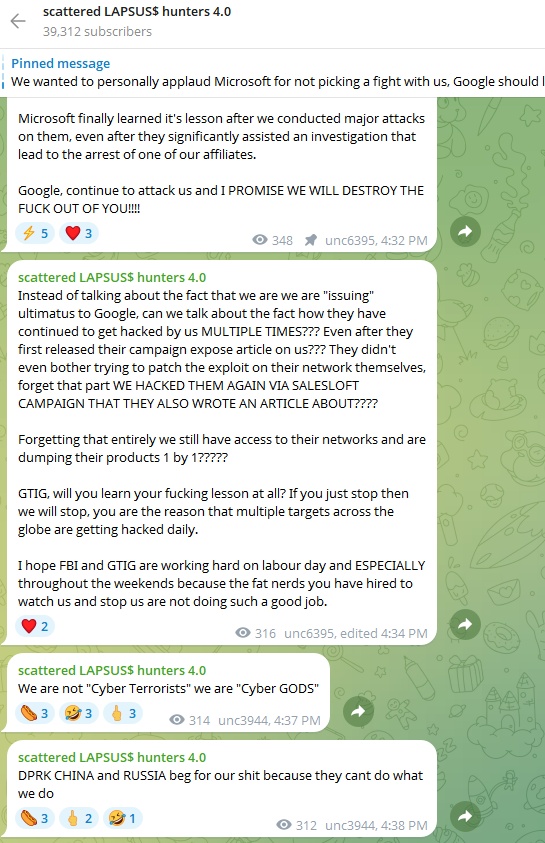
To muddy the waters even further, on August 28 a Telegram channel that now has nearly 40,000 subscribers was launched under the intentionally confusing banner “Scattered LAPSUS$ Hunters 4.0,” wherein participants have repeatedly claimed responsibility for the Salesloft hack without actually sharing any details to prove their claims.

The Telegram group has been trying to attract media attention by threatening security researchers at Google and other firms. It also is using the channel’s sudden popularity to promote a new cybercrime forum called “Breachstars,” which they claim will soon host data stolen from victim companies who refuse to negotiate a ransom payment.

The “Scattered Lapsus$ Hunters 4.0” channel on Telegram now has roughly 40,000 subscribers.

But Austin Larsen, a principal threat analyst at Google’s threat intelligence group, said there is no compelling evidence to attribute the Salesloft activity to ShinyHunters or to other known groups at this time.

“Their understanding of the incident seems to come from public reporting alone,” Larsen told KrebsOnSecurity, referring to the most active participants in the Scattered LAPSUS$ Hunters 4.0 Telegram channel.

Joshua Wright, a senior technical director at Counter Hack, is credited with coining the term “authorization sprawl” to describe one key reason that social engineering attacks from groups like Scattered Spider and ShinyHunters so often succeed: They abuse legitimate user access tokens to move seamlessly between on-premises and cloud systems.

Wright said this type of attack chain often goes undetected because the attacker sticks to the resources and access already allocated to the user.

“Instead of the conventional chain of initial access, privilege escalation and endpoint bypass, these threat actors are using centralized identity platforms that offer single sign-on (SSO) and integrated authentication and authorization schemes,” Wright wrote in a June 2025 column. “Rather than creating custom malware, attackers use the resources already available to them as authorized users.”

It remains unclear exactly how the attackers gained access to all Salesloft Drift authentication tokens. Salesloft announced on August 27 that it hired Mandiant, Google Cloud’s incident response division, to investigate the root cause(s).

“We are working with Salesloft Drift to investigate the root cause of what occurred and then it’ll be up to them to publish that,” Mandiant Consulting CTO Charles Carmakal told Cyberscoop. “There will be a lot more tomorrow, and the next day, and the next day.”

❌