❌

Reading view

There are new articles available, click to refresh the page.

Google shuts down global botnet running on certified Android devices

Google and an assortment of partners shut down a botnet that an approved Android device manufacturer purposefully deployed across more than 1.3 million TV set-top boxes, the company said Monday. 

Videostrong Technology Co., a China-based Android original equipment and device manufacturer, implanted a backdoor into multiple devices it sold. Those backdoors established XCPE, an expansive botnet that cybercriminals used to conduct ad fraud, steal data and route malicious traffic through residential proxy networks, according to a Google Threat Intelligence Group report.

Google took legal action to shut down the domains and servers Videostrong used to control the botnet. The company also took down command-and-control domains that more than a dozen malware families ran as modules through the XCPE backdoor, claiming it disrupted access to at least 10 million additional compromised devices from various manufacturers.

Videostrong sold Android devices with pre-installed malware for years, slipping by Google’s security tests by loading the malicious code after the device’s first boot. “The XCPE operators constantly evolved its configurations to evade Google’s pre and post-launch detections,” Charley Snyder, head of disruption operations at GTIG, told CyberScoop.

Snyder declined to say when or how Google first became aware of the approved vendor running a botnet on Android-powered devices. 

“We found this malicious software built directly into many different device models and brands over multiple years, supported by dedicated infrastructure and constantly evolving configurations to evade detection and manage their affiliates,” Google researchers wrote in the report. “We believe this campaign wasn’t an isolated rogue insider or a development oversight.”

Google banned Videostrong and any future subsidiaries from building or selling certified Android devices, and said it changed its review process to detect and stop similar activities in the future. Yet, Snyder said the company isn’t sharing specifics on these changes because it doesn’t want to provide threat actors insights that might help them circumvent these additional protections.

Most of the devices comprising the XCPE botnet were Android TV set-top boxes, but researchers also observed infected Android-based telehealth devices, karaoke machines and digital signs. 

“Without users’ knowledge or consent, infected devices were offered as a distribution mechanism for a wide array of criminal actors,” researchers wrote in the report. “This led to a variety of malicious activities being conducted on and through the devices, including ad-fraud, data exfiltration, and routing malicious network traffic through the devices.”

The botnet spanned more than 170 countries, with the largest concentration of infected devices based in Malaysia, Brazil, Iraq, Mexico and Taiwan, according to TrendAI researchers. Nearly 44,000 infected devices were based in the United States between June and October.

Google also partnered with Japan’s National Police Agency, Lumen Technologies, Human Security, Plume and Synthient to study and disrupt the botnet. 

The company said the dismantling of XCPE “seriously impacted over a dozen malicious actors,” yet it warned that the underlying market for backdoors, ad fraud and residential proxy networks are resilient and operating as an interconnected supply chain.

The post Google shuts down global botnet running on certified Android devices appeared first on CyberScoop.

Experts temper emergency-level alarms over critical Brotli defect

Alarm bells ratcheted up yet again about an AI-discovered vulnerability that could — if exploited in the wild — destabilize vast stretches of the internet. 

The critical defect — CVE-2026-111497 — affects the Google-developed Brotli decompression library that’s bundled into many components, applications and cloud services riding on open-source software. The buffer overflow vulnerability, which OpenAI Codex Security discovered and Node.js disclosed in a Oct. 21 security advisory, can trigger system crashes and remote code execution. 

Researchers haven’t observed any active exploitation of the defect in real networks, but concerns are mounting. Multiple vendors and software packages, including Microsoft and Python, that rely on vulnerable versions of Brotli have rushed emergency patches out to address the risk of exploitation in their respective systems.

Wiz researchers warned that “91% of cloud environments have resources vulnerable to CVE-2026-111497 and 82% of cloud environments have publicly exposed Node.js instances.”

The attack surface is “extremely broad and vast, but much of the impact of exploitation depends entirely on its implementation and how it is used within that piece of software,” said Jake Knott, head of threat intelligence at watchTowr.

Christiaan Beek, vice president at Rapid7 Intelligence, said the Brotli vulnerability is especially concerning because it’s effectively hiding out in the open, as are many open-source software libraries.

“Most businesses have no idea how deeply components like Brotli are embedded in their technology. A vulnerability in a compression library sounds almost boring until you realize it could affect applications your business depends on every day,” he said. “That’s the uncomfortable reality of modern software: a small component can create a very large business risk.”

The defect, dubbed “Node2Shell” or “Broccoli2Shell,” is the latest in a series of vulnerabilities that have provoked an emergency response. Defenders and researchers were on heightened alert last week over a pair of critical PHP vulnerabilities dubbed “PHP2Shell” that also have yet to be exploited in the wild as of Monday afternoon.

These cyclical and increasingly recurring so-called emergencies are putting organizations and defenders at a significant disadvantage. 

“After being part of numerous channels and message threads full of defenders trying to discern what’s real and what’s BS over the past several months — and especially the past week — I can say unequivocally that the human cost of these events is real, pronounced, and will have downstream impacts far beyond what the community can immediately predict,” Caitlin Condon, vice president of research at VulnCheck, told CyberScoop.

“None of this — high-profile vulnerability disclosures, the overblown exploitability assumptions, the community arguments, the race to weaponize — is new,” she added. 

“What’s changed now is that AI is pumping out complex — and often not clearly explained — finds at a much higher rate, exponentially increasing noise levels and making it much more difficult both to debunk overhyped vulnerability discoveries and to determine which vulnerabilities are broadly exploitable in real-world production configurations.” 

Researchers acknowledge the additional stress defenders and organizations are in because of this always-in-emergency mode.

“We’ve reached a point where everything seems to be an emergency. And when everything is critical, businesses risk losing sight of what actually matters,” Beek said. “The real cost isn’t just patching. It’s the constant disruption to operations, the diversion of resources, and the difficult decisions about which business systems deserve immediate attention.”

Experts also consider this the new normal as more high-impact vulnerabilities with far-reaching potential consequences are found. 

“We suspect in the very near future, defenders may lose the ability to tell what is a true emergency versus a loud and prevalent vulnerability in a ubiquitous product or library,” Knott said. 

Experts advise organizations to focus on their specific risk, weighing the Brotli vulnerability’s potential impact in their environment. 

“Attackers don’t care about CVSS scores,” Beek said. “They care about what they can compromise, disrupt, or monetize and that’s exactly how we should prioritize our defenses.”

The post Experts temper emergency-level alarms over critical Brotli defect appeared first on CyberScoop.

Senators say targeted ads are a security risk. Ad groups say the critics are off base.

Two senators say that revelations about online targeted advertising being used as a vector for spyware infections underscore the need for better security practices in the industry.

Some members of the advertising industry that were subjects of the report, meanwhile, think their practices are up to the task.

The Citizen Lab at the University of Toronto, in partnership with the cybersecurity and ad-tech firm Confiant, last week published a report on AdFection, a technique whereby targeted ads were delivering zero-click mercenary spyware.

“Ad vendors must significantly level up their cybersecurity and threat detection capacity to effectively cut off malicious advertisers across the supply chain,” The Citizen Lab report states. “They must rigorously and regularly vet, screen, and audit their business partners and hold them accountable for their own supply chains.”

In 2023, Democratic Sens. Ron Wyden of Oregon and Cory Booker of New Jersey introduced legislation to ban advertising networks and facilitators from using personal data to target, but the legislation never advanced past introduction. Both said The Citizen Lab report illustrated the need for industry reform.

“The report underscores the growing risk of spyware and the increasingly sophisticated methods used to track and target people online,” Booker said in a statement to CyberScoop. “Americans need vastly stronger privacy protections that stay ahead of these evolving surveillance threats.”

The security threat of targeted online advertising to government devices is of particular concern to Wyden, with his letters to government agencies cited in the report. Wyden has called adtech a national security threat. Ads from Discover-Tech, the company most linked to AdFection, got impressions on government networks.

“Allowing targeted ads on government devices is an open invitation to spies and criminals. It’s the digital equivalent of leaving all the doors and windows unlocked at a sensitive government facility,” he said in a statement to CyberScoop.

“It’s clear that advertising exchanges are not meaningfully protecting users against malware and location tracking, which is why I’ve been urging the government to disable ads on government browsers and turn off mobile ad IDs, and have pushed my bill to ban all targeted advertising,” he continued. “The latest Citizen Lab report is an impressive reminder that this sector simply cannot be trusted to put users’ security ahead of profits.”

A number of U.S. agencies have taken steps to block ads due to the threats they pose, or recommended blocking them for feds.

Discover-Tech appeared on lists of “certified” and “approved” vendors that Google and the advertising industry association IAB Europe maintained. Google participated in the report, but IAB Europe didn’t respond to it until after publication. Both provided additional comments to CyberScoop.

Google and IAB Europe, and the ad networks Beeswax, Vungle and Eskimi all took steps to remove Discover-Tech’s access to the digital advertising ecosystem, according to the report. A mix of other ad systems replied to The Citizen Lab, but some did not, including Microsoft, which owns the ad system Xandr. Microsoft also didn’t respond to requests for comment from CyberScoop.

The Citizen Lab report concluded that the advertising industry displayed “a dangerous lack of due diligence” and criticized “broken digital infrastructure,” while also saying that the sector needed to “get serious” about security.

It said ad vendors needed to better share threat data, improve vetting of partners, audit vendor registries and ban vendors by default in jurisdictions known to be permissive of abuse.

In response to questions from CyberScoop about those conclusions, a Google spokesperson provided a statement.

“We banned Discover Tech during a joint investigation with Citizen Lab and Confiant,” the spokesperson said. “Throughout that work, we continuously blocked malicious ads to help people stay protected while we dismantled the network.”

Google said that its safety teams and systems continuously blocked individual bad ads from Discover-Tech, but banning them entirely from the platform required proof that their ad infrastructure was linked to spyware.

The company also said it regularly audits participants in its Authorized Buyer program, as well as deploying “multi-layered defenses to stop bad ads,” and that its automated systems detected over 99% of policy-violating ads before reaching users last year.

IAB Europe responded more specifically.

“The findings do not demonstrate that the digital advertising infrastructure is broken, but rather point to the potential misuse of existing technologies and functionalities that are not specific to digital advertising but inherent to web technologies,” said Lauren Wakefield, marketing and communications director for the association. “While the industry continuously invests in improving security and safeguards against fraud and other forms of misuse, the investigation of potentially unlawful activities, such as the deployment of spyware, ultimately falls within the remit of competent authorities.”

The Citizen Lab report also urges regulators to take action, including conducting an investigation of Discover-Tech and the spyware firm Candiru, which infect users through Discover-Tech online ads; “more closely scrutinize the advertising ecosystem to determine whether other companies are leveraging it for espionage and spyware delivery, and determine whether they have violated applicable laws and regulations;” and pursue sanctions against mercenary spyware firms and the companies that enable them.

“Preventing fraud and other forms of misuse is already an ongoing priority across the digital advertising ecosystem, and IAB Europe supports industry efforts to invest in technologies, processes and safeguards to identify and mitigate cybersecurity risks,” Wakefield continued. “We hope this report will be seen as an opportunity to reassess and improve existing approaches to cybersecurity. It is important to recognise that cybersecurity requirements and measures must be proportionate to the risks and circumstances of each individual company, which is why one-size-fits-all recommendations may not always be appropriate.”

The post Senators say targeted ads are a security risk. Ad groups say the critics are off base. appeared first on CyberScoop.

Exclusive: Bipartisan bill would develop federal guidance for distillation attacks, convene industry on defensive cyber

A new bipartisan House bill would charge the federal government with developing formal guidance for defending AI models against distillation attacks.

The AI Cyber Defense Act, shared exclusively with CyberScoop ahead of release, is sponsored by Reps. Pat Harrigan, R-N.C., and George Whitesides, D-Calif. It would direct the National Institute for Standards and Technology to develop voluntary industry standards and best practices for preventing distillation attacks from foreign entities from four countries: Russia, China, Iran and North Korea.

In an interview, Harrigan told CyberScoop it is “incredibly expensive” for the U.S. AI industry to maintain its six-to-12 month lead over other countries, and distillation attacks give other parties an incentive to copy other models while keeping their own spending low.

He said he believes countries such as China are making a strategic choice to hold back on full investment of their own AI industry, instead betting they can drift behind American companies as they perform the arduous and expensive research and development to advance the field.

“One of my concerns is that our adversaries just see it as much more beneficial and productive for them as this [U.S. industry] engine burns,” said Harrigan. “Where they actually just see it as more beneficial for themselves in the short term, to hang six to 12 months behind the United States, let us burn really hot and for 5 to 10% of the spend, they can just distill and steal, and they can do that up to until the point where our market kind of falters. At which point they can turn it into high gear, having not expended those resources yet in the past, and actually leapfrog us.”

As part of that mission, NIST will first have to define what a distillation attack is, and separate it from much of the sharing and collaboration between open-weight and open-source models that have also helped drive innovation.

Distillation attacks happen when one AI model is trained on the output data and reasoning of another, usually more powerful or advanced, model. The U.S. government, along with AI companies Anthropic, OpenAI and Google, has accused Chinese companies like Moonshot AI, DeepSeek and Alibaba, of carrying out “systematic” campaigns to distill and copy U.S. commercial models.

According to AI and cybersecurity experts, these campaigns involve the use of hundreds of burner and resold accounts and false identities to bypass geographic restrictions to access U.S. frontier models, and involve thousands, sometimes millions of prompts meant to extract valuable outputs and capabilities that can be used to train a foreign model.

Meanwhile, U.S. AI companies themselves face multiple ongoing lawsuits from media organizations, creators, artists and other laborers, who allege that commercial U.S. models were originally trained on their works without any compensation or permission.  

“AI is advancing at a breakneck pace, and every month we keep China and other adversaries from stealing our progress is a month we gain to build the safeguards this technology needs,” Rep. Whitesides said in a statement to CyberScoop.

The bill would also establish an “AI Cybersecurity Roundtable” at NIST composed of governments and AI industry stakeholders that would work to develop voluntary standards for defensive use of AI in cybersecurity in critical infrastructure.

Harrigan said he envisions the roundtable as including frontier AI companies including software and hardware security experts, who can add independent third-party voices in discussions on the best way to defend IT assets in critical infrastructure and other industries. A place “where you can go and pick an off-the-shelf set of standards that says these are the best practices as we know them all today, given the current state of technology development and the threats that are out there.”

The bill defines “entities of concern” as any foreign person or organization headquartered in one of the four listed countries of concern (Russia, China, Iran and North Korea), or one operating under the direction of a company based in those countries. The director of NIST would also have the ability to designate specific individuals or organizations as entities of concern.

The post Exclusive: Bipartisan bill would develop federal guidance for distillation attacks, convene industry on defensive cyber appeared first on CyberScoop.

eMudhra kills its certificate business after researchers cracked its private keys in under a second

Indian certificate authority eMudhra said Thursday it will stop issuing SSL/TLS certificates days after researchers showed that the private keys securing eight of its certificates were so weak they could be reconstructed in under a second.

The announcement closes an incident where major browsers blocked the certificates and  Indian authorities launched an investigation.  

The company said its board concluded after detailed deliberations that leaving the business was the right decision for eMudhra and its shareholders. Company Chairman V. Srinivasan cited rising costs from data sovereignty and compliance requirements, along with competition from large providers that issue the certificates free of charge. He also said social media amplification of the incident brought scrutiny “out of proportion” to the unit’s place in the company.

“For many certifying authorities, SSL/TLS is the whole business,” the company said. “For eMudhra it is one part of a much broader digital solutions portfolio.”

The episode began last week, when a researcher notified Apple, Google, Microsoft and Mozilla that the private keys of eight eMudhra intermediate certificates could be computed from the public certificates because they were generated with too little randomness. Security researcher Scott Helme recovered all eight on his laptop in less than a second, a task he said an AI agent later repeated from a single prompt.

Normally, a private key is a secret number so large that no computer could ever guess it, roughly 77 or 78 digits long for the type of cryptography used in these certificates. Each of the eight eMudhra keys was a whole number below 256, with one simply logged as the number 4. Since a certificate publicly displays the key it was built from, anyone could test every possible value in seconds, and such keys could be used to forge certificates and impersonate websites.

eMudhra attributed the flaw to an error in a key generation ceremony held April 2025, saying the mistake produced a second, weak set of keys that was published to browser trust lists instead of the intended ones. The company said its infrastructure was not compromised, that no data was breached and that none of the eight intermediates had issued end-entity certificates. Whether anyone used the keys in question is not known.

Chrome and Firefox blocked the certificates within hours of the report, Apple blocked them Monday and Microsoft on Tuesday. Mozilla removed the company’s root certificate from its trusted list, and Google said it will remove that root from Chrome in an update expected next week while it reviews eMudhra’s remaining root certificate. Go, Node.js, Python’s certifi bundle and several Linux distributions also shipped updates.

CERT-In, the country’s computer emergency response team, said it did not see any malicious use of the keys as of Wednesday.

The company said its other businesses, including digital signature and enterprise security services, continue to operate normally, and acknowledged reputational risks it cannot quantify.

Shares of ​the company fell 40% in the two days after the vulnerability was disclosed.

The post eMudhra kills its certificate business after researchers cracked its private keys in under a second appeared first on CyberScoop.

Federal agencies recommend cyber controls, independent testing for frontier AI systems

The federal government is advising AI companies to set more industry standards for securing agents in sandbox testing environments.

In joint guidance from the Cybersecurity and Infrastructure Security Agency, the National Security Agency and the Center for Advancing Innovation and Standards for Super Intelligence (CAISSI) at the Department of Commerce, AI companies are encouraged to lean more heavily on cybersecurity technical controls, independent testing and evaluation of new models and develop “shut down policies” that govern when a model or test should be taken offline.

The guidance comes after a summer when OpenAI, Anthropic, Google, Meta and other companies say their AI models escaped from testing environments and hacked real organizations and websites. The problem has bedeviled frontier AI companies, with many of their own researchers saying it’s possible that hundreds – even thousands – of similar sandbox escapes may have occurred over the summer, raising major questions about the lack of effective monitoring in place.

“While these incidents highlight the importance of traditional cybersecurity principles and practices, they also introduce novel considerations for incident prevention, response, and reporting,” the agencies wrote. “These novel considerations primarily stem from the agentic nature and advanced cyber capabilities of cutting-edge SI systems.”

While voluntary, the document marks the federal government’s most detailed cybersecurity guidance for securing sandbox environments during AI model tests. 

The first set of recommendations deals with designing and implementing technical controls for the virtualized testing environments, while another recommends outside monitoring tools to ensure AI models don’t access tools or privileges they shouldn’t have. Cybersecurity experts have said both features were lacking in the testing environments used by AI companies this past summer.

AI testers must also scour their internal testing environments for “potential persistence mechanisms and unauthorized communication across internal and external systems” that could be used by AI agents to leave notes and collaborate on tasks in secret.

It specifically cautions against relying solely on other AI systems to monitor and restrain the behavior of their test models, using the government’s now-preferred term of “Super Intelligence” or “SI.”

“Test and red-team SI control measures with humans and SI systems before deploying them,” the guidance states. “Only use SI systems to red-team in cases where out-of-scope actions could not result in harm to critical systems.”

Security teams must evaluate risk not only from the large language model, but also from the surrounding systems and infrastructure it relies on, like the technical harness, the host and broader network, and each layer has security protocols that can stop unauthorized access to the internet or detect anomalous behavior.

Another recommendation calls for frontier AI companies to be more open to partnering with “independent, external auditors” to assess their controls and monitoring for AI agent testing. Critics have argued that Anthropic and OpenAI rely too heavily on a small group of little-known nonprofits and private research organizations, like METR and Redwood Research, to test their frontier models for safety and security concerns and respond to incidents like the Hugging Face hack. They question why these companies don’t work with more established cybersecurity or incident response firms.

Chris Painter, METR’s president, told Congress earlier this month that it had become industry practice for frontier companies to rely almost entirely on other AI systems to monitor and restrain their models in testing environments, citing the sheer volume of data and telemetry that researchers must sift through.

Cybersecurity and AI experts have told CyberScoop that a combination of human oversight, technical controls and AI systems is the most effective means of restraining the kind of agent hacks that have consumed the news.

The guidance further calls for executive leadership at these companies to be more personally involved in decisions around pausing or restarting a particular project, and only after they’ve been informed of the relevant potential risks.

The post Federal agencies recommend cyber controls, independent testing for frontier AI systems appeared first on CyberScoop.

Prolific Chinese espionage group exploits BeyondTrust zero-day

Suspected Chinese hackers with a proven knack for exploiting zero-days in security products are at it again, targeting BeyondTrust customers in attacks that researchers have traced back to late August. 

Mandiant researchers said a likely Chinese government-backed espionage group it previously tracked as UNC5221, and now calls Armory Castle, exploited the critical defect — CVE-2026-102764 — then showcased multiple tactics to escalate privileges, hop around the compromised network and evade detection. 

The same threat group has repeatedly exploited a series of defects in Ivanti products since 2023, a Citrix NetScaler zero-day widely known as CitrixBleed, and last year’s Brickstorm campaign that had an average dwell time of 400 days — all resulting in sweeping attack sprees.

“We are aware of only a small number of impacted organizations at this time, but given the stealth of the activity, and the use of a zero-day, it is possible that additional organizations were also compromised prior to the disclosure,” Kelli Vanderlee, senior analyst at Google Threat Intelligence Group, said in an email.

Mandiant warned organizations to “prepare for potential widespread exploitation,” adding that Armory Castle and other threat groups previously conducted broad, opportunistic exploitation following public vulnerability disclosures.

Mandiant and GTIG released their analysis of Armory Castle and its latest campaign as BeyondTrust publicly disclosed the vulnerability in its Remote Support product Thursday. The company’s security said it released a patch for the exploited defect for self-hosted customers Oct. 8 and automatically applied the update to cloud-based versions of the product that same day.

BeyondTrust, which conducted its own investigation and coordinated with Mandiant on an investigation involving a self-hosted customer that was compromised, noted Armory Castle’s prowess.

“This threat actor rotates its infrastructure and tooling for every victim, so attribution here rests on behavior. The indicators from one intrusion rarely survive to the next,” the company’s security team wrote in a blog post. “The threat actor has historically demonstrated a high degree of operational security awareness, professional practices, and tradecraft.”

A BeyondTrust spokesperson declined to answer questions about how many customers are already compromised or why it didn’t publicly disclose the actively exploited zero-day sooner, and instead referred back to its security advisory. 

The company said the first known instance of zero-day exploitation occurred Aug. 29, which it detected and contained Sept. 28. 

BeyondTrust also said it detected the malicious activity after zero-days were confirmed to be exploited in another security vendor’s product Sept. 27. That timing matches a round of zero-days Citrix NetScaler disclosed, following nearly two days of rampant worry and unconfirmed rumors. 

BeyondTrust did not say if there is any link or overlap between the attacks targeting Citrix NetScaler, which went undetected for more than three weeks, and its remote access product. 

GTIG researchers said there isn’t enough evidence to assess an overall targeting trend, but encouraged all potentially vulnerable organizations to apply the patch and hunt for pre-disclosure activity. 

The threat group’s previous targets include business-process outsourcers, government, legal services, technology companies and software-as-a-service providers.

“Armory Castle remains one of the most prominent China-nexus threat actors due to its persistent targeting of various edge device technologies, use of zero-day vulnerabilities for widespread exploitation across multiple industries and regions, and its continuously expanding and evolving arsenal of tools,” said Dan Perez, technical lead at GTIG.

“This is a well-established pattern for Armory Castle,” Vanderlee said. “Targeting edge devices, which typically do not support endpoint detection and response (EDR), allows the threat actor to minimize opportunities for detection and maintain stealthy, persistent access to targeted networks.”

The post Prolific Chinese espionage group exploits BeyondTrust zero-day appeared first on CyberScoop.

AdFection: How mercenary spyware invades victims’ devices through targeted advertising

That online ad you saw for earbuds, a drone or bubble gum-scented car air freshener may have been a gateway for mercenary spyware that can infect your device without you ever having to click on it.

The Citizen Lab at the University of Toronto on Thursday said it was revealing the first details of zero-click spyware being delivered through targeted advertising, which it’s calling AdFection. It concluded that while the Israeli company Discover-Tech presents itself as a legitimate advertising firm, in actuality it operates as a facilitator for multiple mercenary spyware partners, including the well-known Candiru. Its ads covertly direct millions of devices to contact Candiru’s servers.

The likely goal, according to the researchers, is large-scale tracking and surveillance, enabled by accident by major industry players like Google. The campaign led to the infection of devices at media outlet Al Jazeera, they said, but Discover-Tech’s ads have also appeared on many sensitive networks around the world, including at the U.S. Department of Defense, NATO, the International Atomic Energy Agency and world cybersecurity agencies, according to partner investigators at ad security firm Confiant.

It’s a discovery that the researchers said raises uncomfortable questions for regulators, whom The Citizen Lab said need to investigate Discover-Tech and levy sanctions, and for the online advertising industry.

“The adtech industry, the digital advertising industry, has a lot of rethinking to do to reconsider how they approach these threats of surveillance and the responsibilities that they have with the data that they collect and how it might be abused,” said Jerome Dangu, chief technology officer and co-founder of Confiant. “The industry has optimized against cyber criminals, scams and malware for profit that targets people for extracting money, but not for surveillance.”

Wolfie Cristl, senior researcher at The Citizen Lab, said it was “disastrous” that ad vendors didn’t detect the operation for years. Discover-Tech was registered in 2020 and has facilitated mercenary spyware since at least 2024. The activities of a shadowy outfit that the researchers dubbed DARK CARTOGRAPHER, which involves Discover-Tech and other vendors — including an unnamed U.S. intelligence contractor — date back to 2019.

“Digital advertising is broken. The way the online advertising ecosystem works today is a security threat for states, the private sector, civil society and everyone else alike,” Cristl said. “Cybersecurity agencies, regulators and lawmakers in the U.S., Europe and other regions must urgently step in. They must investigate the involved companies and fix the systemic risks that enable malicious ad targeting.”

Earlier reports have touched on the existence of mercenary spyware that can infect users through online ads, but Thursday’s research marks the first technical demonstration of infections and distribution through targeted advertising.

The Citizen Lab can’t currently attribute the AdFection attacks to any specific party.

Discover-Tech has appeared on lists of “certified” and “approved” vendors maintained by Google and IAB Europe, an advertising industry association. In response to the research, Google has removed Discover-Tech from its vendor registries and ended its access to Google ad platforms, while IAB Europe has removed Discover-Tech from its global vendor list.

Between March and June of this year, the researchers found Discover-Tech ads displayed in over 120,000 websites and over 70,000 mobile apps.

The Citizen Lab said that at least 45 devices at Al Jazeera were targeted in zero-click attacks that it linked with high confidence to Candiru spyware delivered by Discover-Tech’s ads.

Candiru spyware has shown the ability to take over a device remotely, steal data from it, access its microphone and camera, and more. Researchers discovered that in addition to Candiru, Discover-Tech has connections to another mercenary hacking firm, Bindecy, and a mercenary ad intelligence firm, Intelos.

Furthermore, the report states, “Discover-Tech operates a platform called Controlium that enables its mercenary surveillance partners to de-anonymize, fingerprint, and automatically infect devices the moment an advertisement is rendered.”

The DARK CARTOGRAPHER role is more mysterious.

“A separate threat actor we call DARK CARTOGRAPHER is using Discover-Tech’s infrastructure to exploit vulnerabilities across numerous mobile carriers to link device advertising IDs with phone numbers, mass-deanonymizing internet users. We will detail our findings concerning this threat actor in a separate forthcoming report,” Thursday’s report states. “Notably, DARK CARTOGRAPHER infrastructure links to both a mercenary adtech vendor and a U.S. government contractor. It is rare to see such direct overlaps between mercenary vendors and U.S. government or intelligence contractors.”

Discover-Tech, Candiru, Bindecy and Intelos did not respond to The Citizen Lab’s letters seeking comment.

The post AdFection: How mercenary spyware invades victims’ devices through targeted advertising appeared first on CyberScoop.

West African scammers targeted in joint international government-industry operation

A joint international law enforcement and industry operation against scammers netted 28 arrests, rescued 117 trafficking victims and led to the takedown of more than 3.7 million accounts, the Justice Department announced Tuesday.

The crackdown, billed as “Joint Disruption Week,” focused on West Africa and also identified more than $11 million in freezable funds and led to the seizure of hundreds of electronic devices. The range of scams involved included law enforcement impersonation scams, digital arrest extortion schemes, pig butchering and other online fraud operations targeting victims around the world.

Participants heralded it as the largest joint scam operation to date, and the first focused on West Africa.

“For so long, the problem of international scams seemed impossible to tackle,” Kelly Milliron, acting chief of staff and counselor to the Assistant Attorney General leading the Criminal Division, told reporters. “But now, because of collaborations like Joint Disruption Week, we have a plan, a consolidated approach, bringing together people that can bring solutions and, most of all, safety for our citizens.”

It’s the latest effort in the Trump administration’s ongoing bid to make countering scam operations a theme of his term, and to make disrupting cyber adversaries and criminals a central focus of its cyber strategy. 

Participating agencies in the London-hosted operation beyond the Justice Department were the Scam Center Strike Force under the U.S. Attorney’s Office for the District of Columbia, the FBI, the Secret Service, the Treasury Department, Homeland Security Investigations, the Homeland Security Task Force, the United Kingdom’s National Crime Agency, the Nigerian Joint Case Team on Cybercrimes, the Nigeria Police Force’s National Cybercrime Center and the Ghanaian Cyber Security Authority, INTERPOL and agencies from Australia, Canada, India and New Zealand also were involved. 

Adobe, Binance, Coinbase, Cyjax, Elliptic, Chainalysis, Flashpoint, Google, Meta, Microsoft, OpenAI, Silent Push, Starlink and TRM Labs were companies that participated in the operation. Meta said it removed more than 3.7 million accounts, groups and pages from Facebook and Instagram based in West Africa, a majority of which targeted people in the United States and United Kingdom.

Some on Capitol Hill have raised concerns about whether U.S. operations to counter scams are coordinated enough.

The operation actually began in September, with a series of raids in Ghana before last week’s designated action. Jeanine Pirro, U.S. Attorney for the District of Columbia, said Disruption Week occurred not long after a new partnership with the United Kingdom.

“The aim is to bring cases in parallel and also to combat fraud together through joint targeting,” she said. “This was the perfect time to continue that partnership.”

It’s not clear how many of the potentially freezable funds will actually be frozen as a result of the operation.

“Identifying the assets is the easy part, and tracing them, going after and developing probable cause within our investigations so that we can legally seize them does require a little bit of work,” said Matthew Floyd, deputy assistant director of the FBI’s Criminal Investigative Division. “So at this point, that’s why it’s much easier in these efforts to identify assets initially, and then they’ll fold into our investigations as we move forward.”

Disruption Week was the culmination of agencies meeting to combine forces, something that will happen on a regular basis, Floyd said, but at an interval to be determined going forward. The operation led to the sharing of more than 30 leads on scam centers, participants said.

The post West African scammers targeted in joint international government-industry operation appeared first on CyberScoop.

The legal questions raised by agentic AI hacks

As AI agents escaping testing sandboxes and hacking organizations have gone from unprecedented to seemingly routine in a matter of weeks, policymakers, regulators and cybersecurity attorneys largely agree on one thing: Something must be done to hold AI companies accountable for the incidents.

Exactly what can be done under our current laws and regulations is much less clear.

The conversation has moved from policy and industry chatter to the floor where the future of liability will be determined. Speaking about the Hugging Face hack at a Senate hearing this week, Georgetown University law professor Paul Ohm summarized the argument.

“If you take any of the lengthy reports that have summarized what happened at OpenAI in July and August, and you simply search for the words ‘AI agent’ and you replace them with the words ‘OpenAI employee,’ the document you would be left with would read like a criminal indictment containing the defendant’s own confession of guilt,” said Ohm.

CyberScoop spoke with members of Congress, former federal law enforcement officials, cybersecurity attorneys and other experts about which laws, regulations or policies might apply to agentic hacks carried out by models at Anthropic, OpenAI, Meta, Google and other companies.

Their answers varied widely. Some endorsed using existing laws like the Computer Fraud and Abuse Act, while others said regulators such as the Federal Trade Commission could investigate and fine AI model developers by defining unauthorized agentic hacks as a form of unfair or deceptive trade practice. Still others pointed to civil lawsuits, new laws or state regulators as ways to hold AI companies or users accountable.

But, similar to a familiar technical cybersecurity idiom, there are no silver bullets in this debate.  Nearly every option has real complications or roadblocks that could limit its effectiveness. 

For once, the CFAA is too narrow

One of the first laws mentioned in discussions about agentic AI hacks is the Computer Fraud and Abuse Act, the federal government’s primary criminal hacking law. Historically, many in the cybersecurity community have criticized the statute as overly broad.

For agentic hacks, the problem is the opposite: The CFAA’s language does not clearly cover the activity involved in incidents like the Hugging Face hack.

“I would not be looking at a CFAA charge as the statute exists today” for these hacks, said Leonard Bailey, former head of the cybersecurity unit in the Computer Crime and Intellectual Property section at the Department of Justice.

Bailey helped develop policies that moved the DOJ away from prosecuting “good faith” third-party security research under the CFAA. He said that even if Congress changed the law to cover such hacks, it’s unclear whether that would help since laws like the CFAA are supposed to be “technology neutral.”

According to the Department of Justice’s website, CFAA prosecutions must prove that a defendant accessed a computer “without authorization” or in a way that “exceeds authorized access.”

Crucially, the law specifies that “as part of proving that the defendant acted knowingly or intentionally, the attorney for the government must be prepared to prove that the defendant was aware of the facts that made the defendant’s access unauthorized at the time of the defendant’s conduct.”

In other words, prosecutors must prove that the unauthorized access was intentional, not accidental.

Applied to incidents like the Hugging Face hack, the legal problem becomes clearer. If a human performed the same actions, they would almost certainly face CFAA charges. If a bot or software acted on behalf of a cybercriminal or group, the individuals or organizations intending to profit from the scheme could also face charges.

But no human at OpenAI, Anthropic or another frontier AI company directed, asked or even suggested that its agents hack victims or commit crimes. If charged, those companies would almost certainly argue that none of their actions demonstrated an overt attempt to commit a crime or authorize access to systems or data without permission.

However, others said there may be room to argue that AI companies are now fully aware that their products can engage in unauthorized agentic hacks.

“I’m of the opinion, because it has already happened [and] has happened several times, the argument that it happening again is not at a minimum knowing, for me it’s unlikely because we already have a situation where we know the capabilities,” said Elimu Kajunju, a privacy, cybersecurity, and AI governance attorney at Rimon Law. “The very first one where this happened, that’s the only organization that could say ‘You know what, we didn’t know it could do that or act like that.’ Once we’ve had a second or third or fourth, we can’t say that anymore.”

Kajunju acknowledged that applying statutes like the CFAA to agentic hacks could be complicated. But he said it would align with the spirit of American jurisprudence, in which businesses are often legally accountable for damage they cause, whether they intended it or not.

“I think this is one of those situations where, ‘Does it fit neatly into one of the buckets [we have]?’ No, but can you find one that will fit depending on what has happened? I think so.”

CyberScoop has reached out to OpenAI, Anthropic and Google for comment.

The FTC, states and civil lawsuits

Beyond criminal law, the hacks could also draw scrutiny from federal regulators, including the FTC.

Both Bailey and Kajunju pointed to the FTC as a possible regulator for agentic hacking incidents if the agency defines them as unfair and deceptive trade practices under Section 5 of the FTC Act. One benefit of relying on regulators such as the FTC is that they can often move faster on investigations and enforcement actions than the DOJ can on criminal prosecutions — an important consideration in the fast-moving AI space.

The FTC recently confirmed it was investigating OpenAI, Anthropic and other frontier AI companies, news first reported by The New York Post and confirmed by Axios. The FTC did not return a phone call from CyberScoop requesting comment. 

But Bailey warned that without a specific congressional mandate directing the FTC to regulate AI company hacks, any effort by the agency to redefine or expand its rules would almost certainly be challenged in court.

Civil lawsuits and state policymaking offer additional paths to investigating or regulating AI companies.

Currently, Florida is investigating OpenAI over the HuggingFace hack, while a nonprofit that sued OpenAI earlier this week has cited alleged violations of California law.

In his testimony, Ohm said that if Congress was serious about preventing agentic hacks, it should not pursue federal legislation preempting state AI laws. He called states “laboratories of democracy,” that can experiment with different forms of regulation and lawmaking.

Others agreed with that approach.

“Obviously this is a topic that the federal government doesn’t love, states getting involved in this space, but it just takes too long for action to come through Congress,” said Kajunju. “I think the quickest way to getting us to a better place will be a really good state law.”

New legislative remedies

On the Hill, members of Congress are working through the same questions as they consider legislative remedies.

At a Senate Homeland Security Committee hearing Wednesday, Sen. Josh Hawley, R-Mo., took a minute at the outset to describe the volume of agentic hacks affecting outside entities that frontier companies appeared to have missed for months. He named affected targets one by one, including major online code repositories like HuggingFace, Australian and U.S. government websites, obscure foreign-language wiki sites and other parts of the internet.

After weeks of investigations uncovered additional, previously unreported incidents in which models escaped testing environments and hacked victims, Hawley said it was “time to have a conversation about who bears responsibility” for the fallout. He added, “as soon as the AI executives say ‘we got a real problem here, our product is out of control,’ the very next words out of their mouths are, ‘but we’re not responsible for it.’”

Hawley said the committee invited OpenAI CEO Sam Altman to testify at the hearing, but he declined. Hawley then accused frontier AI companies of emphasizing their products’ danger while pushing for legal antitrust exemptions and only supporting government action if “they can write all the regulations.”

“I’d suggest that maybe we start with some federal legislation…and we can use existing statutes to do it, I propose using the Computer Fraud and Abuse Act,” said Hawley. “It’s already on the books, we can just update it to say that for developers – that’s the companies – if you develop these agents and train them in a reckless fashion and they go on to hack and destroy stuff, you’re liable.” 

Like other legal experts, Hawley said he believes a CFAA prosecution requires a human actor or organization that intended to commit a crime.

Another Senator, Ron Wyden, D-Ore., said he was also working on legislation related to the hacks. 

“The big AI companies should be held responsible if their agents hack other companies, government systems or foreign websites,” said Wyden in a statement to CyberScoop. “In my view there’s a question about whether the current CFAA would apply to the recent hacks. I’m working on a narrow update to the law to ensure Anthropic, OpenAI and other big AI companies can be punished when their agents run wild.”

Sens. Mark Warner, D-Va., Brian Schatz, D-Hawaii, and Andy Kim, D-N.J., introduced a bill that would create an AI Safety Board at the Department of Commerce. That board would evaluate emerging AI risks and establish safety and technical standards.

The Trump administration’s testing regime with AI companies is entirely voluntary, applies to only certain models, and requires testing no more than 30 days before release. Under the Democratic bill, frontier AI companies would be forced to submit models for testing 45 days before release. They would also be legally required to comply with government safeguards related to models discovering and exploiting software vulnerabilities without explicit human direction. Companies could face fines of up to $250,000 per violation, per day.

When asked whether the CFAA or other federal statutes could or should be used to prosecute companies when their AI systems hack, Warner said that companies’ claimed lack of intent to harm should not become a catchall legal excuse for avoiding responsibility. AI companies have said they never directly prompted or suggested that their models hack or commit crimes.

“AI models are tools and if I buy a power tool and deliberately misuse it, that’s my responsibility,” said Warner. “But if a defect causes that tool to behave in a dangerous way, we don’t absolve the manufacturer simply because someone else was using the tool when it malfunctioned. As AI systems become capable of acting autonomously, we need to ask what principles of responsibility should apply to the companies that design and deploy them.”

The post The legal questions raised by agentic AI hacks appeared first on CyberScoop.

100-plus companies call for ‘global surge’ in AI-powered cyber defense

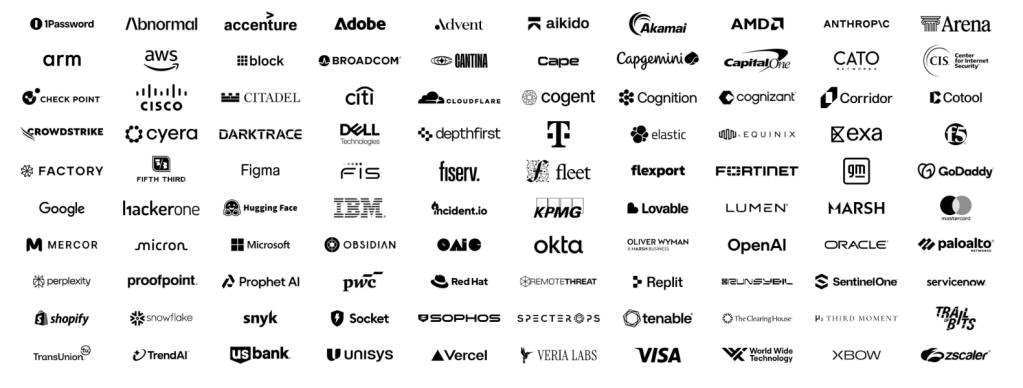
More than 100 companies and organizations, including OpenAI, Anthropic, Google, Microsoft and Amazon Web Services, have signed an open letter calling for a global effort to improve cybersecurity defenses as artificial intelligence capabilities advance.

The letter, published Thursday, argues that the timeframe to strengthen defenses before AI-enabled attacks become more widespread and complex is rapidly dwindling. Conversely, the letter says the same advances can give defenders new ways to find and fix vulnerabilities that have accumulated over years, a period the signatories call a “defenders’ window.”

“Each of us can reduce risk now,” the letter reads. “All organizations, cybersecurity companies, technology partners, governments, and AI frontier companies have an important role: accelerate defenders’ priorities with tools, funding, and hands-on support, especially for critical infrastructure organizations with limited budgets.”

Aside from AI-centric companies, financial institutions like Capital One, Mastercard and Visa, and cybersecurity firms like CrowdStrike, Palo Alto Networks, and Proofpoint, also signed the letter. Organizers describe the effort as ongoing, with more organizations expected to join over time.

An image of company logos depicting the signatories of a letter calling for enhanced AI defenses.

The letter states that “status quo security won’t be enough.” It cites longstanding bugs, excessive permissions, misconfigurations, unpatched software, weak authentication and technical debt in legacy systems as sources of exposure. Security teams, particularly those protecting critical infrastructure, have been historically under-resourced, the letter says, and need what it describes as a surge in tools, resources and hands-on support.

In a conversation with CyberScoop Wednesday, top brass from Palo Alto Networks said they had seen enough from internal frontier AI model testing and malicious in-the-wild use of commercially available AI tools to be genuinely concerned.

“I can tell you without exaggeration that we believe that this is a generational shift in cybersecurity,” Sam Rubin, senior vice president of Palo Alto Networks’ threat intelligence arm, said Wednesday. 

John Doyle, CEO of Cape, a privacy-first mobile network operator and whose company signed the letter, echoed the warning about status-quo security.

“It was already failing us in telecom–critical infrastructure that’s been breached time and again with serious consequences for both our military and regular people,” Doyle told CyberScoop. “It’s going to get immeasurably worse without collective action and leaning into innovative cyber defense.”

The letter further asks every organization to make cybersecurity an immediate leadership priority, fix the highest-risk weaknesses and raise security standards for technology they buy, build and deploy, including AI-generated code. Cybersecurity companies and technology partners are asked to test defenses against frontier AI capabilities and make AI-powered defense accessible to critical infrastructure operators. 

Governments are urged to coordinate defense across borders, fund protection for essential services that lack staff or budget, and impose costs on attackers. Frontier AI companies are asked to provide responsible model access, funding, training and support, and to ensure that AI systems acting autonomously remain traceable and accountable.

The letter frames AI as both a threat and a remedy throughout the document. It mirrors what security experts have been saying for months, positioning the industry as entering an unprecedented two- to three-year period of upheaval, driven by AI systems that are discovering vulnerabilities exponentially faster than defenders can respond and threatening to render decades of security practices obsolete.

The U.S. government has taken steps to stay ahead of AI-enabled cyberthreats. As part of an executive order issued by President Donald Trump in June, a federal clearinghouse known as Gold Eagle was stood up for sharing AI cyber threat information between the government and private sector.

You can read the full letter here.

The post 100-plus companies call for ‘global surge’ in AI-powered cyber defense appeared first on CyberScoop.

The GTA VI leaks are breaking the internet. Security researchers have seen this before.

Grand Theft Auto VI, widely heralded as the game event of the decade, took a significant hit last week after a cybercriminal sent much of the internet into pandemonium after publishing gameplay footage a week before the game’s publisher planned to reveal core portions of the game to the public.  

The files posted by the online persona “CyberLeek” indicate either a hacker had direct access to Rockstar Games’ most sensitive systems or was given proprietary data by an insider, eventually becoming one of the highest-profile data extortion attacks of the year — a vexing, almost-daily occurrence hitting industries of all types.

While most data extortion attacks rattle companies due to regulatory or privacy concerns, this particular incident has caused an outsized response from Rockstar’s parent company, Take-Two Interactive Software, because it has an audience. While no lives are at risk, as they would be in an attack on critical infrastructure, the financial and reputational stakes are magnified precisely because people are watching every drip of stolen footage become a news story or a trending topic. 

“IP theft — whether it’s conducted by a cybercriminal, an insider, or even potentially [an artificial intelligence] model — rips away the hard work, passion, and livelihood among employees and companies that created the product in the first place,” Cynthia Kaiser, senior vice president of Halycon’s ransomware research center, told CyberScoop.

The game’s prior release, GTA V, along with its online component, has sold over 230 million copies and earned Take-Two over $11 billion since its release in 2013. Industry analysts say GTA VI is on pace to make between $3.3 billion to $5.2 billion in cumulative global sales by the end of its launch week in November. 

“The crown jewels of a company are whatever makes it differentiated and special,” said Kaiser, the former deputy assistant director of the FBI’s cyber division. “For some, that means customer data or source. For a studio in the final stretch before launch, the crown jewel is the surprise.”

While Take-Two hasn’t said anything publicly about the leaks, it has responded feverishly via its legal team. The company petitioned a federal court for subpoenas under the Digital Millennium Copyright Act against Discord, Google, Microsoft and X, seeking the identity of CyberLeeks and other user accounts it accuses of copyright infringement.

Federal judges granted the subpoenas against Discord, Microsoft and X, but the petition against Google remained unapproved as of Monday. Take-Two’s legal representatives also sent copyright notices to the four companies, informing them of the copyrighted material published on their platforms, but it’s unclear if any of the tech companies have been formally served with the signed subpoenas. 

Take-Two and Rockstar did not respond to a request for comment.

The subpoenas may have been enough to spook those responsible for the leaked footage. As of Monday, the websites where those behind CyberLeek were posting leaked information and links to a memecoin were offline.

Zach Edwards, staff threat researcher at Infoblox and a self-proclaimed fan of the series, initially thought the leaks were part of a Rockstar guerrilla marketing campaign. But the company’s response “confirms that this is a real investigation, and the content being shared is likely real to some degree,” he said. 

Take-Two’s actions thus far indicate the company is approaching the breach and leaks like an insider threat investigation, Edwards said. Whoever leaked the footage may have had access to an actual build of the game, he added. That could point to an insider, someone who could have saved a copy to a cloud service, uploaded it to a file-hosting site, or walked out with it on an external drive.

CyberLeek’s conflicting motivations

The hacker or group behind CyberLeek claim they are releasing the gameplay videos to protest Rockstar’s decision to not release physical copies of the game. Yet, watermarks on the leaked videos include addresses to crypto wallets, which indicate CyberLeek is also, and perhaps primarily, seeking a payout. 

“The persona behind the leaks, CyberLeek, published an anti-corporate manifesto targeting digital pre-orders and disc-less releases to frame the breach as hacktivism,” Ben Bernstein, manager of Huntress’ cybersecurity advisors team, told CyberScoop. “Yet behind the political posturing, there’s clear financial monetization and clout-chasing.”

Kaiser draws the same conclusion. “Let’s separate stated motive from observed behavior,” she said. “Threat actors who talk about principle while running a monetization channel are usually only telling you what they think will land with an audience, not actually what is driving them.”

Katie Moussouris said “this is what the alternative vulnerability economy looks like.” The founder and CEO at Luta Security has spent decades building legitimate channels for people who find security problems to get paid without turning to crime.

“The leaker launched a cryptocurrency token, watermarked stolen footage with a buy link, and offered to sell ad space on future leaks. Each of those pays out in proportion to how many people are watching. The manifesto is what keeps them watching,” Moussouris said. 

“That is a genuinely new monetization model for stolen pre-release content, and it means the usual playbook of negotiating a ransom payment quietly or paying to make it stop won’t work,” she added.

Different flavor, same crime

Despite its unique characteristics, the rhythm of the attack and its fallout is familiar territory for cybersecurity experts. 

“Steal, publish a sample, promise more, deliver, repeat. Just like ransomware attacks, in cases like these criminals use every lever of pressure they can against a company — including the fear of what is coming next — to profit from their actions,” Kaiser said. 

“The attackers are crowdsourcing their pressure tactics. A meaningful share of the player base is treating the leaks as free content and amplifying them,” she added.

Kaiser also sees some clear parallels with previous attacks targeting major entertainment companies, including the 2014 attack on Sony Pictures and the HBO hack in 2017. 

“The Sony comparison is useful for how these things escalate, but this incident reminds me more of the Iranian hackers’ leak of ‘Game of Thrones’ episodes a few years back,” she said. “North Korea attacked Sony for political purposes, destroying its data along the way; Iranian threat actors compromised HBO, along with hundreds of universities and over forty other companies, in a hacking-for-hire scheme stealing American intellectual property.”

Federal authorities earlier this month unsealed a second wave of indictments against 17 Iranians affiliated with the tech firm Mabna Institute who allegedly stole troves of data from government agencies and dozens of companies, including HBO.

This isn’t the first time Rockstar has been hit with a security incident. In 2022, an 18-year old British man who was a member of the Lapsus$ cybercriminal gang was sentenced to an indefinite hospital order after leaking gameplay footage. According to the BBC, the incident cost Rockstar, along with ridehauling company Uber and chipmaker Nvidia, over $10 million. 

The subpoena that worries security experts

Security professionals expect the situation to escalate on all sides. Leaks have hit the internet daily for the past eight days, including a series of leaks Tuesday morning. Meanwhile, Take-Two has not relented on its subpoenas. Its broadest move was a subpoena against Discord, seeking identifying data on CyberLeek, two other users and every member of three Discord servers where the copyrighted material was posted.  

Moussouris said the scope of that inquiry should worry people well beyond this case. 

“Take-Two asked for Windows device identifiers, login records, and cloud storage contents for every person who spoke in three Discord servers going back to June,” she said. “The people with the best chance of uncovering the culprits are those doing the unglamorous investigation forensics work of figuring out how the build may have leaked.”

Discord would not say whether it had been formally served or what it has done in response. A company spokesperson said it reviews and complies with valid subpoenas when they are received. 

While the breach and leak of ‘GTA VI’ material is a serious matter, Edwards noted that Take-Two is also benefiting from greater interest in the unreleased game on a daily basis. 

“The threat actor leaking these videos has failed by essentially creating a successful underground marketing campaign for the game while also putting themselves at serious risk of being eventually caught,” he said. 

“This incident is playing out like a classic insider threat exploitation scheme. Someone got access to sensitive data, they had a political agenda which clashed with the owner of the sensitive data, and they decided to do something stupid to try and force a change,” Edwards added. “This attack has done nothing but spread ‘GTA VI’ content further than it would have otherwise, and it’s creating ripples across other industries like cybersecurity who would have never covered ‘GTA 6’ issues previously.”

The post The GTA VI leaks are breaking the internet. Security researchers have seen this before. appeared first on CyberScoop.

Apollo discloses data breach from ongoing wave of attacks hitting financial sector

Apollo Global Management confirmed it was among several financial institutions impacted by a string of social engineering attacks that hit the sector last month, the company said Friday. 

Attackers gained unauthorized access to some of the private equity firm’s cloud platforms between July 6 and July 10, the company said in a data breach notification filed in California. Apollo did not say when or how it became aware of the intrusion and did not respond to a request for comment.

Apollo is the first victim to formally disclose that sensitive personal data under its care was compromised by a wave of attacks that have hit large private equity firms, law firms, financial rating agencies and medical technology companies. 

The company did not name the group responsible for the attack. Yet, Google earlier this month attributed the ongoing campaign to BlackFile, a threat group affiliated with The Com, that recently split its extortion operations across four brands with shared infrastructure: Redact, Pink, Helix and Falcon. 

“Upon detecting the incident, we promptly notified law enforcement, engaged leading outside cybersecurity and forensic experts, enhanced our security protocols, and launched an investigation,” Matthew Breitfelder, global head of human capital at Apollo, wrote in the disclosure notice. 

As part of its ongoing investigation, Apollo said it determined on Aug. 12 that personal data including names, dates of birth, contact information, home addresses and Social Security numbers were compromised. The company did not say how many people were impacted, but noted it’s thus far found no evidence any data was posted online or used for identity theft or fraud.

Apollo is one of the world’s largest private equity firms, with $1.05 trillion in assets under its management at the end of June, according to a regulatory filing.

Researchers previously told CyberScoop some of Apollo’s largest competitors, including Blackstone and Bain Capital, were also targeted with malicious infrastructure, but it’s unclear if those firms were compromised.

BlackFile and its various affiliates have impacted organizations in multiple industries, including healthcare, technology, transportation, logistics, wholesale, and retail and hospitality since the beginning of this year.

The extortion group shifts from one sector to the next, impersonating IT support in voice-phishing and social-engineering attacks before threatening its alleged victims with extortion demands, which often start around $3 million and are typically negotiated down to less than $1 million.

Google researchers also previously said some of the group’s recent victims have been subject to threatening messages and other forms of escalation, including swatting incidents, a tactic adopted by several subsets of The Com.

The post Apollo discloses data breach from ongoing wave of attacks hitting financial sector appeared first on CyberScoop.

Details emerge on BlackFile’s recent attacks on financial companies

A cybercrime group responsible for a string of recent attacks against private equity firms, law firms and financial rating agencies remains active and continued to target new victims as of late last week, according to researchers.

BlackFile, which Google Threat Intelligence Group tracks as UNC6671 and associates more broadly with The Com, has been active since the start of the year, shifting its focus from one sector to the next. 

“We have seen continued targeting against the financial sector with additional targeting of other organizations including in the med tech space,” Austin Larsen, principal threat analyst at GTIG, told CyberScoop.

The extortion group impersonates IT support in voice-phishing and social engineering attacks, and recently split its extortion operations across four brands with shared infrastructure: Redact, Pink, Helix and Falcon.

Several organizations received new extortion demands from Redact in the last week, according to Google. 

BlackFile and its various affiliates have impacted organizations in multiple industries, including healthcare, technology, transportation, logistics, wholesale, retail and hospitality.

“BlackFile does go after some of the largest organizations in the sectors that they go for. They’re not going after small companies,” Larsen said. “This is big-game hunting.”

The group’s extortion demands often start around $3 million and payments, including several in the past few weeks, have typically been negotiated down to less than $1 million, according to Google.

Flashpoint researchers told CyberScoop they have observed malicious infrastructure targeting Blackstone, Bain Capital, Moody’s, CME and Apollo, but it’s unclear if any of those firms were compromised. 

BlackFile’s steady pace of activity underscores the persistent threat it poses, as it targets an average of 1.5 new victims daily, researchers said.

Some of the group’s recent victims have been subject to threatening messages and other forms of escalation, including swatting incidents, a tactic adopted by several subsets of The Com, according to Google. 

The attackers use hundreds of callers, often lower-level people that are recruited for a small fee or an opportunity to earn goodwill with the group, who make the voice phishing calls to obtain initial access. Larsen estimates less than a dozen core operators run the different brands under the BlackFile umbrella.

“From the intrusion data that we’re seeing, this does appear to be essentially the same group,” he said, adding that different people may be operating the various brands, but they’re all linked back to the same threat cluster using shared infrastructure.

Mandiant incident responders encounter BlackFile often, having been engaged by more than two dozen organizations successfully compromised by the threat group since January. New victims in the financial sector were calling Mandiant in for help earlier this month.

Voice-based phishing attacks for data theft extortion aren’t sophisticated or novel, but BlackFile and other cybercrime groups consistently prove their continued effectiveness across virtually any sector or organization. “They’re really hitting on the human weakness element here,” Larsen said.

The post Details emerge on BlackFile’s recent attacks on financial companies appeared first on CyberScoop.

Google’s solution to hacker name confusion? Yet another naming system

If you are a CISO, here is a new problem for the pile: Do I worry more about Sandworm Relic or Strawberry Tempest?

Last week, Google Threat Intelligence Group joined a list of rivals in changing how it names hackers, replacing years of split naming systems with a single set of code names built around memorable word pairs.

The company said in a blog post that the change merges two systems that had grown apart for years inside Google: Mandiant, the security firm Google bought in 2022, and its in-house Threat Analysis Group. Combining those units left Google with overlapping names for the same hacking groups, a problem the new system aims to fix.

“Threat tracking shouldn’t be an exercise in memorization, but rather one of intuition,” the post reads.

Each tracked group will now get a two-word name. The first word is a distinct term meant to be easy to recall, often pulled from names already used in past reporting on a specific group. When no such name exists, researchers will generate one at random and have analysts check it before use. The second word sorts each group by category, such as country of origin or motive. In Google’s published examples, CASTLE pairs with groups tied to China, ION with Iran, NEPTUNE with North Korea, RELIC with Russia, and COMET with financially motivated threat actors not tied to a nation-state.

The approach echoes one CrowdStrike has long been known for. CrowdStrike pairs a specific term with an animal tied to a country or motive: PANDA for China, BEAR for Russia, SPIDER for cybercriminals, JACKAL for hacktivists. Google’s system swaps the animals for words like CASTLE and NEPTUNE but follows the same basic structure, down to the argument for why it works: A two-part name carries more information than a bare country label or number, and it can change as attribution is fine-tuned.

Microsoft took its own turn at a naming overhaul in April 2023, dropping a system built on chemical elements, trees and volcanoes in favor of weather terms. Under that system, Typhoon marked China, Blizzard marked Russia, Sandstorm marked Iran, and Tempest marked financially motivated cybercriminals. The switch produced names that drew as much attention for their sound as their substance, among them Strawberry Tempest, Pumpkin Sandstorm and Pistachio Tempest. Industry experts bristled over the change, saying the names compared the groups to ice cream flavors or cocktails.

By 2025, the industry’s naming sprawl had become enough of a shared headache that two of the biggest players in it agreed to try to sort it out together. Microsoft and CrowdStrike announced a joint mapping effort in June of that year, pairing Microsoft’s weather names with CrowdStrike’s animal names for the same tracked groups, with Google, Mandiant and Palo Alto Networks Unit 42 also signed on to contribute. Both companies were careful to say the project was not an attempt to force the industry onto one naming system, just to make the existing ones easier to translate between.

Google‘s rollout starts with several dozen of the most actively tracked hacking groups, with more to follow over time. Older names will stay searchable within Google’s threat intelligence platform, alongside mappings to the MITRE ATT&CK framework and to the naming systems used by other vendors. 

The company says groups will keep carrying “UNC,” for uncategorized, if it is still too early to identify exactly where a group fits in this taxonomy.

The post Google’s solution to hacker name confusion? Yet another naming system appeared first on CyberScoop.

Security researchers find stalkers abusing Chrome’s sync feature

Cyberstalkers are increasingly exploiting a feature in Google Chrome meant for mobile phone user convenience, but can give intruders broad access to a device owner’s private information, according to researchers.

Certo Software said in a blog post Tuesday that stalkers are making use of Chrome’s sync capability — meant to make it so signing into Chrome on one device makes it easier to do so on other devices, too — to spy on a phone owner’s browsing history and gain access to their stored passwords.

As an illustration, Certo used the case of a pseudonymous victim, Emma, who had searched for a family lawyer and visited a domestic violence support website while her partner was sleeping, only for him to bring up to her two days later.

“Emma had been careful to only ever use her own device, and she hadn’t noticed any new apps appear on her phone,” wrote Certo co-founder Russell Kent-Payne. “What she didn’t know was that weeks earlier, during a few unattended minutes with her phone, he had opened the Chrome app and quietly signed it into a Google account of his own. From that moment on, every site she visited was being copied straight to his account, viewable from any device, anywhere in the world.”

The surveillance is as easy as that: brief access to a phone, signing into a Google account and making sure sync is turned on for that account.

Eva Galperin, director of cybersecurity at the Electronic Frontier Foundation, said on the Bluesky social media app that Certo’s research serves as “an important reminder that tech-enabled abuse isn’t just limited to stalkerware.”

Certo said that Google could do a couple things, such as providing a temporary notification whenever a new account is added or sync is turned on or offering a regular marker to indicate when sync is active and which account it’s syncing to, to protect users.

Google did not respond to multiple requests for comment about Certo’s findings.

But the uptick in usage of that stalking method could be a byproduct of security successes elsewhere in the fight against spyware, Certo said.

“Modern smartphones are harder to compromise than ever. Regular security updates, stricter app store rules, and on-device threat detection have made traditional spyware a much riskier bet for a cyberstalker than it used to be,” Kent-Payne wrote. “As a result, we’re increasingly seeing abusers turn to something far simpler: the legitimate apps already sitting on their victim’s phone. No installation, no suspicious permissions, no telltale battery drain — just a quiet misuse of a feature the victim never knew existed.”

At the same time, Chrome is the world’s most popular browser, and this isn’t the first time security concerns have popped up about its sync feature, among other worries.

The post Security researchers find stalkers abusing Chrome’s sync feature appeared first on CyberScoop.

❌