❌

Reading view

There are new articles available, click to refresh the page.

Logitech G just released an upgraded version of its 'revolutionary' 5-star gaming mouse — here's what makes the Pro X3 Superstrike better than its predecessor

  • Logitech G has released a new gaming mouse
  • The Pro X3 Superstrike is an upgraded version of the Pro X2 Superstrike from earlier this year
  • Major upgrades include better weight distribution and a new chipset for better power efficiency

PC gaming accessory maker Logitech G has just released the Pro X3 Superstrike, an upgraded version of the Pro X2 Superstrike that came out earlier this year.

We called the original model a 'revolutionary' innovation in our 5-star review, praising its unique Haptic Inductive Trigger System (HITS) switches. Relying on electromagnetic current, HITS allows you to customize everything from the exact actuation point of each click to just how much resistance there is when you press down.

This is a boon in an esports setting, where a short click speed can cut down click latency and, potentially, provide an edge over your opponents.

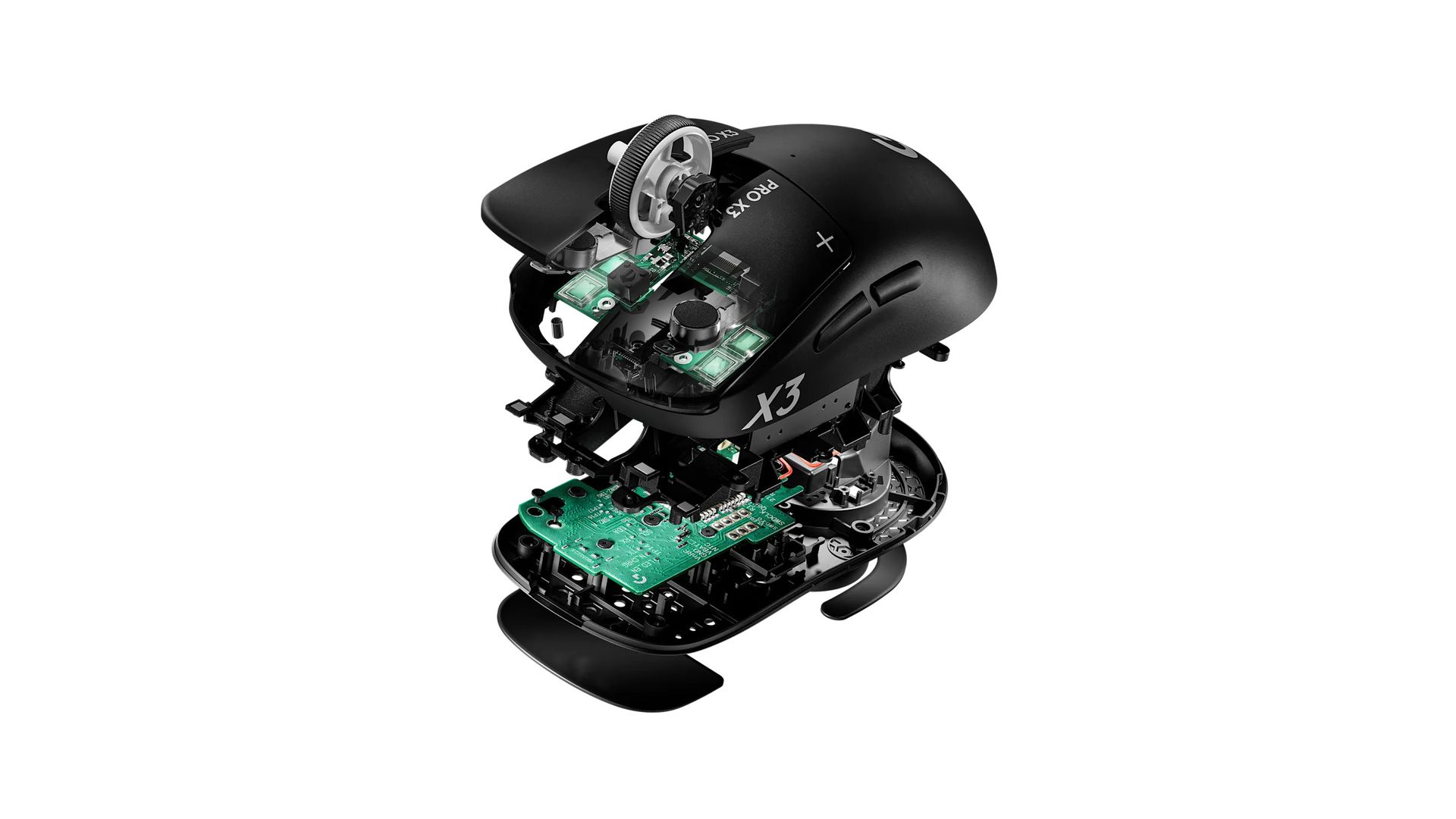
The new Logitech X3 Superstrike

(Image credit: Logitech G)

The upgrades found with the Pro X3 Superstrike are subtle, as you might expect given the short time between the two releases, but serve to make an already best-in-class product that little bit better.

It weighs the same 61g as the X2 model, but has been reworked internally for more even weight distribution. This, the team behind the mouse tells me, is the direct result of feedback given by esports pros who complained the original was too front-heavy.

Under the hood, it's also powered by a new chipset, dubbed the NxLOGI. Power efficiency was a major focus, with Logitech claiming that the X3 Superstrike can last more than 135 hours on each charge for a massive 45-hour boost compared to the X2.

There's an upgraded sensor too, which supports up to 48,000 DPI (compared to the 44,000 DPI of the previous model). Other flagship specs, like an up to 8,000Hz wireless report rate, remain unchanged — though there's now the option to achieve that when using the mouse in a wired capacity too.

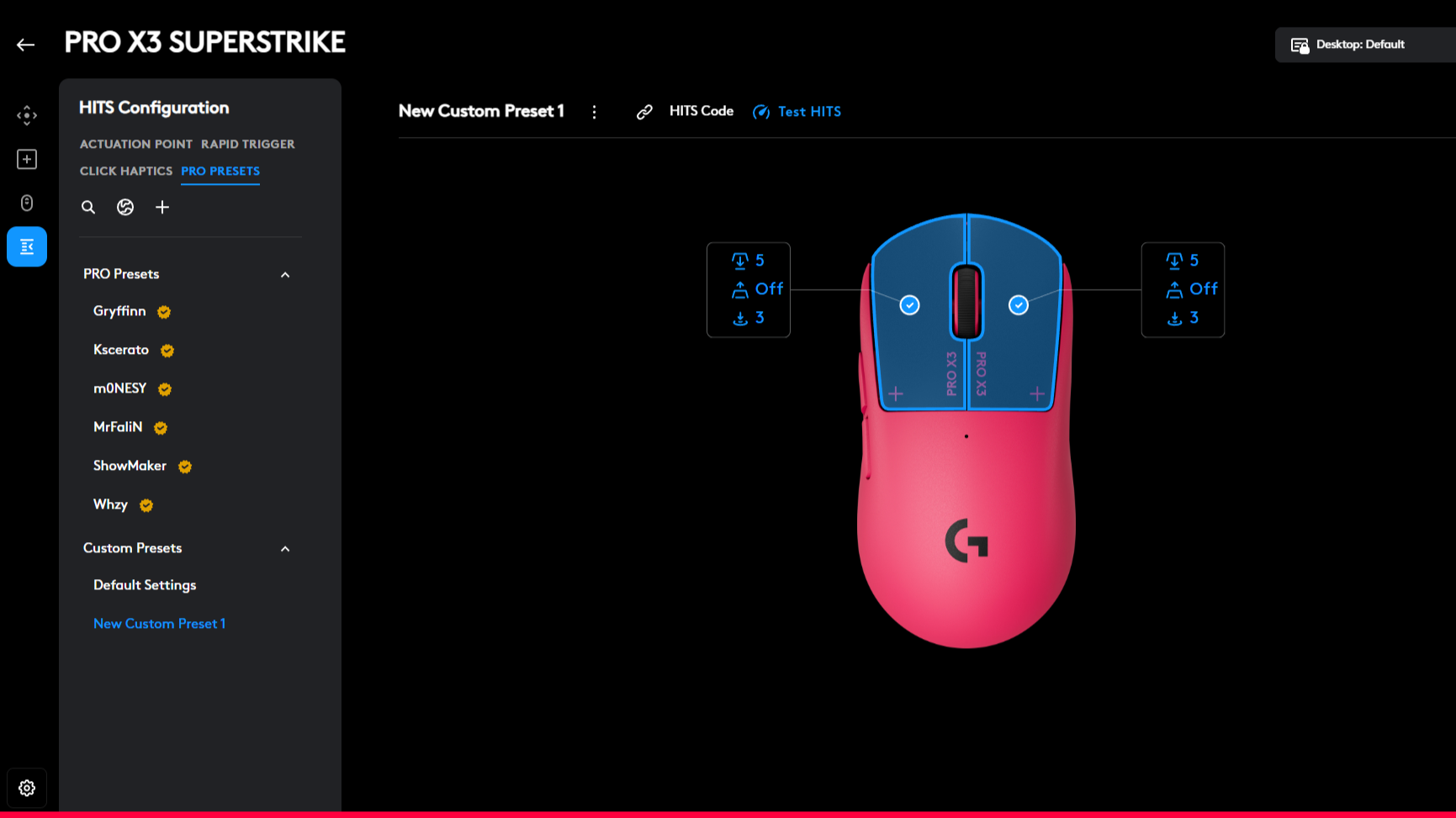
Interestingly, there are some new features on the software side: you can now choose a range of Pro Presets in the compatible Logitech G Hub app, all inspired by the settings used by esports players like m0NESY or ShowMaker.

The Logitech G Pro X3 Superstrike software settings.

(Image credit: Logitech)

The result is a mouse that's clearly the better pick if you're weighing up the two, but all of this does with a price hike in the US and UK. The X3 Superstrike retails for $199.99 / £169.99 / AU$299.95. That's $20 / £10 more than the X2 (though, weirdly, the Australian price remains the same).

A Logitech representative did tell me that the X2 Superstrike will remain on sale alongside the X3 Superstrike for a time as an alternative for those who want something a little cheaper.

House and Senate members propose legislation for CISA to step up cyber defenses for biotech

Biotechnology doesn’t fall neatly into any one of the 16 government-designated critical infrastructure sectors that receive specialized and focused attention from feds, leading some lawmakers to worry that it’s not getting the protection from cyberattacks and other risks that it needs.

That’s why a bipartisan group of senators and representatives announced legislation Thursday that would place an emphasis at the Cybersecurity and Infrastructure Security Agency on defending biotechnology, biomanufacturing and biological data.

The Protecting Biotechnology and Biomanufacturing as Critical Infrastructure Act and the Protecting Biological Data Act are two separate bills with the same group of cosponsors. Both bills would weave biotech into the law that established the Department of Homeland Security.

The former would direct DHS to come up with plans to make sure biotech and biomanufacturing are protected as critical infrastructure, but not as a whole new sector. The plans would identify key biotech players, conduct outreach to them and develop steps to update the National Infrastructure Protection Plan this year to incorporate biotech sector input.

The latter would make sure that systems handling genomic sequences and sensitive biometric data are covered as critical infrastructure and integrated into the national cyber strategy, that CISA would work with biotech players on security steps like joint exercises and that the agency would get new personnel to handle biometric data security.

In the last two months, biotech giants Boston Scientific and Amgen have revealed that they suffered recent cyberattacks.

Sponsors of the measures include leaders and members of the National Security Commission on Emerging Biotechnology, a legislative advisory group.

“Biotechnology infrastructure and data are becoming vital to America’s economic and national security,” said Commission Chair Senator Todd Young, R-Ind. “Just as we are serious about where the sensitive data of Americans is stored and who can access it, we should be equally serious about protecting our biological data and infrastructure. Designating biotech as critical infrastructure is about recognizing its strategic importance and making sure the capabilities America will depend on tomorrow remain resilient and protected from foreign threats.”

Notably, however, the bills do not seek a separate critical infrastructure category for biotech to add to the 16. Currently, biotech cuts across a number of existing sectors, including the health, agricultural and industrial sectors.

Some industry groups and experts have lobbied for the inclusion of new critical infrastructure sectors, such as space or artificial intelligence.

“Protecting biomanufacturing infrastructure and the most sensitive biological data of Americans is essential for our national security,” said commissioner Rep. Ro Khanna, D-Calif. “These bipartisan bills will help ensure we are protecting this sector from physical and cyber threats while keeping America as the world leader in biotechnology.”

The bill’s sponsors in the House are Khanna, Stephanie Bice, R-Okla. and Scott Peters, D-Calif., and in the Senate the sponsors are Young and Maggie Hassan, D-N.H.

You can read the text of the bills below.

The post House and Senate members propose legislation for CISA to step up cyber defenses for biotech appeared first on CyberScoop.

New bill would create federal investigative body for AI-driven hacks 

A new Democratic bill in Congress would establish a federal Cybersecurity and AI Board of Investigations to provide independent government oversight of cyberattacks carried out by AI agents, following recent hacks by models run at companies like Anthropic, OpenAI, Meta and others.

The bill, introduced by Sen. Ed Markey, D-Mass., would attempt to establish a federal mechanism to investigate incidents where AI models escape sandbox environments and access live internet systems.

Currently, frontier AI companies like OpenAI and Anthropic largely control the investigation and public reporting of such incidents. Markey and other critics argue that these companies have too much control over investigations and reporting due to their financial and legal interests. 

“Despite the unprecedented depth and scale of recent AI-enabled cyberattacks, the public is learning critical details piecemeal,” Markey said in a statement. “Building stronger defenses requires a full accounting of what goes wrong, and we cannot depend on companies with little incentive to disclose their failures to give us one. We need the Cybersecurity and AI Board of Investigations to get to the bottom of major incidents and give companies and the government the critical information necessary to build resilience and better secure our economy and our country.”

Although frontier AI companies maintain external red-teaming programs and allow limited access to organizations like METR and Redwood Research, they control the scope, terms and time frames of those engagements.

The board, which would coordinate with the secretary of commerce, could subpoena witnesses and conduct “independent and impartial reviews and assessments” of AI agent-led hacks that impact federal information systems or critical infrastructure. 

It would be led by five members, appointed by the president and confirmed by the Senate for five-year terms, with no more than three members from one political party.

The board would also investigate systemic vulnerabilities in the AI supply chain, so-called “near misses” where unauthorized agent-led hacks were “narrowly averted,” and gaps in federal regulatory oversight. It would have technical staff including engineers, malware analysts, and digital forensic experts.

The board would “operate independently from regulatory review and enforcement actions without assigning legal fault or liability for any review and assessment” it conducts, according to the bill.

OpenAI confirmed Wednesday its AI agents breached a statistics portal used by the Australian government’s social services agency, Services Australia. Though the breach happened in June, OpenAI learned of the incident in August. Australian Prime Minister Anthony Albanese said the company did not notify him until Sept. 10, when it sent findings to a general government email inbox, according to the BBC.

The post New bill would create federal investigative body for AI-driven hacks  appeared first on CyberScoop.

Those weird PC noises you've heard are coming from the Epic Games Launcher

  • Epic Games Launcher has been identified as the culprit behind mysterious chimes on users' PCs
  • Epic has confirmed it's planning to update the launcher to reduce the frequency of its 'party chimes'
  • Users have requested a feature that turns off the chimes altogether

Multiple PC users have recently noticed mysterious sounds playing at random, and it appears the Epic Games Launcher is the culprit.

As reported by TweakTown, a Fortnite news page on X discovered the Epic Games Launcher randomly playing sounds on their PC, as several audio files matching them were found in the Epic Games 'social chimes' folder.

Each sound represents actions in a game party, such as a party user leaving, push-to-talk activation or deactivation, and message notifications, which sounds bizarre as this occurs even when users aren't in Epic Games parties.

Epic has since confirmed (via a FortniteStatus X page) that the 'party chimes' were playing more frequently than necessary, and it is now updating the Epic Games Launcher to 'narrow which events play a sound while the launcher is in the background'.

These party chimes are sounds I've noticed on my Windows 11 system, playing at very random intervals, and sometimes even when the launcher isn't visibly open. The sounds aren't accompanied by pop-up notifications either, which only added to the confusion for me and many other PC users previously trying to pinpoint the source.

Thanks for providing feedback about this, @FireMonkey!After taking a look, these party chimes are triggering more often than we intended. We're updating the Epic Games Launcher to narrow which events play a sound while the launcher is in the background, so you'll hear fewer of them when you're not actively using it.September 19, 2026

Apps open in the background on Windows 11

(Image credit: Future)

TweakTown states that Epic plans to introduce an option to toggle the chimes on or off in the future, but, surprisingly, a toggle option isn't a top priority as of now — especially since user replies berate Epic for not including an option to remove the sounds altogether.

For now, at least, a quick workaround is to delete the files from the directory as follows: Program Files (or Program Files x86)\Epic Games\Launcher\Portal\Extras\SocialChimes. It's worth noting that this is only a temporary fix, as Epic Games Launcher updates will likely overwrite this and place the files back into the directory.

Perhaps this entire case serves as yet another reason to use Steam for many users, where bugs are rare occurrences — but at the very least, PC users can rest knowing there isn't some unwanted or unknown application running on their system.

Citing China, President Trump doubles down on hands-off approach to AI regulation

President Donald Trump continued to defend his administration’s hands-off approach to AI regulation in the wake of hacks carried out by U.S. commercial frontier models that have rattled policymakers and industry veterans and spurred calls for more regulatory oversight.

In a Truth Social post Monday, Trump dismissed worries from critics that “AI is going to kill us,” comparing them to complaints from environmentalists about climate change, which he also alleged was a false narrative. He also posited that nothing may matter more than future U.S. dominance of the technology over geopolitical rivals like China.

“Whoever wins AI, WINS!” Trump posted. “We are leading now over China, and everyone else, and I’m going to keep it that way! I’m not going to stifle Growth, of something that will be bigger than the Industrial Revolution, or the internet, itself.”

Trump has previously suggested that good leadership is the only regulation the U.S. needs for artificial intelligence. He later claimed the Department of Justice was ready to “rein things in” if companies overstepped, but offered no specifics on enforcement, legal authority, or where he would draw that line.

“We will be careful, and that’s why we have the Department of Justice, and other Law Enforcement bodies, that will rein things in if we have to, but I will only encourage AI or, SI (SUPER INTELLIGENCE)!” Trump concluded.

Secretary of the Treasury Scott Bessent recently told Congress that private lawsuits could force AI companies to institute better security, saying it’s clear what the government “shouldn’t do on safety is to give these labs a liability exemption, which is what they are asking for.”

“The best way to guarantee safety is that the creators are liable for what they build and generate,” Bessent said.

Beyond existential fears, critics also argue that inadequate regulation or cybersecurity controls in current AI systems make them impossible to fully control or monitor.

Recently, former President Barack Obama criticized the argument from Trump administration officials that the free market will naturally push industry toward self-regulation and that “these companies will solve the safety issues because they have every incentive to do so.”

“If it turns out to be dangerous, people will just sue them and they’ll be worried about financial liability,” Obama said last week in remarks at Colgate University in New York. “That’s not how we treat airlines or drug companies or food companies.”

The Trump administration issued an executive order earlier this year that set up a voluntary testing regime for some commercial frontier models, largely at private industry’s discretion. That order was significantly delayed and altered by AI industry boosters to ensure that governmental review did not cause companies to postpone their release timelines for new models.

That agreement did not last long before fast-moving events caused the administration to strike another, non-public agreement with frontier AI companies like OpenAI, Anthropic and others governing pre-release testing for models.

But the Trump administration has consistently argued that regulation will harm, not help, U.S. innovation and global competitiveness, and the threat of China frequently looms large in those discussions.

Experts believe China’s AI models are behind U.S. models at the top of the market, where OpenAI and Anthropic have consistently pushed the frontier limits of model capabilities. But Chinese lower and “middle class” models are often cheaper, more efficient and can even outperform more powerful models because users can dedicate exponentially more tokens for their tasks.

The U.S. government has accused Chinese AI companies of conducting widespread, “systematic” distillation of U.S. frontier models, with the implicit encouragement of Beijing.

In defending the administration’s approach, David Sacks, co-chair of the President’s Council of Advisors on Science & Technology and a top adviser on AI issues, specifically cited the threat from China and other countries that he claimed would not be subject to similar restrictions.

“We’re not the only country that has advanced AI labs, and as the president declared…we have to win this AI race,” Sacks told Politico in May, later adding “I think that’s the first thing to recognize is that if somehow we slow down or stop AI development, it doesn’t mean that AI progress is going to stop. It just means it’s going to happen in other countries and specifically China.”

Some observers have alleged that despite their larger differences, top leaders in the U.S. and China may view AI similarly at the strategic level, specfically that increased adoption – and risks – of AI are inevitable.

Ronan Murphy, director of the tech policy program at the Center for European Policy Analysis, posited that while there may not be a formal agreement between the two countries, “they share views both in Beijing and in Washington, particularly in the White House, of: you have to allow this to happen.”

“Clearly there’s a call for regulation from many quarters of AI in the U.S. and elsewhere, but in the White House – and we heard David Sacks talking about it [recently] – It’s ‘let them cook,’ and the Chinese approach seems to be the same,” said Murphy in a press briefing. “So there might be consensus at that level, if nothing else.”

The post Citing China, President Trump doubles down on hands-off approach to AI regulation appeared first on CyberScoop.

Microsoft and partners disrupt EvilTokens, a comprehensive cybercrime service for financial fraud

Microsoft, along with a group of industry partners, disrupted EvilTokens, a short-lived but highly consequential cybercrime platform that investigators linked to more than 12,000 compromised Microsoft customer email inboxes across more than 10,000 organizations globally, the company said Tuesday.

Acting on federal court order Sept. 15, Microsoft and partners seized 50 websites the phishing-as-a-service used for operations and disabled more than 175 domains linked to EvilTokens’ supporting infrastructure. 

EvilTokens, launched in February 2026, was “a powerful cybercrime platform that used AI at every step of the attack chain — from compromising email accounts to designing intricate roadmaps for financial fraud and scams,” Steven Masada, associate general counsel and general manager of Microsoft’s Digital Crimes Unit, wrote in a blog post.

About 1,000 cybercriminals used EvilTokens over the course of its operation, a Microsoft spokesperson told CyberScoop.

The service was centered on an AI-style chatbot that cybercriminals used to analyze victims’ inboxes, identify trusted relationships, payment authorizations and other sensitive details that could facilitate fraud.

“AI was not simply helping attackers write more convincing messages. It helped them decide who to target, who to impersonate, and how to most effectively exploit the relationship to extract as much money as possible,” Masada wrote. 

EvilTokens was one of the most widely used phishing-as-a-service platforms prior to its takedown. It facilitated business-email compromise campaigns by stealing session tokens that allowed cybercriminals to sift through a victim’s inbox and maintain persistent access.

“We cannot estimate the total fraud attributable to all EvilTokens activity. However, we were able to correlate at least 13 complaints filed with the FBI’s Internet Crime Complaint Center to EvilTokens-linked activity, representing approximately $1.7 million in reported losses,” a Microsoft spokesperson said. “Because many incidents go unreported and not all victims can be definitively linked to specific campaigns, we believe this is a conservative estimate.”

Victims of EvilTokens were largely concentrated in the United States, Canada, the United Kingdom, Australia, India and France, according to Microsoft. SpyCloud, which supported the takedown, identified compromised email domains spanning 79 countries.

Microsoft said it also identified two men behind EvilTokens — Felix Utomi and Waidi Segun Adams — and attributes the development and support of the platform to Storm-2992, a threat actor unaffiliated with any other known cybercrime groups.

The United Kingdom’s Metropolitan Police acted on that information Sept. 18 when it served warrants in the greater London area, arrested the men accused of making articles for use in fraud and money laundering and seized their digital devices.

The Metropolitan Police said it received information from Microsoft about EvilTokens’ administrators in August. Utomi and Adams were released on bail as the investigation continues. 

“The two primary operators identified in our investigation were residing in the U.K.,” a spokesperson for Microsoft told CyberScoop. “While our investigation focused on those individuals, we believe others may have supported the operation in various capacities.”

Microsoft’s legal filing in the U.S. District Court for the Eastern District of Virginia refers to five additional unidentified people allegedly acting as support personnel and users.

Microsoft and others involved in the EvilTokens takedown, including Health-ISAC, Cloudflare, OpenAI, Shadowserver and TRM Labs, didn’t fully quantify how much fraud the service enabled, but it gained popularity quickly among cybercriminals and was lucrative for its operators.

Coinbase, which also aided the investigation into EvilTokens, said it traced about $1.1 million in revenue for EvilTokens from its paying customers. The virtual currency company’s threat researchers found more than 1,000 deposits to EvilTokens from more than 700 distinct addresses through June 2026. 

Operators sold access to the service through Telegram for a $1,500 initiation fee and a recurring $500 subscription. EvilTokens significantly lowered the barrier to entry for cybercriminals by including specialized tools for identity attacks, cloud systems, social engineering and financial fraud in a single interface.

The service allowed cybercriminals to map organizational structure and permissions in Microsoft Graph, which enabled lateral movement, researchers said. With active tokens gained through a collection of highly-targeted phishing lures, cybercriminals consistently bypassed multi-factor authentication, email gateways and endpoint security tools.

Microsoft said the platform’s creators developed portions of the platform with AI and it uncovered capabilities from multiple AI models. 

“It packaged much of the criminal process into a commercially run service, complete with subscription pricing, customer support, management dashboards and tools designed to move customers from account access toward financial exploitation,” Masada added.

The companies and organizations involved in the globally-coordinated takedown identified and notified potential victims, shared indicators of compromise and shared intelligence with law enforcement about EvilToken’s operators and some of its customers.

Experts advised organizations and employees to treat unsolicited device codes as a red flag, assume compromised accounts are fully cataloged in minutes, and independently verify requests to change payment information or redirect funds.

“The infrastructure supporting EvilTokens has been disrupted, but the model it demonstrated will not disappear with it,” Masada warned.

The post Microsoft and partners disrupt EvilTokens, a comprehensive cybercrime service for financial fraud appeared first on CyberScoop.

DBrand knocked it out of the park with its Nintendo Switch 2 Killswitch protective gear, and after testing it, I might just keep it on my console forever

DBrand Killswitch Nintendo Switch 2 review

The DBrand Killswitch for Nintendo Switch 2 is the ultimate protective solution for your shiny new hybrid system. Rather than being a traditional carrying case, it acts as a permanent protective shell for your system, keeping it shielded at all times. I’ve spent a few days gaming with the Killswitch for Switch 2 now, so here’s how I’d rate it.

First of all, I have to applaud the ease of setup. The main case is incredibly easy to pop on. I just had to remove a couple of adhesive strips on the case, push it onto my system, and bam — it was done. The Joy-Con 2 controllers also slot into individual cases, and there’s a protective cover for the system’s kickstand that sticks on seamlessly.

The case has gaps for all of the crucial elements like volume controls, the power button, the USB-C slots, and vents. I also appreciated how slim the protective case felt — sure, it adds a bit of depth, but it doesn’t make the console feel too broad.

Like a lot of the best Nintendo Switch 2 accessories, the Killswitch feels very high in quality, and plenty durable. It also offers great ergonomics, with the textured case and its curved feel making the system incredibly comfortable to use in handheld mode. I tried playing a wide variety of games, including Mario Kart World and Yoshi and the Mysterious Book, and whether I was turning tight corners or exploring a mystical area, the system never felt unwieldy or chunky.

Although the case adds some bulk to the Switch 2, you’re still easily able to use it in docked mode. That’s because the Killswitch comes with a dock adapter. Just place it onto the Switch 2’s usual dock, and you’re good to go. It has 4K 60Hz passthrough, so you can still enjoy the best Nintendo Switch 2 games without compromise, meaning it serves as a super-convenient solution.

DBrand Killswitch for Nintendo Switch 2 dock adapter

(Image credit: Future)

You get a few extras depending on the Killswitch variant that you select. I went for the Travel pack, which also includes stick grips and a travel cover. The grips push on without difficulty, and they have a tactile, secure feel that makes gaming feel as easy as ever. The travel cover is a neat inclusion too, and has ten slots for Nintendo Switch 2 or Nintendo Switch games.

So, it’s safe to say that I’m a big fan of the Killswitch for Switch 2. But there’s one thing worth considering. It’s pretty pricey. The Killswitch starts at just under $60 for the Essential package, which comes with the main case, a skin, and the dock adapter. But if you get the Everything variant, which also adds the stick grips, travel cover, two screen protectors, and a Joy-Con 2 controller holder, it's just under $155. That’s an awful lot to pay for the fully protective package any way you shake it.

One other minor thing worth noting is that the protective case and stick grips are a little susceptible to picking up dust and fibers. This didn’t bother me all too much, but I did realize the grips were a little grimy after an hour's worth of use. Not a dealbreaker, but worth pointing out.

But I’ll be clear. The DBrand Killswitch for Switch 2 is an excellent protective option for your console, and I won’t be taking it off my system any time soon. If you want excellent durability, seamless setup, and flexibility for handheld and docked play, it’s a top-class choice.

DBrand Killswitch for Nintendo Switch 2 travel game carrying compartment

(Image credit: Future)

DBrand Killswitch Nintendo Switch 2 review: price & release date

  • Prices start at $59.95
  • Released in June 2025

The price you’ll pay for the Nintendo Switch 2 variant of the Killswitch will vary depending on the model you select. Typically, it’s $59.95 for the Essential pack, $99.85 for the Travel option, $134.80 for the Ultra variant, and $154.75 for the Everything package. I have seen the Killswitch go on sale at times, though, so it’s worth checking DBrand’s site for discounts. The Killswitch for Switch 2 was released in June 2025.

Reverse side of the DBrand Killswitch for Nintendo Switch 2 case

(Image credit: Future)

Should I buy the DBrand Killswitch Nintendo Switch 2?

Buy it if…

You want a premium protection without compromise
If you want one of the best protective solutions on the market, then the DBrand Killswitch is easily one of my top recommendations. It’s highly durable and easy to set up, but it also feels amazing in-use and has a dock adapter, meaning you don’t have to compromise when shielding your Switch 2.

You want flexibility for handheld and docked play
Although the Killswitch adds a bit of bulk to your Switch 2, the included dock adapter makes it easy to seamlessly switch between handheld and TV mode play.

Don’t buy it if…

You’re on a budget
If you’re looking for a cheaper solution then the Killswitch may not be ideal, given that the cheapest package will set you back almost $60. If you’re happy with a standard case, then a good budget pick is the Turtle Beach PlayTrek Travel Case for Nintendo Switch 2.

You want a traditional case
If you’re looking for a traditional carrying case, then you may want to look elsewhere. My favorite all-in-one option (which will house your console, dock, controllers, and more) is the official Nintendo Switch 2 All-In-One Carrying Case.

DBrand Killswitch Nintendo Switch 2 review: also consider

Nintendo Switch 2 Carrying Case & Screen Protector
If you want a cheaper screen protector and case combo, then Nintendo’s official option is a solid choice for when you’re on the go. It isn’t going to give you the top-tier protection of the Killswitch casing, but if you’re predominantly playing handheld and want an affordable package, I’d recommend picking it up. Read my full Nintendo Switch 2 Carrying Case & Screen Protector review.

Inside the DBrand Killswitch for Nintendo Switch 2 case

(Image credit: Future)

How I tested the DBrand Killswitch Nintendo Switch 2

  • Spent a week testing the Travel bundle
  • Made use of all the accessories
  • One of a vast number of Switch 2 accessories I’ve tested

I spent a week testing the DBrand Killswitch for Nintendo Switch 2, and kept it on my system everywhere I went.

I tried dropping my system from a controlled height to judge its durability, and made use of all of the accessories in the Travel package, including the dock adapter, game card holder, and stick grips.

More generally, I’ve spent years testing gadgets here at TechRadar, where I serve as a Senior Reviews Writer. I’ve reviewed a vast amount of Switch 2 accessories, from cases like the Hori Adventure Pack to controllers such as the Turtle Beach Rematch Wireless Controller, and have been a Switch 2 owner from day one.

Heroes of the Storm made a surprise return at BlizzCon 2026 — and I still think it's secretly the best MOBA out there

It’s been eight years since I last played a match in Heroes of the Storm.

Under the Radar

Under the Radar is our way of highlighting great games that might have passed you by. Through a regular mix of news stories and features, we'll cover great experiences that we feel haven't found the audience they deserve. Read the full series here.

For the majority of my late twenties, though, it was the MOBA my group of friends and I played night after night. Sure, everyone else was on League of Legends or Dota 2 as they were deemed to be the superior games in the genre, but we enjoyed our home in Blizzard’s crossover brawler, battling away as iconic faces such as Thrall, Jim Raynor, Tracer, and Diablo himself.

I fondly remember the nights spent playing HOTS, and our group would regularly reminisce about the hours we spent together on the game. We’d retell the same stories of the incredible plays and frustrating losses that we would experience every session — and never tire of joking about all the times someone would overextend in mid lane.

However, in that time between my last game and now, and following Blizzard’s decision to put the game into maintenance mode in July 2022, I had fully moved on.

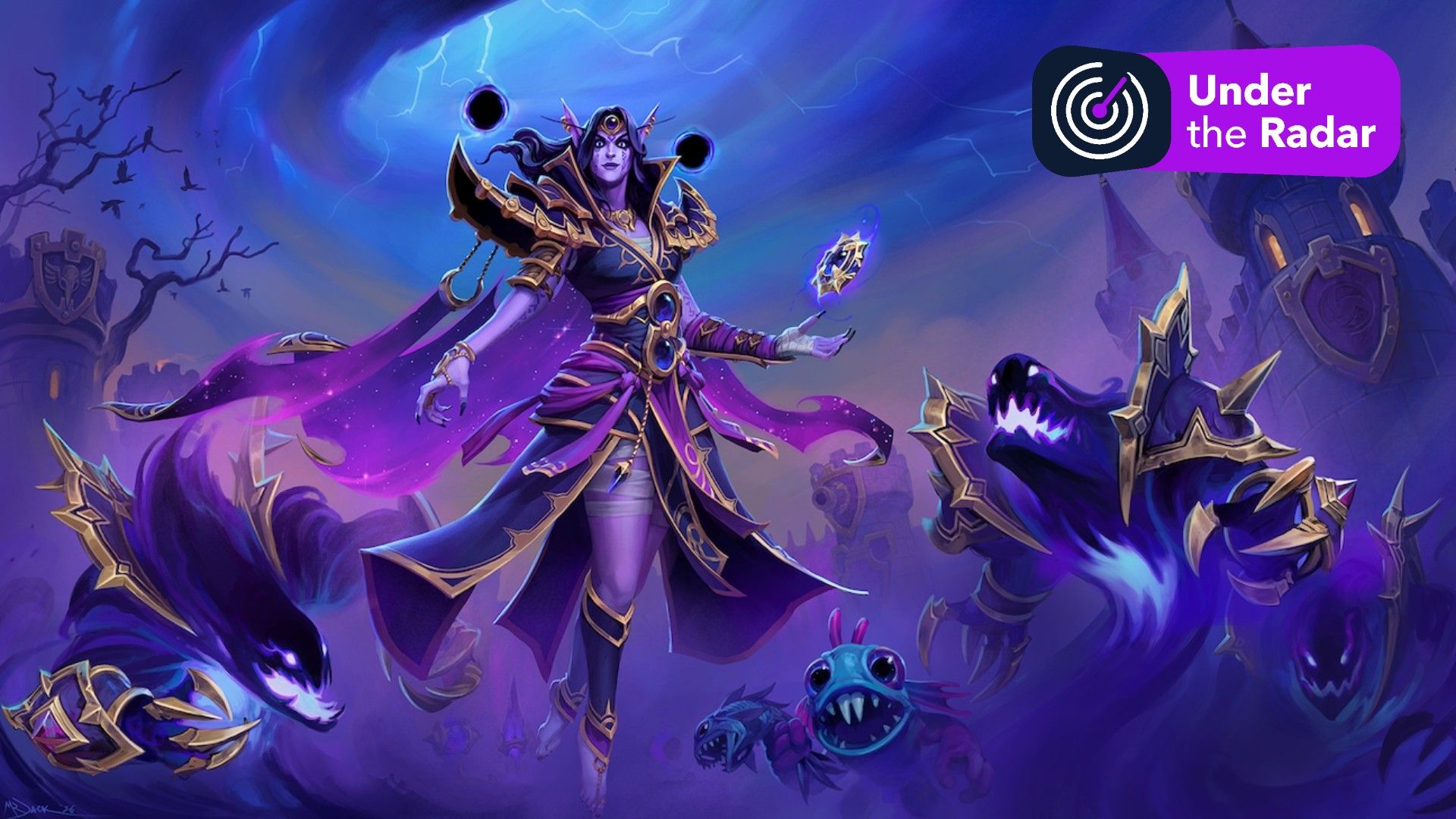
But suddenly, that all changed. At this year’s BlizzCon, the opening keynote presentation kicked off with a surprise that no one could have anticipated. Heroes of the Storm is getting a new hero: Xal’atath, the Harbinger of the Void.

Cue a flurry of messages in the group chat, a Robin Williams ‘what year is it?’ gif, and exclamations of “we’re so back.” The game’s subreddit, a near-dormant sanctuary for players still fighting away in the Nexus, exploded back to life as well. The passion and excitement were reactivated in an instant — and I felt the same too.

A surprise return

Naturally, I had to reinstall the game, and over the past week I’ve dived in for a couple of hours nearly every night. I’ve amazed myself at how quickly I’ve picked it up again and how much I’ve remembered about each map, hero, and the flow of a game. It’s felt so good to be back, and it’s reminded me why I think it’s such an unsung hero in the MOBA genre.

See, Heroes of the Storm strips out a lot of the more, let’s say, hardcore aspects that were found in a lot of the top MOBAs of the time.

There’s no last-hitting creeps to get extra resources, no shop at which to spend gold to build your character, experience is shared team-wide to (theoretically) keep everyone on a level playing field, and there are generally fewer secondary features to think about during a match.

That led to some thinking that Heroes of the Storm is a ‘dumbing-down’ of the MOBA, but I’d argue that the game isn’t lacking in complexity.

One way is with the talents that are earned as you level. These allow you to build your character in a chosen way, adapting your strategy to your strengths and countering the team composition you’re facing.

Surprising depth

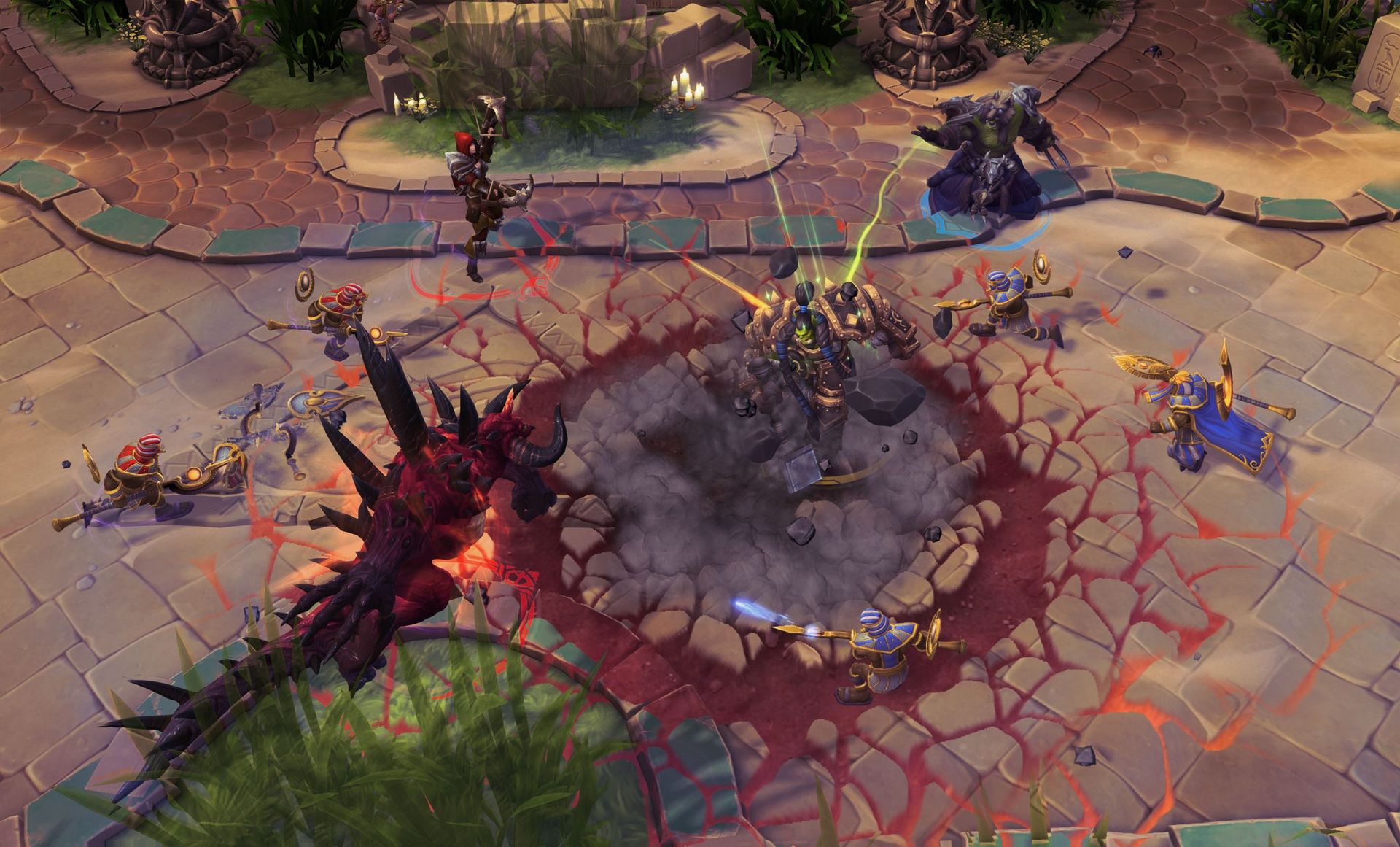
A screenshot of Diablo and Valla fighting Thrall and Rehgar in Heroes of the Storm

(Image credit: Blizzard)

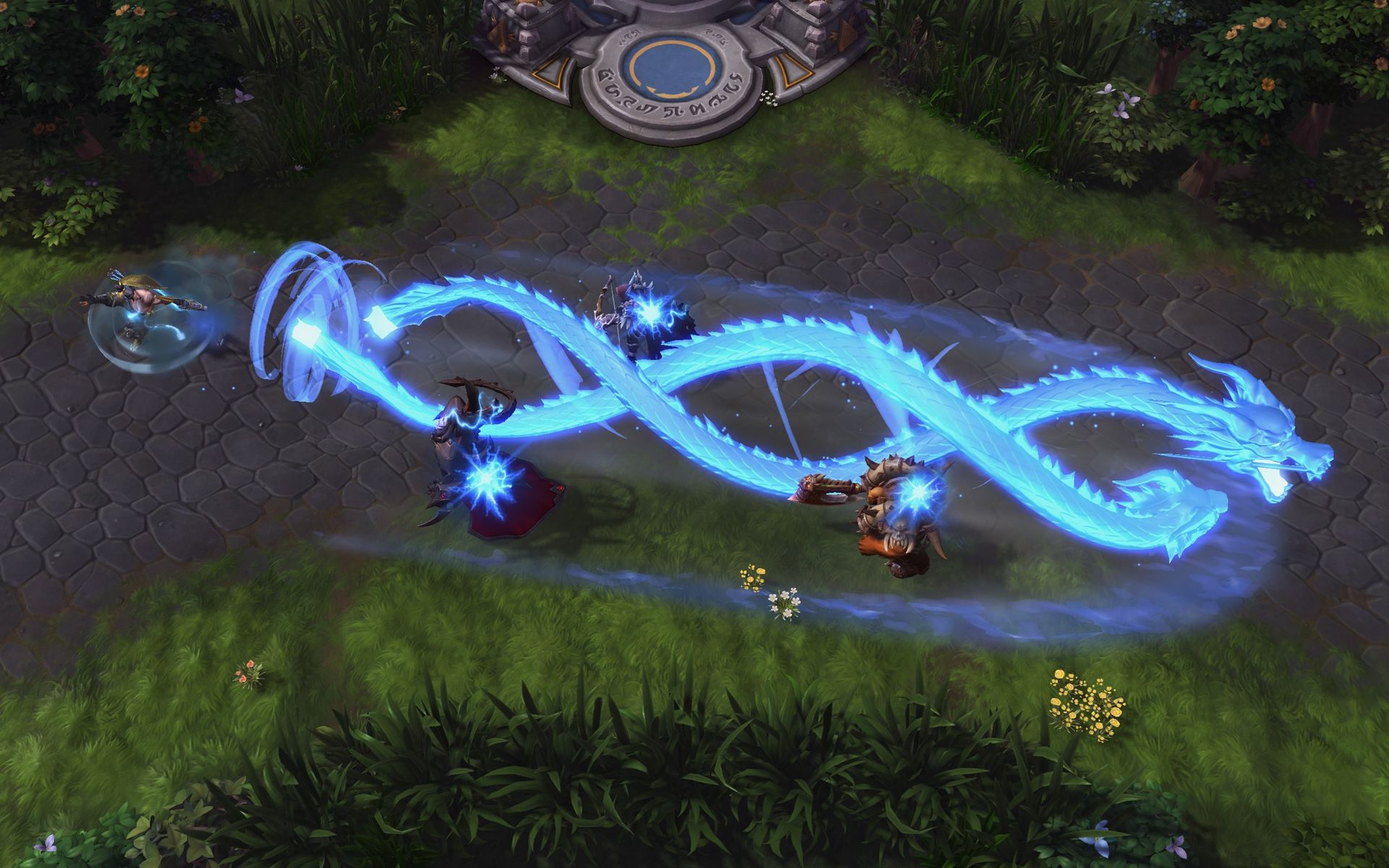
The main gimmick, though, is that rather than playing in a single arena over and over again, HOTS offers several maps that feature different main objectives. These require you to prepare and be ready for those moments when you need to defend an area, escort a payload, or gather scattered resources.

Achieving these gives you a temporary boon that works towards destroying your opponent’s home base, or Nexus. That might be a giant bone golem that lays siege to any structures in its path, or a barrage of missiles that directly attack buildings. At one point, a player could take control of a massive plant abomination to root enemies in place and smash up the other team’s defences.

These objectives add dynamism and give players a direction to move towards at regular intervals throughout a match. They also encourage more teamfighting, which I find is the most exciting and enjoyable part of any MOBA, where positioning and smart engagements are rewarded over repeatedly clicking on a creep at just the right time to build a pot of gold.

The hero Hanzo firing his arrow ultimate across the arena at three targets in Heroes of the Storm

(Image credit: Blizzard)

While I can appreciate there’s a skill to farming creeps efficiently in the opening phases of a Dota 2 or League of Legends game, I’d rather not be spending my time doing that. I’m also not a huge fan of the downtime in those games, going back to buy items and fiddling around in menus to buy a bigger sword or stock up on wards that you scatter across the map to give vision.

In comparison, Heroes of the Storm is a game of near-constant action, with matches that generally last a glorious 20 minutes or so. Sometimes shorter if you go on a tear, and sometimes longer if things are tight, but rarely too long that it starts to feel like a slog — especially in those painful situations where you can see the writing’s on the wall in the first 15 minutes.

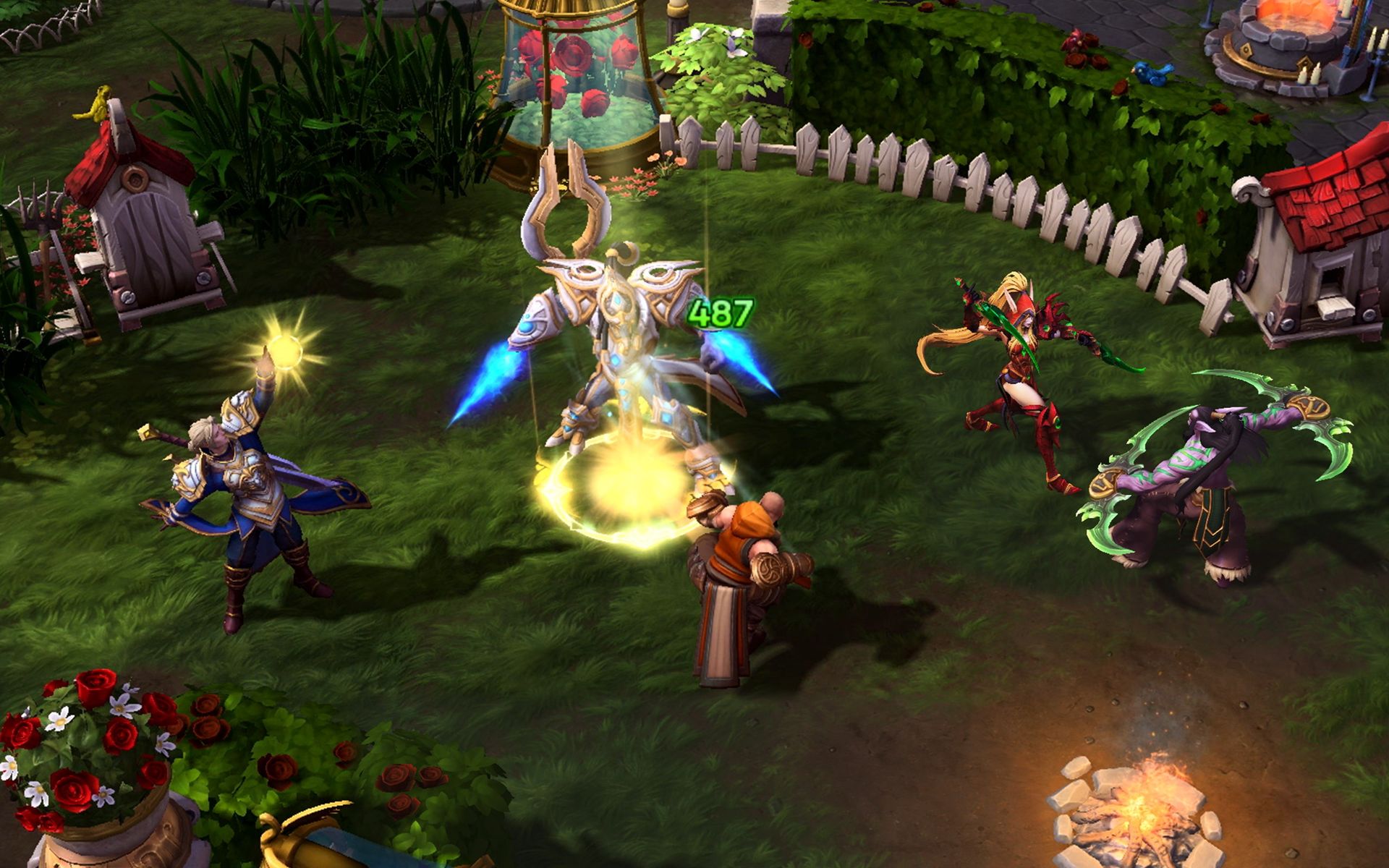
A teamfight in Heroes of the Storm featuring Anduin, Artanis, Valeera, Illidan, and Kharazim.

(Image credit: Blizzard)

This is all before I’ve even dug into the roster, which is a joy for any Blizzard fans and anyone who loves to have a diverse range of fighting styles at their fingertips.

As well as its satisfying selection of tanks, assassins, brawlers, and supports to master from across WarCraft, StarCraft, Diablo, Overwatch, and more, Heroes of the Storm has fun experimenting with all sorts of characters.

Abathur is a classic: a creature of the Zerg who hides in the backlines, but can assimilate with other players anywhere on the map to provide support. There’s Cho’Gall: a two-headed ogre who has its movement controlled by one player and abilities controlled by another — cue chaotic attempts to work together. And there’s the Blizzard deep cut, The Lost Vikings, who challenge you to control three different characters at once, almost bringing the stress of a full RTS experience to the game.

It’s these new and fascinating ideas in its map and hero design, as well as a focus on the more thrilling aspects of a MOBA, that make me think Heroes of the Storm has always been such an underrated gem.

I’m hoping this new spotlight on the game not only brings back a lot of old fans like me, but also introduces it to an entirely new audience so Blizzard sees reason to release heroes and updates in the future.

Weeks after building them, I’m still playing with Lego’s Smart Play Pokémon sets — they’re easily the best of 2026

Pokemon’s Lego Smart Play sets couldn’t be more perfect, even if you hate the Smart Brick. I was convinced of this when I first saw them ahead of their launch, and since their public debut, I’ve only grown more in love with the builds now that I have them in my home.

When Lego first debuted its Pokémon sets, it showcased a few display-focused builds — designs aimed at older audiences to be shown off on a shelf more than to be actively played with. This meant relatively high prices to account for the massive brick counts and complex building techniques applied.

At first glance, the dozen Smart Play sets the duo just launched are the exact opposite. They’re built for play — with two of the sets coming with a Smart Brick (or two) to bring the Pokémon models to life — and generally cheaper and simpler build-wise. But like the Smart Brick, they’re so much more than meets the eye.

From a play perspective, thanks to tiles hidden in each Pokémon’s belly, the Smart Brick can know which creature it is and make distinctive sounds when the critter is being fed, training, sleeping, driving a vehicle, or hiding in the tall grass waiting to be captured by a trainer.

Importantly, two pokémon can know when they’re near each other and engage in a battle — which cleverly takes into account if the Pokémon was recently trained, which types it’s weak or strong against, what innate power it has (third-stage and legendary Pokémon will be stronger than first-stage starters), and what health it has (plus if it has been healed by something like a potion).

It’s very sophisticated but also so incredibly intuitive. Moving the Pokémon like action figures — shaking to charge up attacks, lunging forward to strike, moving away to dodge, and lying down to rest after a busy day — enables every single action the Smart Brick is programmed for. I gave my wife the Pikachu to play with without telling her anything, and she instantly knew what to do.

Hamish plating with a Lego Charizard surrounded by Lego Pokémon.

(Image credit: Future / Hamish hector)

Smart and simple

At the same time, so many play features don’t require a Smart Brick at all.

While the actions will lack sound effects, Pikachu can still lie down in his fold-down bed, emerge from the tall grass when a pokéball hits the target, battle with the spinning target, and be played with in whatever way you can imagine.

So when you’re waiting for the Smart Brick to recharge, or if you simply decide not to pick up one of the All-in-one sets that comes with a Smart Brick in the box and opt for a merely Compatible set instead, you’ll still have a play set that feels complete — something I couldn’t say for Lego’s first Star Wars Smart Play models.

My only caveat is that the battle-focused sets — Charizard vs. Jolteon Ultimate Battle and Umbreon vs. Garchomp Championship Battle — are a little more dependent on the smart brick to create engaging fights between the blocky pocket monsters.

Pikachu next to his house

(Image credit: Future)

Perfect for play doesn’t mean perfect for everyone, but as a display build, these models again have so much potential.

Not necessarily out of the box — the background scene elements are always the most visually stunning — but with some creativity and time to build your own, these blocky figures could easily be posed as part of beautiful dioramas.

If you prefer minifig scale designs, you’ll be disappointed, but if you don’t mind something that’ll take up more room on your shelf, I think these sets have so much potential — especially as each Pokémon’s design is so distinct and accurate to its in-game version.

Pokémon x Lego

(Image credit: Lego)

Lastly, I can’t round things off without talking about their best aspect: price.

Simpler, play-focused sets come with fewer pieces and therefore a more affordable price. For kids who love Pokémon but for whom you can’t fork out a lot of cash for a set that’ll sit on a shelf, these Smart Play sets are perfect.

Plus, for the same price as the Eevee build, which was previously the most affordable option, you can grab two or three of the cheaper Smart Play compatible sets that just dropped.

Whether you buy one or all twelve of the new sets, I’m certain Pokémon and Lego won’t disappoint. These sets show how Smart Brick integration should be done, and I’m hoping we’ll see dozens more sets just like these down the line.

All-in-one sets

Training House with Pikachu:
$69.99 / £59.99 / AU$129.99
This all-in-one set comes with a Smart Brick and charger so you can access all of its electronic features — sound effects to accent when you catch, train, feed, and rest your partner Pikachu. The Smart Brick isn’t essential however, as there are several physical play features like tall grass which falls when you throw a pokéball, a bed that folds down for your electric mouse to sleep in, and a rotating target for the pokémon to train against.View Deal

Charizard vs. Jolteon Ultimate Battle:
$119.99 / £109.99 / AU$199.99
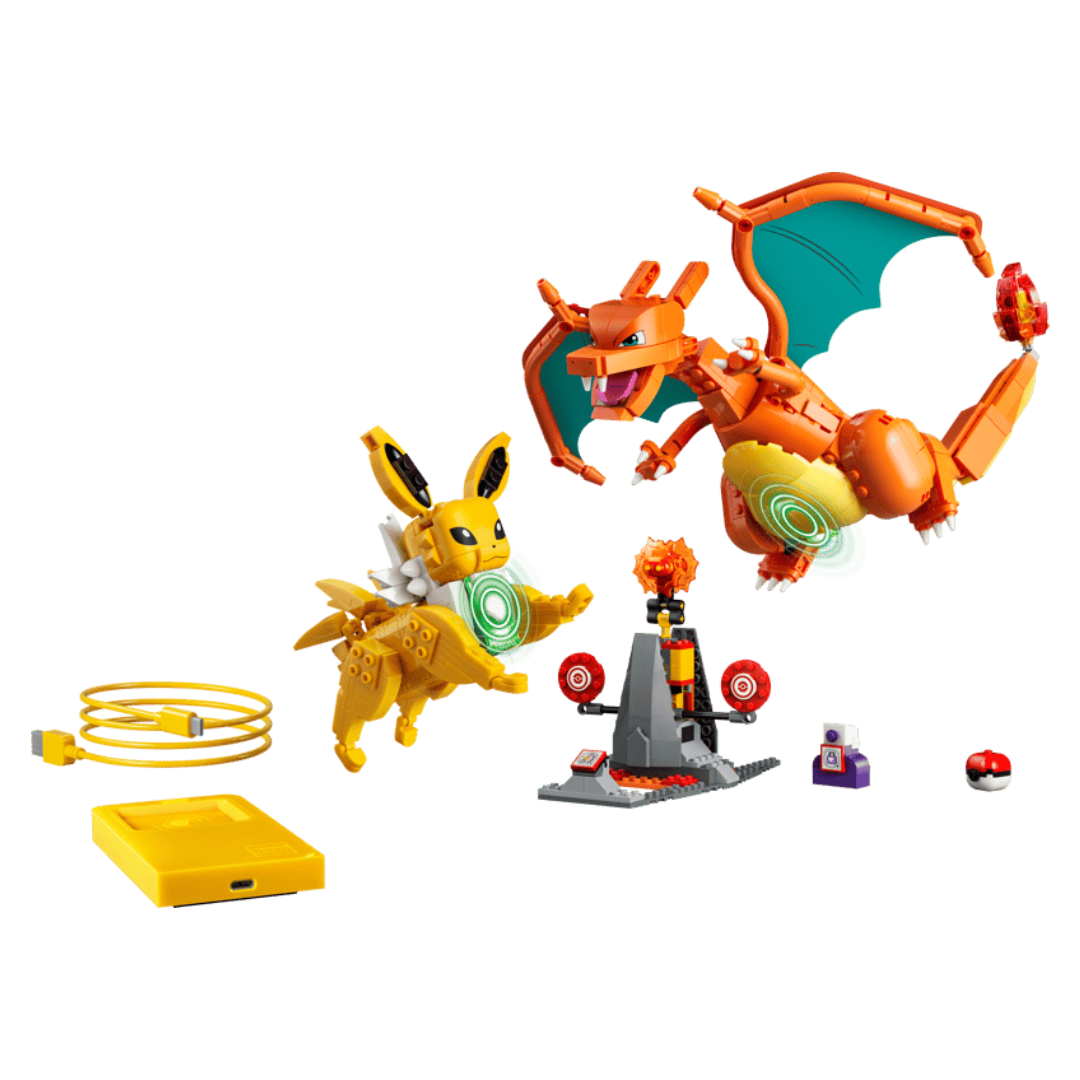
The only other all-in-one set for the Pokémon Smart Play series boasts not one but two Smart Bricks, as its focus is battle. You’ll get a Charizard and Jolteon, plus a small training ground to help them prepare for their upcoming bout. There’s also a potion bottle which can be used to recharge their health before, after, or mid-fight — with LEGO reps telling me that it’s up to you and your friends to decide what the rules are for healing when you compete.View Deal

Smart Play compatible

Berry Bash with Bulbasaur and Bidoof:
$19.99 / £17.99 / AU$34.99
A simpler Smart Brick-compatible set, this build shows Bulbasaur and Bidoof working together to blend berries into hearty smoothies. It’s one of the most affordable in the lineup despite coming with two fan-favorite ‘mons.View Deal

Trainer's Buggy Adventure with Squirtle:
$29.99 / £24.99 / AU$54.99
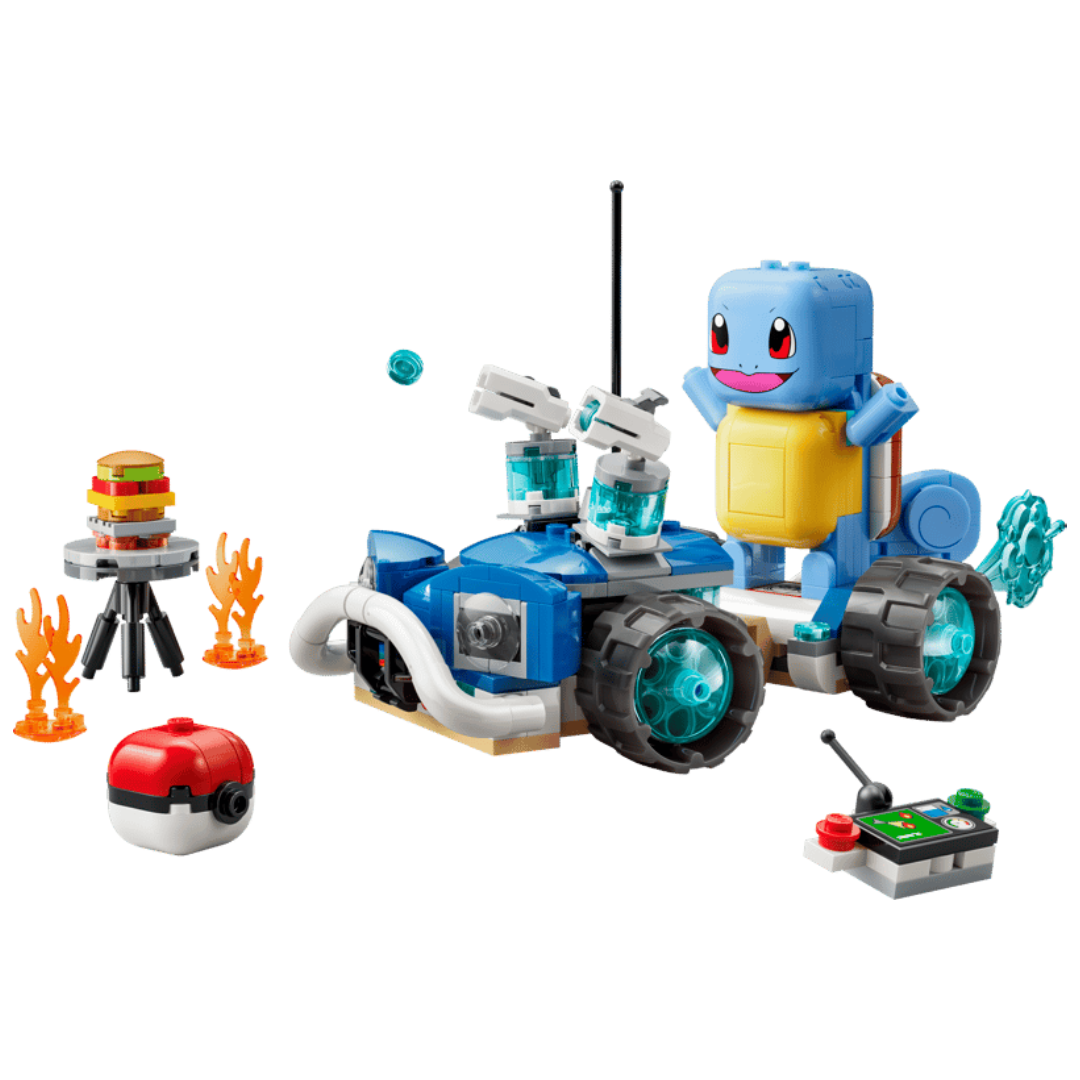
Paying homage to the Squirtle Squad, this set sees the water starter roam around on a buggy, putting out fires so he can save a sandwich. Though any ‘mon can ride in the vehicle, and with a Smart Brick (not included), you can hear the critter giggle while the car chugs around. For non-Pokémon fans, the appeal here is the vehicle’s Smart Play tile, which offers some generic vehicle sound effects that would be ideal for custom builds.View Deal

Charmander and Geodude's Cavern Clash:
$19.99 / £17.99 / AU$34.99
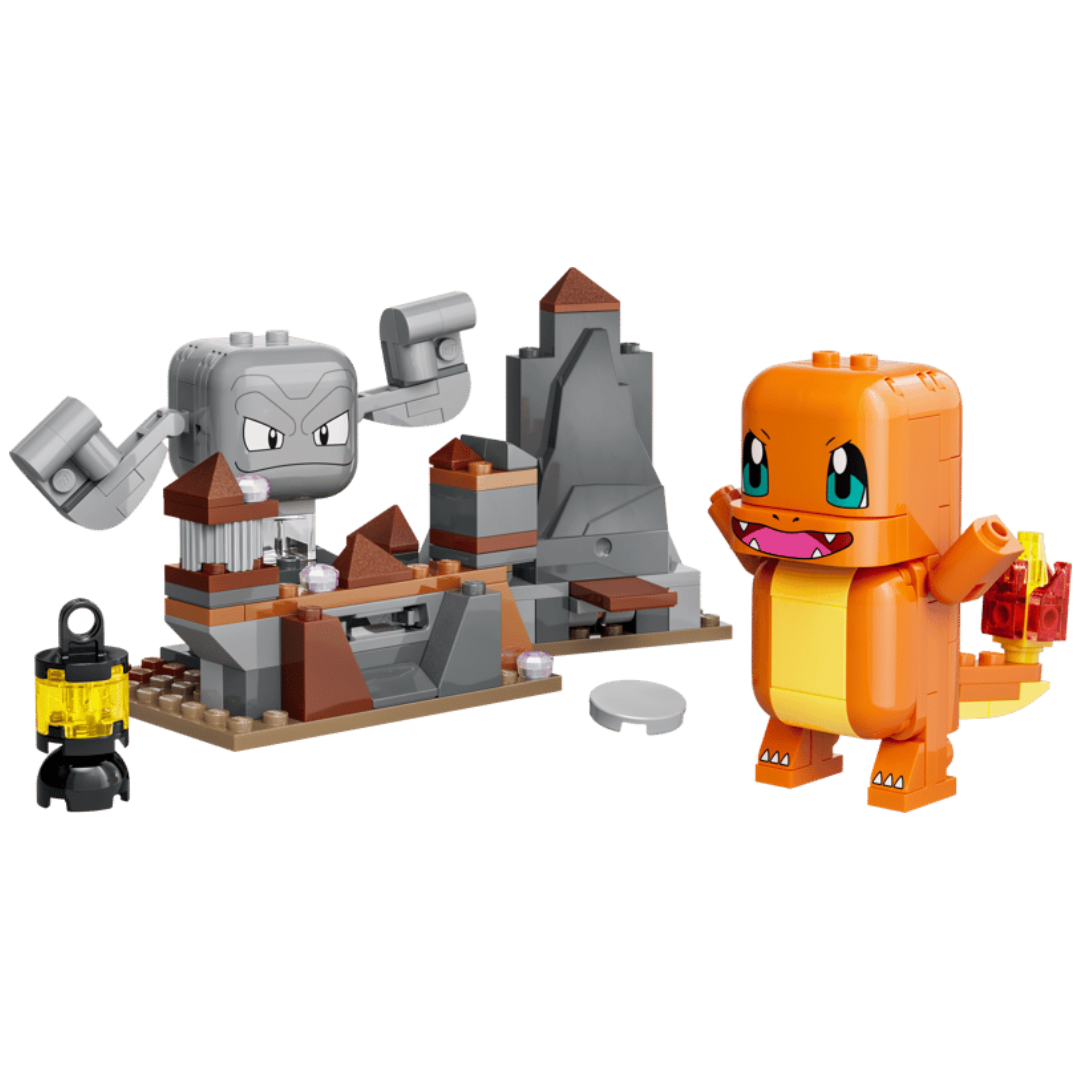
A simpler set like the Bulbasaur and Bidoof one, this simple yet effective construction comes with a pair of iconic Gen 1 pokémon, including the much-loved Charmander, plus a thematic battleground for their clash.View Deal

Sprigatito, Fuecoco and Quaxly Battle:
$34.99 / £29.99 / AU$59.99
For fans of Scarlett and Violet, this build is relatively simple scenery-wise, but does offer you the full trio of Gen 9 starter ‘mons. It’s probably my least favorite, but if the action-figure-play appeal of the models is what excites you most with these builds, this is a strong contender.View Deal

Jigglypuff Concert:
$14.99 / £12.99 / AU$24.99
The cheapest set in this collection, and also the simplest at just 88 pieces, I see this being popular amongst fans of the Gen 1 popstar wannabe, and as the perfect add-on for the Training House with Pikachu set — or one of the other more affordable builds — as it expands your pokémon collection without breaking the bank.View Deal

Drone Search for Mythical Mew:
$49.99 / £44.99 / AU$$99.99
Simple, yet effective, I love this build as it feels inspired by one of my favorite spinoffs: Pokémon Snap. It also focuses on the exploration and catch ‘em all aspects of the Pokémon franchise rather than the battling, and I can see myself constructing more complex jungle ruins for Mew to hide in. Mew can still battle if you give it a Smart Brick.View Deal

Eevee and Lapras's Treasure Hunt:
$59.99 / £54.99 / AU$$109.99
Another set focused on exploration, this would fit right at home amongst a collection full of pirate sets. This was one of the first sets I saw in the collection, and the designs may be small, but are packed with detail.View Deal

Mewtwo's Lab Break:
$69.99 / £59.99 / AU$119.99
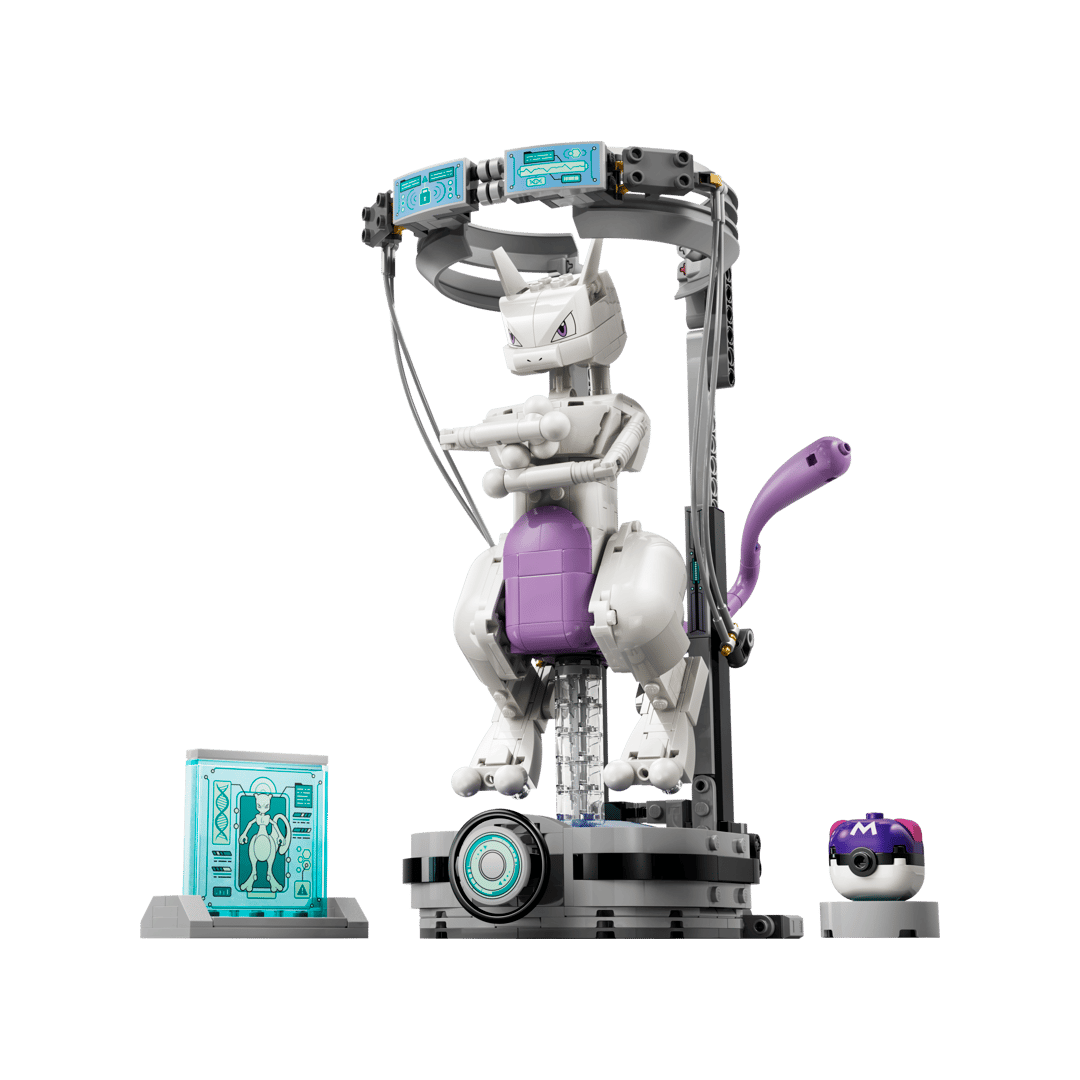
For fans of the first Pokémon movie, and/or other tales focused on this pokémon’s story, this Lab Break set featuring Mewtwo works so well as a display piece, but also as a play set that’ll give your other ‘mons an ultimate final battle to face off in.View Deal

Umbreon vs. Garchomp Championship Battle:
$79.99 / £69.99 / AU$139.99
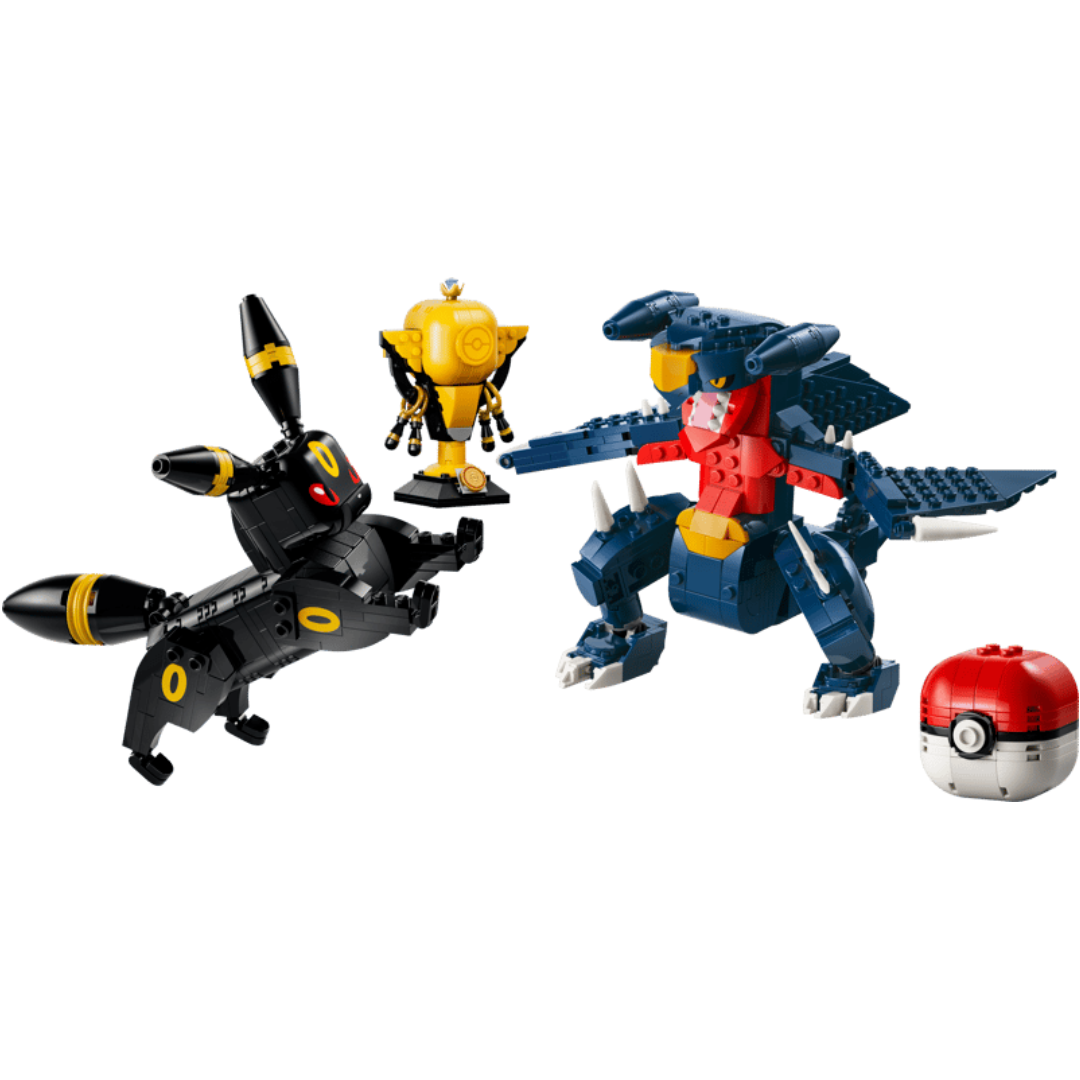
My favorite build in the whole collection is this. Why? I love both Garchomp and Umbreon (with the former being the only one in the 20 so far to rep my favorite generation in Gen 4), but also this seemingly simple build hides two very cool details. The first is that the trophy is intentionally designed to mimic Cynthia’s hair, the other is Garchomp is the only one to have a rough, brickier feel — mimicking its in-game ability Rough Skin. Lego reps explained this was part of the back-and-forth between Lego and The Pokémon Company, making sure details like this are translated into the models to make them feel true to the series.View Deal

Cubone and Gengar's Spooky Showdown:
$89.99 / £79.99 / AU$159.99
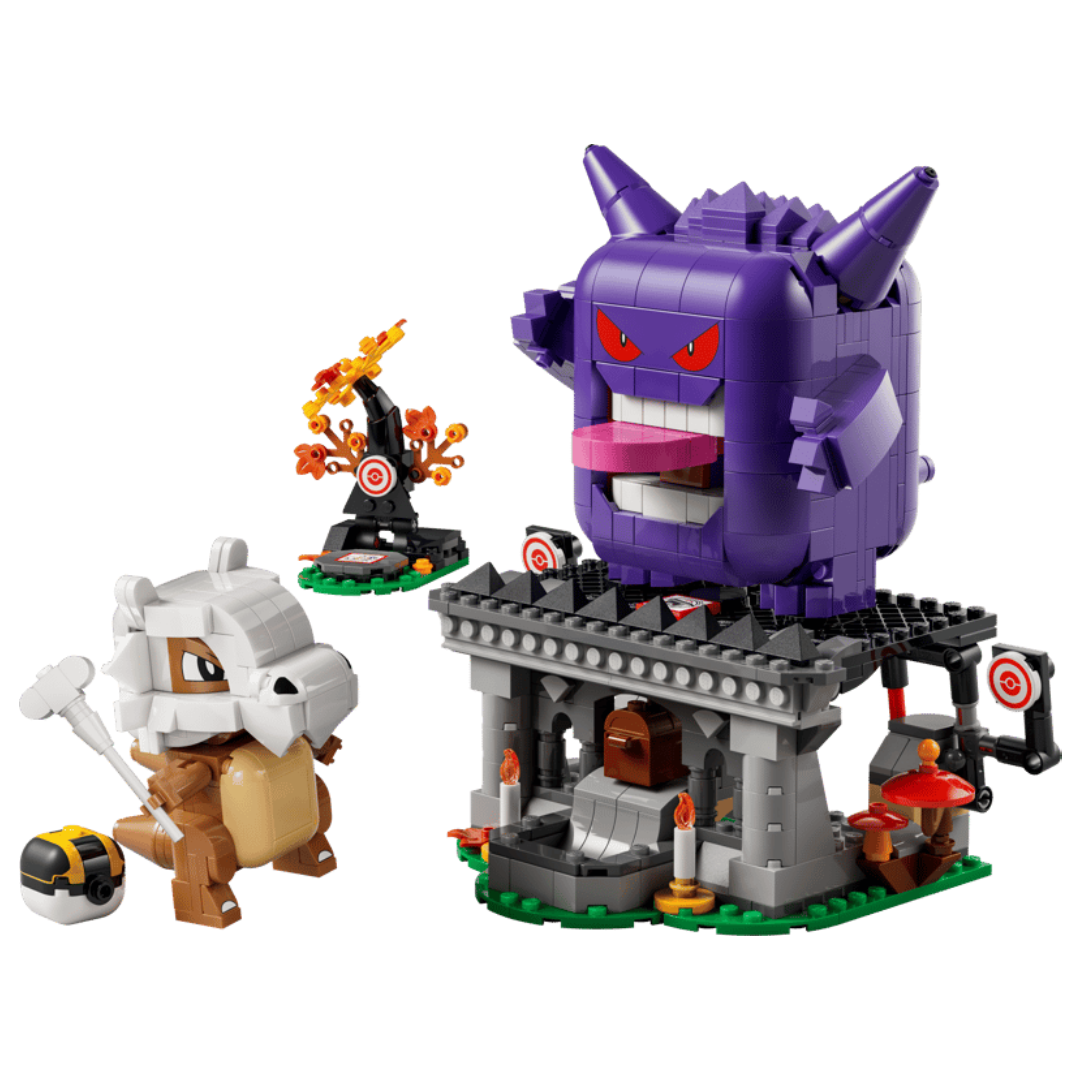
Last, but by no means least, this build is, like the Pikachu set above, packed with physical play features that are amplified by the Smart Brick but not exclusive to it. Gengar looks perfectly terrifying, weird, and a bit funny, and Cubone has a kind of intimidating look that fits right into this scene’s ‘Spooky Showdown’ theme.View Deal

Researchers use AI to find widespread software decoder flaw 

Researchers said they used Anthropic’s Claude and OpenAI’s Codex to identify a damaging flaw embedded in a popular software decoding tool that could leave major internet platforms, enterprise services, and web frameworks vulnerable to data theft and remote access.

The vulnerability, nicknamed HEIF Heist, refers to the malware’s ability to trigger memory corruption errors in affected software, allowing the attacker to pilfer sensitive data from its victims. In a report published Thursday, the researchers laid out the potential damage an attacker could cause, including gaining access to internal OpenAI repositories, leaking user files, access tokens, and other sensitive data for online services like Amazon Web Services, and gaining remote code execution privileges across a range of online services, including Meta’s core product suite, GitHub Enterprise servers and open-source internet forum Discourse.

“Even when Remote Code Execution isn’t immediately achievable, the attack primitives may still allow arbitrary heap disclosure, letting an attacker ‘heist’ in-memory data such as other users’ data and environment variables,” wrote Hacktron researchers Harsh Jaiswal, Mohan SRK, Rahul Maini and Sudhanshu Rajbhar.

The researchers relied heavily on AI systems, including frontier models from OpenAI and Anthropic, to conduct their research. Attribution for the research is described as being “led” by the Hacktron human researchers “assisted by Hacktron Harness, GPT-5.6 Sol, and Opus 5.”

According to the research, the attack exploited the way that code parsing tools in many popular software decoders — specifically libheif and libde265, used to parse C and C++ software — process certain image files.

By uploading HEIF, HEIC and AVIF image files corrupted with malicious code, the attacker could bypass most of the victim’s application layer defenses, in many cases achieving remote code execution privileges for accounts or products tied to major AI and tech brands.   

While the latest version of libheif has been patched, the researchers said “any deployment lacking the latest upstream security patches is potentially vulnerable.”

In one incident detailed in a Sept. 13 blog, Jaiswal, Maini, and Hacktron researcher Mohan Pedhapati described how chaining two vulnerabilities, including an image parser flaw, could compromise OpenAI employee accounts.

With access to the compromised accounts, researchers could reach OpenAI’s internal repositories. As a proof of concept, they opened a pull request in the company’s “monorepo,” a centralized library where code is shared across projects, using the employee’s Codex credentials. 

According to a timeline provided by the researchers, the flaw was discovered on July 25 and patched within days. They said the entire attack, from discovering the initial vulnerability to gaining access to the repositories, took less than 72 hours. OpenAI paid them a bug bounty of $6,500 for their work.

Given that AI models are increasingly integrated into enterprise and personal networks, an attacker exploiting HEIF Heist could have accessed far more than just OpenAI’s systems and data.

“Until two months ago, a user or OpenAI employee logging into OpenAI’s own help forum could have had their ChatGPT and Codex accounts taken over,” the researchers wrote. “Since people can connect various services to Codex and ChatGPT, the scope of what we could theoretically access was huge, including GitHub, Slack and emails.”

CyberScoop has reached out to OpenAI for comment on the research and additional information.

At the same time, the researchers said the attack paths they found were not particularly easy or efficient to exploit.

“Exploitation requires fingerprinting the target version and tailoring the payload images,” the blog stated. “Some of our RCE attempts landed only after thousands of image uploads. That said, an AI agentic approach with a frontier model like GPT-5.6 Sol cut exploit development time down to roughly 1 to 3 days from initial probe to remote RCE. A motivated attacker can convert a vulnerable upload endpoint into RCE or an info leak.”

The post Researchers use AI to find widespread software decoder flaw  appeared first on CyberScoop.

The AI hacking apocalypse is not inevitable

The past few weeks have “felt very strange” for Juan Andres Guerrero-Saade.

Like many, he is trying to sort through the spate of frontier-model AI agents from OpenAI, Anthropic, Meta and others hacking their way onto the open internet over the past few months, particularly amid the already-heated national debate around the emerging technology and its impact on society.

Guerrero-Saade, a fellow for AI and security research at SentinelOne and an adjunct professor at Johns Hopkins University, said the hacks are worth taking seriously, but at a time when businesses and open-source maintainers should be focused on further hardening their systems and policymakers should be discussing new solutions,  “what we see is cybersecurity being used essentially as an excuse for these AI doomer arguments.”

The incidents have spawned those “doomer arguments” amid an intense public debate about the technology, the pace of industry development, and whether government and the private sector are doing enough to protect against “doomsday”-type scenarios, where AI systems take over or attack large parts of the internet or society.

Guerrero-Saade is among a growing chorus of cybersecurity professionals who say that while AI systems pose real, unique threats to our systems, the apocalypse is far from inevitable. Most of the public concerns around the incidents, let alone worries about killer AIs attacking critical infrastructure, assuming control of the internet and wiping out humanity, are either technically impossible or can largely be controlled through established cybersecurity principles.

There is this “narrative or magical thinking of ‘Well, AI is going to be able to hack everything, and therefore it can control everything, and therefore it’s going to kill us all,’” he told CyberScoop. “And you [think] these just don’t add up. They’re not very well-reasoned arguments.”

This fatalistic narrative tied to AI’s eventual dominance doesn’t hold up under scrutiny, according to experts CyberScoop spoke with. In recent conversations, cybersecurity and national security professionals raised questions about both the technical solutions OpenAI and Anthropic use to contain their models, as well as the glaring absence of federal oversight from federal regulators or truly independent third-party review.

For example, Jacob Coxon, an Anthropic employee who resigned over AI safety concerns, told CBS News that frontier models could not be “unplugged” by humans once deployed because the model would copy itself to thousands of other computers connected to the internet.

By contrast, Matt Tait, a former information security specialist at UK signals intelligence agency Government Communications Headquarters (GCHQ), pointed out that the models run by Anthropic and other frontier companies require extremely expensive, “ultraspecialist” machines that “are functionally supercomputers.”

“There is a zero chance that Anthropic’s most capable models will be able to extract their own model and run in the wild, because those supercomputers essentially only exist in datacenters,” Tait said.

“Not a credible warning”

Other former cybersecurity government leaders say the agentic hacks represent a failure by regulators and industry to deploy known technical and policy options that make it harder for these types of incidents to occur.

Matt Hartman, former deputy executive assistant director for cybersecurity at the Cybersecurity and Infrastructure Security Agency, said “we should not accept harmful AI behavior as inevitable or unmanageable.”

“There are meaningful steps companies can take to monitor agent activity, constrain permissions, detect anomalous behavior, and build stronger safeguards into how these systems operate,” said Hartman, now a chief strategy officer at Merlin Group. “Those controls will inevitably involve trade-offs in capability and speed, but that’s a familiar cybersecurity challenge. Our goal should be to manage the risk without unnecessarily limiting the enormous benefits AI can provide.”

Ciaran Martin, former head of the UK’s National Cyber Security Centre, took issue with the way the CEOs of frontier AI companies have framed the threat of “rogue” AI behavior as inevitable, while issuing dire warnings about future threats and capabilities with little transparency.

Martin’s comments came after an essay published by Anthropic CEO Dario Amodei that cited the threat of a HuggingFace-style swarm of agents that could create a botnet capable of “taking over the entire internet” within 6-12 months.

This, Martin said, “is not a credible warning,” because it doesn’t explain how the exploitation would function, how such a botnet would persist on the internet, or how it would escape law enforcement. 

 “It assumes no monitoring of systems, no anti-virus, no DDoS protection, no network segmentation, no incident management, no nothing of any kind of the cybersecurity on the global Internet of the type that has developed over the last 30 years,” wrote Martin. “For a claim of this magnitude, there is neither evidence for the contention nor a credible account of a path to this outcome.”

Meanwhile, some federal government cybersecurity leaders have touted the technology’s disruptive potential and called for more widespread adoption of AI tools by defenders.

Joseph Alm, assistant secretary of cyber, infrastructure and risk resilience at the Department of Homeland Security, said classified systems may retain stronger protections. But for most other data, AI models are “just going to know things and be able to infer things about the world, and we’re going to have to adapt to that as almost inevitable.”

Asked by CyberScoop whether the government or frontier AI companies could be doing more to prevent or deter their models from carrying out unauthorized hacks via agents, Alm cited recent efforts by the Trump administration this year to establish pre-release testing of commercial models as a step in the right direction. But he called unauthorized AI agent hacks “a new threat class” that is different from previous threats and can be easily distributed to users through open-source software today.

“I think what we can do is…encourage the building of good sandboxes, so that the best models aren’t used for this and the stuff you see out in the wild is the kind of detritus that you can actually respond to effectively and control your networks,” said Alm.

Other experts have shared similar concerns. Earlier this month, CrowdStrike CEO George Kurtz recently warned of a new threat class emerging alongside nation-states, cybercriminals, and hacktivists: “the agent state.” By pairing AI systems with small human teams, these operators can now match the speed, scale, and sophistication of government-backed hackers.

“It took a nation to fund the talent, the tooling, the infrastructure, the patience,” said Kurtz. “That scarcity is over.” 

To be sure, frontier AI companies tout their commitment to both approaches. OpenAI and Anthropic have rolled out an array of cybersecurity partnerships, external red-teaming programs, vulnerability disclosure programs and cybersecurity technical advisory bodies filled with cybersecurity experts.

Mohammed Husain, strategic delivery lead for government at OpenAI, told CyberScoop that the company deploys both internal safety guardrails for their models and relies on outside cybersecurity vendors for additional expertise.

Internally, OpenAI focuses on vulnerabilities at the training level: filtering data poisoning attacks, blocking harmful datasets, and using network controls to prevent prompt injections. For other security layers like sandboxing, identity management, networking controls, they outsource to external vendors. 

“I don’t think OpenAI has all the answers here but what we do as a research lab is we’re going to focus on levels of protection we have expertise in and we partner to self-complement,” said Husain.

AI safety vs. AI cybersecurity

In response to the HuggingFace hack, OpenAI and Anthropic have allowed third-party organizations, such as nonprofit AI research firms METR and Redwood Research, to investigate. But multiple cybersecurity professionals told CyberScoop that both firms lack incident response experience and focus primarily on AI alignment and safety. Their reporting on the hack also lacked critical details: network monitoring logs, telemetry, and other data standard in cybersecurity threat intelligence reports.  

METR president Chris Painter addressed those general concerns in a post on X, saying since 2022 the organization has worked with Google, Anthropic, OpenAI, Meta, Amazon and others on investigations and third-party evaluations. Painter said none of the AI companies fund METR and that his employees are not uniformly “doomer” or “accelerationist” around AI.

Painter also said METR’s work ensures that if AI systems become autonomous or “rogue” within a company, there are ways to share that information with governments and people “outside the company’s walls.”

“We don’t accept money from frontier AI companies,” wrote Painter. “They haven’t paid us for our work, and we don’t accept donations from them or their employees. As we’ve shared previously, multiple frontier AI companies currently provide us with free access to their models in order to perform our evaluations, research, and engineering.”

AI safety and AI cybersecurity advocates take different approaches to securing “rogue” AI behavior. Safety advocates focus on aligning models around ethical training and behavior. Cybersecurity advocates argue that technical and regulatory controls must go further—actively preventing models from accessing what they need to carry out malicious behavior.

Guerrero-Saade said sandboxes in particular can easily be programmed with aggressive cybersecurity monitoring in order to spot when something odd may be happening and react in real time.

“I can’t think of an easier situation in which to set up trip wires, set up configurations like DNS servers, just different parts where you can say ‘Hey, anomalous behavior is happening,’” he said. “We should have been able to tell this immediately, not weeks and months later. So watching [the AI hacking incidents] go down is a little ‘crazy-making’ because we’re seeing things that, frankly, look like neglect, negligence, people just mishandling things, and then being told that these are categorically new incidents that mean that AI systems need to be treated completely different from anything that’s come before.”

While cybersecurity experts say AI systems are, at their core, still software, they do operate differently from more traditional code in ways that can make them harder to predict and control.

John Hultquist, chief analyst at Google’s Threat Intelligence Group, said most software has been deterministic. It may have bugs or vulnerabilities, but an expert could generally understand how it would react to certain stimuli, making it easier to design straightforward controls.

AI models are non-deterministic, with far more variability than traditional software. That can break security controls that rely too much on predicting behavior in advance. Using AI to enforce security controls on other AI models faces the same problem: the systems being deployed to control AI are just as unpredictable. 

But people are also non-deterministic, and people have developed systems in other industries and practices to account for that.

Hultquist drew on his Army experience, noting that “they give incredibly dangerous, expensive things to 18-year-olds” and expect responsible use. The military manages this through two types of controls: deterministic ones like strict weapons and ammunition protocols, and non-deterministic ones like human officers who monitor and correct violations.

Similarly, established cybersecurity controls have been used by incident responders to detect and prevent or mitigate ongoing cybersecurity breaches.

“I don’t think we should throw out all the other tools that we have learned to use as well. I think that would be utterly foolish,” he said, later adding “I will say that if we use only non-deterministic tools to figure out when things are happening, we shouldn’t be surprised when we get the wrong answer.”

The post The AI hacking apocalypse is not inevitable appeared first on CyberScoop.

America’s cyber strategy overlooks the infrastructure that actually keeps the military moving

There is little reason to believe the war with Iran will end anytime soon. Even as efforts to resolve the conflict continue, Iran remains unpredictable, with an enduring ability to disrupt shipping and energy markets via actions in the Strait of Hormuz.

So what does a prolonged conflict mean for cybersecurity here at home? U.S. agencies need to prepare for sustained Iranian cyber operations and conduct defensive wargames now.

I spent part of my career in Navy intelligence supporting expeditionary and special warfare operations. This experience taught me to look beyond individual attacks to the larger objectives they serve. Iran’s likely objectives are relatively straightforward: impose enough pain on critical infrastructure, businesses, and public services to increase pressure on Washington, while disrupting the industrial and civilian systems that allow the U.S. to sustain military operations.

Iran may not be a top-tier cyber power like China or Russia, but it doesn’t have to be. We recently mapped 130 documented attack techniques used by five Iranian threat groups. Much of their playbook relies on well-known, repeatable techniques rather than advanced capabilities. Success does not require extraordinary capabilities, only the ability to create enough disruption, uncertainty, and delay is enough.

America’s greatest vulnerability may not be any single network or piece of critical infrastructure, but the links in between. 

Critical infrastructure: Prepare for volume, not just catastrophe

When Americans imagine a cyberattack on critical infrastructure, we tend to think of catastrophic events, such as a large-scale blackout, a poisoned water supply, or some other digital Pearl Harbor.

But in an extended conflict, the more realistic possibility is persistent attacks across many targets. Small water systems, manufacturers, transportation providers, energy infrastructure, and local governments all serve as disruptive targets. The recent string of attacks on mostly smaller water utilities across 12 states is a prime example; so too is the four-day outage of a small-scale power plant in the UK.

Attackers do not need to destroy these systems. Any intrusion that manipulates industrial systems, interrupts operations, or forces operators to determine whether equipment can still be trusted consumes valuable time and resources. Multiply that across dozens of organizations, and federal, state, local, and private-sector response capacity will be stretched thin.

The cumulative strain on the country’s ability to respond may be more important than any single attack. Iran does not need the world’s most sophisticated cyber force if its affiliated hacking groups can generate problems faster than cyber defenders can investigate and remediate them.

Defense contractors must prepare for destructive attacks

Defense contractors have long faced espionage threats targeting military secrets.  While that threat remains, the war has significantly changed Iran’s motives and risk calculus.

The same access used to steal information from the defense industrial base (DIB) can also be used to destroy data and disrupt operations. Destructive malware such as wipers and ransomware could destroy engineering files, disable production systems or force manufacturers offline, directly affecting the military’s ability to replenish equipment and supplies.

An attacker does not have to shut down production to disrupt it. Consider a compromised calibration setting, altered test result, or unauthorized change to engineering data. Discovering that an adversary had persistent access to a manufacturing environment raises difficult questions: Which files were touched? Which designs can still be trusted? Which components were manufactured from them?

The incident quickly becomes a production problem as parts must be quarantined, engineering data re-validated, and products retested.

NIST SP 800-171 and CMMC provide an essential security baseline, which makes the current pause in CMMC implementation particularly concerning. However, contractors must also be prepared to operate through destructive attacks and establish that their systems, data, and products can still be trusted. This preparedness must extend down the supply chain, where a smaller manufacturer, software provider, or managed service provider may present a greater vulnerability than a well-defended prime.

The military attack surface extends far beyond DoD networks

The U.S. military is extraordinarily capable at defending its own networks, but its operations depend on infrastructure it doesn’t own or control. Troops and equipment move on commercial railroads, materiel flows through commercial ports, and military airlift can depend on commercial carriers. Military installations and defense contractors also depend on commercial power, telecommunications, and other infrastructure.

In an ongoing conflict, those dependencies become part of the attack surface. An adversary like Iran does not have to penetrate military command-and-control to interfere with these operations. At a time when speed matters most, cyberattacks that disrupt port scheduling, corrupt logistics information, or degrade power and communications can introduce critical delays and uncertainty that hamper operations.

This is why the line between civilian and military infrastructure becomes blurred during a conflict. A commercial railroad carrying military equipment to a strategic port may be civilian infrastructure administratively, but operationally it is part of the nation’s ability to operate its military power. The same is true of the utilities, communications providers, and other civilian infrastructure supporting military installations and defense production. Their resilience can quickly become a matter of military readiness.

Cyber defense must cross organizational boundaries

American cybersecurity is organized around sectors, organizations, and authorities that make administrative sense, but aren’t necessarily designed for wartime. The boundaries between them can become a serious liability.

Our adversaries in Tehran do not care about administrative boundaries. They care about weak spots. A vulnerability anywhere in the chain connecting civilian infrastructure, industrial production, transportation, communications, and military operations can affect everything downstream.

We need to ask: Who is responsible for the cyber resilience of a commercial railroad essential to a military deployment? Who ensures the utility serving a critical defense manufacturer can withstand a sustained nation-state campaign? Who identifies the supplier whose failure could disrupt multiple defense programs? And who coordinates the response when several are attacked simultaneously?

Those questions should shape how we prepare. Critical infrastructure exercises should assume simultaneous incidents across multiple sectors and regions. We should also be extremely cautious about weakening the incentives driving cybersecurity improvements across the DIB, such as the current pause on CMMC. Additionally, defense manufacturers should also test their ability to operate through destructive attacks and determine whether their engineering data, production systems, and finished products can still be trusted.

DoD exercises should treat civilian infrastructure, including rail, ports, energy, and communications, as a routine part of the operating environment and an attractive target for adversaries. Catastrophic scenarios deserve attention, but exercises should also account for lower-level attacks that are less spectacular but still highly consequential.

Iran does not need overwhelming cyber capability to impose significant costs. Persistent disruption at home can increase political and economic pressure surrounding the war, while disruption of defense production and military logistics can make it harder for the U.S. to sustain operations abroad.

We have spent years strengthening the individual pieces of America’s cyber defenses. A prolonged war with Iran may test the links between them.

The post America’s cyber strategy overlooks the infrastructure that actually keeps the military moving appeared first on CyberScoop.

'There's one never-ending challenge working for IKEA: cable management' — how Xbox collaborated with the Swedish designers to help solve the biggest problems for gamers while also making beautiful furniture

When I first saw the IKEA x Xbox collaboration at this year's Gamescom, I was struck by two conflicting ideas.

With its multi-functional side table, TV stand, and decorative controller box, this is some smartly made furniture with some genuinely helpful uses. Then, with a thumbstick stool and a D-pad cushion, it's also one of the silliest things I've seen.

Taken as a whole, you can see it's a mix of the playful and the practical. After I spoke to designers at both IKEA and Xbox at the show, it turns out that was the point all along.

"That was present throughout the journey because it's important," explained Philip Dilé, product developer for IKEA of Sweden. "Playing games is playful; it is fun. Solving people's needs connected to that can be very functional and practical. We tried to balance that, for sure.

"We wanted to make things that are relevant for people who play games. Something that reflects you, or that you feel allows you to express yourself...but the object itself is a beautiful piece of home furnishing."

It's a philosophy echoed by Carl Ledbetter, partner head of design at Xbox: "Just like when we design a console, it can be as quiet as people want it. They can put it back and let it recede into their environment. Or they can pull it forward and have it be very expressive. And I think some of those same qualities are in these products in the YXSTABY collection."

The IKEA x Xbox collection in situe at Gamescom

(Image credit: Future / IKEA / Xbox)

Ledbetter used the controller display box and the TV stand as examples of this. With the former, it's ideal for enthusiast gamers who like to collect controllers and show off their favorite designs in a dedicated gaming space. Meanwhile, with the latter, it serves a "dual life" — whether it's sitting in the corner while you're watching shows and movies, or wheeled front and centre for an intense gaming session.

"That was a big part of our philosophy: how do we make products that can adapt to how people want to use them? Either be as expressive as possible, or just be part of your world," summarised Ledbetter.

You can see that approach clearly in all of the more practical products from the collection.

Take the side table. Closed up and next to your sofa, it could be mistaken for another piece of clean and minimalist furniture you'd find in IKEA. Open up the sliding doors on the front, though, and inside there's space specifically designed to store controllers, headsets, and battery packs — plus the all-important cable management and power connectivity options you need to keep your tech charged between sessions.

Two chairs from the IKEA x Xbox collection with d-pad cushions on top

(Image credit: Future / IKEA / Xbox)

"This came up time and time again: cable management, charging stuff — where do you put it when you're done? People don't want it all over the place," said Ledbetter.

And Dilé agreed: "We looked at it from the perspective of: what does gaming throughout the home look like? Because, of course, people play at their desks, in the living room, on the couch. In so many different ways. For us, it was important to cater for a lot of these different needs.

"And there's one never-ending challenge working for IKEA: cable management. It always comes up over and over again. I think it's a very real frustration for people.

"Take the TV stand, for example. Yeah, you need to have the console there; you need to have somewhere to charge the controllers, somewhere to put a headset. That was one of the benefits of working together with someone like Xbox that knows gaming, and the hardware, and the players. That made the brief really, really clear."

Showing the cable management of the TV stand from the IKEA x Xbox collection

(Image credit: Future / IKEA / Xbox)

And even though designing for gamers was a big part of their brief, both teams were also well aware that they wanted products that a non-gamer would be happy to live in their home. This meant offering something that wasn't bedazzled with RGB lighting and garish colors.

"You need to cater for gamers, but also for non-gamers or people who are living with gamers, or people who want to have the functionality but still want to have a nice home," said Dilé.

"[We wanted to create] things that maybe your spouse or the people you live with also want to put in your home. These aren't just things that you accept because of your hobby. That was an important balance for us.

"There are so many people who play games, so it’s incredibly diverse. We really wanted to showcase that you can have that [gaming] experience and still have beautiful products that blend into your home to create a nice environment that you want to live in."

The design team and creative brains behind the YXSTABY collection at IKEA and Xbox

(Image credit: IKEA)

That led Ledbetter to reminisce about the first meeting between both parties, where they both discovered they shared very similar design philosophies and were keen to get both of their respective design teams together to bounce around ideas.

The result is this YXSTABY collection — nine products encompassing everything from stools, seats and cushions, to TV stands, storage and display cases — set to launch in October later this year. A weird and wonderful mix of items that speak to both the fun side of gaming and the practical needs in the home.

Ledbetter summed up his hopes for the collection as follows: "Think about it: we create these controllers, and we sell millions of controllers, but we're not in charge of the controller’s home. We make the controller, and then where does it go? We don’t know. So, now, there's this opportunity between IKEA and Xbox to build that home. It felt like a completion of that journey."

Blackwood is almost the John Wick-inspired third-person shooter I've been waiting for, and after 2 hours of playtime, I'm really excited for all of it — but it's rough around the edges right now

Indie games have arguably become a cornerstone of PC gaming, even more so with modern-day entries becoming huge hits such as Hollow Knight: Silksong, Hades 2, and a superhero surprise from developer Adhoc, Dispatch.

In comes Blackwood, a cinematic third-person action indie, set in New York in 2012. You play as Anton Blackwood, an ordinary DVD store owner by day and an assassin by night, taking on contracts and dealing with the challenge of balancing two lives at once.

After playing two hours of Act 1 (the only one available so far) during my short preview at Gamescom 2026, I can see Blackwood's promise. It's quite evident what developer AttritoM7 Productions is aiming for with its gun-fu style gameplay, heavily focused on explosive, cinematic enemy takedowns, intense gun fights, and stylish maneuvers.

Blackwood is very clearly inspired by classic martial arts and gun-fu movies, notably John Wick, and even borrows elements from classic games like Dead to Rights and Max Payne. Players can either choose to challenge enemies in a gung-ho play style, rushing out and executing different takedowns you can pick before setting out on a mission.

A more tactical approach is also possible, staying in cover and strictly going for headshots only (fitting for a John Wick-styled game), which would perfectly suit the hardest game difficulty.

Blackwood nails enemy takedowns, which is easily the one aspect that will keep me coming back to replay missions I can once Act 1 is complete. (Video Credit: AttritoM7 Productions)

The takedowns swiftly shifting straight back into gunplay are where Blackwood absolutely shines, and I can't go without stressing how impressed I am with what AttritoM7 developers were able to pull off there. In so many sequences, I was instantly taken back to those iconic moments in John Wick movies, where Keanu Reeves pulls no punches.

Ultimately, what holds Blackwood back is jankiness in combat, especially during hand-to-hand encounters. During multiple scenarios, there are bugs and stiffness in certain animations from Anton and enemies that I couldn't ignore.

Controlling Anton can be a struggle sometimes, as certain button prompts are unresponsive while in cover, and since enemies can flank the player, that unresponsiveness can lead to some pretty frustrating deaths.

The weapon recoil feels great, and I can see that AttritoM7 designed Blackwood's gunplay to have players make every shot count — which is especially important, since preparing for missions requires you to purchase ammunition with dirty money earned from fulfilling contracts.

However, I set aim assist to its lowest level (minimal), and it felt like the reticle was fighting against my control of the joystick — and it also doesn't help that the ultrawide field of view resolution desperately needs adjusting.

The opening street shootout was a great way to kick the game off, and I very quickly learned that enemies are unforgiving, requiring the player to be wary of a gung-ho playstyle. (Video Credit: AttritoM7 Productions)

Some of the audio in both combat and some NPC dialogue feels a bit out of place too, particularly during one of the early contract missions in a subway station. There are many elements like this, especially involving animations (notably Anton's run and other NPCs' movements), that end up impacting immersion.

Fortunately, while Blackwood isn't launching in early access, its remaining Acts will be released later for free (for existing owners), with Act 2 planned for March 2027 and Act 3 in September 2027 on Steam. Hopefully, with the release of the following content, patches can be made to significantly tweak and adjust those pain points.

Blackwood is a very promising game and has plenty of opportunity to shine among some of the best indie games available. However, it's a little rough around the edges at the moment, and a few steps away from realizing its potential.

❌